IGTV with Melissa Tablada
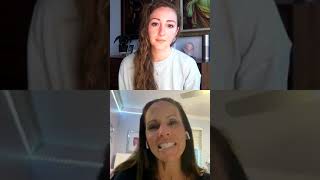
Psychologist Dr. Betsy Guerra discusses grief and healing after losing her daughter, distinguishing pain from suffering and reframing loss as a pathway to growth. She answers audience questions on miscarriage, supporting grieving friends, guilt about happiness after loss, and anger at God.
Chapters
Awesome.
Okay. All right. So for anybody who doesn't know Betsy yet, this is Dr. Betsy Hara. She is a psychologist, and she has been a mentor to me over the past two years. We met in November. Well, really January, but let's say November, and that was like, 2017. 2017 November. So we. Oh, no, she frozen. Well, we met in November 2017, and she's been a mentor to me. I have worked with her for the past two years, and it's been amazing and beautiful, and I've learned so much, and so I'm super excited for her to introduce herself and share all of her wisdom or some of her wisdom with you guys tonight. So, Betsy, introduce yourself, and then we'll jump in.
I don't know if it's my phone or my signal, but I. Do you guys hear Melissa? Well, just to know if it's me.
Can you guys hear me?
Well, now it's better. Okay, thank you for the intro. Can you hear me, Melissa?
I can, yeah.
Okay. Thank you for the intro. I am Betsy Guerra, and I am. I met Melissa through Instagram. I read about her, and I was so drawn to her instantly that I just. I just. I just reached out and called her and asked her to work with me, and she came join our team, and, like, she's. She's. She's outgrown us because she's so amazing, and she's become better than the teacher. And, like, she's like. I admire her so profoundly. So I'm actually very humbled. Can I tell you guys that I told Melissa to open an Instagram account, and now she's like my teacher, my mentor, my coach. So I'm really excited to be here. Very, very humbled. I'm Betsy Guerra. I am the happiest woman on Earth. Melissa is a close second. I am obsessed with my husband. I have the sexiest man on earth as my husband, and I am a mother of four, and that includes an angel in heaven. I. I lost my daughter almost seven years ago, and it was in a tragic accident. It was unexpected, and it was the most excruciating pain of my life. And I feel that because I went through that excruciating pain, I now know the most amazing joy and part of what I teach and I share with the people that I serve, not just in my one on ones, but in my online community and my program is the idea that pain is not bad. Right? We're afraid of pain. We don't want to feel it. It doesn't feel good, so it must be bad. And we want to escape it. We want to numb it. We want to eliminate it. People. People come to me like, okay, Betsy, what do I need to do to get rid of this pain? And they don't realize that pain is a blessing in disguise for sure, but it's a blessing. Pain is the foundation for growth. It's the opportunity to rise up to what God created you to be. It's just. It challenges you. It shreds your self righteousness. So it humbles you. It brings you to your knees. Pain is the pathway and the stepping stone to joy, which is why I'm the happiest woman on earth, because I feel like I've gone through the most excruciating pain I ever could imagine. So my joy is just as gigantic. And I am devoted to sharing that message with the world, with teaching the world to embrace pain. Because pain is inevitable. We all go through it, right? It may be in the form of loss, like, was my case, but it may be because things didn't go your way or you didn't get the job that you wanted, or the house, or you lost or you broke up with your boyfriend. I mean, there's pain is everywhere all the time. Everybody has experienced pain in the last few months with the pandemic, and everybody has experienced loss because loss is somehow losing your life as you know it. And we all have. So. Because we all go. So I'm not. I'm not a masochist, and I'm not asking people to be like, hey, just go search for pain. No. But. But if. If something is experienced as pain before you push it away, like, try to see where there's room for growth and how can. How it can help you to become the woman or the man that God created you to be. So that's my take on pain. I know today's a Q and A, and we have a lot of amazing questions, Melissa. Like, wow. So I don't know if you want to share a little bit or if we start with the questions.
Well, I'll just give, like, background.
We have to suffer forever, like, at all. In fact, I have a hard time with the word grief because it has, like, a negative connotation. It has, like. It's like the idea of, oh, grief, you know, like, is. It's like the sadness and excruciating period through which you have to go through. But if we reframe grief and we give it a different meaning and we start thinking of it as. As the foundation for growth and the process through which we're purified and strengthened and become more graceful and holy then grief. There's no rush to get through the grief because you're feeling as you're growing and nourishing your spirit. So I always distinguish, Melissa, between. Between suffering and pain. Like Haruki Murakami says, pain is inevitable, suffering is optional. And I believe that wholeheartedly. Pain, I mean, you probably went through pain today because something didn't go your way or because your Internet had an outage, or your husband, your boyfriend didn't do what you wanted him to do. We all go through pain, but suffering is pain without hope. So I think it is important to make the distinction. Because if you are grieving and what that looks like is you're going through the pain of losing a loved one or a thing that you really wanted and liked in your life, then if that's pain and pain is hope because it is the stepping stone and the pathway to greatness, then you're not in a rush to stop grieving. You want to stop feeling the discomfort and the difficult parts of it. But suddenly the time of how long doesn't matter as much because you're not wasting that pain. That pain is doing something for you. But when grief is suffering, which is pain without hope, that darkness, it's just experiencing those symptoms, if you will, and those emotions, intense emotions in vain, you know, like, so. So this, this suffering, these tears are not doing anything for me, right? Like, I'm just wasting my day and my life away. If that's your perspective on grief, then of course you're going to want to know when is this going to be over? So I would invite you to reframe the question. And instead of worrying about how long, how long will this last for, maybe think about like, huh, you know, I'm really. I'm having a really crappy day today. So maybe God is brewing something really amazing, like just equally amazing to the magnitude and the intensity of this pain to this day. Like every time someone, something is painful or not going my way or anything happens in my life, I have a pity party first. Which is why I insist on feel the pain. Don't escape it, don't numb it, don't push it away. I have my pity party and I feel my pain. And once I realize that it hurts, then I surrender it to God. And I have caught myself, and I may sound a little crazy, I have caught myself, like, walking in the park and reflecting on something that's painful in that moment and thinking, like, I can't wait to see what you have in store for me, because this really sucks. This really sucks. So, like, you must be training me for something amazing, right? So. And because I think that then suddenly it doesn't hurt that much anymore. So I feel like more than focusing on how long will this pain go on or this suffering, like, maybe focus on what kind of pain do you want and do you choose to experience so helpful.
Do you meditate to help with grief?
Absolutely. So the meditation that I practice is called centering prayer. And it differs from traditional meditation in that you're not. You're not the center of that practice, but rather the God within you. Right. So what how and how it's different is that instead of trying to become one with the universe, you're becoming one with God and you're consenting to the Holy Spirit to come in and do the praying for you and to take over your life. So when we pray, we're praying from our minds and from our humanity. And in doing so, we're limited because we ask God and we thank God and we pray for God to do the things in our lives that we think are possible. But our ways are not his ways. Our thoughts are not his thoughts. So when you practice silent prayer, or it's also called contemplative prayer or centering prayer, when you practice that which is the Christian meditation, you're not the one praying. You know, you're letting the Holy Spirit do his thing. So that's the best prayer. And you're also letting go of your mind, of your finite humanity, to. To be able to download the infinite divinity within you. So I do it every day of my life. It's transformed my life. It gives me profound peace. And the way I see it is, as time goes by and we are. We're less ruled by our mind and our merits, the more space we create to download God's ways and thoughts. So the more we engage in that kind of meditation, the more similar we are to God because He's the one showing us his ways. And when that's the case, your life is just amazing. It doesn't matter what happens. You always feel taken care of. You always feel that he's got your back and that he'll reveal to you the answers or give you the hope that you may need in the moment.
So there was two questions about miscarriage. So the first one says, what for someone suffering the loss of miscarriage, how do you not feel guilty for wanting another child right away?
That was my story. Like, I. I lost my daughter and I got pregnant soon after and for me it was different. Like I didn't experience the guilt because my husband at some point said, you know, like, so I will, oh goodness, please don't judge me. I will share something very personal. It's written in my book. And I, and I actually asked, please don't judge me. But my husband and I had planned a vasectomy for the week after my daughter's passing because we had had three back to back children and I had a window in my uterus. And the doctor, one of the doctors, not my main doctor, had said that it's dangerous and I shouldn't have any more kids and all these things. And so we had decided to, to have a vasectomy and we had scheduled it and because of my daughter passing away, we canceled it. And at some point my husband was trying to like, find answers. You know, you ask those questions that don't have any answers. And he said, you know, like something that would help me in my limited human mindset, like something that would help me like understand why this happened is, is if God gave us the blessing of being, you know, like parenting another child. Because then, then the loss of our daughter, you know, it was almost like, it was almost Jesus, like, right? Like where, where she gave up her life to give her sister the opportunity to live. And I know that doesn't compare to Jesus, but it's, it's a, it's a way of me looking at it to bring myself hope, right? And so when we, when I found out I was pregnant, it was, you know, I felt like it was like God all over it, you know, show, like it was just, it was inevitable to see how his hand was in, in all of it because of the way we had interpreted and giving me given meaning to the possibility of being parents of a fourth one. And I guess that's my invitation whenever. If you've had a miscarriage and you're desirous to have another kid, reinterpret and change the meaning that you're giving to that experience. Because you're seeing it as, oh my gosh, like I'm wanting another baby, which means I'm not honoring my, the baby that I lost. And I'm not. Like, those are stories that you tell yourself and they're not serving you, they're hurting you because they're creating guilt. And guilt doesn't come from God, right? Like, it's not, it's, it's, it doesn't bring peace. And whatever doesn't bring peace doesn't come from the source of all Peace. So I would reinterpret that and I will share that. The babies that come after a miscarriage or the death of a previous baby are called rainbow babies because they're a sign of hope. They're God's gift of hope for us to remember that there's son after a storm and there's life after death and we have the possibility to co create life with him. And you know in your heart that a new baby will never ever take the place of another baby. I mean my daughter in heaven is so present in our lives that I mean it's just no way anybody could substitute her. So just, just change the story you're telling yourself about what it means to want another baby. It's, you know, there's nothing more than God and your baby that's in heaven with one for his, his or you know, her mommy.
I love that. And another woman said that, that she has emotionally stopped after two miscarriages within the past year and she's wondering how she can become more present again or present again.
Can you repeat the first part? I'm sorry.
Yeah, so she said I have emotionally cut off after two miscarriages in one year. So how can she become present again? I guess like become more emotionally open in her life. And yeah.
When we experience any form of pain and we let it consume us, like if our focus is on the pain, not on the, on the blessings that will come from it, we become self centered and selfish. And because we're so focused on our pain and it's so excruciating that there's no time or energy left to look outside of us. Like it's, it's taking up all our time. So what happens is that because we're looking inward and there's also a psychological explanation for this that we have. There's a part in our brains that it's called the reticular activating system. And that is like the filter that processes the information around us. So it's, it's what chooses what you're going to pay attention to. When we're in pain, our focus is pain and everything that's going to remind us of it. So the simple answer to that complex question is change your focus. Your conscious mind gives you the power and ability to change focus, to decide that you're going to stop looking at something and you're going to start looking at something else or you're going to stop looking at something in a certain way and you're going to reframe and change the perspective. So because here's the thing. The pain and the, when your heart hardens for one, it hardens for all. So if you're letting pain be the boss of you, then everything that you're going to recognize in the outside world is the things that are going to perpetuate your pain. Because that's what the reticular activating system does. It, it focuses on the things aligned with what you already believe in. And it's also going to like, as a self fulfilling prophecy, it's also going to take you to further pain, right? So if for example, you're closed off and it's hurting your relationships and nobody can get through to you and your partner like pulling back and you're not taking, you're not taking care of your relationship, you're not, you're not creating space for intimacy. If you're closing off like that, then you're gonna create more pain and more loss because you're gonna lose people in the process and you're gonna lose yourself and you're gonna lose perspective. So the simple answer is change your focus and decide that you're going to literally open up. And sometimes it takes just like, literally like relaxing your body and just instead of being like closed, you just open and you surrender and you say like, you know, my mom had breast cancer when I was in ninth grade and she's a very strong woman. And I didn't know she was in so much pain because she sheltered me from it and I just didn't know. And one day we were en masse and she was kneeling at some point and she started praying like, you know, like, praise you Lord Jesus Christ, whatever. Like, and then she said, lord, I offer my pain to you. And that was like, I wasn't even supposed to hear that. And that was the first time that I understood that my mom was in pain. And I thought it was so beautiful how she welcomed the pain with open arms. She acknowledged it, she embraced it, and then she surrendered it to God. So a way of changing focus is intentionally and mindfully like telling yourself what you want to believe. And you can do that through affirmations, reinterpretations, all these things, or you could also do it by surrendering it to God and asking him to allow you to open up, like to open up your heart again and, and to allow you to continue experiencing. But usually what the reason people close off after such a deep pain and I, and I don't want to take away from that because if there's something that I have learned is that nobody's pain is greater than yours, right? Like, people would tell me, oh, Betsy, I know I shouldn't even be complaining because, you know, like, what you've gone through, that's real. Like, what I'm going through, this is Mickey Mouse is nothing. But the truth is that pain is pain. And the worst pain that you can endure is the one you're living right now. So do not compare your pain to other people. Just allow yourself to feel it, to embrace it, to welcome it, to let it, like, fertilize you. I always share that pain, to me, is a fertilizer. What is fertilizer? Made of poop and pain. Stinks like, feels like crap, and it's just no bueno. But fertilizers like pain, nurture you, nourish you, make you bloom, grow, create food, give flowers. Like, it just. It's just. It builds you up. So Pa. Pain feels like crap. And having a miscarriage, like, losing. Losing your co creation with God, like, and the dreams you had with that baby and for that baby, it's a complex death because it's not just a person. It's all your dreams, and it's the unlived experiences that you had already imagined and visualized, which, for your subconscious mind are just as real as real losses or, you know, real experiences, I must say. So reinterpret it, change your focus, surrender it to God and choose. Choose to physically, spiritually, and emotionally open up. Because closing off, it's just gonna, like, yeah, you're gonna protect yourself from. From future offenses or hurts, but you're trapped. You're imprisoned inside your walls with your pain. And what that does is it goes deeper and deeper and deeper and deeper. And then when you decide you want to work with this, it's no longer at the surface, but rather like, you have to go, like, it's going to take longer. And if you're trapped in your prison, you know you're protected from future harm, but you're also protected from future joy and from all the opportunities to heal and rise up and be happy. So, you know, my heart goes out to you, and your pain is real. And don't let anyone tell you otherwise. So feel it. There's a song that I think you would absolutely love that'll help you. I think. It's called I will trust you by Gary Chapman. No, I'm gonna. I'm gonna have to, like, come back with you. Steve Curtis Chapman. Yes, that's what it is. It's called I will trust you. And it's about a man that lost his daughter to. To me, that was like a super healing song because it was my way of surrendering. Like, just listen to that song and just play it and cry and, you know, and let. And open up to the. To the hurt so that you can heal it. Because remember that pain is hope. Pain is what heals you. Suffering. What you're doing is suffering by closing off pain, allowing yourself to feel the pain. That's what's healing and beautiful.
Betsy, I don't know if you can see the comments, but somebody said that you gave them more today than anyone has for years. So I just wanted you to hear that.
I haven't. No, I don't see the comments. So thank you. I. Thank you. I was. I was praying that God would speak through me. So hopefully, like, that was him for sure. For sure. Thank you.
Okay, so how. Let's see. What are the best ways to help a friend or loved one through grief and sorrow?
Just be there. That's it. That's the simplest answer to that question. Just be there. Don't. You don't have to tell them the right thing or the wisest thing. In fact, the odds of you opening your mouth and saying something that you weren't supposed to are very high because we were so. Everything is such a blur that we can't reasonably and wisely interpret what anybody tells us. So. So the odds of us interpreting something that was meant to help in a negative way are very high. So don't worry about knowing what to say. I went through this and I still am at a loss for words. When somebody goes through such a loss or a pain, I don't know what to say. So when I don't know what to say, I say nothing. I know this Corona thing makes it hard because it's with words that we're expressing ourselves and communicating ourselves the most. But sometimes I, you know, sometimes I just send a client prayer hands or I send a client, like a. Like a kissy face or a heart or thinking of you or I love you. So just don't worry about having the wisest approach and words and actions or the grandest of things. What the little. It's the little things that matter. Just being there will do the thing will do it. Just being there, like they need you. They know you're there because you're constantly showing up. In fact, maybe I'll change. I'll rephrase that question to what do I not do when somebody has gone through loss? You do not disappear because you don't want to remind them of the pain. You do not stop texting because you don't know what to say. You do not look, you know, like, do research as to what it is that you should tell that person. Like, you were just there, you're there. You hold space for that person, you remind them that you're there, you invite them for a walk, you send them an emoji, you tell them you love them. You can't. When we're grieving, we never forget that we're grieving. So when people say, oh, I didn't want to call you and then remind you and make you sad, what they're really saying is, oh, I was uncomfortable with the possibility of you crying so I didn't want to call you. So really people think it's about like the person grieving, but it's about themselves and their own discomfort. And the truth is that empathy, which is what this person clearly wants to do with a loved one who's going through loss or grief. Empathy is about walking inside ditch like a, like a hole with a person you love, but having a ladder there to be able to exit. Right? Like empathy is not going there and just wallowing on the pain with that person. It's like going there and accompanying that person, holding space for that person and then coming right back out so that you can always extend a hand and be like, hey, I'm here if, when you need me and when you're ready. No, don't rush the person you love and don't, don't tell them like, hey, it's been already, it's been a year, you know, it's just a miscarriage, you know, like at least you know, you, you didn't spend all this time like all those things that are like comments that are like, oh my gosh, like they mean well and they're trying to help, but it's just a miscarriage. That's like, like you were co creating life, right? But people don't understand, right? So it's better to not say anything and just hold space.
I love all of the like visualizations or analogies of like the fertilizer and the hole with the ladder. Like I think to me those are super helpful. So hopefully everyone else is helpful too. Okay, so this is like along the similar lines, but I don't know if you have anything to add like with this specific example. So this person said, my aunt lost her, her 26 year old son six years ago and she's still very depressed about it. How do I help her heal?
You don't it's not our role to help other people heal. The greatest gift that God gave us is our life. And with it we have the responsibility of welcoming the help, working on healing ourselves with the grace of God, of course, but we don't heal other people. And I feel like as a therapist and maybe Melissa, you can connect with this. Like we think, we think we can heal other people, that we can. And the truth is that we can deposit all of our good intentions and help and well intended interventions, but unless the other person is willing and eager to receive it, nothing gets done. And I love analogies. I'm catching myself doing so many and another way of me like portraying that is if God, if you're like you're living under a bridge, you're broke, you don't have a job, like you don't know how you're going to pay the next mortgage or whatever rent. And God goes and deposits a million dollars in your bank account. But you never go to the bank, the bank or you never go to the online banking to withdraw that money. No good. That money is no good because it's not being used. So until your, your aunt, it was the aunt.
Yeah, the aunt lost her son.
So until your aunt is, is ready to do that, you can hold space. However, you can also inspire her to, to get to that place. So the way that you do that is through modeling is by accompanying her. Like, for example, like I have a, by the way, I have a webinar maybe I'll put in the comments in a little bit. I have a webinar coming up this Wednesday and it is on how to find joy again after such a loss and how to overcome the pain of grieving. And it's free, it's a free webinar on Wednesday at 8:00 clock Eastern Standard Time. And it's hurt2hope hurt, the number2hope.com webinar.
I'll put it in, I'll put it in the explanation.
Okay. Oh, perfect. So it's there just in case someone wants to get it. And that's something that you can do, right? Like you can invite her to, to activities, to events, to, to places, to churches, to talks, to places where, where she can, she can hear God's voice through someone else and present, introduce her to people that have gone through what she's gone through and are on the other side or are a step ahead so that, that can bring her hope and just show her how much you want her to be happy. Maybe learn her language. And I will share this story the priest that baptized all my kids was for the longest time my spiritual director. And he was very present during the loss of our daughter. And the day after we lost her, he came to my house and we were hiding in the walk in closet because there was too many people in my house. And we were, my husband, the priest and I were sitting in my walk in closet and my husband was like, you've seen this before. Are we ever going to be happy again? Is it possible to be happy again? And the priest said, you know, some people are. And so people, some people are never happy again. He said, what's the difference? What's the difference? And the priest said that those that were never happy again were those that believed that they honored and continued to love their kids through tears and suffering. So the more they loved, the more they had to suffer to prove that they loved them. And those that were happy again were the people that would choose a different way of honoring the loved one. They would honor their son or their daughter through service, gratitude, love, and they would use their pain to pour out hope to others. And when you use your pain to serve others, you bless other people, but you bless yourself. And that's something that I've learned through my experience. Like, there's a, there's a lady called Gina Devi that talks about double blessing. And I, I, I'm like, yes, like, there's so many things that I've done because God has put them in my heart to do, but I didn't want to do them. Including, including this, right? Like, like talking about grief and like, I was like the couple's person. I love doing couples work and working with marriages and helping them thrive and embrace their sacred, the holy matrimony. I love that this is painful, right? But I'm obedient. I fight with God all the time. And I'm like, I tell him when I don't want to do something, but I'm obedient. And he's put in my heart throughout these seven years to do things that I didn't feel like doing and I didn't want to do and that were very painful to do. But in hindsight, I realized that going through the trouble of doing those things and, and the, the pain that it kept on bringing back because it's, it's hard to sit in front of someone as a therapist, right? Like, I'm. A therapist is supposed to bring hope and give tools and, and help you thrive. And I could do that with couples so, so easily. But with people grieving, like, really what I Do most is hold space. And I don't have these amazing, you know, like, magic pill to remove that pain. So I place myself in pain with them, to accompany them. And it's. It's hard, right? It's hard, but it's healing, and it blesses them, and it blesses me. And, you know, I'm writing a book about my story, and as I write, I cry and I go back and I feel depressed, and I come back up, and. And then in hindsight, I've healed. So using your. Your pain to serve others outwardly is going to help you. And I think your. Your aunt has, you know, that person's aunt has the opportunity to experience other people that have done that so that she can be the recipient of that love and legacy and be inspired to do the same with her son. Right.
I think you just said a lot of things that kind of answer this question, but in case you have anything else to say, like, I think it segues. Well, so somebody asked how. How you stop feeling guilty of not being happy without someone in your life. So, like, when somebody passes away, how do you stop the feeling of guilt after they're gone that you're happy, but they're not here anymore? And I think what you said about what the priest said to you in the closet is really helpful with that, but just didn't know if you had anything else to say about that.
Absolutely. So what's happening to that person is that that person is telling herself the story that the more I grieve, the more I loved. So if I'm happy or if I have good days or if I go out dancing or if I'm feeling great, then that means I didn't love this person enough. So we can change the story that we tell ourselves so that we can be aligned with what we want to believe and wholeheartedly feel. So it's just changing the story. And I. And I talk a little bit about that in the webinar, which may be helpful. And on how to reinterpret, like, on how to change perspective.
Okay, awesome. Okay. So somebody said, I am struggling to pray like I used to after my dad's death. I feel like God doesn't hear prayers. Any advice?
Okay. So I used to think that prayer was about telling God what to do. Right. And we pray so that God answers our prayers and does what we tell him to do. Like we tell God what to do. Let me say that again. We tell God what to do. And when God doesn't answer our prayers with what we wanted him to answer it. It's because he didn't hear. Well, God's ears are huge and they hear the, you know, those ears hear the world so he can hear you. And I think maybe we are, we're hard headed and when we don't hear what we want to hear, we think it's, he's not listening. And, and we want to insist, like, no, listen, God, like, I don't think you. I remember doing this. Oh my gosh, I was the queen of doing this. I remember having conversations with God after losing my daughter and telling him, like, listen, I told you every day of her life, protect her, keep her from evil. Like, you know, like, just take care of her. Like I had like a, like a prayer routine thing that I would repeat because I was so adamant about God taking care of my children. I'm like, do I need to like explain what this is, my conversation with God? Like, seriously, like, I'm not kidding, like, do I need to explain that what, like what that means to you? That includes, and I literally had like give him a list that includes death, like sickness, this accident, like, like this is what it means. So when I tell you that this is what I'm trying to tell you and something that I've learned is that prayer is not for God to know what to do. Prayer doesn't change God's opinion. Like he sees the present, the past, the future. He sees our lives and he wants his plans for us are better than our own plans. So when he like, prayer is mean, meant to change you, not God's opinion. And the way it does that is like, like, let's say, let's say, like, let's say that dad was sick, right? Like he had cancer and you know, he got diagnosed and the prayer is like, God, please, please, like just save him. And like let him be the exception to the, to not to the rule and let this treatment be it. And like, just save him, save him, save him. And then as time goes by and he's not getting any better, in fact he's getting worse. We start praying like, oh come on God, please, please, like, don't, you know, like, like at least alleviate his symptoms. Don't let him suffer, like, poor thing. Like, like, like just help him, God, help him. And then it's like he keeps getting worse and you're like, God, like, like God, like just, just, you know, like if you want, like, just, just take him but don't let him suffer anymore. Like, don't let him suffer. So it goes from like, please save Him. Please save him. Please save him to. To, like, you know, come on, help him out. But, you know, like. But let it be your will. Not really. And then it goes to, like, oh, please take him already. You know, like, it goes all the way to, like, just take him already. I can't see him suffer anymore. Just. Just take him so that he can rest, so that he can be at peace. So what changed was you through prayer, right? Like, you said, prayer strengthened your faith, your ability to surrender, to trust in God, to believe that his plans for you and your dad are better than your plans for yourself and for your dad. So. And I know it's hard when he doesn't listen, I felt. Or when you feel he doesn't listen, I felt he wasn't listening. And I remember at some point being like, okay, I know you didn't do this to me because God is the root of all love and mercy and compassion. And he just. It's like a. Like an apple tree giving you oranges, right? Like, you can't. You can't ask for the tree of love and mercy and compassion to. To bring a problem or a tragedy to your life. So I learned. I understood that God didn't do this to me because he loves me too much. But he allowed it, right? So I'm like, why didn't you prevent it? Why didn't you intervene? Why? Why? Why? Why? Why? And. And I got an answer. My answer. And it's my answer that he gave to me and hopefully helps someone else, but it may not resonate. My answer was that he intervenes. God wants. I'm a mom. I'm a mom. And I want the best for my kids, but, like, the best of everything. Not just. Not just, like, goodness and kindness, which are, like, the number one. But I want the best husband for my daughters, the best wife for my sons. Like the best jobs, the best houses, the best lives, the best. And God as a daddy, also wants the best of the best. But the best of the best is not the house, the husband, the wife, the daddy. Like, although a husband or a wife is, like, a big deal. So choose right, girls. God's best of the best is heaven. Eternal life. So when we are at the gate of eternal life and heaven and pure joy and love and mercy and grace and like. Like the unimaginable beauty of heaven and intervening to save us prevents us from entering later on or is going to mean that we're going to be stained or we're going to suffer, or like, if intervening is not going to make us better and is not going to help us rise up to what he created us to be, then he has no business intervening. But if intervening, that's why there's so many near death experiences and the near drowning and near death, because intervening for those people meant that they were going to live out a purpose or have an opportunity to live according to more time to, to live a purpose or to live according to his will for us. But your dad sounds like he was ready, right? Like he was ready. And I bet you he was an amazing person and he was really special and he lived the full life and he left a legacy. So your dad is ever present and eternal and he's, he remains. And, and you get to experiencing, experience him in a different way. Right? Like I, I talk to my daughter every day. I feel her every day. I love her every day. She's just, she doesn't give me like kisses and deliciousness, but she's, she's still here. Like I, I really believe in heaven. I really, really do. So. Yeah.
Okay, I think there's so many questions, but I think we only have time for like one more because you're giving such good and helpful advice and I don't want us to get cut off and then lose this video. So let me see, what's a good last one to finish with? There's so many good ones.
There was one about anger and that's a quick answer. So maybe there's one about anger with.
God after someone passes away and then one about like a fear of death.
Oh yes, yes, those two are good. Let me try to do them real quick. Okay, so tell me about the anger. Like, read the question.
Okay, so how can you avoid feeling angry with God after someone passes away?
You don't, you don't avoid it. You just feel angry and you welcome that, that painful feeling. So, so, and you tell him, like I fought with Balak and I argue with him all the time. He just wants you to stay with him, just remain with him. You want to have a pity party and a tantrum and fight and argue and be mad and angry. Be mad and angry and, and if you welcome that feeling and you surrender it to him, it's just a matter of time before he like tickles you with his love and mercy and you forget all about the anger. So don't, don't resist it, just feel it and, and surrender it to him. And the other one is on a crippling idea or like fear of death.
And that is, how do you manage a debilitating Fear of death.
You so. So the reason you fear death is because you're focusing on. On losing this life rather than gaining eternal life, Right? So reinterpreting and changing the perspective would be the first step. And I want to use another analogy for that. When. When we are in. In our mom's wombs, when we're, you know, during pregnancy, the baby is inside the mom, and it's like, the baby's like, oh, my gosh, this is so delicious here. And I'm so warm, and I can hear my mommy's heartbeats. And. And I don't even have to open my mouth for food because it's just crazy. Go straight to me. And this is amazing. Like, I never want to leave this place. And you're, like, delicious. And then labor comes, and you go through, like, all that trauma, and, like, you're like. Like going through death of being in the womb, like, that life as you knew it. And, like, you're freaking out because you're like, what is this? And then you, like, you come to this big open space that's super cold and, like, lit up, and. And you're like, you don't know what the heck to do. And you're like, ah, I died. I died to my life as I knew it. And then you get. You, like, you suck on mommy's booby, and then you, like, start, you know, crawling and walking, and you say, mom. And mommy looks at you, and everybody does, like, these stupid faces, and they pay attention to you, and you ask for something and they give it to you, and you're like, oh, my gosh, this is amazing. And I have, like, a. Like, a big crib where I was. Oh, I never want to go back to that. I never want to go back to the womb. Oh, my gosh, that was tight. Now that I think about, I'm too hot. I love this AC and this cozy, you know, blanket. And, like, you get to know a different life that's so much better than in the womb, and you get to do so many more things, and it's so freeing and beautiful. The same is true for death and heaven. Because we don't know this new life. We think it's worse than the one we have. And we're attached to this. But the truth is that life is the birth canal to eternity. This is not the final destination. This is, like, just the pathway. So if you learn. Like, I had to learn how to believe in heaven because I needed to know that my daughter really was in a happy place. My life, my house, was amazing and very joyful. So it was hard to imagine heaven being better than what we already had. And once I was able to understand and feel how heaven is for real, and it's such an amazing place, I am fearless of death and I embrace it. And I know my daughter and I will meet someday with the mercy of God. And yeah, so just change the perspective instead. The mind is used to focus on what we lose and not what we can gain. So you got to outsmart your brain to be able to focus on heaven rather than death. And it'll all change, all of it.
So helpful. Thank you for sharing so much wisdom and insight. And yeah, so you mentioned the webinar. And then do you want to, like, real quick talk about hurt to Hope in case anybody's like, I really need like a lot more of everything that you're saying.
So there's an online, free online webinar, hurt the number two Hope.com webinar. And Hurttohope.com also is a website where you can learn about my online program that I created to continue my daughter's legacy because I decided to honor her through service, gratitude, and love. And I used my pain and my experience and my clinical training and faith to create, instead of the five stages of grief, the five steps to overcome it. So I teach, I help people navigate through their pain and cope with it and create and develop tools and skills that are going to transform their hurt into hope. So hurt the number2hope.com, it has a little more information about that and then our free webinar on Wednesday, which is the last one of the year. We may have some in November, so don't miss out.
Awesome. Thank you so much.
Thank you. My pleasure.
Thank you for sharing everything and being here. And it's super helpful for everyone because everybody experience experiences suffering and loss in some way or another. So we really appreciate it. And yeah, thank you for being here and hope you guys have a great night.
Good night. Bye, Melissa. Thank you.
More from Betsy





How to FIX your RELATIONSHIPS: Understand the attachment styles! #lifelessons #relationship




