Spark Speech
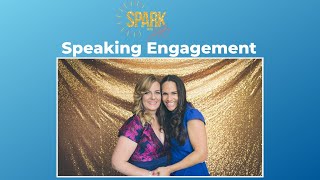
Dr. Betsy Guerra, a psychologist with 20+ years of experience, introduces Fuse, her model for understanding how people receive messages. The four components are Filter, Unconscious triggers, Style, and Expectations. She uses clinical examples and personal stories, including the loss of her daughter, to show how recognizing your own fuse helps you communicate better.
Questions this video answers
7% (speaker stated "only 7% of communication is verbal").
Four components: Filter; (Un)conscious Triggers; Style; Expectations.
Chapters
You know, those people that are just that ray of light for you, that rainbow amidst the storm. And that's what this woman represents to me and to so many people the second that you meet her. And there are a lot of people in this room that know her. This woman oozes hope and love and compassion. And she's such a beautiful reminder of the power of perspective, the power power of hope, and the power of faith. She's been a psychologist for more than 20 years. But more than that, she's a mom, she's a wife, she's a beautiful soul who has devoted her life to giving people the opportunity to be a better version of themselves. So, ladies, it brings me such great Joy to invite Dr. Betsy Guerra, my friend, up on the stage to share her brilliance with. With you. Where is Dr. Betsy? You like the song I chose to you? Okay, I'm going to go take a break.
Okay. It's all you. I should start by telling you all that my husband thinks I'm crazy. And he's probably right. He figured it out very early on when we were boyfriend and girlfriend. And I got upset at something at some point. And I decided as a good psychologist that I was going to express my feelings and I was going to use my communication skills and I was going to tell him what I felt because my feelings mattered. I used I statements. I was very eloquent. I spoke from the heart. I didn't judge him. And he looked at me just like this. And I figured he's thinking, oh, my gosh, I messed up. Let me think of an apology so that I can make it up to this girl. And I was ready. At some point, I was done expressing my feelings. I paused. I looked at him, waiting for feedback. He looked at me just like this, and he said, baby, are you crazy? Or is every woman like you? And they just don't talk about it? So raise your hand if you think you're crazy or somebody in your life thinks you're crazy. It's good to feel that I'm not alone in this. Well, a lot of people say it's because of communication that's the problem. Communication. But I thought I was a great communicator. Communication is when we express a message, when we exchange information. And there are three components of communication that make possible for us to relate to other people. So relationships do not exist without communication. Those three components are in the word communication. And there's a common component of communication. There's a unique component of communication, and there is the action that takes place when you exchange the messages. So the common component refers to when we have a shared language. In this case, English, shared expression, Spanglish, shared expressions, shared interpretations. So if I say that it's like this, whoever's Cuban should understand that it's like, really packed. I didn't know that. I'm Puerto Rican. So if there are certain things, like I do like this, and it's not that I'm trying to kiss someone, it's like, it's right there, you know? So we have shared common, shared experiences and components in communication. There's a unique component, and that's how we, as unique individuals, express ourselves and express those commonalities in communication. And then there's the action. And the action is just that process of exchanging information and conveying a message from one source to the other. Okay, my favorite communication techniques are these. Let's start with the validation. This is my favorite. I feel we should all validate other people's feelings, and our feelings should be validated. So what does that mean? That means when you recognize somebody's thoughts or feelings and you make them feel as though they matter. So you don't have to agree with someone to validate that person. And I remember when I told my husband, you know, you need to validate me, because, yes, you think I'm crazy, but these are my feelings. So you don't validate someone by saying that they're crazy. My husband learned that early on, and then at some point he started implementing that, and he said, I validate you. I'm like, no, you say, I'm sorry you feel that way. I can imagine how hard that is. Understanding your perspective makes me realize I could have done a better job at expressing myself. So that's how you validate. There's paraphrasing, which is when you repeat the message that they told you is in your own words to make sure that there's clarity and that you're understanding the same exact message that's being conveyed. So, for example, if my husband comes and tells me, oh, the food is really salty. And I tell him, like, so you're telling me that I'm a terrible cook? He's probably going to say, no, I'm just saying that this food that you cook today is really salty, but you're a great cook. So we need to paraphrase to make sure that the message that we received is the message that was being conveyed. The third one is avoiding use of always and never, rarely ever will always or never be true. So when you say you always do this or you never help me out, you always have something more important to do, or you never come visit me, you never call me, because that's rarely ever true. You will lose credibility and it will hurt your relationship and your communication. The sandwich method is another one of my favorite. I love carbs. And you know that this whole dieting is like no carbs, no carbs. So imagine you're in a carb free diet and then suddenly you get like a Hawaiian bread. I'm Puerto Rican, so like un panzoao, like from Puerto Rico. Super, like super sweet and soft. So when we communicate with people or we want to express some sort of criticism, constructive criticism, we use the sandwich method. So for example, in the case of the salty food, my husband could have come and told me, baby, you're such a great cook. We're so blessed and lucky to have you here. Like, cook for us, you know, like, I think you put a little too much salt. So that was the bread. I'm awesome cook and he's so lucky to have me. And then after, I'm like, yes, tell me more, tell me more. At that point, you give the ham and cheese or peanut butter jelly for the vegans and vegetarians and you give them the constructive criticism. You know, you could have done a little less salt next time. And then you want to end with the bread again to leave a good taste. So you tell them like, well, you got it next time. Because I'm sure, like, you're such a good cook that, you know, you learn everything super fast. So you want to use the sandwich method every time you want to do that with anybody in your life. You're your partner, your mom, your co worker. Just the other day, my assistant, there were some things about the newsletter that weren't right. So I started with, oh, my God. The testimonial came out amazing. You did a great job. I'm so lucky to have you. And then I told her the things that I wanted her to improve and we ended up with like, you got this for next time. So sandwich is very powerful. Many times when you want to convey a message that is not necessarily going to be taken well by the other person and the I statements, we all know about that. It's when you speak from the heart. I feel this way when you do xyx conduct or behavior in a situation Y. So there's I statements and XYZ statements. So in situation X, I feel Y because you did your set Z. So it's important to use these communication skills for. But the thing is that even when you know all those communication skills, like I did and like I implemented, we still have struggles with communication. And the problem is that only 7% of communication is verbal. So all these techniques that we can learn and implement are only 7% of our communication. The other 93% is body language and the tone of voice. How do you prepare for that? Well, there are even books that talk about that. I was reading a book recently that spoke about how to give a handshake and what it means. The other day, I was in a seminar and somebody told me that a co worker of hers got offended because an old lady that didn't know that this was the case sent her a text asking for something. A client in all caps. So she thought that the lady was screaming at her. Talk about nonverbal communication. Turn it on. Oh, no wonder. So what happens when you know all these communication skills? You've already learned how to do a handshake and that you don't do caps lock when you're talking to the boss because you're screaming to them. What do you do when you still struggle with communication? And that is the case with every relationship, especially when it's somebody that triggers you or you're in a situation which you're under a lot of stress or you become defensive. There's one component of communication that hasn't been explored, and that is the unique component of communication. And that's what I'm here to talk to you about. Now, what I'm going to talk about is amazing. Amazing. It's a Fuse concept, and there's nothing like it. You guys are vip? Because I'm still in the process of writing the book. So it was just trademarked and you're privileged. In fact, Oprah interviewed me, and she was amazed by it. She was like, wow. She thought it was incredible. And she wanted me again next week, but I told her that, you know, I was going to take a break after this event, and the TED Talk people have been trying to get a hold of me, but I told them, vip Spark. I can't do that right now. I will be at the end here giving some autographs for those of you ladies. So you are totally vip. You're welcome. So let me tell you about Fuse, but before then, I would love for all of you to get out your phone, please, and text me at this number, and I will send you a cheat sheet about Fuse. That way you don't have to take so many notes during our session. And please make sure that you change that phone number on the pamphlet, because the number to which you need to text it in your pamphlet is not the one that is current. So text me that, and I will be sure to send you this super awesome, amazing VIP concept, and I'll show it to you at the end again. So, Fuse. First of all, the word fuse came from the fact that we tend to have a short fuse with some people and in certain circumstances. So I figured it would be easy to remember. But it's also an acronym. And it's an acronym representing four concepts that help us understand why we relate to others and why we communicate with others, and why we interact and interpret information in a certain way in the unique way. So Fuse is about targeting and explaining the unique components of communication. Now, let me tell you something. In our brains, our brains are amazing. And there's a region in our brain called right TPJ that explains why people react in different ways. So in that brain region, it's different for all of us. And in fact, we're not born with it. It develops from childhood to adolescence, and it explains how we perceive things, how we observe information, how we process information. In other words, our rightcpj is in charge of helping us understand what we think about what other people think. And because everybody thinks differently, because we all have a different history and experiences that have contributed to us interpreting life in a certain way, everybody's right TPJ is also different. So fuse is those four components, and the first one is filter. So think of an AC filter. You have the filter, air flows through it. The contamination stays in the. The impurities stay in the filter so that the clean, fresh air can come out of that filter. The same thing happens with ours. Information, experiences, everything that we go through in our daily lives from when we're little, goes through that filter. It leaves some impurities or contamination or. Or awesome things because it doesn't have to be something negative. And then the clean message comes out. Now, what happens with the AC filter when it's filthy or dirty or it has too much stuff? Does the air flowing through it come out clean? It comes out dirtier many times. And it's not good for us to breathe it. It could cause diseases, which is why people tend to change the filters when there's been construction or something. What happens with our filter when it gets dirty? Nothing. Because we don't even know that we have a filter. We don't clean our filter. We don't change our filter. We don't look to see what our filter has. Now here's the thing. The filter is not always negative. And I'm going to give you a couple examples in regards to how it's positive and how it's negative. So I have this client who's an American man, and his parents were. His dad was an alcoholic, and he used to physically abuse his mom. And every time he came home drunk, he would start screaming and yelling, and then he would hit his mom. And it was extremely painful and traumatic for him. So every time somebody raises his voice, he gets really nervous, feels unsafe, and experiences that anxiety that he experiences when his dad was coming home screaming. He married a Cuban lady that is super loud and gets super excited. And every time she's talking to him and she's, don't scream at me, but. Don't scream at me, but lower your voice. Because he's filtering the information, the loud tone of voice, not as she's Cuban, forget it. She's never gonna change, but rather as she's going to get aggressive or she's being violent towards me. So he's filtering the information based on the impurities and that contamination that he has from his family of origin and the experience, the traumatic experiences that he endured. Now, a positive way of looking at faith is what we're doing here right now. So if what we have in our filter is love, faith, positive thinking, and all the good things that we are experiencing in this convent, in this on conference, then whatever goes through that is going to come out with hope, and you're going to come out thinking like, okay, pain. Pain is. I always say, pain is awesome. People look at me like I'm crazy. Pain is awesome because pain is the foundation for growth. It's what allows you to become a better version of yourself. It's what helps you understand that there's something greater. And it gives you the opportunity to feel really bad so that you want to get out of feeling bad and do something about it. Something grand, something special. And I think other women that have spoken here have proven that pain, their pains in their lives have actually been their greatest resources and the greatest opportunities that they've had. I have an amazing husband, the sexiest man on earth. He happens to be here somewhere, but he would kill me if I point at him. He's going to kill me already for that slide. And I have four beautiful children. I have three girls and a boy. And one of my daughters is in heaven. She moved to heaven five years ago. And needless to say, it was the most painful time of my life. And I was fortunate enough to have in my filter faith. I had A lot of faith. And I didn't know how much faith I had until I had to process that information through my filter. And it is faith and hope and the ability to see the good in the helplessness and to feel that there's blessings, even in pain. That allowed me, among other things, a lot of love and support, too. That allowed me to move forward and be happy again and experience joy again. So when we talk about filtering human beings, we don't want to change them because it would essentially change who we are. Like, we don't want to replace them. We want to clean them. We want to make sure that whatever is on our filter, we want to keep on our filter. We want it there. So, for example, our values are part of our filter. Our experiences and the things that we've learned are part of our filter. The things that we want to keep, we keep there. But it has to be a conscious decision. It shouldn't be something that just happens. Now, the thing about filter is that there's a saying that says that you see the world not the way the world is, but the way you are. And the answer for that is filter. We tend to see the world in the light of what we have there. And just yesterday, a client of mine called me, and she's like, but he doesn't understand. He's not listening. He. He's not listening. He doesn't understand. He's listening, but he doesn't understand. You're right. He doesn't understand it the way you do, and it's frustrating. And that's why communication sometimes is so difficult. And we struggle with it, because no matter how well you say it and how eloquent you are, like, I was with my husband that day, he or she will understand whatever the heck they feel like understanding. And that's frustrating, but I have ways of dealing with that, so don't worry. The un fuse is unconscious triggers. So this American guy that married a Cuban lady, every time she was drinking, like, every time she had one glass of wine, because she wasn't too much of a drinker, she had one glass of wine, and then she got louder and more excited, and he would start feeling like, oh, you're drunk, you're drunk, you're super drunk, and you're gonna do it again, and you're gonna become aggressive. So the way he filtered information made him, like, triggered in him all these emotions that were. That didn't really match with what was going on. The crime didn't fit the punishment. And that's because being filtered in a Certain way based on his history and abusive experience. Experience made him react emotionally to how he felt back then. So when he was reacting to her, he wasn't reacting to her. He was reacting to his dad and to everybody else in his life. That somehow made him feel unsafe and scared and helpless. And his trigger was that sense of helplessness. And. And we tend to carry out all of these. Now the good news about the triggers is that we usually have two or three triggers in our lives. Two or three? You can get some additional ones in the process with experiences that you have, but usually it's two or three. So for example, let me share. Growing up, I'm one of four or two and growing up, my oldest sister had severe mental retardation and she was the firstborn. So my parents had to cater to her. And then they had my brother and they gave him everything because, you know, my brother. And then I was the third one. Middle child. Any middle childs in the house? All right, so I was the third. And I grew up learning that I had to understand my sister. So I was a month old baby and she was taking my bottle away from me and my pacifier and. And I would hear, but you have to understand her because she doesn't know. But I didn't know either because I was a little baby. So I grew up thinking that I had to understand other people. No wonder I'm a psychologist. I told you, experiences are not always bad. So I learned to receive love in the measure that I gave, and I thought that I was valuable in the measure that I could do for others. And growing up, I created some monsters in my boyfriends because I taught them that I give and I do. I don't receive. And who doesn't get used to that? Which is why it's so important for you guys to learn it here, that it's important not just to give, but also to receive and to receive with grace. So growing up I learned that. But it gets to the point you get to adulthood and you're like, you know what? Ja, that's it. I want to receive too. So then one of my triggers was like, I want to be considered. Like to not feel considered. So whenever my husband did something that made me feel like he wasn't considering me, even if it was dumb, I would be triggered by that. So my trigger was to not feel considered. Other people's triggered is to not feel that they are the best or they're the number one. Any firstborns here? Yeah, you were the best. You're the one Taking care of everybody. You had the best grades. And then when things weren't super perfect, I say to my daughter, poor thing. Then you struggle with that. So whenever things are not going your way, it's harder to deal with changes, with knowing what to do with the things that aren't familiar to you. So that's unconscious triggers. We could go on and on here. Now, there's a few things that I need you to know about unconscious triggers. You know, you have an unconscious trigger when the emotion that it exacerbates in you is unbearable. It's humongous when you're super angry or super sad and you just cannot get over it, no matter how hard you tried. So whenever you feel that way or somebody looks at you like my husband was looking at me, like, what's wrong with you? I was probably not feeling considered at that point. So whenever somebody looks at you, pay attention to that. Because if they look at you like you're crazy, it's probably not because you are, but because he's triggered or she's triggered something in you that is old, that comes from beyond, from before. The S in unconscious triggers stands for style. So we all have a different style in communication. For example, some people like to speak right there, right here. Tell me right now. Let's fix this. Let's talk about it. We need to express ourselves. You're going to feel so much better. Just let it out. Let it out. Talk about it. Talk about it. Other people suffer from muteism, like my dad. My dad is an expert mute. He cannot talk for his life. And you're like, but say something. Say, insult me. Do something. Insult me something, but say something. They don't because they process. They're more of introverts. They process inwards or like they have everything figured out inside of them. Other people need to cool down and then come back and speak. So we all have different styles. Some people like doing the cold shoulder. Others like to scream and curse and let it all out. Some people are more introverts, extroverts. There's so many different ways of communicating. Some people have a way of. Some people think that dirty laundry is there at home, so they don't talk about their things in public. So they're very private. And then there's other people that think that you should be an open book. So they tell the world. Now what happens if you're in a relationship. And when I say a relationship, I mean any relationship, a significant other. Your mom, your dad, your sibling, your co worker, your boss. It doesn't matter if you're in a relationship and your styles clash, that's going to make you defensive and it's going to intervene with the communication being effective. And here's the thing. When we practice all these communication techniques and we become excellent communicators, sometimes we can't even implement our skills because the conversations are over before they even start. And if conversations are over before they start, we need to look at Fuse. We need to understand what's that filter that that person's processing this information through? What are the unconscious triggers or. Or why am I feeling this way? Because the thing is, we need to learn about our views, but we also need to learn about the views of the people that we care about and the people with which we care to communicate effectively. So, Stiles, if I am an open book, which I am, and my husband's more of a dirty laundry at home, which he kind of is, and I decided I'm going to tell the world something that he shared with me because I didn't think there was a problem with that. And then he's going to feel betrayed. So all the concepts in Fuse overlap. So if I have a different style, which is open book, and he has the dirty laundry is there at home and I decide to share information, then he's going to filter that as betrayal and he's going to be triggered by it as well. And then the E in Fuse is expecting expectation. Most relationships fail because of unmet expectations. So, for example, you decide, well, it just happened today. Luli said for you guys to send a text to someone that invited you to spark or had something to do or was dropping off your kid or picking up, and somebody in my table did just that. And she sent a really nice text message message saying, thank you for allowing me to do this. And she poured out her heart and the response was, thank you. Thank you. We do that all the time. We come up with this amazing message in 45 minutes. Writing it because you're so amazing and I'm so blessed to have you emoji. Expectations. Many times I do a lot of couples work and many times the wives or the husbands come because can you believe me, if I would have done. If I would have gone to McDonald's, I would have brought him food or I would have at least asked him to bring food. But you're on a diet. It doesn't matter. I would have still done that for him. We think or we expect that other people need to be the way that we are. How boring would that be? And many Times my clients come and tell me, can you believe he didn't even call me? Or she didn't even do this? I'm like, but what. What did he or she do wrong? What was it that, oh, he didn't do? But what did he or she do wrong? Many times we struggle with relationships because the other person didn't act or do what we wanted and expected him or her to do. It's not my reading day. If you want your mom to do that, you gotta tell her. And girls, if you have a significant other, and that significant other is a guy, he for sure has no idea what you're thinking. For sure. In fact, I have a brutal theory because, you know, sometimes they don't get it. They really don't get it. So like, to not take a person, I'm like, eh, Bruto, the guy doesn't know any better. And it works. Let me tell you, it works. It's amazing. And you could use that with women too. But there are not too many women that are brutas, you know, expectations. We need to have more realistic expectations in order to have a better communication. If you know that your assistant never does that, right? Why do you tell her to do that? If you know that your husband is not very thoughtful and doesn't bring you flowers, why are you still waiting in the door for the flowers? We need to understand and change our expectations so that our relationships and our communication can be more effective. Now, how do I find my fuse? We already know that we have a fuse. We already know that there's a brain region, right? Tpj that explains why we have a fuse. But how do we explore our fuse? I used Explorer to try to remember because it is a lot of information. The E stands for emotional response. So whenever you have an intense emotional reaction, when you feel like, overwhelmed, and no matter how Betsy get over it, it's okay. Just enjoy the moment. It's okay. And you can't because it's bigger than you. Something was triggered. There was an unconscious trigger there. So try to understand and think about, okay, what am I reacting to? And I'm going to jump to the L. When you are experiencing that emotion, you need to try to figure out what you're reacting to because it's not to what the other person did or didn't do. You're reacting to what you are telling yourself about what that person did. So you are reacting to the underlying message that that has for you, to the way you filtered it. Whenever you experienced a very intense emotional reaction, you ask yourself what am I reacting to? Oh my God, she was so late, she doesn't even care. How dare she. I told her 5:30 and look at that, it's 5:45. How could she be so inconsiderate? Inconsiderate? I don't like when people don't consider me. I don't like it when people step over me. And I took the 15 minute delay as inconsideration when maybe it was because it was really bad traffic or she had an issue with the daughter or something happened. We tend to interpret things through our filter and we have to make sure that we know what is in our filter so that we have the ability to capture what the underlying message that we're receiving from somebody else's actions is. And you've heard it before, that nobody can make you feel a certain way, nobody can make you do this, nobody can make you happy. The reason they say that is because you have the power to filter it in a different way. You have the power to have a different perspective, like Luli was saying. And you have the ability to decide how do you want to experience that, that you've been told or that the other person has done to you. And you have the possibility to explore the underlying blessings the X stands for. Exploring your history. Everything infused. Everything infused can date back to your family of origin, your history, your life experiences. So whenever you're trying to explore what's my filter, why are my unconscious triggers, what was my role in my family of origin, how you know, I was, yeah, I was the one that always had to be responsible and I was the one that always had to take care of my siblings and, and I was the one that I always had to do for others. Go back to your role, go back to your history to see what was repetitive and what was consistent and what you've gotten tired of so that you can understand what it is that you are being triggered by. So when you go back, you also have to pay attention to the people in your life. We're human beings and we not just come with genetics, but we also come with an environment. And we are taught a lot of things, sometimes even through modeling, so they don't even have to tell us. So we have to go back to our history to explore and see why it is that I react this way to this situation. And usually that is a repetitive thing. Every time somebody does this to me, I get super upset. Or maybe the repetition is not in the incident. It's, you know, like my ex boyfriend said this about me and I was A control freak. And the one before that said that I was a control freak too. They're both crazy. They're both crazy. My husband says I'm a control freak. So wait, but there's repetition. And who's the common denominator? I'm the common denominator. So we have to look at the repetitions in our lives, whether it's a lot of people that have told us or different situations that tend to trigger the same thing over and over again. Because if it's repeated, it's probably an unconscious trigger. It's probably part of your filter, it's probably your style. It's probably part of what you expect from other people. So it'll help you explore your fuse. Then we need to pay attention to others feedback. So if my friends, my best friends say that I am a pain in my butt, but I think I'm awesome and I don't understand what they mean because I really live to make other people happy, but I guess I overdo it and I am annoying in the process. And my husband also thinks I'm a pain in my butt. And I've been trying to change and become less of a pain in the butt, but I don't know how to, because I think I'm awesome. And the other day we went. My husband and I went on a trip, on a couples trip with five new couples. They didn't know me. They were, you know, his friends. And I was like, perfect, I'm gonna show these people how awesome I am. And then suddenly one of the husbands told a line, my husband, that he was going to heaven. And I'm like, these people don't know me. And I've been awesome. I've been awesome this entire trip. And I had to ask him because I'm like, oh, wait a minute, you know that I'm missing something. And I still don't get it. But I had to go to my husband and be like, why do they think you're going to heaven? Like, what did I do? I've been awesome. So I don't know. I guess I am a pain in the butt. You know, others have said that I'm going to listen to the feedback. So engaging attitude. What do I mean by that? In order to learn about yourself, about your unique components of communication, you need to be humble and you need to be kind with yourself and you need to be accountable. When we're humble and we're capable of assuming responsibility, we're also able to learn about ourselves, which is necessary in the process of becoming A better version of ourselves, which is what we're called to be. And I think that's why we're all here. Whether it was because they forced you to be here or they invited you and you didn't know how to say no, or because you want to support someone that's participating, you're here because you want to be better. And in order to be better and in order to find your fuse, which will allow you to have more fulfilling and beautiful relationships with. With everybody in your life, you need to be humble and accountable, and you need to hear that the other people around you have to go to heaven. You're going to go to heaven because you're such a pain. So I told you that my husband thought I was crazy, but he still married me. And we had four precious little kids who now think I'm crazy. But it's all good. We're all crazy. In Spanish they say, so we have a little bit of crazy in us, and that's okay. And the reason we have a little bit of that is because we're unique. And that's why it's so hard sometimes to want to be like the others or to communicate with others that expect you to be in such way. So now I have a beautiful family, crazy and all, and I have a little angel that looks like watches over me and helps me become a better person and helps me help you in that journey as well. Thank you. Betsy, get back up here.
I want you to receive.
I want you to receive. Thank you.
I told you she was a badass. Thank you, my beautiful friend.
Thank you.
He's right behind you. He's right behind you. But I didn't tell you anything.
Where's my remote?
Betsy, give me the remote. She's so excited. She's running off with a remote. Yes. I think we need to applaud her husband for being so amazing. You're getting a round of applause. Look, you're getting a standing ovation. Alain, you're getting a standing ovation. A very well designed standing ovation. Wasn't that amazing?
More from Betsy





How to FIX your RELATIONSHIPS: Understand the attachment styles! #lifelessons #relationship




