How to overcome fear of Public Speaking: An Interview with AmondaRose Igoe
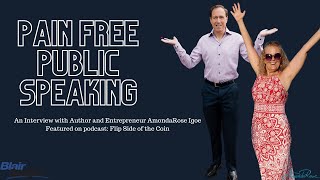
A conversational YouTube interview (Blair Singer with AmandaRose Igoe) about overcoming fear of public speaking, practical systems for crafting talks (open/middle/close; story structure: breakdown→breakthrough→business tie-in), monetizing presentations (strong closing, clear CTA, offers, videotaping/testimonials), adapting from live to online events during COVID-19, authenticity/leadership on stage, and AmandaRose's coaching philosophy and resources.
Questions this video answers
Her 'eight high performance speaking tips' available at highperformancespeaking.com.
amandarose.com
800-610-9056
Seven marathons.
$97.
Monda has worked with thousands of individuals all over the world, helping them become great public speakers, helping them monetize it. She's written three or four books, contributed to Chicken Soup for the Soul. Is that right?
That's right.
And she's got an amazing book called Pain Free Public Speaking, which I'm very interested how she eliminates the pain for most people. But again, Amanda, thank you so much. Mondoros, thank you so much for being here on the call. I appreciate it.
Oh, I'm honored. Thank you.
So you didn't always. You didn't, like, wake up at age 5 years old and say, look, I'm going to be a public speaker, did you? I mean, you know, it's like, I think I was reading a little bit that your story was kind of a torturous one in the very beginning. Care to share that a little bit?
Yeah. Thank you for asking me about that. Because most people will look at me and think that speaking has been easy for me. She probably stood up on a stage, delivered a presentation in a wow moment. And actually, because of my past background and growing up, I was a horrible communicator. I was the queen of the odds and arms. I heard nervous laughter. So I'd speak, and then I go after everything. I said, would you like an eraser? Just gets rid of all communication. And I was really uncomfortable in social situations. And sometimes faith puts you in situations you don't expect. So I took a job with a nonprofit organization as a fundraiser. So I figured I was going to meet with donors and raise funds. I was happy to do that.
I had a job privately, Right. So privately I wouldn't have to speak, right?
That's right. One to one. And I also thought I'm a horrible communicator. But they still hired me, so. Okay, I must be doing something right. Well, they didn't tell me when I took the job that I literally have to stand in front of hundreds and present hundreds. I was a horrible communicator. I had nervous laughter, my knees shake, my hand shook. Just a disaster. And it's in times in our life where we choose to let something bring us down or we raise up. And I decided I was going to raise up and figure it out, because I wasn't. For the first time in my life, Blair, for the first time, I was not going to let fear, doubt, insecurity, past experiences hold me back. So I started invested in myself to learn the art of speaking. Because, as you know, there's an art to it. Most people don't Stand up on a stage and nail that presentation. We have to invest in ourselves and learn how to do it. And from that experience, I had board members come up to me and say to me, you need to teach everyone to present like you. And I also found that I was really great at creating content. Like, I've just. I didn't even think I had a creative bone in my body before that. And so I stayed in that job for five years and that I had that calling inside of me, that I was meant to help other people, that this was what I was here to do when I walked away from that job after five years.
Nice. Very, very nice. So it wasn't always easy. Right? That's the bottom line. I think for people that really have a calling, you feel like you have experience or knowledge to share. I mean, don't let fear hold you back.
Right, right, right. Because prior to that, lots of things held me back. And it was the one time I took a risk and said, I'm not gonna hold myself back anymore. It was the first time that started a pattern as, you know, as a successful entrepreneur, business owner, you have to face your fears. You have to move past. So that was this jumping point for me to look at. Like, no risk, no reward.
Well, good for you. I mean, and I don't know about you, but I know that my path as a speaker was not an easy one in the beginning either. And there were some. You have some ups and you have some downs. Is that correct?
100%. 100%. There are going to be times that you deliver presentation and you're like, whoa, that was the best one so far. And there's going to be times when you're just a little off your game. It happens to every single speaker.
That's right. That's right. You know, there's times you're up there and you get into a flow and something comes out of your mouth and you're thinking, wow, that was so much smarter than me. How did that happen? And then there's other days. It's like I'm boring myself. Right. So, yeah. Thank you. So let me ask you something. You teach a lot of people to do this, and you wrote a book called Pain Free Public Speaking. Why is there so much pain? Why is it we all know this is, you know, public speaking for some people is greater than the fear of death? Why, in your experience working with all these people, why?
Think about the first time you drove a car. Think about the first time you rode a bicycle. You were trained how to do it. Your parents or grandparents or uncles didn't just put you on a bicycle and say, here you go. No, you had training wheels. And that's the biggest thing that people have. There's two reasons. I see. One is that they don't have the training behind them, because if you learn the skills, you become more confident. If you learn what to do when you're speaking, how to present, what to do with these arms, these legs, the voice, all those things, you become more confident. Right. And then you build that muscle. And so it's not like you just should expect that you're gonna stand in front of an audience and it's gonna be like, wow, this is the best thing ever. And the other thing that I find, if people aren't really talking about something they're passionate about, their fear is gonna significantly increase because their heart isn't in it. I've had people that have come to me and said, you know, I have to do this presentation my company has given me to do. The marketers put it together, but it doesn't feel like me. So what we would do is figure out what are their things that they love to talk about, and then put those, weave those into their presentation, and they're like, wow, now I feel like I can deliver this.
Okay, so I got it. So part of it is, A, get some training, B, make sure you're passionate about what it is you're talking about so that you don't have to have a script and all that other kind of stuff that goes along with it. Is that right?
Well, I think there's a certain part of it where some people will say, well, I just get up and talk. All right, so, yes, some people, a small percentage can pull that off and stay totally focused from opening to closing. Most people who do that cannot. Right. So there's a part. There's elements of it, and knowing where you want to go, when you want to go, all those pieces need to be well thought out. Yes, you can interject. Yes, you can talk. Very conversational. But you do need to have, I think, a structure.
Yeah, I think I read that you said that you're really big on systems. You like systems. So for a new speaker or even for an experienced speaker, what is like a couple of systems that a person should have in place in order to lift their game a bit.
So if they take a basic system, I'm going to give you two systems real quickly. A basic system of. All right, I have to put a talk together. I know I need an opening. I know I need A middle and I know the closing. So if they use this simple formula, it will help them kind of fine tune the timeline of it. So it's 45 minutes, they'll know where they need to be at the middle, where they need to be at the closing. If it's 15 minutes, they'll be able to use this formula as well. So 10 to 15% is your opening and 10 to 15% is your closing. The rest is the middle, the content part of it.
Got it.
And the other thing that I like to share, when sharing their story, many people, some people ramble and some people their stories like this big. I like to say women and not all women, we tell you all the details, everything. Where men like my client Joe, who was terminally ill, his story, when I'm from first met him went like this. Well, I was terminally ill, met a healer, and now I'm well, we wanted more information than that. Right. So it's finding that balance in there. So I like to tell them when you're crafting your story, this is a simplified version of what I teach is the first part is your breakdown, what happened. The second part is your breakthrough or blessing. Where's the good part? Where's the thing that you learned? And then if you're doing it for business for the third part is you're going to tie it into your business message. So it's breakdown, breakthrough, also blessing, and tie it into your business message. That gives you a really solid foundation to at least start to form a great story.
Wow, that's really, really very helpful now. So those are some systems now I also find, and maybe you find this too, is that there's a lot of people that flooded into this business, particularly in the last year or so when everybody went online.
Right.
And I'm going to ask you about that later, but a little bit about that later. But very few of them are making money. Very few of them know how to monetize it. What's your suggestion there?
Well, part of it is also around the closing part of it because people will go online and they will start doing live presentations, some already doing that. Now when it comes to the closing part, they don't put the time and effort into thinking, thinking about that from the moment they open their mouth. They want that to lead to the closing, end part. Right. So it should be opening always goes to that end. And the other part is they don't really prepare that closing. So they get. They'll do an online webinar masterclass, just promote their programs and they'll say, okay, well, if you want to hire me, contact me via my email. There's no incentive, no motivation, nothing that says to me, you need to be the one that I need to call right now or I need to reach out. So really thinking about that closing, you know, what's the benefits? What's the emotional benefits that they're going to receive? What's the details they need to know, what do they not need to know?
And then obviously a very firm call to action. Do this, do this, do this now. Very good.
It has to be, because people, and as you know, people, if you don't tell them what to do, then they don't know what to do. Simple as that. And I believe you got to do with heart and emotion. You know, you don't want to sound like the used car salesman, run back to the room or press that button right now. Because I think people are wiser than that. They want to buy because they like you and they trust you.
Right. Yeah, well, which is a great point. I mean, I, you know, in order to be any kind of a speaker, you know, you can assume a position of authority, but the only way that's going to happen is if they know you and they somewhat trust you. If they don't trust you and they don't know you, they're not going to take any action with you. Right?
Yeah. Can I share one other thing about the closing?
Of course.
Okay. So often when people get to the closing part and if they're not seasoned to doing their energy or their delivery changes and the moment that happens in the participant's mind, something shifted, their subconscious goes on alert and says, I can't trust them anymore. Something shifted. Their tone of voice might change, their energy might change, their delivery changes. Maybe they're live, they are reading notes rather than actually talking to the audience about the offer. And the moment that happens, the people that are thinking about buying are going to put those credit cards away because their mind is going, something's not right. I can't trust them. So always make sure for the viewers and listeners to make sure that they. Your energy, your same delivery is all the way to the moment. You stop that presentation, all the way to the end.
So that's a good point. So how would you suggest doing that? Because as you say it, what comes to mind is a person that wants to speak. In other words, you have the passion to deliver something. Right. But the two things that stand in the way are two biggest fears. You know, fear of selling. People are afraid to sell and they're afraid to speak in front of other people. So how would you suggest or when you do your training, what do you teach people to get to maintain that energy level so that it doesn't change?
They have to practice it. You got to. You have to treat the entire presentation. You need to know it. Like you could wake up in the morning and deliver that presentation. Too many people, they get stuck on their notes. They get stuck on their PowerPoint slides. I rarely use slides unless it's a very large audience because I want them to stay connected with me so that you want to think about it, that, like, you can just do that presentation no matter what, without notes, without PowerPoints. Because if PowerPoints die, what are you going to do? You got to still deliver it.
I know I've had people say, but I need to have my PowerPoint. I said, why do you have to have a PowerPoint? They go, well, keeps me on track. I go, well, that's your problem. That's not the audience's problem. You can have your own laptop up there if you want to look at it, but don't, don't be sharing it with them because you're right. The focus needs to be on you.
Yeah. And then every time somebody clicks on the slides, their view goes to the slides. Right. The audience is now looking at the slides instead. And so they've disconnected from those audience members. And I gotta tell you, at first I fought that. You know, slides with a few words and few images on it. And once I let that go personally, I was so free to be myself.
Yeah, absolutely. Absolutely. You know, people say, well, I need to have it, I need this, I need that. Look, you don't. The more you practice, the less of that you need is what you're saying. And I firmly, you're gonna be good at anything. You just got to practice at it. Right.
Marathoner doesn't just go and run a marathon. A marathoner puts in all those practices. I've run seven marathons myself, so I know you put in those miles. You can't just go and say, I'm going to run a marathon today. It's not going to happen.
You know. That's right. That's right. I want to jump back to something we talked about earlier. A moment. Is it back in March of last year when everything locked down, every, all all over the place, everybody's business has shifted a little bit. And just because we. I talk to lots of entrepreneurs, lots of entrepreneurs watching this. You know, what happened with your business? Did it go through unscathed? Did you have to make changes? What kind of things did COVID 19 or 2020 do to your business and how did you respond to it?
Yeah, thank you for asking that. My business really went through unscathed, you know, because I already was doing online things. They weren't new to me. I was doing live events. And so when I actually had event planned, a live event, six figure live event, six figure empowered speaker workshop or April of last year. Right. So I was like, oh, it'll be gone by then.
Right, right, right.
I'm a positive thinker. It'll be gone by then. So then I moved into June, you know, it'd be gone by then and it didn't. So I did have in where I. Where the location is in Florida. It was a good location. There's not a lot of cases. There weren't a lot of cases in the area. And I knew I had people that wanted to come, so I did both. I had, maybe I didn't have a huge in person audience. I think there were maybe 30 people. All social distance chairs were six feet apart, masks, temperature taking. We did everything we could for those who wanted to be in person to have that. But the one thing that Covid did for my business, it forced me to do live stream and I didn't want to do it. I fought live stream. All the technical, what if we have issues? How am I going to handle a live audience and then an online audience? And I got to tell you, it was such a blessing for me because I found that one, my registrations increased especially during COVID when people didn't want to come out in person and that it allowed me to see that I could handle the online, the in person livestream just perfectly.
Yeah, that's great. Yeah. And again, the same thing happened to us too. We were doing live events all over the world and they just, it was just over. And so we immediately had to shift online. And now we've, and now, I mean we're busier than we've ever been because it's like we got online offline, multiple time zones, all kinds of things going on. So you're right, I mean if you're, if you, and if you're not, if you're a trainer right now or you want to be. The good news is this is almost recession proof. Would you agree?
100% agree with you? Yeah. Just people need to know that, that the things that they were doing in front of live audiences, they have to modify them for online. You have to change your things that we, the Ways you engage with an audience in person. I mean, when you go from in. When you go from in person to online, you have to shift it.
That's right. That's right. And I think that, like you said, you. You were already in the online space, so that it was, it was helpful just to make that transition.
Yeah, yeah. Yep.
All right, let me ask you another question. You're again, you're very passionate about teaching people how to speak and why. I just want to know why. I mean, you know, everybody's got a why behind what they do, and I just want to know what yours is. Because even in just talking to you today and reading some of your stuff, I just get this exuberance about getting people out there to deliver something. Why. Why are you so passionate about it?
So when I was in that job that I told you about, working for the nonprofit, I would ask God, spirit, universe, whatever you call it, what am I here to do? I'm here teacher. And my response was, well, I don't want to be a school teacher. My husband, I have dogs. We don't have children. Not that I don't love children, but we just, we never had kids. I don't want to be school teacher. And I hear teacher.
Interesting.
And so part of my passion is I see myself. People may see me as a speaker, people may see me as a coach. I see myself as a teacher. This is how I teach, how I teach. So when I realized that speaking was my vehicle to teach, I walked. When I walked away from the job, I started to do my own. I started doing my own business actually, in personal development, teaching people how to discover what they love to do. Because I found it right, I figured I could do that. And then I got woken up in the middle of the night in between, when I was doing a two day workshop, in between day one and day two with this voice in my head saying, you need to teach them public speaking. If they cannot clearly communicate what their message, they will never succeed. So the next day I went to my. It was like 12 people in my workshop, you know? Yep. That's, you know, when you start in the beginning, you have small audiences. So my 12 people, I offered them a public speaking workshop. I had the date, I didn't have the location. It's like $97. And this was 16 years ago. And every person registered except one who had been on television.
That was a good sign.
Yeah. So as I've evolved, I'm really passionate because I want people to have an impact. I like to say my clients Are driven by impact and open to making more money. So they know that they need both, but they're impact driven. And I'm really. I want them here to make that huge difference that they're here to make in this lifetime. I don't want them to leave this earth going, you know, I didn't live. I didn't do it. I didn't help the people I was here to help.
Nice, Nice. So you have this. You kind of have this innate feeling that everybody's got something that they can deliver and that they just got to deliver it while they're around, right?
Yeah, yeah. My husband, you know, I'm getting up there. Not like up up there, but, you know, I'm close. Almost sick. I'll be 59 soon. And so my husband's talked about retiring. I'm retiring. I'm like, who's retiring? I'm not retiring, you know.
Yeah, you do not have the energy of a retiree.
My mother worked until she was 80, you know, so they made her retire. You know, as a business owner, I don't have to. And so I don't see myself. I. Every time I'm on this earth, I'll be making a difference.
Awesome. Awesome. You said something a few minutes ago is like finding what your message is. And you said that way back when, 15 years ago, that's what you were teaching people to do. And I'm sure you still do that. So I find there's a lot of people I just know I need to teach. I love to do it. I just, you know, it just turns me on. I love helping other people, but I don't know what to teach. I don't know. I. I don't have enough experience. I don't have it. What would you say to a person like that?
So I would pick one thing just like I did, right? I picked one thing that I thought I could teach. Actually. I'm going to go back, actually. I need to retract that statement. My first workshop that I did, or first speaker thing, when I went and booked this thing was organizing because I'm organized. I hated it. I didn't want to talk about it. I helped a friend organize his house and I had to pull magazines out of his hand. I'm like, this is not for me. And so then quickly I said, okay, I'm going to teach people how to discover what they love to do. Which led me to the speaker training part. So the way that I did is I took one step. Then when you take that one step, you'll gain the clarity on what the next step is, then you gain the clarity on the next step because people think they have to have it all figured out. Just do it. Pick something. If you don't like it, try something else.
So do you think, do I have to have a lot of, you know, a lot of people suffer. A lot of speakers suffer from what I call the imposter syndrome. Right? They think like, well, I can't do it because I'm not rich enough or I haven't been successful enough, or I don't have enough results in my life yet, so I can't do it. How would you coach those people?
Because that is, that obviously that's the negative chatter that's keeping them stuck. What will happen is they will attract people who are at, I hate to use the term for lack of a better, lower level than they're at, Right. So those people are going to show up in their audiences because they look up to them. And what I find is if you put on no matter where you are and you say, okay, I'm going to do my first workshop or I'm going to do my first presentation on this, you're going to have so many people cheering you on and telling you, oh my gosh, I'm so excited for you. This is great. Your confidence is going to start to raise. And what you're also doing is inspiring other people because you're doing it, they're seeing it's possible for them because you're being a model for them. So if you hide your light, you hide behind. I can't do it because you are not modeling for other people what's possible. So be the model of what is possible for them.
That's, that's awesome. You know, and, and as you say that too, you know, it's like, well, I want to teach, I have a little experience in real estate, so I want to teach people about real estate. And, but, but I'm not, I'm not a million dollar earner and all that. I said, well, you know, you don't have to be teaching people like Donald Trump and Robert Kiyosaki and people like that. I mean, because obviously they're better. But, but, but then there's all these people to your point, that are not even where you are yet. And you got to even ask yourself which market's bigger, those guys or the other guys? It's the other guys. Right?
Good point. Love it. Yes.
Yeah. So that's really encouraging. So your advice is take one step, see if you like it. Shift a little bit. Shift a little bit. Shift a little bit. And don't worry about trying to be the best in the house yet.
Yep. I like to say if you take one step, God's spirit universe will take two or three. But you got to take the one step.
That's right. Yeah. You just can't sit there and wait for somebody, here's your. Here's your speech and here's the script for it. That's not gonna happen. Good. Let me ask you as a speaker, sometimes you have good days and you have bad days. As I've had many of both.
What.
Are the biggest lessons that you learn? Like, and I want to be more specific, biggest mistakes maybe that you've made in your career that you've learned invaluable lessons about that even though they were mistakes, they were priceless.
Yep. So one comes to mind, and it was a big one, is I was doing my three day training, my three day live event, and this is back in 2013, 2012, and I had a coach at the time that I loved. I had absolute admiration for this coach and her skills and what I learned from her. So she had told me that once you make your offer, walk off the stage. And I said to this coach, but that's not me because I'm a hugger. I love to connect with people. I want to talk with people afterwards. And she's, nope, make your offer from the stage and walk out of the room. They shouldn't even see you afterwards. So I went, okay, I'm going to do it instead of listening to my own guidance. So here's what happened is I did that exact thing, but I didn't tell people where I was going and that it was over for the day. So now I come back and people are mad at me. Right. Because here I was, I was this super connected, you know, talking to people during breaks and just very, very approachable and so. Right.
And you bailed.
I bailed. And they were all mad at me the next day. And that bothered me so bad, it actually stopped me for doing events for a couple. Well, I did 2013, but I stopped for a few years because I was really beating myself up over it because I have a super solid reputation and now some people don't think is highly of me. And so I learned my lesson to listen to my own guidance system. So now I do make my offer, my next level offer, but I make myself available if people need to talk with me. And I still do. What I normally would do is I'm still there if you need a hug. Right. But I had to be me. I had to be me.
Yeah. Yeah. You know, that's one of the dangers, is that people want to. They come into the business, they can learn from somebody, they go to. They want to follow it exactly as the other person does. And I think that there's some merit in modeling some other processes. But then there's the problem of abandoning yourself. And if you're going to do that, then you're not going to sign up.
Now, here's the good news, is that I still sold about $60,000 in coaching packages. So even with my huge blunder, I still nailed the sales.
Yeah. See, and somebody might even say there's value to, you know, there's value to doing, to taking the approach that you took to do that. But I think at the end of the day, you got to be comfortable with you and be authentic. Right.
100%.
Talk to me about authenticity. You know, people have a hard time just being. Have a hard time just being real with their friends, let alone being real in front of a group. It kind of magnifies the issue. Right?
Yeah. And many of us are taught growing up is kind of just look like you have all your stuff together. And that's how I was raised. Like, people didn't know, you know, that my dad disappeared when I was sick. Like, they didn't know things in our neighborhood, you weren't allowed to cry. You were just had to hold it together. And so as I, as I went into adulthood, I carried those belief systems with me for a long time, and I didn't allow myself to show emotion. And so as I started to, you know, I think you get wiser and you get just more real as your numbers increase, you know, the younger you are. Let's just say you, you end up really being. You end up going, who cares anymore, Right? I'm going to be myself because I've realized it, that wanting everybody to love me or at least like me was running my life. So I would. I would pass up on bigger opportunities because I'm afraid they might not like me. They may not love me. So when I let that go, I could be me, you know, and know that I'm not going to be everybody's cup of tea. They may not like my name, my weird name, Amanda Rose. They may not like that I have blonde hair. They may not like my age. Who knows?
You don't know. You don't know.
It might remind them of their sister that they argue with all the time. You don't know. Right. And so I stopped. When I say realize that, I'm like, I'll forget it. I'm just going to be me. I'm either your cup of tea or I'm not. That's right.
That's right. And that's really, really good advice. I, you know, when, when, when we train people, I call that as sometimes as is ing it, telling it as it is, you know, it's like I may not be, you know, and admit to people, you know, look, this is, this is me that you may not like it, whatever. And it does. I think it does two things. It kind of makes you feel a little more comfortable by admitting it. And it makes, and it bonds them to you because you're just being 100% honest.
Right? Right. Yeah. Because they all feel this. They struggle as much. Many people, not all, but many people struggle in the same way. So an audience online and in person is probably dealing with that same challenge.
Yeah, you know, I agree. And I think that like, speaking is one of the most powerful in and of itself is one of the most powerful personal development programs you can put yourself through every day. Every day you are looking at yourself in the mirror. You are talking to yourself, you know, can I do this? Do I have this? You know, and it's a, it's a, it's a growth experience. Would you agree?
100%? Absolutely. Because it will change your life. Because you cannot be the same person. Because it will stretch you so far out of your comfort zones that you, your growth will be exponential. Because even if you think you've got it, like you overcome a challenge, you think you got it, you. Then the next big opportunity shows up and all those new level of fears and doubts show up.
That's right. That's right. I always say that the reward for a job well done is a bigger one. A bigger job coming right around the corner. Awesome. Couple more questions, one of which is there's a lot of people on this podcast, watching this podcast. They're, I call mid level trainers. Okay. So these are people that have learned some of the basic skills. They kind of have a message, they're weeding up, but they kind of reach this plateau where their earnings, you know, it's earnings kind of go like this. Right. And it's. They haven't broken into steady income. How would you coach them?
So are they out there, out there speaking?
Yeah, they're doing. They're speaking, but it's not real consistent. And they're getting it. They get a gig when they can get one. And you know, they don't have. It's just not. They haven't broken into making real money with it.
Okay. I remember the first time I made real money when I quit my job and met with my accountant. He goes, oh my God, you make money at this. Because I have all these other clients, they say they're speakers and they make no money.
Right?
Right. So I think that you have to look at. One suggestion is you have to look at speaking from many different platforms. Right. Every time you're presenting, whether it's an interview, whether it's a webinar masterclass, in person, you're speaking and you want to be able to do as much as you can to monetize those opportunities, whether you can make an offer when you're speaking. Maybe you host your own workshop and you want to sell your programs or you go and you're speaking somewhere, can you offer something rather than just doing simple clothes, work with me if you like me kind of thing. Maybe there's a specific offer, maybe there's a low level program that you can invite them to. You always want to be able to monetize every time you're speaking. And the other thing is you have to hustle. You have to have a hustle. You know, my clients who get the most results in my program, they go get it. Right. I give them incentive, I give them contests and stuff to give them extra incentives to do things. But those are the ones that go get it. They're driven by making a difference. So they reach out to people, they pick up the phone, they send a message, they go and think about, where can I go speak? Where did so and so speak? Maybe I can speak there. They just don't wait for those opportunities to show up.
That's a good point. I like that. That's a word I can't stand. People say, I'm waiting for something. It's like, really? What are you waiting for? Keep waiting. Yeah, but I like your word. You got to hustle. And if, and I would say to people too, if they're like, well, I don't know about asking money for money, all that stuff. I said, look, you know, it's exchange. And you got to be an exchange if you're going to add any kind of value, even if it's for five minutes, even if it's only one little message that's going to help people, is that worth something to them? Well, yeah.
Good.
Then you can ask for something in return.
Right? And you can ask for. If you're presenting Somewhere, and you're presenting for free. Ask for video. If they're videotaping, ask if you can videotape it. Can they give you a testimonial that you can use in your marketing? There's so many ways to monetize the situations. And the one thing I want to touch on real quick, if it's okay, is that people under charge for paid presentations. So somebody will tell me, oh, I. Well, I got paid $300. Okay, so now figure out travel time, time you took you to put in that presentation. Did you have to print out handouts? Did you have to have a pre meeting? Do you have to be there for an after event? Right. You add it all up, they made $10 an hour. Right?
That's right. That's right. That's right. You know, and nobody would take a job for 10 bucks an hour, but they would go out and bear their souls and deliver a message that will change somebody's life for 10 bucks. Figure that out.
Right, right, right.
Exactly. Let me ask you something. Another thing, just kind of a technical piece. We went from the industry, went from mostly offline to online. Now some people think, well, now I don't have to. I don't have to travel. I don't have to go anything. Just get on the camera here and I can do my thing. But it's not quite that easy. I mean, the truth of it is the one thing that. That one of the things that sabotage a lot of speakers is they're boring. They're just playing. Their energy sucks and they're boring. Right. And I say, if you were Bo and you go out of camera, all that's going to do is magnify the boringness. So it's like, so what would you suggest? I mean, if somebody wants to go online, that's great, but what would Amanda.
Rose, you have to treat it like as a live presentation. You've got to bring your energy needs to be magnified. Right. So if I sat here and said, well, Blair, thank you so much for having me here. Yes, it's really. This has been a great opportunity. Right. We both fall asleep. So you have to bring your energy. It doesn't mean that you need to bring them to church like a preacher in a Baptist church, you don't have to have that kind of energy, but you have to smile. You need to have vocal variety and passion about what you're talking about. Because on virtual, it's too easy for people to go, oh, let me go check my Facebook messages. Let me return that tax. It's too easy to lose them. Way too easy.
Yeah, I would agree with you. And I would say that it's a little more difficult on camera because of that. Because it's so easy to be distracted some other way. Yeah, it's good advice. Good. Anything, any other advice that you've got for people? I mean, I just. And I want to kind of start wrapping this thing up by saying that it's a first. First of all, it's a gift to have you here. It's a gift to work with you, particularly the fact that we met each other 15 years ago, which is amazing. And you're teaching ever since, which is awesome. What message would you give to people right now in terms of from a speaker's perspective, what is it you would like to say to the world?
That the world needs your message. So if you were to leave this earth tomorrow, what's the one thing you would want people to know? What's the thing that you have this burning desire to share that could change people's lives? Go out and share it, because lives need to be changed and they cannot wait to have that happen.
That's awesome. Thank you so much for that. Thank you for that. You know, I would say that you're right. I mean, the world needs people that have a message to deliver, needs people that are great leaders. And I think in a world where trying to find accurate information anywhere is very difficult.
Very difficult.
And the last question I would say, how do you see? I say that a great teacher is also a leader. What would you say about leadership and speaking?
Well, when the moment you step on stage or online, you are the leader, your audience is expecting to lead you to lead. So if somebody tries to monopolize your presentation and keeps talking after a question and answer section, you got to cut them off politely and say, sue, because of limited time, we need to wrap this up. You just need to do it. You have to be a little ballsy. You've got to say things and they're expecting you if there's an issue to come up for you to remain calm, focused. Because stuff's going to happen in your presentations. But you always have to look if you've got it together, even if your heart is given a beat.
Nice. So if people want to do some more work with you and learn how to monetize, learn how to lift their game and do some things with you. How do we do that? Can you direct them someplace?
Yep. There's a couple of things they can go get. My eight high performance speaking tips to double and even triple your results in revenue from speaking. And they just go to highperformancespeaking.com that's H I G H performancespeaking.com and they can also visit my website, which is amandarose.com, that's AMO. Because you know Google or something's going to want to say ama. No, it's amo. N d a r o s e amandarose.com and my toll free number is 800 610-9056. That's 800 610-9056.
All right, so and so some great stuff about how to lift your game not only as a speaker but also financially. Because at the end of the day, gang, you have got to be rewarded for changing people's lives because it's no small task.
I love there's a statement that's been around for years. The more people that you help, the more money that you make. And the more money that you make, the more people that you've helped.
I love it. I love it. Okay, well, thank you so much, Amanda Rosa, I really appreciate you doing this. Congratulations on a hugely successful career, one that actually skated right through COVID 19 and still growing. So thank you. And touch lots of people's lives. Ok.
Thank you.
Thank you.
More from Blair

Great Leaders Manage Emotions (Not Just Tasks) | Blair Singer Leadership Episode 12

Give Them Meaning: The 7 Elements That Make Teams Flourish | Blair Singer Episode 11

Silencing the “Little Voice” That Says “You Can’t” | Blair Singer Mindset Training - Episode 10

3 Signs Your Team Is Quietly Disengaging | Blair Singer Leadership - Episode 9

You May Be Killing Your Team (And You Don’t Even Know It) | Blair Singer Leadership - Episode 8

The Fastest Way to Learn Anything | Blair Singer on Lessons from Robert Kiyosaki - Episode 7

You’re Leaving Millions on the Table | The High-Ticket Sales Follow-Up Strategy That Works



