Step #7 to a Scalable Business
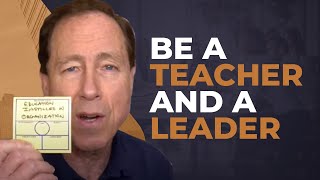
Blair Singer explains the seventh step to scaling a business: instilling education within your organization. He covers leadership, teaching, systems, and company culture as critical components for growth beyond the founder.
Without this step, you will never scale your business. Without this seventh step on this, on this path to your scalable business where you can get out of the rat race of your own business. Without this, it'll never happen. If you believe that you are the asset, the primary asset of your business and you want it to stay that way, skip this video, because this is not for you. The problem with most entrepreneurs, the solo entrepreneurs, is as you get better at something, it all becomes about you. It becomes about your ability to see the future, your ability to great vision, your ability to execute, your ability to sell, your ability to make things happen. And as flattering as that may be for you, it will never allow you to grow your business. So what is step number seven? Well, quickly, let's review where we've come so far because we're almost at the end. We're almost at the end, okay. Is in order to take you from your solo business out of the rat race of being a slave to that business, of being in the rat race of that business, we start with a mission, Remember, all the way back here, we start with a mission. What's the mission? What is it you're trying to get done? What is it you want and why do you want it? What's a compelling reason to get your butt out of bed every morning to keep going and to keep this business going. That was number one. Number two, before we start scaling this mountain, do a current reality assessment. Tell the truth about where you are. Don't be delusional. Don't say, I'm going to change the world. We're going to make a difference in millions of people's lives. That's great, but that's a little bit delusional. What specifically are you going to do and what do you have the ability to do right now? What do you have the resources to do right now? Okay. Don't need to be everything to everybody. Hey, Michael Dell. Good to see you. Angela Solario. Wow. Good to see you, too. Hope you're doing great. Merry Christmas to everybody. Okay, Merry Christmas. Almost here. So again, a realistic assessment. Number three on the list. Number three, what's the plan Crew we talked about, Pert, starting in the future, working your way back just like we kind of did here. A series of. A series of events that will take place that allow you to have a physical roadmap to see where you're going using the bi triangle. What's your. What's your product development plan? What is. What is your legal plan? What is your cash flow management plan? Communication Plan system, plans, marketing, all these things and lay it out so that you can see it. Lay it out so you can see it again. If you, if you want to review those, go back to go, go back to our YouTube channel, watch these videos. You'll get a nugget every time you watch, I guarantee it. Something you hadn't thought of. And by the way, if you want to make this, if you want to make this journey quickly, review these videos again and again. If you want to do it really quickly, you go to BlairCenter.com forward/plan. And let one of our advisors, one of our mountain guides sit down with you and help you create a plan, see where you're going, and help you construct a plan to get to scale this, the top of this mountain and to scale your business. Okay? Create the plan. Next, the thing that was difficult for most solo to make it easy, how you create a team. And teams today are different than they were 10, 20 years ago. Okay? You get an amazing team without looking too far and without having a lot of money to having to pay them. If you're good at articulating your mission, okay, steady income achieved. What's that mean? You become a master of sales. That's right. Sales equals income. And being a master of sales and understanding the skill set, the accountability, the processes and the systems and being able to collaborate them, to collaborate those together in order to have something that's scalable. If it's one person that can sell, if it's you that can sell, and that's it, you can make a lot of money, don't get me wrong. But you will work your butt off to make that happen. And there will. And when you stop, it all stops. So again, a scalable selling system. We talked last time, is that the other part that will come up as you start climbing to the higher altitudes of your business is resistance. What is resistance? Well, resistance is because you're going into a realm that's unknown and there's already people and ideas out there that you're banging up against. But the biggest resistance is internal and it's you being in battle with yourself. Oh, it's too much. It's overwhelming. I'm not sure I can get it all done. I need to keep things simple. I can't do this by myself. Of course you can't do this by yourself. You're going to need resources to do it. So it's learning how to manage that little voice resistance. Okay, and now step number seven. Step number seven is every scalable business I've ever seen or been a part of or ever built has this step in it. And that is that education is instilled in the organization. Education is instilled in the organization. So what does that mean? I mean, that means that you, as the, as the owner, as the business owner, or as the leader of your organization becomes a teacher and a leader. A teacher and a leader. Now, what does that mean? What that means is the not only do you lead, but you also teach what you learn. You become a learning organization. See, I would say maybe 20, 30 years ago, you didn't have to worry about this. Today, it's critical technology screaming high confusion. Screaming high mental health going down confusion. The great resignation going on in America. People don't want to work anymore. They don't want to be part of. They want to do things on their own. If everybody wants to do things on their own, but everybody would like to be able to do things on their own and have a scalable business that can generate. Continues to generate passive income for you. Okay. All right. You're welcome, Mala. Thank you for sharing as well. Okay, so again, becoming a teacher or leader, what does this allow you to do? Number one is if you can teach and learn how to facilitate and teach, which is not. I'm not talking about school teaching. I'm meaning taking the lessons of the business, the lessons that the marketplace and life gives to you every day, and forming those into lifelong lessons that people can learn is critical. Is critical to moving ahead. Why do you need this? Well, if you don't, then what happens is whatever your best practices are today, get transferred from one person to the next person to the next person to the next person until it's like the whispering game. What's at the end is not at all what it started out to be. So if you want consistency of your mission, consistency of your code of honor, your rules, consistency of standards, rituals, your Mitch, your methodology. Now what I mean by rituals, things that you do day in and day out that make you and your business unique. Okay. Things like maybe, you know, certain types of charity that you do, certain ways that you deliver your. Your goods, the way you thank your customers, way. The way you treat people in your organization, the way you onboard people. These are rituals that you do again and again. These need to be passed on. Otherwise, within it, within a year or two, it's what you started out to create won't look any. It won't look anything like that a year or two down the road. Okay? So think of great organizations. Think of the military. Think of educational institutions that establish themselves for a long period of time. Why? Because they ritualize their training. So it's part of the game. Part of the game. Not only is it important to get your job done, it's important. Important to be a student. And if you're gonna be a student, who's gonna be the teacher? That's gonna be you. Okay? So while you. I'm not advocating that you'll. That you just walk away from your business entirely, but you need to be the sage. You need to be the. The shaman, the guru, or whatever you want to call it of. Of the whole picture so that the ritual and the culture gets passed on. Otherwise, whoever. Whoever has the strongest personality at the time will lead the culture. It may not be what you want, May not be what your customers really wanted to begin with. Okay, so your methodology, like, how you do things. I'm in the teaching business, right? So it seems likely that I would be a teacher leader. And the people that are our organization and our tribe that do really well have trained other people to be better than them. Say it again. Train other people to be better than you. Or create systems and processes that will take anybody with the minimal qualifications and turn them into people that can function as well as myself or. Or somebody better. That's key. Because if it's all centered around a person or a group of people, it will never scale. What happens if you want to go on vacation? What happens if they go on vacation? Well, the business is going to have to stop for a minute, isn't it? Unless there are interchangeable parts in the organization requiring somebody to teach people how to do that. That your job is not just to do your job well, but it's to institutionalize and systemize your job so. So that other people can pick it up. You know, we have a rule in our code of honor that says never abandon your post. Which means if you got a job and if you got to go do something else or you're going to go on vacation, be away for a while, whatever, then it's your responsibility to make sure that piece is turned over to somebody else. Now, are you going to rely on one individual to do that, or are you going to create systems? Are you going to create educational systems to. When, like, somebody comes on board? What is the. What are the steps where they learn the code of honor, where they learn the methodology, where they go out and test it, where they come back and they're critiqued and. And. And coached to be better? Okay. All right. Are you referring to company culture? Yes, I'm referring to country called company culture. Angela. Create systems and processes. But it's more than creating the systems and processes. It's about turning your organization into a learning company. A learning organization. Okay. One of my mentors, Alan Walter, once said, he said the most important thing you can do, particularly in difficult, crazy times, is to take your business and create what's called, he called a holistic learning unit. Holistic, meaning all things, not just business, but life in general as well. Learning. We learn together. Unit. Team. Okay. Holistic learning unit. Most powerful thing. So I'd ask you right now, in your business, who. What is your. Who is on your holistic learning unit? Who are those people? How close are they? How well indoctrinated are they? How well do they know the mission? How well did they pass it on? Are there systems, videos, documentation, processes that are ritualized that can be passed on from one person to the next? So education is a very, very big deal. And you know, many of you know that I've spent a big part of my career, well, at least the last 10, 15 years training some of the best teachers, leaders and facilitators in the world that basically shift the way we, we operate. Why? Because school has not taught us how to. How to be good in business. It has not taught us how to collaborate, not taught us how to solve problems, and has not taught us how to be willing to make mistakes, take risks and correct them. As a matter of fact, it's punished all that behavior. So therefore, you, as a leader of your growing business, have got to be that person. Got to be that person. And at least to bring out some other people that can help you do that. Why? Because if your business culture is going to grow, what's the enemy? The enemy is not your staff. It's not the marketplace. It's the way people. It's the conditioning that people went through to get where they are today. People think that they're going to resign from their businesses and start a business and be successful, they've got another thing coming. It is the great resignation. But when that money runs out or the government's not able to pay them enough, or they realize that they're stuck somewhere down, down here on, on this thing and they're working their tails off. They can be looking for help, be the help. Don't get yourself caught in that trap. Don't get caught in the belief that I'm good enough. I got this and I can make it happen. You can, you can, but you will still be the in the rat Race of your own business. And you will not create a legacy, legacy business that will live on beyond you. Okay. A holistic learning unit. That's right. Okay, now what, what do you need this for? Okay, so you need to be a great teacher is to be able to ritualize and to be able to teach new knowledge. Okay. You need a way to capture learning, experience mistakes that you've made, how to debrief and, and, and document that stuff. You need to be able to replicate processes that work, okay, from one day to the next day to the next week to the next month to the next year. You need to think about, like I said, the Marine Corps, the military, the training is pretty standardized. And so it doesn't require one person to know how to train a Marine. There are systems and processes and those processes are tweaked and improved. But it's the same for each batch that comes in. It's same for the next batch that comes in. Now, I'm not advocating creating a military organization, but I am saying that it's a tragedy if you don't capture the learnings that you have along the way. Yeah, you become smarter, you become more, more of a sage, more full of wisdom. But what happens to the rest of your movement? What happens to the rest of your team? And again, remember, we define teams earlier, not necessarily employees for you. These are people that are part of your immediate circle and then the circle beyond that. The circle beyond that. How educated and trained are they? Do they know your code of honor? Do they know your mission? Do they know your methodology? Okay, so again, check that out. Okay, I got, I got a big question here. I've been a fan. Thank you. Help me with some money. That will help me celebrate my wife and kids. We're having a very difficult time. Okay? So, yeah, so if you need help, the best help is between your right ear and your left ear. It's with a team, I would say. There are people that are in very difficult times and they're looking for a handout. They're looking for the government to give them money. They're looking for me to give them. Looking for somebody to help them. Nobody. Listen to me closely. Nobody is coming to your rescue. Okay? If you haven't figured that out by now, it's a harsh message. But nobody's coming to your rescue. Your rescue is right sitting in the seat looking at this video right now. This, that's your rescue. And again, the best way to do that is by assembling a group of like minded people and taking it one Mission, one goal at a time, working together. The resources are amazing. YouTube, there's over what a billion hours of YouTube video consumed every day is unbelievable. So there's no shortage of resources, information, but what there is a shortage of our great teachers, people who can assimilate it, teach it, and make it, and make it happen. Okay, now, three parts. Three parts to education, three parts to selling, to systematizing it. Number one, business skills. Business skills, like how to sell, like how to talk to a customer, how to communicate, Basic skills. Okay, there's. But there's also the personal development side, which is the, the little voice stuff. How do I overcome the resistance? How do I. I don't know what to do. I'm confused. How do I get out of the confusion? How do I keep out? How do I prevent myself from being depressed? How am I able to keep going? Okay, Businesses of today, business of today need to be more than just businesses that provide goods and services. They need to be a play, a place where it's safe for a person to become. To know that they're going to grow. To know that if they go through the process of becoming the best that they can be of mastering a skill or mastering a set of processes, that there's security in that. It's a marketable skill. That whether they stay with you or go someplace else, then in fact they know, they have the confidence to know that they can make it happen for themselves and their family. So confidence building is part of the personal development side. And number three, it's okay, so number one, business skills. Number two, personal development skills. And number three. Number three is practice. You gotta practice. So training and education as a teacher and leader is to teach people one bit at a time. Go out and practice it. Come back. So let's look at sales. You're gonna learn how to learn how to. To address a customer, how to talk to a customer. That's it. Don't sell anything. Just try to talk to them. Okay. Your job is to go out and talk to 10 people. Today, five people are customers and five new people. Just talk to them, find out what they do, get into their world. That's it. Step one, master that. How many did you do today? Well, I only did four. Okay, so go out and do it again. Do 10. Okay. How many did you do? Well, I did eight. Okay, good. What'd you learn? Boom, boom, boom, boom. Okay, now let's go to the next step. Next step, let's find out a little bit about them. Okay, come back. How many? How did that go Test measure, test measure, test, measure, practice, practice, practice. And within a few weeks, they're selling stuff. But if you just say, here's the product, go sell it, that's not education. Sure, people are going to learn a lot in the process of making mistakes, but they're going to be asking the wrong questions, they're not going to get good answers, and they're going to get more confused. The idea of education is to put people in the right place, in the right environment, in the right culture, so that they ask the right questions, get the right answers from you and from your, from your team. Okay? Okay. So again, lots and lots of practice and of course, accountability. All right, Two things. If there's no. If there's only two things you're going to learn to be a teacher and a leader. And by the way, if you want to learn how to do this, I have a. We have a whole training funnel on how to become a great teacher and leader. It's our Trainer Mastery program. Half the people that come to that are not trainers, that these are people that want to be better teachers and leaders in their own organization. So check that out@blaircenter.com check that out. But if you want to, again, if you want to specifically go quickly on this and how does education, how do you become a teacher leader in your own organization right now so you can start replicating and scaling immediately, even if you're very, very small, even if you're almost on your own. Okay, then go to blairsinger.com plan and with one of our guides, one of our mountain guides, we'll sit down with you and help you create a plan to see what it is you need to systematize and what kind of a process you can have in order to perpetuate your culture, perpetuate your vision, whatever it is you're trying to do, and allow it to scale. Remember, Warren Buffett once said that he only invests in company. He only invests in companies that he. That can replicate and scale. If they can't replicate and scale, he's not gonna put any money into them. If you're looking to raise money for your organization to grow it, it's not going to happen unless you as a teacher, a leader and a teacher have a plan and a process for scaling your skills, the skills of the organization and the culture of the organization so it can grow with or without you. Okay? And if there's two things you're going to learn, you teach people. Number one is how to make mistake that how to make mistakes and pull the valuable lessons from them, number one. And number two, you, personal skill, how to facilitate. What's that mean? How do you pull lessons from your team without you having to become a lecturer? Okay. Education is not about lecturing. Education is about giving people an experience and then debriefing that experience and pulling the lessons from them. Okay? And my friends that have large organizations and in our organizations, that is part of the culture, it's part of our methodologies to be able to pull, pull the brilliance from the teams, from your holistic learning unit. Okay, so it's a big subject. Big subject. But again, if you want to scale, it's required. Education must be instilled in the organization, the systems of education, processes of education, and of course, the idea and the culture of education. A holistic learning unit. You do that, you could even change the product, you know, and, and the market changes and your product is no longer needed. You still have the structure in place. You can drop a new product in and hit the street running. Okay? That's how it works. Okay? So if you have any questions, type in the chat box. Happy to answer whatever ones we can. But as we approach Christmas, a day or two from today, I just say this. Be grateful, be thankful for all the things that you have. You have a lot. If you're watching this video, you have quite a bit. You have an inquisitive mind, a mind that wants to learn. That's priceless. That's price. There's a lot of people that have pulled the wool over their heads, are hiding, looking for somebody to take care of them, but not you. And, and the people that are around you, Embrace them over this holiday season, thank them, show true gratitude. Because as Charles Dickens once said, it was the best of times and it was the worst of times. And right now, if you understand education instilled in your organization and that you become a great teacher of it, and you instill teaching and education systems into your organization, you'll create a legacy. And be thankful for that. And be thankful for the fact that you're in the right place at the right time. And it will be your best of times. Okay? So please subscribe to our YouTube channel. Watch. There's tons of videos on education. There's tons of videos on how to do this properly. If you want to do it quickly, if you want to do it really quickly, let us, let us support and sit and sit down with you and guide you on the way to building your own scalable business. So you, next year at this time, when we go into 2020, 2023. You're in the right place at the right time, and you're way up this mountain already looking at having more time, more money, but more vision and being able to touch way more people. Okay? So be awesome. Happy holidays, everybody. Love you all. Take care of the.
More from Blair

Great Leaders Manage Emotions (Not Just Tasks) | Blair Singer Leadership Episode 12

Give Them Meaning: The 7 Elements That Make Teams Flourish | Blair Singer Episode 11

Silencing the “Little Voice” That Says “You Can’t” | Blair Singer Mindset Training - Episode 10

3 Signs Your Team Is Quietly Disengaging | Blair Singer Leadership - Episode 9

You May Be Killing Your Team (And You Don’t Even Know It) | Blair Singer Leadership - Episode 8

The Fastest Way to Learn Anything | Blair Singer on Lessons from Robert Kiyosaki - Episode 7

You’re Leaving Millions on the Table | The High-Ticket Sales Follow-Up Strategy That Works



