Talking with Creator Economy Expert and Entrepreneur Roberto Blake
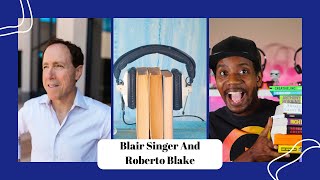
This is a recorded February 2021 YouTube interview where Blair Singer interviews creative-entrepreneur and educator Roberto Blake. Blake discusses his background (creative roots, public speaking), YouTube success (stated ~470,000 subscribers, 30M+ views, 1,400+ uploaded videos), and his approach to building sustainable businesses for creators. He presents frameworks—defining "creative entrepreneur", the three T's (traffic, trust, transaction), stages of channel growth (0→1k→10k→100k), and modular education resources (YouTube Starter Kit). Blake also critiques traditional education, argues online/alternative education's growing legitimacy post-COVID, and gives practical advice for older beginners and entrepreneurs.
Here. Okay, so I'm really, really excited today for this podcast. We have Roberto Blake, and maybe with a great reputation of 400,000 followers on YouTube and how to get 10,000 users on YouTube, but the more I look into this amazing person, he has something called the awesome Creator Academy, and. And when I really listen to what he really is saying, this is way more than about YouTube. This is more about being a real entrepreneur, which is, as those of you guys that know me, very near and dear to my heart as rich dad, advisor, and work with entrepreneurs all over the world, they struggle, truly struggle, with the things that Roberto has discovered how to solve. And so I'm here as the student Roberto, and I'm gonna ask you a fire bunch of questions. If you have any questions of me, feel free. And so thank you. So maybe you could just let people in our international network know a bit about your background, how you got in, how you got into YouTube, and how you got into the awesome Creator Academy.
Thanks so much for having me, Blair. So for the people not familiar with me, my name is Roberto Blake. I'm a creative entrepreneur. I also am a public speaker. I'm the founder of awesome Creator Academy, and I'm a YouTube content creator. That's how a lot of people know me, Blair. Currently I have 470,000 subscribers on YouTube, over 30 million views, and the number that I'm most proud of is I've uploaded over 1400 videos to my main channel. So that's a testament, I think, to work ethic, consistency, and just shooting your shot.
So those are some things and also some great content.
Yes. And I have an amazing community as well. The comments that I get, the questions that I get, a lot of the content these days is fueled by the community telling me what they need and me just doing what I can to put them first. So that's something that I'm very passionate about, very proud of. In terms of my background, I guess you could say I've been a creative my entire life. My mom has a picture somewhere that shows that I was drawing before I could even walk. So I've always been a creative person. I've always also been an intellectually curious person. My parents just used to feed me books because, like, you know, that was what was going to keep my mind busy, keep me occupied, and I think it shaped a lot of who I am today. I am very passionate about always learning new things. I tell people that the one thing that I believe makes up for maybe lack of talent is a strong work ethic and intellectual Curiosity. Because someone like that will always be able to learn something new, arm themselves with new skills and ability. And people who have talent, who just try to coast on that, stand absolutely no chance against somebody who, who is trying to better themselves every day to close the gap.
So, yeah, let me just say something about that, because you had a quote on one of your sites that I loved, and you said, where motivation fails, where motivation fails, you, discipline won't. What do you mean? Explain that. I love that.
When. When we hold ourselves accountable to something or when we've made a commitment. When we've made a commitment, we honor our commitments, come hell or high water. Whether you feel like it or not, when you're an employee, you show up to work, and probably 80% of the time, you don't feel like it. When you're a student, you show up whether you feel like it. When you're on a team like I was in track and cross country, you know what? You're tired, you're sore, you walk it off. You show up to your team, you put in your best effort, you don't let them down. You run your heart out. You leave everything on the track. When you're not feeling like it, when your emotions, when your headspace isn't right, when. When you don't feel motivated or emotionally satisfied or compelled to do anything. If it comes down to keeping a commitment, even just to yourself and keeping your word, even just to yourself, that'll be the thing that gets it done. When you don't feel like it.
Yeah, that's so true. I mean, everybody in the, Everybody on the planet seems to think they want to be an entrepreneur because it sounds romantic, it sounds right, right. And so that's what they think. And I tell people, it's like, okay, you decide you want to be an entrepreneur, they blow the whistle. You go out on the field and you get knocked down right away. Now the question is whether you're going to get up and keep going. So when you talk about. I really love what you say. You're a creative entrepreneur now, what does that mean? What does that mean to you?
Well, technically speaking, it means anybody who deals in creative services or talent or intellectual property, whether it's their own or somebody else's. And I think that that's a very apt description of anybody who's operating in the new media landscape today. If you're operating the new media landscape, then you're trading in on your own creativities and talents, whether that's in the field of you being a copywriter graphic designer, a musician, performer, a visual effects artist, you know, a filmmaker, video content creator. If you are any of those things, then you're in creative services. If you build a business around it, then you are, in fact, a creative entrepreneur. Now, another route would be if you are someone who manages the talent within those verticals, then you also, if you have a business around, that would be a creative entrepreneur as well. Or if you're buying up the intellectual property.
Got it, got it, got it, got it. And it's kind of interesting as you made the transition or your journey into being a creative entrepreneur. You talked about, you said you really got to stop, start challenging the way you think about time and how you think about money. Yes. And you went through a whole scenario about working at the mall and doing all that kind of stuff. But just in a nutshell, I mean, there's some people, particularly since COVID 19. Right. Where people have to have to restart, relook, re, pivot, all of that. What is your advice to people when it comes to time and money?
I think the thing we have to do is we have to redefine how we look at money, because I think people keep tying some moral equivalency between money and labor. It's why they like to track how much Jeff Bezos made every day and then whine and complain about. It's why we've gotten to a place of people demonizing landlords and all of a sudden, landlords. Now, by the way, you could have a douchey landlord. I've had my share. But, you know, there's nothing evil about saving your money, working hard, buying a property, and then being able to rent that out to people who want to live there. My uncle, he works in the bowels of New York City. He's an MTA employee working there on the tracks. He doesn't want to do that for much longer because it's very hard to retire from that job. It's a very grueling job with a lot of risk. Very few people ever retired for that. He's been taking every. And he's been investing in real estate because he said that his son, you know, my cousin, is never going to have to make those kind of compromises and sacrifices. He's going to know that he has the freedom and the bandwidth to do what he wants because his father invested in real estate and gave that to him and left him something to build on and to have an income. Now, in addition to that, my uncle also rented his properties to people who would not have necessarily Been able to afford to be in that neighborhood and have access to the jobs that they get to have for being in that neighborhood in Jersey. So I think that a lot of people misunderstand the relationship with money, because money is not exchanged for labor. It's exchanged for the value that you created. And if your labor happens to be the way in which you are delivering value to somebody, well, that's one thing, but that's based on your time and based on your energy and based on your health. And those are very finite things. And so what I learned as an entrepreneur is to separate myself from that capacity bottleneck as much as I can, as quickly as I can. So that was my thing that I learned, that was my big light bulb moment at some point was I need to not only increase the value that I can provide and exponentially grow that through skills, which I did. But then I realized that there's a bottleneck to, okay, how many hours in the day, how much energy do I have? And I'm not getting any younger. So I need to figure out a way to create value for people that doesn't require me to always be directly invested in terms of my time. They need to be able to put money into something and get value out without me being involved.
Well, and I think that the other thing, too, is with social media, YouTube and everything, your ability to reach has. Has taken that whole formula and put it on steroids. Right? I mean, scale. Yeah. I mean, you. The ability to reach thousands, hundreds, in your case, that hundreds of thousands of people is an opportunity that. That my parents didn't have. I didn't learn it when I was in high school, that's for sure. And, you know, it's taken. It's taken the world by storm. And. And so talk a little bit about that. So talk about why right now, social media, everybody's like, I gotta get in. You know, I don't know. You probably know the stats. How many millions of videos go up on YouTube every day? I mean, it's probably 5,000 hours of.
Video footage every minute of every single day.
Oh, my goodness. So the question.
Thousand hours. 5,000 hours video footage every minute of every single day.
Oh, my God. So the obvious question, Roberto, is how do you become anything but a speck in that blizzard? I mean, how in the world, with that kind of traffic, do you be able to make it, make it, make a difference?
There's almost 8 billion people in the world. How many of them do you think, percentage wise, how many people do you think out of the 8 billion people in the world know how to do video editing. And then how many of that fraction do you think are good enough for somebody to pay to do video editing?
I see your point.
Out of all of those people, how many people do you think would make good public speakers?
Much fewer.
Out of all of those people now, there aren't 2 billion people making YouTube content. There's about, I think, 200 million creators. So 200 million creators worldwide. Do you think that all of them have equal amounts of talent, tech savvy, resources, time, available experience? Clearly not the best thing, I would say, for anyone. Your audience, and I'm assuming most of the audience here is over 30 like us, right?
Yep. Yes.
So here's the advantage that somebody. Because a lot of people also think it's a young person's game. And I beg to differ not in terms of the verticals that I care about, which are probably the verticals that have the most money attached to them. Again, another sign of the difference between being 13 years old and being 30 years old on social media. Right, is caring about money. And the thing that I would say is that someone who is in their 30s, 40s, or 50s has, is their experience and also usually disposable income, hopefully, and resources compared to, say, a younger person in their twenties or in their teens. Because, for example, one of the least saturated markets in YouTube is financial advice and real estate. It may not feel like that when you see Graham Stephan and Andre Jeek and, you know, minority mindset and all these great financial YouTube content creators that get hundreds of thousands of views, you know, meet Kevin, folks like that. But think about like this. The overwhelming majority of people, especially in America, don't necessarily have the disposable income to own a home, let alone to have been successful in real estate. So all of a sudden, there's a barrier to say, okay, there are people on YouTube, but how many of them can give you legitimate financial advice? How many people that are going to be on YouTube without being a famous celebrity YouTuber have earned through conventional means or through entrepreneurship, $100,000 a year or a million in lifetime earnings or revenue or in net worth? How many people have, you know, successfully started a business or paid payroll or hired people or outsourced? How many people can say, hey, I have three units or five properties or so on and so forth that I have half million or 5 million in real estate? So you have to look at the. You have to look at the things that would say separate you from the majority of people. They're consumers in the market, let alone because, again, you have to care about the consumer, you have to care about the viewer and put them first. So what's the difference between you and everyone who's not making content? First of all, it's partly that you showed up and you made content. Secondly, it's if you're an older person, well, what experiences do you have in life? And it doesn't have to be something as extravagant as, oh, you're a six figure or seven figure entrepreneur being able to. There's a, there's someone, Robert Kenny, he has a YouTube channel that blew up practically overnight. Two million new subscribers in one month. And he has a great story. His story is that he was one of seven children, father walked out on them and he didn't let that be some overwhelming tragedy. He turned it into triumph. And he himself has raised five children since successfully to adulthood. He's in his 50s and he built a YouTube channel called dad how do I. And he gives dad advice to people. He shows you everything from how to tie a tie to how to iron a shirt, to how to write a resume, to how to charge jumpstart the battery of a car, to how to, you know, fix a sink. Everything that if you didn't have a father in your life just like he didn't, that you would hope to know. And he opens every single video with, hey, kids. And he ends every video pretty much with, I'm proud of you. And for so many people in the current time that we're in perfect timing right now during quarantine with everyone home and consumerism of YouTube videos going up by 80%. So he had perfect timing. And it was also the perfect thing In a culture where, you know, fatherhood is becoming scarce in some ways and where even where you do have people who have a father in their life, a lot of them are latchkey children. Their parents are working themselves to death 12 hours and may not be able to sometimes provide these answers for them or just be there. And so that's why he blew up, is he had the perfect way to fill a void and he just used the experience of being a good father. And he brought that to the Internet and had no competition for it.
How amazing. So, so what you're saying then is that what the differentiator is your story. The part of the differentiator is your story, who you are. And I know you do a lot of work with branding, helping, helping entrepreneurs brand themselves. So the brand and the story, they go together, right?
Absolutely. It's 100% the thing you have is your unique lived experience there. No one else has that now it's a matter of figuring out the delivery and the packaging to make it obvious that nobody else has that and what stands out and, and your framing devices. It's, it's not even sometimes what you say, it's how you say it. It's the way you present and convey, whether it's entertainment or information, a combination of in between. I believe that the best content creators and largest content creators both entertain, educate and inspire. I believe they do all three.
Excellent, excellent. And that's what you teach at your awesome creator Academy?
It's part of what I teach there. There's, there's a lot of things we cover and we teach. A lot of it really has to do with if you're be a creator, I want you to not be a starving artist. I want you to understand how to do this sustainably, successfully. And ultimately a lot of that comes down to at the end of the day, you're sacrificing a lot of time and mental bandwidth and energy. There's got to be money at the end of that rainbow somewhere. So the core three principles that we focus on, I call the three T's traffic, trust and transaction. We need traffic, so we need to understand traffic sources, we need to understand these platforms, we need to understand the search engines, we need to understand, if we're going to do paid media, we need to understand all of these things, then we have to be able to build trust for our audience. And that's where telling your story authentically, building a proper brand, establishing your credibility and just making really valuable, good quality content and being consistent about it really matters because that content is going to be where trust is built or lost. And also the way that you conduct yourself in your communication, the way that you live within your brand, and then if you're doing all of that but you haven't monetized it, or if you've monetized it in a way to where you're beholden to the platforms, you're essentially screwed. So I want people to build real businesses. And so I focus a lot on if you have creative skills, how do we build something that allows you to have a B2B aspect within your brand? And how do we also allow you to build something that's B2C direct to consumer? So I want everybody who's a content creator to also own a direct to consumer business.
And you also, you do a fair bit of personal coaching. And by the way, by watching, you know, it's like, if you haven't figured out by now, this is, this is the well of wisdom here for when it comes to this stuff, is that you also help people when it comes to actually structuring a business too, don't you?
Yes.
It's not just about content. I mean, to be an entrepreneur, you got to juggle more balls than that. Yeah.
That's where the transaction part comes in. And you're right. One of the things, and another one of the frameworks that we use is that you need structure, you need strategy. You also need to have systems in place, and you also need support. At the end of the day, you need support. So these are things that, like, I genuinely believe and that helped me in order to be successful is I developed these different frameworks and these different concepts to help me put focus and attention and have the right priorities.
Awesome. Okay, so I'm dying to ask this question. Okay. Because I'm gonna date myself. Okay. So it's like you said, you know, over 30. I'm substantially over 30. Right. And so. And some of my clientele, a lot of our customers are too. But you know, you reach this point and you're going, oh, my God, man, I just barely figured out how to use my phone. Okay? But I know that there's another world, another adventure, another frontier out there. And I spent my life, you know, building what I've built so far. How do I start? I mean, what do I do? Because you're right. I mean, there's this misnomer that I'm. That I would be competing against 22 year olds. Right. Which is not the case, as you're saying. But what would your advice be? To start?
My advice to start would be to decide whether or not you want to invest in learning how to do it yourself from the ground up. Or. Or are you going to continue to be a CEO and sit in your CEO chair and you're going to operate in that same way? Because there's a difference. Because you can decide that you're passionate about this and you can say, you know what? My business is already working. My business is on autopilot. I want to pursue my passion and I want to do it from the ground up. And I want to get my hands dirty again. You could decide that. However, if you have a family that may not be in your best interest, husband or wife might come with the frying pan, Flintstone style. Dating myself, like, that's how they did it back in the 80s. And so the, the thing is, then you have to decide, well, what do I want to put my time and energy into and what do I have the bandwidth for? Because it's a lot to take on and it's a lot to learn. And realistically, the answer might be if you still want to do it, and there's nothing wrong with that, then the answer might be that you might need to hire someone like me to help you to get a strategy in place, figure out what systems and tools and resources you're going to have to invest in, and to also give you some structure in terms of how to conduct your day around this, but also help you identify who and where to go to hire out for the support. Because someone in your position, I wouldn't tell you to learn how to be a filmmaker and how to learn, like, what can. Like, no, you could hire. You have the resources, you can hire people to do that to where you can be the talent. What you have that no one else does is you already have the experience you ever have, the knowledge. You already have the story. Great. Let's put a team together around you, around your lifestyle and your schedule that can take that, allow you to do you and just capture that essence and then package it and put it out there, and let's just do it that way and let's see what you want to accomplish there. And then if it's something you want to do for your personal brand or for your legacy, and you're already taken care of by the business, you're investing in having this for a reason. Now, if you want to make it profitable, well, once you have a team, that's very difficult to do. But you could. And we could also discuss that, and that comes down into, well, what are the monetization options within this niche? What is the direct consumer play? Does this scale or relate to the existing business, or is there a new business venture to tie to this? Or again, is it just a passion and you're like, I'm going to spend the money on something. It's going to be something that's also valuable to other people. Because that's a valid choice, too.
Yeah, well, yeah. I mean, it's a basic operating principle. Robert Kiyosaki and I have been best friends for, like, many, many, many years. And one of our teachers was a guy by the name of Dr. Buckminster Fuller who said that, I have it on the wall here. The more people I serve, the more effective I become, you know, and it's like. And you're right, I mean, there's nothing wrong with that operating principle as a motivation to do these things so it's not too late. But I, But I'm gonna ever. And of course, I don't think it's too late, but I wouldn't be talking to you, but I'm telling you this is that.
Just start. By the way, you don't even have to hire someone like me. You can just pick up your phone and say, I'll do whatever the phone allows me to do. And I'll do it just to get a taste of it. You don't have to, you don't have to hire anyone. You just do it.
But I think it takes patience, doesn't it? I mean, somebody just like any entrepreneurial endeavor. I mean, some people come, they go, they must come to you all the time. I want to have 10,000 subscribers. I want to have 100,000 subscribers. I mean, what do you tell them? I mean, I just, like, I would think that. I just know everybody goes, I want to become. I want to become financially free in real estate. You know, it's like, right. So everybody does. But what will you tell people? Some people say, look, I want to have 10,000 subscribers. How do I do that? What's your answer?
Great. How are you going to give other people what they want?
Nice.
Great. Like, great. Are you, are you willing to. Are you willing to accept the fact that you are not entitled to an audience and that no one has to give a damn about your dress rehearsal and show up for you while you're practicing? Because, like, you have never turned on a camera, you have never made content, you've never video edited. So don't cry to me if for the first 100 videos, no one shows up for you. And don't get sad and don't come to me about that because you're not entitled to that for your dress rehearsal because you still suck.
Nice.
I love your, I'm a tough love guy, like, radical candor. I mean, because it's. The truth is. It is if you're in sports. If you're in sports. You know that. Because what I'll hear from people is, I've been doing this for six months. It's like if you went and you decided to come onto any basketball court here in Atlanta or back in Brooklyn where I was born and everything like that, and you wanted to cry to me about the fact that you've been playing B ball for six months, and then you got balled up on that court, you got fouled out. You go, you're, you know, you're bruised, you're. You're black and blue. You know, you've got your, your band aids and your Neosporin and everything like that. You know I'm gonna laugh, right? Because you expected, you thought you were gonna dunk on people after six months. Really? Really. Okay, that's cute because, I mean, it's the truth. It's like you, if you're, if you haven't done something, expect nothing because you're bad at it. It's just the truth. That is why I believe quantity leads to quality. In that first 0 to 10,000 ranges. There are phases of growth. 0 to a thousand, a thousand to 10,000, 10,000 to 50, 50 to 100k. And then that's the phase beyond. There are phases to that. And in that initial phase, you don't know anything. You have to learn everything and experience it and taste it. At zero to 1,000 subscribers, and then at zero after zero to a thousand. Once you have a thousand to get to 10,000, now you @ least have something to go off of. And you have gotten through the process of. Okay, I'm not incompetent anymore. I'm still a novice, but I'm at least initiated. I know how this works and functions realistically. And now I have to just not be trash at anymore. And so now I have to polish myself and I have to be able to give people value and get those 1,000 people to get 10 of their friends each. I have to be able to make something worthwhile. And I think I can learn to do that now that I at least know the basics. I'm not rough around the edges anymore. I need the polish, I need to sharpen the saw. And that's what getting to 10,000 is. And that's still going to be about output.
That's right. And you know what? It could take years. It could take years on average.
It takes people three to five years if they ever do it at all. 90% of content creators never get 10,000 subscribers. Ever. This misnomer and this belief that everybody has these big audiences. No, it's the far minority of people that even have 10,000. If you got to 10,000, congratulations, you're in the top 10% of all people who have ever uploaded to YouTube. That's what 10,000 is. If you get to a hundred thousand, congratulations, you're in the top 1% already. Don't look to people with a million. Stop looking to people with a million. The number of people, human beings that. Not the brands and companies, by the way, because they're brands and companies with a million subscribers. WWE has 10 million. Ellen has. But like human beings, like homegrown content creators, it's the same amount of people that has climbed Mount Everest. Okay, you can be a good athlete and be good at something or be a good rock climber without climbing Mount Everest. So stop looking for a million subscribers. If you're, if you're not enough without that, you're not enough with it.
Now, you said something I heard you say before you about how many people are following, how many people are engaging, how many people are subscribing. And you said something to the effect of why are you getting upset about not about not having the same number that other people have? You should be happy that you found out that the people that you don't have, the people that other people have, and you got the people that you do have. You want to explain that?
Yeah, I do. A lot of people, they obsess over what they don't have in general and they always compare themselves. Comparisons, the theft of joy. And it also means you're not taking the time to stop and to appreciate who you have. And there's also people talk so crap about quality over quantity and they never apply it to the people in the life and the people in their community.
Interesting.
I would rather have, and I do have, I have some of the people in my audience or some of the biggest content creators of all time, CEOs of brands, people who run businesses. So sometimes I don't care how many views I get because I got the right views and because I'm also putting the needs of other people first. I know what things the lowest common denominator wants, but do I really want to be bothered with the lowest common denominator? Or do I want the tribe of people that are the most like me? Do I want the people that I relate to and that I resonate and I feel I can be myself with and that I can give the most value to. And again, I know it's different if you're an entertainer, but even then, even there, do you really want a bunch of people who aren't going to get the joke?
Yeah. Well, so describe to me your tribe. So who are those people for Roberta Blake?
For me, it's people who want to create. And it's also people who may feel that they aren't creative enough that may have come from the world of success or business or tech and say, and they don't believe that they're creative, but really they just haven't been given the opportunity to stretch that muscle and they only Think of creativity in the form of art, not in the form of critical thinking. So I'm trying to bridge the gap between people who have aspects of myself, people who are maybe autistic and creative or maybe technical. I put together this whole studio myself. The computer I'm streaming on, I built it myself. I've always been that type of person. I was the kid who took apart the vcr, put it back together. I've always been that artist, that nerd with the comic books. And then my mentor growing up at the job was Scrooge McDuck. I do like money. So what I like doing is I like showing people the wonders that technology can do for them either, and allowing them to express themselves and their creativity in a way they've never had the opportunity to before, or what it can do for them and their business. I also like showing business people that they also can explore expression and they have value to give, and they can come to this creative landscape and stretch muscles that they never thought they have. I also like showing technical people that there's an opportunity for them as well. So, I mean, I don't want anybody to be a starving artist if they're a creative person. But I also want people who are successful or technical to realize that there's an opportunity for them to express themselves and to put out a message and to create value and that they might be more creative than they think. They might be better communicators, that they think they might have something special in them that they've been denying because somebody somewhere along the line told them that they're not creative or that they're not an artist, and they believe them. We're all creative from the day that we're born. We all have that in us. We have this divine quality to turn our thoughts into things. We just get caught up in the idea that maybe, oh, well, I can't draw, so I guess I'm not creative, or I can't paint, or I don't understand photography or so and so forth. It's like maybe no one ever bothered to make you passionate enough about it or excited enough about it to get past feeling bad at it and realize that actually if you just worked a little bit harder and if you could get excited about it, you'll find out actually that you have something worthwhile and that that's pretty good.
Yeah. And plus, if you can get past the fact that you got to be perfect, that it's got to be right all the time, that it's. That you don't have to go for quality, go for quantity, go for some consistency. And then that kind of stuff built on, like you said, some basic good common sense experience. You can find other people that are looking for that same level experience and help them wrap a business around it.
Exactly. So. And that's what I'm looking for. I'm looking for those people, and I'm also looking for people who are. They may have. Feel like they've stagnated because they got comfortable. They got comfortable, whether it was with their social media, whether it was with their online business. Like, they got comfortable. And now they're feeling antsy because I'm like, okay, they're doing all right, but they're not growing anymore. I'm trying to help them getting to a headspace to realize that, well, you're not growing anymore because you're not challenging yourself anymore. You're not stretching anymore. And you're not doing that because you're scared, because you've gotten very used to not failing. You've gotten very used to not failing. And you're terrified of getting punched in the mouth because you forgot it's not so bad.
Good point. That is. So if you're watching this, if you're listening to this podcast, play that piece back again. It's not so bad to get punched in the mouth a few times, particularly. You just notice you've done it before, you're just not used to it. It's okay. It's all right. Yeah, I got. I got a question, and then I want you to talk a little bit. You have a YouTube starter kit, too, that I heard about. I really want to hear about that. But this is my pet. My passion, besides entrepreneurship is also. I train people how to teach and how to present all over the world. I've been doing it for years, and recently, as of March 2020, the whole education system has been flipped on its backside. I mean, it's a. It's a freaking disaster. People trying to go online, teachers not knowing how to teach, all that kind of stuff. And so people rushing to YouTube and to social media to get education. I just want your personal opinion about education. YouTube, what you see the future of education looking like, if you have an opinion about that.
I. This is fascinating to me because it's my obsession, in a way. It's. It's.
My God. I knew I had a sense that would.
One of the reasons I came to YouTube in the first place is because I feel that in many ways, and not all of my teachers, and certainly not all teachers or I'm not really. I'm not taking a dig at teachers, but the institution of education failed me in a lot of fundamental ways because it uses too many templated or cookie cupper approaches that don't acknowledge unique brain chemistry, people like me with adhd, or people who have different learning aptitudes. So much of our education system is built on the concept of being able to learn through lecture and through reading comprehension. And if you don't learn that way, that's it. There's nothing for people to learn with their hands, nothing for people who learn by mimicry, by watching somebody else and replicating what they're doing. People who are visual, spatial, and also autodactic learners are praised on one way, but not if what they are excited or passionate about learning doesn't fit in the curriculum. And a lot of it ultimately never leads to producing people unless they get outside help or they're just mad driven. We don't bother to try to produce entrepreneurs. We don't. Something that the world desperately needs more of is people who innovate, people who create jobs, people who can lead. And there is nothing for someone like that. If you go through the conventional education system, even in the college system, it's very rare and it doesn't produce results, and it's not aligned with those of us in the private sector. They're not doing what we would ask of them. And that bothered me a lot, even in my mid to late twenties when I came to YouTube. And so I'm 36 now, by the way. So the. I've been doing YouTube for like seven years or something like that. The point that I'm making is I ended up being an educator on YouTube of the things I have life experience in, whatever they may be, because I do a variety of content, somewhat to the detriment of the algorithm. And. And the reason that I wanted to do that and that I also never fully niched down was I wanted to pass on what I had learned and also in a way that someone like me would be able to accept it, someone who has my aptitude, someone who prefers my learning style. And I found that I have a gift for taking complex things and breaking them down into digestible things that feel like common sense and that are aligned in reality. And I also like doing things backed by data or information or examples and so on, so forth. And so that's what made me very passionate about this, is that I feel that people like me were often left behind. I also felt representation was important and coming from, you know, a black and Latino Background being a first generation American mystery. My grandparents are all from Panama. My mother was raised there, my father was born there. I felt like there are people who don't feel that they can even attempt or try because it's like, well, why bother? No one like me does this. I'll have no support. There's no one who's gone before me. How do I explain to my parents that I want to do this when no one like us does it? So on, so forth. That's constant thing that people have as a barrier in their own mind.
Right.
But okay, well, let's address that barrier. It's not just for you to, oh, get over it. It's like, fine, let's, let's acknowledge it exists and let's provide like, let's look at how we serve people who are underserved. And I also felt creative professionals were overlooked in the sense of, oh, just gonna be a starving artist. You can't make money doing that. It's like, well, watch, watch. Like, here's someone who made money doing it. Here's what they did. No, no mystery, no secret sauce, no guru tricks. It's just, here's what they did, here's the path, here are some things. Or what do you want to know? Open book. Ask me a question, I'll make a video.
So that's, so what you did then is you created your own educational alternative via YouTube. So you took the needed, a couple of needed sectors. And by the way, those are, those aren't little ones, those are huge ones sectors. And you just made a commitment, say, look, I am going to educate people in the way they can be educated because they're not going to learn at any other place. COVID 19. No, COVID 19. And that's how you became an educator. Yeah.
And yes, it was offering people the choice. Because the thing is with the, there are limitations, by the way, to these free platforms and there are things that are beneficial in traditional education and there are things that are also proven. But I think that again, going back to the conversation earlier about comfort, the problem is that our institutions got very comfortable. And I think that's not limited to our educational institutions, but we'll focus there. They got very comfortable with what they believed was working, but they also, to defend the idea that was working in many cases, ignored a lot of data points. And they also ignored who it wasn't working for. And that population grew, the problem grew, the frustration grew, and it's come to a head. And then in the wake of COVID 19, with traditional education, trying to undermine the validity of online or alternative forms of education for the last two decades. They were put in a very awkward situation of now we don't have a choice because we need an access to cash flow. Excuse me, to cash flow. And we've spent 20 years delegitimizing online education, and now we're forced to embrace it and say, that's worth the same amount that you've been paying up to now, because otherwise we lose. And that's a terrible position to put yourself in by just not frankly being honest.
And it's gonna. It's gonna suffer the. It's gonna suffer the consequences of that attitude, I believe. For sure.
I believe so. And then the problem is, by denying the legitimacy of something, not investing in it, not becoming educated about it, and then having your hand forced by the reality of the world and by the reality of the market, the invisible hand of the market, just decided, well, about that. You know, you get backhanded ever so often by the invisible hand of the market, and then you're made to look like a hypocrite. And it sucks, because it could have been avoided, because those of us from the online alternative education space, we are not. And we haven't been trying to delegitimize traditional education. We've been trying to evolve it. We've been trying to evolve it. We've been trying to explain the problems. We acknowledge the problems in our systems, and we want something better for people because we ultimately have made all of our money serving the needs of others and creating value where people didn't feel they were getting it. And so we feel equipped to speak to that. But now the thing is, reluctantly, we're having to educate educators on things that they didn't think were legitimate or valid. Just a little while ago, what happened? It's just been a couple of months. It's just been a year. All of a sudden, that thing that you said that we did, that was illegitimate or that was a scam or that was a con, is now essential for your own survival. So what happened? Aha. And I think we have to understand that there we will have to give people education on their terms to be of service to people. When you want to serve people, you meet them where they are, not where it's comfortable for you. You meet them where we are. They are. And I think that all of our institutions are learning that very painful lesson right now. Education is not exempt from that, but it's something that every entrepreneur news, deep down, is that if you don't Meet people where they are, someone else will, and you don't have a right to complain about it.
That's exactly right. That's exactly right. My son is a freshman in college right now. And you know, he went from. He had five classes, three were in person to online. Now they're all online. They're charging the same fees. The professor's going. Professor's going, okay, well, here's, here's your course material. Here are the tests. Here's when I'm gonna give you the test. You guys figure it out and I'll do a live lecture once a week. Anybody wants to show up, I'm just going, are you freaking kidding me?
And, and what? They're son's major?
Political science. He wants to be a political science major like me.
You have to, you have to get a degree to have that and to do that. What's his goal, though? That's the degree he's pursuing. But what's his goal?
Well, as an 18 year old, I'm not sure he knows what his goals are yet, but he wants to be a political science major. He hopes to possibly go into law someday, if that, if that presents itself. But he really wants to be an entrepreneur. I mean, that's his overriding. He wants to be an entrepreneur.
You know, if he wants to be an entrepreneur, this is probably the best opportunity. And the thing is, as you know, college will always be there, and he's in a wonderful position in terms of having resources. Is there a reason for him to prioritize being a political science major now, since that'll always be there versus getting in on the entrepreneurial gold rush and solving a problem in the world today.
Absolutely no reason why not to.
I would have that conversation then. I would have. Because right now he's 18. Think about, I look at it from this perspective. Learning is a lifetime commitment and the opportunity to learn new things will always be there. And in terms of political science, I think it'll be more fascinating or more interesting probably four to eight years from now than anything, because new history is being written every day. So I feel like something like that it can be postponed in favor of the world. And the experience in this moment of history being the best teacher of all time. I feel, and I feel that in a situation where it's not that he has to enter the job market right away. Right. And even as a political science major, you wouldn't be able to necessarily enter the job market right away. We don't know where things will go right now, but what we do know right this moment is that Internet consumption is up by 80% over last year. We know that E Commerce is up by, what was it, 40 to 60% more consumer spending in E Commerce than ever before. Some absurd number like that. And it keeps going. I'd have to double check because the number keeps moving. But we know that, we know that this is a prime opportunity for anyone who is a new investor. And we know right now new problems are arriving with very few people adamant about solving problems. I think this is a tremendous opportunity for anyone 18 to 24. And the good news is, if they don't make it, colleges always take your money.
That's true. That's true. Thank you so much. So you are, like I said, you're way more than a YouTuber, man. You are an educational pioneer. Educational pioneer and a true entrepreneur. So it's awesome. So if I get, if I were to get Zach started on that, he's gonna need, he's gonna need a startup kit. So I. A way to get started because I'm learning it myself. I have a great. We have, we've put together a pretty good team that we're working on it. But tell us a little bit about that.
Alright, so a while back, maybe two years ago or so, when I was doing a lot of live streams, I was auditing people's YouTube channels live. And I kept seeing a lot of the same problems and a lot of it came down to the fact that a lot of people don't have a graphic designer photography background. I came from that world. I worked in online advertising, I worked in traditional advertising. I used to do print and used to do out of home. Ooh, advertising billboards, large print, wild postings, stuff like that, movie posters. And I did traditional marketing. And so I. There are a lot of things, I know that the average person just starting YouTube, whether they're 18 or 38, like, just doesn't have a technical or creative background in. And so I was like, okay, well let me make a bunch of templates. I'm a Photoshop guy. I'll just make the templates for you. Drop your text and your photos in here and the thing will be passable. It won't look like absolute trash. And then maybe people click on your videos. Because what I saw that broke my heart was, wow, people have really good videos and the packaging is trash. We judge a book by its cover. It's like, wow, you have this great piece of cinematic art and you wrapped it up in newspaper and said, here you go. Like, why? Why? And so I set about to solve that problem. It's like, okay, there are a lot of YouTube courses out there. What there's not is resources that just make this process simple. And then I started adding to it. I added like, okay, by the way, since you guys aren't graphic Designers, here is 100 free fonts on the Internet to jazz this up. I made all these assets for you. Oh, wow. You all right? Your channel artwork, the banner, the thing that if someone promoted your channel and said, hey, go to this channel, the thing that represents you, it's like just like the top of your website. It's like, wow, this is God awful. This is horrible. And you're not even telling them what they upload. You know, it's like, what was going on here? Oh, it's not adjusted for mobile. It's like, all right, all right, I'll just do it for you. I'll just, I'll just do it for you. It's like, I'll do everything for you but make the bloody videos. Right? And so I made all these graphical assets owed to my background as a graphic designer. And then since we've expanded it, I noticed another problem. I was like, okay, people are horrible at writing the titles for these videos. They don't make interesting titles at all. So I sat down and I also had my team help me workshop this and I made 20 title formulas and then I wrote five examples. I was like, all right, I'm just gonna literally write a hundred YouTube titles for you. Here you go, fill in the blanks. Here, change out your stuff. Because I made 20 title formulas, five examples of each, so you can see how to use these, these prompts properly. Here you go. And then also people are like, well, I'm, I'm, I'm new to YouTube. I don't know what I want to do yet, but I do know I just want to be on this platform, make content that I want to learn, but I don't know where to start or what ideas for videos. I was like, alright, fine, here's a hundred video ideas. So we gave you over a hundred graphical assets so your stuff doesn't look like trash. We gave you a hundred titles, we wrote for you so that you could make this interesting and intriguing so people click on it. And then if you don't know what to even make, we get, we came with a hundred ideas for you to just get started, just make something. And then we started just adding even more things to it. And it's all for like $99 and a lot of Times, we'll run coupons. So if people go to either www.awesomecreatoracademy.com or awesomecreatoracademy.com starterkit, they can look for that and they can buy the YouTube starter kit and it will help them get started with better titles, better thumbnails. That's gonna get you the clicks on YouTube. And we put a couple of other different assets in there for the young people who want to get monetized on YouTube. We talked about how to actually make money on YouTube. We gave a masterclass on that. It's in there. And we add new stuff to it every couple of months, like every quarter. And you have a lifetime access to it. And we don't increase the price on it because it's really, here's a tool for less than $100 that will cover you if you're a beginner with most of your weaknesses. And as we audit people and these channels, we keep finding beginner mistakes and keep trying to find solutions and things we can do to help. And we keep adding them to the kit. And also we make videos on my channel about it. So that's what we do.
Oh, that's awesome. What a great asset. I mean, to be able to overcome the initial stumbling block of, like, titles, graphics, what does it even look like before you even get to your content? Like you said in the very beginning, there's a lot of. When you started bringing down the number of people that are on YouTube to the number of people that are actually on YouTube that are actually have real content, actually doing stuff that the, that.
Are actually capable, who have, like, took the time to learn to do this and execute well.
Right, right. So that by simply with. With a starter kit, you actually automatically put yourself into that upper echelon of all the other blizzard of people out there. They're just flailing around trying to pretend that they're. They're cute and entertaining.
That was the goal. That was the goal to, like. Let's reduce this down to, you can just make your content like. That was the idea. The idea was, what can we do to just enable and empower you to just make your content? But also, yes, we did it for you, but we educated you in the starter kit about why and about the process. And so you can use this as a jumpstarter. You still have to do some customizations to make it your own or it's going to start to get cookie cutter at some point. But we. The thing is, it gives you a place to start. And when the way I Designed my assets in Photoshop. Someone could start to understand the techniques that I used. And we're also getting ready to film a thumbnail masterclass that we put in there so that you can grow beyond the templates and that you can understand the techniques to make something really great from scratch on your own. So, again, we didn't want to just make another YouTube course, but the thing is, we're putting this masterclass into the YouTube starter kit. But this masterclass will probably exist in any YouTube course that I do in training, because what I do is I also. Another part of my thought around education is I do modular education. So I think about things from a tools and resource list standpoint. Tools and templates that we can do things and do. Done for you. Essentially, how do we incorporate done for you resources, how to incorporate list and things that help you to stay on top of things and assets. How do we also curate the best assets that already exist out there so you can find and have access to those. And then how do we provide some training on using everything at your disposal? Because having all the resources doesn't matter if you don't know what to do with them.
That's right. That's right. So. So thank you for. Thank you for that, Roberto. I just go say this is that these days, education is more critical than ever before. I maintain that if a person has a level of experience, sometimes it's great experience, sometimes it's not even great experience, but it's always experience and knowledge that can help other people. And if you can help, if you truly want to help other people, I mean, if you truly want to, which obviously you're listening to a person who's committed his life to doing that, then take, get a leg up on it. Get. Get some advantage. You know, get. Get started on the right foot. Start with good mentors, good teachers, good advisors that will start steering you in the right direction. And so I would just say, would you say go to awesomecreator academy.com or awesomecreator academy.com Starter Kit. Starter Kit, Starter kit and check. And you'll see a name called Zachary Singer on that list within the next 48 hours, I guarantee it.
Looking forward to it.
All right, so thank you so much, Roberto. Thank you for your generous amount of time. Do you have any final words for all those entrepreneurs out there? What would you tell them?
I would tell them that right now it may be a difficult and it may be a challenging time, and that often the things that are worth pursuing require more courage than we currently have. But I also would tell you to be mindful of your thoughts. Your mind will grow whatever you plant there. You're going to have to reap that harvest at some point. So be mindful, be very thoughtful about what you're consuming. Don't doom. Scroll through your day about how horrible the world is. Choose to plant within your mind that which you want to grow, that which you want to reap. You do not do anything else. And to also. Empathy is a form of compassion that allows you to go outside yourself, but it's also something you do when it's not convenient. So in being an entrepreneur, I ultimately believe we only get to do what we do as long as we make ourselves valuable to other people. And to be valuable to other people, you have to be capable of empathy. You have to be capable of being compassionate to people who are different than you. You have to be capable of having the imagination, the critical thought, to be able to put yourself in somebody else's position even without having their lived experience. And be able to care. And to be able to care enough to want to help however you feel able to. And I think those are kind of the three things I want to leave people with is that, you know, that's what I think I want to leave people with.
That's awesome. Thank you so much, Roberto. And thank you for talking to our international group and all those people that follow us. I look forward to spending some more time with you because I didn't get. I didn't even get through half my questions.
I'm happy to do it.
Okay, awesome. Thank you so much. And again, go check them out. Awesome creator. Academy.com thank you. Thank you.
More from Blair

Great Leaders Manage Emotions (Not Just Tasks) | Blair Singer Leadership Episode 12

Give Them Meaning: The 7 Elements That Make Teams Flourish | Blair Singer Episode 11

Silencing the “Little Voice” That Says “You Can’t” | Blair Singer Mindset Training - Episode 10

3 Signs Your Team Is Quietly Disengaging | Blair Singer Leadership - Episode 9

You May Be Killing Your Team (And You Don’t Even Know It) | Blair Singer Leadership - Episode 8

The Fastest Way to Learn Anything | Blair Singer on Lessons from Robert Kiyosaki - Episode 7

You’re Leaving Millions on the Table | The High-Ticket Sales Follow-Up Strategy That Works



