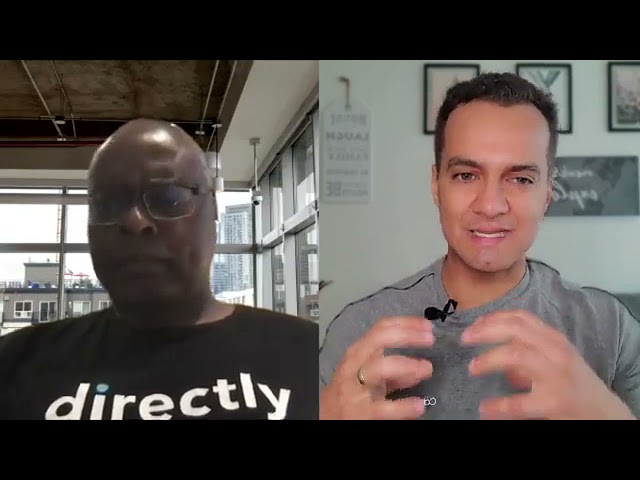
In this YouTube interview, host Rodrigo sits down with Bob Fabien Zinga, a seasoned cybersecurity executive and US Navy Reserve commander, to explore the persistent lack of diversity and inclusion (D&I) in technology and cybersecurity. Bob shares his personal journey, noting the historic homogeneity of the field and his involvement with initiatives like Black Girls Code. He outlines concrete strategies to improve representation: checking unconscious bias, blind name screening, expanding applicant pools by removing strict degree requirements, and designating a senior DEI leader outside of HR with tied incentives and regular climate assessments. Bob also discusses his hiring criteria—experience, education, and certifications—emphasizing the importance of experience while acknowledging the role of education and certifications, especially for minorities. Throughout, he stresses the transformative impact of visible role models and the need for systemic change across organizations to ensure the tech workforce reflects the broader population.
Chapters
What's up, my friends? Finally, it's Wednesday, and as always, I am super happy to share one more conversation with you. And today you're gonna see one of the most humble person I've ever met in my life. You're gonna— we're gonna be seeing my conversation with Bob Fabien Zinga. Bob has more than 20 years of experience in cybersecurity. He's a head of security now, and he is also a US Navy veteran. We're going to be discussing very important topics: diversity and inclusion of underrepresented groups in IT and the tech industry. Guys, if you enjoy this conversation, please hit the like button and don't forget to subscribe and activate the notification bell so you don't miss anything in the future. Let's go! Bob, Thank you very much for joining me today. I know it's super early for you. Really appreciate that. But Bob, before we start anything, any conversation, you have like an extensive curriculum. I would like you to introduce yourself to the audience.
Haha. Well, basically I am a cybersecurity executive in San Francisco. I guess I've been doing cyber since 1997. And I am also in the US Navy Reserve. I just promoted to the rank of commander. And yeah, I kind of like to focus on leadership and cybersecurity. That's really two things I am very much passionate about.
That's very good. And I can see you are very, you are very modest guy because I know that you are head of security indirectly. You are a veteran on US Navy where you have been there for many, many years. But I know that you are also one of the group, one person in the group on the ISC² to do the certification, a lot of things. So you are involved in a lot of things that I know and you are being modest when you say I'm just focused on leadership. I know that.
Okay. Yeah, but I, I guess everything I, I do really comes, comes out of those, uh, two things I'm passionate about, cybersecurity and, uh, leadership. I, I really think, um, those things are critical to me, right? For example, I am also on the board of, um, Black, Black Girls at, I am their chief technology, uh, officer. And basically we try to, uh, encourage, uh, minorities, most specifically, um, Black women to get into cyber and tech. As you know, there is a huge underrepresentation in technology and cybersecurity for all minorities and women, and I think that is just wrong, right? I really believe that the American workforce, especially high-tech and cybersecurity, should really reflect the diversity that we have in this great country. And we've improved a little bit, but not enough. So I'd like to do everything I can to really increase diversity in this field I love so passionately. Because I know for sure, because one thing that kind of drives this for me, when I first started working full-time in cybersecurity, I think it was back in 2004, maybe 2003, pretty much everybody in the field was like white, male, middle-aged. I'm like, okay, there's gotta be more diversity than this. And I just published an article with the US Cybersecurity Magazine about some ideas I have on how we might be able to change that. But I believe it's extremely important, especially after everything that happened in the US last year with the social justice movement and then more recently all of this Asian hate. I mean, it's just time that as a country, as an industry, we kind of move. That's fast-paced.
Bob, you just hit a point, one of the points that I would like to discuss with you today. Actually, it's about diversity. I've been having some guests on, on my show, and I have some women representation, right, where we discussed about the women's situation in the IT and tech world, not specifically on cybersecurity, but in general, which is also a problem, right? A huge lack of representation. And we discussed, we had very good conversations on how we can solve why we have this problem. But this is the first time that I have a Black person in my channel, and I'm super grateful to have you here because this is exactly what I would like to talk to you. And I know you have published this article recently But do you mind explaining, going a little bit details on your suggestions on how we can solve this situation?
Yes, so I really use the, uh, US Navy as a great example. I think the US military is probably one of the most diverse and inclusive and equitable organizations in the world, uh, today, just the military in general, but more specifically the Navy, one thing I recommend is people need to check their unconscious bias, right? I think it's just human nature to try to hire or be around people who look like you, who have the same background as you, and who have the same type of school and that kind of thing. So I believe we need— it should be an all hands on deck type of approach. Every single tech leader when they hire, I think they really, really need to check their unconscious bias. One thing I have noticed for quite a while, because I am married and I have two daughters, right? So I really care a lot about the world my daughters are going to grow into and the opportunities they are going to have. For example, today, even in America, which is supposed to be the most powerful progressive country in the world, women still make about, what, 80 cents on the dollar compared to men when they have the same education, same background, same everything. Why do they get paid less? Why? I mean, that doesn't make any, any sense at all. And a lot of the tech jobs, they actually, if you look at the job description, it's actually described for a man. And I think maybe we, we need to ask to start there because women definitely can code as well, right? It's not just a skill that is reserved to, to, to men. So I think we need to review the language and also kind of increase the pool of applicants, right? This way, you don't always get the applicant from a pool that you've always recruited from traditionally. I think you really need to make that pool bigger. And one thing I have done personally is when I've hired people, I actually block out their names because usually by somebody's name, you know, if it's a man, a woman, you may have some ideas, they're Black, white, or whatever they are. Oh, origins, yeah, but I will block out their names and just look at their qualification, just, you know, the experience they have, the school they went to, the industry certification they have, and then kind of use that to be as objective as possible and find the best candidate for the position. And another trend I have seen, this one I didn't mention in my article that kind of related to this is I've seen more and more tech companies, like I know for example Apple, even Tesla too, they've said they don't really want to require a bachelor's degree anymore for their entry-level position. And really, you don't really have to have a bachelor's degree to do that type of work. Now you can be an intern and kind of have on-the-job training. Just by doing something like that, that's gonna open up the door and give you a lot more applicants to look at, right? Instead of always hiring people from Stanford or Berkeley or Harvard or very specific school where, again, women and minorities are very much underrepresented. So, and another idea I had is to really designate a diversity and inclusion senior leader in the organization, and that person I believe should be outside of the HR department. Most tech organizations I've gone to is the head of HR, the VP of HR kind of does this DEI as a collateral duty. And I don't think that is the right approach. I think there needs to be someone who is leading that function. And again, I've seen that in the Navy, but also in most organizations, especially in the past 10, 15 years. I am a cybersecurity professional and I've seen how the cybersecurity function has been elevated within the organization. I think there needs to be one person who is in charge and who has a seat at the table and who can actually impact the strategy of the organization. And of course, working with HR, working with general counsel and all of the other executives in the organization, but it needs to become a priority. And I know for most corporations, what What gets measured gets done, right? And what's important to the organization, it really needs to not only get measured, but probably even tied into their bonuses and compensation. I think if we start doing that, you're going to see dramatic changes in the diversity of the workforce of those organizations. So I think that is, that is quite important. And then the last thing I suggested is to conduct at least an annual organization climate assessment. In the Navy, we We do it at least once every year where people really, from the top down, anonymously tell you frankly what they feel about the equal opportunity, fair treatment, and sexual assault prevention climate of the organization. Because I have seen it in— I guess some cases have been publicized for some of the great and giant tech organizations where some people might have a different idea or even complain about something, and then all of a sudden they get fired or demoted, or definitely not encouraged to say anything. So I think we really need to be in a culture where people feel like they are being respected, they are being heard, and they have the right to speak their mind, and then have the senior management listen to them and kind of do something about it.
One thing, right, Bob, and let me know if you agree with me, Because one thing that I love about this role that you are playing and many other people are playing to represent minority groups, and I'm not talking about only women, Black person, we can include LGBTQ, right? All the other minority groups that know is there and have been suffering for so many years, right? Historically, it has been a life of suffering suffering for everyone that is being considered as a minority. And also having this change on the organization mindset is super important. But having, as I said, you and other people showing that the one person that comes from this minority group can reach certain level makes people that are in an entry level or wants to pursue this new career seeing that it's possible because for the minority group, and I can say that with cause because I am Latin and living in Canada. So there are certain situations and sometimes these groups feel a little bit not frustrated, but afraid to go there and pursue that opportunity because they are afraid of some prejudice or some situations that It's going to be, it's going to make them upset. It's going to make them mad. So you have this super important role to change the organization's mindset as a consultant, right? As advisor, but also to put your face and say, no, guys, I am here. I came from where you are now and I reached that level. So we need more and more people showing that we are here. We are better than anyone else and we can do that. So don't be afraid, put yourself in front of every situation, you're gonna succeed.
Yes, I really, really believe so, right? Representation does matter, right? Like even in this country, until Barack Obama became president, if you look at every single president in the United States from the time the country started until 2009, when Barack Obama became president, everybody was white and male. I mean, there was absolutely no diversity, no difference. So by you being a member of a minority group and seeing somebody who looks different, somebody who looks like you, that definitely gives you hope because it's like, okay, if he could do it, maybe now I can start dreaming and envisioning that it is possible for me also, right? Because I've been a student of success since I was about 17 years old, studying leadership and success. And one thing that is definitely important, one key principle is that yes, representation does matter. And if you don't even think that something is possible, if you don't even have an idea of what possibility might become, you will never, never get there. But everything that has ever been achieved in history, everything of importance or value always started in somebody's mind, right? Like Martin Luther King says, "I have a dream." You need to have a dream, you have to have a vision, you have to have an idea. What the Bible says, for example, without vision, the people perish. So you need to be able to see something with your eyes and say, "Yes, this is possible. This is something I can do." And then you later figure out, "Okay, how do I go from where I am to where I would like to be?" Yes, I couldn't agree more because I have seen in some other organizations where the diversity metric is a little bit better than the average in the industry. But you are right, most Latinx people or Black or Asian or whatever, they might be a member of a team, but they like, you know, at the entry level or middle management. There is absolutely nobody at the seat of the table, nobody helping set the strategic decision for the organization. So we definitely need to see representation throughout the entire organization.
Back in November last year, Bob, you— I think it was November— you wrote an article to Forbes where you mentioned 3 things that you are normally looking for when you are hiring a consultant, right, a person to your team, and it was education, experience, and certification. Right?
Yes.
3 basic things. When you wrote this article, you tried to be as general as possible, or do you think that if you put a minority perspective, let me say like this, if you needed to write this article to minority groups, would you still consider only these 3 broad topics as essential things for someone to get into cybersecurity?
I think so. I guess my journey has been quite interesting. When I first came to America, I really believed this is like we say, you know, the land of the free. It seems like Most people really have a chance to be very successful in America more than any other country. Maybe it is a bias I have, but it seems like if you really add value to the market, no matter who you are, where you come from, the color of your skin or your accent or whatever, you have something to offer, the market will reward you for the value you bring. I think that's more true in this country than any other countries where I have lived. I was kind of colorblind, but the events, especially what happened last year with George Floyd and all of that, kind of opened my eyes where I really cannot be silent anymore. I mean, this really, really, really needs to change and it needs to change now. Now, I've said all of this to say, generally speaking, when I write, I want to make sure I am speaking to everybody, right? Not just the minority or a specific group, but like everyone. And really the truth is today in America, The people who really have the power, again, are white male. They want to make decision who to hire, who to promote, and they lead the great majority of all of the organizations here. So I feel like everybody needs to hear the message. It needs to be broad enough so that it applies to everyone regardless of who they are, sexual orientation, background. And all of that. And I also feel like if we are going to have significant changes, again, everybody needs to get involved. But I think personally, those who are in power now really need to change the way they've been hiring. And so we definitely need everybody, including white, white male, to really get involved in this because I think, I feel like this is critical. But yeah, it was those three things you mentioned. I believe experience was The very first thing I mentioned, because I think it's the most important thing, right? When you hire someone, you want to hire somebody, hopefully, who's already done what you want them to do for you, already has experience doing it. Really, their educational subscription really doesn't matter if they've done the same type of job previously and they've done very, very well, right? One big problem I've had many times in my life, I guess it's called catch-22, right? For example, when I had my very, very first my first job as an IT assistant at the University of Alabama. Before they hired me, they were like, okay, what experience do you have? Can you do this job or have you done it before? I'm like, no, I've never had a job. This is gonna be my first job. So how can I have experience, right? Unless you give me the opportunity to gain the experience, right? So it's kind of, okay, I can't have the experience, but there is only way for me to get it. Somebody somewhere has to open the door for me and give me an opportunity. And I promise you, if you give it to me, I'm gonna work very, very hard. I'm gonna learn it and I'm gonna be very, very good at it, but you have to open the door and give me a chance. So I really think experience is key. And that's why, again, I really applaud all of the tech companies now say they are no longer going to require a bachelor's degree for entry-level position, because there's a lot of things that people can really learn even right out of high school. And then later on, when they have more experience, they can get the education and so forth. So yeah, so I think experience is definitely key. But now, especially for, again, this applies to everyone, but especially for minority, I feel like education is something they really, really need to have. My godfather used to tell me, right, once you earn an education, nobody can take it away from you, right? People may not like you, they may discriminate against you, but they cannot say that you are not qualified. You've got the piece of paper that says, yes, you went to school, you've learned. Another thing why I believe, I guess me personally, my father was a great champion for education in my family while I was growing up. So he always set the expectation that all of his children will at least have a bachelor degree like he did. He used to be an engineer. So again, you know, representation and expectation, I think that makes sense. The great majority of the people in the country, they feel like, okay, the only way they are going to make it, the only place where they see people who look like them succeed is like in music, entertainment, basketball, sport, or things like that. Then education is probably not going to be high on their radar. But then not just education. For me personally, I also believe in STEM, right? Science, technology, engineering, math. That's where I believe people need to go, and we really need to have more representation there. I went to the University of Alabama when I went to school here. In all of the science department, I mean, I kid you not, it's pretty much like 90% Asian. Even, you definitely don't see a lot of Black people. I am, I've almost always been the only Black person in a department, whether it's in tech or science. When I was working on my PhD degree in microbiology, for example, and I think We really need to change those numbers. But another reason why I feel like education is extremely important, especially for minority people, at least at the bachelor level, is generally speaking, if you want to become a manager, a leader, director, or above, they usually require that you have some type of degree. I think more and more now, I've seen company even require a Master of Business Administration if you want to become like a VP. Or work anywhere at that level. That kind of makes sense because I feel like when you get a bachelor's degree, it shows not only that you kind of master the subject you want to study, but you also have to do, you know, language, dissertation, you have to write, you have to communicate, and have a lot of other skills that are very important for managers and for leaders. So yeah, I think That is something that is definitely good. And then the last thing, like, like you mentioned, industry certification, especially in tech, and especially when you first get started, right? Once you reach a certain level, those tech certifications don't mean anything anymore because you have so much experience and so much accomplishment. You do not need a third-party organization to certify the skills you've got. But, but the truth is, when, when I first started, I must tell you, I was collecting those certs like crazy trying to get experience in this field and proving to prospective employers that yes, I can do this because Microsoft says that I am certified, I am a system engineer and I can get it done. So it was extremely helpful back then, but of course today, 23 years later, no, I do not need them. But yeah, I think it does make a difference, but again, I was I'm speaking specifically for tech and cybersecurity, but I think it kind of applies across the board. No matter what job people want, they really need to get the experience and then they need to get some type of education training and then certification if possible.
We are reaching our time. I know you are a busy guy, right? And, but I really would like to appreciate your time today. It was like a super valuable conversation. I'm sure that everyone that be hearing this when I post this video, we will love our conversation. So Bob, thank you very much. Nice to meet you. And I hope I can have you again in the show in the future.
Absolutely. Thank you so much for having me, Rodrigo. I appreciate it.
More from Bob

S250:E4🎙️LIVE 🇺🇸America 250: President Barack Obama Leadership, Service, and the Power of Hope






S5:E157🎙️ LIVE with CMD CMSgt Dennis L. Fritz, USAF (Ret.)(Multi Tracks Audio)



S5:E156🎙️ LIVE 🇪🇸 Leadership Lessons from the FIFA World Cup 2026 Champions (Multi Tracks Audio)

S250:E3🎙️ LIVE Leadership Lessons from America’s First Documented Family of African Descent 🇺🇸📖