Episode 10: Live with Amandeep Midha on Leadership & Success
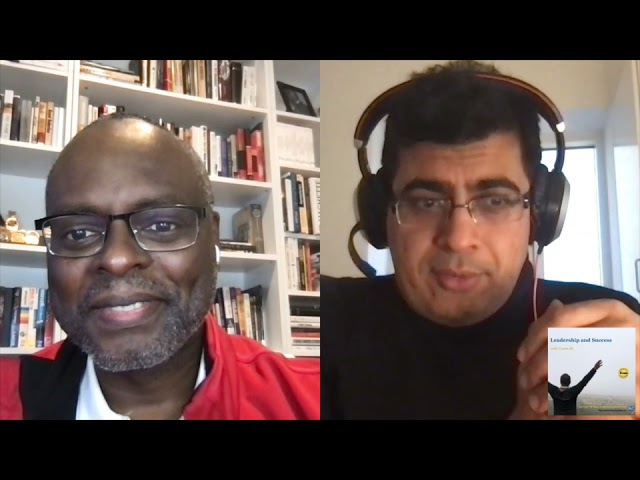
In this Leadership and Success Podcast episode, host Coach BZ interviews Amandeep Mehta, a fintech CTO and Forbes Technology Council member. The conversation traces Mehta’s international tech career—from an Indian computer applications degree to roles at Huawei in China, NDS in Israel, and senior leadership positions in Denmark—highlighting the varied paths to technology leadership. Mehta offers practical advice for recent graduates, emphasizing the need to align personal interests with a technology‑focused role, learn at least one programming language, and consider diverse career tracks such as product evangelism, engineering, or sales. The dialogue then shifts to diversity in IT, with Mehta noting higher female participation in Asian markets versus Western Europe, the lack of board representation, and the importance of inclusive leadership. They discuss what makes a tech leader: authenticity, empathy, influence, and the ability to synthesize perspectives. Mehta explains how his work on a pioneering IoT‑banking product for children led to his invitation to the Forbes Technology Council, describing the benefits of networking and his intent to launch a European chapter. Looking forward, he predicts continued rapid tech evolution, stressing data pipelines and AI, and mentions emerging concepts like DAOs and blockchain. The pair exchange book recommendations—"Who Says Elephants Can’t Dance," "Atlas Shrugged," and works by Nassim Taleb, Cathie Wood, Ray Dalio, and Geoffrey Moore—while sharing personal lessons about persistence, learning from failure, and using travel to gain fresh perspectives. The episode concludes with Mehta’s current focus on data architecture and an invitation for listeners to engage in conversations that add value.
Chapters
Welcome to the Leadership and Success Podcast with your host, Coach BZ. If you need to develop into a better leader, this podcast is for you. If you want to achieve a greater level of success, this podcast is for you. His mentor, Dr. John C. Maxwell, said it best: everything rises and falls on leadership. We hope to inspire you today and provide you with an insight that has the potential to positively impact the trajectory of your life. Welcome to the Leadership and Success Podcast.
Hello, uh, hello everyone, uh, this is Coach BZ and, uh, welcome to, uh, another session of the Leadership and Success Podcast. Today I have, uh, a very, very, uh, important guest. His name is Amandeep Mehta and, uh, like me, he's a member of the Forbes Technology Council. He's been a CTO and is now a principal for a fintech organization. Amandeep, how are you? Good morning.
Hi, thanks for having me. Yes, all good. I'm based in Copenhagen. It's around end of work day, it's around nearly 4 o'clock, so all good on a Friday.
All right, it's pretty amazing how technology can really bring people together. There is pretty much no more distances these days. Can you tell us absolutely about your leadership story, how you got to be where you are now?
Well, it depends, like, from where should I start? So, well, I had my technology education, which is computers application from India, and then I started working with product organizations mainly. I was based in China with the Huawei, and then I was with an Israeli employer, NDS, and in between a lot of travels in terms of kind of product revisions, product migrations, and handling the delivery responsible roles and project lead kind of a role. And then my journey kind of branched off to being in Denmark, and where I started like as an integration engineer lead, then CTO for a fintech company. And now I'm with the banking setup. We call it also BEC Financial Technologies. So that's my kind of a technology career.
Yes.
Yeah. So for the people who are watching us now, especially those who are just getting started, they just got a college degree and one day they would like to become a CTO or a principal or some type of IT executive, what advice do you have for them?
Well, it, first of all, like, it depends on individual aspiration. Like, are you a person who kind of is driven by technology or wants to build something on that technology. So you can be an excellent technology product user evangelist, or you can be a developer engineer, or you can be a marketing and salesperson. So, so you can be enthused by the technology in like a different dimension. It depends which, which suits your interest more. Uh, and we have like seen like absolutely no technical background people doing amazingly well as a product evangelist. Testers, product managers, because they come up with the idea, they have a feel of the market. So, so it depends what you want to become and what you're looking for. Yes, in, in today's world, I will say that like knowing at least one programming language to get started with is, is must, is very important.
Yeah, yeah, that is, that is quite, uh, fascinating. So just really making up your mind what you would like to do, there are so many, many opportunities out there. Especially, you know, in my subfield in cybersecurity, there is such a great need for people, professionals, but there is just, you know, not enough people to do the job. Now, I think last year it was more than 2.3 million jobs worldwide lacking professionals. So there's definitely a lot of opportunities out there. And what would you also say about kind of the diversity of the IT community, right? And I remember when I first got into IT, maybe what, 23 years ago, it was mostly male and mostly white. And I've seen a lot more diversity today, which I really believe is a great thing for business, where people coming with different ideas. Like you said, all of them don't have to be like scientists or computer programmers. I feel like there is like a place for everyone, and I see technology like really the field of the future, right? What do you think?
Yes, we say that we are into technology and all we know is technology. And all we know is to deliver technology. But yes, we live as part of society. And on an interesting note, like today is like happens with the International Men's Day. And we have Women's Day and we have like different diversity initiatives as we see. I will say in Western world versus Eastern world where like I've worked in like China, India, Israel, I still call like half East only, there's much, much more participation from women in IT compared to the Western world. And though the very Western world says and takes pride in, what do you say, the choice and the career choice and empowerment, but it's not seen in the participation actually. But we are also seeing that like there's a consistent rise in that, what you say, the diversity index. Well, actually, nobody has devised a diversity index. I just threw the term right now, not to be quoted for it. But so is so, but there's a consistent rise what we are seeing. And when what is required is like a kind of encouraging and promoting anyone and everyone who has a kind of like starting at a curiosity level. So if at like at a very very childhood stage, let me say, like, if, if, if, if a boy or a girl child, like, having curiosity towards a gadget and how it works and how I can make it work and how can I tweak it, how can I change its behavior? Oh, you can program it maybe, and you can work on it. So how do I get started learning it? So that's like a curiosity channeling at the whole level. Then we see something in, like, education, uh, institutes, um, in India, for example, where I originally come from, is like I think if I'm not wrong, maybe 37% kind of a workforce is female IT. And I've been to Technical University Berlin in 2017 to give a talk around— it was an MS Embedded Systems batch of students, 44 students who are doing Embedded Systems Master's. Embedded Systems happen in the more complicated side of the tech So 44 total, 2 women, and both were ethnic Chinese in Germany.
So I mean, like, 5% only.
Well, yeah. And then we kind of struggle at a different level, like filling the board positions and kind of like trying to build the diversity top down. Well, initiatives are working. And I am not like strongly for or strongly against the quotas. But kind of representation is is definitely required because it brings the perspectives to the board. It brings to kind of a style of administration. As you said, like it's very male, it's very male archetype kind of gets defined as a work culture. No, the workplace has to be for all, workplace has to be inclusive and it can be made inclusive if you set an example, leadership being inclusive. So, but tech as an overall field is always on a fast churn. Something is always going on. You're always chasing something new coming up. And then you cannot define that this comes from a particular gender. Then it's like, okay, this is what it is and what needs to be done next. So whether you scale up the team with more diversity or you kind of test your product a little bit more, or you encourage certain people in your team to kind of collaborate and work on building a product idea. It again depends on the vision of the company. So it's not like filling the diversity seats for the sake of it, but having a continuous career path for them is also important. So—
That is a very important point. And you mentioned leadership earlier. How does someone who's just getting started, What do you think? Because I really believe everybody has the potential to become a leader, right? And I think in the 21st century, leadership is probably one of the most critical skills today. Now we have automation technology pretty much taking away a lot of the entry-level jobs everywhere, but I feel like we will always need leaders. So how does someone aspire to become a leader or a better leader, in your opinion, in the IT field?
Yeah, I think it begins with you being authentic with yourself. That's like any leadership. And then which part of technology leadership is you actually excel in, right? As the classical thing says, like that leader versus manager thing, right? So as a leader, you're the thought leader, you're the evangelist, you can lead by an example. You can jump in to one team or different teams as if like a master troubleshooter or kind of a negotiator. Those are all leadership, right? So we cannot just distinguish by titles like, oh, you are the tech lead, you are the project manager, and if you have your hands on code, then you're leader. If your hands are off code, then you're not a leader. It again depends on different work cultures as I see. So one thing is like able to work in team, of course. We all always work in a team. So, and then it's like having your own personal influence, which comes from knowledge, which also comes from experience, which also comes from kind of empathy towards your peer team members. And also able to be able to reach a conclusion. Like a lot of times we see like even in a team meeting when you're put together and you're a— maybe you could be very good listener, you could be very good kind of mutual respect, sparring partner and all. But also if you kind of drive those notes and like, hey, so this is our conclusion. So that is another kind of leadership as we sometimes call like the product evangelist kind of a person should have. Like, hey, so this is what is coming out. This is the priority. This is what we're signing up for. So you basically, you're like, let me say this way. I say this in different coaching conversations that you automatically stand out. By what you bring to the table. You don't just bring the skills of yourself, you also listen to others and you also kind of make a proposition like what can we do next? So that already makes you a leader.
That is quite fascinating. Now, can you tell us how you came to become an official member of the Afobe Technology Council?
Yeah, well, I was part of a fintech company before as a CTO, which was the first Danish Fintech, which was incubated at Techstars New York in 2016. So 2016, we were there for quite much time, and then we were the first IoT device which was connected to an app, which is connected to a bank account, and it was for children. So imagine, it was a minefield of compliance. We have children pictures also. So children's different laws applied on us, electronic device gadget law applied on us, plus banking regulations all applied on us. So So it looked like a toy, but it was a very complicated technology product that I would say we were building in 2016. And we also had to comply to one of the latest cybersecurity regulations that time, UL 2900B. It came in September 2016. So it was one of the latest ones. So we, in Nordics, in Denmark, we were the first, that what you say, thought group, expert group around that. So imagine like not just doing the banking integration but going through all these compliance circuses. So that was a part of a thing, plus banking regulations and all the banking securities, uh, ISO 27001, passing that. And so, uh, so, and also that brought me to a lot of different stages to talk about our product and our founders also. And that is the time I think I was approached by Forbes Tech Council, somebody And the kind of a process started off and all that. But 2, 2 and a half years, I was super busy. But around the fag end, fog, fag end of it, my tenure with that fintech, I kind of settled in. Yes, I'm kind of signing up for this. And now I could, and by the time I had jumped to the new job as well. So this is how I got into Forbes Tech Council. And You might have seen my, my writings are mostly on tech upskilling and social learning kind of things because the next challenge which I see is like, yeah, you could see the potential of technology. You could have, you could have done a demonstrative work in certain technology or integrations, but at a larger scale workforces and like in a large setups, they totally need to be migrated. They need to be kind of infused with the kind of different flavors of what new technology makes it possible. So that's— so, so my kind of role, and my coming articles, actually, you'll see deep technical on data pipelines, probably. I'm already giving you a hint. And, and so, so basically, it's, it's about, uh, the journey is about like, um, you being noticed for the work that you do in specific, relevant to industry. It could be pioneer— pioneering work. It could be kind of works, work which brings you a lot of eyeballs, maybe not money because it was a kids' banking experience product. Not much, not much money. It looks more like a social product or a kind of a banking retention product. So, so basically, but yeah, so that's how I ended up in Forbes Tech Council.
Well, that is wonderful. So I definitely, I love the opportunities you have to publish and also have a pretty big audience worldwide. What are some of your most cherished benefits in the council?
I think it's an ability to kind of spar, like talk with the different people. There are some forums, and the corona times, we can always complain about, right? Corona times, a lot of these, these Forbes chapters, one like online. So LA chapter is online, San Fran chapter is online, New York chapter is online. Yeah, sure, I will join in. Forbes Tech Council definitely lacks kind of real presence in Europe. Let me say this way, the chapters here need to be started and activated. But so far I have no complaints. I'm kind of enjoying that part. And I also noticed, I'm kind of, I'm like slightly proud of that, that I was the 7th person in Denmark to be on Forbes Tech Council and first non-Dane or like non-white, if you want to say. And there's one more person after me who's the 8th person. He happens to be an ethnic Ukrainian, so he's also like— so now we are like— so we are 8 in Denmark, and like the last 2, 7 and 8, we are like ethnic non-Danes but based in Denmark.
That is quite something. So I think I'm hearing that you're going to be volunteering to start the chapter there in Denmark. I need to get a hold of you.
I am up for it, actually. When actually the Forbes Fintech channel chapter also started and we were kind of thinking of it and discussing around it. But I think the Forbes Fintech channel went more into the cryptocurrency direction. We are still in the banking and the traditional finance. Yeah.
Yeah. Before I ask you my 7 favorite question, another question I need to ask you. Where do you see technology going from here?
What is the next step? I think technology will always continue to evolve. There is always something coming up next. And in kind of some coaching conversation to like non-tech people who move into like lateral or middle roles in tech, I always suggest them to read one book which is called Who Says Elephants Cannot Dance by Louis Gessner, who is ex-CEO of IBM. So it basically describes what it takes, like how technology industry is different than other industries, how sometimes First mover advantage can be an advantage that you become a standard for rest of others, everyone to follow. And also it has its own disadvantages. So when somebody proposes kind of a blockchain space and somebody builds a decentralized finance kind of system, I'm like, I took like 3 steps forward, how we went to DeFi from blockchain. So whoever proposes first has a definite advantage to kind of accumulate a lot of, what do you say, proposals. And we saw with those ICOs as well. Again, not getting the quality and the useful part of those ICOs and those things. But one thing we must notice that every of those promises was a groundbreaking promise in a way that it offered something new. It offered a new way of working, a new way of delivering. Delivering your traditional product or a new way of, what do you say, it could be supply chain, it could be like your data collection, it could be privacy. So basically like that thought leadership is kind of continuously going. And now we are talking about DAOs and everything, kind of they could be replacing actually our voting system, democracy. So, technology influence is going way, way further and far, and it is just starting to accelerate.
Something you said right before we had these technical difficulties, just how the technology is just growing and expanding so much. And I was saying, when my great-great-grandparents were alive, they could only dream about things that are happening today. Just the way the technology has just exploded. It's just amazing, right? Science fiction becomes reality. And now we already have more than 600 people also who have gone to outer space, which is just mind-boggling. And very soon it might even be natural for everybody to just go to space. And that is quite incredible, isn't it?
Yeah, I totally understand. But like, I do have a kind of an inclusive side view of what if those people who do not migrate to the latest technology. So I have one of my parents who could not migrate to a touchscreen phone. So still, like every third year, I have to find a good button phone who could be useful. And it is so hard to find a pure button phone. And so it's like there is always a segment like which probably will not be adopting or will not be comfortable with that. And what we do as a society, what we do as a tech entrepreneur, um, is an open question. Yeah, yeah.
But especially where I live now, Silicon Valley, I think it's the mecca of technology and innovation. It's like, uh, we pretty much move, you know, at the speed of thought at times. But yeah, I definitely see your point. Okay, now, uh, thank you so much for your time. I really I appreciate that. Now down to my last 7 questions, my favorite question. So one being, what is the greatest lesson you have learned?
Well, I will say this way, like when you start working and when you kind of start learning, you always have many, many ideas. So not to give up on any of the ideas, I will say. So one idea may not work at one place, one employer, one geography, with one set of co-founders, but might work at another one. So don't give up and don't just drop your ideas. Yeah, so that's, that's the lesson I would say.
That is nice. So being consistent and persistent. So what is, what do you, what do you attribute to the secret of your success?
Well, I will say, yeah, some, something like that, that that you never give up or you always have a kind of a respect for the perspectives. You always have something that, what can I actually contribute here? And you always kind of do a self-assessment of, am I actually contributing something here? Am I providing value? So am I providing value is, I think, is very relevant and very objective keeps you also on the task and also the organization, your employer also kind of benefits from it.
Yeah, that is so important, being able to actually add value, right? Regardless of your background, where you're coming from, but being able to add something to the table that's going to be valuable to your company, to the market. So what are you learning now?
Well, right now I'm kind of focusing myself more on the data pipelines and data architecture. Within technology and how it is going to become much, much, much more important with the AI when the data flows will become much bigger, much larger. So this is what I'm kind of investing myself in right now to kind of, if you ask me about the technology side. Yes.
Wonderful. And how has failure shaped your life?
Yeah, I think failure is all about like hitting back the ground again and like it's a kind of taking as like a step to— you have to step through many failures to kind of reach whatever you like to reach or what you find appropriate to reach. So it's a failure does build resilience and also it kind of, it also tests your perseverance, like how truly you want it. How desperate you are to actually want it. So I will, I will, I will say that approach.
Yeah, good, good. Yeah, because I think so some people, they don't realize that failure and success are really two sides of the same coin, right? And many times people have really changed their life and found their destiny by going through failure. So there is my fourth question. Who do you know whom we should know? Like, who are your mentors for leaders, uh, who are you following that our audience could follow as well?
Okay, well, I will say like, I, I'm grateful for my education by my parents in a very different environment. So I had a professor on business ethics in my Executive MBA, and then who always challenged me like, Amandeep, there is always one more perspective. Perspective. Even if you, when you know it all, if you know the whole situation, a decision-making case or situation or social situation, there's always one more perspective. There's always one more perspective. So, and today when we talk about, like, you started this chat with about diversity, inclusion, and we also talk about customer-centricity, customer-centricity. I think that, that knowledge around, like, seeking another perspective, I, I immediately find myself very connected and very grounded with with. Like, yeah, I, I may know like 10 things, but I'm, I'm kind of always seeking maybe what's the 11th thing, what else can be here, what else could be a perspective here from, from a diverse standpoint, from a kind of a customer standpoint, from an ecosystem partner standpoint, from a country governance society standpoint. So that, so that I will say like has been a consistent consistent run around me. So as a thought leader, as a thought leader whom I'm following, I do read Nassim Nicholas Taleb. So, and I'm not saying like I blindly follow any, but I do. I have been following Cathie Wood, Cathy Wood and what all decisions she's making, the statement she's making. Ray Dalio on principles, and now his latest book is out. Yeah, and I'm also going for the latest book which came from our Geoffrey Moore, The Infinite Staircase. I'm yet to order that book. So I'm going for these books. So my plan is to like, be ready with these all books read in Q1 next year.
Wonderful. Actually, this is a Great bridge to the next question. You also mentioned Louise Glücksmann, right? Who says elephants can't dance? So the next question is, what have you read that I should read, and what is the best book you have read recently?
Well, it might sound a bit on the edge, but I would say, especially in the current world that we are right now living with, Atlas Shrugged by Ayn Rand. So far is the best, I would say. Not that you have to take the best lesson of empathy from the book, please don't. But there's an important lesson of being objective and standing up for your reality and standing up for like, like nobody else should be defining the morality for you. Morality is your own accepted code of conduct and your own values. And, and you look more inwards to present yourself to the world, I would say. So Atlas Shrugged, I will say, probably comes the best book I will suggest if somebody has not read. And also, also with the, with the kind of a corona situation and the lockdowns and the state control kind of like subjects which are, which are delicate to discuss otherwise in public sphere, uh, it's always important like to see the pros and cons of where we stand now, where are we headed, what kind of government we want, who is very authoritarian, who decides everything for you, or individuals should be deciding. So it's like having a balance of individualism and collectivism. So maybe a book from Steve Bannon. Why is freedom and why we have invented it? I'm forgetting the title. So, so, sorry, Daniel Hannan. So that's, that's, that's, that's a nice book as well, I will say that. So not that you have to start any movement or something, but, but as a tech contributor, as a tech leader, you have your independent voice and, and you stand on objective ground because there are very, very compelling forces always to tell you like, oh, this may not look good, this may not be appropriate. So I will say that like some of that literature always make you be yourself. Yeah.
Yes, yes. And it's really good. I guess me too, my background is very science, scientific, right? So I did chemistry, biology in college, and I almost got a PhD in biology. So you always have to pretty much question everything, but knowing that you don't know everything and you are always open to learn, right, and evolve. So which brings me to my 6th question: What have you done that I should do? What is one action you have taken that has positively impacted your life?
Well, I will say that, like, to positively impact when I'm not so positive and also to kind of seek more perspectives, and, and to pick, picking your seeking of diversity also in practice. So I will say, Lord, travel. So, so when you're stressed, go on a travel. When you're seeking perspectives, go on a travel. When you're feeling not positive enough, and go on a travel. So traveling to, like, I will say, like, and over, over a, over a weekend or a longer, to discover a place, to unknown place, fresh, and try to think like a local. If you have the same situation, same problem at work, at business, or with, with an individual, how would you perceive or how would you resolve in that geography, that being local over there? I think that, that is a quite a refreshing meditation for me individually. It may not be for anyone else, but that has been a very positive impact for me. And it kind of makes me kind of like sometimes a travel planner for my close friends. So I do plan their travels and their detailed itineraries sometimes.
Wonderful. Now I know who to contact for my next travel plan. This is so wonderful. At least changing scenarios, right? Another thing kind of related to that, especially in Silicon Valley, people work so hard, like 40, 50, sometimes 60 hours a week, and they don't take time off, especially after this coronavirus pandemic, you really need some mental days off where you don't work and you just relax or travel or meditate or whatever it is that replenishes you. So, so important. So we're coming to the very, very last question. How can I add value to you? How can our listeners add value to you?
I think my contact details are there, so I would love any conversation which increases at my looking at perspectives. If you're a tech user in something, if you have something to say, I'm like all ears all the time. And talk about perspective, same we apply in technology architectures, in hiring people or sharpening ourselves. So basically any conversation, if you see, is always adding value. And I would love to kind of have more such conversations. Sure.
Wonderful. Well, thank you everyone for this edition of Leadership and Success. I was with my friend Amandeep Mira, CTO, accomplished IT executive, and we are so glad that you were able to join us. Hopefully you've got some insight about becoming a better leader and having greater success in your life. We are going to be posting all of the books that he mentioned so you can purchase them and expand your mind and your learning, and hopefully this has added value to your life today. Thank you so much. Bye.
Thank you for listening to the Leadership and Success Podcast with your host, Coach BZ. If you like what you heard, please subscribe to our channels and come back for more wisdom nuggets on how you may develop into a better leader and achieve greater levels of success. Leadership is the most critical skill. The world will always need leaders to lead others, deploy the next disruptive technology, or execute a business strategy. You may as well decide on counting yourself among the 21st century leaders. See you right here next time on the Leadership and Success Podcast with Coach BZ.
More from Bob

S250:E4🎙️LIVE 🇺🇸America 250: President Barack Obama Leadership, Service, and the Power of Hope






S5:E157🎙️ LIVE with CMD CMSgt Dennis L. Fritz, USAF (Ret.)(Multi Tracks Audio)



S5:E156🎙️ LIVE 🇪🇸 Leadership Lessons from the FIFA World Cup 2026 Champions (Multi Tracks Audio)

S250:E3🎙️ LIVE Leadership Lessons from America’s First Documented Family of African Descent 🇺🇸📖