Episode 11: Live with Dr. Oscar Segurado, MD, PhD on Leadership & Success
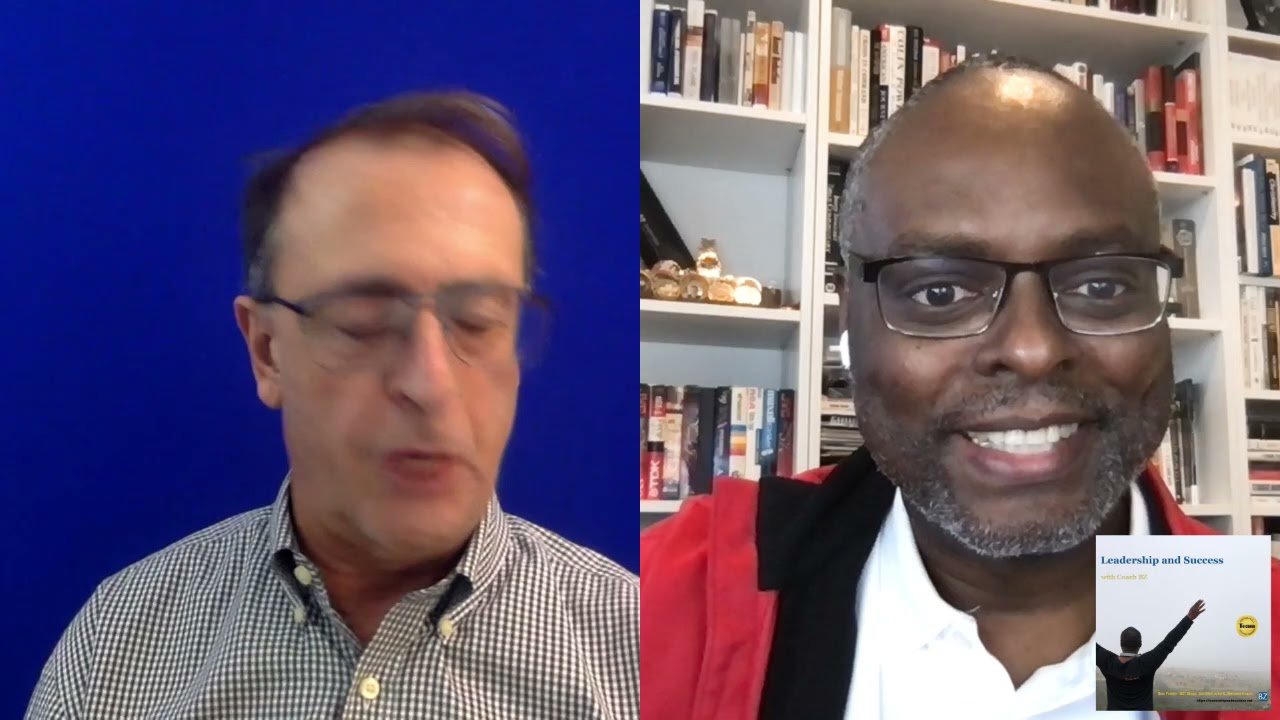
Dr. Oscar Segurado, chief medical officer at ASC Therapeutics, discusses his path from his father's clothing shop in Spain to leading in biotech, and shares his framework for turning anxiety into energy through what he calls Mindful Framing. He's developing gene-cell therapy for hemophilia and built the Neo-Chi Institute to teach the practice free.
Chapters
Welcome to the Leadership and Success Podcast with your host, Coach BZ. If you need to develop into a better leader, this podcast is for you. If you want to achieve a greater level of success, this podcast is for you. His mentor, Dr. John C. Maxwell, said it best: everything rises and falls on leadership. We hope to inspire you today and provide you with an insight that has the potential to positively impact the trajectory of your life. Welcome to the Leadership and Success Podcast.
Hello, hello everybody. Welcome to the next session of the Leadership and Success Podcast. I'm very, very honored today to have Dr. Oscar Seguado. He's actually two times doctor, medical doctor and PhD. He's the chief medical officer at ASC Therapeutic right here in Silicon Valley, San Francisco. Uh, let's say hello to Dr. How are you doing, Sergio?
Doing great. Thank you so much for having me here. I'm enjoying following you and seeing everything that you're doing for everyone in the leadership space.
This is so wonderful. I am so honored to have you, and we are both members of the exclusive and special Forbes Technology Council. That's where I met you. Can you tell us a little bit about your leadership journey, how you became to become an MD and PhD.
So I would say that my journey started when I was 12 years old and I was helping my dad run his clothing store in Salamanca, Spain. And then I discovered that, yeah, my dad was running just a small shop, but he was also interacting with employees, with At that point, I realized that I also wanted to do something similar to that. I decided also following my granddad idea that the best thing to do in life was to be a doctor, because in that way you would always have some food on the table. People need a doctor, sooner or later. So that's why everything started with my MD at the University of Salamanca, Spain. PhD at the University of Würzburg, Germany. And I've been in several universities in Munich and other places until at some point I decided to go into science. And I started with neuroscience. I started to try to understand how the brain works. And from there I discovered something even more interesting to me than the brain and the neurons and synapses and so on. And this is immunology. So how the immune system works. So I started working on that. That's the direction of my PhD thesis, indeed, in Germany, was both neurology and immunology. So I became an immunologist, and when you are an immunologist, you work in molecular biology, you work in cellular biology, protein biology. So I became professor of immunology at the University of León in Spain, And just a few months afterwards, I got an offer from a company at that time not very well known called Abbott Laboratories in Germany. So I joined them in 1993 and I started working with them in, at the beginning, just a regular employee. And slowly I started honing my leadership skills and becoming manager, director, senior director. General manager. And then at some point the company decided to bring me here to the United States in 2000. So I've been here for over 20 years. And then I started also another different type of career in corporate America. I went to Becton Dickinson and at some point I decided I wanted to go back to my origins. I wanted to run my own shop. And that's when I started thinking, okay, I've been doing clinical development, something called medical affairs in the industry, in the pharmaceutical industry. But they wanted to run the entire clinical development and medical affairs shops all together. And I call it a shop because again, that's also the clothing shop, remember that I was mentioning from my dad. And that's what I'm doing right now. I'm running an organization. That's what I've been doing over the past past 10 years in different organizations where I'm helping our company hopefully becoming a better-known organization in two areas: gene therapy and cell therapy. What that means is that we are manipulating the genomic cells of— and the cellular interactions in certain diseases. I'm focusing on hemophilia. And I'm practically looking forward to having our organization becoming more better known in the space, ASC Therapeutics.
Wow, that is pretty fascinating. What a story. So an MD from Universidad de Salamanca in Spain and then a PhD in neuroimmunology, right, from the Julius Maximilian University of Würzburg. That is quite fascinating. Actually, before I became a cybersecurity professional, My initial dream was to become an MD-PhD. I got the Bachelor of Science in biology and chemistry, and then I skipped the master's degree. I went straight for the PhD in microbiology. I worked very closely with the immunology department there at the University of Alabama. But everything kind of changed for me when I got married and I had a kid on the way, and kind of tech was the only thing I could do full-time. Like they say, the rest is history. Wow. It's quite fascinating how you really help a lot of people with all of the research you are doing. So how did you kind of get into technology, more specifically the Forbes Technology Council?
Yeah. You know, I have a good friend that is also in the pharmaceutical industry that introduced me to the Forbes Technology Council. And he mentioned my name and I was invited to participate. In Forbes, which is a kind of organization that I've been following for many years. So I can, I think I can help. I'm preparing now my first article, which is going to be something around Medicine 2.0. And the idea is to tell everyone that there is a huge revolution going on in medicine. And especially for someone like me that has been in this space for a long time, where we have 3 major drivers of that. The first one is that how the patients are now participating in everything that is happening in medicine. The second one is related to personalizing medicine. And we have now biomarkers, we have genomics, we have cellular approaches where we understand what is happening at the level of disease mechanism. And the third one is something that I would like to bring to the table for everyone, which is prevention. And this is the fact that we need to start thinking about not how to treat diseases, but how to prevent them. And by the way, I'm even working now on something that is slowly happening. This is what we are curing diseases. It's called functional cures. So obviously when you have a serious disease like hemophilia, it's a disease where there is something called factor VIII, which is missing in your clotting cascade, you are going to have bleeding. Which can be very serious. Now, we are replacing the gene producing this factor VIII, and this is what I'm doing right now. That's my job right now. But I have another job, which is something that I started working on some time ago, and this is related to prevention. And let me tell you a story that happened to me in 2014, where I got my life practically upside down when my eldest son went through a very serious crisis.
And he required therapy. Yeah.
So, no, I mean, he's doing now great. But that told me, I realized that I had something called high-functioning anxiety, which is something that happens to many of us. We are working so hard and so many hours that we don't realize that we are slowly deteriorating our mind and our body. And this is something that happens in the Western world, especially also in the Eastern world. You have several Asian countries and cultures working also very hard. But there is— we have to take care of our mind, of our body. And that's why I decided to start working on myself. I looked into Eastern cultures and I stumbled upon something that everyone has heard obviously about, which is Buddhist meditation practices and things like that. And I realized very quickly that that was not for me. So when I figured that out, I started thinking, okay, how can I help myself, my family, and my career? Because I took a sabbatical. For a couple of years, I really was not working full-time and I wrote a book and this book is called Mindful Framing: Transform Your Anxiety into Vital Energy. And I've been explaining those ideas to a number of people. At some point I was the opening act for Daniel Goleman in a conference in 2018. And recently I presented to a number of HR specialists all these ideas and the The idea is again to prevent, is to be able to help people work on a daily basis, ensuring that they are able to be highly functioning but without anxiety.
Wow, that is quite fascinating, especially now after we've gone through this worldwide pandemic. It seems like emotional health is more important than ever before. And you talked about being a functioning Which word did you use?
High-functioning anxiety.
Anxiety, yes. And I feel like that was really the primary culture, especially in Silicon Valley, right? San Francisco Bay Area, people just working, working, working nonstop. And I think, again, the pandemic allowed us to kind of take a pause, take a step back, and really think about what is very, very important to us as human beings. Tell us more about your, your book, which by the way anybody can download for free. Why in the world did you do it for, for, for free on the Kindle, right? And, uh, right here I just did it myself. Uh, you can get it on your iPad, your iPhone, or any, any digital thing. But please, I'm gonna encourage everybody to please purchase the, uh, printout copy too, right?
Yeah, exactly. And I also have even a version for those that speak Spanish. I have another version in Spanish. Okay. So yeah, the book, the paperback, unfortunately, obviously that needs to be shipped and so on, has a cost. But I decided when the pandemic hit in 2020 to offer the book for free as a free download. And altogether I got close to 2,000 reviews. And the majority are good people. There are some people that don't like those ideas because this is hard. I mean, I explain how you can use your mind with a number of practices that are related to visualization. So in contrast to Buddhist meditation, which happened over 2,000 or thousands of years ago, people had time. People could really disconnect and close their eyes and have their mind MT and so on. And there are companies still here, Headspace and things like that, that are trying that. I developed something that is more absolutely active. So you practically follow what I call 5 scenes. The first one is called Anxiety Bus, and where you practically organize everything that triggers your anxiety level. And you see that in the morning and let it go. So the rest of the day you are free of that. And in the morning, next day, you start again. And there are a number of other exercises around 3 main topics. So the 3 main topics that I recommend to everyone, which I do, and a number of people also that I interact with are very successful with, are first ensuring that you liberate your mind from everything that hits us in this, let's call it artificial world. And I, and that's why I ask people to focus on nature. The second is focusing on your emotional world, about, it's all about you and others around you, your family, friends. And the third one is to take absolute care of your body. And that's what I call organism. So I created the Neo-Chi Institute, and N-E-O means nature, emotions, and organism. And you can get a lot of information, tens of blogs, which are kind of the starting point for my next iteration of the book. It's going to be the same book, but a fully revamped one, and it's called neo-chi.org. If you go there, you can see a lot of information. Again, everything is available. It's a nonprofit institute. And this is my life contribution to society and to everyone. And I always appreciate any feedback I can get from anyone on that. And again, I want to reiterate that the way I see all this is associated with my my personal development around science, neuroscience, immunology. I talk a lot about immunology. And I think when I put, when I wrote the book and published it in 2018, there was no pandemic. But I think now it's even more relevant for, because we all understand a lot nowadays about the immune system. And I can tell you, we are, we need to understand how the immune, or our immune cells are related to our mind. And believe it or not, if we have a healthy mind, we're going to have a healthy immune system.
Well, this is very, very timely, I think, no? And I believe the website you gave to everybody, neoqi.org, right? And I'm gonna go ahead and show that here on podcast, you can go there. And I think there is really nothing more important than that today. So you talked about chapter 3 in your book when you talk about the anxiety burst, the 5 senses, and then the 5 elements of: 1, nature; number 2, the 3 emotions; and then your organism. Can you say a little bit more about the 3 specific emotions you call out in chapter 3?
So again, in terms of nature, I think that the mind needs to be connected to something that is around us. We are really, we think that we are special, we are human beings, but I can tell you everything that we are comes even from very, very simple plants and bacteria that were around in the world for many, many years. So we are just an example of evolution. If we come back to our roots, we're going to feel much better. Are going to feel integrated. And unfortunately, we have too much going on. And when we come back home at night, we just try to disconnect with either any kind of distractions or drugs, alcohol, food, things that really are not natural. So I recommend everyone to do what I do. The first thing when I have free time, and this is to take a walk. So that's the first thing that I would recommend everyone to ensure that you dedicate some time, a certain period of time of your day to— and when you go for a walk, just look up. Don't look at the ground, which you see many people doing when they are walking because they are thinking and you want to avoid thinking. You want to let your mind fly free. And that's the first thing. The second one is emotional. I think the emotions, and this is extraordinarily difficult to do, and it has two main components, everything related to the emotional world. And I'm following here the ideas for 30 years or more, or 40 years ago from Daniel Goleman on emotional intelligence and how he explains that first of all is empathy. Is ensuring that you pay attention to your own emotions and the emotions from others, and then that you take another step, which, which is compassion. And compassion means that you take an action. So this action can be a minimal thing, something that is relevant to yourself and to others, but also improves your emotional well-being. And finally, is something very obvious, So we should spend as much time as we can taking care of our body and trying to avoid spending too much time on the couch, going out, spending too much time with all these distractions, and snacking. And if possible, doing what I do, I started about 1.5 years ago, which is intermittent fasting, which has been shown in animals and so on that it can lead to many, many years of longer and healthier life because you let your body, in my case, for 16 hours every day, not eating or drinking anything except water or teas. And these are pure science, and it has been shown, and you just type intermittent fasting in Google, and you're going to see thousands of articles about that and how well it works. It's very simple. I just have a late lunch. It's almost like an early dinner. Around 4 PM, and I have breakfast around 8. Thanks God to the pandemic, I can go to work a little bit later than I did before. So, and by the way, I avoid the commute here in the Bay Area. It's horrible. And I try to go to work after 9 when there is not so much traffic out there.
Well, that is very fascinating, and I think it can really help people like right here, right now, especially again with the culture the way it used to be in the Bay Area. I remember last year, one of the most difficult times in my life, I lost my mother, and it was very, very, very difficult. I was really depressed, exhausted, and stressed out, and I think just taking walks helped a lot. I still miss her, but I think it doesn't impact me as much as it did last year, but who just wanted to do something constructive, all of that help. Again, the 3 steps you are highlighting, I think, really, really help for people who are very, very busy, who are leaders who achieve a lot but kind of neglect their bodies, their emotional health. They really, really need to take the time to pause. So in your book, to finish with, on chapter 5, you say, thank you, you talk about practicing mindful framing. How does a very busy professional a leader who feels like they have so much to do but not enough time in the day to accomplish what they need to do? What do you suggest they need to do in order for them to really take care of their body, their emotion, and their well-being?
So again, the first step is very simple. It's really being aware of the situation. I think that sometimes we wake up in the morning and we are kind of robots. Everything is automated. We wake up, we go to the bathroom, we put us nice together, we get our breakfast, and we don't really realize that we are a human being and that we have, again, all these elements that are absolutely critical. That is, we are part of nature, that we are an emotional being, and that we have a body to take care of. So just starting with taking care of these 3 elements and realizing and being aware of them, I think that's the best first step that you can take. Oh, everything else starts just, you can start building on all these elements. And I have a guide. So my book is really a nightstand book. It's very thin. So it's, how many pages is it here?
78, right? Yeah.
And this is, this is extremely easy to read and to follow.
And, uh, very practical.
Yes. Very, very practical. Going to the point. I have also an audiobook. I, uh, it's in audio. I have also trailers explaining how everything works. So again, and all this is nonprofit. So there is, there is no reason to, to, to, to really, uh, think that, uh, you're, you're building even even the ego of Mr. Oscar Segurado. I am already okay. I have everything I can, I can have from a validation perspective. And, and, and I really want to give and to offer these ideas to everyone.
Well, this is, this is really, really fantastic. I think my audience is really going to love this. Again, you can download the book for absolutely free. Here it is again, Mindful Framing, Transform Your Anxiety into Vital Energy. And for free on Kindle or just $12.95 on paperback. I think if that's not a good deal, I don't know what the, what a good deal is. Now let's go into my favorite 7 questions. I'm going to start with number 1: What is the greatest lesson you have learned and what is the secret of your success? You've got the MD, PhD, you've been doing a lot of great work with the Forbes Technology Council. What do you attribute this success to and what have you learned?
I think that what we call success doesn't exist as such. It's more a journey. I think that there is a concept from the book "Good to Great," which talks about the flywheel. And this concept means that you are slowly making a movement into this huge wheel, and it starts turning around faster and faster. So it's a lot about the small steps. So when I started working with my dad in his shop, I was learning and absorbing like a sponge many things that he was doing, and I was not even noticing that. So he was my dad, and I remember, I mostly remember him at home. But when I saw him in this other environment, I learned a lot. And I think that that was a big part of my, let's call it success or progression, I would call it more than anything else. By the way, I'm not done. I don't think that I'm successful right now. And I don't think I don't really want to get there. I don't believe also in reaching a level of happiness or a happy retirement or a happy whatever. So I just, I don't want also to work hard. I just want to work and to do that in a natural way. So that's my recommendation to everyone, not to worry about an end result, just work into small steps that you take every moment. And that's why I always use the term, the two drivers in my daily life related to me and to others are, empathy and awareness. And by the way, I even discovered a sign, which is I take 3 fingers here, and if you put them in front of you, you're going to see a kind of E. And if you take 2 fingers in the other hand and you cross that with the last one, you have an A upside down. So it's something like this. You do that. So I remember always I do this sign to myself and I say empathy and awareness. That's it.
Yes. Wow, this is, this is so, so great. One of my mentors, Darren Hardy, used to say, you know, success is a result of small, smart choices completed consistently over time. And when you do them, sometimes you don't see any result here, but you keep doing it, you're very consistent, and in time you see big, big results. That is a great, great lesson to learn. So my number 2 question: what are you learning right now? I know leaders are always learners. What are you learning these days?
I am a learner, so I'm learning continuously, but not in the standard way of learning from others. I'm learning from myself. So I'm comparing myself with the day before, with the month before, with the year before, with the decade before, and I'm seeing how I am evolving. So I think that this is the number one feature of a human being, the fact that we learn. When I see my lovely dog, I don't think he cares about learning. He does the same over and over. He does it very well, but he doesn't learn. I mean, he has already, in some way, he has some kind of habits, but I don't think he is conscious about thinks or is able to have this kind of high-level approach to ideas. And that's what we have, ideas. To me, learning is generating ideas, and it's not only learning for your own, you have to communicate these ideas. That's also for me as important as learning. So you gather information, You create an idea and you communicate that idea.
Wow, that is, uh, really, really, uh, refreshing. Speaking about learning, uh, one of my mentors, Dr. John C. Maxwell, always says, uh, sometimes you win, but sometimes you learn. So success and failure, sometimes I look at it as two sides of the very same coin. And most people, at least traditionally, when they look at success being on the pedestal, having all of those huge achievements, they have no idea how much failure these people have really gone through. So my third question for you, How has failure shaped your life?
I think I fail all the time. But the question is about a keyword that I like even more than failure and kind of digesting or understanding, and this is resilience. So resilience means that you really realize that you're down and then you start taking steps to go up again. And if you link that to the fact that we all fail in one way or another, small, big, medium, then it is that the way you get up, the way you are resilient and you take those steps to resolve that, That's what really means, by the way, learning again. This is an amazing opportunity to reshape sometimes even your core beliefs. And it happens to me all the time. And I guess everyone is noticing over time when you get at a certain age that you feel more comfortable with yourself. And that's because you have all these failures and you had to get up from them. So the majority of us, I think automatically, and this is part of being a human being, are able to overcome those failures.
That is quite something. Resilience is so important as an individual. And I think for most of us, we've really realized after this pandemic how resilient people really, really truly are. Truly are. And me, as a cybersecurity professional, I definitely want to talk about resilience for humans, but I also like to speak about resilience for systems, like information systems out there. Systems get hacked and breached every day, but it's really how fast do you recover from, from that. This is good. I think our audience is really learning a lot. The next question I have for you is my fifth question: what have you So who do you know that we should know? Kind of, who are your mentors, thought leaders that you are following?
You know, I've been reading so much about mentors and the importance of mentors, and I agree that that would have been fantastic to have a mentor in my life. I didn't. Because I think that's a matter of luck, that maybe you have someone that really guides you and spends the time with you and You know, I've been in many places. I was at home with my family, like everyone, I was going to say my dad, my mom especially helped me and mentored me a lot. But that's their job. I don't think you can call your parents mentors. But having anyone that really taught me something and say, okay, and now I'm going to hold your hand. And I would say here, and for so many people, and I would I would even venture to say that that's the majority of the people that do not have mentors. So you can, you can try to be your own mentor in some way. And all their ideas there. And since I wrote my book and it took me a couple of years to put that together, these 70 pages, to organize my thoughts, I think that there are so many fantastic books out there, or maybe TED conferences or things like that, that are going to tell you as much as you can have from someone that really dedicates the time to you especially. So yeah, I'm telling you that I don't think that everyone is so lucky to have a mentor and to have someone that can help them. So I have many.
Yes. And that is so true. I know for me, it kind of started when I was 17 years old. A lot of people I used to read and learn from, like one of them was Dr. John C. Maxwell, and today is my personal mentor. But even Prior to meeting him, just going through his books, his video program was very important back then, really made a huge impact. Which leads me to my fifth question. What have you read lately that we should read? What are some of the best books you have read recently?
So again, I go back to the book I mentioned a moment ago because that was absolutely essential for me. And this is Emotional Intelligence. By the way, there is a second version called Emotional Intelligence Intelligence 2.0. And that really impacted me a lot because it was, again, I don't see leadership something disconnected to your personal life. I think it's connected, your professional and personal life are one. And in some way that was absolutely essential. There was also another book, a very simple book called Getting Things Done. That impacted me a lot. It was from David Allen, and it's a very practical book about execution and about getting things done. And at the end of the day, that's how it works. So for instance, many people think, okay, I want to write a book and I have so many ideas, but you have to do it. You have to get Get It Done. And this book is very, is again a practical guide on how to do things and how to organize all the input and experiences that you have during the day and decide what to do and what, even more important, what not to do and how to toss, how to say no, how to ensure that you do the right things. And that's what I learned that I have that book always around because it gives me several ideas on, for instance, something as simple as— so we all have all these emails coming nonstop during the day and how you have to decide how either to toss that email, to delegate that to yourself or to decide when to do it or do it rapidly in about 5 minutes. And you get rid of that. So I try to have a life that is as stress-free as possible. And for me, dealing with emails and with tasks is one of the key learnings in my life.
Wow, that is really, really great. I think our audience is really learning a lot here. So question number 6, what have you done that we should do? What is one action you have taken that has positively impacted your life as a leader?
So I'm sorry to repeat myself, but the way you improve your life, and I can tell you because I'm a university professor also at some point and is now a tenured professorship and now on leave, is teaching. So when you teach, when you tell people, as I'm doing now, I'm just giving you some ideas. And I really appreciate, Bob, the fact that you asked me to participate in this podcast. You know, the moment I'm expressing myself, I'm trying to communicate my ideas to others, is extremely helpful for my own mind and for my own organization of my life. Because I'm putting things together and organizing them in a great way. So I would say that teaching and helping others is the best way to fix your idea and to progress in many, in any direction in your life.
Well, this is extremely, extremely important. Earlier we said, no, some people haven't been as lucky as I've been to have mentors, and by you being a leader and learning and being able to teach to somebody else. So if maybe you didn't have any mentors, but maybe you can mentor somebody else and share the knowledge you have. And by doing so, you are really increasing, right, the knowledge in the world and your impact, wouldn't you say?
Absolutely. And that's exactly the point. You got it. Now, again, if you're lucky also to have someone that looks up to you and asks you questions and tells you, okay, how can you help me on this? And I try to do that. So I entered all, every time that that was offered in my organizations, I was in the mentoring programs. We had one at Abbott Laboratories, at Vee. I was 15 years with this organization and I was part of that. And several people that I mentored went on to very high-level executive roles. So again, I am totally for that. And again, it's the teaching, the mentoring, the coaching. And that's something that I do all the time with my direct reports and with my peers, and also very respectfully with my boss, my CEO, and try to help everyone around me and my family and friends. So whoever wants any kind of advice, I'm happy to give it, although in many cases it's probably going to be not the right one, but I try.
Yes. Well, thank you so much for giving us your time today. We are quickly running out of time, but before we finish, I do want to ask you this last question. How can we add value to you? And I especially want to highlight your nonprofit, right? neoqi.org. Embrace the Neo-Chi lifestyle. But what can our viewers do to add value back to you?
Again, tell others around you, and I am very happy to help explain everyone a very simple concept, which is that we need to be empathetic and aware of where we are. This is also called mindfulness. Mindfulness, which is a concept that is around but needs to be explained. And mindfulness is not something invented 2,000 years ago by all these Eastern cultures. I think that that's something very important to us nowadays. So the moment that you discover that, that you know how to do it, tell others about that. And, you know, I'm not interested in really promoting my institute or my book or something like that. I'm really interested in promoting the idea that we have to merge some of the incredible knowledge and ideas related to prevention in terms of mental health issues and many diseases through a number of activities that can be done just in your mind and that do not require any— that are absolutely free. They cost nothing, but require something very important, an effort and an intention. So people need to be intentional and teach others about that.
Wow. Thank you. Thank you so much for your time, Dr. Oscar Segarra. We really, really do appreciate that. I think you're definitely going to make a huge impact on this podcast. And again, I want everyone to please, please get the Mindful Framing book. It's absolutely free. I mean, you don't have to spend a penny. So do it right after this podcast. Thank you again. And until next time, thank you so much for watching. Bye.
Thank you for listening to the Leadership and Success Podcast with your host, Coach BZ. If you like what you heard, please Please subscribe to our channels and come back for more wisdom nuggets on how you may develop into a better leader and achieve greater levels of success. Leadership is the most critical skill. The world will always need leaders to lead others, deploy the next disruptive technology, or execute a business strategy. You may as well decide on counting yourself among the 21st century leaders. See you right here next time. Time on the Leadership and Success Podcast with Coach BZ.
More from Bob

S250:E4🎙️LIVE 🇺🇸America 250: President Barack Obama Leadership, Service, and the Power of Hope






S5:E157🎙️ LIVE with CMD CMSgt Dennis L. Fritz, USAF (Ret.)(Multi Tracks Audio)



S5:E156🎙️ LIVE 🇪🇸 Leadership Lessons from the FIFA World Cup 2026 Champions (Multi Tracks Audio)

S250:E3🎙️ LIVE Leadership Lessons from America’s First Documented Family of African Descent 🇺🇸📖