Episode 12: Live with Ian L. Paterson on Leadership & Success
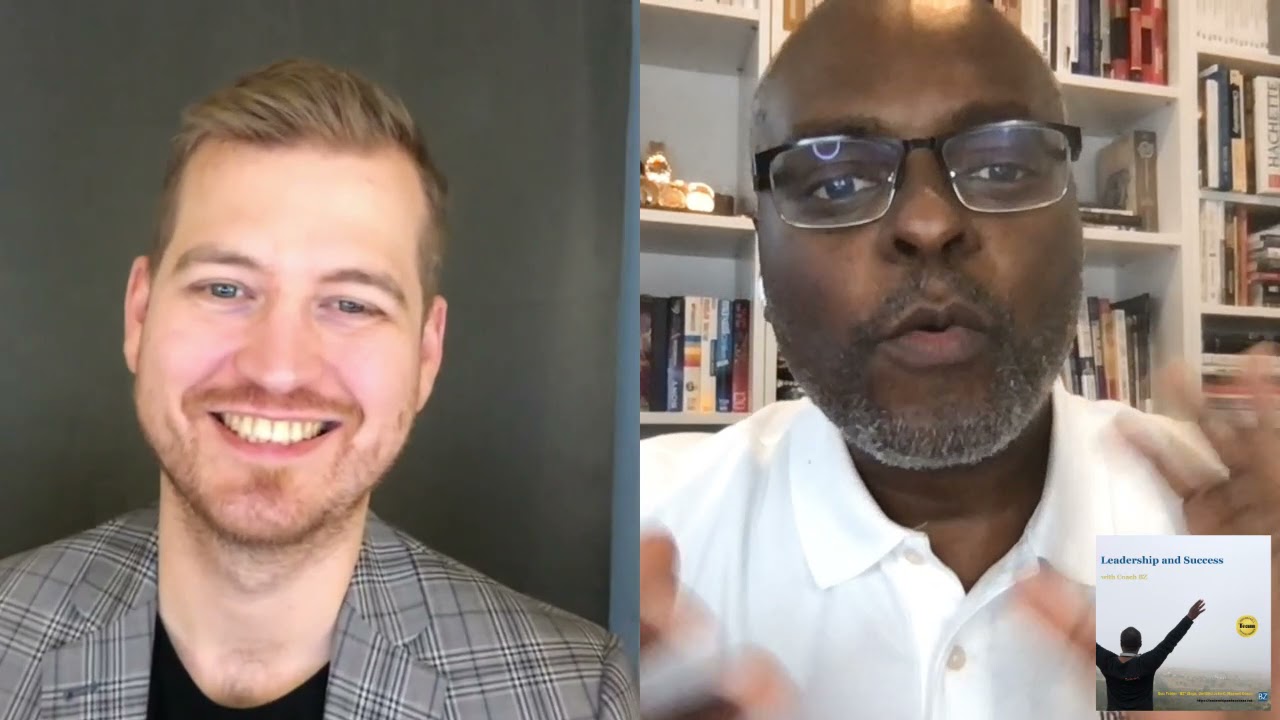
In this episode of the Leadership and Success Podcast, host Coach Beezy interviews Ian L. Paterson, CEO of Plurilock, about his unconventional leadership journey and the lessons he has learned building multiple technology companies. Paterson recounts his early entrepreneurial experiments making business cards in elementary school, his shift to data‑driven problem solving in e‑commerce, and his later focus on cybersecurity through behavioral authentication and Zero Trust. He explains how capital‑raising strategies evolve with a company’s stage—venture‑backed, bootstrapped, angel‑funded, and finally public markets—emphasizing the importance of matching funding type to business context. Paterson shares his leadership philosophy of humility, asking for help, and surrounding himself with people who are smarter, better, or more experienced. He highlights the role of a multinational, diverse team in Plurilock’s early success and describes concrete remote‑first practices (intentional Zoom chats, Slack async communication, brief personal check‑ins) used to sustain culture. The conversation moves to broader cybersecurity awareness, the need to treat digital presence like a physical storefront alarm system, and the challenge of educating non‑technical leaders. Paterson offers practical advice for 20‑something IT professionals—start building with Raspberry Pi, contribute to open‑source, and seek mentorship. He reflects on his biggest lesson (the “buy‑to‑win” principle), ongoing learning about capital markets after going public, and how personal setbacks (health issues that limited formal education) drove him to work harder. He discusses his view on education versus practical experience in hiring, recommends two books (Stand on Guard and The Kill Chain), mentions his recent adoption of Transcendental Meditation, and ends with a call to the audience to help advance the cybersecurity conversation, especially for industries like mining and oil & gas.
Chapters
Welcome to the Leadership and Success Podcast. With your host, Coach Beezy. If you need to develop into a better leader, this podcast is for you. If you want to achieve a greater level of success, this podcast is for you. His mentor, Dr. John C. Maxwell, said it best: everything rises and falls on leadership. We hope to inspire you today and provide you with an insight that has the potential to positively impact the trajectory of your life. Welcome to the Leadership and Success Podcast.
All right, hello everyone, very, very glad to be with you again. And today my guest, I'm very, very privileged to have Ian Patterson, is the CEO of Plurilock in Vancouver, Canada. How are you doing, Ian?
I'm doing well, it's been, it's been a wet last few days. We've had a lot of rain here in British Columbia, in Vancouver, but I'm doing— I'm dry and well today, so I'm thankful for that.
Good to know. Thank you. Thank you so much for your time. We really value that. So again, we have about 36,000 people or so who watch this show, this podcast. It's all about leadership and success. They want to be better leader and they want to achieve greater level of success. Can you tell us a little bit about your leadership journey?
Well, my background, I've always been an operator of businesses. Even before I officially entered the workforce, I was one of those kids who in, I think, second or third grade, I would create a little business. I would make business cards for people. So I had an old laser printer. And for those who remember, you can— you may still be able to buy the perforated business cards. And so I would go through and I would try and create great designs for anyone I thought could use a business. Of course, my colleagues in the first and second grades were not great users of business cards, but there were a bunch of adults around me who wanted to support me, I guess, anyway. So I think it started from a young age, building businesses, but then also trying to scale them with people. And so really being enthusiastic and trying to bring people with me along the journey. And so again, with the business card business, I would try and enlist other people as affiliates to go and find customers. And so, and that's really been the trend, I would say. Over the last 10 years, I really focused on building value by using data. So data and analytics, I think in the old days we used to call it big data, but trying to solve problems for companies using data, first in the e-commerce industry and then now more in the cybersecurity industry.
Wow, that is quite fascinating. Looks like you are quite a serial entrepreneur, being CEO and founder of so many companies. Actually, there is a lady in my mastermind group We're just trying to launch a business and one of the challenges now is kind of raising capital. Do you have any suggestion tips or how did that work for you with all of your businesses?
I think raising capital is really specific to the business that you're in. I've been fortunate, so I've had 3 career stops over the last dozen years or so, but in very different capital environments. So I was I held the position of Director of Insights for an e-commerce analytics company that was venture-backed. And so I got to get a really close look at what it meant to raise true venture capital from institutional investors. That company was eventually acquired by eBay. The company I founded after that was called Exapick, and there we bootstrapped. I mean, my funding, if you call it that, was a $10,000 Visa credit card that I racked up in the first part of the business, and then that was, that was the funding. So that was a very different environment. I can remember the very first server that I, that I used to build the infrastructure. So Exapick, just by way of background, it was a, is a data and analytics platform, and at its peak we were processing billions of data points per month. And I can remember everything was on a shoestring, and so I remember I found a server for $2.33 per month, but I had to pay on a 3-month basis. It wasn't a monthly plan, it wasn't an annual plan, it was a quarterly plan. Anyway, that was the cheapest infrastructure just to get going, right? So very different operating environment than venture capital. And then Pluriloc, which is where I am now, we started private. I raised several million dollars of angel funding. So it was still external capital, but it wasn't institutional, not like a true venture capital model. And then last year, just over a year ago, I, I took Plerlock public. And so now we have access to the public markets. And so very, very different environments. And I think what I would say to your colleague is that the, the choice of capital really depends on what you're trying to do and trying to achieve. And I think that, that there are certain types of capital that really make a lot of sense for some businesses and really don't make sense. Perfect example, if I had tried to raise venture capital for my business card business when I was in first and second grade, you know, it does— that's not a venture-scale business. It doesn't, it doesn't match, I don't think, it doesn't match the, uh, the financial outcome of what a venture capitalist needs to see. And so it wouldn't be you'd have a very hard time raising that capital. You know, conversely, Pluriloc, we're in the cybersecurity industry, and there's an estimate floating around that the cybersecurity market overall is estimated to be over $1 trillion of spending over a 5-year cumulative period. So there you actually could make the argument that, yeah, you should raise venture capital if you're in cybersecurity. So I really think it comes down to the context of what you're trying to do, and then that will inform what choice makes sense.
Yeah, that is very, very well said. And another thing, right, you are a founder, CEO, and you've done it several times. So you have a product, a service, a solution for the market, but then you have to build a team, you have to build an organization, right? Build a profitable company. So as a leader, how has it been for you dealing with people? I guess you need people in order to do what you need to do, but then sometimes you feel like, you know, you can live without them, but then you can't really live with them. Sometimes I wonder how some married couple feels. But anyway, what about the human element of leadership?
I think that people are crucial. I mean, there's the old saying, right? If you want to go somewhere fast, you go alone. If you want to go somewhere far, you go together. And I think that that really applies a lot in business. You know, I think there's a lot that we could talk about around leadership. But what I have always tried to do is twofold. First is ask for help. Because a lot of the times with leadership, you know, some people have the expectation that leadership is around giving orders and telling people what to do. My preference is always to ask for help. Genuinely, look, can you help me with this problem? And then that way, you're working collaboratively together to get to somewhere else. I think the second part around leadership is I'm always looking for people who are smarter, better, more experienced, funnier, better looking than I am. Because if I can surround myself with these people who are just so much better on every dimension, we are collectively going to have a much better likelihood of success than if I was only looking for, you know, people that I could I could talk down to. And so I think that that requires— both of those two things require humility. And so humility, if you can stay humble, if you can accept that there are things that you don't know, that you need help from other people, I actually think that that's one of the secrets to leadership. And certainly that's been a huge part of the success that I have had is around staying humble and asking for help from smarter people.
No, this is quite true. And I think one of the secrets of success in general is to find people who can complement you, right? Who are not the same as you, who can look at your blind spot, and together you can accomplish so much more than you can by yourself. How do you think does diversity, equity, and inclusion kind of fit into that?
Well, I think that the, the early success that Plurilock had was as a result of our diversity. I mean, Plurilock— so, so I'll just give you a little bit of context, but Plurilock is a cybersecurity solution around authenticating people and we're able to authenticate people based on their behavior. So quite literally, the way that you type on a keyboard, the way that you move a mouse, this can identify a human rapidly and continuously. And we were only really able to get this solution off the ground because we had a multinational team, first on the research side and then on the development side. And so the early days of Plurilock, we had people from Africa, from Europe, from North America, from South America as well, actually, now that I think about it. And then we've grown from that. And so in the very early days, we— one of the team-building items that we did is we would have everybody put a poster up on the wall of the city that they associated with. Maybe they were born there, but maybe they, you know, maybe they were born somewhere else, maybe they grew up there, and they really felt they had an affinity to a certain city. And so you'd walk around the office and you would see, you'd see all of these different cities from around the world. You'd see Morocco, you would see Paris, you would see São Paulo in Brazil, you would see Vancouver, you would see Belgium, Brussels in Belgium. And so you had a feeling, you had a visual representation of how diverse the team was. And I think that that was really what was enabling us to be successful because we had the ability to look at problems from so many different views, both from so many different educational backgrounds, but also from so many different cultural backgrounds, from so many different languages. And so it really provided a much more fulsome approach to thinking about problems, which, you know, it's impossible to run an experiment to know how crucial that was, but I really feel was critical to our early success.
Wow, that is quite fascinating. And talking about leading a diverse team, is there anything you think you've done to kind of ensure the professional and leadership development of your direct report?
It's a good question. I always worry that we're not doing enough. You know, I think I remember hearing a podcast by Jamie Dimon, you know, very large financial services executive, and he he said one of his worries, the thing that he always laid awake wondering about was whether he had enough time thinking about strategy versus just the actual everyday decision-making. And I think the same thing is true for us around, are we spending enough time working on the business or on the people as opposed to in the business? So I don't know. I don't, I'm not sure that we've nailed the balance. I think that there's definitely more to do. And I think it's also harder now because we're all remote. Pluriloc as a company, we've always been remote first, but now we're just fully remote. And so now even, you know, some of the smaller moments or rituals that we had around getting together in the office no longer exist. And so it's something that's on my mind and is a focus of ours moving forward.
Yes, that's definitely true for almost all of the companies around the world now because of this pandemic. And how do you really maintain or build a culture when 100% of your staff is 100% remote? I'm sure that's quite challenging.
Anything you've learned in the past year I don't think that we have any secret weapon. I think it's just being very intentional about creating moments around sharing insight and sharing information and trying to create an environment where you build time for the things that don't appear absolutely necessary, but actually turn out to be crucial. You know, just creating Creating those moments where you can all jump on a, I hate to say it, but jump on a Zoom call and just chat, you know, or actually allocating the first 5 minutes of a meeting to just connecting with individuals before you get into the day-to-day. You know, those are some of the things that we've been doing. I think we've also, you know, because we started as a deep tech startup, cybersecurity company, you know, we were, we always had a pretty good handle on asynchronous communication using Slack and messaging and so forth. So really leaning into that with ways of engaging people. But we're still sorting through it, you know, we're still thinking through it, I think, the way, the same way that other people are. And we're earnestly looking for other best practices that we can bring in and implement as well.
This is so insightful. I know this week our CEO, during our all-hands meeting, took about 10-15 minutes to just allow everybody to say what they were thankful for. That was a very, very touching moment. It almost made me cry just to kind of see what everybody else is going through, but what they are thankful for and hoping for. I felt like it kind of brought us closer together. Now, changing the page now, you and I, we are both members of the exclusive Forbes Technology Council. That is how we met. Can you tell us a little bit about your journey there, how it happened for you, how you got invited?
Well, so again, the context here is that Plurilock, we're in the cybersecurity industry, like we were talking about. Cybersecurity is estimated to be massive by, you know, by any way you want to slice it, by spending, by market share, etc. But a lot of other people know that as well. And so there's a huge amount of players in the cybersecurity ecosystem that it's sometimes difficult to be able to differentiate one company from the next. So we were very fortunate to have the opportunity to join the Forbes Technology Council. And for us, our goal really is to be able to share the lessons of how our software, but also our techniques and our thinking, can help companies stay safe. You know, not to get too far into the weeds of around cybersecurity, but there's this, there's this concept, it's not a standard, it's really just a way of thinking called Zero Trust. And, you know, I think a lot of individual companies are grappling with the question of first, what does Zero Trust mean? But then second, how can they implement Zero Trust thinking? And of course, the goal here is to be able to ultimately stay more safe relative to how things have been done in the past, Zero Trust is a potential solution. But there's a lot of, there's a lot of question, there's a lot of uncertainty, and it's not, it's not clear to companies how they can actually be successful. And so our goal at Pluriloc in the short term is to really help educate customers around how to achieve Zero Trust within their organization, which again is, is designed to help mitigate risk and create a more safe working environment.
That is quite fascinating. And I know this is definitely here to stay, cybersecurity. And I feel like privacy is getting to that point too, kind of the way cybersecurity was about 10 years ago. We definitely need to do things better, right? Because whatever we've been doing doesn't seem to be working very well. We seem to have breaches almost every single day. And like it was early this year, right? Where, for the first time really in the US, our infrastructure was affected and really people spending up to $10 a gallon at the pump for something that happened on cyber. It's just unimaginable. I mean, it's almost like, what is it, 1924, like everything that was science fiction or theory, and today is actually happening. And we definitely need to have more companies like yours to try to innovate and find, I guess, some better best practices, because the best practices we have today definitely not working very, very well. Now, is there anything you would tell to your 20-something years old? A lot of people who are listening to us now just got out of college and kind of starting their career. Eventually they would like to be where, where you are, be a successful founder, CEO, C-level IT executive or something, but they just have no idea what is coming down the, the path. Any advice you would have for a 20-something, you're all just about life's success and the career in IT?
I think that it's easy to get trapped in the— trapped inside your own head. So it's easy to spend all your time researching, reading, learning. And I think what you actually need to do is start doing. So my advice is always to find something practical, regardless of how big or small, If we're talking about how to have an accessible, successful career in IT, I would start by buying a Raspberry Pi and start to build some things. If you're talking about going more into networking, maybe buy 10 Raspberry Pis and maybe start to connect them together. If you're interested in, you know, information of things or internet of things, IoT and so on, Again, how can you go build a small weather station? Like actually get your hands dirty and start doing. What that's going to do is twofold. It's going to actually give you experience, which is crucial and hard to get just by reading a book. But the second thing is you're going to realize what is enjoyable, what gives you satisfaction. I think that you only get as a reaction to something else. And so I think if you can start just that, doing process, you're very quickly going to get the feedback necessary to calibrate and say, oh, well, I like doing this. I don't like doing this. Okay, well, let's go focus over there. And then you can start layering on the thing where you add people to it. So go ask for help. Go have— work on a project and then go ask for help with somebody else. And then, you know, those types of interactions have a habit of snowballing. This is how most of open source technology is actually released in the world where you scratch your own itch and suddenly it turns into a project unto itself. And so I think if you can start down that journey, you'll find the rest of the answers along the way, but you have to start.
That is quite fascinating. Now it's the time of the podcast where I go into my 7 favorite questions. Number 1 being, what is the greatest lesson you have learned so far?
Well, I think that I had trouble choosing the answer to this because there's a number. As I mentioned earlier, I spent about 4.5 years solving problems with data, specifically in e-commerce. And the single biggest takeaway from that time was successful retailers made their money on the buy. They purchased products to sell. In a way that almost guaranteed them that they were going to be successful. They didn't need to worry about finding an untapped market. They didn't need to do anything super complex. As long as you bought the merchandise appropriately that you then wanted to sell, whether online or in physical retail, you had a pretty good likelihood of being successful. And so I think there's a corollary to that in a whole lot of other industries as well. I mean, think of real estate. If you can make money when you buy a house or buy a piece of land, even if you don't totally nail that renovation that you then want to do to sell the house after the fact, you can make money on the buy. That is a huge component of success.
That is so very important. I think it was Frank Cardone who said, "Begin with the end in mind." And yeah, that's definitely the way to be successful. So what is the secret of your success, you think?
I don't think that there is one. I wish there was. I think it's been a combination of hard work, luck, asking for help. So I certainly would not be here without a lot of very generous people along the way. I think that the term is standing on the shoulders of giants. And so I think that that it's the combination of those things that ultimately get you to where you are. And you really, you only know if you're where you want to be if you look behind you and sort of chart your path. I don't think there is a silver bullet. You just got to go in and do it.
That is wonderful. I think somebody else said, you are not an island, and we really need one another to be successful. Which leads me to the second question: What are you learning now, since leaders are always learning?
Well, for us, Pluriloc, we went public just over a year ago. And so everything that I knew about finances in a private company don't apply quite in the same way. And so for me personally, it's really about learning the capital markets and learning the differences and the nuances, but also the similarities. I've actually been surprised by some of the things that I had a preconceived notion about being very different once you're public versus being private. And actually found that that wasn't the case. So it's been, it's been a very interesting learning environment and one that I expect will continue to challenge me and to challenge us in the future.
Wow. And also for people who may be looking at you now, CEO, founder, going public successfully, member of the Forbes Technology Council, they feel like your life has been nothing but success after success after success after success. So the first question I have for you is, How has failure shaped your life?
Uh, so many ways. I think one of the big things, I had a health issue that prevented me from completing most of high school and never really did much post-secondary after that. And that, I always felt, I always felt that I didn't quite measure up against the people who went and got their BAs and then MBAs or even PhDs. And so the lack of that academic accreditation, I felt was something that kept me back. What it did do actually is it actually has made me work harder to try and make up for that thing that I felt that I was missing. And so, in a way, I've actually tried to turn that negative into a positive. That's probably the single largest thing.
Thank you for saying that. Now, I know in schools around countries really around the world, they kind of like for people to go to college, maybe get a master's degree or even a PhD and so forth. But when I think about this, yeah, I mean, I guess if you have an education, it is great. I have nothing against it, but I've always thought that people who are extremely successful, almost all of them dropped out of college. And they ended up making billions and being the richest people in the world, where people who go to college end up with a huge student loan and then kind of live average lives. So I guess my question to you, like even recently in Silicon Valley specifically, companies like Apple, Facebook, they no longer require a bachelor's degree to be a coder or anything like that, which kind of makes sense, right? Because experience, you being able to solve a problem is much more important than just a piece of paper. With your name. How do you feel about education when it comes into the workforce, especially in IT and cybersecurity?
Well, the way that I view education in a hiring context is that it in theory should be a proxy for ability. And so the closer the education is to the job that you're going to perform, in theory, the greater the likelihood that that should translate into actual ability. So with that, um, with that sort of mental model, we favor practical, um, programs, uh, like if you go to trade school, for instance, and you get, uh, you know, if you do a 2-year program in, in coding, um, but it's much more oriented around the practical elements of that, that may be more beneficial than, you know, a bachelor's degree of some sort of STEM, you know, math, physics, etc., because it's more directly relevant to hiring a developer or hire, you know, hiring somebody like that. So, as a proxy, it can be helpful if there is something that's out there that matches the job that the person is actually going to do. But that's really only a part of the conversation and a part of the interview process where, look, you have it, you may not have it. In fact, we've had a number of folks who have been very successful who didn't have those credentials but had done projects on their own that were as good, if not better, because they were more directly relevant to the areas of the business that they were going to actually be working on. So that was super helpful. At the same time, you know, we have a number of people who either have PhDs or are PhD candidates. So it's not to say that there's something that's either better or worse, but it really is how does that pertain to the role that we're hiring for and how strong is that link between the thing that they have done in the past, whether that's a PhD program or a self-directed, you know, project that they've just done on their own, How does that tie into the role they're going into?
That is great. And question number 4 is, who do you know that we should know? Who are your mentors or thought leaders you are following we should know about?
I think one of the smartest people that I follow online when it comes to Web3, so the technology formerly known as blockchain, and crypto, but also clean tech would be Boris Wirtz at Version One Ventures. Just brilliant venture capitalist who's very deep in both of those two sectors. And I continue to learn from him from a distance just around those two. So I tend to try and consume everything that Boris puts out.
That is fantastic. So somebody I'm going to be adding to my list to follow. And question number 5: what have you read that we should read? What is the best book you've read recently?
I think that there's two. I just recently finished reading Stand on Guard, which was— it's pretty niche. It speaks to the national security environment in Canada, and specifically the intelligence community, as well as kind of just the more broader national security community. I found that interesting because there's not as much public domain information as compared to the United States or other, you know, large powers. So, so that was quite interesting, but again, pretty, pretty specific to, to a Canadian operating in the cybersecurity industry. The second would be a book called The Kill Chain by Christian Brose. Just a fantastic read around the future of warfare, how drones, robotics, AI, and some of the emerging technologies are going to, and frankly, I think already have shaped both current and upcoming potential conflicts. So very, very interesting, very, very interesting read, and one that I've been recommending to a lot of people.
Thanks. And Stand on Guard, who is the author for that one?
Uh, I don't actually have it handy.
Okay, I can, I can, I can get it from you later. I believe it's probably Yves Engler, right? Stand on Guard for Home: A People's History of the Canadian Military. Is that the one?
I actually think it's just Stand on Guard.
Okay, okay, that's done. I definitely got the second one, the Kill Chain: Defending America and the Future of High-Tech Warfare by Christian Brose, and we're gonna make sure to add links to those later on. Thank you so much, because I know leaders are always readers, right? And so question number 6 is, what have you done that we should do? What is one action you've taken that has positively impacted your life, you think?
Well, I think I'm a late adopter on this one, but I recently took up TM meditation, you know, probably 10 years after everybody else started, but I found it to be super helpful in terms of replenishing energy throughout the day.
Wow, that is very nice, and especially now after we've been going through this global pandemic, I know a lot of people are putting their perspective back in Czech, why it's not always about money and all of that. There are things that are probably much more important, and taking time for yourself too, and mental health, and meditating, and thinking is definitely very valuable. Earlier today I was interviewing a medical doctor who actually wrote a book throughout this experience, just helping people live better emotional life. So the very, very last question I have for you is how can we add value to you?
I think that the number one thing that I would ask is to advance the conversation when it comes to cybersecurity. I think one of the misconceptions amongst business leaders who are non-technical is that security only matters to a bank or matters to kind of the obvious industries, healthcare, etc. But it's just so important. I think that the way that I would describe it is to say, if you have a storefront, you probably need an alarm system. And if you have a digital presence, which frankly everybody does, because everybody has email, everybody has websites, etc., you need also something equivalent to that alarm system. Now, unfortunately, it's a lot more complex. You can't just buy something off the shelf and hope it works. But it's an issue that does impact you. You know, one of the things, just being in the junior Canadian public markets, is that there's a lot of mining companies, there's a lot of mineral, oil, and gas companies. And there's not as much of an awareness that there are threats out there that are targeting those companies specifically, or, you know, trying to get competitive M&A intelligence or competitive bid intelligence so that other companies can win bids just by knowing what your pricing is. So it's a very large problem. So what I would ask your audience is to just help advance the conversation when it comes to cybersecurity. And if we can be a resource and help with that conversation, we'd be delighted to do so.
Great, thank you. Thank you so much, Ian, for your time. You've been very, very generous, and I think Our audience here would be very, very grateful that you took the time, gave us a lot of insight to help us be a better leader, but also achieve greater levels of success. Um, thank you, thank you so much. I appreciate that.
Absolute pleasure. Thank you.
All right, thank you for listening to the Leadership and Success Podcast with your host, Coach BZ. If you like what you heard, please subscribe to our channels and come back for more wisdom nuggets on how how you may develop into a better leader and achieve greater levels of success. Leadership is the most critical skill. The world will always need leaders to lead others, deploy the next disruptive technology, or execute a business strategy. You may as well decide on counting yourself among the 21st century leaders. See you right here next time on the Leadership and Success Podcast with Coach Easy.
More from Bob

S250:E4🎙️LIVE 🇺🇸America 250: President Barack Obama Leadership, Service, and the Power of Hope






S5:E157🎙️ LIVE with CMD CMSgt Dennis L. Fritz, USAF (Ret.)(Multi Tracks Audio)



S5:E156🎙️ LIVE 🇪🇸 Leadership Lessons from the FIFA World Cup 2026 Champions (Multi Tracks Audio)

S250:E3🎙️ LIVE Leadership Lessons from America’s First Documented Family of African Descent 🇺🇸📖