Episode 13 (Video): Live with Oak McCulloch on Leadership & Success
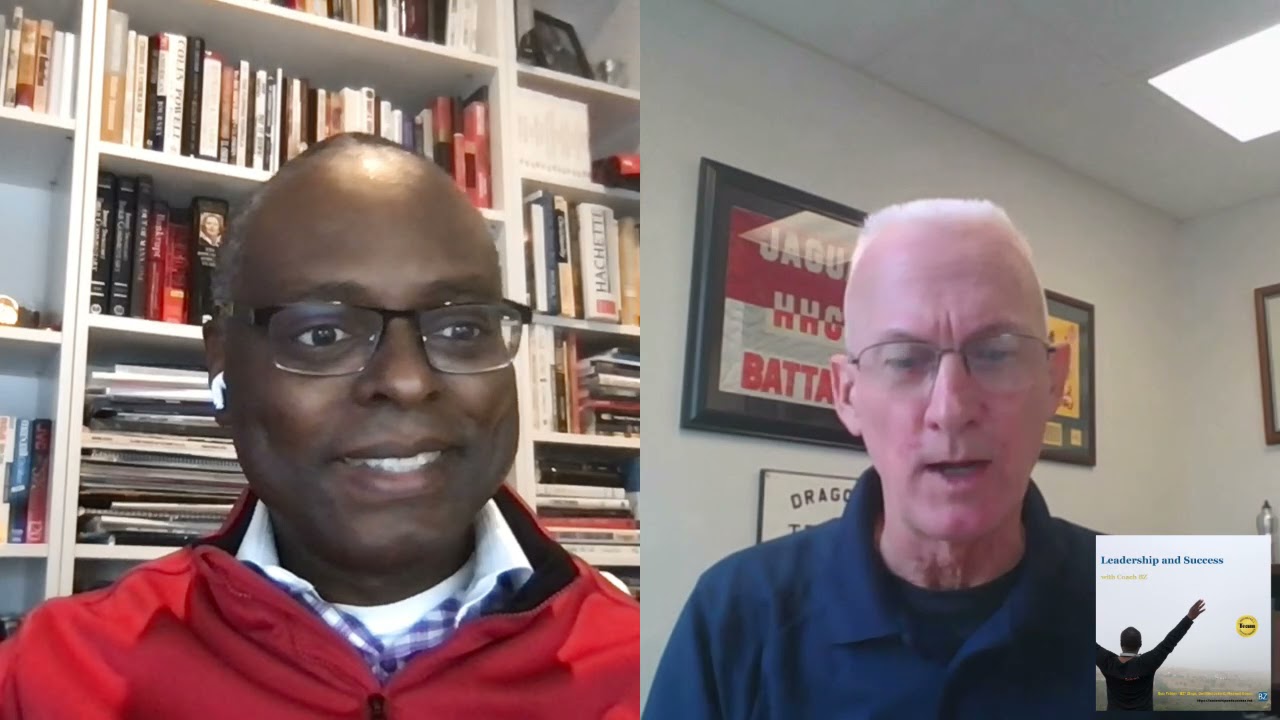
Retired Army Lieutenant Colonel Oak McCulloch discusses 40 years of leadership across military and civilian roles. He argues that servant leadership, putting people's needs first while achieving results, works everywhere from the military to food banks. McCulloch's book explores leadership as a lifelong journey guided by trust, decision-making with incomplete information, and continuous learning.
Chapters
Welcome to the Leadership and Success Podcast with your host, Coach BZ. If you need to develop into a better leader, this podcast is for you. If you want to achieve a greater level of success, this podcast is for you. His mentor, Dr. John C. Maxwell, said it best. Everything rises and falls on leadership. Inspire you today and provide you with an insight that has the potential to positively impact the trajectory of your life. Welcome to the Leadership and Success Podcast.
Hello everyone, uh, this is, uh, Bob Fabien Zinga, BZ, and welcome to the Leadership and Success Podcast. I believe this is episode 13. And I have a great, great guest for you today. I am very, very glad and excited to have a retired Lieutenant Colonel. I'm gonna be talking to just as an extraordinary leadership experience, and he's going to be talking to us also about a book he has written, which you can purchase on Amazon for just like $5. So I am very, very excited. Happy Thanksgiving to everyone. I can't believe the holidays are already upon us. Uh, so let's, uh, get started. Uh, let's welcome Lieutenant Colonel Hugues McCulloch. How are you doing, sir?
Thanks, Buzi. I appreciate you having me on the show. This is, uh, very nice of you.
Thank you. No, I'm, I'm so, so glad to be here. Right prior to, um, taping, of course, you are a retired Lieutenant Colonel, O-5 Army, and I am still in the reserve, uh, O-5 Commander in the Navy. And I will really try to be quite disciplined today and not make any fan of the Army, not in public, right? All right, so to get started, can you just let us know about your leadership journey, how you became a Lieutenant Colonel in the Army? And that's a pretty big deal, especially for those who are not in the military. Lieutenant Colonel is O-5, right? So it's only pretty much 2 promotions away from being a General. In the Navy, an Admiral, which to me is like a demigod or something. So only, I believe, uh, what do they say, 2% of anybody who joins the military ever achieved that rank or higher, so it is a very big, big deal. And another thing to me is in America the military is 100% voluntary, right? Nobody's conscripted to serve, there is no one being forced to go and serve in the Army, even the Navy, the Marines, or the Coast Guard. People volunteer to do that, so it is quite extraordinary for people to go out there and to make it so that my wife and my children can sleep sound at night and we don't have to worry about America being attacked. And we have people out there standing the watch and really defending our Constitution. So, sir, thank you so much for your service. Really appreciate that. And would like to learn more about your journey.
Yeah, well, thanks, BZ. So I always tell people, look, I was, I was a leader. I've been a leader for about over 40 years in one way or another. So I was captain of my high school athletic teams. I was student government, president of student government, president of student class. So, so been a leader pretty much all through high school. Then I went to the United States Military Academy at West Point for 2 years, and then I finished up in ROTC and I had some leadership positions in both those. And then I got commissioned as an infantry officer. Did my first 5 years as an infantry officer in the Army, and then I did my last 18 years as an armored cavalry officer. Had 3 platoons, 2 company commands. I was the operations officer for 2 years for an armored battalion, including 9 months in Kosovo. I ended up my Army career at running an Army ROTC program at a University of South Alabama in Mobile. And then I was the associate director of a food bank for 18 months. So I ran the day-to-day operations of a food bank. And then I came here and I do my day job here, which is recruiting for Army ROTC. So still helping to produce the next generation of leaders.
Wow. That is quite amazing. What a journey. So what actually inspired you to join the Army? Was there like any, anyone in your family that had served before?
Yeah, that's, I get that asked that question quite a bit. So I did have an uncle. I had two uncles who served. I had one during the Vietnam War. One was in the Army and he served in Vietnam. And then the other one was in the Navy and he served in Vietnam. He was on a destroyer out in the Gulf there. And so they had some influence on me. But really what I tell people why I decided to join was just America. I mean, my father never finished the 5th grade. My mother never finished the 10th grade. Now they went back and got their GEDs. I got it. But physically they never graduated from high school. And yet I got to go to the United States Military Academy. I got and I retired a Lieutenant Colonel. Now I didn't know that coming in. But just that I had the opportunities that I had here in America. I always told myself, look, if I want to serve so that other people, somebody else's kids, my kids have the same opportunities that I had growing up. And so to me, that is why I decided that I was going to join. And then I stayed because I had some good experiences and I was figured out I was pretty good at this Army thing. And and being a leader. So I stayed and, and, uh, and did my 23 years.
Yes, and, uh, it's really, uh, amazing to me again the quality of people, uh, who really join, uh, the armed forces here in the US. I remember for me it was really after 9/11, I felt like I had to do something, uh, but of course back then the Navy, I mean, no, nobody wanted me just, uh, just yet because I was in the US citizen yet or even a green card holder, but it was definitely something I wanted to do. And I've seen so many people serve with me who really, you know, I guess the bottom line is they do it for God and for country. And I think it really means a lot for someone to be willing to sacrifice their life if they have to in order to protect an idea and their country. So as you started, I believe you said you went through the ROTC program, right?
Yeah, so I did 2 years of West Point and then I finished up in ROTC. So I saw both sides of it, but I got my commission through ROTC.
Wonderful. And what was your first command right out of ROTC?
Yeah, so I got commissioned as an infantry officer and I went to Fort Stewart, Georgia, the 24th Infantry Division, and I got a platoon. I got an infantry platoon, a Bradley. Infantry Fighting Vehicle infantry platoon, and I had that. I did actually had two, two different platoons. I did one for a year and then I did another one for about 8 or 9 months, um, uh, before I then moved on. And I was an ITV platoon leader, I was a mortar platoon leader. So I had a lot of platoon time during my, uh, my first few years in the Army, which, which I think helped me a lot as, as opposed to lieutenants today who are lucky if they get 12 months of platoon time. I had 38 or 39 months of platoon time. That's unheard of today. Nobody gets that today. So, and I think that, you know, so I think that had a lot to do to help me develop my leadership skills because every day I was there in front of 30, 40 young, young men leading them. So I think that, that had a lot to do with my helping to develop my leadership skills.
So it seems to me like in the military from day one, especially if you are an officer or a senior enlisted, I mean, it's really all about leadership, isn't it? And especially when, you know, in time of peace again, that makes sense, but especially when we are in a time of war, like for our generation, it's really the war on terror. How do you kind of develop and practice those leadership skills while leading those men and women in the Army.
Yeah, so I absolutely agree with you. I think, you know, being a leader, officers and senior NCOs, it's all about leadership. And, you know, I always tell people, look, if you show me leadership is so important to any organization, whether it's combat arms, infantry, armor, Navy, Air Force, Marine, doesn't matter, or businesses, colleges, hospitals, whatever. I always tell people, you show me an organization, whatever it is, that has good leadership, I will show you a successful organization. You show me one that has poor leadership and I will show you one that has either failed or is failing. It is that important. It really is. And I always tell people, lieutenants, because that's what I'm in the business of, producing lieutenants or helping to produce lieutenants. I always tell them, look, you know, you're joining an organization, just keep this in mind. You're joining an organization where you can make all the right decisions and do everything right and somebody still might die. So that's why it's so important that you make those good decisions. You do the right things because if you don't, then just think what happens. If you, if you make all the right decisions and do everything right, someone might die. Just think what happens if you don't do the right thing and make all the right decisions. So I tell, I emphasize to them how important it is that they become the best leader that they can become because the soldiers that they're leading, the men and women that they are leading deserve to have the best leadership that they can give.
Yes. And in the book that you have written, I know, I think it's chapter 1, you have a section called Leadership is Leadership. So it doesn't matter if you are in the industry, in the military, or even running an hospital, actually, like something you, you said, you, you were so confident because you are a leader, they could put you in charge of a hospital. You probably would be leading that hospital just as, as good or even better than anybody who's running it now, just because you know what leadership is, is all about. Tell us more about, I guess, transcending quality of leadership.
Yeah. So I think leadership is leadership and it doesn't matter what profession you learned it in or what— where you practice it. I get people all the time. BZ, who say to me, well, Colonel McCullough, you know how to lead in the military because that's where you learn how to lead, but you don't know how to lead anywhere else. And I said, really? You really believe that? I said, look, leadership is leadership. And I proved it. I was a combat arms officer. When I retired, I ran the day-to-day operations of a food bank. You don't get any difference than that. I mean, that's 180 degrees difference. But yet When I took over the food bank, we were handing out 1.2 million pounds of food. 18 months later, we were handing out 3.8 million pounds of food a year. So, so leadership is leadership. You can lead any organization if you can lead. Now, there's a learning curve. Absolutely. You got to figure out some things and you've got some that are very specific to that piece of pie. But the bit— the rest of that pie is all about leadership and management and doing all those things that you learn as a leader. So I always tell people, you just, you got to figure out, you do your leadership thing and you figure out who knows who the experts in those organizations are. And you draw on them to help you get things done that need to get done until you get better at it. And now, you know what needs to be done. But I promise you, if you can lead, you can lead any organization. Doesn't matter where you learn how to lead or where you practice your leadership.
Wow, that is quite fascinating and so true. Now, you wrote a book, Your Leadership Legacy: Becoming the Leader You Were Meant to Be. What was the inspiration for writing that?
Yeah, yeah. So as when I was a professor of military science and I was going around talking to high school students and young college students and even some businesses, but mainly young college students and high school, and I would always ask them When I'd go around and talk to them, I'd say, so what do you want to do when you grow up? When you go out into the workforce, because that's what growing up is. I don't want to bust anybody's bubble there. But so, and I'd always get, well, Colonel McCullough, I'd like to be a leader. I'd like to lead things. And I said, well, great. We need more leaders. I said, so what does that look like? What does it take to be a leader? And you get that deer in the headlights look. They had no idea what it took. They knew what they wanted, but they didn't know what it took to be one. So, I came up with a presentation that I'd been given since 2006. And it, you know, I added to it and taken away and did some changes to it, but it's pretty much the same thing that I've been doing since 2006. And it talked about what it took to be a good leader. So now, at this point in my life, I'm all about— my passion is to talk to as many people as I can about leadership, my version of leadership, which I think is servant leadership. That I think is so important that we're not teaching anymore, or very few people are teaching. So I knew if I wanted to reach more people, I had to do two things. I'm still going around talking to high school students and college students in my day job here as a recruiter for Army ROTC. So I get to do that. But I knew if I wanted to contact more people, number one, I had to write a book. And so I took that leadership presentation that I've been giving since 2006, and I turned it into a book. Obviously, I could add some more things. Because I can expand on some things that in an hour I can't. So it's a little bit more than just my presentation, but it was based on that presentation. And then I knew I wanted to get out on the speaking engagement, the speaking circuit, to go talk to people. And I've got some of those. I've done a couple and I've got a couple signed up already for in the spring. And I knew if I wanted to get on the speaking engagement, I had to write a book because we all know if you don't have a book, you're not an expert, right? We all know that's not true, but that's what people believe. So I knew I had to write the book if I wanted to get out and do speaking engagements. And I've always wanted to write the book anyway, because I do think that there's some things in there that can help people because, you know, the thing I always— the way I always describe that book is that it is not about theory. There's plenty of books out there about theory, and theory is important. We all need to know leadership theory and all that. But that's not what this book is about. This book is about everyday things that everyday leaders can do to better their ability to lead and their skills at leading. And I think that any leader who wants to improve can read this book and get something out of it. Because I've actually, you know, I did write it for young men and women mainly. That's what I wrote it for. But I've had people like me and you, you know, who have been leaders for 20, 30, 40 years, who would read the book and they'd tell me, 'Oh, you know, I didn't learn a whole lot new in that book. I learned a couple of new techniques on how to do something, but there was really nothing in there that I haven't been doing.' But they say, 'What I really learned was— what I figured out was this.' I'd read something. I'd say, 'You know what? I used to do that really well.' And I don't do that so well anymore. Maybe I need to go back and start doing, dedicating some time and effort to doing that well again. And so, I think this book has something for everybody, whether you're a brand new aspiring leader or whether you've been one for 30, 40 years. We can always, always improve because it is a journey. It is not a destination. You don't get to be where you can't learn anymore. Believe me. And if you think you did, then you need to go do something else. Because it is a journey, it is not a destination.
Absolutely. I think I can definitely attest to that. And it's pretty easy to read as well. I think it's what, 160-something pages?
183 pages.
Yeah, 183. Yes, very, very simple to read, very practical. And actually, I like that you start with the definition of leadership. What is leadership? And how do you also distinguish servant leadership, which is what you are a great proponent of, and I am too, and kind of the way people used to lead in the 20th century, where I am the boss, you say, you do what I say, but don't do what I, what I do type of, type of thing.
Yeah. So I think I use, uh, I like the Army's definition of leadership, but I always tell people, look, you know, because when I throw that up on the screen, you know, people say, oh no, they're not the Army's definition. But I'm here to tell you that the Army's definition of leadership is not any different than what a Fortune 500 company's definition would be or any other services. But Fortune 500 company, it really is because the Army's definition says leadership is the process of influencing people by providing purpose, direction, motivation while operating to accomplish. We call it a mission, call it a task, a job, whatever you want to call it. While also improving the organization. That's what— show me a Fortune 500 company that wouldn't use that as a definition or something pretty close to that. So I think that's a pretty good definition. And if you don't like it because it's the Army, then go find another one. But you got to find what you think your definition is. Because until you find that definition, then you really don't know what you got to do to meet the things that you're talking about. But I think, you know, that has providing purpose, direction, motivation, influencing people, which is what leadership is about. I mean, if you don't influence people, you can't lead people. Let's be honest. And then improving the organization while accomplishing a task because in the real world, results matter. Fantasyland, we all get trophies and we all win. But in the real world, results matter. I don't care. You can be the best leader in the world if you don't get results. Guess what? You're not a good leader. So for me, it is really all about servant leadership. And people always say to me, well, Colonel McCullough, servant leadership means that you let people walk all over you. Well, you know, we've been talking here for, what, 10 minutes? You think I let people walk all over me? I don't think so. Absolutely not. It is not about letting people walk all over you. Servant leadership means you're going to make some people mad sometimes because Servant leadership means that you have their best interest at heart, which means you may make them do things they don't want to do because it's the right thing for them to do. And so don't think for one minute that if you're a servant leader that it's a popularity contest because it is not. So to me, and the second chapter of my book says it's not about you, it's all about you. And people always say, well, Colonel McCullough, how can it not be about me and be all about me? And I said, Well, it's not about you because it's not about the title that you get. It's not about you making more money or driving a nicer car or living in a nicer house. Now, let's be honest. Leaders get those kinds of things usually, and that's okay. But if that is the reason you want to be a leader, go do something else because you're not ever going to be a good leader. The reason you should want to be a leader is to help the people on your team. Help the organization that you are a member of and help accomplish what the people above you in your organization are trying to accomplish. That is why it's all about you. It's how you treat your people, what you do to motivate those people to make your organization better, and how you accomplish the missions that the, the bosses above you are trying to accomplish. Their vision and their plan, just like you got a vision and your plan for your organization, they have one above you as well, and you've got to work toward, toward, uh, accomplishing that.
Yeah, I think that is so key. That's really the essence of leadership, right? Uh, my mentor, which you did mention in your book as well, John Maxwell, uh, right, nothing more and nothing less. And then you also have a quote by Colin Powell, uh, unfortunately passed away this year. A great, great leader, great inspiration to so many people. Colin Powell used to say leadership is all about people. Not about your organization, it's not even about plan, but it's about strategies. It's all about people, motivating people to get the job done, right? You have to be people-oriented, and that is so critical today. And you are— so many leaders kind of lose sight of that. How important is it? I know in the Navy we always say, right, mission first. Like you say, you have to be efficient, you have to be competent, you have to accomplish your mission, but we say people always, because really people are our greatest asset. Can you tell us more about why people and serving them is really critical to become a good leader.
Yeah, because I believe that you as a leader, you're, you know, what a responsibility. I mean, and it is a huge responsibility. And I always remind people, it is a huge privilege to get to lead people. And people sometimes forget that, that this is a privilege. Not everybody gets to be a leader. And, and when you are selected to be a leader, it is a privilege that you get to do that. And especially us in the military, we get to get to lead the greatest young men and women, like you said, who have volunteered for this and do a great job. And I've been in 45 countries on 5 continents, and I've served with a lot of different militaries around the world. And I can tell you, there is no better soldier, sailor, airman, Marine Coast Guardmen than we have in our country. So it is a privilege. So what I tell people is part of that privilege and part of that responsibility is that every day you are going to influence people's lives. And it is your job to make sure that you are impacting their lives in a positive manner, not a negative manner, because decisions you make are going to have an impact on people's lives, maybe for the rest of their life. For, but certainly for the next 5, 10, 15 years. So you've got to make sure that you're keeping their interest, understanding that, like you said, the Army's the same thing, mission first, people always. We got to accomplish the mission. That is our job. And again, in the real world, that matters. But at the same time, we got to take care of people and we got to make sure that they are going to be the best they can be. And we're giving them the tools, the resources, the time, the efforts that we can give to them to make them the best people they can be. And in the end, you know, because people say, you know, because you got those bosses who are so worried about their next promotion, their next pay raise, you know, that they don't care about anything else. And I'm always argue that, look, if you do the right thing, and you take care of the people in your organization, they're going to make sure you get your next promotion, and you get your next pay raise, because they're going to do the best job they can do if you take care of them. If you motivate them, and you take care of them, they will do what you ask them to do. And your organization will get better. And you will benefit from that.
Yes, that is, that is so true. And talking about the difference between leadership and management, you kind of touch on that on your book, as well, with The Science of Management. You can get everybody who reports to you to pretty much give you 100%, although for the most part I think most people only give 25% or so. But with leadership, you can actually get them to go beyond 100%, where they go above and beyond. Like, you know, in the Navy, I am really, really humble. Some of the people I've been really privileged to serve with, somebody is really willing to put their life down for you, their leader, and follow you wherever you go. That's just unimaginable. It is such a great, great privilege and such an honor to be in a position where you can do that. Is there anything you would like to add to that?
Yeah, I think it goes back to motivating people and treating people the right way. So, and there's a lot of different ways that you can do that and to make people feel like they are a valued member of your organization, which is so key. And I think some leaders forget that that's their responsibility is to to make sure that the people on their team feel like they're valued. And a couple of ways you do that. Number 1, you listen to them. You talk to them. You know, my style of leadership is I go around and talk to people. I don't sit behind a desk. I hate sitting behind a desk. I want to get out and talk and walk. And as I'm walking around seeing things, I stop and talk to people. And that does two things. Number 1, the people that work for you say, 'The boss, comes down and talks to me. He's out here where I'm actually working, not just sitting behind a desk. And number 2, they realize that they get to know you and you get to know them, but they also realize that your— their, their comments and their ideas matter. Because I always ask them, I said, so how's it going and how could we do it better? How can we make your job easier, or how can we make it so your job is producing a better product? And I listen to them. And, you know, I always tell people, if you got a problem with something, who would you go talk to? I hope you go talk to the person who does it because they're the expert. You know, if you're only relying on your knowledge and your expertise and your experience, you're limiting that organization because believe me, you don't have all the answers. So I like to do that to make them feel 100% part of the team. And then I think you just got to take care of them. You got to make sure that if they got to go to a school to get better at their job and get their next promotion, you got to send it to— send them to the school, even if it may hurt you in the short run because you're short a person. You got to take care of the people on your team. And if you do that, then again, I think that, that they're going to be motivated and they're going to do everything or anything you ask them to do. Like you said, I mean, I've had Soldiers who have— by— would absolutely have laid down their life for mine. And, um, and that, and that's just an unbelievable, uh, feeling. It really is. That, that's humbling feeling that somebody would do that, that would trust you that much that they're willing to put their lives on, on the line for, for not only you, but mainly for the country, but trusting you making decisions they're willing to put their life on the line.
Absolutely. And, uh, everyone, again, you really need to purchase this book. There is the link there in the description if you go to Amazon. Your Leadership Legacy: Becoming the Leader You Were Meant to Be for just $4.99. I mean, so much into the book. Another portion of the book I want to talk to before I ask for your opinion about the entire book, uh, chapter 3 kind of touched me, right? A Leader is Comfortable Being in Charge. I've seen especially with the civilians in the industry, sometimes people are leaders because of their title or their position, but then they don't want to make any decision. They are waiting to get 100% of the information before they decide. When really you are being paid the big bucks so that you can take charge, make a decision, and then kind of stand by what you say. Can you tell us more about that?
Yeah, so I believe that, you know, I get asked on occasion, somebody will say, hey, you know, a friend of mine or somebody downtown, a business, will say, hey, oh, can you come down and spend a day where we're having problems and I don't know where it is. Can you come take a look? And so, I'll go down there and I'll take a look. And one of the things that I always figure out is that communication isn't very good because communication is so key to any organization. But then, I also figure out that there are leaders who are not willing to make decisions. And you know, there's nothing that will kill the motivation of an organization than somebody who won't make a decision. So, somebody who is indecisive, a leader who's indecisive just kills all enthusiasm in an organization. And when I ask people, I said, "So, why did you make that decision? You could see that obviously needed a decision and you didn't make it. Why?" And the answer I almost always get is, "Oh, I didn't have all the information I needed." And I said, "Look, that world where you got all the information you need before you're going to make a decision, that's fantasy land. That land doesn't exist." That is not ever going to happen, or very seldom does that happen. So, as a leader, you got to be able to say, "Okay, got it. Here's all the facts. I know what I know. Here's what I don't know. I got to make a good guess on that, an educated guess. And then, we got to come up with a plan and we got to head down that road." You can always change direction, make detours, whatever, as you get more information.. But you got to at least start down that road because if you don't, you're going to be overcome by events. And then by that point, it's too late to make a decision. It doesn't matter. It was already decided for you. And that is horrible for an organization, especially in the industry where you have to compete against other organizations that are making those decisions. And they're now ahead of you in the industry. So, you got to be able to make decisions. You got to be able to see what you— to understand what you know, understand what you don't know, make a guess, and then start down the process.
Yeah, actually, I want to go through one more chapter before I ask you about the overall message of the book. It is such a great book. Chapter 7, A Leader Builds Effective Teams. To me, really, teamwork is kind of the key. In the 21st century, you can't really accomplish anything great by yourself. You need to have a team, you need to have people who complement each other's skills, and then together you work like one body, like, I don't know, one army really. I guess you can take the war metaphor even in business, and that's really what gets results, right? You get a diverse team of people and working together as one. That's not so easy to do, but I feel like in the military you kind of force to figure out how to get it done. Can you tell us more about the ability of a leader to inspire, motivate, and really build effective and highly efficient teams?
Yeah, so if you're lucky enough to get that opportunity to build your own team, because not everybody is in the military, lots of times we don't get that opportunity. You get who you get, then you got to build your team by training the people to get them to where you want them to be. A lot of industries though, in the civilian world, you get to choose who you want on your team. You get to hire them. So you— in my opinion, that is one of the most important jobs of a leader is building the team. So, take your time and get it right because it's so important. So, a couple things that I believe. Number 1, it is the most important thing. Vince Lombardi has one of my favorite quotes. A team is not an organization that works together. A team is an organization that trusts each other. And without that trust, you're never going to get that team. It will not come together and be as effective as it can be. And so, I believe that's so important. But you got to, again, let's go back to buying into the organization. Those people have to believe that they are a valued member of your organization if you want to build a team that's effective and efficient. And so, I think that's so important. Couple ways to do that. Again, always give credit where credit is due. You know, as a leader, my philosophy has always been this. If my team, my organization, we accomplished what we were supposed to accomplish, I'd go back to my boss and I'd say, 'Hey boss, look what my guys did, guys and gals did. And Joe and Jane, they did a great job on this project.' Give credit where credit's due. If my team or my organization did not accomplish what it was supposed to accomplish, Then I go back to the boss and say, 'Hey boss, I screwed up and here's how we're going to fix it.' Because people say, 'Well, Oak, you didn't mess up.' Well, I did because I'm the leader. I'm responsible for everything that my organization does or does not do. So it's my responsibility in the end. Don't put that on your team members because you as the leader failed to make sure they were doing what they needed to do. Or they weren't trained well enough or whatever. But it's your responsibility as a leader that will help them see that you have their best interests at heart. The next part of that is that I think you've got to— you have to have, which is part of that, is have a zero— you can't have a zero defects environment. If somebody makes a mistake and you fire them or you treat them badly, then you are stifling all creativity. You are stifling all everybody having their own ideas of how to get something done. So you got to have that. If you make a mistake, let's fix it. So I, you know, I had a boss who retired a 4-star general and he said, Oak, if you didn't make a mistake today, you probably didn't do anything. And, and he didn't care if I made a mistake. What he always said is the The philosophy I have kept all these years after hearing him tell me this, he'd say, what I care about is what did you do after you made the mistake? Did you try to sweep it under the rug? Did you blame somebody else? Did you try to hide it? Or do you come up to me and say, hey boss, I messed up and here's how we're going to fix it. And then he'd say, okay, let's go fix it. And if you do that, then you're building that team. You're building that confidence in that team. That they're not going to get fired if they make a mistake, which then allows them to make some decisions and make some— have some creativity. Otherwise, if you have a zero defects, they're only going to do exactly what you tell them to do. Because then they say, well, I only did what you told me to do, boss. And that's not the way where you want to be.
No, that is, that is so true. I guess the only caveat I will add to that, and especially when I become an officer back in 2007, I've always been mindful of this. Yes, people are going to make mistakes, but you really need to learn from those mistakes because that's really what makes you a better leader. But the caveat being, you know, especially in the military, make sure that the mistakes you are making are not, uh, I would say tragic, right? Doesn't cost somebody's life or anything crazy, uh, like that. So you really need to be in an environment where it is okay not to be perfect. I think it's psychology, they call it psychological safety, where you can face up, yes, I made a mistake, but I want to learn, how can I fix this, and then kind of use that learning for the rest of my career, which is such, such a good job.
Right? Well, I always tell people that the leader's job— mistakes are okay. A leader's job is to make sure that that team never fails. And I've had people argue that point with me, that failure is a good thing. Failure is never a good thing. Now, you can— can you learn from failure? Absolutely, you can. And that's good. Fail— any leader who believes that failure is a good thing, I don't want them on my team. I can tell you that right now. Failure is not good. And it's the leader's responsibility to let people make mistakes, but to make sure that we never fail. Because there's nothing good that comes out of failure. Nothing. Mistakes? Absolutely. I mean, we all learn from mistakes, and we're all going to make mistakes. There is no perfect person in this world. I keep trying to convince my wife that I I am, but she's not buying it. So, but we just got to make sure people don't fail. That's the key as a leader, in my opinion.
No, this is great. We really could be talking about leadership all day and all night. It's such a great subject. And I really believe, right, the most critical skill for the 21st century. This is really what everybody should aspire to be. Now, you mentioned something about your wife, especially in the military. When you get to become a leader and you have a passion and a purpose, sometimes your family kind of gets sidelined because, you know, like I went from my own career, my wife was like, are you married to me or to Venevy? You have to make a choice. So I had to kind of scale back a little bit, and when I did, I really didn't feel like myself. I felt like a piece of me was kind of missing. But anyway, but thank God she was gracious enough to allow me to come back in. But There is always that challenge even in the civilian world where you have your job and you are leading, you're working on a great project, but then you kind of have to balance or integrate your work and your family life. What do you think about that?
Yeah, I think it's important. You have to do it. It's hard. And I can't say that I've always done a good job of doing it, balancing the two. My wife would also tell you that she played second fiddle to the Army. She wasn't going to play second fiddle to anything else. But I, and, and, and, but you know, she, she stuck with me. She helped me and I wouldn't be where I am today without my wife and, and without a doubt, but I, but she paid a price for, for what I did in the Army and, and my vision of leadership. And I always use this example, you know, uh, I was a basic training company commander. So we were bringing in, that was my, my, um, a second command. So we were bringing people in. Brand new soldiers away from home for the first time, many of them. And so Thanksgiving morning, because, you know, officers in the Army, at least Thanksgiving Day, you go serve dinner, you know, you serve people dinner at, in the, on the chow line, in the mess hall, in the dining facility. And you do that for your soldiers. But the privates that were coming in, the brand new trainees, they had already eaten. They would have already eaten and they weren't going to be there the same time we were. So I got up and I went to work early on Thanksgiving morning. And as I was getting dressed, my wife said, where are you going? I said, well, I'm going to go check on my soldiers, my privates. And she said, well, we're already going to go there for— I said, but that's a different group of people. I said, and she at first she didn't understand. And I said, look, this, these, they don't have a family to spend Thanksgiving with. We have to be their family at that point. I said, and it's important that I go talk to them and I let them see that I'm here and I respect that they're here and away from their family. And she got it. But, you know, it took her a second to want to share me because she shared me enough, that's for sure. But those are the kinds of things that you got to do as a leader. And it's tough. It's tough to make that balance between your job and your leadership responsibilities and your family and that responsibility. Because I, I always tell people, look, when you're a leader, the first thing you should be a leader of is your family, then your organization, and then your community, and maybe even higher than that at some point if you're lucky. But, but first thing, you got to be a leader in your family. And so my wife, luckily, she allowed— she shared me with, with the Army.
Yes, and I am so, so thankful for all of the young men and women in uniform anywhere. It is really amazing the work they do for our country. You know, me living here in Silicon Valley, I know they don't get paid as well as we do in the industry, but really what they do for our country is just amazing. I like the definition of Lieutenant Natalie Chabot. She says a veteran is someone who at one point in their life with a blank check made payable to the United States of America for an amount up to and including their life. And that's just awesome to see. And the sacrifices that these young men and women have to do, right? Because I'm pretty sure anybody who's been in the military, you know, you've missed birthdays, you've missed all kinds of holidays and events serving your country and so forth. And I just, you know, I salute all of you people out there.
Absolutely.
And thank you for really taking care of all of us. Uh, to finish with, with a book, what, what, what is, or what are the primary, uh, ideas or concepts you would like our listener, uh, to really get out of a book? Again, it's only $5 on Amazon Kindle, and I want everybody to purchase this book. It is, it is such a wonderful practical book about leadership.
Yeah, so I, what I always tell people is, number one, the first thing that you take out of it is that it isn't about you, it is about servant leadership. And, and if you don't If you don't believe that, then don't buy my book because that's what you're going to get. If you don't, if you absolutely don't believe that that's what leadership is about, then you're not going to like my book. So, it is about servant leadership. And I want people to understand that that's what leadership is about. And if you don't believe it, maybe I can convince you that it is throughout the book. Number 2, I think the other thing is that leadership is leadership and that you got to continue to develop your leadership skills. Because it is a journey. It is not a destination. And throughout the book, I talk about ways that you can improve your leadership abilities and skills all the time. And so it's servant leadership, leadership is leadership, and that it is a journey, not a destination. And I think those are the 3 big themes that come out of that book.
That is just fantastic. Thank you so much for your time. Now, it's a portion of the podcast where I like to ask you my 7 favorite questions. Uh, we've already spent about 45 minutes on the show. I can't believe this. Uh, so question number 1: What is the greatest lesson you have learned?
The greatest lesson I've learned is that you got to take care of other people, and, and it— and if you do that, it comes back. You know, it's one of those good things happen, uh, if you're doing good things, then good things will happen to you. You know, I guess maybe that's my Christian faith that believes that. Or has, has led me to that. But I believe that if you are doing good things, then good things will happen to you.
Yes, and about taking care of people, something you mentioned earlier, you can't really talk about leadership without, uh, the requirement really to take care of people. That's really the reason why you lead in the first place. I think the best leaders I've ever had in my life were people who always shared the glory. You know, we do something great. And the leader will not take all the glory to himself or herself, but actually say, "Our team did such a great job," and make everybody in the team really feel excited about it. And then, you know, when the shitake hits the fan, the best leaders I've seen, they take all of the blame. They really put— and you kind of mentioned that too, and I think that is so, so critical. Really serving, right? Not being selfish. So talking about the regretted lessons, what is the secret of your success? You think?
I think, I think, uh, part of my secret is my self-discipline. My father taught me at a young age, you know, he always used to say to me, Oak, discipline yourself so others don't have to. And, uh, and, and that always stuck in my mind, that, you know, you do, you do what you're supposed to do. Because look, not every— you're not going to be motivated every day of your life. Be nice if you could be, but let's be real, that's not going to happen. And if you are self-disciplined, then on those days that you're not motivated to do the things that you're supposed to do, your self-discipline will kick in. And so I believe that that is a huge part of my success, is just the self-discipline that I have.
That is so great. One of my first mentors in the VIP community used to tell me, self-discipline is doing what you need to do when you need to do it, whether you feel like it or not.
And especially whether or not somebody's going to look.
Yeah, that's right. And whether or not somebody's going to notice it because it doesn't matter.
It's the right thing to do.
Absolutely. Now, leaders are learning. Question number 2: What are you learning now?
Yeah, so I continue to learn. And one of the things that I'm really learning is how to communicate with this younger generation who believe me, are completely different, grew up completely different than you and I did. You know, it has been a learning challenge for me. And, you know, like I always use this example, you know, when I was a young leader and I'm sure probably with you as well, somebody told me to do something. I never asked why. That question never came into my mind. You told me to do something. I'm going to go do it. This generation wants to know why. And that's not bad. It's not bad. It just took a while for this old man to figure out that that's what they wanted. And that if you give that to them now, you've motivated them. You've given them the reason to do what you're asking them to do, which they want. They care. I just cared that you told me to do it and that you wanted it done. So those are the kinds of things that I'm learning about this new generation, you know, that and learning how to text and all that stuff that I don't— that I never knew how to do before.
So Yes, the world is definitely changing. Question number 3: How has failure shaped your life?
So I think all of us have had, you know, those times when we didn't accomplish what we were supposed to accomplish. And I think that, you know, especially those of us in the military that have lost soldiers and other people in the unit, that helps shape your life in that it makes you understand the importance of being the best you can be and making the right decisions and doing things right as much as possible because, because people's lives depend on it. And even in the civilian world, yeah, somebody might not die, but again, you're impacting that person's life if you don't do things right and do it, make the best decisions. You're impacting their life in a paycheck, or maybe they lose their job because the the organization, the company fails. So you have impact on those people. So make sure that you're learning from your mistakes and trying to make yourself the best leader you can be because they deserve to have that.
That is so right. Question number 4: Who do you know whom we should know? Who are your mentors, thought leaders that you are following?
Yeah, so I've had lots of mentors in my life. A lot of them are retired 3 and 4-star generals. And I would say that probably some of the biggest mentors I had was— there was a general, General Craddock, who I worked for several times as a captain, as a major. And so he had a lot of impact on my career. But I will also tell you, you know, because people always think it's got to be somebody above you who is a mentor. I will tell you that some of the best leaders I ever worked with were people who worked for me. Master Sergeant David Powell, who in the book, I use a quote that he gave me. And I wish I could take credit for that quote because it's such a great quote, you know, it's, and it stuck in my mind and hung in my office, every office I've ever had since then. And it's great leadership handed down from generation to generation is what develops great nations. And Mess Sergeant David Powell is the one who came up with that. And when we were talking one day, And so I would tell you that sometimes you can have a mentor who works for you, not that what you work for, because you can always learn from people that even if they work for you. And I have, I, Master Sergeant Pinson, or then Sergeant First Class Pinson, who was my first platoon sergeant, taught me a huge amount about being a leader. And then Master Sergeant David Powell taught me a lot about leadership. And how to take care of people. And so I think right now, right now I would say that my mentor right now is probably my wife is the one right now who is my mentor, and she's helping me in a lot of different ways. She really is.
That is wonderful, especially in the military when you are in officer, right? 01, 02, 03, you better listen to your E7 and above because they're gonna keep your butt out of fire and trouble for sure.
Well, the thing I always say, BZ, is, uh, you know, when I took over that first platoon, Sergeant First Class Pinson, I was 24 years old. Sergeant First Class Pinson had been in the Army for 23 years. He'd been in the Army almost as long as I'd been alive. Why would I not listen to somebody like that?
Yeah, and do not quote me for this, but supposedly I heard that it is possible that during the Vietnam War some officers who went to the Naval Academy, West Point, or whatever, they thought they were high and mighty and above everybody else, just shouting orders to everyone, disrespecting all of the experience, you know, all of these senior enlisted, and probably didn't come back from the war. Maybe, maybe, maybe potentially, and just because they just would not listen, right? And I think if you are a leader, no matter what your position, you really, really have to listen to the people on the ground and really respect their opinion and their advice. Of course, the decision is eventually yours. You— you— absolutely stops with you, but you do have to.
That's right, your name is always the name on the blame line, always.
Yes, that is, that is, that is right. So, uh, what have you read that we should read? What are some of the the books you have read, uh, recently?
Yeah, so I, I start every morning by reading a chapter in the Bible. I, I, you know, so that's one of the things I read every day. But then I, I, I— the book that I, I, I am reading and just about done with for the second time, uh, is Lincoln on Leadership. And it, to me, it's one of the best books on leadership there is out there. But then I also read— I read a lot of history books as well. Um, and so, um, you know, I have— I'm not reading a history book right now just because of everything going on right now, but, but I'm finishing up Lincoln on Leadership for the second time. And then, uh, and then, uh, reading a couple—
the—
get me to chapter of the Bible every day. And then I'm reading another book on religion, on the Catholic religion, because I'm Catholic. And, uh, by Matthew Kelly. So I tell people, look, always be reading something. And whether it's on leadership, on history, on whatever subject you're happy with, or you're excited about, always be reading something. Because I always tell people, look, leaders read. Leaders have libraries. Everybody else has a big screen TV. Okay? If you want to be a leader, you got to read. And I always I'm a proponent of reading autobiographies, uh, because then not only do you learn what that person did, that leader did, but why that person made the decisions that they made to do what they did.
Well, this is, um, great. And I know Lincoln on Leadership, it looks like that's by, uh, Donald T. Donald T. Yes, I'm gonna add the, uh, the link on, uh, the comment so people, if they choose to, can purchase the book. I'm gonna get it myself. President Lincoln was definitely one of the greatest presidents we've ever had in this country, which is quite amazing. All right, so we are almost running out of time, but I have one more, actually two more questions for you. Number 6: What have you done that we should do? What is one action you have taken that has positively impacted your life?
Yeah, so I think, uh, that's a good question. Um, I think that the thing that has impacted my life the most is that I set out to develop that self-discipline, and I continue. I keep a journal every day, and I have since about the 5th grade. Um, I keep, uh, so I— that is Part of my routine every day is before I go to bed, I write my journal. Before I go to bed, I try to read at least 5 pages of the book that I'm reading. So I think, you know, and I try to get up every morning at the same time and go through a routine. You know, I do my religious things and then I do a couple work things and then I go off to work. So I think developing self-discipline has really helped develop me into the person, not only the leader, but the person that I am.
That is fantastic. We only have about 4 minutes left. My podcast has never run this long. I think we need to invite you back. But, uh, before we go, very, very last question: how can we add value to you? Already I'm asking everybody listening right now, please purchase the book. It's only $5, the price of a Starbucks, right? The price of coffee. You can get a book about leadership, and that could potentially change your life. And I know you are a speaker. How can people book you and what else can we, can we do to add value to you? Thank you so much for your time. I really appreciate that.
Absolutely. So if you would like to have me come speak on leadership or how to be successful, I do that presentation as well. And if you go to my website, it has about 9 things that I can generally talk about that I have already, and we can always talk. But go to— you can go to my website, you can give me a call, you can send me an email. If you have an organization or you're part of an association that's having a conference or a training seminar and you would like to have me come talk about leadership, just give me a call. And I think you'd find that, that, you know, I'm pretty reasonably priced. I'm not, I'm not here to get rich. That isn't what I'm doing, why I'm doing what I'm doing. My passion is to get out and talk to as many people as I can.
And what is your website?
It's www.ltc O-A-K McCullough, M-C-C-U-L-L-O-C-H.com.
Fantastic. Thank you. Thank you so much for the time. You've been very, very generous, Colonel. We really, really appreciate it. I think this is probably going to be the hottest episode that we're going to have on this podcast. And thanks again.
Thank you, BZ. I appreciate you having me. It's been a pleasure. And if you ever want me back, you just got to ask.
I'm going to hold you up for that for sure. For sure. Thanks. Thanks again, everyone. And, uh, until next time.
Thank you for listening to the Leadership and Success Podcast with your host, Coach BZ. If you like what you heard, please subscribe to our channels and come back for more wisdom nuggets on how you may develop into a better leader and achieve greater levels of success. Leadership is the most critical skill. The world will always need leaders to lead others, deploy away the next disruptive technology or execute a business strategy. You may as well decide on counting yourself among the 21st century leaders. See you right here next time on the Leadership and Success Podcast with Coach BZ.
More from Bob

S250:E4🎙️LIVE 🇺🇸America 250: President Barack Obama Leadership, Service, and the Power of Hope






S5:E157🎙️ LIVE with CMD CMSgt Dennis L. Fritz, USAF (Ret.)(Multi Tracks Audio)



S5:E156🎙️ LIVE 🇪🇸 Leadership Lessons from the FIFA World Cup 2026 Champions (Multi Tracks Audio)

S250:E3🎙️ LIVE Leadership Lessons from America’s First Documented Family of African Descent 🇺🇸📖