Episode 27: Live with Dick Wilkinson on Leadership & Success
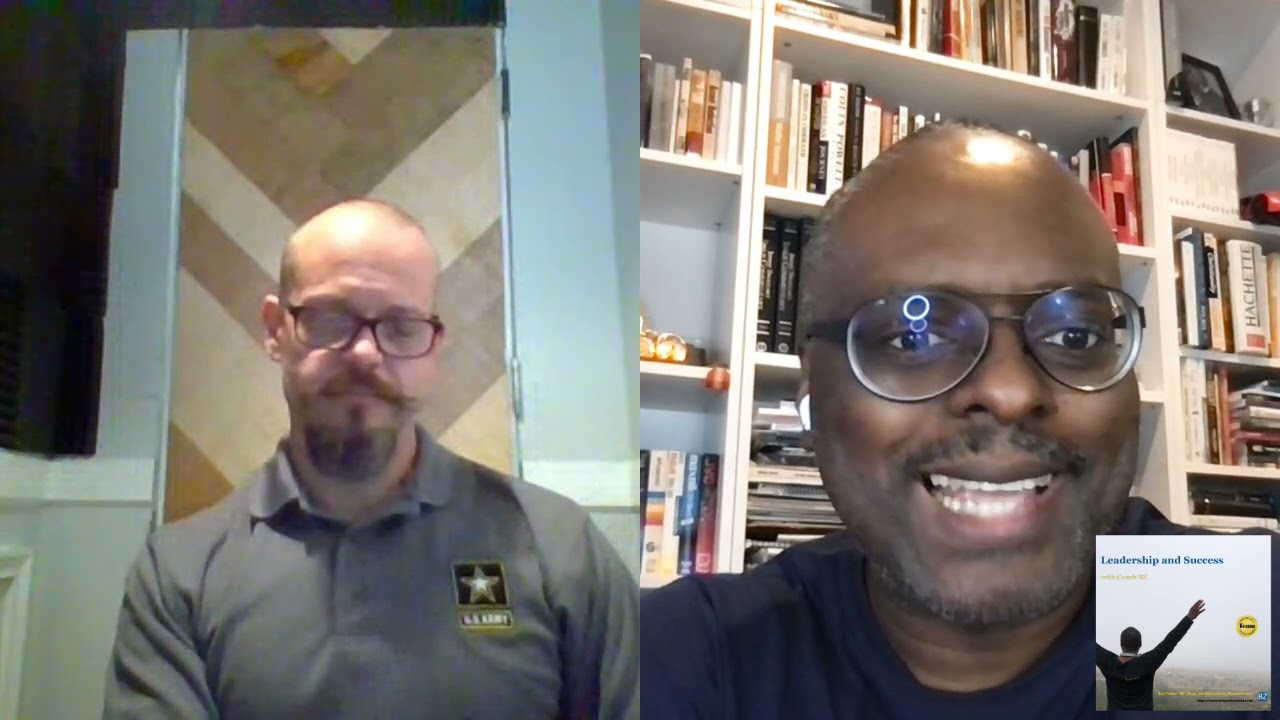
Dick Wilkinson, retired Army chief warrant officer and current CTO of Proof Labs, talks about moving from 20 years in military signals intelligence to state government to cybersecurity startups. He argues cybersecurity leaders should stop using fear-based messaging and instead balance technical expertise with business skills and soft-skill communication.
Chapters
Welcome to the Leadership and Success Podcast with your host, Coach Beezy. If you need to develop into a better leader, this podcast is for you. If you want to achieve a greater level of success, this podcast is for you. His mentor, Dr. John C. Maxwell, said it best: everything rises and falls on leadership. We hope to inspire you today and provide you with an insight that has the potential to positively impact the trajectory of your life. Welcome to the Leadership and Success Podcast.
Hello everyone, this is Bizzy coming to you from Silicon Valley. I have a very, very special guest today. We're going to be talking to Dick Wilkinson, the CTO of Proofline. When I first met Dick, he was working for the state of New Mexico. He is a cybersecurity professional, CC certified, just like I am, and is also a member of the Forbes Technology Council. How are you doing, Dick? Good morning to you.
Good morning. I'm doing great. Thank you so much for having me on the show this morning.
Absolutely. And it looks like you also have some military experience like I do, and I believe the Navy did beat you off this past weekend, which was pretty awesome.
That did happen. Yeah, I had to Google the results. I didn't get a chance to watch it, but when I knew I was talking to you, I said I better look it up and see, because if we lost, if the Army lost, I'm going to hear about it. And there you go.
So I'm just giving you a hard time. But yeah, so if you could tell us kind of about your leadership journey. You are a CTO now and used to be an executive of the state of New Mexico. Can you tell us kind of about your leadership journey?
Sure, yes. Well, you know, I'll work backwards a little bit. Um, you're right, I am currently the Chief Technology Officer. This is my own startup company, Proof Labs. Um, so I'm a founder, and I gave myself the title of CTO, of course, because I, I want to be the technical engine behind the company. Um, so I've got my business partners, um, that have experience in other areas, so we've balanced that out to kind of take on different roles. So I felt comfortable being the technical driver behind that because, uh, you're, you're right, I was a state employee for the state of New Mexico for 3 years. I was first hired there as their chief information security officer for the, the branch, the judicial branch of the state. After working there for a little while, since this is a leadership podcast, um, our boss left his position and I saw, you know, what would be a vacuum, and I said, you know what, I know I have the skills to do this. I'd like to apply. So I took on the role as the chief technology officer and hired another chief security officer behind me. So yeah, I served in two leadership positions for the state for approximately 3 years there. And that was after 20 years in the Army, which is, you know, what you were giving me a little ribbing about. I've got my Army shirt on. I'm very proud to be a retired Army chief warrant officer. So I was a technician in the Army as well. And of course, my leadership training and skills in any formal tangible thing that I have comes from the Army. But I know that I think a lot of us naturally, even as kids, when there's an assignment, you're the first kid to kind of rally the people around you and I've got an idea, let's try it this way. And I always took that kind of position in a group. And so leadership has always come naturally to me.
Yeah. And can you tell us a little bit about kind of like transition. I'm sure— how long have you been in the Army? More than 20 years, right?
I was in the Army for 20 years and I retired in the very beginning of 2019. Wow, that is just been 3 years.
Amazing. With telling us the entire point of— so what, what was your, your very first, uh, rate or pay grade when you initially joined?
Yeah, so I joined the Army as a, as a private, E-1. Wow. No, no rank, no pay grade at all. Just, you know, I need a job and the Army said That is a really— And I was enlisted for 5 years.
Yeah. Wow. This is great because a huge segment of my audience is actually in the military, Navy, Army, right? All across the thing. So what is— I think you guys call it MOS. What was your MOS when you were enlisted?
Yep. So in the Army, luckily, I had the ability to stay in the same job for all 20 years. I didn't ever have to change. There was no career change for me. So I did signals intelligence for the entire 20 years. So I studied as a private, you know, learning about the basics of waveforms and radio frequency technologies.
Yes.
My very first, and this is a unique experience for me that I think helped in my leadership skills and helps me now. My very first school that I went to was, you know, I went to boot camp, but then I went to a Navy base in Pensacola, Florida for my technical school.
Oh no.
And then I went from there to Yeah, to the National Security Agency where I had exposure to every military service. All 4 of us sat in a class together, right? And so I got cultural influences from all the military branches. I got leadership examples from Navy Chief Foreign Officers, you know, Navy Technical Chief Petty Officers, Army Chief Foreign Officers. You know, I had all those people in that schoolhouse around me. And so having those leadership examples, having Air Force, Army, Marines, and Navy all sit side by side in a class, and grow up in that environment together and then hit the fleet, you know, together and be in that same type of environment, civilian leadership again there, getting examples of what all those different things look like even as an E-1, E-2. It was such a, just a rich environment to learn from.
Wow, that is, that is pretty amazing. And how was the transition for you then to kind of go from, you know, junior enlisted to senior enlisted and then to officer, to chief warrant officer.
Yeah.
Yeah.
So I was, uh, you know, I think this is something that you're, a lot of your listeners will probably really tune into. Um, I was very goal-oriented and the military makes that a pretty straightforward process. It gives you a ladder to climb and it gives you really clear goals of like how go to this school, achieve these many credits. Get this type of assignment and then you'll get that next rank. And if, you know, not, that's not always under your control, but the roadmap is there. And so as an enlisted person, I saw a board up. It was kind of a recruitment board for the warrant officer program. And it had these very clear roadmap. This is how you get there. You know, I was an E-3 or an E-4 at the time. And I said, okay, step one, you know, make sergeant, be good at that. Then step two, you know, get this school under my belt and get good at those technical skills.. And it gave me a roadmap, 3 or 4 years of things to work on that I was really able to focus on. And it took that time. Don't get me wrong, it wasn't easy. It took 3 years of hard work and focus and checking things off to get there. And then I was selected as a warrant officer. But it was all in. It took 3 years of all-in attention and effort to get there.
Well, that is really important to know. I think that's one of the greatest leadership success, right? First figure out, you know, what the issue might be, kind of what the path looks like, what all of the requirements are, and then start to work one by one to achieve those milestones. And then before you know it, you will get exactly where you wanted to go. Well, that is, that is, that is quite something. Now, the, the other thing we share in common is we are both members of the Forbes Technology Council. Can you tell me about your your experience on being a member of the council and the type of benefit you get out of it? Sure.
Well, you, uh, I'm glad that you kind of invited me. I saw that you had joined, um, after we had taken a class together, and I said, you know, that if Bob's doing it, then there's probably some value in it. Uh, let me see what it's about. Um, and so yeah, I, I applied to the program, um, last year and was accepted. Uh, it, you know, it is an exclusive program, um, as far as needing to have some specific experiences or a current role in the history. And I was working for the state at the time. I had to kind of convince them that a state leader should be in the council because it was primarily business leaders. And so to have somebody from inside government, I kind of had to get a little creative in my application and explain to them, even though I don't work for revenue or profit, I manage $12 million of taxpayer money every year.
Yes.
So that's the same as a medium-sized business, you know, and I have that same skill set, the same demands as a leader from a technical perspective. We have the same enterprise that, you know, a large bank would have, you know? So, I've still got that same skill set. And so Forbes agreed that, you know, having a government leader and a voice in that made sense. And so I was very happy to join the council. And I really talk a lot there about basic technical, you know, things where I can, but usually my topics are more around business leadership and how security leaders can bring business value to the rest of the organization outside of just technical solutions. So that's, you know, that's generally what I try and write about both in Forbes and other publications. I think it's something that audiences get plenty of technical resources. They don't always get that soft skill resource, especially written about. And so I think that's something I just feel comfortable with. So Forbes has been a great platform for that.
Yeah. Let's talk about soft skills because in my career I've seen quite a few CISOs, head of security, are extremely technical, but they don't always get the business piece, right? Like myself, I earned an MBA just because of that, just wanted to learn more about how to manage a business and how to align business with security. Tell us more about why it is important for somebody who leads the cybersecurity function to also be good at business and leadership.
Well, you know, we don't trust robots to run the internet for us yet for a reason. You know, you don't— the security officer kind of acts like a robot in that you look at it and say, does this make the system more secure or less secure? And then that automatically equals yes or no. If we're moving towards more secure, we should do it. If we're moving towards less secure, don't do it. And that's a robot-level decision. And so when you're a technician, that's the decisions that you make, right? Hey, I know this is not moving in the right direction. We're not going to turn it on. We can't implement it. Don't do it. And so that's where your technical CISO gets stuck sometimes. They've got their, essentially, a formula in their head that's always running, and they know every little change you make, does that make me more secure or less secure? And they push back on anything that disrupts that formula, right? I know that. I've seen it. I've had it in my head before, too. But you've got to look around the room and realize that people sitting across the table from you are not robots. They're not like you. They're not making technical decisions based on a clear mathematical formula. Almost nothing in their life that they're trying to work with is as tangible as that. You know, they can't really predict what that next revenue stream or outside market force is going to be, where you can look right at it and say, I know my threats, I know what I'm secure against, and I know how to turn it on or off. They don't have that concrete in their life. So you've got to come, you got to take some of those concrete robotic decisions out of your process and you've got to say, I know what that, that becomes an indicator. That becomes one part of my decision process, not the entire process. Take that as the seed for where you start thinking and go, I know it makes me less secure, but what other reasons does this matter to the other people in this room? And if it really matters to a lot of them, you've got to turn that robot switch off a little bit as a security officer and say, You're accepting risk. Let's talk about what that means. And now you've got a human-level conversation to have with somebody around why does it make you upset? Why does it make you as the security officer think we're in a dangerous position? And maybe they didn't understand that before. It doesn't mean you're going to come to your goal. It doesn't mean that that's the right answer either. It just means you can make the other folks aware of the risks that are associated and get away from that yes/no hard logic type of answer.
No, that is, that is great. I think we definitely need more common sense leadership and also business savvy among cybersecurity professionals. I remember, I think it was last year, right, at the EC Council conference, you had the presentation, you talked about FUD, right? Fear, uncertainty, and doubt. And you were saying how Pretty much, you know, even when I was coming up in this field, it's like the sky is falling, the sky is falling, everybody needs to be afraid. But that's not always a very successful strategy for cybersecurity, is it?
No. You know, in that topic, I was definitely talking to your organization insider. When you're inside and you're trying to make those decisions with your peers that are right around you, you don't want to walk around motivating those people with fear all the time. It leads to a situation where they don't— maybe don't want to interact with you, right? Because you, you are the bad news, right? You are the resource where they get bad information or they get upset about something. And so it doesn't really lead to better relationships if that's all you do is show up to every, you know, weekly meeting and run some headline about what we should all be scared about. So yeah, I definitely encourage people internally, you need to base your relationships on talking points and decisions other than what should we be afraid of. You need to have conversations with your leaders that are not, "This is the hole we're patching up today because some new threat popped up." You need to talk to them about your proactive plans. You need to talk to them about the positive things that you're doing that aren't just fear-based or reactive. And I think people will understand that. People really get a better grasp on your proactive plans, and they want to participate in those. People don't really want to be a part of the scary stuff. They want to be a part of the, like, it makes you feel better to know you're protecting the organization. That's what they want to participate in. So, but outside of that though, there's, there's a, there's a flip to that when you're not inside the organization. And this is what I'm learning now being— I wouldn't say I'm on the sales side of things yet, but being an external influence, sometimes you have to get people's attention with fear. You just have to, like, to get their attention first. It's the only thing that they'll pay attention to. The news knows that, right? That's why every headline is breaking news, right? They gotta grab your attention. Even though it's not really that much of a big deal. And so sometimes you have to use that breaking news mentality with security topics and then back off that edge a little bit. But if you're that outside force, you're not inside the organization and already a trusted factor, sometimes you have to use fear to get attention. And that's unfortunate, but that's where our industry is at.
Yeah. So tell us a little bit more about your transition. So you went from working for the U.S. government, the Army, the state government, New Mexico, and now you are branching on your own with Proofpoint. Life. What has that transition been, being an entrepreneur and starting something from scratch? Kind of what, what inspired you to launch like that?
Yeah, well, on my way out of the military— and so I'll talk to, again, your audience that maybe are people transitioning or will eventually transition in the future, whether that's after 20 years or after a couple of tours. You know, that time to step out and figure out what you're going to do next is daunting. It's critical. You're probably not going to get it right on your first try. You're going to find a couple of jobs. And, you know, the turnover rate for people after they leave the military is pretty quick. A lot of people bounce around between 2 or 3 jobs when they first leave, even within the first year, because they either culturally don't fit or the work is not what they wanted or whatever it may be. So for anybody else out there that's looking at that transition, give yourself a little room to make some mistakes. Give yourself some room to feel it out. You don't have to jump directly into your next career the next day and get it right on day one. Nobody does that. So don't think that's what you're gonna do. With that being said, you know, after leaving, when I was on my way out of the door of the Army, I said, I wanna get as far away from government as possible. I wanna go out and do security for banks or hospitals or whatever, you know, and learn.
'Cause for me it was, I know how the DOD does this.
I know how we turn computers into weapons and do this stuff. I want to see how everybody else does this. Well, I didn't make it very far. I made it to state government from federal government, but it was still a significant change in culture, in operational tempo, in the demands of what my stakeholders and business leaders needed. And so even that was still a huge eye-opening and educational experience. And that's another note. You don't ever stop learning just because you're the CISO or the CTO. You don't— you've not learned it all. You're learning some new technique. You're learning a management style. You're interacting with the type of person you've never had to manage before. You never stop being challenged to learn in these positions. So if somebody thinks you get a C-level job and you've somehow figured it all out, that's absolutely not true. So I did spend that time with the state and I was glad for it. I'm still glad for it. I just recently departed in August. Um, there was a couple of decisions that weighed in on that, and I was, and I still am, politically active and motivated. I was, I was seriously considering and, and had already put together some plans to run for federal Congress. Um, my family decided they weren't really on board for that yet, and my company Proof Labs was there. Uh, and I said, okay, this is, this is what we're going to do. So Proof Labs is incorporated As of earlier this year, I have my partner Rick Aguilar. We've been working together for a couple of years now, searching for projects, looking for opportunities to create our own company. So while I was a state employee, we were kind of surveying the market and the decision of, you know, making that jump. I was already financially prepared to get into a political race where it would be a year with no, no income. And so when the political journey was put on pause for now, I said, okay, well, I think I have an opportunity here that I've got a year that I was already planning on having some space. Let me see what I can do with that time. And I went ahead and departed that job from the state. And we're, you know, we're out here. I'm in a space right now that we're here under the Proof Labs header. This is the Air Force Research Lab's Economic Development Center for Space and Directed Energy. And so I am here with Proof Labs to offer cybersecurity services to the space development and, you know, technology industry that's burgeoning here in New Mexico. But the leadership decision to do that, you know, it's, it's exactly what you hear. It's scary. It's, uh, you're gonna ask me later about failure. There's that fear of failure. Um, you know, there's— it's all those things jumped into one. It's exciting. It's, um, what could it be? What's the potential? And I think the biggest and hardest factor that I've had to deal with so far in this decision is any other time in my career I was part of a very big apparatus. There's a lot of other people, there was an institution around me, and so success was really a team sport. And as you could be a great contributor, but the whole team had to be pulling the rope all at once to get it done, right? In a startup, it is on you. There is not an apparatus around you, right? It's you and your buddy and whoever else you can grab by the collar and bring along. Right? And if you get some money involved, even better, right? You know, but, um, yeah, there's— you can't look around and say, if I don't show up today, somebody's probably got the watch. No, nobody's got the watch. If you're not doing it, nobody's doing it. And that's, I think, the biggest factor that maybe, especially people who have had a long career like we have in big organizations, that's going to be the biggest culture shock, is waking up in the morning and not having a co-worker, knowing that nobody came to turn the lights on before you. You turn the lights on because you, you turn them on and off every day. So that's a big difference.
Absolutely, definitely. I commend you for that. Looking at your stellar career again in the federal government, state government, and now launching on your own, uh, what, uh, major advice would you have to a 20-year version of yourself, uh, knowing what you know now, looking at all of the achievements you've had uh, so far? What is one major tip you would have for a 20-year-old version of you?
Okay, okay. So what would I go back and tell myself when I was 20 years old?
Yes.
All right, all right. Um, uh, I think there were times when I was— and, and I think some people wouldn't believe this, but there were times when maybe early on I was resting on my laurels a bit. I was letting that institution or that apparatus carry me. And I took a little bit of some breaks along the way in the Army as far as charging myself or pushing myself. And I know people, you know, that's relative, right? When you're in the Army or military, you're still really probably pushing yourself pretty hard. But I know that there was a few years in there where I didn't maximize my capacity. I didn't take advantage of everything that the military had to offer. And if I could go back and talk to my 20-year-old self, I'd say, hey, some of these things you're not going to want to do, but this is the empty space you need to fill and it's going to pay dividends later on. So yeah, I would say don't, don't rest on your laurels, young man. This next 10 years, just because you have a lot of comfort in things around you in this career, you need to work hard because that career won't always be there.
Wow. That is, that is very, very great advice. So it's, um, this part 9, I'm sure where I'm going to be asking you my 7 favorite questions. So starting with number 1, what is the greatest lesson you have learned so far? Hmm.
Well, I think it goes back to when I was departing the military and a little bit of what we talked about just now. I do best on a team, even if I'm not the leader of the team. I do best in a small team environment. I didn't jump out and start a cybersecurity company right away when I, when I departed from the military and retired because I knew that being a solo person I would— I wouldn't succeed. I wouldn't have the discipline or the drive, motivation, whatever it is, to go and get to work. And so for me, I found that being a leader on that small team, the reason that that motivates me so much is the service aspect of it. It's serving the other members of the team. It's giving them that coaching, that leadership, that mentorship, that, hey, we all ran into a problem together and let's work on a solution together. And not having the capacity to do that, you know, not having other people around me to lead. That's what I was missing, right? And it's not that I have to be the person in charge, it's that I want to feel like we as a group are collaborating and that we as a group are sharing the challenges and the successes. And so I think for me, that's, that's definitely it, is that what I've learned is I need a team so that I can serve and feel like the task we have is, is more important to everybody, bigger than yourself, you know.
That is, that is fantastic. So what, what do you think is the secret of your success?
Ah, yeah, secret, um, consistency, uh, I think is it, you know. And that's not, that's not a secret, uh, I think it's, as we talked about earlier, once you've achieved that one goal, if you've got a really big goal and you've got a whole ladder you're trying to climb, consistency. Take that little breather and get right back at it. Stay consistent. If you got timelines in that goal, hit them. If you've got whatever those markers are, hit them. And if you don't hit one, get up tomorrow and keep trying. That consistency is it. I mean, that's the key to success. I can't— yeah, I've ran into roadblocks. I've had problems in my career. I've had issues in life outside of the Army, but I kept showing up and that was it. Consistency.
I think it was Woody Allen who said that success is half showing up, right? Because there are some people who just don't show up, and if you don't show up, there is no way you are going to have an opportunity to make a difference, right? So what is the greatest, uh, leadership advice you have ever received?
This was a— this was hidden a little bit. This was a leadership lesson, but it was hidden behind another thing that was trying to be delivered. I had a first sergeant, and if you're not in the military, that's the senior enlisted person in the group. They keep track of all the knuckleheads pretty much, right? I was the knuckleheads and the first sergeant showed up and told me to quit being a knucklehead. And so there was a day where we, in the Army, we all like to stand in a square and listen to the leader talk. And that's how we know what we're supposed to do today. It's called standing in formation. And so we were standing in formation and the first sergeant came out. I was a sergeant at the time. So I was paying really close attention to this guy because he's what I'm supposed to grow up and turn into, right? So I'm paying attention to everything this person says. And he came out and delivered some information to us that, you know, nobody was happy about. Nobody wanted to do it. It was sort of, "Hey, we're gonna have to stay late one day and it's gonna be a really crappy day and just get ready for it. Tomorrow's gonna suck." And it was one of those kind of things. And it was a surprise and just wasn't what anybody wanted to do. And we— he told us, you know, "Listen, I don't want to do this either," right? And then he dropped some knowledge on us. So here it comes. He said, listen, you know, my job is to go into the room and talk to the captain, and he's going to tell me what to do. And it doesn't matter whether I like it or not. It doesn't matter whether I agree with it or not. I have to come out here and I can't say, hey, the captain said, here's what we're going to do today, and put that blame on him. I walk out here and I own that order. Like it's coming out of my mouth because it is. And I'm telling you guys what we are going to do. I put my internal opinion and how I feel about this crappy day that's coming tomorrow in my back pocket and I shut up about it. And I come out here and I do my job because it's not my job to argue with the captain. It's not my job to tell you how much this is going to suck tomorrow. It's my job to tell you what the captain said. I come out here and I do my job, right? And that I got it. To me as that Sergeant and in the military environment, I know that's unique, but I got it.
Okay.
It's not your job to have to make that decision. It's that person's job to make that decision. And knowing when you are or are not the decision maker, that's the lesson there. Right. And that, that changed my perspective on so many things that I would be frustrated about in the future, right. For the rest of my career where I'd say, I don't like the way this is going. I don't like the decision the command made. And even when I became a warrant officer and an advisor to the command, there was a ton of times that made the problem worse because I saw it more often. I got told no more often. I got told this is the operational need, this is what we have to do. And yeah, I learned how to recognize when are you the decision maker, when is that your job, and when is it not.
Wow, that is very profound. Really, a lot of the leadership principles I've learned in the military really apply in real life in the industry and pretty much across the board. Thank you for sharing that. So question number 2, what are you learning now?
Hmm. So I'd say right now I'm learning— I'm continuing to open my scope, I think is the big thing as a leader. And both, you know, from a business development perspective, that's important. But from a personal perspective, just like I said, when I departed the federal government, I wanted to go learn about the rest of the industry and I made it to state government. I had discounted the idea that I would have a lot to learn in state government. I thought it's going to be exactly the same as federal government. That's not true. There was enough there that it was quite a bit different and I had a learning curve. I had to figure it out. And so now I'm in that same boat again, 3 years later, where I don't have any assumptions this time though. I don't think I know anything about what's out here, right? But I'm opening scope. I'm looking around and I think that's That's what I'm learning is what is, you know, from a technical perspective, what are the security needs of other industries? Why have they come up with the solutions that they have that are different than the DOD? But really from a personal perspective, it's understanding the motivations of that industry. It's understanding the business needs of why would they make a decision like that. And if you look at it from that, you know, security officer perspective, that's a terrible idea. But when you open that scope and start to learn about the other needs that are in that business or decision maker's life, you understand why they do the things that they do, and you don't judge it as harshly, and you can come alongside them. And as an advisor, like I often am, you can help them make better decisions. So continue to open your scope.
Wow, always have an open mind. That is, that is great. So question number 3: How has failure shaped your life?
Uh, you know, I, I saw this one the very first time you sent me the questions. I think a lot of people probably get a little worried about this question. Um, I'll be very honest, failure— the fear of failure has been the biggest impact of failure on my life, is that it has motivated me, maybe not in a good way, to not take certain risks in the past, to not get involved in certain things that I thought might not lead to the outcome that I wanted. And so I have limited myself at times.
I'm—
I've limited what I thought was possible because if I even slightly thought the outcome was going to be failure I wouldn't do it. So unfortunately, failure has limited, uh, some of the things that I maybe would have wanted to do in life because I just avoided the— even the potential of failing. Uh, and that's not good. That's not good. Uh, I probably, you know, who knows, who knows. I don't want to look back and say what could have been, but I know for sure, uh, it has prevented me from taking, you know, bold steps in the past that, uh, because that fear of what if was too much.
Well, yeah, I think failure can definitely be a great teacher, right, if you learn from it. Uh, definitely. And, uh, question number 4, uh, who do you know that we should know? Who are some of your mentors and thought leaders you are following right now?
Uh, you know, I, I'm gonna give a shout out to what's a very niche thing, but, um, her name is Debbie. This is on LinkedIn. Her name is Debbie the Data Diva, right? And I don't read her everything she writes, but she is talking about data and data privacy and laws and regulations and the impacts of new technologies and just a topic set that I think impacts us all so much more than we realize. It's being built into the infrastructure behind you and around you, and you just don't know that it's there. It's in your devices. It's in every, you know, end-user license agreement that you sign that says, You know, a year from now, we're going to take your biometrics and do anything we want with it, right? And she is like the watchdog for the industry on all of that, you know, not just from a like legal perspective, but from just everything that's happening. So I would say if you have even a slight interest in keeping up with your own data privacy from a personal perspective or from an industry perspective, look for the Data Diva online. She's a really great resource. Yeah, she's one that I really enjoy watching. And then, you know, somebody else that really inspires me often is Naomi Buckwalter. Her real hard drive to help junior, you know, technicians or people that aren't in the cyber field. I signed up to work on one of her nonprofit programs. I do, you know, I'm in the same boat. I'm trying to help small businesses through nonprofit efforts. But, you know, she's one that I think just encourages a lot of people that are in that junior career phase or probably getting turned down on job interviews. And, you know, she kind of helps people realize they're not alone and that To some extent, it's the industry's fault that they're maybe not getting what they should out of their career.
So yes, everybody in cybersecurity should know about Naomi. Absolutely. Yeah. Well, thank you. Thank you for sharing. And if you could choose 3 people to have dinner with, who would you choose and why? And they don't have to be alive, right? Even historical people is fine, right?
Oh man, that's Good question. Uh, I— okay, so, uh, I got— I'll have to say Jesus, even in the ethereal plane type concept. I have to say Jesus. I am a Christian, and, uh, you know, I would have never said that in the past, but that's definitely my answer now. Uh, he's there, and I guess if you're having dinner with Jesus, it doesn't matter who else you're having dinner with. But with that being said, um, I would say— and this is— we're going to go on the total other end of the spectrum. Um, growing up Carl Sagan, the astrophysicist who was behind the Cosmos series on PBS, was my absolute hero when it comes to science, right? I mean, he just inspired me. That show Cosmos inspired me in a way that I just— I can't even explain it. Um, I got the— I don't like reading books, and I went out of my way with my own money and bought the printed version of Cosmos because I wanted to get— PBS didn't have it on all the time, and this was before the internet, right? So I wanted that material in my hands. I wanted to be able to look it up and think about it, reference it, whatever I wanted to. So Carl Sagan, both from the Cosmos series and from his other books, Contact and other things, um, just is, you know, somebody I would want to talk to. Um, and then I think, you know, again, I, I say I don't read very much, but Philip K. Dick is about the only popular author that I would want to talk to and say, why did you come up with some of these themes? And why did you so often relate these humanistic themes inside your sci-fi stories. Yeah, so I think that's a really interesting blend, uh, and for somebody who doesn't read very much, being inspired by a couple of authors in there, uh, 3 authors actually, they're all 3 authors.
So yeah, well, that is, that is fantastic. So, uh, question number 5, uh, what have you read that we should read? I know you mentioned Philip K. Dick and this and his book, uh, any, anyone else?
Um, well, any book that he has written, and of course most of his books have become popular movies as well, so you really can't go wrong because you can kind of get it from both angles there. Uh, the reason that I've always loved Philip K. Dick is, um, you know, his sci-fi is not super far in the future, so it's got that little bit of a realistic edge to it even though he wrote it a little while back. And then it's almost all about other human themes beyond just, um what cool science and aliens are there going to be. So that's one. And then from the military reading perspective, there was a book I read a few years back. It's a collection of short stories. It's called Redeployment. I picked it up in the airport because I was, you know, it was one of those I'm gonna buy a book and read it on this long flight kind of things. It was probably the only time in my life I ever did that on purpose. And I read that thing cover to cover in like a day and a half. And because it's a collection of short stories, but if, uh, it's about coming back from being deployed and it's just these very— it's, um, they're fictional. And they're these human, kind of a glimpse into the life of, and it's a variety of different things, you know, person who was disabled, a person who's not, you know, just what kind of life issues, not even issues, just what is life like when you come back? And it just takes that not beat you over the head approach to like an exposé. It's just more, it's a very human book. So anybody that even not in the military, read Redeployment to get a little bit of perspective on what life after coming back from a war zone and trying to be a normal person is, check that out.
Well, thank you so much for sharing. So number 6, what have you done that we should do? What is one action you have taken that has positively impacted your life?
This is one that I, I do it repeatedly, but I think it was a decision or an action quite a few years back that I hold on to. Physical fitness, right? And you say, okay, of course the Army guy says go run and it'll make you better at stuff. That's true. But I'm not in the Army anymore. And I, you know, I thought in my mind, am I, when I retire, am I never going to exercise again? When I was a junior enlisted guy, that absolutely would have been true. I hated doing PT in my first few years in the Army, and I almost wanted to get out of the military because of it, right?
Wow.
Fast forward to I'm retired, you know, I exercise more now than I ever did, uh, in the military. I'm in better shape than I was back then because it became more valuable to me outside of the Army. That need to get up, do that in the morning, have that consistency, know that I'm putting an investment into myself, into my health, into my mental well-being. And I know that this hour of the day is useful. If no other hour of the day— kind of like that make your bed thing, right? If, if this is what I do useful today I did it. It's done. The first hour of the day, I did something useful. And so that has been, you know, 6 days a week I'm up exercising, right? I just don't— I don't miss it. And so I think that, you know, whether it's not physical exercise, maybe it's the routine of a positive, uh, beneficial thing first thing in the morning, that could probably work for anybody.
That is really great. Really, uh, being fit, exercise is one of those things that's extremely important but not urgent, right? You don't have the urge to do any of that, but If you do, the benefits are just mind-boggling. Thank you so much for sharing. So if you had one and only one day to live, what would you have liked your final contribution to be?
One day to live, huh? Final contribution. Okay. Uh, you know, I've got all these ideas for inventions and things that I would think maybe I would crank one of those out, or at least write it down, the schematics or something. But, you know, I could write down 10 little things and even if they all got built, they'd fade away, right? In time, those things would fade away. I don't think I'm going to invent the next toilet or anything. So, you know, it's like, we're not, you know, I'm not inventing the light bulb. So the last day, man, you know, I think my answer is probably the same as a lot of people. I would just, I would not only spend so much time trying to tell the people that I love, you know, that I love them, but I think I would, my message for the world would would be that. I would just spend that whole day telling people to stop fighting and love each other. I mean, that sounds like goofy, but that's it. I'd spend that entire day just saying that to everybody I could.
Yeah, actually, I think that is so, uh, important, so critical to just take a moment to appreciate, you know, the people in your life. And, uh, yeah, I think there is nothing more important than that, even as a leader, right? You, you, you really want to appreciate the people who work for you and who contribute to the mission. I feel like in many ways, especially in the military, for, for sure, because you don't get paid much at all compared to industry, but people are willing to even give their life for, for the cause. I think sometimes people will do much more for you for appreciation than they would for monetary compensation. Oh yeah, at that time. But, uh, Yeah, okay, cool. So the final question, uh, we have for you is, uh, how can we add value to you? What could we do to make a difference?
Well, um, you know, I, I pick up a lot of, um, uh, nonprofit type, uh, banners or community help type banners. So I got a couple of lanes there that I think if you're watching this or if you're listening, there's a few ways you can help me. And we'll start on the not nonprofit side, and then I'll talk a little bit about my business, the profit side. But I'd say keep an eye out for any, uh, opportunity that I might offer on LinkedIn to volunteer or support, uh, or mentor junior technicians, uh, or people that are trying to enter the, the industry of IT or cybersecurity. Uh, you know, I'll continue to work with folks like Naomi. I'm continuing to try and build a resource here where senior folks may get a chance to do some consulting and contribute. So I'm always looking for opportunities in the community to either recruit new people, to help people on their journey, military transitioning folks, you know, outside of tech. So there's— I'm always trying to look for opportunities and present opportunities to kind of volunteer in that way. So please pay attention to my activity on LinkedIn for chances to volunteer or support the workforce. And then, you know, for me personally, my company Proof Labs, is a start. It's in startup mode. We're definitely trying to find the right product that we can deliver. Right now we have consulting services available. We're focused on the space industry, but really it's technology as far as hardware internals to your network, security architecture, end-to-end, and those sort of big projects where, you know, nobody's thinking about security. That's really where we want to step in is a technical deployment of like IoT for a smart city or a base. And we want to be able to be the security thought process in the room when those big projects are going on. So please take a look at my company on LinkedIn, Proof Labs, and see if there's any opportunities for us to support you and your security needs. And then I'll also be— soon I'll be launching my own page to do consulting and really public speaking for motivational corporate events, talking about leadership, talking about creating a security culture, in your organization, some, you know, those soft skills and very tangible ways to improve security in your organization. I'll be, you know, looking for opportunities to speak about that, keynotes and things like that. So keep an eye out for that. I've just recently got the domain, but the site's not up yet. So when the site gets up, again, if you're watching on LinkedIn, it'll be all over the place.
So. Well, thank you so much, Dick, for your contribution to our industry. And I know you also have a book in the works Once it's published, I definitely would like to have you back here. So Dick Wilkinson, everybody, Chief Information Security Officer, Chief Technology Officer, and a valued member of the Info Technology Council. Thank you so much for your time. Really appreciate that. And thank you everybody for watching or listening to the Leadership and Success Podcast with your host, Coach Bizzy. See you next time.
Thank you for listening to the Leadership and Success Podcast with your host, host, Coach Beezy. If you like what you heard, please subscribe to our channels and come back for more wisdom nuggets on how you may develop into a better leader and achieve greater levels of success. Leadership is the most critical skill. The world will always need leaders to lead others, deploy the next disruptive technology, or execute a business strategy. You may as well decide on counting yourself among 21st century leaders. See you right here next time on the Leadership and Success Podcast with Coach BZ.
More from Bob

S250:E4🎙️LIVE 🇺🇸America 250: President Barack Obama Leadership, Service, and the Power of Hope






S5:E157🎙️ LIVE with CMD CMSgt Dennis L. Fritz, USAF (Ret.)(Multi Tracks Audio)



S5:E156🎙️ LIVE 🇪🇸 Leadership Lessons from the FIFA World Cup 2026 Champions (Multi Tracks Audio)

S250:E3🎙️ LIVE Leadership Lessons from America’s First Documented Family of African Descent 🇺🇸📖