Episode 31: Live with Thomas “AI Nerd” Helfrich on Leadership and Success
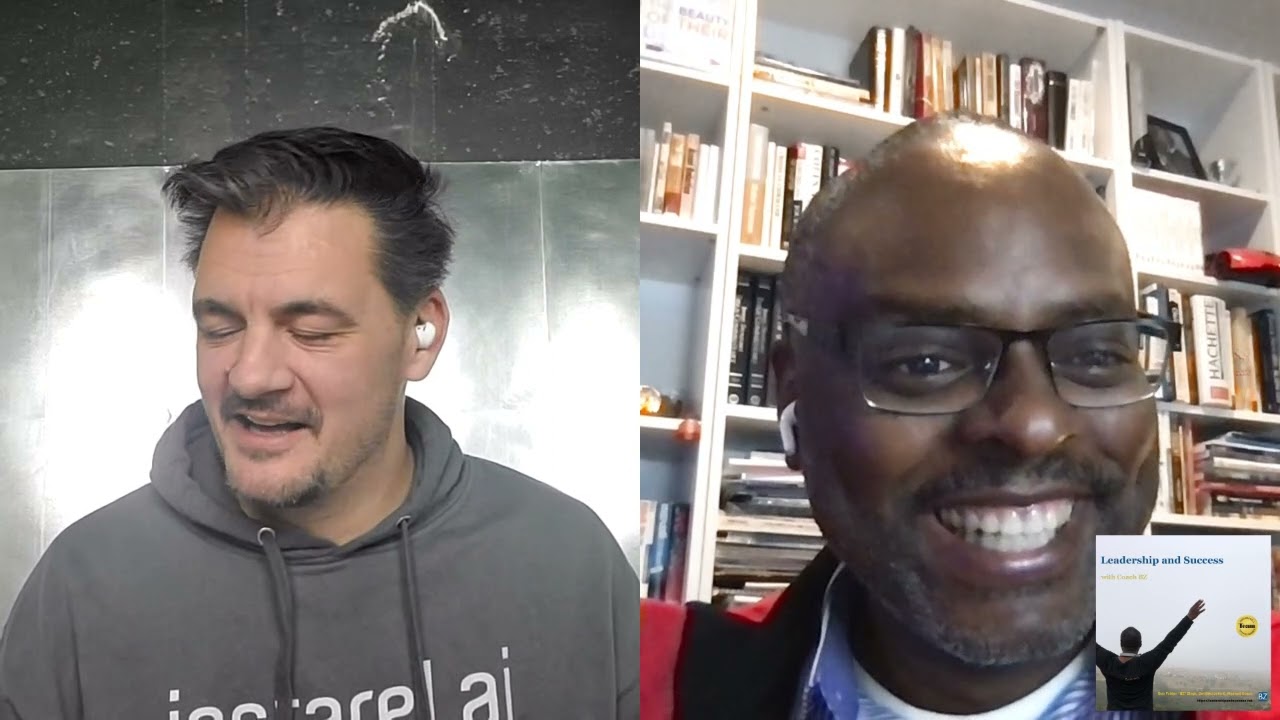
Thomas "AI Nerd" Helfrich, serial entrepreneur and Chief Nerd Officer at AI Nerd, built an AI-driven content platform using GPT-2 that replaced manual writing. He credits mentors who pushed him honestly for his biggest leadership lesson, and sees AI as still early but about to create massive job growth.
Chapters
Welcome to the Leadership and Success Podcast with your host, Coach Beezy. If you need to develop into a better leader, this podcast is for you. If you want to achieve a greater level of success, this podcast is for you. His mentor, Dr. John C. Maxwell, said it best: everything rises and falls on leadership. We hope to inspire you today and provide you with an insight that has the potential to positively impact the trajectory of your life. Welcome to the Leadership and Success Podcast.
Hello everyone, I'm very excited to be with you live today on LinkedIn. I have a very, very special guest today. Thomas, AI Nerd Elfridge, is a serial entrepreneur, Chief Nerd Officer at AI Nerd, but also the founder and Chief Executive Officer at InstaWorld.AI. He's also a member of the Ford Technology Council. Welcome to the show, AI Nerd. How are you doing today?
I'm doing well, a little under the weather, but I can still nerd out on your own on the behalf of leadership.
Thank you. Thanks so much. I hope you do get much better soon. So this is about leadership and success, and thank you so much for agreeing to be on the show. If we can start by you telling us a little bit about your leadership journey, how you came to become a founder and CEO, and all of the great things you've done so far.
Yeah, that's, uh, thank you first of all for having me on the, uh, on the show. It's, uh, This will be fun. So, wow, how did I get to here? So, you know, I was— if I backed up a bit, I'm born kind of out of that dot-com range of time. I remember myself being a much better developer than I was, but I was always very good at talking about technology. So it's taken me on a consulting career path advisory where, you know, you've gotten— I've gotten to work with lots of big companies from an advisor standpoint, like a KPMG or PwC, Accenture. To industry. And if I just maybe just fast forward in the last 7, 8 years when this intelligent automation AI push has really kind of happened, I saw the kind of connection between what this is going to do to business and technology and process and people and really dove in all in on it. And once I made that motion, you know, the career and the kind of the path took the direction it's gone where just become, you know, developed an expertise in intelligent automation, AI innovations systems. And as opportunities have presented themselves, uh, I've, you know, taken advantage of that and acted upon that to, to just become where we are, where I am today. It wasn't probably, wasn't really scripted. It just, again, you see the opportunity, you know, a space, you go for the opportunities that present.
Well, that is, uh, quite, uh, Outstanding. What a stellar career you have had. And what, what about, no, I guess, uh, going ahead and founding a brand new organization, right? Being a serial entrepreneur like yourself, what did that feel like for the very first time you kind of started a business? And kind of what did you learn from the very first enterprise you started?
Well, I would say, you know, my first one was probably after the dot-com. I definitely played more golf than I should have and didn't focus enough I'm building a business. But so, I wouldn't probably put myself in the serial entrepreneur group. I would say I'm, you know, it's beta version 1 of a startup. But the reason I started it was to solve a problem I saw with content creation initially where, you know, it takes forever to create content. It's really expensive, too many people involved. Often, the results are a bit dismal and not what you wanted to communicate or achieve. But the biggest piece, time and costs. And I was like, this has to be something that can be solved or at least enabled with technology. And I ran an experiment on ainerd.com. I got rid of all this perfectly written content that took forever to write that no one in the world read and replaced it with hundreds of articles from an AI writing technology, GPT-2. And lots of people read it. Like, it was thousands of views.. And, and it really just kind of proved my hypothesis that AI can make you more relevant. Uh, then, and then I just applied some, uh, best practices that I know in, in delivering intelligent automation where you focus on accelerating the human with technology and at the right moment to affect democratization and change. And, and then I launched the company and it's, uh, it's become kind of the, uh, the marketing arm for my own personal brand. And then I just started offering it as a service. Uh, what I do for my personal profile, I offer to others so they can take a fixed kind of cost asset building approach to content and relevance.
Wow, that is pretty outstanding. That is really great. And then now we are both on the Forbes Technology Council. What was your journey like being accepted or invited to the council with Forbes?
Yeah, yeah, absolutely. So as part of the— so I started— it's relevant to Instaroll to some degree because I started that company in September of last year. And then immediately started having the team and the technology start writing around intelligent automation. And because of that, at the same time, I was offered a position to build an intelligent automation practice and our capability for SystemSoft technology. So, you know, I hold that role today too. And it, you know, part of that was because of content created. But because of that, you know, and as I started writing more and more and more content, content, creating more posts, I was asked to apply and because the company I actually worked for, they signed me up and they said, "Hey, yeah, you know, if you'd like to go do that, go do this." So, the journey has been fantastic. I only wish that I could publish more. I can only publish like an article a month with them.
Yes.
But I could probably give them 4 a day if they wanted to. But, you know, but it's been a good journey. It's a great platform, great network. I've been really happy with, with it. They don't actually edit our articles, which I think is pretty cool. Um, it's testimony, I think, to Instarel and what we're doing there. But, uh, that's why I'm like, could we get these out faster? But, uh, anyway, I like what they do, and, and I've really enjoyed it. Uh, I've enjoyed being on the Forbes Tech Council just from a personal kind of brand, and, uh, but also just the network, meeting you and other, like, a number of other people too. So I've really enjoyed it. How about you? Have you enjoyed it as well?
Yes, especially the, uh, networking. Yeah, I remember, I think it was maybe a month ago, you interviewed my CEO as well, which pretty, pretty fun. Uh, it's, uh, really, really cool. So you, you really create all of this, uh, content and it's quite engaging. Is that kind of part of the key? You have so many more followers than I do on LinkedIn and everywhere else.
I, I don't know, uh, I mean, this is good timing, but creating content, uh, that resonates with a variety of people is absolutely at core of getting people to want to follow you and interact and connect with you. The followers are interesting and I think maybe a little bit of a vanity metric, but truthfully, but the truth is, is kind of the amount of content you create and the type you create does matter and it helps how you engage with it. And so, you know, if you think of, and the last part is the consistency. So you have to be consistent with it. If you create great content that you only put out once a month, you're not gonna get a whole lot of people reading it 'cause you won't be in their feeds. But if you're doing really good content every day, you're going to be in a lot of people's feeds often. But then even after you do that, you still have to have with, with some kind of a sales motion where you need to engage with them, you need to follow up, you actually need to learn about the people that are learning about you. So if you go right from, here's great content, can I sell you something, it's not going to work. If you go from, here's great content, can I learn a little bit more about you, you know, what, what can I do to help you, what kind of content would you like to write about, and, and not really try to sell them any services, it's a much more effective way.
That is so true. And one of my mentors would say, right, adding value to people, and that always makes a difference. So it's the part of the show now I go through my 7 favorite questions. So number 1, what is the greatest lesson you have learned so far?
Oh yeah, uh, I, I don't know how to phrase this shortly, but I was so much smarter— I know, I'm sorry, I knew so much more in my 30s than I did in my 40s. So, getting past being a know-it-all and accepting you don't know anything has probably been the greatest lesson. And, that comes from having a mentor for sure and someone kind of harshly pointing it out that maybe you don't know as much as you think you do. And then, once you come to terms with that, that helps you as a leader step up and go, you see the flaws in others and help them coach through it to grow. But, that was it, I realized I didn't know anything and I still don't.
So—
Yeah, I really love it.
I think it was Socrates who said, right, the more I know, uh, the more I know I don't know anything. Uh, right, that is, that is, uh, so true. So what do you attribute to be a secret to your success?
Uh, I, I would say at the core of it, it's a passion to, to, uh, that I centered a, a business solution around. So I really enjoy communicating and networking and interacting and sharing thoughts and and learning from others, uh, what their thoughts are, and then, you know, and having an opinion on it. So I love doing that. So having a passion, um, you know, you take two exact people, if one has a passion for what they do, they will always outperform the other, uh, given that most things are equal. And they could even be not as equal as far as skills, but if they have a passion for it, they're going to win because they just— nothing's going to stop them. So having a passion is, is, is, is incredibly important. If you don't have the passion, you just— it won't you'll flame out.
Wow, that is, uh, so important because even when I look over my life, no, I've not always been the smartest person in the room, but being consistent and passionate and really focused about whatever it is that you set your, your mind to do, eventually you're often the smartest person in the room. So what is the greatest leadership advice you've ever received, you think?
I think it was, it's on the idea of having a mentor is that you need one, but the type of one you need to pick is somebody who doesn't control you. Like, meaning they're not like a 2 layers above you boss or they're in the same organization or they're somehow competitive. They're really somebody that will push you, tell you what you need to hear, not what you want to hear, but literally has been down the road and they have an actual, you know, tie it back to the passion. They have a passion to help people and they actually have a reason. Want to help you. And it might just because of friendship, it might because of just who they are, but you have to have a mentor. So the best advice I'd say is get the right mentor, and those will change over time. So you'll have some that'll get you so far, and then you may see some of the shortcomings of your own mentor and know that you need somebody that has a different perspective or something bigger. And that's a weird motion, but you need to have a mentor, uh, for where you are and what you're trying to accomplish, which comes back to the other pieces. You do need a goal. At least you need a beacon of light to go chase a little bit. So, but that'll— you need the mentor. That's the biggest leadership advice, is have one. Can't do it yourself.
Yes, I definitely believe that's a master key for success, for sure. Uh, and, uh, number 2, what are you learning now?
I am learning all about, uh, balance, I would say, between, uh, you know, I've built a scalable company while I worked full-time for a company, and having the kids and trying to work out once in a while and, you know, have fun. So learning balance is, uh, is what I'm learning now. And, and with that comes mindfulness and, you know, how to slow down and be patient where you really, really— when you really don't want to be. And so, uh, finding balance is something that I've never been very good at. So I think that's probably just— well, uh, just life, business, everything, just— it is balance. How do you keep it all together and Drive forward full speed.
Yes, that is, that is a very, very great lesson. Actually, one of my mentors told me, uh, it's not really about balance, but it's about integration. You have to integrate your life in every area. And that's not— it's easier to say than, than to do, right? Especially if you're going to school, you have a family, like you say, working full-time. For me, I also do reserve duty, and sometimes I like to volunteer as well. And just trying to focus on what's more important for you at that time. And, uh, yeah, it is, it is a challenge. So what is the greatest investment you've made in yourself, you think?
Oh, I think it's, um, it's hard to say because it really just comes down to knowing when you fundamentally need to change as a person and then just doing it. And so, you know, in my 30s, I was always about making jokes and having fun and being liked, you know, and that doesn't really work in the professional environment too much where people, yeah, they like you, but they're never going to promote you because of that. They're, you know, so learning when to change is the greatest investment into yourself to know the self-reflective moment. If you want a one-liner, is the greatest investment is understanding when you know you need to make a change to advance either personally, professionally, whatever, and then doing it. And those, those moments always come, and sometimes you're like, yeah, I'm ignoring that, but at some point you need to do it. Or you just never grow. And, and that's, that's the biggest investment, is just trusting that that's what needs to happen and just doing it. It's kind of hard. You're kind of pouring at your own tears or your own fabric, right, when you do it. But, um, you know, like a volcano that melts the side of a, of a, of a, of the Earth, right? New green things grow on it eventually. So don't be afraid to melt it a little bit and rebuild it.
Wow, that's very, very insightful. And hopefully, um, the, uh, See what you talked about, having a mentor might help to kind of just help direct you.
Definitely. Yeah.
Wow. So, uh, number 3, people don't usually talk about this, but it seems to me like, uh, success and failure are really two sides of the very same coin. With all of the success you've had, I'm sure you've gone through some, uh, failure as well. Uh, how has failure shaped your life?
Yeah, I don't look at it as failure. I think the only failures would be when you don't try. So, zero times any number is zero, I believe. And so, if you don't try, you don't get anything. You can times it times a negative number if you just got to figure out what— how to pick out a positive later, right? So, I truly look at when you didn't accomplish a goal, if that's called failure, then what was the goal I should have accomplished or what factors got in the way and then change and adapt. And then I think the faster you can apply that, that model of learn, fail, you know, learn, learn fast, and then, you know, fail fast, if that's the right term. I don't like to use the word fail because I don't look at them that way. I really look at it as a learning and a way to step towards what you were trying to accomplish or reshape what the goal is you're trying to accomplish.
Well, that is quite fascinating. Uh, John Maxwell once said, right, sometimes you win and sometimes you learn. So really, a failure is an opportunity for you to, to really learn. And, uh, improve in some way, you know, if you can allow failure to be one of your teachers. I think failure can be a great teacher in life. But, uh, well, I, I really like that. So for, for number 4, who do you know, whom we should know, who are you following now, and, uh, who are some of the thought leaders or mentors you are into right now?
I mean, I'm following your channel left and right. If anybody out there is not following it now, I don't know what they're doing. I'll tell you what, that's like you're just missing out on At this point, you might as well just quit. At that point, just quit.
Stop messing with me, world.
I will tell you, so on the AI front, I was asked the other day of what books did you read? And I think you have more books behind you than I've touched in my life. I always joke I don't know how to read, I just know how to talk. So, I do follow Swiss Cognitive. I really like their platform and I follow the AI journal. And this is specific around my my industry, you know, if, you know, and, you know, I read all the stuff on Forbes and things like that. I, I really try to find, uh, where people are centered around the topics that I like and then get to know the people in it as well. So, uh, but yeah, definitely following Swiss Cognitive, AI Journal, uh, you know, and your show, of course, no doubt.
Cool. Yeah, uh, actually many people who follow me will definitely be on giving that a, uh, a chance. It's, it is, it is really cool. So it looks like AI is really just getting started, right? What are your—
I mean, it's been around. Yeah, it's been, it's been around since the '60s, so it's the compute power that's finally caught up. Um, I believe, uh, it's probably been going on a little bit fuller in, you know, state-sponsored things and, you know, at different levels. But what you're seeing is more and more business applications having, you know, machine learning and other pieces that's being called AI in it. But to answer your question short, yeah, it's still quite nascent, but I believe it'll grow up to be a really big kid soon with the compute power and just the money that's being poured into it. So, there's no doubt about it. The real question, and I really believe, I mean, the real question is it's not going to take away jobs. It's really going to create a ton. So, I think that's the indicator to me. I don't think it's created a ton of jobs yet, and I think that's when you'll see it's that, that's why, you know, it's not completely mature because it's— yeah, there's so much new getting created around. And once you see this big rise of, oh wow, we're, you know, there's a 900% void on engineers in the AI space, now you know it's, it's starting to really grow. And we haven't quite seen that yet. You're just seeing the early stages of that. That's why I think it's still a little bit new from, from where it is today.
Yeah. And what about the education system in the US? It seems to me like we are still teaching our students, our kids, uh, about, you know, a world that no longer exists. Like, my daughter now, she's studying like music and art and all of that, psychology, which is wonderful. But it seems like the education system is so far behind where we are now. Like, we're not really getting the skills that employers are going to need like as soon as they graduate. I don't know, what are your thoughts on that?
I mean, if I think back of how smart I was and how much I knew in my 20s again, right, I would say No one comes out of college ready for what an employer really needs. So, the real skill sets, I believe, are still the propensity to learn, creativity, you know, some kind of mindfulness, caring, patience to work with others, and just that passion and drive. And though you can't teach those things, you can only enable them by helping people find those things. So, I don't know enough about, honestly, the American education system to really have an opinion on it. I think, I think there's probably better ways. I wouldn't know how to solve that for sure, but it's got to be more dynamic for sure. Like, you know, it's learning how to solve problems that are rapidly changing needs to be part of a curriculum for sure. Um, but yeah, I mean, we can go down a whole rabbit hole of current workforce and, and majority— I don't want to generalize everybody, but their passion to to work. I mean, this is your show, so I would love you on the path. You see it in the military reserve and your frustration probably at times with 20-somethings there. But, um, no, I, I think I probably could use updated as anything. You know, if we're still printing textbooks and learning out of textbooks, unless it's history, it probably should be online. And, and so anyway, I— yeah, long-winded answer to say I really don't know, except you need to be, you need to be creative, flexible, and you better be able to adapt very quickly.
Yeah, especially when it comes to like technology, computer science, it looks like by the time the book is printed, it's pretty much already obsolete, right, in many ways. But anyway, so another question I have for you is, if you could choose 3 people, right, they don't have to be alive, even people from history is fine, but 3 people you want to have dinner with, who would you choose and why?
Probably should have prepared this answer. I mean, I, uh, you know, I don't want to go down the religious path, but how do you not take some of the, the so-called figures? So, but we'll leave that one off. That I don't do polarizing topics unless I'm talking about magnets, of course, and that's an attractive conversation. Anyway, um, I would love to have met Einstein. I think that would have been a humorous, interesting, uh, piece. And if I could stay a little bit more modern, I would think I would have loved to met, uh, Um, I think it would have been fun to be like a Johnny Carson humor, somebody just in humorous in life that just did a television show forever. Um, and it would have been fun to meet maybe, uh, George Washington, like a founding father of the country, to be like, okay, here's how it really was. And like, you know, here's all the personalities. And anyone— and really kind of meet like these historical figures, a comedian, and then someone who's just Brilliant, right? Uh, I think that would be fun. Keep it a little more modern. I mean, that's too short a list. That's an unfair question. No, no, I would have liked to met, uh, like you for dinner even. We could start just so you know we're all virtual. I could go with that.
So, okay, talking about becoming virtual, what do you think about this metaverse, right? Facebook is going to be all, um, going into this metaverse world soon. They already changed the name of their company. So that's coming soon, isn't it? Probably going to be a lot of use of it.
I mean, I think you're competing right now with like a 13,000-person live event on LinkedIn about it that I'm going to switch over to right after this. But no, it's really, it's, I mean, I have a Quest 2 that is amazing and it's still, you know, it's big. I can't imagine when they become just glasses. And so I think the metaverse is going to be a very cool place to live and be and virtually, so to speak, and interact. And I think, uh, it— the power of AR/VR is, uh, it's gonna have really cool effect on business, entertainment for sure, um, and, uh, just, just how we interact with, you know, a grocery store, if we ever go to grocery stores. I, at this point, I've just reserved a full-on Amazon. If anybody can bring me things and I don't have to leave my basement, that sounds awesome. Becoming like a What is it? Yeah, like a hobbit. That's not a hobbit. What's the person who never— hermit. I'm becoming a hermit. I don't want to leave. I'm afraid of it.
Pretty amazing. Well, because with Amazon, I remember back in the '90s, one big thing they started doing is free shipping. Free shipping at the beginning, no taxes at all, until California and some of the other states starting to want a piece of the pie, rightfully so. But now it's like within an hour or 2 hours, you can pretty much get whatever you want. Amazing, huh?
I love it. I do. Tornadoes don't like it, but they don't like distribution centers. But they, uh, yeah, they, uh, I will tell you that, you know, if they can solve distribution and the fact that, you know, like, well, they have really, like, you know, we lost a whole distribution center, you know, and some people like obviously were killed in that, but, but they didn't— but as a company, it didn't break, right? It didn't destroy their company. It did, you know, as horrible as that is, they've, they've really figured out logistics and they're continually figuring it out and just what the company's done is amazing. Yeah, I find it funny though. You see kids, you know, 10-year-olds going, "Oh man, Amazon takes too long." And I'm like shaking my head looking at them like, "What? Why can't we go to the store to get it?" I'm thinking, that's crazy how they're thinking back, like, "I want it now." And I'm like, "Okay, different issue." But I'm like, "How about we get it delivered now? Let's not go to any store." Anyway, so it's amazing the perspective.
Absolutely. So question number 5, uh, what have you read that we should read? What are some of the best books you've read recently?
Well, since I don't know how to read, um, I will tell you, I, I really, I haven't really read a book in a while. Excuse me, um, is, uh, I really haven't read too many, uh, business books recently. I just, I don't, I can't find the time. I will tell you, like, I would, I do read are quite a few articles on, on Swiss Cognitive, on AI Journal, on Forbes. And if you're reading anything, I, in the idea of, of your, uh, education question, read current up-to-date content that's being produced on, you know, on your favorite blogs. I mean, you can check out the InstaReel.ai one. You know, this show is not sponsored by InstaReel.ai, not sponsored. But I would read, I'd read current trade publications on, uh, on the Forbes, the Swiss Cognitive AI Journal. If you want to learn about those technologies, those are really good places to it. And also, shameless plug time, you could just watch some interviews on, on the AI Nerd YouTube channel. So that, that's shameless plug thrown right in there.
No, that is, uh, quite a, a, uh, a great point, right? Because, uh, I think when I was growing up, the, the idea, especially my parents' generation, you go to school, you learn, and that's it. You're done with learning, and now it's time for you to work for one company or two for like the next 20 years, and then you kind of retire, right? Like, if you are in tech today, Silicon Valley is just impossible, right? You have to keep learning. Like yesterday I was at the security conference and sometimes I don't really learn anything new or shattering or something, but I get an insight about some type of problem I may be working on now and like make new connection as well. So just having that mindset of learning, whether it's a blog or a podcast, like the AI Nerd YouTube channel, or one of those things, sometimes even if it's just like a 15-20 minute show, you can really get an insight, an idea that could literally change your life or make your life much, much better. And another thing I have learned, I think it was from Tony Robbins, one of my mentors, is to kind of use net time, right? No extra time, because you do not have time to do everything you want to do. And sometimes you can like listen to books like Audible. I love Audible. That's a shameless plug. I guess Amazon purchased them a few years back, but just listening to books for like 30 minutes a day or while you are working out or exercising or driving or whatever. I think Brian Tracy, another one of my mentors, used to talk about turning your vehicle into like a university on wheels. So you are reading and listening to books when you're doing something else. But yeah, it's really great to have that mindset of— I have more.
I'll add one in there. Another one is abstract.com, which summarizes tons of business books. They do a really good job with this. So that's another one if you want like kind of the meat and, you know, the most salient points of certain business books. That's a good service to use as well.
Nice. Thank you so much for sharing. So question number 6 then. What have you done that we should do? What is one action you've taken that has positively impacted your life?
Well, absolutely. So, uh, and this will sound like a shameless plug, but it also is true. I stopped— I, I, you know, I started a company basically to outsource my idea content creation. So it's still my ideas and still things I, I create, but I have a whole team that does it and helps me basically scale social media and relevance online. So I've gone from 30 hours a week, probably, and yeah, probably 30 hours or so a week in social media, down to maybe an hour or so a week.
Wow.
In there. And I could spend more time if I want to, or I'm in there. But the truth is, I produce a ton of content, allows me to have, you know, full-time jobs and other things to do in life. And, and in the, the short answer, that is scale your, your digital relevance as best as you can to some, to some level. Because it's not actually your goal is to create an article or engage with it or post it. It's really to either find a new job or get a new lead or, you know, sell a book or whatever you're trying to do. That's the goal. So try to get away from the operational things to do that and work on the thing you want to do. A mentor of mine once said, and I use it all the time, so I'm stealing it, he said, you know, the only thing that matters is where you get revenue today and where you're going to get it tomorrow. And if something doesn't directly support that right now, don't do it. So I, I look at some of the sales operation tasks And that is being online and posting and creating and engaging. Those are operational in nature. You free yourself of that. And once I did, I really kind of took off because it gave me more time to do podcasts and interviews and think, create a white space for me to think strategy and add value in different ways.
Wow, that is really awesome. Thank you so much for sharing. Is there a book in the work? Am I hearing it between the lines? You working on a book? Yes, yes.
I'm sure I will at some point. At some point. It'll probably be called "Never Been Promoted" because I've never been promoted in my life.
Wow. Okay. Whenever the book is published, I need to have you back here for sure. Now, a more serious question. If you had one and only one day to live, what would you have liked your final contribution to be?
Oh my God. Oh, you know, it's so— I would honestly be like, if I could just teach my kids to be kind and just continue kindness, just if those 3 can kind of start it and go reteach 3, then you're on the path to help a billion people, right? So just selfishly, internally, I want my kids to know kindness and how to, how to give it to others. At the core, they do that, I think they'll, uh, they'll be happy and then they'll spread a little. I can do my part relative to the world. I'm not a big enough thinker to think I wish I could have helped a billion people. It's just not based in reality. But I think I could do that one. I think if it was my last day, I want them to come out saying, "World, be kind." That is so cool. They struggle with it, Bob. They struggle with it. So, we got to get them. That'd be the one.
I think that is so important even at work, right? When you talk about culture. A lot of very smart people in Silicon Valley, but just being nice, kind, and just emotionally aware, right, of your neighbor and things. But yeah, okay, that is, that is a very, very great answer. Thank you. So finally, we're almost out of time, but how can we add value back to you? What could we do to make a difference?
Well, honestly, just teach me about what you do. I mean, so if you have a cool service product or you're trying to accomplish something on in the digital AI world, you know, I do a bit of mentoring for some startups. If you just want to have a conversation so I can learn more about you, that's what I would say is you go to the Calendly, was it calendly.com/instarel and set up 25 minutes with me and tell me about what you do and just network and be honest with it. And, you know, if there's something I can do for you at that point, we'll figure it out. But I'd rather learn I'd rather learn a little bit more about, uh, you know, some of your audience and what they're, what they're up to and where they have struggles or how I can help as well. So just, just reach out and we'll see how I can help, help you.
Outstanding. Thank you. Thank you so much for your time, Thomas, AI Nerd Elfridge. Really appreciate it. And, uh, uh, yes, and people who follow me, I think many of them are already following you. Uh, you have more than 5 times, um, the followers I have, so I need to catch up with you somehow. But, uh, thank you. Thanks so much for the time. You've been extremely generous today. So this is it for our show this morning. Until next time, this is Coach BZ, and see you in the next episode.
Thank you for listening to the Leadership and Success Podcast with your host, Coach BZ. If you like what you heard, please subscribe to our channels and come back for more wisdom nuggets on how you may develop into a better leader and achieve greater levels of success. Leadership is the most critical skill. The world will always need leaders to lead others, deploy the next disruptive technology, or execute a business strategy. You may as well decide on counting yourself among the 21st century leaders. See you right here next time on the Leadership and Success Podcast with Coach BZ.
More from Bob

S250:E4🎙️LIVE 🇺🇸America 250: President Barack Obama Leadership, Service, and the Power of Hope






S5:E157🎙️ LIVE with CMD CMSgt Dennis L. Fritz, USAF (Ret.)(Multi Tracks Audio)



S5:E156🎙️ LIVE 🇪🇸 Leadership Lessons from the FIFA World Cup 2026 Champions (Multi Tracks Audio)

S250:E3🎙️ LIVE Leadership Lessons from America’s First Documented Family of African Descent 🇺🇸📖