S2:E10: Live with Jorge Roque on Leadership and Success
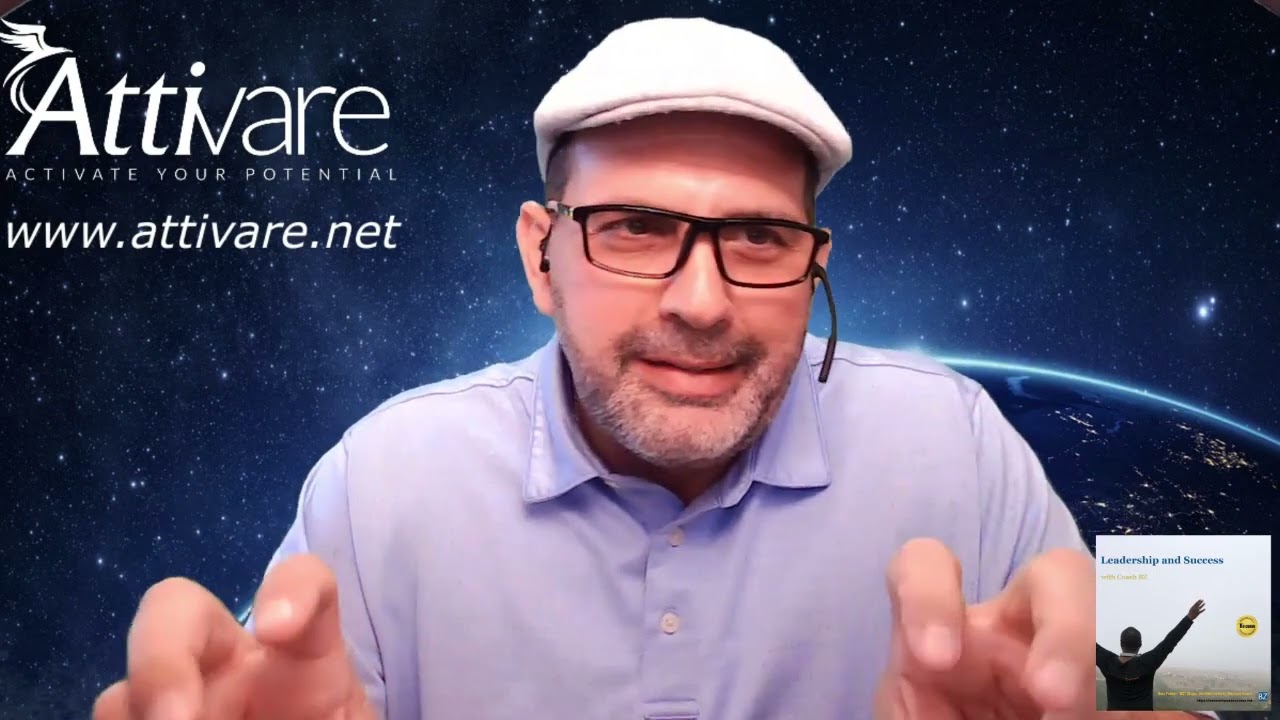
Jorge Roque, a Maxwell Leadership coach who emigrated from Cuba at 17, shares how the dot-com crash forced him to reinvent himself as a real-estate broker and trainer. He uses DISC profiling and natal-chart analysis to help clients, wakes at 5 am daily, and believes a coach stands beside clients, not ahead of them, pairing passion with compassion.
Chapters
Hi, I'm John Maxwell. When the top companies in the world are looking for trainers, speakers, and coaches, there's one name that stands above the rest, and that's Maxwell Leadership. Our certified team members have gotten proven results for companies all over the globe, and our reputation, I'm proud to say, is second to none. Some of our members have risen to the top of their profession, including the one you're going to meet today. I proudly introduce you to my friend, Bob Fabien Zinga.
Welcome to the Leadership and Success Podcast with your host, Coach BZ. If you need to develop into a better leader, this podcast is for you. If you want to achieve a greater level of success, this podcast is for you. His mentor, Dr. John C. Maxwell, said it best: everything rises and falls falls on leadership. We hope to inspire you today and provide you with an insight that has the potential to positively impact the trajectory of your life. Welcome to the Leadership and Success Podcast.
Hello, LinkedIn family! This is Coach Bizzy coming to you from Silicon Valley, and I have a very important guest today. And we were just in the Dominican Republic last week, and, uh, I am really, really excited to bring to you someone who's very special, but I'm not going to do the introduction. I'm going to let Papa John do it for us. So here we go.
Hi, I'm John Maxwell. When the top companies in the world are looking for trainers, speakers, and coaches, there's one name that stands above the rest, and that's Maxwell Leadership. Our certified team members have gotten proven results for companies all over the globe, and our reputation, I'm proud to say, is second to none. Some of our members have risen to the top of their profession, including the one you're going to meet today. I proudly introduce you to my friend and your friend, Jorge Roque.
Where does a coach belong? Should they be ahead of you, clearing the path for you, or behind you, cheering you on? Actually, it's neither. The coach's place is by your side, helping you find your footing each step of the way. Hi, I'm Jorge Roque, a Maxwell Leadership Certified Coach, speaker, trainer, and teacher. I'm passionate about personal development in all its forms, but my specialty is coaching. There is nothing quite as satisfying as walking alongside someone as they become the person they want to be. And if you have a goal that you are striving toward, or even if you're just looking for some direction on your way, I want to partner with you in that process. John Maxwell has been one of the world's foremost leadership and personal growth experts for more than 40 years. And as your Maxwell Certified Coach, I am uniquely and powerfully resourced to help you accomplish anything. What does your dream need from you? What do you need to do? Who do you need to meet? Where do you need to spend your time and resources? As your coach, I will be here to guide you toward your answers to these questions. I want to help you make the uncertain certain. Together, supported by proven effective self-development principles, we will put a plan in place that grows you steadily toward your goal. The greatest investment you can make is in yourself. Let's make it together. Contact me today to start making your dream a reality.
All right, Jorge, can you hear me now?
Yes, I can hear you well.
Okay, fantastico. Wow, this is the second time around, so it is working now. Again, for those listening to us, sorry, about 10 minutes ago we tried, but I could hear him just fine, but he couldn't hear me. I am so excited to speak to you live right now on LinkedIn. It looks like we have about a dozen people watching us now. But just to get started, can you tell us a little bit about your background, your leadership journey, how you got to be where you are today?
Okay, so I was born in Cuba, came to the, to the US at the age of 17. And initially, well, you know, work with whatever I could until I got into the IT world. And I worked till 2001 for IT. At that time, the dot-com companies crashed and the IT jobs were leaving America to Pakistan and other countries. And I had no choice but to be dumped, literally dumped, into real estate because I had no other skills whatsoever. With my engineering mind, I developed a mindset or a process, if you want to call it that way, a process actually, where I actually understood why a client needed a realtor or a real estate agent. And using that structure that I developed, well, I was able to start getting listings and becoming successfully my new profession, which again, it was a complete shock to me from being a geek turning into a salesperson. That was a hard, hard switch. But I found out that it wasn't that hard and it actually, it flowed natural out of me. Now, because of my ability that I developed from there, one of the things that immediately I realized is that I actually I wanted to teach others and I like to teach others and encourage others. Today I like to call it that when I look back in my life, I realize that I've been turning many Cinderellas into princesses because I have a heart for the underdog, for whoever needs. Why? Because I was one of those and I am one of those many times. So I appreciate also the many opportunities that I had and the mentors that I had through my life. So becoming one was something that it was a vocation, something that flow out of me without any effort whatsoever. As a matter of fact, I could do it for free with all the joy of my heart. I mean, no questions asked. Now, during my process as a broker, becoming a broker in real estate and helping others, I had a breakdown. And the breakdown was that I was giving myself teaching all those new realtors that were coming out of the licensing process and becoming or turning them into non-producing agents into producing agents and teaching them techniques and expertise that you don't get from school, you actually get them working in the field. And suddenly, after a couple of years, these agents that I developed, and at that time I had about 30 agents, they suddenly started leaving one after another, and I became bitter and angry, and I felt betrayed by them. Now, you know that all coins have two sides. So at first, of course, I felt like a victim and I was feeling sorry for myself. Then I started looking why this happened, why it really happened. And it really happened because I was very well-intended, but I didn't have the skill to properly deliver and be patient with the process. And on top of that, I did not have the right motivation to give. I was giving with the expectation of receiving a result, but I wasn't giving with a full open heart regardless of the consequences. That brought me into a kind of like sad stage. I don't want to call it depression because it was not, but I was definitely bitter and beat up, and I didn't want to recruit or train anybody else because I didn't want to deal with ungrateful people. But guess what? When you have a vocation that flows out of you, the desire of helping and mentoring and teaching others and coaching others is something that you cannot resist. And I realized that this is actually my passion.
My—
the biggest strength that I have in me is actually sharing what I have learned and the wisdom that I acquired through experience. So I can help these people build up these new leaders. And there was a phrase that struck me really hard from Maxwell, and it was that you're always leading, either in a positive way or in a negative way, or by just doing nothing, still you're leading. So, and that's how Maxwell got into my life. I realized that I had to train the trainer. Fix my heart, clear my mind, line up my intentions so I can actually start delivering the help that I want to so passionately give out, but with quality, with compassion, with passion too, but with compassion. So, and this has been quite a wonderful journey because I have been learning and opening drawers that I didn't want to open about myself and realizing, oh my goodness, I really have to deal with this. But one more thing that I learned with Maxwell, that in the process of learning, I have developed a more compassionate attitude or forgiving attitude toward myself, not to excuse myself, but to allow the process take the, the time, the necessary time and the necessary pain to complete. Makes sense.
Wow.
So here we are, we're starting this new business of coaching, which is going to be completely linked to my real estate practice. I have a real estate brokerage and also have a real estate school where I help people pass the required courses so they can get the Florida license. But on top of that, We're going to be also coaching our agents to a new level, not only in production and accountability, but also to become better on everything that they can be, every aspect of their lives. Why? Because I'm also growing and I will be able now to share with them, thanks to what we are actually receiving through the Maxwell Leadership Organization, the resources. We're going to be able to share with them the resources that we actually receiving, that we're being benefited with. So with that, I don't know if you have an additional question.
No, that is quite amazing, and that's definitely one thing I really love about America, right? When you come here, you may not have anything, and you may not be famous or any of that, but you can start from the very bottom and kind of work your way up, right? You can start a business, you you can be successful and then you can also learn how to scale. So, but something that you said really caught my attention. It looks like to be successful, there seems to be either, you can say, a spiritual or at least a mental dimension to success, like your attitude, your mindset kind of has a lot to do with what you are able to accomplish and how you are able to relate to other people go, your team or your business. Do you agree?
Absolutely. The mind, you know, whatever's in your mind will determine everything else that comes out of it. It's like in, you know, in IT, in the computer world, we call it input/output, the same thing. Whatever you input into your mind is what is going out, either through your emotions, your actions, the way you perform, the way you behave. Everything depends on your, uh, what are, what are you feeding your mind with. And also very important, attitude. Once you receive that knowledge, that wisdom, uh, or that influence, that external influence, what are you going to do about it? The attitude is something that you actually cannot receive from anybody else. It's just one decision that you have to make. It's either you take it the right way and you excel, or you keep on with your sad story, rejecting everything that you just received.
Wow, that is, that is quite incredible. And I know I was there with you when we went to the Dominican Republic with the Maxwell Leadership Organization, and one of the values that we did teach those leaders there was attitude. I think one thing I really got out of it is My attitude is my choice, right? You decide if you're going to be positive or negative or how you are going to react to whatever happens to pretty much us all, right? Life happens and then how do you respond to it? Any more you'd like to add? Just like about attitude in general, and how critical I think it is as a core value, something that people should really practice every day.
Yes, I agree.
And now with the time we have left, I'm gonna get to ask you my 7 favorite questions, right? So the first one is, what is the greatest lesson you have learned What is the secret of your success, you think, Jorge?
I said it in half of it in a few minutes ago, and it's basically to be passionate but also compassionate. Both, you know. For example, one of the things that I'm very well known is about my passion, my energy, but I'm also well known by my lack of compassion. When I let my passion take over and not allow room for process to develop the right way. So I used to be very, very demanding and very strict, very, if you want, perfectionist. I like it to be more— it's not perfectionist in the sense of procrastination, but it's perfectionist in the sense that I wanted to deliver the best most polished result or experience to our clients. So when I asked my agents, uh, you have to use this software, act this way, do this and do that, I was pretty much, uh, not giving them room to breathe, you know, basically. And that's one of the reasons why they left at that time. So one of the things that I definitely learned in order to be successful is you definitely have to be passionate and relentless. Absolutely. But you also have to be compassionate and breathe a little bit and let process work. It can't be as, as you want it all the time. Most of the time you have to actually let people digest what they're receiving. Sometimes you're going too fast, and that's one of the things that I love, that has helped me a lot.
Wow. So basically you do have to prioritize your relationships too. Because like even in the military, you have some people who are extremely successful. They are go-getters, but nobody likes them because they don't really treat people well, right? They get things done, but they are the kind of leaders that would take a whip and get everybody in the frenzy and get them to pretty much go, you know, 100%. But you can't really do it at scale, right? You can't do it forever, but maybe for a short time. Yes.
But yeah, one, I would like to add that, you know, you said that what would be the secret, the secret sauce? I believe also that one of the most, if not the most important ingredient, is actually self-awareness. Know yourself. Know, know the good things that are in you, the strength that you have, but also the weaknesses, so you can balance them out. So you can actually work on the things that you don't like about yourself that much. And, um, and, you know, be aware. Be aware who you are. From there, you can start anything. Wow, that's very important.
I like that. And, uh, that, that kind of leads me to, to my next question. Actually, before I get to that, is there anything you can add about, uh, the greatest leadership advice you have ever received?
The greatest leadership advice that I have received? It doesn't come into my mind, but I mean, if I could tell you a leadership advice that I have received is— actually, I mentioned it to you while we were offline, and it is that you— I actually mentioned it here too— you will lead regardless, for good or for bad, and even if you don't make a decision. And there is a phrase from John Maxwell, and I keep quoting him, obviously, he's Yes, my grand teacher. Um, I like to consider, uh, or turning my life into a long gift to others.
Wow.
That's my mission, my motto. That's, that's what really touched me when Maxwell talked to me the first time, you know. Um, don't be so obsessed about you being amazing. Yeah, be obsessed about becoming a gift that everybody that passes around you receives a blessing, receives an empowerment, encouragement, that every person that comes to you, you know, across your life, across your path, that you leave a very special but good mark that lasts for the rest of their life.
Wow.
That's my mission right now. That's my goal. That's my motto. That's the, I guess, the best advice that I could tell.
That is probably one of the great things. Wow, because I think that really ties into part of the work we did in the Dominican Republic, right? Because when you are successful, it's all about you, me, myself, and I, right? I want to have a car, the house, or whatever. But when you start to become significant, it's not about you anymore, it's about what you're doing for other people, helping them achieve their dream. And I think that is really, really key. And I also feel like that makes you happier too, right? More content.
It makes you plenty— makes you a lot happier. But not only that, success follows, uh, regardless. I mean, it's inevitable that once you become, uh, focused on significance and making a good impact in everybody's life that is around you, everything trickles down in a way that you were not even expecting.
Wow.
And, and, but that's beautiful what you said, that once— and it's true, I remember— once you taste significance, success is not anymore a problem. It's not a thing to, to, to, uh, to, uh, run after. It will come, but it comes, it flows, it just shows up automatically.
Wow.
But touching lives, taking yourself out of the picture as the main thing and making your life a gift to others, that makes a huge difference. Not only for you, it gives you a satisfaction and a payment that no money can give.
Wow.
And it brings you money and the other things that you want, the other stuff that you want.
Yes, yes. It's actually, I think, a master key to success for sure, because even in life, if you are and employee, or if you have a business, whatever you do, you want to add more value to the people you are working for than they give you in monetary compensation or benefit and all of that. But really by serving others, by giving. I think it was Zig Ziglar, right, who said something like, if you give enough people what they want, then they will turn around and give you everything you want. Really by being unselfish, by giving, you actually end up receiving more. This is really awesome. I really love that. Now, just like every leader, we are always learning. So what are you learning now? That's my second question to you.
Well, there are two things that I'm learning. One is more controversial. Oh, it's a little bit controversial.
Okay, I want to hear it for sure.
The first one is, you know, each teacher, they say that the teacher talks more about the things that are deaf they were affected with in their own experience, right? So for example, for me, I was— I felt that I was like a power plant, but I didn't have knowledge, understanding of my own power and how to regulate that power, right? So one of the things that I learned that I actually enjoy very much is actually learning more about human behavior and how to modify or improve, you know, your behavior. We are very predictable people. Humans are extremely predictable. So one of the things that I learned from, from the Maxwell Organization, or through the Maxwell Organization, was actually the personality or behavior analysis through the DISC method. D-I-S-C. That is extremely important, not only to understand how you function, but also how can you perform better. After you understand yourself better. It gives you a lot of sense of relief. Uh, and I felt— I remember that I felt for many, many, many years a lot of guilt. Why I'm so driven? Why I have no satisfaction with whatever I have? Why I just keep wanting more and more and more and never have enough? Uh, and I realize now, you know, once you, you, you learn about your personality, you understand why you are wired the way you are wired and why you behave a certain way to the other people, why some people are more likable to you and some other are kind of like, mm, you don't like these people anymore. The reality is that one of the things that you also learn by studying analysis, you know, behavioral analysis, is that we are all needed. We are all puzzles of a very, very important pieces of a puzzle And we are all needed. And if you, if you learn to relate and work with all their type of personalities, then it becomes easier, easier, uh, to make things happen, to tolerate those people. Then suddenly that person that you didn't like anymore because of this and these aspects that were kind of like repelling to you, now they become wonderful tools in your arsenal, and it helps you be a team player and also build a team if you want to. The other thing that I also learning, studying for the last 2, 3 years is scientific astrology. I know, I know this is very controversial.
I get it.
I get it. It's extremely controversial. And I always like to explain it to start this way. The three Magi, uh, Magis were following a star toward the, you know, where Jesus was born. Okay, and I know we have a Christian audience, but let me explain why I call it scientific astrology. Anything in order to be scientific has to be proven and replicated. It has to be reproduced, right? So, um, the astrology itself itself has nothing to do with psychic abilities, has nothing to do with, uh, um, Tarot or any religion or any world philosophy. Nothing. Astrology is actually the study of the influence— let's call it magnetic forces. We don't know exactly how to call those forces, but they do produce certain influences in you as an individual, but also in a society, in the world. And how we prove that? Oh, through history. That's one of the things that I'm very passionate— I'm passionate about history. And I noticed that when I started studying this, that every time there is a pandemic, there is a war, there are certain events in history, the same astrological configuration happens. It's the same one. Similar. And it's extremely amazing how accurate it is. Now, we call it pseudoscience. We kind of put it, push it down to the, to the curb because, oh, we don't, we don't want to believe in that. And I totally understand if you look at from a perspective of, of a religion that maybe you want to keep a pure faith that depends only blindly on the will of God. I get it.. But this is not what I'm using it for. You can use it, yes, you can definitely predict events, possible events, if these other configurations, if these configurations that we already know continue to happen. But the main thing that I like to know about this is this: when you're born, whether you believe it or not, you receive a magnetic seal. I'm calling it magnetic because we don't know how to call those forces. You receive a seal that conditions the way you behave and the way you act. Now, I believe in will, freedom of will, but that freedom is conditioned also by your ability, right? Now, I can try as much as I can to become a basketball pro player, but in reality, if the seal that I received when I was born, the magnetic seal, from the influence of the planets around me, did not condition me with that ability, I will frustrate myself the whole life trying to become a pro in that. But if I know that my, actually my skill burned into my brain, into my soul when I was born, it's actually, for example, in my case, communicating, compassion, teaching, then if I redirect my life and my work toward that venue, I know that it's going to flow easier because it's something that I was conditioned with to be successful with. So that's the thing that I do. You know, we go by the DiSC, and that's something that is amazing because the DiSC is actually psychological analysis of how you think about yourself. With— through a set of questions, um, we actually determine what do you think about yourself and therefore how you behave. For those that are open to go a little bit deeper, then I go into something called what we call the natal chart, astrological natal chart, and I basically see what is the snapshot of the heavens at the moment that you were born, and I can see clearly what are your preconditions. Now Does that mean that you have to, um, that you have to be upset because you can't be a pro player? No, it means that now you can actually be happier, relax, and enjoy the fact that there are all the areas where you can actually be a superstar instead of trying to be frustrated or your life trying to become something else. Now, we're not going to guess anything about your future. We're not going to guess anything if you don't want to get into anything that is, um taboo for you, I get it, don't worry about it. Let's focus exclusively on what really conditions your life. And I challenge those that are listening to me right now, talk to anyone who works in agriculture or study any agricultural civilization. They all go by a lunar calendar, by a moon calendar. You can have the same seed, but if you plant that seed in the wrong moon, you will not have the harvest that you expected. So there are moons, and the Bible is full of those examples. The, you know, the calendar in the Bible is actually, it's a lunar or moon calendar where there are seasons to plant that is based on the type of moon, and there are seasons to harvest based on the plant, on the type of the type of moon that is at the moment. And, and it's extremely simple if that planet or asteroid— no, asteroid, no, satellite that is around us, around Earth, affects the way we cultivate and harvest, why will it not affect your emotions? Why will it not affect— and as a matter of fact, that's what it does on a human, affects directly your emotions. Why would it not affect us how we react? Now, armed with that knowledge, and I like to say that when you're looking into the chart, You're literally having like a bird's eye view of your owner's manual. Definitely God created you, but this is like an owner's manual where I can open it up and see what is going on here. In my case, for example, he actually helped me go to the extra mile because again, being a very driven person, that also gave me a lot of resentment against myself. And I remember I was always hearing from everybody around me, why you cannot have enough? Why you cannot stop? Why you cannot settle? Why you cannot just enjoy what you have? At the moment, I didn't have the understanding to see why, right? Or for example, why will I keep coming back to help people that later on will hurt me? And it happens over and over. You know, the most dramatic one was the one when pretty much all the AIMS to the office left. But I realized that I was actually conditioned and wired to be a communicator, to be someone that uplifts to others, that in order for me to be successful, I have to bring others up. I had to teach, mentor, uplift. And that was actually a natural gift that I couldn't avoid. Some people call it vocation. And that's a proper way, it's a calling. But it's something that flows out of you, out of your soul. It's like, like I like to say in simple terms, if you were designed to be a lamp, don't try to be a broom. If you are designed to be a broom, don't try to be a flashlight. So I realized, for example, through this discovery, I realized what is my strength and what is my purpose or my natural built, my natural condition. And on top of that, obviously the DISC helps a lot because it helps me understand what I think about myself and also why I'm thinking this way, you know, so I can actually work myself. But there is a limit, there is a limit, and the limit is within the parameters where you, which, where you were conditioned when you were born. And that is, that is, uh, I mean, I, I, I can do an ADHR to anyone. And it's extremely accurate. You will be amazed how much I know about anyone's life. And there's no guessing. There is just understanding what is the strength or the influence that these planets produce on the society and on each individual's life. And just see in the chart where these planets are affecting or touching the specific area of your life. And it's amazing. How accurate it is. It's amazing how accurate it is.
That is quite the reason why it's interesting.
And the reason, and the reason why I like to call it, uh, scientific, and I always put that adjective before, is to make sure that it's not associated with anything that is psychic or anything that is out there, um, that is more like, uh, entertainment for adults. This is not entertainment for adults. History is my lab where I can actually prove it.
Wow, that is, that is quite interesting. And as a leader, I can tell you it's very important to know myself first, right? And then once you have your purpose and you are clear about why you are here— somebody else said, right, there are two dates that are extremely important in 2, the day they realize why they were born. And I think once you know that, and as you work with people, I think that's probably one of the big distinctions between a leader and a manager. Managers tend to treat everybody exactly the same, but the leader, kind of like what you were saying, depending on who you work with, you kind of know what their psychological profile is, and then you kind of know what they need. And you kind of complement each other. So instead of fighting, you actually help them achieve their goal, and you can give everybody on your team a different level of, I guess, attention or tools or whatever it is that they need in order for them to be successful at their level. I like that a lot. Now, just like every leader, people would look at you, see how successful you are, and they're gonna think you've never been, uh, you've never failed at anything. But in my opinion, the more you fail, the more you become successful. So my first question for you is, uh, how has failure shaped your life?
Basically turning me into a more humble person, turning me into a person willing to listen and review myself and review the game. What did I do wrong? What should I have done better? When you are in success mode and everything is going and flowing extremely well, you just keep running and running and running, and sometimes you run over a lot of people and you don't realize what you're doing, and you can mess up your life, your marriage, your co-workers, your family, anything, anything around you and in front of you because you you are doing so well. So you believe that that success is validation, that you have to keep doing what you're doing. So failure is the great opportunity that you can actually— it's hurtful, it's painful, and it's been for me very painful, but it's the moment where you can actually stop and enjoy the opportunity, the magical, amazing opportunity to review It's actually one of the few times where we can actually have the willingness to listen.
Hmm.
So, uh, failure has been a blessing, and that's one of the things that I learned from failure. Instead of seeing as something negative or bad, or instead of even getting resentment against those people that hurt me and caused me somehow a way of failing, It actually helped me to see more about me. How can I make this better? How can I really re-polish these diamonds so I can truly become a true gift to other people? Without failure, I wouldn't have stopped, and I would keep just running over anyone or anything.
Wow, that is very, very Insightful. And by the way, Will Smith from Charlotte, I guess South Carolina, is asking what was the chart that was referenced, the name of the astrological chart you referenced earlier.
The natal chart, birth chart. The birth chart is basically the snapshot of the heavens, you know, the position of the planets at the moment that you were born. That's nice. For that, obviously, we need more than the date of birth. We need actually the exact time that you were born or the most accurate one. Because see, we have— there is a— the sun itself is a very important influence in our lives. And there are two positions where the sun affects our life. One changes every month, one of those aspects, which is what we call the birth sign. You know, let's say you're Taurus, Pisces, whatever, that's the sun sign, and you only change once a month. But there is one that changes every half an hour, which is actually the ascendant, and it depends on the translation and the rotation of the Earth on its own axis. So that one is extremely important. It's actually more important than when in the month, than the month that you were born. So that's why we need the time, because the ascendant is the way that you behave, the way is your first reaction, is actually the true behavior that affects you and everybody around you. It's the way you project yourself. We like to call it the mask. A mask which you talk to everybody else. Now, under pressure, we fall back into the monthly, you know, the real sign, the sun sign, which is the one that change every month, right? Under pressure, we fall back to that. That's your core, your inside, the one that you don't show to people. But that one, the one that you show everybody and actually affects for good or bad, everyone around you, and the way you actually perform is actually your ascendant. And that changes every half an hour. That's why we need the time.
Well, that is quite fascinating. I always love talking with you, and I'm always learning something new every time. By the way, Will Smith said thank you, really enjoying the conversation. We are already running out of time here, but if I can just keep you for a little bit longer. So for number 4, Jorge, who do you know that we should know? Who are some of your mentors, thought leaders that you are following? I know Papa John is one of them. Who else are you following out there?
Ed, his name is— let me look it up right here— is the author of the book called The Miracle Morning. That was one of the amazing books. Ed, uh, Harold, I believe. Let me see.
Yes, I think I know who you are talking about, and I, I have this book in my library. You're talking about, uh, Hal Elrod, right?
Uh, let me see. I have it right here.
Yeah, I believe it's Hal Elrod.
Hal Elrod. Hal Elrod. H-A-L Errol. That book is one of the most amazing practical books. Uh, it's actually one of the first books that really impacted my life in a very positive way, like to take action.
That's pretty cool.
And that's one of the things that I actually started doing, uh, practicing the Miracle Morning every day. It changed completely a lot in my life. It made me do things that I wasn't willing to do before. Or at least I didn't have the discipline to do. And that's another thing, it helped me with the discipline problem, with the consistency.
I love it. Anyone else we should follow?
Not at this moment, I don't have anyone.
No, this is great. Yes, I really love Hal. I have learned quite a lot from him, especially when you I guess he, I believe he talks about 7 areas of self-development that you should focus on. One of them is your body, but also learning and all of that, and being able to do all of that, I guess, what, within 16 minutes from when you wake up and kind of being ready for the day?
You can take a little bit more than that, but at least that would be the bare minimum. But definitely when you wake up, it's time for yourself. Time that you wake up earlier before everybody else, a couple of hours after, or at least an hour after, so you can meditate, you can visualize, so you can actually learn something new every day. By the compound effect, after a year, just half an hour of reading something good that is going to teach you something— we're not talking about a novel, we're talking about something that is going to teach you something— after a year, just reading half an hour of that about that subject, you become an expert on it.
That is fascinating.
If you read once a week, if you read once a week, you don't have the consistency to build up, uh, um, the snowball. Yes, in order to become an expert.
I, I really love that because Papa John also talked about the 5 things he does every single day, including Saturday, including Sunday, including on holidays. 5 things every single day. So when you do something every single day, you are right, it then builds up, right? The— it's, uh, I guess what you would call, uh, the, uh, the compound, the compound effect. Exactly. And that's, that's how he's been able to write how many books now? Like 82 books, I, uh, I believe. He writes every single day. It's just amazing. Go ahead, Jorge.
No, that I was going— actually, it came to my mind that another book that is great is The Compound Effect, but I think, uh, The Miracle Morning is actually simpler and it gives you a very clear practical way to start and seeing immediate progress in your life.
And The Compound Effect, is that one by Darren Hardy?
I don't remember the name.
He's actually one of my mentors too, so it looks like we've been reading the same people. For those who are able to see you, they can see it on the screen, The Compact Effect by Darren Hardy. Darren Hardy, the editor of the Success magazine. Yeah, yeah.
Yes, I read, I read that book like 20 years ago or something like that. Okay, uh, but it was—
hold on, I think I— can you, can you still hear me?
I can see you.
Oh, sorry, Ori, I think I just lost your sound again. You can hear me, right?
I can hear you, yes.
Okay, now I can hear you. Sorry, I got scared there for a second. I thought I had lost you again. Yes, so The Compounding Effect is a really good book by Darren Hardy, another one of my mentors too. I was just saying how Looks like we are following and reading the same thing. Okay, this is great, and this would be part of question 5. So question 6 then: what have you done that we should do? What is one action you have taken that has positively impacted your life?
The best one? Waking up at 5 AM every day.
Wow.
And do you wanna know the second one?
Please.
Making my bed.
Hmm. Actually, I have an admiral who wrote a book about making your bed every morning.
I actually, I don't remember his name, but I learned it from him.
Yes.
And it's true. If you want, you know, the reason, and let me tell you the simple logic. When you wake up in the morning, you have to start with a winning, uh, winning something, winning on something with something has to start right. Just from the very beginning. And waking up is not enough. Waking up is just waking up. But when you start doing your bed, which is usually something that we don't want to do because of the laziness or whatever, I want to leave it for later. Yeah, that already sets you in the right direction with purpose. And on top of that, once that bed is done and it's nicely done and you look back, you start feeling proud about yourself.
Yes.
And once you start feeling proud about yourself Everything else flows easier. If you feel good about yourself, you already have your first accomplishment, everything else will be a lot easier to perform.
That is pretty amazing. That's an idea of Dale McConaughey.
It's not hard. It's not hard. Simple things make amazing impacts in your life.
Okay, so let me, let me ask you this then. If you only had one day, one day to live, What would you have liked your final contribution to be?
If I have one day to leave, what would be my final contribution to be, to do? Mhm. That's a very, very tough and good question. I think, uh, and I come— that comes back to my, to one, uh, one of the values that actually I did with, uh with John Maxwell is called Forgiveness. And it touched me when I read that, that, that chapter in the Transformation Table. And he said that when he has his heart attack and, and he looked back to his life, he realized that he couldn't— he didn't have anybody to, to call or anything to fix or anybody to call to ask for forgiveness or to amend because actually he already had put all his ducks in a row, you know, he already fixed. And he was actually quite proud of that. So I guess, I guess, and that's something that I don't want to wait to the very last moment. As a matter of fact, that's something that I'm actually starting to, to leave, is, and not leave it for the very last day. But if I had to wait, if I knew that I had the very last day, it would be that. It would just, it would be just to amend any broken bridge and make sure that anything that I broke in the process of my life gets repaired. Or at least the people that think that they hurt me, or they did, they also know that they are released and that they are completely released from any hard feelings or any hurt from my part.
Wow.
It goes two ways. It's not only It goes two ways. It's not only you letting others know, hey, I messed it up, I did wrong, and I'm really aware of that and I'm sorry, right? But I'm also— I think that it goes the other way around too. You also have to call those that hurt you and tell them, listen, I know we messed it up. I have done it too. I'm releasing you and I welcome you with open arms. Forgiving, forgiving, and ask for forgiveness. That would be my last thing. I'm actually working on that. I'm starting to do that as much as I can. And I start with an attitude. Yes, the forgiving process starts with an attitude. Stop being— there is a saying that when you are in a hole, you have to stop digging, right? Well, if you know If you know that you had done things that hurt and people have hurt you, what you have to do immediately is stop digging into being a victim or acting as a victim. Just start being a gift. Start being a gift and stop the continuous vicious cycle of resentment and hurt.
Wow. I really love that, Tõi. I could be talking to you forever. We've already been over 45 minutes now. I really appreciate your time. I'm not gonna abuse it much more. I have one last question to, to ask you, but I think almost everything you've, you've talked about with our audience today is about success, not just being material. Yes, financial success is part of it, but it's much more than that. It's the relationship you have with people, right? It's the legacy that you leave after you are gone, because we're not gonna live on this earth forever, and success is much larger than that. So for some people, they want to become a CEO, they want to have their own business, they want to make a lot of money, which is fine, there is nothing wrong with that, but it's going beyond success to becoming significant, and I think that really takes a lot of leadership. Thank you so much for being on the podcast today. I think I need to invite you again sometime, but before I let you go, last question I have for you, number 7: How can we add value back to you?
Recommend me a book. Tell me a book that I should read, because see, I don't know everything. As a matter of fact, I really don't know what I don't know. So if you can actually pass it on to me, something that probably can add value to my life, like a book, I will really appreciate it.
Fantastic. I'm gonna make sure people who are listening to us today are gonna give you a lot, but one book that just came to mind, I'm gonna start a mastermind on that, are the 21 Laws of Leadership. I know you've already read that book, but the 25th edition is coming, I think, at the end of this month, if I'm not mistaken. That's one book that literally changed my life. I think it was published, uh, I first read it when I was 17, 18 years years old, and it's just amazing. The more I read it, the more I really get out of the book. It is really not just a best-selling book, but I think really a foundational book when it comes to leadership. I know we've used it in the military, in the US Navy too, and I don't know, it's one book I can't stop recommending for sure. Have you also read Think and Grow Rich? I'm sure you may have. Think and Grow Rich by Napoleon Hill.
Think and Grow Rich. Yes, I have read that one too. I read that book every month, once a month.
Wow.
I read it once a year.
Okay, okay, good.
I read it once a month. Yeah, I read it once a month because it helps me to refresh my mind in a right, in a proper direction.
Yeah, yes, that is, that is definitely a powerful book. And another one I also read once a year is, uh, The Richest Man in Babylon. Those are the two books I read every, every year.
Is that one from, uh, Paulo Coelho?
No, no, I think it's George, George Clayson. Uh, Paul Mark McAuliffe, I've read many of of his books also, but The Richest Man in—
Yeah, I thought that one is The Greatest Salesman is from Paulo Coelho.
Yes, yes, that's a good one too. Okay, okay, good. So I don't have anything to recommend to you. You know all of those books already, but again, thank you so much for your time. I really, really do appreciate that, Torey. And I think when we get time, I definitely need to get you back here. And thank you so much for the great work you did in the Dominican Republic last week. I believe it's going to impact that nation forever. I think we were able to reach out to 25,000 leaders in that country across their entire nation. I think that's going to have a significant impact even long after you and I are both gone. Give you the last word.
Yes, I want to add something to that, that one of the things that happened to me in Dominican Republic is actually confirmed one of the dreams that I had in my mind for a while now, but now it's is a project, it's a clear, clear project, and it is that one day to bring the transformation table when Cuba becomes a free country again.
Thank you, thank you, thank you. Wow, I cannot thank you, thank you enough. Thank you so much, Jorge, and I really appreciate your time today for being so generous. And for all of my audience, if you still have questions for Jorge, you can add them to the comment, and thanks again for joining us. On this edition of the Leadership and Success Podcast. Out now.
Thank you for listening to the Leadership and Success Podcast with your host, Coach BZ. If you like what you heard, please subscribe to our channels and come back for more wisdom nuggets on how you may develop into a better leader and achieve greater levels of success. Leadership is the most critical skill. The world will always need leaders to lead others, deploy the next disruptive technology, or execute a business strategy. You may as well decide on counting yourself among the 21st century leaders. See you right here next time on the Leadership and Success Podcast with Coach BZ.
More from Bob

S250:E4🎙️LIVE 🇺🇸America 250: President Barack Obama Leadership, Service, and the Power of Hope






S5:E157🎙️ LIVE with CMD CMSgt Dennis L. Fritz, USAF (Ret.)(Multi Tracks Audio)



S5:E156🎙️ LIVE 🇪🇸 Leadership Lessons from the FIFA World Cup 2026 Champions (Multi Tracks Audio)

S250:E3🎙️ LIVE Leadership Lessons from America’s First Documented Family of African Descent 🇺🇸📖