S4:E11 🎙️Leadership & Success Podcast LIVE: Character Is Power
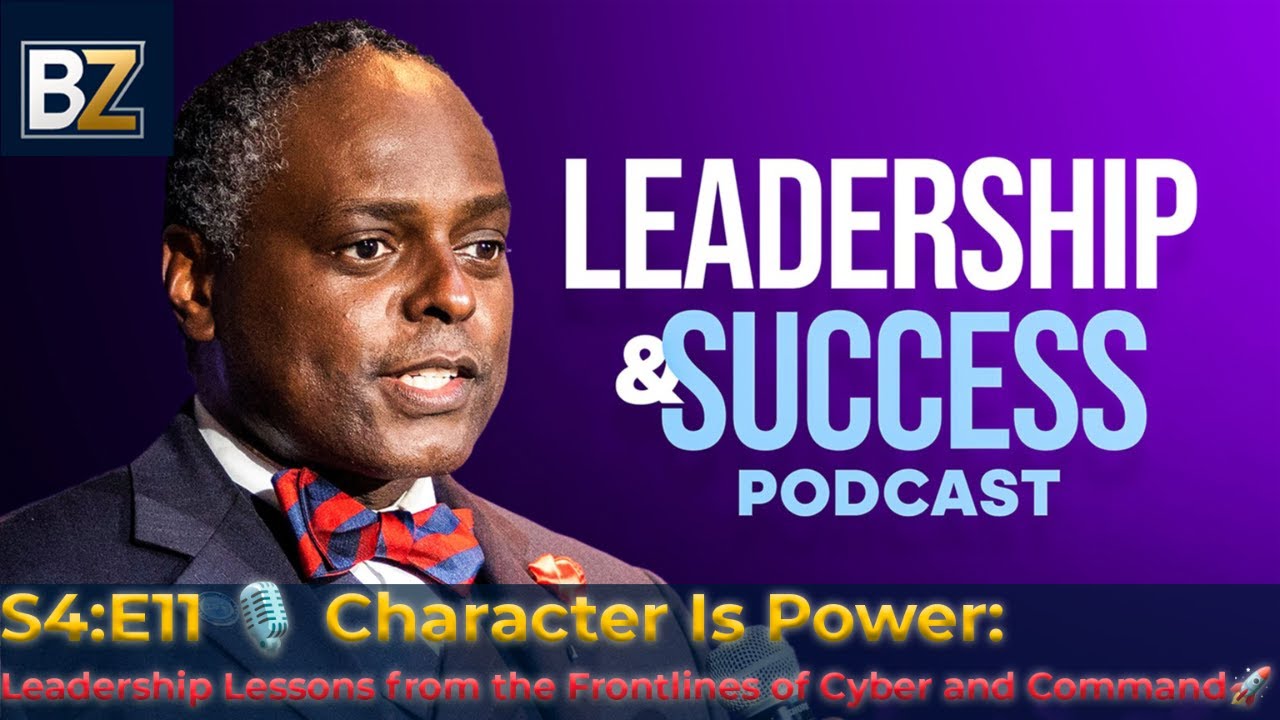
In this live episode of the Leadership & Success Podcast, host Coach BZ (Bob Fabien Zinga) explores the central thesis that "character is power" in high‑stakes leadership contexts such as military command and cybersecurity. Drawing on Zinga’s dual experience as a U.S. Navy information‑warfare commander and a cybersecurity executive, the discussion weaves together historical quotes (Booker T. Washington, Oprah Winfrey, Alexander the Great), recent cyber‑security incidents (2025 UK retailer breaches, SolarWinds), and personal anecdotes to illustrate how character, competence, and connections (the 3 C’s) form a hierarchy that determines a leader’s effectiveness. The episode outlines concrete practices—integrity, humility, transparency, empathy, simple communication, empowerment, and continuous growth—while urging listeners to self‑reflect on trust, legacy, and the role of character in emerging technologies. The conversation ends with a call to action for leaders to model the values they expect, to prioritize character, and to consider how this foundation will shape future challenges beyond cybersecurity.
Chapters
Hi, I'm John Maxwell. When the top companies in the world are looking for trainers, speakers, and coaches, there's one name that stands above the rest, and that's Maxwell Leadership. Our certified team members have gotten proven results for companies all over the globe, and our reputation, I'm proud to say, is second to none. Some of our members have risen to the top of their profession, including the one you're going to meet today. I proudly introduce you to my friend, Bob Fabien Zinga.
Welcome to the Leadership and Success Podcast with your host, Coach BZ. If you need to develop into a better leader, this podcast is for you. If you want to achieve a greater level of success, this podcast is for you. His mentor, Dr. John C. Maxwell, said it best: everything rises and falls on leadership. We hope to inspire you today and provide you with an insight that has the potential to positively impact the trajectory of your life. Welcome to the Leadership and Success Podcast.
Hello everyone, today is Friday, right? June the 21st. Oh, sorry, Saturday, Saturday, June 21st. Thank you so much for joining us again, the Leadership and Success Podcast, and I am Coach Bizzy, your host. And today we're going to be talking about character. So this is season 4, episode 11. We're gonna meet you again tomorrow for episode 12. And, uh, so I want to thank you for being here. If you would please, in the comment section, let me know where you are joining us from— what city, state, region, country. I really appreciate that. And then if you have any question for me, please type the question in the comment section as well. So I am now going to let my AI agent Joe and Mary AI take it from here, and I will be back in about 40 minutes or so. All right, Drew and Mary, you guys are next.
Have you ever found yourself wondering what truly elevates a good leader to a truly great one, especially when the stakes are just unbelievably high? Think about navigating, you know, the treacherous waters of a major cyberattack or making those split-second decisions in a critical military operation. It's so easy to assume that it all comes down to pure technical brilliance, maybe, or unparalleled strategic genius, or simply years of experience. But what if the real differentiator, the profound force that determines success when everything is on the line, is something far deeper, something more, well, foundational to who a leader fundamentally is? Today we're embarking on an extensive deep dive into precisely that, the profound and often underestimated connection between leadership effectiveness and, um, character. We're going to explore how this plays out in the intensely high-pressure worlds of cybersecurity and military command. This isn't just about what leaders do, it's about the very essence of who they are, how their internal compass guides them when the external world is just, uh, well, chaos.
Our insights today are rooted in a truly fascinating and I think incredibly timely article. It's titled "Lead: Character is Power: Leadership Lessons from the Front Lines of Cyber and Command." This powerful piece is penned by Bob Fabien Zinga, and he's a truly unique and compelling voice in this critical domain. What makes Zinga's perspective so invaluable, so potent for anyone grappling with leadership challenges today, is his incredibly rare dual background. It's quite something. He served with distinction as a U.S. Navy information warfare commander, leading complex, high-stakes military operations, and concurrently as a cybersecurity executive, spearheading critical cyber defense efforts in the private sector. This blend of real-world experience, you know, from the command bridge to the C-suite, it gives his insights a rare depth and practical applicability.
That dual perspective is exactly what makes this material so compelling, isn't it? Our mission for this deep dive is clear. We're going to thoroughly unpack Bob Fabien Zinga's core argument, which he encapsulates in that powerful phrase, character is power. We'll explore in detail how foundational character traits don't just facilitate but actively drive success, build enduring resilience, and cultivate unbreakable trust in leadership. And crucially, we'll examine what all of this means for your journey as a leader. Whether you're navigating the complexities of the C-suite, managing a dynamic team, or just striving for greater effectiveness in your daily professional life, we'll extract the most crucial nuggets of knowledge, providing you with, well, a genuine shortcut to being truly well-informed on what profoundly matters in leadership when the pressure is really on. Okay, let's unpack this and truly dive deep. Get ready for some surprising facts and insights that we believe will genuinely shift your perspective on what true impactful leadership really entails. So, B.Z. Zinga wastes absolutely no time in laying out his central thesis. He opens his article with a powerful, timeless quote from the visionary educator Booker T. Washington, who famously declared, "Character is power." Hmm. When you hear that statement, especially coming from someone with Zinga's incredibly demanding background, you know, military command and cutting-edge cybersecurity, it doesn't just sound like a philosophical platitude, does it?
Not at all.
It immediately resonates as a hard-won truth forged in the crucible of real-world challenges and high-stakes decisions. It suggests something far more tangible than mere idealism.
It absolutely does. And Zinga immediately grounds that statement in a strikingly modern context. He references Oprah Winfrey's equally insightful quote, which states, our character is determined by the decisions we make under pressure. And this is where the abstract concept of character truly, well, hits the ground running. Think about the environment Zinga operates in, whether it's a naval command center with lives hanging in the balance during an active threat, or a corporate security operation center scrambling to contain a sophisticated cyberattack. In these moments, decisions aren't theoretical. They have immediate, often massive, and sometimes irreversible consequences. There's just no luxury of time for lengthy deliberations over moral principles. Your ingrained character, the sum total of your deeply held values and habitual responses, dictates your actions when the clock is ticking and livelihoods or or even lives are on the line. It's like the pre-programmed response system for your integrity.
And Zinga provides some incredibly stark real-world examples to really drive home these immense stakes. He points to recent high-profile cybersecurity incidents as powerful, even painful reminders of how profoundly a leader's character, or, you know, lack thereof, shapes an organization's crisis response and ultimately its survival. Consider the 2025 wave of retailer breaches that devastated major UK names like Marks Spencer, Co-op, and Harrods. These weren't abstract threats. These were real-time disruptions impacting millions of customers directly, eroding public trust, and leading to significant economic losses. It really highlighted how quickly even large established organizations can be brought to their knees.
Yeah, when vulnerabilities are exploited.
Exactly. And then on an even broader global scale, we've seen the lingering insidious fallout from supply chain compromises like SolarWinds, remember that, rocked the world between 2020 and 2024.
Oh, absolutely.
This wasn't a quick hit. It was a deeply embedded, sophisticated infiltration that exposed systemic vulnerabilities across critical government networks and major corporations. The ripple effects, well, they're still being felt years later. Zinga also highlights the emerging threats we're seeing right now. The terrifying rise of AI-driven phishing attacks, which are becoming incredibly convincing and scalable.
Scary stuff.
The proliferation of deepfakes, designed to sow misinformation and manipulate, and increasingly automated malware capable of self-propagating at unprecedented speeds. These aren't just technical challenges to be solved by better code or more firewalls. They are existential threats that fundamentally force security leaders to rely not just on their technical prowess, but on their unwavering integrity and frankly, raw courage.
Mm-hmm.
To protect their people and organizations from well, unprecedented levels of digital warfare. It's a fight on two fronts, technical and ethical. What's truly fascinating here is how Zinga makes the compelling argument that these catastrophic incidents, from the retailer breaches to the SolarWinds debacle, aren't merely technical failures, nor are they simply strategic missteps. He contends that at their core, there are ultimately failures rooted in leadership decisions, or crucially, a critical lack of character within that leadership that ultimately determine the quality of the response. This fundamentally underscores a vital point: technology alone is never the complete answer.
Right.
You can invest in the most advanced firewalls, deploy the most sophisticated AI defenses, implement cutting-edge threat detection systems, but if the leaders overseeing these defenses lack the integrity to admit a mistake, or the courage to be transparent about a breach, or maybe the humility to seek external help when overwhelmed, then all those technological defenses can, and often will, just crumble.
It's the human element.
It is, driven by the leader's fundamental character that ultimately steers the ship through the storm or, well, allows it to capsize.
Exactly. And that's precisely why Zinga's perspective is so unique and so incredibly valuable. He doesn't just theorize about leadership; he brings a wealth of direct, lived experience to the discussion. He seamlessly blends lessons learned from high-stakes decisions across both the rigorous demands of military operations and the dynamic, often unforgiving, landscape of the private sector. Every piece of advice, every observation he shares is grounded in that enduring truth that Booker T. Washington articulated so long ago: character is power. It's a message that feels truly forged in the crucible of real-world crises, making it resonate with immense authenticity and authority. So if character is indeed this fundamental source of power, how does one cultivate it? And how does it integrate with other vital leadership traits? Zinga points to a foundational framework he internalized very early in his professional journey, gleaned from Strixus Magazine: the 3 C's of leadership. These are character, competence, and connections. Now, at first glance, this sounds straightforward, almost intuitive, right? It does. But as Zinga painstakingly explains, the order in which you prioritize these C's is absolutely everything. It dictates whether your leadership stands on solid ground or, uh, shifting sands.
Precisely. Zinga learned a critical hierarchy during his formative years in the US Navy that he carries with him to this day. It's a mantra that has clearly shaped his approach to leadership. Character first, Competence second. Connections always. This sequence, he emphasizes, is paramount. What it means is that while competence—your skills, your technical expertise, your ability to execute—is undeniably vital. Of course. And connections—your network, your relationships, your ability to collaborate—are absolutely indispensable, neither of those can fully compensate for a deficit in character. Character serves as the bedrock. The immutable foundation. Without it, your competence might be misdirected, used for personal gain rather than the organizational good. And your connections could ultimately be built on a facade collapsing when tested by adversity. It's the moral operating system, really, that determines the integrity of all other functions.
And he doesn't just state this principle. He provides incredibly concrete examples from his own diverse career that vividly illustrate this hierarchy in action, makes it abundantly clear this is far from mere theory. For instance, consider a powerful military anecdote. As a junior officer preparing for a critical OCONUS operation, you know, outside continental United States, where the remote The remoteness, complex logistics, and potential for friction amplify every single decision. Right. The consequences are magnified. Hugely. Zinga faced immense pressure to expedite procedures, maybe cut corners to meet an aggressive timeline, but he steadfastly refused to compromise on safety protocols or operational integrity. He chose the harder right path. The impact of that decision— profound, multifaceted. It earned the absolute unshakable trust of his crew because they witnessed his unwavering integrity and commitment to their safety. That's huge. And crucially, by adhering to the highest standards, he avoided a potential disaster that could have had catastrophic consequences, not just for the mission, but for the lives under his command. His character in that moment was indeed power. Now, fast forward to his cybersecurity executive role in the private sector. They faced a significant, rapidly evolving breach scare. The immediate instinct for many in such a high-pressure situation might be to control the narrative, right? Downplay the severity, maybe even hide uncomfortable truths.
To protect reputation. Absolutely. The temptation is strong.
But Zinga, embodying his character-first principle, opted for total transparency with the board. Imagine having that conversation, admitting vulnerabilities, potential failures, the uncertain scope of a developing crisis. It had to be incredibly uncomfortable, professionally risky even. Oh, I bet. But the impact of that unflinching honesty was immediate and profoundly long-lasting. It didn't erode their standing. It profoundly strengthened their credibility and forged stronger partnerships. The board gained an undeniable sense of trust in Zinga, knowing he was a leader they could rely on to deliver the unvarnished truth, even when it was bad news. And that trust allowed them to work together more effectively, more decisively to address the issue.
And if we connect these powerful examples to the bigger picture, for you, the listener, the relevance of this principle becomes undeniable. This hierarchical approach holds true whether you are standing on the bridge of a warship making split-second decisions affecting hundreds of lives or leading a global incident response team after a devastating ransomware hit that could cripple an entire company's operations. It's all about building trust and establishing undeniable credibility. Zinga's experiences clearly demonstrate that this vital foundation, this unwavering bedrock, begins and ends with character. Your technical skills, your intellectual prowess, your network— sure, these might get you hired, they might open doors, but it is your character that will ultimately determine if you retain the deep respect, fierce loyalty, and unwavering commitment needed to lead effectively, decisively, and morally when it truly matters. You know, when the lights are brightest and the pressure is most intense. Without character, competence can be fleeting and connections can prove fragile.
Building directly on that foundational role of character, Zinga dives deeper into the specific evolving challenges leaders face today. Particularly within the dynamic and increasingly hostile cybersecurity landscape. He points to the alarming surge in AI-enhanced phishing schemes and automated exploitation tools that we've witnessed, particularly in 2025. These aren't just minor annoyances. These advanced threats have truly exploded in sophistication and scale, weaponizing speed, precision, and automation against defenders in ways we've never really seen before. Yeah, it's a constant arms race. It is. Against a relentless, increasingly intelligent adversary that constantly tests the mettle of leadership.
And we've already seen the very real, tangible consequences of these advanced threats playing out in the real world. Zinga revisits those highly publicized 2025 attacks on major UK retailers like Marks Spencer, Co-op, Harrods. He explains how these weren't just isolated, unfortunate incidents. They powerfully demonstrated the rapid paralysis and profound operational disruption that could occur when foundational cyber hygiene you know, the basic blocking and tackling of cybersecurity, fails to keep pace or is compromised. Yeah. These organizations, despite their considerable size, resources, and public profiles, were quickly overwhelmed. Their experiences vividly illustrate how crucial robust, character-driven leadership is, not just in responding to an attack, but in maintaining the continuous vigilance, discipline, and unwavering commitment required to prevent such catastrophic collapses in the first place. It highlights that technology alone, without the human will and integrity behind it, is just insufficient.
Then let's consider a landmark event that shifted the entire cybersecurity paradigm: the 2020 SolarWinds supply chain breach. We've touched on this before. Mm, a huge one. This was not a simple hack; it was a masterclass in sophisticated, stealthy infiltration. It showed how a determined adversary could embed itself deep within some of the most secure government and corporate networks globally, often remaining undetected for months. It was a wake-up call for the entire world about the inherent interconnectedness and systemic vulnerabilities of our digital infrastructure. Zinga powerfully reiterates his point, drawing a direct line between these technical failures and the human element. These events prove that it's not just the technology that fails, it's the leadership decisions behind the controls that truly determine outcomes. Right.
The most cutting-edge technology is only as good as the people designing, implementing, and overseeing it, and more importantly, the character they bring to those roles. Exactly. What's truly fascinating here is how Zinga precisely articulates the concept he calls the character gap. He states, when the breach hits or the auditors come knocking, your character will define whether your team rallies or crumbles. The character gap is what transforms an inconvenience into a full-blown crisis.
Wow. Think about that for a moment.
It's powerful. It's not just about what you do in a crisis, but who you are, when faced with immense pressure and scrutiny. If a leader lacks the integrity to admit a flaw, the courage to be transparent about a developing breach, or the humility to seek external help, that initial inconvenience—maybe a minor system vulnerability found by an auditor or an early warning sign of a compromise—it quickly metastasizes.
Right, denial sets in.
Denial sets in, crucial information is withheld from key stakeholders, and a potentially recoverable situation spirals rapidly into public scandal, irreparable reputational damage, and even irreversible financial or operational losses. Zinga's argument here is that this isn't just about technical competence. It's about the profound moral fortitude required to act decisively and honestly, even when it is incredibly uncomfortable, even when it carries personal risk.
And Zinga, with his characteristic honesty, shares a personal, highly relatable experience that beautifully illustrates this critical nuance. During a major cyber attestation, which for those unfamiliar is essentially an intense, comprehensive audit of an organization's security posture and compliance, His team faced several compliance gaps. Let's be honest, no organization, no matter how robust, is ever truly perfect, right? Audits often uncover areas for improvement. Always. But instead of panicking or attempting to obscure the facts, Zinga describes his deliberate approach: standing firm, answering all auditor requests truthfully, directly, and without embellishment. He was honest, but he also understood a critical distinction. It wasn't his job to preemptively disclose every minor detail that hadn't been specifically asked for. That's an interesting point. Integrity, he explains, meant responding with absolute candor to direct questions, not hiding facts, but also not overdisclosing in a way that could inadvertently cause unnecessary panic, be misinterpreted, or open the door to undue scrutiny that wasn't warranted by the scope of the audit. Finding that balance. Exactly. The positive outcome of this character-driven approach was significant. They passed the rigorous attestation with only minor findings. More importantly, this experience became a profound teachable moment for his entire team. They learned firsthand that true transparency, when thoughtfully paired with disciplined responsibility, builds lasting trust, both internally and externally. This wasn't merely about avoiding a penalty or passing an audit. It was about cementing a reputation for unwavering integrity and strategic candor. And this is a critical nuance, a finely tuned balance that you can absolutely apply in your own professional life. It's about navigating those tricky, high-pressure situations not just with honesty, but with a responsible, thoughtful approach to communication that fosters confidence, not chaos. This brings us directly to the profound and enduring idea of courage in leadership. And Zinga frames it perfectly by quoting a timeless piece of wisdom from Alexander the Great. He famously declared, "I am not afraid of an army of lions led by a sheep." I am afraid of an army of sheep led by a lion. This ancient insight resonates so deeply, so powerfully in modern leadership contexts. Whether you're talking about a crack military unit deployed in a dangerous zone or a cybersecurity incident response team facing a sophisticated nation-state adversary, it speaks to the incredible, almost transformative power of truly courageous, character-driven leadership. It's about how the leader's spirit can infuse or, well, drain the entire team.
Zinga has witnessed this dynamic play out countless times across his military and civilian careers. He has seen highly talented, exceptionally skilled teams falter and dramatically underperform when placed under the direction of weak leaders, leaders who might be technically competent, even brilliant, but who ultimately lack the courage, the moral grounding, or the decisive spirit to inspire and guide. Conversely, he's witnessed what might be considered average teams possessing competent but not necessarily stellar individual talents, achieve extraordinary, almost impossible results when guided by confident, morally grounded, and truly courageous leadership. This isn't just anecdotal evidence; it highlights the profound multiplying power of leadership character. A leader's character—their courage and integrity—can literally amplify the collective effectiveness of their team, turning mere potential into peak performance and resilience under fire.
He gives a deeply compelling military anecdote to truly illustrate this principle. As a commanding officer, he once found himself leading a mission facing extreme resource constraints. They were up against incredible odds, lacking critical equipment and personnel, truly in a bind.
Tough situation. Very.
But instead of succumbing to panic, micromanaging every detail, or allowing the limitations to define their capabilities, he did something transformative. He empowered his team to take initiative, encouraged creative problem-solving, and modeled calm, decisive action under immense pressure. He showed them how to navigate immense pressure without flinching by focusing on what they could control. That's key. The result was truly remarkable. The team not only achieved the mission against all odds, performing at an incredibly high level, but in doing so, they forged themselves into the most cohesive, high-performing unit he'd ever had the privilege to lead. Their success was a direct reflection of his courageous, empowering, and character-driven leadership. It was a testament to the idea that a leader's courage can literally breed courage in their team.
And what's particularly insightful about Zinga's wisdom is that he didn't confine this powerful lesson to the military context. He actively applied this exact same mindset to the tech world, demonstrating its universal applicability. He recounts a large, complex cloud migration project where his initial instinct, driven by a desire for perfection and control, was to tightly oversee every decision, to micromanage to ensure no missteps. Understandable impulse. Very. But he consciously recognized the invaluable lesson from his military days. True leadership isn't about control; it's about enablement. Instead, he intentionally delegated significant authority and placed immense trust in his junior engineers to own critical subsystems. He gave them real responsibility, autonomy, and the space to innovate.
That takes courage to letting go like that. It does.
The outcome was nothing short of impressive. The project saw far stronger innovation, achieved faster execution than he could have possibly accomplished through micromanagement. And perhaps most importantly, the team itself learned how to lead themselves. They grew significantly. They took profound ownership of their work, and they thrived. Because their leader had the courage to trust their competence and crucially, their developing character.
So what does this all mean for you, the listener, in your own leadership context? It poses a truly challenging but essential question for self-reflection. Are you actively fostering an environment where your team feels genuinely empowered to lead, where they can take initiative, contribute their best ideas, and even make calculated mistakes and learn from them? Or perhaps inadvertently, Are you becoming the sheep that Alexander the Great warned against by constantly micromanaging, by not delegating meaningful authority, by not trusting the immense talent and potential that surrounds you and your team?
It's a critical self-assessment, absolutely essential for genuine growth and impact as a leader.
Beyond strategy, competence, and courage, Zinga introduces another profoundly crucial dimension of character: the human element. He quotes Dennis Prager, the thoughtful author and radio host, who defines goodness as, "Goodness is about character integrity, honesty, kindness, generosity, moral courage, and the like. More than anything else, it is about how we treat other people." Hmm.
That really cuts to the core.
It really drives home a fundamental, often overlooked point. Leadership isn't just about strategic direction, technical expertise, or even inspiring courage. At its core, it's profoundly, fundamentally about how we interact with, care for, and lead other human beings. It's about our humanity.
Zinga provides incredibly touching and profoundly practical examples of this compassionate, people-first leadership drawn directly from his own extensive career. Mm-hmm. He recounts instances of staying late, not for official duties or administrative tasks, but specifically to help sailors deal with deeply personal emergencies or navigate challenging family situations, demonstrating a deep, genuine care for their wellbeing that extended far beyond their professional roles. He'd make a conscious effort to walk the decks of his ship, not just for inspection, but to actively listen to crew concerns, making himself approachable, accessible, and empathetic to their daily struggles and aspirations. In the tech world, he would make a point to praise engineers for incremental progress on complex projects that maybe no one else seemed to notice, recognizing their consistent effort and quiet dedication, even in small steps.
That recognition matters so much.
It really does. He also highlights his commitment to coaching brilliant but often introverted engineers and analysts, helping them not just develop their technical skills but nurturing their potential to become mentors themselves, empowering them to step into leadership roles they might not have envisioned. And crucially, he emphasizes helping teams find more effective ways to communicate, particularly under intense pressure, understanding that stress can often fray crucial connections and lead to misunderstandings. These seemingly small, deeply human leadership moments are precisely what build truly resilient, fiercely loyal, and high-performing cultures.
It's abundantly clear from these deeply personal experiences that Zinga firmly believes in a core reciprocal truth of leadership. Teams will stick with you if they believe you will stick by them. It's that unwavering commitment to your people, that demonstrable loyalty and care that builds the fiercest kind of loyalty and trust in return. Absolutely. And the profound The profound reciprocal truth he learned from this commitment is equally powerful and serves as a guiding principle. I have learned to take care of my people and my people will take care of the mission. It's a virtuous cycle, isn't it, of trust and performance?
It really is. When you genuinely invest in your team, support them through challenges, recognize their contributions, and show them you truly care about them as individuals, they will in turn go above and beyond, not just for the mission or the organization, but for you as their leader.
That deep understanding of the human element in leadership naturally leads us to Zinga's exploration of the idea of grace and empathy, a concept he thoughtfully unpacks using a profound biblical verse, Romans 3:23, for all have sinned and fall short of the glory of God. This raises a critically important question for every leader, regardless of their personal beliefs. Mm-hmm. How do leaders operate effectively and compassionately when they fully accept that everyone, including themselves, has inherent flaws, limitations, and will inevitably make mistakes.
Yeah, it's a recognition of our shared imperfect humanity. Exactly. Zinga's insight here is incredibly powerful and transformative. Leading with this fundamental understanding means leading with significantly more patience, more compassion, more humility, and a greater overall understanding of human fallibility. In high-stakes environments like the military and cybersecurity, where errors can have immediate severe, sometimes catastrophic consequences, it's incredibly tempting to expect perfection. Oh, there's a natural, almost instinctive inclination to demand flawless execution from yourself and your team. However, Zinga argues that recognizing that all fall short enables leaders to correct without condemnation, to address errors directly, ensure accountability, and provide instructive feedback without shaming, demoralizing, or crushing the spirit of the individual.
That's a critical difference.
Correction without condemnation. It is. This approach, in turn, fosters cultures of true accountability without shame, where people feel safe enough to admit mistakes, learn from them, and grow. Great leaders, Zinga concludes, don't demand an unattainable perfection. Instead, they diligently nurture integrity, encourage continuous growth, and foster a deep sense of ownership through grace. They understand that progress and innovation often come through acknowledging imperfections and courageously learning from them, thereby creating a safe psychological space for teams to truly grow, take risks, and innovate without the crippling fear of judgmental retribution.
So we've covered these broad foundational principles of character, courage, compassion, all absolutely vital. But Zinga doesn't leave us to simply ponder these deep insights in the abstract. He brilliantly translates this profound understanding of leadership into a rich tapestry of practical, actionable wisdom alongside some even deeper reflections. He draws on a diverse array of sources, including ancient wisdom and powerful biblical verses, providing concrete guidance you can begin applying today. Let's unpack some of these crucial nuggets for your benefit.
Indeed, these insights offer genuinely concrete and actionable guidance that you can integrate into your own leadership style. First, Zinga emphasizes integrity first. Lead with consistent, unwavering honesty, even when you are under intense scrutiny. Even when it's uncomfortable. He ties this directly to Proverbs 11:3: "The integrity of the upright guides them, but the crookedness of the treacherous destroys them." Integrity, he explains, isn't just a desirable virtue; it's your absolute internal compass, the moral GPS that guides you unerringly through the complex ethical gray zones where the right path isn't always obvious, easy, or popular. Right.
So, in those moments of moral ambiguity, when you're faced with difficult choices that test your values, What truly serves as your leadership North Star? It's a crucial question for you to reflect upon and, well, pre-decide.
Next, he highlights a critical counterpoint to overconfidence: humility protects integrity. Pride, he notes, is perhaps the most significant and insidious leadership blind spot. Proverbs 16:1 more powerfully warns us, pride goes before destruction and a haughty spirit before a fall. When leaders become overly confident in their own infallible ideas, when they dismiss or disregard the valuable input of others, or when they believe their systems are unhackable, they inevitably put their teams, their missions, and their organizations at profound risk.
We've seen that happen. Absolutely.
In the world of cybersecurity, this is particularly dangerous. Overconfidence in a supposedly unhackable system has, time and again, preceded some of history's biggest and most embarrassing breaches. True leaders, Zinga asserts, actively seek diverse feedback, are quick to admit their mistakes without ego, and consistently stay teachable, recognizing that learning is a lifelong process.
So we ask you, for your own reflection: are there any areas in your leadership where genuine confidence may be subtly slipping into destructive pride?
Building on that, Zinga provides a stark reminder with "Transparency is inevitable." He draws on Luke 8:17, For nothing is hidden that will not be made manifest, nor is anything secret that will not be known and come to light. This is a powerful, almost unsettling reminder that in an interconnected world, especially in high-stakes fields like cyber and command, transparency isn't merely an ethical ideal—it's an inevitable reality. Every log, every communication, every decision can eventually surface. Mm, that's sobering. Character-driven leaders understand this. And operate as if every single decision they make, every action they take, will one day be reviewed and scrutinized. Because, Zinga asserts, it almost certainly will.
So for your own consideration, a crucial question: if every leadership decision you made today were to be made public tomorrow under bright lights, would you stand by it with full confidence and integrity?
Another profound insight is that leaders are forged in fire. Zinga references Romans 5:3-4, which speaks to how suffering produces endurance and endurance produces character and character produces hope. He explains that trials, whether they are the immense pressures of military deployments, the chaos of a zero-day cyber incident, or navigating a massive organizational crisis, don't just test leaders. They actively shape and refine their endurance. Right. That endurance, that ability to persist through adversity, then matures into a profound depth of character. And it's that mature character which, crucially, inspires hope and resilience in those they lead. When your team observes you, their leader, persevere with integrity, calmness, and resolve through hardship, they gain the courage and fortitude to stand firm themselves.
So, as you reflect on your own experiences, how do you respond under pressure? Do you lead with a steady hand, or do you react out of stress and fear? And in what tangible ways can your endurance through trials serve as a source of hope, a model of resilience, or an opportunity for mentorship to someone on your team?
Zinga then stresses a point often overlooked: leadership is modeled through conduct, and it's not exclusively reserved for rank, age, or official title. He brings in 1 Timothy 4:1-2, which advises, "Set the believers an example in speech, in conduct, in love, in faith, in purity." Zinga notes that junior officers, new interns, or young engineers can—and often do—lead powerfully when they communicate clearly, act with genuine compassion, and consistently maintain unwavering integrity in their daily actions.
Yeah, leadership isn't just about the title. Exactly.
True maturity and leadership, he posits, isn't measured in years of service or the number of stripes on your sleeves, but in the unwavering consistency of one's character, regardless of their position.
So we ask you directly, are you consistently modeling the values you expect from your team in your speech, your actions, your interactions, regardless of your official rank or your age? Your team is always watching, always learning from your example.
He also emphasizes the absolutely vital balance of character and competence. As Psalm 78:72 beautifully puts it, "With upright heart he shepherded them and guided them with a skillful hand." This verse perfectly captures the essence of truly effective leadership. It must combine an upright heart, meaning moral integrity, strong values, ethical clarity, with a skillful hand, meaning operational excellence. Technical proficiency, the ability to execute. You need both. Absolutely. It's simply not enough to be well-intentioned or to have good character if you lack the competence to lead effectively. But when both of these essential elements converge, when integrity informs action and skill is guided by strong values, leadership becomes genuinely transformational.
So for your own continuous reflection, are you diligently balancing your technical or operational competence with moral clarity in your decision-making? And are there specific skills you need to sharpen to serve your people and your mission even more effectively?
And finally, a reminder that is crucial for sustained growth and realistic leadership: growth is over perfection. Zinga draws on Philippians 3:12. Not that I have already obtained all this, but I press on. Character, he stresses, is a lifelong pursuit, an ongoing journey, not a static checkbox you simply mark off. Right. You never really arrive. Exactly. Great leaders recognize that they are always a work in progress, continually learning and evolving. They embody this principle by embracing continuous growth over demanding an unattainable perfection, by showing genuine vulnerability when they fall short, and by modeling consistent perseverance through challenges. Admitting you haven't arrived, that you are still learning, creates an invaluable space for authentic mentorship, honest feedback, and genuine collective development within your team.
So how do you model humility as a work in progress leader for your team? Do you allow them to see your own learning journey?
Building on these deeper reflections, Zinga offers several more immediately practical and actionable leadership lessons distilled from his experiences. He encourages us to actively empower others and mentor across ranks. He understands that strong leaders don't just achieve results, they produce other leaders. This means a conscious commitment to investing deeply in your people, praising them publicly and genuinely for their achievements and contributions, and mentoring them privately to foster their individual and professional growth. He strongly urges leaders to lift up the next generation of cyber leaders, seeing it as a moral imperative.
He also powerfully stresses the importance of learning to communicate simply. Especially under pressure, whether it's in a military operational briefing or during a rapidly escalating cyber crisis, your primary job as a leader is to clarify—to cut through the immense noise and to provide clear, unambiguous direction. Mm-hmm. Ambiguity breeds panic. It does, and slows critical response times. He emphasizes that in crises or during rigorous audits, we must stay calm. He believes that a combination of diligent preparation and unwavering character are the twin keys to success in those defining moments.
And in our ever-evolving, increasingly complex threat landscape, Zinga insists we must always maintain situational awareness. He serves as a sobering reminder that cybersecurity is truly the new battlespace. And we must lead as if the enemy is already inside our networks, maintaining constant vigilance.
That's a chilling thought, but necessary. It is.
This also means we must courageously embrace discomfort, because ethical leadership often demands making the hard call, choosing the unpopular path, or delivering difficult truths when it goes against the grain of popular opinion or corporate comfort.
Finally, he delivers the ultimate fundamental lesson, perhaps the most critical takeaway for any aspiring or current leader. Lead by example. Always, without exception, do what you ask of others. Your actions, your conduct, your unwavering integrity speak infinitely louder than any words, any directives, or any strategic pronouncements, especially when the stakes are at their absolute highest.
It's in those moments that your true character is revealed, and your example becomes the most powerful form of leadership.
Bringing us full circle, back to the very core of Bizzy Zinga's compelling argument, It truly all comes down to the singular foundational idea of trust. He states with profound weight, I have met some highly competent leaders throughout my career. However, some of them could not be trusted. This raises an incredibly important, almost uncomfortably direct question that he then poses to all of us, a true acid test of leadership. Can you trust your leader with your money or your family? Wow, that really hits home. Think about the immense weight of that question for a moment. It cuts to the very heart of what leadership truly demands.
It is indeed the ultimate test, isn't it? Zinga doesn't mince words, reiterating his core uncompromising message: leaders need to be both highly competent and profoundly trustworthy. It's not an either proposition. It is the crucial synthesis, the seamless integration of his 3 C's—character, competence, and connections—that creates the truly effective, genuinely respected, and ultimately resilient leader. Competence without character. Dangerous. Dangerous. Unchecked force prone to misuse, lacking a moral compass. Character without competence, while noble, is ultimately ineffectual, lacking the ability to execute and deliver. But when all three converge, when integrity guides skill and relationships are built on authentic trust, that's where true sustainable power lies. That's where enduring impact is forged.
Your decisions today, right now, in this moment, are not just fleeting choices. They're actively defining how your team, your organization, your family even, will respond tomorrow when the chips are truly down. That's an incredibly powerful statement of accountability, a profound reminder of the weight of leadership. It really is. It brings us directly back to Alexander the Great's timeless analogy. Are you leading like the lion that Alexander the Great revered, the one who inspires courage and resilience in even a humble army? Or are you, perhaps unknowingly, leading like the sheep he warned against, inadvertently causing even a powerful army to falter. Your character, the very essence of who you are, dictates your leadership style and ultimately the resilience, effectiveness, and morale of your entire team.
Zinga shares a powerful, deeply personal statement that truly encapsulates his unwavering passion and conviction for this topic. Mm-hmm. Character is power. It is the one force that AI, ransomware gangs, nation-state hackers, and corporate chaos cannot corrupt. Think about that for a moment.
Amidst all the relentless technological advancements, the ever-escalating sophistication of cyber threats, the increasing volatility of the corporate world, character stands as the unassailable fortress, the ultimate incorruptible defense.
It's profound. He also humbly admits that writing this article, pouring out these hard-won insights, it's in a profound way for himself, a constant vital reminder to act in unwavering alignment with his core values, to continually internalize his commitment to integrity and critically to learn from his inevitable mistakes. He understands that to err is human, but the profound humility to acknowledge those errors, to get back up and to learn from them is what truly defines and strengthens genuine character.
He also draws upon the profound wisdom of his esteemed mentor, Brian Tracy, a celebrated speaker and author who said, Integrity is the foundation upon which all other values are built. Integrity is the most valuable and respected quality of leadership. Always keep your word. This powerful sentiment reinforces how integrity serves as the absolute bedrock for all respect, all credibility, and all lasting trust.
Mm-hmm. When you consistently keep your word, when your actions consistently align with your stated principles and values, you meticulously build a foundation of trust that can withstand any storm, any crisis, any challenge that life or leadership throws your way. Yeah. It is the currency of influence.
And Zinga then masterfully connects this to the enduring wisdom of Aristotle, who famously declared, character is determined by choice, not opinion. Zinga notes a critical distinction here. For entry-level professionals, the stakes associated with character lapses are relatively low, often resulting in minor reputational dings or lost opportunities. Right. However, for those in senior positions of public trust, whether in the military, government, or a major corporation, the stakes become incredibly astronomically high, affecting potentially thousands of lives or billions in value.
The responsibility is immense.
His profound insight here is that one must resolve ahead of time, long before the crisis hits, long before the pressure mounts, to remain irrevocably true to core values. You cannot afford to wait for the moment of crisis to decide who you are or what you stand for.
You have to make that choice beforehand. Exactly.
He shares his own deeply personal maxim ingrained in him from his challenging boot camp days over 20 years ago. "I do not lie, steal, or cheat, nor tolerate those around me who do." He explains how, even under the most tremendous crushing pressure, when faced with overwhelming ethical dilemmas, he consciously reverts to this fundamental choice, a profound commitment he made decades ago to be true to himself and his values.
This deep conviction resonates powerfully with Luke 8.1, said again. Nothing ever stays in the dark forever. Eventually, everything comes to the light. Zinga lives by this truth, driven by a desire for a legacy of integrity. He wants his family above all else to be proud of the choices and decisions he made throughout his career, even if at times acting with unwavering character comes at a significant personal or professional cost. That profound commitment to his internal compass, his character, is what guides him steadfastly through the most difficult scenarios, allowing him to lead with both competence and an unshakable moral clarity.
So As we bring this deep dive to a close, Zinga poses the ultimate challenge directly to you, the listener, a question that cuts right to the heart of what true leadership is all about. What is your leadership legacy going to be? Quote, will your people truly trust you when the breach hits and your organization is vulnerable, or when the fog of war descends and clarity is paramount? It's a question that demands honest reflection and courageous commitment. This deep dive has unequivocally shown us that in the complex, high-stakes worlds of cyber and command, Character isn't just a desirable trait; it is, in fact, the ultimate source of power, the unshakable foundation of trust, and truly the indispensable key to effective, resilient, and impactful leadership.
It is that one uncorruptible force that neither AI nor ransomware gangs nor nation-state hackers nor even corporate chaos can ever truly compromise.
And looking forward, this profound understanding of character's paramount importance raises an even broader, deeply relevant question for all of us to consider.
How do you think developing and prioritizing strong character in leadership roles could fundamentally influence how we approach and handle emerging technologies beyond just cybersecurity? That's interesting. If character's so undeniably paramount in navigating the ethical and practical complexities of digital threats, how might that foundational strength guide us through the unprecedented ethical dilemmas that are rapidly arising in fields like, say, biotechnology or the development of artificial general intelligence, or even the grand challenges of space exploration. It's a truly powerful thought to ponder as technology continues to accelerate our collective future.
Powerful thoughts indeed, and a vital call to action for all leaders. We sincerely encourage you to continue reflecting deeply on these profound principles, to challenge yourself, and to diligently apply them in your own leadership journey, no matter where you are or what complex challenges you currently face. Thank you for joining us on this enlightening deep dive into the true power of character.
All right, character is power. That's pretty powerful. Character is power. Wow. Character is power. So I don't want anybody to think, oh, I have arrived, I'm this guru, and I know everything there is to know about actor and I'm going to teach you. No, I'm actually teaching myself. To err is human, we all make mistakes, but I just want us to be resolute and to reaffirm our conviction and our commitment to be people of integrity and trust, because without trust there can be no society. So I need to be able to trust you and you need to be able to trust me, and trust is earned and Throughout everything I do, every single day, I want to prove that I am trustworthy. Character is power. So I do want to invite each and every one of us to be mindful of that and to make that resolution. Character is Power: Leadership Lessons from the Front Lines of Cyber and Command. All right, that's all I had for today. We spent about, what, 45 minutes here. And let me check to see if there are any questions in LinkedIn or YouTube. I don't see any. Uh, thank you so much for watching. Uh, for those who are going to be watching the replay, please let me know where you are coming from— city, state, region, country. And also, if you have any question, type it in the comment and, uh, I will make sure to answer them for our next podcast. So I hope to see you here tomorrow Sunday at 6:30 AM Pacific Time, 9:30 AM Eastern Time. Thank you so much for being here. Until next time, this is Coach BZ.
Bye. Thank you for listening to the Leadership and Success Podcast with your host, Coach BZ. If you like what you heard, please subscribe to our channels and come back for more wisdom nuggets on how you may develop into a better leader and achieve greater levels of success. Leadership is the most critical skill. The world will always need leaders to lead others, deploy the next disruptive technology, or execute a business strategy. You may as well decide on counting yourself among the 21st century leaders. See you right here next time on the Leadership and Success Podcast with Coach BZ.
More from Bob

S250:E4🎙️LIVE 🇺🇸America 250: President Barack Obama Leadership, Service, and the Power of Hope






S5:E157🎙️ LIVE with CMD CMSgt Dennis L. Fritz, USAF (Ret.)(Multi Tracks Audio)



S5:E156🎙️ LIVE 🇪🇸 Leadership Lessons from the FIFA World Cup 2026 Champions (Multi Tracks Audio)

S250:E3🎙️ LIVE Leadership Lessons from America’s First Documented Family of African Descent 🇺🇸📖