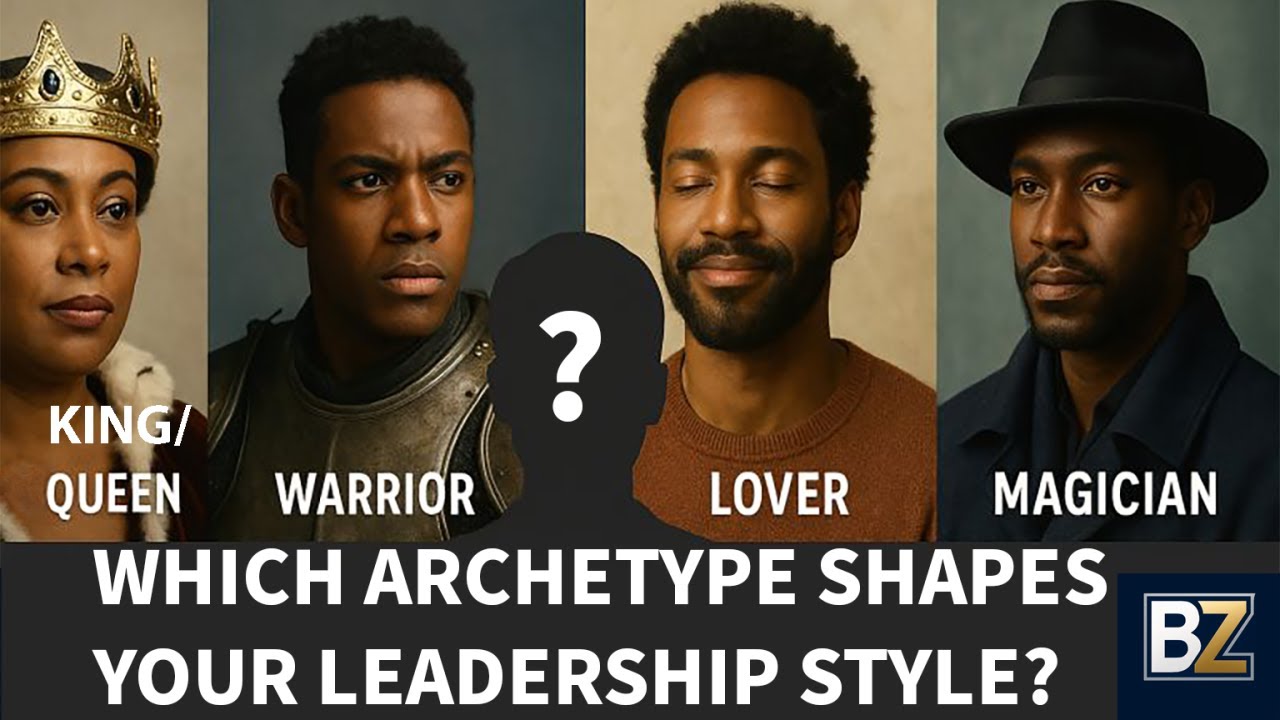
Coach BZ breaks down four leadership archetypes: King/Queen (visionary), Warrior (courageous protector), Magician (strategic innovator), and Lover (empathetic inspirer). Each maps to a situational leadership style and comes with practical actions. Identify your dominant archetype and pick one underdeveloped energy to build this week.
Chapters
Hi, I'm John Maxwell. When the top companies in the world are looking for trainers, speakers, and coaches, there's one name that stands above the rest, and that's Maxwell Leadership. Our certified team members have gotten proven results for companies all over the globe, and our reputation I'm proud to say is second to none. Some of our members have risen to the top of their profession, including the one you're going to meet today. I proudly introduce you to my friend, Bob Fabien Zinga.
Welcome to the Leadership and Success Podcast with your host, Coach BZ. If you need to develop into a better leader, this podcast is for you. If you want to achieve a greater level of success, This podcast is for you. His mentor, Dr. John C. Maxwell, said it best: everything rises and falls on leadership. We hope to inspire you today and provide you with an insight that has the potential to positively impact the trajectory of your life. Welcome to the Leadership and Success Podcast.
All right, uh, thank you for being here. This is, uh, Bizzy, and today is Monday, June 30th. It's the last day of June. I appreciate you being here, and today I'm gonna be talking about one of my articles, which is, uh, which archetype shapes your leadership style. And, uh, this one I wrote back on May 14th, and I'm talking about the 4 archetypes of King, Warrior, Lover, and Magician. My mentor John Maxwell says that leadership development is a lifetime journey of growing and learning, not a quick trip. And if you stop learning, you stop leading. So I'm gonna have my AI agent, Joe and Mary AI, go through and break down This is going to be about 35 minutes or so, and if you have a question for me, please type it in the comment section. Also, let me know where you are joining us from— city, state, region, country. And also, if this podcast is adding value to you, uh, please tag someone you know who might benefit from this, like and subscribe, and I really do appreciate that. All right, Joe and Mary, you guys are next.
Welcome to The Deep Dive. We're here to plunge into some really fascinating topics and pull out the most valuable insights for you, things that help you navigate your world with, well, just more clarity and confidence.
Exactly.
And today we're really embarking on a profound journey, I think, into leadership. It's a path where many of us look for those quick fixes. But the truth is, it's about continuous growth, often challenging growth.
It really is like Dr. John C. Maxwell said, leadership development is a lifetime journey, not a quick trip. And if you stop learning, you stop leading.
That quote just perfectly nails the spirit of what we're exploring today, doesn't it?
Yeah.
Dynamic, sort of evolving understanding of what leading actually means.
It does. And we're diving deep into a really fascinating framework for understanding it. These four archetypes: the king or queen, the warrior, the magician, and the lover. Bob Fabien Zinga outline these, and they're not just, you know, abstract ideas from old books or psychology. They represent distinct, powerful energies, things like vision, courage, innovation, connection, energies any leader can actually learn to embody consciously, strategically.
And that's our mission today, right?
Yeah.
To extract the practical wisdom here. We want to show you how to understand these energies. Yes, but more importantly, how to consciously embody them, and crucially, how to adapt them to whatever situation you're facing.
Spot on.
Think of it like expanding your leadership toolkit, giving you more options, more flexibility, and, well, ultimately more impact.
Yeah, this isn't just theory you file away.
Not at all.
This deep dive, it's designed to be a shortcut, really, to being well-informed about a powerful, adaptable model. We want to help you expand your personal leadership range, foster some real self-awareness, you know, understanding your natural tendencies and where you need to grow, and develop practical skills you can apply, like, right now. Whether you're leading a huge team or steering a tricky project or even just navigating challenges in your own life, you'll find some aha moments here.
We hope so.
Our goal is to equip you to become more adaptable, more effective, um, frankly, more inspiring as a leader, no matter your current role or industry. You might be tired of that one-size-fits-all advice.
Yeah, I think a lot of people are.
Or maybe you're grappling with team dynamics that seem impossible. This framework, it offers a more nuanced way to tackle those things, helps you find some surprising effective responses.
OK, so let's unpack this foundational idea then. The core premise, as I understand it, is that leadership really thrives when we tap into all aspects of ourselves. Yeah. It's not about being just one kind of leader all the time.
Exactly. Or trying to fit yourself into some rigid box. It's about understanding these archetypes aren't fixed roles you step into. They're dynamic. Distinct energies you can consciously choose to embody and deploy.
So you access different parts of your leadership persona as needed.
Precisely. Like a master craftsman choosing the right tool. You wouldn't hammer a nail with a screwdriver. It's the same idea here.
Makes sense.
And these archetypes, they represent the four fundamental pillars of leadership energy. Each brings something vital. We'll get into each one, but just quickly, you've got the King or Queen. That's vision and stability. The big picture setters.
Right.
Then the Warrior, courage, protection, faces challenges head on, defends the team.
Right.
Next, the Magician, innovation, insight, sees patterns others miss, conjures new solutions.
The innovator.
Yeah. And finally, the Lover, empathy, connection, builds bridges, fosters unity, nurtures growth. Each is powerful alone, but the real magic is in how they work together.
What's really interesting to me is how this connects directly to situational leadership theory. A lot of our listeners might know that one.
Absolutely.
Situational leadership tells us effective leaders adapt, right? They don't have just one style. They know a rookie needs different guidance than a seasoned pro.
Exactly. They might use a telling style in a crisis—clear, direct instructions—or coaching to build skills, supporting to boost confidence, or delegating when the team is highly competent and motivated. So how do the archetypes fit into that? Well, that's the beauty of it. While each archetype has a primary energy, a skilled leader doesn't just pick one and stick with it. They dynamically shift styles based on the team's readiness and the situation. Ah, I see. These archetypes provide a framework for that adaptability, a kind of mental model, an inner compass to figure out which energy fits which situation. For instance, Warrior energy might perfectly align with a Telling style in a crisis. Demands immediate unified action. Makes sense. But in another scenario, that same Warrior might lean into Coaching, pushing the team to overcome a challenge by developing new skills. It's all about intentional flexibility.
So the why behind looking at these archetypes, what does it mean for you, the listener? It really broadens your leadership range, doesn't it?
Massively. It really does. It moves you beyond that one-size-fits-all approach, which let's be honest, often falls short today. Things are just too complex, too dynamic. Totally. Instead, it encourages a more nuanced, flexible, uh, a more powerful application of your different strengths. It's knowing when to be the visionary, the king queen charting the course, right? When to be the courageous warrior rallying the troops, when to be the innovative magician finding new paths, and when to be the empathetic lover building those unbreakable bonds.
That versatility, that ability to pivot and integrate. Yeah, that's what sets great leaders apart.
Exactly. It allows you to lead effectively. Yes, but also authentically from a place of real self-awareness.
Okay, so let's zoom in on the first one then. The King or Queen, the Sovereign Visionary.
Yes. Yeah.
Their core strengths: vision, stability, wise authority. When chaos hits, a King/Queen leader They don't panic. They're calm under pressure. A steady hand. Precisely. They set the grand direction, establish that overarching why, the purpose, the mission for the team. They can see the forest, not just the trees. And they provide that crucial sense of purpose, that long-term direction that anchors everyone, especially when the path ahead is murky.
And they project this quiet confidence.
Yeah, but it's not arrogance. It comes from a deep understanding of where things need to go, that desired future state.
And that vision, and it often translates into a specific situational leadership style, right? You mentioned supporting or delegating.
That's typically how they operate. Yes. Yeah. Because their role isn't micromanaging, it's clarifying the destination and then empowering experienced, competent teams to execute. So trust is key. Huge. They trust their team's competence. They define the what, the desired outcome, the strategic intent, and then they delegate the how. This empowers people, fosters creativity, accountability, and stops the leader being a bottleneck.
Exactly.
It's leadership through inspiration and Trust, not control.
Can you give us a real-world example?
Sure. Think about a US Navy admiral navigating uncharted waters, maybe a critical mission, no clear playbook. Their role isn't telling every ship captain exactly where to turn. Right. Instead, they provide clear strategic intent, the mission objective, the long-term goal, the expectable risks. Then they trust their highly trained captains and crews to adapt tactics on the ground, make real-time calls within that framework.
So the Admiral sets the destination, the Captains navigate the immediate storms.
You got it. It's profound delegation and trust.
And in the private sector?
Think of a CISO, a Chief Information Security Officer. They're responsible for the whole organization's cybersecurity strategy. They might chart a bold, multi-year strategy, the vision for protecting digital assets. Okay. But then they delegate the day-to-day tactics—choosing specific tools, configuring firewalls, responding to malware alerts to their expert teams, security engineers, analysts, They're not in the trenches—
Yeah. —writing code.
No. They provide the high-level roadmap and trust their specialized forces to execute effectively. They empower them with autonomy within that strategic vision.
This approach seems deeply rooted in established leadership wisdom. Like that Maxwell quote, "A leader is one who knows the way, goes the way, and shows the way." Yes, that captures the sovereign perfectly.
They aren't just pathfinders who announce the direction; They model the behavior. They embody the values and commitment needed.
They walk the talk. Leadership by example, not just directive. Exactly. And that connects to what Brian Tracy MBA says about leaders being innovative, entrepreneurial, and future-oriented. It's not just liking new tech, is it?
No, it's more fundamental. It's a relentless, almost uncomfortable drive to question everything. This entrepreneurial mindset is crucial for sovereigns. It lets them spot emerging trends, anticipate future challenges others miss, and inspire the team towards those big, long-term goals.
Their own goals, right?
They're not happy with the status quo. They don't just react to the future, they actively try to shape it. They see 10x potential where others see small improvements.
Now, this is where it gets really interesting on the self-awareness side.
Darren Hardy's warning, "As a leader, I am my only constraint"—potent, isn't it?
It highlights that crucial aspect of self-awareness and personal responsibility for the sovereign. A true sovereign isn't just projecting strength outward, They recognize their own limitations, biases, weaknesses.
And they work on them.
Proactively. To remove those obstacles, not just for themselves, but for the whole organization. They understand their internal state directly impacts the team's external reality. That's huge.
It links right into Jim Rohn's advice. You must take personal responsibility. You can change yourself. Absolutely.
The sovereign gets that continuous self-improvement isn't just a nice-to-have. It's fundamental. Their growth enables the organization's growth. If the leader stagnates—
The organization eventually does too. It's like leadership physics.
The leader's energy transmits to the team. They lead by evolving themselves.
Which brings us to Maxwell's Law of the Lid.
His first law, yeah. How well you lead determines how well you succeed. It reinforces that the leader's capacity, their vision, self-awareness, commitment to growth sets the ultimate ceiling for the team.
A narrow lid means limited growth.
Right. But a constantly expanding lid means boundless possibilities, an environment where innovation and success can really flourish.
And circling back to Maxwell's broader measure of leadership, it's not about titles.
No, it's about influencing and advancing others. The Sovereign exemplifies this. Their success isn't just personal achievement or power; it's how much they enable and elevate those they lead. Building individuals, fostering collective growth—their true legacy is the team's capability.
So, for our listeners, how can you cultivate this visionary stability and empowering presence? Say, this week?
Okay, first, actively cultivate your vision. Go beyond simple goals. Set stretch goals—ambitious but achievable targets. Then, communicate them with crystal clarity. Not just the what, but the why. Exactly. Articulate why it matters. Connect it to a larger purpose. Make sure everyone knows where you're going and why the journey's important.
Second, you mentioned delegation. Practice empowering delegation.
Crucial for the King-Queen. Define the what, the outcome, the objective precisely. Then truly trust others to own the how.
Resist the urge to dictate every step. Yes.
Give your team autonomy, space to innovate, even make mistakes and learn. It builds capability and ownership far better than micromanagement.
Third, actively seek feedback.
Mm-hmm. Even if it feels counterintuitive for a sovereign.
True authority comes from wisdom, and wisdom often comes from humble listening. Ask peers, mentors, even your team for honest, constructive feedback. On your vision, your style.
Are you clear, inspiring, empowering?
Right. It takes courage, but it's invaluable for growth.
And finally, build habits of continuous learning.
Jim Rohn's point: vital for the sovereign too. Disciplined self-education, reading widely, staying informed, engaging diverse perspective, and importantly, practice mindfulness. Staying grounded, centered, calm, even amidst chaos. That allows you to maintain that stable, wise presence. So as you reflect, what grand direction are you setting this week, and how can you delegate more effectively?
Okay, let's move on to archetype number 2, the Warrior, the courageous protector.
Yes. And the warrior mindset— Tony Robbins nails it: "Every problem is a gift. Without problems, we would not grow." They see obstacles differently. Not as roadblocks. No, as opportunities. To build strength, test resilience, forge unity, prove capability. Difficulty doesn't deter them; it energizes them.
It's about reframing the narrative. Well— Les Brown echoes that: "Be determined to handle any challenge in a way that will make you grow." Right.
The warrior doesn't just endure adversity; they seek growth through it. They welcome the crucible because they know it forges something stronger, individually and collectively. A setback isn't failure; it's data, a learning point.
And this involves embracing discomfort. Garen Hardy, quoting Jim Rohn, "Don't wish it were easier; wish you were better." That's the essence.
Not complaining about external circumstances but an unwavering commitment to internal improvement. Self-mastery.
So if a team faces a high-stakes deadline, a bug delaying a launch—
The Warrior leader doesn't complain. They double down on improving their own skills, lead by example and work ethic, rally the group, focus on what can be done, not what can't.
And Brian Tracy's mantra: "Never complain, never explain." Resist the temptation to defend yourself or make excuses.
Powerful, isn't it? The Warrior's focus is action, responsibility, accountability. When things go wrong, no finger-pointing. Own it. Act decisively. Look for solutions.
Builds immense credibility and trust. Absolutely.
The team knows their leader won't shy away from the tough stuff. It's extreme ownership.
General Colin Powell's advice fits perfectly here too, about solving problems. Yes.
Leadership is solving problems. The day soldiers stop bringing you their problems is the day you have stopped leading them. A true warrior leader creates trust.
So people feel safe to report issues, even admit mistakes.
Without fear of blame. The Warrior stands between the team and external threats, absorbs blows, clears the path, ensures people feel secure enough to be honest about challenges.
So practically, how can you embody this Warrior energy?
First, build mental and physical toughness. Not just the gym, but deliberate resilience training. Stress inoculation, emergency drills, putting yourself in uncomfortable but Safe learning spots.
Hones your ability to perform under pressure. Exactly.
Stay calm, focused when stakes are high.
Face difficult realities. Second, hone decisiveness.
Warriors are known for clear, concise communication, swift action, especially under pressure. Practice making quick, well-reasoned decisions, even with incomplete info.
Understand risk, prioritize, communicate clearly. Right.
You won't always be perfect, but you build the muscle of informed, timely action.
Third, when setbacks happen, consciously reframe them.
Like Robbins and Brown suggest, see them as learning experiences, growth opportunities. Don't dwell or blame. Extract the lesson. Ask, what did we learn? How can we apply that? What strength did this reveal? Adversity becomes a teacher.
Fourth, get feedback on your crisis leadership style.
Takes humility and courage, but it's invaluable. After a tough period, ask trusted mentors, teammates, how did I do? Was I Clear? Did I inspire confidence? What could I have done better? Refine your approach.
And finally, practice humility. Remember Powell's warning. Yes.
Failing to address concerns, letting problems hide, that's a leadership failure. Carry forward the warrior commitment. Always improve your craft. Never shirk responsibility. Practice extreme ownership. Own outcomes, good or bad. Look for solutions, not excuses.
So the question for you is, When do you need the Warrior's resilience, problem-solving focus, and extreme ownership this week? Where can you stand firm and protect your team?
Okay, next up, the Magician archetype—the strategic innovator. Ah, the creative force. Exactly. This archetype is all about insight, strategy, creativity. Magicians are the deep thinkers. They relentlessly study systems, master complex skills, and see patterns others don't. Uncannily so. They look beyond the surface, understand the underlying mechanics. They constantly ask why and what if. They synthesize disparate info into to a coherent, innovative path forward.
And their situational style. You mentioned coaching and supportive. Often, yes.
Yeah. The Magician doesn't just solve problems or dictate solutions; they nurture the team's competence through teaching, deep mentoring, inspiring curiosity, encouraging experimentation. They want the team to become mini magicians. Precisely. Able to uncover their own insights, conjure their own solutions. Sustainable innovation comes from empowering everyone to think strategically. Can you give an example?
Mm-hmm. Like the Navy intelligence officer.
Perfect example. Their role often involved developing entirely new tactics or tech solutions. Countering a new cyber threat, deciphering complex comms—that demands intense Magician energy.
Analyzing data, finding hidden connections, devising innovative approaches.
Exactly. Constantly iterating, predicting, pushing boundaries in that unseen battlespace.
Or the CISO again, pioneering a new security framework. Right.
Moving beyond traditional defenses to proactive threat hunting, predictive analytics. They use Magician energy to design robust, forward-thinking defenses. Then they use a supportive style to mentor analysts.
Empowering them to experiment, prototype, adapt the framework.
Yes. Building a culture of continuous improvement, curiosity, proactive defense, where everyone's encouraged to think like an innovator.
The Magician sounds like a true champion of change. Brian Tracy, MBA again: Leaders are innovative, entrepreneurial, and future-oriented.
Absolutely essential for the Magician. Not content with the status quo or just optimizing. Always looking to disrupt, reinvent, push boundaries. They thrive in ambiguity, see it as fertile ground, not a source of anxiety.
Darren Hardy's advice seems crucial here too: If your plan isn't working, change the plan, not the goal.
That's the Strategist's flexibility in action. When a project stalls—unforeseen tech issues, new threats—the Magician leader doesn't abandon the goal or cling rigidly to a failing method.
They rework the approach, pivot tactics, redesign the process.
Exactly, while keeping the goal intact. That ability to iterate, learn from failure, adapt the path without losing sight of the destination—that's their power.
Tony Robbins highlighted the gap between knowing and doing. Lots of people know what to do, but few actually do what they know.
And magicians bridge that gap. They turn ideas, theoretical knowledge into tangible results, actionable strategies. They don't just collect info or have brilliant insights in a vacuum.
They apply it relentlessly for real-world impact, overcoming analysis paralysis.
Yes, their brilliance is in the doing, not just the seeing.
And Jim Rohn's point about self-education seems particularly vital here. Formal education will make you a living. Self-education will make you a fortune.
Resonates deeply with the Magician's spirit. Lifelong learning is crucial, especially in fast-moving fields like tech, cybersecurity. Constant self-teaching, staying ahead, mastering new skills—it's not just advantageous, it's necessary.
The world keeps moving, so their knowledge must too. Exactly. So how can you, our listener, develop your Magician skills?
First, intentionally carve out dedicated time for learning and experimentation. It's not optional; it's a strategic investment.
Like an hour a week for research, hackathons, wargames, things like that.
Make learning and exploration non-negotiable, not just if you have spare time. Second, actively encourage your team to propose creative solutions, prototype ideas, create psychological safety for innovation where failure is a learning opportunity, not a dead end. Empower everyone's inner magician. Welcome questions, challenge convention, empower divergent thinking.
Third, develop a diverse network. Mentors, cross-functional experts. Broaden your perspective.
Engage with people from different fields, industries, backgrounds. Get fresh insights, see new patterns you'd miss in your own silo.
Magicians thrive on cross-pollination. Fourth, use project postmortems strategically. For iteration, not blame.
Rigorously analyze what worked, what didn't. Don't just move on. Diligently apply those lessons. That systematic review is pure Magician energy turning experience into wisdom, refining strategic intuition.
And finally, blend creativity with a disciplined plan.
Ideas are great, but the Magician truly shines turning opportunities into strategic wins through careful, methodical planning and execution. Imagination plus implementation.
So how can you foster more innovation, strategic thinking, and continuous learning this week? What system will you study more deeply?
Okay, on to our fourth archetype. The Lover, the empathetic inspirer.
This sounds like the heart of leadership. It really is.
This leader operates through profound empathy, deep connection, effective, authentic communication. The Lover builds genuine rapport, fosters unbreakable trust, cultivates lasting loyalty.
They get that leadership is fundamentally about people.
Exactly. Their well-being, growth, sense of belonging, not just tasks and metrics. They lead with heart. But importantly, not at the expense of results.
And their situational style. Yeah. Supportive and coaching. Often, yes. Yeah.
A supportive, encouraging approach when team members are motivated but lack confidence, providing reassurance, a gentle boost, a safe space to try, maybe stumble, or a skillful coaching style when helping the team develop skills or overcome setbacks. Guidance with a caring, patient demeanor focused on the individual's development, not just the immediate outcome. Seeing potential and nurturing it.
Where do we see this in action? You mentioned the Navy again.
Yeah. A commanding officer who regularly checks on crew welfare, morale, personal struggles, or passionately celebrates achievements.
That's Lover energy.
Demonstrating genuine care beyond performance metrics.
Exactly. Visiting a sick crew member, ensuring families are supported during deployments, seeing the human behind the uniform.
And in cybersecurity. The CISO investing in training and rewarding collaboration.
Yes, that's not just strategically smart; it's building a security-conscious culture rooted in care. Investing in mental health resources for burnt-out analysts, creating mentorship programs.
They understand that a strong culture built on empathy and trust leads to better security outcomes. Absolutely.
People are more engaged, collaborative, more likely to report issues without fear.
The Lover really shines when nurturing individuals through challenges, doesn't it? Like the nervous junior officer or the frustrated cyber team.
Spot on.
Guiding them through anxieties, maybe sharing your own past vulnerabilities, boosting confidence. Or helping a team process disappointment after attacks, celebrate small wins, find renewed motivation.
Being present for their emotional journey, not just the professional one.
Yes, helping them find their inner strength.
Brian Tracy, MBA, said, The best leaders have a high consideration factor. They really care about their people.
It's more than just being nice. Much more. It's showing courtesy, genuine caring, kindness, while maintaining high standards and accountability. A delicate balance, warmth and rigor. A firm hand guided by a compassionate heart. People need to know you care before they care what you know.
And Maxwell's point about servant leadership fits the Lover perfectly. The bottom line, isn't how far we advance ourselves, but how far we advance others.
Lover leaders embody this. Their success is measured by the team's growth, well-being, advancement, not their own promotions or power. They lead from service, enabling others to reach their full potential, often putting team needs first.
Darren Hardy added that layer. Everyone is learning how to think, act, and react from you.
Lead by example. Profoundly true for the lover. By consistently modeling empathy, inclusiveness, integrity, genuine concern, they set the tone, create an environment where these values are expected, reciprocated, a virtuous cycle of care and respect.
And Powell's insight about solving problems, building trust, that applies here too.
Powerfully. Lover leaders are proactive problem solvers, but people first. Solving interpersonal conflicts, clearing bureaucratic obstacles, ensuring everyone feels valued, heard, understood. They don't just listen passively; they respond. Show concerns matter.
The Golden Rule seems like a guiding principle here. Manage others the way you would like to be managed. Simple, yet profound.
Valuing ideas, respecting feelings, communicating transparently, treating people with dignity and fairness. Always. Doing that significantly amplifies loyalty, psychological safety, collaboration. People thrive when they feel genuinely cared for and respected.
So, how can you cultivate more Lover energy?
First, hone your emotional intelligence.
It's a lifelong practice. Actively listen in every conversation. Seek to understand, don't just wait to respond. Ask open-ended questions. "Tell me more." "How does it make you feel?" Build profound understanding. Second, consistently show appreciation.
Not just for big wins.
Exactly! Public praise for small wins. Acknowledge effort and progress, even small steps. Offer personal encouragement during challenges. Acknowledging effort builds huge morale. Be specific, timely, sincere.
Third, build your team with meaningful rituals.
Could be regular chickens that go beyond tasks to explore well-being. Team debriefs focused on collective learning, shared experience, informal social gatherings to foster connection. These shared experiences build bonds beyond work tasks. Tasks. Create community.
For fourth, volunteer for mentorship roles.
Guiding someone strengthens your empathetic muscles, deepens your understanding of others' journeys. You often learn as much as you teach. Builds your capacity to serve and connect.
And finally, keep reiterating the golden rule in daily interactions.
Valuing people's ideas, feelings, treating them how you'd want to be treated, it amplifies loyalty and collaboration. It's not just feel-good, it's a strategic imperative for resilient, high-performing teams. So, how can you deepen connections, inspire loyalty, cultivate empathy this week? What small act of care can you extend?
Okay, let's bring it all together now—the so what?—of this deep dive into archetypes. Right.
The core message is this: true leadership isn't about fitting one rigid box. It's not being only the King/Queen or only the Warrior. It's about dynamic adaptability and almost artistic fluidity.
Skilled leaders don't just have these energies; they shift between them fluidly, based on the situation's demands and, crucially, the team's readiness and needs.
That flexibility, that ability to access and deploy different energies at will, that's the ultimate key to impactful, sustainable leadership today.
Bob Fabien B.Z.
Zinga gives us a powerful call to action here. He does.
He challenges you, the listener, to reflect deeply. Which archetype is your natural strength? The one you lean into easily, and maybe more importantly, which one is underdeveloped or less comfortable for you right now.
That self-awareness is the first step to growth.
Crucial first step. Then remember, situational leadership is all about flexibility. Once you identify an underdeveloped trait, Beezy encourages you. Choose just one archetypal trait you want to grow this week.
Just one. Just one.
Maybe the Sovereign's visionary confidence, the Warrior's bold resolve, the Magician's strategic ingenuity, or the lover's empathetic connection.
Then set a small, tangible goal for this week to practice embodying that energy. Right.
Don't aim for perfection or a total overhaul. Aim for conscious progress, a single deliberate action. And as you do it, ask yourself, how might consciously embodying this energy, maybe an uncomfortable one, change my impact in a real scenario I'm facing? What new opportunities might it unlock?
To really deepen this, let's look at some timeless wisdom from the "Think on these things" section of our source material. These ground the archetypes philosophically.
Yes, they provide a deeper layer, echoing the essence of adaptive, humble, effective leadership across time and culture.
Let's start with Proverbs 27:23: "Be sure you know the condition of your flocks; give careful attention to your herds." Simple advice for a shepherd, but the leadership insight?
It's about more than just metrics or KPIs. It's a consistent, personal, attentive understanding of the actual state of your people, your flock. Great leaders tailor their approach by staying closely attuned to their team's needs and conditions. Profound situational awareness and genuine care.
So for you listening, yeah, how often do you check the health of your team beyond the spreadsheet? Morale, trust, stress. What systems or rhythms can you use to consistently know the condition deeply.
Could be dedicated one-on-ones, skip levels, just creating an open-door environment where people feel safe sharing their realities. Being present, discerning, like a good shepherd. Next, Ecclesiastes 3:1.
There is a time for everything and a season for every activity under the heavens. Speaks to life's rhythm.
The leadership insight. Effective leadership needs discernment and flexibility. Knowing when to lead with firm structure, warrior energy maybe. —when to coach , when to support or delegate —timing your archetypal energy, understanding the season your team or project is in.
So ask yourself: are you in a season of building, pruning, or sustaining? Where might you be forcing timing, clinging to a style from a previous season that doesn't fit now?
Requires honest self-assessment, letting go of what worked before if it no longer serves, aligning with present reality.
Then 1 Corinthians 9:22, I have become all things to all people so that by all possible means I might save some. Paul modeling adaptive leadership. The insight is clear.
Truly effective leaders customize their communication and style to serve the diverse people they lead, not expecting everyone to adapt to them, meeting people where they are, understanding their unique needs, motivations.
So how effectively do you adapt your style? Do you speak their language? Are you willing to adjust your preferences, step out of your comfort zone for the greater purpose and team well-being?
That's where personal sacrifice and service really come in.
A cornerstone of judgment from James 1:5: If any of you lacks wisdom, you should ask God.
The insight: sound judgment, vital for situational leadership, starts with humility, a willingness to seek guidance, not just divine wisdom, but acknowledging you don't have all the answers, being open to counsel, spiritual and human.
Ask yourself, Are you seeking wisdom daily or relying too much on your own insight, maybe out of pride? Who are your trusted advisors, mentors? What decision now needs a pause to ask for clarity from a higher power, a mentor, stakeholders?
Crucial questions.
Now, Philippians 2:3-4. Yeah. Do nothing out of selfish ambition. Rather, in humility, value others above yourselves. Speaks right to the servant leader, the lover archetype.
The insight: a true leader considers others' developmental needs first. Adjusts their approach not to exert power or boost ego but to genuinely elevate and empower.
So reflect, where are you maybe unconsciously making leadership about you, your agenda, recognition methods instead of the mission and team? How can you better prioritize others' development, recognition, growth, even if it means stepping back, giving away credit? Where might pride be limiting someone else?
An ongoing self-check for every leader.
Essential. Isaiah 11:2 offers a holistic view. The Spirit of the Lord will rest on him, the Spirit of wisdom and of understanding. The spirit of counsel and of might.
Beautifully captures the blend needed for situational leadership. Wisdom for foresight, understanding for empathy, counsel for collaboration, might for action, reverence for humility and ethics. A full spectrum of inner resources.
Ask yourself, which of these spirits do you naturally lead with—wisdom, might—and which is underdeveloped? How can you cultivate more spiritual depth and discernment? Access both strength and understanding in complex situations. Become a well-rounded vessel.
Now, an insightful addition from listener Calvin D. Scott: Proverbs 16:32, "Better a patient person than a warrior, one with self-control than one who takes a city." A profound counterpoint to the warrior. And complement. The insight is foundational. True leadership begins with self-mastery. Before leading others, before taking the city, govern yourself. Patience, restraint, emotional intelligence, 'External wins are fleeting without internal discipline.' So think—
what tests your patience? A frustrating team member? Slow bureaucracy? Setbacks? How do you respond? Are you more focused on external wins than internal discipline, emotional resilience? What daily practices can help you grow in composure, lead from calm, not reaction?
'The greatest battles are often won within.' Powerful reminder.
And another excellent addition from Calvin D. Scott, capturing the journey. Philippians 3:1-2. Not that I have already obtained all this, but I press on.
The insight: leadership isn't perfection, it's pursuit. We're all works in progress, pressing forward daily toward higher impact, purpose, growth. An ongoing, messy, rewarding process.
So where do you need to give yourself grace? Acknowledge you haven't arrived. Perfection's an illusion while still pressing on intentionally. What area are you pressing on in right now despite not having perfected it?
And crucially, who in your life, team, family, community could benefit from seeing your perseverance and progress, not waiting for illusory perfection? Your journey, challenges and all, can be profoundly inspiring.
So this deep dive, it's shown us the power of these 4 archetypes: King, Queen, Warrior, Magician, Lover. And maybe more importantly, the crucial need for situational adaptability. Leadership isn't fixed. It's dynamic. Continuous learning, self-awareness, skillful integration of these energies.
It's about becoming the leader the moment demands, not just the one you're most comfortable being.
As we wrap up, consider this final thought: beyond identifying your natural archetype, what single, seemingly small shift in your daily approach, inspired by an underdeveloped archetype we talked about, could create the most surprising positive ripple effect this week?
How might embracing just one uncomfortable energy—maybe being a bit more visionary, or more courageously decisive, or daring to innovate a small process or consciously practicing deeper empathy unlock a new level of influence for you.
Take that challenge. Observe what happens. Be open to the unexpected.
We really encourage you to continue your own deep dive into these concepts. Apply them thoughtfully. See the impact. Share your experiences. This leadership journey is truly a lifetime of growing and learning. We hope this deep dive has given you some valuable tools and inspiration for the remarkable path ahead.
Thank you so much for watching. So really, the question today is which archetype shapes your leadership style? Do you mostly use the King, Queen energy, Warrior, Lover, or Magician? And I think part of being a leader is being self-aware first and foremost. Know thyself, right? And then once you do that, is being aware of everybody else around you, your circumstances, your surrounding, and how people around you feel. And understanding the energy of others and then how you may need to model, change, or adapt in order to work together toward the same and greater purpose. All right, so that's it for today. Um, let me check if there's any question on LinkedIn. I don't see any. I don't see any on YouTube either. So, uh, we're gonna be back here tomorrow, uh, 6:30 AM Pacific Time, 9:30 AM Eastern Time. And, uh, again, I want these live podcasts to be engaging. Please let us know where you are joining us from, what city, state, country, and so forth. And also, if you have a question for me, type it in the question section, and I'm gonna check it out before I start my podcast tomorrow. So even if you watch it after the fact, I'm gonna be able to read every question, every comment. Just to make sure, tag, tag me as well so I make sure not to miss your question. And then also, if you can think of someone in your network, a friend, a family member, a cousin, or somebody who might benefit from the content of this podcast, please make sure to tag them. And like, subscribe, engage, and I really do appreciate that. So see you guys tomorrow.
Imagine gaining the leadership skills that could redefine your career. Join Coach BZ on the Leadership and Success Podcast, where each episode delivers practical insights from world-class speakers military leaders, and industry experts. We dive deep into what matters most: building resilient teams, leading through uncertainty, and navigating complexity with clarity and confidence. Every conversation is crafted for aspiring leaders like you who are ready to grow, lead, and make a lasting impact. Don't miss our powerful live sessions and recent highlights. Michelle Hayward on on building diverse, high-performing technical teams. Anne Leslie on leading through global complexity and cybersecurity risk. Ron Carpenter AI exploring faith, resilience, and AI-powered leadership. Colonel Michelle G.I. Gardner-Intz on commanding influence from the battlefield to the boardroom. Chris Robinson on shifting from drift to drive in life and leadership. And Coach Enrique Acosta Gonzalez on mentorship legacy, and heart-centered leadership. Ready to level up your leadership journey? Tune in on Spotify, Apple, Audible Podcasts, YouTube Live, and LinkedIn Live. Join the movement toward leadership excellence. Listen now and start transforming your success.
Thank you for listening to the Leadership and Success Podcast with your host, Coach BZ. If you like what you heard, please please subscribe to our channels and come back for more wisdom nuggets on how you may develop into a better leader and achieve greater levels of success. Leadership is the most critical skill. The world will always need leaders to lead others, deploy the next disruptive technology, or execute a business strategy. You may as well decide on counting yourself among the 21st century leaders. See you right here next time on the Leadership and Success Podcast with Coach
More from Bob

S250:E4🎙️LIVE 🇺🇸America 250: President Barack Obama Leadership, Service, and the Power of Hope






S5:E157🎙️ LIVE with CMD CMSgt Dennis L. Fritz, USAF (Ret.)(Multi Tracks Audio)



S5:E156🎙️ LIVE 🇪🇸 Leadership Lessons from the FIFA World Cup 2026 Champions (Multi Tracks Audio)

S250:E3🎙️ LIVE Leadership Lessons from America’s First Documented Family of African Descent 🇺🇸📖