S4:E21 🎙️LIVE: Leadership Is Not One-Size-Fits-All
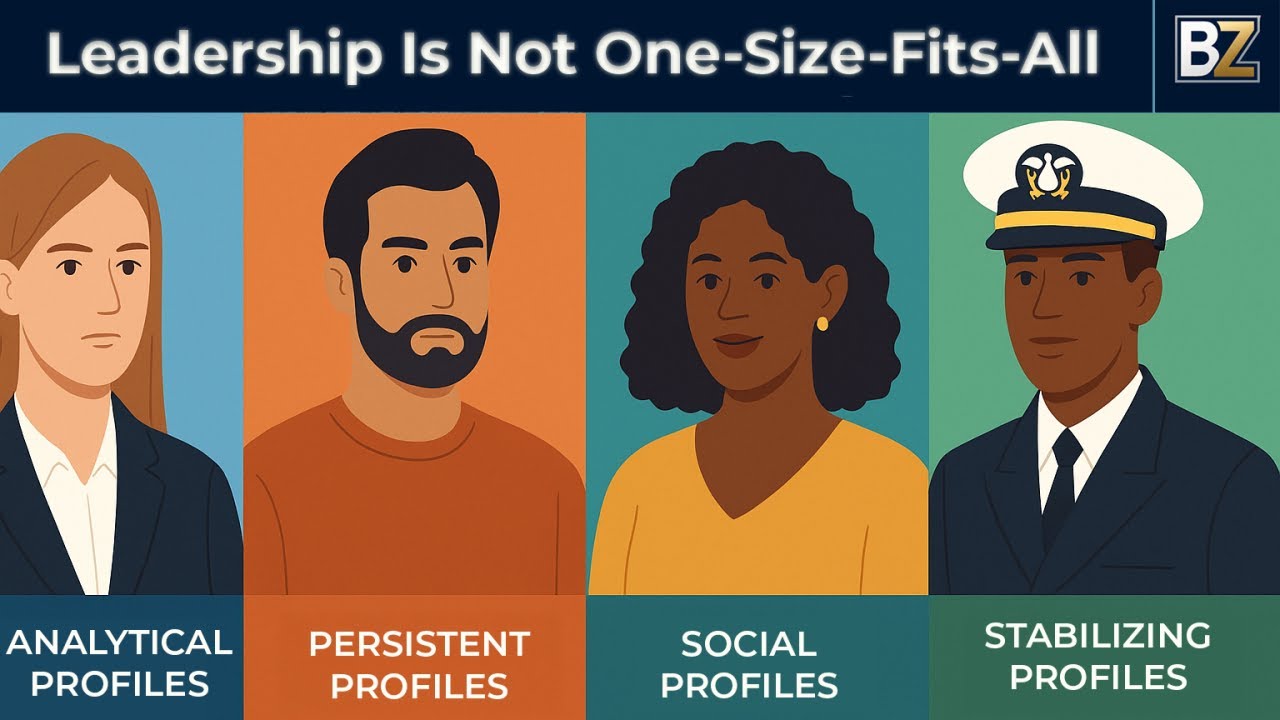
Coach BZ and co-hosts explore why effective leadership isn't a formula but a personal blueprint. They use the Predictive Index framework to show how leaders can adapt their style to four work-style groups: Analytical, Persistent, Social, and Stabilizing. Real examples include a Navy officer and a Silicon Valley engineer learning to lead authentically rather than forcing a rigid mold.
Chapters
trainers, speakers, and coaches, there's one name that stands out. Hi, I'm John Maxwell. When the top companies in the world are looking for trainers, speakers, and coaches, there's one name that stands above the rest, and that's Maxwell Leadership. Our certified team members have gotten proven results for companies all over the globe, and our reputation, I'm proud to say, is second to none. Some of our members have risen to the top of their profession, including the one you're going to meet today. I proudly introduce you to my friend Bob Fabien Zinga.
Welcome to the Leadership and Success Podcast with your host, Coach BZ. If you need to develop into a better leader, this podcast is for you. If you want to achieve a greater level of success, this podcast is for you. His mentor, Dr. John C. Maxwell, said it best: everything rises and falls on leadership. We hope to inspire you today and provide you with an insight that has the potential to positively impact the trajectory of your life. Welcome to the Leadership and Success Podcast.
Imagine gaining the leadership skills that could redefine your career. Join Coach BZ on the Leadership and Success Podcast, where each episode delivers practical insights from world-class speakers, military leaders, and industry experts. We dive deep into what matters most. Building resilient teams, leading through uncertainty, and navigating complexity with clarity and confidence. Every conversation is crafted for aspiring leaders like you who are ready to grow, lead, and make a lasting impact. Don't miss our powerful live sessions and recent highlights. Michelle Hayward on building diverse, high-performing technical teams. Anne Leslie on leading through global complexity and cybersecurity risk. Ron Carpenter, AI exploring faith, resilience, and AI-powered leadership. Colonel Michelle G.I. Gardner, INS, on commanding influence from the battlefield to the boardroom. Chris Robinson on shifting from drift to drive in life and leadership. And Coach Enrique Acosta Gonzalez on mentorship, legacy, and heart-centered leadership. Ready to level up your leadership journey? Tune in on Spotify, Apple, Audible Podcasts, YouTube Live, and LinkedIn Live. Join the movement toward leadership excellence. Listen now and start transforming your success.
All right everyone, thank you so much for being here with me. Um, today is Tuesday, uh, July the 1st, right? All right, uh, thank you so much. And, uh, we're gonna be, uh, talking today, uh, about, uh, one of the articles I wrote. Let me share my screen here. Which is, um, Leadership Is Not One Size Fits All, but a Blueprint for Unique Leadership. So we are going to be breaking this out into, uh, 4 categories of profile: analytical profile, persistent, social, and stabilizing profiles. And it's important as a leader for you to know kind of where you fall into and also what the profile of the members on your teams are so that you can learn how to efficiently work with members of your team and your organization. So again, in the comments, please let me know where you are joining us from, what city, country, state, region. If you have any question for me, please go ahead and type the question in the chat. And also, if this podcast is adding value to you, please like and repost and also tag your friends, somebody you know in your circle of influence who might benefit from the podcast. I'm not gonna let my AI agent, John Mary AI, break down this lesson for us. So I will be back in about 25 minutes or so.
Welcome to The Deep Dive, the show where we really try to unpack complex ideas.
Yeah, distill them down, find those useful insights, and hopefully have a bit of fun too.
Exactly. And today we're embarking on a pretty profound journey, actually, right into the heart of leadership.
OK.
So here's a question for you, our listener, just to get us started.
Let's hear it.
What does leadership really mean to you?
Good one.
Is it, you know, trying to fit into some kind of predefined box, a rigid ideal?
That pressure, right? To be what you think a leader is supposed to be.
Yeah, that pressure. Do you feel like you have to conform to a mold that maybe doesn't quite fit? Or is it something else? Something more personal, more adaptable?
Something uniquely you.
Precisely. Because that's a foundational question. So many people, especially when they first step up, feel this huge pressure.
Oh, absolutely. We see it everywhere, don't we? Totally different environments.
Like what?
Well, think about a brand new US Navy junior officer.
Mm-hmm.
First command, maybe a young lieutenant leading sailors who've been doing the job for years.
Okay. Yeah, I can picture that. High pressure.
Or picture a brilliant Silicon Valley security engineer. Amazing technically, right? But suddenly they're leading a team of other super sharp, but maybe very different people.
Right. Different skill set entirely.
Exactly. They all face the same challenge. It's very human. How do I lead without losing who I am, without feeling like I have to put on an act or become some kind of, I don't know, leadership caricature? That's it. That internal struggle, trying to square who you are with who you think you should be as a leader. It's so common.
And that's exactly what we're diving deep into today. Our mission really is to explore this powerful idea, which is that leadership is not and really should not be a one-size-fits-all thing. Okay.
So what is it then?
It's more about crafting a unique blueprint, something that's distinctly yours, using your authentic self to make a real impact.
And our main source for this exploration is a really compelling article. It's titled "Led: Leadership Is Not One Size Fits All: A Blueprint for Unique Leadership." And it's by Bob Fabien Zinga.
He's got this interesting background.
Yeah, he's a respected cybersecurity executive, but also a US Navy commander.
So military structure meets tech innovation.
Exactly. That dual perspective gives him a really practical, fascinating lens on leadership. And the article itself, it's rich. It weaves together insights from modern psychological assessment.
Like personality tests.
Sort of, yeah. Behavioral assessments, plus timeless philosophy, wisdom from modern leadership gurus, even biblical principles. It's quite comprehensive.
And he doesn't just talk theory, right? He brings in his own experiences.
Absolutely. Practical tips, real stories from his own journey. We'll be pulling from those.
So our goal today is to distill the core insights from all this. We want to help you, our listener, figure out not just what your unique strengths are, but how to genuinely use them.
How to adapt your style to different teams, different situations.
Right. And ultimately become, you know, a more impactful leader, more influential, more inspiring.
Think of this deep dive as your shortcut, maybe. Your guide to building your own authentic leadership blueprint, one that fits you.
And why does this matter? Why should you care about crafting this blueprint?
Good question. Because whether you're officially in charge of a team, or maybe just trying to influence your colleagues on a project—
Or even just aiming for personal growth, right?
Exactly. Understanding your own style and, crucially, how it meshes or clashes with others is absolutely essential.
Essential for what, though?
For hitting your goals, for building real collaboration, and honestly, for creating those aha moments.
Well, it's for yourself.
For yourself, definitely, as you figure things out. Yeah. But also for the people around you. When you lead better, everyone benefits. It shifts you from just managing tasks to actually leading people.
Got it.
Okay, let's dig into this core idea then. Leadership is not one-size-fits-all.
It sounds simple, but it challenges a lot of traditional thinking.
For sure. For so long, there's been this pervasive idea pushed by society, maybe even some corporate training.
Oh, definitely some corporate training.
That there's one right way to lead. You know, the charismatic leader, always commanding the room.
Or the decisive leader, always making snap judgments.
Right. Like there's only one successful archetype and everyone else needs to copy it.
Which creates so much stress and leads to really inauthentic leadership. People trying to be someone they're not.
But the argument in Zinga's article and what we see more and more is that real leadership is about influencing people, not just fitting a rigid mold.
That's such a crucial distinction. It shifts the focus, doesn't it, from some external ideal to your internal capability?
How so?
Well, Robin Sharma, the leadership expert, puts it really well. He says leadership is not about a title or a designation. It's about impact, influence, and inspiration.
Impact, influence, inspiration.
Okay, I see how that de-emphasizes hierarchy.
Mm-hmm.
Your job title, where you sit on the org chart.
Yeah.
That's not the point.
So it's not about the position, it's about the effect you have.
Precisely. The positive changes you make happen, how you inspire people to go further, the guidance you provide. It's the ripple effect.
Less about the badge, more about the wake you leave behind. Makes sense.
And General Colin Powell, his wisdom was so practical. He said something similar. Leadership is solving problems.
Okay.
But then he added this kicker: The day soldiers stop bringing you their problems is the day you have stopped leading them.
Wow. That's stark.
It is. It implies leadership isn't about having all the answers yourself. It's about being approachable.
Creating a space where people feel safe to bring you the tough stuff.
Exactly. Fostering that problem-solving culture. If your team is hiding problems, or trying to fix everything in isolation.
That signals a big disconnect, right? A lack of trust.
A fundamental lack of trust. It means they've checked out. You're not actually leading them anymore.
So you demonstrate your value by engaging with their struggles, not just handing down solutions.
Yes. And to understand how people engage, how they lead, how they interact, that's where these behavioral frameworks come in.
Like the assessments you mentioned.
Right. But these tools aren't meant to box you in or give you the single path. They actually reinforce your uniqueness.
How do they do that?
They give you insights into how different people naturally operate, communicate, prefer to work. They make the invisible visible.
Okay.
And the article mentions one key tool, the Predictive Index, or PI.
Yeah, PI is a big one Zinga uses. Think of it like a detailed behavioral map.
A map.
It charts out individual drives and preferences and groups them into 17 distinct reference profiles.
17? That's quite a few.
It is, but they generally fall into 4 broad work style categories. This map helps leaders understand the natural inclinations, the motivators, the needs of their team, and importantly, of themselves.
Okay, so what are these 4 broad groups?
First, you've got the Analytical group. These folks tend to be really detail-oriented, driven by data, facts, logic, very task-focused.
They like things precise.
Exactly. They thrive on clear info, metrics, methodical approaches. As leaders, they're great at strategy, risk assessment, ensuring accuracy.
But what's the potential downside?
Well, they might get stuck in analysis paralysis if data is fuzzy, or maybe struggle a bit with the emotional connection if they focus only on the numbers.
Need to consciously work on empathy sometimes.
Could be. Then there's the Persistent group. These are your deliberate, methodical types. They thrive on stability, control over their work.
The finishers. See things through.
Absolutely. Great at completing projects, ensuring quality, maintaining processes. As leaders, they're super reliable, conscientious. They build solid systems.
The challenge there might be—
maybe being hesitant with rapid change or delegating control freely. Their strength in consistency can sometimes slow down adaptation or empowerment.
Okay. Group number 3.
The social group. Typically highly extroverted, relationship-driven. They thrive on communication, collaboration.
The people people.
Totally. They excel at building rapport, fostering team connections, creating a positive vibe. As leaders, they often build really motivated, cohesive teams through dialogue. Natural motivators.
And their potential blind spot?
Maybe letting tasks or deadlines slide a bit in favor of the relationships. Or struggling with tough decisions that might upset the team harmony. Consensus is great, but can slow things down.
Right. And the last group?
The stabilizing group. Steady, process-oriented, dependable. They bring calm, consistency, reliability, prefer routines, ensure smooth operations.
The bedrock.
Good word for it. As leaders, they're fantastic at creating reliable systems, maintaining cohesion, ensuring follow-through, operational excellence.
And the flip side?
They might need to push themselves to embrace innovation more, adapt quickly to unexpected changes, or challenge the status quo. Stability is great, but can resist disruption.
What's really striking is that the PI framework itself warns against looking for one best profile.
Explicitly. It says there's no single ideal profile for all situations. That diversity isn't just nice, it's fundamental.
Because a team of all one type would be unbalanced.
Massively unbalanced. Imagine all Analyticals, great data, maybe poor morale or slow adaptation. All Socials, great ideas, maybe poor execution.
So strength comes from the mix.
Exactly. And Dr. John C. Maxwell, the leadership guru, nails it. He says assessments give leaders and teams knowledge about strengths and weaknesses so they can work seamlessly together.
Seamlessly. So it's not about labels, it's about empowering collaboration.
Precisely. Understanding how to optimize interactions, leverage complementary skills, build a team that's more than the sum of its parts because of the differences.
Turning friction into fuel, almost.
Nice way to put it. And all of this hinges on the absolute foundation: self-awareness.
Back to the ancient wisdom. Socrates, man, know thyself.
It's not just philosophy. It's core to modern leadership. You can't lead others effectively if you don't deeply understand yourself first. Your drives, fears, tendencies.
You're just reacting, right?
Completely. And Tony Robbins brings it into the modern day. He says self-awareness is essential for success, and assessments provide a common language to understand ourselves and others.
That common language piece feels really key.
It is. Imagine knowing one teammate needs quiet data time, another needs social brainstorming, another needs stable process. That understanding avoids so much friction.
You meet people where they are. Cuts through assumptions.
So we have to ask ourselves honestly: have you really taken stock of your own drives? Do you know what truly motivates you?
What lights you up, what pushes you forward.
And just as importantly, what holds you back. Your blind spots, your triggers, things that might sabotage your effectiveness without you realizing.
It's an ongoing thing, not a one-off check.
Definitely not. And Bob Fabien Zinga's own story really drives this home. His background is intensely scientific, right?
Mm-hmm.
Chemistry, biology, microbiology.
Trained to see problems like formulas, logical cause and effect.
Exactly. And that worked well in science and even early in the Navy. He was a problem solver.
But then—
Then came the pivotal realization. He'd get frustrated when his logical solutions didn't land with the crew, or when human factors messed up a straightforward task. He learned, probably the hard way, that people aren't just variables. They have fears, hopes, and ideas. That was huge for him.
Moving beyond the technical puzzle to the human element.
A massive shift. From analyzing circuits to analyzing motivations. Much harder.
So the big lesson was?
Leadership requires a people-first mindset. Results, whether in a lab, on a ship, in cybersecurity, depend on trust, communication, connection, not just technical skill. He had to change his default questions totally from what's the logical fix to who needs guidance in their style, what motivates them. He had to consciously shift from fixing to listening and coaching, rewiring his own operating system pretty much. And Darren Hardy talks about this dual role. He says, don't just focus on growing the business. Your job as a leader is also to grow people.
Nurturing the individuals driving the outcomes, not just the outcomes themselves.
Because sustainable success is built on empowered people.
So thinking back, listener, to a time you led a team, project group, department, whatever.
Yeah, reflect on this.
Did you focus mostly on the tasks, the checklist, or did you intentionally invest in the people doing the work, their growth, their well-being?
It often separates competent managers from truly inspiring leaders. The latter know the task get done through the people.
Which loops back to Maxwell's point. Leadership starts with self-knowledge and honest feedback.
Even when it's uncomfortable. Because being the smartest person in the room isn't enough.
You need emotional intelligence, adaptability, humility.
Absolutely. And that's where assessments like PI or another popular one, DISC, come in.
DISC. What's that stand for?
Dominance, Influence, Steadiness, Conscientiousness. It's another way to map observable behaviors. Dominance is how you handle problems. Influence, how you persuade others. Steadiness is your pace. Conscientiousness, how you approach rules.
So similar idea to Pi, different lens, maybe?
Kind of. Pi often looks at underlying drives. DiSC at behaviors. Both create that common language Maxwell mentioned. They're tools for insight, not just labels.
So you can use that insight strategically.
Exactly. Let's say you're a high analytical leader, naturally focused on data. But you know you have a social teammate who thrives on connection.
You adapt.
You consciously adapt. Maybe instead of just a dry email, you start a video call with a quick, "How's it going?" before diving into the task details. You meet their needs.
That small shift can make a huge difference in rapport.
Huge. And this self-knowledge, it goes beyond work, right? Ask yourself, What energizes you? What activities or problems leave you feeling recharged?
And conversely, what drains you? What leaves you feeling depleted?
Tony Robbins says without knowing this, you can't cultivate positive growth. You don't know what fuels you or depletes you.
Like navigating without a compass, as you said earlier.
Precisely. So take a moment, maybe today. Jot down your strengths, your weaknesses. Be honest.
And then the hard part.
Ask for feedback. From a mentor, a peer, maybe even a trusted direct report. They see things you don't. Remember Socrates, knowing yourself is skill number one. It's ongoing.
And that self-awareness flows right into the practical side—leading diverse teams. This is where the people-first mindset really gets tested.
Because effective leadership isn't about sticking to your style. It's about adapting, flexing to fit the team and the situation.
Zinga has examples of this, right? Navy and tech. Yeah, great ones.
In the Navy, maybe quiet, focused engineers alongside outgoing communicators on the same watch team. Okay. Big difference. Or in tech, analysts needing deep dive, quiet time versus extroverts brainstorming loudly together.
So the leader's job is to bridge those gaps.
Yes. Not force conformity, but create an environment where all those styles can contribute their best.
How do you do that? What are the strategies?
First, and maybe most important, listen actively. Yeah. Yeah.
Especially to the quieter ones. Their silence isn't necessarily disagreement or lack of ideas.
Often, it's just a different processing style. Zinga suggests setting aside specific time for them one-on-ones, maybe anonymous feedback.
Connects back to Powell— if they don't bring you problems, you're not leading. You have to make it safe.
Build that psychological safety, absolutely. Demonstrate their input is valued, not just tolerated.
Okay, active listening. What's next? Flex your style.
This is where self-awareness pays off. Understand your team's preferences and adjust.
So, talking strategy with analytical types means—
Facts, data, logic, clear sequence, present the evidence. And brainstorming with a social group— High energy, freeform, collaborative. Focus on generating ideas, building consensus, tailor the approach.
It's about meeting them where they are.
And remember Jim Rohn's idea: we are the average of the 5 people we spend the most time with. Build your own supportive circle too. Mentors, peers who challenge you. Yes. Learn from every behavioral group you encounter. Integrate those insights. Keep learning. Okay, third strategy. Encourage and empower. Go beyond just being nice. Give credit freely. Specifically, coach patiently.
Remember Les Brown: "You will win if you don't quit." Leaders help others not quit on themselves. Exactly.
Recognize small wins. Frame challenges and failures as learning opportunities. Build resilience and a growth mindset.
You're building them up for the long game.
And finally, set a clear, compelling vision.
People need purpose. Regardless of their style, they align behind a shared mission. Generally, yes.
Brian Tracy says, become the kind of leader people would follow voluntarily, even if you had no title or position.
That's about inspiration. So paint the picture vividly. Why does this work matter?
Yes. Whether it's securing a network, mission readiness, a new product, help them see the why. Your authentic passion for that purpose becomes infectious.
It naturally draws people in. Okay, let's talk tools and continuous growth. This blueprint isn't static. Definitely not.
First tip: use assessments as guides. PI, DiSC, others. They're not magic, but they create that common language.
Don't just hand out reports; discuss them.
Absolutely. Ask the team, "How do you see this in yourself? What resonated? What surprised you?" Make it personal, actionable. Fosters empathy. Good one. Second. Practice empathy daily. Simple habit, huge impact. Start meetings checking in on the people, not just the projects.
A quick "How was your weekend?" or a one-on-one chat.
Yeah, a supportive nod. Show you see them as whole humans, not just resources.
Third, building on Flexing Style, adapt your communication.
Be mindful of who you're talking to. That high analytical engineer? Maybe a concise email with data works best. Avoid overwhelming her with a rambling voice note.
And the high social brainstormer?
Might need that live, energetic discussion. Sending a dry agenda beforehand might kill the creativity.
Tailor the method. Makes sense. And the last one?
Model continuous learning. This is powerful. Be vulnerable. Admit mistakes. Talk openly about challenges you don't have answers for yet.
Show your own learning process.
Yes, it builds incredible trust, encourages your team to learn from failure without fear, normalizes growth through challenge.
So, stepping back, this leadership blueprint, it's uniquely yours.
It's a blend of your experiences, science, Navy, tech, whatever, and your innate style, your core drives.
Not about becoming someone else but becoming more strategically you.
Exactly. Ask yourself constantly, what kind of leader do I want to be? Write it down, discuss it with mentors, refine it.
It's a living document, not a template. Maxwell's journey of self-knowledge.
So for you, the listener, what are the actionable steps? Maybe start with a behavioral assessment—PI, DiSC. Many are free or low cost.
Take it, internalize it, set growth goals.
And crucially, seek that honest feedback regularly. Ask for specifics and engage with others.
Share experiences. Yes.
Your professional community. What's worked for you with diverse teams? How have you adapted? We all learn from each other because your unique blueprint, understood and practiced, guides you and your team higher. And remember Sharma's words: Lead with positive impact, influence, inspiration. Every challenge is a chance to grow yourself and your people.
Now, Zinga's article also brings in another layer, deeper wisdom from biblical principles.
Yeah, shows wisdom comes from many sources. These offer timeless perspectives on human nature, leadership.
Not just ancient texts but relevant insights. Surprisingly relevant.
Let's touch on a few he highlights. First, Romans 12:6-8. It talks about having different gifts—prophesying, leading, showing mercy according to grace given.
Sounds like it celebrates diversity, like the Pi profiles.
Exactly. Everyone brings something unique. Hmm. And leadership, like any gift, needs diligence, authenticity. Not just going through the motions.
So the prompt there is, what's your unique gift? Are you leading diligently, authentically, or just out of habit?
How can you align your style with your innate strengths? Okay, next. 1 Corinthians 12:14-18 uses the metaphor of the body having many parts, all essential. The eye can't dismiss the hand.
So just like team dynamics, every profile, every person contributes. No single style is superior, right?
It pushes you to ask, Who thinks differently on my team? How can I empower them because of that difference, not despite it?
Am I accidentally favoring people like me? How can I intentionally honor every style?
Then Proverbs 20:5: The purpose in a man's heart is like deep water, but a man of understanding will draw it out.
Wow, that speaks directly to the people-first idea, doesn't it?
Great leaders don't just assign tasks. They understand motivations, aspirations. They don't force a mold. They draw out potential. Finding that hidden wellspring. So, when did you last pause to find out what really motivates your team? Are you talking to them or drawing out their purpose? Who needs you to see them deeply?
Powerful. What about Exodus 31:1-5? It mentions Basil being filled with wisdom, understanding, skills.
It highlights that leaders are equipped uniquely. Some are creative, some operational, some analytical.
Leadership takes many forms. So what unique skills and wisdom do you have? How are you using your specific wiring— creative, strategic, operational— to solve problems?
And crucially, do you celebrate others' different strengths, or do you compare and compete? Then Philippians 2:3-4.
This sounds like servant leadership. Do nothing out of selfish ambition. Value others above yourselves. Look to the interests of others.
It's the foundation. Putting the team's well-being and growth ahead of your own ego. Not being a doormat, but a mindset shift.
So the reflection is, am I prioritizing ego or service? Where can I humble myself to elevate someone else? Who needs to be seen, heard, uplifted by me today?
And finally, James 1:5, "If any of you lacks wisdom, you should ask God." A practical tool, really.
For those tough situations where experience isn't enough. Navigating diverse styles, complex problems. Exactly.
Discernment, wisdom, vital tools. Wisdom isn't just learned, it can be sought.
So what situation needs wisdom beyond your experience right now? Have you paused to seek deeper insight? Who can you invite into your circle to help you discern wisely?
These ancient principles really echo the modern insights: self-awareness, adaptability, people first. It's an inward journey with outward impact, serving and empowering others.
Okay, let's wrap this deep dive up.
Quick recap. Leadership, not a mold. It's your unique blueprint. Starts with deep self-awareness. Requires a people-first mindset. Thrives on adapting your style.
And tools like assessments plus continuous learning, they accelerate that journey. Absolutely. And that final thought from Zinga, your crew or your colleagues are ready to follow you if you lead in a way that resonates with them.
Powerful, isn't it? So listener, what does your unique blueprint mean for your impact starting today?
How will you take that first step? Self-awareness, intentional action, leading authentically, empowering others. Maybe reflect on one key insight from today.
Jot it down, discuss it, share it. Your journey starts now. We can't wait to see your blueprint unfold.
All right, thank you so much, Andrew and Mary. I, I do appreciate that. So, uh, that really was the, uh, lesson for today, right? Leadership is not a one-size-fits-all. It's a blueprint for unique leadership. So first you've got to know yourself, be self-aware, and then you have to be aware of the people around you, members of your team, and then learn what motivates each one of them. And you can't treat everybody exactly the same because people have different desires, different motivations, and you've got to draw it out of them. So know your flock, know your people, what motivates them, and then use their strength in order to better add value to the project or to the mission of the organization. Now, another thing I would like to share, if you go to the article, the first reference I have, Leadership Self-Assessment, that's pretty cool. I think I have more than 16 self-assessments listed there. I updated it last month in May, so a couple months ago. You've got the Maxwell Leadership, you have Tony Robbins assessment, you got the Enneagram, Myers-Briggs, I mean, on and on and on. So the one I talked to today, you could think about the 16 Personalities or Predictive Index. That's the one I like best. There's a free version, it takes like 4 minutes to, to take, and you will know which one of the 16 personalities you belong to and which type. And again, this is very— hopefully it is quite predictive. Index, go1predictiveindex.com, free. You, you can take the test, the assessment. And then again, if you're a leader, I recommend not only you do it, but you do it with members of your team so that you know what is— how do members of your team show up, where they use the list, amount of energy, right? And then you as a leader, you can learn to adapt in order to get the best output production out of the members of your team. So I hope this has been very helpful to you guys. Let me check to see if there are any questions on LinkedIn. I don't see any, or on YouTube. Okay, so I'm gonna be back here again tomorrow 6:30 AM Pacific Time, 9:30 AM Eastern Time. And, uh, if you are watching this after the fact, again, let me know where you are watching from and type in any question you have for me. Make sure to tag my, my name so I can see it, and then I will make sure to answer your question tomorrow. All right, until next time, thanks so much for being here. This is Coach Bizzy. Have a wonderful, wonderful day.
All right, thank you for listening to the Leadership and Success Podcast with your host, Coach BZ. If you like what you heard, please subscribe to our channels and come back for more wisdom nuggets on how you may develop into a better leader and achieve greater levels of success. Leadership is the most critical skill. The world will always need leaders to lead others, deploy the next disruptive technology, or execute a business strategy. You may as well decide on counting yourself among the 21st century leaders. See you right here next time on the Leadership and Success Podcast with Coach BZ.
More from Bob

S250:E4🎙️LIVE 🇺🇸America 250: President Barack Obama Leadership, Service, and the Power of Hope






S5:E157🎙️ LIVE with CMD CMSgt Dennis L. Fritz, USAF (Ret.)(Multi Tracks Audio)



S5:E156🎙️ LIVE 🇪🇸 Leadership Lessons from the FIFA World Cup 2026 Champions (Multi Tracks Audio)

S250:E3🎙️ LIVE Leadership Lessons from America’s First Documented Family of African Descent 🇺🇸📖