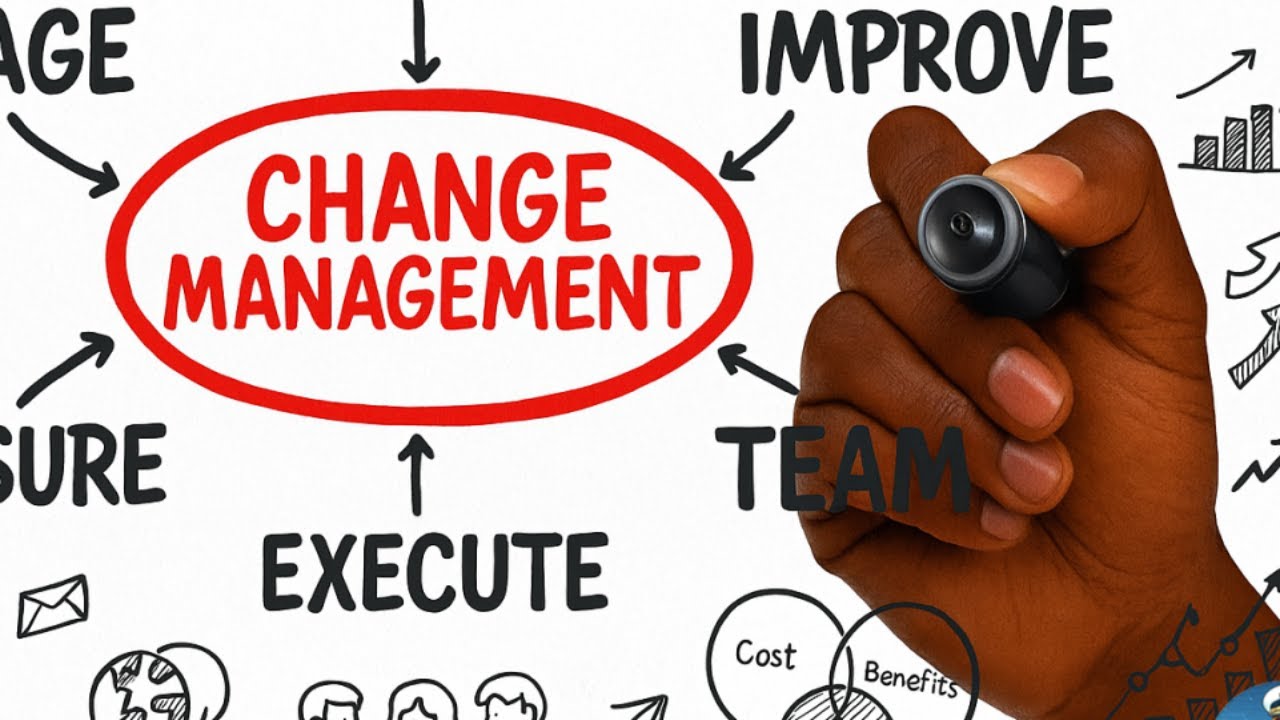
Coach BZ presents a framework for leading through constant organizational change: Plan, Engage, Improve, Measure, Execute, Team. He draws on Navy and Silicon Valley experience to show how leaders ground teams in shared purpose, build psychological safety, and fuel change through intentional collaboration and daily habits like modeling behavior and celebrating wins.
Chapters
¡Hola!
I'm John Maxwell. When the top companies in the world are looking for trainers, speakers, and coaches, there's one name that stands above the rest, and that's Maxwell Leadership. Our certified team members have gotten proven results for companies all over the globe, and our reputation, I'm proud to say, is second to none. Some of our members have risen to the top of their profession, including the one you're going to meet today. I proudly introduce you to my friend Bob Fabien Zinga.
Welcome to the Leadership and Success Podcast with your host, Coach BZ. If you need to develop into a better leader, this podcast is for you. If you want to achieve a greater level of success, this podcast is for you. His mentor, Dr. John C. Maxwell, said it best: everything rises and falls on leadership. We hope to inspire you today and provide you with an insight that has the potential to positively impact the trajectory of your life. Welcome to the Leadership and Success Podcast.
Imagine gaining the leadership skills that could redefine your career. Join Coach BZ on the Leadership and Success Podcast, where each episode delivers practical insights from world-class speakers, military leaders, and industry experts. We dive deep into what matters most: building resilient teams, leading through uncertainty, and navigating complexity with clarity and confidence. Every conversation is crafted for aspiring leaders like you who are ready to grow, lead, and make a lasting impact. Don't miss our powerful live sessions and recent highlights. Michelle Hayward on building diverse, high-performing technical teams. Anne Leslie on leading through global complexity and cybersecurity risk. Ron Carpenter AI exploring faith, resilience, and AI-powered leadership. Colonel Michelle G.I. Gardner-Intz on commanding influence from the battlefield to the boardroom. Chris Robinson on shifting from drift to drive in life and leadership. And Coach Enrique Acosta Gonzalez on mentorship, legacy, and heart-centered leadership. Ready to level up your leadership journey? Tune in on Spotify, Apple, Audible Podcasts, YouTube Live, and LinkedIn Live. Join the movement toward leadership excellence. Listen now and start transforming your success.
Hello everyone to our daily Leadership Excellence and Accountability Devotion. This is Coach Bizzy. Thank you so much for being with me today. I am so glad you are here. And to get started, I want to remind you guys to please let me know where you are joining us from. We do have a global audience here. If you are in the US, I'd like to know what city and state. And if you are outside of the US, what city and country. And thank you so much. And then if you have a question for me or a question about the content today, please let me know and type it in the comment section. Also, if this podcast is adding any value to you, please consider liking the post. Where you are watching this. So, the event for this podcast, Season 4, Episode 31 live, we're gonna be talking about organizational change ahead. And also, if again, this adds value to you, and you know somebody in your network, your circle of influence, who might benefit from this subject, from this podcast, please tag them along in the comment section and share the link. Thank you so much, and I really do appreciate that. So today we are going to be talking about change, change management. Okay, so how do we lead through the noise? That is going to be our topic today. And one thing I know for sure is, you know, change is pretty much permanent. Okay, change is here to stay. Like I've always heard growing up, there are two things that will never change. One is death and taxes, but I think a third one is change. In life, things are going to change. There's going to be new technologies that are going to be so innovative, they're going to be disrupting all types of industries. What do you do when the world around you is changing so much and so quickly? So what we are going to be talking about today, whether you lead a military unit like I have, or a cybersecurity team like I have, or a cross-functional group during transition, this session will equip you with actionable principles to lead through chaos, the Land Diverse perspective, and drive meaningful change. So we're going to be exploring how to clarify mission during transformation, the 6 core elements of change leadership, strategy to foster unity and momentum, and real-world leadership challenges from my Navy and Silicon Valley journey. And one huge transformation that happened worldwide a few years ago was the global COVID-19 pandemic, something I will never forget, but how do you lead in those challenging times? And today, pretty much across all industry, artificial intelligence is really bringing a lot of disruption. So how do you lead in the age of AI? So with no further ado, what I'm going to do, I'm going to have my AI agent, Andrew AI and Mary AI, take it from here. And they're going to be speaking for about 30 minutes, and I will be back right after that. So again, while you are listening, let us know where are you joining us from? And also, if you have a question about the subject, please type it in the comment. And if you can also call out, tag someone in your network that might benefit from this podcast, I appreciate that. All right, Joe and Mary AI, you guys are next.
Welcome to the Deep Dive. Good morning. I am Joe AI.
Hello, I am Mary AI.
Good morning.
Where are you tuning in from? Our audience is global. Drop your city, region, or country in the comments. Got a leadership question for Coach BZ? Type it below. He will answer live during the show.
Today we're cutting through the noise, both literal and figurative, to explore something that touches nearly every professional environment: organizational change. Whether you're operating in the defense sector, tech innovation hubs, education, healthcare, or enterprise systems, change isn't coming. It's already here. And more than that, it's accelerating. Let's set the stage. Imagine you're in a massive tech company preparing for a complete product pivot after a merger. Or perhaps you're a senior leader in a military command center responding to a revised mission directive. Maybe you're just trying to help your 5-person security team adjust to a newly adopted process or tool. In all these scenarios, one thing is clear: Change is the terrain, and the terrain keeps shifting. But if change is so common, so predictable, why does it still feel so difficult? Bob Fabien Zinga, a seasoned cybersecurity executive and commander in the U.S. Navy's information warfare community, has led through this terrain in ways few others have. He's been responsible for leading operational units in high-stakes military environments and securing digital infrastructure in some of the most fast-moving, risk-sensitive sectors in Silicon Valley. In his work, change isn't just quarterly; it's sometimes hourly. And what makes Zinga's perspective particularly relevant is the combination of two worlds: military precision and tech world speed. In both of those arenas, the stakes are high. Errors carry real consequences. Timelines are compressed. Teams are diverse and dispersed. And in that crucible, Zinga learned something essential: "Change is inevitable, but collaboration is a choice." Let that sit for a moment. Change is inevitable, but collaboration is a choice. That's not just a tagline; it's a leadership imperative. Because if you're leading a team through uncertainty, the real challenge isn't just updating the processes or implementing the tools. The real work begins with people—their mindset, their sense of purpose, their trust in you, and their connection to one another. And here's the kicker: the noise of organizational change—the swirling opinions, political undercurrents, performance anxiety, shifting KPIs, culture shifts, digital overload—all of it has the potential to obscure what matters most. Zinga's leadership philosophy, forged through years of real-time operational leadership and digital transformation, teaches us this: when leaders fail to cut through the noise, teams start listening to fear. When leaders clarify purpose, teams start listening to each other. Now, let's talk about noise in practical terms. In military operations, noise might come in the form of radio interference, misinterpreted intelligence, or fractured chains of command. In tech companies, it shows up as misaligned priorities, vague product requirements, Or the dreaded meeting about the meeting. In both settings, the symptom is confusion. The cost is momentum. But Zinga has seen what happens when a leader, no matter their level, steps up with clarity, empathy, and composure. Suddenly, that noise doesn't vanish, but it stops being the dominant voice in the room. Purpose takes its place. Collaboration starts to emerge. And the team starts navigating the uncertainty together instead of reacting in silos. Let's not sugarcoat it. Organizational change often feels like climbing uphill on shifting ground. And that's why great leaders do more than manage it. They guide people through it. They develop systems, yes, but they also develop people. And more than that, they guide culture. Zinga says it this way: In a crisis, people don't rise to the occasion. They fall to the level of their training and preparation. That's true in military units. It's true in incident response teams. And it's true in every organization navigating complex change. Which brings us to today's mission. Our goal in this podcast is to take Bob Fabien Zinga's real-world experience and distill it into practical, human-centered leadership strategies that you, whether you're a mid-level tech lead, a junior officer, or a senior exec, can apply immediately in your context. Because change leadership is no longer the job of the C-suite or commanding officers alone. It belongs to every leader at every level. So here's what we're going to cover. We'll unpack the psychology of resistance and why people instinctively push back on change. We'll examine the power of purpose how knowing the why unlocks motivation and direction. We'll walk through Zinga's 6 core elements of organizational change, his battle-tested PME POEM framework. We'll reveal how collaboration serves as the linchpin that makes everything else sustainable. We'll talk through everyday leadership practices that build trust, encourage ownership, and sustain progress. And we'll conclude with timeless wisdom rooted in ancient texts and reframed for the modern leader. Because, as Zinga shows us, leadership is both strategic and spiritual. Here's the truth: most change efforts don't fail because of bad strategy; they fail because of poor communication, ignored emotions, forgotten values, or disconnected teams. Leadership through change starts and ends with people, and that's where the real work begins. So, as we move into Section 2, I invite you to ask yourself: What kind of change are you facing right now? Is it technical, procedural, strategic, cultural? And more importantly, who are the people most affected by it? And how well do they understand the why? Because once you start seeing change as a relational challenge, not just a technical one, you begin to lead through it differently. Let's dive in.
Let's face it, change rarely enters quietly. Whether you're dealing with a company-wide reorganization or a simple shift in team workflow, change has a way of stirring emotion. It disrupts expectations, routines, even identities. It's no surprise then that one of the most common reactions, especially in the early stages, is resistance. But Bob Fabien Zinga challenges us to think more deeply about that resistance. Instead of framing it as an obstacle to be bulldozed, Zinga sees it as a signal, a critical cue for leaders to pay attention. In his words, resistance isn't a flaw in your people. It's a function of how we're wired as humans. Here's why. Organizational change, Zinga explains, activates our survival brain, that part of us that clings to the known, that defaults to predictability and structure. When things begin to shift, even for the better, fear often shows up first, not because people are irrational or negative, but because something they've grown accustomed to is being redefined. Uncertainty enters the scene. Control feels compromised. And what do most people do when they feel uncertainty, and loss of control, they resist. This reaction is natural, and Zinga urges leaders not just to see it but to expect it. That anticipation, he says, is a crucial leadership discipline. Zinga quotes Dr. Martin Luther King Jr. as a guiding principle: "Change does not roll in on the wheels of inevitability but comes through continuous struggle." That one line reframes everything. Change isn't automatic; it's not a button you press. It's a struggle, a process that requires patience, empathy, and yes, emotional endurance. And that's not just true for those being led. It's equally true for those doing the leading. So what does this mean practically? It means leaders must create emotional infrastructure, not just operational plans. If you're preparing for a rollout, a merger, a pivot, you must also prepare hearts and minds. You must recognize that behind every checklist is a person. Behind every dashboard is a team navigating uncertainty in real time. This is where emotional intelligence becomes a superpower. Zinga teaches that it's not enough to introduce a change initiative. You must also ask, what might this change threaten in the eyes of my team? What support structures do they need to process this shift? How can I address fear without dismissing it? He recommends layered communication strategies, starting with transparency. Tell the truth early. Don't sugarcoat challenges or overpromise outcomes. When people feel informed, they begin to feel empowered. And when they feel empowered, resistance often softens into curiosity or even commitment. Zinga also emphasizes the need for strategic empathy. That doesn't mean coddling. It means acknowledging the emotional reality of your team, not just their technical capability. It means making space for dialogue, allowing questions, naming tensions, even welcoming disagreement when it's rooted in genuine concern. And perhaps most powerfully, Zinga reminds leaders that you too are human in the face of change. You're not exempt from fear or resistance, but your ability to confront those feelings with courage and model calm within uncertainty becomes a leadership lesson louder than any speech. So here's your takeaway for this section. If resistance shows up during change, and it will, don't push it away. Probe it, understand it, work with it, because often resistance is just fear looking for reassurance. And reassurance? That's a leader's responsibility. Zinga teaches that those who lead best through change are those who combine tactical clarity with emotional presence. They plan thoroughly, yes, but they also listen deeply. They anticipate the pushback, not with judgment, but with readiness. And most of all, they understand this: change isn't a technical event; it's a human experience. That's why leadership in times of change must begin not with a strategy, but with empathy.
Now that we've explored the emotional anatomy of resistance, it's time to talk about how great leaders begin to reframe that resistance and transform it into purpose. This is where Commander Bob Fabien Zinga's perspective truly stands out. Because in his experience, leading change successfully isn't just about removing friction; it's about inspiring alignment. And that begins with one essential leadership move: communicating the why. Zinga stresses that when people are asked to change, whether it's shifting their workflow, learning new systems, or reorganizing teams, resistance often shows up when the why is unclear or absent. But when people understand the purpose behind the change, when they can connect it to a bigger mission, they're far more likely to embrace it even when it's uncomfortable. In fact, Zinga says, "People don't resist change nearly as much as they resist confusion." That's why he insists that leaders must not just inform their teams but inspire them. It's not enough to hand out bullet points in a slide deck. The change needs to be tied to something deeper, something that resonates at a values level. Here, Zinga echoes bestselling author John Gordon, who famously wrote, When you know your why, you'll know the way, and you won't let obstacles get in your way. And he builds on Simon Sinek's now-classic concept of "Start with Why." Zinga believes that every leader, whether you're a frontline supervisor or a CEO, must frame change around a meaningful purpose—not a slogan, not a corporate buzzword, but an authentic reason that answers this key question: What future are we building together? And why does it matter? Because that's what unlocks emotional buy-in. And when it comes to navigating change, emotional buy-in is everything. Let's take an example from Zinga's own experience. As a Navy officer, he's led diverse teams through rapidly evolving cyber missions. In those environments, change isn't theoretical; it's happening by the minute. Threats mutate, priorities shift, communication protocols evolve. But amidst the pressure, Zinga learned that his sailors responded best not to command and control orders, but to clear articulation of purpose. He didn't just tell them what to do; he explained why their role was crucial to mission success. He tied their contributions to real-world impact. And when the team saw the bigger picture, they leaned in. Even under stress. Even under fire. The same lesson carried over to his roles in the tech world. Whether leading security teams at universities, scaling startups, or advising executive boards, Zinga found that clarity of purpose was the hinge that opened the door to resilience. Because purpose doesn't just inspire, it aligns. When people understand the why, they can better adapt their actions to support the strategy. They can troubleshoot proactively, prioritize more effectively, and make decisions that support the overall mission. Without that clarity, confusion reigns, silos form, trust breaks down. Zinga warns leaders not to underestimate this. He writes, purpose is not a motivational extra. It's a strategic necessity. That's especially true when the pressure is high and timelines are tight. When leaders skip over the why and dive straight into execution, they miss the moment to unify the team around shared values. But when they take the time to communicate the deeper purpose, when they lead with clarity instead of chaos. They create a shared lens through which every person can view the change as something they're part of, not something happening to them. Here's a practical tip Zinga offers: whenever you roll out a change, ask yourself, have I clearly articulated why this change matters? Have I tied it to the team's core values and our broader mission? Have I invited questions to clarify that why? Because clarity kills resistance, and vision breeds trust. And as Zinga so often reminds rising leaders, if you don't define the why, your team will invent their own. And that invented story, built on speculation, fear, or assumptions, may be far more damaging than the truth. So, if you're a leader navigating change right now, ask yourself, what's your why? Is it strong enough to rally your team? Is it authentic enough to resonate beyond the strategy deck? And are you modeling that purpose in the way you communicate and make decisions? Because in the noise of change, purpose is the signal. And the best leaders, like Commander Bob Fabien Zinga, know how to amplify it. When you start with why, you don't just change behavior; you elevate belief. You don't just shift structures; you shape culture. And that, Zinga says, is the foundation of sustainable transformation. Stay with us. Next, we'll explore the 6 core elements Zinga outlines for leading change with clarity, agility, and structure—elements forged in the fire of both military operations and tech innovation. Because knowing your why is just the beginning. The real question becomes, how will you act on it?
So now that we've unpacked the power of purpose and the necessity of starting with why, what happens next? Well, if purpose is the compass, then what Bob Fabien Zinga provides next is the map. It's a 6-part framework, structured, practical, field-tested, developed through years of leadership in 2 radically different yet equally high-stakes environments. The military, and Silicon Valley. He calls it the 6 core elements of change management. And each one builds on the last to form a strategic approach for leading teams through the chaos of transformation. Let's break them down. The acronym is P-E-I-M-E-T: Plan, Engage, Improve, Measure, Execute, Team. Each of these is more than a step; it's a leadership discipline, a mindset. And Zinga doesn't present these lightly. These are principles forged in kinetic operational environments where ambiguity, speed, and pressure collide. P is for Plan. Let's start here—planning. Now, you might be tempted to think, of course, we all make plans. But Zinga challenges leaders to think beyond static strategies. He says traditional plans often assume stability, linear timelines, predictable outcomes. But change, real change, it doesn't behave that way. Zinga encourages what he calls adaptive planning. That means creating a strategy that isn't etched in stone but designed to evolve. It's dynamic. It breathes. And it demands real-time feedback loops. This is something he learned from both crisis response and cyber operations. Plans that don't account for volatility are fragile. But leaders who bake in flexibility, who expect change inside the change, Build systems that bend without breaking. So here's the practical coaching prompt from Zinga: When you build your plan, don't ask, is it perfect? Ask, is it agile? E is for engage. The next element might be the most human and most misunderstood: engagement. In Zinga's framework, engagement isn't about hosting an all-hands meeting and calling it a day. It's about deep, ongoing connection, creating space where your team has both voice and influence. He says, "Engagement isn't performance, it's partnership." And he's right. When you truly engage people by seeking their input, listening without defensiveness, and acting on their feedback, you create ownership. Ownership, not compliance, is what drives resilient execution. Zinga often recounts a naval deployment where operational success hinged not just on the technical precision of the plan, but on the trust and morale of his sailors. They didn't follow him because he had rank. They followed him because they were engaged in the mission, because they believed their voice mattered. So if you're a leader, ask yourself, are you broadcasting information or are you inviting people into the change? I is for improve. Next comes one of Zinga's core values, continuous improvement. He reminds us that in both cyber defense and organizational life, what worked yesterday might fail today. And if you're not improving, you're regressing. Improvement isn't a phase, it's a posture. A willingness to ask hard questions. What friction are we seeing? What are our blind spots? How can we make this process leaner, smarter, more human? Zinga encourages leaders to embed improvement cycles into every phase of a project. From AARs, after-action reviews, in the military to retrospectives in tech, the goal is the same: learn fast, apply faster. And here's the kicker, he says, you can't improve what you don't measure. Which brings us to the fourth element. M is for measure. Zinga is crystal clear on this. Metrics are your early warning system. You can't wait until the end of a project to figure out what went wrong. You need signals, fast, frequent, relevant feedback to guide your decisions in real time. He compares it to cybersecurity threat monitoring. You don't review logs quarterly, you watch anomalies daily. The same goes for measuring change progress. He advises leaders to set KPIs that are actionable, tied to decisions you can make now. Human-centered, not just output, but impact on morale, clarity, and cohesion. Transparent, so teams understand what success actually looks like. And remember, measurements aren't about control, they're about alignment. E is for execute. Now we get to the part where plans meet reality, execution. Zinga says this is the moment where strategy becomes leadership in action. And strong execution requires 3 things: 1, clarity of roles; 2, availability of resources; 3, consistent, calm communication, especially under stress. This is where emotional intelligence really matters. Because when tension rises, it's the leader's tone, behavior, and decisiveness that either stabilizes the team or sends them into a spiral. Execution, Zinga says, is the moment when your people ask, can I trust you to lead me through this? If the answer is yes, alignment accelerates. If not, even the best plan will stall. T is for team, and that brings us to the final, most foundational piece: team. Zinga writes, you can have the best technology, the sharpest roadmap, the most detailed timeline, but if your team is fractured, none of it will matter. He calls on leaders to invest deliberately in cohesion. That means recognizing small wins, checking in with emotional pulse, encouraging gratitude, celebrating resiliency, and above all, creating safety. When people feel safe psychologically and professionally, they bring their best thinking forward. They offer new ideas, they challenge old ones, they take initiative, and that's what makes the difference during change. So there it is, Zinga's 6-Element Framework, Plan, engage, improve, measure, execute, team. It's simple, but it's not easy. But it's— it's structured, but it's human. It's proven, but only if practiced with consistency. He calls it a repeatable system for transformation, a way to lead through noise with clarity, purpose, and resilience. But Zinga is also quick to point out this framework needs fuel. And that fuel, that essential, often invisible force that keeps the whole thing moving, We'll talk about it next. It's the linchpin of it all.
We've just walked through Bob Fabien Zinga's 6-part framework: Plan, Engage, Improve, Measure, Execute, Team. It's structured, tactical, and deeply practical. But here's the truth: even the best frameworks fail without fuel. That fuel? According to Zinga, it's collaboration. Not as a buzzword, not as a checkbox, but as the linchpin, the critical connector that determines whether your change effort thrives or stalls. Zinga doesn't mince words here. He writes, collaboration is not just a leadership skill. In times of change, it's a leadership commitment. Think about that commitment, because collaboration takes intentional effort. It's not automatic. It doesn't happen just because you schedule a meeting or say, we're all in this together. No, collaboration is cultivated. Let's unpack what that looks like, starting with the 4 core drivers Zinga outlines. 1. Shared Vision: The North Star. First and foremost, collaboration begins with shared purpose. Zinga says that when people are unclear on why they're working together, confusion spreads, momentum slows, silos form, and suddenly, the change effort becomes mechanical instead of meaningful. But when teams are aligned around a real vision, not a vague mission statement, they operate differently. He says, "A shared vision creates direction when everything else is moving. That's the leadership move." As a commander, Zinga often had to unify teams from different specialties—signals intelligence, cyber defense, logistics. Their technical languages were different, their roles unique. But their purpose? That had to be common. So here's your leadership prompt: What is the North Star your team is rallying around? Have you repeated it? Reinforced it? Connected the dots between their work and the mission? Because people won't fight for what they don't understand. 2. Psychological Safety: Open Dialogue. Now, once the vision is clear, The next leadership challenge is creating space to speak. Zinga puts it plainly: If your team doesn't feel safe to talk, they won't collaborate. They'll comply. And there's a world of difference between compliance and contribution. So, what builds that sense of safety? Leaders who listen without judgment. Conversations that welcome disagreement, not just tolerate it. A culture where feedback flows in all directions, Not just top-down. Zinga shares a story from his time in a joint military-civilian cyber exercise. A junior analyst spotted a flaw in the implementation plan but hesitated to speak up. Why? Because the environment didn't feel safe. When Zinga found out later, he didn't reprimand the analyst. He took responsibility for not building a culture that empowered earlier feedback. It was a lesson. And a leadership pivot. Ask yourself, are your team members holding back insights because they're afraid of the response? Have you invited the quietest voices into the conversation? Because often the solution is already in the room waiting for an invitation. 3. Diverse Perspectives: From Inclusion to Innovation. Next up, leveraging diverse viewpoints. Zinga's stance is clear. Collaboration dies in echo chambers. Innovation thrives in friction. Now, that doesn't mean conflict for conflict's sake. It means welcoming varied experiences, cognitive diversity, and opposing ideas. It means building cross-functional teams where cybersecurity engineers learn from policy experts, and analysts challenge product assumptions. Why? Because when you only hear from the familiar, You miss the future. Zinga draws on his Silicon Valley leadership experience to explain how product teams sometimes misfire, not because the tech is bad, but because the decision-making lacked perspective. No one asked how a policy shift might impact user privacy. No one consulted frontline security engineers who had seen failure patterns before. When diversity is missing, blind spots grow. And when diversity is invited, not just represented but respected, collaboration deepens. Practical coaching prompt: Who's not in the room that should be? Are you only elevating perspectives that mirror your own? Great leaders make room, not just for presence but for powerful input. 4. Empowerment: Authority meets ownership. Finally, collaboration means giving people power, not just tasks. Zinga writes, When you give people responsibility without authority, you create frustration. But when you empower them, you unlock commitment. That's the difference between delegation and empowerment. Delegation says, "Do this." Empowerment says, "You have the judgment. You make the call." In times of change, that shift is essential because centralized control slows everything down. It creates bottlenecks, especially when speed matters. Zinga recalls one high-pressure scenario from naval operations where split-second decisions were required to neutralize a simulated threat. His junior officers had been trained, yes, but more importantly, they'd been trusted. He says, "We'd rather trust and adjust than hesitate and lose." In business, the stakes may be different, but the principle holds. When you empower people, they bring creativity, urgency, and care. Because now, it's their mission too. A Final Word on Collaboration. Let's pause and zoom out. Collaboration, in Bob Fabien Zinga's view, is not fluffy teamwork rhetoric. It's the operational engine that transforms vision into reality. It is the living current that fuels every part of the change process. And most importantly, it is intentional. It doesn't just happen; it must be led, cultivated, protected. So here's the invitation: Revisit your team's vision. Is it clear, compelling, and shared? Audit your culture. Are people free to speak, to challenge? Examine your circles. Are you surrounded by sameness, or are you learning from difference? Review your leadership. Are you hoarding control or sharing it through trust? Because change is hard, But it gets exponentially harder without collaboration. And with it, change becomes a shared mission, a collective journey, and a source of transformation, not just for the organization but for every person in it.
At this point, we've walked through the roadmap, the 6 core elements of effective change management. We've uncovered the fuel that drives the process: collaboration. Now, let's ground this strategy in everyday actions, the small, repeatable behaviors that shape a leader's culture. Bob Fabien Zinga is unwavering in his belief: Culture isn't what you say; it's what you practice. And what you consistently reinforce through behavior becomes the heartbeat of your leadership environment. So, how does that translate into practical steps leaders can take every day? It starts, he says, with leading by example. That's not a cliché; it's the cornerstone. If you want your team to embrace change with flexibility, innovation, and poise, they must see you living those values under pressure. Are you calm when plans shift? Are you open to feedback when a strategy doesn't work? Do you seek solutions instead of casting blame? Those moments define your leadership legacy more than grand speeches ever will. Zinga also emphasizes the importance of psychological readiness. Change doesn't happen in spreadsheets; it happens in people, and people need support. That means equipping your team, not just with tools or timelines, but with the emotional bandwidth and mindset to adapt. Leaders must act as coaches, identifying potential stressors, offering perspective, and consistently affirming the team's capacity to succeed. As Zinga often says, "Resilience is contagious, so model it." Support isn't a one-time event. Zinga calls for continuous investment. That includes targeted training that addresses current and emerging needs, access to resources that actually solve the problems at hand, and opportunities for mentorship and coaching. When people are trained and trusted, their performance accelerates. Next comes something deceptively simple but profoundly impactful—celebrating milestones. Recognizing effort isn't just about morale; it's about meaning. Zinga recommends frequent, intentional recognition of progress, whether it's a new hire who successfully integrates into a team during restructuring or a department that pilots a new system with grace and grit. These acknowledgments anchor momentum and reinforce a positive narrative around change. Another crucial practice: maintaining feedback loops. Leaders should be relentless in soliciting real-time input from their teams, not just at the end of a project, but throughout. Zinga encourages structured pulse checks, brief, consistent check-ins to uncover friction, clarify misalignments, and surface innovative ideas that might otherwise go unheard. Feedback should not feel like surveillance. It should feel like partnership. And this is where Zinga gets especially reflective. He invites leaders to pause and look inward, to examine not just how they lead, but who they are becoming in the process. He poses powerful coaching questions to encourage that inner audit. How do you currently handle resistance to change in your team? Are you reactive or reflective? What specific behaviors have you demonstrated to foster collaboration? Can others see that effort? Have you recently evaluated a change initiative using the 6 core elements? What worked and what didn't? But are your team's day-to-day goals still aligned with your organization's bigger mission, or are you just checking boxes? And here's one that stops many leaders in their tracks. When the pressure rises, do you default to control, or do you default to connection? Zinga reminds us, self-awareness is not a luxury in leadership. It's a prerequisite. Leaders who understand themselves are better equipped to understand others. They make fewer assumptions, communicate more clearly, and inspire more deeply. Ultimately, Zinga's call is clear: leadership during change is not about having perfect answers. It's about creating a culture that's built for uncertainty—resilient, responsive, and real. A culture where change isn't feared but leveraged, where collaboration isn't forced but natural. It's not just about implementing strategy; it's about living it. That's what makes change stick. And now, as we transition into our final section, we'll explore the deeper wisdom that ties it all together. Lessons that have endured for centuries and still shape great leadership today.
Let's now shift into one of the most compelling sections in Commander Bob Fabien Zinga's article, what he titles Think on These Things. At first glance, you might expect a tactical or technical wrap-up, but this section, it goes deeper. Zinga doesn't close with checklists or summaries. Instead, he taps into something much more foundational, "The Inner Life of a Leader." He invites us to look inward, to pause, to reflect, and to consider how timeless leadership wisdom, especially ancient biblical principles, can anchor us through change. Now, this isn't about religion. Zinga is very clear. These aren't theological lessons but leadership insights. Enduring values that have guided kings, warriors, prophets, and visionaries across millennia and that surprisingly have profound relevance for cybersecurity leaders, tech founders, and change agents today. Let's unpack how he bridges that ancient-modern gap and why it matters. Strategic Humility in Complex Environments. Bob Fabien Zinga begins this reflective journey by addressing the role of humility in leadership, especially during uncertainty. He draws from Proverbs 3:5-6, Trust in the Lord with all your heart, and lean not on your own understanding. In all your ways, acknowledge him, and he will direct your paths. Zinga interprets this as a powerful call for strategic humility. In high-stakes environments, whether it's a combat information center, a SOC during a breach, or a C-suite during a massive pivot, leaders often feel pressure to project certainty, to know the next move, to have all the answers. But Zinga cautions, true strength doesn't lie in self-reliance; it lies in wisdom-seeking. In his view, this verse isn't calling leaders to abandon their intellect but to recognize its limits. It's an invitation to look beyond the echo chamber, to consult experts, gather diverse counsel, and admit when the path forward isn't perfectly clear. It's okay, he says, to not have every answer. In fact, that's where the best leadership begins—when you're humble enough to ask better questions. Unity over uniformity. Next, Zinga focuses on the power of alignment. He references Romans 15:5-6 and Psalm 133:1, both of which champion harmony and shared purpose. May the God who gives endurance and encouragement give you the same attitude of mind toward each other, so that with one mind and one voice you may glorify— How good and pleasant it is when God's people live together in unity. Zinga's insight? Don't confuse unity with sameness. A team doesn't have to agree on everything, but they do need to row in the same direction. In organizational change, this is make or break. Alignment on purpose, mission, and values helps prevent fragmentation, especially when new systems, workflows, or leadership structures are introduced. Without alignment, even the best strategy gets lost in translation. Zinga encourages leaders to build consensus around why we're doing this, not just what we're doing. Because when a team aligns on purpose, their diversity becomes a strength, not a source of conflict.
Collaboration as collective wisdom. Zinga then moves to a core leadership habit: collaborative decision-making. He highlights Proverbs 11:14: "Where there is no guidance, a people falls, but in an abundance of counselors, there is safety." The lesson is striking: isolation is dangerous. Lone wolf leaders may look confident, but they often miss key insights that come from their people. Zinga suggests something radical, especially for command-driven cultures. The more you elevate your team's input, the stronger your leadership becomes. He calls this leveraging the collective brain. And in fast-moving, high-pressure scenarios, that collective brain is often what separates success from failure. He encourages leaders to ask their teams not just for status updates but for perspective, for interpretation, for challenge. In doing so, he says, You'll cultivate ownership, innovation, and loyalty, the kind that outlasts the change effort itself. Emotional intelligence in communication. Communication is next, and Zinga gives it a biblical foundation too, referencing James 1:19. Be quick to listen, slow to speak, slow to anger. This, he says, is a masterclass in emotional intelligence captured in just 12 words. In an age of Slack pings, Zoom fatigue, and high-speed decision-making, it's easy for leaders to fall into reactive mode. To speak quickly, defend faster, and jump to solutions without truly listening. But Zinga challenges that instinct. He insists that listening is leadership, not passively waiting for your turn to talk but truly hearing what's being said, listening for the unspoken, the hesitation, the fear, the ideas, the feedback that might make your strategy stronger. This kind of deep listening fosters trust, and in moments of upheaval, trust is everything. When people feel heard, they're more likely to engage, more likely to stay, more likely to care. Zinga's advice here is practical. Slow down, listen longer, respond more thoughtfully than reflexively. That's how leaders cut through the noise, not just with insight, but with presence. Compassionate Leadership and Resilience. Finally, Zinga closes this section with a nod to Ephesians 4:2-3. Be completely humble and gentle. Be patient, bearing with one another in love. Make every effort to keep the unity of the spirit through the bond of peace. This is where leadership becomes deeply personal. Zinga reflects on the pressure leaders face to keep things moving, to execute flawlessly, to manage conflict, to deliver. And while those pressures are real, he argues that leading with compassion isn't a weakness; it's the anchor that holds teams together. During intense change, anxiety runs high. People second-guess themselves. Productivity dips. Trust fractures. And that's when leaders must choose patience over pressure, empathy over efficiency, human connection over hustle culture. He shares that some of the best teams he's led, both in the Navy and in cybersecurity, were those where people didn't just feel seen as professionals but as people—people with families, with fears, with aspirations. He writes, "A leader who builds resilient strategies must also build resilient humans." That, he says, is where transformation becomes sustainable. Final Reflections: Character as Compass. As we wrap this episode, here's the truth Zinga wants every leader to hear: change is inevitable. But the kind of leader you become through change? That's up to you. The strategies, the frameworks, the KPIs—they all matter. But in the end, the leader's character is what guides the team through the fog. Your humility, your curiosity, Your patience. Your courage to listen. Your willingness to choose collaboration over control. These aren't soft skills; they are core competencies of transformational leadership. Let's return to Zinga's three-part framework for navigating organizational change. The Roadmap: Plan. Engage. Improve. Measure. Execute. Team: The Engine. Collaboration: The Compass. Timeless wisdom: Character, empathy, and humility. It's not just a leadership toolkit; It's a leadership way of being. And here's the final question Zinga poses to every aspiring change agent: When the change hits, when the systems shift, the strategy pivots, the uncertainty spikes, will you lead by force or by influence? Will you isolate or will you invite in voices that stretch you? Will you cling to control or will you build the kind of trust that makes true collaboration possible? Because the truth is this: the most enduring leaders don't just manage change; they elevate through it. They build cultures of clarity and connection, even when everything around them is noisy and uncertain.
Thank you for joining this deep dive on organizational change. We hope the insights drawn from Bob Fabien Zinga's journey as a U.S. Navy commander, cybersecurity executive, and servant leader Offer not just strategies, but strength. Not just information, but inspiration.
Now it's your turn. Lead through the noise, anchor in purpose, choose collaboration, and build something that lasts. Until next time, keep leading forward.
All right. Thanks so much, Joe and Mary AI. So this is Coach Bizzy again. First of all, I want to give a shout out to Coach Houston. Actually, I know him as Pastor. Houston. He was my pastor at, uh, the University of Alabama, right on the Strip. Uh, and, uh, one thing, uh, he said in the comment, and I really do appreciate that, uh, this is really good content. Make sure you communicate the why. It will save so much grief. I know Coach Houston has a lot, a lot of experience, and I've been trying very hard to get him to be a guest on the Leadership and Success Podcast. And as you guys know, my heart is really toward the aspiring leaders in both the military and high tech. And I believe we can learn a lot, we can get a lot of wisdom and insight from someone like Coach Houston. So thank you so much. So I'm gonna see if there are any other questions or comments on YouTube or LinkedIn. Okay, I don't see any. But these are the 3 things I'm gonna leave you with. Like I've said, change is inevitable. In the 21st century, there's going to be change upon change upon change upon change. Punch in, right? So in order to lead in an environment like that, number one, I think it's very important, like Coach Houston said, you've got to communicate the why. Your people need to know why we are making the changes we are making. That's going to get their buy-in, right? I think it's important to get the feedback from members of your team so that they feel like they are helping make the decision, and then they are going to stick with it when things get difficult. So, understanding the why. Why are we doing what we are doing? I think that's very important. Number 2, I also think you need to be humble, right? A lot of things have changed in leadership in the Navy the last 20 years I've been in the service. When I first joined the Navy 20 years ago, it was very much a macho man, alpha male, you know, I am the boss and I tell you what to do. I say jump, you say how high, and that kind of thing, kind of leading by force. My title, I am I am the commanding officer, I am in charge and that kind of thing. That toxic, I guess, quote unquote, masculinity, right? I am in charge and you're gonna do what I say. Yeah, that kind of work. And it would work, especially if you are doing it in an intense time, there is a project and something going on and you need all of the members of your team to be running at 100% in order to achieve that. But, you know, in a short period of time. I don't think that really scales for the long term. The best leaders I have seen in the Navy actually have been women. That's one. And two, they've been people who had high emotional intelligence, people who were aware of themselves, but also of their surroundings, and people who really, really truly cared about their people. There is a mantra I've learned in the Navy: mission first, but people always. Those people who really, really care about people, those are the people who make a huge, huge impact. Those are the kind of leaders I will be willing to follow into the pits of hell. I will be willing to follow into a war zone. I will be ready to follow and even be willing to give my life if I have to, because I've got their back, because I know they care about me. So it's easier said than done. But I think as a leader in a time of change, you really have to lead with compassion and with care for your people. And then the third thing I think that's extremely important is being humble, right? Yes, you are the leader, you are in charge, we get that, but you don't know everything. It's impossible to know everything today, just impossible. I remember when I was in the PhD program for microbiology at the University of Alabama, my primary mentor was telling me he had this PhD in microbiology back like in the '70s and the '80s. He was like, back then, absolutely knew everything there was to know about microbiology. But me, you know, 20 years later in the 2000s doing microbiology, it's like there is absolutely no way you're going to know everything there is to know. It's just not possible because knowledge expanded exponentially. So it is impossible to know everything. Therefore, everybody has a blind spot. So you are going to need to be able to learn from other members of your team. That's why diversity equity, inclusion is so important. You don't want everybody to be just like you. You don't want everybody on your team to have the same background, the same degree, and think the same way that you do. You don't want yes-men and yes-people on your team. You want people who are going to challenge you and give you their perspective, which might just save your project, right? So I think that's very, very important. And for example, in the Navy, I know rank is very important, the chain of command. We preach it, we live it every day. But even as the most senior person in the room, I think it's important for you to take a pause and listen to what the most junior people in the room think. Because sometimes one of their insights might just make the biggest difference. Like, I remember very clearly when I was the commanding officer for the Global Network Operations Support Center in Suffolk, Virginia, we had a problem. It took us about a couple of months, me and my leadership team, we tried to solve that problem, we just couldn't find a way. To make it done. So I opened up the floor and I allowed the junior enlisted people in the room to speak. And one of them, a first-class petty officer, gave us the solution. In just like 5 minutes, he told us exactly what we need to do in order to solve this problem that my entire senior team— we had probably altogether more than 150, 200 years of leadership experience. And this guy who's a first-class petty officer gave us a solution in 5 minutes. And we implemented the solution. And it works so well. So that was really, uh, something I'm taking to heart. So as a leader, again, number 1, start with the why and share the why. Communicate, just like Coach Justin said, but also care about your people. Lead with compassion. And finally, lead with humility. All right, please let us know what are your most important insights from this this podcast. I really do appreciate it because many times, um, when you create content like I do every single day, uh, sometimes you feel like nobody is listening, like there is nobody on the other side, like you are talking to yourself. And actually, if I had to talk to myself, this would be fine. I can remind myself of all of these leadership principles I've used in the last 20, 25 years or so in the U.S. Navy and, uh, in Silicon Valley. But it's also very important as a creator to get some feedback from the people you are trying to add value to. So I really, really appreciate it if you take a second to let me know where you are joining us from and what you think about the content, anything I can change, anything I can do better, or what is the most important insight you got from the podcast. That really helps a lot. And I will be back here tomorrow, 6:30 AM Pacific Time, California, 9:30 AM Washington, DC, Eastern Time. And if you type in a question during the replay, I'm gonna make sure to look at the comments before I start the podcast tomorrow. All right, until tomorrow, have a wonderful day, and I hope this podcast has added some value and insight in your life. Thank you so much for being with me today.
Bye. Thank you for listening to the Leadership and Success Podcast with your host, Coach BZ. If you like what you heard, please subscribe to our channels and come back for more wisdom nuggets on how you may develop into a better leader and achieve greater levels of success. Leadership is the most critical skill. The world will always need leaders to lead others, deploy the next disruptive technology, or execute a business strategy. You may as well decide on counting yourself among the 21st century leaders. See you right here next time on the Leadership and Success Podcast with
More from Bob

S250:E4🎙️LIVE 🇺🇸America 250: President Barack Obama Leadership, Service, and the Power of Hope






S5:E157🎙️ LIVE with CMD CMSgt Dennis L. Fritz, USAF (Ret.)(Multi Tracks Audio)



S5:E156🎙️ LIVE 🇪🇸 Leadership Lessons from the FIFA World Cup 2026 Champions (Multi Tracks Audio)

S250:E3🎙️ LIVE Leadership Lessons from America’s First Documented Family of African Descent 🇺🇸📖