S4:E5 Leadership & Success Podcast — LIVE: My Leadership Board of Directors: Wisdom Worth Pursuing
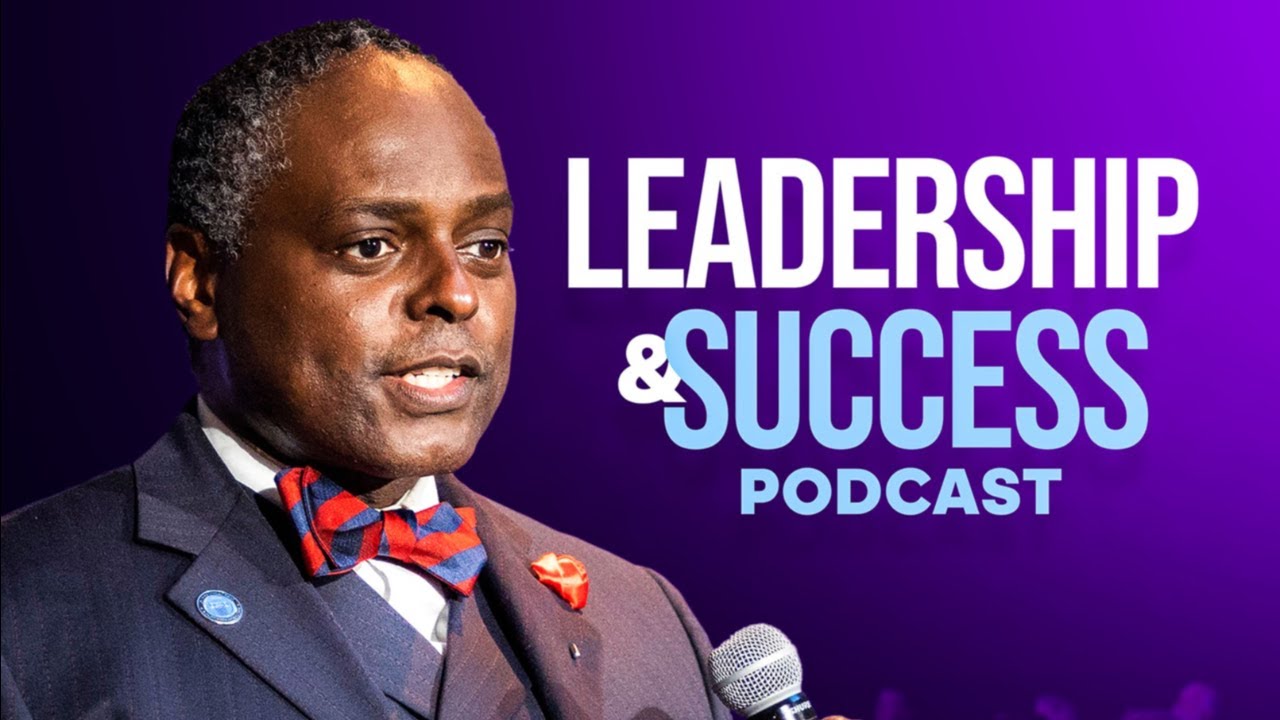
In this live episode of the Leadership & Success Podcast, host Coach BZ (Bob Fabien Zinga) introduces the concept of a personal “leadership board of directors” – a deliberately assembled group of mentors that functions like a corporate board for an individual’s growth. Drawing on his own diverse background as a US Navy Reserve information‑warfare officer, cybersecurity executive, and Maxwell Leadership certified coach, Zinga explains why mentorship is the master key to success. He shares the composition of his own board, categorising mentors into foundational, philosophical, legacy, personal‑development, strategic, and tactical groups, and cites figures such as Capt. Joel Rothschild, John C. Maxwell, General Colin Powell, Darren Hardy, Tony Robbins, Admiral James Stavridis, Ken Blanchard, and Robin Sharma. The episode outlines three core benefits – accelerated learning, expanded network, and enhanced decision‑making – and presents a five‑step framework for listeners to build their own board: (1) identify gaps, (2) seek diverse perspectives, (3) engage actively, (4) apply insights and close the loop, (5) pay it forward. Spiritual depth is added through biblical passages (Proverbs 27:17, 2 Timothy 2:2, etc.) that frame mentorship as reciprocal and legacy‑driven. The show also demonstrates the integration of AI agents (Joe AI, Mary AI, Coach BZ AI) that co‑host, summarize, and provide devotional prompts. Practical tips on gaining proximity to high‑profile mentors – serving value or “pay‑to‑play” – are shared, along with personal anecdotes about representation, the impact of seeing leaders like General Colin Powell, and the use of AI to increase productivity. Listeners are challenged to audit their current board, add new members, and begin mentoring others, reinforcing mentorship as essential leadership infrastructure.
Chapters
Hi, I'm John Maxwell. When the top companies in the world are looking for trainers, speakers, and coaches, there's one name that stands above the rest, and that's Maxwell Leadership. Our certified team members have gotten proven results for companies all over the globe, and our reputation, I'm proud to say, is second to none. Some of our members have risen to the top of their profession, including the one you're going to meet today. I proudly introduce you to my friend, Bob Fabien Zinga.
Welcome to the Leadership and Success Podcast with your host, Coach BZ. If you need to develop into a better leader, this podcast is for you. If you want to achieve a greater level of success, this podcast is for you. His mentor, Dr. John C. Maxwell, said it best: everything rises and falls on leadership. We hope to inspire you today and provide you with an insight that has the potential to positively impact the trajectory of your life. Welcome to the Leadership and Success Podcast.
Hello everyone, this is Coach Bizzy. Like I said in Season 4 trailer, I, I'm going to be assisted by my team of AI agents. So for today, we're going to be talking about my leadership board of directors, and I encourage each and every one of you to really think hard about having a leadership board of directors for yourself. Who's going to be on it? And those people don't have to be alive right now. You don't even have to know them. You don't have to be close to them by proximity. They can mentor you through books, like you see some of the books I have in my office. Some of his books I've been reading since I was 17, 18 years old. A couple of them I read at least once every year. And you can get a whole lot of mentorship that way too. But anyway, I'm going to let my AI agent break it down for you. So let's do the deep dive with Joe and Mary AI. Well, actually, before I do, I'm going to give you a quick teaser for Season 4, Episode 1. I spoke with Coach Enrique Acosta Gonzalez. Uh, again, I urge you to listen to the podcast. It's available on all major podcast platforms. And here's a little teaser with Coach Enrique Acosta Gonzalez.
I think it's definitely needed.
So what is one action you are about ticking that you think might possibly impact your life?
I just started a publishing company. Imagine that. Yeah, just, I mean, literally today I got the EIN for it. And, um, so what I suggest, don't be afraid. Don't be afraid of doing what you think you're afraid of. Go for it, you know. And I'm going to tell you, um, Adriana Rosales is the reason why I'm going down this journey, you know. If it wasn't for her— she was the Air Force vet as well, right? She worked for the Space Force before it was Space Force.
Yes.
And, um, she's doing— she's been doing that. She's also a John Maxwell leader. And she'd been doing that for a while, but, you know, by God's grace and guidance, she led me to this.
Speaking with Enrique Acosta Gonzalez today, this is what I've learned: you cannot wait until you are ready. You've got to do it scared. Do it anyway. Feel the fear and do it anyway. You won't always know where it's going. But you know what? You don't have to. If God puts something on your heart, start. Start right now. Start the book, launch the business, apply for the role, share your story. The dream doesn't need your perfection. It just needs your yes. Okay, next I'd like to play a quick trailer from Season 4, Episode 2. Uh, I had great privilege to interview my mentor, the legend at Maxwell Leadership, Chris Robinson. He has a new book coming out. Again, I urge you guys to purchase a book right away, and once you pre-order the book, he's going to give you more than $500 worth of benefits, uh, of bonuses just for purchasing a $20 book. So do it now. I highly encourage it. Here is, uh, uh, Chris Robinson is one of the people who actually mentored me and certified me as a Maxwell Leadership Coach.
Here we go.
We all have a level of complacency. And because if you call 100 people that know me and said, hey, is Chris Robinson a complacent person? I'm guessing that 99.9%, you know, Bob is shaking his head going, no, no, not there. But that's not true, Bob. I have complacency in my life. And so the way that I redefine complacency in this book, Bob, is I call it a secret place of satisfactory success. Now, that's where our good becomes good enough. Now, when we're developing in something or trying to become proficient in something, like, we give it all of our effort. Like, we are trying to learn it, we're trying to develop, and, you know, we get to about 80%. And then at about 80%, in order to get that next 20%, it really, it really takes a lot of work. And oftentimes we don't want to do the work to actually fulfill our potential. And so we will get good at something, but our potential is much greater than our good. And so the gap between our good and our potential is great. And so we all have complacency in our lives and we have to figure out where is that secret place of satisfactory success. So what you pulled up there earlier, there was— we have a free assessment that you can take called the Complacency Assessment Profile, and it gives you not only where you're at right now, in complacency, but it gives you action steps in order to move forward. So that's a free assessment that you can take, and, and that's going to add value to your life.
All right, next we are going to have a quick video teaser from the interview I had with Colonel G.I., Colonel Michel G.I. Gardner, retired US Air Force, and she is so tremendous, so much leadership, so much mentorship, and she has so much to teach us. So again, listen to the episode, uh, Season 4, Episode 3. And also she has a book in the work, it should be coming out in July— uh, in September or August. So as soon as the book is out, I'd like to have her back here and teach us some more. Here's Colonel GI. Can you tell us about your leadership journey to get started?
Sure. My mother would tell you first, first, before we even get started, I have to say happy Women Veterans Day. For those of you who do not know, June 12th is Women Veterans Day, and I would be remiss if I did not stop, pause to celebrate all of the women who decided, made a decision, raised their hand to commit to country and service. Much like our male counterparts, this, you know, while we serve, the sacrifice is often a little bit different, right? We're asked to leave the children we birthed, right? Something that has been attached to our bodies. Our bodies, while we— our hearts and minds want to serve, our bodies oftentimes take a— it's more stressful, you know, on our back, on our neck, even infertility because of the stress of war, deployment, etc. So, you know, women veterans, in my opinion, and I've said this for years, are this nation's top secret weapon.
All right, so these are the 3 guests I've had so far, and I have a couple more that I'm going to be interviewing in the next couple of weeks. So if you would like to add value to this podcast and kind of share your story, I invite you to ping me on LinkedIn, and we are going to be able to arrange this. So now we are going to talk about the most important thing I think I've had to learn, I think this is a master key to success no matter who you are and what you do. One of my primary mentors, Dr. John Maxwell, said most people who decide to grow personally find their first mentors in the pages of books. And that's exactly what I did when I was 17 years old. Didn't know anybody, but I was being mentored by Dr. John C. Maxwell from a distance. I didn't actually meet him until many, many, many years later. I think it was 2007 when I, when I met him for a very first time, and he started to mentor me, and I was part of his Maxwell Leadership Team. And I mentioned earlier Chris Robinson, one of the main faculty members who really taught me and certified me as a Maxwell Certified Coach. But anyway, mentorship is a master key of success, and I'm now going to let my AI agent— like I told you guys in the Season 4 trailer— AI, uh, I am going to allow my AI agent to help me with this podcast going forward. So here is Drew and Mary for a deep dive on the article I wrote, right, about my board of directors. You can read the full article, but here is, uh, the discussion from Drew and Mary.
Welcome to the deep dive.
Great to be here.
So if you're navigating your professional journey, maybe feeling a bit stuck or just wanting to grow faster, you know, guidance is key, right?
But where does that guidance come from?
Exactly. And today we're not just talking about your boss or, you know, formal company programs. We're diving into something really interesting, a concept about building your own personal leadership board of directors.
Yeah, it's a fascinating way to frame it. Takes that corporate idea of a board providing strategic oversight and applies it directly to your growth. It's about being really proactive, choosing your advisors, deliberately assembling this group.
Yep.
And our source for this deep dive, we're drawing heavily from the writings and professional background of Bob Fabien Zinga.
He's a name that carries weight. Cybersecurity executive, US Navy Reserve officer. He's clearly thought a lot about leadership from different angles.
He really has. And he seems to have lived this idea himself.
Definitely. So we've looked at his profile, his articles, and our mission today is to unpack this whole personal board concept.
What is it exactly? Who gets a seat at this table?
Uh-huh. What value do they actually bring? How does it help you practically?
And crucially, how can you listening right now start building your own?
Right. We want to pull out those key nuggets, give you the shortcut to understanding and using this idea.
Okay, sounds good. So before we get into the board itself, let's spend a minute on the source. Who is Bob Fabien Zinga? Why is his perspective on this so, well, relevant?
Well, his background is pretty compelling. You look at his profile and you see someone who's led in really different arenas. He's known as a trusted cybersecurity executive.
Which is a field where you had to be learning constantly, right? Adapting.
Constantly. Threats evolve, technology shifts, strategic thinking is paramount. But then there's the other side.
The military side.
Yeah. He's a commissioned US Navy Reserve information warfare officer. That's not just a title, it means real leadership experience in a very structured, high-stakes environment.
Different kind of pressure, different kind of leadership needed there, I imagine.
Totally different. And he wasn't just, you know, a junior officer. Recently, he was commanding officer for a Navy Reserve cyber ops unit. We're talking 70 people.
Wow.
Yeah, basically a CEO role in military terms, managing a budget over $6 million, responsible for crucial network warfare support. That's serious leadership within a very defined chain of command.
Okay, so you've got that disciplined, mission-driven military world. How does that compare to his civilian side?
It's a fascinating contrast. He was the chief information security officer, the CISO, at Santa Clara University. Big institution, unique security challenges there.
Academia has its own complexities.
For sure. And then maybe even more relevant to this idea of diverse experience, He was head of information security and IT at a company called Directly. They do AI-powered support automation.
Ah, so deep in the tech startup world.
Exactly. And during a period of really rapid growth, the source mentions he helped scale revenues from like $2 million to over $30 million.
That's significant scaling.
Huge. And involved deploying AI agents that apparently doubled automation rates. So think about that leadership challenge. Fast growth, cutting-edge tech, needing to build security and trust in that kind of dynamic, maybe less structured environment.
Yeah, that's a world away from commanding a Navy unit.
Totally. So you see this pattern, leading teams, securing complex systems, but across this incredible range, military structure, academia, high-growth tech. The sources say over 28 years of certified IT leadership.
Certified is key there.
Right. Spanning higher ed, defense, government, tech, fintech, biomedical consulting. It's a huge range.
So he's seen a lot of different ways things can work or not work.
You'd have to assume so. And his focus consistently seems to be on building systems that are secure and scalable, but also enable the mission, whether that's innovation, growth, or military readiness.
Security, not just as a blocker, but an enabler.
Exactly. Grounded in policy, privacy, trust. Those themes come up.
And his own credentials back this up, right? You mentioned certifications.
Oh yeah, it's not just the experience. He's got the academic chops too. Harvard executive certs, multiple master's degrees in relevant fields from University of Maryland University College, plus a whole host of high-level certifications.
Like what?
Well, things like CCISO, that's Certified Chief Information Security Officer, CISSMP, which is management-focused security, PMP for project management, even specialized board readiness certifications.
Okay, so he understands the strategic and the governance side?
Deeply.
It shows he's invested in the formal frameworks, not just relying on gut feeling from experience. It's a blend of deep practical knowledge and rigorous formal understanding.
Which probably explains why he's seen as a thought leader. CSO Hall of Fame, LinkedIn Top Voice.
Mm-hmm.
People are listening.
Right.
His perspective is valued because it's clearly built on this broad, deep foundation.
And he's not just talking about boards; he's on boards, right?
Yes.
Advisory roles.
That's another crucial piece. He serves on boards and advisory councils himself, cybersecurity alliances, tech initiatives, even the Harvard Business Review Advisory Council. And he's done work with groups like Catalyst Operating Advisors, the YMCA.
So he sees board dynamics from the inside. He knows what good guidance looks like at that level.
Exactly. He understands what it means to provide strategic value as a board member. His own profile lists his board assets, things like corporate governance, cybersecurity risk oversight, AI strategy, military leadership.
Ah, so those are the skills he brings to the table for others.
Precisely. Which makes his idea of creating a personal board, drawing on that same kind of high-level, strategic, diverse guidance for yourself, even more credible. He gets it from both sides.
Okay, that really sets the stage. His background makes this concept feel grounded in serious experience. So let's unpack the idea itself. He talks about moving beyond formal structures, right? Beyond just your boss or the official org chart and creating this personal leadership board of directors. What does he mean by that?
Fundamentally, he defines it as a group you intentionally put together, a diverse group of mentors, and their job essentially is to guide you, to challenge how you think, and to inspire your growth.
Intentionally assembled and diverse. Those feel like the key differentiators.
I know.
It's not accidental.
Not at all. He's very clear. This isn't about their job title. Or how senior they are in some company. It's purely about their wisdom, their relevant experience for you, and critically, their willingness to actually invest time and energy in helping you succeed.
That willingness factor is huge.
It is.
And he anchors the value proposition with a quote from Dr. John C. Maxwell.
What's quote?
One of the greatest values of mentors is the ability to see ahead what others cannot see and to help them navigate a course to their destination.
See ahead. Navigate a course. That's powerful framing, isn't it?
It captures that foresight mentors bring. They've likely been where you are or where you're going. They've seen the patterns, the potential roadblocks, the unexpected opportunities.
Like having someone who already studied the map and knows the tricky parts of the terrain.
Exactly. They can say, watch out for this, or have you considered that route? It's strategic navigation for your career and life.
So framing it as a board. Why is that helpful? Why not just call them mentors?
I think the board language does a couple things. One, it emphasizes the need for diversity of expertise. Just like a corporate board needs finance, marketing, legal perspectives, you need different angles on your life.
Right. Not just advice from people exactly like you.
And second, it implies a certain level of, uh, strategic importance and maybe even accountability. You're treating your personal development with the seriousness it deserves, seeking high-caliber input. It makes mentorship feel less casual, more like a deliberate strategy for growth.
It professionalizes personal growth in a way.
That's a good way to put it.
OK, this makes a lot of sense conceptually, but what really brings it to life is that Zinga shares examples from his own board.
Yeah, that's where it gets really concrete and interesting.
Instead of just listing names, maybe we can talk about the kinds of mentorship these examples represent. What roles do they fill on his personal board?
That's a great way to look at it because the list is diverse and you can see distinct categories of influence.
What's the first type that jumps out?
There's definitely the foundational guidance category. Someone who's been there from early on, understands your context deeply. For him, that's clearly P.A.P.T. Joel Rothschild, the retired Navy captain he calls his sea daddy.
Sea daddy. That term itself speaks volumes about the relationship.
It does. It implies deep, long-term mentorship within his specific professional community, starting right from his commission. This kind of mentor provides that anchor, that consistent counsel based on knowing your history and your field.
The long view. Someone who gets the fundamentals of your world.
Exactly. Then there's the category of leadership philosophy. This is about the how and why of leading. Zinga points to Dr. John C. Maxwell.
The servant leadership expert.
Right. And it wasn't just reading his books. Zinga mentions being personally mentored and certified by Maxwell, Papa John, he calls him. This shows how you can go from admiring someone's ideas to building a direct, deep relationship around a shared leadership philosophy.
Turning inspiration into interaction.
Yeah. And it becomes more formal, even leading to a certification. It's about aligning with a specific framework.
Okay. So foundational guidance, leadership philosophy. Uh, what else?
There's the legacy and values category, learning from figures whose impact endures. He includes the late General Colin Powell.
A huge figure, obviously.
Absolutely. Zinga calls him a paragon of integrity and decisive leadership. And crucially, he says Powell continues to mentor him through his writings, his example, the stories others tell.
So mentorship doesn't end when someone passes away?
Not according to this model. This is legacy mentorship. You can absolutely have people on your board, living or deceased, whose principles and recorded wisdom guide you. Think of Powell's famous rules. It work for me. That wisdom is still accessible.
That really broadens the definition of who can be a mentor. Your board can include historical figures or authors you deeply connect with.
Definitely. Then you shift towards more, uh, personal development and practical execution. People like Darren Hardy focusing on discipline, The Compound Effect. Brian Tracy teaching goal setting, time management, think Eat That Frog. Classic, right? Tony Robbins for personal empowerment, taking massive action. Jack Canfield with his success principles. This cluster seems focused on building the inner drive, the habits, the personal effectiveness needed to execute on the bigger vision.
So it's not just about strategy, it's about having the personal engine to follow through.
Exactly. You need both. And then there are mentors who offer broader strategic perspectives, maybe from outside your immediate field.
Like who?
He mentions Admiral James Stavridis, another retired Navy figure, but known for his strategic insights and global perspective. His book, The Accidental Admiral, gives you a sense of that. This kind of mentor helps you zoom out, understand the bigger geopolitical or strategic landscape your work fits into.
Seeing the forest, not just the trees. Yeah. Getting that wider context.
Right.
And finally, you see figures focused on the nuances of leadership and practice, like Ken Blanchard and situational leadership too.
Adapting your style to the person and situation.
Exactly. Or Robin Sharma talking about leading without a title. These mentors offer frameworks for how you actually interact with and lead people effectively day to day, regardless of your formal role.
So looking at all these examples— foundational, philosophical, legacy, personal discipline, practical execution, broad strategy. Specific leadership techniques, the overriding theme is diversity.
Absolutely. It's not just military guys or just leadership gurus. It's a deliberate mix. And that's underscored by another quote in the source from Ron Gupta: "Having more than one mentor is important, then it's like having your personal board of directors." Because one person can't give you all those perspectives. Exactly. Relying on only one type of mentor or people too similar to you creates blind spots. The mix is where the magic happens. Different backgrounds challenge your assumptions in ways someone from your own echo chamber just can't.
It's about getting that well-rounded view. Okay, this gives a really clear picture of who could be on this board and why. Now let's talk about the payoff. What are the tangible benefits Zinga points to? How does this actually help you day to day or year to year?
He boils it down to 3 main benefits: accelerated learning, expanded network, and enhanced decision-making.
OK, accelerated learning. How does that work?
It comes back to that seeing ahead idea. Your board members have walked paths you're just starting on. They've made mistakes. They've learned hard lessons.
Hopefully lessons you don't have to repeat.
That's the goal. By sharing their experiences, what worked, what didn't work, the pitfalls they encountered, they give you a massive shortcut. You get to learn from their trial and error without having to go through all of it yourself. It saves incredible amounts of time. Energy, resources, maybe even career derailments.
So it's like getting cheat codes for navigating your career based on their gameplay.
Ah, yeah, something like that. They provide the pattern recognition you haven't had time to develop yet.
Makes sense. What about expanded network?
This one's pretty straightforward but powerful. Your mentors, your board members, they have their own networks, often extensive ones. A good mentor often becomes an advocate. They might hear about an opportunity that's perfect for you, introduce you to someone who could be a key contact, or simply vouch for you, and your name comes up. Their network becomes an extension of yours.
So it's not just their direct advice, it's access to their connections.
Exactly. It massively increases your reach, your visibility, your access to opportunities and information you'd likely never find on your own. It builds your social capital.
Okay. Learning faster, wider network. Uh, what's the third one? Enhanced decision-making.
This ties directly back to the diversity point. Think about complex challenges we all face— career pivots, difficult projects, ethical dilemmas.
Yeah, the really tricky stuff.
Right. Rarely is there one simple, obvious answer. Having a board with diverse expertise— military strategy, tech innovation, personal development focus, maybe ethical leadership— means you can get multiple different lenses on the same problem.
So you can run an idea past different people and get different kinds of feedback.
Precisely. Someone might spot the operational flaw. Another might see the strategic risk. Someone else might highlight the human impact. They challenge your assumptions, poke holes in your logic from angles you didn't consider because of your own biases or background.
It's like stress-testing your decisions with a team of experts before you commit.
That's a perfect analogy. You get a much more robust, well-considered decision as a result. And Zinga really hammers home the importance of this whole mentorship ecosystem with a quote from Rajesh Murthy.
What does Murthy say?
It's a strong one. The number one reason for failure in life and business is not the lack of skill or resources, but the lack of a good mentor.
Wow. Okay. Number one reason for failure. More important than skill or money.
It's provocative, isn't it? But think about it. Why might that be true? Maybe because a good mentor helps you develop the right skills, helps you use your resources wisely, helps you avoid the fatal mistakes.
They provide the navigational intelligence.
Exactly. They help you apply your skills and resources effectively and make the critical judgments that skill or money alone can't guarantee. It elevates mentorship from just a helpful extra to a core strategic necessity.
That really shifts the perspective.
It's not, "Am I skilled enough?" but, "Do I have the right guidance?" Yeah, it makes seeking out and cultivating these relationships a fundamental part of professional competence.
Okay, so If this personal board is so critical, speeding up learning, opening doors, improving choices, how do we actually build one? The source gives practical steps, right?
Yes, it lays out a pretty clear 5-step process for listeners to follow.
Let's walk through them. Step 1.
Step 1 is identify potential mentors, and this requires some active reflection. It's about looking around and looking within to identify individuals whose values resonate with you, whose achievements you admire, or whose specific expertise aligns with where you want to grow.
So who inspires you? Whose path looks interesting?
Right. Could be a former boss who really challenged you positively, a leader in your field whose articles you read, a professor, someone you know, or someone you admire from afar. It starts with identifying those potential guides.
Got it. Introspection first. Step 2.
Seek diverse perspectives. We've hit this hard, but it's crucial. Don't just pick clones of yourself or people only from your industry. Actively look for variety, different backgrounds, different industries, different functional expertise, maybe different generations.
Why is that active seeking so important?
Because as we said, that's your shield against blind spots. Someone from finance thinks differently than someone from marketing. Someone from a nonprofit sector might have insights on community building that are relevant even in a corporate setting. That Ron Gupta quote fits perfectly here. You need more than one to get that board-like range of views.
Avoid the echo chamber. Get the full picture. Makes sense. Step 3.
Engage actively. This is where the mentee really steps up. Mentorship isn't passive. You need to approach potential mentors with humility, be really clear about why you're seeking their guidance, and respect their time.
So do your homework.
Absolutely. If you're reaching out cold, know their work, be specific about what you admire and what kind of brief insight you're hoping for. If it's someone you know, don't just show up asking, "Can you mentor me?" Come prepared with thoughtful questions about a specific challenge or decision.
Make it easy for them to help you. Show you've put thought into it.
Exactly. Be ready to listen deeply, take notes, be open to constructive criticism even when it's tough, and be prepared to do the work they might suggest. It's a partnership.
Right, which leads nicely into step 4.
Step 4 is apply insights. This is critical. Advice is useless if you don't act on it. You need to actually try the things your mentors suggest, experiment with their ideas, put the guidance into practice. And then, this is key, Close the loop. Share the outcomes with your mentors. Let them know what happened when you tried their advice—what worked, what didn't. This shows respect for their time and input. It demonstrates you're serious about growth. And frankly, it helps them mentor you better in the future because they see what resonates and what has impact.
That feedback loop makes the relationship stronger and more effective. Shows you value their contribution.
Totally. And the final step, Step 5, brings it full circle.
Pay it forward. Ah, become a mentor yourself. Exactly!
As you grow, as you gain your own wisdom and experience, turn around and help others who are coming up behind you. Share what you've learned. This reinforces your own understanding, keeps you grounded, and contributes to the whole ecosystem of development. It's how knowledge and leadership propagate. It's a virtuous cycle. You benefit, then you contribute. Precisely. It ties into that deeper sense of legacy and community.
And speaking of deeper principles, Zinga includes that section, Think on These Things, drawing on biblical wisdom. How does that connect?
It adds this layer of timeless perspective to the practical steps. It shows these ideas aren't just modern management hacks. They're rooted in longstanding principles of human development and community. Like what?
Give us an example.
Well, he references Proverbs 27:17. "Iron sharpens iron, and one man sharpens another." The insight there is that mentorship is reciprocal. It's not just the mentor teaching the mentee. Both sides get sharpened. Exactly. Through that dialogue, that challenge, that shared reflection, both people grow. The mentor often gains fresh perspectives or clarifies their own thinking by explaining it. It's a mutual benefit when done right. That's a great image. What else? There's a reference to 2 Timothy 2:2 about entrusting things to reliable people who can then teach others. This speaks directly to the idea of legacy. Paying it forward again. Right. Mentorship isn't just a one-off transaction. It's about equipping people who can then equip others. It creates this ripple effect, multiplying leadership and capability. Your board helps you so you can eventually help build the next generation.
Compound interest on wisdom, like you said earlier.
Yeah. Then there's Titus 2:3-5 about older teaching younger. This highlights bridging generational gaps. You need the wisdom of experience and the energy and perspective of youth. Mentorship is a key way that transfer happens. And ensuring valuable knowledge isn't lost. Absolutely. And Exodus 18:21, about selecting capable leaders, it reminds you to choose your mentors, your board members, based on character and trustworthiness. Integrity matters deeply when you're relying on someone's guidance. Foundational trust. Non-negotiable. Then there's 1 Timothy 4:12. Don't let anyone look down on you because you are young. This cuts both ways. It empowers young professionals to lead by example and seek guidance confidently.
And it reminds everyone else that wisdom isn't solely the domain of age. Exactly.
You might find valuable insights or even mentorship from someone younger with different experiences. Keep an open mind. Good point. And finally, Hebrews 13:7, about remembering past leaders and imitating their faith or way of life. This circles back to that legacy mentorship idea, learning from historical figures or past mentors. Study their lives, their principles, emulate what was effective and admirable. They become part of your extended board through their example. So these reflections aren't separate.
They really provide the why behind the what and how of building the board. They ground it in deeper meaning.
They elevate it from just a career tactic to a more holistic approach to growth, contribution, and building a meaningful professional life.
Okay, pulling this all together then, for someone listening, maybe feeling overwhelmed or just ambitious, why should they actively prioritize building this personal leadership board of directors?
What's the bottom line? Well, first, in this age of just constant information, endless noise, this is your strategic filter. Your chosen board helps you focus on what truly matters for your specific goals. They provide clarity and cut through the clutter. It accelerates your learning because you're getting targeted, relevant wisdom.
So better focus, faster learning.
What else? Navigating complexity. We talked about decision-making. The world's complicated. Your challenges are likely multifaceted. A diverse board gives you those different angles, the stress testing you need to make smarter choices when the path isn't obvious.
Getting diverse input for complex problems.
Crucial. Absolutely. And finally, it's about resilience and motivation. Let's be honest, careers have ups and downs. You face setbacks, doubts, burnout. For sure. Your board provides both accountability, keeping you focused, and encouragement. They're people who believe in you, who've likely weathered their own storms and can offer that perspective or that push you need to keep going, maybe even push beyond what you thought your limits were.
That combination of challenge and support.
Exactly. So it's not just a nice idea. Framing mentorship this way as building a personal board is a powerful strategic framework. It helps you learn faster, see more opportunities, make better decisions, and stay the course. It's a shortcut to becoming more effective, more insightful, and achieving those aha moments we all seek.
It really reframes mentorship as an active, essential strategy, not just a passive hope.
It puts you in the driver's seat of your own development, leveraging the collective wisdom available to you.
We've covered a lot today, diving deep into Bob Fabien Zinga's concept of the Personal Leadership Board of Directors. We've looked at the why, the who, the what, and the how.
Yeah. The core idea is powerful. Be intentional, seek diversity, engage actively, apply the insights, and pay it forward.
And the source material really leaves you with a challenge, doesn't it? That to look at who is currently guiding you formally or informally. It does.
It prompts you to think, who inspires you? Whose wisdom do you need right now? Maybe it's someone whose book is on your nightstand. Maybe it's a former colleague who, a perspective you always valued. Maybe it's someone leading in a field you want to understand better.
So the provocative thought for you listening is this: Reflect on the people who shaped you or whose work resonates deeply, considering the different types of guidance we discussed— foundational, philosophical, practical, strategic.
Who could be that first intentionally sought-out member for your personal board, even if seeking them out just means deliberately studying their work for now? And how might engaging with that source of wisdom, really applying it and seeing what happens, start to sharpen you, just like iron sharpens iron.
That's the journey this concept invites you to begin. Who's on your board?
All right, this is Coach Bizzy. I'm back now. Uh, I just want to say, if you guys are, uh, watching from, uh, we are right now broadcasting live on LinkedIn and YouTube. If you have a question, please type it in the comments. Uh, and let us know also where you are watching from. Uh, and another thing I wanted to add, that's why you have to go back and listen to Season 4, uh, Episode 2, actually 1, 2, and 3, right, with Coach Enrique Gonzalez, Chris Robinson, and Colonel GI. In Episode 2 specifically, uh, my mentor, uh, Chris Robinson said there are really two ways, right, to get proximity to a mentor. Especially one who's extremely busy and, uh, who has quite a big reputation. One is really, uh, serve, right? So if you provide some type of service, you add some type of value that could get you closer to, uh, the mentor, right? Providing value to them, uh, personally. So that's, that's one way to do it. And then the other way is pay to play, right? It's spending money to go to their conferences, spending money to be part of their coaching program. So you're gonna have to spend some money and then you're gonna be in the inner circle. For example, it was really wonderful, really life-changing, a great sign of significance when, I believe it was in May of 2021, when Dr. John Maxwell, Chris Robinson, and a team of about 2 dozen Maxwell Certified Coaches, we went to the Dominican Republic for about a week. That was life-changing. I personally was able to teach leadership principles to school teachers, to businessmen and women, to entrepreneurs. And some of our coaches spoke to people in the government, to athletes, and really trying to impact the entire country of the Dominican Republic. Again, and also they speak Spanish there. My Spanish is not very, very good, so I had to have a translator. But just interacting with people from other country on the core values and principles of leadership was absolutely life-changing and very, very impactful. But the only reason why I was able to be a part of that experience, right, I had to spend money for my airplane ticket, my hotel and be a part of a program. So that's definitely one way you can get proximity to, uh, a world-class mentor. So now we are going to be almost done. I'm gonna have Coach Bizzy AI, my avatar, and this team of AI agents— you've already met, uh, Joe and Mary AI— they're gonna give another brief summary of the article, uh, and also, you know, Bear with me, I'm still trying to learn this new technology here, but I'm going to get better and better. And then after that, Coach BZ AI, Andrew, and Mary are going to go through the devotion, and then I will be back to end the show. Here we go.
Hello everyone, I am Coach BZ AI, the AI avatar of Commander BZ. Welcome to Season 4, Episode 5 of the Leadership and Success Podcast. With Coach BZ. Today's episode is titled My Leadership Board of Directors Wisdom Worth Pursuing. Today's episode is based on the article written by Commander Zinga with the same title in the LinkedIn Leadership, Excellence, and Accountability Devotion daily newsletter. You can find the link to the full article in the notes. Joe AI and Mary AI, whom I introduced to you in the Season 4 Trailer AI episode, will be your hosts today. You are in very good hands.
Joe, you are next. Thanks, Coach BZ AI. I am Joe AI. In today's episode, we're diving deep into a powerful leadership model based on Coach BZ's article, My Leadership Board of Directors: Wisdom Worth Pursuing.
Over the next 25-30 minutes, Mary AI and I will unpack how leaders whether in military command, cybersecurity, or Silicon Valley startups, can intentionally build a personal board of directors to multiply their leadership capacity. Joe, let's get started.
The context and why this matters. Coach BZ's leadership journey spans the US Navy, cybersecurity, and Silicon Valley's fast-paced startup world. In these vastly different leadership environments, one truth remained constant: growth requires intentional mentorship. No one climbs alone. Every high-performing leader you admire likely had key mentors guiding their path, opening doors, offering perspective, and challenging their thinking. This is where the concept of a leadership board of directors comes in. Instead of relying on random or accidental mentorship, Successful leaders intentionally build a group of trusted advisors, diverse in experience, perspectives, and expertise, who speak into different areas of their leadership journey. John C. Maxwell once said, one of the greatest values of mentors is the ability to see ahead what others cannot see and to help them navigate a course to their destination. In other words, The right mentor helps you avoid pitfalls before you even see them. That's why today's conversation is so important, because who you listen to determines how far you grow.
What is a personal board of directors? So what exactly is a personal board of directors? Think of your leadership growth like building an executive board for your own life. Each mentor brings something unique. Wisdom, experience, network, or specialized expertise you don't yet have. Unlike an organizational org chart, these mentors may be inside or outside your industry. Some you'll meet in person, others you'll meet through books, videos, or podcasts. The key is intentional diversity. You want advisors who challenge your blind spots, stretch your thinking, and bring complementary insights to the table. As Ranu Gupta says, "Choose your mentors based on who you want to be." Having more than one mentor is important, then it's like having your personal board of directors. If you're only surrounded by people who think like you, lead like you, and look like you, you risk reinforcing your current level instead of expanding into your future potential. Your board helps you grow into who you're becoming.
The mentors on Coach BZ's board. Let's walk through Coach BZ's personal board of directors. Foundational mentor: Capt. Joel Rothschild, his sea daddy who shaped his early military leadership. Leadership philosophy: John C. Maxwell, through the 21 Irrefutable Laws of Leadership and High Road Leadership. Legacy leadership: General Colin Powell, author of It Worked for Me. Personal growth and discipline: Darren Hardy, The Compound Effect. Les Brown, You've Got to Be Hungry. Brian Tracy, Victory and Eat That Frog. Tony Robbins, Awaken the Giant Within. And Jack Canfield, The Success Principles. Broader strategic thinking: Admiral James Stavridis, The Accidental Admiral. Leadership tactics, Ken Blanchard, Leadership and the One Minute Manager, and Robin Sharma, The 5 AM Club. Each one covers a different corner of leadership: mindset, resilience, discipline, strategic thinking, and servant leadership. This is why Coach BZ says leadership requires mentorship across multiple dimensions.
The benefits of a personal board. So why build your own board? Accelerated learning: Mentors help you skip mistakes they've already made. Expanded network: They open doors to people and opportunities. Enhanced decision-making: Diverse input sharpens your choices. Moral compass: They keep you grounded and accountable. Rajesh Murthy captured it perfectly. The number one reason for failure is not lack of skill or resources, but the lack of a good mentor. Your personal board becomes your leadership insurance policy, reducing costly mistakes and multiplying your long-term impact. How to build your own board.
Now the most important part: how do you build your own personal board? Here's Coach BZ's 5-step framework. 1, identify your gaps. Know where you need input, mindset, strategy, skills, execution, personal growth, etc. 2. Seek diverse perspectives. Avoid echo chambers. Select mentors with unique strengths. 3. Engage actively. Ask questions. Listen. Take notes. Come prepared. 4. Apply insights. Wisdom unapplied is wasted. Execute what you learn. 5. Pay it forward. As you grow, mentor others coming behind you. Coach BZ has read over 2,000 books since age 17. You can begin your mentorship journey today by simply investing in one great book. $20 can buy you decades of leadership wisdom.
The spiritual dimension and final challenge. Let's close with the spiritual dimension behind mentorship. Proverbs 27:17: Iron sharpens iron. 2 Timothy 2:2: entrust to reliable people who can teach others. Titus 2: Older leaders teaching younger leaders. Exodus 18: Select capable, trustworthy leaders. 1 Timothy 4:12: Don't let anyone despise your youth. Hebrews 13:7: Imitate the faith of those who led you.
Proverbs 27:17 ESV: Iron sharpens iron, and one man sharpens another. Leadership. Insight: Effective mentorship is a reciprocal relationship where both mentor and mentee grow. Just as iron sharpens iron, engaging in meaningful dialogue and shared experiences enhances the capabilities of both individuals. Coaching. Prompt: Who in your life challenges you to grow and think differently? How can you create opportunities for mutual sharpening in your professional relationships?
2 Timothy 2:2 : And the things you have heard me say in the presence of many witnesses, entrust to reliable people who will also be qualified to teach others. Leadership Insight: Mentorship is about legacy. By investing in others who can, in turn, mentor further,, you create a ripple effect of knowledge and leadership that extends beyond your immediate influence. Coaching. Prompt: Identify someone you can mentor. What steps can you take to equip them to mentor others in the future?
Titus 2:3-5 . Likewise, teach the older women to be reverent in the way they live. Then they can urge the younger women to love their husbands and children. Leadership Insight: Mentorship bridges generational gaps, allowing the transfer of wisdom and experience. Encouraging seasoned professionals to guide newcomers fosters a culture of continuous learning and support. Coaching Prompt: Reflect on the wisdom you've gained over the years. How can you share these insights with the next generation in your field?
Exodus 18:21 . But select capable men from all the people, men who fear God, trustworthy men who hate dishonest gain, and appoint them as officials over thousands, hundreds, fifties, and tens. Leadership Insight: Identifying and empowering trustworthy individuals is crucial for effective leadership. Delegating responsibilities not only develops future leaders but also ensures the sustainability of an organization. Coaching Prompt: Who in your team shows potential for greater responsibility? How can you mentor them to prepare for leadership roles?
1 Timothy 4:12 : Don't let anyone look down on you because you are young, but set an example for the believers in speech, in conduct, in love, in faith, and in purity. Leadership Insight. Leadership is not confined by age. Young professionals can lead by example, demonstrating integrity and commitment, thereby earning respect and influencing others positively. Coaching Prompt. As a young leader, how are you exemplifying the qualities you wish to see in others? What areas can you focus on to strengthen your leadership presence? Hebrews 13:7, NIV.
Remember your leaders who spoke the word of God to you, consider the outcome of their way of life, and imitate their faith. Leadership Insight: Reflecting on the lives and teachings of past mentors provides valuable lessons. Emulating their positive attributes can guide current and future leadership practices. Coaching Prompt: Think of a mentor who significantly impacted your life. What specific traits or actions made them effective? How can you incorporate those qualities into your leadership style?
Here's the final challenge to every listener. Who is on your personal board today? Who do you need to add? Whose wisdom can you seek out starting this week? And who can you mentor and elevate next? As Coach Beezy always says, mentorship isn't optional, it's leadership infrastructure.
That wraps up today's episode of the Leadership and Success Podcast. I am your host, Joe AI.
Build your board, apply what you learn, and invest in others. This is Mary AI.
Bye for now. This is Coach Bizzy AI. Until next time, lead well, serve boldly, and keep growing.
All right, this is Coach Bizzy, the real one, not my avatar or my AI alter ego. So, uh, I hope, um, this, uh, episode was valuable to you. I'm talking about mentorship because it means a lot to me. Right, I believe mentorship is really the master key to success. You cannot become what you haven't seen, right? That is why I truly believe that representation does matter, right? When I came to this country being an immigrant, being a Black young man, it was really amazing to me to see people like General Colin Powell. That's why I was so attracted to him, one of the few Blacks that you could see in the highest level of power in this country, chairman of the Joint Chief of Staff. So by seeing that, in my mind, it's like, yeah, it is possible. If he can do it, maybe I can do it too. It kind of gives you hope because representation, that does matter. If you've never seen anything, you don't think that you can do it, but once you see it, then you see the opportunity. That's why I love my mentors. I seek after them because they see things that I do not see, and they make things possible. And once it becomes a possibility in your mind, then it's something that you may or may not want to do. But if it's not even a possibility in your mind, you will never ever achieve it. Never. So again, very, very, very important. So this is it for now. We've been here for about an hour. So again, I'm trying different things with the technology, definitely using AI to be more efficient, not to replace people, but to be a lot more productive and hopefully to add greater value to you. So let me know what you think about this AI business, my AI agent, and how this technology is working. I am open to suggestion. But again, the bottom line is I want to add value to you hopefully every single day. Meet me here on LinkedIn for a Devotion and a podcast. And in a couple of weeks, I should have a couple of more leaders on the podcast who can share us about their leadership journey. And I really love those 7 questions I always ask them, which I got from Papa John, just to really get the essence of their philosophy, their wisdom, and kind of the secret for their success. This way you and I can apply them and we should get the same results. And then again, if we try those principles, we try those tips and it doesn't work, that is fine too. That is nice knowing, okay, that may have worked for you, but it doesn't work, it didn't work for me, which is fine. But at least I'm open, I am listening, And I am trying different things and trying things that people have tried that have succeeded. Okay, I'm gonna check one last time to see if there's any comments on YouTube or LinkedIn. I don't see any. So meet me again tomorrow for a Leadership Excellence, Accountability, Devotion article and a podcast. Until then, bye.
Thank you for listening to the Leadership and Success Podcast with your host, Coach BZ. If If you like what you heard, please subscribe to our channels and come back for more wisdom nuggets on how you may develop into a better leader and achieve greater levels of success. Leadership is the most critical skill. The world will always need leaders to lead others, deploy the next disruptive technology, or execute a business strategy. You may as well decide on counting yourself among the 21st century leaders. See you right here next time on the Leadership and Success Podcast with Coach BZ.
More from Bob

S250:E4🎙️LIVE 🇺🇸America 250: President Barack Obama Leadership, Service, and the Power of Hope






S5:E157🎙️ LIVE with CMD CMSgt Dennis L. Fritz, USAF (Ret.)(Multi Tracks Audio)



S5:E156🎙️ LIVE 🇪🇸 Leadership Lessons from the FIFA World Cup 2026 Champions (Multi Tracks Audio)

S250:E3🎙️ LIVE Leadership Lessons from America’s First Documented Family of African Descent 🇺🇸📖