S4:E63 🎙️ LIVE – Resilient Leadership, the Dream, and the Call to Serve
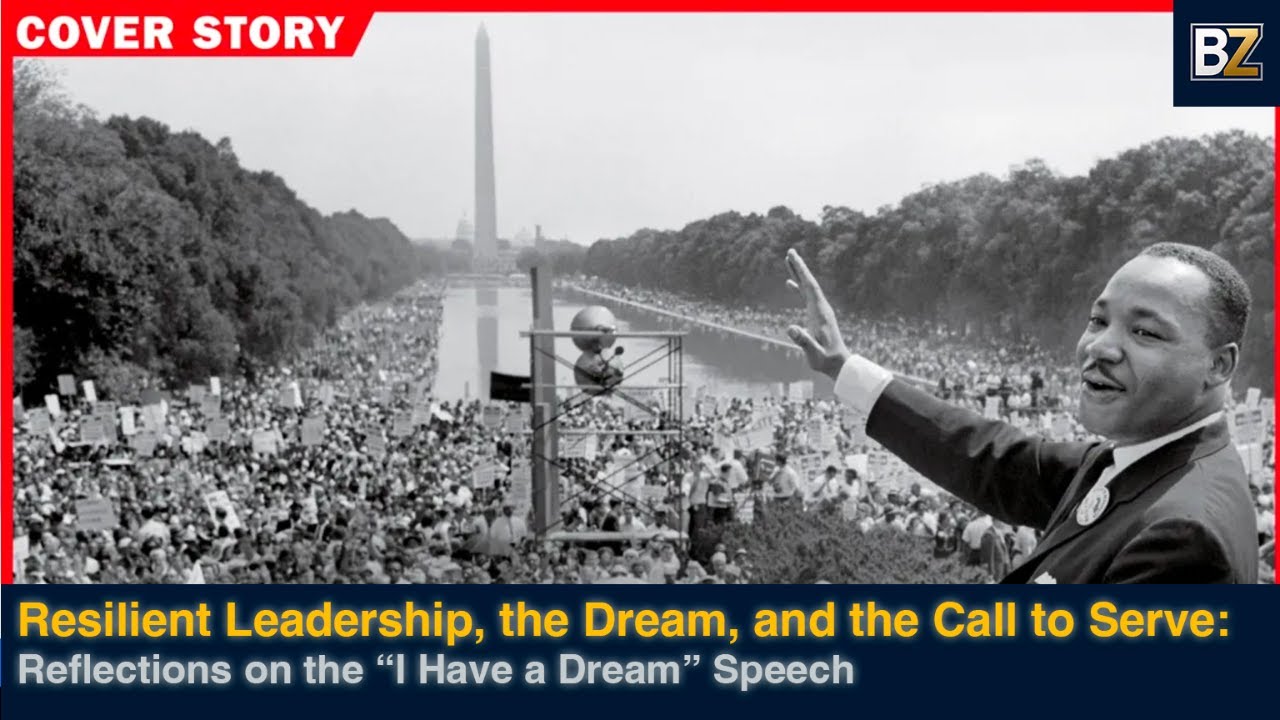
Coach BZ Zinga, a former Navy commander, reads MLK's "I Have a Dream" speech as a leadership manual. He draws three lessons: leadership as service, as a fight for dignity, and as resilience. Zinga traces his own lineage to Queen Nzinga of the Kongo Kingdom and connects the 1619 arrival of enslaved Africans to the dream's unfinished work.
Chapters
Hi, I'm John Maxwell. When the top companies in the world are looking for trainers, speakers, and coaches, there's one name that stands above the rest, and that's Maxwell Leadership. Our certified team members have gotten proven results for companies all over the globe, and our reputation, I I'm proud to say is second to none. Some of our members have risen to the top of their profession, including the one you're going to meet today. I proudly introduce you to my friend, Bob Fabien Zinga.
Welcome to the Leadership and Success Podcast with your host, Coach BZ. If you need to develop into a better leader, this podcast is for you. If you want to achieve a greater level of success, this podcast is for you. His mentor, Dr. John C. Maxwell, said it best: everything rises and falls on leadership. We hope to inspire you today and provide you with an insight that has the potential to positively impact the trajectory of your life. Welcome to the Leadership and Success Podcast. Imagine gaining the leadership skills that could redefine your career. Join Coach BZ on the Leadership and Success Podcast, where each episode delivers practical insights from world-class speakers, military leaders, and industry experts. We dive deep into what matters most: building resilient teams, leading through uncertainty, and navigating complexity with clarity and confidence. Every conversation is crafted for aspiring leaders like you, who are ready to grow, lead, and make a lasting impact. Don't miss our powerful live sessions and recent highlights. Michelle Hayward on building diverse, high-performing technical teams. Ann Leslie on leading through global complexity and cybersecurity risk. Ron Carpenter AI exploring faith, resilience, and AI-powered leadership. Colonel Michelle G.I. Gardner-Intz on commanding influence from the battlefield to the boardroom. Chris Robinson on shifting from drift to drive in life and leadership. And Coach Enrique Acosta Gonzalez on mentorship, legacy, and heart-centered leadership. Ready to level up your leadership journey? Tune in on Spotify, Apple, Audible Podcasts, YouTube Live, and LinkedIn Live. Join the movement toward leadership excellence. Listen now and start transforming your success.
Alright everyone, thank you so much for being with us today. This is Coach Bizzy, and I'd like to welcome you to the Leadership and Success podcast. So first and foremost, I'd like to start our moment of gratitude. It takes less than a minute. It's when we stop for just a second and think about one thing we are grateful for today. So if you would please, Close your eyes if you can, put yourself in your happy place, and think about one thing you are grateful for today. For me, I am very grateful for freedom. Freedom. Yes. And as a naval officer, I took an oath to support and defend the Constitution of the United States against all enemies, foreign and domestic. And also my seller Chris tells me that we are to support and defend freedom and democracy around the world. There is nothing like freedom. I feel like every human being was meant to be free, no matter who they are, where they come from, where they live. And I'd like to celebrate freedom in America today. Please type in the comment what you are grateful for today. I really do appreciate that. Okay, so now, uh, today we're gonna be talking about My reflection on I Have a Dream speech. Actually, this idea came from Jim Lola. He told me to consider writing about this. I don't know if Jim is online right now. For those of you watching after the podcast, if you wanted to come on live for a couple of minutes to kind of discuss your takeaway from this episode, please just type into the, uh, comment, "I want to go live," and I'm gonna make sure to send you the link to the green room. But, uh, anyway, so we are going to be, uh, talking today about, uh, Resilient Leadership: The Dream and the Call to Service. I think this is a very important article, not saying our time in history. We're going to be talking about Dr. King's dream as a leadership compass, right? So we're gonna discover that Dr. Martin Luther King Jr.'s I Have a Dream speech was not just a civil rights rallying cry, but it was a strategic vision of leadership, right? We'll unpack how his call for dignity, justice, and nonviolent resilience translates into timeless lessons for today's leaders. Right now in 2025, we're gonna be talking about the historical context that shapes leadership as well, going back to 1619 when the first enslaved Africans arrived in Virginia and explore why this history still matters today. You will also hear my personal connection as a descendant of Queen Nzinga. My father, Robert Zinga, was named after her, Queen of the Kongo Kingdom with a K. And our resilience from our past can inform how we lead today. And then we're also going to be talking about 3 universal leadership lessons. Leadership is service and sacrifice. Leadership requires fighting for dignity. And leadership is resilience in the arc of justice. I think nothing has prepared me better to talk about this than my 20-plus year service, right, in the United States Navy, the most powerful navy in the world. And then finally, there's going to be a call to action for aspiring leaders. You'll be challenged to reflect on King's unfinished dream, and whether you are a naval junior officer or aspiring to command, or Silicon Valley engineer transitioning into a leadership role, you will learn how to serve with integrity, build inclusive culture, lead with courage and hope, but also take one concrete step this week to bend the arc toward justice. So while you are listening to the podcast, please write notes on what you are learning or what you are being reminded of, and I really appreciate it if you add it to the notes. And as well, if you can think of someone who might benefit from this podcast, I'd be grateful if you would tag them. And also, if you would repost this podcast into your feed so we can reach more people. Yeah, I see Terence Sadler from Boss Louisiana. Thank you so much for being here with us. Really appreciate that. And keep— oh, Terence is also grateful for his family. Thank you. Thanks so much, Terence. This means a lot. And again, by the way, Part of the reason why I do this moment of gratitude is because in the military, more than any other groups within America, it's about what, 21, 22 people who die of suicide every single day, veterans do. And I think it's impossible, right, to be grateful and be suicidal at the same time. So, I think the more we are grateful about things happening in our life, I know there's a lot of bad things happening out there, but if you can focus on the positive and be grateful for something, it's going to help you not get depressed or anxious or feel suicidal. There is more than you going through whatever it is that you are going through out there. So always reach out for help. That is very, very important. Thanks again, Terence, for participating. I really do appreciate that. Okay, with no further ado, I'm going to have my AI agent give us— going to last about 30 minutes— break down my thoughts again about the I Have a Dream speech. Again, you have a question for me, type it in the comment. And then if you want to get on the show with me live at the end to kind of share your takeaway, please just type in, uh, I want to go live, and I'm going to send you the link to the green room. Thanks again for being here with me today.
Welcome to The Deep Dive, your shortcut to being truly well-informed. We take a stack of compelling sources, distill them into their most potent nuggets of knowledge, and serve them up with surprising facts and, uh, just enough humor to keep you hooked.
Hopefully.
Hopefully. So today we're embarking on a journey into something truly, well, monumental. The enduring power of a vision, a dream that has inspired generations and continues to ignite action across the globe.
We're talking, of course, about the profound legacy of Dr. Martin Luther King Jr.'s I Have a Dream speech.
Exactly. Our deep dive today is inspired by an incredibly insightful article penned by Bob Fabien Zinga. He's a decorated cybersecurity executive and also a US Navy commander.
Quite the combination.
Right. His powerful piece titled "Resilient Leadership: The Dream and the Call to Serve" brilliantly unpacks King's timeless message. But not just as, you know, a historical artifact to admire from afar.
No, he frames it as a practical, really actionable leadership manual for today's pretty complex world.
Our mission in this deep dive is crystal clear: we're here to extract those universal, actionable leadership lessons embedded within King's historic words. We'll look at them through Zinga's unique and honestly incredibly powerful lens, a lens shaped by his own personal lineage and extensive professional experience. And our goal is to discover how these fundamental principles can profoundly shape you as a leader. It doesn't matter what field you're in, your industry, or your aspirations.
Yeah, whether you're like Zinga mentions, a naval junior officer aspiring to command, or maybe a Silicon Valley engineer looking to grow into leadership. These insights are really for everyone.
What's truly fascinating here and what gives Zinga's article such resonance is how he doesn't just reflect on King's speech from an academic distance.
Not at all. He deeply weaves in his personal history, and it's quite a history, a lineage stretching back through centuries of struggle and resilience. He puts that alongside his extensive professional expertise in both military and tech leadership.
And that blend gives such a fresh and deeply authentic perspective on what it truly means to lead With resilience, with unwavering purpose, and with, you know, unshakable integrity in any environment.
Exactly. We're going to explore his insights on how King's vision can genuinely serve as a strategic hope for modern leaders. It's presented as a tangible, active force to combat the often, frankly, daunting challenges of our time.
That's precisely it. By the time we wrap up this deep dive, you'll walk away with more than just historical context. The aim is for you to gain practical tools and a renewed, maybe invigorated perspective on what impactful leadership truly looks like.
You'll understand how courage, service, and resilience aren't just these sort of historical ideals or abstract concepts you find in textbooks, right?
Instead, you'll see them as truly essential living attributes for navigating today's complexities, for inspiring your teams, and for making a real lasting impact that goes beyond just your immediate professional goals.
Let's hope so.
Okay, let's unpack this monumental moment in history. Dr. Martin Luther King Jr.'s "I Have a Dream" speech. So it's a sweltering summer day, August 28th, 1963. He's standing before the Lincoln Memorial in Washington, DC.
An iconic setting.
Totally. And King delivered what many, many people widely consider one of the most powerful and influential leadership speeches in all of human history. It was truly a moment etched into the conscience of a nation.
And the sheer scale of that moment, The audacity of it, you just can't overstate it.
Yeah.
He wasn't just talking to the, what was it, quarter of a million people?
Close to 150,000.
Yeah.
Gathered for the March on Washington that day. Just a sea of humanity, all united by this common cause.
But his address delivered with such gravitas, such, uh, spiritual power. It just transcended that incredible crowd. It spoke directly to the conscience of an entire nation and really to the world.
He was calling America to remember, wasn't he? To reckon with and ultimately to fulfill its foundational promise?
Exactly. King masterfully used that powerful analogy of America's promissory note. He wasn't introducing totally new radical ideas.
No, he reminded the nation of its sacred foundational creed, the words enshrined right at its birth: "We hold these truths to be self-evident, that all men are created equal." But then, with just devastating clarity and undeniable moral authority, he called America to account, to actually live up to those lofty foundational words. Yeah, he pointed out the stark, the painful, often brutal gap between that grand ideal and the lived reality for Black Americans who were just systematically denied the very equality and freedom promised in the nation's founding documents.
It was a powerful indictment, but delivered through the language of hope and aspiration. That's key.
What's so significant here, and Zinga highlights this, is how King used those foundational American ideals freedom, equality, justice, not to create new divisions, but actually to challenge the nation to be better, to become its most authentic self.
Right. He didn't seek to tear down the core principles. He sought to fully realize them for everyone. And that strategy, appealing to fundamental, widely accepted values to drive profound social and political change, that's a critical lesson for any leader.
It really makes you think, how do you as a leader appeal to the widely held values and the collective conscience of your community or your organization to inspire genuine action and drive necessary, often difficult, change.
King's genius lay in holding up that mirror, showing America its own reflection—both its aspirations and its failings—and urging it to courageously bridge that chasm between its stated principles and its lived practices.
And that approach built such a broad coalition for change, didn't it? Precisely because it was rooted in shared American values, not just a narrow interest. Exactly.
It wasn't just a cause; it was the American cause.
Framed that way. And to fully grasp the profound power and, frankly, the sheer audacity of King's dream, Zinga insists we need to place it in context—not just 1963, but in the long, dark shadow of history.
Yeah, he specifically points back to August 20, 1619, a critical date often overlooked.
That's when the first enslaved Africans arrived in Virginia, marking the beginning of just a brutal, centuries-long saga.
To truly understand the dream, Zinga argues, we have to understand the nightmare it was born from—the centuries of dehumanization that came before it.
246 years, the institution of slavery was a system of just absolute, unrelenting dehumanization, denying Black people their freedom, their families, their dignity, their basic humanity.
And even after emancipation, that promise of equality remained tragically out of reach. It was suffocated by Jim Crow laws, enforced segregation, and just deeply entrenched systemic racism.
Yeah, it permeated everything—housing, education, voting rights, economic opportunity—everywhere.
This pervasive, enduring context is absolutely crucial to appreciating the audacious hope and the profound courage embedded within King's vision. It wasn't just about changing laws on paper.
No, it was about transforming a deeply ingrained societal structure built on centuries of injustice.
And this weighty historical context, it isn't just academic for Bob Zinga. He carries it, not just intellectually, but as a living part of his identity.
He shares that deeply a deeply personal connection. He reveals in his article that he's a direct descendant of Queen Nzinga of the Congo Kingdom.
Right, the very region in what's now Angola where many of those first enslaved Africans originated. That's a lineage steeped in resistance and resilience.
He states it so powerfully, "I carry that history personally." But then he adds, importantly, "Yet I also carry its hope: that resilience, courage, and dignity can shape leaders who change the future." That really raises an important question for all of us as leaders, doesn't it?
How does a leader's personal history, especially one rooted in deep historical struggle and injustice, how does that imbue their message with profound authenticity, with a powerful, almost spiritual sense of enduring purpose?
It lends an undeniable weight, a kind of lived credibility to their vision, right? When their narrative is so intimately intertwined with the cause they champion. Exactly.
It's not just a message they deliver from a stage. It's a legacy they embody. It's a deeply felt experience that resonates with the people they seek to inspire. It suggests that true leadership isn't just about strategy or tactics.
It's often deeply personal, drawing strength from your own narrative, your own story.
That's incredibly powerful. It makes you consider how a leader's personal narrative, especially one that speaks to overcoming immense systemic struggle, can infuse their message with a level of authenticity and purpose that just resonates far beyond mere words.
It's not just what they say; it's who they are, where they come from, the stories and struggles embedded in their very DNA that give their dream its profound weight and impact. Definitely. So, with all that historical and personal context firmly in place, let's now look at King's dream through a practical leadership lens, the way Zinga does. Zinga makes it clear that King's iconic quote—
the one everyone knows, right?
"I have a dream that my four little children will one day live in a nation where they will not be judged by the color of skin, but by the content of their character. Zinga says that was far more than mere idealism or just a beautiful aspiration.
Absolutely. Zinga asserts quite strongly that King's dream was not idealism. It was a leadership vision. And that shift in framing transforms the speech. It goes from being beautiful rhetoric to being a concrete framework for monumental change.
A genuine, carefully considered strategy for societal transformation.
He calls this strategic hope. And that concept distinguishes itself from just passive optimism. Strategic hope, in Zinga's view, is a vision that doesn't ignore hardship or the brutal realities of injustice. It sees them clearly. Right. But it acknowledges those challenges head-on and persistently, actively works towards a better future. It's grounded in an unwavering refusal to quit. It's hope deployed actively, like a leadership tool, not just passively wished for.
It's the fuel that allows leaders to override that short-term discouragement for the long-term objective. Precisely.
And King didn't just articulate the dream, he outlined the path forward with remarkable clarity and discipline.
He urged his listeners not to wallow in despair, but to continue marching forward with dignity and discipline. That highlights a crucial, maybe often overlooked leadership principle, right? Which is? The imperative of maintaining momentum and purpose, even especially when you're facing what seem like overwhelming odds, systemic resistance, just insurmountable challenges.
It's about steadfastness, a refusal to give in to the crushing weight of the challenge, and a commitment to disciplined action, day after day.
And importantly, he urged nonviolence as a core part of that march forward, a strategic choice for sustainable, constructive leadership.
He wisely noted, "Leadership that destroys cannot build." And from a strategic standpoint, King's unwavering commitment to nonviolence was, well, a tactical masterstroke. How so? It denied his adversaries the moral high ground. It forced the nation to confront its own contradictions through stark imagery. Think Bull Connor's dogs and fire hoses. And ultimately, it garnered broader sympathy and support from people who might otherwise have been alienated by more aggressive tactics.
That raises a really important question for leaders today, doesn't it? Whether you're in a company, a community, a movement, what does it truly mean to choose methods that are fundamentally constructive Even when you're faced with destructive forces or ruthless competition.
It means building bridges, not burning them. Fostering collaboration over division. Seeking solutions that uplift everyone, not just your side.
You can even see that in corporate strategy sometimes, right? Building alliances, even with competitors on certain issues, often yields more sustainable growth than just purely aggressive zero-sum games.
That's a powerful point, bringing it beyond social movements. Okay, let's explore this idea of strategic hope further as King's vision of leadership laid out by Zinga. King's words, in many ways, they serve as an internal compass.
Guiding principles for any leader navigating turbulent waters. Zinga distills 3 key points on this compass: courage, hope, and service.
Okay, let's take the first one. Courage in the face of fear. King didn't just talk about courage, he demonstrated it.
Constantly. And this isn't the simplistic idea of just not feeling fear. It's the profound act of choosing to act decisively and morally despite overwhelming fear, despite threats to his life, despite jail time.
So the truly fascinating insight here is the practical challenge. How does the leader actually cultivate that kind of courage, not just in themselves, but within their teams or organizations, especially when facing daunting challenges or maybe unpopular decisions that demand moral clarity?
It often starts with creating an environment where speaking up isn't just tolerated but actively valued, maybe even rewarded, right?
Exactly. Implementing accessible feedback channels, openly discussing past failures as learning opportunities, and maybe most crucially, leaders modeling vulnerability, acknowledging their own fears while still moving forward with conviction.
It could even mean explicitly recognizing and celebrating teams or individuals who bring challenging but necessary truths to light, even when those truths are uncomfortable for leadership.
That's precisely the dynamic Zinga highlights. Okay. Secondly, King showed us the indispensable role of hope in the face of despair. He demonstrated that hope is not some luxury or a naive fantasy.
It's a profoundly practical and essential tool for leadership.
It provides crucial direction and unwavering motivation precisely when circumstances seem bleakest, when the path forward is foggy, and when the odds feel stacked against you. It's that steadfast belief in a better achievable outcome that fuels the persistent effort and sacrifices needed.
It's the difference between just wishing for change and actively strategically working towards it.
Yep. And thirdly, King offered a powerful, though maybe often implicit, call to service in the face of selfishness. A profound call for leaders to prioritize the collective good, the well-being of the broader community, over personal gain or individual ambition.
And that directly foreshadows Zinga's later, more explicit points on the absolute imperative of servant leadership, where true leadership is fundamentally about your impact on others, about uplifting those you serve.
If we connect this to the bigger picture, these three points—courage, hope, and service—they really form a foundational triad for ethical, effective, and truly resilient leadership across any domain—military command, tech startup, community group.
They serve as that internal compass for making difficult, often morally gray decisions. Yeah.
When a leader consistently asks themselves, am I demonstrating courage here? Am I actively fostering strategic hope in my team? Am I truly serving the needs of my people and the mission rather than my own ego? It guides them towards choices that are principled, sustainable, and ultimately way more impactful.
It creates that bedrock of trust and purpose.
Mm-hmm. But despite the monumental impact of King's speech and the progress it inspired, Zinga powerfully reminds us that the dream remains, in many ways, unfinished.
He acknowledges the incredible strides, things like the historic election of Barack Obama in 2008 as the first African American president. Undeniably, a huge, symbolic step toward the dream that once felt impossible.
Crucially, though, Zinga states, with this unflinching realism that resonates today, We are not yet a post-racial nation. The dream is unfinished. And that's not cynicism, is it?
It's a call to keep working.
Exactly. It raises that important question for current and aspiring leaders: What does an unfinished dream truly mean for us today, right here, right now, in our own spheres of influence?
It means the work isn't done. It means that while crucial battles were won, major legislative milestones achieved, the larger struggle for true, Systemic equality and justice for a society where character genuinely outweighs color, that persists.
The call to action that King issued decades ago is still profoundly relevant. It's still echoing, demanding our attention and our leadership.
And that, I think, is a powerful and very personal connection point for you listening now. How does this idea of an unfinished dream resonate with your own experience? Think about progress versus persistent unresolved issues in your field, your community, maybe even your personal life.
What areas in your sphere of influence still await that bending of the arc toward justice, as King so eloquently put it, echoing Theodore Parker?
That phrase is so powerful because it suggests that despite setbacks, there's this inherent moral trajectory towards fairness, but it demands our persistent daily effort to help it along.
Yeah, it forces us to look beyond just the grand pronouncements and into the everyday realities, into the tangible micro-moments where we can actually make a difference.
Now, Zinga brings this deep historical reflection right into the present. He offers 3 universal leadership lessons extracted from King's enduring dream.
And remember his background: trusted cybersecurity executive, information warfare commander in the Navy. He views King's speech as way more than just history. He sees it as a practical, indispensable leadership manual full of actionable wisdom.
He emphasizes really strongly that these lessons aren't just for civil rights icons or historical figures. They are for anyone who aspires to lead effectively.
From that naval junior officer aspiring to command to a Silicon Valley engineer seeking to grow into leadership, or, you know, a community organizer, a team lead, a CEO. These are fundamental truths for anyone aiming to lead with purpose and impact.
Okay, let's unpack these 3 universal lessons Zinga has distilled. Lesson 1: Leadership is service and sacrifice.
King famously declared, we cannot walk alone. Which has profound implications, right? It's not just about solidarity or mutual support. It's a foundational statement about collective advancement, a recognition that true progress is a shared journey.
Zinga interprets this to mean that true leaders lift others as they climb. It's not about pulling people up from some high perch, but being actively engaged in that shared journey, creating an environment where everyone rises together, where individual success is tied to collective growth.
And he states it very directly, no mincing words: "Sacrifice is not optional; it is the price of trust." That's a profoundly powerful point.
It really challenges many conventional ideas of leadership, doesn't it? Totally.
Giving of yourself—your time, your comfort, maybe recognition, even professional resources—that builds genuine loyalty and deep credibility. Because your team sees, unequivocally, that you are truly invested in their well-being and success, not just your own bottom line or career.
I absolutely agree, sacrifice builds trust. But, you know, for many leaders under intense pressure— startup racing against time, military command facing threats— the idea of sacrificing personal comfort or even career advancement can feel, well, counterintuitive to survival or perceived success. That's the tension. So how does Zinga bridge that gap? The ideal of selfless service versus the pragmatic, sometimes brutal realities? He offers that practical coaching prompt, the Eat tip: Ask yourself daily, "How am I serving my people before myself?" That daily reflection forces leaders to consciously shift focus from their own agenda to the genuine needs of their team.
What does that look like practically, beyond the abstract?
It could be a manager maybe forgoing a promotion they deserve to develop a successor first. Yeah. Or taking on less glamorous but essential tasks to clear the path for their team.
Or simply spending more dedicated time really listening to and mentoring team members. Understanding their challenges, their aspirations, not just dictating tasks. Those small, consistent acts build that trust over time.
And Zinga deepens this lesson with powerful biblical context, grounding the principle of service in timeless wisdom that transcends any specific creed or profession.
Yeah, he cites Matthew 23:11: "The greatest among you will be your servant." That's a radical inversion of traditional power structures.
And Mark 10:45 reinforces it: For even the Son of Man did not come to be served but to serve and to give his life as a ransom for many.
Zinga presents these not just as religious texts but as profound truths about human interaction and influence. The leadership insight is strikingly clear: service is the undeniable, true measure of leadership.
The greatest leaders are those willing to consistently put others' needs above their own, to genuinely invest in the growth and well-being of their people.
Sacrifice isn't weakness. It's the crucible where trust is forged. It inspires profound loyalty because people inherently follow leaders who are demonstrably invested in their success and well-being, not just their performance metrics.
It changes the dynamic from just a hierarchical transactional relationship to one of mutual support, respect, shared purpose. Exactly. So a practical coaching prompt for you, our listener, to maybe mull over this week: Where can you intentionally step into a servant leadership role today? Maybe in a way you haven't servant before.
What personal comfort, convenience, maybe even a career opportunity might you thoughtfully need to sacrifice to truly show your team that their growth and success genuinely come first?
It might seem small, but the long-term impact on trust and team cohesion could be immense.
And if we extrapolate from this, think about the profound long-term impact of building a culture explicitly on servant leadership versus one driven solely by self-interest and individual ambition.
What does that look like?
A culture of service cultivates deep loyalty. It fosters psychological safety, where people feel secure enough to take risks, innovate, even admit mistakes without fear of blame. It instills a powerful shared sense of purpose.
It inherently builds remarkable resilience within an organization, doesn't it? Because people feel supported, valued, genuinely cared for. They're far more likely to weather challenges together, adapt, and emerge stronger as a unit.
It's a powerful engine for enduring success.
Okay, moving to Lesson 2, which is just so deeply resonant with King's entire mission: leadership requires fighting for dignity. King, in a speech, he didn't ask or suggest. He demanded that America honor the dignity of every citizen.
It wasn't a mere suggestion. It was presented as a fundamental, non-negotiable requirement for a just and equitable society, a prerequisite for peace and progress.
And Zinga draws that powerful, deeply personal historical parallel here, connecting King's demand to his own lineage.
He says, "Queen Nzinga resisted the Portuguese for the same reason: dignity." Wow, that connection highlights the timeless and universal nature of this struggle for human worth. The fight for dignity isn't some modern invention; it's an ancient, ongoing human imperative, a fundamental need transcending cultures, eras, borders.
It's an innate human right.
And Zinga extends this crucial concept from that broad societal level right down to the nuts and bolts of everyday interactions within organizations. He says leaders must be guardians of respect in every team and organization.
So it's not enough to just preach dignity from on high. Leaders have to actively, consistently ensure it's upheld and protected in their daily environments. Every meeting, every conversation, every decision. It requires constant vigilance.
And his practical tip: create environments where every voice matters. A diverse team is a stronger team. This isn't just a feel-good slogan or corporate jargon.
No, it's a direct, tangible outcome of fighting for dignity. Fostering true psychological safety and genuine inclusivity directly affirms the worth and value of every single individual.
It allows them to contribute their unique perspectives, their innovative ideas, their authentic selves without fear of judgment, marginalization, or dismissal. When people feel truly valued, their contributions just flourish.
Zinga again reinforces this with profound biblical wisdom, emphasizing these deep historical and moral roots.
Proverbs 31:8 powerfully instructs, "Speak up for those who cannot speak for themselves, for the rights of all who are destitute." And Isaiah 1:17 further commands with this urgent call to action: Learn to do right, seek justice, defend the oppressed, take up the cause of the fatherless, plead the case of the widow. These aren't abstract concepts. They are direct mandates for empathetic, protective leadership.
The leadership insight here is absolutely unambiguous. Dignity is not negotiable. Leaders must be, by definition, advocates for the voiceless, fierce defenders of those whose worth is ignored, diminished, or actively challenged.
Protecting and championing dignity isn't just the moral thing to do. It directly creates vibrant, resilient cultures of respect where people feel safe enough to thrive, to innovate without fear of failure and to give their absolute best.
It's the key that unlocks human potential, fosters creativity and commitment.
So to apply this directly, ask yourself this week, who in your team, your organization, maybe even your broader community might feel unseen, unheard, or undervalued?
How will you intentionally use your voice, your influence this week to affirm their dignity, to make them feel truly seen and to protect their rights, ensuring their contributions are recognized and respected?
It's about being actively observant, empathetically responsive, and intentionally supportive.
And to extrapolate further, think about the truly tangible, measurable benefits when an organization moves beyond just lip service and genuinely champions dignity, ensuring every voice matters and is heard.
What are these benefits?
We're talking about a significant increase in innovation, right? Because diverse perspectives aren't just present; they're actively sought out and integrated. We see higher employee retention rates because people feel genuinely valued and respected. That leads to a more stable, experienced workforce.
And there's enhanced problem-solving capacity because you've got a wider, richer range of ideas and experiences brought to the table to tackle complex challenges. A dignified environment isn't just ethical, it is profoundly strategically advantageous. It creates a competitive edge. Definitely.
This brings us to lesson 3. Perhaps the most vital for that long-term vision. Leadership is resilience in the arc of justice. King's enduring vision, captured in his powerful, quote, "The arc of the moral universe is long, but it bends toward justice." Such a profound and frankly comforting metaphor.
It provides essential perspective. It sustains hope during those long, protracted struggles. It reminds us progress isn't always linear or immediate or easily won.
It's a journey, not a sprint.
And Zinga connects this deep philosophical truth directly to the necessity of action. Progress requires resilience, the refusal to quit. He defines resilience not as just passive endurance of hardship.
It's more active than that.
Yes, it's an active, persistent, almost defiant pursuit of a vision, especially when the path is difficult, when setbacks mount, and when the goal seems distant. Leaders have to understand deeply that setbacks are an inevitable, integral part of any meaningful journey. They're not a sign of failure.
It's about learning from them and relentlessly pressing forward.
This means leaders must hold the long view while pressing forward daily. It's that delicate, crucial balance of visionary thinking, seeing the ultimate destination, the desired future state, with the practical, consistent, often gritty effort required each and every day to move incrementally toward that goal.
You can't just dream; you have to do. You have to put in the consistent, disciplined work, even when that work feels mundane or unrewarding in the short term. It's about sustaining momentum through the long haul.
He offers another vital Sikh tip, a kind of personal mantra for leaders: "When the road is hard, repeat this truth: I will not give up.
The dream is worth it." That's a powerful, almost meditative technique, isn't it, for leaders to internalize and then externalize that unwavering commitment, to articulate their steadfast purpose to motivate themselves and their teams, especially when faced with adversity, discouragement, or seemingly insurmountable obstacles.
It's a way to rekindle that flame of purpose.
Once again, Zinga provides a powerful biblical foundation for this lesson on resilience, highlighting its universal and enduring nature. Galatians 6:9 states with timeless wisdom, let us not become weary in doing good, for at the proper time we will reap a harvest if we do not give up.
That powerfully frames enduring effort as an investment that will eventually yield results. And Joshua 1:9 offers profound encouragement that transcends any specific challenge. Be strong and courageous. Do not be afraid. Do not be discouraged, for the Lord your God will be with you wherever you go.
That speaks to an inner strength and maybe an external support that underpins true resilience.
The leadership insight here is unmistakably clear. Resilience is not just about bouncing back from difficulty. It's about persistent, unwavering forward motion in the face of difficulty and unwavering courage in the presence of fear.
The journey of leadership, whether leading a company, a movement, a family, it's inherently long, often fraught with setbacks, resistance, criticism, moments of profound doubt.
Resilient leaders keep pressing forward. They're grounded in that active, strategic hope, sustained by their profound sense of purpose and driven by the unshakable belief that the effort is not only worthwhile but absolutely essential for building a better future. It's the engine of enduring impact.
So here's a coaching prompt for you to maybe reflect on. What is one area of your leadership where you currently feel worn down, where the road feels particularly hard and progress seems painfully slow?
How can you intentionally reframe that challenge not as a dead end, but as a necessary, maybe even formative step toward the ultimate harvest, toward realizing your long-term vision?
And crucially, what small daily practice will you adopt to consciously strengthen your resilience and maybe that of your team, transforming obstacles into opportunities for growth and adaptation? It's about finding that inner wellspring of determination and consistently drawing from it.
And thinking about this broadly, how can leaders cultivate resilience not just individually as a personal trait, but systemically within their organizations? Wow. It's about building robust processes, fostering supportive, psychologically safe cultures, Providing tangible resources, training, mentorship, maybe just permission to fail forward, things that prepare teams for those inevitable challenges and setbacks.
It transforms them from being reactive to problems into being proactive, maybe even antifragile units that can turn obstacles into opportunities for collective growth and adaptation.
Yeah. Creating a culture where perseverance is celebrated and learning from adversity is just ingrained in how things are done.
Now let's bring it all back to Bob Fabien Zinga himself. How does he embody these very principles he so eloquently extracts from King's speech? His professional background is incredibly multifaceted, dynamic.
Yeah, he's a trusted cybersecurity executive, a distinguished information warfare military commander in the US Navy, and a respected servant leadership coach.
He effectively bridges worlds, doesn't he? Over two decades of extensive experience leading high-performance teams in both the high-stakes military and the fast fast-paced Silicon Valley environments.
That unique background gives him an unparalleled ability to connect diverse fields and challenges, from protecting national security in the digital space to fostering innovation in the tech sector. Now, when we say "Information Warfare Commander," what does that entail? We're talking about someone leading teams in the crucial realm of cyber operations, intelligence, protecting national security in the digital domain. A field that absolutely demands courage, resilience, and strategic thinking. And he also has a significant community impact.
Yeah. Serving on boards like the United Cybersecurity Alliance, the AZ Cyber Initiative, actively mentoring the next generation of diverse cybersecurity professionals.
Equipping them not just with technical skills, but with the kind of leadership acumen we've been discussing.
Zinga's personal leadership philosophy isn't just theoretical. It's deeply rooted in explicit non-negotiable commitments he lives by. Like unwavering integrity and excellence, a commitment to learning daily, continuously, fostering flexibility and taking full ownership. Absolutely no blaming others, only responsibility. That's huge. A dedication to service and mentorship, always paying it forward. A relentless focus on execution, doing what he says he will do, and a passion for empowerment, actively growing people, developing future leaders.
His mantra: speed to business results. Combined with core values like service, leadership, excellence, honor, and growth, it really defines his comprehensive, action-oriented approach.
And his stated purpose resonates so deeply with King's vision—to make cyberspace safer and inspire people to reach their highest potential.
What's truly fascinating and inspiring here is how these explicit commitments and values guiding Zinga's daily work directly unequivocally align with the 3 leadership lessons he pulled from King's dream.
It's not just theory for him. It shows a leader who actively embodies through every decision and interaction the very principles he advocates. It makes his message profoundly authentic and actionable.
You can almost argue Zinga's strategic hope aligns closely with elements of, say, transformational leadership, where a leader inspires change through a compelling vision and personal conviction. Mm-hmm. But he adds that critical layer of unwavering perseverance, even when the vision seems distant. He embodies that fusion.
And just like King, Zinga too has a profound dream for the future, one that echoes the aspirational spirit of '63 but is firmly rooted in today's challenges.
He dreams that America's future leaders across all sectors will consistently put people before power, that organizations will genuinely value character above color and merit above bias, and that leadership in institutions as diverse as the Navy, Silicon Valley, and beyond will profoundly reflect service, courage, and hope. Just consider for a moment the profound, transformative shift in organizational culture and the immense societal impact if those dreams were fully realized. It's truly a vision of what's possible.
A leader's personal dream, especially one so deeply connected to justice, human potential, the betterment of society, it doesn't just guide their professional actions.
No, it becomes the animating driving force behind every decision, every initiative, every mentorship opportunity. It serves as a true north star for their entire career, shaping their legacy and the lives they touch.
As we start to wrap up this deep dive, Zinga brings us back to the work still ahead. He acknowledges, with a balanced view, the significant progress we've undeniably made as a nation.
Obama's presidency, crucial civil rights legislation, greater representation in many fields— progress is real.
But he's also unflinchingly clear and realistic. Racism, inequality, and division remain. This underscores forcefully that King's unfinished dream is very much an ongoing reality, a persistent, urgent call for renewed, purposeful leadership in every generation.
He then challenges us profoundly with one of King's most enduring and revealing quotes. The ultimate measure of a man is not where he stands in moments of comfort and convenience, but where he stands at times of challenge and controversy. Oof.
That quote forces some deep self-reflection about our own leadership, doesn't it? What does it challenge you to confront about your leadership style or approach? Especially when things get difficult, when the path is unpopular, or when standing for what's right might cost you personally or professionally.
It's about principled action, not just easy wins. Moral fortitude in the face of pressure.
And this is where it gets truly fascinating and incredibly personal. Zinga directly addresses you, the listener, saying, "Aspiring leaders, you are the measure of progress." He emphasizes this profound personal responsibility that extends far beyond any job description.
Every decision you make, every team you lead, every life you touch, you are either bending the arc toward justice or away from it.
Wow. The impact of your leadership isn't just large-scale, reserved for historical figures. It's in the daily actions, the countless micro-moments of leadership that define your influence and shape the world around you. Right now.
He then concludes with this powerful, direct call to action, poses a series of actionable questions inviting not just reflection, but commitment.
How will you serve with integrity and sacrifice for others?
How will you fight for dignity in your teams and organizations, ensuring every voice truly matters?
How will you practice resilience when the dream feels far away, when the challenges seem overwhelming?
And finally, how will you model the leadership that builds a better future?
One interaction at a time. These aren't rhetorical questions, are they? They're actionable prompts for self-assessment, for intentional leadership, and for a deep, ongoing commitment, inviting a profound shift from passive learning to active, intentional implementation.
Ultimately, it's a powerful call to a collective ongoing effort. As Zinga so eloquently urges, together, let us lead with courage, with respect, with hope so that honor and equality are more than words, but lived realities for all.
That vision, that work, it continues with each of us. Mm-hmm. So we've taken a deep dive into Dr. Martin Luther King Jr.'s I Have a Dream speech illuminated through the incredibly practical and personal lens of Bob Fabien Zinga's powerful article.
We've seen how King's enduring message offers these timeless actionable lessons for resilient leadership in any context.
Leadership as selfless service and genuine sacrifice.
The non-negotiable imperative to fight for dignity in every interaction.
And the unwavering resilience needed in the long, often tough pursuit of justice.
And these aren't just historical footnotes to admire from afar; they are vital, actionable principles for leadership in any domain—whether you're navigating national security complexities, innovating in Silicon Valley, or leading a team in your local community—today and tomorrow.
You haven't just heard about a speech. Hopefully you've gained a profound framework for understanding and enacting powerful, resilient, and truly impactful leadership in your own life and work.
The dream may be unfinished, but the work is continuous.
So consider this as you go about your week. If every single interaction you have as a leader, every decision, every word, every gesture is an opportunity to either bend the arc towards justice or maybe inadvertently away from it.
What small intentional action will you take tomorrow to ensure your influence always moves in the direction of King's profound, enduring vision?
That's your challenge and your opportunity to write the next chapter of that unfinished dream.
All right. Thank you so much for being with me today. Again, if you wanted to come on live for like a minute or two, maybe share your thoughts or your biggest takeaway from this episode, you are welcome to let me know in the comment. This was really everything I wanted to share today. Let me see if there are any questions on LinkedIn or YouTube. Let's see. Okay, I don't see a question. Again, I want to acknowledge Terence again. He Let me find it. Uh, okay, here we go. Karen said, uh, that's an excellent ACT question, busy, active critical thinking. ACT. Thank you so much for sharing your thought. Please share your takeaway and specifically something that you are going to put into practice, uh, today. And by the way, Terence, I sent you a link to the green room if you want come online for like a minute or two, discuss this episode, you can. You do not have to, but you are open to do that. In the meantime— oh, actually, let me— oh, here he is. All right, Terence Sadler, here you are live. Thanks so much for being here. You're a very brave man. How are you doing today? I cannot hear you yet. No, I still cannot hear you. Maybe your microphone. Got it. Okay, now I can hear you. Fantastic. Laptop and guest. Yes. How are you doing today, sir? And thank you so much for being courageous enough, uh, to come on live.
Uh, I'm doing great. I apologize for my appearance with the t-shirt and everything. This is my daily uniform of the day.
I live in Northern California. I used to wear a suit every day to work when I was in the Southeast, but in California we wear shorts and sandals. So welcome. So just quickly, if you wanted to share some of your thoughts, maybe some takeaways of things that people should think about related to what we covered in the episode today.
Well, Um, I do think that we need to really use active critical thinking to evaluate our roles, our life, our day-to-day interactions with individuals. And it's not simply asking questions, asking critical questions and using the right framework is what allows us to improve overall. If we ask poor questions, we're going to get answers to those questions, but they're not going to be useful answers, not to the degree of the question that you posed in the in the video chat.
Wow, that is quite powerful. What is one thing you think, especially aspiring leaders, which is my focus, right, especially in the military and in technology? So because sometimes I feel like what we go through in life could be overwhelming and we feel like there is not much— me as a single individual, I can't really make make a difference. But what do you think, as a leader and aspiring leader, what can each individual person do, you think, even if it's very small, that could strategically, you know, eventually be a big deal if we all did just a little bit of it?
I think the most important thing would be to start each day with gratitude. Yes, gratitude for life, gratitude for opportunities, gratitude for our jobs and ability to interact with other people, to become part of a community.
Yes, thank you so much. And today I was grateful for freedom and you were grateful for your family. There's definitely nothing more important than the family. And remind me again, I know you are a veteran. Which branch of service and what, uh, did you do when you were in the military?
Yeah, um, I, like you, I was in the United States Navy. I served from 1984 to 2004. I I was a cryptologic technician.
That is amazing. That is great. And every time I see a veteran, I want to say thank you for your service, but not just you, but also your significant other, you know, wife, husband, whoever, and your children, because I know it's not just you, it's always the entire family that serves. So, uh, definitely leadership for service is one of my main core values. I think that's definitely the way we add values to others by serving them. So servant leadership is definitely key. So I am, I am very, very grateful, uh, you were brave enough to, to come on, on the call, uh, today. I do appreciate that. Is there anything else you would like the, uh, audience, uh, to know?
Well, I would, I would ask you, um, what do you think is the most important lesson that you learned from your journey preparing that, uh, your, your, your deep dive on Dr. King there? What do you think was the most important takeaway for you?
Well, I think, um, one of the most important things I got out of it is we tend to be selfish in life, and that is perfectly fine, right? It is, it is natural. But, uh, as you become more and more successful and you start to achieve your own goals and and dreams, I think you come to a point my mentor Dr. Maxwell says, right, once you test significance, success will no longer satisfy, right? Because there is at this— you get to a certain point, right, you can only live in one house at a time, you can only drive one car at a time, right? You can only ride on one ship, one, one boat at a time. So it's— you're gonna get to a point where another house, another car is not going to satisfy anymore. So I think it's perfectly fine as you are trying to find your way in life, talking to the aspiring leaders in the military and in technology, for you to be kind of selfish, me, myself, and I, perfectly fine. There is nothing wrong with that. However, once you get a certain level of success, I think it is time for you to start helping other people reach their dream. So if you have a dream, it's a dream not just for you, but for your entire community, for people who come after you. For example, I've been in the Navy more than 20 years now. At some point, I'm going to be forced to retire, either voluntarily or the Navy is going to say, okay, I will no longer promote you, Commander Zinga, it's time for you to go find something else to do, which is fine. But then what about the people who are going to take over my position? What about the people who are going to become the next sentry and guard my post when I'm no longer here? And I know in the military, especially in the Navy, I know we have a culture where every time we get a new position, you're always thinking, who's going to be my relief? And thinking about the future. In the industry, that's not always the case. But I guess what I am saying is, as you are growing, as you are learning, like I have Colonel Fred Stein on the podcast last week, one important thing he says is, you have to learn, but after you learn, you also have to teach, right? So it's a responsibility you have, I think, as a leader, not just think about yourself, but think about your community, think about your organization and think about strategically the next people who are going to take over your position. So I think as you, as you learn, you need to teach. And as you become more successful, you need to help other people become successful too. I think that's, that's really one of the greatest lessons I've learned from Dr. Martin Luther King. It's not just about me, myself, and I, but it's about me and my entire community, what I can do, even if it's not very significant, even if it's small, what I can do to help somebody else. Being a servant leader where I am right now is really what I would say. Thank you. Thank you so much for sharing. I really do appreciate that. And thank you again for being one of my teachers today and adding on what we are learning. And another thing I've really learned even from 4-star General David Petraeus, which I featured my friend in the spotlight Yesterday, he's achieved so much, so many accolades, and more than any other that I know, any, any, any other officers has done in the military, I think, this century. But even with all of that, he's still a very, very humble person. And, uh, that is really incredible, right? That you, you might have achieved so much on your own, and you definitely deserve all of the accolades, but at the same time you're still thinking about the next people. And I think that connection, that thought, you talked about being grateful, that feeling of gratitude but also of service, I think that's really what distinguishes you, I believe, from the crowd. Because people, like Oprah said, will never— may forget what you say, but they will never, never forget how you made them feel.. And your ability as the leader to make the least among us feel worthy and that what they think matters and that they are valuable to society, I think that really makes a world of difference. So, all right. Thank you. Thank you so much, Terence. I really do appreciate that. I'm going to end the show by playing a 5-minute of the I Have a Dream speech. I think the greatest speech that's ever been spoken in leadership, I think, our world. And after that, I'm gonna play, I think, about 4 minutes of "Yes, Yes We Can." Again, it's not political or anything, but just something to inspire you to know that you and I, we can make the difference, right? If tomorrow is going to be better, it's going to be up to you and me. Martin Luther King did what he could when he was alive, and I think today the baton is up to us to do something that is going to make a difference. Again, where we are in our industry, our society, our organization and our community. And thanks again for being on The Culturalist. I really do.
Thank you for having me. Okay.
I have the pleasure to present to you Dr.
Martin Luther King Jr. I am happy to join with you today in what will go down in history as the greatest demonstration for freedom in the history of our nation. Five score years ago, A great American in whose symbolic shadow we stand today signed the Emancipation Proclamation. This momentous decree came as a great beacon light of hope to millions of Negro slaves who had been seared in the flames of withering injustice. It came as a joyous daybreak to end the long night of their captivity. But 100 years later, the Negro still is not free. 100 years 100 years later, the life of the Negro is still sadly crippled by the manacles of segregation and the chains of discrimination. 100 years later, the Negro lives on a lonely island of poverty. I have a dream that one day— This nation will rise up and live out the true meaning of its creed: "We hold these truths to be self-evident, that all men are created equal." I have a dream. That one day on the red hills of Georgia, the sons of former slaves and the sons of former slave owners will be able to sit down together at the table of brotherhood. I have a dream that one day even the state of Mississippi, a state sweltering with the heat of injustice, where injustice, sweltering with the heat of oppression, will be transformed into an oasis of freedom and justice. I have a dream that my four little children will one day live in a nation where they will not be judged by the color of their skin but by the content of their character. America, I have a dream today. I have a dream that one day down in Alabama, with its vicious racists, with its governor having his lips dripping with the words of interposition and nullification, One day right down in Alabama little black boys and black girls will be able to join hands with little white boys and white girls as sisters and brothers. I have a dream today. I have a dream that one day every valley shall be exalted, and every hill and mountain shall The high places will be made low, the rough places will be made plain, and the crooked places will be made straight. And the glory of the Lord shall be revealed, and all flesh shall see it together. This is our hope. This is the faith that I go back to the South with. With this faith, we will be able to hew out of the mountain of despair a stone of hope. With this faith, We will be able to transform the jangling discords of our nation into a beautiful symphony of brotherhood. With this faith, we will be able to work together, to pray together, to struggle together, to go to jail together, to stand up for freedom together, knowing that we will be free one day. This will be the day when all of God's children will be able to sing with new meaning, "My country, 'tis of thee, sweet land of liberty, of thee I sing. Land where my fathers died, land of the pilgrim's pride, from every mountainside let freedom ring." And if America is to be a great nation, this must must become true. So let freedom ring from the prodigious hilltops of New Hampshire. Let freedom ring from the mighty mountains of New York. Let freedom ring from the heightening Alleghenies of Pennsylvania. Let freedom ring from the snow-capped Rockies of Colorado. Let freedom ring from the curvaceous slopes of California. But not only that, let freedom ring from Stone Mountain of Georgia. Let freedom ring from Lookout Mountain of Tennessee. Let freedom ring from every hill and molehill of Mississippi. From every mountainside, let freedom ring and ring again. When we allow freedom ring, when we let it ring from every village and every hamlet, from every state and every city, we will be able to speed up that day when all of God's children, black men and white men, Jews and Gentiles, Protestants and Catholics, will be able to join hands and sing in the words of the old Negro spiritual: spiritual. Free at last! Free at last! Thank God Almighty, we are free at last! It was a creed written into the founding documents that declared the destiny of a nation. Yes, we can. It was whispered by slaves in abolitionists as they blazed the trail toward freedom. Yes, we can. Yes, we can. It was sung and sung by immigrants as they struck out for the shores of pioneers who pushed westward against an unforgiving wilderness. Yes, we can. Yes, we can! It was the call of workers organizing, women who reached for the ballot, a president who chose the moon as our new frontier, a king who took us to the mountaintop, and pointed the way to the promised land. Yes, we can to justice and equality!
Yes, we can! Yes, we can! Yes, we can!
Yes, we can! Yes, we can! Yes, we can! Yes we can! Yes we can to opportunity and prosperity. Yes we can to opportunity and prosperity.
Yes we can heal this nation— Heal this nation!
Yes we can repair this world! Yes we can! Yes we can! Yes we can! Yes we can! Yes we can! Yes we can! Yes we can! Sí se puede! We know the battle ahead will be tough, but always remember that no matter what obstacles stand in our way, nothing can stand in the way of the power of millions of voices calling for change. We won't change. We have been told we cannot do this by a chorus of cynics. They will only grow louder and more disillusioned. We've been asked to pause for a reality check. We've been warned against offering the people of this nation false hope. But in the end, right is wrong and it doesn't matter. There's never been anything false about that. We will remember that there's something happening in America. That we are not as divided as our politics suggest. That we are one people. We are one nation. And together we will begin the next great chapter in the American story with three words that will ring from coast to coast, from sea to shining sea. Yes! We can— Yes we Can? "We... yes!" Ooh-hoo hoo ho oho ohh-o-ooo?! Ohhh!! Yeah yeah yeeeahhhh!!! Mmhmmm mmhm mmmm-mm-mmh hmm hum hm um huh uh huuhu oui! Hiiiiaaaauuuunnnnghsiiihggyyyyyyeh gyyeeeah ooowwweeeyyyyeeeehaaaaan!? Uhu/hum, ouhouoouwwwww! Ouwhooooew hey ey ehyeihiighyeayheheyhee heyaughieeaagh yeahyeeaaghigh-yeggaiah yooyaaaaawwyiyeah! You know what I'm saying?? Uh ha uhum wow haha see ya later guys! Bye-byes for now...
Brrrrooomphomfam.com www.bromfarm.org/farm/ All right, this is it for today. The last thought I'm going to leave with you, as a military commander, I am willing to give my life for the dream that is America. You know, I was born in the Congo, Central Africa. I am French by culture and American by choice. I've never— I don't know of any other country that has a dream. I think America is the one and only country in the world that has a dream, the American dream. Nobody else has a dream everywhere in the world. So America is definitely worth fighting for. And I remember the word of General Stephen Michael, U.S. Army. He said, "Great test on the planet. No other nation like it. America is a very special place. It all starts with that Constitution of ours, written not because of where we were back then, but where we aspired to be. There is that aspiration, there is that hope. And I know America can be all that it can be. Like Abraham Lincoln said, right, a country of the people, a government of the people, for the people, and by the people. There is no other nation like it. It's not perfect, but I think we get better every single day, right? We progress toward that arc of justice, for justice for all of its citizens. So I want to be part of a solution, not of a problem. So the last thing I'm going to leave with you You are a leader. And as an individual, I think you can make a difference, if not for the entire community, for the person to your right, for the person to your left. And as we do that and we add value to the people around us, I think we can make America a much better place, a place we all going to be so proud of. Okay, that's it. I'm going to be back here tomorrow. I think I'm going to have one more episode about I Have a Dream. This time, instead of being an hour like it is now, it's just going to be 10 minutes. A 10-minute summary that my AI agents are going to create. So meet me back here again tomorrow, 6:30 AM Pacific time and 9:30 Eastern time. So until then, have a wonderful day. Thank you for being here. Bye everybody. This is Coach Bizzy. Thanks for watching. Until next time, don't forget to like, comment, and share.
Thank you for listening to the Leadership and Success Podcast with your host, Coach BZ. If you like what you heard, please subscribe to our channels and come back for more wisdom nuggets on how you may develop into a better leader and achieve greater levels of success. Leadership is the most critical skill. The world will always need leaders to lead others, deploy the next disruptive technology, or execute a business strategy, you may as well decide on counting yourself among the 21st century leaders. See you right here next time on the Leadership and Success Podcast with Coach BZ.
More from Bob

S250:E4🎙️LIVE 🇺🇸America 250: President Barack Obama Leadership, Service, and the Power of Hope






S5:E157🎙️ LIVE with CMD CMSgt Dennis L. Fritz, USAF (Ret.)(Multi Tracks Audio)



S5:E156🎙️ LIVE 🇪🇸 Leadership Lessons from the FIFA World Cup 2026 Champions (Multi Tracks Audio)

S250:E3🎙️ LIVE Leadership Lessons from America’s First Documented Family of African Descent 🇺🇸📖