🌍 S4:E64 🎙️ LIVE — From Impossible Dreams to Reality
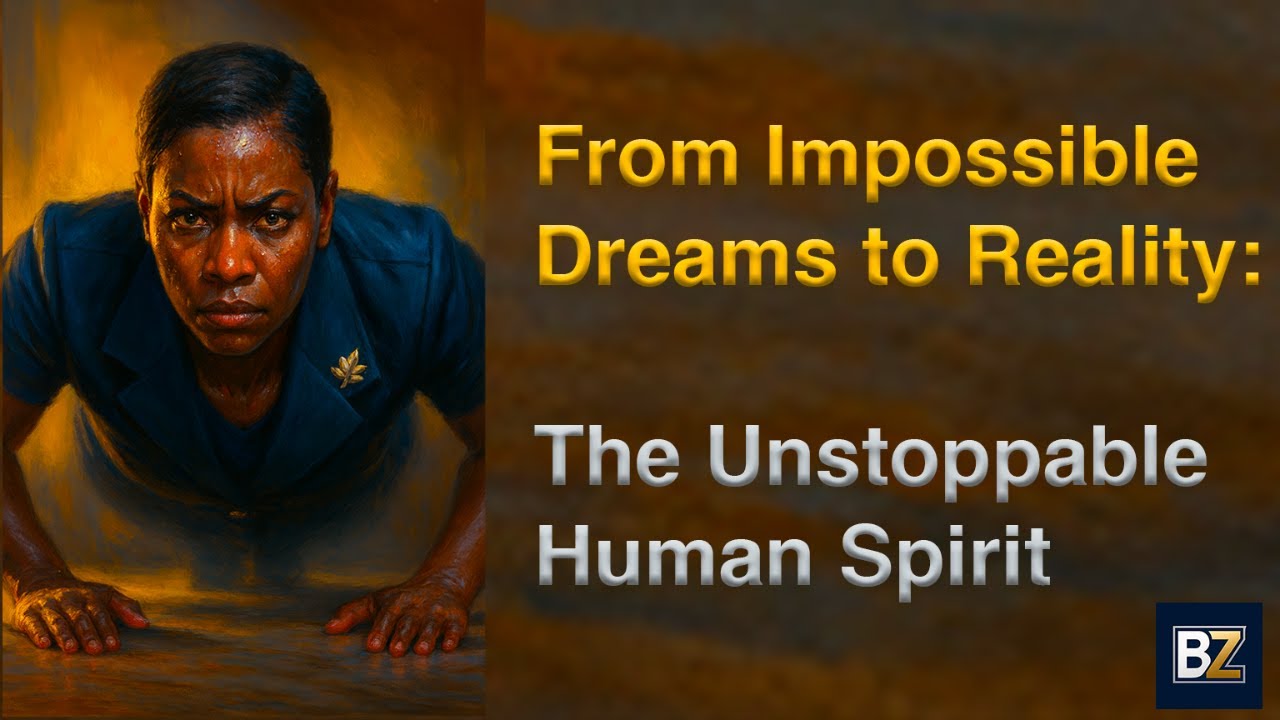
Coach BZ shares how impossible dreams become reality, from the Wright brothers to Roger Bannister's four-minute mile. He tells his own story: arriving at 17 from the Congo, rejected by ROTC twice, he enlisted as a sailor and rose to Navy Commander by 2021. He asks listeners to write down their impossible goal and take one action within 24 hours.
Chapters
¡Hola! Hi, I'm John Maxwell. When the top companies in the world are looking for trainers, speakers, and coaches, there's one name that stands above the rest, and that's Maxwell Leadership. Our certified team members have gotten proven results for companies all over the globe, and our reputation, I'm proud to say, is second to none. Some of our members have risen to the top of their profession, including the one you're going to meet today. I proudly introduce you to my friend Bob Fabien Zinga.
Welcome to the Leadership and Success Podcast with your host, Coach BZ. If you need to develop into a better leader, this podcast is for you. If you want to achieve a greater level of success, this podcast is for you. His mentor, Dr. John C. Maxwell, said it best: everything rises and falls on leadership. We hope to inspire you today and provide you with an insight that has the potential to positively impact the trajectory of your life. Welcome to the Leadership and Success Podcast.
Imagine gaining the leadership skills that could redefine your career. Join Coach BZ on the Leadership and Success Podcast, where each episode delivers practical insights from world-class speakers, military leaders, and industry experts. We dive deep into what matters most: building resilient teams, leading through uncertainty, and navigating complexity with clarity and confidence. Every conversation is crafted for aspiring leaders like you who are ready to grow, lead, and make a lasting impact. Don't miss our powerful live sessions and recent highlights. Michelle Hayward on building diverse, high-performing technical teams. Anne Leslie on leading through global complexity and cybersecurity risk. Ron Carpenter, AI, exploring faith, resilience, and AI-powered leadership. Colonel Michelle G.I. Gardner, INS, on commanding influence from the battlefield to the boardroom. Chris Robinson on shifting from drift to drive in life and leadership. And Coach Enrique Acosta Gonzalez on mentorship, legacy, and heart-centered leadership. Ready to level up your leadership journey? Tune in on Spotify, Apple, Audible Podcasts, YouTube Live, and LinkedIn Live. Join the movement toward leadership excellence. Listen now and start transforming your success.
Hello everyone, this is Coach Blizzy. I'm glad to be here for another day. Today is Saturday, August 30th. It's about 8:30 AM Pacific time now, so 11:30 AM Eastern time. So thank you for being here with me. So with no further ado, let's start with our moment of gratitude. This is a part of our show. It lasts less than a minute, and we just think about one thing that we are grateful for today. So if you would close your eyes and put yourself in your happy place, and think about one thing you are grateful for today. Just take a minute to think. Today I am grateful for hope. No matter what is going on around me, I have hope. And probably it's some close as cousin faith. Knowing that my tomorrow can be better than my today. I have hope. I have hope. So whatever you are grateful for today, if you'll please type it in the LinkedIn comment and share with everyone. I appreciate that. All right, so let's get started. Today we are going to be talking— let me share my screen here. We're going to be talking about "From Impossible Dreams to Reality." the unstoppable human spirit. There's been so many times in history where people said, hey, this is impossible, this cannot be done. And time and time and time again, uh, the human spirit has proven that nothing is impossible. We can pretty much do anything we set our mind to. One was with flying, going to the moon, uh, we did it. We are flying cars today in 2025 in Silicon Valley, uh, cell phone, the internet, no, They said it was impossible, we did it. Thomas Edison with the light bulb, on and on and on and on. Ford with a V8 engine. And there was even a time where they said, the doctors and experts said it's impossible to run a mile in less than 4 minutes. And Roger Bannister did it in 3 minutes and 59 seconds. And when he did it, guess what? Within weeks, many other people broke that standard, right? They ran the mile in less than 4 minutes. When one person did it, then everybody else did. We talked about about CRISPR gene editing, they thought it was a dream, not possible. But Dr. Jennifer Doudna and Emmanuelle Charpentier, they won the Nobel Prize and they did it. Artificial intelligence, the godfather of artificial intelligence, Geoffrey Hinton won a Nobel Peace Prize. It's been a long way coming, but it is definitely here today. And I talk about my own journey too. But really, the Bottom line is there is nothing that you cannot do, right? Everything that people say are impossible today, I believe, uh, possible. Okay, uh, so before we get started, please like the post you are watching from and repost it into your network for further reach. If there is someone in your network that you think that might benefit from the episode today, please tag them. If you have a leadership question for me, please type it in the comment and I will be back after the presentation to answer your question. And also let us know where you are tuning in from, what city and state, and if you're outside of the US, what country. Thanks so much for being with us today. So let's get started. Uh, the Presentation will be about 30 minutes or so. I will have my AI agent give it to you. So while you are listening, please also think about things, the main takeaway, right? What you are learning. If you can type it in the comment and share with the community, I would very much appreciate that. And again, you have a question for me, I will be back in about 30 minutes, answer your question.
Here we go.
Welcome to the Deep Dive. You know, I want to kick things off today with a quote that just— it really captures what we're talking about. It's from the amazing Wilma Rudolph. Never underestimate the power of dreams and the influence of the human spirit.
That's a powerful start. It really hits home, doesn't it? That potential for greatness, for doing things that seem completely out of reach. Yeah, it's actually in all of us.
Exactly. So take a second right now. Just think about a dream you have. Maybe one that feels, well, a bit impossible. Or maybe one someone else told you was crazy. Got it.
Hold on to that thought.
Good, because today we're doing a deep dive into some really fascinating sources all circling around this theme. From Impossible Dreams to Reality: The Unstoppable Human Spirit. Our mission really is to dig into how things that people once thought were just foolish or flat-out unattainable actually became real. Groundbreaking stuff. And it wasn't magic; it was vision, persistence and, yeah, a lot of courage.
Right. And we're not just looking back at history, though we definitely will touch on some huge moments. We want to explore the principles behind it all. You know, the mindsets, the strategies, the actual steps that make these transformations happen, and crucially, how you can apply these ideas to your own life, to that impossible dream you were just thinking about.
We've got a real mix of sources today, too. Historical accounts, scientific breakthroughs, and a really moving personal story.
Yeah.
All pointing to this same core idea.
Yeah, it all weaves together quite nicely.
Okay, let's really get into this underlying philosophy. Our sources kind of set the stage for belief with some heavy hitters. We already heard Wilma Rudolph.
Mm-hmm.
Then there's Nelson Mandela. His words just echo, don't they? "It always seems impossible until it's done." It's less a statement, more of a challenge, I think.
It really is. It reframes the whole idea. And Steve Jobs. Always provocative. He said, "The people who are crazy enough to think they can change the world are the ones who do." Ah, yeah.
Classic Jobs. Oh, and we also have this really grounded personal mantra from Bizzy Zinga, the author of one of our sources. "Yesterday is gone. Today matters. Tomorrow belongs to me." Simple but powerful.
What's so interesting is how these different voices, different times, different fields, they all point to the same fundamental thing. Potential isn't just for a select few. It's universal. These aren't just nice quotes, you know? They're building a belief system. Mandela's quote especially. It positions impossible not as a final verdict, but just a temporary state, like a problem waiting to be solved.
Challenge to be met.
Exactly. And the message is clear. Action, you know, consistent action. Even when everyone doubts you, that's the catalyst. You have to shift your perspective from seeing a wall to seeing, well, a hurdle you can get over. If you're willing to put in the work, obviously.
And it always starts with that vision, right? That initial spark. Every big breakthrough, every major change, it begins as just an idea in someone's head, something only they can see. Maybe.
Absolutely critical. That vision is the starting point. It's where impossible starts its journey towards possible. Holding on to that belief, especially when, you know, logic and everyone around you are pointing out the barriers. That's the first real test. You have to see a future that doesn't exist yet and then Well, commit to making it happen. Could take years, decades even.
Without that willingness to dream, to imagine something different, nothing truly groundbreaking gets started.
It takes guts to see beyond what is and focus on what could be. Hashtag, tag, tag, defying the laws of physics and expectations.
Okay, this is where it gets really wild. Let's talk about flying. Because if anything felt impossible, truly impossible, it was humans taking to the skies in machines. Picture the world, early 1900s. The common wisdom: powered flight in a heavier-than-air machine? Total fools, Aaron.
Yep.
Scientists, engineers, the public—they thought it basically violated the laws of nature.
It seemed fundamentally wrong, didn't it? Like trying to make rocks float. Exactly.
And to really drive home how deep that skepticism ran, our sources point to this incredible prediction. The New York Times is a major voice then. Just like now. They published an article in October 1903, and they predicted it might take anywhere from 1 to 10 million years for humans to figure out powered flight.
1 to 10 million. Can you wrap your head around that? That wasn't just doubt. That was basically saying, forget it. It's never happening in any realistic timeframe, geological timescales.
It just shows the level of certainty that it couldn't be done. And then this is the amazing part. Just 69 days later, 69, December 17th, 1903, Kitty Hawk, North Carolina, Orville and Wilbur Wright. Two bicycle mechanics. Two bicycle mechanics from Ohio. They get their little plane, the Flyer, airborne for 12 seconds, covered 120 feet. Tiny, right? Barely the length of a modern jet wing.
But monumental.
Absolutely monumental. They proved the entire world, all the experts, the New York Times, completely wrong. They just did it.
But it wasn't luck, was it? Their story is so much about the process. They didn't just, you know, slap an engine on some wings and hope for the best. They realized The core problem wasn't just power, it was control. How do you actually steer this thing in 3 dimensions?
Right.
Others were focused on bigger engines, maybe. Exactly. But the Wrights, they were meticulous. They built their own wind tunnel. They ran hundreds of tests with gliders. They studied aerodynamics like nobody before them. Their big breakthrough, arguably, was the 3-axis control system— pitch, roll, yaw. That's still the basis for how we fly planes today. Wow.
I didn't realize it was that fundamental.
Oh yeah. And they crashed. A lot. But each crash was data. They learned from it. They faced ridicule, people calling them tinkerers.
But they persisted.
It reminds me of that old Army Corps of Engineers motto.
The difficult we do immediately, the impossible takes a little longer.
That's the one. It perfectly captures their approach. It wasn't just stubbornness. It was smart, systematic work combined with this unwavering belief.
And now we just hop on planes like it's nothing. Cross oceans in hours.
It's easy to forget what a miracle it is, isn't it? We owe it to those dreamers, those tinkerers, who ignored the impossible. Their focus on control, that specific technical insight, made all the difference.
That's a great point about their specific methods. Yeah. So, okay, for you listening— Yeah. —think about that goal in your life that maybe feels impossible or others say it is. What's one small, specific step you can take today? Like the Wrights testing glider designs. Something concrete to just test the edges of possibility. Maybe focus on a core problem others are overlooking. Start small, test, learn. Good advice. Okay, so if flight was impossible in 1903, imagine just a few decades later talking about sending people to the moon. Talk about upping the ante. Right. Mid-20th century, space travel sounded absurd. Early rockets, they blew up. A lot. People literally called them technological suicide attempts. The challenges seemed, well, astronomical.
Literally. Even the optimists knew it was a long shot.
But then, 1962. President Kennedy stands up and delivered that speech. "We choose to go to the moon in this decade, not because they are easy, but because they are hard." He leaned right into the difficulty, didn't he?
Didn't shy away from it at all.
Not at all. He basically said, "This is ridiculously hard, and that's why we're gonna do it." A challenge to the nation's spirit, to its best energies and skills.
Let's tackle the "not yet." A powerful rallying cry.
And unbelievably, less than 7 years later, July 20, 1969, Neil Armstrong steps off the Eagle ladder onto the moon. One small step for a man, one giant leap for mankind. Chills every time. Me too. It wasn't just landing on the moon. It changed how we saw ourselves, what humanity was capable of. The impossible. Done.
And think about the tech they used. Our source makes this point, and it's mind-blowing. The Apollo guidance computer, the one that navigated them to the moon and back. Yeah. Your smartphone, the one in your pocket right now, it has millions of times more processing power. Millions!
No way! Really? Absolutely.
They did it with technology that seems almost laughably primitive by today's standards: slide rules, human ingenuity, and just sheer belief and incredibly rigorous process management. It wasn't about having the fanciest tools. It was about pushing what they had to the absolute limit.
That puts it in perspective.
It really does.
And the moon landing wasn't just about planting a flag. It inspired a whole generation. It showed that no frontier was truly out of reach, that impossible really is just temporary. Like Les Brown says, "Shoot for the moon. Even if you miss, you will land among the stars." The very act of aiming that high pushes you forward.
And it had practical spinoffs too, right? Oh, tons.
The Apollo program drove innovation in so many areas we benefit from today. Satellite tech, microcomputers, even things like freeze-dried food came out of that push. The pursuit of that one impossible goal had this massive ripple effect.
An incredible legacy. The sheer creativity born from that pressure. Amazing. Okay, so listener, here's your prompt. What's your moonshot? Mm-hmm. Seriously, take a minute, write it down. Don't worry about how yet. Just let yourself dream big. What's a goal so bold it kind of scares you? Because great achievements often start with dreams that seem, well, a little crazy at first. Hashtag tag tag from science fiction to everyday reality.
All right, let's shift gears a bit from the moon to something maybe a little more whimsical, at least initially, the flying car.
Ah, the flying car. Yeah, for decades that was the ultimate symbol of the future that never arrived, right? Yeah. Like Jetsons stuff, sci-fi cartoons, futuristic novels. Totally. People kind of laughed about it.
Commuters taking off from their driveways seemed pure fantasy. But here we are. The 2020s.
And guess what? The age of the flying car is actually dawning. It's happening.
It really is. Our source mentioned some concrete examples. There's a company in Slovakia, Klein Vision. They've got this thing called the AirCar. They're calling it the first mass-producible flying car. It's not just a concept. It's flown hundreds of times, takeoffs, landings, and it actually has a certificate of airworthiness. It's legally allowed to fly.
Wow. Okay. That's serious.
And then there's a startup in California, Aleph Aeronautics, They're working on a fully electric model that takes off vertically like a drone or helicopter. They have actual plans to start operations out of Silicon Valley. This isn't just imagination anymore. It's engineering. So the engineering is catching up to the dream. Exactly. Now, don't get me wrong, there are still huge hurdles, regulations, safety standards that are way beyond cars, managing air traffic over cities, massive challenges. But the key thing is The impossible is actively being engineered into the possible. We're seeing human creativity literally give wings to an idea that was mostly a punchline before.
It really drives home that point. Today's science fiction is often tomorrow's reality.
It really does, thanks to engineers just refusing to accept it can't be done.
Makes you wonder, doesn't it? What impossible thing in your own field, your own work, could become real with some creative thinking and just— sticking with it. Next time someone says, oh, that'll never work, maybe just think about the flying car and smile a little. Never say never, right? Right. Okay, let's talk about something else that seemed equally nuts not that long ago— connecting everyone instantly, globally.
The internet and smartphones. Yeah, try explaining that to someone in, say, 1975.
Billions of people carrying pocket-sized devices that hold all human knowledge, talking to anyone anywhere instantly. Yeah, they'd think you were writing science fiction. Absurd, impractical, maybe even unnecessary. Who needs that, right? But bit by bit, piece by piece, through the late 20th century, scientists, engineers, visionaries, they built it.
Incrementally. It wasn't one giant leap. No, it started small.
Hmm. That first ARPANET message in '69, just between two computers. Then Tim Berners-Lee inventing the World Wide Web in '89 to share info easier. Then the internet boom in the '90s, Each step built on the last.
Patiently expanding what was possible.
And look where we are now. Over 5 billion people online. More than 85% of American adults carrying smartphones. It's so normal, we forget how utterly miraculous it is.
It really is a modern miracle. And that point about the power, the phone in your hand being millions of times more powerful than the Apollo computers. Still blows my mind. Me too. Think about what that enables: instant global collaboration, starting a business from your kitchen table, crowdsourcing solutions to problems that used to take huge institutions years to tackle, things that were genuinely impossible just a generation ago. So the lesson there is patience and persistence, I think. Really? Big visions like a truly connected world, they can take decades. You build them piece by painstaking piece, and you have to ignore the skeptics along the way. Who needs a home computer? Why would anyone want a phone without buttons? The innovators just kept building, laying the foundation.
Small steps consistently taken lead to huge shifts eventually.
Exactly. It makes the impossible inevitable.
Okay, so listener, think about your long-term vision, something that might take 5, 10, 20 years. What are the foundational steps you can take now? Like those early internet pioneers laying cable, or mobile innovators working on touchscreens, what's your foundational work today? Every small piece matters for the big picture. Hashtag, tag, tag, powering progress and breaking barriers.
Let's jump back in time again, maybe late 1800s. Can you imagine a world lit only by fire, candles, oil lamps, gaslight?
Dark. Literally dark. Life revolved around the sun, and the idea of lighting up whole cities with invisible electricity seemed fanciful, maybe even dangerous.
Yeah, electricity was this mysterious, slightly scary force.
But pioneers like Faraday and Tesla, they kept exploring it, figuring out the science. And then inventors like Thomas Edison, he just refused to accept that a practical, affordable electric light was impossible.
He was relentless. Our sources mention him testing thousands of different materials for the filament in his light bulb.
Thousands! And his mindset about failure? Yeah. It's legendary, isn't it?
Oh yeah, that famous quote: "I have not failed 10,000 times. I have succeeded in proving that those 10,000 ways will not work." work.
When I have eliminated the ways that will not work, I will find the way that will work. That's just pure persistence. Pure learning.
He wasn't just failing, he was gathering data, systematically eliminating options. And finally, October 21, 1879, success. A bulb that glowed consistently for over 13 hours.
Banishing the darkness.
And here's the crucial thing about electricity, much like the internet later, It wasn't just an invention, it was a platform. Ah, right.
Enabling other things. Exactly. Yeah.
Once you have grids to power light bulbs, you can power other things, appliances, factory machines, eventually computers. Our entire modern world runs on it. It enabled countless other innovations.
So true. It reminds me of what Dr. John Maxwell says, something like, yesterday's impossibilities are today's realities because someone kept trying.
And Robert Schiller's simple line, today's accomplishments were yesterday's impossibilities. Mm-hmm. It always comes back to that consistent effort, even when it feels like you're just hitting dead ends. It's a great lesson.
Yeah. When you're facing those repeated setbacks, listener, remember Edison. Ask yourself, what did I learn from what didn't work? Yeah. How can I use that knowledge to find a new path forward? Don't just see failure, see data.
See illumination, perhaps.
Ah, nice one. Yeah. Okay, another story about sheer will. Henry Ford and the V8 engine. Oh yeah, classic. Ford tells his engineers, I want an engine, 8 cylinders, One single block. And they basically say, "Boss, it's impossible.
The technology, the casting methods, they just weren't there yet. The experts were unanimous.
Can't be done." But Ford, he wasn't hearing it, was he?
Not at all. His response was simple, persistent: "Do it anyway." Just do this anyway. Over and over. For months, the engineers struggled. They failed. They hit the exact problems they predicted. But Ford just kept saying, "Do it anyway." And eventually— They did it. Yeah. They pushed the boundaries of engineering, figured out new techniques, and they cast that single-block V8. And it absolutely revolutionized cars, made powerful engines accessible.
It's a great example of a leader just refusing to accept limitations, pushing past the expert view of what's possible.
Exactly. Seeing beyond the current state of the art and demanding persistence until the breakthrough happens. Okay.
And one more quick one here because it's about mental barriers as much as physical ones. The 4-minute mile.
Ah, Roger Bannister. A fantastic story.
For years, everyone knew it was impossible. Doctors, scientists, coaches. They said the human body physically could not run a mile in under 4 minutes. Your heart would explode, your lungs would collapse. This is a hard physiological limit.
A scientifically accepted barrier.
Until 1954. Roger Bannister, a medical student himself, trains scientifically, understands his body, and does it. Hmm. 3 minutes, 59.4 seconds. Barrier shattered.
But here's the really mind-blowing part, the part Brian Tracy highlights. Go on. Once Bannister proved it could be done, that the impossible wasn't impossible after all, within weeks, other runners started breaking the 4-minute barrier too.
Wow, so breaking the mental barrier was almost as important as the physical one.
It seems so. It shows that when one person smashes a perceived limit, it unlocks belief and potential in countless others. It changes the whole game, shifts the collective understanding of what's possible. The power of demonstrating possibility is immense. Hashtag tag redefining life and intelligence.
Okay, let's pivot again to some really cutting-edge stuff where impossible is being challenged right now. Gene editing.
CRISPR. Yeah, this is huge.
Until very recently, the idea of precisely changing DNA, the actual code of life, that was pure sci-fi territory. We sequenced the human genome back in 2003, this massive project.
Right, mapping billions of base pairs, an incredible feat in itself.
But the idea that scientists could then go in and make specific targeted edits to that code seemed way out there.
Almost playing God, some might say.
But then, 2012, this tool, CRISPR-Cas9, emerges. Based on a natural process in bacteria, right?
Exactly. Scientists figured out how to harness it. It acts like molecular scissors. You can target a specific spot in the DNA, make a precise cut, and then, well, edit, make changes. Like editing a document, but infinitely more complex and profound.
The implications are just— staggering. Mind-boggling.
We're talking about the potential to cure genetic diseases— cystic fibrosis, sickle cell anemia— by literally fixing the faulty gene. Developing crops that can resist drought or pests, helping feed the world. Understanding and maybe even defeating cancer by engineering immune cells to hunt it down.
Things that were absolute fantasy just 15, 20 years ago are now active areas of research.
Active areas of progress. It's why the scientists behind it, Doudna and Charpentier, won the Nobel Prize in 2020. It's truly revolutionary.
Of course, there are huge ethical questions too.
Absolutely. With great power comes great responsibility, right? We need careful thought, public discussion. But the science itself— we've crossed a threshold. Editing life's code is no longer impossible. And for you, listening, as an innovator, CRISPR is this amazing example of dreaming big about solving impossible problems. It exists in that space that both scares and excites you, and that's often where the real breakthroughs happen. Pushing boundaries requires navigating that tension.
That's a great point about the scare-excite dynamic. Mm-hmm. So maybe ask yourself, where is that edge in your world? How can you contribute to breakthroughs that feel both thrilling and maybe a little bit daunting? Good question. Okay, let's talk about another area that felt impossible for a long time. Artificial intelligence.
AI. Ah, yes. The dream of intelligent machines.
It's had a rocky history, hasn't it? Early pioneers in the '50s and '60s made some progress, but truly human-like intelligence always seemed just out of reach.
We had those AI winters, right? Periods where funding dried up, progress stalled, people got disillusioned. Many thought truly smart machines would just stay science fiction forever.
But then, maybe the last 10, 15 years, boom, things just exploded.
Massive leaps forward, driven by huge increases in computing power, vast amounts of data becoming available and breakthroughs in machine learning, especially neural networks.
Neural nets trying to mimic the brain structure, learning from data.
Exactly. And now, we have AI that can understand speech incredibly well, drive cars, diagnose diseases from scans sometimes better than humans, create art, write code, hold conversations. It's woven into our lives already, often invisibly.
Your phone's assistant, recommendation algorithms. Yeah. That's AI that was once impossible.
And tech visionary Andrew Ng has this great analogy. He calls AI the new electricity. The new electricity, meaning? Meaning, like electricity did a century ago, AI is becoming this fundamental utility that will transform every industry, every aspect of life. Think about it. AI diagnosing cancer from an X-ray, real-time language translation like the Star Trek universal translator, basically becoming real. It's reshaping everything from medicine to manufacturing to how we communicate.
Wow, the scale of it. It's immense.
And the story of AI offers two key lessons, I think, for anyone chasing an impossible dream.
First, big breakthroughs take time. AI wasn't an overnight success. It built on decades of groundwork. Second, persistence through the tough times, through those AI winters, is absolutely crucial. If those pioneers had given up in the '80s, we wouldn't have the AI revolution we see today.
Sticking with the vision, even when progress stalls or the world loses interest.
Exactly! You have to keep the faith, keep working, even when it's hard.
That's a powerful reminder. So, listener, where in your life do you need that patient persistence? Is there a project, a goal, that isn't showing results yet? Remember the AI story. Keep laying the groundwork, keep at it. You might be building the foundation for something amazing, even if it seems impossible right now.
And, you know, chasing these big dreams isn't just for the history books or the tech labs.
It's deeply personal, too. Absolutely. Our sources share this incredibly powerful personal story from Bob Fabien Zinga. It just perfectly illustrates how these same principles—vision, persistence, courage—play out in an individual life facing very real, very tough obstacles.
His story really grounds everything we've been talking about. So get this. B's Zinga. He's 17 years old. He's just migrated to the US from the Republic of the Congo to go to college at Alabama. And he forms this dream, this impossible dream. What? To become a senior officer in the United States military.
Wow. As a 17-year-old non-citizen immigrant, that's audacious.
Audacious is the word. Maybe even foolhardy, it might have seemed. He had no idea the hurdles he was about to face. I can only imagine. Started hitting hard during his sophomore year. Civil war breaks out back home in Congo. Suddenly, boom! His family's support cut off completely. Gone. Oh no. He's stranded. No money. He talks about literally eating stale bread and water because he couldn't afford food. Feeling completely hopeless, thinking he'd have to drop out, go home if there was even a home to go back to.
That's devastating. A nightmare scenario for any student, let alone one so far from home.
But somehow he dug deep. He remembered why he came. That dream of education. Of service, he refused to quit. How did he manage? He scraped by. Found scholarships for foreign students with top grades, which he had. Worked multiple part-time jobs. Took help from friends, mentors— whatever it took. Humbling. Exhausting. But he stayed in school.
That really speaks to Mandela's quote again, doesn't it? "It always seems impossible until it's done." Facing that kind of darkness and just finding a way one day at a time.
That period forged his resolve, you can tell. Absolutely.
That crucible experience was key.
Then came the bureaucratic walls. Just as frustrating in a different way. Yes. Age 18, full of optimism. He tries to join Army ROTC, walks into the office excited. Yeah. Politely shown the door. Rule: only US citizens can be officers. He wasn't one. End of story for now. Ouch. A hard no. A hard no. Deeply disappointing. But he didn't give up the dream. He channeled it, focused on finishing his degree, becoming the best possible candidate for when things might change.
Smart, strategic patience.
Then 9/11 happens. He feels this powerful urge to serve, to protect his new home, his growing family. He runs to the recruiters, willing to join any branch. Ready to enlist. But again, brick wall. Hmm. Still not a citizen, not even a permanent resident yet. Federal law said no, he couldn't enlist. I imagine that frustration, wanting to serve, willing to risk everything, but being told no because of paperwork.
That would crush most people. That seems like a perfectly valid point to just let the dream go. Right. But he didn't. And this is where that idea of not yet versus not never becomes so important. For him, these weren't final defeats. They were delays.
Deferred, not denied.
Exactly. And he used that time wisely. He stayed prepared. He kept building himself up— education, character, skills— so that when the opportunity did come, he was ready to jump. It wasn't just resilience. It was strategic preparation during the waiting period. He was actively getting ready for the yes. Even while hearing no, like Mandela said, everyone can rise above if they are dedicated. He embodied that. That's such a great takeaway.
Okay, listener, think about that. Is there a not yet in your life? Yeah. A deferred dream. Can you reframe it as not never? Mm-hmm. And how can you use this time now to prepare so you're ready when that window finally opens?
Crucial questions.
So his window, it finally opens in 2004. After years of navigating the system, he gets his green card. Permanent residency. Finally! He basically runs to the Navy recruiter the next day. He's got his degree now, some professional experience. He tells the recruiter, "I want to be a naval officer." Did it work this time? Almost. The recruiter says, "Well, you can enlist now as a permanent resident, but commissioning as an officer, still not an option directly." Ugh, another hurdle. He could join, but only at the very bottom, E-1, Seaman Recruit, lowest rank there is. So he has this huge choice. Swallow his pride, start at the absolute bottom scrubbing floors, or let the officer dream die. What did he do? He said yes. He enlisted. Mid-20s, college degree, starting boot camp with 18-year-olds, scrubbing floors on day one. Wow.
That takes incredible humility and focus.
Absolutely. He said he kept Eleanor Roosevelt's words in mind. The future belongs to those who believe in the beauty of their dreams. His dream wasn't about the starting rank. It was about the potential. He decided to excel right where he was, keep his eyes on the prize. Smart. Pragmatic idealism.
Keeping the dream alive by taking the step available, however small it seemed.
And then, 2 years later, 2006, the biggest barrier falls. He becomes a U.S. citizen. Yes! Back he goes to the officer recruiter again. This time, he qualifies. This time, they accept his application. It still took almost another year—applications, exams, boards. Yeah. He even got promoted in the enlisted ranks while waiting.
Huh. Moving up anyway.
But finally, the news comes. Selected for direct commission. He trades his enlisted uniform for officer whites. Ensign BZ Zinga, the impossible dream, was happening. Incredible, just incredible persistence. And his career took off from there. Deployments, training, leadership roles. Each promotion another step on that impossible road. Until April 1st, 2021. The big one. He gets promoted to commander. 05. An achievement less than 4% of enlisted sailors ever reach. From that immigrant kid with a crazy dream to Commander Zinga.
What a journey! It just perfectly illustrates everything we've discussed, right?
He looked back and realized every single no was just a setup for the later yes. Every obstacle strengthened him, forced him to find another way. Like Dr.
Willie Jolly says, a setback is nothing but a setup for a comeback. And Les Brown's Shoot for the moon? He might not have hit his initial, maybe naive, target of being an officer right away, but by keeping that aim high, he landed among the stars as a commander.
And his mantra sums it all up: "Yesterday is gone. Today matters. Tomorrow belongs to me. Focus on today. Act today. Shape tomorrow." Powerful distillation. So let me echo his challenge to you, listener. What are you going to do today? What action, big or small, will move your impossible dream forward? Make that call, do that research, write down the plan, do it. That's how impossible becomes done.
So when you look across all these stories, the Wrights, Apollo, flying cars, CRISPR, Bizzy Azinga, there's definitely a pattern, isn't there?
Absolutely. A powerful vision is step one. Then relentless perseverance, just refusing to quit when things get tough and maybe underlying it all, the courage to ignore the doubters, the naysayers, the it's impossible crowd. You nailed it.
The Wrights defied the "man can't fly" consensus. NASA defied the "space is science fiction" idea. The internet pioneers defied the "who needs this" skepticism. Each generation builds on the impossible achievements of the last.
It's like they hand us a world that was unthinkable before. Exactly.
And as General Powell said, it's not magic. It takes sweat, determination, and hard work. No way around it.
So now it's our turn. Your turn, listener. This legacy of achieving the impossible. The torch is in your hands now.
Don't be intimidated by the scale of past achievements. Remember, those people faced the same doubts, the same setbacks, probably the same fear you might feel.
They just kept going. And you can too. Whatever your dream is— inventing something, building something, serving something, changing something— you gotta pour yourself into it.
There will be tough times. Doubts will creep in.
But remember these stories. Remember Edison's 10,000 lessons? Remember B.Z. Zinga's not yet. Remember the Wrights crashing and learning. Keep going. So before we wrap up, really commit. What impossible dream are you pursuing? Say it out loud. Write it down. Make it real in your mind.
That's your moon. And then the crucial next step.
What one specific thing will you do today to take a step closer? Doesn't have to be huge. Just has to be done. That first step is often the hardest. Take it. Hashtag, hashtag, hashtag, guiding principles from ancient wisdom.
You know, as we talk about all this vision and perseverance, it's striking how these aren't really new ideas. They echo through ancient wisdom too.
That's a great point. Our source actually includes a section connecting these modern achievements to timeless principles found in ancient scriptures. "Think on these things," it's called.
Yeah, it's fascinating. It shows how fundamental truths about vision, persistence, courage, hard work, Hope, faith. They've been guiding lights for millennia.
So, like, for dream, vision, and goal setting?
It points to Habakkuk 2:2: Write the vision, make it plain, so clear anyone can run with it. And Proverbs 29:18: Where there is no vision, the people perish. It's a strategic imperative, right? Know where you're going, have that blueprint. Makes sense.
What about persistence?
Galatians 6:9: Let us not become weary in doing good, for at the proper time we will reap a harvest if we do not give up. And James 1:12, "Blessed is the one who perseveres under trial." That speaks directly to Edison, the rights, bizzy zinga, sticking it out pays off.
Don't quit before the harvest. And courage, facing the doubters.
Joshua 1:9, "Be strong and courageous, do not be afraid." And 2 Timothy 1:7, "For the spirit God gave us does not make us timid, but gives us power." It's about finding that inner strength to act despite the fear, despite the skepticism, the fortitude to be crazy enough. Hard work seems obvious, but Colossians 3:23, "Whatever you do, work at it with all your heart." And Proverbs 14:23, "All hard work brings a profit, but mere talk leads only to poverty." It underscores the doing, the sweat equity. Dreams need fuel, and that fuel is effort, consistent, heartfelt effort.
And finally, hope and faith, believing when it seems illogical.
Hebrews 11:1 defines faith as confidence in what we hope for and assurance about what we do not see. Believing in that future reality before it exists. And Romans 15:3 talks about being filled with hope. It's that inner conviction that keeps you going when the path is dark, when success feels far away. The engine of persistence. Wow.
So these aren't just modern self-help ideas. They're deeply rooted, timeless principles for leadership, achievement, transformation. Exactly.
Woven into human wisdom for generations.
Hashtag tag tag outro. That's incredible. It really brings us back to where we started, maybe with Eleanor Roosevelt's words. The future belongs to those who believe in the beauty of their dreams. It does.
And maybe a final thought to carry forward: think about how the impossible things you work on today, the contributions you make, how they might become the taken-for-granted reality for the next generation. Yeah. What's the next "impossible until it's done" that you'll have a hand in creating? Your actions today are literally shaping tomorrow's world.
That is a powerful thought. Okay, so final prompt for you, listener. Yeah. The takeaway action: What bold action will you take in the next 24 hours to honor your dream, to start moving it from impossible towards done?
Could be big, could be small.
Just commit. Commit. Follow through. Remember the journey. And remember Mandela's simple, powerful truth: Yeah, it always seems impossible until it's done. Now go make it done.
All right, thank you for watching today. So this was it for today, um, Embracing the Impossible. What a concept! From impossible dreams to reality, the unstoppable human spirit. I think the real lesson for me today is that all things are possible, and if you believe, all things are possible to you. It might be difficult, you might have to suffer a little bit, you might be in pain, you might face some obstacle, but if you believe, if you keep hope and faith, I think things are going to turn around in your way eventually. All things work for the good. Tomorrow will be better than today. It's really the only hope we have. That's why today I am so grateful for hope and for faith. All right, let me check to see if there are any questions. Okay, I don't see any questions on LinkedIn. Let me check YouTube. I don't expect very much from Twitch. I broadcast live on Twitch as well. I have someone who said hello from Twitch. I saw it earlier. Yeah, Baha123456789 is the number. So hello Baha, and thank you for letting us know that you are watching live. On Twitter. Okay, so this is it for, uh, today, and I'm gonna be back here tomorrow. We're gonna have a 10-minute recap on today's, uh, lesson, right, about, uh, impossible dream and the unstoppable human spirit. All right, until tomorrow. I should be, I believe, on 6:30 AM California time, 9:30 AM Washington, DC. So hope to see you there. Bye, everybody. This is Coach BZ. Thanks for watching. Until next time, don't forget to like, comment, and share.
Thank you for listening to the Leadership and Success Podcast with your host, Coach BZ. If you like what you heard, please subscribe to our channels and come back for more wisdom nuggets on how you may develop into a better leader and a achieve greater levels of success. Leadership is the most critical skill. The world will always need leaders to lead others, deploy the next disruptive technology, or execute a business strategy. You may as well decide on counting yourself among the 21st century leaders. See you right here next time on the Leadership and Success Podcast with Coach BZ.
More from Bob

S250:E4🎙️LIVE 🇺🇸America 250: President Barack Obama Leadership, Service, and the Power of Hope






S5:E157🎙️ LIVE with CMD CMSgt Dennis L. Fritz, USAF (Ret.)(Multi Tracks Audio)



S5:E156🎙️ LIVE 🇪🇸 Leadership Lessons from the FIFA World Cup 2026 Champions (Multi Tracks Audio)

S250:E3🎙️ LIVE Leadership Lessons from America’s First Documented Family of African Descent 🇺🇸📖