🎙️ S4:E74 LIVE — What’s in Your Life Blueprint?
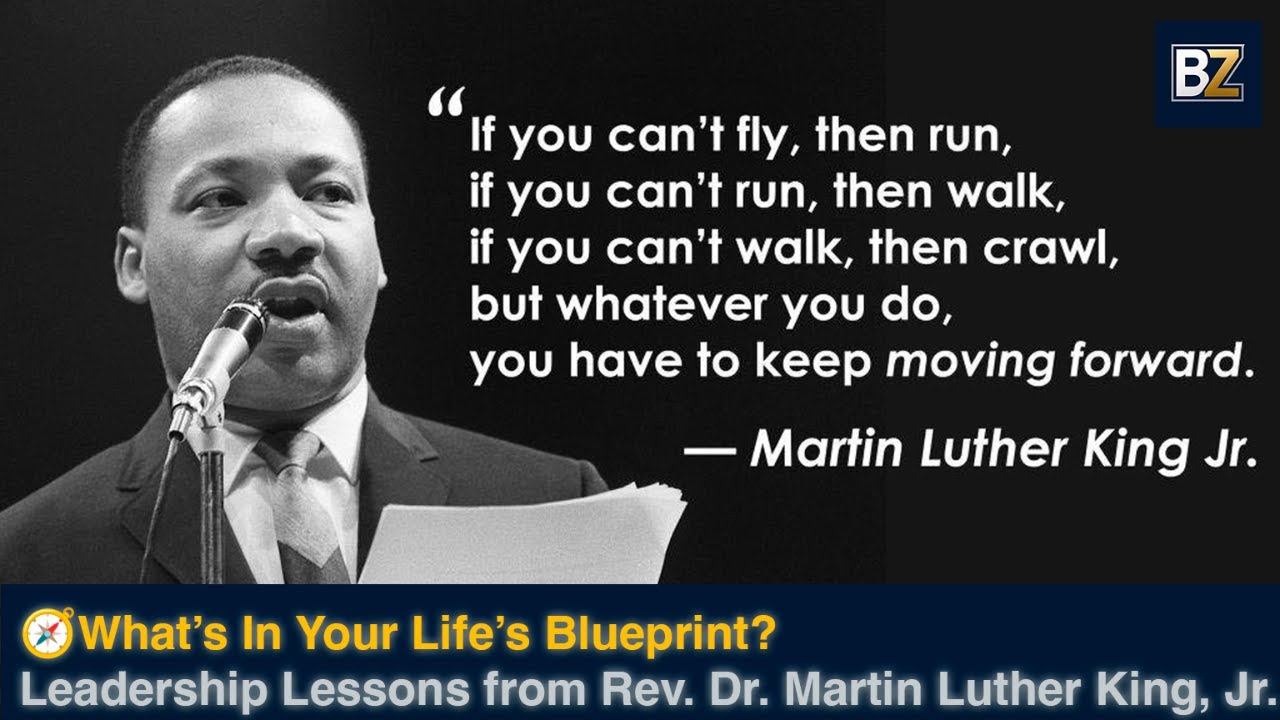
Coach BZ breaks down MLK's "What Is Your Life's Blueprint" into six pillars for leaders: self-worth, excellence, preparedness, eternal values, constructive action, and perseverance. He offers concrete coaching prompts and examples for naval officers and tech security engineers to build practical leadership habits.
Chapters
¡Hola!
Hi, I'm John Maxwell. When the top companies in the world are looking for trainers, speakers, and coaches, there's one name that stands above the rest, and that's Maxwell Leadership. Our certified team members have gotten proven results for companies all over the globe, and our reputation, I'm proud to say, is second to none. Some of our members have risen to the top of their profession, including the one you're going to meet today. I proudly introduce you to my friend, Bob Fabien Zinga.
Welcome to the Leadership and Success Podcast with your host, Coach BZ. If you need to develop into a better leader, this podcast is for you. If you want to achieve a greater level of success, this podcast is for you. His mentor, Dr. John C. Maxwell, said it best: everything rises and falls on leadership. We hope to inspire you today and provide you with an insight that has the potential to positively impact the trajectory of your life. Welcome to the Leadership and Success Podcast.
Imagine gaining the leadership skills that could redefine your career. Join Coach BZ on the Leadership and Success Podcast, where each episode delivers practical insights from world-class speakers, military leaders, and industry experts. We dive deep into what matters most, building resilient teams, leading through uncertainty, and navigating complexity with clarity and confidence. Every conversation is crafted for aspiring leaders like you who are ready to grow, lead, and make a lasting impact. Don't miss our powerful live sessions and recent highlights. Michelle Hayward on building diverse, high-performing technical teams. Anne Leslie on leading through global complexity and cybersecurity risk. Ron Carpenter, AI exploring faith, resilience, and AI-powered leadership. Colonel Michelle G.I. Gardner, INS, on commanding influence from the battlefield to the boardroom. Chris Robinson on shifting from drift to drive in life and leadership. And Coach Enrique Acosta Gonzalez on mentorship, legacy, and heart-centered leadership. Ready to level up your leadership journey? Tune in on Spotify, Apple, Audible Podcasts, YouTube Live, and LinkedIn Live. Join the movement toward leadership excellence. Listen now and start transforming your success.
All right everyone, this is Coach Bizzy. Thank you for being with me today, September 17th, and let's get started with our moment of Gratitude. So this takes less than a minute. It's a moment in the show where we want to be grateful for one thing today. So I'm going to ask you, what are you grateful for today? So if you would, uh, close your eyes if you can, put yourself in your happy place, take a deep breath, and think about what are you grateful for today. Today I think I am grateful for Providence. Some people call it grace, just that thing that's beyond man's control but that has kept me safe all of these years. I am grateful for the mercy, the grace of God today. So what are you grateful for? Please type it in the comment and also let us know where you are joining us from, what city, state, and if outside of the US, what country. So today we are going to be talking about a subject I believe is very important. It's "What's in Your Life's Blueprint," a speech by Dr. Martin Luther King. We're going to be talking about the leadership lesson out of that speech. In my opinion, besides the "I Have a Dream" speech, this is one of the most important speeches from Dr. King. All right, so let's dig in, and if you have a question for me, type it in the comment, and I will see you in about 30 minutes or so.
Welcome to the deep dive. Today we're plunging into something really, really profound. It's about the enduring power of words, particularly words spoken by, you know, truly transformative figures. Their wisdom just keeps echoing, keeps guiding us, even decades later.
It is pretty remarkable, isn't it, how some insights just seem to transcend time? They offer these beacons of light for completely new generations facing totally different, uh, professional landscapes.
Absolutely. It's like these truths, when they're articulated with real clarity and passion, they just embed themselves, you know, in our collective thinking.
Yeah, they invite us not just to remember them as history, but to actually reflect and apply those lessons to our own lives, regardless of how much our world changes. These aren't just like Dusty artifacts, they feel alive.
And speaking of truths that resonate across time, today we are taking a deep dive into this incredibly powerful article by Bob Fabien Zinga. It's titled "What's in Your Life's Blueprint? Leadership Lessons from Reverend Dr.
Martin Luther King Jr." Oh, right. I saw that published very recently, September 14th, 2025.
Exactly. And it's not just, you know, looking back at a speech. Zinga meticulously distills these core leadership principles from Dr. King's historic "What Is Your Life's Blueprint" address.
The one he gave to junior high students, right?
In Philadelphia.
That's the one. Barrett Junior High over 5 decades ago, which really says something about the timelessness of King's message, that we're still unpacking it with such contemporary relevance.
Well, and what makes Zinga's take so captivating, I think, what really elevates his analysis is his own background. It's pretty unique.
Yeah, tell us about that.
So he's not just an academic looking at history. His history, he's this highly respected cybersecurity executive, but he's also an information warfare commander in the US Navy.
Wow.
Okay. That's quite a combination.
It is. And he shares his personal story starting way back when he was just like 7 or 8 years old. He heard Dr. King's speech while living in Pointe-Noire, Congo.
Across an ocean as a child. Exactly. Imagine that, absorbing those words. And clearly they stuck with him, right? Yeah. Shaped his path. He becomes a US Navy officer, then later a chief information security officer, a CISO, right in the heart of Silicon Valley.
So you've got this dual perspective, military leadership demanding precision, strategy, and then the super fast-paced, high-stakes world of corporate tech.
Right. It gives him this incredibly grounded, really practical lens to view Dr. King's universal message about purpose and leadership.
It really does offer a unique vantage point. So our mission then for this deep dive is exactly that. To dissect Zinga's interpretation of Dr. King's blueprint.
Mm-hmm.
We're gonna pull out these critical insights, really tailor them for, well, a whole range of professionals. Maybe you're a naval junior officer dreaming of command.
Or maybe you're a security engineer in Silicon Valley navigating that complex world, but you aspire to lead beyond just the technical side.
Exactly. Or really, this is for any professional out there who's looking to lead with, you know, real integrity and genuine impact in their field, whatever that might be.
So we'll dig into these 6 foundational pillars that Zinga identifies.
Yeah, connecting King's timeless wisdom with the very real modern challenges and opportunities we all face today.
And we're talking lessons that are, well, they're profound. They resonate with deep ethical stuff, right? But at the same time, they are incredibly practical, actionable.
That's the key.
You might actually be surprised how directly these you know, decades-old principles apply to the day-to-day grind of leadership now. Not just interesting facts, but things you can genuinely take away and start using, like, right now.
Okay, let's do it. Let's unpack this blueprint for a purposeful life, for impactful leadership. Our journey starts with the first foundational pillar Zinga pulls from Dr. King's speech.
The starting point for everything, really.
Believing in your own dignity, worth, and somebodyness. This is where it all begins, isn't it?
It absolutely is the bedrock. Dr. King's core teaching here, it's so simple on the surface, but just transformative. He said, always feel that you count, always feel that you have worth, and always feel that your life has ultimate significance.
Powerful words.
Yeah. And this isn't just about having a positive self-image for your own wellbeing, although it helps with that, obviously.
Right.
From a leadership angle, it's really about internal conviction. True leadership, the kind that lasts, it doesn't come from outside validation, like a job title or getting promoted. It springs from this internal, like, unshakable belief in your own intrinsic value, your unique potential to actually contribute something meaningful. So if you as a leader or someone wanting to lead don't genuinely believe you count, if you've got that deep self-doubt, well, how can you expect others to follow you or trust your judgment or believe in the vision you're trying to sell? It just doesn't work. This foundational self-respect, that's what fuels courageous action. That's what builds resilient leadership.
That's such a critical point. Yeah, because I think so many of us, you know, at different points in our careers, we struggle with that internal belief. Imposter syndrome is real.
Oh, absolutely.
And B.Z. Zinga really brings this home. He shares some relatable modern examples, anecdotes that just resonate no matter what field you're in.
Yeah, he talks about seeing brilliant junior officers hesitate to step up, and he makes the point it's not because they lack talent. It's because of self-doubt.
You can just picture it, can't you? Someone incredibly capable, got all the technical chops, but they hold back. They shrink from the spotlight, maybe, or that extra responsibility.
Yeah, maybe worrying they're not ready enough or experienced enough, even though they clearly have the ability. It's a common trap.
And destructive, like you said, to them and the team.
Right. And Zinga also describes seeing security analysts who had game-changing ideas but never voiced them. And why? Because they didn't believe they were senior enough to contribute.
Huh.
Think about the lost innovation there. The missed opportunities.
Exactly. These are powerful, really specific examples of how self-doubt acts like this silent killer. Kills innovation, kills leadership potential. Doesn't matter if you're in a strict military hierarchy or a, you know, dynamic Silicon Valley startup. The internal struggle The negative results, they're universal.
It leads to that culture of silence where good ideas just die on the vine because someone felt they didn't have the rank to speak up.
Precisely.
So Zinga boils this down into a really potent leadership insight. It directly tackles this. He says, your rank or title doesn't define your significance. Your contribution does.
That's powerful.
It's not just a feel-good saying, is it? It fundamentally reframes the relationship between, you know, the individual and the organization. Especially in fast-moving fields.
It really does.
It suggests leadership isn't just granted by a promotion. It can be and maybe should be earned through consistent, valuable actions, impact, regardless of where you sit on the org chart.
Yeah, it frees you up. You don't have to wait for permission to be influential. How do you see that challenging the sort of conventional wisdom, especially in hierarchical places?
Well, that's the transformative part, isn't it? Because in so many traditional structures, military, corporate, even academia, the badge, the stripe, the corner office, the title, right? The principal engineer title. They're often seen as prerequisites for having real influence or even just having your ideas taken seriously. But Zinga, channeling King here, is basically saying true impact bypasses that. Think about that junior engineer who spots a critical flaw in the architecture that the whole senior team missed.
Or the brand new sailor on watch who identifies some small tactical detail that stops a potential problem.
Exactly. Their rank doesn't diminish the significance of what they contributed. In fact, maybe their fresh eyes were exactly what was needed.
So it encourages this, like, meritocracy of ideas where value is judged by the quality of the insight, not the position of the person giving it.
Which is incredibly empowering for everyone and, frankly, much better for the organization, right? You tap into everyone's brainpower.
Totally. It democratizes leadership in a way.
So Zinga gives some really specific practical coaching. Based on this. For naval officers, he says, "You are already a leader. Lead yourself with discipline before expecting to lead others." Right.
It's not about waiting for the XO or CO promotion.
No, it's about showing leadership now, by example, in your own area. Master your responsibilities, show the qualities you expect in others, manage yourself with integrity. That's fundamental leadership.
And for the Silicon Valley folks, The challenge is just as direct: stop waiting to be tapped for leadership. Own your worth. Influence from where you stand.
Yeah, it cuts right through that passive approach where you just hope someone notices you.
Right. He's advocating for proactive leadership. Take initiative. Recognize your ideas, your insights, your unique way of solving problems. They're valuable now, in your current role, not just when you get the fancy title.
Show your leadership capacity through action. Don't just wait for the role.
For an engineer, maybe that's leading an informal group on a new tech stack or grabbing ownership of a tricky technical debt issue that everyone else avoids.
Mm-hmm.
And then Zinga gives us these great ask yourself prompts to really make this sink in.
Yeah, the reflection question.
He suggests asking, do I believe I am somebody with something valuable to give? And where am I shrinking back when I should be stepping up?
Oof, those aren't rhetorical, are they?
Not at all. They're meant to spark honest self-reflection and hopefully action, challenging you to pinpoint those moments where maybe fear or self-doubt is stopping you from giving your all.
And then he expands on this with the Think on These Things section. He connects it to deeper philosophical or spiritual roots of self-worth.
Right.
He brings in Psalm 139:1-4 from the Bible, which says beautifully, I praise you because I am fearfully and wonderfully made. Your works are wonderful. I know that full well. And then Zinga adds his own powerful insight onto that: "Your worth isn't assigned by rank, resume, or recognition. It's intrinsic. God made you with intentionality and dignity. Don't let anyone treat you like you don't matter." And then the key leadership link: "Leaders who know their worth lead with courage and humility." And for our discussion here, it's less about specific religious belief, right?
And more that universal idea of inherent value.
Exactly, that your existence itself has dignity and purpose. Totally separate from external markers of success or what society thinks.
And what's key, I think, is how understanding that intrinsic worth fuels both confidence and humility.
That's an interesting paradox, isn't it?
Yeah. When you really grasp your inherent value, you don't need constant praise or external validation.
Right.
So that allows you to lead with real courage because you're not constantly seeking approval or terrified of criticism.
But it also brings humility. How so?
Because you recognize that your abilities, your worth, It's kind of a gift in a way, not something you earn just through your own grit. It gives you this stable foundation for leadership, one that isn't shaken by the ups and downs of, you know, daily challenges or external feedback, which is incredibly powerful, especially when things get uncertain.
That makes sense. A grounded confidence. And the coaching prompt that follows really nails it down, asks us to apply it. Are you leading from a place of self-respect?
And how would your posture change if you truly believed you were wonderfully made for this assignment?
Wow. It forces you to visualize that more confident, purposeful version of yourself acting from deep self-worth. And then think about how that internal shift would actually show up externally in your interactions, your decisions, your whole leadership vibe.
What a profound place to start believing in your own somebody-ness.
Mm-hmm.
So once you embrace that inherent worth, The natural next step, as Dr. King and Zinga lay it out, is to channel that belief into the quality of your work, your actual output.
Right, which leads perfectly into the second pillar.
Exactly. Pillar 2, committing to excellence in your work. And Dr. King's teaching here is incredibly aspirational. He urged people, set out to do it as if God Almighty called you at this particular moment in history to do it.
That phrase, divine assignment, it really, Elevates the whole concept of work, doesn't it? Takes it beyond the mundane.
Totally. And again, for our listeners, maybe it's not strictly about religious belief, but it's about approaching any task, no matter how small, how routine, how seemingly insignificant, with this elevated sense of purpose.
Like profound purpose, unwavering dedication, aiming for the highest possible standard you can achieve.
It means you pour extraordinary significance into every action. You see your current role not just as a job but as this critical contribution, like a unique calling only you can fulfill right now.
It turns the trivial into something monumental, just by the intention you bring.
And he didn't stop there. He crystallized it with that unforgettable analogy.
Oh, the street sweeper one.
Yeah.
"If it falls your lot to be a street sweeper, sweep streets like Michelangelo painted pictures." It's such a profound image.
It forces you to think, "How can I elevate every task?" No matter its perceived status.
Right.
It demands you transform routine duties into, like, an art form. Mm-hmm. A demonstration of mastery, passion, commitment.
It suggests excellence isn't just for the big, high-profile projects; it's woven into the fabric of your daily effort. Every detail, every metaphorical brushstroke, every sweep—bringing your whole self to the simple stuff. Mm-hmm.
And Bizzy Zinga connects this directly to his own high-stakes world. Leading cybersecurity operations where, as he puts it, the margin for error was zero.
Whether that was in the Navy's Global Network Operations and Security Center or in, you know, Fortune 500 boardrooms.
Yeah, margin for error of zero isn't just talk in his field, is it?
Not at all. In cybersecurity, a single misconfigured firewall, one unpatched vulnerability, a moment's lapse in vigilance, it could lead to catastrophic breaches, huge financial losses, even national security risks.
So his message is crystal clear: excellence isn't optional. It's a matter of trust, credibility, and mission success.
Anything less than intentional excellence can have severe, like, far-reaching consequences. Not just for the mission but for the trust you've built with your team, your stakeholders. It's fragile.
That's a powerful, very practical take. And he distills this down into a really critical leadership insight. Excellence isn't perfection. It's intention. That's a key distinction. Yeah. Doing the work in front of you like it's the most important work on earth. Why is that distinction between excellence and perfection so important, do you think?
Well, perfectionism, right? That relentless chase for some unattainable ideal. It often paralyzes us, makes us afraid to start, afraid to finish, leads to procrastination, burnout. Been there, right? But intentional excellence, that's a driving force. It pushes for consistent, high-quality output. It focuses on the effort, the dedication, the purpose behind the work, not some flawless end state. It's about giving your absolute best, knowing the journey matters too.
Precisely. And the practical coaching Zinga offers here is spot on for different paths. For junior officers, become the go-to person, write the best briefs, lead the best drills, study your warfare area until it becomes muscle memory.
So it's about proactively seeking mastery, becoming indispensable not just by doing what you're told, but through superior performance, deep knowledge that Unwavering commitment to readiness, building a reputation for competence, for reliability.
And for engineers, the coaching is just as pointed. Know your tools, threats, and trends. Your leadership begins in how you handle the small tickets, not just the critical ones.
Yeah, that emphasizes the basics, right? Foundational knowledge, constantly learning in a field that changes so fast, and recognizing that every interaction, every task, even if it seems minor, like a small bug fix or a routine update, it's a chance to show your commitment to excellence. To build that reputation.
It's in the consistent quality of the small things that reliability and maybe leadership potential really shows. Zinga's ask yourself prompts here really challenge us to internalize this. Am I doing my current job as if it's my calling?
And the second one is powerful. Where can I raise the standard even if no one's watching?
Ooh, that's good. Because true excellence often shows up when there's no immediate reward, no spotlight, no one checking over your shoulder.
Right. It's about your internal commitment to quality. Your professional ethic.
The "Think on These Things" section for this pillar digs deeper again, rooting it in another timeless principle.
It cites Colossians 3:23, which says, "Whatever you do, work at it with all your heart, as working for the Lord, not for human masters." And Zinga adds his insight, a modern interpretation: Excellence is worship.
Wow. Whether you're leading a cyber mission or reviewing a security control, do it with honor. Excellence inspires trust, and trust multiplies influence. This speaks to that moral, ethical dimension of our work, doesn't it? Regardless of personal beliefs.
It really connects genuine excellence to this, like a ripple effect. When you consistently do your duties with honor, integrity, aiming for the highest standard, it doesn't just build trust in your skills, it builds trust in your character.
Right. People rely on you, not just for what you produce, but the way you produce it. The integrity behind it.
And that deep trust becomes this powerful multiplier for your influence. Your leadership extends beyond just your direct responsibilities. It inspires others around you to lift their own standards, creates this virtuous cycle.
Absolutely. And the coaching prompt here really challenges us to look in the mirror. What area of your leadership are you giving 80% when you're capable of 100%? How would your team's culture shift? If they saw you lead with 100% effort and integrity. It's a direct call to step up, identify where you might be coasting, and really consider the wider impact your full commitment could have on the whole team.
So, okay, we've gone from believing in your intrinsic worth, your somebody-ness, right, to channeling that into truly excellent work, sweeping those streets like Michelangelo.
Yeah, but all that dedication to the present tasks, all that excellence right now, It might feel a bit limited if we're not also looking ahead, right?
Preparing for what's next. Good point. How do Dr. King and Zinga bridge that gap? From present commitment to future opportunity?
That's exactly where Pillar 3 comes in. Okay. Seizing your opportunities with preparedness. Dr. King said this to those students, and really to us, with such foresight: Doors are opening to each of you that were not open to your mothers and to your fathers. Be ready to enter these doors as they open.
That's incredibly powerful, especially when you think about the historical context. He was talking to the generation facing doors that were quite literally just starting to crack open.
Doors to education, careers, societal participation that were systematically denied before because of segregation injustice.
Right. And Zinga, in his article, he masterfully translates that historically charged message for today. He emphasizes the responsibility we all have now, and not just to notice opportunities when they pop up, but to be thoroughly prepared to walk through them.
With confidence, with competence. It's more than just wishing for advancement, isn't it? It's about actively earning the right to seize it when it comes.
And Zinga uses his own life as just this compelling living proof of this principle. He says it outright: Every time I reflect on my American journey from Pointe-Noire, Congo, to commissioning as a U.S. Navy officer, to serving as a CISO in Silicon Valley, I'm reminded that opportunity favors the prepared.
His journey isn't just about perseverance, though it's definitely that. It's a powerful example of consistent, intentional, often unseen preparation paying off again and again.
Yeah, he didn't just stumble into these high-level roles. He was ready, equipped, poised when the moment arrived.
And his leadership insight here is so sharp. It's something I think many leaders recognize. He says, you don't rise to the occasion, you fall to your level of preparation. Oof.
That forces a rethink, doesn't it? About how we handle high-stakes moments. A critical presentation, a complex negotiation, an unexpected crisis.
Totally. It suggests peak performance isn't some sudden heroic burst of inspiration. Right.
It's the culmination of consistent, deliberate, often invisible groundwork. The hours reading, the training, the small habits built over time, the mistakes you learned from. When the pressure's on, you don't magically become someone else.
You revert to your ingrained habits. Your muscle memory, which comes from preparation, not sudden genius. Such a critical reframe.
It shifts the focus from reactive heroics to proactive, consistent diligence. So the practical coaching here is all about cultivating that readiness, that deep bench of skills and knowledge.
For junior officers, Zinga advises, "Don't wait until you're selected for XO or CO to act like one.
Read doctrine, seek mentors, build trust now." It's about embodying the responsibilities, showing the capabilities of the role before you get the title. Immerse yourself in the strategic thinking, the operational realities, the leadership demands of those future roles. Show you're already capable, already trustworthy.
And for the engineers in Silicon Valley, the advice is equally forward-looking. Start learning the leadership skills you'll need as a director or CISO before you get the title.
Yeah, anticipate the future needs. Identify potential skill gaps for higher levels, maybe strategic communication, budget management, team building, executive presence, and actively work to fill them now. Don't wait for the promotion to suddenly decide you need those skills.
Build your own roadmap for growth. Don't wait for the org chart to define it.
Zinga's "Ask Yourself" prompts here are perfect for that kind of self-assessment. What am I doing to prepare for the leadership role I want?
And what skills, relationships, or habits am I neglecting?
These demand a really honest look at where you're investing your time and energy and where the critical gaps might be that need attention, like, now. It's a call for strategic self-development. This pillar's "Think on these things" section also connects to scripture, Ephesians 5:15-16, which says, "Be very careful then how you live, not as unwise but as wise, making the most of every opportunity because the days are evil." And Zinga's further insight explains it powerfully.
Doors of leadership open at unexpected times. The prepared will walk through. The unprepared will watch them pass by.
And then this killer line: Opportunity meets favor at the intersection of discipline and readiness.
That phrase is so good. Discipline and readiness. Talk about the synergy there.
Well, it highlights that dynamic interplay, right? Consistent, diligent effort. That's the discipline. And being poised, capable, well-equipped for action. That's readiness. It's not just wishing for opportunities or even just working hard in general.
It's putting in the foundational work, developing the skills, building the relationships, cultivating the mindset so that when that door swings open, maybe unexpectedly, you are uniquely demonstrably positioned to capitalize.
You've basically earned the favor through your prior dedicated preparation.
And the coaching prompt really pushes us. Are you positioning yourself for the next level or procrastinating with the hope that someday will arrive with no preparation?
Yeah, it's a call to action. Now, future success is built on present investment.
So true. Okay, so we've got believe in your worth, commit to excellence, be prepared for opportunity. But what values guide you once those doors do open? Once you have influence? Ah, yes.
That leads us straight into the fourth pillar, which really dives into the moral compass of leadership.
Pillar 4: Anchoring Your Life in Eternal Values: Beauty, Love, Justice. Dr. King was absolutely unwavering here. He stated flat out, "In your life's blueprint must be a commitment to the eternal principles of beauty, love, and justice." This gets right to the heart of something profound and honestly often overlooked in today's results-driven leadership talk.
Dr. King never separated leadership from morality. Never. He saw them as inextricably linked. Two sides of one coin. This principle calls leaders to live lives grounded in ethics, empathy, and service, not just productivity. It's such a vital reminder.
What we achieve, our results, our successes— sure, they're important. But how we achieve them, the values guiding our actions, why we pursue them, may be even more important.
It asks us to think about the deeper impact of our leadership beyond just the metrics on a spreadsheet.
And what's fascinating is how Zinga applies these timeless, maybe even abstract-sounding values— beauty, love, justice— to modern jobs that seem far removed from philosophy.
Uh-huh. Right. He states powerfully, whether you're leading sailors or managing risk in the cloud, the values you lead with shape the culture you create.
So beauty, love, justice aren't just ideals for history books or sermons. They're active forces. They consciously or unconsciously influence every decision, every interaction. They shape the whole environment, the culture you build as a leader.
Your values are like the invisible architecture of your team. That's a great way to put it because it implies they're not theoretical. They translate into actual actions.
So let's break that down. How might beauty show up in, say, a tech company or a military unit?
Hmm. Good question. Maybe it's in the elegance of a solution like beautifully simple code or a really efficient tactical plan that gets the job done with minimal fuss.
Or maybe appreciating diverse perspectives. Seeing the beauty in how different viewpoints enrich problem-solving. Excellence in design. Could be. And love.
Maybe that's the act of empathy you show your team. Genuine care for their well-being, their growth, recognizing their struggles, their dignity.
Treating people as whole humans, not just resources.
Exactly. And justice. Well, that's about fairness, isn't it? Equity. Protecting the vulnerable on your team or among your customers. Holding everyone accountable to shared ethical principles, no matter their rank. These aren't soft skills, are they?
They're fundamental drivers of high-performing ethical teams. Absolutely fundamental.
Zinga's leadership insight here is so concise, so impactful. Great leadership is grounded in great character. Simple but profound.
And it's not just about avoiding bad stuff, avoiding scandals.
Right. It's about actively striving for good, for integrity, for decisions and actions that consistently line up with these core principles. Bob Fabien Zinga. Character isn't just enabling leadership; it's the compass, the moral GPS for every decision, especially the tough ones.
It's what lets you lead consistently, even when it's hard or unpopular.
And the practical coaching really brings it down to earth, makes these big ideals apply day to day. For military leaders, "Power without compassion alienates.
Be the officer who listens and lifts." That's a clear directive, isn't it? Wield authority not just with competence but with empathy. Lead in a way that inspires loyalty and trust, not fear or resentment. Actively understand your people's needs and use your position to empower them.
And for tech leaders, the advice pushes beyond just the technical specs. It gets into ethics. Don't just design secure systems; design systems that protect people, especially the most vulnerable.
Yeah, that challenges leaders to think about the real human impact of their work. Go beyond just checking the compliance boxes; actively consider data privacy, algorithmic bias, accessibility, potential misuse.
Build tech with a conscience. Make sure innovation serves humanity responsibly, inclusively.
The ask yourself prompts for this pillar are essential for that kind of moral inventory. What values are non-negotiable for me? Forces clarity on your red lines. And then, where have I tolerated something unjust, unethical, or unloving, and how will I correct it?
Oof. That demands real honesty. And courage. And a commitment to actually do something about it. Align your practice with your principles.
The Think on These Things section anchors this in Micah 6:8. A classic summary of ethical living.
He has shown you, O mortal, what is good. And what does the Lord require of you? To act justly and to love mercy and to walk humbly with your God.
And Zinga expands on this with a really crucial nuanced insight about leadership complexity. Justice without mercy is tyranny. Love without humility is pride.
Then he says, "The most effective leaders walk in the tension of grace and truth, protecting people and upholding principle." That tension between grace and truth, that's a delicate balance, isn't it?
Probably one of the hardest parts of leadership.
It really might be. You need both for humane, effective leadership. You have to uphold standards, maintain accountability, stick to principles. That's the truth part. But you also have to show understanding, compassion, be willing to forgive or give second chances when it's right.
That's the grace. Firm but fair, strong, compassionate, protecting the mission and the people.
Yeah, it stops rigid rules from becoming cruel and stops unchecked empathy from becoming, you know, just letting everything slide.
And the coaching prompt is so relevant for everyday stuff. What values shape your leadership decisions? Are you modeling justice, mercy, and humility in your workplace?
It's a direct challenge, right? Assess if your daily actions, your tough calls, your whole Does your presence actually reflect the values you say you hold? Or is there a gap between what you say and what you do? A crucial check-in.
Okay, so we have this foundation of character anchored in values. The next big question is, how do we actively build something better? A better team, a better future.
Exactly. Which brings us to Pillar 5: Shifting from Internal Values to External Action.
Which is replacing destruction with construction. Learn, build, organize. This is one of Dr. King's most direct, actionable mandates from that speech, moving beyond ideals to steps.
Yeah, he said, "Our slogan must not be burn, baby, burn. It must be build, baby, build, organize, baby, organize, learn, baby, learn so that we can earn, baby, earn." It's not just catchy, is it?
It's a profound blueprint for leading in complex, often messy times.
Absolutely. It unequivocally shifts the focus away from just reactive criticism or dismantling things or destruction towards proactive, intentional It's a call to stop just pointing out problems or critiquing what exists and to actively start creating solutions, building a better future. And that rhythm—build, organize, learn, earn—it's memorable, but it's also like a mantra for productive leadership. It shows this continuous interconnected cycle—growth, development, positive impact. Each step fuels the next one.
Zinga brings us right into modern work settings, showing how universal it is. He says, in cybersecurity, we are builders of trust.
In the Navy, we are builders of readiness. And then he broadens it.
And in every industry, leaders are called to be constructive forces, not reactive critics.
That framing really emphasizes our core role as leaders, no matter the field. It's about creation, improvement, fostering growth, stability, not just finding flaws, tearing things down, or endlessly critiquing without offering alternatives. Be solution-oriented.
So Zinga distills this into a really concise insight: Build. Organize, learn, earn. That's the rhythm of leadership growth.
Yeah, it shows how these 4 things aren't separate items on a checklist. They're deeply intertwined. They reinforce each other in this continuous cycle.
You learn new skills and insights.
So you can build more effectively.
You organize your resources and efforts.
To learn more efficiently and build with greater impact.
And by consistently building, organizing, learning.
You earn credibility, influence. The right to lead bigger things. It's a holistic approach, continuous improvement and impact.
The practical coaching here is super specific, tailored for different folks. For junior officers: build your team, organize your priorities, learn the mission, earn their respect.
It highlights all the dimensions of their role, right? Leadership isn't just giving orders. It's empowering others, fostering cohesion, mastering the operational details, and through all that, earning that deep, unshakeable respect and loyalty, creating a unit built on trust and shared purpose.
And for engineers in Silicon Valley, the coaching is equally practical, focusing on internal growth and strategy. Build your leadership mindset, organize your career plan, learn from setbacks, earn credibility over time.
Yeah, it acknowledges that leadership in tech isn't just about being the best coder; it's cultivating soft skills, emotional intelligence, strategic vision, And credibility— that's not handed out. It's meticulously built through consistent performance, continuous learning, and bouncing back from the inevitable setbacks.
The ask yourself prompts here are very direct, force you to look inward. Am I building or burning with my words, actions, and mindset?
That forces an immediate gut check on your daily impact. Are you contributing positively or are you inadvertently destructive?
And then what do I need to learn right now so I can earn the right to lead.
That directly links learning to leadership, emphasizes intentional development as a prerequisite for more influence.
In the Think on These Things section, there's a connection to Proverbs 24:3-4, which says, by wisdom a house is built, and through understanding it is established.
Through knowledge, its rooms are filled with rare and beautiful treasures.
And Zinga's insight drives it home with this powerful metaphor.
"Leaders are architects." Ooh, I like that.
"We either build people up or tear them down. You're not just managing a project or policy; you're building legacy, one interaction at a time." Wow.
Leaders as architects— that carries profound responsibility, doesn't it? It underscores that every word, every decision, every interaction, it contributes to the structure, the health of the environment you're in.
We're constantly shaping something, whether we realize it or not.
And we have a choice. Make it strong, beautiful, resilient, a place where people thrive, or make it fragile, dysfunctional, destructive. You're not just pushing pixels or paper.
You're building a human legacy, one brick, one interaction at a time.
And the coaching prompt brings that big metaphor right down to the practical moment-to-moment stuff. Are your words building trust and alignment?
How are you organizing your mind and your mission to lead more wisely and intentionally? It challenges us to consider the constructive power of our communication, our strategic thinking, every day.
Okay, so we've covered building, organizing, learning, earning a powerful plan for constructive action. But even with the best intentions, the clearest vision, the hardest effort, leadership is rarely a smooth ride, right?
Not even close. What happens when you hit resistance, obstacles, setbacks that just knock the wind out of you?
How do you keep going? That brings us to the final and incredibly vital pillar from Dr. King's blueprint: a principle of pure perseverance.
"Keep moving, no matter what." Yeah. This quote is probably one of his most famous, most universally inspiring. A timeless call for resilience.
Yeah. "If you can't fly, run. If you can't run, walk. If you can't walk, crawl. But by all means, keep moving." The wisdom there is just profound.
It understands human limits, external obstacles, but insists on the non-negotiable need for persistence.
It's not about speed, is it? Or winning big every time. It's about maintaining direction, adapting your pace, your method to whatever you're facing.
It's the antidote to getting paralyzed when the odds feel overwhelming. It recognizes that even the smallest, hardest movement, just an inch of progress, is infinitely better than standing still.
It's about breaking down a huge task into the absolute minimum effort needed just to keep progressing, to keep momentum. To tell yourself and your team, giving up is not an option.
And Zinga shares a really personal reflection here, which makes it so human.
Right. He says, "There have been seasons where I felt stuck spiritually, professionally, even physically. In every one of those seasons, it wasn't about flying; it was about crawling with faith." That detail is so important.
It normalizes feeling stuck, facing struggle. It's not theoretical; it's part of being human. Even for accomplished leaders like him.
Yeah, and it highlights that continued effort, even if it's painfully slow, like a crawl, driven by that internal purpose and belief. That's what ultimately matters in getting through tough times.
His leadership insight nails this core idea. It reframes resilience itself. The secret to resilience isn't speed, it's direction.
That's such a critical distinction. We miss that sometimes. I think fast, aimless effort like a hamster wheel just leads to burnout, frustration, wasted energy. Right. But keeping that clear, unwavering sense of purpose and direction, even if your pace is agonizingly slow, that's way more effective long-term. It's knowing where you're going, having that compass needle fixed, even if you're not getting there fast.
It's the persistent movement towards the goal, however small, that builds real resilience.
And this informs the practical coaching Zinga gives for naval officers. Every late night, every difficult eval, every after-action report matters.
Keep moving. It reminds them that even the tough, unglamorous parts, the long hours, the hard feedback, dissecting failures, it all contributes. Yeah. To the mission, to their growth, to long-term effectiveness. It's the cumulative power of small, consistent efforts.
And for the Silicon Valley engineers, the advice is blunt, direct, but really empathetic to their world. Reorgs happen, layoffs happen, burnout happens.
Yeah, it acknowledges the volatility. Structures change overnight, job security is shaky, The demand for innovation is relentless.
So the advice is human, practical. Breathe, reset, crawl if you must, just keep moving. Acknowledge the difficulty, regroup, then find whatever tiny increment of progress is possible.
Maybe it's not building the whole new feature, but just refactoring one function or documenting one bug really well for the next sprint. Maintain momentum, maintain psychological strength through small iterative steps. When the big goals feel impossible.
The ask yourself prompts here are very action-oriented, cut through the overwhelm. Where have I stopped moving?
What's one small step I can take today toward my mission?
Yeah, they empower you by focusing on immediate, manageable progress. Shift from paralysis to proactive, even tiny, forward motion. Break down the overwhelming into the doable.
In the think on these things, Zinga brings in Galatians 6:9.
Let us not grow weary in doing good, for at the proper time we will reap a harvest if we do not give up.
And his further insight reinforces this beautifully, giving that long-term view on perseverance. You don't have to sprint, but you must stay in motion. The fruit of your labor will not appear overnight. Keep showing up, keep doing good.
Faithful leaders finish well. That connects consistent effort, dedication, and that long-term, often delayed impact. It's a crucial reminder, right? Often the biggest results aren't from quick wins; they come from sustained, patient, persistent action over time.
The idea of "Faithful leaders finish well" is really inspiring. It speaks to the virtue of the long game, of endurance, the satisfaction of seeing a vision through, one step at a time.
And the final coaching prompt challenges us on our limits, our resilience. Where are you tempted to quit? Mentally, emotionally, spiritually?
What would it look like to keep going one faithful step at a time? It encourages looking at our vulnerabilities and visualizing a path forward, even if it's hard, slow, or takes immense inner strength.
Wow, what a powerful, comprehensive set of principles, really. As we pull these together, it's worth just hitting again how Universal King's original message was.
Absolutely. He wasn't speaking to Fortune 500 CEOs or 4-star admirals.
No, he was talking to middle school students, which underscores his deep belief that leadership starts now.
It makes these lessons accessible, relevant to everyone. Regardless of your current role, your experience level, your future dreams, these fundamental principles of purpose and impact, they're cultivated early and practiced throughout life.
That's such a crucial point. It dismantles that myth that leadership is only for people with certain titles or power or experience.
Right. King's message, skillfully interpreted by Zinga, says the core principles are fundamental human virtues: self-respect, dedication, foresight, ethics, construction, resilience. Qualities anyone can and should cultivate. Starting now, practiced always. It empowers the leader within each of us.
So Zinga brings that core question back to us, the listeners: what's in your life's blueprint?
He challenges us to internalize these lessons, to honestly ask ourselves, are you actively building a legacy of leadership that genuinely inspires others to be their best?
Are you serving others intentionally? Truly believing in your own inherent worth? Consistently aiming for excellence, not for applause, not for recognition, but because it's right, because it lines up with your deepest values, your purpose.
It's more than just a question, isn't it? It's a call to action. Zinga encourages us to consciously amplify the values of service, resilience, and purpose-driven leadership.
Yeah, not just buzzwords for your performance review. They're the bedrock. The foundation upon which truly meaningful, impactful, lasting leadership is built.
They invite each of us to lead with a deeper sense of personal responsibility, profound intentionality, and that unshakable commitment to making a positive difference, one interaction, one decision, one day at a time.
This has been an incredibly insightful deep dive into Dr. King's "What Is Your Life's Blueprint" speech, made so relevant by Zinga's practical wisdom and unique perspective.
We really unpack those 6 pillars. Dignity and worth, excellence, preparedness, anchoring in values, construction over destruction, and relentless forward motion.
Timeless principles that genuinely translate into powerful, actionable strategies for today's complex world.
The journey through this blueprint really shows that effective leadership isn't some static endpoint. It's this continuous, dynamic process. Deep self-reflection, deliberate action, unwavering commitment to purpose.
Bringing your whole authentic self to the table, consistently prepared, firmly grounded in values that matter.
And it reminds us, doesn't it, that the impact we have starts not with grand gestures, but with the small, consistent choices we make every single day. Mm-hmm. Every day. Absolutely. So as we wrap up today, I want to leave you, our listener, with this provocative thought to mull over. Of these 6 Blueprint principles we've explored— dignity, excellence, preparedness, values, construction, and persistence— which one resonates most deeply with where you are right now in your own leadership journey? Good question. And maybe more importantly, what's the single smallest, most actionable step you can take today to integrate that principle more fully into your own life and leadership practice? Just think about that. Let it simmer and let that thought guide your very next move.
Small, consistent steps in the right direction. That's often where the real transformation happens.
Indeed. Thank you so much for joining us on this deep dive. We hope you feel maybe a bit better equipped, perhaps profoundly inspired, and definitely ready to continue your own journey of discovery and leadership. Keep moving. Exactly. We'll catch you next time.
All right, so let me know what were your takeaways for this lesson today. Based on the article I wrote about what's in your blueprint, which is what Martin Luther King talked about, which again, I believe is probably one of the most important speeches that he gave. All right, so that's it for today. I'm going to be back here tomorrow and we're going to have a 10-minute AI recap of this podcast and I hope to see you there. I think I will be around 6:00 PM. 9:30 AM California, 9:30 AM Eastern Time tomorrow morning. Okay, and also, uh, this Saturday I'm going to be speaking with the one and only, uh, Daniela Makocsi, Certified Business Continuity Professional. You do not want to miss it. All right, that's going to be a live leadership discussion right here on LinkedIn and live on YouTube as well. All right, bye.
Thank you for listening to the Leadership and Success Podcast with your host, Coach Dee Zee. If you like what you heard, please subscribe to our channels and come back for more wisdom nuggets on how you may develop into a better leader and achieve greater levels of success. Leadership is the most critical skill. The world will always need leaders to lead others, deploy the next disruptive technology or execute a business strategy. You may as well decide on counting yourself among the 21st century leaders. See you right here next time on the Leadership and Success Podcast.
More from Bob

S250:E4🎙️LIVE 🇺🇸America 250: President Barack Obama Leadership, Service, and the Power of Hope






S5:E157🎙️ LIVE with CMD CMSgt Dennis L. Fritz, USAF (Ret.)(Multi Tracks Audio)



S5:E156🎙️ LIVE 🇪🇸 Leadership Lessons from the FIFA World Cup 2026 Champions (Multi Tracks Audio)

S250:E3🎙️ LIVE Leadership Lessons from America’s First Documented Family of African Descent 🇺🇸📖