Season 2, Episode 09: Personal Philosophy & Core Values
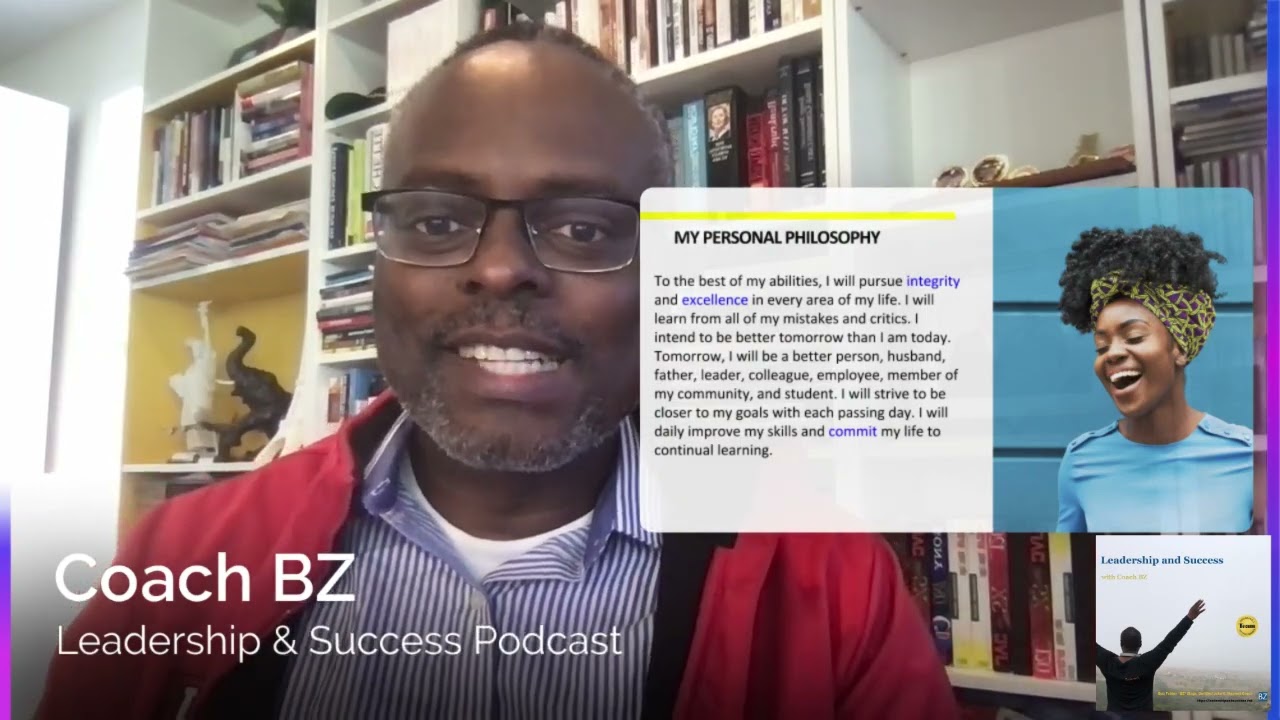
In this episode of the Leadership and Success Podcast, host Bob Fabien Zinga (Coach BZ) shares the personal philosophy that has guided his 40‑plus years of life, leadership, and cybersecurity work. He traces the origin of his philosophy to a Jim Rohn lesson at age 17, then reads and explains the written statement he revisits each year. The philosophy centers on five core values—service, leadership, excellence, honor, and growth—and on daily habits of integrity, continual learning, and incremental improvement. Zinga discusses how he applies the 80/20 rule, prioritizes effort, delegates responsibly, and holds himself accountable for results. He emphasizes the importance of mentorship (both receiving and giving), the need to welcome change, and the responsibility to take full ownership of one’s circumstances. The episode also covers his purpose in cybersecurity—reducing suffering in cyberspace—and his advocacy for diversity, inclusion, and building organizations that hire and fire based on core values rather than pure competence. Throughout, Zinga encourages listeners to craft their own personal philosophy, align actions with values, and measure success by the respect of those closest to them.
Chapters
Hi, I'm John Maxwell. When the top companies in the world are looking for trainers, speakers, and coaches, there's one name that stands above the rest, and that's Maxwell Leadership. Our certified team members have gotten proven results for companies all over the globe, and our reputation, I'm proud to say, is second to none. Some of our members have risen to the top of their profession, including the one you're going to meet today. I proudly introduce you to my friend, Bob Fabien Zinga. Welcome to the Leadership and Success Podcast with your host, Coach BZ. If you need to develop into a better leader, this podcast is for you. If you want to achieve a greater level of success, this podcast is for you. His mentor, Dr. John C. Maxwell, said it best: everything rises and falls on leadership. We hope to inspire you today and provide you with an insight that has the potential to positively impact the trajectory of your life. Welcome to the Leadership and Success Podcast. Hello everyone, uh, this is, um, Bob Fabien Zinga, Coach Bizzy. Thank you so much for being live with me on LinkedIn this morning. I won't be holding you very long, but before I start, I want to make sure— would you please type into the comment section where you are watching me from, what city, state, or country if outside of the United States, and also if you have any question for me, whether it's about what I'm going to be talking about, which is personal philosophy and core values, or something else. It doesn't matter if you type the question, and I'm gonna try to get to them before the end of the podcast. It's really good to get to you from Silicon Valley, and today I want to talk about something that is very important to me. I think I discovered that when I was 17 years old. Jim Rohn was the person who actually told me about this. The first time I've ever heard of having a personal philosophy. Now, I was a— when I was in high school, I did very well in arts and languages and philosophy as well, but I also did very well in science, math, and biology and chemistry too. But I mean, I've always studied philosophy as a way of thinking, but never quite thought of it as something personal, right, my own personal philosophy. So let's, let's kind of talk about this. So what Jim Rohn, one of my mentors— he's dead now, but it's pretty amazing— is when somebody mentors you, when they are able to actually record, you know, tapes, music, books, write, write, write books, and they have this entire library, even when they die, they can still mentor you, they can still teach you, because their knowledge still teaches even long after they are gone. But Jim Rohn said Your personal philosophy is the greatest determining factor in how your life works out, and I believe that is true. And again, I was 17 years old when I found out about it. Hey, Jessica Props, thank you so much for checking in from Pennsylvania. But yeah, you need to have a personal philosophy in order for you to be successful. I don't think success just happens by accident, right? I think you kind of have to climb up. You have to put in some effort, right? If you don't put any effort, I think things tend to really fall into chaos. That is, that is what, what I believe. In order for you to achieve anything, you have to put in some effort, some energy, and make it work, right? And I think a personal philosophy is where you need to start. So I'm just gonna read you mine. This is what my personal philosophy looks like. So I pretty much I read it almost every week and I update it at least once a year for sure, toward the end of the year, right, during Christmas holiday, I go back to my philosophy and see if there is anything that has changed, anything I need to update. So in my philosophy, I really talk about the principles that guide me, right, when I have to make major decision, this is the person I am and the person I want to be. Let me talk about this for a second, because we as human beings, we do change with time, right? You cannot just have a certain set of ideas and have a closed mind. If you do, I don't think you can be as successful as you can be by having an open mind and being able to learn from anybody, right? Regardless of their race, their gender, or their social economic status, because sometimes you know, good ideas. They don't care about rank, they don't care about gender, they don't care about race. Just having an open mind, having that attitude almost like a little child, right? Just having that awe, that wonder of knowledge. Wow, there is so much to learn. That's really almost the way I feel like every single day. But I do believe you do have to make a decision what type of person you want to become. You have to make that decision and then every single day you kind of have to manage the result of that decision. Okay, I made the decision to be a trustworthy man, an honest person, and every single day I am going to make sure I am a person of integrity with the choices I make, right? And I really believe, I think Oprah is another One of my teachers, she's probably the first one I heard say something similar to this, but success is about you manifesting the highest version, the best version of yourself. Who do you want to become in this moment, right here and right now? What kind of person are you going to be, and are you going to stick with it? And so my personal philosophy then, again, principles that I live by, It's really about my core values, who I am at the core, and the person I want to become. That's really what guides my life. So I'm gonna read portions of my personal philosophy to inspire you to create your own, and I think everybody needs it. So in mine, I say, to the best of my abilities, I will pursue integrity and excellence in every area of my life. Now, I think integrity is probably the most important of all of the core values, right? Because without it, no other core value matters. Because if you are not a person of integrity, it doesn't matter what you say your core values are, you are never gonna abide by them. So I think integrity is number one, first and foremost. And me personally, I would like to be known as a person who does everything he does in an excellent manner. It doesn't matter what it is, whether I am working or volunteering for a project, whatever I want to put my sweat and my blood into, I want it to be done in an excellent manner. That is really one of my core values. So I am, from the get-go, I'm saying integrity and excellence is important to me. Again, I'm not saying that I'm perfect, I'm not saying I'm never gonna make any mistakes, but what I'm saying is these are important to me, and in the best of my abilities, that's exactly what I am going to do. When I have a choice, I want to be a person of integrity, I want to be a person of excellence. Again, excellence, not perfection, right? Nobody is perfect and nobody can be, but excellence. I definitely do not want to be mediocre, right? I think one thing I have really learned in my 40+ years life here on Earth is being average is being mediocre. Being average is not good enough. Being average is not for me. I want to be excellent, right? The great majority of the people, they average, they get by, which is fine if that's what you want to do, but I want to be in the top 10%, I want to be in the top 5%, I want to be in the top 3%, I want to be in the top 1%, I want to be the very best of who I can be regardless of which field I choose to excel at, right? Whatever I want to do with the rest of my life, I want to be the very best I can be. Now, it's not for me to compare myself with everybody else because I can't really do that, but I can compare myself with me, right? Tomorrow I want to be a better version of me than I am today. So that is my mindset, that is my philosophy, going for excellence, not perfection, and being a person of integrity. Again, not perfection, and I'm gonna make mistakes, but I think the real difference, right, between people who are very successful and those who are not is when people who are successful make mistake, they are humble enough, they have enough integrity to say, yes, I've messed up, and they say they are sorry and then they get back up, right? It's not, okay, I fell, it's the end. No, it's not the end. I am still alive, I can still breathe, so I'm gonna get back up and I'm gonna do it again and again and again, putting that effort, right? And doing it every single day instead of putting a lot of effort in portions of your time. It's putting a little bit of effort every single day and it kind of compounds over over time. I think that's really what makes the difference between the people who are highly successful and those who are not. Okay, that was just the first sentence, and then I say, "I will learn from all of my mistakes and critics." Now, I am sure if you've been alive for more than a couple of hours, somebody has criticized you, right? That's just part of life. Now, there are some people who are going to criticize you because they are mean, or because, I don't know, they don't like you for whatever reason. Maybe they are intimidated by you, and to me they don't really qualify to criticize me, right? Then most people, when I hear whatever they say, it just goes out the other ear. I completely ignore them. However, there are other people, when they criticize you, they really want you to learn, they really want to help you, they are taking time to help you be better. And I am always listening for criticism, and I know I am a human, I always make mistakes, but when I make those mistakes, I want to make sure I learn from them, right? I don't want to make the same mistakes over and over and over and over again for the rest of my life. No, absolutely not. I'm going to make the mistake one time, I'm going to learn from it, and I'm going to make another mistake tomorrow, but it's not going to be the same mistake I made yesterday. That's my philosophy. I want to learn from my mistakes. But even those people who I know are mean and don't really mean well and just criticize me for absolutely no reason, I still listen to what they have to say. Although again, I ignore it, but I do listen to it, and sometimes It helps me be a better man, a better person, right? When I say, "I intend to do better tomorrow than I am today," right? I want to be better tomorrow than I am today. I am in the state of being. So I am not the person I used to be 5 years ago. I'm definitely not the person I used to be 20 years ago or 25 years ago, right? 26 years ago is really when I kind of got myself on this path of leadership and self-development. I am so much better today than I used to be back then, right? I wish I knew back then what I knew today. But anyway, it's about constant improvement, and I believe everyone, everybody, even those who are in the top 1% of their field today, they still have room to improve. Everybody has room to improve because no one is perfect. Now, you can be excellent, but I think part of being excellent is daily improvement.. And then if you are married, you have a significant other, make sure to check in with them often because my wife is one of those people who will tell me just like it is. She's not impressed by anything I've ever done in my life and she will tell me if I'm messing up, so I have to listen and improve. I think I heard a quote today, let me see if I can find it really quick. I felt like this was fun because really part of my core values is to always be learning. I feel like I know a lot, but I don't know everything. Kind of like Socrates says, right? What I know is that I don't know anything. That is really, really true, I think, in life. Yes, the quote I was looking for, I just read it today. Let me share it with you. It says— hold on, I thought I just had it. Okay, here we go. Yeah, it says, here we go, let me read it. I posted it on my Facebook page. Okay, here we go: a husband without fault is a dangerous observer. And I think that is true of a wife or a partner. If you live with someone and you think you don't have any fault at all, that means you are not doing very well in being an observer, because you are not perfect and you are not God, right? So you are gonna make mistakes and make sure you are open for feedback, even from people you don't like or people who may not like you at all for whatever reason. So I think that is important to me. So I will be better, right? So I will be a better person. I will be a better husband, a better father to my two daughters, a better leader to the people I lead in the Navy and in the industry. I will be a better colleague, a better employee. A better member of my community and a better student. Like I say, learning for me is something I have decided when I was about 17 years old. I will be a student forever. I will always be learning, always be learning. This is really critical for me because when I was after college, I enrolled in the PhD program, microbiology, at the University of Alabama because of my GPA and the research I did as an undergraduate, I didn't have to have a master's first, so they accepted me in the program. So I am what you would call the ABD, right? All but the dissertation. But in my PhD program, my primary faculty mentor told me back in the days, like in the '70s, early '80s, when he got his PhD in immunology, he absolutely knew everything there was to know about the subject. There wasn't anything in that knowledge base that he wasn't aware of. But no, that was now in the year 2000, 22 years ago, and it was like, there is just no way for me to know everything there is to know about immunology, microbiology, or biology. It's just impossible because we are living in the information age, right? The knowledge is just expanding at an incredible rate, and it's not possible for any human being to know everything there is to know. So you have to have that mindset. Yes, I am going to learn there is something I may not know and I need to learn what that is, and I can apply that knowledge and I can get results, right? So I say, uh, I will be a better student, and then I say, I will strive to be closer to my goals with each passing day. I will daily improve my skills and commit my life to continual learning. I think that is extremely, uh, important— continual learning. Every single day doing something that brings you closer to your goals. My primary mentor, Dr. John Maxwell, is going to be publishing the 25th anniversary edition of his groundbreaking book, The 21 Irrefutable Laws of Leadership. I think I have the 10th edition here somewhere. But anyway, law number 17, which is my favorite, is about the law of priority, right? Leaders understand that activity doesn't always equate to achievement. I think as a leader, you have to have goals and you have to make sure that you are getting closer and closer to those goals, that you are accomplishing them. Just being busy all day or all week and being tired for being extremely busy but not having anything to show for it is just not acceptable, right? I am a great believer in the 80/20 rule. That's the Pareto principle, which says that 20% of what you do would get you 80% toward the achievement of your goal. Or the other way around, 80% of what most people do only gets them about 20% toward the achievement of their goals. People are busy, they spend 80% of their time doing a lot of stuff, but whatever they are doing only brings them 20% to what they say is a priority to them, is important to them. So you have to really do it upside down and really focus on the 20% of the activities that are gonna get you 80% of the way you want to go. So I want to be effective, I want to have results and not just be busy doing stuff, right? I want to be able to accomplish my goal in a shorter period of time. And generally speaking, the way I've learned to do that is by making my own mistakes and learning from them. Learning, not just making mistakes and repeating those mistakes over and over again. And the second best way, I think, is by having a mentor, having somebody else who's made those mistakes and you can learn from. Them, right? So then I say, I will strive to be closer to my goal every day, and I will daily improve my skills and commit my life to continual learning. So improving your skill, I think, is critical, because you have to realize anybody who is a leader today, who is an expert in their field, the top 10% of their field, when they first started, they were at the bottom 10%. Anyone today, right now, anyone who is an expert— I almost started speaking in French there— anybody who is an expert today, or, Gendry, anyone who's an expert today, when they started, they were a novice, and it took time for them to learn the skills, for them to get the experience, to become the expert they are today. Just like when I started my career back in 1997, was 20, what, 25 years ago. I didn't know what I know today about cybersecurity, about leadership, about business, right? But I had to start somewhere, right? So it is okay to get started, but what's not okay is for you to stay there, right, and be stagnant. I think, at least my goal, my philosophy is to improve day after day after day and get better, better, better. It is said it takes on average, what, about 5,000 hours, right? No, sorry, 10,000 hours to become an expert in any field, and that gets to be about 5 years or so. So in 5 years, you can be an expert in whatever field you want, even though you don't know anything about that field right now. So 5 years from now, we are in 2022, right? So in 2027, in April 2027, you can be an expert in something. In April 2027, you could have a master's degree in whatever field you decide to have. You could even have a PhD, right, in 2027 or 2028 if you start working on it today, right? Time will always pass, but I think part of the problem I've seen is many people, they have so much time, but they don't manage their time well. They let time just slip through their fingers, right? Kind of like I was telling my wife, my daughter, the oldest one, she's 19 years old now, going to college, she's a sophomore. And it seems like she was just born yesterday and time just went poof, she's an adult now, a young woman. It's like, wow, how did that happen? And I think as a leader, you really need to manage that time, manage your energy in such a way that you are spending your time in the things that you prioritize, that you are really valuing what your core values are, right? If, for example, something you are telling yourself, this is valuable to me, I need to have a degree, I need to have a master's, I need to get a certification, I need to start a business, or whatever it is that you say is valuable to you. But instead of you working towards those goals, writing a book, an article, or whatever it is, but you spend time, let's say, watching TV all day or listening to music. And I'm not saying those things are bad, but I'm saying if those things are not your priority, why are you spending all of your time doing them instead of spending your time on the things that you say are a priority to you? So in many ways, I really believe that success is not really that difficult, right? Success leaves clues. If you do what successful people do, I believe you are going to become successful as well. So the next thing, in my personal philosophy, I say I will always welcome change and learn to be flexible, and I will not blame the government or other people for my current and temporary status in life. So I think in life you do have to be flexible and things are going to change, right? The only thing that is never going to change is change itself, meaning there will, will always, always be change in the world, in life, and you just have to get with it. And I think the more flexible you are, the more adaptable you are, the more resilient you are, the more you are willing to change your ways, I think the more successful you are going to be. Just think about what happened back in the days when they still had horses and carriages, and when the vehicle came, they're like, "No, nobody's ever going to purchase a car." Today, nobody is driving horses and carriages any longer. Sometimes things change, they disrupt an entire industry, and you kind of have to at least be aware of what's going on and be willing to change. With the time. The field I chose to be in, cybersecurity, information technology, I mean, I live in Silicon Valley for crying out loud. Almost like every 3 to 6 months here, there is brand new technology innovation. Like, people, they just don't stop. They keep coming up with new and better ideas and better technology, and it's my job to be on top of it and to learn what the new technology is and how it can be applied, right? And again, I think that is a leadership skill. So being able to welcome change, I felt like was something I needed to really prioritize in my life. So if things change, I'm not gonna get upset, I'm not gonna blame anybody, I'm just going to figure out, okay, what do I need to do in order to be a part of the change? What do I need to do in order to be a leader in whatever is coming next? That's kind of the way I want my brain to think. And there was a time, for example, I was poor, didn't have any money, and I felt like, no, where I was living at the time, there may have been a few racists, maybe, maybe, maybe not, things were not always fair, but it doesn't matter because whatever situation I am in life right now, I believe, that's my philosophy, is that I am responsible for me, right? So this is temporary, right? I may be poor now, but I'm not going to be poor for the rest of my life, so I can start working toward improving my life to get to my goal, right? That's what I really love about America, right? There is this corporate ladder of success. I may start at the very, very bottom, but it doesn't mean I'm gonna be staying at the bottom for the rest of my life. In America, we have freedom, right? You can do whatever you want to do, you can be whatever you want to be, but you have the opportunity to really make a difference in this country more than any other countries in the world. I think this Principles of leadership and success, they work everywhere. I've lived in Africa, in Europe, and in the US, but I feel like America is really the best country in the world for this type of things to happen, right? For example, the country where I was born, the Republic of the Congo, it used to be a communist country. And when we were a communist country, pretty much the government would dictate to you what your life is going to be. Depending— now everybody is pretty much Black, right? So we don't have racism there, but we have tribalism, right? Everybody who's Black belongs to a specific tribe, and depending on which tribe you belong to and depending on the social economic status of your family, your life is pretty much set for you. You will never make more than this amount of money. All you're going to be able to do at most is this type of job. It's pretty much set, and you don't really have a choice as a citizen of a country to do any better. But in America, that is not the case. You can be Black, you can be white, You can be green, you can be yellow, it doesn't matter. You may not even be able to speak English, like I wasn't able to when I came to this country 26 years ago, but you can become a great success. Nobody is going to stay in your way but you. Anything is possible, right? So you may be starting at the very bottom of the corporate ladder, but you can end up at the very, very, very top, right? One great example for me, when I joined the US Navy in 2004, that was almost 18 years ago, I was a seaman recruit. That's the very, very bottom of the pay grade, E-1, right? Everybody outranked me back then. And in 17 years, I went from E-1, and last year I became a Commander O-4, which is a senior officer. But again, that is possible. Again, I wasn't born here, and I am Black, but it doesn't matter. In this country, you can realize your dream, you can achieve your dream if you work hard, and if you have big dreams, if you have goals, if you spend your time focusing on your own life, on your own goals, instead of spending your time just on watching everybody else's life and goals on TV or whatever, right? Being very clear about what you want out of life, and I think that's what your personal philosophy allows you to do, being very focused on your life and what you want to accomplish, and being able to do something every single day in order for you to accomplish that goal. Does that make sense? And thank you so much, Anthony Ensman, uh, watching us from Scottsdale, Arizona. And again, if you just join us, please let us know where you are watching from, and please type in your question in the comment box on LinkedIn. I really appreciate that. So back to my personal philosophy, I think another thing that's hugely important for me is not to be able to blame anybody for where I am in life, right? If I'm succeeding, I want to take credit for it, and if I'm not, I also want to take the blame for it. I'm not going to blame the government, I'm not going to blame my wife, I'm not going to blame my parents-in-law, I'm not going to blame my friends or my employer or anybody else. It is my business, it is my responsibility, I assume, right? And I think if you have that type of mindset, no matter what you are going through, you are going to find a way to become successful. Because you told yourself I am responsible for my state. So if I'm poor right now, it's my fault and I'm going to find a way to become wealthy. And I think that change of mindset is going to help you a lot in achieving your goal. Instead of feeling like, you know, I am so sorry, poor me, oh, oh, oh, oh, oh, me, oh me, oh me, I live in a country everybody is racist, oh, I'm black. No, no, no, this is not going to get you anywhere. You need to take charge and say, I am going to make it happen. If it is to happen, I am going to make it happen. It is up to me. And that's the philosophy I decided to have when I was about 17 years old, and it's really helped me a lot, the way I look at the world, the way I respond to what happens to me, and the way I remain focused on my personal goals. So I will assume full responsibility for all of my actions. I welcome challenges in my life because they are the hidden opportunities that will force me to grow to the next level. Growth is another one of my core values. So I don't want to blame anybody, I want to be responsible for myself, I want to welcome change, I want to be flexible, and I really am looking for the opportunity. Things may not be the way I want them to be right now, but that means that I have an opportunity to make a difference. I need to do something in order to change my status in life. Now I'm gonna get a lot of help from a lot of people, and I've had throughout my entire life, but it has to start with me. I'm not waiting for somebody else to help me, right? Again, when I grew up in Africa, a lot of the African mindset is, no, we are poor, we are African, oh, help us, help us, help us, poor, poor, oh, France, give us money, America, give us money, oh, give us this, give us that, because we can't do anything. That's not my mindset. My mindset is I may be poor right now, but I am going to help myself. I am going to start working toward getting out of poverty into a place of prosperity, right? And talking about blaming the government, in this country, I don't think it really matters now if you are Republican or Democrat, because I've done very well under the leadership of a Republican president and Congress, or a Democrat president and Congress. That doesn't matter at all, in my opinion, right? I think you can really be whoever you want to be, and you can look at all of the obstacles you have, either make excuses or really find a way to get through the obstacle and become successful. I believe it is up to you. And what I'm suggesting is, if you have a philosophy that says that you are going to find a way, you are not going to blame anybody, but you are going to focus on your goal and your dreams to make them a reality, more than likely you are going to be able to achieve whatever you set your mind to. That's just what I am suggesting here. Now I continue and I say that I have received favor and help from so many I will never repay in my life's journey, and that is so true. I don't think we are in Ireland, right? I don't think you can be successful all by yourself, that's just not possible. Somebody somewhere has to give you a chance, somebody has to help you. I remember again when I came to this country in 1997, I was looking for jobs everywhere. I think I probably applied for 200 or 500 jobs. Nobody gave me an opportunity because almost everybody I talked to, they would tell me, okay, do you have the experience to do this job? I would say, no, I don't have the experience, but I want you to give me the opportunity so I can then have the experience, right? It's kind of like catch-22 is what it's called, right? You won't hire me because I don't have the experience, but there is no way for me to get the experience unless you give me the opportunity. So I just needed somebody somewhere to please open up the door and just give me an opportunity so I could prove myself. And eventually somebody did, and she's been a great blessing to my life, and I've been working for her organization from '97 to about 2005, I think. So for the next 7, 8 years, and I really excelled doing the work I was doing for my first boss. She really is the person, her name was Gloria Thompson, if she's listening, I am still very, very grateful today for what she did for me. Mama Gloria, thank you so much because I was this little kid from Africa, 17 years old, and trying to do something, but everywhere I went, it was like, no, no, no, obstacle everywhere I went. And she's the woman who said, I am going to give you a chance. And because she did, like they say, the rest is history. So you cannot be successful all by yourself, you are going to need the help of people, and I believe in this country especially, if you are trying to do something, if you have a dream, if you have a project and you are trying to be resourceful, even though you may not have any resources at the time, people are going to bring resources to you, they are going to help you. I really, really believe that, and in turn, part of my My personal philosophy is to return the favor, right? I need to help somebody else in need. What many people have done for me, I need to be able to do for somebody else. I need to be able to help someone who is not able to repay me, right? I have a lot of pretty wealthy friends, you know, every time I do anything for them, I know they are going to try to do it for me again. I may pay for lunch today and next time we meet they're going to try to pay for lunch for me because they have the money, they have resources, they can do that. But I want to be able to pay for lunch for somebody who cannot pay me back. There was a very dark period in my life. The second year I was here in the US, there was a civil war in the Congo. My mother couldn't send me money anymore. I didn't know where my next meal was going to come from, but people helped me. They fed me, and I will never, never forget If they didn't, my story would have been over. But out of the abundance of their heart and just their love and their charity, they didn't know me, they didn't owe me anything, but they helped me out. And I was able to finish school, get my degree, and later move to California. Like I said, the rest is history. But I couldn't be the person I am today if somebody somewhere didn't give me a chance, didn't give me an opportunity. Not to give me handout, but to give me an opportunity so I could help myself. And I really want to do that for somebody else, help somebody who cannot help themselves, help somebody who cannot repay me back, because I think that's really the circle of success, right? Again, my primary mentor, Dr. Maxwell, talks a lot about success, but then he also talks about significance. And significance is so much greater than success, because with success, it's really all about you, right? Now, you know, I have a big house, I have money, I have a job, I do what I love, I've achieved my dream, I'm a commander in the US Navy, an executive in Silicon Valley, life is wonderful. Okay, that's great for me, but what can I do for somebody else? I have achieved my dream, wonderful, what can I do to help somebody else achieve their dream? That is the question. Because at a certain point, right, some people, you have one house and you have a vacation home and you have a boat, you have a second boat, you have an airplane, I mean, how many boats, how many planes do you need in order to be successful, right? At a certain point, it doesn't really matter because one day you're gonna die and you're gonna leave all of that in this earth anyway. So really, the question to me is, what can I do to help somebody else achieve their dream? That is really what I am living for now. I want to be a person of significance, not just a successful person, but a person of significance, a leader who helps other people develop into leaders. I want to be a successful person who helps other people achieve their own American dream and be successful. All right, so another thing I say about my personal philosophy is I will mentor anyone ready and willing to learn from my experience and help impart wisdom that can only be received by learning from one's mistake and through mentorship. And sometimes you may want to help people, but if those people don't want to be helped, you are wasting your time, right? It's kind of like casting pearls into the swine. But when the student is ready, I think an old Chinese proverb says, the teacher will appear. Anybody who needs my help, they just have to show up, and I'm gonna do everything I can within my power to help them. Today, I mentor people not just in the US, not just in Silicon Valley, but with technology today, you can mentor people who live in Europe or in Africa or all around the world, right? One thing this pandemic has shown us is technology can really help bring people together. I remember when I first joined the NED, especially when I became an IP officer, that was in 2007, right, 15 years ago. As an intern, the IP community had a very formal mentorship program. Every single junior officer was paired up with a more senior officer so they could get mentorship, training, advice, guidance, and wisdom. And I really loved it. And back then, we tried to do mentorship by having people stay in the same region, at least, right? Some would be in the Northeast, the Southeast where I lived at the time, some West, South, Southwest, and so forth. But today, it doesn't really matter if your mentor lives in the same city, the same state, or the same region as you. You can get on the telephone, you can get on Zoom, you can get on Microsoft Teams. Really, distance is no longer a factor, right? I've even had mentoring sessions with some of my mentees in Afghanistan, and I'm here in California, so distance doesn't matter. Now, you may have to wake up a little bit early or go to bed a little bit late, but you can definitely make it work, right? So if you don't have a mentor, I believe you need to seek one, and if you have achieved any level of success, I think you need to mentor somebody else, right? You need to pass it forward. I believe that is critical. But anyway, it is part of my personal philosophy. So mentor at least one other person. I will continue to seek out uncommon mentors who will inspire and encourage me to reach my full potential, be all I was meant to be. That is, that is so important to me because at a certain level you feel like, well, I am successful enough, right? And then you meet a mentor who's just going to blow your mind. It's like, no, there is so much more that you can do. That's not enough. And they just challenge you to go to the next level. And that is just amazing. I have quite a few mentors like that, but people who just inspire me, you know, I try to talk to them at least twice a year or once a quarter, whatever time they would allow me to have, but it's just amazing how much I learn, how much they stretch me, how much they challenge me to be better and to do better. And I think everybody needs that in their lives. But anyway, it's part of my personal philosophy, so it is important to me. Then I say, I am committed and determined to be an asset and not a liability because I am dependable, reliable, and accountable for results. Again, I don't just want to be busy, I want to be effective. I want to focus on result, right? I am committed. I think it was today, or maybe it was last night, I had a quote about the chicken and the pig, right? What it says is the pig and chicken are walking down the road, the chicken says, "Hey pig, I was thinking we should open a restaurant," and then the pig replies, Well, maybe, what would we call it? The chicken says, how about I'm an eggs? The pig thinks for a moment and says, no thanks, I'd be committed but should be only involved, right? And I feel like in life, if you want to be successful, you have to be fully, fully committed, not just casually involved or interested like a chicken, right? Because when you say I'm an eggs, all the chicken has to give is an egg. The chicken is perfectly healthy, perfectly fine, they give an egg for this venture. But the pig has to give his life in order to be ham and pigs, right? So when you are fully committed, I think it kind of forces you to find a way out of no way and ensures that you are going to not quit, right? And keep working on whatever you are working on until you find a solution. Even if something seems impossible, when you are fully committed, I think eventually you are going to find a solution. Because part of my personal philosophy is also to believe that if there is a problem that means that there is a solution as well. The mere fact that it's a problem, that means there is a solution, and I just need to find out what that solution is, right? So being committed and determined to be an asset. Another thing I learned last week is, I knew about IQ, right, intelligence quotient, EQ, emotional intelligence, but now I just found out about AQ, right, which is the adversity quotient. Right, adversity intelligence. This is the intelligence that people have where they are determined to be a success no matter what, even though they go through very, very hard time, very, very tough, tough time. They're not gonna allow the circumstances kill them, but they're gonna be victorious and overcome. They are adaptable and they are willing to change and find a way to succeed, right? Part of my philosophy is if there is a block, if there is an obstacle, I'm gonna find a way to climb it to blow through it, to go around it, to go underneath it, but I know there's gonna be a way and I'm gonna find that way and I'm going to succeed. I think if you have that type of mindset, it's almost impossible for anybody else to keep you down, right? Regardless of your sex, your gender, your race, your accent, or whatever, it doesn't matter. This is what you want, that's exactly what you are going to get. Oh, by the way, David DC, good to see you. Used to be a colleague at Doitly. I still miss you. Thank you so much for watching from San Francisco. Again, if you are watching on LinkedIn, let me know in the comments where you're watching from, and also if you have a question, please type it in via comment. So talking about my personal philosophy, definitely important for me to be accountable for results, right? And I kind of learned this at the University of Alabama when I first started working full-time. I used to be an hourly employee, right? My boss tells me what to do, how to do it, and I get paid per hour. So I was working, I think it was like 38 hours and 45 minutes a week, and if I went over that, then they had to pay me overtime. So it was like from 9 to 5, no, like I think it was 4:45 every single day. As soon as it's 4:45, most people, they would just be leaving work because they are no longer being paid. But even back then, I just started working full-time, my boss was telling me the difference between hourly employees and those who are professional. Who are paid monthly, right? They are paid for a job. Even before I became a professional, before I was a monthly employee, even as an hourly employee, I was working as if I was a professional. I was focusing on results, not just my activities and what I was doing from 9 to 5, but from 9 to 5, what was I doing to accomplish my goals, to move my organization forward? I was thinking like a business owner and not just an employee, right? Thinking like a business owner and not just a mercenary, not just working for money but working to really make a difference. And eventually I became a professional, a monthly employee, and I've always had that mindset, right? Being reliable and accountable for results. What did I do with the time I put into this project? What is the bottom line? I don't just want to be busy, busy, busy doing a whole bunch of things, but then at the end of the day, at the end of the week, being tired, but not having anything to show for it. All right, and then I say I am consistently increasing my value to the market. I say what I do, I do what I say, always. I am a man of execution, right? I get things done, period. That's really what I believe, that's the person I want to be, somebody people can rely on and somebody who gets things done, right? When my boss has a project that is very, very important and he wants to get it done quickly, and not perfectly, but right, then I want him to think about me. I want to be the person who takes away his problem. Whatever keeps my boss awake at night, that's what I want to do. I want to be the go-to person, whether it's in the Navy or in my civilian life. That's the kind of person I want to be. I want to get things done. So I create a path and direction focused on business results. I am a problem solver. I relentlessly set and deliver on my highest priority. Again, the ability to know what is important, the ability to know what is most important, and really focusing on the 20% of the very important tasks in order to achieve 80% of the results you are seeking. That is really the way I want to think and I want to live. So I also empower people around me, delegate authority wisely, drive individual accountability, and grow my people, develop leaders, and ultimately lead to better decisions. That's a picture of me when I was a seaman, again, very as a junior enlisted in the US Navy, and today I am a commander. But I want to be able to offer other people the opportunity to grow as a leader, give them the opportunity to achieve a greater level of success. So delegate, but when you delegate, you still are responsible, right? So you have to hold the people you have delegated to, you have to hold them accountable, because they do need to do what you have delegated them to do and do it within the standard of your enterprise or organization, and you have to hold them accountable. I think Ronald Reagan was the one who says, "Trust but verify." I think as a leader, that's extremely important, but you do have to delegate. One thing I have noticed in life is people tend to be excellent at what they do and they get promoted, but eventually, once they become a manager, especially first-time manager, they still feel like they have to do everything because they know if I do it, it's going to be done right. But I think as a manager, as a supervisor, as a leader, your job is to make sure you develop other people around you so that they can do what you used to do. When you were an individual contributor. It's for you to raise the awareness, raise the standard, right? So that you can allow them to do the jobs that you used to do, so you don't do everything yourself. Because if you keep doing everything yourself, one, you are gonna kill yourself, and two, your organization is not gonna be as successful as it can be. It's so much better to have a whole bunch of leaders in the organization than to only have one. And this way too, you can take a break, right? You can go on vacation and not do any work for a week, for 2 weeks, and when you come back, the enterprise is not going to burn to the ground. Your people are going to do what you have trained them to do. They are accountable, they are reliable, and they're going to get the job done, right? And I think as a leader, that is so important. So you have to train them, you have to rely on them, and you have to hold them accountable. Delegation, I think, is key in success. It's the way It's a force multiplier. It's the way you kind of clone yourself into others. Instead of just having one of you, now you have 12 of you because the 12 people who report to you are doing the same excellent jobs that you would. And many times too, one thing I've learned when I became a supervisor is to tell people what to do but not tell them exactly how to do it. And many times they really surprise me because they come up with ways I wouldn't even have thought to and get the job done. So I think that's very important. But anyway, it is part of my personal philosophy, trusting the people you work with and delegate to your team and hold them accountable for results so that together we can come up with a better decision. Especially in the Navy where the chain of command is so important, right? And in Korean, the boss makes all of the decisions, right? I am the commanding officer of the information warfare unit, about 72 people report to me, they depend on me on everything and like I say, I can't do everything myself so I have to Delegate to a few key people and then have people under them, but I really have to develop my team. They need to be competent, they need to be able to do the job without me being there. That's really what makes an organization successful. That's the type of culture I want to be a part of. Delegate, hold them accountable, and You are a great leader, I believe, when you step away from the organization and everything runs just like a machine, like a system. You build systems, processes that anybody can follow and get the same exact result you would have got if you did the job yourself. All right, and then I say, uh, my mantra, right? Speed to business result. My core values: service, leadership, excellence, honor, and growth. And if you notice my Entire personal philosophy really centered around those core values: service, leadership, excellence, honor, and growth. My happy place, the intersection of leadership, technology, and business. This for me started when I was about 17, 18 years old. I came to the US and I kind of noticed, right, that was like in '96 or so, I noticed that this internet thing is going to be huge. This technology is definitely going to be critical regardless of what I do with my life. At the time, I wanted to be a medical doctor, but I told myself, whether I become a medical doctor, a lawyer, or a technology professional, it doesn't matter. Technology is something I need to master, leadership is something I need to master, and also business, right? If I understand business, technology, I have good leadership skills, I can be a success no matter what I do. And really, today in 2021, it's almost impossible to do any work without having to deal with some type of computer system, right? Even when you go to the grocery stores, when they check you out, they have to use a computer to do that. And now more and more stores actually have machines to take over human being, the cash register, and you can just self-check check out nowadays. So technology important, leadership important, and then business too. That's part of the reason why I got my MBA degree, but it was part of my personal philosophy since I was 17 years old. I wanted to be a better leader, I wanted to master technology, become an expert in tech, and also improve my business skills. So that's my happy place. And my superpower, my unshakable determination to succeed. I want to be successful and I'm not gonna let anything get in the way. Again, I assume responsibility for wherever I am in life, not gonna blame anybody, and I'm gonna do everything in my power in order to achieve my goal. And I think that is a superpower, trying to think outside the box when I need to in order to find a solution, focus on result. And then I go on to say, I consistently increase my level of certainty, clarity, confidence, and courage to manage, execute, and expand results in both my personal and professional life. And my passion is leadership and cybersecurity. So that is really who I am, that is what I stand for. I may not know something today, I don't know everything, but I'm going to learn it. I believe I have the ability to learn. That's what my personal philosophy says, and I am going to find the answer. I am going to execute. Now, many, many times there are quite a few people who've been much smarter than I was. I've not always been the smartest person in the room, and I don't want to be the smartest person in the room, because if I am, I am in the wrong room, right? I want to be in a room where I can be challenged. But part of the point I'm trying to make is even if people are much smarter than I am, it's almost impossible for anybody to outwork me, right? You may be very smart, but the reality is most people are lazy. So if you have average intelligence and you are willing to work and work very hard, I think you can run circles around a genius, and that's my opinion. But if you make up your mind you are going to be successful and you're going to do whatever it takes, I think it's pretty much impossible for anybody to stop you. And then I say my passion is leadership and cybersecurity. So that, that is what I do now, and that's what I am passionate about. Now I talk a little bit about my purpose and my personal philosophy. My purpose is to help end suffering in cyberspace, inspire people to reach their highest potential. I help make living, working, and raising a family in cyberspace safer and more secure by minimizing exposure to confidential and privileged data and the impact of the next security breach. So I've been doing this full-time since, what, 2005? So it's been 17 years now for higher education, the US government, and many companies here in Silicon Valley. And I feel like when you are doing something that you know or you feel like is your purpose, you are going to stick to it and you are going to do very well. But if you feel like it's just in the way or it's just something you are doing while you are trying to figure out what you really want to do, you're probably not going to be as effective. And part of my purpose also, which is very important, is to inspire people around me through writing, speaking, training, have a meaningful engagement including this podcast here, to help grow leaders who will impact their respective communities and make our world a better place, right? I was born to lead, that is my personal philosophy. I am a leader. Now, I may start at the very bottom of the ladder of success, but that's not where I am going to finish, right? I am going to lead. Eventually, I'm going to be on top. I believe it with every fiber in my being, and it is going to be so, period. And I think if you have that type of mindset, again, if that's your philosophy, it's almost impossible for you not to succeed. So, and then I say, I will get along and be as professional with everyone who crosses my path to personal and professional development. I will not procrastinate, I will start my journey today. So this is how I end my personal philosophy. I have to do something today in order to get closer to where I want to be. And I also need to collaborate with people, right? I cannot do all of that by myself. I need to get along with people, get along with my boss, with my colleagues, with everybody who reports to me, and everybody across the organization. I need to be likable. Believe it or not, most people don't want to do business with people they don't like, and most people are not going to promote people they do not like. You need to be able to work with everybody, not be a troublemaker, right? In almost every company today, if you ask them, hey, who's causing trouble, they will tell you exactly who those people are, those jerks, those people who are mean, and they may do well in their job, in the performance of their duty, but they are not fun to be around. Nobody wants to work with them, right? So my philosophy is I'm gonna do everything I can to get along with everybody. Sometimes that's not possible, but as much as I can, I want to get along with everyone because I think that helps me be more successful and it helps me have a better environment and relationship to help us together achieve our common goal, right? And I'm gonna start that right now. So, uh, my core values, uh, I mentioned them: service, leadership, excellence, honor, and growth. And actually, uh, with my family, we met a couple of days ago, we reviewed our family core values. So I have personal core values for me I have core values for the Zinga family, myself, my wife, my two kids, and then almost every single organization I work for, they have core values as well. But although I must say, for most organizations I have worked for, they do have core values and sometimes they have these huge posters on the wall, but they usually do not live by them, right? To me, if you have core values as an organization, you need to be able to hire and to fire by those core values. If they are core to the business, that means people who are not aligned with those core values shouldn't be numbered among your employees. That is really what it means. But most companies do not do that, very, very few companies do, and one of those few companies is the US Navy. 3 core values: honor, courage, commitment. Another thing I advise when you come up with your core values, they need to be at least 3 to 5. Mine are 5, the Navy is 3, the Army I think is like 7, That's, I think, that's too many core values to remember. But again, that's my personal opinion. 3 to 5 core values, things that say, okay, this is me, this is what I believe, this is what I stand by. Every major decision I make are going to be aligned by this core value, and if they are not, then I am not going to undo it. Even though I may be losing money, I may be losing an opportunity, it is just not for me, right? Core values are important. I think you need to have your own personal core values.. And if you are married, you and your family, your spouse, your kids, should have core values as well. If you have a business, you need to come up with core values for your business. And if you are an owner or a senior leader in that business, make sure everybody in the company knows what those core values are. Everybody in the Navy knows our core value: honor, courage, commitment. Everybody, from the time I was a seaman recruit, I went to boot camp, it was ingrained in my brain: honor, Honor, courage, commitment. Whether you are a seaman recruit or a commander or an admiral, it doesn't matter. Honor, courage, commitment, those are our core values. The more than 400,000 people in the US Navy, you can wake them up at 2 o'clock in the morning and say, what are your Navy core values? Honor, courage, commitment. It is ingrained in us. We know exactly what they are and what they mean, and that's why the Navy is so successful, the most powerful Navy in the world, right? So core values are really critical, indispensable. Something I learned from Simon Sinek was the importance of competence and trust. In many organizations, he had a chart where it shows the more competent you are, this is the y-axis, high on competence, more than likely your company is going to promote you. However, if you are not trusted, if you are a jerk, but you are still very competent and you bring a lot of money, you're a winmaker, most companies are still going to promote you and allow you to remain within the culture of the organization, even though you are completely misaligned with their core value, just because you bring them money. And I believe that is wrong, right? I'd rather work with somebody who's fully aligned with my core value, who sees things the way I do, with whom I share the same personal philosophy, and they may not be as competent right now, but I can train them, right? Like I said earlier, everybody is an expert today. When they started, they were completely novice, right? They didn't know anything and they had to learn. It takes about 10,000 hours, 5 years to become an expert in any field. So if you are the type of person I need who is aligned with my core value, I can hire you and then train you to become competent and more proficient at what you do. I'd rather have that than have someone who is very, very competent but who is a jerk and just creates drama in the organization. And in the US Navy, if you are not honorable, right, you don't show courage and can't commit to anything, the Navy is going to show you the door. It doesn't matter who you are, the Navy has fired admirals, right? So it is something that is ingrained in all of us, that is who we are. And if I feel like my personal values are no longer aligned with the Navy, I'd rather retire if I can, or just get out, right? Or the Navy is going to force me out., right? That's really the way I think it should be for every high-performing organization. You need to be able to hire but also to fire based on your core value. So again, back to Simon Sinek, so he was talking about competence, very, very high, and then also trust. So when competence and trust is high, that's really where you want to be. People who do their job, who are very competent, but that you can also trust, right?. And then in my opinion, if you have to choose between somebody who's not as high performing but that you trust a lot and you can train, I'd rather have them than somebody who's up here, who's very competent but cannot be trusted, right? And in the military, where sometimes, you know, the work we do, sometimes we kind of have to do the ultimate sacrifice, right? Sometimes in the military, you give your life for your shipmates, right? It does happen. And sometimes when we do work, we know the people we can trust, the people who are getting the job done. But I think another important question, and that comes to the core value of integrity, right, of trust and honor, right? Honor, courage, commitment, being honor— honorable. Even though you know how to do your job, can I trust you, right? I can trust you to do your work, but will I trust you with my wife? Will I trust you with my money, right? And I think those things are important, and you need to be able to answer that. And I think as a leader, you need to surround yourself with people who have the same mind, and that's going to make your organization even stronger. Again, for the Navy: honor, courage, commitment. I really recommend that you have core values for you personally, for your family, for your organization if you are an entrepreneur or a senior business leader in your organization. Then you also need to make sure that everybody within your organization lives and dies by those core values. Otherwise, Why have them? And some organizations, it's almost impossible to find their core values on their website. I think that's something that everybody in your organization should know and that you should really publish everywhere so that people who want to do business with you know exactly what type of company you are. And Jessica just said in LinkedIn, Coach Bizzy, thank you for sharing some of your journey with us, your resilience in overcoming hardship and adversity. It's very inspiring. It can sometimes be difficult to imagine all of the grueling work it has taken those at the top to get where you are, especially when looking up from the bottom of the corporate ladder. From what I've seen from you and other industry leaders, I have faith that when someone is prepared to reach out and actively seek a mentor, the cybersecurity industry will welcome them with open arms. Yes, Jessica, I believe that is absolutely true. When I first started cybersecurity, you know, back full-time in 2005, 17 years ago, it seems like it was more like a hobby really, right? It was just starting to become a profession. Like even prior to 2005, I was doing cybersecurity, but kind of like a side gig, almost like a collateral duty, right? That's kind of how cybersecurity became a thing, right? So everybody who's at the top today, I can tell you for sure, when they first started, they didn't know anything about cybersecurity. Zilch. Nothing. Because they didn't even exist, right? So, and today, no, they are Chief Information Security Officer, Head of Security like myself, or Security Architect or whatever, but that's not how they started. So being where we are today, I think it is our duty to really give back. That's why I spend some of my time, right, to give back to the community, to contribute to our knowledge, write articles, blogs. I am pretty active on LinkedIn, share, I get on podcasts, go to seminars, and speak at conferences because I want to give back. And whoever you are listening to me right now, you want to get into cybersecurity, I think you absolutely should. This is the best, best, best profession in the world right now. And especially for my experience, women and ethnic minorities, right? Again, when I started 17 years ago, almost everybody in cybersecurity was white and male, right? There was absolutely no diversity. I was almost always the only Black person in the room, right, the only minority. But today I see more and more women. I still don't see as many ethnic minorities as I would like to see, but this is really a great field to be in. This is the field of the future, right? If you are just doing entry-level jobs and stuff, which is for some reason what a lot of ethnic minority people do, eventually you're going to be replaced by a computer. Even if you are driving Uber or Lyft now, eventually we are gonna get those self-driving cars, right? So your job will eventually be on the line. Earlier I mentioned at the cash register, pretty much every company today is replacing people on the cash register with self-checkout machines, right? So because when you have the cash register, you're a human being, you have to take vacation, you have to take sick leave. A computer doesn't need to do all of that. So eventually that is going to happen. But in cybersecurity, it's a field that's just going to grow and grow. Cybersecurity and privacy. So I definitely encourage you, and specifically Jessica, thank you so much for reaching out to me, I think it was a couple of weeks ago on LinkedIn. I want to do everything I can to help you in this industry, welcome you with open arms, anything I can do to help you, I definitely want to do that. But I want you to know that there is room at the very top for you. If you are listening to me, if you are watching me on LinkedIn, and in a few hours all of the major podcast platforms out there and you are thinking about getting into cybersecurity, I'm telling you, yes, yes, yes, get into this field. There is room at the very top for you. When I started, I didn't know anything about cybersecurity. Actually, Microsoft was the company that got me excited about cybersecurity in 2000, I think it was. I was working on becoming a Microsoft Certified Systems Engineer, and MCSE, it was a pretty big deal back then. And then at the time Microsoft just started a brand new sub-program called MCSE Security. I think you have to take an additional 2 or 3 exams to be MCSE Security. I got into it and I just loved security so much, and when I got the opportunity, you know, 5 years later, I became this Senior Information Security Engineer for the University of Alabama. I started doing security full-time. But again, at the very beginning, I didn't know anything about security. So if you don't know anything, don't worry. And there is another article I have written I love to share from Forbes where I talk about how to get into cybersecurity. Experience, I think, is the most important. Get some experience. Get experience somewhere. Be an intern, do it for free or for really, really cheap for a year or two. Become a consultant. Get experience. And another thing to look into is formal education, especially If you want to become a manager, a director, a vice president, or a C-level executive, I think you need to have at least a bachelor's. When I started this 17 years ago, there was no cybersecurity degree. They did not exist. Today, you can get a bachelor's in cybersecurity, a master's in cybersecurity, even a PhD in cybersecurity. It's really incredible, incredible. Back then, really, the focus was STEM degree, right? Science, technology, engineering, and math. But however, that's not really true. You can do arts, you know, English, history, political science, or something outside of STEM and still get into this field, right? Because I feel like we need more people who have a different view. When I think about diversity, right, diversity, equity, inclusion, it's not just diversity white and Black or male and female, but it's also people coming into this field from a different perspective, right? English major, music teachers, or whatever, and medical student come into cyber security. Lawyers, right? We need lawyers, especially now with the overlap between security and privacy, right? Lawyers, they know the law, they are experts in privacy. We need all of them into this field. So don't let anybody talk you out of it, and there's going to be a lot of people to help you. But again, there is room for you at the very, very, very top. I'm not saying it's going to be easy, but it's definitely worth the journey. I'm sorry, and then Jessica also said, to prepare for mentorship, how would you recommend newcomers determine whether to prioritize and target our effort in learning and gaining experience? And what level of knowledge and experience would you say is appropriate to be ready to seek a mentor? I believe, Jessica, Seeking a mentor, you need to seek them right away, right? I have a few primary mentor people I respect, people I learned from, and some of them, you know, for more than 20 years or so, check with them at least twice a year. But then I have many other mentors too, right? I am always seeking a mentor. Anybody who's doing anything I want to do, I want them to mentor me. And sometimes one of the best way Behind me you see portions of my library. I read a lot, probably I read close to 2,000 books now. That's a major way for me to get mentorship. Even Dr. Maxwell, I know him now, but 25 years ago I didn't know him. I listened to his books. I listened, back then they had cassette tapes, I listened to his cassette tapes, I read his book, and I would watch his recording. Eventually I got to know him and he's a primary mentor in my life today. But his books have mentored me a lot. They've taught me. It really amazes me how you can purchase a book for $10, $20, $30 and get the lifetime knowledge of an expert in a few hundred pages. And the thing I like about books is you can highlight them and read them over and over again and really get wisdom from somebody else. At the beginning of the show, I talked about John Rohn, right, who got me on this path of developing my own personal philosophy. John Rohn is dead now, he's been dead for a while, but I still listen to his tapes and I still read his books, so he's still speaking to me even though he's dead. So yes, Jessica, I believe you absolutely need to find a mentor, and it doesn't have to be official, right? It doesn't have to really have a structure. Whoever you can find who is willing to teach you those are the people you need to seek out. LinkedIn is a great place to be. That's why it is my number one favorite social media platform. So get on LinkedIn, find out who are the experts and security people in your field. Sometimes you may want to be in a niche, if it's, you know, high tech like I am, or maybe transportation, or government, or higher education where I used to be, and just reach out to people and see if they will be able to spend time with you. Another thing I love to do is to find a potential mentor and really buy them a meal. I want 1 hour of your time, I'm gonna buy you a meal, whatever you want to eat, wherever you want to be, please just give me the opportunity to listen, I want to learn from your experience. And almost all of them say yes, right? So I think that is important. Let me know if I've answered your question, Jessica, or if you have a follow-up question. But yes, I believe mentorship is definitely key. And when you get into cybersecurity, I think you definitely need to prioritize experience, right? Try to have somebody somewhere to open up the door for you so you can start having hands-on experience. Because you can even go to school, even have a PhD in cybersecurity, if you don't have any experience, nobody's going to hire you because you have all of this theory but you have never put them into practice, right? I'd rather hire someone who has experience, who's done the job, I'm hiring for right now, but somebody who's gone through all of the knowledge curriculum and knows everything in theory, but has never exercised or practiced cybersecurity a day in their life, right? So I think you need to start with experience. So Jessica, prioritize experience, find a job, a cybersecurity job anywhere, do something, and usually within a year or two you start building experience. Hopefully your employer is going to promote you and pay you what you are worth now, but if they don't, I guarantee somebody else is going to snatch you out of there, give you more responsibility and more money. The article I wrote for Forbes, I think it was last year, there is a deficit right now, almost 2 million jobs, right? There are 2 million jobs more in the cybersecurity field than there are people to do the job. So people are looking for people with my expertise right now. That's why I'm saying this is the field to be. You are a woman, you are a person that is part of the ethnic minority, I think you need to get in cybersecurity. It pays very, very well, very easy to make six-figure income here no matter where you live in the US. And also it's a field that is growing where you are always, always, always learning. So I hope I have answered your your question, Jessica. If not, please type a follow-up in the comment on LinkedIn. And welcome, Ashu Boshemnew. I think I said your name right. And he's watching us from Fallon, Nevada. And again, Ashu and everybody else who's on LinkedIn right now, if you have any question, please type them in the comment and let me know where you are coming from. Thank you so much. Jessica says, yes, thank you. I really appreciate your advice, support, and encouragement. And also, Jessica, just so that, um, you know, I used to mentor people one-on-one the way I have been mentored, right? And that's just not scalable, right? That's part of the reason why, you know, about once a month, at least once a quarter, I have this Ask Me Anything session on LinkedIn, because I have a lot of people really trying to get into cybersecurity, not just in the US, not just in Silicon Valley, but in France, in Europe, in Africa, in Asia. All around the world, and I don't have enough time in the day to devote to each one of them. Last year I was mentoring personally two people, we would be meeting every other week for one hour each. That is a lot of my time. So now I invite them to this session, they have any question follow-up, and I can in one shot mentor a dozen, two dozen, or five dozen people at once. It takes an hour of my time and I'm helping 50 people or more, instead of spending, you know, 2 hours or 5 hours per person. So that is very helpful, and that's something I am committed to doing, right, for my community, for the industry. Thank you so much, Jessica. I think we really need more and more people like you in this community. So almost to the end here. So one thing I do need to ask you then with everything I've been talking about is: what is your personal philosophy? And what are your core values? So please, I want you to take some time seriously, think about what your personal philosophy is, what you stand for, things that you are going to do, right, regardless, things that are important to you, things that you want to achieve, and then you start spending your time in such a way that the way you spend your time, your money, your energy shows that those things are valuable to you, right? You cannot tell me that getting a certification in security like Security+ is critical, a high priority of yours, but you spend 80% of your time watching TV, or I don't know, playing music, or running, or whatever, doing something other than studying for that test, right? If it is important to you, I'm going to know, not by what you say, but by what you do, how you spend your time, how you spend your money, how you spend your energy. So I think a personal philosophy allows you to have a lot of clarity. This is who I am, this is what I stand for, and these are the decisions I would like to make going forward. You're not going to be perfect, but whenever you fall, be humble. Yes, I made a mistake. Say you are sorry and get back up, right? And another thing I'm gonna say about this is I feel like it is important to have core values and a personal philosophy because it really helps you be the better, the best version of yourself, right? It's like you writing on paper what you are going to be, what you are going to do before anything happens. Because many times when things happen in life, it happens so quickly, right? And we get busy and a lot of things are pulling for our time, right? And sometimes we just react, right? We don't even think. It's almost like an unconscious reaction. What your personal philosophy allows you to do is to take a pause, right? When something happens to you, you don't just react automatically. You take a second to think, how do I want to respond to this? What is my highest possible response here, right? Just because something, somebody did something to me doesn't mean I need to reply right away. I need to think about what is the best response. And that's what your personal philosophy and your core value allows you to do. Who I am, what do I value, and how do I answer to this. Not everybody that talks to you or that wants your time needs to have it, right? And don't just respond and react to everything that happens to you right away. Think about your response and then do it. And I believe your personal philosophy and your core values allow you to do just that. One definition from success I learned from Dr. Maxwell is Being successful really means being respected the most by the people you are closest to, right? People who know you best, giving you the highest level of respect. If my wife, my kids, the people I work with, my mentors respect me because of a decision I am making, and they still respect me 10 years later, 15 years later. My wife knows me better than any other human beings, right? She doesn't just know this Coach Bizzy on the internet, on LinkedIn with 40,000 followers and all that. She cares less about all of that. She knows me as a human being. She knows me when I am on the stage, when I am off the stage, right? She knows me. She knows exactly how I smell when I wake up, like everybody else. I have to brush my teeth just like everybody else. I have to put my pants on one leg at a time, just like every other person. She knows me and she still admires me, she still loves me, she still respects me. That means success to me. That's why when an opportunity comes and I have the opportunity to do the right thing or to do the wrong thing that may give me immediate gratification but not help me in the long run, then I think about what would my wife, my best friend, my life partner think. And that helped me make the right decision. I go back to my core values, which is service, which is leadership, which is excellence, which is growth, which is honor. Then I make the right decision. Hopefully this has been helpful. That is all I'm going to say now, unless somebody else has another question. Jessica says, "Thank you, I really appreciate your advice, support, and encouragement." So I hope this has been encouraging to you, and Join me again, uh, next time. This, I believe, was Season 2, Episode 9, uh, I believe, of the Leadership and Success Podcast. Until next time, this is Coach BZ. Thanks again for being here. Out now. Thank you for listening to the Leadership and Success Podcast with your host, Coach BZ. If you like what you heard, please subscribe to our channels and come back for more wisdom nuggets on how you may develop into a better leader and achieve greater levels of success. Leadership is the most critical skill. The world will always need leaders to lead others, deploy the next disruptive technology, or execute a business strategy. You may as well decide on counting yourself among the 21st century leaders. See you right here next time on the Leadership and Success Podcast with Coach Busy.
More from Bob

S250:E4🎙️LIVE 🇺🇸America 250: President Barack Obama Leadership, Service, and the Power of Hope






S5:E157🎙️ LIVE with CMD CMSgt Dennis L. Fritz, USAF (Ret.)(Multi Tracks Audio)



S5:E156🎙️ LIVE 🇪🇸 Leadership Lessons from the FIFA World Cup 2026 Champions (Multi Tracks Audio)

S250:E3🎙️ LIVE Leadership Lessons from America’s First Documented Family of African Descent 🇺🇸📖