Stockmanship 101, part 1
Bob Kinford demonstrates low-stress cattle handling that reduces labor and improves weight gain. Cattle handled with angled approaches and relaxed pressure gained up to 7.5 pounds per head in a single event. Three people can move 3,500 head using methods that mimic natural herd movement and regenerative grazing.
Chapters
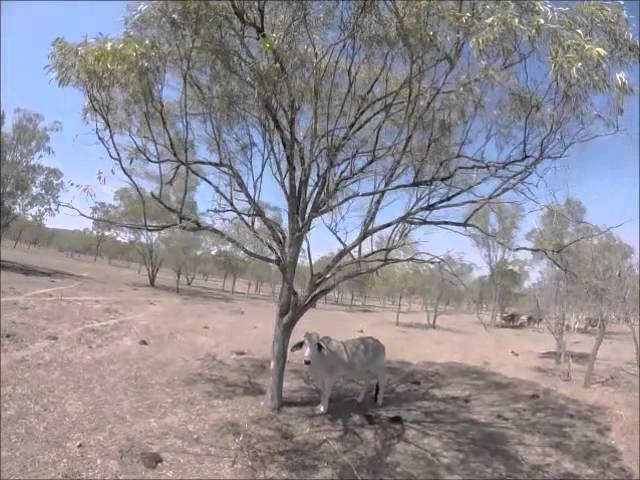
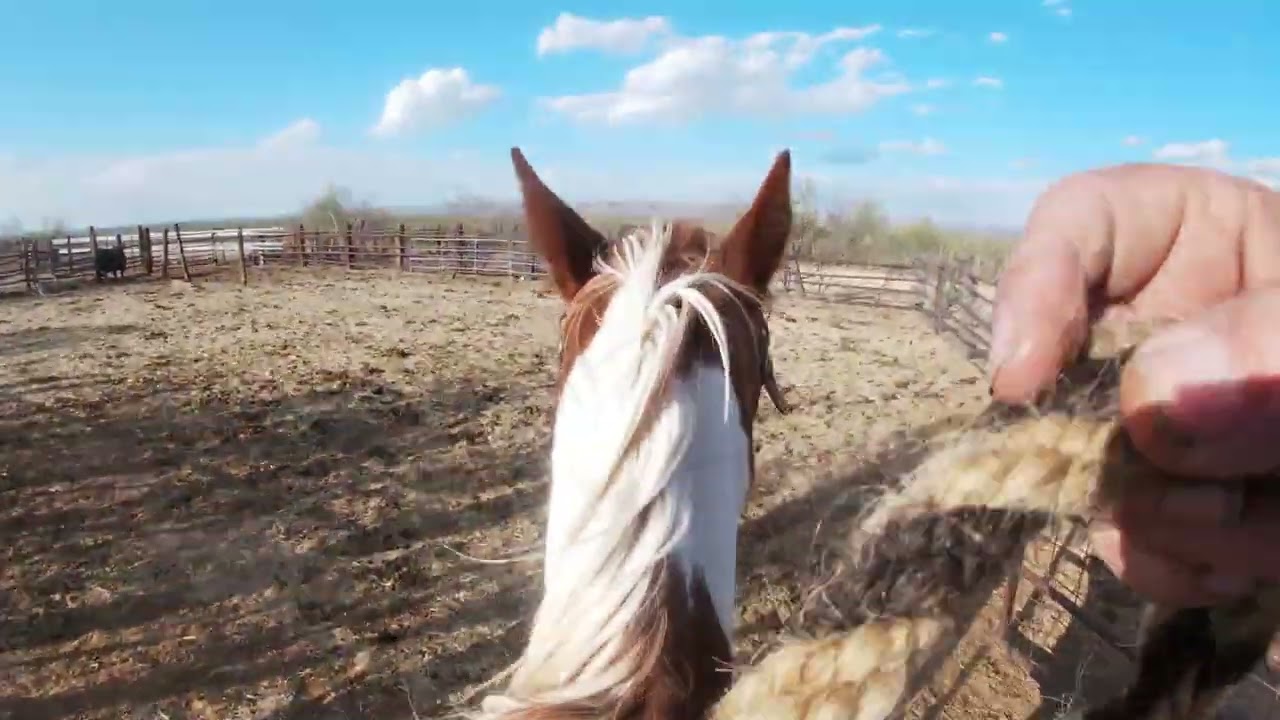
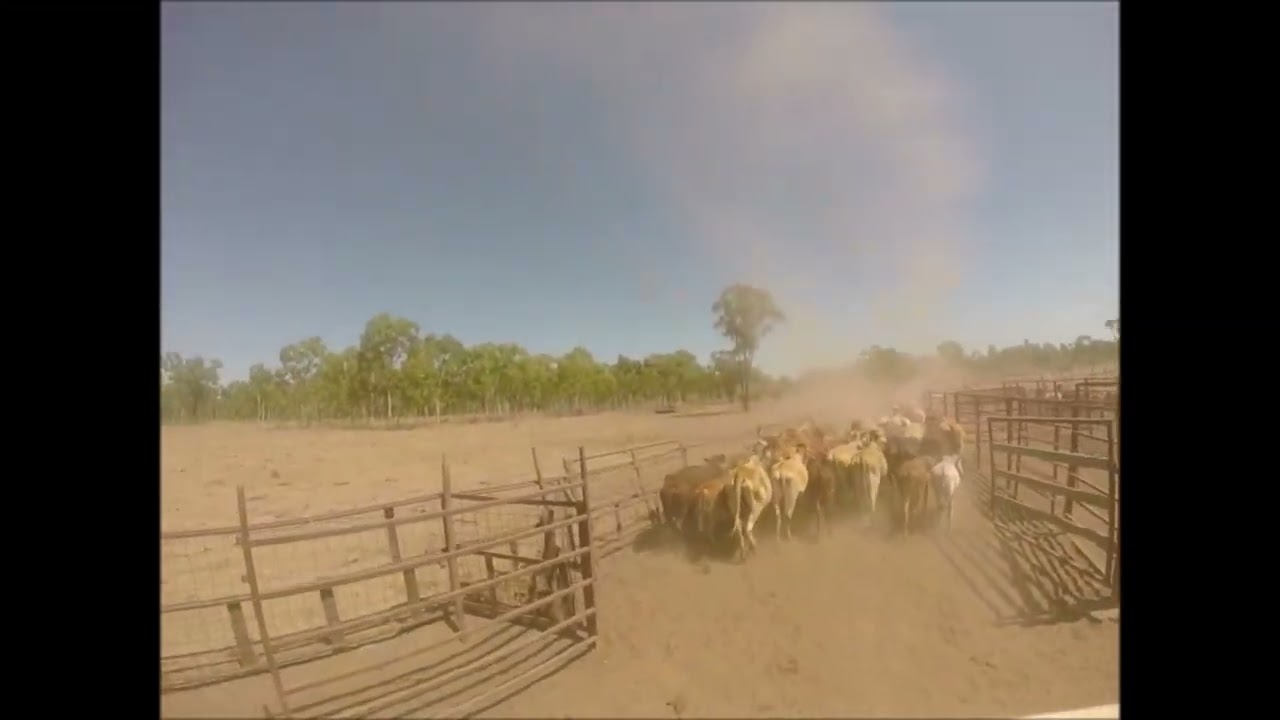
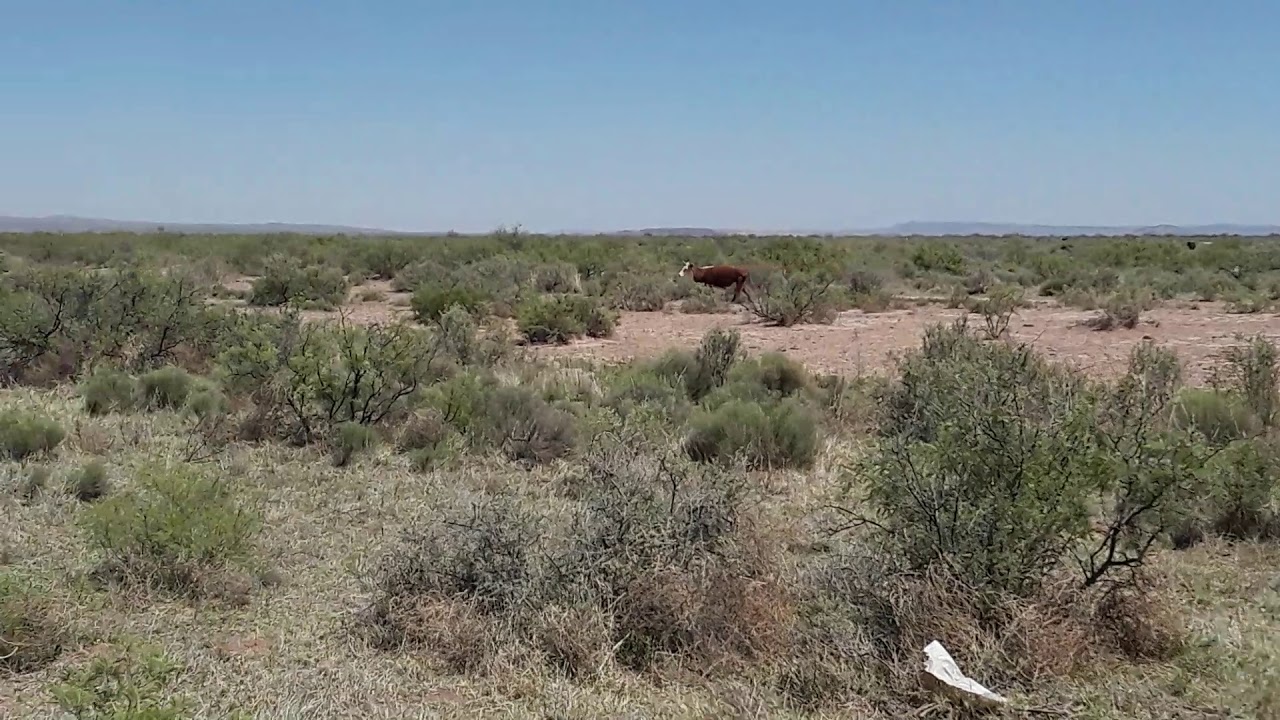
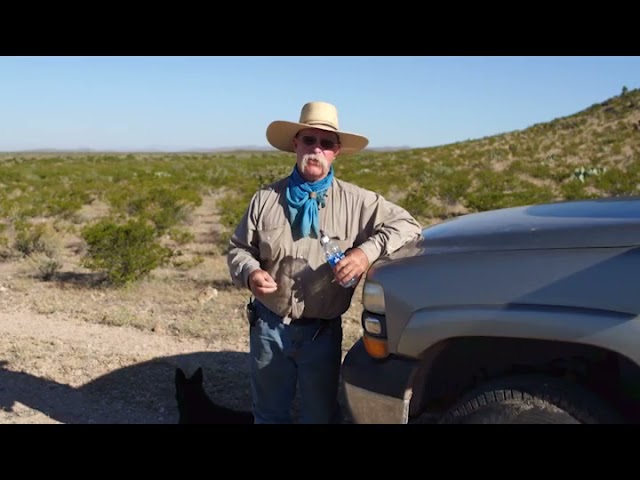
I'm Bob Kinford. I've been working ranches since the '70s as an adult and since the '60s as a kid. I've always been kind of an oddball. Thing is, is we have a lot of things Where we are told this is fact, this is the way it goes, this is the way you have to do things, and it's not necessarily true. One of the things that is pronounced as being fact is on grasses and what causes the grass to disappear. Okay, any range manager will tell you that creosote Bush sends out a chemical that kills the grass. And the thing is, is this goes right on along with a lot of things in the livestock industry that they say, this is a set rule, that's a set rule, don't do this, don't do that, that are just plumb wrong. On this creosote bush situation, as you see, there's no grass around here. Until you get right directly underneath that creosote bush right here. So if this bush puts out a chemical that kills the grass, why is the last grass around here of any quantity growing right underneath that bush and in the bush? And here's the one right next to it. You have the same situation. And if you ever notice, the creosote flats always start from the top of a hill and they work their way down because the top of the hill is where your grass depletes first because either it's been grazed too much or it hasn't— in a lot of cases, it hasn't been grazed enough because the cows are too lazy to walk to the top of the hill. So it's not a situation where you need to take and put out a bunch of chemical up here that's going to kill that plant and a lot of other plants. This is a situation where you need to run your cattle up here in large enough numbers to get manure and urine on the ground and pack whatever— loosen up the ground a little bit to get whatever seeds there into the ground so that you can create more grass the next time you get moisture and the conditions are right. And what's important about the work that I'm doing is people that are doing any form of what they're now calling regenerative grazing, they started out calling it holistic grazing, intensively managed grazing, any name at all that you can think for it, they all have one thing in common. They are trying to Imitate the large herds of bison and elk that used to run, and antelope that used to run across the western United States, or the large herbivores that ran on any continent. And in order to do this, to mimic this with cattle, they keep doing it with fences and getting smaller and smaller fences and trying to judge how much feed the cows are going to eat. And this gets expensive. You've got to take An immense amount of fences. Then you've gotta have a lot of different water points for your cattle to drink. And you can reduce all of that away. This pasture that we've been working here in this video is 4,400 acres. The other pasture across the railroad tracks is around 500 acres, a little bit more. And other than a couple weeks ago, they got out and moved cattle out of that 500-acre pasture. None of these cattle have been handled in a year because they've been trapping them off of water. And for his cattle that he owns himself, it's been 5 years since they've seen anybody horseback. And with this video, you're going to see a complete change, and it's only been 5 days for the whole shoot. A complete change in the behavior of these animals to the point where they are sticking together better. It's hard to show it because of the brush. I mean, the cattle just blend into it, but they're sticking together in a lot smaller area. I mean, we've got them sticking in probably a 700 or 800 acre area rather than going across the whole 4,400 acre pasture. And their attitudes on how they go, I mean, it's gone from being nearly feral to nearly dairy cow behavior. And what this does is if another couple of days on this and putting them on a little bit denser feed than they're in, they're gonna come closer together. And people say, well, this isn't natural behavior for cows. No. But yet we call cattle a herd animal. The thing we have to look at is just like the grass in that previous cut where we're told that this creosote bush kills the grass, but yet that's where the grass grows. The same thing's true on these cattle. This is a learned behavior for them to spread out. It's a defensive behavior of Every time somebody's there, they're gonna get rammed and jammed on, they're gonna get thrown into the pens, they're gonna get shot, their calves are gonna get roped or taken away from them. So the cattle get defensive on that. Some of them way more than others. And if you go and you just leave them out there for 10 years, ranch gets abandoned, people go, well, why wouldn't the cattle become a herd then? Well, that's because that first animal, that first set of cows, they were always the ones that were hanging off out by themselves. Anytime they hear a truck coming, they run. Anytime they see somebody horseback, they run. And they teach that paranoia to their babies. And after 10 years, you've got 10 generations of cattle that are sitting there that, that is their Survival is they will run, and then after they get up to speed and they're hitting the edge of the brush, they'll look over their shoulder to see what the heck it is coming up in back of them. Now, we've got another myth going on, and I mean, this rankles feathers with people, and it's like, if it does, it does. But when you think about it, it is a myth that these large herbivores come together as a herd and they're moved by predators. And the reason I say that is because the really large herds only come together for part of the year and then they scatter out. Yet, at the same time, they have the same number of predators. So if it was due to the predators, why aren't they in one big herd all the time? Let's think about this for a minute. Why do these big herds come together? When do they come together? Well, they come together when you've got a lot of green grass, the creeks and rivers are flowing, you've got a herbivore's paradise. They can come together, it's like one big party, there's no stress, they're not having to compete for food, they're not having to compete with water. All they have to do is eat and breed, and that's the two The 2 most important things of any animal is nutrition and procreation. So you see the predators and they're in back of them, well, yeah, they're gonna be in back of them, you're gonna see a lot of predators, but those animals are going to move whether there's predators there or not. I've had groups of up to 1,150 head Of steers grazing as a herd on a pivot where they were in a ball and they're moving around all the way around the outside of the pivot, then they move in and they move around again. It's just like going through like a swather and they keep moving. There's nothing there moving them. That's just— there's feed in front of them. That lead animal eats a little bit, it walks out to get fresh food, and as it moves up, the rest of the herd moves up and back of them. And you wind up getting a more uniform graze on your fields. And that winds up even in a pivot situation of being able to get anywhere from 7 to 12 extra days of grazing per rotation off of that pasture because you're getting a faster regrowth. And you're not having to go back in and mow it to get that grass to be even. Now, how do we get the cattle to go ahead and want to be as a herd? You know, how do we train the cattle? Well, we don't train the cattle. We handle the cattle in a way that has less stress on the cattle to where they just want to be together. It's that simple. And the way you do this is, is the first thing to do is try not to make any moves that's putting direct pressure on a cow. You don't want to come up directly in back of that cow to put pressure on it. When you go to turn it, you don't want to go ducking in right at the head. And when you want to start cattle, Cattle don't start at the back end, walk through the front end to go anyplace. It's just like you sitting at the stoplight, but you gotta wait for everybody to drive by you before you realize that it's time to go. It's not an— it's just not a natural thing, and it's a stressful thing. So if you think about the cows like traffic and you handle them as such, when you have cattle that are That are falling behind, you take and approach them in a way that they're going to turn back to the cattle without putting direct pressure on them, and they'll pick up their head, look at them, and they'll run up and catch up to the other cattle. And then as soon as they get up in back of the other cattle, they slow down to a walk and they're going at the same speed. When you Get in back of them and you got that dog there and that dog's driving that cow up or you're driving it up with your horse or your four-wheeler, it'll pass up 4 or 5 of them in a dead run. Those 4 or 5 pick up and go a little bit faster and that's a stress thing. And when you take away that stress, your cattle change their behavior. They want to be around each other more. They just naturally start grazing in tighter groups. Even if you're— if you are gonna be running your ranch in the conventional method, if you can get out, you know, the cattle once a week and you ride through them, move some of them over to fresh feed or whatever, as long as you're using the right methods to do it without chasing them there, what happens is your cattle will just calm down. And some other things that we like to think about too is what our distance is from the cow and what the cow's reaction is and how our reaction is. You're not taking any action. From the time you're born, your whole world is reactionary. You come out of your mother, you either breathe or you die. You either eat or you starve to death. And it goes on. Every experience that you have in life, you react in a way that's going to be positive and get you a positive reaction, or you're going to react in a way that's going to give a negative reaction. And most of the ways that we're taught to handle cattle, handle horses, winds up resulting in a negative situation. Maybe not for us personally, but for the animals that we're handling. It's creating stress, and we don't recognize that because, oh, that's just the way cattle are. And that's how I got— basically got started in this, was at the age of 8 years old, I started asking people, how come the sheep and goats graze together as a herd and the cows scatter out? Answer, well, that's just the way cows are. But I also noticed at that early age that People handle cattle different than they handle sheep and goats. And I've spent my whole life kind of trying to figure this out, and eventually I did, and it's— it is just simple. So let's go ahead and start looking at working some cows, and we're gonna go through the first day, right on up through 4 days of this, and I'll do a little bit this afternoon on the 5th day. And you will definitely see a humongous difference in the way these cattle are behaving from the first day to the last day. Okay, on the first day, these cattle were scattered out across this pasture. There were 2 groups of cattle in the— in that first little pasture that we gathered, and before I found them horseback, they kind of bunched up and balled up, and as soon as they saw me, They took off at a long trot and a run, and I just managed to get to where they knew I was coming at the time where they were— it's all timing, just getting to the spot where I wanted them to go back through the fence they'd knocked down. And we let them through, and old Andy, I mean, he's been just— he's been absolutely amazing on his photography on this. He went to where I showed him where I wanted to take the cattle and he goes pulling up there and the cattle just ran off. I was 2 miles away and these cattle took off. It was— they could have used this for the Stampede, same for City Slickers. And then the next day they were a little bit calmer. In fact, that first day I managed to get some penned. We'll show a little bit of that. And then the rest of it, we did it on the other side of this ridge, and it doesn't have as good of grass, but it was just a little bit easier to try to kind of contain things. And bringing them out this afternoon, I'm going to go ahead and bring them over here to this— on the other side, there's more grass over here, so the cattle will wind up being tighter and easier to slow down to start grazing. And we didn't— I'm going to admit it, I didn't try to get every one of these suckers in here. He's got about 120 head over here, and some of them were just so stinking wild that, okay, we got these, we're going to work on what we've got. And when I'd be riding over here, I'd go ahead and if I saw one of them wild suckers and it'd go running off, I'd just get it stopped and then I'd come back into it. And on the 4th day footage, you will see a little black kind of high-horned cow. The horns aren't real tall, but she is still, I mean, she's looking and wanting to run off. And I just worked it to where she just kept thinking about it, thinking about it, thinking about it. And she wound up, she led everything off. When I left, she kind of started leading everything off, but today she's going to be calmer. So you can just— you don't have to try to do this all at once. You can just kind of keep folding it in. And remember that not only are you doing this as far as running them as one herd in order to help the ground, when those cattle are more content, they're going to gain better. You're going to use less labor doing it. And you set it up to where you can have every one of your water points that your cattle are drinking off of to where your whole herd can get in there. When you go to do this, you only have to go to one spot. That means that you can fill up all your water all around the place and you can turn it off and once a month drive around there and fill it up. That means that in the wintertime, If you're in cold country, you can shut that off. You don't have to worry about those floats breaking and running over because, hey, they're not even on. And it will cut thousands of miles a year off of just checking water on these places. So there's advantages to this over and above just trying to bring your grass back. And the stress-related shrink that people take They don't realize it. And back in the '80s, I worked on a place in New Mexico. And I was taking care of 2,200 head of steers and 150 head of pairs. And we took everything in and wormed them twice. And then in the fall, we gathered them. Flies. The boss forgot about one set of steers we were going to bring in. And he always gathered everything with an airplane. He says, cowboys are too expensive. I can do this faster with an airplane. And he would. He'd get out there and he'd bring them in. And I mean, they'd— he'd gather an 8,500-acre pasture in 3, 4 hours. But this one set that I brought in to worm and They were the furthest away from the shipping pens. So hypothetically, that should have wound up being the lightest set of steers because they had to walk further. But at the end of the year, that set of steers weighed 7.5 pounds more than the other. Just from handling them one time. So at 3 times, that would have been— 22.5 pounds. Now multiply 22.5 pounds times however many cattle you have, that's a lot of weight. And at times like right now when that pressure, that market has just bottomed out, do you want to throw that much weight out the window? Do you want to throw all that money out the window just because you think it's cool to get out there with your four-wheelers and your airplanes and your helicopters And run them in, or do you want to go ahead and spend the time during the year, and it doesn't take that much time. It actually, from riding from the house that's right back over here a couple miles over to the water, pulling them off the water and settling those cattle down, even in the training phase, has only been taking 4 hours. Once you get them comfortable. completely trained and they're going good, it's going to take you less. And this works, it works, I've had up to 3,500 head working as a herd before, so with only 3 people on it. So it's not labor intensive, it is just the opposite. So with that, let's go ahead and try looking at some footage of really wild cows first. Okay, as they were driving the truck through to set up the drone, these cows came together. They were in 2 groups, and you can see me, I'm down in the left-hand corner of the screen, and I'm cutting across them to kind of bend them down towards the other end of the pasture. And here I'm still a good quarter mile off of them, and they're slowly turning, trotting out at an angle away from them. I'm wanting them to get them to go towards that big white box on the right-hand side of the screen. And I've run out of room, but I've got— so I've got to hurry up just a little bit, but I just want to get just enough To where they'll start turning like that, and then I'll meet them. I'll just meet them where I want them to be. I'm not going to try to follow them, stay with them. I'm just going to kind of vanish. See me back there? I went down into a walk. They're still trotting. I met them down there, and now I'm just going to kind of ease up real slow instead of trying to get a lot of movement. Just get enough pressure on them To put a little bit of movement on them. If you start getting the wrong pressure, you might have to back up. He's up there a couple of steps. Got that one in the back kind of going the right way. Come up a little bit more. Wait, wait for it. Go up a little bit more. Stop. Just wait there a little bit. Couple more steps. You just want to do this in easy steps. You don't want to try to put a lot of pressure on. You just kind of want to— you got to be relaxed and just ease up there, and the cattle will turn where you want them to turn if you're at the right angle. They're kind of looking for it. That little turn right there, if you notice, the red cow kind of looked the other way. Those cows in the back actually turned back. And there they go, just real easy. I mean, would have been easy to blow these cattle out. They're gonna get way the heck out there ahead of me someplace because I can't go under the tracks. I've got to close the gate and go through another gate to go over the tracks. So they're gonna be way the heck out ahead of me, and I'm gonna start gathering The east side of the pasture to go over towards a dam that's over on the west side of the pasture. This here is the cattle. As I gathered them, they started running and they went over to the dam, and when they heard the truck come up for the cameraman, they just ran away from him. And they can go down there past that— just past that jog is how far they can go. Hopefully they get to run out a little bit. And I'm about 2 miles away from them at this point. Okay, here they turned around and I'm getting closer myself. And they're getting ready to break apart here instead of everybody going to the same place. This little group off that's going off to the, to the left, they're going to wind up breaking off before I get there, and I'm going to have to play around with them. Here they are right here, and I get it. I saw them coming, so I was able to get out kind of in front of them. It's going to be a little bit of trouble to get them stopped. But as long as I don't go putting a lot of pressure on them— About right there. You take an angle like that across the outside and that cow will turn back in. You don't have to go directly at that head to make them turn. You go directly at the head and they'll turn, but they'll speed up, and a lot of times they'll just speed up and run off or Or they'll speed up to go around you. And instead of trying to get it all at once, I'll ease up, especially on these cattle that are a little crottier. Make a move and sit there for a second. Got a little bit of motion out the front. Just enough to get those turned around. Got my horse turned at an angle there to go away from him a little bit. And if you notice there, I was— the horse was facing into the cow, but at the same time was taking a couple of steps away from the cow, going sideways, lateral movement. That lateral movement is a good thing to have on a horse so that you can adjust where your horse is going Instantly at any time to give more space, less space, and, and keep your position without having to speed up to try to get around them. There again, they went to run off. I went away from them. And you notice what they're doing here— instead of running off and speeding up like they would if you're trying to get around them, they're actually looking over at you like, what the heck is that idiot doing? And stopping, and it gives you another chance to pick them up. Cutting across the front of this cow, and she turned before I started to face into her. And the thing is, is when you're doing this, you need to have a horse that isn't constantly wanting to duck into the cow. Most of your horses, I mean, that's the way we train these horses. We want them to get out there in front of that cow. We want them to block that cow. And that works. I mean, you can get your cattle stopped, but it's like asking you to slow down by throwing my hand up and backhanding you across the eyeballs. Yeah, you're going to stop there for a second. But you're also going to be irritated about it and you're going to want to either run off or you're going to want to throat punch me. Yeah, you've got to figure that what stresses you out is going to stress the cow out.