3 Reasons Most Artists Are Broke.
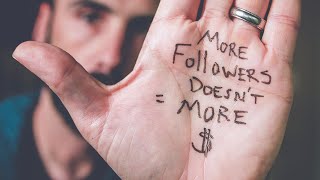
Lennon Bone says most artists are broke because they don't know what they stand for, what they're worth, or how to invest in themselves. One client made $24,000 offering sponsorships instead of free work. Bone argues creators need to clarify their beliefs, reassess their value, and spend strategically.
Questions this video answers
November 24, 2020
Five times more likely
$24,000
He invested about $5,000 when XRP was around $0.50 per unit
He said there was a point where he stood to profit over $30,000 about two months after the initial investment
Chapters
Art and money, creativity and money is like just you clicking on this video, there's gonna be the most divisive situation happening. Like, I have never seen people stand so staunchly on one side of the fence or the other where they're like, hey, nobody should be making money. They should do it for the love. And then other people are like, absolutely, like, we should be getting paid for our work. This is. This is our time. Here's what I believe. I believe that you have to do it for the love first, right? You have to do it because you love it first. But I also believe that you have to get paid for it. Because if you don't get paid for it, there are two things that happen. Number one, you're not able to support the thing that you love. And number two, you're not allowing somebody to show their value. There was a study that a mentor of mine did where they give people scholarships to their things. And of those people.
Let'S see, what is it? They are five times more likely to not show up when it's given to them for free. They are five times more likely to not care when it's given to them for free. Money is just an exchange. It says to somebody, I believe in this. I want this. This fulfills something, my life. This solves something for me, right? And art does that. Art creates feelings. It gives people this opportunity to connect in a deeper way. And I want to talk about three reasons that I believe artists are still broke. And the first one is that they don't know what they stand for. And I want you to hear me out. These are not your conventional, like, oh, well, they're not asking for enough. I mean, we're going to talk a little bit about that, don't get me wrong. But they don't know what they stand for. And so what happens when you don't know what you stand for? What do I mean? The best art stands for something. It makes somebody feel something because it butts up against these beliefs. So if you said to me, lennon, I believe that every animal deserves the right to live a free range life and should not be eaten, right? And then I'm on the other side, like, yeah, but listen, I believe that mankind from the beginning has eaten animals, hunted, killed them, right? And that's what we've done. So I'm a meat eater, those two things, but up against each other. Think about the ways that art has pushed those boundaries from the beginning. From music perspective, somebody like Bob Dylan, who's. Who walked out and got booed off the stage, when he had a freaking electric guitar. Like, who? That's just the most ridiculous, ridiculous thing to me. Synthesizers, all this crap. Like, it all starts to stand for something because it pushes boundaries. And now we're in this place where I believe art, whether it's visual or aural or spoken or whatever it is, it doesn't the boundaries it pushes. It has to be more, like, spoken. The belief has to be clear. And so when you don't know what you stand for as an artist, if you just show up and say, oh, I just write songs, then nobody's going to understand why they should relate to you. If you're like, I just show up and make things, I just think it's fun, that's cool. But there are thousands of other people that just show up and make things because it's fun. The ones that we like, the ones that we draw ourselves to, are the ones that we can say, I love what this person stands for. I love what they're all about. And when you make something stand for something, when you make something exciting, then it fulfills a problem for somebody. It helps them to have a story to it. So this work back here, this is my brother's work, actually. But I have artwork all throughout my house from all kinds of artists. But this is cool. This is, like, from our friends Lucius, who they now, you know, sing with Roger Waters. And this fulfills this story for me. It means something to me because there's a connection of friendships and music and these concerts that they did, and my brother and all these things. We fulfill these stories. Right. I know a buddy of mine who I have his artwork in our living room. What I love about his is the story is all about these rural areas in Kansas and how beautiful they are. And he brings in these old photographs and puts them into these really beautiful, colorful prints. And the photographs are like black and white imagery with these just crazy, beautiful colors on the over side of it. And it's just gorgeous. But the idea, the belief here is that we have this beauty inside these rural areas that need to be explored. And he talks about that, and his whole thing is about that he still lives in that place. His story aligns with the story of his artwork. So if you don't know what you stand for, it's hard to get somebody to pay for something. The second thing is, you don't know what you're worth yet. You don't know what you're worth yet. This is the whole pay, like, okay, you're not charging enough kind of thing. But I believe that you understand what you're worth by understanding, number one, what you stand for, and number two, what you need to make. When you know what you need to make to survive, you can start to understand, okay, well, if I make stickers, but I need to make $3,000 a month to survive, then these stickers are not going to do that unless I sell however many thousand of them. If I need to make $3,000 to survive, this.001 cents on a Spotify stream is not going to do it unless I get X amount of streams. So you can start to then say, well, what do I have inside me that is more valuable? I believe that artists and creative people, for the most part, are behind the times. They see these two or three things inside their niche. They think, okay, well, I know that I can sell my work, I know that I can sell records, and I know that I can do live performances or get in galleries or speak and do live events. And that's kind of it. They don't realize all of the talents that they've accrued over these years that can then be formed into educational opportunities, into services where you're creating something for bigger companies that need more. I had a client the other day with video creators where he just didn't know the perspective of how to look at what he'd done. And what he does is he does like custom work on motorcycles. And he was trying to sell like, you know, and you may say, well, Lennon, that's not art. I would disagree. Like that. That's totally art. Like, look at, look at some of the incredible stuff that is the vehicles around us. Like, that is artwork, right? He's making this stuff. It's cool. And he's like, I just need to make more money, so I need more subscribers. And I'm like, dude, you don't need more subscribers. You just need to think about how you can make more money. And so he had some brands that had already kind of worked with him. And so I said, well, listen, here's what I want you to try. Reach out to all those brands and say, okay, you know, I know you've given me product for free. Now I just want to make a little more money. How can we do that now? Sorry. Well, I didn't. That would be rude. Now I just want to make some more money. Why don't you hand it over, Brett? No. So I said, why don't you reach out to him and say, I don't need any more product right now, but I'm now opening up to do sponsorship deals in my content. Would you be open to that? He reached out to all these people. Within a week, he had made $24,000. Just like that. It was a shift in perspective. Sometimes we limit ourselves. We put ourselves in this box and say, what are my options here? And we only look at the normal options in our industry. It's time that musicians and artists and photographers and filmmakers and all these people start to look outside their industry and see what the potential is. Because the world is very different now than it was 20 years ago, and it continues to excel in that direction. So understand what you're worth by looking at what your options are. Think outside your own box, and then build something that is worth more to people that solves a bigger problem for them. Okay, and then the third part is you don't know how to invest in yourself. You're afraid to invest in yourself. Back here, one more story. This is xrp, which is.
A cryptocurrency, and it's running right now. And about two years ago, the bubble burst on the whole cryptocurrency thing. During that time, I had invested when this was pretty low, probably about 50 cents a share or something like that. And I put about $5,000 in there. And at the time, and there was a point where I stood to profit over $30,000 about two months after I had made that initial investment, making $30,000 in two months. But because I didn't know how to invest in myself, because I got greedy and because I focused so much more on the outcome, the further thing down the road, what if. What if all the questions, what if this happens? What if it keeps going? What if this happens? And I lost all of it? It crashed. It went down to the bottom. And just now, two years later, it's starting to come back up. And I've just kept all my money in there. And as of right now, I'm up not that much money, but I am up a little bit. But I've learned the lesson, and I've already set it to where I know, okay, when this hits, something's going to change, right? I'm going to make some profit this time. And you invest in yourself with three things, time, money, and energy. You invest by time, you make content, you make your artwork, you connect with people, all that kind of stuff. You invest in money by hiring people to help you, by paying your friends when they do work for you, by getting courses, finding mentors, like getting somebody to coach you through the things that you need coached on. Tiger woods has a Fricking coach. And he is one of the best golfers in the world. The dude has a coach. He's not afraid to say, I've paid this guy. And you may be like, well, Luna, of course Tiger woods does. He's got all the money in the world. Listen to me. If you can say every investment that I made, money wise, that was hefty, that got me in the room with the right people, has eventually turned a profit for me, all of them. And it was the scariest ones that were always the most lucrative on the back end because I knew I had skin in the game and I knew I had to act. We expect as artists that everything on the Internet should be free because it's given to us for free. And so we're afraid to even invest in an email service provider or a little course that costs like $300. Like, you're like, oh, my gosh, I can't spend $300. What if that course taught you to make $300 a month from now? And you would have never made $300 had you not taken that? What if that happened? You have to put yourself in the long term perspective while also keeping in mind what the short term gain looks like as well. Okay, so understand time, money, and then energy. If you're thinking all the time about what things should be and you're not embracing where things are and being happy about taking just the next step, you are expelling energy. And that energy is literally burning calories for you. And when you do that, you get tired and, and you risk burnout and you don't do better work, you start to feel guilty, you start to feel like you need to do more. You start to get really fearful of things. Paralysis analysis kicks in. You start to overanalyze everything. And when you do this, you expel more of that energy and you don't rest. This is where I'm so against the hustle mentality. When you don't rest and you just invest all your time and energy into what you're doing, you are not doing your best work, and you're going to get diminishing results. You're much better off putting your energy into the right places, understand where your time should be put, and really put it into that. So the three things here, just to recap, you need to know what you stand for, understand what your belief is. Talk about that. Understand how to connect that belief to your artwork. Take some time, sit down and figure that out. Number two, understand what you're worth. And if the thing that you're making isn't worth enough. You. You have it in you to make something that is worth more. You have it in you to make something that people will make more money for you just, or pay more money for. You just need to think about that more clearly. And then number three, you need to understand how to invest in yourself. Trust that you've earned it, that you deserve it. You know, a restaurant owner doesn't get to go out and just build his restaurant for free until he like makes a profit. Like invest your time, money and energy into the right things and you are going to see dramatic shifts in what you do. I hope you find this helpful. Check this video out where I actually run through how my wife made $1,000 just selling portraits when most people are selling portraits for like 50 bucks and hardly making anything from it. She only needed to sell a few to really meet her goal. And in this video we talk about how we position that. I think that could be really helpful for you. No matter what you're in. Like if you're a photograph or you're a musician or whatever, just think about these concepts more about how we got there than what we officially did. Alright, sending you guys love and I'll see you soon.









