Artists: 4 Things To Grow Your Personal Brand & Sales in 2026!
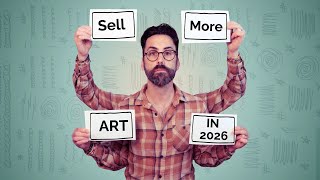
Lennon Bone breaks down four steps to grow art sales: nail your message, live it authentically, build a repeatable sales system with email, and refine it constantly. His community hit $436,070 in sales last year and is aiming for $1,000,000 in 2026.
Questions this video answers
$436,070
January 8, 2026
A million dollars (collective community sales)
Chapters
Hey, Everybody. Welcome to 2026. I hope you're excited about making some art this year, making some money from your creativity. For me, personally, I am hell bent on helping artists in my community make a million dollars in 2026 in collective sales. And this is going to be a blast for me. I am putting everything into my community and the channel. All of these things are going to be parallel and aligned. So thank you. That we're talking about in the channel, we're also talking about inside my community. And it's just going to keep, hopefully those of you that are following along in action for 2026, so you're not lost on what to be doing. And that's whether you're working in the paid community or not. And so we want to start by talking about the four things that I think are a must if you want to grow your personal brand as an artist and make more sales this year. Well, let's recap really quick. We ended last year with members of our community doing $436,070 in art sales. This is a huge milestone for me. I'll admit that. You know, there was a point where I felt like it should have been more. I was gunning for a million last year and we didn't see it. But when I did some research, I found out that this is likely more than what 60% of galleries help artists make throughout the world, which is insane to me. I know some of you are out there questioning this number, like, well, there's no way this is real. Listen, it's just like anything else. There are people that make more than other people. It is not perfectly balanced across the board. Unfortunately, the world doesn't work that way. And don't worry, I'm going to do a whole video on what we learned from these sales inside the community. So that's coming soon. I'm compiling all the data and putting a lot of stuff together, so it's going to be a blast. But let's get into the real meat and potatoes here. So these four things that we're going to be thinking about are a lot like riding a bike. If I gave you the instructions to riding a bike, you couldn't just go ride the bike. You know what I mean? Like, if I said, now make sure that your head's up and that, you know, you don't look down when you turn and that your pedals stay at an even trajectory and all this stuff, if I told you that you would jump on the bicycle and you would still crash, so what I'M getting at is like, you're bound to crash. The only way that you can learn these four things is by doing them. And that means you're going to have to do them together. Yes. Prioritize certain things over others based on where you think you need the most improvement. But understand that, you know, the world doesn't work like YouTube videos. Like, we don't just go ABCD, and it's all just perfectly laid out. I'm sorry. Not sorry. So the first thing that you need to have in place if you want to grow your personal brand and make more sales in 2026 as an artist is you have to have something to say. And I know you're like, well, Lennon, I have an artist statement. And then I go to your website and your website says something to the effect of, you know, I enjoy making art for the exploration of my life and the color and the composition that brings forth all of my internal being and accomplishments. Beautiful. I have no idea what that means. I don't know. Your life story sounds like a really cool thing for your college professor to really get behind you on. But in terms of selling something, let's be real, kind of a snooze fest. I looked at, for instance, an incredible photographer's Instagram today, and, you know, beautiful work. Stunning. Right. But it's a photograph. Like, what's going to get me to buy the photograph? Well, I want to know who he is, and I want to know what he has to say. If I go to a coffee shop, you know, it's one thing to have great coffee. It's another thing when the barista is someone that is familiar, when they maybe start to know my name or I start to know their name, or there's like a back and forth. The second thing you need to do is embody your identity as an artist. What does this mean? It's one thing to say what you want to say. It's another thing to say it with a term that honestly gets thrown around way too much right now, but say it with authenticity. I heard someone describe authenticity as saying something that is true and that you believe in. If you're like me, you've watched a lot of YouTube videos, and we see a lot of people on the Internet that just read off the script. And we don't feel like it may be good information, but we don't feel like they embody that information. We don't feel like we will remember them. We may just remember the information itself. Something just feels off about it, and I could be wrong Here. But I feel like that's someone being more concerned with what they're saying than who they're being when they're saying it, if that makes any sense at all. And I know we're getting into a little bit of a heady conversation, but it's like I have to show up and believe it and when I'm more passionate about something that is going to spread. So in other words, you know, if you say, well, I make art because I want to help people feel peace in their life, right? And then we have to say, do I believe in this thing that I'm saying? But if you say all this and you don't embody it, you don't believe it so much that it resonates off of you energetically, people will not buy into it. And no, you don't need to be some sort of extrovert or amazing writer. That's the point. It's like when you are you authentically meaning you're saying something that is true and you believe in it, even if you're an introvert, it will come across the way it needs to come across. I mean, frick, some of the biggest creators on the Internet are introverts. The third thing you need to be thinking about and I sometimes forget that I need to remind you all of this, but you need to have some sort of sales strategy and in place. If you're just sort of running and gutting it and haphazardly saying this is for sale, you're not really running a business like you're kind of running a hobby. And something I've told my clients this year already is like, I'm calling you all business owners this year. Like I'm not holding back from pushing you to think more that way. Because a business owner isn't thinking about the things an employee thinks about. A business owner is thinking about what is the big picture stuff that is going to move the needle to get more things sold. I know that sometimes we have these pictures painted of what business people are and that they're these rotten, like slimy people. I know a hundred business people that like, literally I could call a hundred of them right now that are absolutely wholeheartedly big hearted people who are there to serve people really, really well and also deliver something that's going to allow them to make money that feeds their family. Go figure. You can be a good business owner and also be a good person. So to have this plan in place, I want you to think about focusing on two things. I've talked about it before, but I'm going to talk about it over and over again this year. Are you getting in front of more people through social media or something like that? And are you making more offers? Are you. Are you getting them on your email list? And are you letting them know that you have something for sale? And yes, there is a process to this. It's not something that's simple to go over in a YouTube video, but I do have a free class that you can go and watch. Goes through the whole thing. It's a little over an hour long. The link for that's in the description. You can go check it out if you want to. And the fourth thing I want you to consider thinking about this year is growth and repetition. And. And I'm actually going to reverse the order of that. I'd love it if you thought about repetition and then growth. Let me give you an example. If you have never sold something on the Internet and you've never put something even out there for sale with a lot of intention, meaning you set an end date and you say, I'm going to release this artwork to my followers on February 16th. Right. And that's the date you're going to release it. And. And up to that point, you're progressively pushing that more and more toward your audience. Well, once you hit February 16th, that's the date that you do the release and people have the opportunity to buy. Right. If you have never done that and you do it for the first time this year, it is not about how much you sell as much as it is how much you get set up. I'll say it again, it's not about how much you sell as much as how much you get set up. What do I mean? I mean, when you have this plan in place, understand that your goal is to run this plan again. Think of it like a football play. This is your all star, like, football play that's going to get you the most home runs. I know. I'm just kidding. So when you want to get the most home runs in this football game, when are you going to do. You're going to take this and you're going to run it over and over and over again. But what do we have to do with that play for it to work? We have to practice it in business. The only way that you can practice something is through repetition in public. So the first time you run it, you might get some sales. Great. And then you might feel frustrated and be like, oh, my gosh, you know, these were all people I knew. Who cares? Like that's amazing. Have they ever bought from you before? And have you ever done it in this way? If not, then that is an absolute win. And now what is your next goal? Well, let's go back to our two big things. You want to focus on getting more people in the door. You just made an offer, so now we just got to get more people in. So we get more people in and then we repeat, we run the plan again. So repetition of the plan and then growth. And what happens when you run the play? You're going to figure out, this didn't work, that didn't work. The numbers don't line up here, right? And then you can start to look back and figure out what you need to fix. And the majority of the play will already be set up for you. And you can just repeat and grow, repeat and grow. And I'm going to guarantee you that a lot of you are going to get impatient because it's not going fast enough for you. I'm sorry. I wish that I could tell you that it's like what a lot of these people on the Internet tell you, that it all just happens overnight. Well, let me tell you, I. A lot of times it does happen overnight, but after months or years of repetition, because once the play works, all we got to do then is put fuel on the fire. And that's where we can start to use things like advertisements. We can start to use other options of collaboration, because you have a mechanism that will sell your art for you without you having to put a ton of work into it. And right now, I know it feels like a lot of work, but that's because you haven't repeated it. If you haven't literally gone play by play and been able to copy and paste things, then you haven't actually repeated anything. You've rebuilt something, and so you can't actually tell what's working and what's not. So, in summary, we want to make sure we have something to say. If we don't have something to say, people aren't going to pay attention. So we got to stop hiding behind our art, and we got to put our face out there and be ready to stand for something. Then we want to embody that identity. We want to make sure that we. We believe in what we're saying, that we're not just saying it because it's true. Like, we truly are behind it 100%. And our energy shows that we want to have some sort of sales strategy in action that gets us in front of more people and makes more offers. And finally, we want to repeat that strategy and grow it over time. I know it feels so simple. And if you're like, well, Lennon, I've heard this before. You know, I know all this stuff. If you haven't done it, you don't know it. I'm sorry, but that's true. There's a very big difference between head knowledge and. And action knowledge. That's why my goal for the entire community this year is action. So if you're ready to take action this year and not just sit on the sidelines, you want to take these four steps and move, type action in the comments. So I know I want to celebrate with you. And then I can't wait to be back here next week. We're going to be talking more about how you can make this happen. Don't forget, you don't make art. You are the art.









