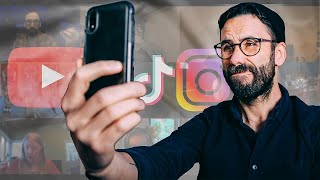
A short conversational excerpt from a YouTube video (Lennon Bone) where multiple speakers discuss why they resist appearing on video — chiefly fear of sharing personal emotions and not wanting to speak for others. The host reframes sharing as telling one’s own story and offers an anecdote about zebras (painting a red dot) as a metaphor for the risks of standing out.
What is it about showing up on video that you don't like specifically?
Like, kind of talking about like my own feelings and.
Like emotions and kind of deeper stuff. There's like lots of resistance that comes with that.
I'd say that's the same. I don't want to represent people. I don't want to speak for everybody.
Okay, cool. I love it. Here's how I think of all this. When you make it about your story, you're not speaking for anyone else because you've identified this is me. This is about me. And if somebody wants to take that and spin it, which they will, we have no control of that. This is why most people don't do it. You've heard me tell the story about the zebras. There was some scientists that went out and they were studying her, a herd of zebras. In that study, they would lose. They would like write something down and they'd look up and they would have lost the zebra that they were looking for. Because that's like the way that they are designed, right? So they were like, okay, we can't find this person, this zebra person, whatever. So what did they do? Their thing was they painted a red dot on the zebras haunches. Those were the first zebras to get killed by the lions.
Because now the lion could isolate that zebra and call it out. And so, as anybody who is trying to step up and serve someone else, be it with your art, with a business, with whatever, then we are putting a red dot right on our ass cheek, right? And we're like saying, I hope that nobody comes for me, but they will. It's just inevitable. And I hate that about it. I truly do. The only thing I've been able to do to cope with this idea is to say if my integrity is as high as I can possibly have it in any given moment, and yes, I will screw up, things will happen, and I do everything I can to make those things right in those moments. And I know that my personal intent is where it needs to be. What everyone else thinks of me is none of my business. Not only that, it doesn't serve my business what someone else that isn't in my wheelhouse thinks of me. It's none of my business, and it doesn't serve my business. What serves my business is what you all think of me, right? So does that mean that I disregard your feelings? No, not at all. Again, integrity, intent. And I'm going to come and do everything I can to make sure that I'm giving the effort that I can what we think of as this little bubble of content is this thing that we make, and we hope that it performs well. But what content should be thought of, I believe, is this thing that serves somebody well and they're impacted by it, and they come and work with you because of it, and we move on, and we move on, and it expands and expands. I think it's a big mindset flip of, like, how we approach what. What we're trying to do. And again, I've said. I think I said it in the video, like, stepping back and saying, okay, what's my vision here for this whole thing? And how does this stuff align within that vision?