ESCAPE the "STARVING ARTIST" TRAP with Inverted Thinking.
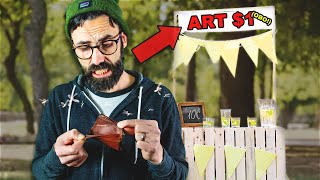
Lennon Bone uses Charlie Munger's inverted thinking to flip the habits that keep artists poor: overvaluing opinions, avoiding marketing, undercharging, isolating. Instead, he offers three frameworks: build financial security while exploring, define success for your audience, and run your creative work like a small business with mentors and 90-day goals.
Chapters
Today we're going to walk through the exact steps that you need to take to become a starving artist. Because good Lord, isn't that every 12 year old's dream? To just be, like, curled up in a ball in your basement, making stuff for yourself that, like, nobody ever pays attention to? Like, that sounds great, right?
Obviously nobody wants that. I don't want this for you. This comes from Charlie Munger, who is an investor. He uses this thing called inverted thinking. And I've got this from Alex Ramosi. And the idea here is if we're trying to achieve something, first look at it from the complete opposite. I hope that you'll be able to kind of laugh with me in this, because this entire list is stuff that I myself have done. By the way, my name is Lennon. I run a company called Stop the Starving Artist. And we help artists and creatives to build successful careers. And success is in quotations because it's really about, like, what is success for you? We want to put an emphasis on happiness over money while still understanding that money is important. So the first thing we want to do in order to be a starving artist is care way too much about what everybody thinks. Do you love me? That's not the point. No, that is the point. I'm talking to your peers. I'm talking your family. I'm talking, like, anybody in your life that might look at you kind of funny because you've decided that you want to go after this thing that everybody has said is going to make you broke. Like, they're probably right, so we should just, like, drink it in and stop in our tracks. Their fears are valid. Number two, we need to despise anything that feels commercial, anything that feels like it might remotely make you some money that could relieve some stress, so you can go and work on, like, the art you really care about. Get rid of it. I'm an artist, man. Tuck it as far under the bed as you possibly can in the deepest crevices of your mind, heart and soul. We don't want no part of that. We are artists, damn it. Okay, number three. Remember, you suck at marketing. You're an artist, new guy's in the corner puking his guts out.
All because you want to save a couple extra pennies. And to me, it doesn't get out. The more you remind yourself that you suck at it, the. The less you're going to want to do it. And honestly, like, the less likely you are to find a way that feels healthy for you, that feels exciting. Because why would we want that? Number Four, the algorithms are against you.
All the algorithms hate artists, and they want to push it down to the bottom. And so I just want to. Just to let you know that so that, you know, you just really don't waste your time there. Number five, make sure that you're charging the least amount possible for your work. Like, the less profit you can make. And really, like, don't do the numbers. Don't look at, like, how much you're spending on, you know, what you're making. Don't look at, like, how much time you're taking. Just put it out there at the lowest possible. I don't know if I could do this series the whole time. The lowest possible cost. Pray that, like, somebody will be desperate enough to support you. Like, I think that's the best route that we can take here. Let's do some math. Math, math, math, math, math. Number six, you have goals. I want you to do anything that will distract you from them.
Like, I'm a creative, Like, I'm an artist. Like, I have a ton of ideas that I want to do. So I think it's best if we just try to do all those other ideas rather than coming back to them later because, you know, they are going to distract us from the thing that we actually want, and that's really what we want here. Number seven, you need more inspiration, not more action. So get back on social media, by golly, and just spend as much time as you possibly can on there. And while you're at it for number eight, let's just do it all by ourself forever and always, like, having a community around us. Is it really helpful? Like, it's much better to just do this by yourself. These last two are really important. Number nine, I want you to consider.
I want you to consider yourself the furthest thing from a business as possible. This job would be great if it wasn't for the customers. Like, don't invest in yourself because you're totally not worth it. Don't hire a coach or find somebody that's, like, done some of this stuff before. And this is key. Expect that unlike every other business that's ever existed, you should be able to do this for free. Like, we are entitled to do the least amount of work possible and spend the least amount of money possible in order to make this thing happen. And I just think it's really important that we remember that, because as far as I'm concerned, like, we are really God's gift to creation. And so it's our responsibility to show up and, like, Just expect that. And when we expect that and have confidence, it'll come. And lastly, go ahead and quit your job. The managers, this company, this position.
Anything that resembles security as far as money goes, like, get rid of it, because that's gonna add a lot of great pressure on you in order to move forward and get more of your crap done. All right, let's take off the sarcasm hat here for a second. Let me remind you, like, if you felt called at all, I understand, because I was calling myself out the entire time. Like, this is all about things that I've done in my past, including quitting my job at, like, a baloney time and created all this pressure on myself. That was just not the right thing to do. And the point of this exercise is that we can take these things now and flip them and try to find a framework here that will allow us to be successful in this thing. And so I've put this into three different frameworks. And the first one is find ways that make you feel secure and do your best to be grateful for that security. Like, having a job or having things that back you up in this pursuit is not a bad thing at all. And you may say, like, Lennon, well, I'm out of time. Like, it takes up all my time. So just some questions to consider asking yourself. Can you get a raise? Can you cut your hours? Could you look for a different job, like, while you're keeping this one? Right. But, you know, maybe that's the right next step. Maybe, like, putting your art away for a second is the right thing to do. While you find something that gives you more time, could you take your creative skills and charge for them in some way that's a little more conventional than what you maybe want from your career? Just ask yourself what's possible. If you look outside of your scope of view, it may feel like there are no options, but trust me, there are options. Will they be easy? Probably not. The second framework here is to take a look at what success means to you and then go after it. Like, really define what you want in your days, what's missing for you, and how can you get that back into your life? You might suck at marketing. People may think you're weird. You know, all these things are fine. It's part of doing something out of the ordinary. And, you know, I mean, it sounds pretty cheesy, but, like, if we want to be extraordinary at something, like, we cannot be ordinary. It's just not possible. Just remember, too, if you're using the Internet to grow your thing, like, stay focused on that. You don't need the biggest audience, you just need the right one. And it's more important to stand out to your people than it is to try and reach everybody. And we actually have a free downloadable that we would love to give to you that goes over the three things that will help you stand out online to your people, not to everybody. And this PDF is not only going to walk you through those things, but it's going to give you insight as to how you can start to use this online and for everybody that downloads it here. In the next couple weeks, we're going to be launching something where we're sending out case studies to you all so that you can see other artists that are doing it really, really well. And we're really excited about that because this will be a great resource to pair with this PDF. You can download it at makeyourartvaluable.com or go to the link in the description below. Number three, which is probably the most important thing is like, you can be a business, like you can be a small business, a worker, like whatever you want to call yourself, it's totally fine. You don't have to think of yourself as like Apple or something. You know, just think of yourself as someone who really loves something. And businesses that are the best at what they do, they serve people really well, right? And a lot of them, even the biggest ones, they started from a place of serving in a very heartfelt way, like with a real passion for people. And you have that. And so whatever that looks like for you, you can start to create the kind of business that you want and you can see it your way, find the people that have done it and ask for help. You know, there are plenty of coaches and mentors out there that aren't me, you know, if I'm not your thing that like, can do you a world of good to just kind of keep you on the right path. Because without that 30,000 foot view, sometimes we get so like locked into this thing that we just lose sight of what is really important in the moment. And even aside from like community and help and all that stuff, if you can't have those things yet, at least know your goal for the next 90 days and strive to like stay locked and loaded on those, right? Pick only three to five things that you're gonna do over the next 90 days that will get you to accomplish that goal. Like, this is something we do every quarter inside my community is like, look at goals and figure out like, okay, what do we need to focus on? And you won't be perfect at it. You're going to have to constantly get better. But, like, building habits isn't about doing something over and over and over again. It's about giving yourself the grace to, like, screw up and come back to it and not shame yourself for it, not feel frustrated at yourself, but just to keep going. All those other great ideas that you have can totally wait. And that's cool. Like, we don't have to call them done forever, but they can be done for now.









