How art and business is actually the same.
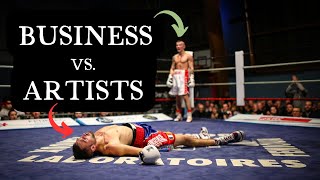
Lennon Bone leads artists through the overlap between creative practice and sales. They discuss identity struggles, fears around success, and mindset shifts like treating business as a skill and learning to 'take the skin out of the game.'
Chapters
Hello, everybody. Welcome. I am so excited to talk today. If you are a creative person and you feel as though business is something that you come up against, sort of like you're fighting it. Like it's just two separate sides of your brain. And how do you figure out, you know, Well, I do all this creative stuff and this feels really good. But as soon as I think about the business side, it starts to get real mucky. We're going to talk about that today and some of those battles that we have with ourselves, which is really what we're talking about. Right. When you're having a battle with your business, it's really just a battle with yourself. And so we're going to get into the gummy works today. And I've brought an.
Esteemed panel here. This is our alumni group from Design youn Creative Career. I'd love it if you guys just quickly went around and introduced yourself. I know that you guys are also streaming on your channels as well. But I'll. I'll give you the name and then we'll have you just kind of go around the horn. We'll start with Susan Taylor Brown.
I'm Susan Taylor Brown. I'm a fiber artist in California.
Love it. Carol.
I'm Carol Webster and I'm a mixed media artist and I live in Oklahoma.
Awesome. British.
Hi, I'm Britt. I'm a visual artist from the Netherlands.
Okay. Hannah and Nemo.
Hi, we're Hannah and Nemo and we make aluminum can moving mosaics. And we are in Texas.
Awesome. Lisa.
I'm Lisa Hilton. I'm from St. Louis, Missouri, and I am a ceramic sculptor.
And Mona.
Hello. Yeah, Mona from Germany, and I'm a watercolor artist.
Awesome. And Mona is also. Some of you may watching may be a part of our Creative Impact Academy. You'll recognize Mona. She's our community manager in there. Super, super grateful to her and all of her hard work. Super grateful to all of you. Like, we've been working together with a lot of us here for a long time. And so some of us a little newer than others, some of us a long time ago. And we've come back from the past. It's a really fun group of people to have here. And one thing I know is like, as creative people, as artists, our level of capacity for our creativity in our business doesn't seem to always match. I'm curious, like, where are you all at right now in this place? So let's start there because I want people that are watching or listening to maybe feel like, okay, I can resonate with this person because I'm in the same spot. So, like, who wants to speak up and just kind of say, how are you feeling about your business right now versus, like, how you felt about it in the past and what's sort of coming up for you?
Go ahead, Hannah.
Yeah, so I used to not really think much about being a business person slash artist. I didn't like the business side of things. And all I knew about the business side of things were what was kind of being presented to me. Like, the kind of stereotypical artists need to have relationships with gallerists or, you know, artists need to have this certain sort of relationship with their patrons. And I didn't really exactly know what that meant or what that that looks like.
Over time, though, I have become a little bit different in that I now see the benefit of developing these relationships. But.
It'S like the combination of developing relationships and developing my art with the perspective of treating everything like art, is a lot, allowing me to see myself more as the business person slash artist, if that makes sense. So now I'm. I still dread doing the bookkeeping and boring stuff like that. But if I say, well, I'm actually a good problem solver, you know, when it comes to the art, you know, like, how can we make this work the way we want it or look how we want it, or how can we finish it or frame it or display it how we want it? You know, all those little details. If I think about all of that, like it's a little art project, I mean, I can almost even apply that sort of to bookkeeping, the most mundane thing I can think of. But instead of resisting doing all of that business stuff, now I'm looking at it like.
If I can treat this like an art project, then I will be more successful. I will be better at it. I will treat it as less. As a burden, and maybe enjoy the process more.
Yeah, I love that. So I want to. I want to make it make you. Maybe we should define where. When I'm thinking about business, like, what. What that is. Because just for all of us to, like, be fully on the same page, because I'm right there with you. There are elements of it that feel very mundane. It's never going to. It's really hard to make bookkeeping or like, taxes, like, feel like an art project. Right? So let's just like, say, okay, that that is a part of business. But what I'm thinking about is, like, business to me. Like, we don't have a business unless we have Potential customers and sales, like, coming in the door. So if we're thinking of those two things as like our primary, like, business push, use that as sort of the broad brush here as far as, like, the terminology. If everybody's cool with that, does that make sense?
Yeah. Susan, what you got?
So for me, I've had several creative careers, and every time I think about business, I think about money. Okay, we want the money coming in. And if there's no money coming in, then I'm not in business. If I'm not bringing any money, I don't feel like the artist that I know I am. And so it's always been an argument in my brain about, you know, are you really in business? Are you really a professional anything if you're not bringing in any money? And so then I flip flop and I feel like I have to go sell, sell, sell. And being an artist isn't necessarily being a very good salesperson.
So it's. It's a struggle for me. I feel like I'm getting better at the balance, but not really. I think I kind of want to just say, screw it. I don't want to think about the money. I just want to go make art. Except, you know, it's like, is a story a story if it's not shared and received by somebody on the other end? Is art. Art if it's not shared in some way or another, whether it's in a gallery or an online thing or somebody coming to your studio? So I.
Really am uncomfortable with the business of art.
Yeah. Okay. Thank you for being so open with that. Like, I really appreciate that. Anybody else want to share? Yeah, Mona.
Yeah, Because I totally feel what Susan is saying, that sometimes it's really hard for me to call it a business, what I'm doing. Like, two years ago I started with an Etsy store, and that developed over time. And now I offer courses on my own website, kind of, but it still doesn't feel like I wouldn't go around saying that I have a business, even though I'm doing the things you do. And. Yeah, and for the bookkeeping part, I just took that back into my own hands. So sometimes it feels like we do things that we see others do or that I see others do, and I do them the same way or try to do it that way. And then I figured it wasn't working out for me the way that I did it. And. Yeah, so it's always an experiment, like taking things back into your own head and trying something else and. Yeah, try and error.
Yeah. Trial and error. That's right, yeah. Anybody else? Yeah, Britt.
Well, I've been taking it way more seriously. I've noticed having a creative business than a couple of years ago. Because for instance, when people would ask me, what do you do for a living? I would say, yeah, I do this and this and this and those are my day jobs. And yeah, I have my business as an artist. And when you put it like that, people also think, yeah, that's her hobby. But the only reason I signed up for having a business after I was done with school, like art school, was to say, yeah, I'm doing something with my education. But now when people ask me what I'm doing, I start with, I have a creative business as an artist. And I feel way more serious about it and way more confident to say that I have a business.
Beautiful. I love that. So much. Nice work. Brett, Carol, Lisa, you guys want to share anything? Lisa?
So I, I was just jotting down some notes and for me, if part of business is potential customers and potential sales, if you're not selling, then are you a valid business? And that can sometimes play with your self confidence. And is the work valid if it's not selling? Are you valid or is what you're creating valid if it's not selling and you don't have potential customers? But for me, lately I've been trying to view the business end of it, which is something I'm very uncomfortable with.
Like I do when I experiment with materials and trying new work, in that I have to keep trying new things and pushing myself in new directions if I want my business to be successful. Because the same thing, if I was doing in the past, it wasn't working, then I need to be trying new things if I am taking myself in my business seriously.
Yeah, 100%, yeah. Carol, did you want to share anything?
Well, I come at it from a different direction. I came out with the business first and tacked on the art to make the business exist. Because I was, I was always, I'm the oldest in my family. My dad was an entrepreneur, and I've always felt like it was. That was where I should be. And so I've spent X number of years trying to create a business because my passion is my art. So they two things go together, they struggle at the same time. But I feel as though when I get stronger with my art, I'm getting stronger with my business out of necessity.
Yeah, interesting. Okay, so I love this. And this brings up something that.
That I think about a lot, you know, and the Kind of the common thread that I heard here. And forgive me if. If I'm paraphrasing or, like, lumping or, you know, lumping. I don't know. Is that a thing we're gonna lump today? We're lumping guys. So if I'm slumping all this together, it doesn't make sense, call me out. But what I heard from Multiple is like, well, if I'm not selling anything currently, or if it's not as big as I want it to be, is it a business.
Right now? Let's flip that right, because the goal here is how do we see the similarities between art and business? So let's talk about being an artist, like, who's had a very similar experience as an artist, where you say, well, if I don't do this, then am I really an artist?
And what does that look like for you? I'm curious if anybody wants to share that.
Okay, Brett, let's start with you.
When I finished art school, the plan was being an art teacher, and I couldn't find a job in it, and I was doing nothing with being an artist. The only thing I did was enlisting my business at the Chamber of Commerce. That felt like a big thing, but I wasn't doing anything. And then, yeah, I didn't feel like a real artist.
Yeah. Yeah, but you were. You were still taking steps to try to, like, create. It sounds like, anyway, like, create that feeling of, you know, evidence that says, I am this. Is that correct?
Yeah. Yeah, definitely.
And, well, another thing that played into that was when I finished art school, I was so done with all the. Being judged and.
Doing what teachers wanted me to do. So I also needed time off of being an artist, and I didn't like calling myself an artist anymore, so I needed to grow back into that again.
So interesting, like, because this sounds very similar to what Susan was saying about her business. Right? Yeah, but just on the art side of things. Mona, what you got?
Yeah, so for me, that's like, faces. When I go through phases where I. First I paint maybe a lot, and then they come, maybe the summer months especially, where I spend a lot of time doing different things and I don't create anything.
Yeah.
And.
Yeah. Then it's like, am I really an artist?
And then.
Yeah. I mean, it starts picking up again. Then I paint more, but it's always, like, going up and down, and sometimes those worries just come.
Yeah. Anybody else? Hey, Mark. By the way, let's. Let's welcome Mark Z. Mark, you want to quickly introduce who you are and what you do?
Sure. Mark Zabel. I'm a. I'm a musician, mostly doing guitar. And a lot of it is instruction on. On YouTube and on tick Tock and Instagram and. And history and things like that. But that's what I do.
I'm a person who helps other people explore, get more joy out of their music, and particularly the guitar.
Yeah, I love it. Okay, Susan. And then we'll get. I think it was. Lisa had the other hand.
So as people were talking, I was thinking, you know, I wonder how much of it has to do with the way you come to art, because I didn't go to art school. You know, I got booted out of an art class in middle school, and that kind of, like, killed any ideas about doing art, which later I realized it was just. It was a drawing class. And drawing has never appealed to me. It wasn't my kind of art. So I drifted into doing various creative things as a way to break the writer's block I had when I was writing books. I didn't set out to become an artist, but gradually, that's where my. My energy went. I became more excited about it. I went into making, you know, experimenting with different types of artistic journeys until I found what I really loved. But I never really set out to be an artist. So then trying to get comfortable with putting that label on as much as I wanted that label. I felt like I hadn't paid enough dues to whatever it was supposed to be in the world to be able to call myself that. And then to say, you're in the business of selling this stuff that you don't even know if you really belong there. So I don't know how much it affects, you know, how you came to art and. And whether you have always considered yourself an artist or a creative. I mean, I've always been creative, but not with art.
Yeah. Yeah. Good. Good, Lisa.
So I do think, for me, that the. The business and the calling yourself an artist is very intrinsically linked, and one relies on the other. For me, I feel like I can't call myself an artist unless I'm selling, unless I have the business aspect of it. But yet I don't like the business aspect to be. To call myself an artist. I mean, but.
I feel like I can't be an artist unless I'm actually selling.
Okay, all right, so we go. So for you, it's one of the same. Like, can't be an artist or a business person unless you're actually selling the work.
I can be creative, and I can do things, but I can't. I wouldn't say to somebody when I met them I'm an artist if I didn't actually have the business aspect of it.
Okay, got it. Now let's say because you have like soldier work now that you've sold it, but you're not in a current stage of selling because you're in like. Well, you're about to be, or you are in one now, but regardless, let's say you're in a stage of non selling. Like, are you not an artist now? Like, do you go from being an artist to not being an artist because you're not selling or you are like. I'm just curious.
No, I would say that if I have the plan to sell and there's a something coming up and I know it's going to happen, it's like any business where you go through cycles where you are planning, budgeting, whatever, and then you know the next thing is going to come. So if I have the plan to do the thing, then I'm still an artist.
You walked right into my trap, Lisa. I love it. This is exactly what I was hoping I would hear. Okay, this is awesome. Hey, Dustin. Hey, G.
Melisora. Melisora. I love it. Okay, awesome to have some folks here. If you have questions, by the way, or you're resonating with this, type it in the chat so we can, you know, be a part of it as well. Mona?
Yes. So I'm working a lot with watercolor beginners and I always tell them that when they're creating and when they're painting, then they're artists. And that's what I also believe. Like, you don't. I don't believe that you need to sell to be an artist. And I also know that a lot of artists out there who created like awesome things and maybe nobody has even seen that or it didn't get sold. So yeah, for me, that's not connected. That's more connected to the business side. Like, if I wouldn't be selling or planning on selling, then I wouldn't call it a business.
Yeah, okay. Yeah, Lisa, go for it.
So I agree completely with Mona. I don't apply that to other people's work and what they do. I have students that come in and they're being creative and I call them artists. I just can't do it for myself.
It's.
It's a totally. It's a personal thing.
Interesting, right? Like, and this is, this is to me the big juxtaposition.
That we all have and why I think there are so many similarities to art and business and why I actually think learning to be better at business is maybe one of the most valuable things that an artist can do. Because when you. There are. To me, there are three things that happen when you learn to be better at business as an artist. Number one, all the fears come up, right? And we have, I mean, we've just spoke it through here, right? Like, we have all the same fears as an artist. The difference is we're just doing it alone, you know, like, we don't have to face these fears in some, some forward facing way. And that's why I think business is so powerful. Because when we have to face the fear, it changes how we operate.
And I was, I was at a conference this week and we did an exercise where, and this is really interesting and I'll share this kind of as, as an aside.
We did an exercise where we thought about, like, what we wanted to see. And I meaning our vision, because that's, that's the real thing we're talking about here. When Lisa says, if I have a plan or a vision for X, Y and Z in this moment, then I am an artist or I am like a business person. Right? And, and so I totally agree with that a hundred percent. Right? But most of us don't trust that plan or that vision enough to like, say, yep, I'm going to hang on to this and let it be my anchor. Okay. And I'm going to be a little vulnerable here in that like. So I went into this conference this week with all these business owners, you know, doing.
Anywhere between like six, multiple six figures to like seven, you know, millionaires, you know, like, they're, they're kicking ass. You know, they're like doing the thing. And we did an exercise where we thought about our vision. Like, what do we want to see for what we want from our own businesses? And I'll tell you what I saw. Like, what I want is what we already have in this community, but in such a bigger scale. And what I mean is, in this community, those of you that aren't a part of it, like, we do things like this all the time. We have calls, we talk through, like gummy stuff we do, we talk about social media, we strategize things, we try to work on our internal stuff. Like, you know, to me, the most important things of like being a creative person. And I love that. But just same as what you guys were saying, I don't always, like, there comes a point where I don't Always trust myself. Like, am I really doing this? You know? And you guys will, like, send me these beautiful messages. Like, Susan sent me a thing the other day that's like, hey, we've been working together three years. And I get all emotional, and I'm like, oh, my gosh, this is amazing. You know, and I feel great about it. And then Mark sends me these, the sweetest email that says, like, I just want you to know that I'm really, like, here for you, and I'm probably going to, like, you know, help you reach your thing, you know, like, you guys are all incredible in that support, but I don't always hear it. So how many can relate to that in terms of, like, we're getting the support that says, like, yes, this vision is worth pursuing, and we don't listen.
Right? And so I sat there and I. And I saw it, and I thought, this is too big for me. I can't. I can't. I don't know that I. I don't know that I can handle this. Like, this is too big. This vision is too big. And I, like, felt it. And. And one of the things we did was, like, think about where we're feeling it in our body. And it was all right here, just, like, dead center of the chest. And a huge knot, like, came up.
And so.
We thought about this fear. And I told you the thing about, like.
The idea of, well, maybe I was telling somebody. I don't know. I'll say it as if I haven't said it here. If I've said it here. Forgive me.
They told this story about a warrior that comes to battle with fear. And as she goes in to battle, she asks fear, how can I beat you?
And fear says, the only way that you can beat me is if you don't listen to what I have to say. Like, if you don't. If you don't obey what I'm telling you. Right. Sorry, I said it wrong. So if you don't obey what I'm telling you. So in order to not obey what fear is telling her, she realizes that she has to be able to listen to the fear to know what it's saying. So she knows what not to do. Right? Someone told me this week, they're like, I was like, I feel sick. Or I. Because I was just, like, in this state of, like, seeing the vision, but I felt, like, nauseous. And they're like, chase the vomit.
Like, where do you feel like you're going to throw up? Go there. Because that, like, uncomfort Discomfort is usually where the best thing is. And that's your internal thing saying, like, there's something here, there's something here. And fear goes, no, there's not. Just go back home. Go back to bed. It's not. No, I promise. Nothing to see here. Everybody go home. Right? Like, that's what fear says. So we have to be able to sit with it and go, okay, what are you saying? What do I need to not hear? Okay, so we had a moment where we pictured ourselves, like, walking through this fear. And this is an exercise that I'm going to do with the community during our goal setting. But when we walked through. When we walked through the other side of it.
They asked, like, what do you see right now on the other side of this fear? And I saw myself. I'm going to try not to get emotional. I saw myself sitting in my living room and being with my family and not being with them, not being present.
And I realized how much fear has already cost me.
In just. In just being there and not listening to it and not acknowledging it and trying to run from it, trying to think my way through it, trying to think of, like, what's the best thing to do, right? And it's already taken so much from me. And I just started, like, weeping, you know, I was just like, oh, my gosh, this is so, Like, I could feel. Feel it. I could sense it so clear. And that was the moment where I said, okay, like, what. What am I going to do here? Right? What's the next thing?
And I think about this for all of us, because I was just like, why? Why do we give these things so much power? And we did so many exercises where it was like, all right, let's talk about what really happens if that fear comes true, right? And this is a great question for anybody to ask. Like, let's say you try to sell your thing and nobody buys it. Does that really make you not an artist? Well, let's go back to it. Maybe it depends on your vision, right? Maybe it depends on how much you believe in that vision. And I'm going to tell you this. Like, if you don't believe in the thing that you're trying to sell, you're not going to sell it.
Because why would I buy something from you that you don't believe in.
That'S just real? And I had somebody tell me that once, and I was like, oh, that hurts. Like, that's. That's like, that's for real. For real, right? Like, if I don't believe in this thing, why should you buy it? Like, that's, that's legit.
But the irony is that it's not usually the thing we don't believe in. It's ourselves.
Right, right. So with that in mind, like keeping this, this sort of flavor of.
Okay, we're either a business, like, we're, we're trying to be both business and artist. Right. And the things that we fear, like, what are some of those things for you? All that come up when you're trying to sell your thing or you're trying to do the deal? You know, I kind of shared one of mine that it, it, for me, it is sometimes just like, am I capable of holding this big vision that I have? You know, and then the other one for me is like, if I'm doing this and this requires money, does that make me greedy? That I need that I want money? Like, that's one. Right. I'm sure that a lot of creatives, like, deal with that. So curious. Like, if you're willing to share and there's no pressure here to share, like, this is obviously public, but like, you know, so who, who, who has some stuff that maybe comes up. Mona. And then we'll get Mark after Mona.
Yeah.
So for me, it's always the fear of will I be able to handle the unknown that's going to come. Like, that's. Yeah, I think that's my biggest thing.
Yeah. So when you say that, like, when you think of the unknown, what's the worst of the unknown that you see?
It's really hard to picture.
Most of the times I don't have specific ideas that come to my head because then I would actually feel like I were able to prevent them or have a solution at hand. So it's something, I think that's the tricky thing for me that it's that something really, really bad will happen and.
I'm not going to be able to.
Handle it or can't do anything about it.
Got it. So you feel like you would, you would walk into a hairy situation without being prepared for it?
Yeah, probably.
Yeah.
Okay. Yeah, that sounds good. She says, yeah, I'll let you have that. I love it. Mark, what about you?
Well, look, a lot of what you said resonated with me for the folks. I haven't said this before, but I think I heard Susan saying it. I didn't go to art school. I, I briefly went to. I studied music when I was younger in college. But I was a businessman my whole life. So that side of it, I also had to learn to.
I Remember when I tried to become the person who could sell things? And it was so hard for me, given my upbringing. So basically what I. This is going to sound really weird. I sound like in the psychology chair. But what I fear is upsetting my mother, who's been long dead now. I really mean, this is, you know, I was raised to be somebody who, to your point, to ask for money. Oh, my gosh, that's a terrible thing. To be wealthy was a terrible thing. Um, and that's. You're lucky if you're going to have any friends, you'll, you know, that sort of thing. And I still kind of fear that, so that even in. Even when I'm doing well and I've. I have done well in the last year or so, I've done very well.
In terms of my goals.
Every time I get that email that says, oh, I love your course, but it's just too much money for me, or, you know, something nastier that would be sort of like, how could you possibly charge money for this? Or I could get it for free anywhere. So I'm not gonna, you know, I'm not gonna pay your for your thing. I instantly go into either depression or, oh, well, let me solve this guy's personal problems for him. I'll give it to him for free, or I'll give it to him for less, or is there a way I can do this.
So that. That's always there for me? And it's hard. It's hard to break through. So that gives me a lot of doubts. Sometimes when I. When I get something that can I really execute the things I need to execute to sell what I do, I think that's. That's the doubt that I have and that's. Those are the fears.
Yeah.
And what. Same. Same sort of question mark, like, so let's say that. And. Well, I guess you've kind of. Kind of said it, but I just want to connect the dots that if you make it, if you try to put it out there and it doesn't work, that's one side where it's like, I'm not reaching this point. And that means what I'm hearing you say is like, that means I'm not good at this. Or like, is that kind of what.
What that I've gotten better at that. So I've put out a number of products and I think what's happening time as I'm getting better at. I'm getting better at positioning them, and so I haven't had so many of those setbacks Lately, I'm sure I'll have them in the future, but when I've had them before, number one, it's devastating. You put out a product and you worked for weeks on it. Maybe for me, I sell information products, so maybe two people bought it. You're like, oh, man, you know, I made 50 bucks and I put in, you know, thousands of. I put in 100 hours into this or something like that. It's devastating. And the first inclination is to look inward and say, what did I do wrong? What's wrong with my. With what I produced? And I think I've learned to instead.
Say.
How is this not connecting with who I need to connect with instead? And I try and make it that way instead of about what I. Instead of about how I'm doing my art. And then that tends to make me feel better about what I'm doing. In an odd way to say, oh, this was just a misdirection. Let me just change it so it directs to the people who are willing to pay me for this, and we'll get real value out of it. And I know how to do that.
Yeah.
And over time, I've gotten better at it.
So. That's right. Yeah. It's.
My two cents is I'm gradually kind of. I feel I'm crawling out of that hole. Maybe I'm out of the hole.
Yeah. Yeah, maybe you are right. And that's an interesting thing too, where sometimes we're like, we're so wrapped up in it, we don't even realize, oh, we're out of it. You know, it's like, oh, it's still got a hold of me. It's like, oh, no, actually, I'm doing really great. You know, like, this is interesting and I want to hear. Hear more about this, but I want to answer these, these comments here. So Artful Corner says exactly no trust. Like, how long will it take? Can I go through that hard time without knowing how long it will take? So no trust in the process is a huge problem. That's right. And I think it's like the.
For me personally, it's become a game of.
It will take time rather than how long will it take. I just say it will take time. Right. And that's. That's freeing for me where I just go, okay, I'm not going to think about how long, but I can just trust that it will take time and that the, that my. I heard somebody say this. They're like, my, I am not responsible for the result. I am only responsible for the action.
And that was like, oh, my gosh, yes. Like, that's exactly it, you know? And then Brenda says, I think this issue is as old as time. How many artists in the past have had to make a living by having benefactors? Yeah, absolutely. And I think to some degree.
You know, you. If. If you're in my world much, you'll like, I don't. I don't think so much about the masters or the. The, like, the past too much, because there is so much abundance at our disposal now. But we just have to choose to see that it's the same as what. Like, if we feel like, okay, there's nothing here. I'm fighting an algorithm, I'm doing whatever. Like, how does that serve you? Like, that's a story you're telling yourself, right? And just like, when I say, well, I have a great product that serves people really well and people love it, that's also a story I'm telling myself, right? Like, so which story serves me the best?
Because either one is going to serve me, but which one is going to serve me the best, right? Like, I think about that all the time because it's some. Some days. And I. I want you all to know this. Like, I don't. I don't hop, skip, and jump out of bed every day just like, oh, this is it, y'.
All.
I am just living it. Let's go. You know, I wish I did, and I'm getting better at that, but it's not that way yet, you know, and that's to Mark. To Mark's point, that's my fault, right? I take ownership of that, but I'm not shaming myself for that. I'm going, who do I need to be to get out of this? What do I need to think about to overcome those thoughts? You know, what's the reverse of that? What if it worked? What if I could handle all of it?
And if I couldn't handle it, what if I could hire all the people that could help me handle it?
If there's infinite possibility, then, like, what does that look like?
Just some things to chew on. Who else has some things that are coming up? Let's get Hannah and then Susan and then Brett.
Just something that was bouncing around my mind as we're talking about fear. Does anyone else here have the same sort of fear that they're not going to sell and make ends meet as. What if we do? I. I get freaked out thinking that maybe we're going to sell too much and we're not going to be able to Keep up with it and we're going to make people mad. And then the very next day, I'll be fearful that we make something that nobody likes or everyone thinks is too expensive. And I. That just stops me. I feel like I can't do anything when I'm starting to feel that way. And it happens not all the time, but from time to time. And I wish that I didn't even care. I really want to just make the art. Just like. Yeah, you know, like Susan said, like, I just want to spend my time making my art, not thinking about these things. But so that's something that I have to work on. I. I just was curious, like, I saw a lot of hands, like, you guys must feel similarly. And also, we have had scenarios where we have sold a lot more than we anticipated and we were fine and no complaints. And maybe it took us longer, but it worked and we were very happy in the end. So I don't even know where this fear of success is coming from, but maybe it's related to the whole, like, you know, don't get greedy.
Yeah.
I think back your mind, you know.
Yeah. For me personally, it totally is. And I think it seems like that's what Mark's saying too, is like, I also had family that if someone was a doctor, they'd go, oh, right. Oh, now, interesting story. Side side thing is that that's one of my fears too, is that people from my past life, you know, when I was a touring musician all the time will see me, maybe they're watching this right now and go like, oh, look at Lennon, like, trying to be an influencer. Like, oh, so cute. You know, so remember that, right? So then I go to this conference and I end up joining the Mastermind, like the next sort of the next thing. Because I was like, I need these people, just like you all need each other. Like, we all need our coaches, our community. And so I was. And I've been looking for, like, what's my next community? Right? It's $12,000 for this community. Like, a lot of money. And so I go, okay, what does this look like? And I'm terrified. I'm going through all the things you all go through where I'm just like, oh, my gosh. And within five minutes I meet these people where it's like, oh, my gosh, these are the people that I need to be around all the time. This is amazing. You know, and it just like all clicks and it's like, well, why was I afraid of that? Like, what did that mean? What does that. What is this money thing anyway? Like, it's all just a token of appreciation. It's not like. Like you've all said it. We're not driven by money. Money is the tool, you know? And so that's. That's where I go. We can't be greedy. When I looked at the end and I said, what does this look like when I'm making enough money that I have employees? And I said, it looks like me going. And I told my wife this. It looks like me going out with the kids and going bowling.
So extravagant. Oh, my gosh, what a greedy mfer you are, Lennon. Like that. You want to go bowling with your family, and then all the money's going back into other things. You know, the vision says, no, you're not greedy, but my brain. And the fear goes, you are. Listen to you. Wanting to make money. What a greedy dude. You know, so interesting, like how. How that. How that works for us. All right, who did I say was next? Brett or Susan? Susan. Go for it.
So the fear. A couple things. So, one, I have a benefactor. I mean, I can say that, you know, I don't have to make ends meet with my art. My husband is very happy being the breadwinner, and, well, what a relief, right? I don't have to worry about any of that. However, not being driven to make those ends meet then means, well, then what's the point? Why am I doing this? I have to derive that satisfaction from the act of the process of creating the art. And I don't have to sell, so I don't have to be in business. And that's scary, because if I'm not in business, am I taking myself seriously? And I probably don't take myself seriously enough, so I don't trust in myself. And the biggest fear for me is that I'm not any different from anybody else going out there making this kind of stuff. Nothing I do is different. I'm not different, so why bother? Why should anybody want to spend time with me, spend time looking at my art, take a class from me, come to anything that I'm doing, any events.
Why.
And that's not on the rest of the world. That's on me. That is totally down to bad self esteem on my part for whatever reasons. And so that's. That's the struggle. What happens if none of that matters? Well, it doesn't matter if I make any money. Well, crap, then. What do I have to rail against now? You know, what, What's. What is.
What am I fighting? I'm only fighting myself, and I struggle with that. I don't know how to get past that. Some days I'm doing really well at it, and other days not so much.
Yeah, totally get that. Thank you. Thank you for sharing that, Brit.
That fear, what that Hannah was talking about, of selling too much. I have that in the summer, I attend a couple of festivals as a vendor, and I'm so scared that at the beginning of summer I sell too much and that I can't keep up with everything and that I at the end, and that is the biggest event for me, that I have no stock left. So I get that fear. I think my biggest fear is not being seen or heard and being invisible. And when, for instance, my posts on social media do badly.
I feel invisible a bit. And that fear pops up again.
Yeah. So what does that mean if you're invisible? If nobody's paying attention, what does that mean?
That I'm not important? That the thing. Things I'm making are not important. I'm not interesting.
I think insecurities come up again.
And it's, thank you for sharing that, Brett, and being so open because, like, these are the things that I truly believe 100% are what will.
Set us free from all this stuff. Is it instant? Hell, no. Like, it ain't instant. You know, these are neural pathways that we've all carved into our brains, and nine times out of ten, they've been programmed. Right? Like, think of even the educational system on your end, Brit. I'm sure. Like, what does the educational system value except the creative process? Right? They celebrate the process and the creativity and all these things. They don't celebrate the business side. If anything, they romanticize all the other. And so you go process, process, process, process, process. And at some point, based on your goal of, like, having a business, like, there's diminishing returns because. And I heard Chris Doe talk about this. Susan's brought up Christo in the community before. I was in his community for a couple years, but he talked about this idea that, you know, when. When we go, oh, I want to be better, I want to be better, I want to be better. At some point, being better at the craft is a diminishing return because you now have to learn a new craft of maybe it's communication, maybe it's marketing, maybe it's social media, maybe it's web design. Like, and because the culture romanticizes this and we're told the art speaks for itself, the art will speak for itself. Just put it out there. Just be consistent. Just put it out there. Nothing could be more like that. That just like riles me the F up. Like, I just get so annoyed because I'm like. When you're saying that, you're literally causing people to have burnout because they're not seeing that they're missing a skill that is. And skills are acquirable. These are things that anybody can do. It's not a talent, it's not an innate thing. It's a skill that you can do. And so many of you as artists, if you're listening to this, you're watching this or whatever, like.
You would likely say, I don't have an innate talent as an artist because you're humble. I'd say some of you probably feel that way. I have acquired a skill. If you have acquired a skill as an artist, you can acquire a skill in business. There is no difference.
Period. End of story. The only thing that will keep you from it is that little monster that says, you're not enough to do this. He's lying. Look at this guy. He's just trying to make a buck off you. Look at what's happening, right? Like guarantee, like that's the thing that'll come up.
Mark, So a thousand times yes on that one. I mean, I already said yes or I already said earlier that I haven't. I've been a business person during my life, but I've always considered myself very creative. I was a mathematician and I always, I always blows my mind when people say things like that. Let the numbers speak for themselves. That's another thing that you hear all the time, right?
Where no, you have to give a voice to them. You have to understand what the meaning is behind them and be able to project those to others. So I always considered myself very creative in terms of building models, in terms of talking to clients and things like that. All right, but the second thing that you just said, flipping over into music, where that's really my full time profession, where I'm living and that's what, that's what my craft is now, I still work on that a great deal. And I can certainly see how going back to the other side to say, okay, now I have to work on these other skills. You're a beginner in those skills and so of course you feel vulnerable in those things or you give up too easily. I think that's happened to me.
Quite.
Often is I'll say, well, I'm going to try doing the marketing and it doesn't go so well and oh, I'm just not good at it, right? Instead of saying, no, this is a skill I can learn just like anything else. So maybe that's another thing that people have had issues with. I know I have. When I turn to that side of things, for me, it's all the automation and connecting all the platforms together and, and now I've got to learn how to do this on my phone. And now I've got to learn how to. Instagram's a new platform to me. Oh, I don't even use Instagram. It's, I hate.
Just, you know, it's, it's not easy to break through that stuff. I'm doing okay on Instagram, by the way.
Yeah, Yeah, I love it.
But it took time.
Yeah, totally. Yeah, it takes time, right? And.
At the end of the, like, I, I, I said it this way, where.
I heard people at, again, at all different levels talk about what they're creating and what they're working on in their businesses. And I don't want somebody to hear this and be like, oh, well, they're business people, so they're probably just like some corporate. No, these are people the same as you and me. Like, the same, like our people, like creative heart centered minds that are not out there to like, grab a dollar. They have all the same fears of like, what if I can't do this, what can I? You know? And when I heard these people talk about what it was that got them to the next place, the beginner says, how do I do this? How do I do this? Show me how. Show me how. That's level one. Level two says, okay, I now understand.
Who I need to, like, I need to understand who I need to be in order to do this thing. Right? How do I need to show up? Now that's a little meta, right? Let's, let's be real. It gets a little wonky there because if you're not thinking of, if you're not. If you're still in level one and you're like, who do I need to be? Well, Lennon, tell me, like, who do I need to be? Like, how do I be? What do I, what does that mean? Right? Then, as one of my mentors said, like, then you probably need to think about, like, who you're being in asking that question. Because that's probably not who you need to be in order to, like, hit that next thing. And I'll tell you that last year was all about that for me. My coach was telling me, like, all right, Lennon, like, you know what to do, but who do you need to be? Like, what does that look like. And I was like, f you. Like, I just got to do. I just got to do right? And what's funny is that was. I was right. I did. Those that are in the group know, like, it's grown a ton. And it was in the doing, but the doing left me burnt out. The being says, oh, okay, I know. Like, this. This feels different. Because there's a trust. There's a. Like, okay, nothing's against me. Like, I can. I got all options in front of me. And then the third level is, you're already there. Now it's just an awareness problem. Like, what do I need to look at next? I just didn't see it. I was too close to it. Like, what's the next move? And so you might think about that and say, like, well, where am I at? And if I want to get to the next level, like, what does that look like? And I would say it looks like asking yourself, what is your vision? What do you really want to see? Trusting that that vision is worth the pursuit because you wouldn't have it otherwise and that you are capable or it would not exist in your brain. You are a creative human being. That the. Your purpose is to make things from nothing. And that takes time, whether that's art or an art business or a friendship, right? Like, whatever it is to create something from nothing, it starts up here. We see something, and we move into it. So we have to trust that. And then to say, if I don't hit the thing.
That doesn't mean anything about me, that doesn't detract from my vision or mean that I'm not capable, to Mark's point, it means I'm learning something, right? It's no longer a bad thing. It's like, oh, okay, great, Now I know what to do, and I'm going to go do this thing, right? So one of the things that I, like, fear is, like, things getting boring, that I'm just going to do the same thing over and over and over. And one of my things and my goals for 2024 is to embrace the boring and see where can I find creativity in the minutia? Because to me, creativity feels like broad, big strokes. Like, I got to move the whole room and make new things and, like, build a new frame and do a whole deal, right? That feels like creativity to me. And what I've having, what I'm learning for myself is that creativity now in this season is like, how do you learn to look at the details? How do you learn to find the creativity and the details and. Because if I can't do that, I won't hit the next level. Like, that's the person I need to be in this season. Right. So I hope that resonates with everybody in terms of, like, ways that we can think about these things. And, you know, I just, I, I heard somebody mention, like, I read it here. Let me see something about.
Susan, I think you said something about, like, for me to share and encourage others and sometimes it might be at the expense of myself. Would you be willing to expand on that a little bit?
I guess it's a drive. It's just, it's an internal thing for me that I don't want anybody else to feel. Not seen and not heard, which is what I have felt for the first, probably 40 years of my life. And it's a horrible feeling. And there are so many people out there that have.
An urge to create something and they don't want to necessarily be in business. Maybe they only want to make a little something that they can put on their desk. They want to make something they can give to a family member. And even just doing something like that, there is something in their past that has blocked them and said, no, you can't do that. You're not good enough. Nobody cares. Nobody wants your little crepe paper, machete glued piece of whatever, macaroni. And I guess I just don't want anybody to feel like that. So if it means there are times where I think, well, I'm not ready to share this particular thing on my socials because there is something about it that I think is uniquely me and I want to wait until I have a full collection to share. That's kind of where I am right now with something. I'll share bits and pieces, but I don't want to share the whole thing. And yet, at the same time, if somebody asked me point blank, I'd probably tell them because, like, we've been having this conversation in the chat, you know, I, I don't think, and I think Carol said it very well, when you put your heart into it, that's going to show up. So I can tell you how I do what I do. But if you just want to know it so that you can go make something that you're going to, you know, give to your grandmother.
What?
That doesn't hurt me. It doesn't hurt me at all. If you want to make something that you are going to put together an assembly line and sell and make lots of money out of it, guess what? It's not going to hurt me either, because it's not going to have the heart that Carol put into it. It's not going to have my heart into it. It's not going to come from the stories I've told myself for 65 years about who I am and what makes me who I am. So, yeah, go ahead, ask me how I make something. I will show you how I make it. I will teach you. I will give you everything. I will tell you where to buy my supplies. If you don't go put your heart into it.
I don't care.
And if you do put your heart into it, I want the world to see it, too, so that we can all see you and we can all celebrate you. I don't know if that makes sense, but that's.
It's beautiful. Yeah, it makes total sense, Susan. And, like.
But in that moment, like, what an abundance thought process. Like, you know, when I hear you speak from that place where you're saying, you know, I don't care because you have all. Like, because it's not this. You have it all. Like, just go take it. Right?
Yeah.
Like, what does it look like if we approach our businesses from the same perspective of, like, I'm going to put this out there. And whether you buy or you don't, I don't care. Like, because I truly believe this is going to be helpful to you, and I would love for you to be a part of this thing, or I would love for you to buy this thing because we're supporting this mission together. But if you don't, I don't care. Right. Because it still exists. It's still here. Like, nobody's taking that from me just because you're not giving me money. And I think that, that, like, how we show up in that is so incredible. Like Pan says here, for me, it's a fear of exposure, mostly. Okay. Sharing my work, although I do keep it close to my chest, but especially exposing myself. Sharing a photo of mine took weeks of contemplating. Right. And what is that costing you? You know, what's it costing all of us to sit and just, like, contemplate what, you know, that, like, we're giving up? Like, if it's about.
Drawing boundaries, that's one thing, you know? But to draw the boundaries before the problem has even happened. Like, now you're setting up real issues, you know, like, that's a. That's a real, real problem because you're just, like, not even allowing yourself to see possibility. You know, what if you put a photo into the world and people Are like, this is absolutely stunning. I needed this. What if it changed somebody's entire day? You know, like when we think about the energy that we put into the world.
Like that's one of the most valuable things that we have to offer.
Because hopefully even in this conversation, somebody's energy is shifting. Somebody's going, I feel a little more empowered to go do the thing right now. I feel a little more excited to go be this. I feel like, oh, I can do this thing. If anybody's feeling that, type it in the comments, right? So if that's you, that's the power of conversation and that's the power of real authenticity, which is saying, I said this to Mona today, like in our one on one call. She goes, how can you sell my thing better than me? And I said, because I don't have any skin in the game.
So what does it look like if you take the skin out of the game for yourself.
Right? That's real. Like that's, that, that's like a, that's like, you're welcome for that, everybody. Because that's like the thing I keep telling myself every day. It's like, what if I just took myself out of the game in my head and just said, I got no skin here. It either happens or it doesn't. All I'm responsible for is the process, not the result. What does that change about how I show up like crazy, right? Go ahead, Mark.
I just want to say it's important, I think in order to achieve that is to really spend time in thinking what is your vision? Not just your goal in terms of say, money.
It's so important to do that. That vision of being able to, hey, you know, on Friday night I can go bowling with my family. That's, that's the vision that I have. Or in my case, I want to be able to, whenever I want to be able to visit my sister more often in Michigan, right? That's my goal. That's one of my huge goals. It's not to become Amazon.com and there's lots, right, there's lots of different ways you can achieve that. And if you, I mean that's fine if, if that's, if your idea is I want to get, you know, millions of dollars and that's what, that's, that's what it's all about. Fine, if it's something. But, and that involves, you know, that's going to involve what it's going to involve. But I think for most of us, maybe for all of us who are doing this Our goals are not purely money, and they're a lot lower than Amazon.com they better be. And.
You know, for me personally, I hit a stage in YouTube where I was week after week thinking.
Long stage where I did nothing, where nobody viewed my videos at all. And you can, if you go on. On YouTube, you can document this, you can do. Go back to my old videos, I've left them all up, and you'll see the ones that have 10 views. And then, you know, all of a sudden, when I. When I started getting some videos that were getting 100,000 views, 200, 500,000 views, that also was a trap, because I started thinking, oh, my next video has to do that. And so I locked myself into. You can call it art, you can call it something else, but it was creative. I locked myself into something that was not giving, putting my love into the product or into what I was developing, like Susan said, and instead was just doing something that was in the past, trying to repeat that. And I don't know about. For everybody else here, but I'm sort of like Lennon. Like, if I do something a number of times, I like to try new things, too. And if that's part of my goal, then, yeah, I don't care if it gets a thousand views.
Versus a hundred thousand views. If. If I feel proud of what I did, if I feel good about it, if I put the love into it and I like the product, it's a success. That's it. That's all there is to it. It's hard to get there, though. And if you don't think about, like, what the end goal is in terms of things that matter to you, like Lennon was saying, I want to go bowling with my kids. That matters. You know, another. Another number in a bank account that you probably won't even read the statement on. That doesn't matter that much.
Much.
Yeah, just food for thought. It's if the more you can stay true to yourself, the more love you can put into it, and probably the more people are going to like it anyway.
Right? Well, and. Because we're. Who are we attracted to? But. And. And. Oh, I wish I. Again, this may be something that I heard Chris say, but it was like, he said, like, when we go into a room, who are usually the most, like, charismatic people are the people that we draw ourselves to. It's never like, the big buff guy that's, like, got all the things and the whatever, or the, like, you know, petite gal that's, like, you know, supermodel. It's like the person who just kind of stays in their own corner, and they're, you know, just so confident in who they are, and they're just like, this is what I have to offer. Right? That. And then we go to them and go, oh, like, I'm excited about you. Right? And then there's, like, these people walking by that you're just like, oh, yeah, I saw that person on tv. But you have no interest in, like, even talking to them anymore. You're just like, let's, like, talk to this person. Because there's something about them that's different, you know, and that's. I think what you're talking about, Mark, is this, like, feeling of, no, I'm just doing my thing. I'm just here doing my deal, right?
Just to.
Just to make. Put a fine point on it. It doesn't have to be the most enigmatic or charismatic person in the room. It could be that person that you meet for. And we've probably all done this where you meet at a dinner party. They don't say much at all, but all of a sudden, they say one or two sentences, and you're like, oh, my God, they saw so much more than I did. And summarize it in two sentences.
Yeah.
Amazing. It can be that person, too. You can be that person, too.
I love that. Yeah, that's a really well put, Mark. So I love this. Says, I don't feel ashamed of wanting to make money because I have no problems with not enough money on my account.
Or.
Sorry, I have no problems.
With not enough money on my account. It would make me much more relaxed making my art. So. Okay, let me see if I can read this again. Having no problems with not enough money on my account would make me much more relaxed making my art, right? So making art fully. So again, it's like, it's almost when you're in. In, like, I don't have the money, then I don't worry about it, right? Like, oh, okay, I'm just making my thing, and this is fine. Like, I love this mindset. I think this what some people live in, and that's cool. If this is your thing, then just embrace it. Like, live in it, you know, don't let someone else tell you you got to do something else, right? And. But some of us are like, what Susan said, or she says, like, you know, but the money, like, allows me to feel some sort. Or somebody put it, like, some sort of validation, you know? So my view of money has shifted. My, My. The thing that I used to think of Is that to Mark's point, earlier, I used to think I was asking for money.
I wasn't. I'm never asking for money. I'm asking for an exchange of value. I'm saying I have this thing. I'm not trying to convince anyone of anything. I'm saying I have this.
I think it's great. I think it would look really good on you. Do you want it? And what we're looking for is not to try to convince someone of something, but to find the people that already want the thing we have and offer it to him. That's all right. We're not trying to, like, go shawarmally, like, do this thing. We're trying to find the people. And I love what.
I can't think of his name right now. It'll come to me. But he essentially says, like, you know, most people say, how do I find the people that I want? Like, how do I find the people that'll buy my thing? How do I find the people that'll buy my thing? How do I find the people that'll buy my thing? He says, no, you have to say, how do I make myself more visible.
To the people that already want your thing?
Interesting, right? Like, what a different view of, like, oh, no, they're already there. So now it's just my responsibility to go find them. Not find them, but, like, allow myself to be findable.
You know, like, that's a cool. That's a cool idea where it's like, no, I'm just putting myself out there enough that I'm actually findable. Pretty cool. So I think about that stuff.
A lot. So anyway, like, this is like. And I want to say this, you know, I'm a big believer in your. Like, building a personal brand is, like, the way to do this. And I've. I've. Like, this is an aha moment that I've had recently. You guys hear it. I always say, like, you don't make art. You're the art. Right? You don't make art. You're the art. You don't make art. You're the art. Why do I say that? Because your art is just a vessel back to you. It's an opportunity for someone to see an experience like your stories, your beliefs, your ideas. And those stories, beliefs, and ideas likely resonate with them enough that what you give them or sell them is a representation of those stories, beliefs, ideas, and experiences. So you're not selling them a thing. You're selling them a feeling.
And the feeling is built on the back of your personal brand on your stories, how you put things out there, who you're trying to connect with, all of those things, right? And so this is something I've been thinking about a lot and I'm putting together a whole like eight week intensive. I'm calling an artist brand intensive. And this is something I've never done before. So if this is like building your thing, you want to grow your audience, you want to do those kinds of things, then you can go to stopthestarvingartist.com branding. You can sign up for the wait list for that. I'll be putting things out about that in the next couple days. So you'll get an email about it. But check it out because this is going to be eight weeks together, the same as these people have done. And I'm going to say it because I believe it. Like this is the back of everything else you will do is how you become findable for the people that you want to have your thing. Right? And we're going to talk through, if you like talking through fears and doing that stuff, like, lord knows these people know it. Like that's what we do. And sometimes it's annoying, but I think it's the real work, you know, because nine times out of 10 you're not, you have some frameworks, you're just not doing the thing. And so this is going to be an action based eight weeks where we're going to literally expect you to make posts every week. And I'm going to give you exact frameworks on what to do. We're going to have exact topics that you're going to talk about. We're going to have exact story structures for you to execute on so that you're learning how to be a better communicator so you become more findable. But you're doing it. The creativity part becomes you're putting in your beliefs, your stories, your ideas, who you are, your like culture into these frameworks. And that's what makes it a beautiful thing and that's what makes it different. So it's just like what somebody said, I painted a butterfly. Like what makes that different? Your experience, period. Right. And there are billions of people in the world and you only need a couple thousand of them.
That's insane.
Like, that's, that blows my mind. You know, we all want such big things when a lot of times we're not even ready for the ones we got, you know, like. And so I just want to encourage all of us here, including myself, to be willing to like grab a hold of this vision that you have and say, this is worth the pursuit.
Despite the fear.
Because why not, right? Like, we're all gonna die. I hate to be that guy, but, like, it's true. We're all gonna die, so why not, like, freaking do the thing? And I'm not talking about hustle and doing all that stuff. I'm literally talking about what Mark was saying. Like, what is your vision? You know, this isn't about going out and being a millionaire. This is about, like, what is your vision? What does that look like? Because you. If you can't pursue that, I can guarantee you you won't grow as much as a human being as you. As you think you will. Because it is in the pursuit of this thing that you grow. And whether or not you reach this thing, it actually doesn't matter. What matters is the process of it. And I've. I've learned that the hard way. So I'd love to have you guys at least sign up for the wait list. Stop the starving artist.com branding. I'd love for all of us to, like, close up here with any takeaway that you're all having from this conversation and how you're going to move forward.
For the next, like, let's just say to the end of the year. Like, what are you taking from this that you're going to try to execute on.
Yeah, Hannah.
Something I think I already knew, but parts of this conversation have. Helps me to bring it back to the surface, which is that they might be able to copy my style, my technique, and my artwork, but they cannot copy my story. So.
Which I've been saying all this time.
Nemo. I feel you, man.
Thank you.
Thank you. I know that feeling. Yeah. Jamie and I talk about all that. All that as well, where it's like, there's. That a prophet goes unheard in his own land. You know what I mean? Same. Same kind of idea. But as long as we get there, you know, so. What a beautiful sentiment. I really love that. But, you know, sorry, I. I'm having. I'm with you on the husbandly thing, where you're just like, sometimes you have to hear it from other voices. My kids are the same way. They don't listen to me. Their friend says it. They're like, did you hear that, dad? I'm like, yeah, I've been saying that. Dude, what's going on?
And now I'm going to have all kinds of examples of this scenario.
Anyway, the next call will be a therapy session for you guys. We'll. We'll all be your therapists. We'll figure it out.
All right, Mark, what you got?
Well, I have a launch that I'm doing on the 15th of December, and what I'm taking away from this conversation is.
That after the 15th, I am going to live some of that vision until the end of the year with my family who are going to be here, coming back and being with me here over the, over the holiday break. And so that's how I'm going to celebrate the launch of my product or of, you know, of what I'm doing. And yeah, no matter what the sales. But I think this, I think the sales are going to be good.
Yeah, I think so, too. And I, I, but I do love that. It's like sometimes we just realize, like, the thing we want isn't so far away, you know? Yeah, it's not so far away after all. And so that's why I like this idea of how do I use this to help me grow as a human, not necessarily to strive to be more, you know, I love that. Who's next? Mona?
Yeah, I really like the story about fear, so I'm going to sit with mine, listen to it, but not obey it and do it anyway.
Great. I love it, Susan.
For me, it was more the reminder of what I already knew, but I forgot, which was that we're not going to know who we touch. We really won't. Some of the people are going to reach out, but most of the people aren't. And I had forgotten that until I typed it. And so I. If I don't have to worry about making money, then why don't I just keep doing what I'm doing and touching the people that right now need to be touched but maybe aren't going to speak up about it.
Yeah, I love that.
Cool.
Lisa. Brett.
Lisa.
Four things. How do I take the skin out of the game? That was important to me. I'm not asking for money. It's an exchange of value. That's another important reminder to myself. How do I make myself more visible to the people who want my thing? And lastly, you're not selling them a thing. You're selling them a feeling.
So those are my four big takeaways.
Great. Love that. All right, Britt, you better make it good because Lisa's was really good.
Oh, dear. No pressure. I'm slowly rolling away.
Bye.
Bye.
Well, I also like the point about fears very much. Listening to it but not obeying it. And the whole conversation was nice reminder to see how, how far I've already Come it. You don't break. You don't always realize it when you're just sitting alone at your desk working. So that was nice.
I love that so much. And you have come so far, Brett. Like, I. Honestly, when I think. I mean that, like, when I think about, you know, when you first joined and just the. Just your. Even your comfort level of, like, speaking in a group like this or, like, publicly, it's so different. Like, I feel. I feel like, you know, you've shed some layers where we're. We just see Brit, you know, and I love that so much. So great work.
Oh, thank you.
Yeah.
So cool. Okay. Awesome. This is so fun. I want to close this by saying, you know, that the next time you start to say to yourself, like, okay, but I'm just an artist. I'm not a business person, Ask yourself, was I always just an artist? Or is that something that I had to learn how to be as well? And can I learn how to be a business person? And maybe the two just aren't so different after all. Maybe I can be in the unknown, just like I'm in the unknown as an artist. Maybe I can play in my business just like I can play as an artist. Maybe I can get lost in the details of my art and get lost in the details of my business, and all those things can coincide when we just take the skin out of the game and just show up and say, how am I serving somebody really well? How am I finding the people that already want what I have and allowing them to find me? Right? So I hope that everybody has gotten value from this. I am so grateful to those of you that obviously are here in the the room, but those of you that are watching this, like, I just want to take a second to acknowledge that building anything online is a long game. And my vision for this is so much higher than 16 people on a live stream. And it will happen not because of me, but because of myself, with these people, right? With you all, whoever. Like, this community is growing, and it, like, it all. We all feed each other, and that's the beauty of community. And so when I say I have a vision for something, it's not a vision just for me. You know, my selfish vision is like, how do I build something that doesn't need me? Because we've created a space that allows all these creatives to come together and be themselves, be open about and vulnerable about, like, what they're coming up against and work through those things and be educated enough with the right questions to ask themselves. So they can overcome those things. Right? You want good answers, ask better questions. And so, like, that's the thing that I want to build here. And.
I just am so honored that you all are here, even right now. Like, I really, truly mean that. And I hope. I just really hope that each one of us here have brought something of value to you today that pushes you along even a little bit. And if not, maybe try again. Maybe we'll hit it next time. All right. Sending everybody love. Thank you so much, and we'll see you next time.









