How These Artists Are Growing Their Following and Income!
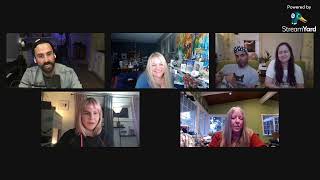
Lennon Bone's coaching program "Your First Thousand Fans" costs $997 a year and guarantees 1,000 new followers or continued coaching until you hit it. Artists like Jamie earned close to $3,000 from portrait offerings, while Hannah & Nemo sold around 260 downloadable PDFs after joining.
Questions this video answers
One year total: six months coursework + six months scaling/group coaching.
$997 for the year.
He offers to keep working with the participant for free until they grow their audience by 1,000 (if they do the work).
30-day money-back guarantee plus a free consultation if not satisfied.
Close to $3,000 in two days from portrait offerings.
Chapters
Hello, everybody. Welcome to the broadcast. We are talking live today with four different artists. We may have a fifth one joining us here soon, if it all works out, that are really digging into growing their following and really digging into figuring out how to generate an income doing what they do. And they've been a part of my personal program, which is now titled your first thousand fans. They've been a part of this for months now, and it's been one of my favorite things. These are some of the most hardcore people that come to, you know, these meetings, and I really wanted to have them on to tell you guys about what we do, because I think hearing it from somebody that's. That's not me is actually a lot more valuable than to you. So if you have questions, please, by all means, leave them in the comments. We would love to answer those questions and talk about them. But I am going to bring on here the members of your first thousand fans. How are you guys? You can go ahead and unmute yourself now if you want to. So I have. Good to have you guys here. I'm so excited and I so appreciative of you guys joining. So here we have Ingrid. Ingrid, you can wave. Hannah and Nemo, which is the only duo here. We have Jamie, who is also my wife, and then Susan, who has been working with me for about a year now, which she just reminded me of a few minutes ago. She's like, lennon, you better not be changing anything on me. I'm going to come over here and slap you for it. So cool. Hey, Sharon, good to have you here. I'm so glad you're watching. Cool. So I want to start by just talking a little bit about what you really have gotten from the program and these calls. And, you know, I'd love to know, like, just quickly, when you joined, what were you really going through and what made you decide to join in the first place?
And I'll. You want me to call you guys out? Is that easier if I'm like, okay, I'll start with. I'll start with Susan.
I was extremely unfocused, and I knew I needed some help to help get me on track. I was doing the BB gun approach or shotgun approach, and I was just all over the place. And so I joined because I needed help finding what the heck it was I was supposed to be doing. I got from the first couple programs that I went through with you so much more than that, I gained focus, but I also gained the confidence to focus on new projects and grow in new directions.
That's awesome. Yeah, Susan's been doing a ton of great work and. Yeah. Anyway, I could just go on about you, Susan, but I'll wait. Ingrid, what about you?
See?
Wow. It's been a year, hasn't it?
For me too. Very much like Susan. Not really focused. Really wanting to make a pivot and step into something new and identify with my audience in a different way than I ever had before and kind of working through that towards other bigger goals.
Yeah. And tell us. I didn't do this. So tell us what you do. Like, what's your art? What's your focus? Yeah. Who are you really trying to serve with your stuff?
Yeah. So I am a mixed media artist and I have a YouTube channel. And on there, just really more about inspiring people with techniques to get them creating so that they can connect with their artwork and the people that they love.
Yeah. And Susan, what's yours?
I am a maker. That's what I've decided I'm calling myself now. I am a maker. I work primarily in textiles, but also in mixed media. And I'm a bookmaker, maker of a YouTube channel as well. And I try to inspire people to go outside the rules that they've been told that they have to follow with their art and create their own art their way.
That's so cool. Kia, thank you so much for joining us. We're just kind of getting our introductions here. So, Kia, tell us, when you jumped into the program, what were you going through and what were you really hoping to get from it? From. And also tell us a little bit about your art, like what you do, what you make.
Yeah. So, I mean, I guess it's been a process of unfolding. I create content for moms that grew up in dysfunctional family homes. And also, as an artist, I've kind of come to terms that I enjoy creating. And after being told for so many years that it was something I couldn't do, I decided to be like, no, I can create and share my message while doing that. So that's what I've been doing. And championing moms to, you know, take care of themselves, take care of their mental health, and carve out time for themselves by creating.
That's awesome. Yeah. And so when you came into the program, what. What was your biggest struggle at the time?
I guess I thought I knew who I was talking to, but as I went through the material, I realized I didn't really have that exact message fine tuned yet. And so a lot of the work really did help me, you know, find the one person I was talking to figure out my content pillars and figure out how I was different than a lot of other, you know, mom creators in the space.
That's awesome. Cool. Jamie, so full disclosure, if you see me making eyes at this one, we are married, so it's okay.
Jamie, why don't you tell everybody how much you love me telling you how to. How to improve your stuff?
Well, let me first say by, you know, we've been. We've been together for over 20 years, but it.
It's.
It used to be pretty rocky. I've fully been invested in listening to him in. In the past, probably, what, two years, taking on your advice. I think I just felt like I. I wanted to do it myself. And I think that's the artist's like, I don't know if it's a. An ego thing, but feeling like I need to do this myself, and if I can't do this myself, I'm never going to be anything. And so I never did want to take your advice, and it was really hard to take your advice, but once we sat down and I think I bawled my eyes out and you were like, you need to do portraits.
And.
And I was like, I don't want to do portraits. Anyway, you defined the message that I was actually already giving and already, you know, the people that I'm already speaking to, and you just switched the way I think about what I'm giving, that it isn't a product. I'm not selling a product. I am.
Giving someone a service and they're paying me for. For it. And so, yeah, that's changed everything for me. And I've grown my following exponentially and just. I've got some die hard fans that pay a decent amount of money for silly things. So I wouldn't say they're silly, but.
Yeah, not silly. Not silly. Yeah. That's awesome. Yeah. And Jamie also does stuff for moms primarily that are dealing with, like, postpartum depression.
Yeah, I can see it.
Yeah. Okay, well, you didn't. Okay. Geez.
Trying to get into it. I'm an illustrator. I've illustrated a book. I'm working on my own memoir. I have gone through a lot of mental health issues, so I predominantly speak to mothers who are going through their own mental health journey. And so just kind of like Kia, where she predominantly talks about trauma and how to get mothers to take care of themselves. I kind of offer just hope and just a different perspective that they're still. They're already a good mother. They don't have to Think that they're not unworthy of taking up space.
Yeah, that's great. Hannah and Nemo.
Yeah. So we. We had been festival artists for over 10 years, and that part of our lives was winding down, and we were a bit aimless. We were very accustomed to working within the structure of the festival, the art festival artists and everything that's expected of us. And when we stopped doing that, we were just kind of. We didn't know. We didn't know what to do. We didn't. We didn't know who we were as artists now. So we were hoping. Looking for a. Someone who could coach us or help us or something. And we found you just through Instagram, I think. And.
It'S. You know, we're mosaic artists, aluminum can mosaic artists. And it's. It's been wonderful for us because it gave us.
A sense of.
Brought back some structure that we were missing.
Showed us that we are allowed to do things differently, not just the way we used to always do things, because that was dictated by a festival rule book or something. So it's really, you know, opened up what we. The possibilities for us as practically already established artists who were just sort of, like I said, just aimless. We were just sort of drifting, and we just needed some direction and accountability, and that's definitely what we've gotten, and it's worked really, really well for us.
That's awesome. Yeah. Well, I definitely want to get into what you guys all have seen in terms of transitions, but I want to start because the main thing we want to do here is answer questions that I've been getting from people that are like, okay, how's the program work? Is it actually worth being a part of it? And all those kinds of things.
I want to start with this question here, which is from somebody who was in the.
The challenge, and they said, you know, I haven't kept up with my assignments in the challenge. I'm a little concerned that I'm not gonna get the most from this. You know, do I need to be ready? You know, and I'll just kind of, like, pass this on to whoever wants to. To answer it. I don't think we need to have everybody answer the question, but whoever feels like, hey, I got. I'm like, I gotta fire on this one. Who? What?
Who has thoughts on this?
Go ahead, Ingrid.
You're never behind, Ever.
I'll say it.
You're never behind. And the one thing that's been really great about the collective is, you know, you do what you can in the time that you have life gets in your way sometimes.
But the.
The sweet spot about the collective is knowing that you have this incredibly supportive group here for when you need it. There have been months where I just don't have the time, but I still show up because it's important. The accountability is important. And without that, I would still be aimless. So that part is priceless for me.
Yeah. What do you guys do when you start to feel overwhelmed? Where do you feel like this group helps in that support?
And even, like, you know, you're coming in, let's say, when you came into this in the first place, and you're like, there's a lot of crap I feel like I need to do in terms of, like, social media and all these things that feel unclear. You know, I'm just curious what you guys thought in terms of how it helped sort of get rid of a lot of that initial overwhelm.
Yeah, I can. I can jump in. Um, I. I feel like I'm the perfect candidate for this because I just learned that I have adhd, so any kind of written content is. Is really hard for me to dive into. And it becomes overwhelming just to even look that there's classes that I've missed thing, like, different things that I've missed. And so. But I know, I mean, granted, I live with you, and so when I do show up, even if I'm going through my own mental health crisis, which I have been around for those, and you all have been supportive of me, it's a place where I can come and talk, and you all are, you know, it's. It's like a reflection. I would give you grace. You know, I would be the first person to say, maybe you need this break. Maybe that's, you know, exactly what you need. So take your time. And that's what I. I come here, and that's what I hear from all of you. And it's. It's like a reassurance. I don't act over guilt or shame or I'm. I'm internalizing a lot less of that and just taking it piece by piece. And if I get something done, then that's something. And then sometimes I just do a shit ton. Sorry, I don't know if we're cussing here.
Yeah, YouTube's definitely gonna thwart us now. Thanks, Jamie.
I do a ton.
And then.
And then I feel really good and motivated and I.
It's.
It's. It.
There are ebbs and flows, and I think what I love about this is that it is real. This isn't like you need to keep going and kill yourself in the process. It's. Let's. Let's take this step by step and. And, you know, it's personalized and that.
I appreciate that.
Yeah. So here's one from. Oh, go ahead, Susan. Yeah, please.
I say the other thing is that as artists, many of us create, you know, in isolation. And so for me, and then to find people that I could talk about, the kind of struggles that I was having, that would understand. So to have a group of artists and creatives come together and even though we're doing all these different disciplines, to know I wasn't alone with the struggles or the mountains that I was trying to climb, it just. It's invaluable to me to be able to bounce that off of somebody else who says, I understand exactly where you're coming from.
Yeah, that's awesome.
Cool.
So this is a good one. Sharon just put this in the chat. She said she just put a post in our Facebook group as she ponders signing up. She says, while I definitely think the course is worth it, realized that I'm questioning whether her and her art are worth the investment. She's just started referring to what she does as art and just started to consider herself an artist. So it's difficult to see the value in what she can do for others. Does anybody want to speak to that?
You can raise your hand if you feel like you want to go for it.
I'll jump in real quick. Sorry.
Don't apologize. I asked. Yeah.
When I was going through depression, I used to be a figurative artist, but when I was going through depression with my youngest child, I had zero creative outlets. And so Lennon basically pushed me and told me I needed to draw or do something every single day. And so I started doing these silly, like. I mean, seriously, there were sketches, like stick figures. And from there, it grew to what I'm doing today. And so back then, there was no way I would have called that art. It was creative, and it was something that I love to do. And there were. There was meaning to me.
But in a short amount of time, my. What? My daughter's five now. Yeah. Two years ago, my. My.
My. My crowd, my people were. They were defined. And this. I finally saw this as art. So.
Creativity is art, and we have to feel that we are worthy enough. I mean, we've. We've got the interest, and that's. That's something.
And so, yeah, I. I mean, I. I appreciate this group to be able to.
Pump me up when I'm Feeling like I'm. It's not worth it.
Yeah. How anybody else feel like they've gone through these things? Yeah. Go ahead, Susan.
Yeah, I. I did not call myself an artist for a long time. And I know when I joined the group that I was drifting around, kind of like, looking for a label, because I really wanted to put a label on myself, because that's something that I've always looked for.
And.
What I really didn't know was how I could help others. What, me just being. Me doing my art, whatever it happened to be. If I was just slapping paint on a journal page, if I was doing something with textiles, I didn't understand how that was going to have any effect on the world at large. And the thing that Lennon has really helped me see is it's the connection. It's the going above and beyond in showing myself being authentic. Whether it's saying, you know, you have postpartum depression or you're dealing from, you know, with an abusive background, or you just don't know what the heck you're doing and why you're here. Being that honest with my people, once I figured out who my people were.
They told me what I could do for them. They're the ones that have told me that I am encouraging them. They're the ones that have told me that I'm motivating one them. They're the ones that tell me that I see them and how grateful they are that I see them and their art, and that's all I have to do. It's not like you have to have some big blueprint of what you're going to do for other people. And that's what I was thinking I had to have. So I've been really grateful that the group has helped me realize that I could just do my work and share me, and that was enough.
Yeah. Any other thoughts on that?
I definitely agree with Susan. Where I've had persons that follow me on IG say, like, wow, like, I'm talking about, you know, moms and dysfunctional families. But I'll, like, throw up some of my stories about pyrography, and I'll have moms really resonate with that. And so that's one thing that I've learned a lot, is, like, how to, you know, be a whole person, a real person, rather than just an artist, is not just about the art you create. It's about how you're a whole person, and people resonate with that. And then because of that, they like the art you create. And I think one of the things that's so special about this group is the fact that we're all different artists. It's not all painters or all illustrators. Like, you know, like, I think we had someone here that was doing felt fairies or something a few months ago, and it was just, like, musicians and mosaic artists. It's like it's a whole mod podge of creatives, and that's special.
Go ahead, Ingrid.
One of the things that I truly value in this group is the fact that, you know, we all have our own struggles and there's no magic switch. You're not going to conquer everything overnight. But no matter what's going on with you, you will eventually start to really understand where your worth is. But to see Susan unlock that over time and to see Hannah and Nemo step into something and Jamie step into something, and Kia, all of these people, there is real power and strength in that.
You're gonna bring me to tears.
Coming back week after week, you know, I show up because sometimes that's all I can do. Sometimes life gets hard, but I show up. And that. That is really important. But to see everybody just thrive in that, it's the group that's the power. That's the secret sauce for me.
Yeah. And I think about this stuff too, you know, in terms of, like, what the worth is for you or what the worth is for somebody else. The first thing I think of is it needs to have worth for you. And you're saying that it seems like it does, right? It's. It's your calm, it's your thing. And someone else is telling you, like, oh, okay, consider this. You might be able to make some money from it, right? What we're looking at here is not just like, let's go make a product and, like, make a bunch of money, because the money serves the mission. And when you learn what your mission is and you get clarity around that, then the worth goes two ways. It's not about saying, I'm going to give up my own worth so that I can serve someone else. It's about saying, how does my worth already serve somebody else? Right? And that's the stuff that we really try to examine here is not just like this, you know, okay. It's not your typical, let's go make a product. Let's put together a course, right? It's not about that. It's about, like, examining yourself first and then saying, where does someone else fit in this? And that makes it so much more powerful and so much more enjoyable than just your typical, like, I'm gonna go to the art fair and try to, like, drum up some biz, you know, and it's like, there's both sides to that. And I think that's part of the issue is that we are told out from the outside world that art has to live in this bubble, depending on your craft of like, oh, I make cards, or, oh, I do this for galleries, or, oh, I do this over here. That's completely like bs, you know, that's somebody telling you that you have to live in this bubble. We're in a world now. You get to create your bubble. And that's what we want to help you do, is, like, find that, like, whatever you want that to be. And it may not be clear yet, but that's why we put so much time and effort into it. That's why we have these meetings, because I think it's just so important. Okay.
So here's another question. I hope that's helpful. Sharon, let me know if you have anything to follow up on that. I'm curious. In terms of time, there's a lot of, you know, there's a lot of stuff that we need to do in order to promote ourselves, in order to start to make money, you know, whatever that is. I'm curious how you guys maybe have started to save time through, you know, the methods that we use here. What. What. What kind of. And feel free to share some of the techniques that you have that we've learned or, like, stuff that we've talked about that's helped you, like, do the most.
And I'd actually love to hear this one from Hannah and Nemo, because I know you guys have stepped deeper into, like, the social media side, too.
Yeah, I think that for us, it. At first, the concern was that this would take a lot of time, but I think the reality is that it actually helped us manage our time better.
Because we had, like, a sense of, like, well, you know, these are the things that we need to be working on and are. These are the things we want to be working on. And let's do it so that we have something to show for it or something to talk about so that we can discover what questions come up. And so really, we've gotten much better at creating more art.
And.
Somehow creating more.
Content for social media while simultaneously not spending as much time on social media. So I. If that makes any sense. I mean, it's like, because I have this really pretty strong sense of direction with who we're talking to. Not 100%, we're almost there, but who we're talking to and what we're saying.
It's easier to come up with the content.
For social media and sort of just get it up there and then move on and go back to making art or whatever. And also another thing is that when we make our content, it comes very naturally now, as opposed to before, where it felt like I felt pressured to put something up on Instagram. I felt like it had to look perfect, and now I don't. It's not like that. I'm like, well, what art are we working on today? Oh, let's make a video about it. And that's our. It's like we're doing two things at once. We're making content while creating our artwork. So.
It'S saved us tons of time. Essentially, that before, we were probably just sort of spinning our wheels or just spending too much time worrying about what the photo looked like that we put on Instagram or whatever.
Yeah, yeah. Anybody else?
I was going to say the same thing is that I have learned here what saving me time is not trying to be perfect before I post something on social media. Just, you know, get it up, get it out, get it done, and then go back to making art. I used to do the same thing. I would spend all this time trying to get the angles right and get the lighting right. And that's one thing. If you're doing your videos for. For a YouTube channel and you're trying to, you know, put out a quality production there. But social media was a different thing. And I did not use Instagram at all. I mean, I had an account, I think I posted two pictures, and then I left it before I started with Lennon and I went back to Instagram, and he kept saying, you know, just give this a try. Just give this a try. And he, you know, he's really good at just kind of giving us a little push. And then, you know, I can push back at any time and say, no, I don't want to, but I went for it. And I have to say, I really enjoy Instagram an awful lot now. I'm having a lot of fun doing it. And when you're having fun doing it, it's not so stressful.
Yeah, I would say that for me, part of it is learning to get a little vulnerable so that things don't have to be crafted so perfectly all the time. And that's been a lot easier to do with the strength in the group, you know, especially seeing everybody else just kind of step into stuff. And it actually takes a lot less time to tell a real story than to figure out what the perfect fake one is.
Yeah, she. She said something about time management.
Yeah, I have terrible time management. And I am also parenting, so I've got to take care of the kids and think about bus stops and blah, blah, blah, and making dinners and lunches. And then I've got, you know, graphic design stuff, and then I've, you know, whatever. But I think the. The coolest thing is being able to map out what.
Some of the. The now I am putting out a product, and what this has helped me do is kind of batch some of the same things that I've been doing. So I don't spend. Spend all the time to email. Now I have. It's automated, so if someone clicks on it, they're sent a link to schedule something. So everything, like being able to say, what don't I need to do? And Lennon says this all the time. Like, this gets to be easy and just challenging myself because I get super anxious. And then I build a wall and then I'm done.
That's it.
Nope, not doing it. But instead just being able to say, okay, this gets to be easy. This is my thing. How can I make this more me? And so I get to say, hey, I don't know if this link is gonna work, but here that, you know, I get to say some of those things because, hey, it's just me here. It's not a team, it's just me. So, you know.
Yeah. And that's so it. You know, we get so caught up in perfection because. Because here's what I want to say. We see all these artists out there that are like, in the perfect thing, they're doing the perfect thing, blah, blah, blah. You don't see the road that got them to that place that allowed them to now have a team and, you know, or whatever, because I guarantee you, if they're doing it really, really well, they have people that help them to do it really, really well. I would almost like 100% guarantee that because that's just the way it starts to work. You start to make money. You delegate things like. Because we don't. And that's the other part of all this, is that we in the group will talk more about, like, how can. What can you give away who can take on something else? Right. And what we're really focused on is not as much time management as it is energy management. How do we say what's going to give you the most energy so that you're focusing on the right things that keep you moving and keep you excited versus just like, oh, another post, another whatever. Like, because that does not serve you and it's definitely not going to serve other people well. When you're doing it from a place of.
Just feeling burnout or feeling like, you know, it's like, me, I've been showing up hard for the last three weeks. I spend a lot of time managing my energy. Jamie can attest that I spent like an hour and a half this morning on a walk, just like being alone, figuring out what I needed to do and what I could focus on. I got less work done, but I can show up right now excited and passionate about the fact that, like, I get to talk about this stuff because I put that time and effort in and that's a lot of the things that, that we talk about. So. Yeah. Did you have something, Ingrid?
Yeah. One of the things too that's been really helpful is you're very good at, like, getting us to also, like, maybe even co work sometimes. And I know you're excited. I'm excited about the creative time and, you know, ways of managing and sometimes doing that in a group environment, you get a lot more done in a much shorter amount of time than if I were left by myself in my studio, for sure. So, I mean, I've shot entire videos during that time, which that would never happen.
Yeah, yeah, the accountability.
Yeah, the accountability has been so super helpful in staying focused.
Yeah. And so if you're checking this out and we're going to answer a few more questions here, but what we're talking about here is my signature program, which is called your first thousand fans. What this program does is walks you through how to get a thousand people that are your authentic fans. These aren't just followers. This isn't a vanity metric. This is not just a subscriber number or a follower count. These are people that actually really enjoy what you do.
And.
And so we help you map out everything you need to set up a vision. You know, we're talking a lot about this idea of, like, what am I trying to say? Who am I talking to? We go through an entire process that helps you to do that so that you can then create content that actually gets their attention. Because a lot of people just start with putting their art out there and nobody begs attention because they don't know how to make the art connect. The way you make the art connect is that you connect to the people. And you hear this a lot in these conversations. We are talking about connecting with one another and we take that out to our audience and say, how does this now work to the people we're talking to then? So we're going to guarantee, I'm guaranteeing you that you will grow your audience by a thousand people in the time that you work inside of this program. And then you're also going to build a product alongside that. And this is really secondary to the community that you're building. But what we're going to do is take either the art you make or help you to build something alongside your art so that you don't have. Because some people are like, I don't want to sell my art. It's too precious. That's fine. We can talk about things that you can do that you can build. And that's all through coursework. And we do calls with this group and others every single week. You're also going to get a complimentary one on one consultation with me as an opportunity to like, put you in the right zone right away. And then what we'll do is you can go through the course at your own pace, which I love because we've just talked about. There's a lot of things that get in the way in our own life, but you still have the opportunity to show up in these calls every week, talk to one another, get the support you need. I'm here to answer the questions. And it's just like this. It's not a zoom, it's not a webinar style thing. Like, I'm in here talking to everybody. We're all discussing and you can hopefully hear from these conversations. It's not about me, it's about this. Like, that's what I think is so beautiful about this group. So we get those calls every week. And then you'll build a product alongside that. The program itself is six months, and then you get an additional six months of like scaling it, getting clarity, all those things. You have a full year of group coaching that you get in the program along with the coursework. So a lot offered here. You can go to www.fansformyart.com. the link is in the description fans for my art.com to check it out and see what you think about it. So with that, as people are kind of looking at this, you know, I know for a lot of creatives, this feels like a pretty substantial investment, you know, for clarity. Like it's 997 for the whole year. And some people are going to hear that and be like, Lennon, whoa, that's a lot of money. Can you talk about, like, what you feel like the return on that investment is for you guys. Like, what have you seen for yourself?
Yeah, go ahead, Jamie.
Sorry, I want to jump in. I want to jump in because I think I was maybe the first person that he's tried this on again. I said something about portraits earlier. He had me switch my mindset around portraits. And so he talked me through this, like, what do you love about your community? What do you love about what you do? And I said, I really love connecting with them on a one, on one basis. I love talking to these people and connecting and validating what they're thinking. And he was like, well, why don't you make that as a part of it? Why don't you do, instead of like a consultation, you sit with them and you just chat for. For 15 minutes, 20 minutes. And now it's my favorite thing to do. I. I just had a gal the other day say that she got off the call and giddy. Her husband was. Was laughing because she was giddy, because we had this great conversation, and I felt like I was talking to myself.
So, yeah, I feel like the. The first time I did portraits in the way that Lennon had me do it, I had maybe four, I think I. And I was bummed because I opened it up to, like, 10 people, and I got four. And Lennon's like, you have four people that want to connect on a personal basis with you. And so that, again, switched my mindset. The next time I did it, I ended up with. I think I lowered how many I wanted to do because I wanted to put more attention into them. And I also raised my prices, and I sold out. And I think it was, like, a low number. It wasn't a lot. Maybe eight or. And so I did it again. This time and again, I rose my price. My prices, and they sold out again. And so, and. And so within two days, I'm like, in. In two days, I made close to $3,000. So if you think about the. The return like this, the program is what, a thousand dollars for the entire year? And I've done three. If I do three of these, that's three. I can't do math. Three, six, nine, like, 9,000 right there. Like, I'm still making way more money than I ever have been, like, doing doodles. And I get to connect with the people that.
That are there for me, which is crazy and super cool.
And what I love about that, too, is, like, that's doable as a side thing. Like, you don't have. Like, you can have it as a side. It doesn't have to be like, all of your time. Right. And, I mean, I think that's really cool. Yeah. I'd like to hear kind of from all of you on this because you've all had different experiences on these things.
For me, you and just working with everybody together have really kind of gotten me to sometimes do content in a different way and try something different and.
Had me pull back sometimes and just approach things a little bit. Not so. Again, not making things so perfect and not figuring every single little detail out and just being myself a little bit and have more of a conversation sometimes with. With my people. And I've seen stuff come back on my channel with thousands of people subscribing and hundreds of comments. Just connection on a level that I've never had before, ever. And it's really deep and it's real people. People who want to come back, people who want to connect with me on way more than just a video, you know. So, yeah, the response has. It was immediate for me, and it's been constantly ongoing.
That's awesome.
Yeah. Go ahead, Hannah Nemo.
As far as financial.
The return on our investment has been huge.
When we started engaging with our people, talking to people, getting to know people, talking to them through the direct messages, and then we started having more fun with our content and putting our personalities out there. One thing that happened, we were.
A shop that sells upcycled stuff, reached out to us and bought a whole bunch of our stuff as a wholesale order.
And actually two shops did that. We had one in Denver and one in San Antonio. And they specifically said, I saw you on Instagram, and I love what you're doing. So that was really gratifying, you know, because.
It really felt like people are seeing what we're doing and they're actually saying that, not just giving us a heart or a like.
And then we kind of transitioned over to TikTok, and we took what we were doing really, really well on Instagram, and we started doing that on TikTok. And then we just exploded and we just grew. And so. So much so that we're. We are having trouble keeping up with the art orders and because of the group showing up one week and saying, you know, I don't know, what should we do? Should we raise our prices? We have people asking all these detailed questions about our art and how we do it. And Susan said, hey, well, what if you just sell them directions on how to make a piece of art? So anybody who asks, what is that tool you're using? I'm interested in Learning I can. I sold them the directions, and we have sold. It's only been a couple of months, and we've sold 260 PDFs. It's just a downloadable for $10. I actually raised the price of $12. If that was the only thing that we had been selling over the last couple of months, we'd be paying our bills, so. And that's something that never would have occurred to us if it wasn't for getting together and discussing it with people in this group.
So.
The return on the investment has been huge.
That's amazing. This is the first time I'm hearing that part. That's awesome. So cool. Yeah, I love it. Thank you for that.
For me, it was a matter of actually putting stuff out there to sell. You know, I had been doing digitals, but I had not been putting. I hadn't been finishing art. And that was kind of one of the things I came to linen with. It's like, you know, I need to be finishing. I need to be not, you know, going all over the place and have. Because if I don't have inventory, I can't sell anybody anything. I have made more art in the last year with Lennon than I've made in the last 10 years. I have finished pieces. I have had commissions that have come in as a result of people getting to know who I am, which is a direct result of the work that I've done with him. When he says, people don't buy your art, they buy the feelings that your art gives to them. That's what I've seen over and over again. But it was really scary for me to put anything other than a $10 price tag on it. And every time I would be talking about a price, he's like, no, it's got to be more. It's got to be more. And, yeah. So, you know, my accountant's happy. I've turned a profit the last year, so that's nice.
And I know that it's because I can come in every week to the community and really feel like everybody is supporting me in the same way. Everybody's going through the same things, the same struggle, maybe in a different color. And I feel very supported to go out and try new things. I get brave because of the group.
Yeah. So I've. I've heard somebody, you know, mention before that this is very much, if you've ever heard the term, like, mastermind. Like, the idea is that you have a group of people that you can come to, and the most successful people in any Industry have a group of people that they go to consistently to let them know, here's what I'm struggling with, here's what's happening. How can I fix this problem? And what I love here is, like, between everybody again, it's not just my thoughts. We got all this conglomerate of amazing people in here that have done amazing things, and they're not even telling you all the stuff that they've done. Like, we're talking, like, you know, like, published authors, illustrators working for Netflix, like, doing things in big galleries, like some of the biggest YouTube channels, like, in their niche. This is not, you know, they're not saying those things, but that's what's happening, like, in this group. And I'll go ahead and blow some smoke up their butts and say, like, to have them in this crew with me, it blows my mind, too. I don't want anybody to hear me think that, like, oh, I'm this hotshot, whatever. All I am is someone, I think, who's able to just zoom out and help people to keep that bird's eye view where they need it. And that, I think, is my own zone of genius. And that's what we're looking at here, is how do we find your zone of genius? What is your thing that you can bring to your community with your art, with your personality, and turn that into something that makes you money, Turn that into something that develops a community. And it may feel impossible, it may feel huge. You may feel a lot of resistance. You know what? It starts with just saying, okay, I could try. What does it hurt to try? And what does it hurt to surround yourself with people that are willing to. To lift you up as you actually go through that process? Because if you're gonna try and you just do it by yourself, that's where, if you're like me, you are just this. There's something inside you that's a little liar, that says, you can't do this. You can't do this, you can't do this, you can't do this. And he sits back there and he's like, lennon, dude. You don't deserve to have this group. You don't deserve to be a part of this. You never did anything cool. Who do you think you are? These people all think that you're an idiot. These people think that you got nothing to offer. Telling you that guy lives back here, right? But you know what keeps me from listening to that dude? These people here, the other people that support me, above me in my mentorship and those kinds of things. We all have those people, those little voices in our brain that are lying to us, right? That's where that whole acronym of Fear the false Evidence Appearing real really takes shape. Because there's that little voice back here that says, I'm not sure that you can actually make this work, but belief is a powerful thing. At the very least, what it can do for you is make you happier in your creative process.
I'm not sure what kind of value that supplies for you guys, but for me, that's a big deal. To just be able to show up and be happier in what I do is really what it's all about. And then if I can say I make some money doing it, good Lord, that's like a frickin miracle, right? And that I think is what we're really trying to do as creatives and artists and all these things. So if you haven't, please consider checking out this program. You have until Friday at midnight Friday I'm closing the doors on it and I won't open it again until next year. And I'm so proud of these people and the work that they've put in. And I'm so proud of.
The coursework and I'm proud of the curriculum and the ideas. I'm proud of the stuff that I've done too. But I want you to be here in this group the next time that we talk about this. I want you in here to talk about the stuff that you're excited about, that you were like terrified of, that you come out of the other side feeling excited about. That's what I want. I don't want the same group, although I will have them if I have to. I want new people that are like pumped about what is happening because they for once made an investment in themselves.
And that is a hard thing for us to do as artists. I'm not going to lie. It is hard to invest in yourself, right? Why? Because somebody down the line said, I'm not sure that that's actually a worthwhile investment.
All crazy to me. It's all crazy. We will put so much money into all these other things that give no significant value to our life.
Get rid of the idea of just making money. I'm talking about your life, right? And then on top of it, we talk about making money too, from the things that you're good at. So consider it fans for my art.com www.fansformyart.com if you have questions here we are here for a couple more minutes. Type them in the chat. I'd love to answer them. I know we got a handful of people watching here. If you're watching this in the replay, when you go to the page where you can purchase, you have a text number, like there's a phone number there. That's my number. Text me like. I'm that committed to being of service to you and I want to help you get into the next place. And what we're going to do is help you grow your audience by a thousand people. If you don't do that, if you're doing the work and you don't grow your audience by a thousand people, you get to work with me for free. Until you do that. Can committed to making it happen. You also get 30 days to just try the program and I give you your entire money back with a free consultation on top of it. If it doesn't work, if it's not your thing, you get all that stuff and your money back. I'm that like, I, I do not want to give you something that you're not excited about. So guys, thank you so much for being a part of this community. Thank you for.
Just as an acknowledgement, like you know, the, the, the for you and Kia too. Like I am, I'm just ultimately grateful to have you guys in my life. And so thank you guys for being a part of that every week. And I'm looking forward to the others that get to join us too. Do you guys have any parting words on if somebody's on the fence? Anything that you'd like to, to say to give them a little nudge?
It's okay if you don't. I can, I can nudge them, but I prefer it coming from you guys.
I would nudge them. I would say I. You know what, it's, it's totally worth it. Do it. Just sign up. You're gonna love it. It's. It's been wonderful having a group of people like minded to come and talk to you every week. We're very isolated where we live. I don't know about everyone else, but it makes a huge difference in our well being just to be able to talk to other artists every week.
Yeah. Cool.
Make. Making an investment in yourself is always a smart, smart idea. And I echo exactly what you said there. It's just having a like minded community. There's major strength in that, major strength in that. So if you're not going to show up for other people, show up for yourself.
I agree because the first time several years ago, Lennon pushed me to make an investment in my art. And I took an illustration class and that helped me up my skills. And from there I've been growing ever since. But I think.
That was a really hard decision. And that was, you know, that was just like what, $400? And that was, that was really hard. And to make that choice, to do it, but.
Changed everything for me. So if, if you take anything, it's invest in yourself. If you don't feel like you. If you don't feel like you can do it, then, and you don't invest in yourself, you're not going to do it. Because there is no, you're not, you know, there's no risk. There's no, you know, you're not putting yourself on the line. And I think that there's something about this accountability. There's something about showing up here and watching you all create and doing the. I mean, so encouraging to see how much growth everyone else has, has had. And that, that's like, this is super empowering for me.
And I know. I feel like I'm all over the place. I fix a fence, I'm on top of the roof, fixing the roof, and I'm, you know, clearing out the gutters and, you know, rearranging the kids room and then I'm painting and then I'm drawing. I mean, I feel like I'm all over the place. But if anything, this, this crowd, the first thing they say is, what's going to move you further the fastest? What's the most important thing? And if it's fix the gutters, it's fix the gutters. If it's, you know, send out an email. Then I send out an email. So I think that for me is huge because everything is important and you guys are able to kind of calm.
Me down and everything does feel important. I suffer from that thing too.
And I have to say that it is absolutely terrifying when you're an artist who is not making much money or any money at your art yet, than to take that money and say, okay, I'm gonna gamble on me, but why should anybody else in the world take a gamble on you if you're not willing to gamble on yourself? And that was just. It was very, very scary to give Lennon all my money that I had made doing other things. He got my money from. From other projects, from non art projects that, you know, little royalties that were trickling in. And it was like, oh man, you know, the bank account is going down. And it's terrifying when you feel like, well, I'm not going to make any of that money back instantly because it's not a quick fix. It's a change in our business mindset, our professional mindset, because we have to treat ourselves like long before the rest of the world is going to see us as the professionals that we are. And I don't regret a single dime that I have paid him. And I would follow him just about anywhere because he has changed my life.
Thanks. Well.
I don't want to get emotional, so I'll. I don't take compliments well, but I'll take that. I'll receive it. Thank you, guys.
That's amazing. And those of you that are watching, thank you so much for giving.
This your most valuable asset, which is your time, because I know that's the one thing we don't get back. And so I hope that you'll consider coming and spending some time with us because I think it's well worth it. Www.fansformyart.com we'll see you guys inside the community and if you have any questions, just shoot me a line. Thank you, guys.









