Live Stream from some STSA Community.
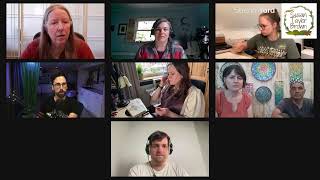
Lennon Bone hosts a live stream with seven artists showing embroidery, watercolors, aluminum-can mosaics, jewelry, and found-sound work. They talk about finishing pieces, experimenting across disciplines, material challenges, and running an art business, with demos and audience chat.
Chapters
And share our work and share our thoughts about it all. So I'd love to go around and, you know, introduce everybody, Maria. Tell them a little bit about who you are, where they can find you and what you do.
Oh, hello. I'm Maria Kirke. I am.
A watercolor artist. Mostly.
I'm originally from Germany. I came to the U.S. now, let's see. See, it's been 16 years, so.
Yeah. So my watercolors are mostly.
Linked to mindfulness. Right now with my art, I'm trying to.
Create portals to places that are tranquil and refreshing, where you can get away from all the worries of your daily life. But also I'm very interested in mindfulness. Besides my art, I have a podcast, it's called Becoming Mindful Podcast.
And where I talk with a friend of mine who is also meditation and yoga teacher about all kinds of things, mindfulness related intersecting topics as well. You know, like parenting or environmental things or feminism. All kinds of things. We started out kind of diving into mindfulness more from a historical and what is it perspective. And then.
Yeah, reviewed some books and so on and. And all of that also flows into my art. As I said, I'm really trying to bring this tranquility and.
Calm environment to people's lives.
Mona?
Yeah, I'm Esmeria, a watercolorist, and I'm from Germany and still in Germany. And I do mostly, like landscapes and anything that's inspired by nature, but I'm also teaching mini tutorials on how to dap into watercolors when you're just starting out. Yeah, I'm just trying to bring joy to watercolors and just painting and. Yeah, you can find me on Instagram and TikTok at nomosartworld.
Hannah Nemo.
Hello, I am Hannah and this is Nemo. Married couple, actually, for about 20 years now. We live in Texas and we make moving mosaics from aluminum cans. And that's what you're seeing on the wall behind us here. They move with air motion. So we have a fan going right now. So you can see that they're kind of flickering a little bit. When you look up close at our artwork, you can see that we are actually taking punches from the colors from actual aluminum cans that we have collected and processed and repurposed. And we consider them to be these transformations that will help the viewer to remember to be true to themselves and the environment. So that both human rights and environmentalism are important.
Issues for us that we tried to talk about to our community on Instagram and Tick Tock and now on YouTube and you can find us on all three platforms at Hannah and Nemo and our website is hannahandemo.com.
Britt.
Hi, I'm Britt.
I'm a visual artist from the Netherlands and I mostly focus on making jewelry in bronze, silver, copper, brass. And it's all inspired by history, historical artifacts and nature. And it's. It's stuff like the thing I'm wearing right now. And I am a vendor at a couple of festivals and markets in the Dutch festival scene like Gossel Fest and Zomerfolk. It's a bit fantasy folk kind of events. And you can also find me on Instagram and TikTok Facebook and on my website. My socials are bridiric, maybe a bit hard to to follow for the non Dutch we have your names down at least. That's great. And my website is BritFineArtDesign.com.
Lennon Bone.
Yeah, it's so it's. It's definitely helps to have the name that I have because it's just like, okay, there's a weird one that I can remember.
Yeah, my name is Lennon. I have a wife who's an amazing illustrator named Jamie. I have two kiddos, Brada and Adeline, 6 and 9 years old, who are upstairs with the neighbor friend right now hanging out. I was a professional musician for professional in that sense meaning like that's all I did for about 10 years and then left that to go into like studio work and then did that for a while and then started making stuff to help musicians be better business people. And that led to some of our visual artist friends, including my wife. Be like, everything that you're talking about is really applicable to us as well and I think you should try to open it up a little bit.
I decided to give it a shot and now we're on our.
This is our second year of business of me just doing Stop the Starving Artist full time and that's where you can find me. We help artists to learn how to be better business people because I believe that when you can sell your work and do the thing that you love, it'll change the world and yourself in the process. And I think it's a really beautiful thing. And so stopthestarvingartist.com or stop the Starving Artist on any social medias.
And I have to say Lennon, since I've been working with you, I have not only sold more art, but I've made more art. And I didn't think that that was my issue to start with, but it really was I mean, you can't sell what you don't make. And if you don't have the inventory, you know, nobody's going to come knocking on your door and say, hey, will you make me this? So I'm really grateful that it just. It wasn't like you did something to do that it's the process of working with you and other creatives. It's really kind of helped me figure out my path and what I wanted out of my art life and develop a regular art practice, which is really. I don't think I had a business until I had a regular art practice.
Susan? Yes. I think you also have to introduce yourself.
Okay.
Yeah.
Because we are streaming to other channels, so thank you. I'm Susan Taylor Brown. I am now a fiber artist, working primarily with embroidery and abstract embroidery art. But before that, for over 20 years, I was a writer of books, primarily for children, and articles and newspaper magazines, all that kind of good stuff. And I just kind of, you know, reached the end of what I wanted to say with my words and went looking for something else and turned to art. I have gone through the stages of working with paper, making journals, making books, and then finding my way to fabric and stitch after 40 years of ignoring any kind of art stuff.
And it's just. It's fun together. This is the first time we've done something like this, and we've talked about it. What? Gosh, for the last, you know, year, we've talked about doing something like this and doing a play date and just sort of, you know. So I hope everybody's working on something. I got something here. I'm. I'm doing some drizzle stitches while we're chatting. Hannah's got what? Hannah, Nemo are cutting cans. Brit is laying something out. We should go around. Wait a minute. Let's go around and make everybody. How do I. Let's see. I gotta remember how to do that. Can I do that?
Ah.
If I hit solo layout, is that what's gonna do it, Lennon?
I think so. Yeah. You can. You can make it just about you or whoever.
Okay. Maria, you want to hold up something?
Sure, I can also. Switching real quick.
Yeah, there we go. We can go through and switch your.
Camera and see what everybody currently painting. I don't know if you can see it.
All right.
Too bright.
Okay. Mona, you got something ready?
Yeah, I'm just preparing something for some thumbnails in my sketchbook, so.
Oh, shoot.
Let's see.
How do I go back to.
How do I go back to everybody?
Oh, oh.
There we go. Okay, I did that. All right, hold them up. You can just have to hold them up.
It's just my sketchbook just starting out, so you can't really see anything.
So you sketch first, and then.
Do you use.
Is that the paper that you would use?
Yeah. Like, I'm going to do something like this where just do little thumbnails for landscapes. The lines.
Hannah, do you like you guys cutting everything with bare hands, not gloves?
Yeah, we get a lot of criticism about that, too. We have done this for so long that we're just. I don't know if we are just calloused or if we're just that used to it that we hardly ever kind of.
My hands are soft. I don't know what count.
I know, but I'm just saying, like, we're just accustomed to it.
Maybe you think your hands are soft. Maybe Hannah doesn't think they're so soft.
So what you're doing.
Yeah, so I'm.
We have a.
A bunch of cans that look like this, I guess.
Hold on. Okay.
Okay. Let me see if I can. I really. I want to be able to do this solo. Okay. There we go.
Okay.
So they look like this. You see the little edge?
We've cut them to this point. Okay. So the bottom of the top is.
Gone, but they don't open.
They are hard to flatten when they still have this ridge.
Ah, so then you got to cut the ridge off.
Yeah, I gotta cut the ridge off. Kind of just, you know, with scissors.
Wow. Cut it off.
So that's one task.
That's.
Yeah. And then I am.
And I have, like, hundreds and hundreds to do.
So many.
It's like, wow. Just, you know. And there's like three or four other ones that look like this that are for today.
Yeah.
Yeah.
How many cans. How many cans do you usually use? For one.
I was just wondering that, too.
For one piece.
That is a really good question. And it's, like, almost impossible to answer, but, like, no.
Like, it just depends. Like, like, we do.
What about that one?
Kind of like that. That piece that's right there above Hannah there. It's like, one. It's like, there's a can. You know how they. A can has, like, two graphics, one on each side, and it's a beer can. It had this girl, and she had flowers in her hand, and she had. I don't know what else she had. And she had, like, a bandana. So that one. And it took, like, how much. How many was it? Like, 60 cans.
That sounds right.
So it's 60 cans of the same can and two graphics that were just punched up to make that. That size piece.
Yeah. But this one is maybe easier to answer too, because this is made from three cans, so. And that's the Lacroix, and it's all a Croix can.
So did you use.
Would you say like about 6 to 12 for each section?
Yeah.
I mean, but we're not using the entire can every time.
But you punch everything from you can from a can and then sort them by colors and.
Yeah, sort of.
I mean, we're. We're really going for like, the cool stuff. Like, if there's a can that has like a bee on it, I want just that B. I don't care about the other color, really. I want, like, you know, because every punch, I want somebody to look at it and say, like, oh, look, there's a. A flower. There's whatever.
Something interesting.
Yeah, yeah.
And then I'm also working on. We do, like, side projects with the tabs. So this is my coffee can of tabs that I've got at the moment. Super satisfying, and I'm experimenting with them. I'm like weaving a basket here. And then this is a chain that I recently made that not necessarily things we're selling, but just always trying to contemplate more ways to utilize the material because we have so much of this stuff.
Wow.
Yeah.
So Jeremy was able to pop in and join us. Sorry, Jeremy. It took me a minute to see you down there. Thanks for the.
Yeah, that's fine. It's fine.
So we all went around and introduced ourselves. We would love to hear who you are, what you do, all that good stuff where they can find you.
Hello, my name is Jeremy. I'm into music. Probably one of the very few people on here is into music. Not the opposite, but, you know, kind of similar with. I do creative things, I produce music, I play the piano, and I make music with found sounds. And I have a Instagram channel mainly at the minute, and the handle is J. Grace. Mark. Yeah, Grace Mark or Jeremy.
Gracemark.
That's where you can find me. So that's me. And I'm from London originally. My mom is French, my dad is German. So I'm a bit of a mix of everything. That's why I sound funny.
I wanna. I'm looking forward to hearing some of those found sounds, though. That's. I want to hear some of that.
Grit. What are you working on?
Currently, I am working on a video intro for my own YouTube channel. I want, like a collage of sounds. Because I live in London and there's a lot of public transport, and I'm currently recording a lot of sounds of public transport and putting a collage together and make it kind of musical, though, not just, like, sounds like, it's got to be somehow musical.
Nice.
So, yeah, that served me.
Brit, what's going on over there on your table?
I am soldering a pendant. Hopefully you can see it. I'm trying to make the camera.
There you go. Wow.
This is the bezel, and I'm going to set a stone in it using these prongs and all these prongs I need to solder onto the bezel. And it's going to hold Labradorite. Like this one or space. This one. I have to hold it, but. And then the claws are gonna fold over it, and then it's gonna hold the stone.
Wow.
If I can.
That's pretty cool.
How long.
How long does that take you to finish it?
Long time, probably. Probably. It's gonna take me a couple of tries and trying not to melt all the little prongs, because that happens when they all stand up together and you try and point the flame only at one, but still. I'm gonna try out something I bought called cooling paste. So I'm gonna try and see if it works to cool those little, like, those. Those things that stick out, so. Because I soldered them already and I don't want them to melt.
Yeah, Yeah. I was soldering as well the other day to fix some cool device, and it's quite hard because it can easily burn a hole into your thing. I fixed this device. Look.
Does anyone know.
Do you also use a flame or.
No, I've got a soldering iron, like, just so it's, like, I can direct the heat better. And I'm currently saving up for, like, a hot air one. So it can solder, like, parts on circuit boards and things like that. But, yeah, it's technical.
That's cool.
So, wait, Hot air can. Can do the soldering?
Yeah.
Interesting.
That's. That's how you. That's how you solder chips on circuit boards. Like, computer stuff. They heat up the entire thing, and then you lift it off.
Cool.
You just have to direct the hot air really precisely. So it's quite a skill.
I just bought a little flameless lighter thingy so I could melt fabric, and that was scary enough. So that other stuff terrifies me. Lennon, what are you playing with over there?
I know you're starting to expand your creativity a little bit.
Yeah. I'll show you guys some of the things I've been playing with. So it's very should be known that visual art is like not necessarily been like I'm a musician first, much like Jeremy. And so I've been playing with like drawing. So here's like some character study things I've been messing with. I try to do like a mix of blind contour and then adding things to it. So working on like, how do I just make weird, fun, sort of like.
Interesting kind of characters. Trying to throw out like the expectation of, of.
Form in terms of like, I like, you know, I don't want things to feel like you have to be I idealistic with like the form. Because Jamie comes from this world of my wife of figurative work. And so it's very intimidating to me to be like, oh my gosh, she's like brilliant at that. And I'm just like, okay, I just want to antithesize. Is that a word that for me from any visual thing? Because I just can't like imagine trying to go so detailed on that. And she's brilliant at it. And so I'm like, what's the thing that intimidates me? And I'll just take it away and I'll just do this other thing. And so that's kind of how I've been trying to approach it. And it's been really fun. We'll do things with the girls. We'll just hang out and draw and.
Come up with dumb little characters and things. And you know, I've been working on my like still life things too. So I got my pear thing there. So little, you know, little stuff.
Nice.
I'm impressed though, because I, I, I don't know. I tried picking up the pencil again and it just, it, it terrifies me. And I'm sure that goes back to being kicked out of the art class for drawing. So picking up the pencil to do any kind of art, which is why I don't sketch out any of my things. I don't plan anything out because it's just so reminiscent of being told that, you know, I was never going to understand what I needed to understand in order to make good art. So I should just leave the class right now. And here, let me, let, let me tell you that I helped you along and I transferred you out of this class and you can go to your counselor now and decide what else you're going to take.
Yeah, it's such a challenge, right? Because I think for.
For everybody, it's like you don't know, like you Know, what I'm working on there is like, is it good? I don't know. Does it matter? You know, it's like, it's hard to say when it comes to the things that we make, because we want it to be good. We want people to like it. But I think people like it when we like it. I think that's, like, how it has to start, you know.
Because the more that we just feel confident, I, I, I've, I think we've talked about this a little bit, where I watched somebody do Zentangling, maybe.
Oh, Barbara, one of the gals here in the audience, she does tons of Zentangles.
Yeah.
Oh, awesome.
Okay.
So I was watching somebody do. Do that, and I was like, oh, that's, that's cool. But then I watched someone else do it, and I was like, oh, it's amazing. And I wondered why. What's the difference between the two? And the one goes, okay, you know, here's the exact steps, blah, blah, blah. And it has to be this way. And the other person went, oh, this line just went exactly where it needed to. I didn't even have to try. Oh, that's beautiful. I love how that worked out. Just like trusting the process versus making me feel like I had to do something right or wrong. And it just made me, like, that work more for some reason, because they felt like they were exploring and just letting it sort of happen, and they trusted themselves. It was like a neat. Yeah, a neat thing.
So I want to say, you know, I think it's really cool that you are playing with visual art, Lennon, because I don't anticipate that you are going to stop doing your business that you're building at Stop the Starving Artist to suddenly become a visual artist. And so for the rest of us, you know, so Lennon is playing with visual art. What are the rest of us doing that's outside of our chosen art practice? To stretch ourselves and let ourselves play. I know Hannah's been doing a whole bunch of stuff.
Yeah.
I do a lot of other things, like.
Crochet, and I like to sew and, you know, stuff like that.
I have something.
Yeah.
Okay. So Susan had a big box of scraps of leather that she sent me. And as you know, I did make a pair of sandals with it. But I have another thing I made. We've had. We sit on the floor. We are floor people. We sit on the floor. We work on the floor.
Floor people.
I love it.
But we have these chairs that have kind of an ugly cover on them. So I Took your. Your leather and I. I don't know.
Wait a minute, Wait a minute. Let me put this up there. I wanna.
You don't know if I. I wove. Wow.
Oh, wow.
So this is like a folding chair that just sits on the floor and you lean on it, but it's adjustable, like one of those beach lounger chairs. It's just a small little thing, but, like, I took all your leather and just wove it, so I think it looks so much cooler than it did before.
It does.
It just looked like kind of junky furniture, but now it kind of looks like something I might hang on the wall. Unfortunately, the lighting isn't. Isn't that great. But I think you can see a little bit of the weave.
Yeah, I can see the weaving on the side where you can see a little bit of the. That is amazing.
Yeah. Looks really fancy.
Yeah. So this is just something. Onimo is going to shine a light on it to see if that helps.
But yeah, this is one of those little side projects that like. Yeah, there you go.
There we go. Yeah. Wow.
Yeah. So I. I love to do things like this, and I can get quite carried away with it too.
But, I mean, that's something Nemo and I have been talking about lately. And actually one of the questions I wanted to ask is, like, do you guys. I mean, it's kind of like the opposite of, like, a creative block. What were you calling it?
The creative overflow.
Oh, yeah. Creative overflow. Like, we get creative overflow all the time.
And, like, although I personally have reigned it in.
You have a lot?
Yes. For a while there, Nemo was painting, painting, learning guitar, writing music. He wrote an 80, 000 word novel all at the same time.
Yeah.
I was knitting.
He made sweaters. He's making, like, real clothing.
Like, do you not lose, like, focus there? Because I. I have similar problems. Like, I watch things, I find a lot of stuff cool, and I'll try that, Try that. And then I've tried so many things and I tried nothing in the end.
But the only thing I lose is sleep. Just.
But we're a good match for each other because, like, we let each other do this, but only, like, to a reasonable extent. And then one of us will notice and we'll be like, hey, wait a minute. I think that we are going down a path that's taking us somewhere that's like, maybe it's fun and interesting and we're enjoying it, but, like, we do have responsibilities to ourselves. Like, we still have to earn a living. So we kind of need to focus on our, you know, bread and butter stuff this week and maybe circle back around. The other thing we've done is we'll pick and choose, and we'll kind of like, say, okay, for now, I'm going to have this one hobby, like the chair that I wove. We have two of those chairs, but I'm. I only did one, and then I stopped. I'm like, okay, that's enough of that for now. Let's focus again. And then when I'm starting to feel that urge to do something different, I'll work on the other chairs. We have a matching set, so that's nice.
Yeah, I noticed that, too, that I have things like, especially when it gets to the end of the year, Christmas, and like, making all these things, like sweaters for all my friends, kids. I made this crocheted sweater for my kid.
Oh, that's nice.
That's pretty cool.
I also like to test patterns for pattern designers. But then it's like, okay, there's not so much time.
I have met the designer of the seat patterns for the London Underground the other day. That was an interesting conversation.
Wow.
They. You know, when you take one line, for example, the Piccadilly line, the seat Moet, you call that. There's, like, little symbols in every symbol. Basically represents, like, a site of London. It's pretty thought through. It's pretty cool. And you can. You can buy socks in that with that moquette then.
Well, that's really neat.
Heard a podcast yesterday. I was listening to him while I was working, and I think the guy's first name was Nate. His last name was Silva. He's written a few books, but he was talking about how he keeps a folder of future possibilities for all these ideas because he's got this idea overflow. They're always coming. He wants to do all those things, and it's the one that he just can't stop. Stop thinking about that, you know, keeps him up in the middle of the night. That's the one he works on first. But he's like, sometimes I'll work on that one in a burst for, you know, a few weeks, a few days, sometimes a few years if I'm writing a book. And then, you know, when I'm done, I'm done. And I go back to that folder of future possibilities and pick something out. But I think that's sort of what creatives do, right? We never have a shortage of ideas. I either. They're.
But I tend to stop doing things I'm not good at. And. And you don't get any better at it unless you keep doing it. But I do know that I stop doing things if I'm not any good at it.
Yeah. I have challenged myself because my background is music and video editing and stuff like that. I designed my own music cover. I don't know if I can show it, but I would have to share my screen. So possible.
I don't know.
Should be.
She has screen.
I'm working on it.
Okay.
Let me know when you get it there and I'll put you.
Yeah.
Yeah.
And I feel like I'm the opposite. I do what I'm terrible at.
Yes.
To try to learn something new.
Yeah.
To if I'm a terrible guitar player.
But I get all excited about, you know, it's like, oh, this looks like a really cool thing, and I want to do it. And then it's like, oh, it's going to be really messy. And I don't necessarily want to make the messy thing. It's going to be a hot, messy thing that's got to be done outside. I don't want to do that. But also I tried it a few times and this. I wasn't any good at it. And I think maybe it's. As I get older, I realize there's that passage of time. There's only so many years left, you know, so if I have another be 65 in a few days, you know, if I'm. I've got another, you know, 30 years, how do I want to spend them? You know, do I want to spend them learning 30 new things, or do I want to spend them really growing as an artist in one particular area? I don't know.
I learned that if you want to be good at something, you have to be mediocre for a long time before you become good at something. I think you have to. Yeah. Do it or not. I don't know my experience.
I'm still working on my screen share.
Yeah. But mastering something is kind of. It's kind of arbitrary, too. Like, what does it even mean? Right.
Yeah.
And especially once you get better at something. I don't know, there's like this term of you feel like you're not as good.
Like the more you know about something. The more you know about something or the better you get at something, like, the worse, like, you feel like you are at it.
Yeah.
Because you see all the points where you could improve and.
Yeah.
I feel that sometimes too.
Especially with things that are new, like things I'm really interested about and going to start just for the fun of it. And then, yeah, I'm.
Yeah, well, how many things do we start for the fun of it? And then we start thinking about, well, can I make any money at this? That stumps me every time. It's like, okay, wow, this was really cool. I made, I made one of these. If I make a hundred of these, you know, and I sell them each for $10, wow, it's a thousand dollars. And I tell you what, that's. I can't tell you how many times I couldn't even count how many times that has stopped me or gotten me, you know, where. Then I'm suddenly getting rid of stuff switching. Why? My friend Sandy, who's in the audience, has gotten gigantic boxes of stuff from me that I've started and I've made. Like, oh, well, here are, you know, 25 little samples of these little books I want to make, and I don't want to make them anymore. I'm going to send them to Sandy and she can finish them.
But I'm always thinking about the dollar. And when I stop thinking about making the dollar at it, I have a whole lot more fun as with my art.
Well, you have to. You have to like what you do. If you, if you do things for money, then, yeah, it's crap, isn't it, really? At least for me.
Yeah. Barbie just said editing photos was that way for me. She was a professional wedding photographer for a long time, and she said, I just saw the errors I made. Yeah.
Yeah.
Hey, Randy. She says, more. So how much will this cost to begin a new art? Oh, yeah. How many of us have gone out, we've watched a video or we've seen an artist and gone out and bought all the supplies for something. I went out and bought all the stuff for encaustic thinking. That was it for sure. I was working with paper. I was going to do a bunch of encaustics. I bought all the stuff and it's all sitting out in the garage waiting for me to sell it because I never once did it.
I have a whole cupboard filled, filled.
With like, hobbies that I bought.
So I wanted. I wanted to have handmade watercolors to do some watercolor painting for myself. And then o. I think I see Jeremy found the screen share.
Yeah.
Yeah, sorry.
Doesn't matter. Then I bought a whole set to make watercolors and I used it one time and now it's just taking up space and I have a lot of those things.
I have a whole cabinet full of.
Stuff also That I just.
Yeah.
To experiment with. But I'm not, I'm not getting the time to do it or just do something else instead.
The Cabinet of Abandoned Hobbies and Dreams.
Yeah, yeah, something like that.
It looks good though.
I like it.
As for decoration or like old clothes that you want to sew into. Like I have this where I'm like, well, I can donate this, but no, wait, I can also maybe make something for my kid, like a, you know, like turn it into a kid sized thing.
That's why so many of my stuff. Yeah. My, my clothes land out in the garage for fabric.
Addiction to that.
The more I learn, the more I need to learn.
Yeah.
So I just turn the jeans into the skirt. You know, this.
Oh, how cute.
Yeah, same thing. I find everything I can't let go of. I find additional clothes at the thrift store, I change it, turn it into something else. I'm like, I think I might be addicted.
But you're really good at finishing. You know, I have to admire you for that. And Britt, you are too. With all the art that you do, all the jewelry that you're making and getting, maybe the deadlines of getting to the festivals and stuff helps. But you know, finishing seems to be a real issue for me. Is it for anybody else?
Yeah, Yeah.
I don't know.
I like a finished project.
Yeah.
Yeah, me too.
Well, I like the finish, but actually getting to the finish line.
Definitely drives.
Me, I think, to finish something.
Yeah.
And like I'll go into, I don't know, like almost like addiction. Like. Yeah, yeah, like, like it's a drug.
Yeah.
To get it done.
Yeah.
And I don't get that high until it's done.
It happens sometimes.
Yeah. That, that cover I made myself, I finished this. I just need to make the song to that. I did it the, the other way around. I learned a lot.
It's really cool though.
Yeah, there's a lot of.
Yeah. Because I, I, I was on because I, I work in the events in TV industry, so I'm always kind of around and I needed to find something I can do just on my computer and I, I then tried Adobe Illustrator but then went over to Affinity Designer and I just love vector graphics. I find that quite cool, like drawing it and then making smooth gradients and adding textures and all that kind of stuff. So yeah, that was my first venture into one of, my first venture, but my first play with graphical, visual stuff like that.
One of the viewers, sue, said, I enjoy the creative process, but generally don't enjoy whatever it takes to put a finish on a piece. And I think that's where it is with me. Although I don't know if I. It's the process of that. It's. I think, for me, I know that when I finish something, I'm going to want to put it out there in the world and then it's going to be judged. And I'm sure that's why I've got like 10 pieces right now that just need. Each one needs probably a couple hours, and they could all be done and go in the shop. But instead I decided to spend the last four days reorganizing some stuff in the studio. And I'm sure that was just avoiding finishing because when it's done, they can be judged and be found lacking. And, you know, that's something I just really continually work to try and get over.
Yeah. Or it's kind of like, sometimes it's also kind of like the boring stuff that you don't want to do. It's like, okay, this was really exciting, or what. I sometimes have, if I get into something and I'm really excited about it and I do it for hours on end and then I have to interrupt it for something else. Like, I have to put it down for a day or so, and then I can't get back into it. Like, yeah, I should have finished it right then, you know, because I was in the zone. I was in the moment for. For that particular project. I don't know.
I remember hearing something where it's like, if you. That. That last 10% is the hardest for.
Most people.
Because it's.
It's that. I think for many of us, it's like, well, when is it finished? It's number one. Sometimes you don't know.
Yeah.
And then when you know. Yeah. To that other point of like, well, when it is done, then what? Then you have to figure out, like, what's after that, you know, and that can. Those can be daunting. And I'm. I'm curious because, like, a lot of people said they have stuff that they've bought to start things, but then didn't start it. Like, why. Why not start what? What kept you from. What got you excited to buy the thing and then what stopped you from starting it?
For me, it's been looking at the, you know, project real well. It's been a lot about learning what kind of artist I wanted to be. And I've spent a lot of time studying other artists to understand what I enjoy about their art. And is it something that I really wanted to replicate, or is it just that I enjoyed looking at it? And that took a lot of confidence for me to get to that point to say, okay, this is art. I enjoy. I love looking at encaustic art. Absolutely love it. I'm fascinated by the layers and the. The milky feeling that you can get from just burying things and the vintage feel you can get. But I realized after I bought all the stuff that I really wasn't that interested in create my brain, there was no story for me. It was all mechanical to think about doing it. I didn't feel inspired. And the texture, when it was all done, was going to be flat. And for me, I'm all about, you know, more texture like this that you can feel the different levels. But I didn't get that way right. I bought a whole bunch of stuff. Same thing with rubber stamps. I got into. I never did scrapbooking, but I bought a lot of rubber stamps thinking I would be able to stamp the pages. And it wasn't until I really let myself understand where I was going artistically that, that I realized putting a stamp, even with some embossing powder on top of a piece of paper was one level. And I needed more. I needed more 3D stuff. So that was it for me.
Hey, Susan.
As an aside, I love what you do and. But at some point you were talking about how to frame your pieces and you were saying something about hanging them on the wall versus showing them, like horizontal. And all of a sudden my mind just opened up and I realized when you said you think of your pieces as a landscape, like an actual landscape, which you would be like walking around on, all of a sudden it completely shifted my perspective of your art. And I was just like, now every time I see it, I picture myself like this little person walking around the hills and like the groves in your pieces. And I hadn't ever done that before, and I don't know how often you talk about it that way, but we were having a one on one conversation. So I think it just goes to show that, you know, when you hear what the artist has to say or what your intention is or what you want your viewer to feel.
It'S really important, so useful. And I don't know why it's so, so long for me to just let have that sink in. And now I see it that way every time. And I just love it.
Yeah. Thank you. Thank you. I appreciate that. Tattered Cloth said, when I finish a piece, I want to keep it and enjoy it. So I never sell anything Not a good businesswoman, but I bet you're creating a lot of stuff that has heart, right? Randy said, I think art is so subjective. I have had to give less cares. If I do what I enjoy, eventually my joy will catch up to others. We don't give ourselves enough grace to trust the process. That is it.
Trust our process. Because if we're not enjoying the process, you guys know what I say all the time? If you're not having a good time doing it, why the heck are you wasting your time doing it?
Enjoy the process.
Yeah, Barbie, you're going to walk through my little stuff now, right? And you know, the pieces, the, the landscapes, I, I love the idea of shifting. I mean, any of your art, take anything that you've made and you know, if you hold it this way, you're going to get one look. What if I wrapped it around a bunch of fiber fill and it Suddenly becomes this 3D kind of thing and I kind of angle it at different ways. Now you've got a different, different look at it. Right now you're more like walking through, hopefully a garden, which is where I'm heading.
I love all that. That's so cool. And I, I thought about that too, with some of your three more 3D stuff, Susan, that I've been seeing on, like, as you've been working on the website. I'm like, oh, this is such a cool. I had, I don't think I've heard you say it that way, that it's more like a landscape. So I love that.
Thank you. Well, and I think, you know, we don't, we didn't get to where we are today, you know, instantly. Just like, we didn't get to ride in a bike. You know, the first time we got on a bike, we had training wheels. We had somebody riding along, you know, beside us, holding on to us, you know, I didn't get to where I did a whole lot of things that didn't work for me, which was why I ended up with the land of abandoned projects on the website. Because it's stuff that I tried and it was like, nope, doesn't interest me to keep going. I'm going to stop when I'm not interested anymore. And some stuff still intrigues me enough to hold on to it. I have pieces hanging on my design walls that they won't land in my abandoned projects, but I don't know where I'm going with them yet. But I still love them enough to hold on to them, you know, and some stuff just needs to simmer like a good soup.
Misfit toys.
Misfit toys. That's it. I mean, who doesn't love that old cartoon, right? Are they still play that every year? I don't know.
Oh, yeah.
I've got a question. What's everyone's favorite color and why?
And why?
Yeah.
Green for growth. Absolutely. When we. When we bought this house and it was surrounded by windows and I said I was going to paint every wall green, and one of the contractors said, that's a whole lot of green. You're gonna feel like you're out.
Yeah.
I'm like, absolutely, yes.
Make a statement. I love that. I love making statements. Be honest. So right now I'm living in landlord white, but hopefully that'll change in a year or two.
I love blue. Like, like the blue you can see over there and like dark blue. I. I like the combination of cooler colors, like blue and gray with warm wood furniture. And I love old things like lamp. It's. And the. The closet behind me, that kind of wood and that combines really well with blue.
And what about everyone else?
Collins?
I like white.
White.
Yeah.
I know I'm weird when we.
You are weird.
Yeah, I. When we bought our cabin. So we live in a cabin that's like an off the lot kind of shed.
Well, I. We ordered it to be the square footage and the dimensions that we wanted. And I told the guy, he said, well, what color do you want the main color and what color do you want the trim? And I said, well, I want everything white, white, trim, white, main color. And he said, well, it's just gonna look like a giant tissue box. That's boring. But.
So we didn't buy it from him.
Well, actually, we didn't buy it from that guy. Yeah, I got mad and I went to a different dealer. But anyway, the point is, is that our house now is just like this little white, like, I don't know, a diamond in the rough kind of feel to it. Like we are surrounded by beautiful nature and I feel like our house is part of the landscape and not like dominating the landscape. So that's why I. I like the white. I feel like it's not like, I don't know, like we haven't.
Like.
I don't commit to colors because I'm always worried that my favorite color is going to change. So I'll let my favorite color change in terms of like what I decorate with or what I wear, but not like the things that are sort of like more permanent because, like right now I'm in the Phase of wearing, like, fall colors. But I used to always wear blue, you know, so. Yeah, like brown, brown and red.
Now, I usually say my favorite color.
Is clear.
But I like. I like them all. You can't pick a favorite color.
Everything.
I know we all like colors, but if you had to pick one, that's the question, isn't it?
I. For a while.
He just. He's a contrarian.
Yeah, that's fine.
I would have never guessed that about Nemo.
Fluorescent muddy colors.
Oh, I love muddy colors. You know, people would always say when I was painting, it's like, oh, don't mix all your colors together. You're gonna get mud. I'm thinking, what's wrong with mud? It's brown. It's color the earth. I never minded that. But it's why I also wasn't ever any good at painting, especially watercolor.
Muddy easily, though.
Yeah.
A few more favorite colors going on here.
I like. I. Well, for the longest time, I had the. The teal Bordeaux combo looks like my favorite. I don't know, it has something.
I don't know. It just fits together. It's very.
Mediterranean.
Maybe colors in your work, Maria.
It's all over the place.
Interestingly. Although I always thought red was my favorite color, I do not use red very much in my paintings.
Yeah, don't. I don't think you have to use your favorite color and you work all the time.
No, it just doesn't work out that way because I paint a lot of nature and there is some red here and there, actually.
Unless you paint water and stuff and sky, like, probably plant wise, it's mostly green and browns and that. Yeah, but. Yeah, those were like my favorite colors for. For the longest time for, like, clothing. I like those otherwise, like, for.
Like, architecture or. Well, not architecture, but like, you know, interior and those kind of things. I think I do like mostly the natural colors, like wood and, like, the lighter browns.
Yeah, that's my favorite.
That's cool.
Although I do like a good red brick. That's nice too.
In London, there's a lot of yellow and red bricks, which is really cool.
Yeah, I like that too, Mona.
Yeah, for me, it's. I painted it here. It's pretty burning green. That's my favorite one at the moment. But they are changed all the time. And for me, it's like, when I see this color, I think of, like a mystical winter forest scene. And I don't know, that's just why I like it right now.
Oh, Andrea said. I've noticed some artists wear the same. Wear the plainest of colors, and then.
Paint with so many colors.
It's interesting. Yeah.
Yeah.
There's a few comments coming in right now, I think.
Yeah, let's see.
Lennon, what's your favorite color?
I. I don't really know. I feel like I like a lot of.
I like a lot of.
It's like I don't trust my gut on it sometimes because sometimes I like really just bright primary colors. Right.
And then.
But then I'll. When I'm messing with, like, the website or something, I'll pick more of a pastel blue or like some sort of, like. Yeah, something that's a little dip. Like, different. And so it's interesting because when I'm just looking at things, you know, I. I can. It. It varies so much. So I feel like I'm sort of with Barbie. Like, I feel like I can't commit to something, and.
I wish that I could, but.
You know, I think. I think it's part of it, too, is that I want to have a better knowledge of, like, color theory and things like that. Something that I want to be better at.
But.
Oh, you need to go check out the color cube. I again, this podcast I've been binging on lately had Sarah. Does anybody know her? Sarah, last name starts with the D. Disher. She's in Australia, and she's a coloring. Coloring book artist. And she invented this thing called the color cube. And it's all. It's basically like this huge, huge box of nothing but color combinations. Like, nothing but almost like having your own paint, sampling things of all the different ways things can go together. I was going to post. I've got to post the link in our group to this guy's podcast because he had a lot of good people on there. And, yeah, just having somebody else, even if there aren't the colors I want to go for, I can usually pick two, but it's really better to have three. Three. And, you know, I so naturally go to a green and a brown. Green and a brown. But what's really odd is I realized how I had so few green and brown threads and I had all these other color threads. So I was attracted to the other colors, but I wasn't using them in my work, which is why I'm really pushing myself to step outside and do more multicolored things and see, you know, if I can fall in love with it.
But I.
You can't make me like pink. So. Sorry. Can't make me like pink.
I find that interesting.
Barbie, have you seen the color cube then. Yeah. It's a physical copy of Design Seeds. Exactly. That's exactly what it is. It's very cool. And she was a great interview. Yeah. Sarah. Sarah Durcher. If you just google color cube you'll find her.
Yeah. Pink, huh? Yeah, it's just an over saturation for me. It's mostly over saturation of that specific pink that you find in little kids girls clothes. It's ridiculous.
Barbie, Pepto Bismol pink.
Oh, I hate it. The only a good pink is so like salmon or something.
No, can't do that either.
Like a good men's shirt. That's like a salmon color. I think that.
Or dirty pink. Like what we call that. Old. Yeah, old pink.
Oh yeah. Queen. The queen's pink.
Isn't there a shade of pink that's considered to be a neutral?
So needing it somebody that's an extra.
I know, I know that. I live with someone who's a graphic designer. I know that pink back in the days in medieval times was a very expensive colors and was actually a manly color as opposed to a girly color.
Yeah, blue was for girls because.
Yeah.
Calm and you know.
Yeah.
I found really interesting like people used to wear pink element like and fighting like some armor was like pink as well and stuff like that. So it's pretty interesting.
Yeah. For strength and courage and Yeah.
I can do a jeweled pink. Like if it's a really deep rich pink.
I. I'm going to say something controversial. My favorite color is purple.
Purple.
That's not controversial. That's a very royal color for me.
Purple. The reason why I like it, I, I do a lot of light programming designing for TV shows and all that kind of stuff. And purple is exactly 50 red and 50 blue. So it's a cool color and a warm color. It's very ambiguous. I like that. It's pretty cool.
So you can't commit to red or blue. To red or blue. So you go with purple.
Yeah. And it looks cool.
Like.
It'S funny because I mean you are you, you have German roots and Mona probably knows this too. You know, like purple. There's a saying at least my grandma or my. The older people used to say this all the time with purple. Purple Diletz de Versuchung, which essentially means like this is the last.
Like it's kind of like. I don't know how to describe it in English.
Like it's almost like it's not like anti sexy. I don't know if that makes sense.
Yeah, I just like I Mean, I'm, I'm. I like very bold colors for my music stuff and all that. Like, for example, I've got an orange on purple. I put my logo in orange and then on a purple background. Because if you put that on a big video LED wall when you play a gig, it really slaps, for the lack of better words. And I like that it stands out. Like pastel colors just don't do that kind of stuff in my technical world. But if I had to paint my house, that'd probably be a different story. I think saying that, though, when my, when I had my first flats, years and years ago when I was 18, 19, we moved out, my kitchen was bright yellow with green in my living room was bright red with green. Gray or something. So it was all that. Yeah, I just love colors.
Our last house, we had a huge library, literally, to house our over 10,000 books. And it was painted a very deep, deep red. Looked like an old English library. It was, it was always the favorite room in the house for anybody that came over to see it.
Yeah.
All about statements. Because when you look at people's houses right now in Instagram, it's called. So it's all gray, gray, gray, gray, gray, gray, gray. I don't mind.
Or sad.
Beige.
Yeah, I don't mind gray. But you have to combine it with something, don't you? Otherwise it's just. Yeah, yeah. So, yeah. Anyways, sorry for the little discourse, but it's interesting.
It's interesting. And, and people colors, I mean, they, they make us feel very emotional. I mean, that's why, you know, marketing, you know, teams spend so many hours, days, months on color, coming up with brand colors to make a statement. I mean, certain colors. I was watching some editing videos and I know you know this from, you know, everybody knows this from the different editing. But, you know, they'll go in and, and change the color of the shirt that somebody's wearing. Because if they're wearing a shirt that's not going to pop and you're making a thumbnail or you're making a frame in the video that's going to. You want to stand out. You know, you need. If they haven't come dressed properly, they need to change the color of the shirt or change the color of the background to make things stand out. And certain things are going to make you feel a certain way. If you want somebody to feel sad when they're watching your video, you don't want them dressed in all these happy, bright yellow, pink. You know, let's feel good about ourselves. Colors. You're going to have them in something kind of dingy and grungy, I would guess.
And I, I did another job the other day where there was a paint company. Funny enough, that's how I had the idea to talk about it. And they were discussing the great trend for houses and things, and I found out it was actually initiated by the paint company. It's a bit like high fashion. Their dictate what's going to be fashionable and then the smaller brands copy it. And they, they had a massive increase in prices for white because it used certain chemical. So it went up by 80% the material price. So they thought we produce gray because that's cheaper. Let's just make it fashionable. Apparently that's a true story too. And that's why I'm saying make a statement with your houses. Paint them green, paint them black, paint them whatever you want. Just don't follow the trend.
Yeah.
Well, trend, I mean, you know, in any of our art, I mean, that's again, back to the following the dollar for me. You know, if the trend is everybody's making, you know.
Little circle things that they can put little magnets that they can put on their fridge and I hop on that trend. By the time I get my circle magnets made, the trend is already so saturated that, you know, and I'm not going to have fun, you know, making them anymore because now I've got a thousand of these stupid little circles and nothing to do with them because, you know, nobody wants, you know, I, I can go around the corner, I can order from Alibaba or whatever it is and get them even cheaper from China.
I've got a.
Cardboard box with 500 iPhone 5 cases. Because I had the idea once to decorate them and sell them. I sold two. And then I thought, oh my God, this is not worth it. I stick to music, I can't do this. I've got, I bought all sorts of stuff with it and yeah, same kind of story, really. I suppose so if anyone was an iPhone5 case, I've got.
So now you need to get into abstract art, though. You need to paint them all these different colors and then create this great big thing. Yeah, I know this modern art artist.
That's actually really cool idea. Like make this, this, this mural thing out.
Yeah, I was gonna say Hannah and Nemo might like just starting their new. Their next round.
Yeah.
Oh, that reminds me of a story. Does anyone know Sotheby's or something like that? Like an auction house in London for like very expensive Stuff. There was one night where the. There was like this blue bag mural thing and the other day was gone because the cleaning lady thought it was rubbish and got rid of it.
Wow.
So, yeah, that was quite funny.
It's the same as Wimte Schippers. He's a Dutch artist and he was active years ago and he made a peanut butter floor and then a king lady cleaned.
Got rid of it.
Yeah.
This is smelly. And what is this? So it was cleaned up.
Jeremy, that's content for you, though. You take a picture of all these cases and you ask people what would they make with them? Because I did that with this. These threads. I was ripping my jeans. My husband gave me a couple pairs of jeans and I needed strips to make a basket. And I had this big pile of threads and I posted, you know, what would you guys make with them? And I already had an idea what I was going to do with them and they were coming up with all kinds of different ideas. It was some. Some fun engagement.
Yeah.
Hannah's already got her mind going over there, right.
Yeah, I know she has.
Yeah, I know.
Yeah. Constantly. Anything that we can like line up in rows or radiate like that, always.
I mean, they're all clear cases, so one has to do something with them first.
Oh, they're clear cases. Oh, my. Alcohol, ink and paint.
And I think they're clear, they're white. One of those two things, they're neutral so you can put stuff on them.
And are they plastic?
Yeah, they're like this soft, bendy plastic.
So then you could. You could take an awl and you could get some holes through them and stitch them together into some weird stuff.
I wanted to make a wall out of them.
Remember that art show that we went to that had the. The mouse pads?
Oh, yeah.
All over the. All the floor, the wall. Everything was. Was mouse pads, old mouse pads that, that for. I don't know how they got them, but.
Well, they were kind of fun to walk on because they were squishy.
Yeah, that's pretty cool.
Yeah.
We had a. An art installation once which. Where I help programming it. They bought a lot of random televisions, computer monitors, anything, like for £5 on eBay, $5 on eBay and stuff. And then we aligned them on a wall and I basically match content on it. So the really cool. That's really cheap.
And then with the rubber, you could also punch things out of them. So, you know, you get the circle punch, you get the square punch, you get the, you know, star, you get whatever Punches.
I need, I need to call you guys more often. And then I need to recall.
Jimmy tries that.
Well, what is, I want to know what is the hardest part other than finding the time? What is the hardest part part of your art practice right now? And I, I, mine is definitely getting to the finish line, starting. I start something new rather than finish. And I, I know what my issue is. I just need to work through it. But anybody else, what's the hardest thing about your art practice right now?
So my hardest part is probably.
The thinking about the process and the outcome before I start and then getting over well by it.
That's my problem.
For me, I don't start.
Sorry.
Go ahead.
For me, it's not, not finishing per se, but finishing stuff in bulk. I now have a big bag of, of casted bronze lying there and I need to finish it in bulk. So it's going to be two days, just machine work after one after the other. And that, that is the hard part for me. Like the bulk work that gets boring a bit at the end.
Mona.
I think for me, starting bigger projects, I, at the moment I'm really like, interested in doing like, small things and just experimenting and having fun. So to get the motivation to sit down and do something bigger, something that's not just done, I don't know, in a few minutes, but that's okay. So I get to play a lot. So that's really nice.
Hannah.
Yeah. One of the hard things about our art business, our art form, is convincing people that we need their cans and.
For them to drink something cool.
Yeah.
Be an adventurous drinker.
It's funny because we have people, we have some people, especially in our virtual audience that's like, really, they're really into it. They get it. They, they, they find the most unique cans, regional things, super local to their area, send them to us. So we, like, we had one guy in Hungary who sent us like a hundred different cans. They're all so beautiful. A lot of them were like floral designs. Loved them. But like our own, like where we live, like, I have, I struggle to remind my own parents.
Like my dad, he loves to drink Coca Cola and he'll be like, oh, you want this can? Sure. Let me finish it. Gulp, gulp, gulp. Smash. There you go. You know, like, oh, he tries to like uncrunch it. Like, they know what we do. They've seen us do it a thousand times and yet they watch us sitting.
There in the front of our yard cutting cans.
Yeah. And still, still for some people, they're just, and I don't know. I'm not gonna like accuse anyone, but I think they don't think that what we do is like a valid way to earn a living. Like, they don't. It's like they almost don't really believe it. So when we say no, we really do want your can. And yeah, we want that Coca Cola. Even though she. You might think it's kind of boring, but we really would rather have it in our collection than for you to throw it in the garbage, which is what happens here. We don't have recycling, so cans just go in the garbage. Or if they are willing to recycle, they have to save them for a long time, drive them to another town. It's a nuisance. So we are constantly trying to just remind people. And they just send some people just. It never sinks in.
You guys can go to Hannah Nemo's website or go over to them on Instagram if you're trying to find where they're located. And she's serious. She's got a whole bunch of videos up about, you know, when people send cans, she does the unboxing of it. And I have to get better at that because we drink Lacroix here and we need to be saving those cans for you.
Yeah, and we stumbled into Lacroix. I mean, we had been saving Lacroix for so many years and not using them. And we were.
We were using them at the reverse. So we'd always punch the reverse or just. Or just get the barcode to do something.
Like Lacroix is something that in a lot of sparkling waters, a lot of people will drink them and not feel guilty. You know, it's not like drinking.
We drink a lot of them.
Or a beer. It's more of like, if you're health conscientious, I guess you're going to drink sparkling water. So we have so many of them and we had just boxes and boxes and boxes of flattened Lacroix hands. And one day a couple years ago we were discussing. And I'm pretty sure that Lennon is the one who's brought the idea to light. You know, how can we make something that's just not so complicated? Because we tend to over complicate things. And London said, we'll make something easy. So we said, well, what do we have a lot of? Well, we have a lot of Lacroix cans. Okay, let's look at the Lacroix. So we started to experiment and the first couple of pieces we made were eh. We're just like. It kind of Looks like an advertisement for Lacroix. But then we noticed that the Lacroix colors are very watercolory, and they. And they also are kind of representative of, like, a primary tertiary color wheel. And we realized that we could have them very easily flow or great gradient into each other. And that, like, that piece there is the Lacroix piece that has the lemon yellow, the green lime, and the blue pure Lacroix, which they don't sell anymore. So we started doing all these color combinations, and we ended up. We did two colors, then we did three colors, then we did six colors, and we're like, oh, my gosh, we have rainbows. Like, we are making rainbows. Something that we always love but never tackled and we don't. It was almost like it was too simple. And when we realized, we're like, wow, this is just so simple. Like, is. Are people going to look at this and think that it's, like, too basic, too ordinary, too common? But no, we were completely wrong about our assumption. Once we started showing people these, they were just like, we want, we want, we want. Make more, make more, make more. And so it's turned into one of our biggest things. Things based on, you know, first of all, our ideals. A rainbow is very, you know, LGBTQ positive symbol, and we've always been that way, just never outwardly saying, you know, rainbow this, rainbow that, anyway. And then on top of that, well, Corey, it's a drink that we love, and we're constantly consuming it, so it ought to be one of our main medias. I don't remember the question you originally asked, but that's.
What'S the toughest part of your art practice right now?
Just being. Just convincing people that, yeah, we do want. We really do want those cans.
Yeah.
Did you guys hear Hannah accuse people? I couldn't believe it. All those accusations.
Yeah. I'm like, you guys aren't. Yeah. Throwing that in the garbage, like, Because.
I'm gonna go in there after.
Yeah.
Or like, you know, no, take us seriously. We're real. We really are committed to this. This is what we do.
Beer cans out of people's hands if I have to.
This is our livelihood. This is our life. This is our. You know, this is what we care about deeply. And yet we still get people who are just sort of like, oh, y' all are just artists. Y' all just playing with paint. You know, this not understanding.
I watched one of your videos where you showed the way you organize all the. The flattened cans and then the circles you've punched. Let me Find the link. And it was just kind of amazing to me to see all the things that you guys do. Let's see here. I gotta find your website. I should have had this ready.
Oh.
Like, do you want to find the video on Instagram?
No, somebody was just asking me, and I have it here.
Okay.
Yeah.
Question.
There's their website. You can go.
Thank you.
You're welcome. And I'll be adding all that stuff, all the links down in the description. I just did not get to it in time. Thank you, Barbie, for keeping me on track.
What's your.
Let.
Let's ask Lennon something. He asks us all the time. Lennon, what are you struggling with? What's coming up for you right now?
Why is that?
Yeah.
Can I probe you just a little bit?
Yeah, absolutely. I love it.
Okay.
I don't. Yeah. I don't get people asking me questions, so I'm into it.
I was just sitting here thinking how nice it is that I don't have to leave this conversation, that I'm just getting to, like, hang out and listen. Really fun for me.
Yeah. When it comes to practicing art, I've. I've brought this up to you guys before. There's, like, you know, my. My background is, like, the. Is music. And. And so when I left touring, I started getting into more commercial work. And that left me getting into this place of, like, trying to fit into a very specific box. Like, literally, they'd be like, oh, you should make something that sounds exactly like this or this, you know, whatever. And I realized I wasn't great at that. And I. And it left me, like.
It left me feeling really. I think, to your point, Susan, of, like, somebody criticizes you for something, that it's like they're criticizing you based on someone else's style versus, like, your own. You know, it's such a backwards thing.
And.
And so it left me thinking, like, well, I don't even know what I really want to do, you know? And so as I got into doing business, like, business kind of became this interesting thing to me that I didn't realize I would like so much.
And then when I started to get back into wanting to do art, it was twofold. It was like, one. I didn't know how. I didn't know how to play anymore because everything had to be.
Like, I'm just so used to assignments, you know, like, oh, go do. Like, this is what you need to do, you know? And. And I was afraid of assignments at the same time, because, like, well, then I'm not. I have an Expectation. And that was so. That's scary. So that's like, a big part for me is like, it's hard for me to just go and play and just, like, be open to anything being sloppy and just, like, not even caring.
And so that's the biggest issue. And then the other part is, like, not knowing where it fits for me right now because it was such an escape for me before, and now I don't need that escape. In the same way it was like, it helped me be when my mom died. You know, like, making music and doing art was, like, the thing that helped me cope when I was dealing. Like, being in an alcoholic family. Like, making music was, like, the safe thing thing. And now I don't have needs for finding that safety. So it's been a challenge to kind of come back to it and say, what is my relationship to that as an established adult who doesn't, you know, doesn't need it in the same way that I did as a, you know, an adolescent getting into an adulthood? I don't know if that makes any sense.
It does. And.
And I've been thinking about this myself lately, and. And you've talked about this before in. In groups with us about the stories we tell ourselves, and we have to rewrite the stories because, you know, I was thinking about creating a piece of content about being asked to leave the art class. And, you know, that had come up, and it was like, okay, so I'm. I'm trying to write this script, and I'm thinking, you know, Richard Bach wrote this book, Confessions of a Reluctant Messiah. I don't know if you know the book at all, but he wrote Jonathan Livingston Siegel. And you go through this whole book, and he's giving you all this advice about living your life and doing things to follow your, you know, whatever your bliss. And at the end of it, he says, but everything in this book might be wrong. And I'm thinking, every. All the stories I've been telling myself, what if they're all wrong? What if I don't. You know, I'm 65 years old. I don't remember what was said word for word back in the seventh grade. I remember how it made me feel, and I have to rewrite those stories. And that's probably one of the hardest things as a creative, I think, well, just as a. As a human, but as a creative. It affects us, I think, on another level, because it affects how we put ourselves out there in the world and whether we put ourselves out there in the world. If we've Been telling ourselves we're worthless because of some story in our head. We have to rewrite that story so that we can go out there and say, well, maybe I'm not worth this. Maybe I'm just a little bit tentative. Maybe I'm just a little bit inexperienced experience. Maybe I'm just a little bit shy, and I can go out there and rewrite my story and say, okay, maybe he didn't really say, you suck at art. Maybe he said, this doesn't look like you're having a good. I don't think he said, you're not having a good time. Because back then, we didn't talk about having fun creating things. You did things according to the rules. But maybe I could rewrite that to say, what if instead, this teacher just had a really bad week and he just came over to me and said, susan, it doesn't look like you're enjoying this. Maybe you should go find something you like to do more. That would have been a completely different story than saying, you're no good at this. You need to leave, and I've already transferred you out of the class. Go see your counselor. That part I remember.
Yeah.
So I think we need. But we've got to go through those experiences to get to the point of where we are now and be able to rewrite the stories. I did not have the emotional capacity to rewrite my story when I was your age, Lennon. There was no way I was still wallowing in. I suck.
It's so interesting, like. Yeah. That you say that, because the other part of the story that I tell myself a lot, that would definitely be a block that I didn't. For whatever reason, didn't think of it. Because that's the other thing, too. Right. Is like, that we. That sometimes there's stories that we don't even see them as stories. It's just like. It just so. It's so just there that you just don't even think about it.
It's like, we don't doubt it.
Yeah. It's just this microphone exists even though it's unplugged and isn't working. Like, to me, it's like, all there. You know, like. And so.
Doing so much with you all in. In, like, the business side of it and all those things, and sort of trying to rediscover it. There's definitely a story around. Well, what happens when people see me fumble through it and I'm not in a professional artist scenario right now.
Right.
Like, how will people perceive me? Because I'll get comments all the time, like, show me your art. I'm like, well, you're looking at it like the business right now is my art form currently. So, so. But what does that look like to people on the outside coming in like, oh, here's this dude that is telling me how to do this thing, you know, so there's a lot of fear around, like, because you people won't know my heart behind it or the experience that I've had throughout my life. In a moment they'll only see like, oh, here's this thing that this guy's trying to figure out, you know, and he's telling me how I should be running my business. I'm like, I get that those are rightful like criticisms, you know, so it's.
But then it's like you tell us, I mean, then you haven't found your people because.
The, the right people. I, I, I do the scroll right past all those perfectly curated reels, all those perfectly curated pictures where everything looks, I'll look down, I'll say, oh, okay, she's had, you know, 1500 response responses is this. And it's like, no, you're set up for a photo shoot. The people that get on there and talk about their business with all their perfect settings, or they're wandering out in the garden with the birds or sing. I don't trust them because I don't feel real and I can't relate to them. And I love seeing people fumble. I love people showing the crappy parts of their work, the crappy parts of their life and saying, hey, look, you and me, we're alike. I struggled with this, you know, I have, I have ugly backsides of my work. I bet you do too. And you know what? It's still art because on the other side, it's still something pretty. I want to see the fumbles, I want to see the falls. I want to see people pick themselves up every time they get knocked down because that tells me we're alike. And if you are so perfect that every time you pick up your phone to take a picture, it's this perfectly museum curated photo shoot, I don't trust you. And I'm just going to go right on by soapbox.
Yeah, because you don't, because you don't see the behind the scenes. You don't see the human. Right? It's just if it's like the finished, it's kind of like with art. And I thought about this too. When making watercolors, when you start out and in the middle and actually my painting is in that stage right now, you get to the stage where it's kind of like ugly. Like, it's just, you know, you have to trust the process. At some point it's going to look good, and then. And then at the end, it's going to look good. But if you only show the end, right? If you only show the finished product, nobody's going to see that. Nobody's going to see the middle. And if they then do see the middle for some, you know, someone, and they're not used to it, they might just be like, what is this ugly? Like, they can't paint or whatever. But it's in the same with, like, you know, your life or something. But then realistically, no, everyone.
Is like that. Your life is not picture perfect. You know, how many moments out of your day are picture perfect? Not many.
Exactly.
Yeah, Barbie, I am.
I am.
But by the way. Yeah? If you want to see the ugly. If you want to see the ugly stage of a painting.
I can show you this right now.
Well, I just heard talking about my ugly backside.
But it's not the ugly stage to the rest of the world, too. That's the other thing. We're not qualified to judge at what stage we're in that ugly. You know, this ages of our art. I don't think we're qualified to judge that. I think we all bring, you know, if. If you're someone like me that's been told you suck at art, and then you ask me to evaluate your art, I'm going to look at your art through the view of my experience. Right. You know, despite Lennon's ugly backside. Yeah.
Yeah. But I have been seeing this weird trend of people, like, asking for.
Oh, that's beautiful, Roxanne. I love that. I've been seeing this interesting trend around people, especially young people, which always makes me a little unnerved.
Doing critiques of other people's work. And I'm like, why? Like, what is the purpose of that? You know, like, what are you really getting from that? And it really kind of lights me up in a way. I haven't made a lot of talk. Like, I haven't talked a lot about it, but it's something that has been kind of burning me a little bit because I'm like, what are you learning by feeling like you have to get someone else to critique your work?
What's the goal of that? Like, I guess I see some of the goal. The goal is like, well, I want to be better, so help me, you know, but it's just like, Open critique. It's not like, hey, how can I have better? You know, what's. How can I use color better? You know, or how can I, like, be better at my composition? It's just like, here's an open critique, and somebody's like, this person's using derivative, blah, blah, blah. And I'm like, really? You know, I don't understand. I don't understand that side of it. I don't know if anybody has any insight on it.
You shouldn't really give credit critique if it's not asked for. That's my opinion.
Well, they're asking for it, but there, there's no specific ask. It's just open critique, which feels like then you're just asking for somebody to attack your.
Your innate, you know, thing in some way. And I feel like that can be detrimental as opposed to saying, like, we're. I'm working on this. Can you help me figure this out?
You know, do you think that maybe the question they're not asking is that they're seeking external validation because they don't have that confidence in themselves? I mean, every time we post our work online, we're looking for those likes, right? We're looking for those shares. We're looking for somebody to say, wow, that's amazing. Even if we're not asking for that and even if we're not asking for a critique. But I think if we ask for a critique, I know when I was writing, you know, we would. We would have critique groups. You know, we would do that sort of thing. And then you would go to a conference and you would pass your stuff around. And. Yeah, the, the worst ones were the ones where they didn't say, tell me what you want help with. Are you, Are you questioning your character motivation? Are you questioning your plot? It was just like, well, read this and tell me what you think. Yeah, and that's just too wide open because. Yeah, it's like saying, well, come along and slap my dog for me. Because most people are not. They, they feel like if you're asking the question, you want them to tell you something's wrong with it, when really you're too afraid to say, you know, I did this, and this makes me happy, and I'm so proud of this work I did. I just want to share it with the world. Not asking for anything.
Yeah. Yeah, I think that's really it. It's like that.
I, I, I just want to see more people be like, no, give me, you know, give me guidelines here. Like, let's ask better questions. Let's yeah. You know, respect someone's intuition and say, like, what is the thing that you're really trying to highlight? And how can we help you highlight that as opposed to. But that's the problem with most things, I feel like, period, is that people try to make everything one way, and it just doesn't. It's always a. Well, you're either this or you're this. It's like, nope, we're always this. Always. You know, which is an either this or this statement, by the way.
Two things can. Two things can exist at the same time, even if they may be contradictory to each other.
And I like the idea of asking better questions. I mean, how much more interesting and enriching would our lives be if we just ask better questions about everything? Not just took blind acceptance or, you know, turned our themselves away and said, no, I don't want to see that, but we just ask better questions.
I have a question.
What?
Who's gonna hate me if I leave? Because I have a call.
Yeah, yeah, we need. We need to. We've gone an hour and a half, and you guys have been awesome. I'm looking forward to doing this again. You guys have the talk and decide who's going to host the next one. But this was terrific. Anybody that's hanging out there in lurker land, thanks for. For hanging with us. And you can go visit everybody's sites, go find them on the socials, and we'll do it again sometime.
Yeah, let's do it again really soon. I think we should make this a bigger part of, like.
I like the idea of doing it maybe once a month with our, you know, on our alternate weeks. Yeah, yeah, yeah.
Why don't. Why don't we all put our websites in the comments? Because then people don't have to come back and find them later.
That's awesome. Go ahead and do so. That would be great.
But I will still update things in the description for the replay.
If you're looking for art critiques, I'm doing them.
All right. I'm sending. Love to y'.
All.
I gotta go get ready for a call.
I'll talk to you.
All right.
Thanks, Lennon.
Bye.
Bye. Bye.
Okay, Guess we're going to go to you all.
Yeah.
Are we done?
I think so. We've got almost an hour.









