Tips on selling more of your art online! (with pro artists)
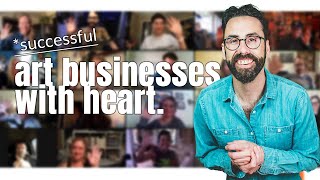
Lennon Bone talks with seven artists about selling work online. Hannah and Nemo doubled their revenue, Brittany sold out her shop, and others grew their following and confidence after joining his three-month program.
Chapters
Hello, everybody. Welcome to the stream. My name is Lennon. I'm going to go ahead and just let you guys look at my pretty face because I know how important that is. If you haven't seen me before, welcome. I am a creative strategist. I'm somebody who tries to help artists to build their creative careers to be able to have.
Take their art and be able to sell it online the same way that they do in their real life. Today we're talking about how to make some more money from the art that you make, how to do that with heart and purpose, and to do it from a place that doesn't feel slimy, but feels really, I don't know, just exciting for you and for the people that you want to talk to. And so today I'm honored to have some friends here joining me. These are some members of my program Design youn Creative Career. So we have Hannah and Nemo and Brittany and Mona and Maria and Susan. So everybody say hello. It's so nice to have you guys with us. If you have questions for us as you're watching. So we do have a handful of people watching here. I would love for you to just ask them in the chat. I'm going to be keeping an eye on the chat and then we will. Yeah, we'll ask those questions as we go and I'll try to try to remind us. So what I'd love to do to start here is for some of you, we've been working together for quite a while now. For some of you, it hasn't been quite as long, but I'd love to just give a quick, like, 60 second, like, here's who I am and here's when I started working with you, meaning me. It's a weird thing to say out loud. Here's how you started, like, being a part of this community. So give me a little bit of that. I'm just going to go, you know, left to right, top to bottom. So we'll start with Hannah and Nemo, if we can. We'll see how their connection is here.
Yes. And if we break up or drop. If you miss something that I say, please just ask me to repeat myself.
We can hear you. Great. So.
Okay, good. Okay, so we found you. I think it was around May of 2021. So it's been over a year. Or was it 2022? I'm losing track. I know. It's been over a year. We are upcyclers. We make moving mosaic out of aluminum cans. And the reason why we. We sought out you and someone like you for. We were looking for a coach. We needed someone to kind of help motivate us and figure out what we needed to do to transition our business from selling at festivals to selling online.
I love it. Okay, Britt, what about you? I'm trying to remember. Brit, how did we. Because I remember the first conversation I had with Nemo. I don't quite remember the first time that you and I interacted. What's your recollection of how we connected?
That was a little bit more than a year ago after your from followers to fans challenge, I think it was called. I think it was in March 2022. And I jumped on that workshop because I was struggling with social media. I hated it and I was unmotivated and I had no clue what I was doing, so I needed some direction and I liked the free workshop and so I got on what was then called, I think your first 1000 fans. What is now design, your creative career.
Yeah. That's awesome. Mona, what about you?
Yeah, for me, it was pretty similar to Brits. We met like a year ago also. And I first saw you on TikTok and I also did the follow to fans challenge. Yeah. And then also did the other program straight after because it was a lot of fun because I just started, like, pursuing the creative business and I had no idea what to do on social media at all.
And.
And that one week was really, really awesome. And yeah, that's how I ended up here and still am.
That's awesome. Yeah. Let's see if. Maria, what about you? Maria, can you hear us? Maria's driving right now. We've told her not to, like, boom and drive here.
No, no, I have a free speaking. I'm connected to my car, so it's okay. I hope you can hear me. Okay. And my connection doesn't really clear.
Yeah. Wow. Okay.
It's raining actually, too, and, like, traffic, so I don't know.
Good. Yeah.
So kind of similar to Brit and Mona. Last year, around March, I saw the free workshop come up on my social.
And then.
I joined, I think, in May. And for me, it was mostly about. I wanted to get better with my online art business. And I really like the approach of the connection versus, you know, like, just selling and getting more followers and that kind of stuff. So, you know, connecting with your people and really the marketing side, I think. And yeah, that was my drive. And I've been with you guys for about a year now. A little bit over a year.
Yeah. That's awesome. Thanks, Maria. And then Susan Taylor, Brown, who's OG for me.
So, yeah, I think it's. We're coming up on three years, I think.
Yeah.
So I'm pretty sure I saw you on Instagram first and you had something about jump on a free call and chat with me. And to me, that was like the, you know, the turning point. I'd been looking for somebody to help me step it up and I couldn't find anybody that I clicked with. And by the end of our phone call, it was like, yeah, this is somebody I think I can work with. And then you did the. The terrifying stand up and stand out workshop. That scared the bejesus out of me. And that was the hardest thing that you had me do. But it was also life changing. And I've been with you ever since.
I love it. And it's.
I'm a fiber artist. I forgot to say that part.
Yeah, you can go to. You should make sure and check out everybody's work here. Everybody does incredible work. I'm always blown away. I'm like, how do I get to hang out with such incredibly talented people? It's super cool. So, Mark, welcome. This is Mark Zach. So, Mark, give us a quick rundown of like, how. How we found each other and sort of why you ended up joining.
Sure. I think just, just briefly, I'm. I'm a musician and teacher and my biggest social platform is YouTube. And I met Lennon through Video Creators, which is a YouTube channel where they help people who are creating video YouTube videos. And while I like all the. Everybody on that channel, I think it was just some things that you really said that, that resonated with me, particularly your interview with Matthew Dix, who's a storyteller, and then your story. I always mess this up, but it's the story of. All I can think of is your Uncle Caveman. I know that's not right. It's like an old live skit. But yeah, anyway, that.
It.
It really helped. And then I think I've been with the group a little bit over a year and. Yeah, it's just. It's just so fantastic. Not only, you know, meeting with you, but meeting with everybody who just gives me. It gives me so much more energy to create than I have had, than I had prior to this. So. So I was just commenting to that before we came on maybe a half hour ago with Lennon, that I. I'm much more relaxed now than I have been before. It's just. It's been great. But anyway, yeah, that's how I found out about you and Then I think we, we had a phone call and I think there was a good connection on that or a zoom call. And I felt really comfortable, but that I work with you.
Yeah. So I love that. Yeah. So again, like, so you can hear, everybody here has been around for a while. So design, your creative career has kind of gone through a bunch of different levels. Susan. Seen like all of them. Hannah and Nemo have seen like two different versions of them now, you know, there's just these different levels to where it's been really fortunate for me to get to work with you all for such, such an amount of time that like, I've now built that into the way that we structure everything that we do that, you know, if you want to stay and work with us, like, that's a part of it, you know, because the community aspect of it is such a big deal to me and I feel like it's such a big deal to you all. I would love to hear from you all kind of a two part question. Like, when you started, when you came in here, what was your biggest struggle in terms of like your art business? And what, what do you see differently over the year now for most of you that you've been with me, some of you up to three, like, what. What's the big change for you? Because I think when I hear people ask these things about like, well, if I do this program, like, are you going to teach me X? Are we going to do Y? Are we going to have a process for Z? And it's like, yeah, we're going to have those things. But I think it's also important to just sort of hear from you all that sometimes the practical isn't always like, practical. There's like some weird.
Thing that just has. Can only happen in time. Right? So curious, like, where were you before and what's changed and why do you think it's changed for you? And it can be a practical thing or it can be sort of elusive. You know, we can get a little woo woo here if you want to. Who, who would like to start? Who has an answer? Anybody? Right away or I can just call on people. Susan. Okay, you go for it.
I didn't know who I was as an artist, and I was just chasing the money when I started to work with Lennon. And so the very first thing I did was set money goals, because that was always what I was told to do, is set money goals. And Lennon's like, money goals are good, but who are you as an artist? And I'm like, well, I do this, and I do this. And he's like, yeah, but who? And he. He doesn't stop at one question. He keeps prodding you until you go deep enough to figure out who you are and who you're making this art for. And I had never thought about myself as an artist that way. I was always chasing a trend, chasing what other people on YouTube were creating because I enjoyed making it, but I wasn't finding the heart of me. So the biggest pivot for me was learning how to be my authentic self rather than how to be just another artist in the crowd and how to stand out to be myself. I mean, the first workshop where you had us going out and.
Trying to be our show, our authentic selves on camera. I've been doing YouTube Lives, but I hadn't evidently been myself because it was a really, a turning point. So I think for me, the big thing was realizing it's not that I needed to learn how to make more money. I needed to learn how to make a life that let me be the artist that I was supposed to be.
I love that. And then I do want to follow up and say, like, has that made you more money, though? Like, because I know that.
Yeah. And how, like. Because that seems intangible. Sometimes people might be like, well, how does that make me more money? You know, like, so what. What's shifted in that regard?
It's. It was really weird to me because you would say that this is going to happen, and I'm like, I don't believe you, Len. And this is not going to happen. Yeah, but it was because I. I had, like, some blocking points that, you know, I wasn't creating art that was going to make somebody feel a certain way, but I was going to talk about art and I was going to talk about my life, and I was going to connect with people. And by doing that, connecting with people, suddenly they wanted to connect with me, and the way they could connect with me was buying my art. So I went from not selling art to selling a few thousand dollars worth of art the first year into more than doubling that the next year. So it's because of people getting to see my work and know that I'm doing the work of my heart and then getting to know behind the art that's making me money.
Yeah, I love it. Okay, anybody else? Where were you before and what changed? Why do you think that was, Mona?
Yes.
So when I started, I was just really at the beginning and trying to pursue any kind of creative business, and I had no idea what I wanted to do. And a lot of times I was just stuck thinking about it and working with you, like, for, let's say, the first maybe half year even was a lot about getting into action and showing up on social media. And through that, I kind of figured out what I really liked and where all of my strengths was at and, yeah, all these things. And then I also got the tools to. That was the second half, like, go through, like, a sales cycle and start actually making money from it. So, yeah, that's my thing.
It's been really cool, Mona, too, with you, because we've seen you, like, go from. I mean, you. You've over doubled your following in the last little bit. Right. And then you've also launched your own course, you know, which we just talked about last week or the week before, like, how, like, exhausting that is. And sometimes you're like, you know, you came in last week, like, oh, my gosh. I'm feeling like there's a lot, you know, I've kind of taken a break and, you know, it's great to have, at least for me. It's like, for me personally, I learned so much from you all because it's like, oh, yeah, we need to support each other even in rest. Like, how do we make sure that we're, like, coming in and taking the time that we need? So I just want to honor you and so much growth that you've, like, all the steps that you've taken to grow. And I say this to everyone. You know, while I feel honored that I get to be in this group with you all, like, I don't think I have as much to do with it as you all do. I think I just get to be a conduit to, like, you know, helping you find the thing. So, you know, I don't want anybody to hear this as, like, oh, linen must be this great thing. It's like, no, you guys are already great. I'm just here to ask the right questions to, like, hopefully dig into the thing that. That makes it better. And Mona, you've really, like, stepped into that this year, so great job.
Thanks, Janet. Oh, comes together also. It's like you and like, the community behind it. Like, whenever I felt low or something, going into a call and seeing everybody and hearing their struggles also, and then you keep us telling that we should take up space. Like, that really, really helped. And yeah, doing kind of together, that's always the best.
Yes, absolutely. All right, who else? Mark. Go for it.
Yeah. So I think a lot of what Mona and Susan have said is true of me as well. I just want to emphasize.
You mentioned asking questions, so that's a huge thing for me. I've been a business consultant and a business owner my whole life, and this is totally different for me.
Actually thinking of myself as somebody who creates art.
And that was a huge leap for me, really. When I joined the group, I hadn't really thought about it that way. It was. It was hard for me to think about myself that way. So I can certainly relate to Susan in that way. But I did want to emphasize the questions that you ask, and that's what I did as a practicing in my own practice. But I found that, you know, the questions that you asked really made my life a lot in some ways. In the beginning, I would think, oh, this is making it a lot harder, because, darn it, I should have been asking. I felt like, embarrassed that I wasn't asking those questions of myself. But in terms of what I was creating at the time, and I think I came in with a. I don't know. I think a lot of people would say maybe a relatively successful YouTube channel. I think I had 70,000 subs at that time. As of today, it's a year later, I. I've got 143. So that's. I mean, that's a big difference. And asking simple questions was huge. Like, that led to so many different ways that I could think of myself, think of how I related to the people who I was making the videos for. Think of videos that I could make for other people that maybe be a little bit outside the niche that I was going at. And also, just to let everybody know on the call, I'm finishing up a product launch today that I don't think I could have easily done without being in this program as well. And it went. All things considered, I've got everything I need to do to do it again and again and again and again. So that's one of the reasons why I feel so relaxed, is like, I've got ideas for doing my videos. I've got ideas for doing courses. I know who I'm trying to sell it to. I know how to sell my products better, and I know I can improve it over time. So all of that. I know I have support, too. So it's all. It's. It's. It's great.
Yeah, that's. Thanks. Thanks for that, Mark.
I was rambling, I know.
No, that. That was not a ramble at all. It was very, very poignant. Anybody else want to share? We don't have to have everybody answer every question. But yeah, if you want to go for it. Brit, what you got?
My biggest obstacle was selling online and showing up on social media in a way that, that would make a connection with people. I was selling my. My art, which is jewelry, like the thing I'm wearing, like pieces of bronze and silver, mostly on festivals and markets. And that was working for me. So I know that I was making something that clicked with people, but I had no idea how to reach them on social media. And I was just. Sorry. I have been on a festival this weekend and my voice is always gone.
It gets wild out there. I know, I know. We know. What's up, Brett? We're watching you.
So.
There. I had no problem selling and it clicked that I had to tell stories to people on my social media platforms as well. And I have been sent. I think I have been selling a bit more now, but my tax report hasn't come back yet. And I have transformed from selling only on Etsy, so they do a lot of the marketing for you, to having my own website and web shop and only focusing on that. So now I know every sale that comes in. I made that happen because of the connections I make now on social media.
I love that. So let me ask a follow up to that because I want you to be honest about this. Like, let's say that you got your report back and you're like, oh, it's about the same. You know, I'm selling about the same. Would. Would you still consider it worth it? And why or why not?
Definitely. Because.
Making content for social media was like a chore to me. I. I didn't like it. It had to be done. I had to show up. But now I have fun with it and I'm making a lot more connections now. I have a couple of people that respond to my work. Not just only give a like, but they share it.
They ask questions. A lot more connection. So that was worth it. Definitely.
Yeah. Awesome. Okay, cool. I see Maria showed up. Maria, you want to share?
I'm glad you're not driving. Or maybe you're driving Here, I'll take you off mute. There you go.
Oh, we can't hear you. Yeah, there you are. I got you now. Yep.
Okay. So, yeah, I'm in the park.
I wanted to share, to drop off.
Yeah.
So.
Oh, we might be losing you. We can't hear you very well. Maria. I could hear you better before. It was super clear and now it just kind of cuts in and out.
Oh, we can't hear you. Maria, I'm sorry I had to come back to you.
It might be that if you disconnect from the car, give that a whirl. So let. Let's see. Let's see if anybody else. And then we'll try to come back to you. Maria. Hannah. Nemo.
Yes. I think the biggest change for us was our confidence in what we were doing and being able to.
Put it out there. We had confidence in our artwork, but I don't think that we had that same type of confidence about who we are as people. And we didn't have any idea how to share that. And we had read a lot of business books, self help books, all kinds of things.
Over the years.
When we did festivals and we had this running joke, we would say, you know, let's do what the books say, and if you want to be an awesome artist, just be awesome. And we would joke and we'd say, just be awesome. But, like, that was undefinable until we started doing your program. Then we're just like, okay, so this is what we need to do. We need to be awesome. And then we need to find, by being awesome, we will find the people who think we are awesome, and then they will love what we do. That's really, really shortened version of what. What it feels like, in a way. But I think I never would have said before in public that I'm awesome. I never would have. So that's a huge change. To be able to just be like, yeah, I'm awesome.
I know what I'm doing.
I got great art. You're gonna love it. And then also to be able to just say things that, like, you know, we're gonna push somebody's buttons. I used to always just play everything right down the middle. And I would never, ever say anything controversial because I don't want to, like, affect someone negatively or have someone dislike me. But I don't care anymore because when I start to say the things that matter to me, then we get way more engagement and that leads to way more sales.
Yeah.
And for the record, say this out loud. Hannah and Nemo sold their entire shop out in like two and a half hours on their last release.
It works. But they have put so much work into it. I've talked about this before. I think you guys have had a great foundational element already in place. And again, we just kind of like, found your thing and then just, oh, that's the ingredient, right? Which is really more you. Ironically, like, that's what I hear from all of you. Right? It's just like.
Yeah.
It'S like you could make any art, and if you're just making it in a vacuum and nobody is really aware of it, you could be as brilliant as, you know.
A master artist, but you could also have something crappy. But either way, if you're not telling people who you are and why you're doing it, nobody's gonna care.
Yeah.
So I feel like, you know, yeah, maybe we had the talent and we had the product, but we were tanking, like, especially after, you know, 2020. It's like we had no clue how to get our message out there, and. And now you. We're doing great, so.
Yeah, I love it. So thank you. Thank you for that. All right, Maria, let's try it one more time.
Yeah, it should work better now. I'm disconnected from the car.
I hope it works perfect.
Okay. So. Yeah. So as I said, when I first joined the program, it was mostly about, you know, trying to get more sales and, you know, becoming a more successful art business.
And what was interesting is.
I don't. I. I haven't necessarily sold much more, and I haven't necessarily, like, I had more followers now, but it's. It's not. Not been like, you know, super crazy growth or something. But what really happened for me is I think the program really helped me figure out more about myself and who I want to make art for and, you know, getting that connection. And I definitely see more of a connection now and also just being more.
Confident speaking on camera, those kind of things. I mean, I wouldn't do that much at all before.
So I think a lot of the program the last year was leading up to just being more confident knowing who I want to connect with and connecting with people. And, you know, it was a lot of internal stuff that needs needed to happen, and it would have not happened if I would have not gone into this program. So, you know.
Yeah. So I want to. I want to also, like, acknowledge you, Maria, because I think you've done. Had so much growth. And, you know, to your point, I want to ask kind of the same question. Like, you haven't made a bunch more money from it, but, like, what's the value in it for you.
Even currently? Like, why stay? You know, what are you getting that makes it worth it?
I think it's like this foundation that I've already built, and I see. I can feel how it's like, you know, going to a certain place. It's like, you know, before that, maybe I had the plot of land, and I thought, okay, you know, how do we build the house now? But I didn't have that foundation, and this is what really happened. And I can see that. And I can see how, okay, now I can put the house on it, or now I can, you know, add the fence or whatever, you know, you want to. If you want to look at it as a house. But that's really the thing. Like, there was so much depth to the program and the modules, especially the early ones around. You know, who I am, what kind of art I make, what kind of art business do I have and who are my people, and, you know, how to connect and. And just confidence. And so I think, for me, it's a little bit more of a feeling that I have of how I.
I don't. I'm not afraid of stuff as much anymore. Like, I just feel like, okay, yeah, I know what to do, and, you know, pretty much know what to do. It's more the okay, now you got to do it, too. But it's. It's not the okay, I'm totally lost, and what's even going on, you know, that. That.
That is.
That is gone. And I can see that that's a step that needed to happen.
Yeah. And I want to say I've seen you go from a lot of thinking and not a lot of doing to way more doing, and I think it has a lot to do with you learning to seek support from everybody here. And that's a huge thing, too, because I feel like you've started to trust yourself because you have.
Yeah.
Just seeing you reach out and say, like, I'm kind of stuck here, guys. Like, you know, it's been really cool to watch.
Yeah.
Yeah. And that's one of the biggest things, too. Is this the community part of it, like, being able to, you know.
Meet each other, even. So it's not in person, but, you know, to talk about things where you're stuck and get support and, you know, just seeing, oh, you know, what others are struggling with. And.
Every meeting I come out of it and I'm like, you know, more motivated and, like, yeah, I have. You know.
It'S giving me some sort of jolt of energy for, you know, working on stuff.
I love it. Yeah. Thanks, Maria. Okay, so we have.
I'm gonna actually have to drop off, so that's unbelievable. Wow.
Thank you, Maria.
Bye.
Thanks for not driving and talking at the same time.
Yes.
So there's a couple really great questions here that I want to hit. And first of all, we're talking about program design, your creative career. Which we close enrollment for on Monday. We're only going to take 20, 20 artists into the program. We've already got a handful of people in it. You can go to stopthestarvingartist.com design your creative career just to check it out. Feel free to email me any of that stuff, but there's a couple good questions and I want to use this as an opportunity to maybe get practical in like some of the things that you were able to implement business wise and maybe if you could even give some insight to artists that are working on their business right now. Because I don't want people to walk away like we're just jabbing about stuff. Like, let's give some real practical thoughts here too. So Don asks here, she says, do the artists feel that three months was sufficient to lay the foundation to move forward? So I want to preface this by saying before the program was a year long, we've switched it to three months. But she did have a great follow up question here, which was, with the new program, after three months complete, do you stay with the community that you're with or join a larger established group? So I think this is a great time to talk about what everybody else, what everybody here does. So this is what we call our alumni, like Mastermind. So these people have all been through the program and they've chosen to stay with us. And so that's an option for you if you want. And then we all just kind of meet and every other week and talk about your business. It's only about the business side of things. Once you get in this, I mean, we talk about everything but like, you know, wherever you are, there's no curriculum anymore. It's just like, where are you right now? What do you need right now? Like, let's talk about it. And we keep that incredibly affordable once you've finished the program. So you do join a bigger group, but it's not a big group. It's, you know, nice and tight. So I do, I do think like the three months question is good. Like what would you say, you know, in, in terms of. Because we just recently went through the program together again to kind of like, okay, I wanted to do a prototype of like how we would run this with everybody here. What do you feel as far as like the three month program? Was it sufficient and what did you really get from that time? Like, if you could give one tip that like really took you, you know, into a, a new place, like, what would that be?
A little more of a challenging question. We'll start With Susan.
Oops, sorry, I'll unmute you. There you go.
I think the thing is that each time, so you go through the program and you think, okay, great, I got to the end of the program, and then I'm going to go on and do amazing things. But then as soon as you start to do your first thing, you realize, wait a minute, there was something in Module three that's going to inform what I'm going to do. So I'm going to go back and go through it again. And personally, I've gone through a couple of modules, I don't know, four or five times because I needed to learn something. And the biggest thing for me was understanding that, you know, I'm all about. I'm a very scared artist. I am scared of everything. I'm scared that I'm doing it wrong. I'm scared that somebody's going to judge my work. I'm scared that, you know, I'm doing my French knots by twisting them the wrong way. That's going to ruin my picture. And so I'm very terrified of everything. And I thought that my art was supposed to show all that fear, and it wasn't. And it took me going through, I don't know, the first couple modules a couple times to understand who I was making art for. And I was making art for people that were just like me, that were afraid that they weren't good enough, their art wasn't going to be good enough, that they were afraid to show it to the world, and that my art didn't have to represent that. My art just had to represent how I was feeling while I was creating it. And that just kind of comes through in your art. So three months is enough to whet your appetite for how amazing you can be. But it's. It's plenty big enough to give you that foundation. It's sort of like you bake this big cake and, you know, yeah, it's really tempting to eat it all at once and you're going to want to, like, zip through everything, but really you're going to savor those bites a little bit more if you cut it up into pieces and you eat it over the next few days.
And I'm rambling, but it's just. Yeah, I think three months is great. I like the condensed versus the year long because the, you know, having the longer program made me feel like I was never going to get wherever it was I was supposed to go. I didn't understand that it was going to be a continual reiteration of who I was as an artist. And so having it in this three month chunk is perfect because I get to the end of it now and it's like, okay, I'm shifting away from trying to be all things to all people. Time for me to go through the modules again and redefine my person, redefine myself, redefine my process. I don't know if that helped.
Yeah. And I'll say this before we have the next person answer is like, the way that the modules are designed is we start with like, what's your vision? You know, who are you as a, as an artist? You know, what's your story? Like, what, what's your reputation? How do we build that? How do we get people to connect with that? We define your ideal buyer, your ultimate badass buyer. Then like, we go through all this stuff to where by the end you've gone through an entire sales cycle from like pitching your thing on social media to closing up, you know, and you're finished, like selling your thing. And then it's like, well, what do we need to look at? And so the idea is not that, that it's. That it's complete, it's that we're giving you something that is repeatable versus constantly restarting something. Because that's where I see so many artists get lost in, in the business side, is that they have. They want to just kind of always relaunch and relaunch a new thing and a new thing when it's like, no, you have to, you have to find something and refine it. And so that's really what the three month program is really all about. Yeah. Anybody else want to talk about that or like, anything that stuck out to you? Yeah, Hannah Nemo. And then we'll get Hannah Nemo.
Yes.
When we started with you, I was just thinking back on this, and I know we started in May and I don't remember the exact date, but I do know that by August something was working and working really well because that is around the time that our engagement started to spike. Our account started to grow. By the end of August is when we had our 30,000 followers on TikTok starting at zero. That was about a month that we got that 30,000 followers. We had already kind of applied everything we learned on Instagram. So when we started fresh on TikTok, it's like, it seemed like we really knew what we were doing, even though we still had a lot to learn. So the time frame of three months, I think that the answer is it depends. But I also think that we are an example of how well that three, maybe four months can work. I think, of course, it all depends on how much you're willing to put in and how much time you have available. And during that three months, it did seem like a lot of work. And we did. We. We hit it really hard. We took it so seriously. And I've said this before, like, we really, literally had nothing to lose because we did not have jobs. We weren't selling our art. We were broke, so we could only go up. And so for that three months, we said, whatever Lennon is going to ask of us, we are going to trust him, and we are going to do it.
That's so terrifying to hear out loud.
What?
That's so terrifying to hear out loud. I could have been like, all right, guys, I need you to go sell that little house. And then we're just gonna, like.
I'm.
Sorry, it's breaking up. I didn't hear that.
It was hilarious.
Yes.
Yeah.
But the thing is that when we would spend time.
Every single day.
Maybe a half an hour to an hour, working through the modules, and at first it felt like going to a school, you hate gonna be really honest because it was like.
Homework, okay. But when it started to click and we were like, oh, like, this is where this. This exercise is taking us. And, oh, my gosh, we've never said this out loud. And, you know all the. The exercises where you have to ask other people in your life things. Questions about you. Super uncomfortable, super weird. But by the end of it, you just have this aha. And you're like, wow. Like, this seems simple, and you think you know yourself, and you think you could do this without any experience, but it just. It. It just snowballed. And so we. We started off being passionate about our art, and we became being passionate about the program and where it was taking us to the point that it became this task that we were excited to work on, and we want to be prepared for every time we see the group and every time we sign into a Zoom call, we wanted to have worked on it, so it became exciting. And then when we started selling out our shop, which doesn't always happen in two and a half hours, sometimes it took more like a week, which is still amazing.
Then, like. Then the excitement just, like, it was, like, overwhelming. It's like, you want to wake up in the morning and you want to do it, and, like, when you get to that point, like, if you're someone who's trying to figure out, like, you know, I have A part time job. I have a full time job. I'm taking care of others. Like, and Lennon calls it energy management. The energy management.
Just became like, it just clicked. I think like we understood what that meant. And when you make the time to do that thing that you want to do and you desire and you love and you see yourself doing, then the amount of energy you have to do it is so much bigger than it was when you were working your full time job and coming home and being tired and feeling like you don't have the energy. I hope that makes sense. I'm again.
Starting to feel like I'm rambling, but I am excited.
It's a challenging thing to grapple with because like Lisa asked, how much time do you think you spent each day or week, like getting through the program? Which is a great question. And Mark, I'd love to kind of let you take this one, but I also want to say that usually the question here too, underneath this is like, am I going to have to spend a frick ton of time doing this? So much so that it takes away. And I think that's sort of what you're speaking to, Hannah, is like in the beginning it felt sort of like, oh my gosh, is this taking away? But once you found that aha moment, it's like, oh no, this is an addition to the process. Is that. I don't want to put words in your mouth, but.
I.
You dropped out. I'm sorry.
It's okay. I'll let Mark take it. I'll let Mark take it.
So.
So I think so.
I'm.
I'll talk to the. How much time did it take? But I think, you know, Hannah and Nemo were in a very different spot than I was. I came into the program fairly new to what I was doing. Always doing it part time. I've been a, I've been an engineer, I've been a, A business person, a statistician my whole life. Mathematician. And not. I, I didn't think of myself as an artist. So I came in with a little bit different perspective. Just to let everybody know, this is what I do now. This is what I do full time. I do not, you know, I do not do. Manage an analytics group anymore. That's not what I do. So I made that transition and this group was a. Had a lot to do with that. But I was in the person, you know, I have a mortgage, kids in school, stuff like that. So I was doing it part time in the evenings. And the one thing I will tell you, there were some things that I slacked off on once in a while. I didn't always complete the modules on time, but one thing I always did was I always made the meetings. I always make time for the meetings with everybody else. Because what I find was that we all have different ways that we find the gaps that we need to.
That we need to shore up to get to that next level. And there's never like a point where there's not a next level. So. Hannah Nemo very successful. I'm sure if you ask them, they would say, oh yeah, we have places that we need to take, that we still need to grow. I feel the same way. But for me, I mean, just something very tactical. And it didn't take a long time, but I picked it up mostly in a meeting was short term, short, short form video content, story structure. For me that was like a revelation. I'd been struggling to take a long time to make these videos and now I had something that was a quick template that I could use. And I think Len and you said set your timer for 20 minutes. I just remember that 20 minutes. And that's it. That's all the time that you get to do this. And so I did and I finished in 15 minutes. I was like, oh, it was totally freeing. And so that was just one of the things. Another thing that I've been able to apply over the last couple of weeks was the discussions that we had about product launch or and pre sales and all that and how it related to emails. I learned a few wrinkles even this week. And you know what? It's still going to be a successful sale even though it wasn't perfect. So I think, you know, that was. Can you get through the program in three months? The literal answer is no because you're going to take the rest of your career getting through it. But that in a more practical sense, the answer is yes because. Because you can get a lot out of it and still go back to it after, after it's done and get more value from it. And the beauty of seeing other people get different things from it and getting energy from the group and confidence from the group is. Is huge. So three months, not a barrier. I took maybe to answer it direct, directly. I took maybe, I want to say.
Five hours a week directly working on the program. That doesn't count. Indirectly, sort of making my art and videos and writing music and stuff like that.
Yeah. And I think it should be said too that the program working on things for the program is also working on your business. Like it's not like they're just assignments for the program. They're assignments for you to sell your thing. And I think that's like, you know, that's important to remember for everybody too. Like, we're not just give, like in the beginning, it's sort of like heavy lifting, reflective kinds of things. And then the further you get into it, the more it's very applicable to your day to day, like, business kinds of things. Awesome.
So can I share one more thing very briefly?
Yeah.
When Hannah and Nemo mentioned that the exercise where you go out and reach out to people and you, you ask questions about yourself and how they think about you, it is very uncomfortable to do it.
I, I, there's somebody on this phone call that I actually got responses from a few people with, and I was reading the responses and.
I started to cry. It was something that hadn't happened to me before. It was just so revealing and help. Helpful, ultimately extremely helpful.
Yeah, I love that so much. Yeah, we did that in the workshop recently, which is where Susan did it too. The first time was in that my one, my, my first free workshop, I think. And it's one of my favorite exercises. And what I love seeing is how over time, you know, we're all kind of finding those little things and saying, how do I even bring more and more and more of that into what we do? You know, and that can't happen instantly. And often it takes a community of people looking and being like, you know, I loved what you did here this week, Mona, or, you know, whoever. And then, and that's what's fun for me, is hearing you guys give each other feedback. And some weeks I get to just sit back and go, like, I didn't really do anything today. You guys did all the work. But that's what's so cool, is, like, all of that experience.
Brought together. So I want to ask, like.
We'Ll kind of end on this because I don't want to go forever. You know, if someone is.
Like, this is a big investment for somebody. Right. We're talking $1,500 for the three months. So that's not cheap. And then if somebody wants to stick around, it's only $67 a month for the alumni package. So that's a much more affordable thing. But, you know, again, we have everybody on different levels of, like, financial things. I know for a lot of you, like, this is probably the most that you invested in yourself and your art business. And so, like.
What, what have you gotten from that investment? And when would you advise somebody to make that investment in themselves or not make that investment in themselves.
So, like, you know, yeah, if it's, if they're, if we're saying, hey, we're going to shell out 1500 bucks for three months, like, that feels like a big investment. When is that worth it for them and when is it not worth it? And maybe like, based on personal experience, when would you find that, like an amount that is worth spending for you?
Anybody want to speak to that?
Okay, let's get Hannah first, then we'll get Susan.
Yeah, it, I agree it can seem like a big expense, but the way that we tend to look at it is that prior to doing this, we were always sharing our sales with someone else. So it was either a venue or website. We were sharing a percent, nearly, almost always half.
So now we're selling directly through our website. So our expenses are so much lower. So the, the cost of the program is a lot less than the expense of sharing our profits. So that, that's one way to look at it.
The other thing I was thinking about is that it's like, like regarding investing in yourself, it is like a form of therapy. And it's, it's so helpful in that way because no matter what happens, in the end, I think you're going to grow. And the fact that you're spending money in this way, like we're, we're paying for the privilege of working with linen and with everyone else. And.
You during that time, you will grow as a person even if you never post anything on social media. So, yeah, it's definitely been worth it in that regard. That's my two cents.
I love it. Thank you for that, Susan.
So, yeah, it's scary to spend that money on ourselves. And I will say that I was really, really good at speaking, spending money on buying classes that I never completed, art classes, buying art supplies that I never used. Really easy to go off and do that. It was much more difficult to think about spending the money on myself because I didn't consider myself enough of an artist, you know, to need somebody. I, you know, I wasn't there yet.
Saying that I wish that I had worked with Lennon, you know, that he had been doing something like this. Years ago, I came from a publishing world. You know, I wrote books and sold books, and I used to pay to go to writing conferences to learn this sort of things. And it sort of clicked in my head, well, wait a minute. If I would go to these conferences and I would pay this kind of money to go to a conference to network with agents and editors. It made sense that if I wanted to grow my art career, I needed somebody that knew that side of the business. Because I didn't know anything, obviously, because I wasn't making any money at it, so. But it was a scary thing to do. I stopped signing up for a bunch of classes. I stopped. No, I didn't stop buying art supplies. I won't lie to you.
But I.
It.
You just have to be willing to take the leap. And I would say the time to take it is when you are the most scared of doing it. Because if you wait until you're feeling confident, news flash. You probably are never going to get there. I don't know any creative person that can say truthfully that they are 100% confident in their abilities 100% of the time. And that's what working in a program like this does. And it's more than just the program. It's not like Lennon has the magic touch. Other people have said it too. It's the community. It's being able to go in there and say, you know, I launched some new stuff this week and nothing sold. I talked about my newsletter and nobody signed up. I did a live stream and only two people showed up. And you can talk to other people that say, okay, so what did you do? What can you do differently? How can we support you? What do you need from us? And suddenly your energy starts to shift a little bit and you grow. So you know when to do it. Right now, if you can't do it right now, do it as soon as you can. If you think it's not going to make you grow, you're wrong. Because like Hannah said, you're going to grow not just as a creative. You're going to grow as a person.
Yeah.
My three cents.
I love it. You guys are making me all gooey inside. Okay. I think Mark maybe raised his hand or did you?
Sure. I, I, you know, I wanted. I. On my professional side, I had no problem because I actually was professional help for a lot of people and sold myself that way. But I had no problem as a business owner getting. Getting help. You need help to succeed.
And. But on the personal side, I was always trying to do everything myself. And, you know, I pushed myself pretty hard and it was working sort of. But the sort of part was the problem. It was just, like, getting by, and I couldn't imagine. I couldn't imagine putting in the amount of time that I'd need to. To get to that next level and just having a place, honestly, Just knowing that I could come in every Tuesday or every Thursday. I can't remember. It used to be Tuesdays, and it was Thursdays. Then it was Tuesdays and Thursdays. I'm old. I get confused.
But just knowing that I had a place where I could just at any point, like, if I was working on something on Sunday and I couldn't quite get it, that's fine. You know what? I'll just. I'll just ask about it on Tuesday. I'll bring it up, and somebody in the group will know, and Lennon will be able to whiteboard it, because he always can. He'll be able to take out the whiteboard and work it out, and all of a sudden, we'll see the structure of how it works.
And it's just. It's to give you an idea of how it's worth it. Nobody can guarantee results. But I could tell you that this week, I've many times paid for it with the sales I've made this week. So. Just this week. And that's been consistent the last three months. So.
I don't know what else to say. It's been a great time. That's the.
I've had. I'm not a. A casino kind of guy, but every time I've gone to the casino, I've always taken, like, a X number of dollars and I've said, this is entertainment. When it's gone, it's gone. And I had fun. And so I kind of went into this this way. But coming out, it's. It's been very productive. It hasn't been the casino. It's been paid back if the casino is paid out.
So.
Yeah.
I love it. Brit, Mona. What about you guys? I'd love to hear from Mona specifically. Yeah. And then, of course, Brett. Yeah.
Yeah. Now I wonder why you want to hear from me specifically.
Well, because we talked about earlier, it's like this investment, and.
And you.
You're in a place right now where you're just now starting to see the wheels get going. So I. I feel like this is such an important. For those that would be more in your space where it's like, you got a kid, a young kiddo at home. There's a lot going on.
Yeah, that's what I wanted to talk to. Because I'm. I'm a single parent, and when I started, it was like, it is still a huge investment for me. But when anybody's in a space where you still can, like, make sure that everything is safe, you know, and you got all your bills Covered and everything. I absolutely don't regret it. And just a feeling of. I don't know if I'm feeling so safe and looked after, but also, like, supported and just much better in my own skin. And, like, thinking about who I am now and looking back, it's such a big difference. And, yeah, I didn't say in the beginning, but I started with printing cards and having my own, like, designs on them. And I went to, like, I'm doing that with watercolors. And now I had this course that I'm just now selling. I'm still, like, the course is running still right now, and it's, like, so amazing to see where I've gone now and just feeling so much better and having all those connections with all those people and feeling, I don't know, like, safe is the best word. Right now I'm feeling really, really good in a good space. So I would recommend it if it's not hurting. Hurting your safety with your home and things.
Yes. That's such a sweet thing because I, you know, that's really all I want this to be, is a place where you can feel safe to, like, screw up or talk about what you're afraid of or, you know, come up, come with whatever's happening. So that's. Thanks. Thanks for that. What about you, Brit?
Well, at the beginning, I was a bit hesitant to join. Not because I didn't have the idea that it would help me, but because of the financial investment. And at the time, I was already investing a lot. I took a Smithing course and I was booking a lot of festivals to. To be a vendor at. And you have to pay in advance every time that I have to get my work costed. It costs, well, the same amount as the course costs. So because of that, I was hesitant, but I'm still very glad that I did it because it makes me feel so much more grounded as an artist. And I now have colleagues that I can. That are my sounding board and that I learn a lot of, and I miss that so much. Like, being. Being an artist alone. Like, this is. This is my space. Then it can get so lonely. And now I have a community of colleagues, and I wouldn't want to miss that. So that's why I. That's why I stick around.
I love that so much. Yeah, that makes me so happy. Yeah, I. Yeah. And I. I just want to say too, you know, we do offer 30 days for you to try it. And so if you don't like it in those 30 days, like, totally cool, you know, Give your money back. It's not a problem. I want you to feel, like everybody said here, supported and safe. You know, I ain't trying to, like, pull the rug out from under you. I know that's easy to say on the Internet, but hopefully there's, like, you know, a little more trust here, hearing some people talk about it, so. And we do everything we can to make it right, you know, whatever that needs to be. So. Random question from Dawn. She says, are there any artists in the community that work on their art business with children under 18? So I don't think so that I can think of. I'm trying to think even outside of this space of folks. I don't think so.
But I would love to know maybe what the concern is there or.
Yeah. How we might be able to support and feel free to, like, drop. And drop me an email.
And let me know, like, you know, what that needs to look like for you or what the concern is. Because I'd be happy to try to offer some. Some ideas if it. If I had a little more context. Okay. Yes.
I just want to talk to that, because for my course, I had, like, people under 18, like, asking to join, but I'm not sure, like, what. Where the question is going. Like, what the question.
Got it.
Just if she has more questions, she can also contact me if. If I can help.
Yeah. Okay. Yeah, so feel free to shoot me a line. Just. Lennon, stop the starvingartist.com. i can put you in touch with Mona and she can give some thoughts. So just as a recap, these folks are some of my favorite artists on the planet, I feel, so. Just truly gifted. Like, you all are such a gift to my family, to me and those of you that are watching. Like, my wife is a part of this too, so, you know, she's actually working with our assistant right now, so they're on a zoom call upstairs. So she wasn't able to be at this. But, you know, you guys pour into me as much as I hope I do for you all. And so I just want to say how much I appreciate you all being a part of this today. This is, like, truly awesome. Those of you that are watching design your creative career, we'll take 20 people into it. We've sold a handful of those spots already. And the cart will close this coming Monday at midnight Pacific.
And then we'll start our first class on the following Thursday on the 22nd of June. And classes happen at 11am Central Time every week for three months. And we're gonna run through Everything from, like, what's the vision of your art? Cause as you can hear from all these people, like, that is everything. A lot of you are saying, I wanna make some money or I wanna have some followers, but you haven't really thought about why. And if you don't think about why, you're not gonna find, like, the real joy in it. And so we always start there. We always start there. And then we're gonna push into that with everything we do and build a sales process around that. So by the end of it, you got a whole system that you can repeat over and over and over again in terms of, like, getting your followers, selling to them, figuring out what you need to do to change it and make it better, getting more followers, selling to them, looking at what you need to do to change it and making it better. Always a refinement process. And so if you're like me, where you're like, okay, I feel like I always have to think of a new thing, like, let's do something like this. So your new things can be all in your creative endeavors. And you can experiment and play and all those kinds of things so you don't lose that. It's actually freeing because now you have something that you can rely on. And then play becomes something that is like, oh, okay, this is part of the process now. So I think that's, like, one of my favorite things about how we structure this. So if you have questions, send me an email. Lennon, stop the starving artist dot com. I would be happy to answer whatever questions you got. Hannah, Nemo, Brett, Susan, Mona, Mark, and Maria, who has left to take her appointment. I just love you guys to death. Thanks for being here. Thanks for being trustworthy people and then trusting of me and what you all do. It really means a lot. And for all you watching, I hope I see you soon. Bye. Bye.









