Turning Regrets Into Action. My Plan for 2023.
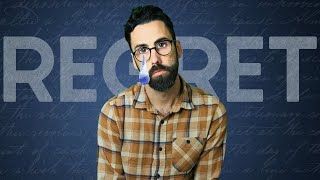
Lennon Bone walks through his 2022 regrets: poor execution planning, skipping quarterly reviews, and weak team leadership. His wins included co-creating a family vision, pivoting after burnout, and learning when to rest. For 2023, he's focusing on energy management and breaking plans into single, prioritized actions.
Chapters
Hey, everybody. Welcome to another episode of the Stop the Starving Artist podcast. My name is Lennon. My goal is to help people have successful creative careers. A lot of the stuff that I share here on the podcast is really just my own experiences. Things that I'm doing with clients that I work with, stuff that we've seen work. None of it should be taken as gospel. We believe that you should find the things that work for you and define what success is for you, and then pick and choose the elements that will help you build your bridge to what success is. So today I wanna talk about my biggest regrets for 2022 and the biggest wins. And I wanna do this because to me, it's important that as artists, as creatives, we look at the things that we could have done better, but we also look at the things that we did really well. I don't think we give ourselves enough credit most of the time. And I think we try to fue through negativity as opposed to positivity. And so a lot of the work that I try to do is how can I be proactive in, you know, looking for evidence of this is the kind of person I am. Meaning, you know, if I want to be more of a visual artist because I'm a musician first, then I need to be doing more visual art. So, you know, how am I building more evidence and how am I looking at that evidence? So. So, you know, I'm just a big believer that habits aren't built by just doing something 60 days in a row. They're built by giving ourself the grace to mess up and start again. And I think that's what gives us momentum, at least for most of us as creatives. And so that's why I wanna look at these things today. And I think you'll get some value from this because, you know, these are things I believe a lot of us just don't do very well. And I'm gonna give you some insights into how I did some of these things, and let's just jump into it. So. So my first regret is just not planning things out better. So my typical planning routine looks like this. Lay it all out there, get everything out in the open on a page, something like that. And then I don't look at that again because it's freaking overwhelming as I'll get out. And so when I say planning things out better, like, I'm actually a pretty good planner, but I'm not good at planning for the execution, right? So how am I going to take this plan and then turn it into bite sized executionable steps. I read a great book last year called the One Thing where I'm going to paraphrase the question, but he asks, what is the one thing that if I do this will make everything else easier or obsolete? Right. What is the one thing that if I do this will make everything else easier or obsolete? So one thing I'm trying to do, pun intended, is figure out what that one thing is so that I can move toward my goal and not be so task oriented because the tasks become this really long drawn out thing. And so that's the part of the planning that I need to be better at, is looking for that one thing more often. Looking at my opportunities to kind of take the most efficient route. And the problem with that is that it takes space. And that means we can't just like, you know, be doing something and feel really busy. Sometimes we have to sit around and just like think about things for a while. And that's very counterproductive for most of us or counterintuitive for our little productive brains, or at least mine is little. And so, you know, I'm constantly saying like, okay, well, I need to sit down and just think about this. But thinking when I'm ending that session doesn't feel as productive as like at least writing a bunch of junk down on a piece of paper. But sometimes I have to say that space is necessary for me to create this real plan of execution. And so, you know, this year I want to be a lot better at really planning ahead for the execution, not just the plan itself. And looking at what don't I have time for. And if I don't have time for something, then what can I do that I do have time for? And you know, that may mean that it's going to take me longer to achieve the goal. And I think it's actually really valuable for me to understand that because a lot of times we don't necessarily look at things that way. We think that we're going to get a ton done in a short amount of time and we don't. And we just need to get used to that slow growth period, or at least I do. I don't want to not assigning you to this conversation. So the second big regret and I kind of touched on this is not reviewing my goals consistently. So every quarter, so every 90 days I set up a vision and I have a sense of what I want to happen. A lot of times my goals are more feeling oriented. Meaning for instance, one of my better goals was like, I want to build a business fueled by creativity and exploration. Okay, so that can feel kind of vague. And then underneath that, I have to say, okay, well, if it's fueled by creativity and exploration, what's measurable, then what's underneath that that allows me to make sure that I'm hitting that feeling goal. So I do have to set some measurable things underneath. But you can hear that's not like, task oriented. That's more like objective oriented. And I personally prefer that method because, again, the tasks just start to feel like a big lump of obligation and they're not as exciting, and I can get lost in those and feel like, oh, God, I gotta check this thing off the list. Right. And so just the lack of reviewing my goals and my vision was a big detriment for me this year because I found that when I lost sight of that, it was mostly the times when I started to feel burnout. So the third biggest regret here is just not being a great team leader. You know, I have a business called Stop the Starving Artist, and again, you know, said kind of at the beginning, our goal is to help artists have successful, quote, unquote, successful creative careers. Meaning, you know, we help them define what that success looks like, and we help them develop a plan to do that. And we have a small team. It's me and my wife. And last year we had an editor, and we had. Which we don't really have an editor right now, but we'll still have a graphic designer who's helping with some of the backend stuff. And it's. And also my personal assistant, Jacqueline, who's incredible. And I'm just not good at. At communicating with them. The vision. I'm actually pretty stinking good at communicating with our community and our clients, the vision that we have. But keeping that vision with the team is really challenging because I am.
Mostly in contact with the people that we work with, the artists that we work with. And so it feels like, well, maybe I don't need to tell them I can just go do this thing.
But I realized, like, that doesn't keep them interested or inspired or motivated. It doesn't allow them to feel like they're a part of what's really happening. And so I really. That's actually a really big regret. It might be. My number one is that I just feel like I have so much to learn about being a CEO of a business. And that's not bad. You know, I've just always had to do things alone and having support and trusting that support is something that I'm not good at yet. And so that's a big, big goal for me in 2023. So next, I'm going to quickly give you my wins, and hopefully you can extract something from these that you can use yourself. The thing that I am really proud of this year is the fact that my wife and I outlined a vision for our family as well as the business. And that vision really is to just help people be the best versions of themselves. So I love that because, you know, we're all about how can we serve people well, how can we love people well? And, you know, being the best version of themselves really requires helping people kind of see what their options are or see the. The greatness that they have. And so that means that, you know, complimenting people and just, I don't know, it just feels good. And I'm really proud of that. And I see it in our kids and how they show up and talk to people and we can remind them, you know, does this thing that we're going after, you know, does taking this lesson or does playing this video game, does it align with our vision as a family? And if it doesn't, maybe we shouldn't do it. Right, because that includes ourselves. Like, how do we be the best versions of ourselves? And if we're striving to start there and then to use that as fuel to lift others up, that's really the goal. And so it's really been a fun thing to stay focused on, and I'm excited about continuing that through this year. And then, you know, despite the fact that I didn't plan for the execution, well, I am, like, appreciative of myself for being open to just trying new things. Last year, the first half of the year, we went through a very strategic thing with the business to doing launch cycles and all this stuff for our program. Design your creative career. And then toward the end, I was feeling really burnt out and frustrated, and so we completely flipped the model. And I was really just proud of myself for being willing to try something else. And if we hadn't done that, I wouldn't have an idea about what I can do this year. And so I'm excited about sort of like merging those two things of these launches with the things that I liked about the other method as well, so that I can be more restful in my approach and spend more time where it needs to go. So, you know, I think we sometimes have to, like, fail in order to figure out, like, okay, this was worth something, right? Failing is just data. And so I'm Trying to keep that in mind for this year. Actually, one of the things I really want to push for.
As we help creatives is ourselves. Included in that is failing in front of people. Like, being willing to fail in front of people. That's a big thing on my list this year, and I'm really excited about that. And the other thing I'm really pleased with from last year is that I rested when I needed to rest. Not every time, but when I started to get exhausted, I made time to rest, and it helped me to understand a little more of my own work rhythm, or my seasons, if you want to call it that.
It's not easy to predict, but it's nice to be able to look at what you're doing and say, okay, I can do something with this. I can try to build a better execution plan based on making sure that I'm not burning out, that I'm doing the things that I love first. We'll talk a lot this year, especially this month in January. If you're listening to this later, this is January 2023. Obviously, we're going to talk a lot about vision and energy management, because I'm a big proponent. Like, you don't think so much about time management. Think about energy management. And so I'm pleased with how I tried to do more resting last year. And I do believe that it helped me to not feel as though a win was just money. You know, the win was, did I love this? Was I passionate about it? You know, and then seeing that striving from passion helps me to do more of the work that can make us money.
And so lastly, my word for the year is trust. So when I think about this word, you know, the goal is that I want to trust myself. I want to trust my spirituality, my faith. You know, I trust that God has a plan for me, and I need to create a plan underneath that trust. Like, starting with trust, then plan, then find support. Like, this is my goal, right? Find support in that. What does it look like to have support for my plan? Whether it's my team, whether it's friends, whether it's my family, whether it's accountability groups, you know, whatever it is, my coach, like, there's a ton of different options to find support. And so that's a big part of this, as well as trusting other people in this and then finally executing right and needing to trust the execution. So I have to trust myself, trust my spirituality, my faith, build a plan. I need to trust that that plan is good enough to go. And then I Need to find support that I trust and then execute. You know, do the execution and trust that I'm doing enough, that it's just data, that failing is not anything to be afraid of. I can fail forward, fail publicly, and it's just an opportunity for me to learn more. And that just leads me right back to trusting again. You know, all that, like, really feels important to me this year. So I encourage you, if you think a word for the year might be helpful, give it a shot, see what you can do with it, and outline what are some steps that would make sure that you are doing that word or being that word, I think is a better way to think about it. And so in that spirit of trust, you can expect this year that I want to do more loose conversations like this. I want to do more edited conversations through the YouTube channel. We're going to work more on the short form things, all with the goal of how can I be a successful artist, a successful creative, and then at the same time, how can we help other artists and creatives do that as well? Because for me, you know, I feel like I've been successful in the eyes of kind of the industry, but how can we balance this sense of money and passion and all of these things and allow them to intermix in the best way they can? It's not always going to be easy. And I think that that's honestly kind of the point. It's kind of the fun part of it, you know, that we have to generate balance and shift and move. I just don't believe anymore. I used to believe this, that, like, our careers were just one thing all the way through our life. I think our careers are really the through line. And then what we do, meaning our professions or how we make money, sort of shifts and is malleable within that scope. And I think when I allow myself personally to think that way, it becomes a lot more freeing and a lot less of a pressure cooker. So, you know, I hope that you find these ideas to be valuable. And we'll be back talking more about this kind of stuff next week. Happy 2023, y'. All. And don't forget, you don't just make art. You are the.









