Why Creative People Are SO BAD At Making Money. **3 Things Artists Can Change NOW**
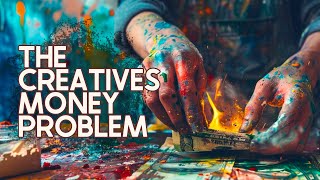
Lennon Bone breaks down why artists struggle to make money: they believe money ruins integrity, marketing is sleazy, or they're just bad at it. He reframes these as serving a mission, marketing that mission instead of the product, and treating marketing as a learnable skill.
Questions this video answers
April 8, 2024
stopthestarvingartist.com/secretpodcast
Chapters
You might be the kind of creative right now that is trapped in what feels like this constant cycle of content creation, dealing with ghost followers or, like, fake followers, and a looming fear of losing your artistic integrity while trying to still make some sort of money from the work that you create. It can be really easy to pour your love and respect into your work, whether that's music or visual art or poetry or photography. But when it comes to, you know, trying to make some sort of living, all the stuff that you hear all the time online just doesn't really fit. It doesn't feel quite right. So I want to offer that these things that you're facing might be the very thing that unlocks what you need in order to start really making money from the work you create. But it won't happen without, you know, facing some of these boogeymen and, you know, coming to the realization of what your opportunities are, what your options are. And that's what we're going to talk about today. This isn't just about making money. This is about really re sparking the joy of your creativity and implementing that joy into everything that you do, whether that's your social media plan, however you're marketing your work, you know, whatever you're doing to try and really get people to pay you for the stuff that you do. And I know there's gonna be some of you that are gonna watch this and say right away, like, you know, art isn't about making money. Some art is not about making money. Some artists want and need to make money. If you're one of those that, you know, you just are a staunch believer that artists can't make money or they're not artists, then you can just turn this video off. I really have no time for you. And that's okay, because the way I see it, you know, money is just a token of appreciation. And there aren't many higher compliments that someone can give you than to part with the thing that feeds their kids or pays their bills. And so I actually see it as a really huge form of gratitude and connection. So something we have to hit head on here is that success is not a linear path. I've often heard it say that. It's a jagged line, you know, and that's not always the thing that feels good. You know, we want it to be very linear. Upward trajectory, everything's in its right place. But one of my coaches said to me that if it's not working for your business, it might be working on you. And I found that to really be True for me personally, that the things that we come up against really are byproducts of stories that we tell ourselves that keep us from moving forward in a direction. And there are three big stories that I hear artists tell themselves and each other all the time that I really want to squash as best I can, because I think it's really important that to me, you know, my mission is to see more creatives in the world making money, despite the way technology is going, despite, you know, all the things that we see that are negatives. And I believe it can be done because there's still such an opportunity for creative people to connect with other people and. And get them to show their appreciation through monetization. And we'll talk about some of those things if you want me to, let me know in the comments, like how artists can monetize aside from just their work. But the first story that I hear artists say is, you know, if I start thinking about making money, my art will lose its integrity. If I start focusing on making money, you know, my art will lose its integrity. Now, this is somewhat true. You know, I'll actually get behind this a little bit, but not all the way. The first thing I'll say is, yeah, you're right. Like, you can't focus on making money. You have to focus on how your art is serving people as well as yourself. So there are camps that say, like, okay, if you want to be successful, you need to only make art that is commercial, that gets the attention of people. That's really easy to digest. And there are camps like Rick Rubin that say, like, no, just make art for yourself. And I actually believe that there is a place where those two things coexist. I'm not a big fan of, you know, one or the other, black or white. I think we want to live in those worlds because it's romantic, but it's just not accurate. And not to mention, you know, we have been as creatives, for lack of better terms, like brainwashed or gaslit, whatever you want to call it, into believing that what we do isn't going to make money. You know, and that's just a common story. Like, watch programs on television. And who are the artists that we see? You know, they're always broke, they're always struggling. Their friends are always making fun of them. You know, and we watch shows and we see business people, and business people are put as these evil entities because, you know, they have money. And those two things, like when you. When you are operating in the dichotomy of, like, trying to figure out how to. How to make money and how to be an artist. And those two stories are what you've been fed your whole life. It's no wonder that you're going to butt up against this. And so I'm going to suggest that rather than focusing on making money, focus on serving people. And you might say, lennon, well, how the heck does my art serve people? Well, it may not be obvious at first. This is actually what I teach artists to figure out. But what I always suggest in the interim, if you're trying to figure this out, is to ask the question, if someone interacted with myself as the artist and my art, what would I want them to get from that time with me? And then you start to think about monetizing the mission, not the product itself. The product is one way to monetize. But, like, if you're thinking the bullseye is the mission. For instance, like one of our clients, she helps make art that is for people that are neurodivergent and, you know, have sensory issues. And I love this because it's now around the mission, right? And so she's able to monetize not only products that do that, but she could go down the road of, like, talking more about the mission, talking more about these things, partnering with brands and things like that that align with the mission that she has. And so in that case, like, you're in integrity when you're thinking about serving and creating, completing that mission, as opposed to just trying to sell a product. Not to mention also, like, it just makes the marketing of it way easier because people say, yeah, I want to get behind that. Which brings me to story number two, that a lot of artists think that marketing yourself has to feel, like, slimy and salesy. And I think that has to do with the fact that people think marketing something or trying to sell something has to be ingenuous, you know, like. But what I know, and I use this analogy sometimes, that when I went to the used car lot, while the used car salesman gets a bad rap, I got a good one. And he said to me, like, hey, what are you looking for? What do you need? And how can I help you find that? You know, what do I want this car to accomplish for me? And instead of pushing me in a direction, he listened. And that's where I think the idea of marketing for creative people can be shifted. Because, you know, the best people that market to us are the ones that are really just listening to us, that they truly want to help us in some way. And you might say, like, well, I just don't want to deal with people. You know, I don't like being on social media because I'm an introvert. Like, listen, let's just face some hard facts. Like, you probably don't like being that way because you're afraid of what they might say, or if that's not the case and you truly just don't like dealing with people. If you are trying to make money from your work as an artist, no matter what you do, you're gonna have to deal with people. You know what I'm saying? And so, like, we either find a way to push the narrative so that you are excited about what's happening. And so, like, for instance, I'll tell clients sometimes, like, well, what would it look like if instead of social media, meaning you have to show up and, like, try to appease everybody or please everybody. It was like, every time I make a post, it's my opportunity to connect only with the right person, only with my ideal buyer or what we call our ultimate badass buyer, right? Like, what if that was what I use it for? And when you shift that story, it can change how you approach it, because the truth is, we're telling ourselves a story. Either way. You're either going to say, like, you know, I'll never make a million dollars as an artist, and that could be true, could be not true, or you could say, like, I'm gonna make a million dollars as an artist, and that could be true, or could be not true, but whichever one serves you the most is likely the most gratifying to you in your pursuit of happiness and success. Because success ultimately isn't even about the money. It's like, what is the money giving you? And the third story that artists tell themselves a lot is, I'm not good enough at marketing to be financially successful. I'm not extroverted enough. I'm not a good enough storyteller. It's essentially this idea of, I don't know what to do here. Of course you don't. Like, of course you don't. Of course you're not good at telling stories about yourself yet. Like, how much have you practiced that? Probably not that much. Of course you're not good at marketing yourself yet. Like, how often have you actually marketed your work? You might be making social media posts, but that doesn't mean you're marketing something. You know, there's a very big difference there. You might, you know, just. It's just understanding. Like, these things take time, and that's okay, you know, again, this goes back to this idea that if it ain't working on your business, it might be working on you. And that's a beautiful opportunity to say, and I really believe this for creative people, that when they embrace the idea of business, it gives them an opportunity to come up against the things that they grapple with the most. Their biggest fears, their biggest concerns, the biggest lies that they tell themselves. Like, getting over those things is worth more than any dollar amount you could ever make with any sort of business. And so that's why I'm such a proponent of this for creatives. And the other side of this is, you might say, like, you know, X isn't enough to make me successful. For instance, you know, I'll see people attach labels like this to platforms like, oh, well, TikTok is only for young people. And, you know, Instagram is the only place that artists are. But, you know, the algorithm's bad or whatever, right? We attach all kinds of meanings to all kinds of things to create opportunities for us to just really slow down and not do the work. And, you know, so what can we do here to reframe these stories again and ask yourself, like, what do I really want to see from this? Or when has the thing that the story that you're telling yourself not been true? Right? And what might the opposite of that be? And let that be the story that you tell yourself. And I talk a lot about how you don't make art. You are the art. And through this approach, you know, when this is the mindset that you're fixated on, there's no longer a comparison game or a concern, you know, because when you incorporate yourself along with the art in your marketing strategy, that's where people go, oh, this is what makes this different. So don't focus on making money. Focus on serving people. Focus on letting your art and yourself be of service to someone. Don't market yourself. You know, market the mission. Talk about the things that you want people to get from your work and twist the narrative, change the story you tell yourself. When it comes to you not being good at blank, right? Maybe you're already good enough. Like, you're exactly where you need to be. You're just constantly improving. And don't worry about whether or not a platform is the story that someone's told you or these tools that you have aren't enough. Like, those are just distractions. Focus on the things that you know are going to move you forward. So if you're trying to make money from your work and you feel like social media is exhausting. And these ideas, you know, resonate with you. I'm doing a free secret podcast training from April 8th through that week, 2024, and I'm gonna go over a lot of great information for artists who want to maximize their profits this year, and you're gonna find out how. Artists just like yourself, whether you're a visual artist, an educator, you know, a musician, a photographer, a poet, like, they're actually enjoying social media and making content and marketing their work. And because of that, they're connecting with folks. They're getting literally millions of views and making thousands of dollars because they figured out how to not put this crazy pressure on themselves to get the vanity metrics, and somehow those vanity metrics follow. And these are techniques that I've used to help literally hundreds of creators get, you know, millions of views and subscribers and to help a lot of creative people really generate some serious income from their work. Go to stopthestarvingartist.com secretpodcast if you want to get this free training, and if by the time you're watching this, it's not available, there will be another training there for you to check out. So check it out, and I will see on the inside.









