121 Minutes of High Ticket Sales Training from a $10M Closer (100% FREE)
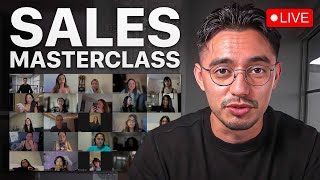
In this live training session, Alex Beck and host Lorelei Bayette field audience questions covering confidence maintenance, compensation structures, and negotiation tactics for high‑ticket remote closers. Alex introduces a "pattern interrupt" technique—changing daily routines (e.g., kickboxing, beach walks) to reset mindset on bad days and sustain confidence. He explains that a supportive team and proven system also reinforce self‑belief. When asked about alternative compensation, Alex clarifies that most sales roles combine a modest base salary ($5‑6K) with commission, while revenue‑share or profit‑share typically appear at senior (manager, CSO) levels. Equity is most common in tech sales, but it comes with vesting schedules and "golden handcuffs" that lock payouts to a multi‑year stay. For commission negotiation, Alex advises focusing on the company’s overall revenue and the earnings of existing salespeople rather than the percentage or tiered structure alone. He stresses vetting the offer and ensuring the business can generate sufficient sales volume. The session closes with Lorelei encouraging community building: she gathers Instagram handles, promises group chats, and promotes the "House of Influence" initiative to empower women in sales using Alex’s mentorship. The overall narrative blends mindset tools, practical compensation guidance, and post‑session networking to equip aspiring high‑ticket closers with both mental and financial strategies for sustainable success.
Chapters
I have spent the entire week putting 5 years and $10 million worth of sales knowledge into this 121-minute training, and I could confidently say it is the best sales training that exists on YouTube for remote salespeople. If you don't know who I am, my name is Alex Beck, and as a high-ticket closer, I went from being a broke restaurant worker to closing for Iman Gadzhi, where I became his top cash-collected salesperson ever. I've also worked and closed for the names of Alex Hormozi's Gym Launch, Charlie Morgan's Imperium Acquisition, a couple other notable names, which is all extremely impressive. But what I am most proud of are the people that I have helped make from anywhere from $10,000 per month up to $40,000 per month in commission, even if they're new to sales. All the frameworks, all the psychology, all the methods I'm about to share with you can be applied to any remote sales position. This is the exact path that took me from becoming a beginning closer to an elite closer in a matter of months. And truth be told, every business owner needs a salesperson who could apply this skill set to their offer or to their business. So if you want to become a top-performing closer or even if you want to land your first remote sales position, watch the entire video. And for those who stick around to the end, I have a special gift for you. It is the same gift that I gave Jay, who made $17,000 in commission this last month on his remote sales role. And take this information seriously because I do genuinely wish that I had somebody who gave me these pointers, these these tips, these tricks when I first started out with remote sales. And by the way, this isn't for people who are looking for get-rich-quick schemes or magic scripts. It is for the person who is finally ready to commit to the goals that they set out for themselves, which I'm assuming is you, or else you wouldn't be here at this point of the video. So without further delay, let's dive into the most comprehensive remote sales training that you will find on YouTube.
Thanks so much for coming today, guys. I'm really excited for today. We have a special guest. For you guys that don't know me, I'm Lorelei Bayette. I am co-founder of House of Influence, where we learn sales, branding, and networking so that we can be women of influence, of course. And so right now we have the sales floor open, and we brought in the master, the infamous Alex Beck, who has closed millions of dollars for Alex Hormozi for Iman Gadzhi. He has sales managers. Yeah, screaming, right? He has also trained me. He's amazing. So I want to bring him on so that you guys can actually get to $20K months, $10K months, $20K months, $30K months. Because whether you're just starting out or just curious or you've never done this before, or maybe you've been in this for a while, He has the tips to get you there faster because he's done it over and over again. So without further ado, Mr. Alex.
There you go. Well, thank you for, I guess, like the kind introduction here, but we'll kind of kick it off. Like the whole, whole way I structured this, by the way, you guys, is just to go over like the most logical path that you need to take to become a $20,000 per month remote sales rep. And so kind of start off with this, like, I mean, out of everybody here, how many of you guys are kind of ready to learn some sales skills and sales training that will level up your income with sales? If you can, if you are, put a 1 in the chat. There you go. Okay, cool. And so out of everybody that put in 1 in the chat, how many of you guys are ready to, I guess, implement these ideas once I do share them with you? We could put a 2 in the chat for that one. Okay, there you go. The chat's looking good. So, um, with that being said, you guys, I'm gonna ask you guys like a lot of questions today, like probably more questions than you've been asked in the past couple months. But reason being isn't necessarily so I could get through the training. It's more so to get the training through to you, right? And so one thing I'll say, has anybody here ever received like a valuable piece of feedback Um, whether it's from like content or like a mentor and so forth that you totally forget to implement, and then it kind of goes to waste. I'm sure some people have, right? So let's avoid that today. If you guys can, like anything that I say that you find valuable for you, take some notes on it. That way you don't put yourself in the position to where like you hear something valuable for yourself that you forget to implement that could at the end of the day progress your sales skills. Right. So a little bit on me. I've done over— I've contributed over $10 million in sales for people like Alex Hormozi, Iman Gadzhi, Charlie Morgan, to just name a few. Do you mind if I like humbly brag a little bit? Right. Okay. So you guys probably see all these people online, like the Shelby Saps, for example, that are flexing these, you know, really nice lifestyles of traveling and the nice cars and so forth. Uh, which is really cool to see. Now I will say for like the people that I've worked with, you know, I don't know if you're affiliated with Iman and so forth, they do the same thing. And when I worked for these guys as a salesperson, the sales that I made has made up a good chunk of their net worth that they kind of have today, which is cool, right? But what does that mean for me? And what does that mean for us as people in the remote sales space? You know, it essentially means that we could take advantage of this creator economy, whether it's working for like a B2B business or some type of influencer to sell whatever product and service that they have. That way we could achieve time freedom, location freedom, financial freedom, and so forth. You know, so what I will say with that too, the way I've always looked at sales is like the purpose of selling isn't to just be in sales for the rest of your life. It's to make as much money as possible in a short period of time. So then you could take that money and reinvest it back into yourself to get out of sales and do something bigger, you know? And so that's exactly like the path that I've taken that I'll talk about with you guys. So I, I've turned like a 2-hour training and jam-packed it into like 30 minutes. And essentially what I'll talk about, um, are the top 3 things that you guys need to follow in order to get to $20K per month as a remote salesperson as fast as possible. Right now, as for myself, like how I got into this and got into this position, um, God, it was 5 years ago. I pretty much found out I was having a daughter. I was pretty young. I was doing like random odd jobs, minimum wage type work. And I always knew that I wanted to do something kind of bigger for myself and earn more money. I think having the daughter was the catalyst for me that made me realize I gotta make something happen quick. So I hope none of you guys need to have a kid in order to, you know, take action on whatever your vision is. But because of that, it made me start trying different things in the online space. And the first thing that I looked at was sales. I actually got into door-to-door sales for a couple weeks. Has anybody ever done door-to-door sales? Could someone type in the chat if they have?
Yes, it's a pain.
Yeah, it's to say, to keep it PG, it's a pain. Yeah, we'll put it this way. I lasted 2 weeks, right? And so I've heard of all these, you know, if you search on Google right now, what is the average income of a salesperson? It'll be anywhere from like $60,000 to $80,000 per year, which really isn't much. Like you could do that at, you could become a phlebotomist, right? And which is a person who draws blood and make $60,000 to $80,000 a year within a couple of weeks. And so for me, the question was like, hey, how the hell are, you know, all these people making money? Yeah, I'm in sales and I'm not making as much. It wasn't until I made the pivot to working for Gym Launch, Alex Hormozi's company, where I was really able to level up my income, not only myself, but also be surrounded by salespeople that are making $20,000, $30,000, $40,000 per month. I was able to learn a lot. I was able to grow a lot, obviously changed my life, put myself in a better position and my daughter and so forth. Right. And so through all of this time, let me screen share with you guys. Um, okay, so I'm horrible at using Canva, by the way, right? Um, so the two questions that always popped up for me, right, with becoming a $20K per month remote closer. Number one is, what is the actual quickest path to earning life-changing income with remote sales? First and foremost. Number 2, is us doing well in the remote sales space really based off our skill set or is it based off our offer? Right? Because I know 10-year sales veterans and maybe you guys do too, car salesmen, all these different things that aren't making much money. Yeah, I was only in sales for 6 months and I was able to get to $20K per month. Right? And so in this training, I'm gonna go over all of this stuff, and these 3 steps will answer a lot of these questions, right? So step number 1 is, okay, actually landing an offer that has $10,000 to $20,000 per month potential, first and foremost. Number 2 is the key to succeeding on your first close call right away, which is super important. And number 3 is how to actually minimize objections that you receive on a sales call, right? A lot of people, I think even Lorelei, when I first started working with her, that was probably the immediate thing that came up was objection handling. When realistically, if we master how to get rid of those objections before happening, then we don't have to deal with them in the first place, right? So these are the 3 steps that we'll go over and we'll kind of jump into the first one. Is this making sense for everybody so far? Okay. And I want to cover number 1 first, landing an offer, because I do think this is extremely important. Has anybody in here ever worked on a remote sales offer before? Let me actually pull up the chat. Okay. We got a couple yeses. Has anyone ever worked on a bad offer? Meaning something where they're not making money, where everything is a mess, they have no systems, they have no training, they throw you in and they kind of give you the thumbs up and good luck. Yep. The struggle is real. Yeah, I mean, that's what we want to avoid, right? In large part, I'll be very honest with you, like you doing well with remote sales is 60 to 70% based off your offer. I always say you doing $10,000 a month with remote sales is all based off your offer. You doing $20,000 and $30,000 and $40,000 and beyond is all based off your skill set, right? So first we need to find the vehicle that's actually making money. And then we improve our skillset that way you could take that $10K a month income to $20K, $30K, $40K and beyond. Right. So let's kind of jump past this really quick. So step number 1 with landing the offer, there's one thing that we'll go over here is kind of the company hierarchy for what you guys will find for online remote sales roles. Uh, and it starts from the bottom, right? Meaning, you know, a majority, a good chunk of companies, probably 50% that you'll find are all making less than $200,000 a month. Next up, we have the companies that are doing $200K to $500K per month. From there, the companies that are doing $500K to $1 million per month. And then finally at the top, we have the ones doing $1 million plus or $5 million plus per month in monthly revenue. Right now, with that being said, as far as what we're looking for in a company that we want to work for, that's waste our, that's worth our time. Because our time is valuable, whether you're new to sales or whether you've been in sales for a while, is a criteria that we find on the left, right? So a company that's doing at least $200K per month, they have a proven offer, meaning the marketplace is already buying the product. It's not something where it's like, hey, you know, we're just starting this, it looks cool, this might work, you know, we plan on scaling it over the next couple months. None of that, right? We want something that the marketplace is already buying. For example, when I went to Gym Launch, they were already doing, I think, $3 million a month with their biggest months doing $10 million plus, right? So you could see why I was able to go in there and succeed right away because they already had a system that was working. They already had step number 3, which is they had sales reps that were earning my ideal range of income. But on top of that, they also had a training system to ramp me up on my role. You know, I didn't go in there with much sales skills, but because I went to such an established company, listen, these guys had a training system, they had closed call recordings. Uh, I was doing one-on-ones with the sales manager. They were doing role plays. I had the support and they basically positioned me to succeed. You know, so number 4 is a training system to ramp you up on the role. And number 5 is a strong marketing phase. So if there's one thing to take away from this, Our job as remote salespeople is two things when it comes to us finding a good role. It's to number one, pick the best entrepreneur to work for, but more than anything, it's to pick the strongest marketer, right? If someone could let me know, as salespeople, how are we making money? Through closing deals. Right. And I'm sure someone typed that in the chat right now. Right. So we're making money through deals actually closing and the company making money. In turn, we need to be on an offer that has strong marketing somewhere where we're not showing up to zero leads or zero people want to buy the product. And so now that I'm looking back at the past, like 5 years of my life, it was a little bit of luck, but going from Hormozy to Iman to Charlie Morgan to Thach Nguyen I was attached to strong marketers across that entire way. And so it makes sense as to why I was able to take 8 calls per day of people who wanted to buy the product and able to succeed with sales. You know, so one question I'll ask you guys, based off this criteria, what is the worst level of company that we'd want to work for? If you're looking at this 4-level hierarchy? You could type it in the chat. That's fine. A lot of people saying bottom 2, right? So one with no structure, obviously the bottom. You know, if we're going to a company that's making less than $200K per month, chances are they don't have a proven system. They're figuring shit out, right? A lot of times they're inconsistent. They may have had their biggest month at $150K, but they average about $30K to $50K per month. There's a lot of growing pains that we're going to experience as salespeople, a saleswoman going on to those offers. And so we want to avoid that, right? Why not go into a system that's working, a place that's going to set us up to succeed, but on top of that, set you guys up to have a good experience with sales? I know, listen, everyone's here to learn about sales. Did anyone ever think when they were like 15 or 16, you know what, I'm going to be doing as a however old you are, 25, 26, 30-year-old person, is be on a Zoom call learning about becoming a salesperson. I know I did it, right? I never thought that sales— sales is not a sexy thing at all. And I know damn well if it wasn't for me having a good experience with Gym Launch, I probably wouldn't be sitting here talking to you guys in the first place, right? And so don't put yourselves in the position to have a bad experience of sales because there's a lot of money to be made. It's all about finding the right company to work for and then going to step number 2 is actually vetting the company. But I'll give this example first, like Victoria Havens, she's doing about $13,000 to $16,000 per month with remote sales right now. And the reason why I show this to you guys is when we first started working together, I asked her for the damn company logo for the real estate offer she was on, but she couldn't even remember. But she was working for some random real estate offer. They were making $50,000 to $100,000 per month as a company. She was the only closer on the team. And reason being is because every closer that joined quit, which is why they hired Victoria in the first place, because they needed another closer. On top of that, they gave her no training, no script. It was a generic offer and they had poor marketing, right? I helped her land an offer for the Wing Girl Method. This is like a dating offer, which is decently unique in the marketplace, but they're doing $800,000 to $1 million plus per month. There's a team of 6 closers. The top closer is doing about $18K a month. The bottom closer is doing about $10K. It's a unique offer. The company's existed for a couple years, meaning they have proof of concept, they have strong marketing, and Victoria was able to switch over to this new offer without changing much of her sales skills. Of course, it's improved over time, But she essentially went from like doing $3,000 to $5,000 a month with this real estate offer and having a bad experience to doing $12,000, $13,000, $14,000, $15,000 a month, you know, without changing much. And so it's like, why is that? And it's because she went to the right offer, you know, and now her skillset is gonna matter to get her beyond that, beyond the $12,000 to $15,000 a month. But all that to say, your offer is what will get you to $10,000 a month. Your skillset is what will build you past $20,000. Is this making sense so far? Cool. Awesome. Now we'll go to this next piece. How do we find these companies, right? So I'm talking about finding a good offer, how important it is, but now it's like, okay, Alex, that's cool. How the hell do I actually find these companies to work for? And so there's a couple ways that you could find these companies. Number 1 is strong sales pipelines. One thing I'm gonna do, just remind me at the end of the call, I have a couple like custom application links for these sales pipelines that I'll send to you guys. That way you could just use them and apply to them. But essentially sales pipelines are companies that are like sales consulting companies or, you know, maybe sales agencies. They work with businesses to help them make more money and grow their business through sales. A lot of them have you know, 10, 20, sometimes 50 different offers that are making well over $200K+ per month that are looking for closers and setters. And the way these sales pipelines work is if you apply to them, and as long as you do well on that first interview and they give you the green light, they'll start sending you 3 to 5 offers per week via email and say, you know, hey Lorelei, we have this company doing X amount per month. Here's their website. Here's how much closers are making. If you're interested, respond back to this email and we'll get you hooked up for an interview. You know, so whenever I have anybody that's trying to get into remote sales, the first thing I do is get people into strong sales pipelines. And I'm sure all of you guys could attest, like, no matter where you're at with sales or if you're on an offer, having 3 to 5 offers sent to you via email every week is never a bad thing. You know, so that's number one. Strong sales pipelines. I'll give you some links for that at the end of the call. Number 2 is sales groups that help with placement. There's obviously a lot of them out there, but you know, you really can shortcut your process by being a part of different like sales groups or if you get into the right program, you wanna make sure you vet it correctly because if you get into the right program, they could really shortcut that process for you with getting a good role and essentially helping you guys with placement. Right? So that's number 2. Number 3, I'd say, is connecting with recruiters. Number 4, unique outreach strategies such as using the Facebook ad library. Okay, this is one thing I've talked about on YouTube. I don't know if anyone's ever seen it. Maybe not. I could send it over at the end of this, but you could essentially pull up the Facebook ad library. You know, could someone sound off on like an industry that they're interested in? Whether it's like fitness, um, health and wellness, health and wellness. Okay, so health and wellness. If you were to pull up the Facebook ad library and search health coaching or wellness coaching, what will pop up are all of the companies that are dumping a lot of money into ads right now to scale their business that are offering some type of health and wellness niche type of service for people to buy into. Right? And so just by typing in the industry you're interested in, they will flood you with tons of opportunities where you could go on their website, go on the careers page, go ahead and apply, uh, and start marching through the process with those roles. So I have a video that breaks that down more in detail that I'll show you. Lastly would be LinkedIn. Uh, LinkedIn, you could get a lot of good roles as well. I'd be wary with that. And the thing I'll take you to with this next slide is how to actually vet these roles because you could find good roles on LinkedIn. You could also find horrible roles on LinkedIn. I was speaking with someone, I think her name is Noe. I think she's in here. Um, who I'm kind of working with right now to help her find a good role, help her grow with sales and so forth. She found a role on LinkedIn, but it wasn't the most ideal opportunity. And so when we look at how do we like mitigate mistakes and wasting our time on a good sales role, it all goes into this slide, meaning how do we vet these opportunities, right? Vetting a company is extremely important, you know, and we vet them to once again not waste our time and make sure that we're going into a place that we feel aligned with where we can make money and so forth. All right. So is this making sense so far for everybody?
Cool.
If you guys have questions too, type them in the chat or save them to the end, and then the last 30 minutes I'm gonna sit here and answer any questions you guys have. But when it comes to vetting these offers, number 1 is we need to vet their funnel, meaning their landing page, their website. Number 2 is vetting their marketing angle. Do they run ads? Is it only organic content? How are these people getting leads for the business? And obviously we want to make sure their marketing angle is good. You know, if we look at Victoria's case on that real estate offer, it was only organic marketing. Mainly the guy posted content about real estate that got people to come in and purchase his real estate package. But if we looked at his social media, he had like 5,000 followers, you know, so it's like, hey, obviously something's not working. And that's a red flag for us that we want to avoid. Number 3, and most importantly, is exploring their testimonials. We do wanna make sure we're selling an offer that we all believe in. At the end of the day, conviction is super important, you know, and we don't wanna sell something that at the end of the day doesn't work, that we don't believe in, or else we won't have confidence on sales calls and it'll be difficult to sell. People could read through confidence through how you ask questions through your aura on a call. So exploring their testimonials is number 3. I'd say number 4 is checking their careers page on their website. A lot of companies have this and they'll just break down the exact on-target earnings and compensation that people are already making on their team. Now, number 4, this is by far most important, is to ask good questions on your interview, right? A lot of people skip out on this part. They think it's weird to ask a company, how much are you guys making a month? How much are closers making on the team? Can you show me proof of how much closers are making? Right. And when you think about it, like, we get paid commission only a lot of times. Sometimes we're getting a base salary as well, you know, so we have every right to make sure that we're making the right decision for ourselves when going on to a company. So on the next slide, I'll talk about these questions that I always ask. So when it comes to interviews and asking questions, you have 3 goals with asking interview questions. Number 1 is to find out if the company is a good fit for you, first and foremost. Number 2 is to show your expertise in your respective field. Closers, setters, they ask good questions. Good salespeople ask good questions, period, right? And so if you're able to ask good questions about the company, how they work, how they're marketing, how they're getting leads. It frames you as an expert with the call. Right now, number 3 is to come from a place of experience and curiosity, not neediness. You know, and this is something a lot of people sleep on as well. Like, I'm sure a lot of you could attest. I don't know, what's a good example? Maybe if you were ever looking for like a boyfriend, Right? I'm sure you guys have realized that in a lot of ways, the times where you're actually looking for a boyfriend, it's like a lot harder to find somebody versus the time where you have like zero need for a man. And then all of a sudden it seems like you have a ton of options sitting right in front of you. And so that's like the energy you want to carry on your sales calls, but also on your interviews as well. You know, as in, hey, I am here to make sure you guys are a good fit for me as much as you are here to make sure I'm a good fit for you. Right now, as far as the questions that I asked, I didn't want to turn this to an hour-long training. So again, remind me at the end of this, I have an entire document of the exact questions that I ask on interviews, but it's super simple, right? I mean, essentially we want to make sure they're making at least $200K per month. And then we also want to make sure the sales reps on the team are already making our ideal income. You know, and last point, sometimes I'll ask is for proof. That's not weird to ask at all on an interview, as in like, hey, listen, I'm a grown adult. I have bills that I need to pay. Obviously, this is commission only. Are you open to showing me proof or pay stubs of what the salespeople are already making? Just because that would make me so much more confident to take this leap forward and take like this calculated risk. Right? A lot of people forget that. I ask that damn near for every single company I apply to, and it makes me feel so much better when they show me a pay stub of like 5 different closers making a lot of money. It makes it a no-brainer. I don't even have to question myself, right? I just march forward. Is this making sense so far?
Cool.
Awesome. I'm reading the chat here as we go. Now, with that being said, now that, uh, we kind of found out how to find a good company and what that really looks like, number 2 is actually succeeding on your sales call. Now, if you do the steps correctly, you should now be on an offer that's making at least $200,000 per month. They have sales reps that are already succeeding, they have strong marketing, and they have a training system to ramp you up on your role. Meaning they give you scripts, they give you closed call recordings, they give you role plays, right? There's a sales manager that's meeting with you one-on-one to make sure you succeed on a weekly basis. They're doing call reviews with you. So if we're looking at this and there's a salesperson on this offer you just joined that's doing $20,000 per month, ideally, if you mimic the top performer on the team and copy literally everything that they do, his framing, his questions, his pitch, Ideally, you should succeed, right? Because you're just mimicking a system that already works. Does anyone, would anyone think that, right? If you mimic the top person on the team, you'd succeed? In some ways, not always, right? And reason being is it's not really about what you say. It's always about how you say it. And so for everybody here, is there anyone, if you could put in the chat that you're currently watching right now, whether it's sales trainers, I don't know if you guys watch Hormozy that talk about like objection handling or anything along those terms. Could you type out like a name in the chat? Lo Silver. Okay. I know Lo. Okay. Hormozy. Matty Sells. Funny enough, I trained Matty Sells. Jeremy Miner. Okay. Hormozy. Cool. We will roll with Hormozy right now. One of Hormozy's like famous lines for objection handling if anybody has seen this, is it doesn't take— when someone says, I need to think about it, I need some time, he says it doesn't take time to make decisions, it takes information. So what information do you feel like you're lacking that way you can make a decision today? I don't know if you've ever tried this, but I have tried that on sales calls. It does not fucking work for me. Right. And so if you're looking at all these people, or maybe you've heard objection handling scripts before and you've tried to implement it on a call, And you're like, hey, I said exactly what that person said and it worked for them. How come it didn't work for me? And it's because it's not about what you say, it's how you say it and who you are on the call. Hormozy could probably say anything and handle the shit of an objection and get somebody to buy something. And it's because who he is as a human being, it's how he shows up to a call. It's his confidence on a call. It's how he says something. It's not exactly what he says. Right. And so a couple key points I'd say with this is, you know, sometimes who you are as a person speaks so loudly that people can't actually hear your words. You know, meaning the best sales reps that I've ever seen, there's like a commonality. The biggest commonality I see between all of them is they all have unshakable confidence. Number 3 is the best sales reps are always aligned with themselves out of work. And what I mean by that is they understand that they can't lead other people to make a decision if they can't even lead themselves. You know, sales really is just leadership and all of you guys are girls and you have a lot of things that are on your side with sales, obviously. You know, I told Laura like this when I first started working with her, but every team that I've been to, there's always a few women sales reps that are doing better than everybody else. And it's always make me question why, right? And I think a lot of it does have to do with like natural gifts that are given to them with getting on the call. They're, they're naturally trustworthy, right? You guys have good energy. You're, you're better at listening, uh, better looking in a lot of ways, right? And so with that being said, people come onto calls and naturally gravitate and, and trust you guys. And so you could utilize that to your advantage. But at the end of the day, since sales is leadership, you need to be good at leading yourself outside of sales. That way you could come onto calls and be a leader and guide people to make decisions. You know, is anybody here in sales? I know I've asked this. Is anyone on an offer already? Yes. Okay. So like Brianna, for yourself, how often are you speaking with people about their goals, their vision, and You know, getting them to commit to their bigger picture for themselves. Every goal.
All the time.
All the time. Right. And like, maybe you're better at this for yourself, but how often are you having those conversations with yourself on a daily basis and like really breaking down your goals and what's important to you and then actually committing to the thing?
I don't think it's a daily thing. I'm starting to do it daily, but I think historically it's been like maybe once a month.
Yeah, that makes sense. I mean, it's an odd thing, right? We're spending all this time trying to talk with people about their goals, what's stopping them. Let's commit to them. Let's commit to your big vision. You could do this. But for a lot of salespeople, most of them that aren't breaking past that $15,000, $20,000 per month, it's because it's more so about like the internal work outside of sales and them not being aligned with themselves that allows them to come on the calls and have that conviction. And get people to follow their lead and buy from them. Right. So to really wrap this up, the best sales reps could literally say anything and close the deal because it's not about what you say. It's always about how you say it and how you show up to the call. So yes, if you go to a good offer, yes, they'll have a salesperson that's already making a lot of money. Yes, let's mimic the shit out of them. Let's not reinvent the wheel. But at the same time, if you lack that confidence in yourself because you're not aligned and You know, you feel like your personal life is falling apart outside of sales. It doesn't matter who you mimic or what you do. People won't respect you. They won't buy from you. They won't see you as an authority. Is that making sense for everybody? Okay, cool. With that being said, exercise. So this is something I even had Lorelei do, but I have everybody do as soon as they come into working with me with like any sales training or coaching or landing a role. It's really, I mean, it's very simplistic. You know, step number 1 is to describe your perfect day of growth. This doesn't mean that you sit here and create random stuff that you want to do with your day to feel like you grew as a human. It's more so like, hey, if you spend 5 minutes, you could probably list off 5 to 7 things for yourself to where like, this is my perfect day. If I accomplish this, I'd be proud of myself at the end of the day and go to bed knowing I've done everything possible to grow as a human being. Right? Maybe it's like going to the gym that you've been putting off for a while, reading the book that you promised yourself you'll read, or spending more time with family, or whatever it is, right? Write those things down. And step number 2 is to actually schedule it in your Google Calendar with time blocks and have it be a repeating event for yourself every single day, right? And number 3 is to actually stick to it. Like live by your calendar. I, my Google Calendar, I'll show you guys. I, I absolutely live by this thing and it's extremely simple. I don't have anything crazy on it, but I have my wake up time, the time I'm going to the gym. There's a book that I'm reading right now, Think Like a Roman Emperor, that I try to read on a daily basis. I have my eating times because eating is something that I've, I've always fall apart on with not eating consistently, and then the time I spend on my daughter. And at the end of the day, I do a day prep, right? But what this allows me to do is not only be genuinely kind of proud of myself as like a human being, no matter what happens with my day, but it allows me to be detached from the outcome of sales because I know I had my perfect day regardless of what happened on sales calls. And it just allows me to carry that energy onto calls. So again, that exercise, just 3 steps, right? Number 1, like, hey, what is your perfect day of growth? That doesn't mean we create random things. Write down all the things that you've been promising yourself that you're slacking out on. Number 2 is to add it to your Google Calendar. Number 3 is to actually stick to the thing. Right now, with that being said, my tips with getting to $20K per month with remote sales. Number 1 is finding a good offer. Number 2 is mimicking the top performing rep on the team. Right. Copy everything they're doing. They'll give you call recordings, they'll give you their script. Let's mimic it. Let's not reinvent the wheel. Number 3 is to get aligned with yourself outside of work. Number 4 is understanding how to preempt objections, which I'm about to cover on the next slide, and how to ask closing questions. But the last and number 5 and finally is to put yourself on a continuous feedback loop, meaning have somebody sit with you and give you tactical feedback, preferably on a daily basis. You know, if you look at any famous athlete, does anyone follow any famous athletes or like have a favorite one that you could toss in the chat? Steph Curry. Okay, we'll roll with him. I could guarantee with Steph Curry becoming, he's at the pinnacle of sports, right? The pinnacle of his respective field. And a large piece, you know, a huge part of him getting to where he is now is being on a continuous feedback loop for the past X amount of years. If he takes a shot, if he plays a game yesterday, somebody is there to let him know, this is what you did wrong. Let's implement this feedback. He implements it and he improves and wins and You know, succeeds with this next game. And so it's the same thing with sales as well, like video modules, all this training could only get you so far. You definitely need the feedback loop as well. Right? So how do we put ourselves on a continuous feedback loop? Utilize your sales manager. A benefit of going to a company that is thriving already is that they have sales reps that are seasoned and actually give a shit about you succeeding. Right? Every company that I've gone to that's making at least $200K per month, usually a lot more, they have a sales manager that's been there for 10, 15 years that's sitting there meeting with me every week, checking in with me. Yo, how'd the call go yesterday? What came up? Okay, let's jump on a call this Friday and review that call together and make sure you know how to deal with that objection next time. Right? Sometimes it's not always your sales manager. There's a lot of different ways to get it. Different mentorships, sales groups, programs. That way you could progress quickly. You know, ideally, if you could get one call review per day from somebody who's already gone the same path as you, you'll just 10x your growth in sales within a few months, but also prevent yourself from getting fired, right? Like, I'll be real with you. The downside of going to these big companies is that since they're making so much money, they want you to make a lot of money. That way they continue making money, but also so you do well with sales. Right. And so a lot of them are very quick to hire and they're quick to fire, meaning they want to see quick progression over a couple of weeks within the first month. That doesn't mean you need to be perfect starting off, but they want to see you progress quickly so they know it's worth keeping you on the team. So being on that continuous feedback loop is how you make yourself have a good, successful experience with sales. Beautiful. Is that making sense? Oh yeah. Awesome.
Cool.
We'll go to the next slide. Okay. I forgot I added this one. This is Jay Lefever. Okay. So Jay, for example, funny enough, he had a similar story to Victoria. Victoria or Jay actually was working on an Amazon FBA offer. He jumped on an Airbnb offer, so he got on the Amazon FBA offer before we started working together. The Airbnb offer was doing over $1 million per month that I helped him land. And it was the same thing for Jay where like, hey, he didn't really, I didn't spend much time with him to progress his sales skills as of yet. And he went from making like $6K or $7K a month in dealing with leads that didn't want to buy his product. They were hard to sell versus this Airbnb offer where he had people that were already genuinely interested in the product. Right. But on top of that, having them on, I mean, you could see how packed his calendar is. But having them on that continuous feedback loop and meeting with them on a daily basis and doing call reviews and role plays just helped them progress a hell of a lot faster. You know, so continuous feedback loop, super important. But step number 3, or let's do this for everybody in here. Could you give me like a 1 in the chat if this is making sense and if this is helpful for you so far? Okay.
Cool.
Awesome. Feed my ego. I'm kidding. Step number 3, minimizing objections, pre-handling objections and closing questions. Okay, so when objections come up, the best thing you could do is pre-handle the damn objections from happening in the first place. Right? And so this is the same thing I covered with Lorelei where she came in, I need to learn how to handle objections. And I said, no, you don't. You need to learn how to pre-handle them first. Okay, so let's look at this next slide. Common objections that you receive are on the right here. I need to think about it. I need to talk with my partner. I'm pretty sure Indy, I saw a text message before this. She's on a fitness offer, texted me earlier today and said that she needs to figure out the I need to think about it objection. Other objections are, hey, I don't think this will work for me, or I can't afford it, or I'm too scared to spend the money. And that's really pretty much every objection you receive. They'll fall under this category, right? You don't really receive anything outside of these 5 objections here. Now, a few things I'll say with objections is number 1, they are created through how you ask your questions and how you present yourself on the call, which is why step number 2 of this training is so important. You know, a customer or a potential client could come in ready to buy something and you could have the most perfect script in the world, but if you're stumbling all over yourselves, you're lacking confidence, you're not aligned, you're nervous, you're kind of shaking, you're hugging yourself on the entire call, I could guarantee you will create an objection that was never gonna happen in the first place, right? So objections can be created on your call, which is why going back to section 2 of this training is super important. Right now, number 3 on this bullet point is objections can be pre-handled. And another thing to add into that is objections are like zombies, right? And zombies are loud, meaning you want to kill them before they bite you at the end of the call, right? You could tell if you're on a call with, you know, let's give a random example here, a You know, let's say a young person, if you're speaking with somebody that's 20 years old and they're selling a, you're selling a $10,000 product, you could kind of guarantee that they're probably gonna be a little scared to spend $10,000 at the end of the call. So why wait till the end of the call for that? Hey, $10,000 is a lot of money. I don't know if I wanna do this and have to fight an uphill battle rather than dealing with that objection during discovery. And it's just having a transparent conversation. Like, I would literally— my best prehandle for a 20-year-old that's buying something expensive is like, hey man, you're pretty young. Does this make you nervous jumping into something new or investing into yourself in this way? Okay. Yeah, it's normal to be nervous, man. What do you need from our team that way we could get you past those fears and make you feel like you'll succeed? Right. Lay out for me what you need so you're not fearful. Well, I need X, Y, I need Y, Y needs Z. Okay, cool. If we could give you those things, is this something that you'd be ready to move forward with today? Which is a closing question, right? Not only is it important to find out what they need, it's important to tell them we could give you those things if we can. Could you start today? Right. So we'll kind of dive into each objection here. So what I did on the left, I put the objection. What I did on the right was I put the pre-handle. Okay. So something like, I need to think about it. The way you pre-handle that is by asking similarly to what I said earlier, right? So, hey, listen, if we could get you to XYZ goal and help you solve XYZ problem, is this something that you'd be ready to move forward with today? Right? Okay. Yeah. Hell yeah. If you guys could help me make X amount of money and solve this problem I've been facing, I'd be willing to move forward with today. Okay, cool. Why now, if you don't mind me asking? What changed to why now we're having this conversation? Well, I'm really tired of this. You know, I really need to figure this out. I've been putting it off for so long and so forth. Okay, beautiful. And then I would dive into the yes, no, or maybe frame. Does anyone know what the yes, no, or maybe frame is? No. Okay. Courtney, no. Elena, no. Awesome. So I'll break it down. The yes, no, or maybe frame, super simple. Once again, sales is really having a transparent conversation at the end of the day. So, you know, it's a little weird if you don't want someone to say, I need to think about it. Why not just tell them that we don't want to hear, I need to think about it. And so that's what the yes, no, or maybe frame is, you know, meaning one thing I'll do before I pitch a product is I'll ask people, You know, hey, first and foremost, we could get to XYZ goal. Do you mind if I share how we're going to do that? Which is permission to proceed. Yeah, 100%. You could break it down to me. Okay, cool. Really quick. You know, Lorelei, I know at the end of the call there's really 3 things you could say. Either Alex, hell yeah, let's do this. No, which I want you to know I'm 100% okay with the no. You know, we're both adults here. The one I do want to avoid is the, um, let me think about it, let me speak with my dog about it, or ask my neighbor, hahaha, you know, just because that's usually a nice way of saying no. So is it okay to keep it between a yes or a no, right? If you say it that way, everybody will say yes. And ideally what we're doing is pre-handling that I need to think about it and keeping it between a yes or a no on the call. And you'd be surprised, there's been so many calls that I've closed, and I'm sure Lorelei's experienced this too, where I've gotten to the end of the call and they say like, hey Alex, listen, I'm usually the type that wants to think about things, but this feels right. And I know you said you want a yes or a no, so screw it, let's do it, right? Simply by just pre-handling that objection before it happened in the first place. Is that making sense so far for I need to think about it? Can I get like a One in the chat. Okay, cool. Oh yeah. Now let's move on to objection number 2. I need to talk with my partner right now. This is a less common objection that I receive, and it does depend on what you're selling, you know, and who your ideal avatar is. But it's the same thing with this objection. If you don't want to deal with it at the end, why not just ask the question in the middle of the call? Right? And simply say like, you know, hey Lorelei, I know we're selling this fitness offer. How does your husband feel about you like wanting to lose 20 pounds and get back to your goal weight from when you were in college? Yeah, he's really supportive. Like he wants to see me do well and so forth. Okay. Number 2, does he need to be involved and be on this call today so you can make a decision and move forward with our team? No, he doesn't. I can make this decision on my own. Okay, are you sure? Just because, you know, I want to respect, you know, you guys and your relationship dichotomy. Yeah, 100%. I can make this decision on my own. Right? Ideally, what we're doing is squashing that bug or killing that zombie before it shows up at the end of the call. You know, and I'll let you guys know too, pre-handling objections is really like an 85-90% success rate, meaning objections could still come up.
Right?
You could say something is $10,000 and someone be like, listen, I told you I didn't need to speak with my husband, but now I do because I didn't know it was $10K. So I'm going to have to have a conversation with him. Right? And so you will need to handle that objection once it comes up at the end. But ideally, this should get rid of 80 to 90% of the objections that you receive to where it's just a simple like, yes, I feel like this will work for me. Let's do it. Or no, it won't. You know, so let's move to number 3, cuz I have a couple listed out here. I don't feel this will work for me. This can be common that you receive on calls. And so the pre-handle is pretty simple. You know, number 1 is what do you, asking somebody simply, okay, cool. Lorelei, you want to get down to your goal weight from college. Let me ask you, what do you feel like you need from our team that way you could see that success and and get to that goal? Well, what I really need is someone to hold my hand, create a meal plan, and tell me what to do at the gym. Okay, cool. So if we could give you all of those things, do you feel like it'll get you to XYZ goal, and would you be ready to move forward today? Right? So I ask the pre-handle question, and then I follow up with the closing question. Is that making sense? Right? So instead of waiting for that to happen at the end, let's just ask them Hey, what do you need to get to XYZ goal? Basically, what do you need from us so you feel like this will work for you? Why I need A, why I need B, why I need C. Okay, if we could give you those things, is this something you'd be ready to move forward with today? Yeah, 100%. If you could provide that, I'd be ready to move forward with today. Okay, cool. Why now? Right. And so we're just squashing these bugs and killing these zombies all throughout the call. That way they don't pop up and bite us at the end. Now, I think this is the last slide. I'll double check. I can't afford it. This may be something I know Lorelei shared a couple screenshots with me that some of you guys are experiencing, maybe disqualified leads or, you know, maybe people who can't financially afford what it is that you're selling on calls. The first thing I'll say is that's in partly why you want to go to a good company, right? You could bet your ass if a company is making $500K per month or more, they have a pre-qualifying process dialed to the tee, right? They have application questions that's going to ask a prospect, do you have X amount to invest? They have a setter that's going to dial them and say, hey, do you have X amount to invest? That way, by the time they get on a call with you, they've weeded out anybody that is disqualified before you actually speak with them so you don't waste your time. Right now, obviously sometimes it's not perfect and you'll still get leads that are disqualified, or maybe you're on an offer where you're getting DQ leads right now. And so it's the same thing. Simply, if we want to find out if someone wants to afford something, you know, I would ask like, hey Lorelei, listen, you know, obviously everything we do here is customized. Just so I don't create you a meal plan with Wagyu steak, how much do you have set and saved to the side for your fitness journey to lose that weight that you've been wanting to? Right? Well, I have X amount currently, right? If they say, well, I got $3,000 and that's enough, you say cool and move on to the next point. If they say I got nothing, right, then we're going to sit there and stay on that point to either find out, do they have money? Do they have credit? Do they have something they could figure out or not? Because if not, I'm going to kindly take them off the call so I don't waste 45 minutes of my time. Right? In my opinion, sales is a lot like kind of chess. Chess, the board game, right? Chess. And it's definitely not fun to get to the end of a sales call and feel like you did super well and feel like, or in here, I don't have the money to buy your thing, right? You expend so much energy, so much time. It almost is like a chink in your armor and your confidence to hear that stuff. And so if you have somebody that you feel is a DQ based off how they show up to the call or their application questions or things they're saying, It's like, hey, let's just simply find out how much money they have to actually implement the strategy. And if they don't, let's sit on there and be like, okay, well listen, obviously there's an investment with coming into this. You know, I, I don't wanna put you in a horrible spot here. Do you have anything saved and set to the side and invest in yourself for your fitness journey? Yeah, well I got credit cards. I, I could take out a loan. I got husband's. Okay, what's your credit look like? Well, I have like a 700 credit score. Okay, we could probably make that work, right? And continue forward. Or if you hear negative things, it's just letting them know like, hey, listen, I'm not here to waste your time. I don't want to put yourself in a horrible position in life. You know, let's continue this call when you're in a better financial position. And then get them off the call and move on to the next call. Think of it this way, like, um, is that making sense for everybody? Bad reps are not good reps. Imagine training to be a, like, professional soccer player, for example, and you're using a goal net that's 10 times the size of an actual goal, right? You're basically taking wasteful shots. Like, you want to take good reps with good leads. You spending an hour long with a call that's disqualified of someone who's not going to buy in the first place is just a waste of your time, right? Instead, you could get them off the call in the first 10 minutes, and then spend 30 minutes of your time dialing a qualified lead list and set yourself like 4 or 5 qualified appointments of people who have money, right? So that's, I can't afford it. I'm scared to spend the money, right? Now, I think I touched on this a little bit earlier with dealing with people who may have some fear with being on a sales call. And sometimes the best thing to ask is like, Hey, I've spoken with a lot of people that are a little bit afraid to invest in themselves and to dive into real estate or invest in their fitness journey for the very first time. How are you feeling? Yeah, I'm a little bit fearful. Okay, well, you know, I mean, listen, what do you need from our team so you could get past those fears, right? And just squashing that before it happens in the first place. But the questions I always ask, pretty simple. When someone tells you their goal and where they want to get to, no matter the offer you're on, Number 1 is showing conviction. So like, hey, we could definitely help you get there and get to XYZ result as long as we can. Are you ready to commit to yourself today? Are you ready to take this step forward? Right? Or even being like, hey, listen, this is a lot like, you know, personal training. We could tell you what to do. We could give you a meal plan. You know, we can't force you to do anything. Is this something you're ready to commit to right now? It is. Okay. Why now? Okay. And with that, is there anything you fear about going this direction for yourself? You know, so one thing I always say too is as salespeople, we're consultants, not therapists, right? So our job is to consult people, find out where they want to go, what's stopping them from getting there, and then getting them to commit themselves so they could reach XYZ result. And then our pitch is our consultative of how we're going to help you connect the dots. Am I ranting yet or is this making sense for everybody? Cool. And then I see your question as well, Alexis, which I'll answer at the end of this. So to wrap it up, the 3 steps to you guys breaking past $20K a month as a remote salesperson. Number 1 is landing an offer that has, you know, an earning potential of $10,000 to $20,000 plus per month, right? First and foremost, using that criteria that I showed you guys earlier, I'll still send you over those questions that I always ask on calls. Number 2 is understanding the key to succeeding on your first close call right away, especially with being on a continuous feedback loop for yourself. But ideally, the second piece with that is like, hey, if you go into a system that's working, you know, you don't have to question yourself. You just need to do what the top sales rep is already doing on the team. And then number 3 is understanding how to handle discovery and minimize objections from happening at the end of the call so you could close more deals. And I could go like an extra hour on objection handling, but I don't want to, you know, talk everybody's ear off here. But pre-handling objections will be the biggest game changer that you can include onto your calls so you could close more deals at a higher rate. And so that should answer those two questions that we had at the beginning of the call, meaning is it really your offer or your skill set? It is a blend of both, but also what's the quickest path to $20K per month? And obviously this is something that's worked for me, but it's also worked for like a ton of people. That I've worked with inside of the group as well. You know, with, we're like, hey, step number 1 is find a good offer. Step number 2 is make sure you have the actual training to succeed with the offer. So I'm not the best at making presentations, if you guys could tell. Laura had to help me a little bit. But what we'll do is open up some questions for everybody and you guys could just kind of unmike yourself and sound off for these. And then, oh yeah, one thing Lorelei wanted me to do, which I'm going to include in the chat here for everybody inside the group. I'm going to— is everybody in here in-house or some of you guys like think not in-house? Everybody is kind of. Okay, cool. I'm going to include my booking link for everybody. And reason being is so that if you guys are like serious about sales or currently in sales, we could talk about like a game plan. Of the direction you should take with sales to start making, you know, a $10,000+ per month income quickly. Um, and then also see if there's like any way like Learn Sales Group, which is the company I run, could help you with that as well. So I'm going to put it in the chat. If you don't want to book a call, that's fine. You could always send me a DM on Instagram, but what you have to say is, uh, Alex, I'm sorry for not booking a call. But I'm super, super annoying, and I want you to break down my game plan, uh, based off my current situation over DMs, and then I'll respond back to you. But you have to say exactly that. I'm kidding. Um, but let me pop this in. Okay, cool. Let's do it. Um, Lorelei, what's the best way to ask questions?
Do you want to pick people Yeah, let's, uh, let's go with the first hand up, Elaine.
Hey, so I came off the offer with No Way as well. Definitely have some PTSD. That was my first high-ticket remote job. Like, I do it on my own. I have a spa, but that was my first time officially doing it. So definitely learned the red flags through that offer. I kind of spotted it, but I didn't really know. I just hoped it was going to get better, but I'm sure she already told you the whole situation, but after 2 weeks I'm like, yeah, I think I'm just wasting my time. Um, so with that being said, I've been looking for new offers and I wanted to know if it's a red flag or a scam if someone is making you pay for training before getting on. So I found an offer. He's super popular. I don't know if I can name drop. If you don't want me to, it's fine. Yeah. Yeah, so I applied for that. Um, I, so I guess they don't force everyone to do it. You have to hit $200K, uh, in the past 2 years and show proof. Um, so I missed 1 year by $25K. So if you don't hit that threshold, then you have to spend the $3K. So I wanted to know what your thoughts are on that. Like, is that typical for this role, like paying for, for placement, or you don't have to do that?
Yeah, good question. I mean, it's a little sus, right? I mean, ideally a company should be making so much money that they need sales reps and they just wanna bring on the right people to succeed so that they can make a lot of money. You know, so I don't, I don't know about that offer in specific. Um, I would be weary if a company's saying like, hey, we want you to work directly and sell for our company. But in order for you to do that, you need to pay X amount first. You know, because that's not the way any role in the world works for anything, right? It's like, hey, if you guys need salespeople, ideally you should be doing interviews to pick the best salespeople. That way you guys could succeed and make money.
Yeah. And I thought it was a little sketchy too, because I looked up the name of the program. I think it's called Black Belt Sales Program or whatever. So it costs $3K. On the interview, like to get the program and to get in. But when I Googled it, it was, it had the $599.7 slash, and it was $1,500 like 3 weeks ago. And I checked it again yesterday and it's $997. So I asked the interviewee like, um, is this the same thing or it's a different program? Because it seemed like the program itself was $3K and then you get placement, but come to find out, The program is the $997, so they are charging an additional amount just for the placement. So he said, yeah, that's just for the program, but if you want placement and all that stuff, it's $3K. So I feel like, yeah, they're charging for the position, not just the program.
Yeah. I mean, like, listen, recruiters is a, is a real thing, you know? And even like the stuff that I do too, where, um, like, hey, some companies or some people have a ton of connections with companies and then You know, you pay, you get the training, and then they help you connect with one of those roles. Where I think it's a little bit weird is when they're saying like, hey, you will work for Tai Lopez and we need sales reps for Tai Lopez, but in order for you to work for him, you need to pay Tai Lopez $3,000. Right. So, um, I've heard not through Tai Lopez specifically, but I have heard bad things about like companies that structure their things that way.
Yeah.
And like you said, I thought the recruiter was with Ty, but I feel like it's kind of like third party. So I don't know.
Yeah.
Like he doesn't, I thought he actually was a closer working for him, but it's just like recruiting people to work for him as well as I asked for like a contract, you know, like, can, is there a contract, you know, saying X, Y, and Z, but it's like, they want you to pay first before the contract, which I feel like is sketch too.
Yeah, 100%. There's too many roles where you don't have to do that. So I wouldn't stress too much. I did put the closers.io link for everybody in here. This is like a custom application link I have that usually I give to people that I work with. So it skips you past the actual, like, like a qualification process. So it'll just allow you to book a call directly using that link. And then if you guys have like questions on who closers.io is, I'm happy to break that down, but you won't have to pay anything. Right.
So is that with Cole Gordon?
It is Cole Gordon.
Okay.
Cool. Lorelei, am I picking? Should—
let's go with Bri.
Yo.
Uh, I have a couple questions. I'll just fire 'em off.
Okay.
Um, number 1, how do you know when to throw in the towel on a lead? Like, cuz I feel like I'm getting sucked into these long-ass calls sometimes with people who seem like qualified and like they will, but they're just on the fence, but then they end up flopping. So how do you know when to judge, like when you should just cut it off?
Uh, what do you mean by like flopping? In your opinion?
So, okay. I had a call, my most, my last call that I did. Um, we were trying to, me and Lorelei on the same offer, we were trying to do like a 2-call close. And so I framed it as the 1 call just for discovery. And he was like pushing to get the pitch. He was like, I booked this call to get information, like give me the damn information. I was like, okay, fine. So then I gave him the information on the call with him for an hour and a half, mind you. And this is exactly what he needs, but he's like giving me the whole, oh, I don't, I have time now, but I don't have money now. But then by the time I have money, I won't have time. Yada, yada, yada. I gotta do XYZ before I can take action. I'm like, okay, fine. Like, go do what you have to do. I'll follow up with you. And then I follow up with him today and he's like, yeah, I'm not gonna do this.
Yeah.
And I'm like, we just covered for an hour and a half. Like that this is a fit for you.
Yeah. So one thing I'll put in the chat, this would have been something helpful I could have gone over today too, um, were the 3 types of buyers that you guys deal with on calls. Uh, number 1 is you have window shoppers, which are people who in no way, no matter how much you chat your ass off and speak with them, they're never going to buy your thing in the first place, right? And typically this is like maybe 20% of the people that you speak with, sometimes 30. Number 2 is a buyer in power, which sounds similar to what you were dealing with, Bri, like, you know, someone who came in strong frame, just break down the pitch and tell me exactly what it is that way. I don't have time for this. Right. And they try and take control of the con— go ahead. Sorry.
He, he wasn't like that, but he, he was very aware. Like I did ask him like, how important is this for you to take action? Like how long has this been a problem? And he just was reiterating like, It's always been a problem. Like, it's time for me to make a change, blah, blah, blah. So I felt there was that urgency, but he wasn't like trying to take over the call. He just kept going in circles about like what his problems are.
Yeah, that makes sense. So one last piece, right? So we have window shoppers, we have buyers in power, and buyers in heat. Buyers in heat are people ready to buy. You just want to get out of their way and let them buy. And not screw up the call. Buyers in power are people that need a little bit more selling. You basically need to go through the entire close call. Window shoppers are people that you need to get off the call as soon as possible. And so the way— I'll say two things. Like, one, you always want to identify in the first couple of minutes what type of person you're speaking with. And it's always one of these three categories. Right? And so the way that I always find that out is simply by asking someone like, you know, hey, what made it worth your time to book this call with me today? That's one of the first questions I will always ask on a sales call. And reason being, what I want to hear from that question is, I need help with X, Y, and Z, right? So I'll tell you like the typical response you'll receive from that. Yeah, Alex, uh, I saw your guys' website, someone gave me a ring, it sounded cool, so decided to jump on the call, right? And so there's this thing I say called staying in pocket with questions, meaning understanding what you're trying to gain out of the question. And if you don't receive the answer you want, you stay in pocket and you re-ask it. And so for somebody that says that, yeah, I'm just shopping around looking at stuff, he didn't say I need help, and that's what we need them to say. And so I'm going to follow up With, okay, sure, you know, listen, I doubt you're jumping on 45-minute calls every single day via Zoom just for fun with random people, which is very true. So what are you looking for help with when it comes to XYZ thing? Right. And what we want out of it is, I need help with ABC, because that's something we could work with. That's a problem we could solve. That's something we could pitch on. And that's somebody that will buy. If they literally just keep saying like, I don't need anything, not really looking for help, just jumped on the call. I'm gonna be like, cool, man, you're not the right person for this. Let's, you know, I'm not gonna waste my time. Have a good day. And I'll do it nicely, right? Of course. Yeah, I don't think this is a good fit. Like, if you don't want help with anything, let me just send you our website. You could check it out. Send me a text if you need anything.
Okay.
Right now, another piece I'll say too, Bri, is when you're dealing with someone like that, there's this thing called frame control. I'll share a decent video for you guys. I think Laura Lysing has. And so I'd say watch this on—
she sent me that actually, I gotta watch it.
Yeah, the Oren Klaff frame control video.
I sent it to the group.
I think this is like as OG as like, I mean, look at this dude, he's wearing like a pink button-up with a whiteboard and a marker. Reminds me of like a history teacher anyways. Um, I would check this video out. It's about frame control. And so it sounds like what happened with him, Bri, is like he came in with a strong frame and was just like, dude, just kind of explain what's happening to me. And he— you allowed that for him to take you off like the typical structure that you have on a call. And so you knew you just walked backwards for an entire hour and a half with him asking you questions. How does this work? How does that work? How am I going to succeed? What does this look like? Just to get to the end and him not buy. Mm-hmm. Okay.
Yeah.
So I know— go ahead.
I was gonna say I have another question before you go to the next person.
That's all. Yeah, yeah. Last thing I'd say is like, I'd rather lose a sale than lose frame. If someone like cuts me off and is like, hey Alex, bruh, I only got 10 minutes, like just give me the price and break it down, I'm gonna say like, that's not how this is gonna work. Listen, I I'm not here to waste your time, but I do need to ask these questions to see even if you're a good fit of working with our team. So do you have the next 20 minutes or no? Because this is going to— ideally what I'm saying is like, this is going the direction I'm taking the call, right? And not the direction you want.
Right.
You know, but this also could go back to like step number 2. It's hard to have that backbone if you're not aligned with yourself outside of sales. It's a lot easier to get walked on versus like putting your brakes up and be like, whoa, whoa, whoa, chill out. That's not how this is going. Do you have 20 minutes or no? If not, let's get off the call.
Yeah.
Right. So did that answer your question?
It did.
Thank you. One more question. Sorry.
So for me, I'm, my goal, my immediate goal is $10K per month.
My future goal is $50K per month. My concern is I think if I were to take back-to-back calls, like the schedules that like you show, that everyone shows, I would probably want to kill myself. So wondering how realistic is it to hit those goals if your schedule doesn't look like that?
Um, it does depend on the size of an offer you sell. Right. I mean, for example, with Gym Launch, it was a, the more expensive of a thing you sell, the more money you make, you know? So with Gym Launch, it was a $40,000 offer. Because of that, if you close one deal, you're in a pretty good chunk of commission, you know? So it's a little bit easier on a company with Gym Launch to get to those huge numbers without working crazy hours. Mm-hmm. You know, what I will say is like the perspective I try and share everybody 'Cause I won't lie, like my biggest months with sales, I was working 6 days a week, 8-hour days, 10-hour days, right? At the same time, 4 months of me making $40K a month puts you in a pretty good spot to take a deep breath and be like, shit, I can now like, let's plan. What else do I wanna do? Do I still wanna do sales? Should I take a break for the next couple months? Should I travel somewhere, go live in a different country? Do I want to start a business? Do I want to keep selling and just work less hours? You know, so it's kind of that chicken or the egg conundrum where like, of course you could find offers that, you know, you're not working as many hours, but sometimes it's worth to grind it out for a couple months and really put yourself in like a life-changing position.
Okay, thank you.
Cool. Want me to pick Lorelei? I'll pick. Okay. Lauren.
Hi, I have two quick questions and thank you for being here. One of them, so just to give you some context, I'm not on an offer yet. I'm sort of finishing the culmination of my training, but I would like to be making $10K months right out the gate. And I really want to know what's more important to making $10K months right out the gate. Is it high, having a high number of quality leads or believing in the offer and having support essentially? And it could be on a spectrum, you know, 60/40 or something like that. But like, what would you say?
Yeah.
Yeah. I mean, I'll tell you this, right? Like I'd be lying to you guys if I said I had a passion for gym owners. When I started working at Gym Launch, right? I mean, I didn't own a gym. I was, the people I was speaking with were 50 years old. I was like 21, 22 at the time. But I will tell you, when you're working at the right company and money's coming in, that belief builds up pretty quick. Like, hell yeah, I'm all about helping gym owners these days, right? You know, if the money's there and on top of that, if a company's doing that well, it's because their product works. So I'm not gonna pretend like I'm like selfish and was all about money. Like, dude, gym owners were completely flipping their gym and becoming, you know, million dollar per year gyms and changing their life through Gym Launch, right? And so yes, that initial belief in your company does help, but I'd rather tell you to look at things logically rather than like, oh, I'm gonna go to some weak health and wellness because I like health and wellness versus like, hey, based off the numbers, this is the best direction for me to take. Right? They're making enough money. I can make the money that I want. And that belief will build up with you being a part of the team. Does that make sense?
Yeah, yeah, definitely. And then my second question is, because I'm just starting out, you know, as a person, I'm very, like, logical and very ambitious. So, like, B2B, I, every single time I would like, I just heard more about it. I felt like I wanted to, to do that more B2B, knowing also that there's more, um, potential earning potential when you're selling something that's, you know, a lot higher in price. However, since I'm just starting out, I sort of rethought it and I was like, maybe it would be a better idea to do something B2C since I'm starting out, just to be getting the reps and the confidence. So like, what would you say? I'm not new, completely new to sales, but for high ticket sales, yes. So I don't know what would you say about that?
So I would, good question. I would focus on finding the right offer that hits your metrics, whether it's B2B or B2C, right? Like, hey, if you find a B2C offer where you can make the money you want, the company's doing well, sales reps are doing well, then hell yeah. B2C all the way, right? On the flip side, if you can find a B2B offer that does that, go ahead and go to the B2B route. As far as like my preference, honestly, I think selling B2B is a little bit easier and I think it's probably easier for a lot of girls and women as well because B2B is less about, you're dealing with a lot less fear of people spending money and it's just all like logic. Like I want to make X amount with my business. This is what I need. Can you guys give it to me? If so, I'll swipe my business Amex at the end of this call.
Yeah.
So yeah, yeah, yeah. I think B2B is easier. I think they're more fun conversations. There's more money to make with, I mean, it's pretty even. I wouldn't say there's more money to make with B2B. But for you, I wouldn't confuse yourself with like Dude, should I only do B2P or B2C? It's more so like, go to the right company.
Okay.
That's good advice.
Thank you.
Janice. Thanks, Lauren.
Oh, hi. Can you hear me?
Yes.
Oh, okay. Awesome. Hi, I'm Janice. So I am going to ask you like 2 questions, but it's, I'm going to just set the preference that set the context that It's against what you advise, which is like, start with a good offer. This is not a good offer. This is not high ticket. It's a low ticket offer. That's credit repair. And so nobody has 700. 700 is the goal. It's the dream for like my leads. And so for a credit repair offer where people are all these leads, they're coming from situations where they're trying to play catch up on life. Unfortunate events in their lives led them to like ending up on this call, right? Like this offer is a need. It's a must-have. It's not a want or a nice to have. So when it comes to if you were to be in on this offer, like, would you— I've seen scripts and approaches where one is like dig into pain, another is more like paint the dream.
Yeah.
Oh, which one would you like? Kind of do?
Okay, this is a good question actually. Um, so like, you know, I will never like bash the offer or anything, right? It just really depends on what your vision is with sales. You know, you can make some good money with a low-ticket offer. With, uh, I'll give you an example. Like when I left, I'll put it this way, I worked at Gym Launch selling a $30,000 to $40,000 offer. Then I went to Iman's team where I was selling a $10,000 offer. And then within 6 months, he got rid of his $10,000 offer and I was selling something that was like $2K. And I made more money with Iman selling a $2K thing than I did at Gym Launch selling a $40K thing, right? So it's not always ticket price that matters. Yes, technically, higher the price point, larger the commission, more the money that you can make. But like I said, like as far as you staying on that offer or leaving, it's dependent off your goals and your vision for yourself. I just know for me, I know damn well if I stayed at, if I didn't go to Gym Launch and went to like XYZ no-name company and had 6 months of a bad experience, I would've been like, dude, sales ain't for me. Let me go try this other thing. Right. But all that to say, as far as like pain closing, I'm always more of an opportunity closer and not a pain closer. Right. Meaning I'm gonna focus on the problem and the opportunity at hand. And then when I pitch, show them how we're going to solve that rather than, hey, how does it feel to have a 500 credit score? And have someone be like, I mean, yeah, it doesn't feel good. That's why I'm here, right? For me, it's going to be like, okay, so you have a 500 score. I get it. That sucks. How long have you had a 500 score? Yeah, for about the past 2 years. Why do you want to get to 700? Why is that important to you? What's the opportunity at hand here? Well, I want to buy a house. I want to do XYZ. Okay. How quick do you want to buy a house? How quick are we going to make this happen? What have you tried? And then ask those pre-handle closing questions. Hey, listen, Janice, we could definitely get you to a 700 credit score within the next 2 months, as long as we can. Are you ready to start today? Right. And then when I pitch, it's just the roadmap, like, hey, this is how we're going to get you from 500 to 700 credit score.
Okay.
Yeah. Okay. And then my second question is there like, you know, at the pitch, I always like chicken out at the pitch. Like if they say, like even today I had a call like and I was like, okay, to move forward with us, it'll be like one-time payment of $1,500. And he said, okay. And I freaking chickened out. Like when they're willing to pay in full, I'm like, oh shit. Because it's like all these leads I'm so used to saying, like hearing, like, I don't have money. But there is, if they want to work on a monthly payment plan, currently I have like 2 months, 3 months, 7 months, which I don't want to like overcomplicate. I want to like simplify it when I pitch to them, like if they want to go the monthly payment route, would you start with like the lowest timeline of like, okay, like we can take a down payment today and then split the remainder into, you know, in half, or you pitch to them like the 7, like usually almost everyone ends up wanting the 7 months because it's lower payment.
Yeah, for sure. Good question. I think I get this pretty often, you know, like how do you pitch payment plans? How does it work? So I'll say a couple things. It's like one, as you know, remote salespeople, we're consultants at the end of the day, not therapists. Number two is you always pitch with just one price. That's it. It's $10,000. Stay in silence. Right? And what we want them to say is like, no, I can't afford that, but I really want to do this. And then we're negotiating down to a payment plan. And so it's very easy to seem like somebody who is hungry for the sale when you're just like, okay, $10,000 to work. How about we just split it in half? Versus being like, okay, well, listen, Janice, I just want to make sure, like money aside, do you feel like Everything we touched on today will get you to a 700 credit score. Yes. Okay. So is it just a case of you don't have the money right now? No. Okay. Well, if I could make something work for you better for your budget, would you be willing to do that? Yes.
Okay.
How much do you have saved? Right. And then we're like, we're shaking hands to close the deal. We're not just tossing stuff at them. Well, right now I have $5,000 saved currently. Okay. And what are your bills at the end of this month? This is where the consulting comes into play, right? Well, I have a $2,000 bill. Okay, so you have about $3K to invest, is that correct? Yes. Okay, well, how about this? Let's just split it up in XYZ, you know, $2,500 payments will get you rolling and get you moving forward. Is that cool?
Okay.
All right.
Right. So I know I said a lot right there, but the whole thing to take away from that is we're not just whipping different options at them.
Yeah.
Making them feel like we shook their hand and we understood them. Like, hey, I get it where you're coming from. I'm not here to put you in a bad spot. Let's figure out a way to make this work together. Okay.
Yeah.
Yeah.
I've been trying to like tweak and based on what I've seen or like learned online, especially for the money objection or like the pitching and, um, I'm still kind of like testing it out, but I think that approach would make more sense, like make it more flow, but like flow better instead of me trying to like crunch numbers. So thank you so much.
Of course. Good question though. Yeah, Amanda, you're pretty spot on. That's figure out a way to make it work for the customer, right? You want to get them off the call and be like, make them feel like they made the right decision. They don't have buyer remorse. You were there to help them. You are there to guide them to where they want to go.
Yeah, I actually say like, I, I've tried the line like, what would make this manageable for you or digestible for you to get the ball rolling for us to work together? And I think they get nervous, like when I ask them like, what number would work for you? And they're like, you want me to say it? Like that's how they respond. And so I think that's why I ask.
Yeah. So, um, I could talk on this a little bit longer. What, So whenever I get an objection, the first thing you want to do is re-remind the prospect why they're on the call. So if, you know, Janice tells me, hey, Alex, this is a lot of money. I don't know if I could do this. I'm going to say, cool, that's fine. I get it. I know. Did my camera turn off? It did. Okay, let me switch this. Can you see me again? Okay, my, my camera battery died. Now at least it looks like I'm looking at you guys because looking at my screen and my camera's up here. But okay, so if somebody says like, I need— or it's too expensive, first we set the objection to the side and remind them why they're on the call. Totally get it. That's fine. Listen, money aside, do you actually feel like this will get you to a 700 credit score? Because that's most important. Let me remind you why the hell you're buying. In the first place so you don't forget. Yeah, 100%. I feel like it could get me there. Question 2 is, okay, why? What sticks out that you feel like will get you there? Well, I really like A, I really like B, I really like C, I really trust Alex, I like what you guys are doing, and so forth, right? And then we rebring up the objection. I said, okay, so when you say this is a lot of money, Janice, is this like— let me know what's coming up just to see if I could help. 'Yeah, well, X amount is just a lot of money right now. It's a little nerve-wracking.' And then I'll go into— what I want to do is identify, okay, is this a case of you not having the money, Janice, or is it you have the money, you're just kind of afraid to spend it, which is normal? 'Well, I don't have the money right now.' Okay, well, if we could set up a payment plan, is this something you'd want to move forward with since you feel like this will work for you, since I just reminded you about that? Yeah, if you could set up a payment plan, let's move forward. And then we negotiate that payment plan.
Can I ask something real quick?
Yeah.
Usually what they say is like they're living paycheck to paycheck, so they're like, I get paid on Thursday or I get paid on Friday. I can pay on Friday.
I always try and get a deposit. You know, that's going to happen at the end of the day. Like, two things I'll say is like try and read the room. Right? Meaning sometimes people say that stuff and they lie, and it's just their way to get off the call, right? And so if someone tells me that, I'm gonna be like, okay, put— even put your hands up to make it seem like you're, you know, you're not there threatening. Okay, let me know, Janice. I've done this a lot of times, and, um, you know, sometimes when people say that, it's just because they're a little bit nervous. Are you— is it actually waiting till Friday, or is it more so like what's coming up for you, just to see if I could help? If they double down on it and they're like, yeah, listen, I just— I literally got no cash. I'll show you my bank account. I get paid Friday. Yeah, I'm going to try and get a deposit, right? And then book them in for Friday.
Okay. It's all over. These people do not know what Zoom is. It's all over the phone. So I got to like really use my voice, I guess.
Yeah.
For sure. You know, I enjoy Zoom closing, but yeah, phone call closing is a little bit easier. I'm not going to lie, in my opinion. But cool. Elaine, if you're here, need some water. I ran out of water.
Yes, two questions. So is it common to have to set your own appointments as a closer for these jobs or no, you'll usually have appointment setters for you?
So not, I wouldn't say it's that common. If you go, I mean, I'm going to assume the company maybe you're talking about was making less than $200K a month, and that's probably the reason why they have you on full cycle, which is, that's what it's called, full cycle closing. You dial, you set them, and then you show up to the call, then you close them. You do it all yourself. Right. Most companies that are already established and moving, the team is separated. You're either closing or you're setting. The only time it's normal is sometimes like a sales team will tell you if you're on a really good— you're good. No worries. Sometimes a sales team will tell you if you're on a really good team, like, hey, in order for us to have you close full-time, we want you to still set for us. But just start setting your own leads and close them. That's what Jim Launch had me do. First I was a setter and then they're like, okay, Alex, green light, set your own leads for yourself. Then I started closing those and they're like, okay, let's get you out of setting. Just close.
Got it. And then, uh, when you were talking about earlier about like the power buyer, so I actually had that once before, like he got on the call, um, I asked him questions and then I go, we were supposed to go to testimonials first and then show him how everything works. And he was like, no, I don't want to see it. And he was demanding, like, in the beginning of the call, but he's like, no, I don't want to see it. What other people eat doesn't make me poop, blah, blah, blah. Like, just get to it. Just show me all that stuff. So I'm like, okay. So that was my first time ever experiencing it. So I showed him how it worked, and then I started asking him questions, and he threw some objections, and I was handling them. And then Some of the objections, I'm like, it would be helpful if I showed you the testimonials, but you said you don't want to watch them. So yeah, he didn't, he didn't want to watch it. Then he said, this sounds like MLM. It wasn't, but I think that was just his mindset. And then I was like, let me just show you one testimonial. It's only 2 minutes. And then he just like dropped the call. But I guess like, what would you do if someone comes on like just really strong and I thought it was a little disrespectful. Like, would you just end the call or just try to see where they're at? Or some people, their mindset is just stuck in their ways. It's kind of hard to break that mindset.
Yeah, for sure. Um, and so let me know, like, this stuff happening, did it happen pretty quick, as soon as, uh, he came on the call?
Yeah, and even like, so we had an offer deck that he wants us to share our screen and like show it. So like, I'm scroll— I'm like I already know it, but I'm like reading it and he's seeing it and he's like, I could read it. He's like, you can scroll a little bit more. You could scroll a little bit. So I didn't talk and he just wanted to read it and stuff. So yeah, so off, off the rip. Yeah.
So like the feedback I'd give is like, never allow that to happen again for yourself, you know? And like to the point where, like, if they're not willing to respect you and the direction you're going to take the conversation, they're probably never going to buy in the first place. So never feel bad. To take them off the call. And of course, we don't got to be disrespectful, right? And just like hang up on them. But if at the end of the day, if we have this process where, you know, we need to ask these questions to make sure we're even going to sell them because I'm not going to sell somebody like unethically, right? So it doesn't make even sense for me to pitch you and drop the price, nor will you buy. And so you just need to follow up with like a nice way of saying like, hey, this isn't how the call is going to go. And so Usually what I say is like, listen, I get where you're coming from. I'm sure you're busy. So am I. I have another call right after this, but I need to ask these questions to see if you're someone that even fits who we work with. Because if not, it won't make sense to explain anything. So is it okay to take these next 20 minutes to ask you questions? I won't waste your time, but just so I could find out what you're looking for and where you want to go. If they're like, nah, you know, whatever they say, right? For me, it's like, hey, listen, then book the call when you got time.
Yeah.
Get it right. Because what you'll find out is that thing, like they're never gonna buy in the first place. They're just there to waste your time.
Yeah, literally. And I was like, well, what can I do to make it, you know, make you feel more comfortable? It sounds like, cuz he just, just didn't trust him. Like, it sounds like you just want me to give you the whole program for free before you believe, you know, in the program. And he laughed and said, yeah. And I'm like, well, that's not really how it works. Like, you have to take risks. So like you said, like, he just wasn't— I figured out after, but yeah, from that mindset, he wasn't going to buy because it's like, no one's going to show you the inside for free.
Yeah, I agree. Yeah, that's what I've always learned is like, if people aren't willing to respect like your frame and the direction you need to take the call, they were never going to buy in the first place. And you experienced that, right? Because you just gave him what he wanted and he was like, cool, thanks. Have a good day. Yeah.
And then, uh, thank you for that. My last question. So I went on the closers.io, like you said, for positions. Do you want us to just schedule a call? Like I see that button at the top.
Um, for sure. I think I put the link. You'd be meeting with Kristen, which is someone I'm connected with over there. Um, you do need to create, let's see, I don't know where I put it. So you just need to click apply now. If you scroll down. Uh, and then they ask like 5 questions and then they have you book a call. The only thing is that they will ask you to submit an application, a sales-related application.
Okay. So when you've gone closers.io, should we go to careers and hit openings or just click schedule a call?
Sorry, let me send it to you.
Thank you.
So it's in the chat now.
Perfect. Thank you so much.
Of course. Steph, go ahead. We lost her.
All right.
So I know from my personal experience, I've learned when it is a good time to step away from an offer. So I thought it might be good to get your insight on that to maybe help some of the others out as well, because I know more recently I did walk away from one because it it just seemed like it was not organized or structured the way that I would benefit from.
Yeah, for sure. I mean, I'll tell you guys like a story. Probably every single company that I've ever sold at, I always, when I look back at it and I leave the company, I always have stayed probably an extra 4 months than I should have. And I think sometimes it's like, I don't know, I'm loyal to a fault in some ways to where you feel like indebted or you feel like you need to stay or like Right. They've done a lot for you. They've trained for you. So now I try and look at it as logically as possible. So the 3 things I look at when I leave a company, it's can I learn? You know, the first one is the ability to earn. Can I earn? Can I earn money? Right. Are other salespeople here making money or is no one making shit? Right. Number 2 is can I learn? Like, am I still learning on a daily basis through the training, through the leads, through showing up to the meetings and so forth? And number 3 is, is there an ability to grow into something bigger within the company? Right. So can I earn, can I learn, and can I grow? Most times, if the earning is for me, you know, like, let's be real, we all got bills and different things we want to pay for. If earning isn't checked off for me, I'm usually pretty much like one foot out, right? But as far as like learning and ability to grow, those are also important because you do want to be in a place where you feel like you're learning on a daily basis, but also so you could do something bigger in sales aside just closing if you want to, whether it's management, you know, or something different. So I'll type that in the chat too. Um, can I, or so when I'm looking at a role questioning Should I stay? The 3 things I look at is can I earn, learn, and grow?
All right. All right. Thank you.
Of course. Did that answer your question, by the way, Steph?
Yeah.
Okay. Yeah, I figure I'm—
because I just went through it recently, so I figure that's something else that would definitely help others when they're trying to figure out if it's good for them or not. But again, you covered a lot of it when we go through the interview process.
Cool. Hell yeah. Amanda.
Hey Alex. Thanks so much for hosting this. I've learned so much and I'm, I'm really excited to— I'm meeting with you later this week, so I'm excited to chat more, but I wanted to ask, so I'm, I know a lot of the women here probably, you know, have clients and have closed and things like that.
I'm new to this.
And I don't have direct sales experience, but I've done a lot of product design, engineering, and all that in my past, worked with customers, kind of gotten a feel of what, what people like, dislike. How do I still sell myself or pitch myself in a, you know, to get an offer if I don't have professional sales experience?
Yeah, really good question, right? I mean, it's like a, another kind of conundrum in space where you guys see good offers. It says you need sales experience. We're like, in order for me to start with sales, I first have to start with no experience. So, you know, where the hell do I go?
Yeah.
Um, I, I will like mention this too. Obviously when I went to Gym Launch, I had like 7, 10 days of door-to-door experience. That was it. Um, what you need, I'll say two things. One is people make decisions emotionally always, and then they compensate logically. So for everybody here, maybe it's like the new workout outfit or like the leggings or I don't know, makeup, right? You buying that new pair of leggings was probably first emotional, like, oh, I really, really like these. And then number 2, you compensate logically. Plus, you know, I do need some leggings for the gym. And so it's the same thing on interviews and close calls to where the first decision that a sales manager will make is, yo, I really like Amanda. Very well spoken, very well put together. I could tell she's sharp. I think she'll do well. And then they compensate logically. Plus, you know, she, she came from an engineering background. That's a lot harder with sales. She's very well spoken. I think she'd actually do really well. You know, and so on, on any interview, you want to have that energy. It's, I know so many people that damn near don't deserve some of the roles that they've landed, but they could do it because they know how to connect with the person on the other side of the call. They got charisma, they show up, they smile, they ask good questions, they got good energy, they're not nervous. And so it's the same thing for everybody here, but even people new to sales, right? Like you don't need sales experience to land a good role. Um, but you do need to show up and perform well on an interview, right? That's number 1. And number 2 is you want to frame, um, Make your bad sound good, right? Meaning if I jump on an interview and I'm like, yeah, they're like, hey, what's your sales experience? Uh, yeah, I mean, not, I don't really know much. I've been watching some YouTube videos, but this is something I'm really serious about. They're gonna be like, oh God, this, you know, girl's a piece of work. Let's find someone with experience. Versus if you go on and make your bad sound good and be like, hey guys, like, yeah, listen, I don't have a ton of sales experience, but I've came from XYZ background, and this is how it relates to sales, right? I speak with people on a daily basis. I'm doing A, I'm doing B, I'm doing C. Plus on top of that, I wanna mention because I have less sales experience, I'm, I'm gonna be a lot easier to coach and I'm gonna use the exact methods you guys teach me.
Cool.
So that I could succeed quicker than everybody else.
Love that.
Yeah. That's making your bad sound great. I'd be like, hell yeah. Okay. She's sharp. She came, she's an engineer. That's a lot harder than sales. Let's get her in here.
Yeah. I like that point you made though at the end, like you're, you're more coachable and that's how you spin it. Cause you're, you know, you're willing to kind of learn their, their way of doing things versus having a lot of your way when it comes to sales.
For sure. That's, um, that's something I'd tell you guys to carry, like frame your bad to sound good. If you're creating a sales resume after this for closers.io and you don't have much sales stuff to add on. then take your old work experience and instead of saying that you were a restaurant worker or server and you cleaned foods in one bullet point, or sorry, cleaned dishes in one bullet point, waited tables, it's like, hey, instead I upsold clients to more expensive products or more expensive drinks. I worked in a high-paced environment. I had communication with customers on a daily basis. It's like frame your past experience to how it relates to sales.
That makes sense. Thank you. Awesome.
Awesome. Uh, Jennifer.
Well, that was actually my exact question cuz I'm new to sales too. So actually I, I dropped in the chat, I was like, thank you so much for asking that. But, um, now that we're here, um, I guess A personal question would be, um, in hindsight for you, what is like one major thing that you would do differently in hindsight after these 5 years if you were to just pick one?
Um, sales related. I, I mean, honestly, like if you wanna be transparent, I probably would've saved more money. Um, cuz I, I think, I mean, this is for really any industry, but for sales, like once you get rolling. Like the bad thing that I did was I made good money and then I leveled up. I'm sure we all could live a $20K per month lifestyle pretty easily, right? I mean, you get dinner every night, you live in a decent, half-ass decent apartment, have a half decent car, you're blowing through it, right? And I'd say off the top of my mind, that was the first mistake that I made where I put myself in the position where in order to, like, survive, I had to keep selling. Right? And instead of like going through my first year of sales and taking the cash and be like, dude, let me go buy a property, let me try doing this, try doing that, that way I never need to work again, or I could start building that up. It's like instead I went and made these— I don't— I mean, I didn't make stupid decisions, but I definitely raised my cost of life living to where it's like my response was Fuck, now I gotta make $30K a month. This is stressful, right? Um, so I'd say that's one mistake.
Another mistake on that note, Alex, um, do you think it helped you like in the process of building the momentum to stick with it though? Like just being on the edge, like knowing like you still need to make money. It gave you like any kind of like good momentum or was it more like kind of stressful?
For sure. I mean, now in hindsight, like I think everything happens for a reason, you know, and I, I think I'm in a, a good or better place and, and went the direction I was supposed to and I learned a lot from it. Um, but I'm just saying like, I probably, the decisions I made wasn't completely aligned with what I wanted. It's like, hey, if I want to be able to have as much time possible to give to my daughter. Like, it would have been smarter for me to take the money to invest into something bigger versus like just blowing the money away and then needing to keep selling so that I could keep up with myself, right? And then see my kid even less because now I'm like working more, for example, right? Um, so yeah, that's one thing. And I like— that's another thing I always harp on everybody in Learn Sales Group. Like, I have a couple of people that have that are having some big months right now and it's like, dude, don't— I get it, you're making good money. Don't fly to Miami and go blow it all in a couple weekends here. Second mistake that I made, I don't know. Let me come back to that.
Okay, thank you. I did say one major thing. That's good though.
Don't blow your money, guys. Yeah, I'm thinking on it more. I'd say probably the second thing was probably not having hands-on mentorship quick enough. I did well with sales relatively quick, but it was really when I went to Iman's team and I was able to connect with this guy, Paul Daly, And he like really helped me level up quickly. Now that was that thing where the $10K a month was based off the offer. And then because I had someone like Paul that was roasting me and like going through all my calls with me and telling me this is what I did wrong and what to do different. Like that was the thing that really changed 3, almost 4, I mean 4x my income. Quickly. So, cool. That was a good question though. Alexis.
Thank you.
Hello. Hi, Alex. Thank you so much for being here.
This, the value is crazy. Um, but this was just kind of like, um, do you have tips on, you spoke on building like a backbone, like off the proverbial sales floor.
Do you have tips for how to do that, how to build that backbone and that confidence like in your life so it shows up on your calls?
Yeah, good question. Um, for sure. I mean, I think probably you may have like in your specific situation, you may have a, like a better answer for yourself of like where you're slacking in those things, um, that you need to get better at. Whether, I don't know, maybe you guys could— maybe it's having a boyfriend that's like walking all over you and treating you like shit, right? And like you haven't built the backbone enough to like do what's best for you, you know? Maybe it's like standing up to certain people or like having that uncomfortable conversation that you know you need to have with somebody or something, but you haven't done it. Um, sticking to your own word is a big thing as well, right? Like sticking to the promises that you've made for yourself. But for me, it's always been like things like that with building that backbone. And I'll be real, like it's not 100% of a lifesaver for you, right? You still need to take the calls and put the work in and, you know, put some reps in for yourself. So like you're really, you feel super confident. But I think I've done also done sales management, right? And I've had guys that they have a couple that do really well, but then they have a couple of bad weeks. 99% of the time it never has to do with like, okay, dude, you know what we need to do is jump on a call and do some objection handling training. It's like, okay, what's going on with your personal life? It's like, well, this is falling apart, that's falling apart, this is falling apart. And then it shows up in his calls. Right. So yeah, that's what I'd say with that. And I've heard this from Iman, but business is a reflection of your personal life. Also, I think sales is as well. I think a lot of stuff is a reflection of your personal life, but especially those two aspects, business and sales.
Thank you.
Cool. Did that answer your question, by the way, Alexis?
Yes, thank you. It got my wheels turning on ways that I'm not, you know, keeping my word to myself and showing myself that it's a matter of showing myself that I'm trustworthy and that will just show up everywhere.
Yeah, for sure. You can never expect to lead other people if you can't lead yourself, you know. So I don't want to mess this up. I'm Medina. Yeah, that's right.
Hi.
This call, I know it's gone over well over, but honestly the value is like just insane. Um, I guess my question would be, when you initially started, what was the momentum that kept you going when doubt started to creep in, and how were you able to use that to fuel you to keep going to generate like your desired monthly targets or goals.
Yeah, um, that makes sense. Let me see if I could pull this up. Valley of Despair. I think it's this one. Okay, so let's see. Um, all right, so you may have seen like Or Mosey, a bunch of people talk about this on YouTube. This is kind of like the emotional cycle of change, meaning the, like, emotional path that you go through to get to success and fulfillment. You know, first you start off with uninformed optimism towards like, hey, I see a lot of people making money with sales. Like, I could probably do it too, right? And then you go to informed pessimism where it's like, hey, this is actually, you know, maybe a little bit harder than I thought. Or this could be anything— business, losing weight, gaining weight, whatever it is. Right? And then number 3 is you get to the valley of despair where it's like, shit, I see the light at the end of the tunnel. I see the people making money. There's people on my team making money, but it's kind of like, it's hard. I see it, but it seems far away. Right? Then we get to stage 4, which is informed optimism, meaning you finally have like that prove-it month where it's like, shit, I see it now. I could do it. I could do this. And then finally you get to step 5, success and fulfillment, right? So I think there's a lot of power if all of you guys could recognize where you're at on this graph because it just shows you like the, the stage that you're going through to get to where you want to go. And this is whether it's sales, whether it's business, whether it is like gym stuff or whatever it is for yourself. But to answer your question, I think what helped me push through the times where like things seemed, uh, maybe tough was like just understanding where I wanted to go and why that's so important to me. Right. Um, so yeah, I mean like, and the thing with that too is it'll always change. So maybe, you know, maybe right now your goal, I don't know, could someone list off maybe like what their vision is? That they want to gain from sales? You can even sound off without the mic.
I want to leave my hometown. I live in a small town and it's very small-minded people here and just grow my business.
For sure. Okay, that's super cool. So right now it's leaving your hometown, right? Like, one thing I'd say is definitely define that. I mean, where do you want to go? How much do you need to save? How much do you need to make? What does that look like? That way you fully understand what you're working towards. But I mean, honestly, Elaine, eventually you'll hit that and then you'll need to reset new goals for yourself. And so that was like the swinging pendulum I went through where like focusing and knowing my why and understanding where I wanted to go and really dialing in on what that looks like. Okay, I'm going to move to LA. Here's the house I'm going to live in. Even though I live close to LA, but I moved to LA. Here's the house I'm going to live in. My daughter's going to be in private school, XYZ, ABC. That was the first goal. So that really like motivated me to keep pushing through the hard times, quote unquote. But then eventually I hit that goal. And then I remember feeling like lost and unfulfilled after I hit the goal because I didn't reset a newer, bigger vision for myself.
So is it a quantitative goal?
For sure. Like, it's the same thing as it's not only important to know where you want to go, but really defining that for yourself and why that's important, right? So it's not about just moving to the new city and getting out of your hometown. It's about where you want to live. What does that look like? How much is that going to cost? I even went as far as touring homes that I couldn't afford at the time just to really see what I wanted to live in. But yeah, really making your mind believe and quantify what it is that you need to get to. Did I answer your question? Oh, you said I've been test driving my dream cars. Yeah, exactly right. You know, but not only that, like knowing, okay, for me to be able to afford a $1,500 per month car, like how much do I need to make? How quick do I want to get there? Um, on the sales role that I'm on, how much do I need to make per month in order to hit this goal 6 months from now? Right? So SMART goals. Gracie, you said it. Uh, SMART meaning specific, measurable, attainable, realistic, and I forgot the T. I've seen that before. Setting SMART goals.
Timely.
Timely. Timing. Okay. Yeah, I didn't know that one. I know I've seen it somewhere though, but cool. Did that answer your question again before I move on?
Yeah, thank you.
Okay, cool. Justine. You're muted. I think you're good.
Oh, hello. Sorry. Thank you for being here. I guess my question is, in the beginning, if you remember, how did you confidently show up to calls? If, like, let's say if you were having, like, bad days. Like, how did you just snap yourself back into—
Yeah, so I mean, I still have like bad days, you know, with anything. Like, one thing that does help is like doing a pat— it's called a pattern interrupt. It's like a sales term. I'm sure maybe you guys have heard it. If not, I could explain it. But a pattern interrupt, I try and do that on myself. So if I'm having like a super bad week or bad day, With anything, I always try and implement something new in my schedule. So like, I'll, instead of working a full day, I'll work a half day and go to a kickboxing class, right? Or go on a walk by the beach or something that's completely out of the ordinary, just to pattern interrupt myself, you know? Um, but I think initially what helped with going onto calls confidently was being on a team where it was working for everybody else. So I knew if I didn't succeed, it was a me thing, not a company thing, right? Um, so going into a system that's working, having good training and like good guidance, and then definitely like always is understanding where I wanted to go and how this played a role in me getting there.
Thank you.
That was so—
of course, your setup is nice, by the way.
Thank you.
Cool.
So cute. I love it, Justine.
So dreamy.
Oh my gosh. So, okay, we're gonna take one last question from Gracie. Is that how I say your name, girl?
Yeah, girl, it's Gracie.
Oh, Gracie. Okay, one more question from Gracie. Let's get it.
Awesome. Thank you so much. And thank you for hosting this. You and Alex, like, this has been gold, literally. Um, my question is, I'm exploring different compensation models in sales beyond, like, the standard commission structure, and I'm curious, um, if you can share any guidance or if you know of any companies like where that I should look into about, um, compensation, like product ownership, revenue share, or equity? Like, are there any common paths or something that you would suggest?
So you're asking for like profit share or revenue share in specific, or equity?
Yeah, um, or other ones that you would recommend, but just, um, just different compensation models. Yeah.
Yeah. I mean, um, not all sales roles, you guys, it's just commission only, by the way. Like, I know Lorelei could attest, like, a major— I mean, over half the sales roles that I share with people, including her, are like places that are giving you a $5,000-$6,000 base salary plus commission as well, right? So it's not just commission only. Um, you could find good roles with base salaries plus commission as well. Um, as far as like revenue share, profit share, equity, Revenue and profit share typically doesn't happen until you become more of like an executive on the team, whether that's a sales manager or a CSO, meaning a chief sales officer, a COO, different things like that. So that's a little bit harder of a push unless you have that experience to land an exec role right away. Um, as far as like equity, I'd say tech sales roles are probably the number one industry where you could gain equity in the company over time. Of course, you need to be there for a couple of years, number one, right? And then number two, like the way they structure it, they put you in golden handcuffs to where they're like, okay, you could receive your equity payout 5 years from now, but if you leave, you're not going to receive your equity, right? Golden handcuffs. But anyways, Yeah, so I'd say tech share or tech roles for like equity would probably be the best one, but majority for sales in specific will be base plus commission or just commission only.
That's super helpful. Um, can I ask a follow-up for that?
Go.
Okay. So when it comes to negotiating the, like the commission, um, what should I prioritize to maximizing my earning potential? Should it be like the percentage itself? For the structure, like tiered commissions or bonuses?
Sorry, repeat that one more time.
I don't know if it kind of— My question is, when it comes, like, what's more important in the long run when it comes to negotiating commission? Should I prioritize either maximizing my— to prioritize maximizing my earning potential? Is it about the percentage itself? Like the structure, your commissions or bonuses or other factors?
Oh yeah, good question. I mean, not necessarily, right? It's not, I mean, ideally, I mean, put it this way, at Gym Launch we're getting, we did receive a base salary, right? So I had a decent base salary, like $50K a year, but we're getting paid 7% commission, which is lower probably compared to what all of you guys have seen. But because they were generating so much money, the people on that sales team were able to generate more money and make more money than, you know, a lot of other salespeople. So it's not necessarily— I wouldn't look at your commission structure. I would look at how much the company's making and how much other salespeople are making on the team. Because I could give you, like, right now, Gracie, I could give you 100% commission, 80%, right? Give huge, great commission structure. But if the company is not making, like, shit, then, uh, you know, it doesn't matter what it looks like, you won't make much, right?
Right, that makes so much sense.
So what I'm saying is like, vet the company, go to the right offer, don't worry as much about the commission percent.
Okay, thank you so much.
Oh yeah, okay. Lorelei, is there anything else you want to cover?
Uh, I don't think so. I, I'm so— let me just say this. Um, hold on one second. Um, how do I, uh, why isn't it like everyone else can go except for me? Cool.
Alex, you're booked out.
Alex, first of all, okay, first and foremost, before I say what I was gonna say, Alex, you're booked out. So I just DM'd you like with a couple girls that needed time so you can follow up. If anyone else needs me to group— do a group chat with, um, Alex on Instagram personally, I'll link you guys. So drop your Instagram because I know you booked out on the call, um, so drop it in the, in the comments if I haven't already got you. But I am so happy and so proud of everyone in this room for showing up. Like, your questions were fire. You guys came ready. And, um, we're so grateful to have you. Sales Daddy Alex, everybody! Look at all the girls. Okay, I have other ones. Okay, um, and I mean, hold on, let me grab these Instagrams. Jesus, Alex, I don't even know how you're gonna handle all this. My, my goal with House of Influence is to really take over sales with all women and using the geniuses like Alex and his team to help us. So we're just going to pop off together. And I can promise you that if you bring the batteries, meaning your own energy, I'll bring the opportunities to your front door, just like we did tonight. So yeah, I'm not going to end the call yet because I just got to get everyone's email so I can get you guys all down. Jesus Lord, Alex, do you see all this?
No. What am I seeing? What am I looking at?
Yeah, so many. You booked out all of your calls and I have like 13 people that need calls with you, which I'm going to put them in a group chat with you right after this so that they can get their time in because I don't want them. So you better open up a day for my girls.
Well, cool. Well, it was nice meeting everybody and I appreciate you guys for letting me come. And yeah, if you guys need anything, feel free to I don't know, you could DM me on Instagram. Lorelei follows me, so I'll, uh, respond back to all you guys.
Yes, I'm going to, um, also— oh Lord. Okay, okay, ladies, I'll get these DMs on my own. Have a good night. Thanks for coming. I'll see you inside a house, or I'll see you inside of the sales chat if you're not inside a house.
Thank you both. Thank you, guys.
As promised in the beginning, I have something special for you if you stuck around to this point of the video. It is the same gift that I gave to Jay, who just had a pretty big month with remote sales on his second month with his new sales role. But what I mean by that is I am working with a small group of dedicated salespeople and the results have been incredible, which is why I feel cool with talking about it at the end of this video. Take Jay, for example, who yes, made $7,000 $17,000 in commission this past month. But even Michael Santana, Michael made $39,000 in commission in his 5th month with remote sales selling a B2B tech-based offer. Michael Santana, I follow him on Instagram. So if you are someone who wants more direct guidance with sales, whether that means helping you land a 10 out of 10 remote sales role if you need it, if not, then focusing on mastering the skill set with sales as a whole, raising your close rate, raising your cash collected per call, then this may be for you. Click the link in the bio, you could check it out. And with that said, I do appreciate you investing your time with me here. And as always, once you learn to sell, you will never starve.
More from Braden


How She Quit Her 9-5 and Now Makes Money From Anywhere in the World (High-Ticket Sales)