Alex Hormozi's $100M Sales Strategy (Ex Employee Reveals All)
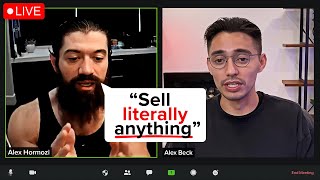
In this 2025 YouTube video, a former high‑ticket sales representative from Alex Hormozi’s Gym Launch shares the six sales frameworks that powered the company’s $100 M revenue engine and that he later applied to other high‑growth teams. He frames the frameworks as a “combination lock” – all six must be used together for maximum cash‑collection results. The first framework, “Think Like Mike,” adapts Michael Jordan’s training regimen to sales: daily game‑tape reviews, intensive role‑plays, and a “violence is the answer” mindset that rejects mediocrity. The second framework, “Sell on Opportunity, Not Pain,” shifts focus from digging into a prospect’s suffering to uncovering the revenue‑or growth‑opportunity they’re missing, positioning the salesperson as a consultant‑expert. The third, “Frame Control,” teaches how to own the conversational frame, maintain authority, and avoid being steered by prospects. The fourth, “Internal Mastery,” stresses personal discipline – a “perfect day” routine of sleep, exercise, scheduled top‑three tasks, and family time – as the foundation for rock‑solid on‑call confidence. The fifth, “Ask Before You Tell,” challenges reps to conduct discovery entirely through questions, avoiding premature statements that cede frame. The sixth, “Reframe Objections as Priorities,” reframes common smokescreen objections (time, money, think‑about‑it) into true underlying concerns (commitment, fear) and then addresses them. Throughout, the speaker uses anecdotes (Jacob vs. Sean competition, student success stories) and concrete call‑handling examples, and ends with a promotional call‑to‑action for his Learn Sales Group coaching. The video serves as both a training manual and a sales‑mindset manifesto for aspiring top‑1 % earners.
Chapters
In 2020, I worked at Alex Hormozi's company Gym Launch as a high-ticket sales representative. I started as an SDR, I moved up to a closer, and the time that I spent at Gym Launch was the most valuable time that I've ever spent at any company. Not only in terms of the money I was able to make, but also the sales training and the frameworks that I was able to take from Gym Launch and apply to future companies that I worked at that helped them make more money and helped me collect a lot of cash selfishly as a salesperson. I am going to share those frameworks with you today. There is 6 of them. It is a bit like a combination lock, meaning you do need all 6 for them to work properly. So that is my nice way of saying stick around to the end. This will help you extremely and help you collect a lot more cash as a salesperson. Now, these are the same frameworks that made Alex Hormozi who he is today. In fact, I remember when I left Gym Launch saving every single SOP and every single document that I can, and I used them and applied them to the next team that I worked at, which was Iman Gadzhi's team. At Grow Your Agency, now Educate, and it allowed me to become the highest cash collected sales rep ever on his team. So I will share these frameworks with you. There's 6 of them. Stick around to the end and I hope this helps. All right, now let's get to the good stuff. Number 1, think like Mike. It took me just a few days of working at Gym Launch to realize how much they emulated how professional athletes trained for their sales team, and more specifically, Michael Jordan. Put it this way, one of the core values that our company stood by and our sales team lived by on a daily basis was "Violence is the answer," which is a quote from Michael Jordan about not accepting mediocrity. But not only that, living every aspect of your life with violence, whether it's in sales or outside of sales. Attack first, ask questions later. Violence is the answer. I mean, for God's sake, I had it printed on a damn t-shirt for myself and my daughter. But not only were Michael Jordan's quotes things that were engraved in our sales team, but also his training system. Yes, Jim Launch mimicked how Michael Jordan trained for basketball for our sales team. And when you think of it that way, it's no question why the sales reps on Jim Launch's team were considered a world-class cash collecting team. Now, I will break down the exact training system that we use, that way you can copy it. But whether you are a business owner or a salesperson, mimicking this training structure will turn you into a top 1% sales rep. And the reason why is extremely important. It's because it did not rely on talent. It relied on you putting in the work, much like how Michael Jordan's 6 championship rings didn't necessarily come from talent. Yes, he was talented, but it only took him so far. He took the natural gifts he already had and he built upon it through relentless training, effort, and knowing that violence is the answer. Fun fact, if you didn't know, Michael Jordan, who is coined as the best basketball player to ever play the game, didn't even make 9th grade basketball team. He was rejected at tryouts. But the training structure looked like this, and it started from day one. Number 1, game tape. Monday through Friday, we were required to watch each other's game tape, meaning sales call recordings where we did not close the deal. Essentially, we had a daily sales team huddle where every single day we would pick a different sales rep to share a sales call recording where they missed the deal and messed up on the call and it didn't close. Just like how Michael Jordan would review game tape of himself on games where he lost the game. And this was essential because Jim Launch did a lot to praise us when we did well through bonuses, shoutouts in our Slack channel, through pats on the back and praise. But they did even more to support us that way we never made the same mistake twice. And instead of us as salespeople who are naturally competitive, bashing ourselves for not doing well on sales calls, we would watch the tape together to figure out how to get better. Now, if you're in sales and your sales team is currently not doing this for you, you have two options. Number one, you could review your own tape, but the only downside downside of this is you don't know what you don't know. If you knew what to do correctly, you would have closed the deal in the first place. That's why option 2 is always better, to have somebody review the tape that you respect and that's been there and done that, just like how Michael Jordan would review his own game tape with one of the peers he respected, whether that was a trainer, one of his coaches, or even a mentor. And luckily, you have the tools right in front of you, whether it's different sales groups or communities or Discord servers, or God, even Learn Sales Group, my sales group, right? I mean, I will literally meet with you one-on-one every single week to review your game tape. And on top of that, you have 5 calls per week that you could come to, to do call reviews and role plays, not only with myself, but with Sean Boccaccini, Jim Launch's ex-sales director, or even Braden Hirsch, who is Iman Gadzhi's sales manager. The support is there. You just need to look for it. And the question is, if you want to be like Mike and to be world class and top 1%, are you going to do the things it takes to get there? There's a reason why the top 1% earners in sales are doing better than you. Now, that's not all. Number 2, what we focused on is roleplays. If you haven't noticed, for the offer you're on, you probably speak with the same avatar every single day and receive the same 3 or 4 objections. And if Michael Jordan is missing the same shot every single game, what do you think he does? I mean, he probably practices that shot 100 times outside of his game. And it's the same thing with sales. Yes, roleplays could only take you so far, but it's extremely effective for dealing with certain type of prospects that you're speaking with every day or the same objection that you're receiving on every single call. So if you're struggling as a phone setter or a closer with the same objection, why not be like Mike and practice the same shot 100 times? That way you can make the shot with your eyes closed. Now that you understand how to train like Mike, let's focus on the fundamentals, which is number 2, sell on opportunity, not pain. Now we all know the more expensive of a thing that you could sell, the more money you can make. Solve rich people's problems, as Alex Hormozi would say. And you may have seen so many sales gurus in the space talking about sell on pain. Essentially, they want you to find the pain on a sales call, expose the pain, dig into the pain, and then ask consequence questions. If you keep selling on pain, you will only be able to sell low acumen buyers for the rest of your life. I mean, could you imagine selling something to somebody who is making $100,000 per month with their business and they want to get to $200,000 per month? And we ask them, hey, how would it feel to get to $200,000 per month and double your six-figure income that you're already making? Or maybe we go the consequence questions route and we say, hey, so what's going to happen to you if, you know, you don't get to this $200,000 mark? It doesn't work. I mean, the questions feel awkward for you to ask as a person and they won't take you seriously. We are consultants, not therapists. Instead, your job is to find the opportunity. Be an opportunity closer, not a pain closer. Meaning what is the problem that the prospect is facing that's stopping them from reaching their goal? Dig into it. How long have they been experiencing that problem? What have they tried to fix it? What do they think they need to do in order to not experience that problem again? And then get them to commit to fixing that problem today. Once they do commit, you use your pitch as the bridge or the roadmap that's going to show them how they get from where they're at now to where they want to go. Once again, you are a consultant, not a therapist. There's a difference. But in order for somebody to see you as a consultant, there's a really key element with that, which is them seeing you as an authority on your sales call. Because if they don't see you as an authority and they don't see you as an expert, why are they going to listen to you and take your advice? And that leads to number 3, frame control. Whoever owns the frame wins the game. Frame control is by far the number 1 important aspect of sales. And all it means is the ability to shape your prospect's thoughts and decision-making based off the authority and respect that you have on the call. I remember being on multiple sales calls, especially as a younger guy, and having prospects tell me, yeah, you know, Alex, I only have 5 minutes. Just tell me the price. I'm sure maybe you have experienced that as a setter or even as a closer as well. That is the prospect trying to take frame and hold authority on your call. And if you let them walk all over you, they won't respect you and they won't buy from you. So instead of you coming in late to your call and saying, ah, Mr. Prospect, I'm so sorry for being late, you say, how's it going, Mr. Prospect? I appreciate you for being patient. And instead of bending your will when the prospect says, I only have 5 minutes, so tell me the price, you say, listen, that's not how this is going to go. Everything that we do here is customized, so it only makes sense to ask a couple of questions just to see what you're looking for. It'll take 30 minutes. Do you have the time or not? Just so we don't waste each other's time. Listen, I'd rather lose the sale than lose frame. And if somebody is on your sales call and they're not respecting your authority and what you're saying, most times they would have wasted your time anyways and never bought in from you in the first place. But frame control also comes from a different place. It's how you carry yourself. It's how you speak. It's your confidence. It's your poise. It's how you show up to a call and lead somebody by asking good questions. So the next time you feel like you're losing frame, the the first thing that I teach everybody inside of Learn Sales Group is mastering yourself internally first. Because how could you ever expect to be a leader on sales calls if you can't lead yourself outside of calls? And this point leads to number 4. If you master yourself, you will master sales. I should add a pause after that. But after number 4, which is internal mastery, I'm going to cover 2 of the fundamental frameworks that will help you set more calls, close more deals, and make more money. But first, I will tell you a story. When I was working at Gym Launch, there was two top closers on the team, Jacob Hopkins and Sean Bacchicini, which funny enough, Sean is the coach that I was talking about earlier that does sales training inside of Learn Sales Group. But to drive the point home, Sean and Jacob were in competition with each other one week for top cash collected rep of the week. Now, Jacob was a 20-year-old kid. He was in college. He stayed up late. He partied on the weekends, was having fun with friends, and made about $20K to $25K per month as a closer. And Sean was a 40-year-old grown man. He was a father and the guy was dialed, meaning he had his shit together. I mean, the guy did everything from knowing the exact times he was going to eat. He had a set diet plan. He had a chef come in every single week that would make his food. And overall, if that doesn't drive the point home, that guy was a very dialed human being. Now, once again, Jacob and him were in competition to be the top cash collected sales rep of the week. And who do you think won? Newsflash, it wasn't Jacob, it was Sean. And the thing with Sean winning is he didn't change a single thing with his week to be the top cash collected sales rep. Jacob, on the other hand, went from working 8 to 10 hours a day to 14 to 18 hours per day. He worked 7 days that week, didn't sleep, and literally went to the hospital at the end of the week because he had a mental breakdown, which Jacob was okay, thankfully. But I do remember asking Sean, man, what was the difference that made you absolutely crush Jacob without changing a single thing or working extra hours. And he told me, listen, Alex, how the hell does Jacob ever expect to beat me if he can't even master his life outside of sales? I mean, the kid stays up late, he's partying all the time, he's drinking, he's going out with friends doing God knows what. And me, I thrive off consistency. This taught me an important lesson that once you master yourself outside of sales, you master yourself on your sales calls. And it reinforced the point in my head that how could you ever expect to lead somebody if you can't even lead yourself? So at Gym Launch, they taught us that the best closers are like rocks. They don't react, they don't flinch, and they definitely don't show desperation. Why? Because prospects can smell uncertainty. And the second they see your lack of confidence in yourself, you lose the sale. Your internal state is extremely important on sales calls, and the only way you could show up like a rock is by mastering yourself outside of sales. So do this exercise. I quite literally have everybody do this inside of Learn Sales Group on day 1 of us working together. It takes 5 minutes and it starts with asking yourself this question prompt: What does my perfect day of growth consist of as a human being? If you take 5 minutes and sit down and ask yourself this question, you'll probably be able to come up with 5 to 10 things that you should be doing, maybe that you're not doing currently. Your job, by the way, isn't to create random shit that you need to do, like, hey, maybe I should start knitting, that'll turn me into a better person. Instead, it's to write down all the things on your perfect day that will help you grow as a human and add it to time slots in your Google Calendar. Construct your perfect day, but The key is to stick to it. Now here's an example of my perfect day. My day always starts the night before. I'm going to bed at around 10 PM, but before I go to bed, I'm writing down exactly how my next day will look like. And more specifically, I am writing down the top 3 things that I need to accomplish the next day that will make me feel like a productive human being. But more importantly, I'm adding it to a time slot on my Google Calendar. Now my perfect day starts with me waking up in the morning at around 6:30 AM, which is why I'm going to bed at 10 PM and going straight to the gym. But not only Not only that, I never want to question what I am going to do at the gym. I know exactly what the workout is and I know exactly what muscle groups I'm focusing on for the day. After the gym, I get back around 8:30 in the morning for myself, drinking some coffee and getting straight to work. And guess what I'm doing during work? I am focusing on the top 3 things that I wrote the night before. Now around 12 PM is when I have my first meal and it's a meal that I already prepped days before. That way I never have to think about what I'm going to eat. After I eat, it's back to work till about 5 PM, and after 5, I'm spending some time with my daughter, which usually that goes from like 5 to 7 PM. And then I always try to read a little bit before bed. I'm not the best at that, but right now I'm reading How to Think Like a Roman Emperor. And once it gets to about 9 PM, I'm back at my computer writing out the top 3 things that I need to finish the next day, and I'm back in bed by 10 PM, and then repeating that day. You know, that's me. But maybe for you, your perfect day constructs of spending time with family. Maybe it's sticking to the diet or eating less so you could lose weight or eating more so you could gain weight. Maybe it's that book that you've been promising yourself that you're going to read that you've never stuck to and never opened a page of, or maybe even promising yourself like, hey, I like to go on daily walks and do meditation, but I never do it and I feel like I never have the time. If that's what your perfect day of growth looks like, write it down and schedule it into your calendar. But here's the key: actually stick to it. This will not only make you proud of yourself for sticking to your word, but it'll allow you to show up as a leader on your sales calls, or like a rock, meaning you can't be walked on, you can't be shook, and you are there to lead. Now, being a rock or being emotionally stable on a call is super important, but there's a deeper reason why, and it's because when you are confident in yourself, you pour that conviction into prospects. And sales is just a transference of belief. Now let's get to the last two pieces here. And these last two pieces, if you implement them directly in your sales calls, you will close more deals and you will make more money. Number 5 is ask before you tell. So put it this way, Gym Launch used to have this game that if you could close a deal without giving a single statement and only asking questions throughout the entire discovery portion of your call, they would literally pay you $1,000. And what they were trying to drive home is don't Don't talk yourself out of a sale. Yes, we are consultants and not therapists, but in order to give proper consulting, you first need to ask questions about where the prospect wants to go and what's stopping them from getting there. What most sales reps do on a sales call as they become more experts in the things that they're selling is turn their sales calls into coaching calls. In the middle of questions, in the middle of the sales call, they'll start giving random spurts of information and mini pitching their product. And what they're doing is selling themselves out of the sale in the first place. Like, you know, here's an example. Let's say you ask somebody, hey, what is your goal with the gym over the next 6 months? And they say, yeah, you know, my goal is to turn this into a million-dollar gym, so I want to make around $88,000 a month. And instead of following up with like, okay, if you don't mind me asking, why $88K? You say, yeah, $88K is a really good goal. You know, most people that come into the program, that's kind of what they're looking to do. Usually takes them around 6 to 8 months, but based off where you're currently at, you could definitely hit that within 5 to 6 months. The next thing you know, the prospect will be like, whoa, whoa, wait. So like, what's the difference between the person that took 6 months versus the person that took 8 months? Or maybe, do you think I could do it sooner? Or like, hey, do you have any examples of the person that did it in 6 months versus 8 months? Could you show me more testimonials? So what happens is the prospect starts asking more questions about the statement that you gave, and it throws off the entire direction of the sales call. Or worse, you lose frame of the call and and lose the sale. You need to talk less and listen more, ask more questions and give less statements. Asking good questions is what allows a prospect to sell themselves on your solution. Here's an example. If you tell a prospect that they need your solution, they may resist. But if you guide them for them to feel like they need it without you saying it by asking really good questions, they will trust you and they will buy. Now, if you use this and stop talking so much and just focus on asking more questions, it'll be really easy to get a prospect to open up. But here's where most sales calls hit the wall. Even after a great discovery, you could still get objections. Maybe you panic here. I know I used to. Or you put up the gloves and start getting combative with the prospect. But what I learned at Gym Launch changed how I view objections as a whole. 99% of the time they aren't real and objections are just opportunities for reframing. And this leads to number 6: Reframe objections as priorities. So let's imagine you are now deep in the call. You drop the price, you pitch your product, but you hear the dreaded, I need to think about it. Or maybe, hey, I don't have the time for this right now. Newsflash, these are just smokescreens. What I learned at Gym Launch was these objections are not about needing more time or needing time to think about it. It's just about the priorities. Your job is to reframe what they say and reframe their objection. That way they realize it's their top priority. So for example, with the time objection, let's say you get to the end of the call and you drop the $10,000 ticket price and they say, yeah, it's kind of a lot. I don't think I have the time to do this right now. What you need to realize is it's a smokescreen, meaning it's a fake objection. The real objection is commitment. It's the ability to commit or create the time that they need. That way they could experience the solution that they're looking for. This is where you need to remind yourself that they booked the call with you and they booked it for a specific reason. They've probably been experiencing this issue and looking for the solution for quite some time. But just like any top 1% world-class sales rep, you don't give statements. We ask questions. So instead of telling them, oh, you know, well, you told me that you had the time, instead you ask, okay, well, I mean, listen, man, timing aside, do you feel like this could get get you to the goal that you told me you had? Once they say yes, you follow up with, okay, so I mean, when you say time, what exactly is coming up for you just to see if I could help? Then they'll probably respond with, oh yeah, you know, I mean, $10,000 is just a lot of money and it's a little bit nerve-wracking. Aha. So it's not time, it's you're just scared and a little bit nervous to spend the $10,000, which is totally normal. What we just did is reframed their objection to I don't have the time to move forward with this to, hey, I have the time, I'm just a little bit nervous to spend the $10K. And now we could handle the true objection. What most sales reps do when they hear an objection is pull out the boxing gloves and start getting combative. I mean, I'm not going to lie, I used to do that myself and it makes sense. I mean, you're at the end of the call, you have a couple of minutes left, you're trying to get the close and things get a little bit antsy. But what you need to realize is, number one, 99% of the time, the first objection they give you is a smokescreen. And number two is that you are there to help and not to fight. You need to come from a place of understanding, and you do that by re-reminding the prospect why they're on the call in the first place, which is why I ask, hey, timing aside, do you feel like this could get you to X, Y, Z goal that you told me you have? Because that's most important. Make sure that they feel aligned with your product, with the reason why they came to the call in the first place, which is to solve a problem and reach a certain goal. After you get that confirmation, that is when you peer Pierce the smokescreen and make them define what they said by XYZ objection. After you get that confirmation, that is when you could pierce the smokescreen and tell them, hey, define what you said when you said XYZ objection. From there, you could reframe what they originally said to the true objection, which is why I said, hey, that makes sense. So it's not necessarily time, it sounds like. It's more so you're just a little bit nervous to spend $10,000, which, by the way, that's normal. From there, attack fear and then close a deal. Once again, I didn't learn this by being the perfect sales rep and having every single call being pretty. I learned it by losing tens of thousands of dollars of deals. I used to be the combative sales rep and people would literally hang up on me sometimes at the end of the sales call. And it's because I didn't take the time to truly understand where they were coming from when they said I didn't have the time or I need to think about it. It took me getting training and mentorship to realize that objection handling isn't the time to pull out the gloves, but it's a time to come from a place of understanding. But always remember, I mean, you can't expect people to follow your lead on sales calls if you can't lead yourself outside of calls. And that's why I love sales, because it is a game of self-improvement and it's a game of internal mastery. Now, the reason why these principles stand the test of time is simple, because it's worked for me and hundreds of other students that have collected millions of dollars of deals in sales. They're not just sales tactics about frameworks and a set structure that you could follow to become a top 1% earning sales rep, even if you're not naturally talented. But on top of that, it has helped me generate a lot of money for some pretty big names in the space. And on top of that, it's helped two of my students. I mean, here is Jay Lefebvre. He is from Montreal, Canada. And last month he had his first $20,000 commission month USD, which is pretty cool because that's really like $30K or $35K in Canada, but also Alexandra Hardy. Alexandra is traveling around in Bali. Lucky her. And she's making over $10,000 per month with just her first couple of months in remote closing. So if you are ready to master sales and become a top 1% earning world-class sales rep without spending a bunch of time and trial and error, click the link below in the bio to work with me one-on-one where I will literally meet with you one-on-one every single week I will create a game plan. I will ensure your success with sales. And on top of that, help you find a top 1% earning sales role if you don't have one already. Because once you learn to sell, you will never starve. Thanks.
More from Braden


How She Quit Her 9-5 and Now Makes Money From Anywhere in the World (High-Ticket Sales)