How To Make $502,374/yr with High Ticket Sales
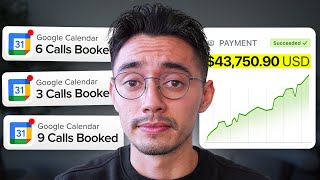
Alex Beck, a remote closer who made $500,000 in commissions in one year, breaks down seven principles for closing high-ticket deals. He emphasizes conviction in the offer over sales skill, challenging prospects to drive commitment, and qualifying for high-intent buyers early. Real examples include a $22,000 day and deals with Gym Launch and Iman Gadzhi.
Chapters
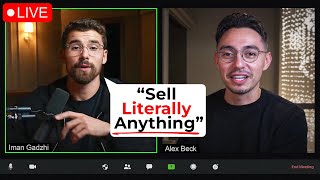
All right. It is about 10 p.m. and I just finished a full day of sales calls and I did pretty well. I collected about $22,000 in cash and this dawned on me throughout my day today to share with you the 7 rules of selling that have helped me collect well over $500K in commission within a year. And I know for a fact that a few of these rules you have not heard before, and these will allow you to sell while just having a genuine conversation, being yourself, not using sleazy sales tactics while still allowing yourself to impose your will and your ideas on the prospect that you're speaking with, which is the most important skill with sales. So I am going to share these 7 rules of selling with you. And as far as myself, my name is Alex Beck. I have been in the online remote sales space for the past 5 years. I have been in remote sales since before remote sales was a thing or even a term. I just thought it was cool that I was sitting at home selling, you know, making good money. But, you know, I've worked for some big names in the space. Omar, cue the screenshots of the the people that I've worked with. Shout out to Omar. But let's dive into the video. Let's get into the closing laboratory and break down these 7 rules of selling that will help you make more money, close more deals, and become a top 1% closer in the space. First and foremost, principle number 1: Confident closers need no structure. Now, this is a bit of a conundrum because obviously having some type of sales call structure will only help you in the end and at least give you direction with where you need to take the conversation. But a lot of people don't realize is that sales is just a transference of belief. And within the first 60 to 90 seconds of your call, your prospect is already deciding if you are someone that they should buy from subconsciously. And the way that they trigger that response in their subconscious mind is from you. It's how you show up. It's your presence, it's your aura, it's your swagger, it's how fast you talk, how slow you talk, your tonality. So showing up to calls confidently is extremely important. Put it this way, I have someone in the group, his name is Michael Santana, that I'm working with. and he just did a $39,000 month in commission as a salesperson. And this is the example I give. I know damn well if I wanted Michael to start setting or let's say closing for me, I literally would have to give him no structure. I would just put him on the calls and he'd be able to sell off of pure conviction, not only conviction in himself and his own abilities because he has proof, but conviction in the offer because it worked for him already. If that's not a strong enough example for you, let's look at Alex Jones. You may have heard of Alex Jones He is the batshit crazy conspiracy theorist that goes on Joe Rogan's podcast, "Hey man, the world is flat," and tell you some crazy conspiracy theory, and you'll get off of the video or get off of the call and be like, "Yeah, you know, fuck this guy. He doesn't know what he's talking about." But if Alex Jones says it, he will make you question your own beliefs. You will get off of the video and say, "You know, damn, the guy's got a point. I was standing on top of a hill and the horizon does look flat." Now, why is that? If I say the exact same thing and Alex Jones says the exact same thing, Why would more people believe him and he would have such a loyal following of insane conspiracy theorists versus myself? It's because it's not what he says, it's how he says it. It's his tonality, his pacing, his conviction, how he'll look you dead in the eyes and tell you the world is flat. True authority isn't claimed. True authority is given to you by your presence, your aura, your energy on calls, your pacing. You know, I noticed something pretty telling when I was working at Iman's team. When I first started closing there, I felt like I had to compensate and almost like flex my expertise in order to get people to buy from me. But it took me some time to realize the calls where I spoke less, I listened well, I looked them in the eyes, I spoke with conviction, I asked my questions straightforward and hard-hitting were the times where I closed more deals and where people saw me as more of a trusted authority figure on the call. Now, with all of that that I've learned in the past 4 and a half years of closing for Hormozy, for Iman, for Thach Nguyen, Karlee Morgan, Devin Jaffo, I've worked for those guys as well. I define it as a trusted advisor identity, and that is someone who, number one, has complete conviction in the offer that they're selling. Number two is someone who is genuinely there to help, to serve, not to sell. Number three is somebody who is willing to walk away from the sale if it's not a good fit. And number four is someone who speaks with calm, measured confidence, not desperate enthusiasm. Now, if you want to embody this principle, here's exactly what you need to do. The first and foremost thing is that you need to ask yourself this question: Do I truly 100% believe in what I'm selling? If there's any doubt, resolve it before your next call. And that doesn't mean that you need to be exactly aligned with your offer. You know, listen, when I was selling for Hormozy's team at Gym Launch, I never owned a gym. I never gave two shits about a gym owner, but I believed in their product and their offer. And there's a couple of things that I would do on a daily basis that way I could hold that conviction in the offer that I was selling. And really the big thing was just looking at testimonials. It's hard to not believe in something when you're looking at proof proof that it works on a daily basis. So once again, if you're selling a B2B marketing package, that doesn't mean you need to believe in online social media marketing. Just look at the damn testimonials for your offer. Are you helping people? Beautiful. Carry that conviction onto your call. And that is so important because you can't transfer confidence that you don't have. Now, number 2 to embody this principle before your sales calls is to prepare your physical state before your call. And that consists of 3 things. Number 1 is 30 seconds of deep breathing. Number 2 is 60 seconds of visualizing exactly the sales call is going to go. And number 3 is 30 seconds of visualizing my intentions to truly help the prospect and not to just sell them. You know, I used to go so deep with visualizing my sales calls that every night before the call, I would look at my next calls for the day and look at the notes. I would imagine what the prospect looks like up until the point of closing. If you visualize, if you breathe, if you prepare your physical state, you will show up to calls cool, calm, collected with measured confidence. Now, third and most important is to speak less, listen more. Take time to pause. Rushing signals insecurity and measured speech signals authority. Get comfortable with silence. And what I mean by that is after speaking, don't rush to fill the gap. The person who is more comfortable with silence tends to be the person that signals more authority and like, hey, I know what the hell I'm talking about. And just remember who you are speaks so loudly that the prospect won't even be able to hear what you say. Be comfortable with sitting there in silence and waiting for the prospect to think and come up with their answer. Now, rule number 2, the vehicle over the driver principle. Now, this will contradict what most sales trainers teach, but it is one of the most important pieces that I always like to be transparent on that contributed to my success, meaning the amount of money that I was able to make with remote sales. And for context, I've contributed well over $10 million in sales in the past 4 and a half years with being in the space. And what I mean by this principle is that a mediocre salesperson at a 10 out of 10 offer will make make more money than a 10-year sales veteran at some random marketing agency. If you search on Google average salesperson salary, I could guarantee it's somewhere from $60,000 to $70,000 per year, maybe less. So why is that? How come you hear certain people are making $30,000, $40,000, $50,000, $60,000? But when we look on Google, the average salesperson is only making $60,000 or $70,000 per year. And that is because it's not about your sales skills. A lot of times it's about the offer that you're One thing I always point out is you doing $10,000 per month as a sales rep. And for context, I have someone that I'm working with. His name is Jay. I talked about him in the last video. When he first got into sales, he was working for this Amazon FBA offer and he was doing okay. He was doing like $7,000 a month and he kept getting certain types of prospects that weren't that serious with buying. The closes were really hard and he used to question himself to me every single day on our calls saying, man, I'm Maybe I'm not that good at sales. And we finally got him on a better offer. It was an Airbnb offer, kind of a B2B type thing. In his first month, he made $17,000 in commission and nothing changed. His sales skills were the exact same from the last offer to the other offer. So how come he was able to make more money? It's because he got in a better vehicle. It's the difference of going on a racetrack with a Ferrari versus going on a racetrack with a Toyota Corolla. Who do you think is going to win? So in Jay's case, did he magically improve his sales skills overnight? No, not at all. There's a couple things that I look at when deciding if an offer is worth my time, and I want to share them with you. That way you could write them down. And it starts with this one umbrella where everything needs to fall under. And what that is, is do I believe in the offer, the offer owner, or the company? Let's say if it's B2B, meaning there's no front-face marketing, there's no like Iman Gadzhi that's running the show, posting content, running ads, versus B2C, you know, you may have some type of front-face So under the umbrella, it's, hey, do I believe in the company as a whole, as a marketing team, not as an entrepreneurship team, as a marketing team. As a salesperson, you make the most money possible with strong marketing behind you. When I decided to leave Alex Formosi's team to Iman's team, Formosi was already huge in the space, and Iman had about 50,000 subscribers on YouTube, which sounds like a lot, but it's nowhere near where he's at now. Right now. But what made me comfortable with taking the leap is that I truly believed in Iman as a marketing face. I took that bet and then within 6 months he went from like 50K subscribers to millions. It was absolutely insane. And because of that, because his marketing was so strong, I made good money as a salesperson. Now, after you look at your offer and you decide, okay, I trust in this team as a marketing team, the next thing I'm going to look at is what is the top sales rep and what is the bottom sales rep making. And that is because I know if the bottom sales rep is earning $10K a month and the top sales rep is earning $25K or $30K, I know I'm not the worst. I'll land in the middle comfortably and within a couple of months I'll be the top rep on the team. Now with that, there's other little things that you could look at too. But I think for yourself on this, and I know for me, I'm about my money, right? I'm about my bread. I'm about my cheddar. Those are the big things that I look at when looking at a team. Can I jump in and make $25K, $30K a month? You know, as long as I can, I could deal with a sales manager that's an asshole. I could deal with a with some iffy company culture, because if you're making that amount of money, you do it for 4 or 5, 6 months straight. You put yourself in a life-changing position where you can make some bigger moves for yourself. And with that shameless plug here, I literally have a sales community that I've helped Jay on, that I helped Michael Santana land the roles where I literally hand you 10 out of 10 offers and help you apply, help you land the role and make sure you succeed. But let's jump into principle number 3. The challenger wins the sale. Now, if you have not read the book The Challenger Sale, I highly recommend it. It should be for free on YouTube as an audiobook at least. But what it goes over is that in order to close deals at a high level, you need to get comfortable with challenging your prospect. And if there's one line that I want you to take away out of this core fundamental value, it's that take the direction in a way that is uncomfortable for your prospect rather than the direction of comfort. Meaning challenge them, question them, make them question their beliefs in the past decisions that they've made. You know, whether you are selling something B2B or B2C, if somebody is experiencing a problem with their business or life, 99% of the time you are maybe the first or second person that they've spoken to about this problem. So it is your duty to be a beacon of light. It is your duty to challenge them, to get them to commit to the things that they said and help them solve the problem that they're facing. One of my favorite ways to challenge people on prospects is to question their commitment and then to tie the knot. And what that means is if somebody tells me like, hey man, you know, I'm really trying to make this change and fix this issue that I'm experiencing with marketing right now, I will ask them, okay, well listen, this is definitely something that we could help with, but is this something you're ready to commit to for yourself? That way you could experience XYZ result right away. Once they say yes to that commitment question, I tie the knot. Okay, and as long as we could get you there as a team to the point of fixing that marketing and getting you to XYZ goal, is this something that you'd be ready to move forward with? With today with our team. Question their commitment, then tie the knot. Rule number 4, the Roller Coaster Discovery Method. Now, this is something that no other sales trainers will teach you, and I learned this when I was working at Thak Nguyen's company back in early 2024. Essentially, what I was experiencing is I was speaking to prospects with a lot of fucking money, people who didn't really have too much pain that were making $300,000, $400,000 K per year. I mean, for God's sake, we were getting NBA players on our calls that we were closing them on $30,000 or $40,000 real estate packages. I won't name the NBA player because I don't want to get sued or have Thack sue me here. And after implementing this one strategy, I realized I should have been doing this my entire 4 and a half years with sales. And what that is, is the roller coaster discovery method, meaning you need to flip the direction of your discovery call. Now, what most salespeople will teach you is that in discovery, you need to start off with current state situation or current state problems. Essentially ask a ton of questions on their current state and the problem that they're facing and how it's affecting them and so forth. From there, they want you to go to future pacing goals. Okay, now I understand your problem, but where do you want to go? What's your big vision? What's your dream? Let's get you excited. Now, the flip that I made that helped me raise my close rate from like 28% to some weeks 60% closing a high-ticket offer for real estate with guys who had a ton of money and had no pain was flipping the direction on my discovery. Instead of ending discovery with talking about their future state goals and getting them excited, I started discovery with talking about their future state goals, and I would end it with their current state problems. Now, what did that do? Let's think of it in the sense of a fitness offer. Now, fitness offers are pretty notorious of having people who cry on their offers. And it makes sense. You know, sometimes you're selling something to somebody who is 50 pounds overweight, they lost their spouse, they can't run around with their kids, they're feeling unhealthy, experiencing health problems, and so forth. So a lot of times they end up crying on their sales calls when you start asking the hard-hitting questions. Now, with a normal discovery method, what you are going to do is talk about their current state struggles, all the pain that they're going through, why it's important for them to change at the start of the call. Meaning if we get a crier, they're going to cry at the start of discovery and then we are going to tell them, hey, wipe your tears. Let's talk about your vision and your dreams and get you excited. Meaning with that framework, we are going to end the conversation with the prospect at a high emotional state and then we're going to try and pitch them our solution. Now, if you flip it and you use the roller coaster discovery framework, you are going to make so much more money as a salesperson. Because put it this way, let's say we're speaking to that same prospect. Instead of talking about their current state struggles and getting them to cry at the start of the call, we are going to flip it. Let's talk about their future state goals, where they want to go and why that's important to them at the beginning of discovery. And then at the end of discovery, let's ask the hard-hitting questions. Okay, so you want to lose 150 pounds and get down to your weight from college. If you don't mind me asking, how much How much are you weighing now? Wow. Okay. You're 80 pounds overweight. How long have you been trying to lose 80 pounds? Okay. You've been trying to lose it for 2 years. What the hell has been stopping you? Now, if you don't notice what I'm doing, I'm talking about their current state problems at the end of the call. Meaning if we have a crier on the offer, they're going to cry at the end of discovery. And then I will tell them, wipe your tears. I know you're going through a tough time. Let me pitch you and tell you how we're going to bring you up to that high emotional state. This will be a game changer for your sales calls, whether you're selling B2B, whether you're selling B2C, whether you're selling tech. Flip your discovery. Start with where the prospect wants to go and ask questions about that, and then finish the conversation with their current state struggles. And this isn't manipulation. It's about understanding the natural flow of emotions that help people make decisions. If you didn't know this, people buy emotionally. They make decisions emotionally and they compensate logically. And so you want to tailor the way you speak, tailor your questions, and tailor your pitch to tap into those emotions. The Roller Coaster Method is so effective that I could create an entire 30-40 minute long video on this alone. So if that's something that you want to see, type it in the comments, type Roller Coaster Discovery or something, and I will create that video for you. That way, you know, you have a full A through Z understanding on on how to implement that framework. Now, rule number 5, the closing question principle, or how I like to call it, squashing bugs and killing zombies. Implementing closing questions to my sales calls has been an absolute game changer, and I learned that from my sales mentor Sean Bacchicini, who was Gym Launch's top cash collected sales rep ever and their sales director and helped scale Alex Hormozi and Leila Hormozi multiple companies that they exited for hundreds of millions millions of dollars. And he was very, very big on answering closing questions. Fun fact, Sean Boccaccini is a coach within Learn Sales Group. So if that's something you're interested in, pop me a DM or something along those terms. But what closing questions is, is asking questions that prevent objections from happening in the first place. And what I mean by that is an average closer will ask a prospect, hey, what is it that you need help with in order to get the XYZ goal, and they will leave it at that. An advanced closer who understands how to squash bugs and kill zombies will say, okay, beautiful. As long as we could give you the help that you're looking for based off what you just told me, is this something that you'd be ready to move forward with today? It's an untold truth in sales that if you want to prevent I need to think about it, just tell the prospect you don't want to hear I need to think about it. If you want to close the deal today, let the prospect know, hey, we could definitely help you get to XYZ as long as we we can, would you be able to move forward today? Well, you know, yeah, I don't know. It kind of depends on the price. Okay. I mean, pricing aside, based off the solution that we have, if this is something that we could help you with, would this be something that you want to move forward with? Ask more closing questions. Here's a few examples of closing questions that I use on sales calls. Really, the first one that I always ask is, hey, what is it that you need help with to get to XYZ goal? Then they say, yeah, well, I need help with A, I need help I need help with B, I need help with C, and I'll follow up with, beautiful, we could definitely give all those things for you as long as we can. Is this something that you'd be ready to move forward? I'm always looking for a hard yes. Once they say yes, I go into commitment. Okay, beautiful. Well, just so you know, like anything, or hiring a personal trainer, you could create a workout plan. We could tell you what to do, tell you what to do at the gym, but we can't force you to do it. Is this something that you'd be ready to commit to today for yourself? That way you could experience XYZ result. Again, I am looking for a hard yes. Then from there, I am going to ask about their partner. Beautiful. Well, I'm glad you're committed. I'm glad this is something that you see value in. By the way, does anyone else need to be here in order? I always like to respect couples and business partners. Does anyone else need to be here in order for you to make the decision? Yes or no? Of course, we're looking for a no. And then I'll go into timing. Let's prevent I don't have time to implement solution. Hey, how much time do you have to implement XYZ that we're you're speaking on? Well, I have about 10 hours a week. Okay, beautiful. Well, I'd only ask for 6, so it sounds like 6 hours is doable. Is that correct? Yes, that's correct. Now, this isn't 100% foolproof, but 90% of the time this is going to prevent objections from happening in the close. When I say good closers don't get objections, they just get questions, this is what I mean. Good closers ask closing questions, and I'll even go as far as saying the yes, no, or maybe frame, basically telling a prospect Hey, I don't want to hear I need to think about it. And the way that I do that is directly before I pitch. So I'll ask a prospect, hey, we could definitely help. Do you mind if I explain how we're going to do that with XYZ company and product? They say yes. Then I'll dive into the yes, no, or maybe frame directly before I pitch. Awesome. Well, just to be sure, I know at the end of the call, Mr. Prospect, there's really 3 things you could say, either Alex, hell yes or no, which I want you to know I'm I'm 100% okay with a no. I just want to avoid the, you know, in-between answers of I need to think about it, because we both know that's a nice way of saying no. So is it okay to keep it between a yes or no? If you've heard this twice from me, I hope you've implemented already because it works. Now, rule number 6, the belief hierarchy principle. This explains why some prospects are completely stuck, not able to make a decision, while other prospects move forward confidently. Every I need to think about it objection is really just belief misalignment. What I mean by that is most salespeople try to handle objections at the surface level, but the most powerful closers understand that there is a deeper misalignment belief beneath that objection that they need to handle rather than dealing with the surface level. Think of belief systems like a pyramid with 4 levels. At the bottom, we have identity beliefs, who we believe we are, things like I am not a risk taker, I am not good with technology. I am not meant to make money. Above that, we have capability beliefs, meaning what we believe we could do. I can't learn this. I can't find the time. Next, we have possibility beliefs, which is what we believe is possible. And a prospect will say things like, this won't work in my industry. It's too saturated. I don't think this will work in this economy. And finally, we have surface beliefs. Beliefs, which are the stated objections, the fake objections. This is too expensive. I need to think about it. I need to speak with my wife. Most salespeople only address the surface beliefs, meaning the stated objections. But these are just symptoms of deeper belief misalignments. Your job is to pierce the surface objection and figure out what the true objection is beneath that. For example, when a prospect says this is too expensive, they're not really objecting to the price. They're expressing a deeper objection, a deeper belief misalignment. And this could be things like a possibility belief. I don't think this will work well enough to justify the investment. Or even a capability belief. I don't believe I could implement this successfully. Or maybe an identity belief. I don't see myself as somebody who invests at this level. When you address only the surface level objection by saying things like, well, we offer payment plans, there's a reason why they don't close. And that is because you leave the real belief misalignment untouched. And that is why prospects don't buy. And in my own sales calls, I realized a pattern. When I address identity and capability beliefs during discovery, surface objections rarely came up in the close. For example, if I notice on a sales call that a prospect didn't believe that they could implement our product successfully, which is a capability belief, I would address it immediately and I'd say something like, hey, I noticed you had some concerns or Maybe I could sense that you feel like this won't work for you correctly in your current situation. Could you let me know what you're thinking just to see if I could help? Once they explain what it is that they need, this is the key. A great closer would leave it there, but a 10 out of 10 elite closer will ask a closing question. Okay, well, listen, I'll break everything down for you, but we could definitely provide exactly what it is that you're looking for. As long as we can, is this something that you'd be committed to implement on your side of business. By addressing the deeper belief first, I got rid of the "this won't work for me" objection by just asking a couple simple questions. Now, rule number 7 is the success likelihood principle. When I was working at Iman's team, I noticed something telling. The more leads that I turned away that were not good fits or not serious buyers, the more money that I made. And you would think that sounds like a conundrum, right? If I have 10 calls on my calendar, I should try closing all 10 no matter what. But it's not true. It is okay to protect your time as a salesperson. Your job as a closer is to identify the type of buyer that you're speaking with immediately as they jump in the call. Now, there is 3 types of buyers. There is tire kickers, meaning people who are not serious about buying. They're essentially there to waste your time, and that's typically 10 to 20% of the leads that you speak with. Now, buyer number 2 is a buyer in power. A buyer in power is somebody who is serious about buying, but they're not really there yet. They're not not completely sold. They have a problem they want to get solved, but it's going to take you having a full sales call and a full conversation in order to close the deal. And buyer number 3 is a buyer in heat. That is somebody that you want to get out of the way. They're ready to buy, close the deal as soon as possible. Now, a key thing to mention is that you could turn a buyer in heat into a buyer with power, and you could also turn a buyer with power into a buyer in heat. But one thing you can't do is turn a tire kicker into either of the two types of buyers. So if somebody gets onto your call and you could tell that they're not a good fit, you could tell that they're wasting your time, that they don't have a problem that needs solving, get them off your call as soon as possible. The reason why this helped me on Iman's team is because I was able to save my energy. You know, sales is a lot like playing chess in your head all day. If you take 10 calls back to back, you're essentially playing a game of chess with every single call, every single tactical question that you ask, every single objection handle, every single pitch, expense sends brain energy out of yourself as a closer. I used to wonder at the end of my long sales days how many calories I burned because I used to be so brain dead and tired. Now when prospects sense that you're genuinely trying to find out if they're a good fit and you are there to qualify them, it puts them at ease. It makes them feel like you truly care about their success and whether they're a good fit to work with your company or not. And so the way that I always identify the type of buyers that I'm speaking with starts with the very first question that I ask them on every single sales call, which is, hey, what made it worth your time to book a call with me today? What I'm looking for is I need help with XYZ. If I have a prospect tells me, yeah, I don't know, I just saw your website and it looked pretty cool, so I decided to jump on. I'm just going to follow up with awesome. I'm glad you like the website, but I doubt you're booking 45-minute calls with random strangers every single day. So let me know, what is it that you're looking for help with when it comes to XYZ thing? With that question, two things will happen. Either A, they will tell you exactly what they're looking for help with, or B, they will prove themselves to be a tire kicker, saying things like, well, I don't really need help with anything. I'm just checking things out. And you'll follow up with, well, listen, I'm not here to waste my time or your time either. So are you currently in XYZ niche, or what does that look like? Look like for yourself? Yeah, 100%. I actually run a business. Okay, so are you looking for help with marketing for your business? Yes or no? Well, no, actually, I'm not really looking for marketing. I just saw this and I thought it'd look cool to jump on a call with somebody like that. I'm going to say, listen, I'm not here to waste my time. Have a good day. I'll send you my website. You know, check out the information on the page. And if something you need help with, send me a text message. Now, this is powerful because if you have the frame on the call that you are there to qualify them to see if they're a good fit to be working with you as much as they are there to qualify you to see if you're a good fit for them, it triggers something in the prospect's mind that you are somebody that they should trust and somebody who has their best interests. You should— I understand that it's difficult sometimes to detach yourself from the outcome of sales calls, especially because as salespeople, hey, we make money by people closing, and that's how we get paid. And it's okay if you want to close every single deal, but what you don't want to do is waste your time with people who you know won't succeed within the program that you're selling. But all of this stems back to number one, you always want to bring people inside of the product that you're selling that you know will succeed. But number two, if you frame the conversation right away that you are there to qualify them, it makes what you're selling feel exclusive. It makes feel authentic. But amongst everything, you will save your time and energy by not dealing with people that you know won't close in the first place. Now I want you to honestly assess yourself on each of these principles. So toss a comment below on which principles you feel like you do really well with and which ones you feel like you need more work with. This will also help me as well because then I'll be able to create more videos and content based off what you need help with sales. But above everything, I hope this helped. And as always, once you learn to sell, you will never starve.
More from Braden


How She Quit Her 9-5 and Now Makes Money From Anywhere in the World (High-Ticket Sales)