How To Prevent Every Sales Objection Ever (High Ticket Sales Strategy)
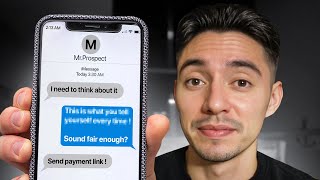
Alex Hirsch breaks down the Revolver Method, an eight-question framework for high-ticket sales that uses discovery questions to preempt objections before they happen. The approach closes a $7,000 deal by asking about timing, commitment, and decision partners upfront, then using three follow-up questions when objections arise to reframe them into payment-plan negotiations.
Chapters
In this video, I am going to break down the exact objection handling framework that I've used to close millions of dollars of deals and sales. On top of that, by the end of the video, I will show you a live sales call recording of me using this exact framework to close a $7,000 deal. Now, the reason why I'm making this is I have seen far too many people as of late share sales call recordings of complicated ways to handle objections. This will be the most simplistic objection handling framework that you have ever seen. 8 questions, that is all that you'll need memorize. So at the end of this, not only will you fully understand how to handle objections like a pro, but you will also see me use this framework live on a sales call to close a deal worth $7,000. Let's jump into the video. Okay, now what I'm going to break down to you today is the Revolver Method. It is only 8 questions that you need to use, 5 in discovery and 3 if the objection even comes up. So the 5 discovery questions are going to be pre-handle questions, and there's only 3 pages that I need to break down to you. That is it. But before that, what I do want to share, quite frankly, you have been tricked into thinking objection handling is difficult. You've been fooled into thinking in order for yourself to master handling objections, you need to memorize these complicated frameworks, this 10-question stack, these stories and kids' parables that you're going to share about the three horses that crossed the river, but one of the horses died. And then you ask, hey, Mr. Prospect, what's the type of man that you think you need to become in order to not become like the kid who dies, right? Or the horse who dies. I have seen videos like this all over Instagram, all over YouTube. I'm sure you have too. And it makes you wonder, God, how the hell am I ever going to get good at handling objections if it's this damn complicated? Your goal shouldn't be to Jedi mindfuck your prospect into buying. It should be by asking such good questions. Sales is simple. Ask good questions throughout discovery. That way you build such good rapport that when you get to the end of the call, if an objection comes up, you can look at them and say, hey, Mr. Prospect, I get it, but based off what you told me, you are wrong and here's why. And they respect you. They see you as an authority and they move forward and buy from you. and that is what the Revolver Method is all about. Let's ask the proper questions in discovery. That way, when the objection comes up, you could fire your bullet and say, you were wrong, and here is why. Then they buy. Now let's get back to the document. So the Revolver Method, the first key that I'll touch here is number 1, your skillset should not be built upon objection handling frameworks, question stacks, analogies. Instead, build your skillset by mastering discovery and asking tactical questions that build rapport. That way, when an objection comes up, you could tell a prospect, you are wrong and here is why, right? And of course you want to add some humanizing emotion to it. I get it, I see where you're coming from, but you're wrong and here's why. Now, the Revolver Method is exactly how it sounds. You're going to load bullets in your clip by asking pre-handle questions in discovery, and then at the end of the call, if the objection comes up, you will fire the bullet at your prospect. So it is a 2-step process. It's only 8 questions you need to ask. Step 1 is the 5 pre-handle questions, which I'll show you now. And then step 2 will be the 3 questions that you'll use while closing, only if an objection comes up. Okay, that is it. It's super simple. This will help you make a ton more money, so stick to the end, and then I'll show you a live call recording of me using this exact framework to close a deal. Now with that being said, uh, step 1 is to load your bullets. So 2 key points go into this, and number 1 is to ask these 5 closing questions or pre-handle questions during discovery, which I'm sure you could see here. And number 2, are these questions are not effective with a bad discovery. You need to find out where your prospect wants to go and what's stopping them from getting there before anything. Now ask these pre-handle questions. These are the 5 questions you need to ask to load bullets into your clip. You guys, one thing I've realized, or for yourself watching this, is that typically it's the difficult questions that seem weird to ask that you need to ask in order to get the close. Simple things like, hey, we could definitely help you As long as this sounds like what you're looking for, would you be ready to move forward today? Right, that is how you prevent 'I need to think about it.' Yeah, I mean, if you could give me what I want, then 100%, I'd be ready to move forward. Okay, cool. And by the way, does anyone else need to be involved with making this decision today? Any business partners, wife, you know, husband, whatever that looks like? No, I can make the decision on my own. Okay, and with that, how much time do you have to implement the solution to your business? Well, I have about 10 hours a day. Okay, I'd only ask for 2 hours a day. Is that doable? 100%, right? And we're pre-handling all of these objections at the end of discovery. So these are the 5 questions that you need to memorize and ask on every single sales call. Number 1 is timing. Okay, how soon are you looking to solve this problem? Number 2 is commitment. Is this something that you're ready to commit to? And I'm gonna break it down in more detail right now. Number 3 is solution, meaning if we could help you reach XYZ goal and provide XYZ solution, would this be something that you're ready to move forward with today? Number 4 is partner. Does anyone else need to be involved with you making this decision? And number 5 is time. How much time do you have to dedicate towards this solution? And the last piece you could see on the bottom is honorable mention directly before pitching. Use the yes, no, or maybe frame. And I'll role-play this a little bit on this video so you could see. Now, at the end of the discovery, after I ask adequate, adequate questions— and you guys, in another video I talk about the roller coaster method, which is how I do discovery, which 99% of other people do not do. I'll link it below so you could check it out after this video. And if you want this document, I'll also link it below. It will be an opt-in page, so sorry about it, but with that being said, this is how I'd break it down. At the end of discovery, you find out where they want to go, why that's important to them, where are they at now with that, what's stopping them from getting there, what do they need help with. Then you go into your pre-handle questions. Beautiful, so Mr. Prospect, by the way, I know what your goal is. I kind of understand what you're looking for. How soon are you looking to solve this problem? Yeah, well, I mean, Alex, that's why I'm on the call. Ideally, as soon as possible. Okay, beautiful, and by the way, You know, we obviously have a solution for you, but just like going to the gym, you know, or hiring a personal trainer, we can make you a meal plan, we could tell you exactly what to do at the gym, but we can't force you to go. Is this something you're ready to commit to for yourself that way you could experience XYZ result? And so now I just ask question number 2, commitment. They say, yeah, 100%. If you could, you know, get me there, I'm 100% committed. What I'd go into after that is saying, beautiful, what do you feel like you need from our team in order for us to get you there? Well, what I need is A, what I need is B, what I need is C. They could say something like, well, I need someone to help me run ads, or, you know, I need one-on-one guidance to help me start this business if it's B2C. Then you go into number 3, solution. Okay, we could definitely give you that. As long as we could provide those solutions and get you to that goal, Is this something you're ready to move forward with today? And ask it very straightforward. Today, right? We're looking for that hard yes. Yeah, 100%. If you could get me there and you could give me what I'm looking for, I don't see any reason why I wouldn't move forward today. It does depend on the pricing, right? Then you could follow up with, well, listen, pricing aside, we're not talking about that right now. I'm speaking as far as the solution. Would it make sense for you to move forward and implement today? Yeah, Alex, 100%. Okay, beautiful. And by the way, does anyone else need to be involved with you making this decision? Now we're going to number 4. Uh, no, 100%, it's just me. I could definitely make the decision. Awesome. And really, last piece I want to touch on, this is extremely important for our team. How much time do you have to dedicate towards a solution? Yeah, well, I have, you know, around 10 hours a day, 10 hours a week. Okay, I'd only ask for, you you know, 2 hours a day. Is that doable? Yeah, 100%. That's doable. Okay, awesome. Yeah, so Mr. Prospect, I don't really have too many other questions. Was there anything else that you wanted to share with me? This is me transitioning out of discovery, right? So obviously I'm focusing on these 5 last pre-handle questions. This is to prevent any objections and to load your bullets. And then I'm transitioning out of discovery and I'm about to pitch them. Right, and I'll say something like this: we could definitely help you get to your goal, we could definitely provide that solution. Do you mind if I share how we're going to do that? Permission to proceed. They give me that thumbs up, hell yeah, let's break it down. And then if needed, I'll move into the yes, no, or maybe frame. And I say if needed because I don't use it on every single call. Where this is really effective is when you can tell that you're speaking with someone who You know, maybe it's their mindset that's going to hold them back from purchasing, or it's a little bit of fear, or, ah, this is a big expense, I've never done something like this before. This is the best time to use the yes, no, or maybe frame. And you could always tell that during discovery, right? Objections that are going to come up at the end of the call are like zombies, and zombies are loud. You could tell throughout the call. So with that being said, if I could tell one of the zombies is Hey man, I'm speaking to this brand new business owner. This is gonna be expensive for him. He's never done something like this before. I will say directly before pitching, after permission to proceed, awesome, Mr. Prospect. By the way, I always like to ask this question. There's really 3 things you could say at the end of the call. Either Alex, hell yes, let's do this. Or no, which I want you to know I'm 100% okay with a no. The one I do want to avoid is these in-between answers like the "I need to think about it" or "Let me talk to my dog about it." We're both adults, you know, we just know that's a nice way of saying no. So is it okay to keep it between a yes or no? This is extremely effective, and I'm going to show you a clip of someone that I'm working with right now. His name is Nico, who used this on his calls to close deals, and I have numerous other people as well. So So let's roll the clip. I ask you about, for example, engineers or software, that kind of people, like super logical people. And I had one of those on Wednesday, and I pre-handled the objection hard during the discovery phase. And then just the last thing I did in the discovery was the yes, no, maybe. It worked perfectly. You got it. There you go. You closed them. Yes. That is Nico. He is selling an offer to the Spanish market. He's earning over $10,000 per month as a closer selling to the Spanish market, and he used the yes, no, or maybe frame, right? And the reason why it's so effective is I can't tell you how many times I've gotten to the end of the call and someone says, you know, Alex, I'm the type that wants to think about things, but this feels right. I like what you're saying. I feel like this will help. Let's do it. Right, so it is extremely effective. Once again, you guys, sometimes the questions that feel weird are the ones you need to ask, such as, hey, there's really 3 things you could say, but I only want to hear 2 of them. I don't want to hear I need to think about it. Is that okay with you? Right, and get that yes, then move into your pitch. Now those are the pre-handles. That is it. 5 questions, technically 6 if you add on the yes, no, or maybe frame. But after that, you are rolling into your pitch and you are going into the close. And ideally, the best closers only get questions. They never really get objections. But if you do get an objection, here are the last 3 questions you need to say. Now, Revolver Method step number 2 is once an objection occurs, ask these 3 questions, then fire your bullet, right? Fire your pre-handle bullet. You said, right? So I'm going to give you an example of that right now. What the bullet is, is use their own language against them nicely because you asked the question already to prevent this objection. You know, before I go into that, let's cover these 3 questions. Now, the reason why you ask this is because you want to reaffirm and re-remind the prospect why they are there when an objection comes up. If they say, I need to think about it, your goal is to set that objection to the side and say, 100% okay, but this is most important. Do you actually feel like we could get you to XYZ goal that you told me you had? Because I asked that question, right? And so this is the exact question you need to say, right? So listen, Mr. Prospect, thinking about it aside, that's 100% cool, but do you actually feel like this could get you to XYZ goal and solve X problem? After that, you follow up with why. Right? Get themselves to remember why they are here and sell themselves on the path, aka moving forward with your offer or your product. So once again, 100%, Mr. Prospect, but thinking about it aside, do you actually feel like this could get you to XYZ goal and solve X problem? Yeah, I feel like it can. Okay, why? Why do you feel that way? Well, I really like A, I really like B, I really like C. Then you move into question number 3. Awesome, that's most important. I'm glad you feel aligned. So let me ask this, when you say I need to think about it, what's coming up just to see if I could help? This is when you'll get the real objection, okay? This is when you pierce the smokescreen and they'll say something like, hey, listen, man, you know, it's $7,000 is just a lot of money. Then you fire that bullet. I get it, but that is why you're here. How much longer do you want $7,000 to be a big investment for you? Right now, it doesn't end there, you guys. After firing your bullet, you want to label the real problem, then close. So you relabel the problem and then you close, right? So it goes something like, you know, they say You say, thinking about a design, what's coming up is just to see if I could help. Yeah, well, listen, man, $7,000 is just a lot of money right now. Okay, listen, man, I totally understand, but if you don't mind me saying, man, I mean, that's the reason why you're here, Mr. Prospect. How much longer do you want $7,000 to be a big investment? Yeah, I get it. Yeah, you're right, Alex. You know, that is why I'm here, because I want to make more money. Okay, so relabel. Is it safe to say it's not if this will work? You know this will work. It's more so just making the payment a little bit more digestible for you. Relabel the problem. Yeah, 100%. If you could make it more digestible, I'd be ready to move forward. Okay, so if I could get you like a better payment plan that works for your budget, you'd be ready to move forward? Yeah, 100%. Okay, cool. Well, let's break down a payment plan and get the close. Right, and that is it. That's really the framework. And I could give you guys another example as well. You know, we could roll with the partner objection. Let's say the prospect says, hey man, $7K is a lot of money, need to chat with the wife. Set the objection aside. Okay, 100%, that's fine, man. Listen, speaking to the wife aside, do you actually feel like this could get you to XYZ goal and solve X problem? Well, yeah, I feel like you can. Okay, why? Well, I really like A, I really like B, I really like C. Okay, so when you say you need to speak with the wife, what's coming up, man? Just so I could understand the concern here. Yeah, well, listen, $7K is a lot of money, and, you know, I just feel like it's better to talk with her. Okay, so is it safe to say it's not necessarily talking about the wife, it's more so a little bit of fear? With the $7,000. Relabel the problem. Now it's not about the wife, it's about, yeah, $7K is a lot of money and I could work with that, right? Okay, I get it. But that's why you're here, Mr. Prospect. How much longer do you want $7K to be a big investment? Yeah, you're right. You know, that is why I'm here, to make more money. Okay, so I mean, listen, is it safe to say it's not necessarily if this will work, you'll know this will work, it's more so Like, let's make the $7K more digestible so it makes sense to you. Yeah, I mean, if you could get a payment plan, it'll help. Okay, so if we get a payment plan, would this be something you're ready to move forward with? I mean, it depends what it is. Well, listen, we don't usually do this, Mr. Prospect. I'm willing to work with you if it's something you're serious about because I know you'll succeed, right? So if I could get you something that's digestible, would you be ready to move forward? Yeah, if you could give me something that works in my budget, I'd move forward. Okay, cool. Well, let's break it down. I mean, what do you have set and saved to the side? And now I'm going into a payment plan. It started with a partner objection, and I relabeled it to it's just a lot of money, and now we're closing on a payment plan. One thing I'll say to you guys is a lot of sales trainers will say, you know, hey, collect as much cash as you can up front, right? And I get it, and I'm the same way where of course I'm not going to pull my pants down when I drop price and say it's $7,000, but we have payment plan A, B, C, plus a special discount, plus we have financing. I'm going to hold my ground for as long as possible, but sales has shifted, okay? You want to have genuine conversations with people. And if I could get the close in a way to where a prospect feels more comfortable because their objection is, hey, I only have $8,000 and this thing is 7K, right? It's kind of going to break the bank for me. Then of course, let's get them a payment plan and just close the deal. I'm not going to sit there with my sales hat on just for the sake of collecting 7K and potentially lose the sale. I'm going to make him feel like that I worked with him all the way to the point of offering the payment plan, right? But that is the Revolver Method. Once again, it is 5 questions during discovery, pre-handle questions that you'll ask, and then 3 questions that you'll ask at the end of the call before firing your bullet, right? Your goal as a salesperson is to build such good rapport by asking good questions that when an objection comes up, you could say, I get it, but you are wrong, and here's why. Listen, man, you told me that you want to make more money. I get it, $7K is a lot, but that is why you're here, so it's not a big expense for the rest of your life. You know, look them in the eye and they respect you. They see you as an authority figure and they buy from you. So stop thinking you need to memorize all these analogies and all this crazy stuff and Jedi mindfuck your prospect into buying. All you need to do is have a genuine conversation. That's exactly what I do. That's exactly what I teach other people to do as well. Now, 3 last keys: humanize your interaction, don't be an asshole, right? Number 2 is after you shoot your bullet, sit in silence. First one to speak loses. A lot of times after firing that first bullet is when people will be like, you're right, and then pith, right? So you don't want to be the first one to speak. If you say something like, listen, man, that's why you're here, you know, I understand $7K is a big investment. I'm about to show you the call recording right now as well. Fire your bullet and sit in silence. Now key number 3 is relabel the problem, then go for the close. You know, is it safe to say it's not necessarily about the money, right? It's more so like you just want to make this more digestible for you? Yeah, 100%. Okay, cool. Well, if we could get you a payment plan, would you be ready to move forward? Uh, yeah, if you can make it work for me, I would be ready to move forward. Okay, well, what would work for you, right? And then get the close. But that is it, you guys. Let me break down this call recording. I have it loaded up here, which I'll show you now.
I don't get the results I want right away. Like, is there a guarantee that I get my money back?
Well, let me ask this. This is what's most important. Guarantee aside, do you actually feel like this will get you to the point of getting in sales and starting to make that $6,000, $7,000, $8,000 per month mark?
Yeah. I mean, like, after watching the training you sent over, after going through it all, like, I am confident that it'll work. So I would say I'm confident.
Yeah.
Okay.
What concerns are coming out for you that makes you want to check in with that?
I think, yeah, like if, you know, something comes up in my schedule or I can't commit the way that other students can and I just don't make my money back is like kind of what I'm afraid of.
Okay, makes sense. So, I mean, I asked you earlier, right? Do you have at least the 6 to 8 hours per week to commit to? And you said you did. Did anything change with that?
No, I still have that.
Okay, so it's more so like a concern that you want to make sure you get the results that you want. —want. Well, as far as a guarantee, man, I mean, I guess a big question I would ask, like, if we do have a guarantee, like a money-back guarantee, that just makes you feel more comfortable, is that something you'd be ready to move forward with today?
Yeah, but no grant. I don't get the results I want right away. Like, if—
that's it, you guys. Obviously, question number 2, the why, was skipped. And reason being is because I could tell when I asked the question the first time, he gave me a long-winded response of why he sold on the product and moving forward. So there was no need to ask the why, right? But all I did was relabel the objection and then go for the close, uh, and it was simple as that. And the deal closed for $7,000 with no Jedi mind tricks, without mind-fucking my prospect into buying or making them question their existence or refer to some crazy story about the three horses that cross the river and so forth. So it's as simple as that, you guys. The Revolver Method will make you more money Once you learn to sell, you will never starve. If you want this document, I'll put it below. If you want to work with me, just DM me on Instagram. I don't know, sales. I'll DM you back myself and we can chat a little bit more. But hope this helped, and keep crushing it, keep closing deals, and let's do it.
More from Braden

How She Quit Her 9-5 and Now Makes Money From Anywhere in the World (High-Ticket Sales)