Black Card LIVE Q/A
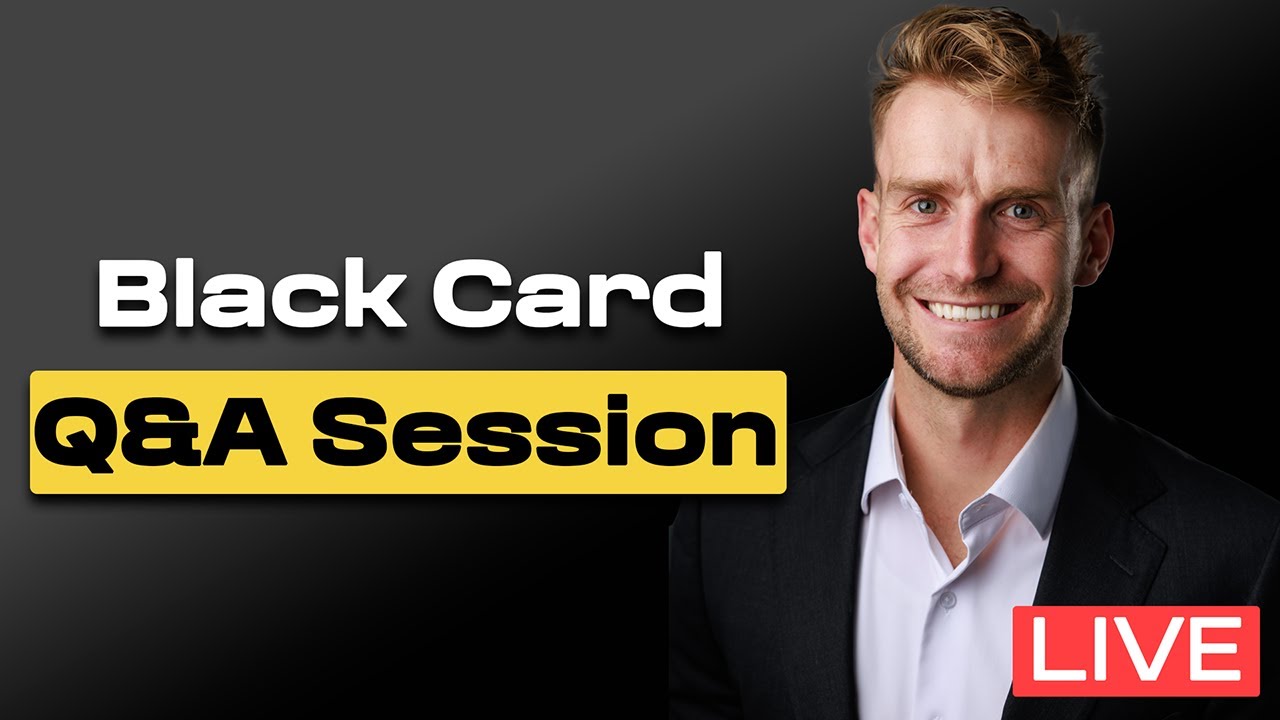
Bridger Pennington, founder of Funnel Launch, walks the Black Card cohort through fund formation and capital raising. He's launched multiple funds raising over $50 million in equity and $250 million in client AUM, and shares tactics like exclusive events, placement agents, and staged closings. The session covers fund structures, tax implications, and an upcoming AI platform for market research and modeling.
Chapters
Alright, so for today's call, we're gonna spend most of the time chatting with y'all. So if you're in a good spot, I wanna bring people up and what I'm told, okay, so everyone here, you guys and people on YouTube or whatever, they can just chime in. People on Zoom, you guys are all here, you've all paid a deposit to be here. You're queued up to join the cohort, which is awesome, so welcome in. I wanna answer some questions, get you guys out on a good foot so you can already start working through stuff like this next week. Monday we'll execute all the agreements, we'll onboard you next week, but I wanted to get you guys going just so you were, hitting the ground running. We have Funnel Launch AI coming out for you guys in a few weeks. You'll be the first cohort to see some of that, which is pretty cool, and we'll get into it. So let's do this. Now that you've typed those in, I want to— let's just start talking questions. I want to hear about your firm. What's holding you back? What's stopping you? What's some stuff that we can help with to get you out on a good foot when you join Blackheart? So do this for me. We'll use the chat as like our order. So type in the chat for me a question you have. You don't have to type the whole, you can even type just the first little bit, but that will be the order of which we answer questions in. So if Mike drops a good question, I'll say, hey Mike, and then I'll say, Mike, I love your question, come on live with me. I'll bring Mike on live, we can unmute Mike, and then we can talk face to face and answer your question. If you're not in a good spot to talk face to face, no worries, I can just read your question out and we can answer it from there, but I got the iPad here and we'll go from there. Sound fair? Now while you're queuing those up, let me, I'm gonna share my screen real quick. Give me one second, Briggs, and then we'll share it. If you don't know who I am, I'll talk about myself for 10 seconds here just so you know that I have authority to talk on this subject. So if you can share my screen for me. So I'm Bridger Pennington. While you're queuing up questions for me, I run Funnel Launch. Today we did this call, but I'm gonna skip down. to this. So I'll tell you just 2 seconds on me, what I do, why I'm doing this. So we just hit the Inc. 5000, number 2652 with Funnel Launch, which is pretty cool actually, that's freaking cool. Kudos to our company and everyone in our community that has built this. This is not just like our, it's not Bridger's award, this is our award. We have had, we have such an amazing community with Funnel Launch, it's so cool. So that was crazy, we hit that last week, we just got that published, anyways, really, really darn cool. This is me in a nutshell. I'm not going to bore you with some long origin story, but I started 6 businesses my first years of college. I ended up launching a fund. My dad ran a deca-billion-dollar family real estate fund. My brother is an investment funds attorney. And so they— I didn't know this at the time. I grew up in a normal household. My dad drove a car with a dent in the door. And while he was managing an $8.5 billion family real estate fund, he's now retired. That's twice as big as Grant Cardone's funds, just to give you a sense of how big.
Those are.
My dad really lived in a, just kind of lived the millionaire next door lifestyle. I learned from his wealthy partner that I come to find out my dad has all this money. Anyways, it's a fun long story. I won't tell you today. But my dad started to teach me about funds, how funds are built, how they're put together. At 22 years old, I launched my first fund. I pitched my dad for money. My dad says, no, I'm not going to give you money. And for the next 8 years, never gave me money. But was a great mentor and coach and so taught me about funds, taught me the intricacies of how funds are built. I went and launched 2 funds. You can see with Blackbridge Holdings, we got a 64% return on our first fund. The next fund, we did 219 deals over the next 3 years and actually we sold that fund to a competitor. My dad was not a partner, not involved at all, just a mentor on it and so, and my brother as well. And so after that, we had a lot of people asking us, how did you guys do this? How did you go build a fund? I have my cowboy, actually, yeah, we'll throw it on. I got my cowboy hat here. We are the untraditional, unconventional fund managers. None of us worked on Wall Street. None of us went to Ivy League schools. How did you do this? And so we put together what at the time was a small little YouTube channel that then turned into a little course and then a bigger course. Now it's actually crazy. We've had over 110,000 people take one of our courses at Fund Launch. You can see here. We've done multi-thousand person events, 300+ funds launched through Black Card. I think it's probably closer to 400 or 500 now, but 300 is the official number we post. $4.7 billion reported client AUM. And we just hit the Inc. 5000 at 2652. Pretty crazy what's happened with Fund Launch. And then from there, I actually currently, I walk the walk. I currently do this right now. I run 2 investment funds. So I run Ugly Unicorn and Fund Launch Partners. If you maybe move my keyframe there. So Ugly Unicorn is a blockchain crypto investment fund started in 2022. We've raised $24 million of equity in that fund. Fund Launch Partners here, we raised $27 million of equity. So total about $50 million of equity we've raised in these 2 funds over the last couple of years. Our portfolio AUM through Fund Launch Partners is around $250 million right now, portfolio AUM. But this is just equity raised. That's capital we raised. So I actively run these funds. We're probably launching FLP Fund 2 next year. We just launched Ugly Unicorn Fund 2 as well. So I walk the walk. I'm actively in this game. I actively do this right now. My dad, by the way, back to that story, never invested in any deal for 8 years until barely Fund Launch Partners. He put his first check in ever to Fund Launch Partners. Okay? This is my beautiful family. It's my wife. We grew up on the same street together. We got 2 kids. We got 9 chickens. We live on an acre and a half in Utah. We just planted 20 peach trees, and it was kind of that's why I got my. I'm a wannabe cowboy. I'm not really a cowboy at all, but I'm a wannabe cowboy. You know, I don't. I'm not. I'm not picking up manure and crap, but I'll hire people to pick up manure. You know what I'm talking about? I'm one of those. I want to be a rich cowboy. That's like my dream in life. So, you know, I don't want to be a real cowboy. I want to be a rich cowboy. So there's my family. We have a good social media following and some of our stuff. Here's a you know our channels that I'm sure you guys have seen some of this before. We these are some of the events we've thrown. This was in Miami. We had about 2,000 people there. We had about 1,800 people, and this is my dad and brother, their faces. We had a bunch of speakers come out in Orlando, Florida last year. So we do a lot of this. We do this day in and day out, and we help people launch funds. So that's what we're doing. We can share more today, but today's call, I'm gonna switch over here. We wanna talk about y'all. I wanna answer questions. I'm excited to get you guys into Black Card. An awesome choice to join Black Card. It's very exciting, and let's get going. Like, I wanna get you guys moving right now. I wanna answer questions. Anything that's holding you back, let's get into it. So let me pull up my, My chat here. I think you guys queued up some good questions. So if you have more questions, keep dropping them. If there's the same question like three times, I might just bucket them together. Does that sound fair? So let's do this. Okay. Let's see.
I'm sorry.
I'm scrolling to the right spot here. Let me organize my little thing. So Stephen, you can come on live, Stephen, if you want. When someone doesn't have a big network of high net worth individuals. What's the most effective way you've seen people inside of Fund Launch raise their first few million? Yeah, good question. And Steve, is Steven there? See if we can unmute him. So let's talk about this. Actually, I just did a full webinar on this this morning, so we'll hit some of this right here. So I got slides actually queued up. Let's talk about how do I actually raise capital. Today's webinar, let's see if, can you share my screen maybe? We talked about three capital wells that I go to over and over again to raise capital. So, Stephen, I'll answer this briefly, and I'll hit it in a few ways, but I'm gonna come back to your question. So the first one I talked about was hosting events and attending events. So we talked about today. I host a cars and coin event. Here's you know here's a little video of how this looks. We get people with supercars around this. State. We say supercar people like to hang out together. We host this event. We've done 13 of these. We just hosted this one last week. This is a free event. It's free to attend. We just do invite only. We try to invite people that have supercars and they usually have good amount of money. We've seen this as a very good way to expand our pool, find new people to talk to to raise capital. I'm going to kind of go fast through this because you guys can go watch the webinar I just did. We do events. We host events. We also go to events. So this last year, We attended the McGuire Woods Emerging Manager Conference, the Milken Institute. We actually joined the Greenwich Economic Forum. So these are events where people have already pooled together, people that are wealthy and have money. Like, go leverage the pools. Again, we're talking about this well, wells that I go to to raise capital, throwing my own events and then hosting events. One of my mentors, he's like, the best thing I ever did for capital raising is I hosted a weekly poker night at my house. I was like, what are you talking about? He's like, I would invite 6 to 8 guys and gals over and we'd play poker every Thursday night. And we had a core of like 2 or 3 people, but then we always invited new people and it gave us 3 or 4 or 5 hours to work with these. And I was like, man, that's actually pretty cool. So a couple other ideas. There's 2 different ways of— you can work your way or buy your way into rooms. You know, literally like our largest investor came from literally— so you can see, you can kind of read ahead here. Social media meetups. So, you know, real estate groups, networking groups, these are all working your way in. You can also buy your way into a group. So the Ferrari Club of Dallas, guess what you have to own to be in the Ferrari Club of Dallas?
A Ferrari.
All right? Like, and by buying a Ferrari, you're in the Ferrari Club of Dallas. And guess what? Everyone else there also has a Ferrari, they're pretty good people to meet. Alright? Pay-to-play networking. I've joined, a couple years ago I joined a group, it was $30,000 to join. And we got 3 events. That was it. Like, you compare Black Card to that, by the way. We only got 3 events. We had 3 networking events for 30 grand. That was it. There was no Facebook group, there was no calls, there was like nothing. That was it. And so I joined, and you might say that's stupid. I joined, I went to the event, there was about 100 people there, and guess what? Everyone else there had also paid $30 grand to be there. Pretty good group to be in, right? I joined another one that was $24,000 for a year, they had 4 events. I joined one, me and Mason joined one last year and a half ago, it was $150,000 to join for 1 year, 4 events.
Wow.
And like a small Facebook group. That's it. And again, I'm not some uber billionaire. $150 grand is $150 grand. It's good money, but I was like, man, why would— we got good information, there are good people in there, obviously sharp business owners that moved our business forward a lot faster. 'Cause I can always make more money. I can't make more time, right? Can always make more money. I can't make more time. And so I like to pay for shortcuts. If I can spend $150 grand And learn how to make $2 or $3 or $4 more million in my business next year, I'm writing that check every single time. Furthermore, every person in that group also paid $150 grand to be there. Pretty good group to be in, right? I'm a big believer in mastermind groups and buying your way in. And obviously work your way in and buy your way in. Both of these work. So anyways, I could talk further on this question. I'm gonna go fast here. I wanna talk about this, building your list. Warm outreach, that's us with Alex and Leila Hormozi actually, right here. You know, the first, so back to your question, Stephen, was around, to be honest, the first people you're gonna raise money from are your family and friends. Just point stop. That's what everyone does. You raise from your family and friends. Now, well, what if I don't wanna raise from my family and friends, right? Then don't.
Okay.
And for me, like, I don't love raising from family. I don't really talk to my family about investing. I just don't want to do that. But I do raise money from friends. Because if you have a really good deal, like the— like friends, acquaintances with you are the people, the people that already know, like, and trust you are probably the most likely people that are going to invest. Right? So double down on friends. So how do you get a bigger friend pool? You go to events, you meet more people, you expand, you host a podcast, you meet— there's a lot of different ways to expand your pool. of who you would consider friends in your circle. One thing that we did with Funnel Launch Partners, now if you feel like you've tapped out, you're like, Bridger, I have tapped everybody that I know, right? And now, I'll tell you this, don't do this in an annoying way, 'cause it's like, I don't wanna burn bridges. Don't burn bridges. Do this, a great, one of my favorite quotes of all time is, Go and ask. When you ask for advice, you generally get money. When you ask for money, you generally get advice. When you go to your friends or family here, but I'll just say friends, go ask for advice. Say, hey Joe, you know, we've been friends for years. I'm looking to put together this fund. I know you're a smart guy. You invest in a lot of funds. Do you have 15 minutes where you could like look through what I'm doing? And give me some feedback? And like, boom, that's an amazing— and most people are like, yeah, yeah, let's do it. Let's 15-minute Zoom call. Awesome. They hop on and give them the pitch and they're going to— one of two things will happen. They're going to give you really good feedback of how to change it or they're going to say, dang, this is pretty good. Can I invest? Right? Ask for advice, not money, because you don't burn bridges that way. And if someone doesn't invest, no big deal. I'll catch you on the next one. We'll see each other next year or the year after that. I'm all about long-term relationships. I'm never going to hard close anybody. Right, but these are your friends. Now, if, you know, I'll show you Funnel Launch Partners here. Oh, we got infinity screen there. Hold on, let me go here. So Funnel Launch Partners, this is what happened with us. Funnel Launch Partners, we raised $27 million of equity like we just did our, you know, this last, what, let's call it last 12 months, last 18 months. So Funnel Launch Partners, here it is, here's our website. We had gone through and tapped our personal networks. You know, me, Lincoln, Adam, Mason, we kind of talked to everybody we knew and we weren't quite to our goal. And so we thought, let's bring in other people with more networks. So we went and brought in a guy named Todd here, this guy. You can see some of his bullet points here. Very successful individual. And he loved— we asked him for advice and he gave us some advice. He's like, are you guys really doing this? Can I invest? And we said, yeah. And we said, hey, well, Todd, do you want to be more involved?
Yeah.
Do you want to be a partner with us? And we talked through it. Anyways, he became a partner with us. We said, hey, Todd, can you help us find some more people to close up this fund? He said, sure. He introduced us to Troy. Troy, his last fund was $6 billion AUM. Sorry, this last firm he was at, he just retired. Same thing. We asked Troy for some advice. He loved it. And he's like, man, can I actually be involved? We said, sure. We gave him a stake in the business and said, help us find more money. So, he put some good capital in and then he introduced us to, I don't know, dozens and dozens of people. And he's like— now, these guys are partners with us. They're on the firm. They're on the investment committee now. And we had guys hopping on the phone with us from Troy and they're like, hey, Troy told me to call you guys. We're like, yeah. Like, well, give me the pitch. We give them a 15-minute pitch. Like, yeah, OK, I get it. You know what? I trust Troy so much. Everything this guy touches turns to gold. I'll write you a $2 million check. Like $2 million, million, $1.5, $2 million, $2.5. It was, it was like, whoa. I mean, Troy and Todd together, they're partners with us, like really accelerated our cap raise and got us to our close. So if you feel like, back to Stephen, if you feel like you've tapped your personal network, maybe you have, bring on partners that have a good Rolodex, that also have maybe a bigger range of family and/or friends. that you can raise from. Is that making sense? Hopefully that's good. Let's, we'll keep going here, maybe stop sharing my screen. Stephen, are you there? Is that helpful? Can you talk? Oh, there it is. Yeah, no, that's great, that's great. I appreciate it. Okay, awesome. Good question, and it was right on what we just talked about, so I had all the slides built up.
Yeah.
Perfect. Okay, let me pull up, we'll keep going down, and my team always tells me to go faster on questions, so I'm gonna try to go fast. I can be long-winded sometimes, so here we go.
Matt.
Matt says, not a strong system in place for capital raising and some contracted fundraisers simply couldn't even set appointments, let alone close. Yeah, good question. So back on capital raising here, you can hire, and maybe Matt, you can unmute yourself if you want, but you know, there's placement agents, there's marketing groups. We have hired a bunch of them. To be frank, they all are okay. Some are better than others. I have not found on a fund 1. I bet they're really good for your 3rd or 5th or 7th fund. But on fund 1, the closer is you. You are the closer. Now, other people can set appointments, they can set up meetings, but you are the closer. And oftentimes it's going to come from your network or the network of the founding team. And so, yes, we've hired some. We hired a placement agent. We paid them like $10,000, $12,000 a month for 6 months or 8 months, and they set up appointments and stuff. And there's some good ones, some bad ones. But, you know, it's hard to decide on, especially on a fund one. Matt, anything you'd ask furthermore on that question?
Yeah, no. So, I mean, you bring up a really good point. So, what we had— so, we hired someone internally basically on a contract basis. She was very all about hitting her personal network. We went down to Nashville, threw a huge event down there, had 30 investors come, dropped a pretty, pretty penny on an event and a happy hour. I would argue it was successful in the beginning, but then this individual just failed to set appointments. As the head of the fund, I take responsibility for that. I outsourced that incorrectly and kind of career point in what I've learned since that's been about Gosh, it's been about 9 months now since that happened. We just realized we have to bring it internally. So I've also brought on 2 new partners with an extended network, and we're going to go from there. In addition to friends and family, which I agree with you, Bridger, is the first stop. I'll digress.
Is this— was this person— did you give them equity in the company or were you just paying them as a placement agent?
So we were giving her— so there was 2 things. So originally we were going to give her a huge share on the funds that she raised, and then we're going to put her on a salary after she raised her first $2 million. Then we went out to another firm based in Sydney. They were also worldwide. This may be off topic, but I just removed a business partner that never sent the $250,000 retainer fee. So we're dealing with a little bit of a Oh, kind of an internal issue dynamic that we're shifting. But from what you said, any of the placement agents we even got out to, they're like, yeah, sure, we'll take your $250,000, but we're not guaranteeing anything. Yeah. So yeah, another thing.
No, it's— man, I'm sorry about that. We, we have also wasted some good money trying. Let me share my screen for a second, actually. Something I have learned, and sometimes from trial and error a little bit on this. So there's 3 roles in every fund. You have your expert investor, your fund manager, and money raiser. We're talking kind of money raiser over here. So, you know, there's this group called— we're kind of hitting them here. Let's see. Oh, this is better. Here we go. So you have what we're calling placement agents. Placement agents are an RIA or a broker-dealer. They're paid a fee or a commission. They have a license to raise capital. These are hired guns. You know, people always ask, hey Bridger, if I bring you some money, can you pay me a fee or commission? And I always go, do you have a license? And they go, no. And I go, sorry, it's against the law for me to do that. Placement agents have a license to do this. And that's kind of what we're talking about. To be frank, I think it's very hard on a Fund 1 for most placement agents to even help. We have had, I mean, a couple of them have been okay, but it's just hard. And a lot of them, they want a retainer. You know, yeah, like you said, $250 grand retainer. They also want 2% of the capital raised. I mean, it's hefty. And on a Fund 1, it's oftentimes hard. You wanna find someone that you can align incentives with, et cetera, and these can be good, but it's just, man, it's hard to find the right one. I'd be very careful before you hire a placement agent, right? And you already know this, Matt. It's almost luck if you get one on Fund 1. But their viewers are the same. Yeah, I totally agree. I think for a fund 3, fund 4, these can be really solid. I'm yet, I'm in this game, like I'm yet to see a really good place. We try to find one, like we're trying to find a really good one for, anyways, it's hard. Another way you can do it, like you mentioned, you bring on people. Something that we have liked, I'll just give you one example of partnership things. So every capital raiser in the world will promise you the moon. They're going to tell you, oh, Bridger, dude, $50 million, no problem. We can raise maybe $75 million. I mean, we can raise you whatever you need. And great, man, that sounds awesome. And again, we're going to bring it. We got to vet them. We do all of our due diligence checks. And we— let's say we want to bring on this partner. This is how we have structured deals that we really liked. We have done this. We want these people to be, you know, they have what's called a founder, an owner's exemption. So we want them to be owners in the GP. We will give them For example, like we'll give you 15% of the firm for raising the $50 million. And you get that day one. Like today, you are now a 15% owner. We've seen this be the best way to do it. You give them the money upfront, not the money, the equity upfront. But then in their contract, if they fail to meet responsibilities, they can be clawed back. So we've done one where it's like in one year, you have 12 months And you're going to raise $50 million. Great. But if you raise half of the $50 million, $25 million, you're subject to clawback to 7.5%. And then we can do an extension if you still don't raise it. But if you raise less than that, you can be clawed back all the way down to maybe 1% or 0.5%. When I've talked to, I don't know, dozens and dozens of capital raisers, this has been a very successful way to do it. That's what we did with our advisors, the guys that I just mentioned. We give them equity up front. They're, you know, they have a lot of responsibilities. It's not just capital raising. They're members of the team. They're helping across the board. We're all— because it's a startup, everyone's helping do everything, right? It's a startup. But the core responsibility is capital raising. And they feel like an owner. They're part of the firm. It gives them a lot more like buy-in. But hey, if they don't deliver, and actually if anybody doesn't deliver, if our fund manager doesn't deliver, if our expert— if Everyone is subject to clawback per a supermajority. We all can get clawed back if we don't participate. So that's been useful for us when bringing on partners. Matt, any follow-up questions to that? No, that connects well.
Even 2 of the new partners that I brought on do have a pretty broad investor network. And I said, hey, listen, it's just time to start coughing up equity. So I guess for everyone in the cohort, I just want you guys to kind of know my background. Last two years have been setting up launching this this lower middle market private equity firm plus a fund. I've I've done a lot of what I would I don't want to call them shortcuts, but what I thought would get there quicker. It's just it just you know it is it is what it is, and I you know everything that you're saying, Bridger, is kind of in line with what we've experienced and what we're gonna have to move forward to. So yeah yeah no no no follow up. I'm I don't mean to be a yes man. I'm just You know, kind of from what our research has shown, that's what we're seeing too in the environment. So thank you.
Well, appreciate you. And it's gonna be, yeah, good to have you in the cohort, man. Let's get you going. Let's get you, let's get you going. That's awesome, Matt. Um, okay, we'll keep, we'll keep going here. So let's, uh, we got Nick. How do you attract and acquire investments to get your fund rock— rocking and launched? What's a good start, or do we get advice on the particular AUM to start? at to have success getting funded. So kind of more on cap, we kind of hit a few cap raising. Any, Nick, we might've already answered your question, but anyway, any follow-ups to that, Nick?
No, no, no, I'm tracking. I mean, you answered that pretty dang well. I think my question was just on the backend, as we come into Fund Launch and we get the resources that you guys have, are we then able to, you know, better assess AUM moving forward? Or, you know, because I think a lot of times we do go for these larger targets And then as we get going, we start building our networks, we start getting these people investing, and it's taking a little bit longer to get where we need to go. It's like, okay, do we have a realistic expectation? And who sets that expectation? That's kind of my question there.
Yeah, that is up in Black Card. It's up to you. It's your fund, right? But we are advisors, so you can bounce ideas off of us, right? We serve as a, I don't know, a really good sounding board, I guess you could say. I'll just tell you a real story with Fund Launch Partners. We originally were like, hey, let's do a $20 to $30 million fund. And so we started like kind of in that and we built financial models and we were like, that would be a good idea. And then we talked to a few actually placement agents that were like, you guys should bump that up. Like, let's do like do $50 because $50 million is weights. It's better to— it's easier for us to raise for. It's a bigger number. We can get bigger checks. We said, okay, that sounds great. And then we had a big placement agent. We hired a placement agent. This guy was the One of 2 placement agents for Blackstone. I mean, very qualified individual, has raised $7.5 billion. And he's like, he loved us, wanted to work with us. We hired him. He's like, guys, you guys should bump this to $100 million. And we're like, wow, okay. Like, you're— and he's like, if you guys are $100 million, it's way easier for me to take you. And like, we're like, cool. So we bump it to $100 million now. And we're like, okay, let's go. And then we start taking calls and calls and then— It was just slow. It was a slow capital raising environment. This is last year. And then we talk with him. We go back and we talk to our other advisor, a different— this is Troy. He's like, you guys, let's go way small. Let's go $30 million and let's oversubscribe it. And then we can just create pent-up demand for fund 2. And this guy, his last fund, I'll be rough on the numbers, but I believe they were raising $750 million on his last fund he just did. They didn't raise $750 million. They ended up raising about $1.2 billion. And they did it in about 4 weeks, which is crazy. That is a crazy amount of money. He's our— he's now our partner with us in Fund Launch Partners. And his whole thing is like, I have trained my investor base Whenever I open a fund, it's going to be oversubscribed and committed and you better get in fast. And so his whole concept was do a smaller amount, close it, oversubscribe it and give people FOMO so that when you open up fund 2 or fund 3, they want to get in and they're like— and he goes, that's what we did. We opened up a $750 million raise and oversubscribed at $1.2 billion in like 4 weeks. And I was like, wow. And so he's like, you guys should take your target from $100 grand down to $30 million. And we said, okay, we'll do $30. And so we did that and it turned out pretty well. And right now we're, I guess, teasing up for fund 2, which will be next year. And we have a lot of capital that missed out on fund 1 or only put a little bit in. And it's actually a really interesting marketing strategy of urgency and scarcity to get in the next offering. So anyways, you can take that however direction you want to take it, but that was our journey. We literally did that. We started at $30, then went to $50, then went to $100, then back to $30. So, I don't know, Nick, if that's helpful.
No, that's phenomenal. I appreciate that. That's perfect. I mean, also looking at funds, when you, you know, you have these hard closed funds where you're like, hey, we're gonna do 30 and we're closing it. There's no, you know, extra investors after the fact. You know, I, knowing where to go with that, right? Do we keep it open? Do we keep it, do we close it and just make it a hard AUM? Um, that's, I mean, that was great direction. So, I appreciate that.
And well, and usually you have a minimum. Close amount, like let's call it $30 million. You'd say, hey, our minimum close is $10 million. So once we get $10 million, we're striking our first close and we're doing a capital call. Money comes in and then we're going to actually start buying assets and we're going to continue to raise and we'll do a second closing when we're at $17 million and a third closing at $22 million. And then we'll do a final closing at $30 million. Right, and so you're already, you know, for us, like Fund Launch Partners, that's pretty much the exact path we did. When we were at $17 million, we had already done like 4 deals. And so we were showing, hey, we already got 4 deals that we've already closed on. They're already doing well. We're wrapping this thing up. And a lot of investors that were on the sideline were like, oh shoot, these guys are legit. Okay, fine, I'm coming in the final close. And we raised that last $12, $13 million. I don't know the— don't quote me on the exact number, but that last— $12 million. Chunk, like very quickly, because it was all the urgency at the end to come in. And so getting to the first close is the hardest. Get to that first close, start doing deals. You'll have a minimum first close and then it'll build momentum for your firm. It's all about building momentum and having a good story around your firm and the momentum behind it. So that's what I'd say, Nick. Appreciate you. Well, let's keep moving here.
All right.
Let me read some of these. We've hit a lot on fundraising. I might I might pivot us, let's see, let me read a couple of these. I'm gonna skip down, we can hit some more of these too, but someone asked paperwork, do you have all the systems, do you have a system to streamline paperwork? And the answer is yes, actually you wanna share my iPad? So if you see, Here, when you come into Black Card and you guys join, you'll probably see this thing a lot, by the way, this is the Funnel Launch Formula. These are all, all these things here are sub-frameworks that we share and teach from and you'll see this throughout the platform, okay? How to build your edge, find asymmetrical risk, you'll see all this. So the way we talk about stuff, we want to, we're gonna focus on, I'll erase here. Actually, I'll scroll down here, this'll make it a little more simple. Your deal and strategy. Do you have a good deal that has a strong risk-adjusted rate of return? Let's go frame that deal out and then let's go get actually verbal capital commitments. And we're going to do this until we achieve validation. Then and only then, once we validated that you have a good fund idea— and by the way, this is a circle for a reason. You're going to keep doing this. You're going to talk to investors, work on your deal and work on your structure until you find— Man, we've got, we've actually got something really good that investors want. We validate our idea and then we cross over into the legal formation phase. And the answer is yes, we have a pretty streamlined process to do legal formation. We do a lot of these. For me, this is kind of the, this is the easier part of it. Like, it's funny, most people are like, that's the hard part for them. We've done so many of these, it's, this part doesn't stress me out at all. Like, this is the easy part. Now you, We'll have to decide. I'll go over here. You're going to have to decide what type of fund you want to have and, you know, Form D filing, stuff like that, that we can answer all these questions for you. But this part, we put together docs and we get to the launch. We file your Form D and you are now live. And then we hit the— I'll scroll back down.
Sorry.
The more simplistic version. We launch and then you're heading to capital markets again. You're heading to that first close like I just talked about with Nick. You're then buying assets. You're doing asset management.
Mm-hmm.
And then you're building out your firm and you're doing this forever. So yes, we have a streamlined process to do this. By the way, a little secret, we are building, you see my shirt here, it's Funnel Launch AI. We, Funnel Launch AI platform is, the prototype is done. It, actually I could show it to you right now if you want. It's pretty cool. So a lot of the, actually the docs and other stuff, we are gonna be able to automate and build in Funnel Launch AI. That's awesome. Y'all being in this cohort, you'll be the first. We're gonna— we're just rolling out to Black Card first. You guys will be the first beta test users on Funnel Launch AI. So how it works, I guess I can share my screen briefly, give you a little sneak peek. We have— we've really not shared much of this. So if I'm here, let's see if that'll work for you. So this is the dashboard you guys get, by the way. I have admin access so I can see. We have not made this public yet, but you can This is a— so I asked it to create me a Las Vegas value-add fund. It goes through and generates a lot of the stuff for my fund. There's about 147 data points that go into every fund that gets built that we have identified. So it'll come through here, does all, you know, deep research on the Las Vegas multifamily market, builds me different charts, rent growth and inventory growth. Now we're going to change how this looks and feels, but just get a sense of how this looks. Pulls you market analytics. It'll actually go find you high net worth individuals in the Las Vegas market that like multifamily real estate and comes here, you'll see in the fund builder here, you can go and edit, you know, what kind of fund you're going to build, all the fields below here of what structure you're going to do, how you're going to map out distributions, for example, and other things like that. This will change this, how this interface looks. That's why it's not public yet. You can even go calculate how long it'll take you, what, you know, probabilities of fundraising, stuff like that. So it should be a pretty powerful tool to help you guys move way faster. when you join Black Card. So anyways, and then that will all populate into your legal docs. It hands it right off to our legal firm. They populate right into their docs. They can go and check everything. We have real humans at that point go and check everything, make sure legal docs are done. So it's a pretty streamlined process. So yeah, should be pretty fun. Alright, you can put me, yeah, thank you. Let me read some of these. Let's go, Mark. I'm on a team setting up a fund in Abu Dhabi to attract investors from that region and hold global assets. Several interested investors are based in the US, so we are looking to setting up a separate US-based fund or a feeder fund to target family offices. Best way to go and would welcome your thoughts. Welcome to the cohort. Yeah, welcome in, Mark. Feel free to unmute yourself. I will share my screen here. Let's talk about international funds. So very cool, you're setting up a fund in Abu Dhabi. And we can, let me just, I'll set a framework here and then I'd love to answer your questions, Mark. So international funds, I got my beautiful map, alright? Beautiful map, added it here myself. So anytime, I'll go like this, anytime you cross a border, so if we're in the United States, anytime you cross a border, You now have to work with the securities and the tax division of that country. So in the United States, that's the SEC and the IRS. Y'all following? If you cross a border into Canada, you now have to work with the Canadian version of the SEC and the Canadian version of the IRS. Hence, when you do that, your legal complexity doubles because now you're filing, you know, you got instead of just hiring lawyers in the U.S., you got to hire lawyers and tax people in both countries to help make sure it happens correctly. OK, so what smart people have found now, I'm going to give you an analogy. This is not the gospel truth, but I want to give you an analogy of how this kind of works. So if you are in the United States here and you're running a fund and you're raising capital internationally, And let's say this is years ago. Let's say you're in Europe and you have a bunch of investors in Spain right here. Here's Spain. And they want to invest in the United States. Well, if they invest directly into the United States, at the end of the year, they're going to be issued a K-1. And because they're issued a K-1, they got to now hire a translator. They got to hire a U.S. tax person and file US taxes, which is very cumbersome for someone in Spain, right? They don't want to do that.
I don't know.
That's super annoying. So what smart people have figured out in the past is this concept of a feeder fund, which Mark talked about. So I just wanted to explain this, then we'll answer Mark's question. So years ago, what happened was they would say, okay, let's have you invest into the Cayman Islands. And the Cayman Islands is a pass-through entity, and then the Cayman Islands will, you know, we have 10 investors coming from Spain. You can see them all here. All those conglomerate into one entity. That entity invests into Delaware, a Delaware entity, and then that entity invests into the fund. Y'all following? So, it would be an international feeder fund. At the end of the year, K-1s are issued. I'll go back to red here. K-1s are issued.
What are K-1s?
Here and then they're issued here. And the tax is paid. They pay the tax. So, there's no, like, there's— I know there's a lot of illegal Cayman Island funds. This is the legal way to do it, okay? There's also illegal ways to do it. This is the legal way, alright? We want to be legal here. The tax is paid by the Cayman Islands fund. Okay? And then you just pass on the returns. I'll put green here, pass on the returns back to the people in Spain so that they don't have to worry about the US tax burden. Y'all following? That's why you would do that. Now, to set this up costs a good amount of money. I think my dad was sharing, you know, their first set of fund docs was like $30,000. When they set up international feeder funds, it was about $250,000 for legal docs. My brother, who's an investment fund attorney, he worked on a fund. I'm not joking. They spent $5 million on legal docs because they were doing this all over the earth. Okay, so just your legal expense goes up. And so hence you need to justify doing that now. So if you're going to raise from Spain and it's like $100 grand, it's probably not worth the legal cost. But if it's $100 million, well yeah, it's probably worth it. Now one other thing I'll share. A couple years ago, the European Union outlawed Cayman Island funds. They said you can— no European citizen can invest into Cayman Island funds. Oh shoot. Well guess what? At this— in the same moment, they opened up Luxembourg funds. So if you're a European investor now, and again, don't quote me on this, but this is a— I believe You would invest into a Luxembourg fund and then that Luxembourg fund invests in the United States. If you're in Australia, you invest into Alberta, Canada has feeder funds. So you have— and every year all these tax treaties change and they're always different. And so you have to have very smart people that are up to date on all these changes on tax treaties and stuff to make something happen. You know, so anyways, I'll pause. That's the idea. This is international feeder funds. So if you're going to raise internationally, which you totally can do, and we have legal firms to help you do this, it's just the cost of it jumps quite a bit.
Okay?
So back to Mark's question. Mark's like, hey, I'm in the Middle East. I'm setting up a firm in Abu Dhabi. I have US investors that want to invest. You know, how do we do this? To be frank, Mark, I do not know the Abu Dhabi laws currently on this, but in BlackCard we can get you a law firm that can help you make sure you can figure this out the right way. But Mark, any follow-up questions on that? Want me to double-click on anything? Oh no, that's, that's great. I really appreciate that. Yeah, it's just, you know, obviously we'd like to access the US market and US investors and, you know, just looking at the best way to do that, whether it's a fund in parallel with what's happening over there or that we do some kind of feeder arrangement. between, uh, the US investors and, um, and the portfolio that's going to be based there. So are you guys trading like public securities, like commodities, options, stocks? Like, no, it's just— you could do a parallel fund or no? Are they hard assets? They're hard assets, yeah. Okay, so you're gonna need to— you're gonna need to mix that money in somehow.
Yeah, yeah.
So if that's the case, yeah, you're probably gonna do— and where are the assets at? Where are they, in Abu Dhabi? Are they in the United States? No, they're global. Yeah, all over the place.
Yeah.
Yeah.
So, you'll probably— you'll need a good firm, a good law firm. So, if you're buying property in France or wherever the place is, you're now pulling money from the Middle East, from the United States, and getting somehow getting it to France in a very tax-efficient way. And so, you're going to need probably a pretty good firm to do that, to make sure it's all done the right way. Yeah.
Yeah. Awesome. Thank you. Okay.
Thanks, Mark. Stephen. Yeah. So do single asset fund members also get access to the cohort? Good question. So Black Card will do a cohort together just for Black Card members, which are doing full blind pool funds. So you guys all join together. For people in single asset funds, the plan is to do the same thing for y'all. So if you're doing a single asset fund, it'll be a different group, but you guys will have your own group with single asset funds. And then people with Black Card will have their own group as well. Yeah. Happy to talk with you about that. We are trying to get international exposure and we have 2 deals in our pipeline. Cool, so yeah, Matt and Mark, you guys can connect. Sweet. See, this is why we all talk, man. It's an easy way for you guys to connect with one another. You'd actually be surprised. It's funny, we do a lot of surveys in Black Card. So we ask, we always ask our group, hey, how are we doing? How can we improve? What do you love about Black Card? What do you hate about Black Card? We just always are trying to get better. What's so funny, this has happened for the last like 4 years. I mean, we've ran Black Card for a while. People always join for a myriad of reasons. I joined Black Card because I wanted to set up my fund or I wanted to do that. There's a bunch of reasons why people join Black Card. And then we ask, why did you stay in Black Card? And by far the number one answer always is the network of people I get to be with in Black Card. I went to the events, I was on a Zoom call, I met Matt and Mark, just met, like, you know what I mean? I just met this guy, oh man, we're now on a phone call, we're doing deals together, like, it's really, it's actually really, really cool, the network effect that Black Card has created, and selfishly, like, I love being a member of Black Card. I know I'm like the owner, founder, whatever, like, as a member of Black Card, I am now introduced to some really cool people. If you share my screen, actually, you'll see, this is the Black Card Slack channel. So we have like a deals, this is all Black Cramers, we have 1,400 members in here, which is absolutely bonkers. But we have like a deals channel, so people can, they're just dropping their deals, like any deal that they're selling, buying, putting together, emails like, hey, come connect with me, like it's a really cool place. Here's my pitch deck on a, you know, tech, AI tech-enabled value-add multifamily. So you can go click and like you can actually just see deal flow all through here, what people are doing, like what a cool thing. People drop all their wins. You know, we love celebrating each other's wins. Anyways, it's just good to be around good people and you can just see the general channel of people talking about what's going on, asking questions. You'll see like, hey, anyone here establish debt funds that would be new, would fund new construction? And we have 4 people that have replied here, you know, that can help and work with that. Hey, I'm looking for a $300,000 bridge loan, I'll pay a referral fee. Like here's somebody that just, you know, hey, I'll help you out, I'll hop in, I'll like, you know, be with you. So it's a pretty cool group to be a part of and then a lot of people, I gotta catch up on my messages here, but people will DM me, I talk to them, you know, over Slack, we use Slack quite a bit. It's been pretty useful for us to communicate. All right, Mark, Nick. I'm gonna come back to your question, Nick, just so we can hit a few other guys if we have any. I might come back in just a second. Thanks for bringing the comments on bringing international money into the U.S. fund. What about people investing from the U.S. and then the money is used to buy real estate in Mexico, for example? So yeah, Cody, if you're If you have a fund in the United States and you're going into Mexico, oftentimes I would just keep the fund in the United States. It's a US-based fund. Maybe it's a Delaware entity or whatever, Wyoming entity. And then that fund just makes an investment into Mexico. There's sometimes the fund would have to pay a fee or a tax or something on that.
But the— for—
I would just keep it like that. And that's totally— it's a very normal thing to do. It's not that crazy. It gets more complex when you're raising money overseas. But if you're just doing an investment into Mexico or Africa or something from the US, a lot easier. But if you were raising from Korea and Singapore and Australia all at the same time, that's when things get pretty complex. Yeah. This reminds me of my Cornell MBA cohort, but with everyone that wants to cap I love it. Yep. Do you have a lot of people come to the program who have already set up funds, or is it mostly aspiring fund managers? We have both, Keith. Yeah, good question. So we have a mix of existing fund managers that are, you know, building their 2nd, 3rd, 4th fund, and then a lot of people that are just building their first-time fund. A number of people also have done single asset fund deals. Like, they've done— like, we had one guy, they, you know, actually a handful of people, but One guy I'm thinking in particular, Jacques, they had done like $230 million of real estate developments and now they want to do a full-out fund. And so they wanted to set up the fund, they joined and they joined from there. So we get a mix of both. Yeah. Just a heads up, in Mexico you will definitely need boots on the ground and get ready to pay a cash referral fee. Hey, we'll see. I don't know. They're like declaring war on the cartels, right? I'm very curious how that all plays out. The Trump administration has said they they've targeted them as terrorist groups. That's I mean pretty interesting. We'll see how that. I don't know if we're going to be bombing on the border. I don't who knows. That's going to be very interesting.
Very.
I don't. We'll see what happens. Um, I don't have they done anything yet? I don't think they've done. Maybe they have. I know they've done deport, but I don't think they've done like cartel like airstrikes or anything. I don't think anyways. But I don't know. A lot of saber rattling. We'll see how it goes. Ha ha. Yeah, we're here in Guatemala as well. And as much as Latin America runs on bribes. Yeah. Hopefully not what we did to Panama under Bush. I know, we'll see. I think actually yesterday I read the Pentagon just put 3 warships down by Venezuela to stop drug trafficking cartels. So I don't know, we'll see.
See what they can do there.
Alright, let's go back to Nick's question. I think I'm up to speed on the questions here. So Nick asked the question, how to evaluate asymmetrical risk? Good question, Nick. So let me share my iPad here. Asymmetrical risk. So if you can see my— oh, give it a second. Alright, here we go. The iPad of truth and justice. Here we are. So Funnel Launch Formula, down to the deal and strategy here. So again, we wanna get really good deals. The easiest, by the way, the easiest way to raise lots of capital is have a really good deal. Like, have a really good product. Marketing gets much easier when you have just a really good product. Right, so build a really good product. So let's talk about asymmetrical risk. Asymmetrical risk is a fancy term. So asymmetrical risk is a fancy term for something that has relatively low risk for relatively high return. Return, there we go. And that delta, that difference, You know, you can call that's the alpha of— and that's a very simple way to just describe alpha. There's a more complex way to describe alpha. That'd be a simple way to describe alpha. Relative— that's what we are striving for as fund managers. Can we find investments or assets that have relatively low risk for relatively high return, a risk-adjusted rate of return that's good? So I like this framework to assess my asymmetrical risk. So We have things. Shout out to Adam Campbell to help me put this together. So let me use. I'll use black here. So for any deal and or fund, I like to do this. I go and write down all of the risks that I can control and ones that I cannot control. Both are important. Okay. So and Ray Dalio, I was with. We were with him a few months ago at the Greenwich Economic Forum. He said. You know, he goes, we at Bridgewater try to find 10 to 15 uncorrelated assets. And what we found is when we put them together, we can reduce our risk by 80% without losing our upside. Essentially saying we have asymmetrical risk at Bridgewater, right? Which they probably do. I mean, they're a $150 billion fund, right? That's what they sell. That's what we're all trying to do. So back to this. So like if I take a multifamily real estate project, What are risks that we can control? Like how much rent we charge, right? How much we charge for rent. I'm talking multifamily real estate. We can, you know, operational. I'll just put ops. We can control like the rehab costs. These are all risks that we can control, right? Our team, how we, you know, how much debt we put on it, right? These are all things that we can control. What are things we cannot control? Well, interest rates. That's a big one. Still important though, right? Even though we can't control it, it's still a very important thing. You know, supply chains. We can't really control supply chain. We can't really control like a global war, but these are important things that still go into our underwriting criteria. So what I would tell someone to do is you go into— in Black Card, we can help you do this, and you can do this yourself, but build a some kind of a model with your firm, walk through all the risks, isolate each one at a time and say, how sensitive are we to that thing? And how does it drive a worst, a base and a best case scenario? Y'all following? So let's take a simple one is interest rates. So if interest rates go up by 1%, they stay the same or they go down by 1%, How does that affect a worst, a best, and a base case scenario? For example, if our fund just goes out of whack, like if, man, if interest rates went up 1%, I mean, it would just kill our fund. Or if they drop 1%, oh my gosh, that would be amazing for us. We are very sensitive to interest rates. Does that make sense? You also might run this and like, oh, it doesn't. It actually doesn't affect us that much. That means we're very insensitive To this. Does that make sense? So we're going to go through and see what are risks that we can and can't control. How do we mitigate these risks? And how sensitive are we to these risks to drive a worst, a base, and a best case scenario? Through that exercise, you'll figure out, I guess, one of two things. Either your fund is amazing and you have asymmetrical risk, or your fund sucks and you have no asymmetrical risk. And it actually is a— you have the opposite. I don't know what the word would be, but you have high risk in low return, right? And so that's why we put this on the deal and strategy part of this thing, is to go and do this exercise. And then your deck, the way you present your fund, is you're essentially trying to show an investor, hey, look, yeah, we do have some risks, but we have mitigated them very, very well. And even in our, you know, we're not that sensitive to a lot of these things, and we're going to mitigate the ones that we are sensitive to. And even our worst-case scenario is pretty darn good, and our base case is phenomenon. Our best case is like amazing. We think we got a pretty good bet here. Does that make sense? And so this, this, I would do this on an Excel spreadsheet and I go from there. So Nick, any follow-up questions to that?
No, no, no.
I love that.
That was perfect.
Okay, sweet.
I appreciate it. Thank you.
Yeah, good question. All right, let's scroll back down here. I can't remember where we stopped off here.
All right, here we go.
What percent of total capital raised is expected from the GPs? Good question, Miles. Standard is about 2% of capital raised. Now, on a Fund 1— actually, this is on any fund, but especially Fund 1— the way you answer that question always is it's a significant amount of our GP's net worth is into this deal, which it should be. Now, like on my first fund, I didn't have much money. It was like 30 grand, which was a significant amount of my net worth was in the deal, which was 30 grand. It wasn't that like, I don't have that much money, but it was a significant amount. Now, like in my fund currently, Ugly Unicorn, we have, me and Dan each have about $1 million in the fund ourselves. So that's over time I've made more money and I've been able to put more money in my deals, but you should have a significant amount of your net worth in the fund. Standard is about 2%, though, I'll just tell you. Any follow-ups, Miles, to that? No, that's exactly what we're thinking. It's the percentage, and then also, this is our fund 1, so it will be a very significant portion of our own net worth.
So thank you.
Cool. Yeah, sweet. I'll also— actually, a note. Let's see. Maybe I'll do it on my iPad here. So yeah, Fund Launch Partners, you can see it here. So what we do, I don't know if you guys know this, but what Fund Launch Partners does is we actually— so our favorite funds that come out of Black Card, we try to partner invest with them. Now last year we reviewed about 1,200 fund ones in the last 12 months. We've done 9 deals. The average check size is about $1 million per deal, and it can go up to about $5 million. So on that, like We've had a number of, you know, these are some of our groups that we've done. And they were like, hey, we don't have a lot of money to put into the GP commit. And so we say, okay, we'll help you with that. You know, they're raising like a $50-$100 million fund, we Fund Launch partners will supply them the capital to put in $1 million as their GP commit. And then we usually take anywhere from like a 3% to 10% stake in their firm. So now we're partners with them. And we actually help them grow. We work with their audits. Like, we're on their team with them. We're on their pitch deck and we grow from there. So when you guys go through Black Card, as you're going through, you can come apply right here to work with us and we'd love to talk to you. We look at all sorts of deals. So that will also help with GP commitments. One thing we help with. We help with a lot of stuff. Like, some people need help paying down capital expenses. They just need, you know, capital to go hire 3 or 4 more people. Some people just want more capital directly in the investments. We can do all of that. So we help people where they're at. Okay, Ben, I'm starting a private debt fund that provides debt financing for business acquisitions. How can Black Card help in setting us up apart from competitors and setting us up for success in raising $100 million plus for our fund? Private debt fund, provide debt financing for business acquisitions. So, you know, you're doing leveraged buyouts. Yeah, Ben, I mean, we could talk through the whole value prop of Black Card, but Structuring it the right way, making sure it's compliant, walking through usury laws, putting together your decks, setting up your pitch deck, practicing your pitch deck, doing the validation like we just talked about on my iPad here, validating your idea. We do, you know, we're not a broker-dealer, so we can't go like pitch the fund for you, at least yet, but we can set you up in the best way possible to go raise money and do well. Furthermore, you might have a number of other good groups in You know, in Black Card that might want to partner with you or do deals with you, which is cool. And then there's a chance even Fund Launch Partners wants to partner with you. So they're all opportunities. There's no guarantee though. It takes a lot of work. I'll just say this up front, by the way, Black Card, anything worth doing in life takes a lot of work, especially setting up a fund. Like running a fund, setting up a fund is hard. This is not a business in a box. This is not like, oh, my little side hustle like thing. When you're going to take Millions of dollars from other people and put it into an investment strategy, like, you need to be dialed. You got to be sharp. Smart investors will look through and cut the BS. So we try to help make you extremely sharp, compliant, and just very presentable so that when you get the chance to be in front of that big boardroom and close, people are like, man, these guys are— these guys know, man, they've looked under every rock. They know every little thing that I was asking. And your odds of success increased drastically. You know, launching a fund is a lot of work. It's like, if you use my hands here, it's like, it takes this much work to do it. With Black Card, our goal is to like take it down to here. You know, like it still takes work, but it's a lot easier. And then with Fund Launch AI, we're trying to take it from here down to like here, where the AI, all of our AI agents and tools will help it make it even easier. But still, it takes a lot of work. I mean, running a fund is not a walk in the park. This is like, This is for super entrepreneurs. You know, this is for like people who are already successful in their business, already successful in investments, and now want to scale. That's when you build a fund. That's when you do it, right? And what's cool is we've now helped hundreds of people that are what we call the untraditional manager. People that didn't work on Wall Street for 20 years, didn't go to an Ivy League school, or you know, you could call them untraditional, and yet going out, they found a really good niche, a really good strategy, and they're going out and creating Crushing it, which is which is pretty cool. Now I'll say this: You're like, oh man, sounds like a lot of work. Yeah, it is. But guess what? If you do it well, like you can make a ton of money. Like I had a mentor tell me, he's like Bridger. I was like, he's you know we've laid out this whole plan of all like our you know take over the world plan. And I was like, man, this is gonna take a ton of work. And he's like, yeah. But like if we do it right. We're gonna make like, you know, $80 million. I was like, huh. It's like, is it worth the work to make? And this is our case, our example. He's like, the whole plan here will make us $80 million. Is it worth it? And we were like, oh, well, if you put it that way, then like, yeah, let's do it. You know, like, I'm not, you know, I'm not scared of hard work. Like, I like hard work. I want to dive in. Like, This is a worthwhile pursuit. I'm a big believer in business vehicles. The analogy I love to use is like, if we're in a 10-mile race, you know, together and we're racing all these, you know, Kenyan runners, right? We're probably going to lose, right? Like, these Kenyan runners, these marathon Kenyan runners, like 10 miles, they're going to crush us. But if we're in a different vehicle, we could probably compete. Like, if we had a bicycle, and they're on foot, you could even be just like a normal, normal guy Bridger, and you might actually do pretty well against Kenyan runners because you're on a bicycle. Furthermore, if someone has a car and they can even be 300 pounds overweight, but they have a car, they might still do better in a 10-mile race. I think the same thing is true in business with business vehicles. I had a friend, you know, dying to go to culinary school, wanted to be a chef. Which is great. That's awesome if you love that trade. But I'm talking in terms of money. If you spend— because anything worth doing is worth doing well. You're going to spend a decade or 2 perfecting your craft being a chef. Top chef in the— you know, let's take Las Vegas. If you crushed it, you're the top decile of chefs that make it. An average— not average. A top-performing Las Vegas Strip restaurant makes about $40 million a year. 10% gross margins. So top $40 million revenue, they're making about $4 million of net. And you're splitting that with partners. So the top, top very decile chef is making maybe $1 million a year, maybe $1.5 million a year, which is good money. But 20 years of work and you barely made it? I bet this group knows a lot of people in real estate, a different vehicle. And maybe they're just above average in real estate. And they're making over $1.5 million a year. Does that make sense? Because they're in a better vehicle. The top people in real estate are making, you know, $50 million a year, $100 million a year. Right? I take fund managers. The top fund— take Ken Griffin. Ken Griffin makes $4 million by noon the first working day of the year.
Wow.
That's how much money he makes. Like, literally, he— last year, I think he cleared about $4.1 billion he made from his fund. He's making about $1 billion a quarter. Crazy. So you're talking like you're not even in the same universe. The top chef in the country versus the top fund manager in the country. The Forbes 100 list, the number 1 category of billionaires is fund management. This is the best vehicle on earth, bar none. And so for me, I was like, if I'm going to dedicate my life to something, which all of us essentially have to do in a career, especially business, I might as well dedicate my life to something that has incredible upside, huge margins, is a really good business vehicle. So, yeah, it's going to take some work. Everything in life takes work. I'm not a believer in these side hustles and little things because they never last. The shortcut never gets you there. The long way is the shortcut. So launching and running a fund is extremely hard. Black Card makes it way easier, but it's still hard. Still takes a lot of work to raise capital and find investors, all this stuff. But I'm telling you, I'm sitting here telling you, it is so worth it to be in this game. It is extremely worth it to play in this vehicle. All right. I'm off my soapbox. There we go. Got a little passionate there. Gosh, you guys are just— Just pulling this out of me. I'll pull my cowboy hat on.
Here we go.
Alright, let's hit a few more questions here. I like having the cowboy hat on my desk. I just pull it off. Whenever I feel like I should throw it on, I just throw it on. Alright, here we go. Let's hit a few more questions here. What if I'm interested in starting a fund that invests in shares of companies that are relatively newly listed? Say they are trading between $0.50 and $10. So you're buying penny stocks. How would you assess the risk and convince investors? That those assets have potential to 500x over 10 to 15 years. So, I would say, and feel free to unmute yourself. So, you're playing in this, you know, again, public markets, so more hedge fund. You're playing a power law in that sense, and most of us are playing power laws, but the power laws, think about the venture capital model. You know, most venture capital funds are doing 25 investments. Every investment, though, has to have the chance to do like a 50x or 100x. And you play that game enough times and it'll return the whole fund. Right? You know, I have a crypto fund actually. We kind of play a similar game and a part of our thing is called moonshots. So now you have to maybe do, again, it's your asset class. I'm not an expert on penny stocks or dollar stocks. You know, you minimize risk though by playing enough power law. It might be 50 investments might be optimal. It might be 45. It might be 25. It might be 15. But there's an optimal number on that curve. Where you play the game enough times and if each one has the potential of a 500x, you only need 1 or 2 of those to return the whole fund. So that's how I would approach that. But again, I would, before I build that, like you got to do all the research on that to assess the risks, the control and the return of that asset class, the timing of it, why right now is a good time, all that kind of stuff. That's what I'd suggest to do. Any follow-ups to that? Cool. I'll keep moving on. What you're saying, this is where a team of analysts or analyst interns come in. Yeah, actually, I don't know if you guys know this, in Black Card, we will place interns into your fund for you, which is kind of cool. I've started— we started to build an internship platform, so I— we did— our last group had about 130 interns from top universities around the country. I'm talking Yale, Harvard, MIT, I mean you name it. And all the way down to some small schools as well. We interviewed a bunch of them. We had about 500 applications and we accepted 130. Okay, so what is that, 20% acceptance rate, something like that. And actually I have 2 of them in my office right now. And so as you go through Black Card, you can request interns and we will place interns into your business to help you do a lot of this. Awesome. So there you go. And you can— and now with ChatGPT and Grok, you can do a lot of cool deep research stuff to help shorten that time gap to find stuff. It's actually really, really fun. Why did you start Unicorn as an open-ended fund instead of a closed or sequenced capital call? Good question, Miles. Let's do this. I'll share right here. So go on my screen for me. So closed-ended versus open-ended funds. You can see here. So you see closed-ended funds. You can see a timeline here. 0 to 10 years. This is usually meant for funds that are illiquid.
Oh shoot.
Illiquid. Oh man, come on.
There we go.
What is going on here? Alright, illiquid. Man, this thing is bugging out on me. Alright, you guys get the idea. It's illiquid. It's not letting me draw. What's going on? It keeps grabbing that item.
Hold on.
Give me a draw over here. What's going on? Alright. Alright, I'm just not going to touch it. We're just going to leave it. I'll just tell you it's illiquid.
Alright?
No more drawing on here. Illiquid. So a real estate fund, you're going to raise here. You're going to deploy and you don't want people— they can't pull their money out because you have a building that is half torn down. Like you can't have— there's no liquidity, right? A venture capital fund. You know, you're 3 years in, the company hasn't IPO'd yet. There's not really liquidity. And so that's the purpose of a closed-ended fund. You know, this example here shows like a, you know, a 7-year target. You have a deployment period, a value-add period, and a disposition period. Open-ended funds are usually liquid. Hedge funds are this way. And so that's why Ugly Unicorn, we are a hedge fund in crypto. We are liquid. And this is a way that we sell. So people join our fund. In Ugly Unicorn, they have a 12-month lockup period. So minimum 12 months with us. After 12 months, though, you can pull money out and you can withdraw your capital. Give us a notice and you can pull your money out. And 90 days later on the next quarter mark. So that's how that works. And then furthermore, you can add more money in. We strike a net asset value, a NAV, and we strike a price at the end of every calendar month. People can enter and leave the fund at that spot. That's how most hedge funds run for that sake. And we run in perpetuity.
OK.
There is no end to this fund. It just keeps growing. So that's open-ended versus closed-ended funds. Is that helpful, Miles? Useful? Yeah, thumbs up, sweet.
Yeah, that's great.
And I don't know why my thing was all messed up here, but let's see. Alright, sweet. Can I replay this Zoom somehow? Yeah, so I think we're live on YouTube, right? So on YouTube, if you go to my channel, you'll see the replay of this. So you guys are on Zoom, I know, but people on YouTube, we're streaming right now to YouTube so you can see it on YouTube if you want to go see it. For a fund that is packaged extremely well and has a great edge, what's a rough timeline for launching an $8 million AUM fund ballpark from your experience? Nick, are you talking about getting to the launch stage or launched and fully raised?
Yeah, launched and fully raised, let's say.
Okay, man, it depends. It depends. So the actual like, now, so maybe share my screen again. This fund launch stuff here, there we go, you can see it. This can go as fast or as slow as you wanna go. You know, if you are like, hey, I'm already validated, I've got, man, I got $10 million already lined up, ready to go. They love the idea. They love, like, I know everything. We just jump right to legal. You know, we spend maybe a week here. We go to legal. Legal will take a few weeks. You know, I don't want to give you an exact, like, date. Depends on how backed up our law firms are. But, you know, let's call it, you got to get entities formed and stuff. It takes, you know, bank accounts set up, 3, 6, 8 weeks sometimes. Maybe a month or 2. It can be faster or slower if you're ready to go. And then capital markets, you know, I mentioned that one guy, he closed his whole fund in 4 weeks. Right? So like it can be pretty darn fast. Now, some people, especially on a first fund, it takes more time than that. You're working through deal and strategy. You're working through frame and structure. You know, you're working through this. You're getting validation. That can take 6 months. And that's okay. I'm here to tell you that's fine. That's why Black Card, by the way, is a lifetime membership. Because I'd rather do it slow and correct than fast and sloppy and never raise any money. And so you want to— and again, we're getting validation here, so we'll go as fast or slow as you want to go. You know, $8 million, and that's $8 million of equity raised, I'm guessing, Nick, right? Equity, not debt and equity.
Yeah, correct. Just equity.
Equity. Yeah. So, you know, that piece, if you have a good, you know, a good group of investors lined up that already like you, that have validated, yeah, you could raise that whole thing in You know, a month. Some people that might take 6 months or even a year to raise. It just depends on, you know, your firm and your team and what's going on. So it really depends on a lot of factors. So that's probably not helpful, but that gives you the reality. And by the way, I'm okay. I hope you're okay too. It's okay to come in to Blacker. You're gonna join next week in the cohort. You're coming in and you're like, oh, I got this great business idea and I'm so excited. And it all falls through. I've had this happen twice. I'm the fund guy and I've had 2 funds completely fall through. We thought, I'll tell you, in COVID. So COVID hit. We were going to go buy big box stores, renovate them, put like self-storage because like, you know, COVID, no one's buying retail or whatever. Everything's discounted. Everyone's scared. Like, let's go in and buy like old malls. By these mall shopping centers, we'll put self-storage in, we'll get them for pennies on the dollar. It's a pretty good idea, right? We put it together, we start running, you know, we're trying to raise capital. People hated it. They hated it. We could not raise a dollar. We were doing this validation spinny, you know, that circle. We're talking to people, pitching, changing, pitching, talking to people. We could not raise a dollar. And we're like, dang. Now I, Bridger, I was like, okay, I'm committed to be a fund manager. Let's pivot. And so actually we found me and Dan Young, we were on this one. We kind of separated from one or two partners because they were the real estate guys. We said, what if we did something different? And we went back to the drawing board and we did the same validation around crypto. And my partner Dan, he's on the board of Intel's board of advisors for 16 years, had one of the largest mining facilities in the state of Utah in 2014. Huge, huge warehouse of mine. Like, he's a very good crypto guy. And we built this thing. We did the validation. People loved it. On our initial launch, we raised $10 million on our first close. Like, it was like, whoa, like, oh, that was great. And the previous fund, like, we literally couldn't raise a dollar for 4 or 5 months. And thankfully, if you go back to my screen, we followed the Fund Launch Formula. We didn't build. We were just doing this. We didn't waste any money with legal. We just wasted a little bit of time. And then we did our you know ugly unicorn for crypto, and we validated that. Like oh, this is great. Built our docs. Boom launch. We raised ten million, and we were off to the races.
And we just went for it.
So it can be fast and slow. But I think the reason I tell you that, I would say be married to the game.
Right?
You might join Black Card, and whatever reason your current deal falls through, that's okay. Partner up with other people in Black Card. Find someone else in the cohort. Like find another. Like it's it's this is the process of finding something really great that has asymmetrical risk that your investors will love. So there you go. Is a Series 65 license a requirement to launch a fund? Good question, Ben. It depends. I'll tell you what it depends on. So go on my screen here. So if I zoom down, let's talk about licensing. Depends on how big and what you're doing. So who do I register with in the United States? You can see here, if you are under $150 million AUM or you're over $150 million AUM, it depends on who you file with. If you're over, you file at the federal level at the SEC. You're most likely going to be a registered investment advisor. And you would need a Series 65. So once you hit $150 million of AUM, most, most, not all, but most funds will need to get a license. Someone, you know, you have to license and register your fund. If you're under $150 million, which is most of the people on this call, I'm guessing, you are under, you file at the state level. Now, states are all different. Every state has a different thing. Many states don't require you to have a license. Some would still require you to have a 65. But a lot don't. And we actually have a guide inside of Black Card. You can go look at every state by state, like Alaska or Alabama or Kentucky or whatever the state is. And that's the state of your primary headquarters. It's like I'm in Utah. I have Delaware entities, but still my primary headquarters is in Utah. So I fall under Utah securities law. Now, one other thing, you can qualify as an exempt reporting advisor, an ERA. This is if you're between $250 and $150 million. You file with the SEC and you don't need a Series 65 license. So both of my funds that I currently run file as exempt reporting advisors. So I do not need a license currently. We will probably— we're probably going to be over this mark in the next 12 months. So I will probably need a license here in the next 12 months. Is that making sense? That's just in general for most funds. Now, there's a couple exceptions. Like, for example, if you run a— this is most regulated to least regulated. You can see here, if you run a venture capital firm, a lot of these, there's exemptions to this. You actually don't— most venture capital firms don't need licenses, which is kind of cool. Real estate is the next one. Many real estate funds, you know, under $150 million don't need licenses. All right, you can file under a 3 exemption and you're good. You know, debt or private credit's kind of in the middle. Private equity sometimes are more regulated, and then Hedge funds are the most regulated. Depending if you're trading futures or commodities, you'll have to probably get a license under the CFTC as a commodities pool operator if you're in that space. If you're trading just equities, you're usually fine. But then you're gonna fall under one of these buckets here, here, or here. So it depends on your state. So hopefully that answers your question, Ben. All right. How we doing? Everyone's still there? Robin says, I'd like to get a copy of this page. Yeah. So black card. Miles, we drinking the same drink, bro?
Yes.
San Pellegrino. Let's go. You got the glass bottle though. You're all— I'm getting the microplastics. Yeah, we can't have the microplastics here. I love microplastics, you know, just all through my blood system. I love it. Can we get a copy of this? Yeah, so all of Black Card is built around this, like all of the stuff you'll walk through, we use this, this whole formula, all this stuff is built into the system of Black Card. We actually had to go build our own backend custom portal that matches how we do this. It's kinda cool. So Fund Launch AI will be built all around this. It's actually pretty cool. This is how entrepreneurs launch funds. How much should we spend on website branding versus travel events in order to raise capital most bang for our buck? Yeah, that's a great question. Website and branding, you know, you can look at our pages. They're not too crazy. You know, a couple grand I think you can get professional headshots. Actually last week at our event, We brought in a photographer, we got professional headshots for all the members of Black Card that were here, we got professional headshots done, we actually let them come in my studio and film professional videos. You know, a website, they're not too much money nowadays, pretty simple. As far as events and travel, so I mentioned going to events, man, it's across the board. And it's, you kiss a lot of frogs is the hard answer. I'll just tell you what we did last year. We were trying to raise for Funnel Launch Partners, Lincoln, Adam, my other partners over there, and myself, we traveled to a bunch of events. If you share my screen, Brigham, we did, I'll give you a rough estimate, I think it was about 20 events. And these are not like local gatherings, these are like events, like you had to pay, buy a ticket, fly out, we did about 20 of them last year. One of them, you know, I think we went to like iConnections, it was, Man, $20 grand, something like that. We joined the Greenwich Economic Forum, that was $15,000. You know, we went after it. These are events, like you're going, you know. We went to the, I wanna say we did Milken Institute, and I thought we did also the McGuire Woods. Anyways, you pay for all these. Some are more expensive than others. Of the 20 events, 16 of them, For us at least, did about pretty much nothing. Like we had a few leads, but like nothing came of it really. But we went to 4 and 4 events like raised us a ton of money. Now, we didn't know which 4 of the 20 were going to be the ones. We had to go to all 20. To figure out which 4 events were the ones to go to for us, for our asset class. Other people, and every asset class is different, every personality is different. This was like, it was just brute force. 20 events, that's almost every other week you're going to something, like over a year, right? That's a good amount of travel to go and raise a fund. We also threw our own events multiple times, multiple meetups, gatherings, stuff like that. I talked about this earlier on the webinar, but it was just a lot. And again, like, you'd actually be surprised, you'd be surprised at how many events I go to that are like local gatherings. Like, oh, there's a Parks event, just, yeah, I'll head over there. Like, I just go and try stuff out. Like, I'm all about, there's not gonna be this perfect whatever system solution, go, like, it is brute force. When you're raising money, you are talking to every person possible. You're going to every event. You're trying out every avenue, and you're gonna figure out something that works well for you. I'll tell you one story. We had a guy in Black Card. He did a bunch of this stuff. Couldn't, you know, wasn't raising money. I love— some of you guys probably heard the story. He is a dentist by trade. He was, I think he was doing a dental roll-up, I believe. He then joined a Facebook group of dentists. And once he became friends with the group owner, and once a month they do a pitch for like something, and he pitched this dental group.
Oh, cool.
And he raised like $5 million from a dentist group on Facebook. And then he did it again.
And then he did it again.
I think he raised, I don't know, $15 to $20 million, like all the money he needed from literally a Facebook group of dentists. Because for whatever reason, he just can connect with that audience. And he like, you put him in front of lawyers, he can't close anybody. You put him in front of like, he just can't close a soul. But he closed, I don't know, $15 to $20 million in a Facebook group. You know what I mean? So it's just, it's so interesting capital raising for different people and just different things that hit different target audiences. And there isn't, as much as I want to make like this perfect path, there just isn't a perfect path for capital raising. It is brute force. It's kissing a lot of frogs. It is trial and error. It's bringing on partners. I think that, who was it, Matt that came on earlier? He talked about his, you know, they hired a placement agent. It went bad. He had a partner. It went bad. Like, we've done the same things. It is just, it is entrepreneurship. And, you know, that's just how it goes. Now, Black Card, you can ask people what worked for you. We can give you suggestions of what ones worked for us. I already told you a few names of ones that we liked. You know, we're gonna build your data room, your pitch deck, everything to make you polished and like perfect and make it like 100%. But still, it's a lot of work. So, there you go. Awesome. When will your AI platform be launched? It looks great. Yeah, we're it is prototype is live September about I think September fifteenth. We're gonna go live with our beta users to Black Card. That's the current plan. So about three four weeks from now, y'all will be in y'all be involved in that. Y'all there's my y'all again. Y'all will be involved with that. Yeehaw! I have a dream to be a— I'm a rich— I want to be a rich rancher. I don't, I don't shovel manure. I'm not digging up stuff. I just want to have the hat and the gear, and I'll hire other people to do all that for me. And yep, that's how it goes. I'll wear the cowboy hat. I'm not, I'm not putting dirt under these fingernails.
Come on. I'm just kidding.
I do drive an F-250. We got 20 peach trees. I do do a decent amount of yard work, but I got other stuff to— I got funds to run right now, so I like the idea of being a rich rancher kind of feel, you know what I'm saying? Tons of that in Prosper, Texas, Bridger. Yeah, is that my crowd, Keith? Is that where I should go? Oh, kind of fun. All right, thoughts on launching a fund versus— oh, fund for a health and wellness clinics consolidation scale roll-up? Learn as you do it. Yeah, actually pretty cool. I've had a— I'm trying to think of their names. I just got pitched on a group that was doing a very similar thing. A lot of roll-ups right now are— they're taking fractured industries like a health and wellness clinic kind of fraction and they're rolling it together. You centralize marketing, centralize finance, centralize accounting, and they can justify much higher multiples. Very, Very tried and true strategy, and there are so many fractured industries that people need to go into. So I'm not an expert in wellness clinic consolidation, but I believe it would be ripe for consolidation depending on your area. So I think that'd be pretty cool. And I wanna say there's a number of other people in Black Card doing similar tangents of that that you can maybe talk to.
Yeah.
Alright, man, it's 4 o'clock? Holy schnikes. How long have we been on? Hour and a half? Yeah, hour and a half. Oh man. Alright, well, any other questions? I'm here for y'all. I keep saying y'all. I'm here for y'all. We'll hit maybe one or two more here, but we'll, so just so you're aware, today's Thursday. Monday we're executing agreements for this cohort, which is awesome, so welcome in you guys. So Monday we'll get agreements in. If for whatever reason someone's listening to this call and they're not, you know, Not in, you guys can book a call with my team. It's funlaunch.com/call. We'll throw it up here, funlaunch.com/call. You can book a call with my team, we're still taking people in if they wanna join. Oh, let's see, do this, here we go. Funlaunch.com, yeah, you see it at the bottom of the screen there, funlaunch.com/call. You put your email in and you can go book a call with our team today, tomorrow, and let's see, Saturday, there we go, funlaunch.com/call. You'll come right here, it'll just pull this open. You pop in your email and then it'll let you go book a call. Funlaunch.com. If you're already talking to my team, just talk with them, but if you're brand new for whatever reason you're listening to this on maybe YouTube or somewhere else, you can go on here. We have calls available for just the next 3 days. You can see that right there. So today, tomorrow, and Saturday. You can click on here, book a time with one of our team members and hop on there. You can answer all your questions, see if it's a good fit for y'all. And then Monday we are signing contracts. We are getting people in, getting everyone going, and then we will do onboarding calls probably Tuesday, Wednesday, Thursday. It's one-on-one onboarding calls. We will get your account manager set up and then we will do the full cohort kickoff the first week of September. So we will get a date on the calendar where you will all be invited and then That call will do more of probably some breakouts where you guys can meet one another, just meet your cohort so you know who's with you. The cool thing about doing cohorts is you join with other people. So you have obviously coaches or people like me that can help you that have already gone through it, but then also people on the right and left of you that are also just joining that also might be a little confused or in the same spot as you are. And so you guys can help one another, share contact information, and that's what MBA schools do a lot. cohorts for a reason. It builds relationships and people with you. So this cohort right now, we have 32 deposits down for this cohort. And actually I think a few more after today, but as of this morning it was 32. We're excited to bring y'all in, it's gonna be great. So that's probably about max, by the way. We might even, I don't know, we might even trim down this cohort down to 30 or 29, we'll see. So, you know, make sure to get your deposit in, get paid so you can lock your spot in. We might trim this one down just to, About 30 is a good number, so 32 we might be able to stretch, but much more than that, I don't know if we wanna do that. So if you're in though, lock in Monday. We're gonna lock everyone in on contracts and get your spot in the cohort, and we'll go out and we'll get it done. Yeah, it should be pretty fun. Yeah, Matthew, so that's I think Monday the 25th, right? Monday the 25th, yeah, we are, that's when you're starting. So the cohort is starting the 25th, which is Monday. So that's when, you know, we're executing contracts, payment, everything's getting done, and then we're doing onboarding calls on the 25th, 26th, and 27th, yep. And then we will do an official, I'm calling it kickoff call, probably the next Monday, that first week of September, yeah. So that'll be like the cohort kickoff call, but we'll get you guys onboarded so you have a week to like get in the platform, start playing with stuff, build your decks, like all that kind of stuff. And then we'll do like the team call probably the week after that. Does that sound fair? Alright, cool, see you at the next Cars and Coin. Yeah, should be fun. Thanks, you guys are awesome. Good being on today, welcome in. Fun day today. And then Funnel Launch AI, you guys will be the first beta test users. It's pretty, it's gonna be pretty phenomenal. I think it might change the game, especially if you're just starting Black Card. It's gonna speed up the process. Hopefully again, we're every— but like as of today, I have the prototype. It would speed up the process like crazy for anybody. We're fixing— we're not fixing, but building a bunch more tools on it. It's gonna be pretty darn cool. So with that, go fight, win, go do good in the world, go help people out. Yeehaw! Y'all are great. Good to see you today, and we'll see you next week. See you guys. Bye-bye.
Bye.
More from Bridger

The AI stack is trying to consolidate to a winner take all, do you think it'll stay fractionalized


Before you launch a fund, triple check your fund attorney actually filed everything.








Different view on housing affordability and the fed raising rates not lowering rates