Bullish: The Productivity Hack that Made Me Millions
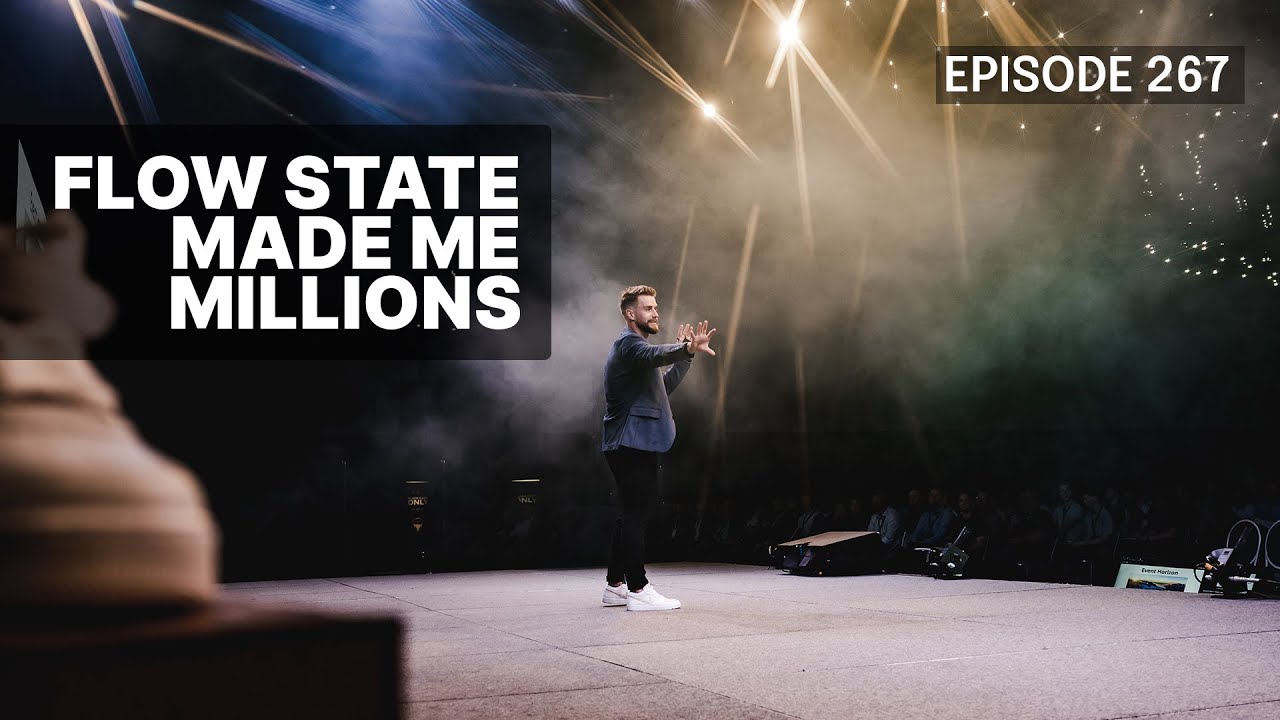
Bridger Pennington scaled his businesses to millions by restructuring his work around 45-50 minute deep-focus blocks with 10-15 minute breaks, batching decisions between 9:30 am and noon, and checking email only twice daily. He credits marriage with forcing him to abandon endless hustle and adopt what he calls flow, a system that compressed hours of work into single focused sessions.
Chapters
But when we as humans get into a flow state, a state where we are fully engaged, it's incredible what we can get done. Welcome to Bullish, where we talk about the journey and process to build ourselves and companies into multi-billion-dollar people and brands. Currently, my business and investment funds have done tens of millions in revenue, and this is the documentation of the journey to scale to the billion-dollar realm, all while we give back and do good in the world. My name is Bridger Pennington, and welcome to Bullish. Boom, people. Welcome back to Bullish. I've mentioned it before, but I want to share stuff this podcast you're not going to hear anywhere else. Stuff that actually truly helps, not recycled entrepreneur content. And today I've got something for you. I've got some pretty cool productivity hack that absolutely changed my life. Now, let me take you back a little bit. When I first started in business, a lot of you guys know my story. I started 6 businesses my first years of college. I worked like crazy and I was dating. I was in school. I was getting good grades. I was running internship. I was doing a million things, juggling all this kind of stuff. And there's a bunch of lessons that I learned during this time period, but I was the type of guy That was like, yo, I got to wake up at 5:30 in the morning and work my guts out. And I don't— I eat lunch while I'm working and I drink, you know, I then I go to bed and I— that's all I do. And I'm doing this 24/7. I'm all about optimal, like, efficiency and that's how I'm going to make money. And so I was one of these guys that was just like way big into every step of your morning routine, way into like all this stuff, and which actually helped me a lot. We can talk about morning routines in other episodes. But what's funny is I'm doing this and I mean, I work, I work a lot. I was working I mean, a significant amount of my day every day was all around how do I make money? That was my whole goal. Whether that means getting good grades, is that going to help me make more money? Does it mean starting a business? Is that going to make me more money? Does it mean getting these internships, getting promoted up? Which, which route? And I was kind of dating all these routes during this time period. Anyways, let me fast forward a little bit. I end up getting— I date my wife. We have this awesome story and we end up getting married and we're married and I am still working like this and I'm in school, I'm running a job and I'm running a side business and I'm just working like crazy. And my wife is like, Bridger, Like, when are you going to be home? Like, I need to see you. I want to hang out with you. And I love my wife and I want to be with her too. But I'm like, oh, I got to work. Like, if every time, every second that I'm home, I'm not working on my business and we're going to be poor longer is kind of the way I thought about it. And so it actually changed the way I worked. And I've told this, I made an Instagram video about this. I think all young hustlers, which I was, should get married. Getting married made me way more productive. Even though I was spending now a couple hours, I made sure to block out at least a few hours, if not more a day from just my wife, that we'd be one-on-one. I'm not thinking about work. I'm not kind of half working, half talking to her, that I was fully engaged with her, whether it was in the morning, afternoon, whenever it was, but I wanted to be fully engaged. So because of that, I was cutting out now. I was like, man, I got married. Now I've got to deal, I've got to pay for this wife and I got to deal with her. And now I've got to carve out 3 to 4 hours a day that I can't work. This is way inefficient. Until I figured out this. What it did for me is what it made my brain figure out ways that I could work faster and more productive throughout the day. So I started to research like crazy how people do this. How do people get more done in their days? And something, this is something I want to get into that we've shared with our, my employees across the board in both my companies to how to be more productive. Me and Mason started to do this thing called flow. Now you might've heard of this before, you might've not, but I want to share some different dynamics of flow. Flow, this concept of flow that you've probably never heard before. So the idea of flow— this has been published at length, but then I want to share kind of my insights on it. The idea of flow is this: that when we as humans get into a flow state, a state where we are fully engaged, it's incredible what we can get done. Uh, typically flow states will— for me, it's usually 45 minutes to 50 minutes. I will do a flow state. It takes about 15 minutes to get into flow, and then you're in flow for 35 to maybe 40 minutes, and then your brain needs to rest. You need to break from flow. This is kind of the concept of flow, and you break for maybe 10 to 15 minutes. You do something completely different— go outside, walk around, play basketball, whatever you need to do— but then come back and you can then flow again. This is the concept of the Pareto principle. You know, if I gave you 30 days to clean your bedroom, it would take you, what, 30 days to clean your bedroom? If I gave you 13 minutes to clean your bedroom, you'd get it done in 13 minutes. The time allocated for a project is usually the time it gets done. We fill, as humans, we fill the space that's given. And so that's the idea with flow. You pick one topic, one idea, and you go really deep on it. You silence your phone, you get everything out. So I started doing this and I got better and better at it where I would— and now you can't flow all day, your brain will fry, but I try to flow at least 2 to 3 times a day. Meaning two to three hours or two to three big tasks a day, I try to flow into. So I set everything up. I go to the bathroom. I make sure I have water right there. I do not break. I set a timer on my phone. Fifty minutes. I will not break my focus from this task for the next fifty minutes. You'll be surprised that you get four hours of work done in fifty minutes, in forty-five minutes. It's insane. Okay. Now I want to add some other bonus stuff that we started to do. So I started to do this though, and it absolutely changed my life. And I was reading. I like. I love to watch. CEO interviews and we hear how these big, not like it's, I love listening to podcasts and stuff, but it's really cool to hear like Jeff Bezos on an interview. Like, what does he do? Interesting thing about Jeff Bezos, he takes no important meetings before 10:00 AM. 10:00 AM is his first important meeting of the day. And then he only takes, he takes all of his important meetings before lunch. So essentially 10, 11, 12, maybe to 1, all of his important meetings are done in those, let's call it 3 hours. And he said, he goes, Really, as, you know, the CEO or head of Amazon, I only need to make 3, maybe 2 to 3 major decisions a day that drive and steer this company. Oftentimes we get so bogged down with to-do lists. We have all these lists of stuff we gotta get done. And what happens is we get deal or we get decision fatigue, meaning we've made so many decisions. If you've ever done this, you make like, you wake up in the morning, you do all these decisions all day, and then at 10:00 PM, you gotta make this big decision and you're just like fatigued and you're like, I don't even know how to think about this. I gotta sleep on it and get tomorrow. The way Jeff Bezos looked at it was, I only make 2 to 3 big decisions, big dominoes per day. And I'm going to make those decisions between 10:00 AM and 1:00 because that's when I'm most alert, most productive, most energetic. I can make kind of the best strategic decisions then. So I started doing the same thing. I put my flow periods between, let's call it 9:30 AM and noon. I wake up, do my whole morning routine, whatever I'm doing, and then I'm most active. And I say, I'm going to flow into these things. 9:30 to 10:30 to 11:30, I'm gonna make sure I get my 2 to 3 big dominoes done for the day. And then to-do lists, answering emails. I actually answer emails only twice a day. Usually sometime in the morning, I'll do like a little email, and then I do emails like 3:00 PM. That's it. Slack messages, I only check 'em twice a day. If you sit there and check your Slack message and emails all day, that's your whole workday. You don't set a time stuff to get stuff done. Okay? This is the concept of flow. And so we've been, I've been preaching this to my employees, like, you guys need to flow into 2 to 3 items. We actually have standup huddles in Funnel Launch. Every morning I want to hear the 2 to 3 things that you're going to flow into today. What actually big projects? What are the big dominoes? The big— what's going to move the needle in the company or your job today? And are you going to set aside time you're going to put on your calendar to really flow into these items? And I'm going to follow up with you tomorrow morning to make sure you did it. We actually do this across our company to make sure people are doing this. And what happens is people's productivity jumps through the roof. It's actually phenomenal, which is pretty cool. Now, a couple of things, bonus items you can do on this. So again, back to my story, I was with my wife and I started to do this kind of flow period. And what I was realizing was I used to work 14 hours in a day and now I was working like 7 hours a day or 8 hours a day, and I was still getting the same amount of productivity or utility out of my workday. I was like, huh, interesting. And I've actually played with this now that I have a kid. So my son's almost 2 years old and I want to go home and see him and see my wife and stuff. What's crazy is I work really effectively and very fast throughout my workday. And I'm home. I usually leave the office around 5, maybe 5:30. When in the past, when I was younger, I probably would have had to work till 7 or 8 to accomplish the same amount of stuff I got done. Why? Because I'm not lollygagging. I'm not on Instagram. I'm not watching, you know, all this crazy stuff, checking my email every 5 seconds. I make sure I set core things that I need to get done. I delegate the rest. And I get those core things done. And now even as recently, I just, I mentioned it, I hired a CEO now that runs my stuff for me. I really, as a core workday, I probably only need to work 3 to maybe 3 to 4 hours a day. And that's me like growing the business and doing expand. That's not just like maintenance. That's like running and growing the stuff if I flow into these things. So again, 50 minutes, 5-0, about a 10 to 15 minute break. If you do this with studying, if you're in school, if you're whatever, you're trying to memorize stuff, this is a fantastic way to go deep brainwaves. Now let's get to this next piece. If you couple this, this is kind of my specialty, couple this with a thing called binaural beats. If you don't know what binaural beats are, it tracks— they've gone through and found frequencies that we all run on different frequencies. And some people, have you ever noticed when you walk into a room or meet somebody, they have a higher or lower energy than you, or what some people call them, frequency than you? And what happens is sometimes we really jive with people. And the concept is that we are on similar frequencies. You guys ever seen this? That's, uh, they take a speaker, they do this in science class, and they'll put sand on top and they play a sound or they run a frequency through the speaker and the sand makes this beautiful mosaic. It's pretty cool. The concept is all of us humans run on different frequencies and some people are kind of in whack frequencies and that's why their body keeps breaking down other stuff. And other people are running in this very, you know, high frequency rate. Where they're high performers. Okay, anyways, this is one way. Again, this is not— this is a theory. I'm not saying this is fact. This is theory of how people, high and low functioning people. The idea though is if you meet somebody and they're on the same frequency as you, you jive with them really well. And then sometimes you walk into a room or an event. That's why I love hosting events and going to events, because typically the person on stage has a higher frequency than me and brings me up to their frequency. If you go to a Tony Robbins event, that's what happens, or an Ed Mylett event or whatever. They come— you come in like, wow, they're at a higher frequency. I'm going to raise my frequency to them. And you feel amazing. You feel euphoric. It's pretty cool. Now, this thing called binaural beats, you can go on YouTube right now and just search up binaural beats. Binaural beats, they found different frequencies that are associated with different tasks. So these frequencies for focus, for studying, for sleeping. And what happens is you play these and they're kind of— they kind of sound They're kind of like music, but not music. They're just noises, I guess. And I started to test these out. I was like, all right, I like trying stuff out. You know what? Fine. I heard about this. I'll try this binaural beats while I'm in flow. So I did this thing where I was like, I'd do a flow state without it. And then I did a flow state with it. And I went, I went, just literally Google YouTube focus binaural beats. And they have like an hour, 2-hour playlist that goes through. And I was shocked. With how I was able to focus and my brain was like able to just accomplish and move through tasks very quickly. It was phenomenal. So highly recommend doing this. Now let me, sorry, take you back again. So this is my, you know, my wife, we're there and I'm starting to do this where we're, you know, I'm more productive in my day. What happens is I get a, I can, I can launch more companies and do more stuff and ta-da, literally after I got married about 6 months later is we launched Fun Launch. We did $2.5 million in our first about Year, which is crazy. My fund exploded during that time period. I don't know; it could be just luck, happen chance. I now had a wife, I had a spouse, someone we were building a family legacy with. I was way more effective with my time. I was doing flow, and for three or four years, I was kind of this wantrepreneur. I was wanting to be an entrepreneur. I started these little businesses that didn't do well, and then ta-da! I started doing this, and it changed my absolute entire life and career. And this goes back to there are probably things in your life. That you were procrastinating. Things that are like, I don't want to do that. I don't want to talk to that person. I don't want to make this phone call, whatever it is. And guess what happens if you really did it and like flow into it? That task that you feel like is going to take you— I had a task last week in my garage. I had to fix this whole thing. It was going to be this— we had to put these wires across our garage. I was like, man, it's going to take me like 4 hours to do this. Like 4 or 5. It's going to be my whole Saturday. This is terrible. And I was pushing it off for like a week or two. I was like, I don't have time to do it, whatever. And finally I said, you know what? Screw it. I'm going to get this thing done. And it was Friday night, actually. I got home late from work. I'm home, I'm with my wife. I'm like, you know what? I'm doing this tonight. You wanna come with me? So anyways, we go to Home Depot, we, I buy the hooks and stuff. I'm like, we're, I'm like, we're doing this. I'm not gonna get distracted. We went, did the whole thing. It took me, guess what? Took me about 35 minutes, 40 minutes. 'Cause I just focused and just did it. There was another task at home. I had to fix my, one of the, like this thing in my house broke and I was like, it's gonna take me hours to fix it. And I was like, you know what? I'm gonna focus and go all in on this thing. And I did, I fixed it in like 20 minutes. It felt like this big, like huge task. There might be in your group right now, I gotta reach out to these clients or call these people. I have a list of leads we've gotta dial up and call and try to sell and just feels like so daunting. Well, guess what? If you actually pick up the phone and just start dialing and actually track the amount of time and you really focus on it, you don't drag your feet, you don't procrastinate, you don't say, well, I'm kind of doing it. I'm gonna check Instagram every 2 minutes and Twitter and have my Twitter feed open. Like, I'm going to flow into this thing. You'll be surprised what you can get done in 45 minutes. It's insane. Your homework, whatever you're doing, if you're in school, if you're in business, if you need to talk to somebody, you can call them on the phone. But what happens is we build up this stress inside of us, this big to-do list of all these mounting tasks. If we put it on a piece of paper and just say, I'm going to flow into these 3 items today, like literally right now, today, it's a Monday, I'm filming this. I have a huge to-do list and it can— in the past would have been very daunting to me. But now I look at it and I go, huh, I have confidence that if I flow during these, I'm like, I'm gonna accomplish all that in about 40 minutes. In the past, it would've taken me 3 hours. I'm accomplishing about 40 minutes. I can flow into it. Give it a try, promise. And send me a review or whatever. It's like, give me a— write me a little note, send me a message on Instagram if this worked for you. It absolutely changed my life. Do binaural beats with Flow. Go all in. You guys are amazing. Hopefully this helps. See you guys in the next episode. Bye.
More from Bridger

The AI stack is trying to consolidate to a winner take all, do you think it'll stay fractionalized


Before you launch a fund, triple check your fund attorney actually filed everything.








Different view on housing affordability and the fed raising rates not lowering rates