From MLB to Real Estate King || DJ Thielen Interview
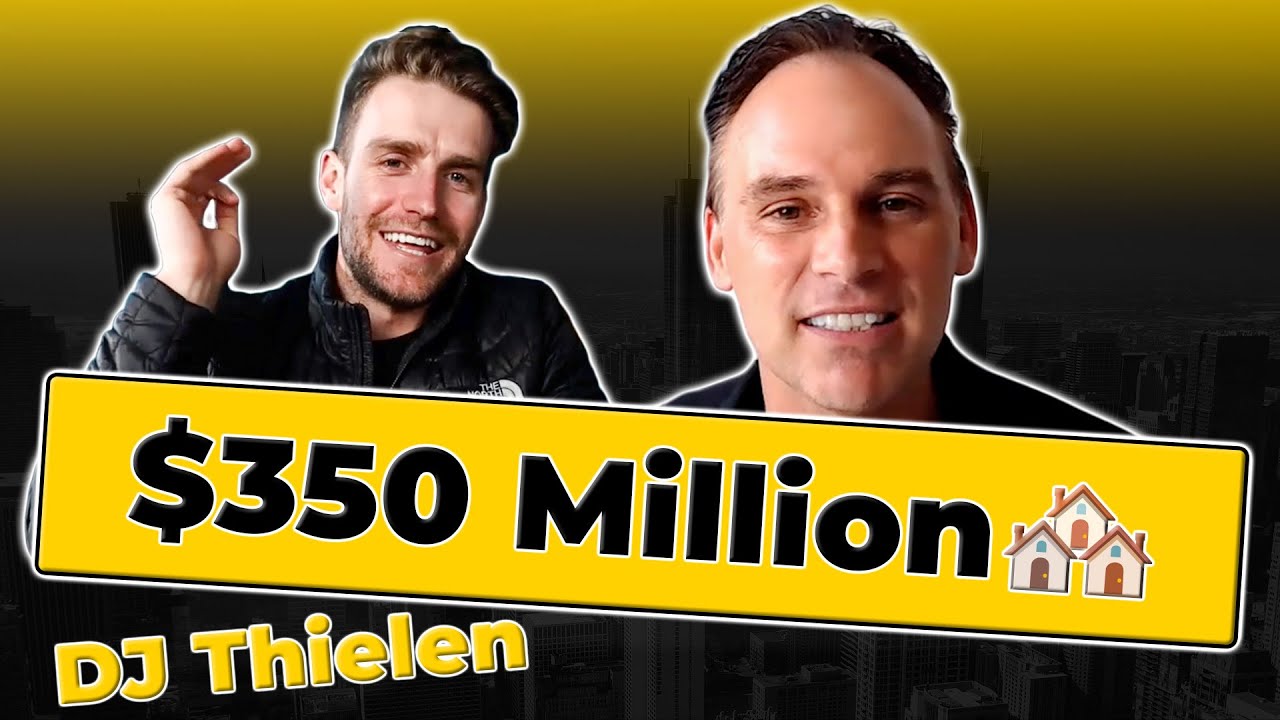
DJ Thielen left professional baseball to raise his son and built a real estate empire with roughly 800 doors and $350M in transactions. He talks about wholesaling, buy-and-hold investing, and the traits that separate successful investors from the rest.
Chapters
All right, people, welcome back to the show. Today with us, we got DJ Thelen. DJ, welcome to the show, man. How you doing?
Hey, thanks, buddy. Good to be here, man.
Oh, this is gonna be very fun. So I know you, you've done a lot in real estate, 3,500 properties, $350 million in transactions in your career. You guys have now 800 properties in real estate. So today we're gonna talk about a lot about real estate, raising money, scaling, buying, selling, probably some, some war stories that you've gone through as well. You also formerly played for the Giants as well. You were drafted in the MLB, which is amazing. So we're gonna talk about that. Um, but a very— just a pleasure to have you on today. It's gonna be a fun call. So welcome on.
Thanks, buddy. Appreciate it, man.
That's awesome. So let's first— let's talk about— let's talk about the Giants. So you were the 6th overall pick in the Giants?
Yeah, I was a Giants 6th pick in 1991. And, uh, I was just looking at the— that the other day. So, you know, my, my dream, Bridger, was You know, I grew up single mom, no dad in the mix, uh, had some abuse, ADD, wasn't, wasn't into school. So like, thank God I was athletic. But, um, yeah, just at 19, uh, Giants took me at a, at a high pick and, uh, that started the—
that started— Was that out of high school? Did you play college ball for a little bit?
Uh, junior college. Yeah, out of junior college. Really?
What position did you play?
Well, I was third base and back in the, in the early '90s, man, that was not a good place to be in the Giants behind Matt Williams. So, you know, it was like, That's like being behind Bonds.
Yeah, well, I was gonna ask, the '90s MLB, were you around the steroid era? And how did— what did you ever see that? What was kind of your thoughts on it? Did you— I mean, you look pretty— I mean, you're pretty ripped. I don't know, how does that all go with the '90s MLB?
Yeah, 52 now. I, man, you know what, buddy, I, um, I think that a lot of guys got into it because It was— I mean, it was— you had Sosa, you know, that what, what kind of started it, like what, what really blew it up was you had Sosa and McGwire that, you know, have this jacked up year, you know, and they go out and hit whatever, you know, 59, 60 home runs. And then you got Bonds sitting back who has, you know, the biggest ego in the world and you're going, all right, I'm going to show them. And so it just was a, you know, I'm going to— it seemed like it was kind of a I'm going to show you kind of thing. But I think with steroids, you know, I mean, obviously it gets you, makes you bigger, grows your head a little bit. But I think it just at that, when you get older, like, like they were, it really repairs the, you know, injuries. I mean, you just don't— you can play every day without getting injured. So that obviously leads to more at-bats, which if you have more at-bats, it leads to, you know, more, more hits, more home runs. So, uh, and I mean, if you take a guy that already has a high belief in himself and give him more belief, it's like, it's like this, it's like a superhero, man, you know? So—
You're kind of saying half of it was obviously the physical stuff, but the other half was the mental compounding effect of I can do more and more and be better. Interesting, huh?
Oh yeah. I mean, if you think about it, you know, I, and I say this all the time, Bridger, people ask me and say, DJ, what was the thing that separated the big league guys from the minor league guys? And I tell them, I say, it's, I mean, work ethic and showing up, but it's really one thing. It was the guys that believed they were better than they were. It was the guys with below average talent, below average size, but they believed that they were just so much better than they were that they actually tapped this like next level of potential inside themselves. And they, and they, and they raised the game. They, they just, they, they played at this like whole new level. And then the guys that, you know, the, the A-Rods, the Bonds, the, you know, the guys that had the talent and they believed, those are the, you know, the All-Stars, the, um, the Hall of Fame guys.
Really cool, huh? That's an interesting concept. They, they, but they weren't as talented, but they just believed they were a better player than they actually were. And it kind of became a self-fulfilling prophecy.
100%. Yeah, I mean, you know, it's like anything in life. I think you have to see yourself there before you're there. And call it faith, call it vision, call it, you know, a vision board, whatever. But you've gotta believe. If you don't believe in yourself, I mean, you know, no one else is going to.
I like to tell people, I do this with my wife, I like to taste it, to feel it, to touch it, like your vision board. I like to drive to the rich neighborhoods or drive by that yacht that.
Yeah, me too.
I like to touch it and I like to be around it. And it just feels like I just— I always tell myself, like, just give me a year or two, give me a couple years, I'll be there. Give me a couple years, we're gonna be there, you know? And I actually had a conversation with my wife a little bit ago, and it was funny. She was, um, she mentioned something like— we were talking kind of crazy, we were talking about like a huge yacht, and for whatever reason, she kind of brought up like, oh, like, we'll never, we'll never get there. And I, I literally told him, like, honey, you, you can't— like, I kind of got serious because we were joking around and I said, honey, you can't say that to me. Like, that can't be in our language. Even if we don't want it, whatever. Like, we're going to have the option, though, to buy that boat. Even if we don't want it, we're going to have the option to buy that.
100%, man.
I was like, honey, I'm an entrepreneur. I'm running businesses. And I know we're just playing around, but like, just remember this. Like, we just, just don't— we can't have that language even between us. And yeah, and she's been really good at that. And I like that kind of concept and idea. So, so, so you're in the league. You're playing now. How long did you play? And then also, how did you transition into real estate? Walk us through your story.
Yeah. So basically what happened, Bridger, was I, you know, I didn't have a dad. And so my whole thing was, you know, I always said to myself, you know, one day, man, if I ever have a kid, you know, when you're young, you have a dad, obviously you can, you know, have a lot of anger and not really understand what's going on. Um, and so I always said, you know, if I have a son someday, I'm going to be there. So as I, as I was coming through the minor leagues, I was one of our top prospects, uh, was just on the verge of getting to the major leagues, met a gal after a game, got her pregnant, right? And it was like, oh my God, what the heck, right?
Yeah.
So, um, then he was born in, uh, he was born, uh, in 1996 on, uh, April Fool's Day, actually, 4/1/96. So he— so Devin comes along and he had some breathing issues. And so I was just— I was really torn. I had a talk with Dusty Baker, who was the, uh, one of the coaches at the time. And, um, and Dusty was like, hey DJ, man, I love you, brother. Like, you got to do what's right as a man. Like, I get it. Like, you know, I want— I want to have you back and that kind of thing. And so it was really good. We talked for about an hour. And, um, and it was really comforting to me. Like, you know, I'm just gonna take this year off and then I'm gonna figure out Kind of the next step.
And from there— Because, because your son had this kind of breathing issue, problem, complications. And were you with the, with the girl at the same time? Were you guys separated, or what was the plan there?
Uh, we, we were. We tried to make it work. It didn't. Uh, I ended up raising him, um, his whole life. Now he's 27, owns a, owns a thriving sneaker store, a little entrepreneur. But at the time, you know, Bridger, it was just like, it's kind of like anything, like, hey, my dad's an alcoholic, so I'm never gonna drink, right? So for me, it was like, hey, my dad wasn't there, so I want to be And so that was, that was like the first step. And then from there, uh, you know, one year passed and I thought about going back and, and I'm like, nah, I don't— I can't leave him. And, uh, so I just, I just never went back and left the game and, uh, started my, my journey in entrepreneurship.
Wow, what a— what a— that's an honor to you being a good dad and saying, I'm gonna— yeah, thanks, man, my responsibility, I'm gonna do this. I think that's Very. That's amazing. That's awesome. So, so then, so you transitioned out of the league. I'm sure you made some money there. And what was the play? What was your plan? What did you do?
Man, I left. I had, uh, I don't know why I got college in my contract. I hated school. So I'm like, I got 4 years of college, but I ain't going back to college. Uh, and so—
You're gonna pay for it or what?
Yeah, yeah, I was in the contract. And so I'm like, man, I, I, why did I even get school? Like, I hated school. But, um, so I just start working, right? You start figuring out life. And then, uh, Pretty soon I had a, I had a guy, uh, Bridger. I was 26 and a half. He was— his name was Chuck Roberts, and he was the number one sales guy in the country for a home security company called Protection One. They were like ADT. They were kind of second largest company in the country. And, um, I started doing some telemarketing for this company that he ran the sales team for. Well, he came to me one day and said, hey DJ, Like, do you want to make some extra money? And obviously it was a good question, right? I'm like, I got this young— of course, right? Yeah. So I said, yeah, man, of course. And he said, hey, me and this guy Don St. Mary, we're leaving, we're starting our own company, and I'll take you under my wing. I'll teach you everything. You'll be my only sales rep for the first year. So it was a real blessing. I had this dude that was incredible at sales. take me under his wing and mentor me and coach me. And, you know, he taught me, he taught me a lot about sales, but he taught me more about, you know, it was just that whole reinforcement of life, like first to show up to the office, last one to leave. And, you know, like the intangibles, you know, the work ethic and the stuff that the same things that were in baseball, like you show up to the field, you get your work in, you believe in yourself. Uh, and good things will happen, you know.
So— So you're learning sales with this guy. What, what years is this?
This was like '90. So Devin was born in '96, so '90, '97, '98. And then, um, I, I was there for a couple years. I left, um, you know, as a young guy, thought I, thought I knew everything, right, at 29. Uh, and I started my own company, and then I, uh, ended up getting lucky and selling it in the early 2000s, 2005. And, uh, went to a Kiyosaki event, man, and I was hooked. I was hooked on real estate.
Uh, and did you have a good amount of cash from that sale?
Yeah, I had a little over $1 million. Uh, and so I—
Then you're on real estate now. So like, walk us through your real estate. I mean, going from zero, you know, you've never been in this field before, to $350 million in transactions and stuff. And did you primarily syndicate those deals? Did you do funds? Did you— what did you do?
No. So what I did was I had a friend. So I had this money and I knew nothing about real estate. So I go to this Kisaki event. I'm like, okay, Cashflow Quadrant. I get it. This is cool. I want to be an investor. So I jumped in and I go to this event over the weekend. On Monday, I told my brother, I said, hey, man, He goes, hey, let's go through these books, this material. I said, man, you know, I'm just gonna go and buy some homes. He goes, where are you gonna go and buy homes? I said, dude, I'm just gonna go on eBay. So I literally, this true story, I went on eBay, by the way, never do this for anyone listening. I went on eBay, I bought 10 homes for 50 grand and I'm like, total, right? And I'm like, man, I'm gonna be this millionaire. I'm gonna make all this money.
How'd you swing that? Like, what is that?
How does that work? So, I bought— I went on eBay. I saw this guy selling 10 properties in Pennsylvania and Ohio for $50 grand. I bought this package. I fly out there. I go to the first house, it's torn down. I call the guy, his number's disconnected, right? I'm like, oh geez, this is not good. So, it was it, but it led me there. And then what I did, Bridger, was—
It was legit. You still— you didn't get scammed. Like, you actually bought the properties. They were just More beat up than you thought.
Yeah, more beat up, torn down, fallen over. So it led me there and I said, I want to pick one market and— bless you.
Thank you.
I want to pick one market and kind of hone in and build a team because I'm 3,000 miles away in Seattle, Washington. So I said, I really liked the Pittsburgh area. So I honed in on there. And my first year I picked up 25 doors. I had 25 rentals and kind of stumbled through, obviously dealing with contractors, and management, right? That, that's— I stumbled through that for many years. But once I figured it out, uh, and then I had a couple friends come to me and say, hey DJ, you know, man, we want to get in on this. And so I said, listen, I, I'm not just going to get you a deal because it's cheap and you're going to have contractors rip you off, management sucks, like you're going to want to stab me in the face. So I said, you know, you— I said, I'll get you some deals, But I need to get the deal, the property, fix the property, rent it. Like, I need to control it, otherwise it's going to be a bad experience. And so I helped a couple buddies do that, Bridger, and then that led to word spreading, uh, and it just, it just took off. And, um, and then I had people coming to me.
You were helping them or consulting them or what?
Yeah, I was helping them. So what I— yeah, so what I was doing was I would go out and I'd find the properties, and then I— what happened was from getting my own So imagine this was in '05, I sold my company, '06, '07. So now the foreclosures start flushing. And so as the foreclosures started flushing, I had all these investors that I was helping to get properties for, and I got to be friends with a lot of the REO agents and all that. Hey, DJ, we have 5 properties that are hitting. Hey, we got 10 properties. And so they would tell me what they're going to be listed for and say, hey, you know, those relationships, right? So, um, uh, I won't mention any of their names, but, uh, but I wasn't related to them, so it was good. So I kind of had this inside track to get these deals, and I started helping people get, get properties. And then it just, it just started just really, really accelerating. And I looked up one day, I was like, holy crap, man, I have like— we just sold like over 100 properties in a month. And so, um, it was just, it was crazy how fast it happened.
And then, uh, you did this as like, as an agent, like a real estate agent or a broker?
No, just invest. So I would do one of two things. I would acquire the— I would actually put the deal under contract. They would send me the— so then I would put the deal under contract and I would sell it to them. They would send me the funds upfront and then I would double close essentially using their funds. So that was one way, or I would just wholesale.
Wholesale it?
Yeah, wholesale and assign it to them.
Yeah.
Okay.
Gotcha. Makes sense.
Yeah. Yeah. Yeah. Yeah.
And then you run that now as of— so kind of speed up, speed us up to today, you know, 2023. How many properties are you still assigning? A lot of properties? Are you managing them? Are they all just your investment properties? Do you syndicate capital together? What are you kind of doing today?
So today we actually— so a couple of things. So we have just over 800 doors that I own. No partners. My brother is in with me on some. But, you know, so that's great, you know. And so you have kind of two stories, like the Tim Bratz, who's a buddy of mine, he, you know, they have thousands of units, but you have multiple people that own them. And that's great. Of course, you could do it. I think that's the cool thing with real estate is there's multiple ways that you could do it, you know.
Yeah.
And it's not like one way and this way's better. So, but for me, I just liked to have the control. So if I want to leverage something, if I want to sell it, if I want to refi, I can kind of call the shots without going to a board with 18 people on it, or multiple GPs and all of that.
Okay.
So yeah, so for me, that was just, it was kind of how I started, and I just kind of stuck in it and just evolved.
And And so what grew? Yeah. So I— what are you guys seeing right now in the real estate markets with, you know, interest rates this last year? We had a— well, first off, let's talk about the, the moratorium. We had a moratorium, then you have now rates— they were at zero, now rates are skyrocketing, fastest rate in 30 or 40 years, um, rate hikes. Where do you kind of feel like things are? Well, let's talk about where they're— where they've been the last 12 months. What's, what's been your at least feeling on the real estate market, where it's been? And then we'll, then we'll— I'll follow— the follow-up question will be where it's going the next 12 to 18 months. So let's talk about the last Last year, year and a half, what have, what have you seen? Where the deal's been? What's been good? What's been bad last year?
You know what, Bridger, man, I, I think that, you know, there's so much information out there now that people have access to, uh, obviously YouTube, right? And so YouTube, social, uh, and so everybody— like, for me, where I think it is, is I think the last year was just the start of the correction. I think that our economy is being propped up falsely. I feel like where it really is is a lot worse than what it looks like where it is, if that makes sense. And I feel like it's going to be— I don't know where the bottom is. I think it's going to be somewhere in 2025 because anytime that that something hits, it takes time. You know, if a, if a, if a meteor hits the center of the ocean, it takes time for the tidal wave to hit shore, right? So I, I feel like, you know, 2025, um, is going to be, I think, a goal, a great time. Um, it could be sooner, you know, could be '24. I don't think—
People listening too, it's funny, I was doing some research. '20, if you look at that great financial crash, uh, Q2, Q3 of 2011 was the low for real estate. 2011. Everyone's like, the 2007-2008 crash, the best time to buy. If you look at a chart, medium home prices bottomed in 2011. That's how long it took for real estate to adjust. Now, stock market was well different and stuff, but real estate has a longer, a longer cycle to kind of back up your point.
Yeah. And I, and I feel like too, you know, there's, there's been, you know, you look at the trillions of dollars flooded into the economy. So you look at like all of this stuff that has been propping it up, right? But then, but then you had the, you know, the obviously COVID and all that. And, um, and that's a whole nother chat. But I feel like with where things are at now, um, I think, I mean, I think there's— I think if you have the right mindset that you can always win. Uh, if you're, if you're, um, you know, I'm a— I'm big, I meditate in the morning, I do my gratitude, I do all that. And so I think that If, if you have the right mindset, you're always going to be looking for the opportunity and you're always going to be looking for the upside, the bright side of the situation. So I feel like having that is an advantage in, in any market or any, you know, market cycle, I should say. But when it comes to the actual opportunities, man, I mean, look, the more that fear is instilled into the, the Uh, you know, into people, the more that people are going to make irrational decisions, the more that they're going to panic. Um, they're not— real estate isn't for everyone. I tell people this all the time. Like, it is— and out-of-state remote real estate, uh, is for sure not for everybody. So, you know, so I think that you have to understand where your, your threshold is and what you're willing to take on and not take on. But man, I think that—
I mean— What do you think if you're going to advise somebody who's wanting to get into real estate, what kind personality traits, or back to that question, what would you say? What's something that makes a good real estate investor versus a bad real estate investor, in your opinion?
So I feel like a good real estate investor, to me, right? I tell my team this all the time. If somebody is beating you over the head and they're a real jerk and all that, it's just not our client. So what I found, Bridger, is that the people with the most money typically have the most time. So they've used— they've taken the money to buy more time back, right? So people that are kind of on the come up, uh, or, uh, they're, they're just always busy, they're not available. But the people that have a lot of money, you seem to be able to reach them a little easier, you know? And it's— and I've, I've learned that, I've seen that, and I'm like, wow, that's interesting. Um, and so they, they use the money to be— to buy their— to buy their time back. And so, I'm sorry, what was the exact question?
Yeah, the question was the difference between good real estate investors and bad real estate investors.
Yeah. So I think good real estate investors are—
What traits do they have? Personality traits?
Personality traits. I think that, you know, they got to be— you got to be an optimist. You know, if you're successful in real estate, you know that you're going to run into unexpected like circumstances, right? There's always— so I think the, the ones that can keep their, uh, the— keep their head calm when the storm is out there and you're going through a storm, the ones that can keep a cool head, I think that's a great personality trait. Kind of an even, uh, even tempo, right? The highs aren't kind of like in baseball. Hey, don't let the highs be too high and the lows be too low. And so, I think that's in real estate, it's the ones that can just navigate, take the emotion out of it. I think the ones that have high emotion, it's tough because you're riding these ups and downs. And I feel like people that are just optimists, I think optimists are always going to come out ahead because you're going to— whatever lens that you're looking at the world through, is what is gonna come back. So if you're looking for the good, if you're looking for the opportunity, if you're looking for, hey, what's something that I can learn from this? What is something that— I just feel like having that abundant mindset and not, you know, not allowing the stresses of things. It's kind of like I always say, you know, people try to fix the fruit on the tree by buying things and, or substances or whatever. But really, it's like they're just treat— they're just trying to— they're just fixing the fruit on the tree. It's not really dealing with the root of the problem. So the root of the problem is it's, it's an internal game. It's happiness, it's peace, it's tranquility, it's gratitude. And so I think fixing that first, everything else will, you know, fall into place. Now, now you got a tree that can produce good fruit forever.
Gotcha. Makes a lot of sense. Walk me through— obviously, like you mentioned, meditation, morning routine. Walk me through your health and your diet and all that kind of stuff. What do you like to do? What do you like to keep yourself young and healthy?
Man, at almost 52 now, I think— so this is my routine. Wake up, walk for about 3 miles, have a glass of water, have a coffee. Got to have the coffee. I do. I walk for about 3 miles, 3, 3.5 miles, go and weightlift in the gym, go down and swim, do my meditation, and come back. So the morning routine is probably about— from the time I wake up, it's about a 2.5-hour deal. By the time I shower, I eat, and I'm ready to get rolling by 8:30. So I get up about 6, and then by 8:30, you know, I'm just getting ready and getting going, and by 9, I'm ready to hit the phone. But I think it's, you know, for me, It's been a game changer to really, really take that morning to set the vibration for the day. When I'm meditating, you know, I smile. I'm in the pool, right? People that are looking at me are probably looking down going, what's that guy doing down there? You know, but it's just smiling and just feeling happiness and gratitude. And, you know, and then you just do your best to carry that vibration through the day, man. And I think if you can do that and, you know, there will be challenges and there'll be ups and downs and of course, but I think the more that you can do that and control that morning, I mean, like for me, that's been huge. And also the, you know, like I mentioned, Bridger, peace, happiness, tranquility, you know, people aren't talking about this. I mean, you look at the suicide rate out there, you look at stress, you look at just everything going on right now, man. Yeah. People are like they're they're they're they're they're cracking, you know, and there's there's stuff going on all the time. And you had this guy, the Bed Bath Meon jumped off the you know his bridge. This guy Twitch, you know, sad story in Los Angeles, and you know committed suicide supposedly. And so when you look at this, man, people are cracking, and I think that they're just it's it's it's so much stimulation. That it's just overwhelming. And we're not— we weren't designed for that, you know? And so, um, so I just feel like, like controlling the morning, um, and starting with that, just a healthy routine that can kind of set the tone for the day. And, uh, you know, maybe one day you look up and you got 5 rings like this guy behind me, Kobe.
Yeah.
You know?
So that's awesome. Well, that's, that's cool. I know it's— there's a lot that goes into that. I think it's underrated. I think in business sometimes we talk too much of X's and O's and tactics and we forget about the essence of, you know, we like your body. Your mind is really the greatest asset you ever have, right? And you got to take care of that asset. Okay. I got 2 more questions for you and then we'll wrap up. So, DJ.
Yeah.
Second to last question. First off, where can people find you? Where can people connect if they want to follow you or see your journey, whatever it is? What's the best place to send people? And then I'll get the final question for you.
Yeah, best place, buddy, is just go to my, my, my Instagram. Uh, I mean, I'm on all the platforms, but go to my Instagram. It's just @d.j.thielen, T-H-I-E-L-E-N, my last name. Uh, best place to find me is on Instagram. Uh, you know, shoot me a DM, that kind of thing.
So cool. Okay, that's awesome. Uh, go check them out on Instagram. Then final question, I love asking people those questions. So yeah, if, uh, I haven't prepped you on this, so here you go, you can prep yourself.
Yeah, yeah.
If this was your last podcast, last message you had with the world, and you wanted people to remember you by one thing, what would that thing be? And if you wanted to share something that was most important to you, most valuable that you wanted people to remember, like that was the most valuable thing, and this is your last time you could share it, I'll give you about 1 minute, 1 and a half minutes to share it. And you can talk real estate, spiritual stuff, religion, like whatever you want. You decide whatever would be most valuable to you. So, with that, I haven't prepped you for this, so I hope you got something. Yeah, you got the mic.
No, thanks, buddy. Um, yeah, I, I think, Bridger, I would tell people, you know, look, is first of all, we, you know, taking accountability for everything that happens in your life is huge. Um, it'll, it'll truly, truly, uh, change your perspective on life. It'll change how you view things. Um, and it will really just help you, um, as a human being evolve. And again, going back to, I think I think gratitude, gratitude has changed my life. Starting my day with gratitude, doing it during the day if I feel stressed, just going back to focusing on, on what you can control, right? And then lastly is understanding that we have more control over ourselves than we think. I mean, think about this. We can control what we think. We can control what we eat. We can control how we can control our feelings. We can control our emotions. And a lot of times we go through life and we're just responding and react. We're just reacting to everything that comes at us instead of understanding, man, I can control what I'm thinking, I can control what I'm feeling, I can, I can actually control if I'm upset or happy. And I think if, if people could just understand, uh, as a, as a, as a humanity, that, man, we just, we have so much more power than we give ourselves credit for, that we have so much more control over actually what can happen in our lives and what we can control. Um, and I think if we can just simplify it and focus on that and, um, understand that, you know, hey, I'm gonna control the things I can control, and all the other stuff I'm just gonna let the chips fall where they, where they will. And I think, you know, you look up one day and, uh, like I said, man, you got, you got 5 rings like Kobe back here, you know. Yeah. So That's it, man.
Awesome. I love it. So that's what I got for you. Thank you so much for coming on today. Again, go follow DJ on Instagram. Um, DJ, you're amazing. Thank you so much for coming on, brother.
Thank you, brother. I appreciate you, man.
More from Bridger



The AI stack is trying to consolidate to a winner take all, do you think it'll stay fractionalized


Before you launch a fund, triple check your fund attorney actually filed everything.





