Funds That Won: Millions in Hospitality l Koloa Wolfgramm
In this episode of Funds That Won, host Speaker B interviews Koloa Wolfgramm, founder and managing partner of Wolfgramm Capital, a hospitality‑focused private‑equity firm that was launched in December 2021. Wolfgramm shares his unconventional career path—from U.S. bobsledder to Yale Law graduate, prop‑tech founder, venture‑capitalist, and finally real‑estate private equity investor. He explains the firm’s “barbell” investment model that pairs ultra‑luxury, sub‑4% cap‑rate hotels (e.g., the Waldorf in Park City) with limited‑service, mid‑scale assets (e.g., Residence Inns in smaller markets) at an approximate 10:1 limited‑service to luxury deal count, which translates to roughly a 50/50 asset‑value split. The conversation covers how Wolfgramm tailors investor bases for each side, raising small‑check syndications for limited‑service deals and courting family offices and institutions for large luxury transactions (including a $127 million single LP commitment). Wolfgramm emphasizes a “tools‑based” approach to fund creation—leveraging personal networks, industry expertise, and competitive advantages—rather than a problem‑first mindset. He outlines fundraising best practices: reframing fund management as a valued service, conducting customer‑discovery with prospective LPs, and aligning product‑market fit. The firm’s rapid scaling is driven by vertical integration: launching an in‑house property‑management company, acquiring another manager to obtain brand licenses, and purchasing an insurance firm to control loss‑prevention costs, which has already reduced premiums by 35 %. Hiring philosophy is data‑driven: a standardized interview questionnaire, a four‑point rating scale (1‑bottom, 4‑world‑class), and a focus on “spikiness” (exceptional depth in key skills) over average well‑roundedness. Decision‑making mirrors investment conviction—candidates must demonstrate high conviction across risk identification, qualification, and mitigation. The firm now has six executives, a $230 million portfolio of roughly a dozen hotels, and $225 million of deals under contract slated to close in the next two quarters, positioning Wolfgramm Capital to double in size within six months. The interview concludes with contact information (wolfgramm.com, koloa@wolfgramm.com) for potential investors or hotel sellers.
Chapters
Like 20% of our firm's success in this one person.
Yeah.
And you think about it that way. Imagine your investment. Imagine your investment, 20% of its profits is coming from one person, right? It's hugely important.
Welcome to Funds That Won, where we dive into some of the world's most renowned investment funds. We'll interview investment managers across the alternative landscape and learn how they built their million and even billion-dollar asset management empires. We'll explore teams, structures, strategies, and best practices in launching and running alternative investment funds. All right, what is up everybody? Today I've got Kaloa with Wolfgramm Capital here with us today. Um, you know, I've, I've seen Kaloa around for a while. He's always posting about these crazy deals he's taken down inside of our ecosystem, so I'm super excited to have him on with us today. Uh, Kaloa, welcome.
Thanks, thanks for having me on board, and, uh, excited to talk about what we're doing and some of the things we worked on and How we think about the investing landscape.
Yeah, love it, man. Well, why don't you why don't you start off by telling us a little bit of background about yourself and your firm?
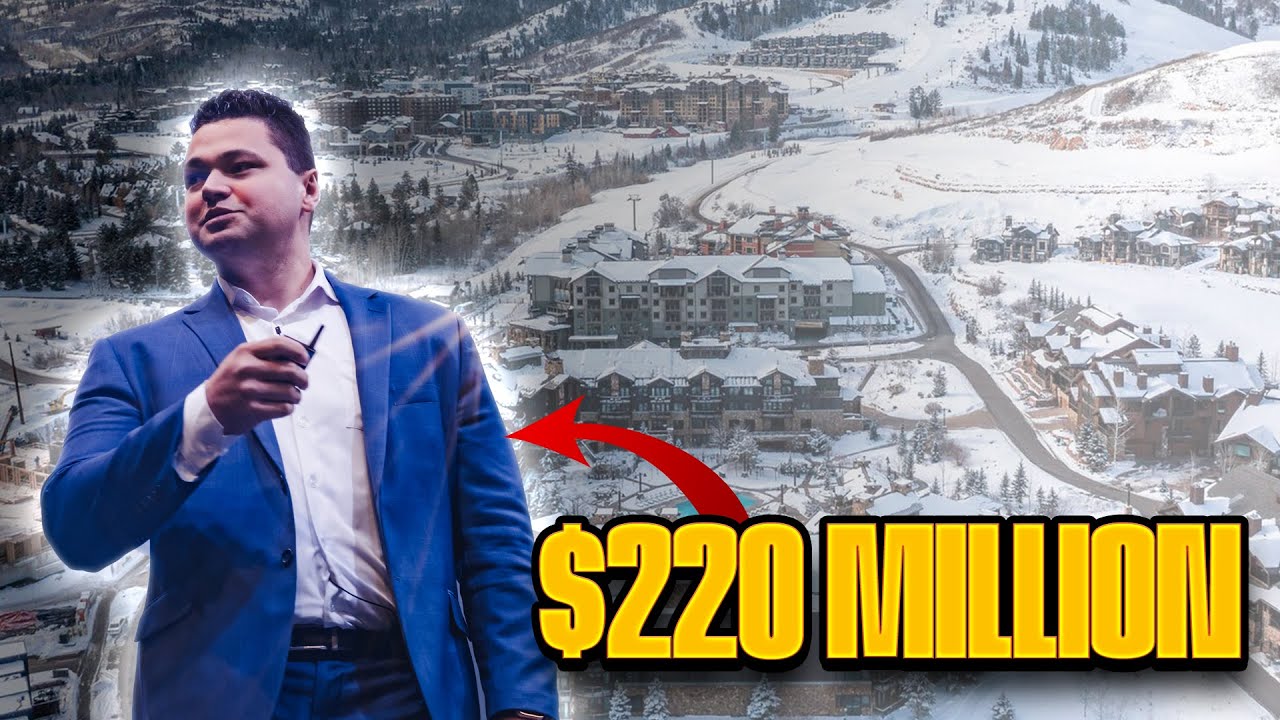
Yeah, so I I did not start in finance. My my first real professional was in was in sports. I was a bobsledder on the USA team, and oh no way! Yeah, figured that I should probably not peg my income ability to. Sliding down a mountain of ice in spandex. And so, you know, went to school, eventually ended up at Yale Law School, founded a small prop tech company, venture-backed. I exited and then did VC for a little bit in New York with first-round capital and was actually looking to exit the tech scene to do real estate private equity. And so, in December of 2021, I formed Wolfram Capital, and over the last Uh, 13 months, we've done $220 million in acquisitions. We mainly focus in the hospitality space.
Wow, that's crazy. So bobsledding— let me get this straight— bobsledding to venture capital, now in private equity real estate. Is that right?
Yep, yep.
Hey, that's quite a journey. That's, that's awesome. That, that's great. Well, tell us a little bit about kind of your buy box, what type of deals you like to do, and And what you focus on. And, and we'll hear later about, you know, what you think about today's environment. Obviously real estate's a little crazy for that, but first tell us a little bit about, you know, what type of deals interest you.
Yeah, so we have an interesting mix, uh, between— so we focus on hospitality, particularly hotels and resorts. And within hospitality, uh, there's a whole bunch of different types of brands, right? If you stayed at a Marriott, and sometimes it can be confusing, right? Fairfield, Courtyard, Residence Inn, TownePlace Suites, SpringHill, right? Those brands, right, kind of sit and then they market to different customers. And so you might have on the top end of a brand, like the Marriott's 5-star brand is Ritz-Carlton, Hilton's is the Waldorf. And then on the other side of the brand levels, Marriott's entry brand is like a Fairfield or SpringHill Suites or a Courtyard, and Hilton's is Hampton Inn. And so within those spaces of hotels, we actually play on the spectrums and nowhere in the middle. So, we buy luxury, ultra-high 5-star luxury. We just bought the Waldorf in Park City, Utah. That was our, you know, 5-star luxury hotel. And then, within a couple of weeks, we closed on a Residence Inn in Podunk, Louisiana. Um, and so, we like to play on both sides. And, and the reason why is, you know, luxury gets these massive, uh, developmental, um, uh, returns because their cap rates are so low, right? There's a— there's luxury in places like Hawaii or LA, and even in Park City, they'll trade at sub-4 cap rates. And so you develop it, or you do a rebrand, or you do a reposition or something like that on luxury side. That's where you get like these ridiculous return profiles. But on the other hand, luxury gets hit first, right, in a recession. For example, in COVID, luxury went from like 50-60% occupancy down to almost zero, right? Closed down, shut down. Whereas like if you had a Fairfield in Podunk Louisiana, Podunk Texas, that thing went from like 75% occupancy to like 55% occupancy. Like Even during COVID right? And so, we actually target a ratio between the two of getting all the cash flow, super steady cash flow. You're not gonna have crazy multiples, super steady cash flow on the limited service side, and then ultra-luxury for the pretty big developmental equity multiples.
Wow. So, a little bit of a barbell approach then, going for both sides. That's really cool. Do you have a target allocation percentage? Uh, to each of them, the high-end luxury or, uh, the lower end? Or is it just kind of you take a deal as it comes and, you know, if it fits your criteria, yeah, you move forward with it?
No. Yeah, so we do have a ratio. We do have about a 10-to-1 ratio. So it's about 10 limited service to every 1 luxury. And so across our, you know, 200, and that ends up being close to 50/50 in terms of assets. Um, so like of our 220 now 30 of our assets under management and our actual real estate that we own, about a little under half of that is in luxury, and then the other rest is in limited service.
Oh, cool. Okay. And do you have different investor bases that you go to for these different types of assets, or do you pitch them all to your entire investor base?
Yeah. Definitely, definitely different investor base, particularly when you syndicate on the limited service side. I mean, these are small deals. These are, you know, maybe they get into the mid-teens, but these, you know, Residence Inns, Courtyards, Fairfields, a lot of times we're buying them outside. We don't even like to go downtown even on those types. We typically find a, you know, a metropolitan area that we like and draw like a 30-minute circle around it and try to hit those more suburban markets. And within that, you know, these deals are— it's called a $10 million deal, you know, the, the equity on that is $3, maybe $3.5, $4 million. Um, we, you know, we can't get institutional big folks to get, you know, necessarily— maybe if we did a roll-up of those, you know.
Right.
We were looking at a, at a, at a, you know, $175 million portfolio of like, you know, 20 of those things. Um, that would be exciting. But a lot of these one-offs, a lot of times we find locals, we have some other, you know, friends and family type of investors. And then on the luxury side, yeah, we have, you know, we've worked with Huge family offices, a couple institutions, and their appetite favors obviously writing the bigger checks. We had one investor, one single investor, write a $127 million check into a deal. And that was a crazy close.
It sounds like you do a lot of different things in investing. You've had a lot of different experiences. In our ecosystem, we have a lot of just plain emerging managers, emerging allocators, investors. From someone who's been able to take the bull by its horns and move successfully over the past year, especially with all macros, what advice do you have for people listening on this call that are thinking about starting their own fund or managing their own fund? What's some life advice from Koloa?
I actually think that, and this is applicable to generally entrepreneurship, but I think it's particularly relevant in in funds. And that is, I see too often people taking a problem-first approach when they're trying to solve for what they're going to be investing in, particularly an asset class. So what they'll say is, look, multifamily is— cap rate's starting to expand and there's an opportunity to buy there. I'm going to go raise a multifamily fund. Or self-storage is underbuilt in my area and I'm going to go And that's like a problem, identifying a problem and trying to solve the problem. And that works. I'm not saying it doesn't work. It works for a lot of people. But particularly if you don't have background in that area, I actually think that a tools-based approach is better. And that is look around and say, what are the tools that I have available to me? So do I have a competitive advantage in anything? Do I work in an industry? If I work in a manufacturing plant and I know manufacturing plants and I probably know 30 manufacturing plant owners and managers and supply chain, All throughout. So I would look at— that's why I got into hotels was, you know, I was, I was practically raised in hotels. My, my, my dad has worked in hotels his entire career. Um, and so I looked around and said, like, if I was gonna have, you know, 3 steps ahead of somebody in buying an asset class, what would that asset class be? And for me, it was hotels. And so we were able to move really, really quickly. So if I was someone like that and I'm looking at private equity role, but I think some guy's like doing a veterinary roll-up, veterinary clinics, and I think he's a vet, he's a vet, right? Which makes sense. So he goes in there and he looks, okay, what are the tools I have? Who are the people that I know? What are the things I can leverage off of? Start there, I think, is typically a little bit better than just like, oh, I think that the market is long. I'm just going to put together a hedge fund and start shorting securities. I don't know. It's weird to think about it that way.
No. Hey, I honestly couldn't agree more with you. I've seen hundreds of emerging managers come through our programs over the past couple of years. And it's all about taking an inventory of your resources, both on the capital side, So like demand for your product, you know, like do you— what type of relationships do you have? And then your capacity to effectively allocate there. And, you know, it goes back to your resources of what experience and legs up do you have. You know, you brought up a great point earlier about, you know, you're bringing these— you have these smaller deals that are a $3 to $4 million raise. And you— a lot of people don't understand that you can't take that to an institutional shop, right? Like they, they don't want to write checks for $3 or $4 million. They want to write checks for $300 or $400 million. Right. And so, you know, your, your offerings have to fit your investor demand. So I, I don't— like, I love that comment. That's, that's great.
Yeah. And, you know, and one of the, you know, a big piece of that is— and it's funny, you know, coming from a legal background, uh, the, the amount of work that it takes to close a $10 million deal. Like, so, you know, we, we closed the Waldorf's 9-figure asset. You know, we actually closed that, uh, in 2 days after we signed the PSA.
Yeah, wait, let me cut you off there. I don't know if any— if, if you guys— if that name doesn't ring a bell to you guys, I don't know if you appreciate how big of a deal that is. So I'm local, I'm here in, you know, Salt Lake City area, and that's, that's a big freaking deal. Like, that's a, that's a well-known, uh, you know, location. So kudos, man. Like, that's, that's awesome. That's so—
yeah.
All right, sorry to cut you off.
No, no, no, it's good. Yeah, there's a—
You know how big that was.
So yeah. It's funny, it's funny when you list out— and one of our, in one of our slides in our pitch decks after we closed that deal is, um, You know, there's only 13 Waldorfs in the entire US. And so what we have is we have one of the pitch decks that shows all the owners of the 13 Waldorfs. Not a very long slide, right?
Yeah.
And it shows, and it's like, you know, sovereign wealth fund, you know, huge multi-billion dollar private equity firm that's been around for 45 years, some billionaire tech founder out of, you know, SF, and then it's like Wolfram Capital, right? So it's like, it's a great, like, like, you know, associating ourselves with all those other owners. But on a deal like that, that deal was complicated and there was— it was a great deal for us because there was a lot of hair on it that had to be worked out. But in reality, closing that 9-figure deal was not like 10 times more work or more effort than closing that $10 million deal. So that's when you think about like in a big institutional fund, right? They're trying to deploy hundreds of millions, maybe several billion into asset classes. And so their underwriting of a $100 million deal that they can do once and spend the legal fees one time, to spend into that versus underwriting 10 Residence Inns in, you know, middle of nowhere, you know, somewhere. Even those deals are good deals, um, it's the same amount of effort, right? And so just the numbers are different on the contracts. And so, um, that's, that's, that's, that's what kind of a lot of what's undergirding that analysis.
Um, I want to shift gears a little bit. You, uh, you know, you started— so what is it, a year ago, 2 years ago?
Year.
A year ago. And, you know, you've raised millions of dollars in equity capital. Uh, you know, for these deals, I feel like that's, uh, at least a mental hurdle for a lot of people, um, you know, before they've actually gone out and, you know, tried to raise money for something. Can you walk us through your experience in, in fundraising and, and maybe some tips, tricks, or stories that you have that you could share?
Sure. Um, so I think the first one is understanding that That what you do as an investment manager is a well-loved and well and much-needed product or service for groups, right? So there has to be this shift that, you know, you're not a, you're not a, you know, car salesman knocking on people's doors that no one wants to hear about. Like, for the right people, they will— they dream about meeting you.
Right.
That is their full-time job is to meet people like you. And so once you have that shift that, look, we offer a product or service that— our last portfolio of hotels, we had a 17% cash-on-cash return, even in 2021, which was like the average was well less than that across hospitality. And there's a whole bunch of ways we do that. We vertically integrate. We just bought an insurance firm. We acquired a management company and merged it. We do a whole bunch of things to try to do that. But at its core, what fund managers need to understand is that if they're good at what they do. Just like, you know, when I, when I managed a VC fund, I loved when founders wanted to pitch in because my entire thing was finding good founders. And so if I had 100 people email me about their startup, like, that was awesome. So that's like the first, I'll call it, you know, mental shift that has to happen. Um, and then after that, it's, man, there's so much of, of, of raising capital that is, um, not, not just relationship-based, but it's like skill-based, right? So there's, I think people come to us all the time for LP checks, and we've done a couple of LP stuff here and there. I would say the biggest trick is doing some customer discovery beforehand. So trying to understand what their goals are, what kind of investment horizons, what kind of deals they've had in the past. Skipping past all that is almost fatal when you start to pitch.
And I love just something else you said earlier. I think going into these things from an abundance mindset and not a scarcity mindset, right? Like everyone, what you were saying earlier, It feels like you need the investor like really bad, but in most cases they need you, right? They need good managers. They need guys like Kaloa out there, uh, that can do all the, the legwork, do all the hard lifting, and, uh, you know, be a good steward of, of investor capital. So, so I love that. Um, oh, why don't you tell me a little bit about, uh, what the future looks like for, uh, you know, Wolfgramm Capital? You know, what are you guys planning on, you know, doing the same stuff just 10 times bigger, or do you have new products you're bringing to market? I mean, tell me, how are you thinking about the next decade?
Yeah. So, you know, it's funny in that we grew really fast, right? And that wasn't necessarily expected. We actually had planned on like our first year buying like 1 or 2 hotels and, you know, kind of growing from there. And then, the deals started coming through and And because COVID was so bad for hotels, I mean, the deals that were coming through, not in all cases, but there was some distress. There were some hotels that loans were coming due, interest rates were rising at the same time, and they hadn't fully recovered from COVID They got this perfect storm. And so we grew really fast. And a couple things that are happening on our firm internally, one is that we doubled the size of our team because we needed to just handle— we had 3 of us that was running this $230 million portfolio, uh, you know, several dozens over— just under a dozen hotels, um, you know, hundreds of employees across the hotels. And we also have the management company that manages our hotels.
So I was going to ask you, so do you, do you have your own management company then, or do you outsource?
No. So we, so we started our own property management company. We actually just got a former regional director at Marriott corporate to come over. We poached him to come over and lead that.
Wow. Hey, that's a win.
That's great. Yeah, yeah. Just a couple weeks ago. And then we hired a CFO, former investment banker at Merrill Lynch. He led, you know, $40 billion of acquisitions. He's coming over in-house CFO. We had a head of construction who's built the Ritz-Carltons and JW Marriott's coming over. He had our instruction, had our construction. Um, but in terms of next, like, what, what does our next year look like? Um, so there are a couple of things that, that, that happen that, that are now starting to bear fruit that we're going to kind of dig into deeper. So one was, not only did we start our own management company, we then acquired another management company and merged them so we get some licenses. When you manage hotels, you know, you have a license for IHG hotels, Marriott, Hilton, and even within those brands, you have, you know, licenses for a Fairfield versus a, you know, full-service Marriott, blah, blah, blah. And so there was some strategic acquisitions we did, merged them all together. And that is now, you know, really starting to go into its own. And we're trying to really spin that as like it's completely self-operating company. Before, we were wearing all hats, and now we're starting to hire some specialists to get in there and run that. The other thing we realized pretty early is that insurance is expensive and it's a yearly cost.
Yeah.
And so we put together a full enterprise management team. We bought an insurance firm and put together a full enterprise management team. We were shocked at what we were able to do on our hotels. Even small things like one of the highest costs that a hotel incurs when it comes to insurance claims is either fire, but right below that, especially when we think about controllable costs, is water damage. So it's real common, right?
Yeah.
Everyone's in their hotels, they don't turn something off and something floods or there's a pipe. Every room has bathrooms and some have showers, all that kind of stuff, or some have not just showers but kitchens and all that. And so small things like our insurance team was looking at and say, look, you put these little sensors in, $20 a room. And like, you can not only do you go to market and you go to the brokers and you go to the insurance firms and say, look, we have all this data that we can actually provide, um, and we control the operations. And, and that, that brings out— we dropped our premium even, which is like historically high premium year 2021 across our portfolio. We dropped it like 35%. And then we get to capture the premium because we own the insurance firms. We get to capture some of that. Um, and so that's starting to be kind of, kind of, kind of going off. Um, and then the other side is we're starting to expand different markets. So, you know, we had our markets, we like portfolios in areas because we can do cluster management with our own property manager, right? Share an engineer, share a GM across a couple properties. And so now, we're expanding different markets. We currently have $225 million under contract that's scheduled to close in the next 2 quarters. So, we're gonna double the size of the firm in the next 6 months. So, we're moving.
Yeah. Sounds like it. Holy cow. I mean, so every firm has, you know, different issues when they go from, you know, $1 million to $10 million, $10 to $100 million. Sounds like you guys are in that $100 million to a billion, you know, journey. Um, and, and I love the direction. I think that's great, you know, starting to take, you know, things in-house, right? Setting up your own management companies, insurance companies, right? There's so many costs associated with doing deals and running funds. Like, why not do it yourself? So what I always tell everyone is, if you can, if you can provide a good or service at or below fair market value, Um, you're doing good by your LPs, right? Because you're saving them money. Um, you know, so they get a higher return. But if you can do it, you— if you can fulfill a service at or below fair market value, there's no reason you shouldn't start your own, you know, uh, company. So I think that's— I think that's awesome. So kudos. Wait, it sounds like— I mean, after only being open for a year, you guys are already jumping into that. That's— that's really impressive. Um, and then new products, that's— that's so exciting. Um, So with all of this, you kind of, you know, alluded to it. You've got a lot of human capital demands, uh, you know, and, uh, either from an executive level or more analysts, lower tier level. Um, you know, walk me through what you look for when you're vetting partners or, you know, key level executives. Like, uh, how do you, how do you choose people for your team? Because it is such an important part of this journey. And often overlooked. So, you know, share with us how you look at that.
Yeah, so obviously, you know, the type of vetting that we do for, you know, a GM is gonna be different than the vetting we do for a CFO and things like that. But there are definitely some broad principles that we look at. One is we try to be as objective as possible. And so we actually have an internal system that we, you know, we try to ask all the— when we're interviewing for GMs, we try to ask all the GMs the same question, right? So we can really compare them against each other. When we're interviewing for, you know, finance position, trying to ask all the same questions. And the way that we also— we also have a rating system that we use is 1, 2, 3, and 4. We don't have a middle. The reason why we do that is that you have to make— when you might go through 3 or 4 rounds of interviews, and, you know, 1 is, you know, bottom of the market in a certain skill area, 2 is below average, 3 is above average, 4 is, you know, world-class level in a certain particular area. So that might be in, you know, innovation, might be in strategy, that might be in risk mitigation, it might be in finance. And one thing I found is that, you know, things kind of come to the mean unless you force it out into like that 1, 2, 3, 4. And so when you discuss as a team, like you have to say, are they above average or below average, right? There's no middle ground. You can't just say average, average, average, and you rank 'em across skill ratings. And what we look for is we look for spikiness, not for necessarily even well-roundedness. So when you're looking for a partner, right, I'd rather have someone who is world-class at finance, And below average at, you know, speaking skills, because we're not looking for him to be the, you know, the speaker or whatever. We want world-class on that. I'd rather have that than a bunch of 3s, right? I'd rather have someone who has 4s, 4s, 4s, couple 2s, than someone who has a, you know, some 2s and a bunch of 3s. And then the other things— Yeah, and then the other piece that we look at is, I think, when it comes to those who make investment decisions, right, those who are the principals, One of the things that really matters is, you know, are they able to identify risk? Are they able to qualify the risk? And then are they able to mitigate risk? I think across those 3 things, those, in my mind, almost all of our investment decisions roll up to those 3 buckets, right? Are they able to identify the risk? Do they see the things that can go wrong and list out all of them, right? Even if it's as silly as, you know, something that's almost out of our control, then can they qualify it, right? Can they understand which of those risks are most likely to happen, least likely to happen? And also there's some expense calculation within there. And then do they know how to mitigate that risk? Can the business plan and business strategy informed by these 2 things mitigate those risks? And we look for the ability to do those things across their career, across asset classes, if we're looking at true principal position. Wow.
Awesome. That's gold. I love it. So let me ask you this though. In terms of making those final hiring decisions, do you have this potential hire interview with all members of your team? Is there a final decision maker? Is that you? You know, do you want to be involved in all those decision makings? And obviously, as your firm grows, like, because what's your, what's your headcount right now of your internal team?
You said it's 6 on the executive side? Yeah, there's only 6 of us.
Okay, so, you know, obviously as that grows and you start bringing in more and more, uh, money, like, how do you guys think about that?
Yeah. So all of the— so there's kind of a— I think about hiring in like groups, right? There's the types of hiring that is important. And I do interview with every new hire myself. I think it's important, especially on this stage. I don't think you can outsource, you know, if we're Blackstone and you have, you know, 100,000 employees, okay, yeah, you know, you're probably not interviewing, you know, the analysts. But I interview and talk with everyone. We run 'em through the founders, 3 of us that are the co-founders. And we interview all of them and we have kind of separate things that we're looking for. And then we come together and then we make a decision as a team. It's a pretty quick process. We try to make decisions usually like sometimes same day, sometimes day after. Because I think that if one of the things we try to— the way that we look at human capital, same way we look at our investment opportunities, we would solve for conviction, right? Where if we're looking at 2 investments equally and one investment is like, oh, we have 2 out of the 3. And it's like, yeah, it'll probably be fine. Versus one that's like all 3 is like, that is a home run. Like obviously you'd want that one. So when we get employees that are like, you know, yeah, like maybe some people have reservations, a lot of times they just don't make the cut, right? We wanna look for, when we're talking about our internal team on the capital side, we want all 3 super high conviction. And because we're gonna work with these people and they're gonna be, you know, huge factors of our success on a small team like that. You think about one person, let's say we hire another person, 7, right? That's like what, 20% of our team?
Yeah.
Like 20% of our firm's success in this one person. Yeah, you think about it that way. Imagine your investment, imagine your investment, 20% of its profits is coming from one person, right? It's hugely important.
Wow, that's, that's a great way to look at it. I love it. Well, great, thank you. I— we're about out of time here. We've covered a lot of topics. It's been an awesome conversation today. So, you know, people are— excuse me— if people are interested in learning more about like Wolf Grand Capital or trying to get in touch with you, you know, where's a good place that they can go, uh, to learn more about you guys?
Yeah. So, we have a pretty simple website, wolfgramm.com, W-O-L-F-G-R-A-M-M.com. My email is my first name at my last name.com, which makes it easy, koloa@wolfgramm.com. And then, I respond. I see all the emails, things like that. So, if people want to get in touch or talk or chat through, or if they have hotels to sell, we'll talk about it.
Yeah. Well, great, man. Well, I love it. Well, thank you so much for coming on today and sharing some words of wisdom and your traction. I mean, if you're— if you made it this far in the past 12 months, man, just think what the next 24 or 36 are going to take you. That's, that's super exciting. So, uh, Khloe, thank you so much for joining us today.
Yeah, thanks for having me. Appreciate it.
More from Bridger



The AI stack is trying to consolidate to a winner take all, do you think it'll stay fractionalized


Before you launch a fund, triple check your fund attorney actually filed everything.





