How I Launched My First Fund and Raised $49,500
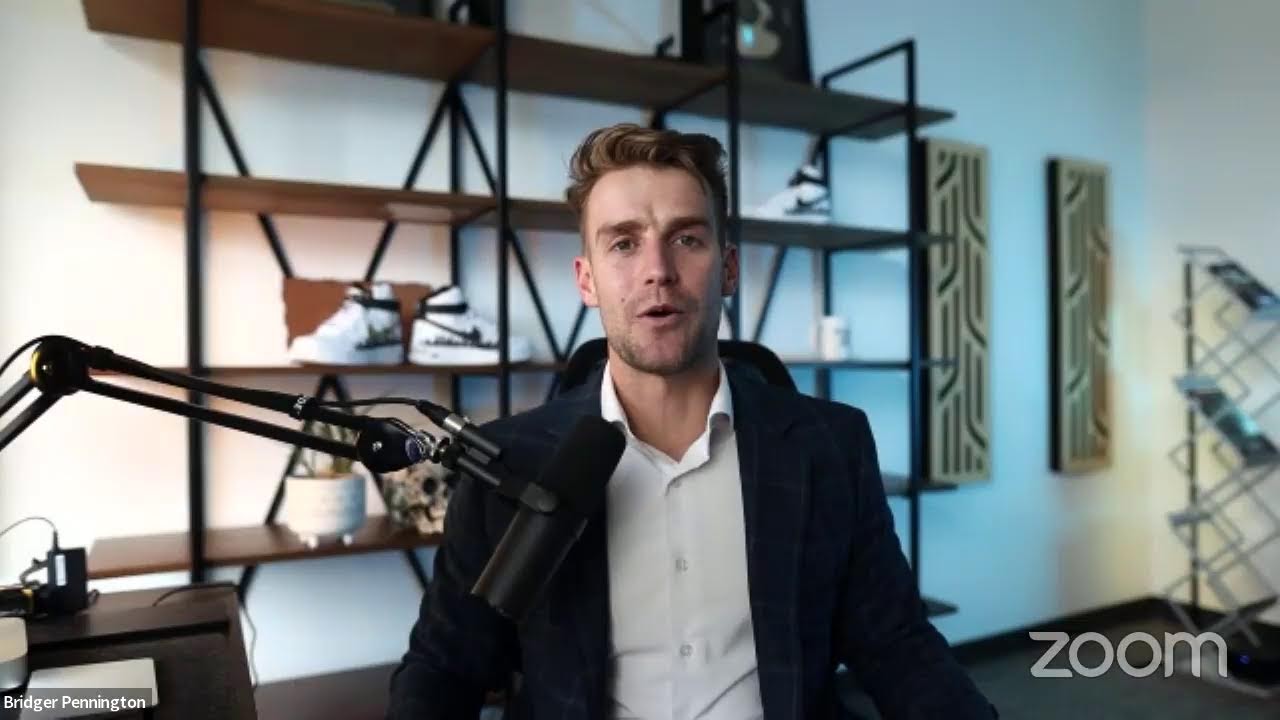
Bridger Pennington walks through launching his first investment fund and raising $49,500. He covers the steps he took to get investors, what worked, and what didn't in the process.
Chapters
Dan, Frenchie, good to see you guys. You guys are loyal and faithful on the Tuesday call. We're going to actually do some more fun stuff on these Tuesday calls and actually be promoting more people. So, welcome on, everybody. We are live. We're going to talk about today how I actually launched my very first fund, raised $49,500 for that first little micro fund, and actually how it produced. I was making, in college, I was 22 years old, I was making around $10,000 a month. On my first year, year and a half running a fund in college part-time. So a lot of us think about funds, we think about this massive, huge outcome, right? You got to have a $100 million fund to be deploying all this capital and killing it in all these different ways, which is true. That's great. But also, you can make money in a lot of different ways as well, which is kind of fun. So we're going to talk about today how that works. I just want to make sure we're streaming this correctly. It's all looking good, all that kind of stuff. But good to see you guys. We're live on Zoom as well, so we'll take live calls as well. There we are. We'll make sure we're okay. We are live. So welcome in, Wayne. I'll let you in the room here. So if you guys are in our mastermind group, you guys can join live and be on the call and actually ask questions live on Zoom with me. If not, I will go from there. So let me take you back a little bit. So a few years ago, and again, today I want to talk about raising my first fund, how it was producing me about $10,000 a month in college as essentially a broke college kid, and it really got me through school. And I ran that, the first fund I ran for about 6 to 8 months, closed that fund. I launched a second fund. That fund, we raised and deployed millions of dollars out of that fund. It did really, really well. Ran that for about 3 and a half years. That's where I was making, you know, I made a good amount of, decent amount of money for a college kid in school. I was making well over 6 figures a year running a fund in college. And then I then dropped out of college, launched Fund Launch, and then also just launched another fund just barely. We've raised over now, we're about $11 million. We just started this fund a few months ago in crypto. It's actually going very well. We've actually done really, really well during this whole market cycle. So that's what we're going to talk about today. Sound good? Okay, let's dive into it. So, first thing I want to get— I'll take you back a little bit on my story. So, this hopefully will help you guys. I get a lot of questions. Bridger, I can't start a fund because it's too whatever. It's too big. It's too daunting. You can start small funds. So, I'll take you back a little bit. So, I was in college. I grew up in a very entrepreneurial home. I got into college. I went on a mission to Taiwan. So, if you guys know, I'm a member of the Church of Jesus Christ of Latter-day Saints. I did a 2-year service mission. If you've ever seen those people out riding bicycles, little name tag on, That was me. Okay? I did that. I went to Taiwan. I learned Mandarin Chinese for two years. That's all I did. I eat, sleep, drink. I was a missionary all day, and it was actually one of the most incredible experiences in my entire life. We can talk about that more if you if you want to talk about it. But I came home from my mission, and I was ambitious. I was hungry. I was like, okay. I took a two-year break, and when you're on your mission, you aren't working. You're not doing school. You're not don't have a girlfriend. You have nothing. That's all you do. So I came home, and I was like, okay. I want to make some money. I want to get into business. I want to do this. So I when I got home, I started. 6 different companies my first 2 years of college. 6. And these were not business ideas. These were actual businesses that were up and running. I mean, I hit the ground running. I came home. I launched a Chinese tutoring company within 2 weeks of coming home from Taiwan. I had 6 or 7 different tutors that would go around and tutor kids in Chinese. Actually, great business model, very thin margins. And so, I didn't love the business. So, I ended up, we ended up closing that up. I wholesaled 2 houses. If you guys know what that is, we did an online marketing company where we were helping, we were building websites. Actually, that's how me and Mason met. We were building websites for people. Anyways, 6 different companies. And actually, I made a little bit of money. I was making $5,000 to $10,000 per business. So, it was okay. It was enough to get me through school. Finally, my dad grabs me. He goes, Bridger, you're kind of like a chicken with your head cut off. He goes, I want you to go meet with one of my business partners. I think this guy can really help you out. This guy's pretty successful. I think he can really help you. So, I said, okay. So, I go meet with this guy, drive to his house, beautiful, gorgeous house. And again, I grew up in a, I would call it a very average household. My dad drove a car with 200,000 miles on it. Nothing wrong, but just average. This guy's house was beautiful. I mean, it was gorgeous, white, beautiful white home. It was kind of encircled this cul-de-sac. Anyways, I get out of my car, go knock on the guy's door. He opens it up, Bridger, come on in. And he brings me in this house that's just gorgeous. He's got the basketball court in the basement. He's got the pool in the backyard, the cars in the garage, the whole nine yards. So I sit down and long story short, I ask him, what did you do? How did you make all this money? Like, how can I do it? I want to replicate it. I want to— can you be my mentor? I kind of ask him all these questions. He says, Bridger, when I was in my 20s, I was a lot like you. I started a bunch of different businesses. I actually made a decent amount of money. He goes, then I figured out the secrets of the ultra-rich, the ultra-wealthy. And he goes, I learned, I met a guy, he ran a private equity fund. He was one of the wealthiest hurt people I've ever met in my life. And he said, I don't care how long it takes me. I don't care if it takes me 1 year, 5 years, or 20 years, because I was going to learn what a fund was, how to start one, and how to scale one. He goes, that's exactly what we did. He goes, we went out and launched a real estate fund, and currently at the time, they were managing over $8 billion in their real estate funds, primarily multifamily. So it was just crazy, right? Multibillion-dollar fund. And I was blown away. I was like, holy crap, these guys are crazy. And by the way, today I think they're well over $40 billion they manage right now, one of the top 10 real estate funds in the world. I mean, it's just crazy. And so I was like, holy crap, dude. I was like, I want to learn this. And I was young. I think I was 20 years old, 21 years old at the time. And I said, please teach me how to do this. I will work hard. I'll show up in the morning. I'll get you coffee, whatever you need. Like, I will work for free as long as you can be my mentor. And he said, Bridger, go talk to your dad. He goes, your dad knows way more about this than I do. And I said, no, no, no, my dad's kind of poor. You're obviously super rich. I want to learn from you. And he said, Bridger, me and your dad actually make about the same amount of money. And my chin dropped to the floor. I was like, huh? Come again? He's like, yeah, you know what? We're pretty much equal business partners in this. And I was like, I left the dude's house. I drove straight to my dad's house. I was like, Dad, what the heck? What's going on, dude? Why are you making apparently all this money and you don't spend any of it? You drive a crappy car. We live in a crappy house. What's going on? Anyways, long story short, my dad, he lives a very frugal life. He's like, yeah, I like to save and invest my money. My business partner likes to spend a little bit more of his money. But yeah, we live these different lives. That's just how we live. Long story short, my dad started to teach me about funds. So I would go to my dad's house every Sunday night. He'd get on the whiteboard and teach me how funds worked, how they're put together, together, how they're all mapped out. And this led me to then start to recognize opportunities in my life for funds. The funny thing about life, when you start to learn about something, your little antennas go up and you start to recognize that thing in your life. You ever bought a car, a brand new car, and all of a sudden you see that car everywhere driving around? It's not like there's magically more cars on the street. There's just, you're paying more attention to a red Mercedes, whatever car you want to buy. You start to see those around. town. Same thing happened for me with funds. I learned about funds, and over the next 6 months, I started to see opportunities where I could do a fund. And so I was, at the time, I was in college, I was working. So again, my dad wasn't giving me money for college. I was in school. I actually got a really good GPA. I was a pretty good student, and I was also working at a company and doing internship at the same time to make money to get into college. And I was learning to get experience. I talked to the founders of the company. I said, hey, I've got an idea for a fund. We could fund some of your clients that were coming through the business? He's like, huh, that's an interesting idea. Let's try it out. So, we launched this little micro fund. I was like, hey, this is cool. I took in my dad. I was like, he looks awesome. We started to put it all together. And then I was like, shoot, I've got to raise some money. Anybody ever hit that wall? Like, man, now I got to go convince people to give me some capital. What am I going to do? And I thought, well, easy. I'll go talk to my dad. My dad for sure will invest. Apparently, he's got all this money. He'd love to invest. And so, I remember I went and knocked on my dad's home office, went and met with him, sat down with him across the table, and my best pitch voice possible, I said, Dad, how would you like to be our first investor into our fund? And he smiled and laughed, and he said, Bridger, I have the money to invest, but if I invest in your fund, it would ruin the experience. experience of you raising money on your own. And he goes, this is a, you know, this is something you got to learn on your own. And this would be a crutch if I give you money right now. It'll be a crutch that you'll never be able to recover from. And he said no, and he kicked me out, and he said, go do this on your own. And so I walked out of his office kind of with my tail between my legs a little bit, and, uh, I said, screw it, I'm gonna do this. And so, I went out, I hit the streets, I talked to everybody I knew, and after about 4 or 5 weeks, I raised a whopping $49,500 from like 6 or 7 investors. I think the average check size was like $7,000 or $5,000. It was really small. I mean, this was teeny. If you guys know anything about funds, that's like micro teeny small. Now, in today's, I want to actually talk to you guys a little bit further about that fund, actually how it ran. Again, at the beginning, I prefaced this, obviously bigger the better funds. We always talk about billion-dollar funds and $100 million funds and $10 million funds. Actually, these shoes in the back, we give those awards away to anybody who gets a $10 million fund or greater. We give them a pair of shoes. And actually, by the way, we just did a cool survey in our group. We only had about— so we have about 20,000 people in our groups. Only 200 responded. Okay? And of those 200, I'll actually pull up the exact stats right now. Do you guys want to see this? I think it's pretty cool how many funds are just killing it. So here's the— let me share my screen. Ta-da. Bam. There's the data from our group, from only about 200 people that responded. We're getting more responses right now. From $1 to $50 million, we have 54 funds in our group that have successfully launched and raised between $1 and $50 million. $50 to $150 million, we have 4 funds. $150 to $1 billion, we have another 4 funds. And we have 1 fund over $1 billion that have started inside of our group. How cool is that, right? Like, our whole goal as a company and stuff is— our company Fund Launch is to help people launch funds. And we're starting to now get data on the funds that are launching. 54 though is just like crazy. And this is only, uh, of about— of our 20,000 people, about 200 responded. We still got a lot of people. So if you haven't— if you guys are watching this and haven't responded to our survey and you're in our groups, go respond to our survey. We want to see the total, and we're going to get a total AUM number and how much money is managed inside of our groups. But it's pretty cool. Like the proof's in the pudding. Like we are actually seeing some huge results. We've had 26 shoe award winners over $10 million. We've got, I think now, 6 winners over $100 million, then 1 over a billion right now. Pretty cool. These are the shoes we give out. I'll pull them out for you. This is what we do. So anyways, this is what we talk about, right? Building a big fund and like $10 million funds is like the goal. And you get a custom pair of shoes. That's my pair of shoes that I got for our last fund right there. But We don't talk about the small funds as much and how small funds actually can still make you a good amount of money. So my first fund, $49,500, I went out and launched this fund and we got it all set up, all put together. And what we were doing, actually, I haven't talked about this much. And by the way, we sold that fund about a year and a half ago. I'll talk you guys through how I sold that fund as well. It's kind of cool. So what we did, we were doing debt consolidation. So this company, what we would do, these clients would come in, the ones that had high credit card balances or couldn't apply for credit or other term loans, this company would help people get those types of loans. They would send them to us. So for example, if you had maxed out credit cards, I would give you a loan of $10,000. You would then go pay down all of your credit cards to below usually 30% or 25% utilization rate. So 25% of the card is used. We'd pay down your cards. What it would do is make your credit score jump like crazy. You get a huge credit score spike. You then could go over the next 2 to 3 months, go qualify for term loans or a big— so a lot of people were business owners. They needed to get business loans for construction or they're launching a new dealership or something. So we'd help them get those loans, put them together, and then they would use that capital to then pay me back. Or we could just charge the cards back. So I give you a $10,000 loan, you'd pay me back like $11,000 or $12,000 over a couple months. And I would make the little spread between, you know, a couple thousand dollars, like $1,000 to $2,000 for points and all the setup fees for doing that. That's all we did. We were running, uh, 60 clients a month through this at our— I think at our peak. Kind of cool, right? So I started this small little fund, $49,700— we are— $500— $49,500. We started rolling these loans and we just roll them and they take about 90 days to complete and we would make a good, very good percentage return. That first fund, we got a 64% return to our investors. It was just incredible. They were super excited. It went awesome. We then closed that fund, restructured a little bit, and then we launched another fund. And that was the same strategy though. And that's where we raised right around $1 million we had in that fund. But we would deploy it about every 60 to 90 days. So we were deploying a full million dollars almost every month and a half, 2 months. Bam, we deploy it, deploy it. And then the new loans would come back and we'd roll the money back into new loans. Our default rate was less than 2% of all clients defaulted. It was amazing. This business was awesome. I was running this in college. So I was a student at Brigham Young University, BYU. I had actually very good grades. I think I had like a 3.9 GPA. I did very well in school and I was running this fund and I wanted to go into investment banking, was my goal. I was like, I'm going to be an investment banker. I'm going to do this. on Wall Street and do all this stuff. And so I was running this fund. I was making on average about, let's just, I think average about $10,000 a month. Some months I was making like $15,000 to $20,000. Other months I would do like $5,000 a month, which was, I mean, amazing for a kid in college. And the second piece though, even if I made $0, I was running a fund and I had investors and I was writing quarterly reports and annual summaries and I was giving them returns. And these were high net worth individuals that were like, man, Bridger's killing it. What I would do, so how we ran my fund, every month, how I did it, we do a month closing. At the end of the month, I would say, okay, all the loans that completed that month and the ones that defaulted, we'd average them out and have a monthly return. And then we'd do a full distribution every month. So every month I'd send them a distribution and we had no, I didn't charge a management fee. I charged 0% management fee and I took about 20% of the carry. So 20% of the loans that finished that month, I would, I would have the interest that we made minus the defaults I would take. And it was about $5,000 to $10,000 a month that we were making. Pretty cool. Okay. So we did this. I built up this investor database, all that kind of stuff. And so I was going to do investment banking and all that kind of stuff. And I actually didn't. So I was running my fund. I actually started to hire employees to help me run it. So I had 2 or 3 employees that were helping me do the loans. calling people. Sometimes there's chargebacks or whatever it was on the card. We'd figure it out and we'd do these cards. And so I had these employees. I did an internship out in Silicon Valley for— I was going to go into banking. I wanted to do corporate finance, investment banking. I was a finance person. And I remember doing this internship and I go out there and I— and by the way, I want to take your questions. If you guys have questions, drop them in the chat. I'd love to hear questions. But I go do this and I was on this track. And if you guys know anything about the banking world, it's usually You do a junior internship, is like your big internship. And you, at the end of the internship, you're hoping to get a job offer to come back. And they're going to sign you. So once you graduate, you're senior, you already have signed on a job, you'll fly out there, you then start. And typically in banking, it's like about 2 years, you grind your face off, you're working 80 to 100 hours a week, literally for 2 years, you work your guts out. And then what everyone tells you is after 2 years, You then can do your MBA, or maybe you can transition into private equity, or maybe to a fund if you're really good, or you just keep working your way up the bank. And after about 6 to 8 years, you work really, really hard, and then maybe you can transition into a fund, like running potentially a real estate fund or a hedge fund. Because that's what I want to do. I want to get in the fund world. And so I was like, this is the way to do it. And so it's funny enough, I do this internship in Silicon Valley. I'm working pretty hard out there, and I'm newlywed with my wife. So we both moved— we moved out to Silicon Valley. We're doing this whole thing. And it was funny enough, so I started to call up alumni from my school and other schools that had done investment banking, had done this path, the people that were 7, 8, 10 years ahead of me. And I called them up. I talked to, I think, 3 people specifically that I really remember. One of them had totally burnt out, said it was the worst decision he's ever made. He's actually working in a fully different industry than right now. He just pivoted completely out of it. The second guy I talked to had grinded really hard, did very well, was a partner at Goldman Sachs, something like that. And then at 8 years, he transitioned. He said there was just too much work. He transitioned to a fund. He was working at a private equity fund, I believe, but he was kind of a lower-level position in the fund and was trying to work his way up in the fund after about 8 to 9 years of doing that. And the third guy was even further down the road, and he burnt out and did something else as well. And I was like, huh, this is interesting. You know, 3 guys that were just like me 8 years ago, they did this whole path and they really regret it, and it didn't serve them well. And the guy that stayed in the industry is still in an entry-level position at a fund right now. And I was like, huh, I've already got a fund running, and I've got a good tracker. I'm making about the same amount of money as they would make. Now, I looked at my boss, by the way. So I had a boss, and a great guy, by the way, nothing wrong with him, but he worked his guts out. He'd been there for about 10 years at this company, and I think he was estimating he was making about $500,000 a year. So about $500,000 to $600,000 a year he was making. And as weird as this sounds, I looked at him and I was like, That's it? That's all you can show for? Now, I know that sounds way arrogant or something, but I just, I was like, really? And I was like, man, I'm part-time in college making, you know, $110,000 to $180,000 a year in college, part-time running my own business. And I get, I'm running a fund. And I thought, man, give me a decade and I bet I could beat that guy. He spent 10 years in the corporate route. I think 10 years on my own, I think I'll be making more than him per year well more than him after 10 years. And I was like, huh, I'm going to do this. And actually, at the end of the summer, I got a full 6-figure offer, bonus stock options, like this huge offer. Bridger, we want you to come work for us. It'd be amazing. And I turned it down. And I said, sorry, I can't do this. I'm going to run my fund. And I got this cool idea for a company called Fund Launch. And literally, that's out of that. I turned that down. 3 months later, me and Mason started Investment Fund Secrets, which is now Fund Launch. And all of this has come from that. And by the way, I've absolutely— that former boss, I've well beat him like 2.5 times over earnings per year. And in only about 3 or 4— that was about 4 years ago. And it's been a pretty wild ride. And all that besides that money or whatever, just the experience I learned way more by doing it myself and working with mentors and coaches rather than going into a corporate ladder system. And so anyways, we ran that fund. I kept running that fund for another year and a half. We then had a competitor come and say, dude, we were actually butting him out. He was a guy trying to do the same thing in space. We were taking the market share. And he says, guys, I'll give you an offer. I want to buy your company. I want to buy all your relationships. And so I said, great, let's do it, but you've got to buy out my investors as well. And because I want my investors to have a really great finish and I can give them their final check and just say, guys, you made a huge amount of money. I think our returns were 64% in year 1. So that was the first indication. 62% was our second fund, 62%, 49%, and then 36%, I think, were our 3 years of running that fund. Cash-on-cash net return to the investor. Pretty crazy. And when this guy came and bought us, he bought out all of our investors, bought me out from the general partner, a good, nice check size, and it was pretty awesome. And, uh, and then we transitioned all to him. It was about a 6-month transition. Well, it was like day one transition. I, I signed that I would just be available on my phone if he ever needed any questions, but it was pretty much a smooth transition over. It was awesome. And he's done well now with the company and everything. And then we kept running Fund Launch. And then just recently, we launched a brand new hedge fund amid a crash in COVID, or not COVID, in this last year, 2022. We had this huge crash in crypto. We raised about $10 million on our initial, and then we've been still running it, still raising capital right now for that fund. So by no means am I finished. We are still on the route right now, but I'm just showing you kind of the trajectory and ramp that happens from a small fund. There is so much power in getting started. The first step is major, and a lot of people look at the mountain way up top and they go, man, I'm never going to start. I won't even take the first step because I'll never reach the peak. And the people that just take a step and start moving forward end up learning things along the journey, finding other paths, whatever it is, but they, they move a lot faster. There's an old adage. One of the biggest things that actually changed my life was from Think and Grow Rich, and this is an adage from the military as well. Making a decision is better than no decision. If you have 2 options in front of you, it's better to just make a decision and go with it Rather than make no decision and think through the options. There's an old story. This new general got put into place that Think and Grow Rich shares. And he says this, they've been debating this decision, this military decision for years, like a 3-year. They did studies and back and forth and who would win. And the guy, day one, walked in. He said, I know you guys have this big decision. So, he had both parties and these, I can't remember, these officers came in and pitched him. And in about 20 minutes, he decided to go with one of the officers. He said, yep, we're using your plan. And the other officer came up to him and was just pissed. Dude, how would you— why did you pick him? We've been debating this. You don't know all the facts. We got this other stuff going on. And he said, I know you guys have debated this for a long time. This general said, both options would probably work really well. And maybe one's a little bit better than the other, but the cost of indecision outweighs the cost of making the wrong decision. The cost of indecision outweighs the cost of no decision or of making a decision. She said, we're just going to pick this guy and we're going to go with him. And I remember when I first read that, I'm a guy who's very indecisive a lot of times. I was indecisive. I had to change that about my personality to be decisive, to see when I see something, I just choose it and we go. And if it's the wrong choice, cool. We can pivot 3 or 6 months down the road. We're going to make decisions. We're going to move. I'm going to take steps forward. A lot of you guys, I have a huge coaching group. We help a lot of people launch funds. The hardest thing about funds is starting. Most funds never get started. It's the reality. Most people just never start. Now, the ones that start end up moving and being successful and raising capital and all that kind of stuff, but most people just never start. The biggest thing, I've worked with thousands of people, and to help them launch their funds, I've heard pitches and decks and all the cool stuff around funds. But when it comes down to it, I was with a guy a little bit ago, and I kept asking him, when are you going to launch? When is launch day? When is launch day? When is launch day? And he wouldn't give me a straight answer. Oh yeah. Well, we got to figure this out and do this. I said, dude, when is launch day? Let's just launch. Let's get started. Let's move. Let's put the next step forward. And if there's something blocking you from the launch day, okay, what is that? Let's step into it. Let's move towards it every day. Because a lot of us that want to start funds or want to get in this world of funds, We sit and stew about it for a year or 2 years or 3 years or 8 years or a decade. How many people on this call have thought about launching a fund for years and years and years and years or whatever? Not even a fund, but that business, that business idea in the back of your brain, like, oh man, one day we're going to launch it. It doesn't serve you at all to sit and stew about it. And then guess what's going to happen? Someone else is going to launch it, that business or that fund or whatever it is. And you're gonna go, oh man, I had that idea for years. He stole my idea. And really, really, they stole your idea? You've been sitting on it for 4 years, didn't do a thing, and all of a sudden you're mad because someone else did it? Ideas are a dime a dozen. It's execution that makes things happen. Something that helped me like crazy, and I was this guy, dude. I was this guy. I was the guy that that just had ideas. I mean, I started some businesses, but I had tons of ideas. I was super. I had shiny object syndrome. I was because I was jumping. As you guys know, six businesses my first year of college. I was jumping from business to business to business to business, and I finally said, "You know what? There's a lot that comes from focus and discipline and execution." And I had a great business professor. This guy, uh, he, he came and worked at BYU. He had sold his companies for hundreds of millions of dollars, just volunteered his time to come teach an entrepreneur class at BYU. So cool. We actually had about— we had like 2 or 3 professors just like that that would just— they were rich people in the, in the area that would just come and just share business insights to the classes. It was really cool. So this one guy said, Bridger, um, not— I felt like he was talking to me, he's talking to the whole class, but I'll make it to me because he's like, Bridger, every business you're going to start, give yourself a timeline and a budget. Give yourself a timeline and a budget. He said 99% of the businesses that you want to start, you can figure out in 3 weeks and $500. Your timeline is 3 weeks and $500. If all you think about, eat, sleep, drink, you're in the shower in the middle of the night, you think about that business for 3 weeks, you will do more in 3 weeks than you've done in the last 3 years. Additionally, give yourself a budget. It's easy to go well over budget. $500, you can do market testing. You can get— at least do the research, the upfront, especially over 3 weeks. You can do a lot to move the needle towards that idea in the back of your brain. Because do not let ideas fester. Once you have a business idea or a fund idea that has, you think, some potential and legs, 3 weeks, $500, and see what happens. You know what's crazy enough? I heard this, and me and Mason were together like, dude, let's try this out. We have this idea for this company or course to help people launch investment funds. This is a true story. And we said, let's try it out. Let's just see. Let's give ourselves 3 weeks, and we got $500. And we were going to online marketing. So he says, do ads, do Facebook ads. So we literally went, we in 3 weeks, we built out 4 landing pages, 4 little websites, just landing pages. We built out about 10 ads that I filmed on my iPhone. We then launched those on Facebook. We wanted to see if people were interested in investment funds. And over about, actually, there was only the first weekend, we had all this engagement and people that were interested, people that wanted to join our courses and pro, they're like, whatever you guys got, we want it. This is so cool. They're like, whoa, we probably got legs here. And then we move to the next phase. It's my next phase that I tell everybody. Once you pass the 3 weeks, $500 test, then move to the next phase is about 7 months. You can accomplish a lot in 7 months when you focus on something. So widen that timeline. You can set a new budget, whatever the budget you think would be appropriate, and say, we're going to move on this thing for 7 months. And in the back of my brain, I said, hey, if I've got a— let's call it 5 years. If every 7 to 8 months I do a new business opportunity, that'll give me 8, 9, 10 chances on businesses, 7-month blocks. I'll be— I'm like, after 3 or 4 years, I'm going to find something. I'm going to— as long as I keep swinging the bat, I'll be— I'm going to hit something. And maybe it's a single, maybe it's a double, maybe it's over the fence, but I'm going to hit something. Right. And I'm going to keep my current expenses really low, and I'm going to just focus. There's so much indecision. I had so many businesses and things that I would just nibble on and shiny object syndrome. Like, you can't catch 2 rabbits at once, right? You got to chase one. So that's what we did. So we launched Investment Fund Secrets at the time. Our first month, we had over 1,000 people join our program. 1,000 paid $47. It's crazy. We made like $80 grand about with other upsells and stuff over about 3 months. We then launched our mastermind product and we launched Black Card. We've now in about 2 and a half years, we've done over, I don't know, we have over 20,000 students. We had a 1,200-person event, Funnel Launch Live. We've done well over 8 figures in sales and it's been incredible. All because I set a timeline and a budget on an idea that I had had. I had this idea about a year before and I didn't act on it. I said, ah, whatever, one day, blah, blah, blah, we'll do it later. Until that professor told me timeline, budget, go launch. Let me give you guys the same challenge. That's why a lot of you know Black Card. We give you 12 months and we give you timelines. We keep you accountable. That's why I like coaching groups. I spend a lot of money on coaching groups. I just joined one for $150,000. And the reason I like it is because I have a coach who's an expert that's done it before, and they makes me put my money where my mouth is. I commit to something for $150 grand. It's a lot of money, at least to me. It's a lot of money. I don't know about you guys. It's a lot of money to me. $150 grand. And they keep me accountable, on point, and it makes me perform. It makes me execute because I got to make that money back. I got to make a positive ROI on my investment. And so I think it's the back to this whole conversation. Just get started, right? Just start moving. Take the next step in front of you. If you can set timelines and budgets around what you're doing, this will— at least personally, this has saved me so much heartache as an entrepreneur. I don't know about you guys. I used to have the when I'd lay down at bed night. I don't know what you call them, but the voices in your head that are talking, and like I would get like, oh my gosh! I could do this business or this. I could like if I ran that guy's business, I would be a billionaire. I know exactly what to do on that person's business, and I'd like think about all these business ideas and other stuff, and it gave me all like paralysis from analysis. All these different things. And then finally, I said, screw! I'm so sick of just thinking and debating, and when I'm driving, listening to podcasts, like I'm gonna turn everything off. I'm just gonna. Focus for 3 weeks and $500. And then if I pass that, I'm gonna go to 7 months and I don't know, $10,000 or whatever the price is. That's how you get clarity. That's how you move the needle. That's how you go from being a wantrepreneur to an entrepreneur. And that's what I'm gonna challenge you guys to do. That's why like our company, we have Black Card. That's what we do in Black Card. We push you guys. Our coaches are meant, they're meant to be coaches. They're meant to push you. 2 deadlines, 2 goals. Don't let them off the hook. This is why we're here. This is what you're hiring us for to do. So, if you guys want to get the next step started, we have a free course on funds below on this link, fundlaunch.com. Go. We have a free course on funds. We then have a mastermind program. It's about $2,000 that goes walks you through step by step of everything inside of funds. We have 200 plus videos. It's a course. If you want coaching and help and mentorship, we have black card. Black Card is $30,000 for 12 months. We are— we go intense. We have live events. We do all sorts of cool stuff. You can do it on payment plans and other stuff like that, but it's amazing. A 12-month commitment, it's awesome. We have 400 members in Black Card, and we have the results I just shared a second ago. It's pretty cool. It's pretty fun. We go all out. We are meant to move the needle. If you want to be a wantrepreneur, cool, go do something else. If you want to be an entrepreneur, you want to be a fund manager, This is what we do. We have a full course and process, our 4-step formula to helping launching funds. That's what we do. We help people go out and scale funds. And it doesn't even matter if it's $49,500, like my first fund, that's okay. It gets you started. It gets you building a track record. It gets you building relationships with high net worth individuals. And people start seeing you as a fund manager. Guys, we're not in the short— I'm not in the get rich quick game. And it's so dumb. I'm going to get rich for the long term and get really rich in the long term. If I can build a foundation today— Rome wasn't built in a day. And guess what? Most of those get-rich-quick schemes, they're called schemes for a reason. Most people don't actually get rich, and if they do, it's a flash in the pan that's gone the next day. The people that build real serious wealth build it over years, and they lay bricks and they lay foundation. They build a network, they build a track record, they build this whole thing. And for us, sometimes we look at this big mountain and we're like, man, I'll never get to the top. But the reality is we have a lot of time. People overestimate what they can do in 1 year and underestimate what they can do in a decade. Think about your life in a decade from now. If you started today and started a fund and started moving that and started moving capital and getting good returns, like imagine a fund just like mine, small fund, $49,000, but you got good returns to investors. What would that mean? 3 years or 5 years or even a decade from now? What would that build into as it grows and blooms over time? Better question, 3 or 4 years ago, 5 years ago, if you would've started a fund or that business, where would you be at today? Where would you be at today? And even if you fail, you might be saying, well, I might've failed. That's okay. Right now, failure is praised in our society, isn't it? Entrepreneur group, everyone praises failure. They praise You know, making mistakes, because the truth of the matter is it's really hard to fail in America. It's really hard to fail in America. We got so many safety nets, and you learn a lot, and people use it to their— like, hey, I failed on this, I failed this, I learned all these great lessons, now I'm going to start this other thing. That's why we see these entrepreneurs who fail, fail, fail, succeed, because they got started. They started walking up the hill, and investors, other people around them, their network sees the growth. Even if they fail, they're still growing through that failure. So I'm challenging you guys today, go out, start a fund, get going, and get in this, uh, get in this space. Hopefully that helps, uh, helps you guys. Um, y'all are amazing. I'll take a few questions here. Um, so there you go. Um, I got a bunch on, on YouTube here. Dad did you a solid. Yes, 100%. 2% management fee. Yeah, I didn't, I didn't charge a management fee. Yeah, I should. I, on that first one, I did a performance fee. The second fund, I actually did a performance fee as well. It was only on performance. My fund now, I charge a management fee. So I charge a 2% management fee and 20% carry. And then if we double your money in crypto over a year, we then start splitting 50/50. So we have a different waterfall tier is what our current waterfall is. Yeah. $500, 3 weeks. Go after it. That will change your life. Talk about raising money. We have other videos on raising money. We can dive into that as well. If you guys, I hope you were asking like money. We have a ton of videos on our channel about raising capital, how to do it, how to build your pitch deck. The 4-step Fund Launch Formula helps you raise tons of money. The biggest thing that I tell people though, when raising capital, have a— it's funny, this old adage about marketing, right? The worse your product is, the more you have to market. The better your product is, the less you have to market. So for example, Tesla does almost zero marketing as far as dollars go. Because their product markets itself. Does that make sense? So you think about funds and launching a fund, if you have a very— by product, that would be your investment strategy, your thesis, or your deal. The easiest way to launch a fund is find a really juicy deal, whether that's in real estate or a company you're going to buy or something you're going to invest into. Prove it out, prove the model, whether it's with your own money or a spreadsheet or, um, you know, all your Excel templates. Put that into a pitch deck. And take that. And we have a full investor database. We can do intros to investors. We have placement agents, all that stuff to go find investors. We have it all built out. So you guys can use our database and we help you. We have coaches that help practice with you so that when you get to that investor pitch, you've already practiced 20 times with our coaches and you're polished, you're sharp, you can look them dead in the eye and tell them exactly what they need. And then if you back that up with a really good product, all of a sudden money starts flowing in. I think there's a— I got to There's this adage when people think about money, man, money's so scarce. I don't know anybody with money. Money is not scarce. There is a lot of money, especially right now in the markets. There are high-net-worth individual people in your area that pay for teams. They literally pay for teams to go out and find investments like yours. That's what family offices are. If you haven't put that together, a family office is a rich family They hire like a full-time CFO, a chief investment officer. They've hired like 3 or 4 people. They pay $500,000 a year in salaries to 3 or 5 or 10 people to go and search the globe just so that they can give investments. They want to place capital with you. They have a full team looking to find you and place capital with you. You got to change your mindset on money. That's currently happening in your area. If you live in a city with a major sports team, NFL, MLB, NBA, the first 20 rows of all those games, those are your high net worth individuals. There's a lot of people in your city and state, and that's probably 1/1,000th of the people because they just showed up to the game that day. But think about people in the box seats, those are all high net worth individuals that are probably looking for good investments to make, especially if you have a good deal, a good team, a good thesis, you're practice with coaches and polished up, you have a great pitch deck, bam. We help do all that with you guys in Black Card and all that kind of stuff. So we have other videos on raising capital. You guys go check them out. That's my short 2-minute talk on raising capital. There you go. I want to pitch your circle of funds. Who do I need to set that up with? Yeah. So right now in Black Card, if you guys want to talk to us about Black Card or hop on a call with us, go to fundlaunch.com. So fundlaunch.com, go there. You can hop on a call with us. We have a— we actually now are partnering with funds. We've partnered with 4 funds. We actually partner with you and help you launch your fund. We can also broker deals. We can, um, inside of Black Card as well, if you're in our Black Card group, that's where we can help, uh, figure out— and we coach you and help you on your funds. We have a lot of different options. You can hop on a call if that's something we can talk about. So fundlaunch.com, that's where we can figure things out. Can I pay myself every week if I start a fund? Yes, you could. So some funds, you can pay yourself a salary. So usually in funds, you get paid 3 ways. You can get paid a salary from your investment advisor. You'll also get paid from the fund on management fees and performance fees. Now we've had other videos on that, so I won't go deep into this, but management fee would be, a lot of funds is like 2% per year of the fund they take and are paid to the manager. So you get paid on that. Usually it's done quarterly. So 0.5% per quarter is paid to you as the manager, or your team as the management team. Additionally, if you perform, if you do well, if your fund kills it, most funds in general take about 20% of the performance goes to the managers. So at the end of maybe every calendar year, once a year, a lot of funds do that, at the end of the year, they say, okay, we made this much money, we're going to split and take our return. So you can get paid a salary, And then you also get— can we get paid for management fees per quarter and then once a year on the management of the fund as well? Now, the salary won't come from the fund. It would come from your own general partner. It's usually after you're established for a year or 2, then you can start paying salaries. You get paid in 3 ways. It's pretty cool. That's why funds are awesome. You get paid in a lot of different ways. Oh, and also, if you want to invest in the fund, you can invest and you're paid as an investor. So you're really paid in 4 ways from a fund. On your own fund, you can get paid 4 different ways. It's pretty awesome. Yeah, it's pretty cool. Yeah, get moving. The hardest thing about funds is launching. Most people never launch. Most people never launch. They don't take that step. Take the step. Get moving. 3 weeks. If you dedicated your whole life for the next 3 weeks to just learn about investment funds, think of how much you'll move. Most people, by the way, it's funny, they did a study on this. People that determine themselves, like, just, you know, like, not true experts, but they have a really good understanding of a field. All of us have something like that. Some people, like, really love fitness, or they really love, like, robotics, or they really love space. Most of those people that are hobbyists but are pretty good at hobbyists, the amount of hours they've spent to hit where they feel very proficient is about 20 hours. 20 hours is the amount of hours spent to study and become fairly proficient in a certain topic or field. 20 hours is it. Now, most people spread that out over like 2 years, right? They, they kind of pick up something here, they pick up something there, and they put it together about 20 to 30 hours over 2 years. Think about if you did that though for in a week. 20 hours in one week, all you spent was studying video games or the minerals inside the earth or how precious metal markets work or how the forex exchange works. Now, I'm not saying just 20 hours reading one book. I'm talking about really research, and you're jumping around from— you're in Google, you're in YouTube, you're reading books, articles, whatever it is. 20 hours, most people can become fairly proficient in a topic. Think about if you had 3 weeks and you spent 100 hours over 3 weeks in one topic, the, the leaps you could make. And if you did that, you know, 6 or 7 times a year, think about where you would be and the odds of success in your next business venture. Pretty crazy. You can learn how to code pretty proficiently in about 20 to 30 hours. You're not an expert by any means, but you're pretty proficient. 20 to 30 hours, you can code pretty well. Most people don't think in these types of terms. They go home, they watch Netflix, they don't, they don't dive in. Dive in. I'm asking you to dive in, go all out. And that may mean sacrificing other things that are wasting you time. And you can think through that in your own life, but it could be business. It could be what you watch at night on TV, how you spend— you know, I call it your second shift. When you get home from work at 5 or 6 o'clock, how do you spend from 6 to midnight, your second shift? What do you spend? My dad— I just mentioned a story about my dad. My dad, he does not watch TV. He watches YouTube every night for like 2 hours because most people get home, they watch TV or whatever. He watches YouTube. The guy goes on, he learns about anything. How farmers, you know, use pesticides on their crops. He'll learn about space, black holes. He'll learn about the European banking systems. He goes on YouTube or other channels and just learns every night. He's developed a habit of doing this. I started doing the same thing. That's pretty cool. You learn some pretty crazy stuff just from YouTube or online channels and other stuff. Set some habits in place. Get to that 20-hour proficient mark in a lot of different ways in your life, and you'll be a true Renaissance man, a Renaissance woman, and you could talk all different subjects. All right. This is a fun call. You guys are amazing. Again, fundlaunch.com. Go check us out. We have a free course on funds. If you guys want to just get started in funds, go just hop into that. It's my way of giving back. I want to teach people about funds. If you're asking questions on how to raise capital, we have a whole section on raising capital. So go to fundlaunch.com. You guys can learn about that. If you guys want to join up, we have our mastermind group. Actually, I'm live right now to our mastermind members inside of Zoom. I'm going to stay on with them for a few minutes, answer questions with them for a couple of minutes. And then we have Black Card as well. It's kind of our top main program. We have 400 members. That's where we really dive in one-on-one with you, have coaches, the whole nine yards. It's pretty awesome. We do live events. We were just in Cancun 2 months ago. We're having another event in Salt Lake City, my hometown, in February. It's going to be really fun. So there you guys go. Thank you all so much.
More from Bridger



The AI stack is trying to consolidate to a winner take all, do you think it'll stay fractionalized


Before you launch a fund, triple check your fund attorney actually filed everything.





