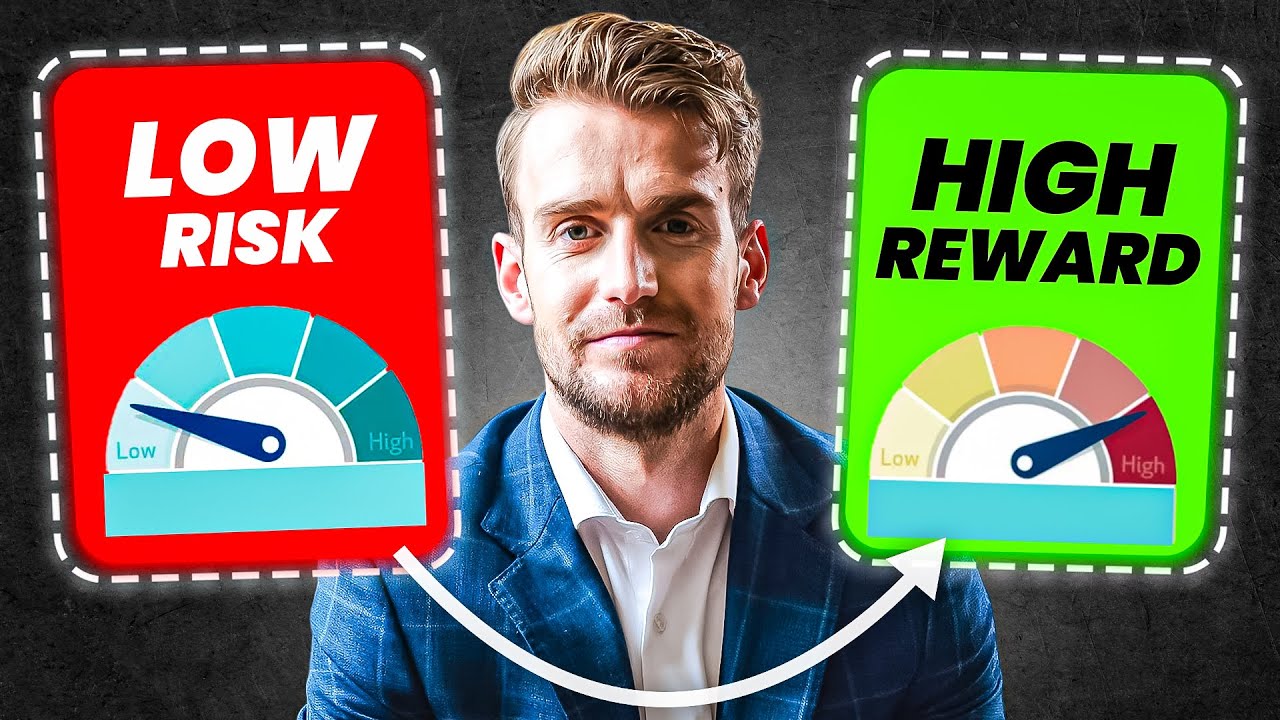
Bridger Pennington walks through a framework for evaluating deals: identify risks you can and cannot control, run sensitivity analyses across worst, base, and best case scenarios, then find ways to minimize or diversify risk. The goal is finding alpha by tilting the risk-reward ratio in your favor.
Chapters
Alright people, welcome back. In this video, I want to talk about how to derive alpha or figure out if your deal is good or not good or just a process of making investment decisions. Okay? So that's what we're going to talk about and this is the framework, risk, control, return. You can see on my iPad here. But ultimately, I'm going to scroll down for a second. What we're trying to drive is a thing called alpha. Okay? Alpha. Alpha, a lot of us in investing have heard of a term called like high risk. Finish it for me. High reward. High reward, okay? High risk, high reward. Low risk, low reward, right? That's what we hear a lot. And that's how people talk about investing decisions. That's— well, high risk, high reward. Low risk, low reward. We as fund managers are trying to figure out investments where we have relatively low risk with relatively high return. That difference there is what we like to call alpha, or another way to put it is called asymmetrical risk. And I'm pretty sure I spelled asymmetrical wrong, but you get what I'm saying, okay? Asymmetrical risk in the market, that's what that means is Relatively low risk for relatively high reward. So Bridger, how do you achieve that? Like that's, maybe it's impossible. Can that be achieved? Alright, so let me give you an example. We're starting a business, if you see on my screen here, and me and my buddy Joe are starting a business. Alright, me and Joe are starting this business and you're an investor looking at my business. And me and Joe, we have a certain level of risk and reward. Let's just call it medium. We have a medium level of risk and a medium level of reward. Okay, as an investor, you're like, yeah, it's medium risk, medium reward. Cool. What if though, at, you know, maybe a couple weeks in we say, hey, we found a new business partner. This business partner is Elon Musk. Okay, he's going to be our 3rd business partner. Now you as an outside investor, what happens to reward? Does it stay the same, go up or down? I would guess it would probably go up if Elon Musk is your 3rd business partner. I think the chances of success go Go up. Elon Musk, I would argue, is one of the greatest entrepreneurs of our age, maybe of all time. Okay? The reward, I would say, goes up. What happens to the risk level? Is it more risky or less risky? In some sense, you could say more risky, but I would, as an investor, I'd be like, I'd rather bet on that company than company without Elon Musk, right? I would say the risk level kind of goes down a little bit because of Elon's, all of his connections, his money, all that kind of stuff. So what did we just do? Just by introducing one business partner, Our reward just went up and our relative risk went down and we just created, ta-da, asymmetrical risk versus reward. Does that make sense? We just created some type of alpha in that investment because all we did was just add one business partner. That's one type of alpha that you could add to a business. Hopefully, you guys are following along. And again, for this framework, I want to give you a process for making decisions. So, when any decision or your fund or your deal you're looking at right now, and back to kind of the bigger picture of the Fund Launch Formula here, Zooming in on risk control returns. What we're going to do for your business, you can do it right now. Pull out a pen and paper and put in, okay, we have certain risks in this business or this investment. Let's write out things that we can control and things that we can't control. For example, what are some things we can control? Let's use a real estate, you know, for example, real estate multifamily. So real estate. Multifamily, we can control how much rent. We can control our purchase price. We can control how much debt we put on the business. Okay, these are a few. There's a few more obviously things you can control. Okay, but these are things we can control. What are things we can't control? Well, we can't control interest rates with the Fed interest rates. We can't control the economy. We can't control political— I'll just put politics. There's a bunch of stuff we can't control in the market. Okay? So you list out all these risks that we can and can't control for a real estate multifamily or for whatever business or idea you have. Next thing we do is we say, okay, how sensitive to those risks are we? So for example, if interest rates move a quarter of a point up or a quarter point down or a full percentage point up or a basis point down, okay, what— how does that affect and drive a worst case, a base case, and a best case scenario for our fund? You do this on Excel or run a sensitivity matrix on Excel to see how much do these affect our business, these risks that we can and can't control. Okay, how sensitive are we to them? And then additionally, okay, hopefully you're following along so far. What are some of the risks that we can maybe minimize or diversify away? So some of these are especially the ones we can control. How do we control those in a way that drive a best base and worst case scenario, hopefully a best case scenario. and drive some type of alpha with asymmetrical risk versus return. Okay, is this— you following along? So again, risks you can and can't control. How— we run a little model. How sensitive are we? So if rates go up 0.5%, does that bankrupt us or are we okay? If the economy weakens next quarter, are we bankrupt? Are we okay? Or maybe that helps us, right, in certain scenarios. If we adjust rent prices up or down, how sensitive is our returns to that? that thing. And what happens is hopefully we can minimize risk. This is a process to minimize these risks to hopefully our worst base and best case scenarios all rise based on the risk. And what we can show at the end of the day is to our, maybe even our internal teams or ourselves or our investors, we have relatively high reward for relatively low risks. And we've mitigated a lot of these risks. I was with Ray Dalio a few months ago and he talked about this. He said, With pretty much any investment, you can diversify away about 80% of the risk. So he goes, what I like to do is find an investment, I de-risk it as much as I can, but I still keep, and he says 80% of the risk without losing your upside. 'Cause you can do that with most investments. At least the investments I get into, that's what Ray Dalio was telling us. And if you don't know, Ray Dalio's one of the greatest fund managers of all time, largest hedge fund ever, okay? And I actually met him in person, shook his hand, talked to him for a little, it was really cool. He talks about how you can diversify away 80% of your risk. So this is a process. Again, a framework for you doing this. So right now, if you can, I'd spend some time looking through your potential deals and seeing how you can de-risk them before you go to step 2 and frame those deals out.