Interview with the Co-founder of Funded Today — Largest Crowdfunding Agency | Zach Smith
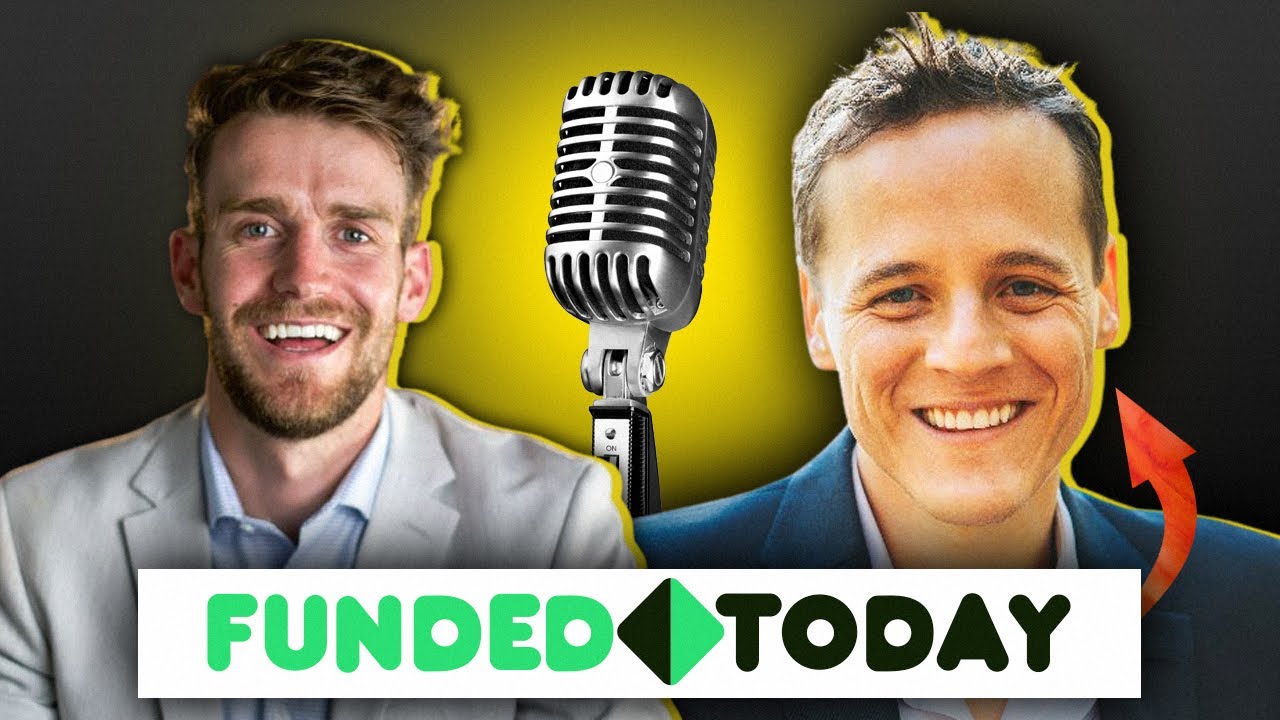
Zach Smith, co-founder of Funded Today, has raised over $300 million for Kickstarter and Indiegogo projects. He built the business on a 100-hour campaign that pulled in $325k, then systematized it into a 25-35% fee model. He now runs a real-estate debt fund returning 26% annually and shares his paid-media tactics that achieve 12-14x return on ad spend.
Chapters
Hey guys, welcome back to the show. Today we've got an incredible guest with us, Mr. Zach Smith.
We're on Zoom.
I'm actually gonna bring him on in a second. Before I bring him on, I wanna tell you a little about him. And personally, actually, me and Zach are good friends. We've been talking a lot lately. Zach runs Funded Today, one of the co-founders. They have raised over $300 million for Indiegogo Kickstarter campaigns across the world. Number one crowdfunder raiser on the planet is coming on in just a second to talk with us. And in addition to that, Zach is actually launching his own fund here pretty soon. He's actually been using a lot of the earnings from his businesses to do loans and different internal investments. And now he's going to scale that and bring on investors. So you'll hear about his process of running a very successful company, getting that money, and now raising money for his funds. So you're gonna love this episode. Zach is a very smart guy. He went to Weber State University. I'll talk about his— Dame Lillard went there, summa cum laude from there, graduated, did— has actually a degree in Mandarin, did very well, spoke Mandarin. We both actually speak Mandarin to Together, and an incredible guy, incredible entrepreneur. He's 33 years old and has already had massive success in his life. I think you guys can learn a lot from this episode and you'll enjoy it. So we're gonna cut over and you guys can hear Zach himself. See you guys in a sec.
Bye.
Hey guys, welcome back to the Investment Fund Secrets podcast. Today I've got my good friend with me, Zach Smith. You guys are not gonna want to miss this interview. It's gonna be very fun. I think we're gonna dig into a lot of fun stuff. I've already mentioned his, his long lengthy bio, done a lot of incredible things with Funded Today, incredible crowdfunding raiser. And then also, Zach, we didn't mention this in your bio, but you're also launching your own fund as well, doing a lot of hard money loans, things, debt types of stuff. So anyways, Zach, welcome to the show. How you doing today, buddy?
Hey Bridger, excited to be here, man. Thanks for having me on.
Yeah, um, we're— this is gonna be fun to talk. So a lot of, a lot of good topics, a lot of good things we're gonna talk about today. But first off, tell Tell us a little bit about your story, how you got started in Funded Today, and then how you've transitioned that now into launching your own fund.
Yeah, absolutely. So I've been a serial entrepreneur my entire life, not to be confused with a serial murderer. I'm a serial entrepreneur. I'll be a lot like Bridger in that sense. I've— I'm essentially the guy that was selling lemonade, dragging the Radio Flyer wagon around to soccer events and tournaments selling snow cones, starting a lawn mowing landscaping business, and One thing or another led me to Fund It Today. The story of Fund It Today is kind of interesting. I graduated valedictorian with a degree at Weber State University. For those basketball fans, that's Damian Lillard's university. It is.
Yeah, Dame went there in Utah. That's right.
Yeah, Dame Dolla representing. Yeah. Anyway, I graduated with a degree in accounting there, and I kind of started a practice not in accounting but in business consulting based upon the experience I had in another business. Well, I charged on retainer and by the hour. It's like $100 an hour or something, and maybe it was even more. And I had a client come to me. They were actually out of South Ogden, Utah, and they said, hey, we can't afford your retainers, we can't afford your hourly rate, but we have this amazing idea. Have you heard of this thing called rewards-based crowdfunding, Kickstarter, Indiegogo? And actually, at the time I hadn't. I said, no, I haven't. They said, well, look into it, let us know, we'll give you 35% of all the money that you raise. Make a video for us, design a page, do all the marketing. We think we got a cool idea. I agreed. I thought they had a cool idea. You can check it out. It's called the Roo Sport attachable magnetic wallet. Snaps to your waistband, holds your keys, credit cards, wallets, goo energies if you're running. If you're a marathoner, it's like the perfect type of product. But at the time, Brenda the creator had just sewed this in her basement. She was like a seamstress and she knitted one up kind of thing.
And what, what year is this, by the way? What, where are we at?
Uh, geez, I think it was 2013. 7, 7 years ago. Yeah, 2013.
And was Kickstarter, Indiegogo, was that a big thing then? When did those companies start?
Not really. I mean, they had started— and again, you can't quote me on these, but I think it was 2008, 2009, 2010. So right in the middle of that last big crash, some of these companies actually came up, which is pretty cool. And they had not reached their peak yet. Their peak was probably 2015, '16, '17. So they were still kind of up and coming. People were learning about them, people were hearing about them, but they hadn't reached that market saturation level yet. And I hadn't heard of it. I mean, most people probably listening to this podcast still have not heard of crowdfunding. Crowdfunding? Oh yeah, that's That's Shark Tank. That's that. No, not exactly. We'll talk about what crowdfunding is and some different means of it in this podcast episode. But essentially, we raised the money and we raised them $115,000 in the course of 30-something days. And I got 35% of it. And that was pretty cool. It's like, wow, I made 30, 40 grand or something. Yeah. And suddenly a lot of people wanted to know how a couple, you know, they were like 50, 60 years old, I think maybe even a little older. How did this couple raise this money for this kangaroo wallet, this little pouch thing. And a lot of people came knocking down our doors, and I went back to my business. Thomas, my business partner, went back to doing his consulting, and we didn't really think anything of it. Kind of crazy. You think we would have just dropped everything and went going, but we had good businesses going on already. We were already both very successful.
So, so $35 grand didn't really get you out of bed? You were like, well, I'm good, I'm fine, right?
Yeah, I mean, I don't know. We, in hindsight, we probably should have acted even faster, but at the time You know, maybe we didn't think— we, we hadn't figured out that formula that we realized we had. We didn't think it was possible to duplicate perhaps, or replicate.
Yeah.
Well, we were wrong. A lot of people came knocking down our door. The, the best story, probably the most exciting story that made me decide to pull the trigger was we had 100 hours to raise about $200,000 for a product that had raised $100 grand. So they had a goal of $300,000. If they didn't hit $300,000, they were going to lose their $100 grand. We had 100 hours to do it for them. They begged us. We didn't know how to do it. We didn't know if it was going to work. We, we ran a lot of marketing. We'd worked with companies from Dubai to Utah. Didn't, you know, we'd never fronted that amount of cash in that short amount of time. But the guy gave us an offer we couldn't resist. It was like incredible. And so we took Thomas's dad's credit card at the time and we floated— it might have been $100 grand of ad spend, I can't remember, but a lot of ad spend. And we raised this guy $325,000 in the last 100 hours. And obviously got a pretty big paycheck. And at that point, I'm like, all right, Thomas, I'm opening up all my lines of credit. Let's do this thing. Let's start a business. We've got a formula here. We've got something. And sure enough, we did. We just crossed $300 million just a few days ago.
Wow.
So, 3,000 projects across the world, $300 million raised, and we're raising tons of money now. If you've been on Kickstarter, you might think COVID-19. Surprisingly, coronavirus has been great for our business because everybody's innovative and they're coming up with all kinds of ways to tackle this. Global pandemic. And then we've seen cool stuff too, like we're working with this chess project, Russian nesting babushka dolls, and they've machined these pieces together and it's just incredible, raising them like $40,000 a day. So innovation never ceases to amaze me and it never ceases to exist even in the worst global pandemic the world's ever seen. So we've been very fortunate throughout this to be highly successful still. Yeah, that's kind of the story.
That's impressive. So you are paying for ads?
Yep.
And then you take— is about 30% still? Is that what you keep?
35%. 25 to 35% of everything raised. So if we raise you a million, you'll pay us $250,000 to $350,000. And that's, that's all, that's all of our fees. We might spend a couple hundred grand in that. So we essentially act as a mini bank or a lender for 30 to 60 days, sometimes even 90 or 120 for building your page and your video as well. And that's been a good model too.
This is awesome. I love this. So for people on this pod— and this podcast, we talk about funds usually and how to launch, start funds— but I think a lot of people too listening might have an idea or a project that they want to launch, maybe use a Kickstarter campaign. So you, I mean, you've done this for thousands of people.
How do you—
what is— what makes a good product or an entrepreneur? I mean, you've worked with a lot of people. What makes a good one versus a bad one? Because a lot of people, there's all these broke inventors out there that keep inventing stuff and they never go viral. But you guys, essentially, you'll pick— and do you turn away a lot of people as well?
Yeah, we do. We only work with probably 30 to 100 projects a month, and there's 4,000 to 8,000 projects that launch every single month. Wow. We're pretty selective. Granted, we wouldn't be able to work with them all even if we wanted to.
So how do you select those, those product entrepreneurs?
Yeah, there's a formula: ubiquity plus tech. Ubiquity is kind of a big word. Ubiquity just means how widespread is the market.
Tech—
techie, cool. It's a way— the easiest way to think about it is for me to give you an example, and the easiest example to give is a smartwatch. So I think 10 years ago, maybe 7 to 10 years ago, Again, my dates are a little foggy, so you'll have to, you'll have to fact-check me after. But 7 to 10 years ago, give or take, there was a product on Kickstarter called Pebble. Pebble was the original smartwatch before Apple had made the smartwatch ubiquitous, meaning everybody had one. Everybody knows what a smartwatch is. And what they did is they took a watch, something that you tell time on, and they made it do all kinds of amazing things. That's what techie is. Let's look at it at a more micro level. Techie can also be a cooler. The coolest cooler, one of the most successful projects of all time, but they actually never really delivered. They raised so much money, they didn't get their shipping right. So it's actually one of those sad failure stories too. It was called the Coolest Cooler because it was incredibly cool. It wasn't just a cooler. It had lights. It had big wheels that could drive through sand or gravel. It had a Sudoku knife or whatever those are called that really cut things. It had plates that were frisbees. It was huge. It was compact. It could hold your gear. Everything you wanted in a cooler, the coolest cooler had. Or take it to a micro level, a company out of Utah called Basics. They were BYU graduates. They invented what was honestly one of the first minimalistic watches. Basically a watch that has— or a wallet, a wallet that has everything you need, nothing you don't. I mean, this is like a piece of fabric, a little spot to hold your card, your main card, a little, a little piece of leather that you pull out to grab your 3 or 4 other cards, and then a slot for cash. It's techy even though there's not a tech element on it because they've taken the big bulky wallet that causes back problems and issues with your hips and everything, and they shrunk it down to the size of a few dollar bills. That's the formula: ubiquity plus tech equals huge chance for success. Add that to one more formula I've devised over the last year or two, and that formula is, has it been done before on Kickstarter? Doesn't matter if it's out there on Amazon or e-commerce or whatever. Has Kickstarter or Indiegogo, those platforms where you raise money themselves, Have they done that idea before? If they haven't, there's also a huge chance for success if you copy that formula.
So you don't care if it's already on Amazon? That's what you're saying?
It's got to be different. You can't just grab something on Amazon and launch it, but you can look at something successful on Amazon, tweak it, pivot, emulate success, and create your own thing. And there's a good chance it's going to do really, really well.
So I saw the Cool Cooler a couple years ago. I don't know if— I, I don't know if you'd sent it to whatever. Okay, that thing was pretty cool, by the way.
I'm one of the only people in the world that has one. I'll have to send you guys a picture. I'll take a picture and put it on your website or something, Bridger.
You have a prototype of one?
I've got a prototype that I still use and it's awesome.
So they raised— how much did they raise?
$20 million, I believe.
And then they never produced?
The entrepreneurs, they produced some, you know. I think there's maybe a couple hundred out in the world. They just— the molding was more expensive than they thought. The shipping was wrong. They got the manufacturing wrong. I mean, it was so cool and so amazing and so many different features. I don't really believe the creator was a bad guy. Some people probably do. Because they lost money. You know, I didn't back the project. I happened to get it because I did some different things with them down the road to get the cooler. So that's why it's kind of like a collector's item for me. Um, but eventually they just ran out of cash. And I think they're still trying. Maybe they're still trying to figure out if they can raise capital or whatever. I mean, here's a chance for a fund.
Are you sure he's not on the, you know, on an island just hanging out or what?
Yeah, I know. As far as everybody knows, I mean, he got a, he got a Washington state— I think he's from Washington state. He got some sort of compliance issue where they demanded some things. I mean, he went through the wringer in terms of security and regulation. So I don't think—
You can't raise money on Kickstarter and then just say, sorry, I'm taking money back.
Yeah, you can't just bounce.
I mean, you can't bounce.
There's a chance it fails. Kickstarter is not— the easiest way to understand Kickstarter is pre-orders. But as I say that, let me give a little disclaimer. It's not really pre-orders. There's a chance that the product never happens. Most the time they happen, most the time they're delayed because these are creators. These are brand new innovators that have— a lot of them never started a business before, and they might not have all the experience necessary to go from prototype to manufacturing to mass manufacturing to shipping and drop shipping and logistics and all the stuff that comes from raising money. So sometimes raising too much money is a bad thing, and that's why Cooler raising $20 million was actually a bad thing.
Interesting, huh? Cool. Look, I gotta see that cooler, by the way. You gotta bring that over sometime. That's sweet. It had a little satellite TV on it, is that right?
It had a Bluetooth speaker as well. Yeah, I forgot about that feature. Yep, Bluetooth speaker could play through. Yeah, you could do— you could get radio, satellite. I mean, it does— it really does amaze. Every time I use it, I'm like, oh, that's a new feature. Got a little place to drain the water out. That's pretty smart. Just clever. Like, it lights up at night so you can kind of see stuff as you open up the cooler. It's battery— oh, it's got a blender! I forgot the blender. You can blend your drinks out on the beach. That's cool. Everything. That's awesome.
So, okay, so sorry for the people that never got one.
I had nothing to do with it, so don't yell at me.
Yeah, what the freak? You gotta help those guys out. You're the— yeah, get them more money, whatever they need. So, um, so Zach done very well Kickstarter. By the way, if you guys are interested in this, what we talked about, we're probably gonna move on to talking about funds for a second here. Yeah, but Zach actually has something pretty cool coming out soon. We won't, we won't spill all the beans right now, but, um, we've been working on it together. We might actually— and we'll send you guys maybe some emails in a couple weeks of, uh, A product, uh, you're trying to take a lot of your stuff and share that with next-generation entrepreneurs and help other people launch Kickstarter campaigns, launch a business similar to Fund It Today, or to help raise money online, all those types of things. You've written a book recently, is that right?
Yep, absolutely. I'm very proud of it. You got a little bit of a teaser.
What's the name of the book?
I said we're calling it, uh, Fund It Today, believe it or not.
Today.
Okay, how to raise big money for your next big idea.
That's awesome. So that— when's the book launch, by the way?
Ooh, don't put me on a timeline here. It is ready to go. It's through editing. It's through publishing. It has the ISBN getting applied to the back cover. I— it's ready to launch anytime. I'm just kind of— I don't know, you know, I'd say within 30 days, but I said that 3 years ago. It's taken me 3 and a half years to write this book. So it's not going to be 3 years from now. This thing's done now.
Yeah, I wrote a book. It's on the interwebs now. So 30 days from this post.
Oh geez.
Out in—
Bridger's good at holding you accountable, guys.
I'm gonna hold you accountable too.
I wanna— Every time, this guy will get it done.
And if you don't, you got to give me that cooler. How about that?
Oh, now it's really— now it's really on the line here.
There you go.
Got a whole— got a whole principle of goal setting going on. This is how you— this is how you make things happen.
Oh yeah, put them on public platforms. Oh yeah, public goals. Actually, I actually really believe in public goals because it holds your feet to the fire when you tell me you're doing something. Yeah. I'm a socially driven extrovert kind of a person, and that like holds my feet to the fire more than anything else, is other people knowing that I have a goal, and if I don't hit it, and then I'm— anyways, it's just that whole external thing. But all right, Zach.
Now, Bridger, I will say one thing about this upcoming course. Oh yeah, never revealed or taught anything that we've done to raise the $300 million. This isn't us like creating something just for the heck of it. We've raised $300 million. We've been doing this. We're still doing this. Look up Crowns. It's on Kickstarter right now raising tens of thousands of dollars every single day. And that's just one project of many that we're working with right now, in addition to all the money we've raised. Now, for the first time ever, we are actually going to release a course and describe exactly how you can do the same thing as kind of an accompaniment for the book that I've written.
Which is— I, I'm very excited to— I've actually— you sent me over kind of the draft of the book.
Don't go rob him, guys. He's got, he's got the only copy right now.
Yeah, I've got— yeah, I've got— yeah, you got the cooler, I got the book. Um, it's pretty impressive. I've actually seen back into the course a little bit, so we'll keep you guys posted on, uh, on when that happens. I mean, it's a one of a kind. What you've done is very— I mean, you got— you're the top in the world, right? Number one company in the world for doing this.
Yep.
Um, being able to raise more money online. And even for people listening right now that want to launch a fund, there are funds out there that run ads on Facebook and raise money. Through a 506 fund. There's different types of funds you can do this in, crowdfunding type of funds. And you found the niche for how do you get people to pull out their wallet, put a pre-order down or a pre-investment down, and it applies directly if you're raising money online as well, which is, is pretty cool.
Oh yeah, it really is. And I think this formula— I've spent a lot of time today talking about Kickstarter and Indiegogo, but this formula bridges the gap to any type of crowdfunding. You can apply what I teach in my book and what I teach in this course to all facets of crowdfunding and have great success.
Let's talk about that for a second. Let's talk about the actual money-raising part of it and the psychology behind it. Give me your thoughts and your frameworks for how do you go out and get someone to drop $100 or $500, $1,000, $10,000 on a product they've never even seen, felt? It's an idea. How do you do that?
So it's a boring— it's boring to start, and everybody's like, oh, I knew that. Well, you didn't really, and I'll explain. I call it the Triple F. Friends, family, fools. Your triple F. Every business you start, you kind of need to start with your triple F, and it's very simple. Hey Bridger, I've got a new product coming out. It is the coolest cooler. I'm actually going to deliver it, not like the other guys in Washington. It's going to be $1,000. I know you love camping. I know you love going to the beach. I heard you just got back from, uh, St.— from, uh, Lake Powell. Hey man, we've been good friends. I need $1,000 for this thing. I'm launching in 30 days from now on September 1st. Can I count on you to pledge? Because here's the difference.
Yeah.
Hey, I've got this cool cooler.
Check it out.
It's awesome. All your friends, yeah, Zach, wow, that's so cool, man. You're amazing. You're great. Hey, it's $1,000. Oh, oh, oh, wait a sec. Wait a sec. It's about cash commitment. And I, I organize this. I have— there's templates and stuff. We give all this stuff away for free in the course, but Going through this step by step until you build out your Triple F. Ideally a couple hundred people. The best somebody ever did, they got 500 people lined up on launch day for like $100. So 500 multiplied by $100, quite a bit of money raised on day 1. The reason that is important is because you create momentum, you create a snowball effect. Crowdfunding is a paradoxical vehicle. Paradoxical means it seems like it can't be true, but it is. You set a goal for $100,000, you hit that goal of $100,000 with your internal network, suddenly you raise a couple million dollars because everybody's like, oh, I'm not the fool who jumped on this. This thing's already successful. I want in too. It's momentum, it's movement, and you create that through your Triple F. And it sounds simple, it's a lot harder to execute, and it's a lot harder to be consistent, to reach out to all the hundreds of people. You know, I have like 5,000 friends and, uh, 60,000 followers on Instagram. You know how painful it is to go through individually and message all those people? But I can raise millions of dollars just from that network alone by following that process, and you can too. But who's gonna do the work? That's separation.
That's interesting, is you get Because no one wants to be the first investor on an Indiegogo project. Everyone wants to be the last one in, right? So you line everybody up day one, you crush your goal day one, and then you can go from there lining everybody up for that launch. Very interesting.
It's huge. And then you, then you take advantage of the algorithms. The reason why you launch on Kickstarter and you're like, I mean, here's a question, Zach, why would I do that? Sounds like I can just go set up a website and take some payments on PayPal. Number one, PayPal sucks. Probably don't do that. PayPal is notoriously bad for raising money. Number 2, Kickstarter is huge. They got millions of visitors every single day. Same with Indiegogo. If you launch on those platforms, you will take advantage of all of their organic traffic if you bring your crowd to their crowd first. And that's why it's so powerful. Unless your website has a higher Alexa rank— Alexa rank ranks all the websites in the world from 1 to a billion— if your website's ranked higher than Kickstarter, which is in like the top 500 or something, maybe even, maybe even top 100, well then you're probably better off launching on Kickstarter because your traffic Is dismal and minimal compared to what you can see on Kickstarter.
Interesting. So, and then you can get trending on their pages, whatever. Oh, you're just saying organic. And do you, by the way, do you take 30% of that to organic traffic?
It depends on the deal structure. We look at— we're very fair with our clients, but we take a percentage of all the pledges generally because we're the ones doing all this. You don't have a Triple F. We bring our Triple F to your network if you don't do it. That's our email lead generation efforts. But it depends on the client. Some clients are huge. I mean, we work with big companies all around the world. Some of them you'd even know. And those big companies, obviously, we do different deal structures with them because they can afford the ad spend. Most small businesses can't afford to spend $100,000 in 30 days. And so, we essentially give them a microloan. They're borrowing our money at, you know, whatever interest it is that they'll pay us on the project. And then, they pay us 60 to 90 days later once we've raised all the money for them. Which is a very powerful thing for somebody who doesn't have a rich uncle or somebody who's fronting that money or a credit card with unlimited ad spend like we have.
Very interesting. So let's talk about the ad spend side of things because I have a few guys we've interviewed before that they actually run funds and most their investment comes from ad spend. So walk us through Facebook, Google, Instagram. I mean, where are these ads and what do these ads look like when you're looking for people with money to drop? What does that look like on the ad spend side of things?
Yeah, great question. Pareto's principle pretty much rings true. Now, it's changed quite a bit in the last couple years. Pareto's principles is the, is the theory of 80/20. 20% of what I do yields 80% of my results. With Funded Today, we got really good at paid media before anybody even knew what was going on with paid media, and we could have even done more. In hindsight, I wish I would have spent $50 million to raise $500 million or something, you know, like I could have done that. But at the time, we didn't know that. We probably weren't as rich then. As we are now, so we might've been having to go get loans ourselves, and which we never got loans. We've completely bootstrapped this entire enterprise. And so essentially what that looks like is spending on Facebook, Instagram, Pinterest, Twitter, Snapchat, even TikTok now is honestly a pretty good up-and-coming platform. And by spending on those platforms, we're able to drive direct pledges. Those direct pledges track our return on ad spend on crowns right now is like 12 to 14. For some of our best ad sets. So for every dollar we spend, we're getting a 14x return, which is incredible.
Yeah.
On a product type offer. And that's just direct. In addition to that, those direct pledges are probably untracking for 2 to 3 times that amount based upon what we're seeing on daily pledges. And that's the theory. The theory of ads is very simple. Create an ad that drives curiosity. So you want to click. This is the coolest thing ever. They don't even know what it is. My favorite is an example of a wallet or a watch we ran. 2 guys They had invented a watch made out of bamboo. It floated. It was one of the first types of wooden watches. It was really sleek and minimalist. And the ad said this: 72-year-old watchmaker passes on legacy of watchmaking to grandchildren. And there was a picture of the 2 kids sitting by a computer with their grandpa in the background and a little red arrow circling the watch that you could barely see pointing to it. And that ad raised like $50,000, $60,000 a day. Because everybody wanted to click it. Everybody already had the story embedded within, and then the page and the video did the job of selling. The ad was just driving curiosity, which got our click rate really low— really high, but our cost was really low on the CPM basis. So it was really sick.
That's cool.
Wow.
And are you on these ads trying to target wealthier people, or does it matter? Do you guys care?
Uh, we target all kinds of people. So on this chess ad, obviously we're targeting people who play on chess.com, people play on Lichess, people who play on Lichess, I guess. Yeah, all the different big chess sites. We're combining that with audience overlays because we, with that $300 million raised, we have millions and millions of people who have backed crowdfunding projects as well who we can target. That's another asset we have that nobody else in the world has because we've been doing this for the better part of a decade. We have all of these people and we can target all of these people, combine them with interests, and do really well that way.
Geez, that's impressive. Wow. And what you guys been able to do is, is amazing. Especially in Utah. We're both in Utah of all places. Everyone downs Utah as this place. I was like, all right, well, you can down Utah, but we're crushing over here. So, um, baby, yeah, congrats to what you've been able to do on that. Um, now you've taken a lot of your— that's— I'd call it winnings, your winnings from these businesses, what you've done. And now you actually have been doing lending yourself, um, and are actually looking to launch a fund right now. Is that right?
Yeah, that's exactly right.
Tell us about that.
You actually were telling me about it. I'm like, you know what, I kind of have a fund. So, I have, I don't know if I can call it a fund, but I have $4.1 million set aside that's completely deployed right now earning me 26.2% this year. And it's strictly residential real estate with a short-term rehab model. So, the idea is we take a property, we buy it at 65% ARV. Very simple math. If it's worth $100 grand, we probably paid $65 grand for it. Obviously, we buy homes that are a little more expensive than that. You know, $300,000 to $500,000 is our target range. We buy these houses, we flip them, we rehab them, we sell them, or we refinance out and get pretty good rental rates and cash out on our investments there. And that's been incredibly lucrative and really, really good. And I hate to say safe because safe investment, but I've never had a default and I've only ever had 2 extensions and the extensions were great. Because if you know anything about origination, I was able to charge extra origination. So when I end up owning these properties, I didn't ever have to own these properties because they eventually paid them off, but I basically had like 38%. So who doesn't want to potentially foreclose on a property where you've already got an upside of 38% and you've paid much less than that? So it's a good investment. I like it quite a bit. And I— the reason I'm expanding— Well, why are you expanding? Because $4.1 million is just simply not enough at the time of this recording today. Whatever day today is, August 3rd, it— I have like 12 more deals that I could take that are all incredible deals, but I have no money to take them. So I'm like, we should probably do something about this.
Yeah. Um, which— and, and now you guys are launching another new fund and actually going to raise money from investors. And actually, and we've been talking on the phone last, last few weeks about that, which is pretty exciting. So through these deals though, you're not managing the properties. You're just the money piece, right? You're just the debt piece. Lending, putting a first position on these assets.
Yep, first and only position.
First and only. How long are your loans?
60 to 90 days is the target. Some are shorter, some are a little longer, but I've been, I've been pretty strict. The reason my return's so good this year is because I'm turning so well. Every 60 to 90 days I'm turning, or if I'm not turning, I'm extending and charging interest at 2 and 12. Really is kind of where I'm fixed right now.
And that's the same thing with my— I run a debt fund as well. The turns give you so much return, right? If you can—
Kicks my trash in.
I can't beat this guy, but we're always going back and forth on our funds, how they work and how they manage money and stuff. It's pretty fun. And we've actually passed a few deals back and forth as well, which is fun. So now, are you gonna do Fund It Today and this fund in tandem? Is Fund It Today running itself, or the fund? What's, what's kind of your plans running 2 businesses at once? And I know you do a few other things as well.
Yeah, I actually own 11 businesses, and I've been really good at doing the whole E-Myth. 80/20 and E-Myth are kind of like my 2 mantras for life.
Yeah.
That and perspective is a private experience. Everybody— what everybody sees is their own truth, and some— the truth is somewhere in between. But that's, that's a theory. That's a little— we get into psychology and stuff, that's going to be another hour-long talk. So essentially what I do is I try to work on my business as much as possible, and I try to get really good people that are better and smarter than me to do all the inside type of things. And for a while it requires me to do quite a bit, but ultimately I document all my processes, I create good SOPs, standard operating procedures, and outsource the rest. And that's allowed me to build a pretty good empire at a pretty young age.
11 business— how old are you right now?
33.
33, 11 businesses. Um, and Fund It Today is obviously like your first, your big, your main Goliath business, but 10 others, right? Um, now are you act— how active are you in the bit? Do you like do a monthly meeting with those or what do you— how does that, how does that look like?
I've organized a pretty good system. We'd have to It'd be awesome to maybe screen share and show all the different things that I do for all my systems. I call it the Agile Advantage Way. My holding company that owns all the companies is essentially Agile Holding Group. And Agile Holding Group is— the reason I call it Agile Advantage is because it's called the Agile Advantage Way. And the Agile Advantage Way, kind of like Marcus Lemonis has his 3 Ps: people, process, product. He's the guy on, uh, The Profit, the hit MSNBC TV show. I do the same thing except for mine is the Agile Advantage Way. And the Agile Advantage Way goes about how I build companies and how I monitor and check in on the KPIs of the companies and set goals and metrics and try to strive for growth and management. And the key is just employing— it really is about employing the right people and entrusting them with a lot of power and teaching them time and time again that they can have more and more power and make mistakes. It's okay. We'll always find a way to fix them. And I think the quicker you learn to let go, the more money you're going to make, the more freedom you're going to have. and the happier you're going to be, believe it or not. And the other people are going to be happier too because they're going to feel like they own the business. There's at least 10 people at Funded Today who feel like they own Funded Today, who feel like they do more than I do and did more than I do. And I don't have a problem with that. If they want to say they built Funded Today, go for it. I mean, I'm still going to tell everybody I built Funded Today. I'm an entrepreneur. I believe I did. But it's perfectly fine for them to think that they did it as well because that's the power of ownership and leadership that we've instilled in them. And they care a lot about the company, and I love that.
Do those employees that funded today, how much do you give them equity? How—
or they don't even have equity, right?
A share? How do—
Yeah, in hindsight, maybe I should have given some equity, but I never did. I own all of Funded Today along with Thomas.
But they feel like they're owners. Yeah, they feel like this is their baby.
Exactly.
How did you do that?
I'd say it was a compensation model that was really good. Instead of being greedy, we paid our people incredibly well, and it worked very good on that performance-based model. Because it wasn't necessarily risky for us. I mean, in hindsight, I could have paid them all $60,000 to $100,000 a year and made a few million more probably. But they might have not stayed. Most my people have stayed this whole time, which is incredible. In today's economy, people are leaving every— what is it, 7 to 12 months or something? Yeah, I don't have any of that. So that's been really good because then I don't—
They're on, they're on a bonus compensation where they, you know, as the business does well, they do well as well.
Exactly.
And that works really good as long as you have a good business.
If you have a bad business, Well, you got other things to fix anyway.
Yeah, that's a good point. A lot of my companies, we— I love doing rev shares or performance. Yeah, because it just—
really great.
Yeah, I hire people that I want to— that are like me, that want to build a business, just didn't have the idea, right? And that's— I, I see the only way to motivate those types of people. Now, there's other people you can hire that are just— they want to be employees, they want to just be paid their thing.
But people that I've been in 2022, I've hired on a couple new people and they are entirely incentivized and motivated on performance. And they are doing incredibly well, and they probably would have worked for $5,000 a month, you know, but I didn't do it that way with them. And they've made— I think he made like $23,000 last month, which is incredible. And I'm fine with that because he made me $100-something grand.
So, that's awesome. Is that the same model you use with your, your 10 businesses? And have you acquired all those businesses, or have you—
Have some I've built, some I've acquired.
Okay, same, same model across all those.
I own is a diesel mechanic shop. So really, it's a pretty cool one.
Yeah. Are your, are your companies all in one sector? It sounds not. Yeah. Are they all over the place?
Not necessarily. This one's a little diversified from what I do, but it's a service-based model and I consider it an agency model. I'm very familiar with the agency model. So I bought it. Hmm.
Very interesting. And are you, now back where this is Investment Fund Secrets, right? We're getting, I love talking about these. But are you raising money for these acquisitions? Are you going to leverage a bank's money or is it just your cash on buying these businesses? How are you doing? Are you coming in with partners for typically? One of the cool things ever.
And I learned this from Roland Frasier, good friend of mine.
I'm actually speaking on an event with him next week.
Okay. Very nice. Yeah. He's a great guy. One of the sharpest business minds out there, in my opinion. He talks about buying businesses by leveraging your existing assets. Obviously, Funded Today and my incredible successes across all my companies have been very good. So, I've been able to come into these companies and take percentage equities in all of these businesses or sometimes just own them all outright by almost always not having to put in any capital. And the one thing I do is I offer lines of credit at good interest rates to these businesses, which is also incredibly advantageous to them because now they have a trusted partner with free access to capital. And those 2 strategies alone have allowed me to open a lot of doors that I probably shouldn't have even been in. Hmm.
That's very interesting. And is your plan to keep growing the empire? And one day, what do you want to have, 50 businesses or what?
50 businesses making me $50,000 a month each or something.
Huh, that's awesome. That's really very cool. Um, have you raised a lot of outside money yet?
Never have.
Never have.
So this is on my own capital. This is the first time I've raised money.
This is the first time you raised money. So, um, and we've been talking about this last couple weeks, so that'll be fun.
Uh, I was always skeptical of fundraisers, you know, and now I've done it so much, I feel very confident in the model and I know what I'm asking for and I have an incredible track record. I've never really failed. I mean, that's knock on wood kind of thing, but all my business— some of my businesses have died But I love this analogy. This will freak out a lot of people. Oh, Netflix is so much better than Blockbuster. Okay, sure. But Blockbuster made billions of dollars for a long time before they died. It's like one of my favorite analogies that nobody shares. That's how some of my companies have been. I made a lot of money on them and now they're no longer around. But that's okay. I learned from them and I created even better companies. And the guy who owns Blockbuster is doing pretty dang well too.
That's a good way to look at it, right? Because everyone wants to look at who's good right now.
Who's good now? Who's good now?
And who's Who looks great?
Yeah, it's like, yeah, every business is gonna fail. If you own a business thinking you're gonna last forever, sorry, pipe dream. You know what I mean? Yeah.
So Zach, um, I know we've gone a little bit long on today's. This has been fun talking. We'll probably have to bring you back in a little bit, but a few exciting things coming. Just watch, watch your email from me and from Zach too. Um, we'll be, uh, we're announcing some fun stuff with Zach's course, his book launch, all that kind of stuff. We're gonna partner up on a few things that's just gonna be pretty exciting. So Zach though, before you go, what is your Parting advice you have to, you know, our group, our audience, people that listen to this are entrepreneurs, people want to start funds, syndicates, um, and do well in life. What is your parting advice to them that you have?
Good question. I'll have to borrow from my business partner Thomas Alford. We talk about this all the time. The reason we're so successful is because we follow Nike's model. We just do it. It sounds so simple. It sounds so easy, but Quite frankly, again, 80/20. 80% of your— of what you're going to get comes from 20% of your effort almost all the time. So if you're doing things and you're not getting any result of it, you're probably doing the wrong things. So do it, but do something different. Because if you keep doing something, if you keep moving forward, the principle of kaizen comes into play, where small daily improvements eventually get you to the top of the mountain. And that's the case for me, and it's been the case for all of my businesses. And it continues to be the case for every single thing I do in my life, not just in business, in language learning, in memorization, in studying to become a chess grandmaster. All those things, kaizen and just doing it and studying the right things and doing the right things time after time after time, week after week, month after month, even year after year sometimes. I'm only 33. I might feel like I'm 66, but I'm still incredibly young. And most of you listening are young too. Most 50-year-olds did not become a millionaire till they're like 55 or 60. It takes an incredible long time, and I realize how incredibly lucky and blessed I've been. And I understand that I still need to be patient to achieve even bigger things, and you do too.
Zach, I love that. I, I, I've heard that from plenty of people on the show of just getting, just doing. You don't have to have— and I love the book Ready, uh, Ready, Fire, Aim, right?
Great.
Essentially in the title, right? Ready, fire, and then figure out where you're aiming. Just get moving. There's so much power that's built in momentum. And, uh, anyway, Zach, thank you so much for coming on today. It's been An absolute pleasure having you on. We'll probably have to have you guys back. Probably have Thomas on next time, hopefully, and you guys can go back and forth. But keep watching your emails for Zach's book launch, and then also for this program course. Zach's first time ever, I think, ever on the— we've seen on the interwebs of a course like this teaching how to do a Kickstarter campaign, how to raise money online, how to do crowdfunding essentially. It's gonna be pretty exciting. So Zach, thank you so much for coming on.
Thanks, Bridger. I love it.
Thanks for having me. Okay, see you guys in the next one. Bye. Okay.
And that was good. I wanted to be like, dude, amen, that is so true.
Just do it.
More from Bridger



The AI stack is trying to consolidate to a winner take all, do you think it'll stay fractionalized


Before you launch a fund, triple check your fund attorney actually filed everything.





