LIVE 3 Fund Manager's Outlook for 2025
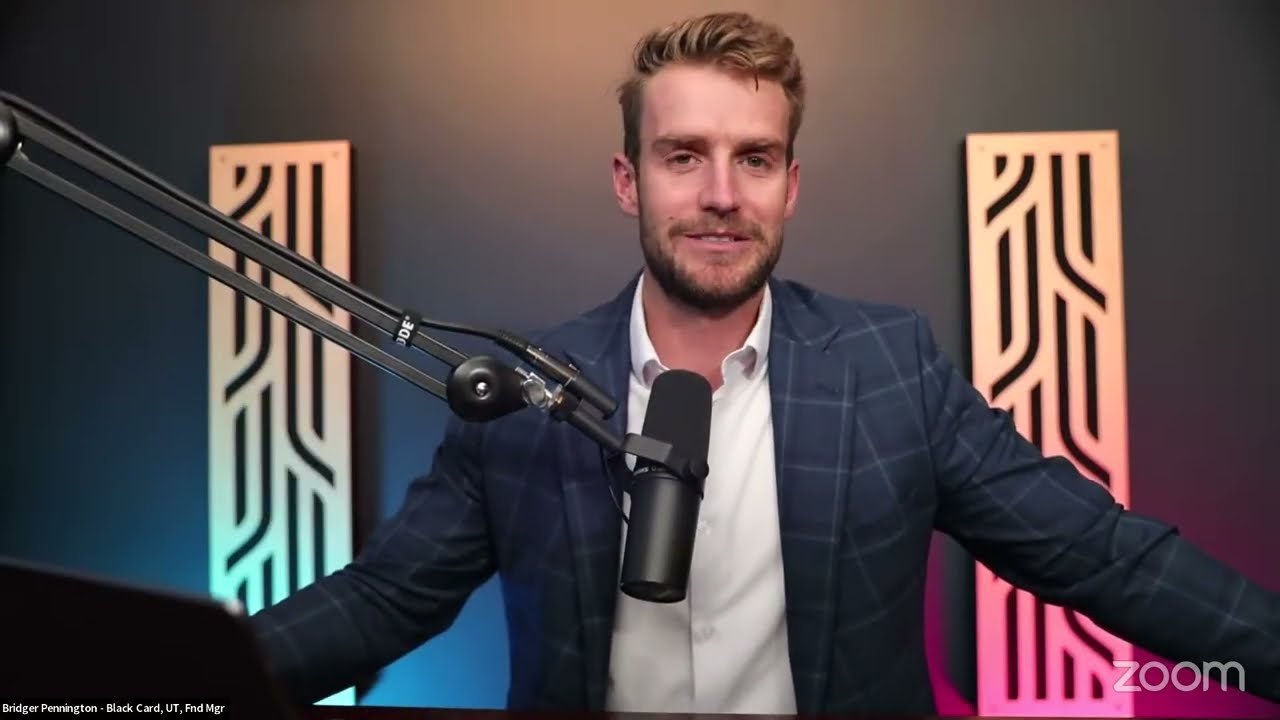
Bridger Pennington and a panel of fund managers discuss cryptocurrency outlook for 2025, projecting Bitcoin at $80-$100k and detailing the Ugly Unicorn fund's allocation: 11% Bitcoin, 22% Ethereum, remainder in large-cap altcoins. They cite corporate cash reserves totaling $8 trillion across the S&P 500 as a potential driver if even a small percentage flows into Bitcoin.
Chapters
Oh, oh, oh. I'll find a way to forget you. Cut the strings off my guitar, stomp your heels into my toes, steal the keys right out my car, and I'll find a way to forget you. I fight a thousand guys, live to die a thousand lives. Oh, oh, oh, I find another way to make me feel alive.
Ah, ah, ah.
I'm in it just to rewrite history, 'cause I'm in the mood to. Label us the leaders of the leaders of the new school. This ain't for the radio, can't find this on YouTube. This the type of killing that these critics ain't used to. Victorious. Victorious, victorious, victorious, victorious. In this day and age, I got time for innovation, time to be creative, time too big to waste on my time on critics hating. Flattered by your opinions, destroy you while just embracing. Now watch a worldly sunrise up, your daylight savings go nuts when I have to. Glazed belt my sound and there's beats on the house that we dreaming. Watch me way back up in the castle, my thoughts are distorted. 'Cause I recall guys were hatin' uncommonly, all of them became common denominators. Hold up. Tried to overlook a rival, all eyes on me 'cause I got no competition. Now looking at an idol, your dough ain't long enough to pay for my attention. Man, it's the gospel for the black sheep. I guess it got a banging ring to it. Quiet, we're triumphing on the rap league. So all of you motherfuckers could sing Pay reality visits, but it was too hard to live it. Build up my confidence and deliver. Now I be burning these critics 'cause they ain't know they was walking their course while burning they bridges. Hold up, hold up, man. Whoever thought I'd be rapping? The family ain't never think that can happen. Matter of fact, only person that ever pushed me to get out was my mother, and the only reason was 'cause I can track. Heard that comments, that chick that you put a ring on. Wait.
Without a doubt, the number one value to Black Card has been the caliber of people. If you have the drive and ambition to launch a fund, then there's no excuses once you join Black Card. Otherwise, you're going to be figuring it out. Even with Bridger's YouTube content, it's not going to get every little piece put together.
And the ability to just learn, like the knowledge, and nobody is—
it's an abundance mindset versus scarcity mindset. And I think that is such a huge thing for anybody start—
looking to start a business.
The best thing is the quality of the people that are in the group, right?
And that God loves you, and I wish nothing but success and happiness for all you guys.
And they have coaches in place to help you with that too, and to change your The perspective around things is very—
the incentives to be in it, they far outweigh what you pay out.
So the caliber of the people here has been the biggest value for Mastermind 5.
The quality of the coaches, my gosh. The ability that being around the people here, it gives you a push and a drive to step up more.
It would take me longer than it would to be on there. I fight a thousand guys, live to die a thousand lives. Oh, oh, I found another way to make me smarter, just so I could understand. Just so I could understand. Your heels into my toes, steal the keys right out my car, and I'll find a way to forgive you. I'd fight a thousand guys, live to die a thousand lives. Oh, oh, I'd find another way to make me smart, just so I could understand. I'll find a way to forgive you. Just so I could understand what it takes to be your friend. What it takes to be your friend.
All right, boom people!
Hello, hello!
What is going on? Good to see everybody in the chat. Say hello if you can. What's going on? It's go time. We are here. We are live. I'm gonna move this computer over a little bit. My name is Bridger Pennington, and we got quite a lineup for y'all today. So what is going on? We got quite a number of people live with us right now. So welcome in. Type in where you're calling in from, like where, like your location. Where are you guys at? Indianapolis, Jacksonville, Florida. What's going on? I'm in Salt Lake City, Utah. That's where we're headquartered at. We got people actually, a lot of our people calling in today from all over the country. Pittsburgh, PA, Maryland. What's going on?
Bozeman, Houston, Franklin, Phoenix, Los Angeles, Atlanta.
Welcome in. Welcome in. We are going to have a blast today. I'm excited to talk about 2025, how, what the economic outlook is, what are, how are fund managers preparing for, for this next year? What are they doing? And what are you guys doing as well? We're going to talk about this all today. So it's been pretty fun. Let's do this real quick in the chat. We're gonna have a lot of fun today. If you, if you've been on our calls before, I try to make things a little bit more exciting than the typical boring slow finance call that's very serious and buttoned up and very slow and methodical. I like to have things a little more energetic, a little more fun for a couple of reasons. Number one, it's just more fun. Number two, if you show up to this call and you just listen, psychologists tell us you'll remember about 0% of this long-term.
Okay?
If you take notes, psychologists tell us you'll remember about 3% to 5% long-term. But if you're engaged, if you chat, if you comment, if you're involved with it, you'll remember about 15% to 18% of this long-term. So, I'm going to ask for participation. I'm going to ask you to drop stuff in the chat. Yes, it's fun. Yes, it's a good time, but also, it's actually to help you remember and engage and be part of this a little bit more. Does that sound good? So, if you're with me, type like yes in the chat. I'll do stuff like that, and you guys can type yes in the chat. Actually, and I'm actually going to maybe do a few giveaways in the chat as well. Based on this, let's do this real quick. How many live calls have you been on with us before? This is your first live call, type a 1 in the chat. If it's your second, type a 2, 3, 4. If you're 10+, type like 100 or 10+, whatever. Some of you guys have been on with me forever. We've done a lot of these, so type it in the chat. Wow, it is coming too fast. I can't even read it. Okay, 1s, 2s, hundreds. Oh man, this is crazy. So welcome on, y'all. Good to have everyone here. We're going to have a lot of fun today. We're going to go very fast. And, and go, uh, go quick. One last question, then we're going to dive in. I'm going to queue up my slides here. Um, and let me be able to share my screen if you can. Um, do this, type in what industry are you like in? If a lot of us talk about funds, so if you're in the fund world and you can type, I don't know, but if you're in real estate or private equity or hedge funds or venture capital or real estate funds in the fund world, or what do you aspire to be? A lot of people on this group are wanting to run their own funds. Type in the chat which ones you guys want to do. Real estate, hedge funds, venture, e-commerce. Very cool. I love it. It is coming very fast though. My thing is glitching out on my screen. Okay, awesome. So we've got a full docket today. I'm not going to waste any time. We're going to go very fast today. I'm going to ask you to— let's see. Actually, I'm going to undo that real quick. Let me pull this up. Let me know if you guys can see this. Here we go. Okay, boom! There it is. We are going to go extremely fast. Buy dirt real estate fund. I love it. We're going to go fast today. We actually have. I have a little surprise for y'all. So this is how three fund managers are planning for 2025. We have our first fund manager coming on, and I think in about a couple minutes they're getting queued up right now in the backstage. How we actually now have not three but five fund managers. A little bonus for y'all today. We got actually two more people coming on today, which sounds anyways going to be very fun. So how five fund managers are planning for 2025? These are the managers that are coming on. So, the agenda for today, again, I'm going to go pretty fast. I'm sorry if you came late, but we're just going to fly. Is that cool with you guys? I just hate going slow. Again, I like going fast. So, agenda for today. Number 1, we got Jim Riggio. Okay, Jim Riggio, hedge fund manager right now, very good on macroeconomics. I'm excited to have Jim on. He's going to talk all about his outlook. He spoke at our last event on our cruise. We did a Caribbean cruise a few weeks ago. Jim's the man. Some of you guys know him in the chat. He's phenomenal. He's actually a coach inside of our Black Card community alongside running his own fund. Help some of our people in Black Card as well. Phenomenal. Excited to have Jim Riggio on next. We actually had Jacques coming on. He has been in the hospital, so prayers to Jacques. He's, I think, recovering at home right now. We are having Dustin Gomez replace him. Dustin runs a $20 million real estate fund, so a smaller real estate fund, more closer if you guys are just beginning on the real estate side.
What—
and he's making some very, very cool moves in real estate now. He's done over $400 million in syndications and transactions, though. And now is launching. He's launched a fund, and he's launching another fund right now. So it's gonna be very cool to hear from Dustin. Next up, we got John Pennington. This is my dad. You guys have heard from him before. This is my my. If you guys have heard the story of me, you know pitching my dad for money, he co-founded a family of funds when he retired. They're over $28 billion IPO'd on the New York Stock Exchange. Family of funds all over the world. I think sixth largest family of real estate funds on Earth. Their funds today over ten times bigger than Cardone Capital. To give you perspective of how big they are. We have him coming on in a few minutes. Also author of Dollars, Gold, and Bitcoin. We're talking about his book. Very, very good at macroeconomics, the dollar. We're going to talk about Putin, Israel, God, everything that's going on in the world right now, the Trump administration, all that kind of stuff with John. It's going to be very fun. And then finally, we have Colin O'Farrell. Colin runs an oil and gas fund right now. They do these smaller wells. He's out of Jackson Hole, extremely successful fund. They actually came through Black Card, our group, and we're excited to have Colin on as well. So, boom, there's our lineup today, and I'm the 5th. Okay, I'm the 5th. I'll give you my outlook a little bit. And we currently, I currently run 2 investment funds as well. So, we have Colin, Dustin, John, and Jim. We actually have John Pennington, my dad, coming on in just like a couple of minutes here. So, it's going to be pretty fun. Does that sound like a good lineup? Type, give me a 1 in the chat if that's worth your time today. Hopefully, that's all right for y'all. We're going to be talking. Most people dance around politics or things like— I want to talk about real stuff. We're going to talk about the Trump administration. We're going to talk about changes that are going on in the Middle East right now. We're going to talk about oil change. I mean, we're going to dive in. I'd love to take your questions live. This is a live call. So, as we're going, type questions in the chat. Should be pretty fun. Additionally, for today, we're going to announce some major updates to Black Card and Fund Launch.
Okay?
If that's cool with you guys. So, we have been working with— this is, I think, one of the most significant upgrades we've done. To our products and our product lineup. So we're going to talk about this today. No one knows about this. This is our— we have 1,000 Black Card members right now and they don't know these updates that I'm about to share. I'm actually pretty, pretty excited for that.
Okay.
Now, and we're going to do a lot of giveaways today as well. So it should be pretty fun. Actually, let's just do one right now. I told you it's not going to be a boring webinar. How this is going to work, we are going to type things in the chat. I'm just going to randomly pick someone in the chat. If you win, you get $100 to Amazon. That's how it works. So, for example, if I told you to type in Someone typed in Doge in the chat. Type in Doge, D-O-G-E. Type in Doge in the chat. I'm going to pick someone for $100. We're going to go fast here. 5, 4, 3, 2, 1. You can pick something like stop scrolling there, man. They're going too fast. Just stop on somebody for me. Can you there, Kendall? We got Chris Swanson. Chris Swanson, congrats. You got $100 coming to you for Amazon. How it works, Chris, send Adam Smith. He's a panelist right now, a co-host on this. Send him a message and send him your email, and you'll get $100 to Amazon. So, boom, we're already giving away money. Okay? All right. We're going to have fun. You guys got to be ready. We're going to have a lot of fun. Congrats, Chris. We're giving away money live already.
Okay?
We did this call last year. Since then, the markets have been ripping. Okay? And actually, accurately, a number of fund managers predicted this, a major bull market in 2024 in certain categories. As far as the stock market, yes, major. And we had other, I guess you could say, sell-offs in different markets as well. We'll talk about that in a minute. This is it with including Ethereum and Bitcoin. We've had a major run-up in crypto. We're going to talk about this in a little bit as well. Should be pretty fun. Okay. Now, real quick on me, if you've never been on this call before, I'm going to give you 20 seconds on just who I am and why I'm here to talk to you guys today. So, I ran 2 funds called Blackbridge Holdings. I started out of school. We did extremely well. I actually sold and exited those funds, paid back all investors, plus a very handsome return to those investors, and did extremely well. After that, we launched Fund Launch. So, Fund Launch is a group and community online. All of you, a lot of you are in the Fund Launch community. We have over 1,000 100,000 people that have taken one of our programs on how to launch a fund, how funds are built. We have, uh, we've done 3 now 1,200-person live events. We've launched over 300 funds. We have $32 million in revenue. We bootstrapped this company 100%, me and Mason and, and Lincoln. I'll talk about my co-founders in a minute. And there, I currently run Ugly Unicorn. This is a hedge fund in the blockchain space. We've raised $21 million of equity, have no debt in this fund, all in blockchain. It's been very, very fun in crypto the last, I mean, 2 weeks. It's been crazy. We're going to talk about crypto later. All-time highs of crypto. We're pretty excited going into 2025. And then finally, Funnel Launch Partners. I'm a partner on Funnel Launch Partners. It's a $100 million GP stakes fund. We're actually now investing into people inside of our Black Card community. We've done— I'll talk about that in actually a second, but pretty cool. So, we have— these are, you know, a decent number of social media followers. There's Mason and Lincoln in there, and that was at our last event, Funnel Launch Live. A list of 250,000 emails on our list, and we have a bunch of— so, So, go check us out. We post a lot of stuff on all this kind of stuff going forward. And this is my family, my beautiful wife, Lauren, and our son, Jonah. We have another daughter on the way. Actually, real quick, a poll. What do you guys think of the name Penny Pennington? Penny Pennington for a girl. Is that too crazy? Give me a yes or no in the chat. Do you like Penny Pennington? We might be— my wife hates it. I kind of like it. I think it's kind of cool. Anyway, it should be kind of fun. Now, I believe we need more people to launch funds. Uh, I'll talk about our mission of Fund Launch, but I believe more people need to launch investment funds. Uh, if you look at the Forbes 100 list, finance investments, fund managers are the number one category that billionaires made their money. And we call ourselves the Wall Street Rebels. Um, emerging fund managers statistically outperform funds over a billion dollars. So funds less than a billion statistically outperform funds over a billion dollars. They're in smaller, more inefficient markets. There's greater alpha to be had in these smaller funds, and we've seen that now with 1,000+ members inside of our Black Card community. It is crazy. I'll talk about Black Card in a little bit, but, uh, over $4.5 billion reported client AUM that people— you guys in the Fund Launch community have and manage right now. It's crazy. We are democratizing Wall Street. That's our mission statement. That's what we do as a company. We are democratizing Wall Street. We're making high finance All the— if you guys know my story, uh, you know, historically fund managers, you know, it's been on their ivory towers in Wall Street. You had to go to an Ivy League university to learn about this kind of stuff. And, uh, this is what we are doing. We're democratizing Wall Street, making high finance available to all. We do that in 3 categories: educate, incubate, and allocate. And we do that with, uh, the, the education side is AltStreet. Anybody in AltStreet? We just launched this 2 months ago. It's been extremely well. We have— we interview fund managers from around the world. We have Mark Malik, runs a $1.5 billion quant fund, Jim Lawler, Kelly Ann. Um, he's an amazing fund manager. Actually, this morning and last night we were filming in New York, uh, some more classes. It's just like, kind of think of like, uh, like masterclass for fund managers. Uh, this is my dad. He's going to come on here in just a few minutes to talk about this. Um, this— I did a class on launching your first fund. So here's the backend platform. Now we believe— I love this quote— if you truly believe that what you have is useful and valuable to your clients, then you have a moral obligation to try and serve them every way possible. And that's why we made AltStreet completely free. This is totally a free platform. You guys are welcome to go use it. AltStreet is phenomenal. If you guys, if some of you guys are users in the chat here, AltStreet is a great platform, totally free. And that's on the education pillar, which is pretty cool. That's how we are on the, on the front end democratizing Wall Street. On the back end, Fund Launch Partners, I mentioned this already, we're launching, we've just launched a GP stakes fund investing in partnering. We've already deployed and earmarked $17.8 million of aggregate capital. We've done 4 portfolio companies already this year. We're doing 3 more by the end of the year. All primarily Black Card members that are inside of our community that we're investing into and doing GP stakes with them. And then finally, the incubate side is Black Card. I'll talk about some major updates to Black Card in a minute, but it's, it's pretty cool. When we call ourselves the Wall Street Rebels, this is what we mean. We are democratizing Wall Street. We're making this available to all, which is pretty fun. So kudos to y'all. This isn't my community. This is our community. This is what we are building together. So welcome in. This is fantastic. We're just— it's It's phenomenal to be here, and I'm humbled by the response, our community. It's just amazing. So, I want to say thank you to you guys. You guys are amazing. And you saw our events earlier. It's just been phenomenal running this for the last few years, and it's been crazy. All right. Enough sentimental stuff. Let's dive in. Let's get our first speaker to stage. Is John ready to go? Is he queued up?
Okay.
If you guys can queue him up in a second, I'm going to set the groundwork for a second. We're going to bring John on in just one second here. But let's bring on our first speaker. So, we've had some major changes with the Trump administration, okay? Some things that are interesting just to lay the groundwork, and he can kind of take this as he wants. Number one, some major things. We have government cuts potentially coming from the— I put Doge in there, but we have Elon and Vivek coming to potentially— they have plans to cut $2 trillion of government spending. Now, we'll see what they do. Currently estimated about 50% of GDP is tied to government spending. 50% of the US GDP is tied to government spending. We'll see. This could be very, very interesting for markets going forward. Additionally, we have major proposed tax cuts with a red wave happening. This might have huge implications for businesses as well. And then finally, major tariffs. Trump's been heavy on tariffs. We're going to see how this affects— I'm excited for the few speakers maybe talk about this. This could be a negotiation strategy. There's potentially rising costs. This could move more jobs to America. We'll see all the implications of this now. This is my dad, John Pennington. I mentioned him earlier. He authored this book, Dollars, Gold, and Bitcoin. If you guys have been on and been to any of our events, John is like a fan favorite. He was voted best speaker of our last 2 events, talking about how the whole world works from a very, very high finance perspective. Again, co-founder of a $28 billion family of real estate funds when he retired. Now, they're Much larger than that and incredible father. I would call him the father of Fund Launch and Black Card. If you guys know my story, my dad taught me about funds. I grew up in a normal house. My dad drove a car with a dent in the door for years. John is from North Las Vegas, kind of the poor side of town, and made it, launched a fund, very conservative. Finally, after all of his kids moved out, he finally bought a nice house and a lake house and other things. Incredible father. And I just speak the world of him. He really is truly a good person, a good human, and a very, very smart individual. So, we wanted to bring him back today and give you guys an update on what he sees, what's happening with gold markets, the dollar, Bitcoin, how world reserve currencies are shifting, all that kind of stuff. So, with that intro, if you guys can, maybe in the chat, give John Pennington a huge welcome. to the call. John, we'll bring you on live here to talk about a few things.
I love it.
Throw some emojis in the chat. That's great. John, where are you at? You there? All right. Let's spotlight him and me as well on here so people can see him. Let's turn up the audio so I can hear him too. All right, Dad, you there?
Bridger, I'm here. Can you hear me?
Yes, I can hear you. Okay. Welcome on.
Thank you.
Thank you for having me. So, I teed you up pretty good here. We'll see. I'm going to let you take that. So, the question posed to you is, how are you adjusting your portfolio going into 2025? What are things that you're watching, looking at, all that kind of stuff going into the new year? So, I'll let you take that any direction you want.
Yeah.
Okay. Well, the big news is Bitcoin, right? Bitcoin's up, up, up. And, uh, as you know from our book that we wrote together, that, uh, I like to live my life on probabilities. Okay, so let's go to 2012, the Election Day in 2012. Bitcoin ran up 10,500% over the next year and then pulled back. Okay. And then in 2012-16 Election Day, it ran up 2,500% and some change. Okay, and then in 2020, it ran up 390% in, in the first, right, Election Day. Then it ran up 393%. Okay, so if you keep that delta, you know, it's going $10,500, $10,300 to $2,500 to $393,000. Well, the Election Day just happened and Bitcoin's running, so, uh, the probability is It won't run up $10,000. It won't run up $2,500. It won't run up $400, $393. It's going to run up about 80% if it stays true to the probable thing. So 83% off of $60,000 or $70,000, it could in the next year run to $110,000, $120,000. So if it keeps true to the delta as it's going forward, as getting more and more mature, The percentage should be about 80% run-up in the next year if it, if it could. So that's, that's my target for Bitcoin. The run here is about $110,000, maybe $120,000. You know, the highs could be $130,000, but if I take $60,000, $60,000, $70,000 on Election Day, roughly, you know, your rough numbers out, you know, an 80% run-up would be right about, you know, $110,000, $120,000, somewhere in there.
Yeah. Okay. Well, in your, Your book, you talk a lot about, you know, it's obviously dollars, gold, and Bitcoin. We can come back to Bitcoin in a minute. And you talk about Bitcoin being in a box. Well, let's hit that right now. Do you think Bitcoin still is in a box controlled by governments or not?
Where do you think it's going? Well, no, my theory in my book is that they're trying to control it because they maybe view it as a competitor to the US dollar, like they're trying to control gold all those years. And silver, like they've tried to control the Chinese yuan and other things. Because you look, my theory is that the the U.S. dollar is the the greatest product. It's the number one product ever invented, and the number one job of the Federal Reserve, the President, the United States Navy, the IRS, the SEC, is to promote and protect its number one product, the U.S. dollar. And all of us, most of us on the phone, I can travel all over the world. And I can pull out U.S. dollars and ta-da, they take them, right? But Jerome Powell, the Federal Reserve, I'm sure, I'm sure they're just always just mad at Congress for spending so much money. And people keep asking, you know, about the recession's coming, all the indicators of recession. And I agree with that. However, there's something that's happened in the last— well, it's happening right now. We are spending about $1 trillion every 90 days. So if you spend a trillion dollars every 90 days, it's hard to have a recession, right? So that's why a lot of economics majors or economic analysts, they're having difficulty predicting what's going to go on because no one's ever spent a trillion dollars every 90 days. It's never happened before. And so this is messing up all the models of the probabilities of what's going to go on in the future. And so what I think is going to happen here is Trump is going to make a deal with Putin. And the deal is going to be something like, and I'm just roughing it here. Hey, Mr. Putin, we got to stop the war in Ukraine. Whether you're going to pull out or keep your territory, we're not sure yet. But how about if I put you, all Russia, back on the SWIFT system? And that would release about $300 billion worth of US dollars in Russia back to the Russian oligarchs. And then Trump's going to say, and then we're going to buy your oil as long as you start trading, back trading, you know, gas and oil in US dollars. And again, protecting and promoting the number one product. And that should, over the next year, one of that'd be one of the components over the next year should put a damper on the gold prices going up. It should maybe level off or maybe come back a little bit and to pour some, you know, syrup on those pancakes, make it even sweeter if it'll Elon and Ramaswamy, if they're able to actually cut the spending of the US government, that's going to show to the world the US dollar is stronger. So a couple of things are going to happen. If Trump can make the deal with Putin and Putin goes back to using US dollars for oil and gas, and we can actually stop spending as much money as we do now, that will strengthen the US dollar in the year or 2 in the future. And so that will, you know, the BRICS nations, Brazil, Russia, India, China, and South America, South Africa that are coming on as, you know, trying to start the BRICS dollar, that will dampen the strength of that. And for, you know, a relatively short period of time, strengthen the US dollar, which when the US dollar goes up, gold and silver typically go down. And that might even—
let me share a chart here. This is the DXY. This is the dollar versus other currencies. And, you know, we've had mass inflation, yet in the last 3 years, on a percentage basis, the dollar is up 11.93% as of the 10th. You mentioned a strong dollar, and we've talked about this a long time. People keep, Jon, the dollar's going to die. Jon, the dollar's dead. They're moving on. Give us your response to that. And you're saying a strong dollar is ahead.
Okay.
Yeah, yeah. So, a lot of, I don't know, but maybe your audience doesn't know this. Maybe they do know this. The euro and the euro dollar are two different things. When you go on and you hear people talking about the euro dollar, they're not talking about the euro, but people confuse it all the time. The euro dollar started after World War II, and that's where we started lending money out to other countries. And so the euro dollar are U.S. dollars outside of the Federal Reserve System. So when Saudi Arabia lends Turkey $15 billion, those are eurodollars. Okay? So right now, it's estimated in the world there is $40 trillion eurodollars. So yeah, you can say the dollar is going to crash, but it can't crash because everyone's using euro— there's $40 trillion around the world, right? People are buying and selling stuff in U.S. dollars outside the Federal Reserve System. So, you really can't say it's going to crash because it would take decades to crash. What are you going to replace it with kind of thing? And so, this is the—
Compared to what, right? It's so sticky. That's what you keep saying. It's the best product ever. We have national debt is rising, but you say, well, that's good. You want debt held by other people because they want that debt to be paid back in something. They want it. If dollars go to worthless, then the world effectively loses $36 trillion of— that's just the national debt. It's not including the Eurodollar.
Yeah.
All that goes to zero. It's like, it's too sticky. They want it to be up because they keep using it.
Right. So, when we bought Alaska from Russia, we paid $7.2 million. Great, great deal. Incredible deal, right? And when we bought the Louisiana Purchase from France, we paid 4 cents an acre. Something like that, right? Incredible deal. But I'm telling you, the very, very best, best business deal ever, ever, ever on the planet is the eurodollar. We convinced the world to take eurodollars and now they're using them. And therefore, when I go all around the world, I can use US dollars and pay for anything. And most, every other country in the world, you can't really do that. So it is the best marketing It's the best marketing deal ever to promote a product.
So, to clarify, people in the chat, it's not euros. It's not the US dollar euro exchange.
That's right. No.
Explain a little bit further. What do you mean by the euro dollar?
Okay.
So, the euro is a fiat currency that's used in Europe. Okay. All right. The euro dollar is the US dollar that after World War I was lent into Europe. Okay, so if there's a U.S. dollar in Saudi Arabia and Saudi Arabia lends that U.S. dollar to Turkey, that's a U.S. dollar outside the Federal Reserve System, and Turkey would have to in the future go find more U.S. dollars to repay that loan back to Saudi Arabia. So when Saudi Arabia lends $15 billion to Turkey in U.S. dollars, in eurodollars, Then Turkey in the future has to go out and find U.S. dollars to repay that back to Saudi Arabia. They're not paying it back in chickens. They're not paying it back in oil for sure, right? So this the euro dollar is the best business deal, best marketing, best marketing deal that anyone's ever done for a product, and therefore back to my thesis: the U.S. dollar is a product of the U.S. government. The U.S. dollar is the number one product ever invented by mankind. There has never been a product so prolific. And so used by worldwide people, a man-made product anyway, than the US dollar. And so, getting off of the US dollar, you could do it, but it's going to take you decades and decades and decades to get off that dollar because everyone uses it.
So, to play devil's advocate, the people out there, well, M2, they're printing so much money. The dollar's worth, it's going to zero. It's, John, whether it's cryptocurrency or it's the BRICS nations, they're getting off China's getting off of it. What would you say to those naysayers?
They are. They're getting off of it, but it's very slow. It's going to take a long time. So yeah, if I was the president of China or I was president of Russia, I would hate that I have to go get US dollars to buy oil from Saudi Arabia. I would hate that. And I know Saudi Arabia's thinking about or maybe has done a little bit. I'm not sure. But the Navy, our military protects Saudi Arabia, and we have aircraft carriers off their coast. If a shipment of oil from Saudi Arabia gets pirated, the U.S. Navy comes in and takes care of the pirates, right? Now lately, China has been buying oil, and guess what? It used to be when China bought oil from Saudi Arabia, if a pirate took over that ship, the U.S. Navy come in, whack them, right? Now, if a pirate takes over a tanker of oil from somewhere that's not, you know, going to— is it's going to China and China's purchased that in the yuan. Well, China has to send their navy all the way around to, uh, to take those little pirates. So that was the deal kind of after— it was an unspoken deal after World War I. Listen, everybody, no one needs a navy. You know, uh, Japan's navy was gone. China's navy was gone. Russia's navy was gone. Uh, Italy's navy was gone. Germany was— everyone's navy's gone. The U.S. Navy was intact and Britain had some navy. And the Bretton Woods Conference, it's kind of an unwritten rule, but hey, listen, you're a small country. We know navies are very, very expensive. One of the most expensive things to have is a navy. And you live in a small country. You don't need a navy anymore. You don't need a navy. Just trade oil in U.S. dollars and we'll be your navy. And that alone, I believe, has taken more people out of poverty Since World War— since the Bretton Woods Agreement than any other thing in the world, because we've allowed— it's free commerce pretty much. A small country can ship their goods all over the world. And you can argue with me. I know people have argued with me in the past. They said, but John, you know, American colonialism has done a lot of bad things in the world. Hey, I'm not going to argue that with you, but I am going to tell you, if we never did the Bretton Woods Agreement back in 1944, all right, There would be more people today in the world starving. There'd be more kids right now hungry because their little country doesn't have enough money and food, right? But because the Navy and the US dollar is prolific, it's been a world reserve currency that's been over the whole world for a long time. Stable, pretty stable. And I know we print, but guess what? China prints more money than we print.
Yeah.
So it's all relative, right? The power of a sovereign nation is to take some ink and paper and just print money and hand it out. That's, that's, that's a lot of power. So if they do that and you accept that dollar, then they can just print more money. So right now we enforce our number one product with our Navy, with our military, with the IRS, with the SEC. And, you know, anything that tries to compete with the US dollar like XRP, The coin XRP, the the it was XRP was designed to to go around the SWIFT system. The SWIFT system is when you wire transfer money from bank to bank. That's what you use. It's a ledger system, and it takes sometimes a day or two or three days. And XRP is it's in minutes, right? So the SEC has sued XRP and kept them in court for. 4 years now, you know, until they can figure out how to not have them compete against. Because if you start using XRP and not using the Swiss system, then the demand for the dollar goes down a little bit because you don't have to get US dollars. Because to wire money to Saudi Arabia, you have to get US dollars. For me to wire money to you, Bridger, I have to get US dollars. I can't use a Swiss system and use a foreign currency. It's a US dollar-based system. And so that's the, that's one, that's another marketing tool. And so when they cut Russia off after the war, I think we made a mistake. Our government made a mistake.
We should have— Ukraine-Russia war, just bear with me. That's right.
Yes.
We should not have cut Russia off of the SWIFT system because then Russia said, okay, then I'm going to start selling my oil in gold and rubles. And they've done pretty well to India. They can always do it for a short period of time until someone says, oh, I don't need any more rubles. I took rubles for a year. I have plenty of rubles. Or I don't need any more yuan, right? Every country can do it for a while. But they hit a point where I have too much of this currency, but you never have too much gold. You never have too much US dollars kind of thing. Right. And so that's, that's the, that's the brilliant marketing strategy for the last 60, 70 years of the US dollar.
I love it. There, you know, and back to a Trump administration, you think he's going to continue to strengthen that dollar, get, get Russia back on the SWIFT system?
Yep.
And, and you think the dollar is going to do extremely well over the next 4 years?
I do.
I do. And 2 things. Again, if we— this is very hard to do. If Elon and Ramaswamy can cut spending, that strengthens the US dollar. If Trump can get Russia back on the SWIFT system, that will increase the demand for US dollars. Those are 2 things that would increase demand for US dollars. And we will still print money, but we will hopefully print way less than we're printing now. And like I said, China prints more money than we print. Everyone's like, we're going to crash, but everyone's crashing faster than us.
Yeah.
Which, so a couple of people in the chat, they're all wondering, because your book, you talk about a central bank digital currency or moving to a blockchain-based currency. What's kind of your update on that? Do you see that happening sooner, later? Is it inevitable?
It's inevitable. Like, because I don't, I don't believe a government can turn that, that amount of power down. If someone would— but it's the market, it's the adoption and the marketing, right? So it's going to be tough, difficult— I shouldn't say tough— it's going to be difficult to convince the American population to go over to the US dollar. Because listen, when I pay for something in cash, it's between me and the person. No one knows about it, right? If I donate to the Biden administration or I donate to To the Trump administration in cash, right? Then our anonymous cash. No one knows I did it. But in the U.S., in the U.S. digital dollar, it would be a record, right? So you would you would lose a lot of your freedoms of your anonymous purchases that you don't want other people to know about, right? And they will use that as a marketing piece. Yeah, we're going to stamp out drug dealers if we all go to U.S. you know digital dollar. We're going to stamp out illegal. We're going to stamp out people. cheating on their taxes. And that's going to be part of the narrative to get people to switch to the digital dollar. But I believe the digital dollar is inevitable. I just don't know when. They're going to have to create a crisis for us to accept it. It's just not going to— I don't think it's just going to ripple through and everyone's going to say, oh, this is the greatest thing in the world. I'm going to start using it.
There has to be a compelling reason. There's tax things. There's other problems. Countries are invading and we have to move to this for that reason.
That's right.
But it's—
I agree with you. It is that good of a technology not to ignore. It's inevitable. It's like when online banking came out, like whether you liked it or not, it was that good of a technology that everyone ended up adopting it. Or when credit cards came out. It's just too easy. It's just too good.
Right. So, John, Bridger, for your audience, just to bring them up to speed, I don't know if you guys know this, but in 1933, after the Great Depression in 1929, the stock market crash in 1929, our country was suffering in 1933. And I don't know if you guys know this, but your grandfather, my grandfather, my grandfather and your grandfather could have went to jail for having 9 gold or 5 gold coins in their pocket. Gold was outlawed in the United States of America. You could not own gold from about 1933, May 1st, 1933 to about 1970 something. It was outlawed. You could have a gold watch. You could have a gold chain, but you couldn't have a gold bar or gold. It was all all that gold was required to be sold to. The Federal Reserve, and they would hold it at Fort Knox, and that would that would back up our dollar and make our dollar prolific all over the United all over the world. So when people say, you know, in 1932, if you would have if I'd lived if you would have told me, John, they can't do that. No, no government can can outlaw gold. The word can't is not the right word when you're talking about the Federal Reserve and the U.S. government. Shouldn't good word. Wouldn't Pretty good word. Okay, but cannot don't don't say cannot. So when I say let's go let's go a hundred year anniversary in the future, let's go to May two thousand thirty three, and we're in massive debt. We've got massive problems. We got China. We never want and something we say listen, we have to move to the U.S. digital dollar, and therefore we're going to outlaw gold. Oh, you did that? You did that about a hundred years ago. We're going to outlaw silver. Oh, we're gonna outlaw Bitcoin too. Oh, they can't do that.
They can't.
They can't.
Don't use the word can't. That's an ear. That's a that's a this the wrong word. Okay. You believe some people believe that they have their Bitcoin on their their their hard wallet in their safe. Okay. But that's the point of blockchain. Blockchain, you can if you give me get people a year or so, you can find where the where the Bitcoin went. You can find the blockchain. It's on record. You can't hide it. You can hide it for a while, but you can't hide it forever. Because if someone really, really, really wants to know who has that last Toshi, they can find it. And gold, but more than that, and more than that, in 1933, it was patriotic to turn your gold in. You were part of America. You were part of a big team. And everyone had to pull together to save the country and get us out of a depression. So if you had a friend that had 10 gold coins, you'd be mad at him. Dude, you got to turn your gold in because if you don't turn your gold in, we can't as a country become great again and get our dollar back up. It will be the same type of rhetoric, the same type of newscasts in 2033. I'm just picking 2033 because it's a 100-year anniversary of the gold confiscation in the United States. But a lot of people don't know that gold was outlawed For a big part of the 19th century or 20th century.
Yeah, I love it. I, that's something you've taught me for years is don't use the word can't. You think the rules are this way and then they change the rules. That's right. The banking crisis that happened last year, they, oh, the banks are supposed to crap. And then they change the rules. They auction things off. They change the rules. They're supposed to, oh, the Fed was going to, they just change the rules.
Change the rules.
Hey, John, I'm going to keep you on for a few more minutes. I want to, I put together a bull and bear case for 2025. I want to get your reaction and see what you think. We'll talk about each point. Does that sound good?
Got it.
Is this good, by the way, chat? You guys liking this so far? Keep John on for a few more minutes. Always a fan favorite. So, all right. So, Bollent for fund managers. Now, in your book, you talk about why running a fund is so great, and I agree with you. And you've got me now in this, my brother, your other son, into this as well. Like, we're a fund family, you could call us.
Fun and fund family. Yeah.
Yeah.
We have lots of fun as well. So, by a fund, also what we mean is it's just a pool of money. You're pooling money together to go buy real estate. You can buy companies, you can buy Bitcoins, you can buy whatever. It's just a pool of money.
Yeah.
And you share, you split the returns with investors. That's all we're talking about. It's not that complex of a situation here that we're talking about. So, for fund managers going into 2025, and I want to get your reaction to this, so I put together, was a bear case for 2025. Now, most, I would say most People I talked to were generally optimistic going into 2025, but this would be the bear case. So, the negative case. Number 1, government spending, government cuts, excuse me. Elon and Vivek come in and slash government spending, $2 trillion. This could potentially shock markets pretty heavily. You lay off 100,000 government employees. I mean, that might shock. Now, there's probably severance packages and things like that, but I mean, you could have a major shock to markets. Again, this is the bear case. Another bear case. Rate cuts in the last 2 cycles, this is 2008 and year 2000, rate cuts preceded a recession. We are cutting rates right now. The P/E ratios are nearing all-time highs, 38 price-to-earning ratios. The mean is 16 or 17, excuse me, over the last, like, I don't know, 60, 70, 80 years. We are way above that mean. This is the chart of the last—
Yeah, it's getting up there. It's like 22. It's like 22. It's something like that. Yeah.
We've had all-time highs. Market's been ripping. This is the 1-year for the last 3 major indexes. This is 2-year for major indexes. So, you could say we're in a bubble. Things are going to need to come back and revert to a mean. So, that's kind of a bear case. Any responses to that?
Yeah, I do have a response. So, my first fund, I started when I was 40 years old, and I was lending on real estate. And my second fund, I launched in 2007. Well, so, first fund was 2004. Second fund was 2007. We launched those 2 funds and then we were lending on real estate. We were taking first deed of trust loans, you know, 1 to 6 month type loans and helping people, you know, just kind of bridge, a bridge loan type of thing. And it was called Bridge Loan Capital Fund. Then 2008 and '09 hit and we pivoted. We pivoted and we stopped, we launched a 3rd fund that wasn't Lending, we started purchasing properties from banks. Okay, if 2008 would have not come, I would still be doing loans probably, and I'd be bigger than I was. I'd probably be doing loans on real estate. But because of the recession, we pivoted, and then we went from zero to $28 billion assets under management by 2021.
Right?
So in in the Despair of a market pull-down is the fund manager's dream, right? You can buy stuff, you can do stuff that other people can't do because you can raise money, you have a fund going, and you can take advantage of overselling. So that would be my first thing that don't fear it. If it comes, make sure your fund or your team is ability to take advantage of it.
Yeah. Positioned well. I totally agree. We studied fund managers. Most actually launched during crises, and that's where the most successful funds of all time have launched. You're talking KKR, Blackstone, Berkshire. A lot of them launched during crises. Now, here's a bull case that I put together. I'll go quick through this. A couple of things, bull case. Since February 2020, we've had a 21.4% net inflation on pretty much everything me and you are— now, I know the year-over-year inflation is like now 3%. It's come down. since 2020. With rate cuts, we are essentially baking in this inflation for the long term. I mean, I don't think it's never going back to where it was in 2020 personally, because we've raised rates, fast rate hikes. Now we're starting to cut rates. This is kind of the dot plot from the September 17th meeting.
Yeah.
This is what they currently at least estimate they plan to do in 2025 and 2026. We have now baked in that inflation, which means For anyone holding assets, those assets are going up now. The last two years with rate, the rate hikes here, private equity has dried up a lot, meaning deploying. So right here, this is as of this morning, S&P Global. They said the first half of 2024, a record $2.62 trillion is in dry powder. This is private equity firms that go and buy private businesses. Some of you guys run businesses. These are the businesses they would they would come and buy your business.
Yeah.
They have not deployed this capital, $2.62 trillion in uncommitted capital. So, we have this huge pile of cash that's been built up by people waiting for rates to come down, debt to happen to deploy. Fortune said Wall Street is foaming at the mouth with possible merger and acquisitions going through the Trump presidency. Goldman Sachs projects a 20% increase in M&A activity in 2025.
Wow.
It was down 15% compared to the year prior.
Wow.
So, a lot of— there's been a lot of regulatory problem with M&A from different government agencies that have stopped this. The Trump plan, at least, is to open the markets up drastically. Additionally, IPO markets have been pretty slow. If you look at this, this is Trump era and Biden era. Through Trump, they were much higher IPOs. Since, through Biden, at least with rate— and not just Biden, I'd probably call it the rate hiking cycle as well. We've seen just lower IPO activity. A lot of IPOs looking to come out in 2025 and 2026 with spurred-on activity, uh, here. So I'll pause there for a second. Any reaction from you, Dad?
Yeah, so, so when you see a lot of IPO activity, uh, that means most people, they don't go public on New York Stock Exchange or NASDAQ so they can exit. Most companies go public because they need to raise more capital so they can deploy more capital in investments. So, if you see a lot of IPO activity, that means you have companies expanding. They're raising capital to expand, and that means good things for the economy. So, that's what I would kind of get. That's the high-end picture there.
Yep.
A couple other data points, and then get your reaction as well. So, this is how's medium home price in the United States, this blue line, versus the Fed funds rates. So, here in 2020, we lowered rates to pretty much zero. The housing market took off because we have essentially almost free money. I got a loan in here, 2.6% interest rate loan, right? A lot of people in this— it's crazy. So, obviously, home prices are going to go up. Now, a lot of people thought, oh crap, we're raising rates, home prices are going to crash.
Yeah.
I had an economist on our show. I interviewed him just like this. I said, you know, a lot of people are saying home prices are going to drop 20%, 30%. It's another, you know, 2009. He goes, I don't think so. What do you think? You know, he goes, well, first off, 40% of homes are paid off. That's right.
Secondly, which is astonishing. Just astonishing.
Yeah. 35% of homes are below 3% interest rates.
Right.
Which means they're now an asset. You're not selling that. So if you guys—
So let me stop you there. So think about what we're saying. Yeah. Someone has a mortgage. Okay. And we, you and me, are now calling that an asset. That is, that's in accounting. That does, that doesn't make any sense. But in reality, a mortgage is an asset now if you got it under 3% because you don't want to sell that property because you cannot replace it. You can't sell your property, Bridger, at 2.6% because you can't replace it. Therefore, it's an asset.
Yep. And then finally, so that leaves about 25% of homes that could trade. Yeah, we have a housing shortage in the United States. And so he accurately predicted— we talked about here, he's like, I don't think it'll fall. Since then, it's fallen 6%. Yes. With all these, the fastest rate hikes in history, the housing market fell 6%.
Yeah.
The bull case for 2025, if you're in real estate, I think as rates drop, we're going to see another huge spur of real estate prices.
Yeah. For real estate really to drop, because real estate, a lot of people, obviously a lot of people own real estate in 2008, '09, and '10. people who owned homes lost their jobs. Okay. In 2020, people who rented homes lost their jobs, people that worked in restaurants, people that worked in, you know, on cruise ships. So that was the difference we saw. We did an analysis of the 2, you know, you know, spikes down in the market and stuff. And so you have to have a high unemployment rate to really have a real estate crash.
Hmm.
So you have to— and I realize the unemployment rate is a— and they adjust the number all the time. And I realize it's a lagging indicator. I realize this. Okay. But still, you have to have it pretty high for a sustained period of time before people start selling off their, their, their number one asset, which is their home.
Hmm.
Yeah. And you mentioned earlier the government spending $1 trillion every 100 days. That money's got to go somewhere. Now, even if they do government cuts, the Trump plan still is to have, you know, at least in the short term, quite a quite a surplus.
Yeah.
Excuse me, a deficit on there. So there's the the now hopefully rates are coming down here.
So let me let me go back. You got a picture of Powell there. Let me go back again. Just I I I harp on this. We we should stop saying that this guy's an idiot. This guy's stupid. He's not. He's a very smart dude, and his team is very smart. So let me take you back just 30 years. Let's let's go through an example. People that criticize the Federal Reserve, they think they're stupid. Really? They have the number one product ever invented. Okay. So let's go back in time. You you be the Federal Reserve and I'll be Congress. Okay. And we say to the Federal Reserve, make sure everyone around the world accepts the U.S. dollar. Okay, great. Keep the dollar you know relatively strong. And I as the Congress, I go out and spend trillions and trillions of dollars. And I turn to you and say, make sure that everyone takes our dollars. That's why you see Powell's, you know, he puckers his lips sometimes.
He's mad.
He's mad all the time because it's a very, very difficult job when someone's spending $1 trillion every 100 days and they turn to you and say, make sure the dollar's strong. It's a difficult, difficult job. He's not stupid. His team's not stupid. And you think, you think they make all these, these, they give you these numbers. And then later they adjust them. That's on purpose. That's on purpose. They're not they're not correcting themselves. They know they know they're lying to you, and then nine months from now they're going to say, "Oh well, that number way back when was the wrong number," because they're trying to do their job: keep the U.S. dollar accepted all around the world. And it's a difficult job when you spend one trillion dollars every hundred hundred days.
Yeah, well well put. And if you want to learn more, you can grab John's book Dollars, Gold, and Bitcoin if you want to go deeper on this. Couple more data points I was going to add here, back to the dollar index. Here it is. Dollar is up over the last 3 years, which is pretty significant. I'm just going to jump to this. We mentioned this earlier, but bull or bear, I want to be running a fund. Great opportunities in bear markets and great opportunities in bull markets. For example, if you're a crypto person, I run a crypto fund. We have about $21 million in assets right now in crypto. As a fund manager, you earn usually about 20% of profits on that fund. So, if right now our targets for 2025 is massive for crypto, if our fund goes from $20 million to $30 million, we had a $10 million profit, me and my partners are going to split $2 million of that gain. If we go, we think we might do a 3 or 4 or 5x this cycle. So, it'd be $20 million going to $100 million. We take 20% of that. It allows you to play a much In addition, I'll say this. I don't even care who the president— I mean, I care who the president is, but I want to be running a fund. Whether you're, you know, when Biden was elected, I made lots of money. When Trump was elected, I made lots of money. Like, it's like, I don't care who it is. I want to be in the fund game. Any comments on that?
Maybe—
sorry, Dad, we've gone way over time here. Any— we got other people queued up. Any kind of final comments from you?
Yeah, I'll do a final comment. I started 14 businesses in my lifetime. The last one was funds. The 13— of the 13, I lost 3 of them. I lost money on, and 3 over the 14 I made money on. Obviously, the one I retired from made a ton of money, and the ones in the middle, they all did pretty good. Okay, but the point is, when I got to the fund model, I started to understand the fund model. I was 35 years old, and I said, I want to be a fund manager. And it took me 5 years to launch my first fund. I worked at it every year. I got my Series 7 license. I sold mortgages. I learned. I read PPMs and LPAs. When I got to the fund model, it just exploded because it's a model that can expand. It can. It just it just has the ability to scale. Okay, and I have pushed my sons. I have pushed my relatives. I pushed my son's friends into the fund model because. One day you're going to be doing something in business, and one day you're going to want to scale. And the fund model is the best thing. So you should learn the fund model. And I just think it's the greatest vehicle for people on this call and for me to be able to really, really make wealth for your investors and be successful and have a great team. I think it's just the greatest model ever.
I agree with you, John. Thank you for pushing me into this because it's benefiting my life like crazy. And as you guys can tell, I queued up my dad. Obviously, we could talk for 3 hours. Maybe we got to do another livestream or whatever and do 3 hours. If you want to hear more from John, we've got a couple of YouTube videos of your speeches at Funnel Launch Live that you've given. Go look those up. And also, Dollars, Gold, and Bitcoin, go check out the book. And you guys can really deep dive and see how John thinks. And anyways, it's phenomenal.
Dad, I got to go. I got to go. I got to go. But let me say this. I congratulate you and your team, you and Mason, on your success and your whole team. You've done a great job. And I think what you're doing, I think what you're doing is you're changing America. You're— I love your, you know, you know, the Wall Street has all been a, you know, when I started my first fund, there was no one that would teach me how to run a fund. I had to learn it all myself because no fund manager in New York is going to, you know, take a day off and teach me how to run a fund. Why would they do that? And I just appreciate what you're doing for your students. You've had tremendous success and you've had success and your students have had success. Anyway, congratulations on your whole, whole business model. And I'm really, really proud of you and John. And I know John helps you on some legal stuff. And anyway, really, really proud of you guys. And, but thank you. America thanks you for what you're doing. You're, you're, you're, you're making entrepreneurs, uh, you know, take the, take the power away from BlackRocks of the world. So that's awesome.
Yeah.
Thank you, Dad. Give give John some love in the chat. Drop an emoji.
I don't know.
Give him some love in the chat if you want to do that. Thank you, Dad, so much. Appreciate you for giving us some time. Love it. All right. That was awesome. Hey. All right. So that was just our first speaker. We've got three more lined up here. We've got Colin, Dustin, and Jim, and they're going to be coming on just a few minutes. So we're going to queue them up. But wasn't that awesome? Hear from my. And as you can tell, we have some pretty fun dinner conversations and calls and. It's awesome. I love chatting it up and chopping it up with my dad. It's phenomenal. And anyways, it's great. So now, before I want to bring that, I also promised on this call, we were going to announce some major updates to Black Card. If you guys are cool with it, we're going to jump through those in a minute, and then we're going to bring on Dustin right after that. And I wanted to bring this up too. So, why we work so hard with clients. I love this quote. My dad loves this quote. To each there comes in a lifetime a special moment when they are figuratively tapped on the shoulder and offered a chance to do something very special thing. What a tragedy if that moment finds them unprepared for which could have been their finest I love this quote because right now we're talking about a lot of opportunities in the world, whether it's crypto or real estate or the stock market. Like, there is a lot of— I think in the history of the world, there's never been an easier time to be an entrepreneur and make money. Now, it might still be somewhat hard. It's obviously always difficult, but there's never been an easier time in history. I love living in 2024, even though we got some crazy stuff going on. It's a great time to be alive. And like my dad says, it's our mission statement to democratize Wall Street. So, I'm going to do a giveaway real quick, and then we're going to dive into some updates in BlackRock and go from there. So, let's do this. If you enjoyed that so far, type a yes in the chat, and I'm going to pick somebody for $100 to Amazon, and we're going to dive into our next speakers. You guys good to keep going? Type a yes in the chat. Let me grab somebody here. 5, 4, 3, 2. Oh man, they're going too fast. 1. Kathy. I got Kathy Samdahl.
Kathy.
Kathy Samdahl, you got $100 coming your way on Amazon. Kathy, message Adam Smith. He's on my team. It's Funnel Launch Team, Adam Smith. Send him your email and he'll send you $100 to Amazon.
Okay?
So again, in just a minute, we got Colin, Dustin, and Jim coming on. But I wanted to share with you guys some major updates to Black Card. And now, and even what even is Black Card? You guys might not even know, but I'm going to share some major updates. We've been working on this for months, months and months and months. So, you guys cool if I dive in? Okay, we're gonna spend a few minutes here and then we're gonna bring on Dustin. So Black Card, what even is Black Card and what are the updates? I'm gonna go extremely fast through this. We'll fly through and get to the next speaker. Okay, Black Card is the ultimate incubator to launch your fund. Okay, this is an incubator that we have to— that helps people go out and launch funds. Kind of the analogy I use is anybody can build legal docs. So we actually help people— sorry to go back— we help people launch investment. Our company is called Fund Launch. We have now helped hundreds of people launch And a lot of them are in the chat. We'll have them actually talk in a second. We're an incubator that helps people like you go out and do this incredible thing of running and launching funds. So I kind of think like this, the analogy I use, it's kind of like, because people always say, well, Bridger, you know, I'm going to go hire a lawyer to launch a fund. It's kind of like hiring a lawyer is kind of like buying a platter off the shelf at the store, which is great. So you buy a platter, you have a nice platter, and people confuse though having a nice platter With running a successful fund. And they show me, Bridger, I can't raise capital for my fund. Like, what's going on? I look at it, and on the platter is a stinky fish. They've got weird terms. They don't have alpha. They're like, no one wants your fund. And they think just because I had a fund, people would just invest. The crux of what we do in Black Card is instead of, you know, anybody can buy a platter, we try to help you build a Gordon Ramsay beautiful meal. What's on the platter? We want to make a fund so good that investors are dying to have it. That's kind of the crux of what we do with BlackCard. So we call ourselves the ultimate incubator to launch your funds. Some stats of BlackCard. We have $4.7 billion of reported client AUM, and we over— we have 1,083 BlackCard members right now in BlackCard. We are helping people all over the world do this. There's a few testimonials. Like Jason said, our last investor invested $51 million because they loved our team. This takes us to $60 million of $100 million raised for our real estate fund. This is what Kaloa said. He said, if you go down that red line, this is our second $100+ million deal in less than a year. He actually spoke at our last event at Fund Launch Live. I've actually been to his resort up here. This is in Park City, Utah. The Hilton campus will be worth over $500 million when done. Incredible what Kaloa has done. This is Khalil, a little bit smaller, but still good. Hey, y'all, huge win in October that I didn't share. We soft launched the real estate fund and brought in $600,000 of commitments. Um, now I'm sharing these because this is what— like, not my community, our community. This is our— what we are doing together. It's crazy. We are democratizing Wall Street all over the world, which is pretty phenomenal. So we're— today I want to introduce some new things. We're introducing customizable funds inside of Black Card. So there's 3 main pillars of Black Card. I'm gonna fly through this extremely fast. There's the incubator, the mastermind, and the tool. So inside of the incubator section, with customizable funds going into 2025, there's complete asset tracks for each person that joins our incubator. You can join in the private equity where they're buying businesses, venture capital investing in startups, hedge funds that are trading public markets, crypto, real estate, private credit, and Canadian, all different asset tracks. Now, when you join your asset track, you join through our 4-phase curriculum. So, we have number 1, your deal and thesis, thinking through how your deal looks, finding alpha. Number 2, how your fund is going to function and run. Number 3, how you're going to— what's your go-to-market strategy, how you're going to go out and capital raise and make sure that you have that beautiful Gordon Ramsay meal, not just some stinky fish of a fund. And then finally, 4 is the launch. That's the legal team, all the compliance, all the stuff on the launch. Again, we've launched over 300 funds out of Black Card. It's been extremely successful. So, inside of this incubator, and I'm going to go really fast through this, you get one-on-one coaching. So, we have asset-specific coaches. They come on, for example, like Adam Campbell here did a full— at Harvard, he did Harvard MBA school, did a full cohort on financial modeling. So, he actually sits down and thinks through your financial models. How do you find alpha? He has an office hour every single week right here. And I'll talk about office hours. All these coaches go live one-on-one with you and do office hours every week. We have a legal Q&A series, uh, 65 training— capital raising, investment thesis, general Q&A— all in here 6 days a week. You can hop on and get answers and questions from our trainers inside of our incubator. Okay, additionally, you get a personal accountability coach. This keeps you on track with your goals and helps you through there. And also, we have a pitch deck designer that designs your deck in our incubator to make your deck look beautiful and gorgeous when you go to market. Now, additionally, when you join part of your Black Card membership, you get a full fund legal formation. So limited partnership agreements, You get your subscription documents, operating agreements. This by itself is usually $30,000 to $50,000 by itself. And if you think I'm bluffing, this is from Brightstyle Law Group. I just pulled this up yesterday on Google. Somewhere between $40,000 and $70,000 for initial cost to set up a fund. This is from ChatGPT, okay? Between $50,000 and $100,000 for startup costs. We include this part of our incubator to incubate and launch your fund. Again, anybody can build legal docs. Our goal is to go out and build a beautiful fund that investors are dying to have.
Okay?
So through our 4-phase curriculum. So number 1 is the incubator. Some of the new things is asset classes stuff we're going into 2025, which is kind of cool. Isn't that kind of fun? You can type, you can gimme a yes in the chat for that if you guys think that's kind of cool. Okay? That's incubator section number 1. Number 2, that by itself, by the way, would be, I think, worth the membership of Black Card. But number 2, we added on another layer, is the mastermind. Okay? We found that having a group of fund managers together was extremely synergistic. Letting you guys talk, meet, and work with one another is massive. So when you join Black Card, you get access to our Slack community. We have 1,000+ fund managers. You can talk and directly message coaches, myself, our teams, all in there to get help with what you're doing. For example, this is the deals channel. Anybody can share deals in here. This happened on Tuesday, just a few days ago. Hey everyone, I have a US limited partner that is looking to deploy $1 to $2 million in real estate. Waiting to hear from the, on, uh, the contact on terms of the fund manager characteristics, but like anybody want this? And I have 7 people replied. Pretty cool. Emmanuel, hey, any lenders looking for a bridge loan? Here's a bridge loan opportunity. Jason looking for things in, in, uh, Miami. Okay. This is what's happening every single day as part of the mastermind effect of our community. Now we found this is kind of new. A lot of people wanted to pitch real investors as part of the mastermind. So we introduced a couple of new things that I'm excited to share with you guys today. Okay. Number one, uh, we introduced Capital Committee. This is on an application-based, once your fund is launched, once a month, we've invited around a dozen or 2 dozen. We've done it twice now, high net worths and family offices to come on. We've allowed 3 to 4 BlackCrew members to pitch live to real-world family offices and high net worth individuals to actually get a chance to pitch our Capital Committee. We're growing this over into 2025 to hopefully have dozens and even hundreds of people that join Capital Committee to give BlackCrew members a chance to pitch and raise capital live. Now, we don't take any stake. We don't have a dog in the race. We just allow you guys to talk and share with one another as a benefit of being in Black Card. It's kind of cool. Isn't that kind of cool? Chance to pitch real-world investors. Number 2, we have our annual events pass. So, in the past, we've thrown— last year, we threw 3 different Black Card events. We had a workshop, we had a summit, we went on a cruise last year. And today, I want to announce our 2025 event schedule. Okay? This is what we're doing going into 2025. So, we heard from our clients. People wanted more chances to pitch real-world investors. So, we were throwing these workshops, which were fantastic. We'd have a 1-day or 2-day workshop. Our coaches would all fly in. We'd work on your fund. Going into 2025, we're going to do that, but we're also going to dovetail this with capital raising events. So, for example, the first event of 2025 is on January 24th in Las Vegas. We are throwing a 1-day workshop and we actually found— so, if you guys have heard of Jetson Capital, this is actually from another member of Blackheart. Jordan, he's actually a member of Black Card, a friend of ours. He started throwing these events called Jets and Capital, and they're great cap raise events. And dozens, if not hundreds of our members start to attend these events to go raise capital. What they do is they rent out a hangar, a bunch of private jets and supercars show up, and they invite all these family offices, and they have an opportunity to meet and network and have people. So, what we're going to do, we're throwing our 1-day workshop with Funnel Launch the day before, and then if you would like, you have the chance to attend Jets and Capital the next day. Again, you have to apply. They vet who attends their events. You have to get approved. But you can go attend that event the next day to go meet real-world people. Isn't that kind of cool? For example, our next event is March 28th in Dallas, Texas. This is the day before the McGuire Woods Emerging Manager Conference. Lincoln, my business partner, attended this last year. He said it was his favorite event for the year for raising capital. He went to a bunch of events. He said, by far, I met the highest quality. I met the best family offices from the McGuire Woods event. So, we are throwing our event the day before, April 28th, in Dallas, Texas, at a different hotel. If you would like, you have to apply to get in. They approve and they disapprove some people as well. You can apply. And we have actually, we're talking with their team. We're looking like we're going to sponsor this event as well. You can go to our event for one day and then the next 2 days go raise capital at the Maguire Woods event. Isn't that kind of cool? Okay. So, those are the first 2 events. The next 2 events are June 15th and August 15th at our headquarters in Salt Lake City, Utah. So, actually, you can come to our headquarters where I'm at right now with all of our team here.
Wow.
Here's some pictures from our headquarters, and we're going to throw a cars and coin event as well, which is what I throw with all my investors. We bring in supercars. If you guys have seen my stuff, bring in people for you guys again to get a chance to meet investors.
Okay?
Isn't that kind of cool? So, there are 4 events for the year right there queued up to help you raise capital. And if you're not ready to raise capital yet, come to the workshops. We'll help work on your fund, build and tweak and make your fund better. And then you can meet other Black Card members and help and go from there. Isn't that kind of cool? Now, finally, we've had a lot of Blackcomb members ask, hey, Bridger, like I benefited from having a dad who taught me about funds. Can I bring my families, my kids? I want them to get involved. For these 4 events, we say no, but for 1 event a year, we say yes. We usually do. The last couple of years, we went on a cruise in the Caribbean. We went to Hawaii. We did a Cancun event. This year, drum roll, please, we are going on a Mediterranean cruise. Okay. We're pending dates in September and October. We're doing a cruise. You can invite your family out. We're doing a full Black Card cruise. You guys will come. We're going to go to Greece, Spain, all through the Caribbean, or excuse me, not the Caribbean, the Mediterranean, and do this for— we're locking down the exact cruise and dates right now, but it should be pretty fun to come in. So, there's your event schedule for 2025. We're very excited about this. Again, these are all optional. You don't have to come to— we can come to one of them or all 5 of them, but you're part of Black Card. You come to the events, which is awesome, be in the mastermind group. Isn't that kind of cool? So again, to summarize, you get the incubator, all the 4 phases, the coaching, the office hours, the legal fund. Mastermind, you get the Black Card workshop, private events, and capital raising events included in there for the mastermind in 2025. Okay, so those are our first few announcements for the day. Now, our next announcements, this is, uh, something we've been working on for a long time. This goes in the last category, which is the tools, all the stuff you can use inside of Black Card. So number one, we have the Fund Academy. This is a 200+ video training course. We've updated this as of recently. This retails for $5,000, is included in your Black Card membership to train yourself, your team, and people around you to learn about funds. First thing. Second thing, you get partnership discounts. So, we work with tax, audit, marketing, investor databases, insurances, licenses, admins to give you— we negotiate a group discount. We pass that discount on to you guys in Black Card. Number 3, we have the Fund Launch 360. We launched this about 6 months ago as a marketing platform. So, this helps, and I use it every day for my fund. This is how I send emails, texts, investor pipeline, CRM, managing my investor database. And a lot of our Black Card members have loved using this. You can build your website on here, all the marketing stuff you need for your fund. Today we are announcing a huge major upgrade to the Fund Launch 360 platform. That, that this. So introducing kind of drum roll please, new upgrades. This is the PaperOS platform.
Okay.
So on the backend, this gives you the ability to have a data room for potential LPs, set up your entities, all your fund legal docs in one place, NDA, LOI certificates. Advisor agreements, employee agreements, all in the backend. So, this is how it looks on your Fund Launch 360 platform. You have a new button right there. You click in and ta-da, here it is. So, you have some to-dos. You can submit your LLC, your Delaware LLC filings. You can do registered agents here. All of the backend tools you would need for your fund are all in here in this tool. For example, I built my deal portal. So, this is for my fund, Ugly Unicorn, my crypto hedge fund. We have our— when you pitch investors, oftentimes they'll ask you for a data room. So, and they'll ask for models, your documents, all that kind of stuff. And this is a nice way you can send this to your investors. So pitch deck, one-pager, my LPA, PPM, all is there. I can send it to them. I can restrict access. I can see if they've logged in and viewed it all in a beautiful place here. Additionally, you can set up your entities, bank accounts, deal portals, NDAs. So like, for example, I sent Mason an NDA yesterday. What we did is I put in my notes, our backend legal team reviews it. It takes about 24 hours. We give you the document here. I then sent it to Mason. He gave me some red lines. We did it all within the platform, and then he went and filled that out. And now Mason's under NDA, my business partner, so he can't say any trade secrets anymore.
Okay?
So, that's pretty awesome, the backend portal. Additionally, you can add advisor agreements here. So, if I want to pay someone $100 an hour or $5,000 here, I'd put that in there. Our backend legal team reviews it, gives you a document. All the transactions happen backend of PaperOS. Additionally, if that wasn't good enough, for add-on services, you want to pay extra, You can have a GP and LP backend portal, do all of your blue sky filings, sidecar SPVs, capital management, compliance filings, KYC, AML, all here in the backend of Fund Launch 360. Isn't that kind of cool? Very excited. So again, you get the incubator, all the stuff there included with the coaching, the office hours, the full legal, the mastermind, which has the events for next year. You can come raise capital and then the tools, Fund Launch 360, Fund Academy, and partnership discounts. Each one by themselves would be incredible. We, again, we feel a moral obligation to just give everything possible inside of Black Card to make this amazing for you guys. Isn't that kind of fun? So now, how much is Black Card? So let me give you the history of Black Card a little bit. Black Card, we launched in 2020. It was $10,000, and it was pretty much just Lincoln and me helping people launch funds, which went really well. We had a bunch of people join in 2020. We then raised, we added an event, we added pitch deck, we added one event per year. Page design. We did a bunch more content. We added coaches. We raised the price to $20,000. Continue. We had a bunch of demand. We added a bunch of new things in 2022. We raised the price to $30,000 and we've left it there from 2022 to 2024. We've added coaches, we've had more events, legal things, all that kind of stuff. And today we're now adding even more. Okay. The 4-phase process is now a lifetime membership. And every time this has increased in price, people were just grandfathered in. So if you joined at $10K, You were just grandfathered in the $20K and the $30K and all the stuff today. You're just grandfathered in. We've had a lot of consultants and people around us telling us you need to raise your prices. And for a long time we've said no, we're leaving the price at $30 grand. That's just what it is. But as of this next bit, we are actually increasing the price of Black Card to now $42,000 going into 2025. Okay, now I'm sharing this with you today with all these upgrades. Because you're live here on today's webinar, we want to do something special for you guys. We wanted to give you one last chance to join at the old price before Black Card goes up. Okay? And I want to say this publicly and announce it to you guys before Black Card goes up. And by the way, when we raise prices, we raise prices. We're not bluffing. We've done this year after year as things grow and as we've added stuff and as demand has just increased, we've increased price over time. So, I want to give you guys one last chance before Prices go up. So, how this works, prices are going up next week. You can book a call between now and Saturday. I have my team advisors out here. It's only a handful of them to talk, and they can answer your questions, see if you guys want to join, if it's the right fit for you. We'd love to talk to you. Prices are going up next week. So, again, you get the incubator, the 4-phase program, the mastermind, black card workshop event, private Slack channel, tools, Funnel Launch 360, the Funnel Academy, all the cool backend stuff, all at the old price. Before it goes up next week. Now, Heather said that she's a member of Black Card. She says this, this works exactly as advertised. You took 3 extremely tenacious people who knew nothing about the world of high-financer funds. So, she joined. They didn't know a ton about funds. They said, we just want to be in this space. We want to join, like, just help us out. We went through your conveyor belt and filled our minds with modules, office hours, one-on-one coaching sessions, and spent time with your pitch deck designer and lawyers. Within a quick and painless 6 months, we became confident managers of a $15 million private credit fund and even brought on another partner we met at the Salt Lake City event in January. So they brought— they met a partner in Black Card and brought them on at the event. We're in our first 2 weeks of capital raising and have been getting a great response from investors so far. As of today, we have 2 deals under LOI. Our fund owes the speed at which we got up and running to you. I mean, it's phenomenal what Heather shared about that, but Amazing how she went from not knowing really much about funds to now managing a $15 million private credit fund. So what Russell said, he said, the price of Black Card is worth every penny. I started setting up a fund prior to finding Bridger's company. Prior to Bridger, I had spent $15K on setting up my fund. He'd already hired lawyers. He said, I would have saved the $15K if I found him sooner. If you're serious about a fund, there's no better alternative in terms of cost saving and value than Black Card. So again, prices are going up next week. You can book a call between now and Saturday if you would like to learn more. It's first-come, first-served basis. We are raising prices next week. Now, to make things easier for you guys, I want to do something special today. We're doing this call today. We have the fund manager coming on just a few— we have 3 more coming on in just a few minutes. I want to do something special for you guys today. So, this is something that we've only done at Fund Launch Live.
Okay?
So, instead of paying just full price, $30,000, which might be a lot for you right Now, this is something we've only done at Funnel Launch Live, I think one time at Funnel Launch Live. We're allowing you to join not for just $30,000 upfront. You can join on payment plans that start at $5,000 and you lock in the old price. You get grandfathered in. You have payment plans that start at $5K. Isn't that kind of cool? Okay, so you get payment plans that start at $5K. So, but wait, there's actually one more thing we wanted to add. This is a brand new announcement as a bonus, something that we're doing for you guys as well. When you join, you get grandfathered into this new system. We are actually adding intern placements into your funds. We want to place 2 interns into your fund pending they match your needs and then get your fund off the ground. Okay, again, you have to qualify on a case-by-case basis. I did an Instagram post just 2 weeks ago. We got 81 qualified applications, not just, and not just applications, qualified applications from current college students in finance majors around the country that want to intern in your funds. We plan to roll out in 2025 as a bonus. We're going to place 2 interns into your fund going forward. Isn't that kind of cool? So again, we have the incubator with all the 4-phase coaching, the one-on-one coaching, the personal account manager, the mastermind with the, with the 4 events next year, the capital raising events you get to join, and the tools Fund Launch 360, the backend fund management, Fund Academy partnership discounts, and intern placements as a bonus that we're throwing in as well. So again, prices go up next week. Payment plans are starting at $5,000. You guys can book a call. With our team, we only have limited call spots to go forward. Now, we do this on an application case-by-case basis. Not anybody can join Black Card. We want to talk to you. We want to see if you're the right fit for Black Card, and also we can answer your questions to see if it works for you. Whether in Canada or Australia, maybe in Europe, maybe in the United States, we've had people all around the world join Black Card. Okay, I'm going to drop the call link in about 30 seconds. I know people are asking for. I'm going to drop the call link here in about 30 seconds, but I want to share this again. If you truly believe that what you have is useful and valuable to your clients, then you have a moral obligation to try to serve them at every. Way possible. Um, when I think about— if you kind of summarize Black Card, you're in the middle. Look at this army of people around you. We have account managers that are helping you, coaching staff is helping you, we have capital raising events, we have discounted audit, tax, accounting, and admin helping you, we have Fund Launch partners helping you and maybe even investing in your fund, we have Fund Launch 360, the software, we have our legal team and interns all helping make you successful, all surrounded by you. We have been adding on value after value after value to This literally the ultimate incubator to go out and launch your funds. This is me figuratively tapping you on the shoulder to play bigger. A lot of you joined these calls in the past, like oh maybe I'll do it next year, maybe I'll do it in the year after that. The holidays are coming around. Oh I gotta wait for Christmas and then Thanksgiving, and and soon enough six months has gone by, and eight months, and twelve months, and twenty-four months, and people dabble and dabble and dabble until they die. This is me giving you one last chance to join at the old price before it goes up. up to figuratively tap you on the shoulder. Now, prices are going up next week. You guys ready for the link? You ready for the drop the link? There are 82 call spots available with my team. It's limited between now and Saturday. Now, I want to make this very clear. These are— I think these call spots are going to go very quickly. For example, right now we have over roughly 1,000 people live on this call, just so you're aware of the numbers. After this call is done, we are sending this offer out to 250,000 people on my email list that we are going to see this offer, that prices are going up next week, and that they can join at $5K down. After we do that, we're going to post it to my 300,000 social media followers after that's done. Okay? There are only 82 call spots between now and Saturday. Prices are going up next week. This is me figuratively tapping you on the shoulder. So, you guys ready for the link?
All right.
I've been teasing it for a while. It is first-come, first-served basis. I'll give you a second here. So, if we're ready to get going, there's the link, fundlaunch.com/12koff. Again, the price is going from $30,000 to $42,000. You're getting $12,000 off that new price. You can join on payment plans as low as $5,000. Call us. I'm going to set a timer for 3 minutes here, and we are bringing on our next guest in 3 minutes. So, I'm going to give you 3 minutes right now. Click there. We're dropping the link in the chat as well. So, it's fundlaunch.com/12koff. If you'd like to— and if you're on the fence or you're like, I got some questions We want to talk. We have the fund managers coming on in just a minute. The other three—we've already had now two people talk. We want three more to come on, and we're doing five total today. So if you have questions, talk to my team. They can answer questions. If partners are involved, how does it work here? We can answer that for you. But you have—we have eighty-two call spots available before we send it out to our whole list. So I'll leave this live for a second. You got two minutes and thirty seconds left. Go on there. You can grab a time slot. We will be here. So open up Chrome, Safari, a different browser. We'll still stay here, and you guys can go there. Fundlaunch.com/12koff. Um, few, uh, few questions here. And then right after this, we're bringing on our, uh, our next fund managers here. We have Dustin Gomez, Large Multifamily, coming on just a second, but I'm gonna give you guys 2 more minutes to pull this up. So fundlaunch.com/12koff. I'm actually going to show you what it looks like here. We have just a calendar page and you can just Book your call. So I'm gonna go 12. Let's type this in here. Go full window. So boom. Let's go like this. We'll go to Safari. So follow.com/12koff should load up here. They're 20-minute calls. You can hop on with our team. They can answer some questions, talk to you. We'll see if this loads. We might be overrunning it with traffic here. We'll see.
Hopefully it loads here.
Now, if there is a problem with, you know, for whatever reason you can't— something's glitching out or whatever right now, it's going— oh, here it is. So I can book calls Thursday, Friday, and Saturday. So I can click here and see some call spots. Hopefully, maybe they might be already gone. We are going quick. We have quite a few people on this call today. We'll see if they load. If they are not working, send my team an email, bridger@funlaunch.com, and we'll drop a link in the chat here if for whatever reason it's glitching out on you or whatever. Send it to my team and we'll book a call with you privately. We can make sure you get a call spot because you were live today. So we'll give you just a minute, another minute here. Mine is glitching out. We might be sending too many people here. Maybe it's already, maybe it's already gone. Um, we'll try here. Yeah, I know it's, it's, uh, we might have overrun it. Okay, we'll give it a second here. Um, so here it is, phonelash.com/12cap. Try it on your side and see if it works. If it doesn't work, Send me a message, bridger@fundlaunch.com, and we'll be on the back end. We'll help you guys book a call if for whatever reason we overran the link, and we can drop a link that you guys can text in and call as well. So right there, $12K off. Yeah, bridger@fundlaunch.com is the link. So there you go. We crashed it. We sent too many people there. Okay, we got 12 seconds left. I'll give you just one more since it was kind of broken here. I'll give you maybe one more minute and then we're going to bring on our next speaker. So, don't rush too quick. Just go book your call. We'll be here. We promise we'll be here for a little bit. So, don't worry. There goes our timer again. You get the incubator, 4-phase coaching program, 1-on-1 coach. So, excuse me, the 4-phase program, 1-on-1 coaching, daily office hours, personal account manager, custom pitch deck design, and the full legal built out for your fund. It's all included in Black Card. The legal setup is included as well. Mastermind, we have the Black Card workshop event with the capital raising events. And we have a private Slack community. You get to join with the other 1,000+ Black Card members. And then tools, you get the Fund Launch 360 backend fund management, Fund Academy, and partnership discounts all in there for interim placements. Okay. All right. So go, uh, go try that link again. Let's try it one more time. Let's see if it's— yeah, we hit a lot of traffic on it. Let's try it again here. I'm gonna reload it. We'll give it a sec here. And if it's not working, if Adam, you can drop my email in there, bridger@fundlaunch.com, if it's not working, or we have, we might have even a phone number you guys can call in. And if it's not working for whatever reason on your end, yeah, mine's still taking a minute to load. We might have, we might have crashed the site. So we'll give it a second here or just message us in. But again, we only have 82 call spots between now and Saturday. So we only, I only have a handful. They're all trained by me. These are all our team, internal team that are going to be talking to you and vetting and getting your application in for Black Card. So, okay. All right. We'll keep that link going live in the back end. I do want to bring on our next speaker. Okay, so actually, uh, our next speaker is— let me pull this up here— we're actually going to bring on Dustin Gomez. Okay, Dustin Gomez, um, and feel free, feel free to message us or send us a message. We'll work with you. You can stay on live or have it on both screens, no worries there. Dustin Gomez is our next speaker. Okay, so Dustin, I'm queuing you up in the back end here. Um, Dustin, so get this, Dustin, uh, now, man, has done— he's done over $400 million in deals and syndications. He now runs his own real estate investment fund as well. Dustin started out in Black Card as a member. Then he did so well, we graduated him to a coach. So, Dustin actually helps people coach inside of Black Card. He's a fund manager as well, and on his spare time, helps people in Black Card in our incubator. So, with that, let's bring Dustin to the stage here. Dustin, you there? Let's bring him forward.
Hey, everybody.
Dustin, where you at? You there? Hello, hello. Let's see if we can bring him forward here. Dustin, you got to just come to— you have to click come to the webinar. Boom, there he is. Dustin, how you doing today? Hey, Bridger, good. How are you? Doing great. Good to have you here. Welcome on. So I'll just— I'll tell you straight up, I, uh, we had someone call in sick today. Dustin, I called this morning. I was like, Dustin, you want to come on? He's like, I'd love to come on. So, here we are, Dustin. We have the same question for you. The question is, how are you adjusting? And sorry, I know I butchered your— I had your intro bio and I lost it somewhere and I butchered your bio. So, first off, sorry, give us your bio on you, and then I'm going to ask you the question, how are you preparing and adjusting your portfolio going into 2025? But quick, give us 30 seconds on you.
Yeah, absolutely. So, I have to point out, Bridger, that anyone who knows me, I do much better under pressure. Following your dad, I think two different quotes from Winston Churchill, and also the fact that you announced a Mediterranean cruise. I've got I've got a whole lot of pressure to really overdeliver following all that good news. And I actually think Mrs. Gomez is watching this, so I'm sure we're already scheduled for Italy. So so anyway, excited excited to be here.
I love it, and you're good under pressure. And here you are, your short timeline, and you're good under pressure. So. I love it.
Happy to be here. So, um, uh, just a little bit about me, you guys, is, uh, predominantly my background is in, uh, sales leadership and corporate America. Joined Black Card as a new member in mid-2022, uh, have since launched 3 different funds out of the program, uh, and also, uh, in all of that activity became a coach and kind of worked with Bridger and team to help new members launch their funds or scale their businesses. And so that's the same thing I'm up to today.
So, and your real estate funds, what specifically are you doing in real estate? Walk us through your strategy real quick. Yeah, absolutely.
So predominantly, we've always done single-family rentals at scale, and that's kind of been our core product time and time again. Right now, we're really looking into a lot of different hospitality syndications. And so, We got some nice activity there, and I got to tell you, it's super interesting. Just since the last week, the amount of activity that has picked up has really caused us to pivot in a number of ways. And so we are not only participating in real estate acquisition, but our private credit business, we think, is going to have a terrific quarter to start 2025 and really catapult returns throughout the year.
Well, okay, I love it. Let's just dive in. So, walk us through then, just the last week, you've had some significant changes, obviously, since the election. Where do you see headwinds, tailwinds? How are you guys adjusting? What are you thinking about going into '25? Unpack that for us.
Yeah, absolutely. So, I think that one of the larger-scale, just sort of macro investor psychology items to be aware of is There is overwhelming optimism across the board that we're seeing in the markets, meetings with investors. You can start to sort of sense the underbelly of optimism to do projects that you maybe were not considering last year. And so what we really saw in 2024 was sort of a stalemate of investors who want to come into the marketplace, They have capital to come into the marketplace. Bridger, I think you showed a stat earlier, nearly $3 trillion available, but just wasn't getting deployed. And we certainly saw that at my level of the industry. And really in the last week, because of that optimism, because of that dry powder, investors, construction organizations, project managers, they really, really want to move forward. with their particular project or idea, whatever it may be.
Yeah.
And so one of the reasons that we think that private credit is really poised to have a huge quarter or first few quarters in 2025 is those deals that have been on pause for a significant amount of time are now starting to move much closer to the closing table. However, Although there's all this optimism out there, the economics of the world, the interest rates, the barriers to close deals, they all still exist. And so what's happening is these sponsors need bridge financing to get their deal closed, even if they have to overpay on lender charges or origination fees today. They want to get their asset in place because they think it's going to go up substantially in value over time.
Yeah.
I think, Bridger, you showed some great data earlier to try to help the audience understand the curve of just median prices in real estate. And so if you look at it from a pure economic standpoint, because of where we are at the real estate sales volume and also the amount of buyers entering the market, I think it would be a wise decision to say, okay, well, if the rates drop, Yes, it certainly encourages more buyers, but what about the supply? And interestingly enough, after all this time, we're still relatively low supply. So what I would ask, you know, the audience, Bridger, or yourself as the host, is, well, if we have this unprecedented surge in demand and low supply, well, what does that do to real estate appreciation over time? And I think that It's wise to say it's very high probability that that's likely to go up over time. And so our strategy—
To summarize, if I could summarize that again, there's been a recent optimism in, like I mentioned earlier, M&A markets, IPO markets, all right here, right? 20% increase in M&A, but the economic factors haven't changed yet. So if I'm someone that's been— I've been sitting on a deal for 6 months, I was worried about the election. I don't know if we're going to close. Okay, now I'm feeling optimistic, but yet rates are high. I'm going to borrow money from Dustin, and I believe, because the Fed has told me they believe rates are coming down, so I'm going to borrow money. We're thinking maybe 12, 18 months, and then I want to get a deal done now, and I'm going to refinance that debt maybe at a lower rate in 18 months from now. And I want to use a bridge financing or something from Dustin to fill that gap. That'd be a good summary of what you're sharing. And that's why you think private credit can do very, very well Q1 and Q2. Absolutely, Bridger.
You hit the strategy perfectly, and I think that if you're an investment sponsor or a fund manager, really you want to understand how to take the strategy that that Bridger just summarized, and you want to de-risk that as much as possible. Because while what we're doing is certainly not a unique strategy in the marketplace, how you participate, who you participate with. With where you're sourcing your deal flow, the amount of volume that you can actually execute on, which are assets under management, is really key. And so, yeah.
Walk me through. So, you mentioned private credit. Walk me through on your asset buying side on real estate. And we have a lot of people on this call that are in real estate or own a home. Where are prices going? What do you think? I presented a case earlier. You can feel free to disagree with me if you'd like. You're not here to just agree with what I say. Even though it's probably a pretty good opinion though, if I'm saying it. But anyways, no, I'd love for your thoughts on assets. If someone's, hey, should I buy a house right now? Or maybe I'm going under a construction project right now. I'm going to go ground up. Where are you at on that for more the asset side?
Yeah. So, look, I think that in my opinion, it's almost hard to miss on an acquisition play in today's climate unless you overpay. And really what you want to take advantage of is the willingness of sellers across the board to exit a particular asset that they're in. And so what you have to understand is not just the investor psychology, but the psychology behind sellers in general out there, whether it be, you know, a home in a middle-class neighborhood, a multifamily structure, It really doesn't matter. This applies all over the place to sellers, is they are considering, should I sell this asset right now or not? Because they may be also seeing the long-term appreciation, but that doesn't apply to all situations. Some people can't wait and they don't want to take that gamble. And so, Bridger, I would say by and large what I am seeing is more willingness for sellers to negotiate on price and terms in the climate that we're in. Typically, if you can get one—
Talk about that for a second, actually. Well, I cut you off, but price and terms. Most people think in just terms of price. Walk me through some of those terms that you think can move a deal across.
Absolutely. So one of the things is you can get terms with longer due diligence periods, You could get terms with longer ability if it's a buy-and-hold strategy to attract a quality tenant. You know, we've got some opportunities we're looking at now where we're telling the seller we're not only buying the asset under its value, but we want to place a tenant before we close on the transaction, which is sort of unheard of in buy-and-hold. But you have those opportunities today because that seller just wants to know at some point an exit is coming. So that's just one example. We've also seen a lot more willingness to do owner financing. So sellers want to get creative in how they work with you to ultimately exit. And I'll tell you what's interesting is I think there's a much broader opportunity to get better price and terms and have the seller benefit by staying in the project for an extended period of time. Everyone's looking for ways to get creative. Everyone's looking for ways to leverage because the rates are high. Things are still challenging. And so you're seeing this sort of togetherness in negotiation. Whereas if you just rewind the clock 2 years ago, you tried to sell an asset and the first day there were 40 offers and people coming out of the—
Yeah.
Over the place. Well, that's really sort of cooled down to sort of more of an even distribution of activity on what's good for the buyer or the seller. And so just having the ability to have conversations to negotiate the deals properly, I think we're seeing a greater awareness of that across the board.
I love it. So yeah, and at least other people I've talked to in real estate's been, you could call it interesting the last few years. We have these, a lot of rate hikes, Different people, and some people caught in bad situations, other people taking opportunity of that. Something I wanted to point out to the audience, we breezed over this with my dad, but I'm going to maybe get your take on this. So, we've cut rates now 75 basis points, the Fed has, mortgage rates have gone up. They've gone up. Now, this is the forecast for next year, but so far, mortgage rates have at least stayed flat or gone up a little bit. Mortgage companies may be calling the bluff from the Fed, or just maybe they have so much debt that's at low rates that they don't want to refinance at these, you know, too soon, too early. What's your take on this in the mortgage market?
You know, I think that one of the things as a fund manager, you have to try to understand the broader landscape as much as you possibly can. And so, I think what's interesting when you look at mortgage rates is you just have to consider the lender's position. Okay, so just because the Fed lowers rates does not necessarily mean that particular lender is seeing a decrease in either foreclosures, default rates. You know, they're also seeing much less new business come in because not many people are signing up for new mortgages today. Bridger, I think I had mentioned this earlier, but like 40% of homes are paid off now. And so as a business, from my vantage point, these lenders are still holding steady on the rates so that they can increase more income to sort of offset in such a way the new business that they're not historically used to getting. And so I think they'll come in line more over time. But again, if you—
But you would think they would lower rates to spur on the refi markets and all that kind of stuff. But at least so far, they're holding steady.
Yeah, they're staying firm. And I think you'll see a likely better parallel as we move into 2025. But it's interesting, just like I was discussing terms and price with your buyers and sellers out there, you're really starting to see big incentives from these mortgage companies to write a new mortgage, refinance, I don't know how much refinance activity they're getting with most people holding a rate that's sub-3%, but we'll see. But mortgage rates do affect supply and demand of real estate. And so as a real estate fund manager or someone looking to make an acquisition, you certainly have to pay attention to those relationships.
I love it. Someone in the chat was asking for this acquisition chart, this M&A activity right here. Here it is again. You know, it's interesting. And just we got to wrap up here just for time's sake. We got 2 other people coming on. This is, you know, back to this. I just, as I personally think, like, let's talk medium home prices as rates fall. We just have such constrained supply. There's only one way for this line to go, which is up and to the right. I bought a home and I kept my old home, but I bought a new home at peak rates because you date the rate, right? I can refinance next year as things come down, but there was no buyers. I was the only bidder. So, I got off like $300,000 on this home. I was great. But, and because I'm like, how many people do we know that are, I'm waiting for rates to come down to buy my house, or I'm getting into it? Like, you know, I have so many friends that are like, oh, Brad, yeah, I'm just waiting for rates to come down. Then I'm going to get into, you know, that house I wanted to buy, or over, I'm going to move to this side of town. And I, you know, I go, well, yeah, when rates come down, guess what happens to how many supply and demand of buyers? I mean, I think it's going to go up like crazy. We'll see what happens. Justin, final comment from you. Anything you'd want to add? We touched a lot of different subjects here. I'll give you the final word and then we're going to, we're going to go to the next one.
I'll be quick, you guys. As a fund manager, you are always looking for asymmetric risk-reward. If you're in real estate, consider the relationship Bridger just mentioned. So it is now one of the better times in history to purchase real estate, but if rates are high, it makes it more difficult. That's why you want to be in the private credit or lending space. And so as the rates go up, you might do a little less lending and more real estate acquisition. But right now, there's such a good opportunity in lending. And so we balance that just like people do with stocks and bonds and look for a really nice asset allocation over time. But regardless of the economics, we still win. It's a matter of how much, how big of a margin we're going to win for investors. And so we really, really like our position. The last thing I would say is I did come into this program as a brand new Black Card member. Honestly, I think the program's probably worth 3 times as much, maybe more than that based on the value I've gotten out of it. So this is such a wonderful community and that's the thing that really hasn't been covered yet. We work together, we invest together, We look out for each other. Bridger talks a lot about moral obligation. Everyone in Funnel Launch is such a wonderful person to work with. I can distinctly remember even being on the beach in Hawaii with Bridger's dad, asking him questions about how should I raise my kids? Like, we're off to a good start in life. How did you position them? And he gave me the most wonderful advice any family man could want. And I've got 4 kids at home, so Like, we're a family at Funnel Launch. Wish you guys all the best and whatever it is you're pursuing. I've gotten quite a few LinkedIn requests just since we've been on the call, so I'll try to connect with each of you guys and good luck and Godspeed.
Dustin's a fan favorite in the Black Card community. Everyone loves meeting with Dustin and talking to him. Actually, is there any Black Card member? If you're in Black Card currently, type Black Card in the chat. I'm curious how many Black Card members are on this call today. Yeah, there you are. What's up? What's up, Wilton? Good to see you. Jonathan, Jason, isn't Dustin amazing? Everyone, I mean, Dustin really is a fan favorite in here. Um, Dustin, I appreciate you so much. Actually, let's do this just live. I'm— this isn't even queued. People that are in Black Card in here, what's your experience been being in Black Card? Just type it in the chat. Like, if you're like, I don't— I want to hear from somebody that's in Black Card and I want to hear from them and like, what's it like? Like, type in the chat, how's it been for you? When did you join? Like, give us your honest, you know, opinion in the chat right here. Um, and people can, they can just see right there. Um, Dustin, appreciate you so much. Uh, one more time, connect with Dustin on LinkedIn, or if you're in Slack, if you're in Black Card, send Dustin a message. Uh, did an incredible job. Um, thank you so much, Dustin. You're awesome. Thank you for coming on last minute under pressure. So great.
Thank you, brother.
See you, man. See ya. So again, Black Card Customized Fund. We have the incubator, the 4-phase coaching, the one-on-one coaching. Destin's one of those coaches in there. Personal account manager, custom pitch deck, full fund legal about your fund. We have the mastermind. We're doing 3 events next or 4 events next year. 3 of them are capital raising events that we're doing with you. We have capital raising tools that we have as well. And then the tools section, Fund Launch 360 with marketing, all the backend of fund management, Fund Academy, partnership discounts, internship placements, all in there. Prices go up next week. We are doing something we've not done since Funnel Launch Live, which is payment plans start at $5K, and you can grab a link here at funnellaunch.com/12Koff. I'm going to pull it open. Let's see if it worked. We broke it. We're going to bring on our next speaker here in a second. I think we're going to bring on Jim Riggio. So, queue up Jim in the backend. Jim, you're coming on in like 20 seconds, so get ready. Let me see if this link is working for me now. We kind of broke the link here. Let me refresh. FunnelLaunch.com/12Koff. They might be gone, by the way. I don't even know if they're— so, it looks like Friday is already gone. If my team, maybe we can, I don't know if we can add more spots. I know we only have a few people. Okay. There are 3 spots left on Thursday here. That's it. That's today. And then Saturday, we've got 4 spots open on Saturday. That's it. So, if you want to take advantage of this offer, we have right now 7 call spots available. That is it. And then after this is done, I'm sending this to our 250,000 email list and our 300,000 social media followers. So, if you'd like to grab a link or a call, go there and go check it out. So, with that, again, it's funlaunch.com/12koff, and we'll drop my email in there as well in case you guys need help, our support email. You can do it there. Does this help in the UK? Yes, we help people in the UK. We help people in the Middle East. We have people in Australia, Canada, You can hop on a call and we can help you with that as well. Anyone coming with no experience? Yeah, Brian, actually, I think there's probably some notes up front from current Black Card members that came in with no experience. People maybe can message Brian on how it was for them. But people come in, you could call it very little experience. We help people wherever you're at. Black Card is a lifetime program. You are with us for life. So wherever you're starting, we'll start with where you're at, and we're going to help you and grow with you wherever you're at inside of Black Card. All right, let's bring on our next guest. This is Jim Riggio. Jim spoke at our last event, actually on our cruise, talked all about macroeconomics. I'm very excited to hear from Jim what he thinks for 2025. You've heard some optimistic views. I think Jim is a bear going into '25. We will see though. We'll see what he says. But I want to give you guys some contrasting opinions. Jim is very much more of a macro trader, runs a hedge fund currently as well. So with that, Jim, let's bring y'all live. Just click that button. Come come to the webinar right here, and we'll have you here. Welcome in, Jim. How are you doing? There he is.
Good to see you, Jim. How's it going, Bridger?
Jim, give us you know if people haven't met you before, give us thirty seconds on you and what you're doing.
Ah, okay. I I I've run three different funds. Two of them in the process starting. One's already running. One of them is a gold. Income fund. I trade derivatives around gold. Uh, it can be directional, it's usually bullish. Right now we're kind of neutral. I also trade a, um, a longer-term S&P 500 market-neutral strategy where we try to end up making 20% a year regardless of market direction. Uh, and then I have also a short-term quantitative fund where we end up trading, uh, again futures and options on futures on a very short-term basis. So, kind of busy.
Yeah, you probably got tons of free time. So, I'm excited to have you on, Jim. You've always got a great view of the market. And so, the question is, I posted to everybody, what are you thinking about going into 2025? How are you adjusting your portfolios? And you can take this any direction you want to start with, but how are you thinking about adjusting going into 2025? I'll let you take it away.
A lot like your dad, I think of everything in terms of probability. There are 2 things that I always take a look at. I take a look at history, right? You can't look forward unless you know what's happened in the past. But much more importantly, you have to watch the market factors and what other players are doing. I often say, I'm not the smartest guy in the room, but I know who is, right? It's the Goldman, it's the Citadel of the world. And so I know how to track How do you end up taking a look and seeing what they're doing going forward? The Fed always talks about being data dependent. Your dad made a comment about them not— or they do know what they're doing when they don't end up releasing proper data.
Yeah.
They overstated jobs by more than 800,000 earlier this year, and then they took them away in the middle of an election cycle. Come on, it's crazy. It's crazy.
They revised— it's like 7 of the last 9 reports have been revised down.
Yeah, and some of them by almost a million jobs. How do you miscount a million jobs in the United States? I get it in China or Russia, but here, that, that's not an accident. Um, and so, you know, I prepared, I prepared a couple of slides that I'd like to end up sharing, um, if that's okay.
Yeah, let's do it. You let me know if you should have the permissions.
Yeah, I do. I, I think I do. Right?
Are you good? Yeah, I can see it. Yeah, I can see it.
There you go. So, so you know what are we looking at? Here are all the things that I have to end up considering this year. We all have to consider Trump administration, Republican-controlled Congress, both House and Senate. From a macro environment, I have to take a look at the U.S. economy, interest rates, inflation, and what's going on with the dollar. You've already touched on this a couple of times. I do want to end up talking about inflation, interest rates. What's the Fed funds rates doing? But why aren't the Treasuries? Why aren't longer-term rates going? along with them. The dollar, okay, it's not going anywhere. Your dad's 100% right. The BRICS countries are so far away from actually ever threatening the dollar, it's a joke. But again, I agree with your dad completely. Will the dollar end up facing challenges?
You can disagree with him if you like to. No offense.
No, no. On those things, I'm totally totally with him. Here's where I may end up going a little bit different. I do believe that the rules of the game are a little bit different because the deficit and the interest on the debt is getting so large that it's having impacts on ways that we've never seen before. So, we are kind of in uncharted territory. The whole global international considerations, without question, you have to end up thinking about what's going on. Yes, your dad ended up making the point that While our debt's in terrible shape, other countries or groups like the euro, they're in worse shape. I don't know if people have ever heard, but the US dollar is also called the cleanest dirty shirt in the laundry.
Yeah.
Right? We're not great. And all of this ends up adding to market volatility. So, if you kind of take a look at where we've been, here's last almost 75 years performance of the stock market underneath a Democratic president, Or a Republican president with different Congress, okay? Split House and Senate, okay? All Dems, all Republicans. And you can see we're in the red area right now, Republican president, and we'll have— so we're not in a bad, bad place. It's kind of interesting though, isn't it, that it doesn't make a difference which president, okay, whether we have a Democratic or Republican, they always do best with a split House.
Hmm.
And if you're not gonna have a split House, you'd do better with a Republican-controlled than a Democrat. But we're in here, so we're not in a terrible place that people would end up talking about. Here was another thing that we started talking a little bit about— who would end up being better for the economy. This was a relatively neutral study done saying who would end up making the deficits worse. Trump would make the deficits worse by the study, but there are 2 2 things that they're not accounting here. Number one, the last time we ended up cutting rates underneath Trump— and this has happened many, many times, right? It happened underneath, going back to, as far as I remember, Reagan— when rates get cut, when interest— I'm sorry, when tax rates get cut, it often ends up meaning more revenue into the government because it spurs economic growth.
Hmm.
That's not included here. Uh, the other thing is not included here is that, uh, will, uh, the Will the dynamic duo be able to end up cutting spending throughout the government? Both in the private sector, when you think about what Musk has done or what Vinik has done, they've been kind of incredible, but this is a different beast. You ended up saying in your opening remarks that up to 50% of the Entire GDP is from government spending. And that is true. The direct number, meaning just not the ancillary to secondary and tertiary.
Yeah, I was talking direct.
Yeah. The direct number is 38.2%. Think about that. More than a third of our economy is from government spending. You think about workers, more than 1 out of 5 workers works for the government, either federal, state, or municipal. We spent a huge amount of money in it. Here's where the projections went, and I always found projections, I love these things, right? How can they project past 2028 when they're not gonna— well, at least Trump wouldn't be in, and neither one of them would probably be in office.
Yeah.
But they're just saying if it continues. So also looking back, how did we do in the stock market underneath Biden or Trump? Trump? Uh, and the answer is, you know, we did okay on both of them. Don't forget this huge spike down here, this was COVID, and we still got out of it. How have all presidents done over the last 75 years? Uh, this was kind of interesting that usually, and this is true, that their best year is their 3rd year. Why? Because they're spending money, okay, in the 1st year, in the 2nd year to kind of end up getting the economy really going so this way they can end up getting reelected. If you take a look at it broken down by by presidents getting reelected or new presidents, you can end up seeing— and I don't know which one is Trump, right? I mean, he's kind of a little bit of both.
Yeah.
But you can end up seeing that here, and we're already seeing this, if you consider him to be reelected. Why? Because he's been through this process before. He is so much more prepared now than he was in his first term in terms of getting cabinet members, getting everything ready in his first 100 days. Where do we end up going? Year 2 is going to be difficult. So am I bearish or bullish? You know, we'll get into it a little bit more, but, you know, at least in the beginning, I think that things look really good for next year. But I think that when we see the correction after this initial run-up for the next, you know, whatever, 6, 12 months, it could get a lot uglier. Here is— and I wanted to share this. Okay, this was, uh, July 10th, 11th, okay? And what the stock market had done— the yellow line is the Russell, uh, the red and green line is the S&P, the white line is— and I want everybody to end up understanding the difference between causation and correlation. Just because something happens doesn't mean that that caused it. Like, I could end up making the argument it was my birthday. My birthday is July 11th. We call— I caused the rally. Or was it possibly that Biden bombed the presidential, okay, debate worse than anybody in history? Okay, so what did the market do? And this is so important. Don't listen to what the talking heads say on CNBC or whatever station. Watch what they do. And what they did was they said, "Ooh, Trump has a better chance of winning now after Biden bombed the election." And so, who would end up benefiting more? Smaller companies, right? The Russell 2000s are smaller companies, US-based. They get much more of their revenue within the United States than say the NASDAQ 100 or the S&P 500 that tend to be multinationals. That's a clear message that they told you after the— What happened in the election? Everybody talked about the huge rallies, right? And again, red and green is the S&P, white is the NASDAQ. It was again the smaller companies. So they think that the market is basically screaming at us saying, hey, we think that the market is going to do much better inside the United States. Again, I'd end up wording it a little bit different than your dad, but globalization, okay, this kick that we've been on for the last 50 years is in the process of getting seriously curtailed because of the US Navy and other facts. When we took the Russians off the SWIFT system, which was a mistake, again, I agree with you, Dad, completely on this one. Yeah. We talked about that. Yeah. What ended up happening, the thing that he didn't mention was that a lot of other countries who were BRICS or BRICS-friendly, end up saying, ooh, maybe we shouldn't have all of our assets in dollars. Let's keep a lot more stuff in gold.
Yeah. We weaponized the US dollar. Even if you're like France, they said, well, shoot, I guess at any moment we could get taken out. Now we have a brand new risk that's just been introduced into the world.
Right. And when you think about the BRICS nations trying to end up forming their own, their economies in total are bigger than ours. Okay? Their economy, their populations, their land size, everything is much bigger than ours. But because of our rule of law, because of the strength of the dollar, because of our economic policies, think about what holds them together. Their biggest gel that holds them together is their hatred of the US. Okay? The Europeans who kind of like one another sometimes, it took them 20, 25 years to end up getting their own currencies.
Get the euro. Yeah.
Yeah. And so, I just don't see the dollar falling apart like other people do. One of the things, and I have it on a different diagram, okay? I'm going to get to the strength of the dollar and see what ends up happening in a minute. But I wanted to take a quick step back and saying, okay, what drives everything forward? Okay? And just 2 minutes of education for those people that don't know the difference between monetary policy, fiscal policy. policy. Fiscal policy's run by the government, right? The president, okay, the Senate, the Congress, okay? And they're trying for economic growth and to keep the country on the right way and employment. But I think that their biggest primary goal is to get reelected, okay? And they have basically 2 things, a lot like the Riggio household or the Pennington household. You have inflows and you have outflows. The government has a really big advantage, and that is that they own a printing press. So they can create money where we can't. The taxation ends up being a hindrance on the economy's growth, but the government needs to pull in money to be able to end up doing that. And so how do they measure their outflows, their spending? A long time ago when I was going through my path at PricewaterhouseCoopers, I was a partner in financial services. I had a senior partner above me who I ended up talking to who was a great mentor and ended up helping me to become a partner. And what these guys always do is that they try to get you involved in their pet peeves. And he was involved very heavily in a local municipal project, getting a park built in his area. And he ended up going onto the zoning board. I said, why don't you get involved in politics? He said, do you have anything that you think is really And I said, yeah, fiscal responsibility. I don't think that we can keep spending so much more money than we take in as a government. We can't pass our debt on to the point where it becomes a problem.
Which is interesting of Trump's whole play with the, you know, Elon and Vivek, right? Really try to solve this in some way, shape, or form. But yeah, we'll see how they do.
Yeah, we'll see how they do. It was so, you know, I was probably 20 years too early in saying that this was going to be a Because I do think it's a problem now. He said, "Anyway, you know, if you did that, you'd have to end up trying to go run for a public office." He said, "You know, what would your platform be?" And I said, "Well, what could it be? All you guys that make a lot of money, I'm going to need to charge you more taxes. All you guys that get free stuff from the government, you're going to get less. Vote for me." And he laughed and said, "You're not. You're not going to get elected." That's why I'm telling you this story. And Tom Tillis. Okay, that partner is the senior U.S. senator from North Carolina. Okay, being elected is what they really go after. Monetary policy, the Fed, everybody thinks—
Hey, Jim, sorry, I'm gonna— I know, well, and finish this point. We are— we're short on time and I want to get to like 2025, what it means here, but finish your point. We'll get to that.
And this is probably one of the most important points. Monetary policy, everybody thinks that Fed— the Fed controls rates. They only control the 1-day overnight lending rates to banks. They don't control the 2-year, the 10-year, the mortgages. Those are determined by the market. Interest rates are only one aspect of what they do. They end up having a lot of other tools like being able to do quantitative easing, quantitative tightening that we won't get into. What I wanted to end up showing is this eye chart, Okay, which is—I'm sorry—this eye chart, which is the rate that governments pay around the world in terms of what their their ten years go, their ten-year rates go for. And what I wanted to show you on the website was that here are the countries, here are their rates that they end up paying. being. And you would think that the US dollar being the dominant currency in the world because of the demand for the dollars should be the lowest, but they're not. Okay? In fact, if we go down this list, we're behind countries like Cyprus, Greece. Didn't Greece default on a loan 10 years ago? Morocco, Slovakia, Malta. Okay? Lithuania. You come way, way down here, here, and 39th on the list, there we are. Why do we pay higher interest rates on our 10-years? And the answer is that the debt is starting to get out of control. And unless we can end up, okay, doing something about it, it's in deep, deep trouble. The thing that I wanted to end up showing, and this would be the last slide that I'll share that we can end up talking about 2025. This is the deficit. Now, what the deficit is, how much money does the government spend versus how much do they take in? This goes back 125 years. You can see this little bump here, that was World War II. If you take a look at what happened, okay, during the '80s and '90s, we spent a lot of money. Then we had the peacetime dividend after the Cold War, had some surpluses, but then we had the dot-com bust right here. And the government started spending a lot more money. We started to recover. And then what happened? The Great Financial Recession. And we spent a lot more money. We start to end up recovering. And this is when politics got really, really nasty. And no longer did they end up working together. The government started saying, okay, we'll give you— the Democrats would say, we'll give you your tax cuts, but you need to give us our spending. And spending got out of control. Then we had this huge dip here, which was the pandemic. But look at what happened. We're still getting worse. The debt ratio that we end up having— we owe, okay, 130%, almost about 126% of our GDP. That's what our debt is now. That, that level is unsustainable.
Okay.
We're in new territory. And this is why you're seeing the decoupling between the Fed lowering rates and mortgage rates not coming down. And so, when you look at whatever type of—
Yeah. And I know you could go on for 3 hours, and we actually did some of this at the cruise, which was really fun. So, Jim, people are in the chat asking, how do I connect with you? Actually, so Jim runs 3 funds. For those who don't know, they missed the beginning. You run 3 funds, all in the hedge fund space. Jim's actually also a coach in Black Card, helps with our members in Black Card that are doing hedge funds as well. If you want to connect with him, he's actually a member in Black Card. Jim, now, so with all this, what does that mean for 2025? What's your outlook? Where should we invest? I mean, don't give investment advice, but where are you thinking about investing?
Right. I can't give investment advice, right? None of this is investment advice. This is just my opinion.
opinion.
Yeah. With the amount of government spending we're doing and the possibility of cutting taxes, which will happen, okay, with a Republican-controlled Congress, we have some severe tailwinds to push us higher in crypto, in every risk-based asset, including real estate. Safety plays, things like gold, will end up having a harder time. Um, the strength of the dollar, okay, is going to end up being something that'll be quite interesting. Um, your dad ended up talking about the strength of the dollar, okay, and that he sees the dollar getting stronger. This is known as the Dixie here, okay, and what it's basically showing is the strength of the dollar. Higher is good. This goes back 2 and a half years. You can see we were kind of pinching. Look at what's happened since September, okay? The dollar has gone almost straight up. The dot purchase, right? So this is making the dollar stronger. This affects rates. So what do I end up thinking? I think the dollar stays relatively strong. I think that that the debt continues to end up getting worse. I think that where we are, that once we get this last you know blow-off top, the next pullback. can be really ugly, really, really ugly. And so I, I think that you just have to end up riding the wave and making sure that you're flexible enough that you don't get hurt once this huge rally finishes. When does it finish? I don't have a clue. 3 months, 6 months, a year. We have a lot of upward pressure right now though.
Hmm.
Very interesting.
I love it. Jim, appreciate you coming on today. I know you could talk for 3 hours, and we have other videos from you as well online and things like that. Last question, which asset are you most bullish on and bearish on for 2025 year? So January 1st to December 31st, 2025, what are you most bullish on?
What are you most bearish What I trade, what I'm most bullish on is volatility, okay? Which means that I think the markets move up and down. I trade a lot of options and futures. I think I just have an incredible opportunity this coming year.
Mm-hmm.
What does it end up meaning shorter term for people? I think that the equity markets, Bitcoin will end up, okay, being pushed up. On a bearish percentage, I think that China, okay, is in a lot of trouble. You know, they they are probably ten years away from collapsing as we know them. But it's not right. Their whole demographics are just in a terrible, terrible shape. I think that Trump will end up making a lot of the stuff around the world. Russia will end up going away as a problem. The Middle East will probably end up being a lot better off. You know, I ended up asking. Who would you rather negotiate if you were sitting across the negotiation table? Would you rather negotiate against Harris or Trump? I think that one's pretty easy, right? I mean, so I think that from the, you know, walk softly, carry a big stick, or have that big dog in the front yard, he's that big dog. I think that things get better around the world. But for those folks that didn't like China, I think That they're in a heap of trouble.
It's going to be a big hurt. Okay. Well, Jim, appreciate you so much for coming on today. I know it's hard to take 3 hours of content and push it into 15 minutes. We'll have to have you back and do another one, but appreciate you. Good seeing you, brother, and we'll see you next time. Thanks, Jim.
Guys, take care. Love talking to you.
All right, there's Jim. We're going to queue up our next speaker here. So that was just Jim Riggio. If somebody was asking his last name, Jim Riggio. Like I said before, Jim is actually a member of Black Card and a Black Card coach as well with Dustin as well. So, we have, again, to recap, I think calls might be gone. I don't know if we've added more calls, but I think last I checked, they were gone. Adam, you can drop that link again. I think we have a link as well that you guys can actually call in live and maybe it goes from there. But again, Black Card, the incubator, we have the 4-phase coaching program. Jim is one of those coaches. We have one-on-one coaching. You can meet with Jim one-on-one. 1, daily office hours, personal account management, custom pitch deck design, and our full fund legal build-out for your fund. Number 2, we have the mastermind, Black Card workshop events, capital raising events, and private Slack channel, all for you guys in there. And then, uh, number 3, the tools— Fund Launch 360, all the backend marketing, CRM, backend fund management, LPGP portals, data room, all in there. The Fund Academy program, partnership discounts, and internship placements, all in there. So whether you're— if you're a brand new beginner Great. Let's incubate you. Somebody asked like, well, what if I already have a fund running? Great. We have a lot of people that join Black Card that already run funds. They join, they want to maybe launch their second or third or fourth fund through the incubator. Additionally, they want to come to the mastermind section, meet with 1,000 other fund managers, or get all the tools in Black Card as well and be part of it as well. So we have people on both sides of the spectrum. If you'd like to talk about more, we have calls. We had 82 call spots available. Adam, I think he's still dropping the link, so there must be— maybe we opened up a few more calls. Last I checked, there were 7 calls available. It is going quick. Prices are going from $30,000 to $42,000 next week. We are going up $12,000 in price. This is your last chance to get grandfathered in at the old price before they go up. We are doing payment plans at $5,000. We've only done this at Fun Launch Live. Pretty great opportunity to come in going into a, we think, a pretty fun— whether you're bullish or bearish, Jim said it best, I'm betting on volatility. Volatility, by the way, benefits fund managers, whether it's up or down. That's where you make tons of money is in volatility. This is the number one place, the asset class in the world you want to be in funds. You want to be in funds. So, there it is. Black Card price going up again, fundlaunch.com/12koff. We are going up next week. Once we go up, we go up. It is not like we don't fake this. It's not like some— we've done this over the last few years. Every year and a half, we've raised— we went from $10,000 to $20,000, then from $20,000 to $30,000. Now, we're going from $30,000 to $42,000. We're not bluffing. This is going up next week. This is your last chance to get in. I'm going to take a few questions here in a minute after our last guest, which is Colin. I have a few slides on crypto if you guys want. We have a lot of people stayed on. We are 2 hours in. People have stayed on, which is crazy. And so I'm going to bring Colin to the stage here in a second, and we'll have Colin talk about oil and gas. He runs an oil and gas fund. Very curious what he thinks going into 2025, how they're adjusting their portfolio. I'm excited to have him on. on. And then if you'd like, I can stay on, answer questions. We can talk crypto. We're going to call— we have— we still have hundreds of people still live with us, which is awesome, 2 hours in. So, kudos to you all. Okay. So, our next speaker is Collin O'Farrell. You can bring Collin to the stage if you want. So, Collin, come up on stage. So, Collin out of Jackson Hole runs an oil and gas fund, actually came through Black Card. We've seen his stuff. Oh, he's doing such a— He's done an incredible thing. And it's been very, very cool to have Collin in our group and then also to see him grow and just crush it with his funds. So, with that, everyone, if you can in the chat, give Collin a huge welcome, type welcome, or I don't know, throw an emoji, whatever you guys do in the chat. But Collin, welcome on. Good to see you there. How are you doing?
Oh, can we confirm you can hear me okay?
Yes, I can hear you. And the beard is looking very good.
I mean, that other photo, I admit I'm sort of catfishing you on LinkedIn a little bit.
I really didn't expect you to have a beard. Look at this picture. I was like, oh, man, pretty clean-cut guy. And then we roll up and here you are.
Yeah. 7 years later, you know?
I love it. Well, real quick, give the audience, if they've never met you before, give us 30 seconds on you, your funds, your kind of your strategy, what you do, and then let's talk about what you're thinking of 2025, 2026. Absolutely.
And everybody's sort of a real estate expert because presumably everybody consumes real estate and most folks understand the stock market. I may have to do a little bit more setup.
Right.
You're at a cocktail party. It's like, what do you do? Oil and gas. And you get this kind of blank look and it's like, well, what does that mean exactly? It's like, well, I punch the ground and I see what comes out and I sell it. It's actually pretty simple. So I come out of the geology arena. I spent a few years at Pioneer that just got acquired by Exxon, and then I was running portfolio companies for Carlyle and Riverstone in opportunities. So yeah, oil and gas upstream, midstream, downstream, right? You punch the holes in the ground, midstream guys move it around, the downstream guys refine it and sell it to you at the 7-Eleven, right? That's where we sit within the overall conventional energy arc. And what we do specifically is invest in—
Sorry, Colin, one more time. It was chopping up just a little bit. I caught the end there. Sorry, you're at the beginning end of the— you're at the very early stages.
Just put the hole in the ground. So we're in what's called the upstream part of the industry. So we're the guys who put the holes in the ground and extract oil or gas. Generally, we'll sell that on to a pipeline guy, right, who will then get it to a refiner or to an ultimate marketplace where it gets consumed.
Perfect. Okay, gotcha. Sorry, it was your connection. It was chopping up a little bit. I think we got it now, so continue on.
Yep. Okay, sorry about that. So yeah, so, and then the way the little subcategory that we do within upstream is what's called non-operated working interest. So we buy anywhere between like 0.5% and 10% of a well that's actively being drilled. So we assemble a portfolio of all these fractional interests. We think it's better than going and standing up a rig ourselves, which I used to do, you know, and taking 100% on one project. Instead, we take 1% of 100 projects.
Yeah. How many wells or projects are you in right now?
Oh gosh, 75.
75. Wow. And how much do you manage right now currently?
About $10 million.
About $10 million. Yeah, that's great.
Yeah.
So I'm actually— go ahead.
Sorry.
Well, and you're launching a new fund right now, correct?
That's correct. Yep. Yep. So I mean, I had like hundreds of millions of private equity behind me in the past and I decided to become the private equity sponsor myself.
Yeah, I love it. So, which is great. And I love— it's funny, in Black Card, we have a lot of these niche funds that you're like, I've never even heard of that before, and yet you're driving a lot of return for investors, and it's amazing. So, okay, the question I've been asking everybody, Collin, what's— from— you're someone that's well integrated in the oil and gas industry. What's the outlook going 2025, 2026? I mean, and I'd love— you can take this any direction you want. You can go macro, you can go micro, But oil and gas, at least for me too, is always such an interesting category. Like, what drives prices up or down? We have so many international players. It's the liquid gold. I'd love for you to unpack that for us and what's an economic outlook going forward into the next year and the coming, I guess, coming couple of years. So take it away.
Can I share my screen? Is that going correctly?
I can see 6 slides here. Yep.
Okay, great. Just real, you know, again, cartoon. We sit here, we know what that is. 600 and something rigs working across the US today, and we generally are buying into things like about a week or 2 after the rig has commenced drilling. So similar to Dustin, right? Like we're trying to buy into things that have like very, very near-term certainty of cash flow. But yeah, so what, you know, what are we dealing with this year? Jim mentioned the borrowing costs for the US are going to stay high for a while. I mean, Trump is sort of like, his protectionism could be a long-term and sticky inflationary force. So we are as hard an asset as it gets, right? This is underground dirt and miles and miles of steel. So this tends to be mostly equity funded. So we are not really subject to increased borrowing costs and so forth. So we tend to do well in long-term sticky inflationary periods. Oil price. Oil price is likely to deflect down slightly. We had a really nice year. We averaged $78 a barrel year to date. We have a bunch of forces right now that we're probably going to be range-bound at probably about $5 or $10 a barrel lower than that in 2025. And that's Chinese demand is flagging. If we do have a big tariff war, right, that's going to impact seagoing transport and fuel consumption in that regard. We're probably going to get cozier to Russia, but we're probably going to get less cozy with Iran and Venezuela. So net-net, the net of all that is probably a little bit of a deflection down in price. So what are we doing about that? We are undertaking a hedging program for our existing production. New volumes will come on unhedged, but our existing season volumes, we're going to hedge probably 80% With a combination of costless collars and swaps.
Sorry. And how are you hedging? What are you doing to hedge?
So a costless collar would be sell a call, buy a put. So that becomes a costless trade.
So you do that on the oil price?
Correct. And you do it as to the number of contracts that you would enter into. You try to marry that up to your own production profile.
Right. Okay. So you match it to what you're producing.
Correct. So a contract is 1,000 barrels in a month, right? So if you were doing 10,000 barrels a month, say, that would be 10 contracts. And if you wanted to be 80% hedged, well, you would execute 8 contracts worth of puts and calls, right?
Very cool. Okay, I get it. Yeah.
Anything within that window. And then a swap is actually like, it's a defined price on the futures contract. So combination of those 2 strategies So that's sort of our tactical response to what we think are going to be a little bit lower prices here this coming year. Next theme, domestic supply growth is—
Can I ask one more question on that? Sorry. I'm somewhat ignorant in the oil and gas space. So is it pretty linear just as prices of oil, cost per barrel goes up, you guys make more money, cost per barrel goes down, you guys lose money?
Is that That is correct. That is correct. I like to say the holy trinity of natural resource investing is pretty simple to understand, and it's true whether it's a gold mine or a timber farm or whatever, right? It's like, what did it cost you to dig the hole? How much came out of the hole and what were you able to sell it for?
Yeah.
And then sort of your 4th less important variable is what did it cost you to keep the hole open, so to speak, like your ongoing OpEx? So yeah, I mean, And you guys—
and sorry, I'm just, again, ignorant. Is there, you know, OPEC will talk about limiting supply or they have certain wells they're going to up or down, you know, on how much oil they're bringing on and refining per day and barrels per day. Do you guys just drill and just get up as much as you can, or do you have governments that tell you how much you can pull up or how much you can put down? And how does that work in the United States versus other countries? And sorry, I'm ignorant on the oil and gas space. I'm just very curious on how that works. with international markets?
I eat, sleep, breathe this stuff. Happy to talk about it. So OPEC is a cartel, right? Oil is a commodity, right? Like De Beers is a diamond cartel. OPEC is an oil cartel. We have drug cartels. What a cartel does is they generally tend to try to manage supply and demand so as to keep price in a band that gets them good revenue but doesn't destroy demand, right? What you see is like you go to $150 a barrel, Well, it's like, sure, that's a short-term win, but it's a long-term loss because the consumer is going to switch away from your product, right? So you want to keep prices in a band that consumers can tolerate and they'll keep buying your product and you can keep making money. That is illegal in the US. That would be price fixing and collusion.
Yeah.
And in fact, it was kind of a silly witch hunt, but you may have heard that the Exxon acquisition of Pioneer got held up by the FTC in part because Scott Sheffield was accused of collusion with Cook. You can go look it up. It was in the news. Silly thing. But it was like because he made a phone call to Saudi, that was it. So we do not do that here in the US. In many other countries, oil and gas is a state-owned monopoly, right? Like Saudi Aramco, Gazprom, Rosneft, all these companies. Here we have market capitalism, right? Everybody sort of striving for their own best self-interest.
Gotcha. Okay, that makes that makes more sense. Sorry if we're glitching out here. Can you hear me okay? I sure can. I think we're good. So okay, that makes a little more sense. So and sorry, you got other stuff here. Keep continue on. I got I got a bunch of questions, but you continue on, and I'm gonna I'm gonna ask you about that. So again, kind of the way it's laid out is like what's the theme?
What's our response? Right. So you know our third theme here is domestic supply growth is is slowing. We I say that. Yeah, we're at an all-time high right now of 13.5 million barrels per day of production in this country. It is worth noting that that is probably a bust in the data. So here's US oil production going back to 1920. If we just kind of zoom in on the last 15 years, right, you guys have all heard about fracking and the shale revolution and all that, right? So this first ramp is what we call Shale 1.0. That's kind of out to 2015. That's your Bakken, that's your Eagle Ford, right? That's your Anadarko Basin. Basin. This is a deflection due to sustained low prices. And then here's where the Permian picks up. You've heard of Midland, Texas, right? They write— don't they write funny songs about girls from Midland and all their daddies are rich, right?
Yeah.
The Permian Basin is the biggest engine of domestic supply growth. I mean, it's the biggest onshore oil field in North America. That's actually not fair. Prudhoe Bay is. But anyway, in the lower 48 anyway. So this is really the birth of the Permian horizontal, COVID. What I would draw your eye to, right, is like, look at the slopes of these lines, right? So that slope is considerably flatter than that slope. I think we would all agree. Right. And what a lot of that has to do with is the rock's just getting tired, right? It's got— it's stuck like a pincushion with producing wells and new wells that are coming on are less productive than their Their forebears, if that makes sense. So we're going to have a hard time really bringing on these very, very steep ramps in supply. And then you're like, well, what happened here? The Energy Information Administration changed the methodology, but they didn't restate the past. They decided to start counting skim oil in a way that they had not before. And that's what— and actually, if you see, if we had the rig count plotted here too, rig count going down, oil production going up, that's a data bug. So anyway, all that to say is we have— there are a lot of reasons. And here's a little quote from Darren Woods, right? Who's in the White House really doesn't matter to our industry much. Most of this growth was during Obama, right? So the ExxonMobil CEO is going to do what's best for his portfolio and his shareholders, kind of regardless of government intervention.
So, yeah, just because Trump's saying drill, baby, drill doesn't Means nothing. So yeah, and we'll see what— is there things that he can pull or push? But it's just like, no, it's a private industry. They'll do what they want.
Again, to put the shoe on the other foot and make fun of Biden for a minute, I can't remember the lady's name. She was maybe the press secretary. She had red hair and she was in the press room saying oil company CEOs are profiteering and they should stand up more rigs. This is, of course, when gasoline prices were high during the Ukraine invasion.
Right. Yeah.
And it's like, no, they're not profiteering. They're just running their businesses, right? Yeah. Like, don't really care what you think. Maybe Jennifer Granholm was her name.
I don't really— Psaki, I think. How do you say it? Psaki.
Yeah. Excuse me.
Toughest job in the world, by the way, those press secretaries for Biden, man, that or Trump or anybody, like, that's got to be one of the hardest jobs in the world.
You got to have thick skin. And I don't mean to poke fun at her in personally, right? But it's just silly, right? Like, we're an industry, do what we do regardless of what the guy or gal in the White House says.
Yeah.
So, and one of those big themes, right, is all these guys, all these publics, they have to defend pretty decent dividends. So the XOP, which is the domestic oil ETF, that's got a 2.5% dividend yield. These guys, whatever dry powder they do have, they're buying their smaller peers to cement their inventory runway. way, right? And generally when you do that, and I've done the pro forma work, but like if you took PXD and XOM and let's just say they were each running like 50 rigs in the Permian on a go-forward basis, that number's not 100, that number's like 80, right? Because they're trying to, they're not trying to drill through their inventory too fast, right? Yeah. Question. Go ahead.
Well, I was going to ask a few questions just on administrations and oil. So what I've heard is we've found some of the largest oil reserves just recently in Alaska and Guyana, right down in the Caribbean. And then also—
For keeping track of the topset play on the North Slope.
Well, so anyways, that's what I've heard. And then he wants to open up the Keystone Pipeline back through from Alberta back in. So are there— and he could give maybe tax incentives or other things, right, to help spur on oil production in North America. Is that correct? And also, those oil reserves, are they as big as what's been— maybe the headlines have said? What's your take on that?
So a big thing is midstream debottlenecking, right? That could be a real thing. And we kind of mentioned that there in the— I think in the final bullet about LNG permitting, right? So liquefied natural gas allows what is a landlocked, you know, low energy dense commodity of, you know, gaseous methane to be liquefied and shipped across the Biden put a moratorium on new permits. So that's actually a real lever he could pull to start egress for pulling gas off this continent. I see. Yeah. And yeah, could that stand up? The problem is, okay, cool. So you have a new impetus of demand coming from LNG offtake. Somebody stands up a rig and they meet it, right? If— how do I say— we're only going to see supply increase if it is economically rational, right?
Yeah.
And so, yeah, are there other places where you might actually see some— if we get more Canadian oil to market, will the Canadians do a bit more? Potentially. But this is a very tenuous balance, right? Because if we bring on too much supply, then we crater the price and then we stop drilling and it bounces back up. So, yeah. Yeah.
A lot of people don't realize the US is an ex— we're a net exporter of oil and gas, which is pretty— a lot of people don't realize that. I mean, it's pretty interesting.
Well, and I will say we look back at the, you know, we talk about inflation, right? We look back at the very, very low inflation rates we had over the sort of last cycle. That was our gift to you all, right? We would've had $100+ oil for decades if we hadn't found this new technology of drilling horizontally and fracking.
Yeah. Okay, Collin, this has been already fascinating. Thank you so much. So we got a few minutes left here. Again, going— so oil and gas going to 2025, you're kind of saying, hey, administration doesn't affect us that much. There are some Some new supply that could come out of the United States, maybe some lever of deregulation a little bit. You guys are again hedging going into 2025 because that price may be driven down quite a bit. Anything else you'd add on there that we haven't touched on yet?
I would just say one of the biggest focus shifts for us is we've been doing focus on just-in-time stuff. So I said we're generally buying a deal a week or 2 after it's already commenced drilling. So no inventory drag. We're going to start, we're going to use, if we do see lower prices this year, we're going to use that opportunity to stack some inventory because we think all of this sets up really bullish in late '25 and '26. So we just did a deal where there's a bullet there. We just acquired 25% ROFR across any project proposed in a 90,000-acre AMI. So that's us starting to tuck some inventory runway into Yeah.
Very cool. I want to ask you, were you in the market when oil prices went negative? And what was that like? So if people don't remember, oil prices went negative for— I can't remember. You can give us the whole story, but right around the COVID time period, it was pretty— I'm curious from your perspective, what was that like with people you talked to in your industry? What was that like?
Only because you asked, I'm going to share a little bit of personal detail here. Facebook at one point would do a whole like, here's where you were on this calendar date on a prior year kind of a thing, right? Just to twist the knife about how you're getting older. And it just so happened that that same day in '20 was the same date that in '08 I had skied the Otterbody Route on the Grand Teton, which was kind of the apex of my ski mountaineering career. We were the 5th team to ever, to ever ski it.
Wow.
Wow.
And I was like, what have I done with my life for the last 12 years? Right? You know, I'm crying in my coffee, like, you know, all these skills I've developed, like, oh, they're not useful. Right? And it wasn't hard to go in your mind from like COVID negative to like this industry is a sunset industry. And we've really seen that that's robustly not the case. But yeah, we, I looked at it, a buddy of mine was the number 2 guy at a big quant hedge fund and we were looking up storing oil to take advantage of future higher prices. And we started putting some of those wheels in motion, but the logistics were too challenging, so we didn't do it.
Interesting, huh? That's funny. The, yeah, the Facebook, the date on that date. Yeah. Well, pretty fun. Well, Colin, pleasure having you on. Any final— and congrats to you on your, obviously the $10 million you're raising now. I think you're raising another $20 million right now, which is congrats to that as well. So kudos to you. Good luck on the capital raise. We've looked at FundLock Partners, we've been to you for a while, and I've seen kind of the inside of your fund, and it looks fantastic. So congrats on what you've done and built. Um, really, honestly, kudos to you. Uh, any final comments before we let you go?
No, I just appreciate all the time. And if, if this resonated with anybody, we are opening the raise, uh, you know, this week. So if any of this sounds interesting, just, you know how to get in touch.
Okay, well, great. Colin, thank you very much. Have a good one. Thank you. Thank you. All right. Wow. Well, this has been a fantastic webinar. I've learned a bunch. I hope you guys have as well. Hopefully this is good. This has been phenomenal and you guys are still here. Kudos to y'all. We have 500 people live still after 2 and a half hours, which is just bonkers. I drank a Red Bull this morning, so I'm feeling good. We're rolling. If you guys want, I can give you I run a crypto fund. I can give you our crypto outlook for 2025 if you want. Let me know. While we're thinking about that, it looks like our call gone. We're gone tomorrow. We're gone today, and we're gone Saturday. I think it looks like Adam just messaged me. They opened up a few more spots. In review, Black Card is an incubator. We do customizable funds. We've just launched our four-phase program, all industry and asset class, whether you're doing crypto, hedge, real estate, venture capital. We have asset class coaches. You've heard from. Jim and Dustin. Colin just barely is actually a member of Black Card. He came through the Black Card program. We have a phenomenal group in our mastermind which we do events with. We have capital raising tools. And then finally, the tools at the bottom— Fund Launch 360 for marketing, and then now the brand new, as of today, the backend fund management's going live to all of our Black Card members. Fund Academy, partnership discounts, and we're now placing 2 interns into your funds when you're in Black Card, which is pretty fun on a case-by-case basis. Prices are going up next week from $30,000 to $42,000. We have payment plans starting at $5,000. So we only do this at Funnel Launch Live and today. That's it. Uh, prices are going up next week to $42,000. So if you want to lock in the low price, uh, before you— they go up, anyone gets grandfathered in. Uh, it's funnellaunch.com/12koff. I'm gonna give you one final call and then it sounds like people want the crypto update, so I'll give you the crypto update. Uh, we'll set a little timer here. If you guys can grab me a water or something, that would be phenomenal. Um, thank you so much. I'll set a little timer here. One last chance. I think Adam's going to drop a link here. Um, and then after this call, we— I'm gonna go out here for a second. Um, we'll give you the crypto update here. Let's see. After this call, we're sending this to our— let's go back a little bit— 250,000-person email list and 300,000 social media followers. We had 8— I think we've already filled 82 call spots. I believe we've opened up a handful More, and that's it. It's gonna be pretty fun. We have the full Fun Launch team working around you to help you go out and crush it. So hope you guys take 2025 by the horns. It's gonna be pretty fun. All right, we'll leave this on here. Where's that? Where was I at here? Right here. We'll give you a second here if you want to book a call. And then we'll talk crypto. Um, who was, uh, those were phenomenal, all different, but weren't they great? Is there any favorites or any— actually, let's do this. Any takeaways from today's call? What was a takeaway you guys had? Something like, oh, that like, that like was interesting. Uh, so type a takeaway in the chat for me. I want to read some of them off. What was something that was— we had Colin, oil and gas is probably— we had Jim Riggio talk, you know, macro, and he runs a hedge We had Dustin Gomez talk all about real estate, what's going on in real estate. We had my dad, we talked about M&A, we talked about the dollar not dying. Someone put that on. It all makes so much sense. Bull or bear market, start a fund. I love that takeaway. I totally agree with that. If bull or bear, having a fund is phenomenal. That's where you make— I mean, it's crazy. I'm going to talk about crypto in a second. You know, people are like, man, I wish I was in crypto. I'm like, me too, you know. And now I have a lot of personal crypto, but having a fund, um, you know, we manage $21 million as of today of crypto, all equity. We have no debt in our fund. If you had debt, most hedge funds lever like 10 to 1, we'd be well over $100 million. We don't do debt though because it's just crypto's too volatile. We think— part of my crypto update— we think we could do a 5— our current strategy could do a 5x, so a 500% return this next 12 months, um, as our kind of our medium case. A best case is a 10 to 12x. Our low case is like a 1x, or excuse me, I guess a 2x. Um, so if that happens though, that's $21 million goes to $100 million in our base case. And me and my partner Dan, it's, you know, you get a 20% carry if you guys go buy real estate and it goes from here to here. You get— most funds do a 20% of gains that you get to take home. And that's why fund managers are some of the wealthiest people on planet Earth. Okay, here's the last call drop. We got 10 seconds left. fundlaunch.com/12koff. 12K off on Black Card. Thursday and Saturday spots are gone. I guess we got a few spots for Friday. It is going up next week. You have to book a call between now and Saturday. That is it. They are going up next week.
All right.
Grab a little water. Let's talk crypto update 2025. So, we run a crypto hedge fund right now. We are— I'll just tell you about our fund briefly. We're not a trading fund, not a crypto trader. We are crypto, I would call us more, we take a Warren Buffett approach to crypto. We do a lot of research. We look for utility. We are pretty much a long-only fund in crypto. We have currently about 105 positions, roughly, in our fund. fund. We have about 40 core positions, another 60 more moonshot and very much smaller positions that we believe could do 100x or 200x this cycle. So let's talk about that for a second. All right. Crypto update. Crypto, we have been yelling about crypto for the last couple of years, and it's funny, every cycle— so actually, sorry, I'll pause for a second. Let me just walk you through what we are seeing in the market right now, why crypto, we think, is this tidal wave wave that's moving, not just of the last week. This has been moving for the last decade in this direction, and we think we're hitting this next— well, I keep saying cycle. Crypto runs in 4-year cycles, at least historically. We'll see if it changes, but historically crypto runs in 4-year cycles. We are ending— we're starting, excuse me, the last year of that 4-year cycle. If you remember, 4 years ago we had a 2021 blow-off top. 4 years before that we had a 2017 blow-off top. A lot of people got into— I got into crypto in 2017. Before that, we had a 2013 blow-off top. It's usually, and that also lines up with US elections. We're going to walk through this, and it lines up more with the Bitcoin halving, which happens to line up with US elections. We'll talk about that in a second. But we're seeing a massive tidal wave move towards this. I'm going to share just a few examples, and we're very quick. Mastercard moving all 3 billion cards to blockchain. PayPal allowing all payments in crypto on their platform. Venmo does the same thing. thing. We had huge ETFs get announced this year for Bitcoin and Ethereum from not just anybody. This is Fidelity. BlackRock launched these ETFs. They became the most— BlackRock says this is the most successful ETF that BlackRock has ever launched. And by the way, BlackRock is the $10 trillion fund manager, BlackRock. Like, that's BlackRock. This is significant. Morgan Stanley, for example, they now allow 14,000 financial advisors to recommend Bitcoin to clients. Okay, this is when we're starting to see mass adoption starting to take. We have obviously rate cuts happening this year. We are seeing blockchain technology starting to mix with AI, genetic coding, real estate accounting. Now blockchain is like a ledger. I actually, I can explain if you guys would like, but I won't for now unless you guys want me to. But let's think of blockchain like a public ledger. If, for example, California just announced they're moving all all 40 million car titles onto blockchain. Instead of filing with the state and getting your car title 6 weeks later, you could transfer a car title on a blockchain instantly and trade, and there would be a public ledger that would show, I owned a car, I sold it to Bob, and Bob sold it to Jill, and Jill sold it back to me. And it would be a public ledger. All that title would transfer with on the blockchain. Been verified by, and I don't know how California's blockchain is running, But how a blockchain typically runs is by independent computers or miners all around the world. So, I'll give you just an example. Let's just give an example of a blockchain. I'm going to send you— currently, if I was trying to send you $10,000 to Germany right now, I'd have to go use the SWIFT system. It would take 5, 7 days. I'd use Western Union, send the money over. There is an 11% error rate on international wires right Now, 11% of international wires fail and it takes 4 or 5 days. It's 2024. You're telling me it takes 5 days and there's an 11% error rate when I send a wire overseas to Germany? Crypto, like my dad mentioned, like XRP for example, can send that amount of money in a blink of an eye for a penny. Okay? And there's a public ledger that tracks everything where it's go— it's, it's, and how it works. So sorry, how it would work instead of using a centralized location, like Western Union or the SWIFT system that verifies I have money and transfers for somebody else. There are, let's just use an example, 10,000 independent computers that are around the world. You can call them nodes or miners that validate the transaction. So, I'm sending $10,000 to you and you live in Germany. If, just as an example, let's say 51% of those computers all around the world have to verify Bridger has $10,000 and is sending it to you in Germany across overseas. Once 51% of those computers verify it, the transaction is approved and it is sent overseas to you. Instead of just somebody at Wells Fargo or Chase or somebody approving the wire, it's independent. When people talk about mining crypto or putting nodes online, that's what they mean. You're adding your computer to the blockchain. You're adding your computer that says, I am approving, my computer's mining, doing transactions. Doing the transaction of the ledger, mining or as a node to give computing power to this blockchain. That's why they call it decentralized. To hack that system, if you hack one computer, it doesn't matter. If you hack two, it doesn't matter. Five, ten. You would have to hack five thousand independent computers all around the world to hack that system. That's why blockchain is this emerging beautiful technology. It decentralizes. From centralized institutions. Now, I will say this, there are some centralized blockchains, there are some decentralized blockchains, there are both. But in the general sense of crypto, we're talking decentralized and we're talking blockchains that are— that's why it's so efficient. So, for example, you then mix real estate on blockchain. Ooh, that's interesting. If it's working perfectly, you wouldn't need title companies. I would sell, I could sell you my house and a block, 5,000 computers verify that I'm selling you a house for 2 Bitcoins. You get the house, I get the 2 Bitcoins. It happens instantly. And now you have the title and deed of that house, and then you could sell it to somebody else and you could day trade homes. That's how quickly a blockchain, how efficient it would be at scale in real estate. Isn't that kind of crazy? Or accounting with a backend of a stock market that validates every transaction. They're actually, uh, they're looking to launch a new stock exchange in Dallas, Texas to do it with— backed by a blockchain. AI and blockchain, genetic coding. Anyways, I go on and on. That's the future. That's what we're talking about with blockchain. Now, there are centralized blockchains and decentralized blockchains, um, and we don't— we won't go into all the specificities of those, but I'm just giving you the general sense of, of why this emerging technology is massive. Someone asks, is it true about the DMV? Yes, California announced they are moving a blockchain system for car titles in California. 40 million car titles they're putting on blockchain. Now they're going to have more of a centralized exchange. I think they have tiers. They have a— they have like a 3-tiered system. They have like a governance system, so it's somewhat centralized, but still they have a public ledger that shows the blockchain. Isn't that kind of cool? Okay, we have BlackRock who launched a $100 million fund. Um, anyways, let's talk about now the cycles of crypto. Okay, um, we, we operate a lot off of cycle theory. Now cycle theory can be broken. It could change. It can always But it hasn't broken thus far. My dad mentioned— I'm going to share you a few charts. They're all sharing the same thing. This is with Bitcoin. Every 4 years, there's a thing called a Bitcoin halving. All that means is it becomes twice as hard to earn Bitcoins. Remember I talked about the blockchain for a minute? There are roughly 19,000 computers that validate Bitcoins around the world. And for doing that, for having a computer, they get rewarded in a coin, and the coin is called Bitcoin. Bitcoin, they get those coins. Every 4 years, the rewards get cut in half. And every 4 years after that, it gets cut in half again. And there's only 21 million Bitcoins to ever be produced. And right now, it's like 19.5 million have been mined. They're still mining more. So, every 4 years, the rewards get cut in half. So, I was earning $100 a day. Now, I'm earning $50 a day of— excuse me, $50 worth of Bitcoins a day. What that does is it strains supply. Price tends to increase over the last few cycles and increase drastically. Just so happens it lines up with US elections as well. Every 4 years we have a US election, we have a major bull market the next 12 months. This one is looking like it's going to be the exact same way. And I'm going to jump to this chart. This is one way to view that chart. We have usually a blow-off This is 2013. That's 2017. This is 2021. We are now here. This chart is saying maybe a $400,000 potential. I don't know. We will see how big this runs, but we then, we usually have a peak. We then have a sell-off for a year, a rebuilding year, and then we key up for the next bull cycle. Again, this cycle could be different. So far, it is not. This is the same way to look at that exact same chart. We have the, we have a, you kind of look at 1, 2, and then these red years. Same exact thing. This is the 2017 blow-off top, 2021. We believe we've— and by the way, this is not a new chart. I have been preaching this. Go look at my investor reports. We've been saying this for 2 and a half years. Wait for 2024, 2025. That's the blow-off top. We're building, we're accumulating, we're grabbing all these positions so that in 2025 we have a crazy blow-off top. When your grandma's asking you about Bitcoin and everything's going Okay? That's what we believe we are heading into. Now, a couple of things that might make this thing— and we thought even if Harris won, by the way, if Harris won the election, we still thought this would happen. The fact that Trump has won has just added gasoline to the fire because of a few things. Number one, he's announced, at least they want to do a Bitcoin strategic reserve. They want to buy a million Bitcoins over the next 5 years, which is bonkers. I mean, that is huge. If they do that, other countries will follow. It is massive. It is massive. Um, I mean, that— this is a game changer. This is institutional. This is what they call the supercycle, uh, potential adoption. This puts Bitcoin, you know, $1 million a coin, $5 million a coin, $10 million a coin. If— I mean, over the next decade, this is where we're headed. Additional things: Trump wants to fire Gary Gensler, who's been very negative on crypto. He also wants to put a crypto task force to clarify regulation in his first 100 days. Hester Peirce, I heard her speak actually, very pro-crypto. She's probably the front-runner to be the replacement for Gary Gensler. He announced this at the Bitcoin conference, got a 3-minute standing ovation. It was the loudest standing ovation I think he's ever gotten, he said, from any of his rallies, was this announcement, which is Gary Gensler's been very negative. Oh, Gary resigned today? No way. What? We're getting breaking news. I'm pulling up. There's no way he resigned. When's— when does he get out of term? Like, when does it end? Is he like done today? Oh my goodness, we're getting this, we're getting this live. Gary Gensler releases a statement hinting at resignation. Okay, so hinting at resignation, interesting. We're getting a live, uh, a live stream Potential departure from his role during remarks at the— okay. It's been a great honor to serve them. Well, I mean, the writing's on the wall. I mean, Trump has— that's the one thing he says, like, I'm gonna fire Gary Gensler. And I would say rightfully so, man. I mean, this guy, and he admitted it 2 months ago, he came out and said, we actually made a mistake on crypto. We made a huge— And like, it's like, well, no duh, dude. We've been telling you this for 5 years now. My dad thinks He was told to do this by the Fed to suppress the market, to suppress XRP and other things like that. Anyways, wow, that's pretty crazy. Hester Pierce, potential new hire. She would be phenomenal. We're pretty excited. Okay. This is what we are seeing in cycles, by the way. So Bridger, what should I do? Again, not financial advice. Do not take any financial advice. I'm just telling you what we are doing. This is what we see. So for example, Bitcoin is is $90,000 today, okay? Let's say roughly. Bitcoin doubles over the next cycle. Let's say it doubles. Great. If you put $5,000 in, you went to $10,000, that's awesome. Typically what happens in the last cycles, Bitcoin runs first. So Bitcoin will run first, people start taking profits and new money moves in, then Ethereum to a larger degree. Last cycle, I think Bitcoin did like a, if I remember right, like a 15x bottom to top. Ethereum did like a 25x bottom to top. Then we see things roll into large caps and altcoins. This is like NFTs last cycle. This cycle could be AI coins or other things. This is when these do 50x, 100x, 200x. So again, Bitcoin will, we think this cycle Bitcoin could do, 4x, 3x total cycle. It's already done 100%. You know, it's already doubled.
Actually, it's already—
actually, what is it, 250%, something like that this cycle. We think, you know, it's got another double maybe to go. Ethereum, you know, this cycle could end around $10,000 per coin. We think $12,000 per coin. Large caps though in alt season, we think could do, I mean, exponentially. So with Ugly Unicorn, our fund, we hold about 11% Bitcoin. We hold about 22-something like that percent Ethereum. We hold another 50. So the rest of our portfolio is in large caps to altcoins. We are playing. That's how I got. I'm just telling you what we are doing. We are a long fund. We're not day trading. We are. We have bought these positions. We are in, and we believe this will be massive. This is another way to look at that. What happens? So there's you. This is called the Bitcoin dominance chart. So this is of 100%. How much is dom of the whole crypto market? How much is in Bitcoin? So you see here, Bitcoin was very dominant. 80% of the market. Then it dropped, and these other coins like Ethereum ran up, and Ethereum did like, you know, huge numbers, right? Then the next cycle, Bitcoin gets dominant again. Then it flips. Ethereum takes off. These— all these other altcoins, boom, take off, and then they dump, and Bitcoin dominance goes back up. Right now we are at a high Bitcoin dominance. We believe this cycle and the next I don't know, let's call it months. We're, I think we're months away of this flipping where people will take profits out of Bitcoin or roll into, okay, what's the next, what's the next one? And they roll down into Ethereum and all these altcoins. Let me, I'll share actually, let me pull up live, look at CoinMarketCap, for example. So is this useful, by the way? Hopefully you guys, I don't know if you guys like this. You stayed, you guys have stayed to the bitter end here, so we, why don't we talk about it? Okay, let's look at one like Avalanche. Avalanche is the 13th largest coin, right? Actually, sorry, let's go back here. So Bitcoin is trading at $87,000. I mean, all-time highs, crushing it, right? A lot of people don't realize Ethereum is still off, the 2nd largest coin. We're off 25% from all-time highs. It hit all-time highs back in March. We're 25% off all-time highs still. Okay, let me go back. Um, you have other ones like Solana. Like, so let's look at, uh, Solana's ramping up. Let's look at, uh, well, we can look at any of these. These are starting to move a little bit more. Um, let's go down a little bit. So these are kind of your large caps. Let's look at Cardano, for example, 9th largest cryptocurrency. It's got a $25 billion market cap. Let's just look back at all time. It was $2.80. It's currently at 56 cents. If this, and we think these will return, most of them will return back to their all-time highs and beyond. It is still discounted. I mean, what's the math on that? 80%, 90% off all-time highs. Let's keep looking. That's the ninth largest one. We're not even getting down to here. Let's look at Avalanche. Okay, Avalanche all-time last cycle 2021. It peaked. Peaked at $134 per coin. It's currently at $32. Like, we are still in the sale for altcoins. I mean, and our fund, we are, I mean, well deployed into these, and we've done well actually. We've moved very well. We bought a lot of these very cheap. Uniswap, we just bought more last, uh, 2 weeks ago. Uniswap off, it was $42 a share, currently at $8.04. Now, we've had a good— let's go year, peaked here. We had an early run this year. Some people thought alt season would come early, then it's kind of cooled off back to cycle theory. I mean, 2025, we think— now, to time it, the hardest part of this is exiting. When do you exit? We have a bunch of rules internally. I'm not going to share them with you and how we exit, but we have different exit points. We pull money out. One strategy is once it doubles, you take half, then you take— once it doubles again, you take another half, and you go from there, and you let the rest ride. Anyways, I, I won't go in there. We, um, you can do whatever you want. We though look for underlying coins. You look at, look at the top 100 here. Coins that have really good utility, not coins like— we don't like Bonk or these dumb coins. We like coins that have utility, that people are using, that they're coding on, they're using the backend blockchains. We like a lot of layer 1s. We have some AAVE in our portfolio, for example. Um, this back at all-time highs was a $500— oh, let's see if I can get to that top point. I can't even get to the top point. $500, somewhere around there. I guess it peaked above $600. We're at $161. So I mean, we're 90% off, 80% off. I mean, it's, uh, it's pretty fun. So anyways, we have about 40 core positions in our fund. Any one of them could do— could return our whole fund over. When we say— we, we honestly do believe a 5x this cycle is Now is massive. Now let's look at the total market cap of crypto, $2.9 trillion, uh, all time. So we're right back to where we were previous cycle. Now we think this market cap is headed for $6 to $10 trillion. I mean, because we have Microsoft looking to buy. Let me, let me share. I'll share one more thing with you and then we'll, we'll roll. Um, yeah, look at— let me just leave. We'll pull up ChatGPT. How about about this. Uh, how much cash does Microsoft have on their balance sheet? Okay, um, Microsoft has $75 billion in cash. Okay, let's see, what about Apple? And they've been spending in droves on AI. $56 billion in cash. So right next month, Microsoft is voting whether they should put Bitcoin on their balance sheet. If they put 1%, I mean, 1% on their balance sheet, let's do this. What's the total cash reserves of companies on the S&P 500? Just cash. This is just cash reserves. In the second quarter, collectively held $8 trillion in cash and short-term investments. $8 trillion. So if they put 2% into Bitcoin, I mean, think like we are, we are still so early. When people say we're early, that's what they mean. We are still so early. If governments start buying, I mean, it's like, it's insane. Okay, it's insane. So I'll, uh, let me go back to my slides here. That's what we're seeing with crypto. Um, anyways, pretty fun, you guys. Pretty darn fun. Alt season, we think, is upon us. I mean, I'd have some. I don't— I wouldn't put your whole portfolio in. I, I, you know, I tell people, but if you have 2%, 5%, 10% exposure anyway, something like that— that's no, not investment advice. That's something that at least my family members have done, and it's been pretty good. Dr. Evil would be proud, right? There's Ryland. What's up, Ryland? Good to see you. Um, Ryland's my cousin. Those mirrors survived, Ryland. He was helping the other day load some mirrors on, on Zoom. They survived. Um, all right, one last call. I don't know if calls are gone or not. I think, I think they are gone. Um, lock-in prices, they are going up, and we are going to $42,000 on Black Card. This is the final, final call here. Here, I can answer some questions. I guess too incubator all the new stuff in the incubator. Maybe I'll go back here. It's there we go. We've announced a lot of fun stuff today. Let's go back here. So we announced all the PaperOS backend. Here it is to manage your entire fund full deal portal workflow library NDAs all the cool stuff in the backend that goes with Fund Launch 360, which is your marketing platform. So as far as tools inside of Black Card, um, up here we announced our 2025 event schedule. You're gonna have now 3 different— actually, excuse me, uh, yeah, 3 different capital raising events that we're partnering with and doing it with it in, uh, in 2025, which is pretty fun. We announced our full incubator and kind of new pieces to the incubator. You can see a bunch of members of Black Card, how they're crushing. This is stats on Black Card: $4.7 billion recorded client AUM and over 1,000 Black Card members in here. Um, asset class tracks, we're launching the 4-phase curriculum. I— it's, it's pretty exciting. We're very, very excited for, uh, for the future and what's going on. So, um, anyways, Perks in the chat, you're getting booted right now. Uh, so sorry, we're gonna boot you out of here, dog. Um, and, uh, we'll go from there. So, and I'll kind of summarize down to here again. Prices are going up. We've raised prices in the past, just like This. We've priced are going up next week. Sorry, let me find the right one. We added internship placements. You can start payment plans at five grand, which is pretty fun. So final call for calls if you guys want to want to join them. This is what I want to share. This is like the whole team that's around you to make you successful. You're in Black Card for life. I tell people start moving. The one of the best advice I ever got was start moving. Many, and myself included, for years, you guys know my story. I started 6 businesses in college and I was just a chicken with my head cut off. I guess I was moving, but every 2 weeks I was like, okay, I'm gonna do this new thing and try this new thing and try this and try this thing on YouTube. And I finally had to sit down and go, what game do I wanna play in business? What industry, what direction do I wanna be in? And I finally said, well, I wanna be in the direction that has produced most billionaires in history, which is finance and investments. And what better to play that game is running and managing your own investment funds. And thankfully, I had a great father and brother and family members that were in funds. And, uh, I said, I'm gonna just head down this path and see what happens. And now I've ran now 3 different investment funds, managed tens of millions of dollars. I've— it's been incredible for my life and my family, and, and it's awesome. And, uh, we then developed Fund Launch to help more people learn this game. I don't need your money. I don't need you to sign up for Black Card. I'm going to live the exact same life I lived yesterday, and tomorrow I'll live the same. I make plenty of money running my own funds. I don't need people to sign up for Black Card. We did this to help democratize Wall Street, to give you account managers, coaching staff, cap raising event, fund launch partners, philosophy, safety, legal team, interns, everyone around you to help you be successful. And I like this, uh, I, I— if you truly believe that what you have is useful and valuable to your clients, then you have a moral obligation To try to serve them in every way possible. I believe I have this moral obligation to serve you guys in every way possible, and I believe it's valuable. I believe it's. I've had multiple black members like in tears telling me like this changed my life. You've heard from three now black members today on how they joined and it changed their life. You heard people in the chat talking about this. It's it's pretty fun. So there you guys go. There's the link drop. We're sending this to all of our emails and social media followers right after this. I think our call spots are pretty much gone. Adam can drop it in one last time here, funlaunch.com/12koff, and we'll go from there. So, thank you all so much. What a great call. Holy crap. You guys have been here to the bitter end. Well done, Peter. Thank you, Jeremy, Sarah, Michael. Way to go, Ryland. Thank you. Spots are gone. Okay. There we go. Send us an email if you— I guess the spots are gone. You can email us or call, you know, but I think spots are pretty much gone. So I love it. You guys are amazing. Whoa! I'm like tired. I gotta get some food or something. I go to the bathroom. It's been three hours. Holy schnikes! We're on here for a long time. Okay, you guys are amazing. Go fight, win, go do good in the world, go change people's lives. We live in some crazy times. Some people are wigging out. People like us, we go. You know, we go do pretty well, but there's people around you probably need a hug, need some love, need some care. You need to tell them everything's okay, everything's gonna be all right. You know, it's gonna work out. Follow God. We, you know, follow God. I'm a Christian. Follow Jesus. Go do good in the world. Go help people around you. You guys are amazing. Have a great, uh, have a great weekend. Go crush it. We'll talk to you guys on the phone. All my guys that hear on phone calls, like, they're just booked out, which is fun. I'm gonna go hang out. You guys are amazing. We'll see y'all later. Later. Bye-bye.
Bye.
More from Bridger

The AI stack is trying to consolidate to a winner take all, do you think it'll stay fractionalized


Before you launch a fund, triple check your fund attorney actually filed everything.








Different view on housing affordability and the fed raising rates not lowering rates