Live with David Meltzer, Author, Speaker, Co-founder of Sports 1 Marketing
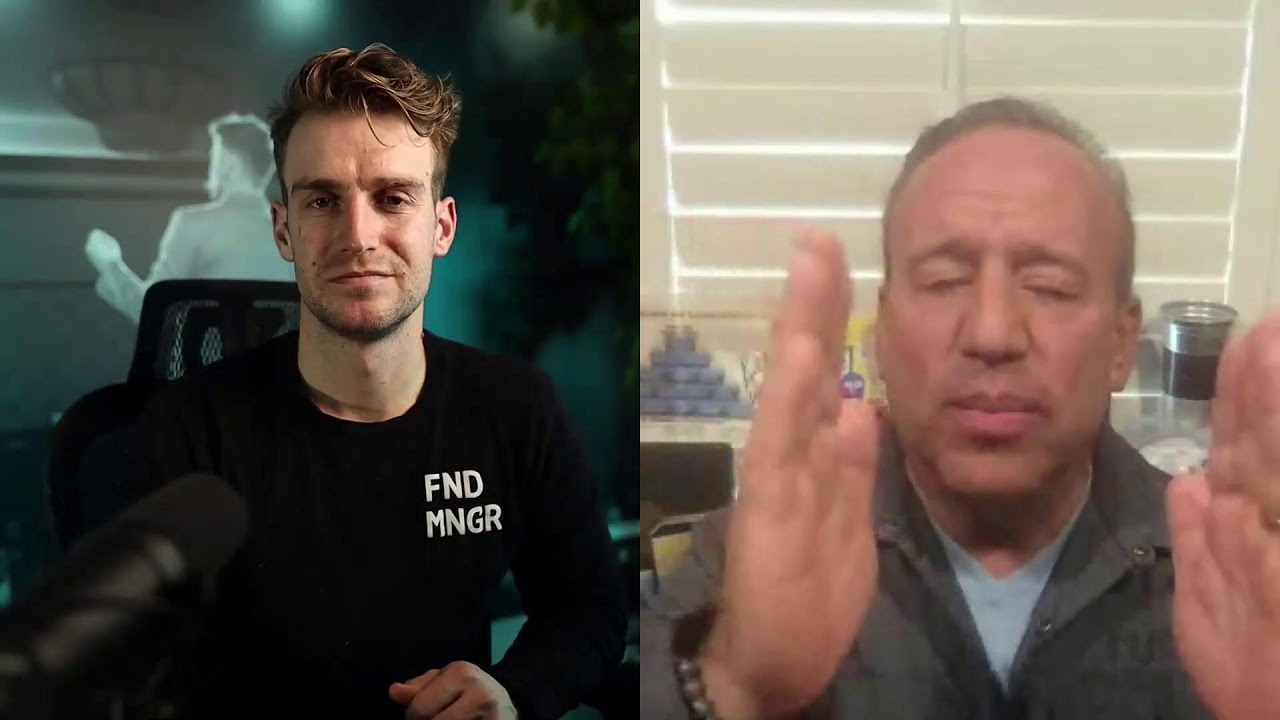
Bridger Pennington interviews David Meltzer about sports marketing and NIL deals, including how to use athletes as micro-influencers. Meltzer shares his personal financial collapse and recovery, then walks through leadership tactics like the "minutes and moments" strategy and the "change the diaper" metaphor for handling problems.
Chapters
So a lot of you guys, you guys can go look up David. Incredible background story, incredible author, speaker. We actually just spoke on the same stage, I think a week or two ago. Is that right?
Yeah.
Um, and, uh, got incredible books and anything. You guys can go read all that. Today I want to talk about a few different things that maybe, I don't know, David, you've been asked on other shows, and I want to get into kind of some granular things that, that, uh, kind of more fun. So we're gonna kick this thing off. It should be pretty fun. Um, first off, I, you know, people, you do a lot in the sports marketing You know, world. If you see David, he's in the— he's actually— your office in the SoFi Stadium, which is so cool. And anyways, and, uh, your original, the, um, Lee Steinberg was based off the movie Jerry Maguire, is that right?
Yeah.
That was— you were the CEO of them for, for a while. Um, so let's, let's start there. How accurate is the show versus actually working there, being the CEO?
You know, it's so interesting because like any movie, the idea behind the movie is very accurate, uh, and then all the other, uh, factual things are exaggerated. Uh, so, you know, the stealing of the clients, you know, that was at Lee's wedding. Um, and it was, you know, much more sensationalized in the movie. But what the biggest takeaway from the movie is, uh, and I can see this in retrospect from being the CEO to moving into sports marketing to building my own brand, is that one of the favorite sports films of all time is Jerry Maguire. That's on tons of different lists. And the funniest thing about Jerry Maguire is it's not a sports film. It's a love story that's built with a backdrop of sports.
Yeah.
And what I learned about from transitioning from technology to sports and then sports to entertainment is that sports is probably the greatest backdrop to have of an industry career or job. And so if you see it as a backdrop, not as your primary source of income, that you can benefit greatly, just like the movie Jerry Maguire, by having more opportunities, options, and touches of favor by using sports as a backdrop, not as your primary source of income. And for me, I know I'm probably one of the few people in the world that the depth of Jerry Maguire in that respect, but it's really helped to build my career because I've always seen sports as a backdrop. Not just because I sat on the bench most of my time playing college football, where, where the sports was actually a backdrop to my life, being a second-string player. Yeah. But more importantly, in my career, uh, to really use it as a backdrop, a bug light, to get more options, opportunities, and touches of favor.
Oh, that's a great point. And it's, uh, I, you know, I looked— I was— I worked out in Silicon Valley for a little bit. It was really interesting. I would talk to Google and all these big tech firms, and they loved hiring former professional athletes, Olympians. And what they said was— and I remember interviewing there— they just said, we want to find people with a star over their head, people that have excelled in other areas of their life and use sports as one of those areas, but use it as an incredible backdrop for a huge success across the board, which I think is so cool. And You know, and obviously you help athletes with this a lot. And now we're going to move quick today. Well, and I actually want to dive into some changes. I'm actually curious your thoughts on this. So NIL deals have exploded the last 2 years. Lots of changes with young athletes. I mean, athletes that are 15 years old getting these huge deals and money being thrown around between college and early age sports. How has that shifted things for you guys internally as an agency? And what does that— what's your— what's kind of the future look like with these NIL deals?
Well, you know, I'm going to be a little bit of a skeptic in this respect, meaning that that money has always been given. The opportunities now is that there's no fear of giving it and there's no hiding. Everything's above board. There's no more coaches traveling in private jets with bagfuls of cash giving to 15, 16, 17, 18-year-olds. or even for college athletes. Now, you know, if I'm a Texas automobile dealer that went to Texas A&M, all I gotta do is hire the kid to represent my dealership for $1 million, and it's a legal way of paying them $1 million, and I'm getting at least value now, right? And I'm not making myself a criminal.
Yeah.
So I think the biggest nuance that a lot of people that aren't in the inner, inner circle of sports Is that that realm doesn't change, it just legalizes it.
It's always been there, it's just legalizing it. That's really interesting.
Marijuana, right? That stuff's always been there, you just legalized it. Uh, now where it gets interesting for you and I, and you know, I'm gonna give a little secret sauce— I helped do some consulting with the Vayners on this and they were blown away when I told them— is where the real benefit comes in is for, you know, the hockey player that goes to Harvard that's an Olympian. Uh, and I'll tell you why. Because if you take the team captain of Harvard's hockey team, who's an Olympian, and you go ahead and do your due diligence of who follows him currently today, and you work a very inexpensive deal for a guy that's not being approached by a lot of people for NIL deals, and you say, hey man, you know, my name is Dave Meltzer, I'm on a mission to empower over a billion people to be happy, will you share my content? I'll give you $200 of beer money, uh, a month if you post the content of mine that you like the most. Now what happens is, and, and you'll get this because you're deep into this like I am, so now all the Wall Street Harvard graduates, all the hockey fans in the Ivy League, all the athletic directors in the Ivy League, all the Olympic sponsors, all of them are following this kid. He doesn't have a lot of followers, right? He's not Bryce. He doesn't have millions of followers because he's the Alabama quarterback getting paid millions over the table instead of under the table. But now I get organic reach of people getting a soft endorsement from the Harvard hockey coach going, hey, I really love this, uh, David Meltzer guy talking about leadership. He's helped me become a better leader. Now you know, I'm on the Olympic Committee, but now, you know, these companies that sponsor the Olympics want Dave Meltzer to come speak on leadership. The Wall Street guys, the equity guys now have awareness to Dave Meltzer and a brand to David Meltzer because some high school— some, uh, hockey captain at Harvard gave me a soft endorsement because he liked videos about leadership.
Um, has— what a— yeah, that's a cool strategy. Hey, and now you're, you're plugged into all these, all these great people and almost Like a micro influencer strategy, but just through athletes. That'd be a good way to describe that.
Yeah. And the riches are in the niches. And I think, you know, a lot of people want to be The Rock or the Kardashian. That's never been my vision, right? I know the size, scope, and scale of 7.6 billion people. And literally, if only 0.1% of those people are ambassadors of mine, of 7.6 billion, I'm going to change the world, number one. Two, Elevate my brand with more options, opportunities, and touches of favor than I ever dreamed of. And that's just at 0.1% of the total addressable market. Huh.
Really interesting. I love it. This is, yeah, fascinating, David. I know we're going quick today, but it's awesome having you on. So on that same thread, I'm curious, this rise of like social media, I've seen this with actually family members or young athletes. There's a— I guess back in the day, you had like mixtapes. And today, it's really like your social media. And there's a lot of value now if you sign a kid, maybe he's a— and he's run-of-the-mill athlete with the other tiered athletes, but he's got a great social media presence, or he's a little bit controversial. Have you seen that's a pro or a value add to an athlete beyond just their playing the game, but their social media, whether it's good or bad social media presence, if they have a big following, a clout behind them that'll pull a lot of dollars and fans? You see that happening with, you know, younger kids now with NIL deals being over the table?
Absolutely. And it, you know, you have certain spots, you know, take basketball, for example. The 9th and 10th players on a college basketball team usually have 2 qualities. One, they're extremely good practice players. So they're going to push everybody at practice. So you get the most out of the guys that may or may not go to the NBA, but they're never going to the NBA and they may never see the court even. But they also usually have some kind of money connection. Right? Their dad is on the Regents board, or their dad's a CEO of a big sponsor of the school, or those 9th and 10th spots. Well, of course, that's now applicable to these kids who have built big brands, uh, for the spots on the team that have always been allocated for really good players, uh, that practice hard and can bring some economic benefit to the team. And so There is an NA— there is an NIL spot for those kids now. So whether it's good or bad exposure awareness, if they're going to bring dollars to the team and practice hard, there's always been spots available for those kids, not necessarily scholarship money, but definitely spots on the team to get those kids involved. Hmm.
Interesting. Yeah. And it's not— yeah, it's whether it's money, whether it's a social media following, It's a huge piece there. Pretty interesting. David, if you can, I've heard the story before, but I'd love for you to share. You lost a lot of money. You made it big and then lost it all. If you can share a little bit of that story with people that are listening right now, I think it's fascinating. I'd love to hear it firsthand as well, but love to hear about your story, your background a little bit getting into this space. I think it's awesome. Yeah.
I'll tell it as briefly as possible, but I grew up with nothing. Akron, Ohio, projects, single mom. 6 kids. My mom worked 2 jobs, right? Second grade teacher, packed my dinner in paper bag most nights so she could fill up turnstiles at convenience stores with greeting cards. She believed in the philosophy of doctor, lawyer, or failure. So my siblings are hyper-academic. We're blessed to have a high energetic and genetic inheritance for academia. So they went to the Ivy Leagues, got scholarships. I just wanted to be rich. And when I graduated law school, I had 2 job offers. One, to be rich as a lawyer, $150 grand plus bonuses as an oil and gas litigator. And 2, to work in the internet. My mom told me, internet's a fad, don't do it. Be a real lawyer. You can buy me the house and the car that you dreamed of. You're gonna be rich. I knew at that time that I wanted to be really rich and that no matter whether they're paying me $1,000 an hour, I wasn't gonna be capped. So I took the internet job, 9 months out of law school, millionaire. 3 years into my first job, we exited for $3.4 billion.
Wow.
I went up to Silicon Valley, branded myself not a lawyer anymore, no longer an oil and gas litigator. I branded myself a pure internet VC executive, raised hundreds of millions of dollars in the middleware space. By the time I'm 30, I have millions and millions of dollars. I'm running Samsung's first phone division. a phone called the PC Phone. It was a combination. It was a Windows device. It wasn't an Apple. It was no Apple. It was a Windows CE device. And so I'm running that phone division and I am completely lost.
And what year is this? Just give us—
'99. '99. So I graduated law school in '92. By '99, I'm worth millions, married to my dream girl. Uh, I always say I went from the world of not enough where I was a victim to the world of just enough for me, where I was buying things I didn't need to impress people I didn't like. You get the picture.
Yeah.
And then meanwhile, 3 things happened in my life, uh, that led up to me losing over $100 million. Uh, 3 red flags. At 30, my dad gave me a first birthday present in 20 years. He had left when I was 5. He gave me a jacket with no pockets. And at that time, I like, Dad, why would you do this after 20 years? And he said, because you're just like me. You think money will buy you love and happiness. You think you can oversell, back-end sell people. You know, you got to wear this jacket and put it in your closet to remind you you can't take anything with you. I told my dad at that time I hated him. I was nothing like him. 6 years later, I'm running Lee Steinberg Sports and Entertainment. So not only am I a multimillionaire, But I have access to what even billionaires couldn't afford to do. Sidelines at Super Bowl, the Masters, you know, in the cabins, all the things that even billionaires don't have access to, I now had access to. And my best friend, I invite him to the Masters, he won't even come. Private jet, private parties, Joe Montana, Wayne Gretzky, Warren Moon won't come. He said, Dave, I don't like what you're doing and who you hang out with. I told him, hey man, I'm not doing what those guys are doing. Come with me. He said, David, you can lie to me all you want, but stop lying to yourself. You're going to be in big trouble. I'm afraid you might even die. You're partying way too much. You're not paying attention to what's important. You're not the same person that was my best friend in the 4th grade. You're not the same person that I asked my wife today— my best friend in the 6th grade camp asked her to go study for me. That was the same friend. Well, 2 weeks later, my life would change forever. I came home from the Grammy Awards after lying to my wife, telling her I had a business meeting. And my wife was waiting for me to tell me she wasn't happy, telling me I better take stock in who I was and what I wanted to become. She was going to leave me with my 3 daughters because she too was afraid that I was going down the wrong path and I'd end up dead. And I told my mom, my dad, my best friend, and my wife I hated them. And how dare you talk to me this way? Look around you. Look what I'm doing for you. And meanwhile, those were the only 4 people that were ever honest to me. You got to be careful of the people who are saying yes to you all the time, especially as you're successful. And I sat at home and but for that jacket, I probably would be divorced at the least, most likely dead. Because as I sat there thinking about vengeance and how I was going to take away everyone's joy and how I hated everyone and how miserable I was, I looked over in my closet and that epiphany happened. I looked at that jacket with no pockets and I realized I don't hate my dad, I don't hate my mom, I don't hate my best friend, and I certainly don't hate my wife. I hated myself. And I was a liar, a cheater, manipulator, an overseller, a backend seller. And that's the day that I started to take stock in who I was and what I wanted to become, living with gratitude to give me perspective. Forgiveness to give me peace, accountability to give me control, and effective communication that allowed me to utilize my potential of my intellect, my intuition, and my inspiration. And even though it was 2 years later I lost over $100 million and went bankrupt, my low point was 2 years before when I had to take stock in who I was. And the bankruptcy was a portion of my promotion and protection by that time, I had the mindset, the heartset, and the handset to make it all back. And here I am 17 years later with a mission of empowering over a billion people to learn what I've learned in my journey, how to make a lot of money, how to help a lot of people, and have a lot of fun.
I love it. Wow, what a, what a cool story. I wish we had 2 hours to unpack this, and I'm sure people can go read your book.
We'll do more, my friend. We'll do more.
Yeah, we'll do more of this. I know we're on a quick schedule here, but wow, what a, what a crazy story. Um, and I love You know, something I— and I don't even— we've met a few times, but you can just tell if anybody follows David online, you can tell that back to your mission to empower a billion people to be happy, it just exudes out of you. And I actually wanted to ask you a question while we're wrapping up here, but, you know, how do you do that? And I know it's like, hey, positive thinking, all this stuff, but all of us have bad days. All of us go through crap. And I love if you know Nick Sansonaso, he spoke at our event last year.
I'm speaking with him tomorrow. He's at the heavy event with me in Anaheim tomorrow.
Oh, great. Oh, yeah. He's a stud. He's awesome. And one thing he said last year at our event when he spoke was that stuck with me. He was like, you know, you guys have bad weeks or bad months. I have bad minutes. He goes, I poop my pants and I just change the diaper really quick and I'm back to where I'm at again. So I want to ask you, what's, you know, as we kind of wrap up here, what are some things that you do to change the diaper? You know, you have some crap hits the fan, something happens in your company, employees yelling at you or quitting or whatever it is. How do you change the diaper? How do you, you know, come back to a happier core state? What do you do?
Well, it's funny because you asked me the first question, which is how am I going to empower over a billion people? And it's with people like you and with Nick, right? I mentor him and taught him the minutes and moments strategy and utilizing minutes and moments. Everyone's going to have shit happen, no pun intended, especially to Nick. And so, when shit happens, When you're in ego-based consciousness, the need to be separate, inferior, superior, anxious, frustrated, angry, guilty, resentful, when you have a need to be offended, any of the needs of the ego to worry, all of these needs interfere or put you at dis-ease, just like pooping your pants. And so, when shit happens, when you're in ego-based consciousness, there's 4 steps that I taught Nick and I love to teach people. One is you have to understand everything's a practice. Behavior is an energy. So is money. And energies aggregate, accelerate, and compound upon themselves. You just have to be consistent and persistent in the pursuit of that aggregation. And so, if we understand behaviors, then we can practice the behaviors that best suit us in the Minutes and Moments Strategy. And the practice that best suits us is number one, practice identifying the shit. Practice identifying the need to be right, The need to be offended, the need to be worried, anxious, frustrated, angry, guilty, resentful, separate, inferior, superior, etc. Practice identifying it. So when we get better at identifying, oh my goodness, I crapped my pants, or I'm mad, or I'm worried, or I'm offended, these are things that accelerate us in the wrong direction or interfere with the aggregation, acceleration, and compounding of where we want to be. Now, instead of resisting it, instead of going over and under it, through it, around it, and fighting it, when you talk about changing your diaper, stop, breathe, say, okay, I shit my pants. Okay, I'm at center. And then remember, remind, and recollect what it is you want today and roll in that trajectory and change your diaper. Remember, nobody likes change. except for a wet baby or someone who's pooped their pants. And so, when we can facilitate the practice, the behavior that aggregates, accelerates, and compounds on itself of identifying what's interfering with our potential, with our day, and instead of resisting it, just stop, breathe through our nose, out through our mouth, remind with the great source to be a better resource, remember with the great source to be a better resource, recollect with the great source to be a better resource. Knowing that we're connected to and through something bigger than us, a source that's bigger than us, an omniscient, all-powerful, all-knowing source that loves us more than our mom. And then roll in the right trajectory. Roll into what is it I want today in the trajectory of what I think in the future. Who can I help? Who can help me? How best to get it done? And then a miraculous thing happens called prioritization. See, prioritization is the antidote to the 2 interferences of success. procrastination, and feeling overwhelmed. You cannot prioritize unless you know what's important to you, the what, the who, and the how. When you know the what, the who, and the how, and the trajectory of what you think you want, and you give the meaning to the shit behind you that is also aligned with the trajectory of what you think you want, you then maximize the day and you apply your why. No longer are you trying to get more happy, more healthy, more wealthy, and more worthy. You realize at that time, through this process that I am. I am happy. I am healthy. I am wealthy. I am worthy. And you start figuring out what you're doing to interfere with it so you don't spend days, weeks, months, and years in shit, just minutes and moments.
Wow.
Boom.
I bet that's written down in some pretty cool book somewhere. David, that was amazing. I know we're quick on time here, so we'll wrap up here. Where can people You know, I'm sure— I know you got tons of talks and people can hire you to speak and all this kind of stuff, come to their company and help them out. So where can people find you and all that kind of stuff? And if we have time, I have one more question. If not, I'll let you run.
We have time. Where do people find you? We have time and I love it. For your community, first of all, I'd be happy to send my books, my guides, my exercise. I will sign a book. I will send it. I'll pay for the book and shipping. So, you know, I know I talk fast and this is the first time you see me, so just email me david@dsmeltzer.com for your community. I'll do that for free. david@dsmeltzer.com. Also, if you forget the email, david@dsmeltzer.com, just Google me. I'm everywhere. David Meltzer, it'll bring up the @DavidMeltzer on every single platform. I do my best as a middle-aged mutant turtle to be well-versed on all the different platforms. So I'm an anomaly in that respect as an older gentleman who is adapted with technology since 1999, before most of my audience was born. So please reach out to me. The 3 best pieces— the 3 words that best represent my best piece of advice: ask for help. No better person to ask for help than me, man. Just email me, david@dmyltzer.com. I'm happy to answer one more question, my brother.
Yeah, I love it. So yeah, that's so great. Thanks for your time today. It's been fantastic. I think people in the chat as well, you guys can say thanks to David before we get going. And even Take a picture and tag him on Instagram or whatever. You know, grab a— yeah, he's got the thumbs up. Grab him right now. Send a tag and just say he came on for free today just to benefit our community and all that kind of stuff. So, uh, final question, David. I love asking people this question. Um, so I'm gonna leave you just open mic. You got about a minute to a minute 30. Um, open mic. If you could leave this audience with anything that would, you know, inspire, change them, you can talk religion, politics, you can talk what What would be the— if you died today, what would be the one thing, if you could summarize it in about a minute, that you would love to leave with this audience today and let them go? So I'll give you a second. I didn't prompt you on this question, so I'm giving you a second to think about it. But with that, again, go find David. So david@dmelter.com. Then we'll hit this last question. So David, what is that one thing you want to leave the world with if you were to die today?
Kindness. Be kind to your future self. and do good deeds. Understand that giving, receiving, and witnessing giving, receiving are one. What does that mean? I want you to think about appreciating everything you have. When you appreciate what you have, it adds value to it. It expands. And then I want you to acknowledge what you have. To acknowledge is to acquire the knowledge of what you have. So beyond appreciation, the only way you can acknowledge or acquire the knowledge of what you have is not to have it anymore. So give it away. And then also realize that when it's lost, stolen, manipulated, or cheated from you, you still gain the acknowledgement. You just get an extra lesson as well. And life's about lessons, and they'll keep on coming until you learn it. The 3rd step is the one that most people don't do, and I want you to take this to heart. Appreciate everything you have. Acknowledge it. Now that you have a bigger vessel to fill because you've learned the lessons of appreciation and acknowledgement, Don't forget to ask for more. If you don't ask for more, your vessel will dissolve, depreciate, and disappear, and you'll end up needing things, and you won't be able to take care of people. Utilize your non-negotiables to ask for more— your health, your family, the activity you get paid for. If you want to be an influencer, then go ahead and stand in front of houses you don't own and cars you don't own. Spreading dis-ease or the flu. If you want to be an influencer and live in abundance of more than enough of everything for everyone, don't live in a zero-sum game. Appreciate, acknowledge, and ask for more. In a world of more than enough of everything for everyone, live a value-add game by appreciation, acknowledgement, and asking for more. That's how you're kind to your future self, by doing good deeds and understanding giving, receiving, and witnessing are one. I appreciate the opportunity for me to talk about that. Email me, david@dmeltzer.com. I'm happy to be of service or value.
David, thank you so much, brother. Thanks for coming on. Everyone can go find David online. You're everywhere on social media. And thank you again, brother. It was awesome. Um, thank you again so much.
Thanks.
More from Bridger

The AI stack is trying to consolidate to a winner take all, do you think it'll stay fractionalized


Before you launch a fund, triple check your fund attorney actually filed everything.








Different view on housing affordability and the fed raising rates not lowering rates