Navigating a Banking Crisis || Live
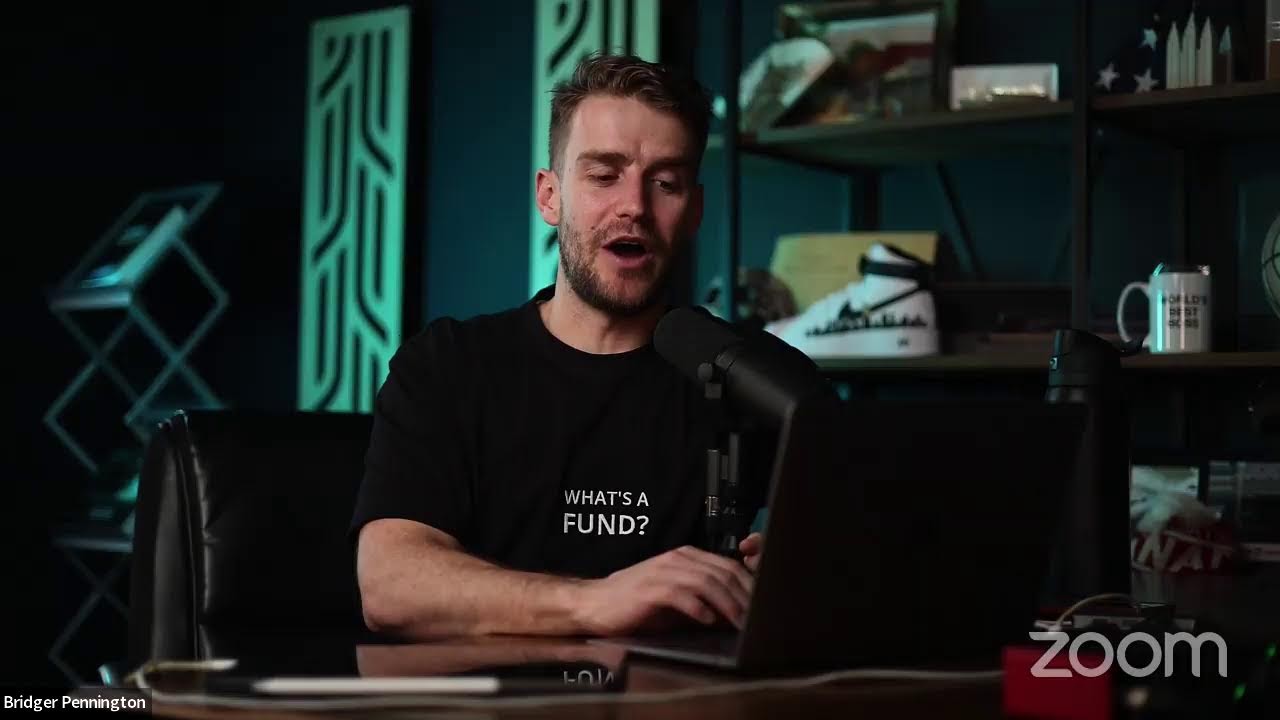
Bridger Pennington breaks down the banking crisis that tanked Silicon Valley Bank and Signature Bank, how his crypto hedge fund moved millions out of USDC at $0.94 and into Bitcoin and Ethereum, and what happened when the FDIC backstopped deposits.
Chapters
Hi, welcome in everybody. We are live, uh, today we're gonna talk about markets, the banking crisis, the whole 9 yards. We're gonna talk about all this live today. So welcome in, uh, comment where you guys are calling in from, and I'm actually gonna just dive right in as we're getting going. So welcoming you guys, good to see y'all here. Say what's up, say hello to everybody. So let's talk a little bit about what is going on in the world right now. So, um, and again, we are streaming this everywhere right now, so if you guys are in other spots, uh, here we go. Oh, I'm going to enable the chat here. So welcome in, everybody. Say what's up. There we go. There's the chat. Now you can chat to each other. So chat, make sure you chat to everybody in the chat there, and you can say what's up. Say where you're calling in from. I'm from Salt Lake City, Utah. So we're calling in today. We're going to talk about the banking crisis, what's going on right now, and how we can navigate this over the next week. We're going to go over a little bit of what's happened, but I think hopefully most of us are up to speed on what's happened, and I'm more concerned about what is going to happen, what will happen over the next couple days, weeks, months, um, and how to make appropriate trades or plays during this time period. So say what's up to everybody in the chat. Um, we're gonna dive right in, um, as well, and we'll go from there. Sound good? By the way, this is a live call, so drop questions. I'd love to answer questions live, hear your insights, hear updates, maybe things that we're not talking about that we should be talking about. Drop in the chat, love to, uh, talk to you guys. So, um, let's just dive right in. Here's a kind of a quick snapshot of just right now. Okay, so We have Ethereum. First off, crypto is on a rampage. Bitcoin this morning peaked above $26,000 a coin. Right now, right below, but a 6% gain for the day. Actually, let's look at just on a broad market. I'm going to move this little chat thing. It's in my way. All right, here we go. Moving stuff out of the way. There we go. All right, I'm going to go total crypto market cap. I'm just curious how much it's gained over the weekend. Let's go to CoinGecko here. So, what is this? Verify I'm a human. All right. Verified, CoinGecko. There we go. All right. So, let's look at the last 7 days. All right. So, this is as the banking crisis started here. Today's March 14th. We were at a low of $954 billion. Today, we're at just over $1.1 trillion. So, that is a move, wow, of about $150 billion have onboarded onto crypto in the last 4 or 5 days. Pretty interesting. People are fleeing to safety right now across the board. So, you see a huge tick up, and that's not just from, and we'll talk about in just a minute, the USDC depeg and all that kind of stuff. So, as you guys know, I run a crypto hedge fund right now. Now, I don't profess to be some expert in crypto, just so you guys are aware. As you know, when running funds, there's different pieces. You have a fund manager, you have people that are good at capital raising, and people that are your expert investors. I'm pretty good at capital raising and running the fund. I have 2 business partners that are amazing at crypto stuff. And so, we were literally up pretty much all weekend trading and moving. We don't day trade, by the way, but we were pretty attentive of what was going on. So, to catch you up, there's a few things that happened on the crypto side, and we'll talk about banks here in a minute. USDC, guys follow this, depegged. Actually, I'll pull it up. Let's pull up a chart here of USDC. So USDC, which is like the stable of all stablecoins, I mean, USDC— that's not correct. USDC, there we go, is like the coin of all coins. It is backed, just it's dollar for dollar. They just put it in a bank account. It's just backed. It's like the stablecoin of all stablecoins. It's not algorithmic stablecoins like Luna, Terra, these other ones, or Tether. Those are algorithmic stablecoins, which may or may not be backed by something. USDC is the stablecoin. Now, what happened was, Silicon Valley Bank, as you guys all know, went under last week. They had bought bonds that were then degraded about, or repriced about 40%. So, they had this huge loss on their balance sheet. They went under, and we'll talk about it in a minute, how quickly the FDIC took over the bank. I thought this was actually pretty interesting. I want to hear your guys' thoughts on this, but it was pretty quick. It was 24 hours. They went out, I mean, let's call it 48 hours maybe. They put out a letter, they went to raise money. They said, oh, we just need to raise some money. We're going to raise some capital, maybe issue some debt. It didn't go very well. And literally the next, this is Friday morning, the FDIC steps in and takes the whole bank over, which I thought was, I don't know, anybody else think that was pretty quick? It was like they stepped in. I mean, I was like, you wouldn't give them a couple more days to raise capital or to insure depositors? And then as you followed all weekend, it was, Will these accounts be open? FDIC only insures up to $250,000, sometimes half a million in some cases with business accounts, but that's it. So, if you had, if you're a small startup that had maybe $3 million in the bank at Silicon Valley Bank, which 50% of startups use Silicon Valley Bank. Additionally, a similar number of venture capital firms use Silicon Valley Bank. So, a huge amount of capital exposure in the venture markets. And startup markets to Silicon Valley Bank. Because actually, I have a mortgage at Silicon Valley Bank. They're a great bank to work with. I loved working with Silicon Valley Bank. They were awesome, maybe to their demise, but they were awesome. Super easy to work with. They were giving— they were like very, I thought, forward-looking as a bank. But anyways, to their maybe detriment. But I really actually like working with them. And the big conversation was, will these accounts be freed? So what happened was USDC— let's look at a chart here. Let's go 7 days. So, it's been, just so you guys are aware, 90 days. USDC is a dollar. It's a dollar. Then this happens. Silicon Valley Bank came out and said, well, they collapsed. Come to find out, Circle, who controls USDC, had about $3.5 billion exposure to Silicon Valley Bank. They also had another, I don't know, $3.5, $4 billion I think it was a total of $8.2 billion, I believe, exposure to Silvergate and Silicon Valley Bank, which both banks collapsed last week. They have about, I believe, about $42 billion treasury. It was about, if we can find the number here, but about, if I remember, oh yeah, right here, $39 billion as of right now. I think it was $42 billion before this. What happened was people said, well, this may not be worth, if they have $42 billion and $3.5 billion is locked up or maybe is lost, Then this token is now maybe worth 6% less, or 7% less, or 10% less. So this was late Friday night. I'm going to come and zoom in on this chart. Let's go to maybe the last 7 days here. So this was late Friday night. As a team, we were watching this, and we have a decent amount of exposure in our fund to these stablecoins, especially to USDC, not all stablecoins, but USDC. We do a lot of staking. We do a lot of liquidity pools in our fund. And so it dropped to 98 cents, and we were like, crap, we're on high alert. And then it dropped to 97. And then it dropped to 96 right here. We were watching at 96 and we were like, we need to start moving and diversifying capital. Today we're going to talk about diversifying your fund and how that works. But we started to move capital out. This is going to the night. This is right around midnight. We started watching this. We started to move capital out. So we were moving capital. I think most of our capital got out right around 94 cents, maybe 95. I think we were right on that tick. That was kind of us moving millions of dollars out of USDC. to other stablecoins and spreading it out. Now, we had a— I know hindsight's 20/20, so, oh, it went back up, but imagine you are right here. That's all the chart you can see. What's your thoughts? It was funny. We had this, and this is, I think, is a very telling conversation for other funds as well. We were sitting there and we were like, huh, where is safety? This is an interesting question. USDC was a dog. We had actually a decent amount of our dry powder in USDC. So, as a group, we were sitting here with this chart, and I'm zoomed in so you guys can see it. This is what's going on. It was $1 forever. Now it's sitting at, let's just call it right here at, let's call it 90 cents. You're like, huh, where is safety? If USDC depegged, maybe the other stablecoins will depeg. Well, we could just sell and move it to a bank account. However, banks are failing right now. We don't want our money to just move to a bank account. So we're a crypto fund. We're like, okay, we don't want to buy USDC, or maybe we do. We were deciding, do we move our money to a bank account for safety? Do we move it to other stablecoins, but other stablecoins at the same time were depegging? It was a really interesting conversation. We thought, where is safety? We thought, well, to be honest, probably Bitcoin and Ethereum is the safest spot. It's decentralized. We don't want to have risk and exposure to a bank, or or USDC that's exposed to banks. I mean, if we're looking at where's safety at, it would probably be Bitcoin, Ethereum. We thought, huh, okay. So we actually moved a lot of money into Bitcoin, Ethereum during this trade. Ta-da, just like us, a lot of other money managers did the same thing. Bitcoin, Ethereum rallied 17% that day, and it continued to rally. I think the whole weekend, we can look at the chart, I think it's up 25%, something like that, over the whole weekend, Bitcoin and Ethereum. It was a pretty interesting thing to say, where is safety? Where would you flee to safety? Bitcoin and Ethereum proved, the market proved that that's where safety was. Now, what happened was it hit this bottom. We then said, it recovered. We were sitting right here and we thought, we actually, as a team said, it looks like, we were like, it's pretty likely the Fed's going to step in. There's no way they're going to let a banking crisis happen Monday morning. This is actually our internal text. We have all this stuff. This is about Saturday, and we thought, let's buy back in. So, we moved a ton of money back into this trade, about, I think about $90 to $93 we got back in. So, kind of a wash trade we almost made. And then we actually rode that all the way back up to $1, which is pretty nice. So, it was a good trade for us. We actually moved more money back in because we thought there's— and then they announced the new announcement. This went pretty much back to $1, that they were going to back all these banks and all depositors would have access to their funds. Pretty interesting, yeah. But it's interesting to think, where is safety for funds and fund managers during a crisis period? So let's actually pull up a different chart here. Is this helpful, by the way? You guys there? Say what's up in the chat. Hello, how are you guys doing? If you guys can, like this video, whatever, say what's up. I just want to see who's on here. Wilton, good to see you. Devonte, Peter, good to see you. Jared, Jason, what's up? Good to see y'all. Okay. Pretty cool. Yeah. So I mean, that was a real time running a fund. I mean, we were up all— I was up all Saturday and then Sunday, or all Friday night, and then going to Saturday into Sunday, my kid just couldn't sleep all night, so I was up all night anyway. So I was up for 2 nights in a row. We were just watching markets. I was watching Twitter. I was watching everything all night. We didn't make a ton of trades. We made some trades Sunday morning and a few other trades Monday morning as the announcements came out. Pretty cool. So, pretty interesting. Now, let's go for a more— that's more crypto lens. I want to take you guys to a macro lens. But well, real quick, as we go back, let's just look at all cryptos here. I mean, we have seen a huge $150 billion come to crypto. Again, where is safety? Where are investors looking for safety? I mean, it looks like Bitcoin, Ethereum have seen a huge tick up. Let's look at a 7-day chart here. Oh, there we go. So total volume, look at this, just boom, boom, boom, all the way right now trading right around $26,000, which is pretty cool. At the start of this crash, we were at $20,000. $19,000 was kind of where we're at, $19,000, $20,000, all the way up now to almost $26,000 in a few days, which is pretty telling actually, as a coin can hold up over time. I was All right, let's talk. Let's talk a few other things that's going on right now. This morning, so you've seen a lot of these regional banks. Wall Street Journal reporting. So we saw a huge. I mean, look at these sell-offs Monday morning. I mean, just decimated. First Republic Bank, KeyCorp Science. I think I actually. Where's my whole chart here? I have a whole. There we go. Right here. So here's all of our. Let's go to banks. I made a whole chart this morning just for you guys. Okay. Did a little work for you guys. Here we go. Here's a lot of. Major banks today actually rallying quite a bit. I mean, you look at First Republic Bank up 33% today, Western Alliance Bank up 19%. I mean, pretty much the whole banking sector yesterday was decimated. Here's kind of all of them on the same chart, like this chart, and then today has risen. It's funny enough, a lot of you guys know my dad, co-founder of a multibillion-dollar family of funds. He's now retired. He just trades for fun. He's actually a pretty good trader. Yesterday morning, he texts me. He's like, dude, I just bought 5,000 shares of First Republic Bank. He bought it. I think at $20 a share, which would be right in here. He's like, I just closed my trade. It was like 20 minutes ago at this. He doubled his money in a day on it. It was a pretty good trade. He also bought, I think he bought Western Alliance and these other banks. So actually, let's dive into a few of these news sources here. I want to say it's on here. Oh, maybe it was on Twitter. Well, regardless, let's just see if I can find it. It is Ken Griffin. I just wanted to see all these reports here. Ken Griffin. Well, I was looking for the actual tweet or whatever with the chart, but anyways, I guess I can't find it. Let's see if I can find it on here. Ken Griffin bought 10% of Western Alliance Bank. Yesterday. Yeah, here we go. Ken Griffin's hedge fund Citadel takes 5% stake in Western Alliance Bancorp during bank turmoil. I mean, this guy does not miss. Ken Griffin, dude, where's Western Alliance here? There it is. Look at this stock. I mean, and then he announces that he's taking— So let's look at where we're at. Let's look at just the— let's look at one week here. Here's our charts. I mean, he buys in here and it's actually trading a lot higher now at $31 a share. I don't know when he bought it in, but I would assume it was during this kind of low period here, but we'll see. So Ken Griffin takes a 5% stake in Western Alliance Bank, which is actually pretty interesting. A lot of people coming now and scooping in to save the banking industry. Another big news thing today is Credit Suisse. Have you guys been following this? So Credit Suisse, one of the top banks in the world. Let's just pull up on— I'm just going to go to Twitter here. Where is— Guys, I'm actually a relatively new user of Twitter. I'm going to admit, I've never used Twitter before. I started using Twitter last week, and it's actually super fun. So you guys can help me out. I thought it was right here. There was a whole thread on Credit Suisse. I'm like, huh, Credit Suisse, or Twitter is actually kind of fun. You guys Twitter fans? I've never used Twitter. I'm like, if you guys saw, I was tweeting over the weekend. I tweeted like 4 times over the weekend. I don't really know how it works, but I— there we go. Let's just try this. Credit Suisse, what's happening right now with Credit Suisse is pretty interesting. I'm just going to try Twitter. If I mess up on here, you guys can make fun of me or whatever, but I'm just going to try it out. We can go to other news sources, but here we go. You guys can help me with my tweets, but Credit Suisse default swaps hit all new all-time highs. So, if you look at a chart here, these are insurances on their bonds this morning have just skyrocketed, meaning the market is pricing in expecting Credit Suisse to default. Now, additionally, Credit Suisse put out, and I think it should be on here, that they are now offering these incredible incentives to stay at the bank. Apparently, a lot of people are fleeing the bank. I want to see if I can— it was on— I can't remember if I saw it on Twitter or somewhere else. We're going to try Twitter out. Okay? So here's the credit default swaps. Everyone's talking about, man, this is the market, the insiders are pricing in that they are going to default pretty soon. Also, additionally, this is Bloomberg just reported, they found material weakness in its reporting procedures for financial years 2022 and 2021. I mean, pretty interesting and pretty telling. Additionally, Jim Cramer is bullish on Credit Suisse. So now we know they're doomed for trouble. Where's— I want to see that report though. Let's see if we can find it on here. If not, we can just Google it, but I wanted to use Twitter if we can. I'm a new user to Twitter. Well, all right. Material weakness. Maybe I— All right, here we go. Never mind. We're just going to go back to— let's go back. Let's just look at their stock price. Again, this is what the market is pricing in for Credit Suisse. So here's Credit Suisse. Look at this chart. This is unreal. Credit Suisse is currently trading at $2.50. I was trying to find their all-time high. Let's go to 5 years. I mean, they were trading as high as $18 a share. Right now at $2.50 a share. I mean, look at even the 6-month chart. I mean, they have just been just devalued after devalued. Let's look at the 1-year chart. I mean, in a year, they've gone from almost $8 a share down to $2.50. And I don't know if there's much rescue going on from the Swiss. Now, actually, I'm curious, people in the chat, have you guys heard any other news on Credit Suisse stuff that's insightful? It's pretty interesting. Yeah. I'm curious in the chat. Let's see. Those banks are heavily regulated by the Fed. They go under. What does that tell you about the Fed? Only rumors. Yeah. It's all rumors right now. with Credit Suisse. But I mean, Credit Suisse is a top bank around the world. I mean, that is a pretty firm bank. Funny enough, I have kind of a friend in college. His dad's the CEO of Credit Suisse. I met him multiple times. Really interesting dude. And he was telling us all these war stories of 2008. I mean, all the way back through his whole career is really interesting. And man, I hope they weather this okay. But we will see what happens with Credit Suisse. It looks like First Republic Bank has has come out and saved a lot of things. Credit Suisse, sorry, what I was going to share earlier, and I was going to find the chart, but they have announced that they are offering very big incentives to stay at the bank. So, they're offering, it was like 5%, 6%, 7% savings accounts. If you add $5 to $10 million of deposits to Credit Suisse, they will pay you 6% on your money just to park it at Credit Suisse. That's how in trouble they are right now. They published this this morning to incentivize people to stay at banks, because really the biggest thing is, with this whole banking crisis, there really is no incentive to stay at a small bank. Even though I know the Fed's come in and backed in all these banks, if you're a big corporation, let's say you have $100 million of cash on hand, and you've got it at Western Alliance Bank, or some of these Zion Banks, some of these smaller banks, what incentive do you have to stay at a smaller bank rather than go to a Chase, a Wells Fargo, a Big 4 bank, Bank of America, Chase, Wells Fargo, and Citigroup, kind of the Big 4, too big to fail banks? What incentivizes you to stay? I was talking to a buddy over the weekend. His family owns a huge company in Utah. I won't say the name, but massive. I mean, multibillion-dollar company. He said, Monday morning, we are moving all of our capital off of Zions Bank, all of it. And now, I don't know if they changed that decision or whatever, but it's like there's no incentive. It's just economics. There's no incentive for me to stay at a small bank. I might as well just withdraw and move it somewhere else if I can. Now, unless those smaller banks, like Credit Suisse, are offering better rates, better terms, better lines of credit, better something than a Wells Fargo, Chase, Citigroup, or Bank of America can offer. That's where the incentive lies to stay at one of these banks. And so, even with the government, which I'm very happy they came in and backstopped it Sunday night, but still, if you're a CFO or treasury manager of a major Fortune 500 company, What incentive do you have to keep your money at, you know, Citizens Bank? You don't, right? You have no incentive. They pay almost the same rates. It's almost about the same. I might as well move my treasury to a Big Four bank. Um, but again, I digress. That's kind of what we got here. So, um, so we got First Republic Bank. So now look at these. First Republic Bank recovered huge, 36% gain today. So my dad made a lot of money on that trade today. Western Alliance, I think, uh, Ken Griffiths made a lot of money on that trade. Of course, Of course, he did. KeyBank, all these other banks, we will see. I'm actually curious in the chat, do you guys think we will see— do you think they've kind of— have the waters calmed? Are we good? Are we out of the— I'll share my opinion in a minute, but I'm curious about you guys' opinion in the chat. What do you guys see happening over the next, let's call it 30 days? Do you think we will see more banks fail? And if so, actually call them out. I'd love to just hear predictions if we will see another or a couple other banks get taken over. Will we see them, and who will they be? Type in the chat. I'm actually curious who you guys think is in trouble right now. What's going on? More will fail. Bought key options yesterday. Awesome. Yeah. What's funny too, while you guys are dropping in the chat, what's funny is we are, you know, the Fed has essentially come in and said, we are backstopping all accounts, like all banks. We are essentially centralizing banking. The FDIC limits are unlimited. They've said, we will insure all depositors. And so, there's really no FDIC limit anymore. And they're essentially saying, we as a government, as a central bank, will backstop all of these banks. If you think back to 1907, this is what happened with J.P. Morgan. So, there was, I think in that year, there was over 500 banks that failed in one year. What would happen, you'd have a run on the bank. We'll talk about why that happens in a second with fractional reserve banking, when banks only have to hold about 1/13 of deposits. So, about 6% to 7% of deposits are held at banks. That's it. So, if 7% or 8% or 9% or 10% of depositors pull their money out in today's market, you have a run on the bank. You are short cash. And so, with Silicon Valley Bank, I think it was 40% of depositors pulled their money out, which is pretty crazy. And so, because of this thing called fractional reserve banking, now central bankers around the world have said, well, just the Fed at least, and the Treasury have said, we will insure and backstop US banks, and essentially centralizing the banking system. That's kind of what's going on. Now, something very interesting I want to share in just a minute, and I thank you guys for your thoughts, is about— so, Dodd-Frank, Barney Frank of Dodd-Frank, came out yesterday. He's actually one of the board members of Silvergate that collapsed, or Silver— excuse me, Signature Bank that collapsed just yesterday. So, Signature Bank collapsed yesterday. He came out and said a very chilling and interesting prediction about what he thinks the government is doing. He's a guy that's been very involved in the government, what he thinks the government's doing. It's actually really interesting. I'll share with you guys in just like 2 minutes here. But let's look at the chat here. The current formula for fractional reserve banking is now around 3%. Oh, really cool. Thank you for sharing that. Yeah. Well, the reserve ratio has changed, Pretty periodically. So around 3%. Pretty interesting. I used to be a mortgage banker in Utah. It's at least 20 times for starting institutions and goes up to 50 times or more. Oh, wow. Well, in COVID, they put the reserve ratio to pretty much unlimited, is what they did. So what do fund managers do to protect investor deposits, deposit opportunity in each bank account type? Good question. Well, okay, I got a few things. I love these questions. This is great. We're going to keep going. I actually want to share one thing just really quick as we kind of— I'm going to grab a drink of water. As you guys know, we are throwing a pretty fun event next. Oh, let me grab this thing. At Funnel Launch Live, we got a bunch of people coming to speak on this kind of stuff, actually, this whole banking crisis and everything. So, shameless plug. All right, you guys ready for my shameless plug? Here we go. This is Funnel Launch Live. Here's kind of the back end of all the cool stuff we're doing. Can you guys see that okay? You see that, Mace? So, this is like the— we got cool LED walls, this whole thing. We got incredible speakers. We got Jim Rogers, who's actually coming. What's the title of his talk, Mace? It's like How to Navigate the Current Economic Condition, something like that. I remember he had this cool title. But how he— so, Jim Rogers, if you know Jim Rogers, co-founder of the Quantum Fund, one of the most famous funds on Wall Street ever. He founded it with George Soros. They were the ones who broke the Bank of England. This is Jim Rogers right here. He's coming to speak at Fund Launch Live, and he's going to share— his whole talk is around how to navigate essentially the next 3 to 10 years of the world economics, where things are going. Actually pretty cool. So, we got this cool stage. We got Ed Mylett, Jim Rogers, some of our other speakers. Veena Jetti raised $50 million last year. Ed Mylett, Pace Morby is raising a $100 million fund. We announced 3 speakers last week. We got Kaloa Wolfgramm, Ryan Miller, David Yao. David was a pharmacist 3 years ago, started a fund, and we got actually About 10 other speakers were announced. We haven't announced them yet, but these are some of the stuff these other speakers have done. So now I just wanted to share with you guys today, we are about to sell out drop 3 today. So we sell out ticket drops and then prices jump. By ticket drop 5, they will be $1,000 a ticket. We have a cool incentive for you guys today to buy tickets. If you buy your first ticket, it's the same price, but once you buy your second or third or fourth ticket, it drops in price significantly. This is kind of how it normally is, is $497 all the way down. If you guys, we have a cool kind of promo going on right now. If you guys want to buy multiple tickets, bring a family friend, whoever to the event, your next ticket is $300, next one's $200, and then it goes $100 on from there, which is pretty cool. So we are close. I think we have 123 tickets left at on ticket drop 3. We think that'll close out today or tomorrow. We're dropping it to our huge list. So shameless plug, we'll get back to all the questions in a second, but if you guys want to buy tickets, I'll give you guys 30 seconds. You guys can grab this QR code. Mason will drop the link, and then we're going to jump back into what David Barney was saying last week. But there you go. There's a QR code, fundlaunchlive.com/special. This event is going to be insane. I am so excited. And this event is all about funds and scaling funds and starting funds, raising capital. What does the economics look like? What does the next 1 year, 5 years, 10 years look like in the market? How do we navigate this banking crisis, and how do actually you come out on top and make tons of money? Never let a good crisis go to waste. This is actually perfect timing for our event. Our event's about 2 months away, so it's May 10th through the 12th. People asking questions, May 10th through the 12th. And tickets only go up in price. Just so you guys are aware how we price tickets. Right here we go. Drop 1 was, I think, I can't remember the price, but then we did Drop 2, we raised the prices. Drop 3, we're at $497 per ticket. Now we're giving you guys this cool promo where you guys can drop price here. Ticket 4, we'll increase the price. Then by Ticket 5, we're going to be at $1,000 a ticket. So that's how we just, we just raise prices. We never discount prices all the way up to the event. And usually about half the tickets we sell is within the last month. Last year's event, we had 1,200 people. We sold out a month before the event, which was crazy. These are pictures from last year's event. It was a hoot of an event. It was so fun. And the network you meet there, by the way, the speakers are cool and all, and it's great to learn. Well, when you come to an event where it's Fund Launch Live and everyone there wants to launch funds, raise capital, scale stuff, that was the biggest. We got incredible feedback last year. We had 5 out of 5 stars. But the best feedback was, yeah, these speakers were amazing and stuff, but the network, the people that sat to the right and left of me were phenomenal. So again, I'll leave this up for 10 more seconds here. Grab, scan that QR code, funlifestyle.com/special. You guys can grab. We're going to close out Drop 3, we think, by tonight or tomorrow, which is pretty cool. So it's, um, and we'll actually do, we actually might close it out. We'll see on this call if we just sell enough tickets. We have 123 tickets left on Drop 3 at this pricing. Once it's sold out, we close it and then we move to Drop 4, which is at a higher price, and we take away the discount that you guys get as well. So, if you're on the fence, I would just recommend coming in and getting your tickets as well. All right. That's my shameless plug. Is that cool? We did a call last week. We're spending $1.3 million on this event. Hello. If you want to see what $1.3 million looks like, come check it out. So, it should be pretty fun. All right. You guys got that? Okay, let's, let's, uh, let's go back. There's a bunch of good questions in the chat. I'd love to answer some of these questions and talk. Um, again, it's funlaunchlive.com. It's gonna be pretty fun. We got— and we're announcing more speakers as the week comes. It should be, uh, should be pretty fun. Um, additionally as well, the last thing I'll say, and I'll just add this one more time up here, uh, some of the best networking that was done last year was before the event. So when you joined, you actually— we have a private channel and like an app just for people coming to the event. So buy tickets like today, you can network with people and then meet them in person at the event. It's actually a really cool way to network and meet people. So, you join now, you start chatting in there like, hey, I run a fund, or I'm looking to do this cool thing, or I'm whatever. And then you're going to meet people and say, hey, at the event, let's go get dinner on the second night, or let's hang out, or I want to meet you, like meet people in person. And you can do— a lot of people last year, there was multiple people that told us they did multimillion-dollar deals because of people they met at Funnel Hacks Live, which is pretty cool. All right. I digress. Let's go back to Let's go back to the charts here. So I'm going to share this again. So Barney Frank, okay, interesting prediction that he put out yesterday. I just want to share this, and we'll talk about what this means for us, like how to run funds. Signature Bank. So Barney Frank is the— he was one of the— so if you guys remember the Dodd-Frank Act that came out after the 2008 crash, Dodd and Frank, Barney Frank, put together this amazing act that Changed a lot of rules, made it a lot stricter in the banking and lending regards. A lot of you that work in that space, you know the Dodd-Frank Act. So, this is the guy from Dodd-Frank, which is pretty crazy. He then goes, is on the board of Signature Bank, which I will say, Signature Bank is like crème de la crème of all crypto banks. I mean, they are, I would call them a very good bank until yesterday. And he was asked about what was going on. Let's see if we can pull up this article from the Wall Street Journal here. And I'm signed in. Perfect. And he quotes. Let's see if he has. They have the quote in here. So they got Barney Frank here. Systemic times of fraud. Oh man! Where is that quote? I'm gonna try to find it right here. He thought. Well, I'm just gonna. I guess I just remember it. Yeah, I don't see that quote. He pointed out, and maybe he was just mad about it, but he said, if you look at, we had Silvergate close first, then Silicon Valley Bank, and they were closed very quickly, these banks. I mean, it was 24 to 48 hours, 2 days. They were the best bank in the world, and then 2 days later, they were closed by the FDIC, and California regulators came in for SVB. Signature Bank was closed yesterday. And His thought was, he goes, it seems like the government is targeting cryptocurrency banks. It seems like they're on a war against cryptocurrencies. Now, I want to share a few things with you guys. Let's go to the CHIPS Act here. So if you guys remember last year, the CHIPS Act passed an act for $54 billion, or $52.7 billion, to be put into building infrastructure and building essentially chips and fab facilities in the United States. So right now, Intel is building a mega facility. There we go. In Ohio, they're building a 1,000-acre site right now in Ohio. They're building a piece of it. They estimate they're going to add on to it, but these sites are getting built quick. Now, my business partner, Dan Young, is actually on the board of Intel. So, he actually was kind of giving me kind of the inside scoop. Everything was public, and I'll just share public stuff with you guys because we were breaking ground well before this CHIPS Act passed of $54 billion. They're incentivizing now. Intel, AMD, Nvidia to build fab facilities, to build chips in the United States, so that we're not dependent on China or Taiwan to build our chips. If you guys remember COVID, there was a chip shortage. We don't want to have that happen. So, what's interesting is there's another about $256 billion that can be unlocked in the CHIPS Act, and they're going to vote on it again later in this year. And Dan, my business partner, is like, dude, it's— he's like, we're almost certain they're going to pass that. that bill, because they want to build chips. And as you guys remember, last August, we severed China from any chips. So, any worker, any institution that gives them was severed, that you cannot give them stuff to build hypercomputer chips in China, essentially trying to put back China 5 or 6 years on their chip manufacturing, which is pretty interesting. That's why also Taiwan, we parked 3 aircraft carriers, between China and Taiwan earlier, end of last year, in the fall of last year. 3 supercarriers were parked between Taiwan and China to protect Taiwan. I believe Taiwan produces something like, it's like 25% of all chips in the world are produced in Taiwan, and they're the super high-end chips as well. Now, what does this all mean? The theory is that, yes, we're building chips in the United States, but also, at least Dow saying, some of these sites are too big. The chip, these fab facilities are too massive just to be building chips. They're also building major data centers. What a lot of people are saying is that this could open up the path for a central bank digital currency. These huge facilities would house potentially the infrastructure for a blockchain. You would need multiple data facilities all around the country to launch a central bank digital currency. You would need, you want them to be run by US companies on the United States turf, What you would do as well is you would seize the top crypto banks to control the whole crypto industry. Then you'd build fab facilities. These facilities, by the way, are coming online in the next 9 to 18 months. They're pretty close. I mean, it's not that far away. President Biden, about a year ago, passed an executive order for all the government to start researching what a central bank digital currency would look like. 13 different governments have announced plans for a central bank digital currency. Additionally, I'll just— you guys, people in the chat are doubting me. 12-week trial of digital dollar. Check this out. Okay? I'm going to share my screen here. The New York Fed, along with— after, right in the FTX aftermath, the New York Fed, along with Citigroup, Wells Fargo, and Mastercard launched a 12-week trial of a central bank digital currency. They're doing it right now. The 12 weeks is coming. It's almost actually done right now. It should be almost done. New York Fed start 12-week digital dollar trial. This is November 15th. Actually, I think that's 12 weeks from now, right? We should be past 12 weeks. They are moving on this, I think, pretty quickly. Now, again, we don't know. I'm putting my little tinfoil hat on here. I just think it's too juicy not to do it. China's already rolled out their central bank digital currency. People are talking about Ray Dalio's book, Resetting a Currency. I think the US dollar is going to get reset through a central bank digital currency. The Fed is going to reset the currency, reset the debt, reset all the stuff, reset inflation, all through a central bank digital currency. If I was to make a crazy prediction, this is my crazy, crazy prediction, over the next 5 to 10 years, I think we would have a central bank digital currency. I think it's too juicy not to do. Now, how does that affect cryptocurrencies? In my opinion, it will displace a few currencies that are stablecoins, like Tether or USDC or something, but it'll be the on-ramp for crypto. I think it actually, all ships will rise, because a lot of these cryptos are essentially just software of different companies behind their companies, a lot of these new crypto projects. And so, what it is, it's like an on-ramp. It's like having, back in the day, if you had a stock market, you had all these different currencies trying to trade it, it's centralized. Okay, we're going to trade on the stock market within US dollars, and US dollars are the on-ramp to the stock market. This would be like the central bank digital currency is the currency, the on-ramp to buy other cryptos, like Litecoin, or Bitcoin, or whatever it is. Those Bitcoin maybe will act like gold. Litecoin will maybe act like silver, that kind of a thing. So, pretty interesting. All right. I want to pull out my whiteboard here, actually, for a second. We've got a bunch of good questions. I don't know. That's my— any other comment there? I don't know. That's my crazy— that's my— it's just, you just see the pieces are happening. They're building these. They have a huge facility going up in Arizona, in Ohio, up in Seattle area. They have these huge facilities going up, and they're building them. And my business partner, Dan, is on the board of Intel, and he's like, dude, he's like, I'm pretty certain. He's like, I can't share everything. He's like, I'm pretty certain they're prepping for a central bank digital currency. You could track every— think about the taxes you could collect. Every transaction you could collect a tax on. You couldn't hide things. So, they'll do it in the name of, there's all these tax evaders, there's these sex traffickers, there's these drug lords. With crypto, blockchain, you can track every little movement of money. It's actually way more centralized. And they'll do it in the name of protection, but at the same time, it restricts your freedom a lot, in my opinion. And for example, if there was a COVID lockdown, your wallet on your phone, let's say it only works within a 5-mile radius of your house. Pretty interesting. They did this before, by the way. Do you guys know back in the 1930s, gold bullion, like gold bars and bricks and gold coins they used to use for trading and stuff, they made it illegal to have gold bullion. You had to turn in your gold for US dollars. They made it illegal to hold gold and use gold. Now, you could have a gold chain or a watch or something, but actually gold bullion, like actual gold bars, They made it illegal to do this. They've done it before. You could see them say, hey, US dollars are going to be obsolete in the next 18 months. So, please go to your bank, turn it in, and it'll be transferred into a crypto digital wallet. I'm telling you, it's not that crazy. And it would stop crime. It would stop people that are doing, you know, you're paying your person under the table, your contract, whatever guy. Everything now taxed, everything's tracked. They'd have way more data on economic stuff. It'd be just way more centralized control. It'd be pretty interesting. All right. I digress. We've talked about this before, but pretty interesting. I don't know. I just see the writing on the wall. And what I think would happen is all cryptos would rise. It would make all tides rise. Hence why we have a crypto fund. Obviously, I'm pretty bullish on crypto. So anyways, pretty interesting. All right. We had a few questions on treasury management. So I'm just totally switching gears here. Now, as you know, so yesterday, the last few days, we have our whale group, which is, you have to have a $10 million fund to join our whale group. And so, we all were chatting in our group chat over the weekend, what should we do? What's going to happen? And we were all talking about treasury management. And then yesterday, I did a call with our Black Card members. They're like our, I guess, just below Whale Group. All these guys are launching funds. We had about 70 to 80 people come on live. That group, by the way, we launched 120 funds last year out of Whale Group, which was pretty cool. And so, we were talking about this concept of, where do you move money? What do you do for treasury management? All that kind of stuff. What does this mean right now? For what we're doing. Oh, I gotta plug my thing in. Here we go. Let me know if you guys can see my screen here. Should should be sharing. Boom bada bing! We're live, people. All right, it's working right? Thumbs up. Okay, sick. So let's talk about you know as a as a fund as a actually let's just talk about a business. We always talk you you always hear about diversification, right? However. Oh, my screen's paused. There we go. There we go. It's working. Okay. You always hear about diversification, and you talk about that in your portfolio. You should have multiple properties or multiple assets or multiple things that you're spread across. As a business, as a CFO, you should do the same thing. And hopefully you've already done this, but it is unwise, in my opinion, to— if you're a CFO of a startup and you've got $10 million, to keep that all at one bank, I think is pretty unwise. Because of— it should be obvious now of why it's unwise. That bank can freeze your assets. They can hold stuff. For example, at Fun Launch— why does it keep doing this? Keeps like bugging out. Hello? Hello? Let me try one more time here. Let's try it. I'm going to plug it out. Let's see if that plug will work. There we go. All right, we're back. I'm not going to touch any of the cords. We're just going to leave it. Okay. So, at Fund Launch, for example, we purposely did this. We have an account at Wells Fargo. We originally just had Wells as we were starting up. Hey, we probably should get a Chase Bank. We have, I think, 7 different accounts at Chase. We have 2 different accounts at Wells, and we also set up a treasury account at Charles Schwab that we do. We trade bonds and stuff in there just to have treasury. So, if for whatever reason Wells went under, if we got frozen or something, we'd still be able to make payroll and all that kind of stuff with Chase. Or vice versa with Charles Schwab. You have diversification of your assets and where you hold them. And if same thing's true with merchant processing, um, if you guys know a guy named Russell Brunson, anybody follow him? So we're actually in Russell Brunson's like inner circle, like whatever it's called, Category Kings. There's like 20 people. We get to hang out with them, we get to text them all the time. It's really cool. He's a stud. I highly recommend going to follow Russell. He's an amazing dude. He shares a story back when he was starting his business, um, He got shut down. So a merchant processor is who charges like your credit cards. Like if you have a business, like you have a credit card, a merchant processor helps process a credit card payment for you. And he said their merchants shut them down. I think he actually— so he got shut down once by a merchant and they held this capital. What is going on, dude? Come on. This is killing me. I'm going to try a different plug in here. Here we go. See if it comes back. So their merchant processors He had one that they froze their money for 90 days. I've heard this a lot, and actually in the e-commerce space, all that kind of stuff, froze capital for 90 days. They had another one where he had multiple merchant processors, but they were only attached to one bank, and that bank deemed them fraudulent or something, blacklisted them, and all 13 accounts got frozen with them. So, it's just a good idea to think through your entire business, whatever business you're doing. If one piece broke tomorrow, Would you be okay? Would you be able to survive if your merchant processors turned off? If one of your bank accounts shut off? If would you be okay? Is it working? It is working. It's not. What's going on? Hold on. Let me try one more time here. If not, no worries. I can just talk. I can just talk to the points. But you guys kind of getting that that point. So there was actually I heard of three funds this weekend. Big funds. No, I'm okay. Thank you. 3 funds this weekend that literally sent capital calls to their investors saying, because they're like, all of our money is at Silicon Valley Bank. We think it might be locked up for the next couple months. We're going to issue— we can't make payroll as a fund tomorrow or next Friday. We might issue a capital call so that we can make payroll. Seriously, you're a fund and you have all your exposure to one bank account? I mean, and you just have dry powder sitting there. So we'll talk about that in a second, how that feels with dry powder. All right, let me try one more time. It was working. All right, here we go. Okay. Maybe this cable's sketching out. Let's try this. Ta-da. All right, we're back, people. Nobody breathe. All right, all right, here we go. So, um, they were exposed— oh my gosh. Okay, we're gonna try something different. Audible. We're making an audible here. So anyways, um, I'll just talk to this while we, while we try to keep working on this, but, um, we'll try the AirPlay version. So let's try this. Um, so they, uh— Now something interesting to say as well. People talk about like, should I, um, should I do a capital call? Should I not? Like, should I have money in the bank account? I think it's wise not to do capital calls unless you need the money. So, what does that mean? So, if you raised a $100 million fund and maybe you start doing deals, you don't receive all that $100 million day one, because now you're liable to protect and keep that $100 million safe. Okay. We'll try this kind of a different way to do it. What you do with $100 million, you have $100 million commitments, But when you start doing deals or start deploying capital, maybe your first deal is $5 million. You only call, do a capital call of $5 million, and you deploy that instantly. You move it within 14 days. And then if you're doing another deal, so now we have $95 million left, maybe we do another deal that's $20 million. We then call $20 million. We then deploy because you don't want the liability of having $100 million in one bank account. Because you might get hacked. You might have an employee that can somehow hack the system and send a wire to themselves for $100 million. Now, you should have protocols and stuff to protect that, but it's just way safer to keep it in your clients' bank accounts. Does that kind of make sense? This is good treasury management, having multiple bank accounts that you can use. Additionally, doing capital calls only when you need the money. And then once you get the money, deploying it very quickly into your position. So, for example, our fund, We run a hedge fund. Let's just, um, we'll use— we raised $10 million in our initial launch. We'll just use $10 million as our example. We called actually 100%, so all $10 million was wired in. However, we didn't leave that in our bank account. We quickly onboarded that and started deploying it into crypto. Now, we didn't just deploy it day one. We dollar-cost averaged, kind of moved into our positions as we saw like red days and good buys, we'd buy in. But we moved at most that $10 million within 30 to 45 days. That was moved into positions because I did not want the liability of $10 million just sitting in our bank account. Currently, we sent a letter to our— so actually, we'll talk about investor reporting now as well. So during a crisis period— sorry, I'm talking. Is this helpful, by the way? Is it okay if I talk, just talk fast and just go off the cuff? Well, let me— we'll take a break for a second. I want to hear some of you guys' questions, but I want to talk about investor reporting. Actually, we sent a whole letter to our investors yesterday. All that kind of stuff, and how it kind of got— was received by our investors. Now, before I dive into that, real quick, I know a lot of people are asking like, hey, Bridger, what's— I mentioned Black Card or our whale group. We actually— so you guys know, we teach people how to do funds all around the world. So we have, I think, about 400 to 500 of our top clients in Black Card that come in. We have 3 in-person events a year. We sit down, we have lawyers that come in that actually do their— set up their fund for them. We have a pitch deck designer that designs their deck. We have 15 different coaches around the world that specialize, that have already ran funds or done huge funds, that just come and volunteer their time to coach and mentor people in our group. That's the reason we're called Fund Launch. We help people launch funds. So, if you guys are interested in learning more about what we do, again, shameless plug, I've actually got a team of 5 guys outside. They're all trained by me. These guys are sharp dudes that know how funds work and can talk you through. If you're interested in starting a fund, you guys can just grab that link, fundlaunchlive.com or fundlaunch.com/call. We actually have spots open. You guys can hop on a call. We just see how we can help you. We have, by the way, we have a free course, just free, how to learn on funds, all the way up to huge, like we'll come in and launch the fund with you. My goal is to help more people understand how funds work, how to run them, how to scale them. And actually, selfishly, I love working with our people because I get to learn a ton from our people in our group. We have, I think, 4 funds in our group over $100 million, 1 fund over a billion. We have 54 funds in our group between $1 and $50 million, which is just insane. It's pretty cool. Um, so again, there's the link, fundlaunchlive.com/call. You guys can book a call and just talk to our team and go from there. Additionally, if you guys have a $10 million fund, on stage at Fund Launch Live, we actually give you guys a custom pair of shoes, one-of-one shoes. This is my pair right here that I got for my fund. Um, these are carbon fiber, um, like custom. They got your name on it, everything. They're actually really cool. It's our award for any fund that has over $10 million. So you actually can get a pair of shoes. We give them to you on stage at the event, which is pretty cool as well. Um, our goal is to help as many people as possible launch funds and Scale Funds, which is pretty cool. So, that's my shameless plug. Again, one last call. Here's the thing, and then we're going to talk about investor reporting, but book a call, fundlaunch.com/call. There's the link, and we'll keep going. Sound good? Mason, drop that link. You guys good? Peachy? Go book a call, but then come back. Book a call for later today, and then come back. We'll keep talking. We'll answer questions. Okay. So, how do you communicate with your investors? What do you do? How do you navigate situations? And I've seen good examples and bad examples. So, I'll share a quick story with you guys. So, this has been the last year. Well, actually, since COVID let's just say since COVID I know a couple of local fund managers near me that are awesome guys, and actually other guys that are outside of this place, and other guys and gals that run funds. And I've seen kind of a tale of 2 funds, essentially since COVID So, one group, I won't say their names, but they have been, they do a lot in the consumer space. They have a lot of restaurants, businesses, they own a lot of stuff that would be a affected by COVID. During COVID they went kind of dark, at least what I hear from their investors. Investors couldn't communicate with the fund manager because the managers were super stressed out, like, our businesses are closing, they're getting shut down. And they didn't really keep their investors in the loop, and it actually ticked off a lot of their investors. I mean, it was pretty interesting. And I don't want to share their names or too much detail, but I've talked to a lot of their investors. They're like, dude, these guys are just— we're in the dark. I can't get an answer. And then when I do get an answer, it's very high level. They don't say much about what's going on. And I go, I'm very nervous about our portfolio. Now, contrast that with one of our guys in our, actually, our whale group, Jig Nash and his partner, Robbins. So, these guys, they do hotel and hotel conversions. So, COVID hits, and of course, hotels get shut down. There's no travel. Everyone's scared. June of 2020, they do a full investor call with all their investors. Everyone hop on, we should answer questions, we'll tell you guys exactly what's going on. So imagine if you're an investor in the first fund versus this fund. They go, hey, we're doing a call, everyone hop on. They do a full call, they answer all the questions, they say, guys, and they really just said, we don't know what's going to happen. We are trying our very best. We're staying up late. We're working hard to make sure our portfolio stays afloat. that we don't have to default on debts and stuff. We're going to try our very best. And this is kind of the plan. By July, they did another call. They did a call every month. Hey, investors, July, we've come up with a plan. We figured out how we can open up some of our shots. There's still travel open. We're going to move the portfolio this way. We're going to restructure our debt because debt's cheap now. This is how we're going to stay afloat for the next 12 months. And he then said, we did a quarterly call. Every quarter, we did a full call and a full report to all of our investors on the portfolio. And he was telling us, he's like, since then, investors, 2 things have happened. Number one, they've told all their friends and family about us. They're like, these guys are so transparent, good, bad, ugly. They tell us exactly what's going on. Number 2, we've actually— they've added a ton more money to their fund. He's like, in COVID, we raised more money than we've ever raised. People just started dumping money in because they love the transparency and trust that happened with these fund managers. And so it's kind of an interesting tale of 2 different types of investor relations. And I'll share my screen here again. So for example, what we did for our fund, so if you guys run funds or have investors right now, I would make sure you are communicating very well with your investors. Let me share my screen here. So when FTX blew up 2 months ago, or back in November, what was that, 4 months ago? The following Tuesday, because we had everyone DMing us, are you guys exposed to FTX? What's going on? We did a full investor call. We said, everyone can hop on. We're going to record it. We'll send it out to you guys. And we did this full investor call and we answered questions for 2 hours. Anybody wanted to ask a question, we'd answer it for them. And thankfully, we had no exposure to FTX. We had no exposure to that thing. And we just said, guys, this is a great buying time to get in. This is what we can do. Additionally, this last week, we sent out an investor statement yesterday. Our investor statements essentially said, hey, we have no exposure to SVB or Silvergate or Signature, which is great. We do have exposure to Axis Bank, is one of our banks we use, but we said we only have $280,000 there. All the rest of the money's deployed. Additionally, we've navigated well through the USDC crash, and we actually came out above what we were before going into the crash, which is pretty cool. Our portfolio, the crypto is now rallying like crazy because people are fleeing to safety. We sent out kind of an investor letter talking about this, and guess what happened? Yesterday, we had 3 investors that are pretty sizable, big investors that were on the fence, that haven't invested yet, called us up and said, we're in. Give us the documents. We want to invest right now. We had other investors say, hey, we want to add more money to the portfolio. I posted on social media yesterday, We had an investor DM us and say, you guys are so transparent. Congrats on navigating the last 2 crises very well. I love you guys. I'm going to recommend everyone to you guys going forward because you're transparent, you're honest, you're straight up. You tell us exactly where the portfolio is. If you invest with us, you know exactly where things are at. And so, these 3 new investors wanted to join, and then multiple other people wanted to join as well. So, if you guys run funds right now, I'd highly recommend being very transparent. Being Johnny on the ball, Johnny on the spot with all the stuff going on right now. It's pretty good. So there's my kind of shame. So let's pull up Q&A here for a second. What can new fund founders do to earn the confidence of investors and future partners, and where to base the new fund decentralized in lieu of current conditions? Yeah. So these investor reports, I send them to people that haven't invested yet too. So when we have our good— we're running our fund, I think just get started, number one, is I tell people, get started or run a test portfolio, and then publish the results of your test portfolio to people that are on the fence. Because some people just say, hey, I'm not going to invest in fund unless you have a track record. Okay, so start building a track record and start sending them reports of your track record, and even point it out and say, guys, everyone was making money in 2016, '17, '18, '19, Who's making money right now? Who's navigating crisis as well? If you can be forward and front and be ahead of a crisis and navigate it well, that is the best sign of a good money manager, at least in my opinion. And you point that out and say, what are your other funds doing? Are they silent? Are they not saying anything? Are they just kind of like, oh, we're kind of in a tough spot, or are we navigating it well? And who would you rather invest with, someone who navigates as well or someone who's silent? And it's actually crazy. Crises like this actually sometimes make a lot of money that went to maybe funds that were your competitors, and all of a sudden they now want to come to you because they're you know you're a lot better. So yeah, hopefully that answers your question. Good question. Other questions here? Transparency is the best strategy. Yeah, I need it's I mean it's like it's amazing how how far that goes. And investors, guys, we had a losing year last year as a fund. We were down 17% as a year for the fund. That was from June to December, December 31st. And we published that to everybody. We said, guys, we're down. We lost 17%. However, Bitcoin lost like 27%. Ethereum, I can't remember the numbers, lost like 22%. So we beat Ethereum and Bitcoin, but still we were down. But I said, guys, we'll be transparent with you. You will always get a straight answer from me. I'm not going to sugarcoat anything. You get a straight answer from me. Hey, now coming into March, we're actually positive and doing very well. Our fund is skyrocketing, and we're still beating Bitcoin and Ethereum. Investors, when they see that kind of stuff, it's pretty cool. All right. Let's go back to talking about the banking and what's going on with banks. Now, I know I went kind of fast. Let's talk about what actually happened with Silicon Valley Bank. We had a good question here, like, what actually went down? So, my understanding, there's probably multiple things, but the biggest news came out was about their bond portfolio. So, Silicon Valley Bank last week had announced, and actually Charlie Munger, maybe I can pull up the quote. If somebody can find it for me, it'd be great. But Charlie Munger and Warren Buffett have this great quote about the current bond market. Actually, it might be easier to even explain this on the whiteboard. So, they had bought bonds in the past, these 10-year treasuries that were yielding at the time a decent yield. were doing okay. However, since they bought them, those bonds have gone down in value over 40%. So what happened was, I think it was about $2 to $3 billion of bonds. Oh, let me share my screen here. Here we go. Somebody give me the exact number. That'd be great. There we go. It should come live now. They had to mark down these bonds at a 40% loss. Okay. So they go out, Silicon Valley Bank, so on their balance sheet, it showed these gains. So, for example, imagine if you had bought a— there we go. Real estate's a great example. So, let's just say real estate. You had bought a house maybe a year and a half ago for $1 million. And on your balance sheet, you show this house is a $1 million purchase, a $1 million asset. Well, 2023, that house probably isn't worth $1 million. Let's say it's worth $600,000, but you're still marking it as a million-dollar asset. And so, this is how, when banks and the financial institutions, when they hold bonds as an asset, they can hold it at the face value of what it was when they bought it. But if they were to sell it today, it was worth 40% less. What happened was shareholders of Silicon Valley Bank They got a liquidity crunch. They ended up fire selling these bonds, and they took a 40% loss, which I thought it was around, I'm getting round numbers, about $1.5 to $2.5 billion loss they took on these bonds. This is last Wednesday, last Tuesday, Wednesday. So what they said was, we took a huge loss. We want to raise, we're going to raise some capital to recapitalize our balance sheet to make sure it actually balances, not underwater. And what happened was by Wednesday evening, no one wanted to give them money. And going into Thursday, clients started to learn about this and started to pull money out of the bank, pulling down all their total deposits. And so, it pulled that down. It had a run on the bank. By Friday morning, they were closed. Now, what's interesting, maybe I'll pull up a chart here. Oh yeah, let me pull up this chart. This is sweet. So, what's interesting is they're not the only bank that has The other banks, and we'll see if Credit Suisse or these other ones have this kind of same thing going on, but they were marking these downs as well. So actually, Shaeffens in our group, if Shaeffens is on, thank you for sending me this. Here it is. Let me share my screen. So this is total amount of banks and how the maturities of, or excuse me, yield-to-maturity securities, and then available for sale. So these are unrealized gains or losses on investment securities from banks. So here is zero, right? This is maybe down or up through the last decade and a half. This is 2023 right here. If all the banks on earth had to mark down their balance sheets, just like Silicon Valley Bank did, it would be about a negative $675 billion loss that they need to mark down their balance sheets. Now, on their balance sheet, if you go look right now, it's just at zero. It's just marked at zero. But if it was, these are unrealized losses. If they were to mark them today on their balance sheet, it would be a negative $675 billion. Silicon Valley Bank was only about $1.5 to $2 billion of that, and it took down their entire bank. Okay? Pretty interesting and pretty telling. So, that's what happened going into this week. Then what happens is you have a run on the bank. We mentioned this earlier, where you have, if depositors, let's call it, 5% to 10% of depositors pull their money out of the bank, the bank does not have enough capital because of fractional reserve banking. If you guys know that concept, banks can lend out, I believe currently it's 13 times what they have deposits. This is actually how banks control and fluctuate money supplies on the reserve ratio. So, for example, if you put a million-dollar deposit, Into a bank, let's see if— oh, sorry, I got to keep sharing this thing. It's like this, we're doing the slow version here today. So, if they put $1 million of deposit there, they can hold that whole million, but they can make $13 million worth of loans. They can just create $13 million out of thin air. It's pretty interesting. That's how banks actually, is one way they regulate the money supply, is through that reserve ratio. Additionally, the other side of that, so it'd be $1 million would be $13 million of loans, or if they just If they kept the money, it would be— they'd only have to hold about $70,000 of your capital, and they could lend out the rest of the million and use it for whatever they wanted. If you want to have a— well, this week's a little bit different, but an interesting thing in banking, if you try to grab $100,000 cash from your Wells Fargo, go do it. I actually tried to pull out $50,000. It's like a year and a half ago. They're like, come back later. Go, you know, Give us 3 weeks. The president of the bank's not here today. We can't do that big of a transaction. We don't have the money here, blah, blah, blah. They give you excuses after excuses. They don't have the money on hand at banks, and they actually want to limit withdrawals. Go try to pull out $1 million out of your bank account. They won't do it. It'll take you a month to get $1 million cash out of your bank. It's because of this concept of fractional reserve banking. They don't have the money. This is another reason why we mentioned earlier Credit Suisse right now, is incentivizing deposits, because deposits are leaving their bank. So, they're saying, if you give us $5 million, we'll pay you. Somebody can pull up the chart for me. It's like 6% to 7% on that money, just because we need deposits to keep our reserves up, because so much money is flowing out of this bank right now. That's why people are moving on Credit Suisse. It's pretty interesting. First Republic Bank, let's talk about a second. Now, um, a couple people asking questions on the event. Guess pull that link up again. So again, we have tickets for sale on the event. I don't know the full ticket count. Last I checked, it was 123 tickets left at drop three. Um, here's the link again if you guys want to come to Fun Launch Live. We've got all these incredible speakers coming. We've got Jim Rogers. Actually, he's going to be amazing. Jim Rogers, co-founder of the Soros Funds, um, with George Soros Quantum Fund with George Soros. We have other fund managers raised over a billion using social media. Pretty cool who's coming. I won't share who's coming yet, but raised over $1 billion using social media. This person raised $75 million last year for VC, co-founded a $42 billion family of funds, um, someone that buys boring businesses, led over 10,000 men to transform their life. We have a pretty cool speaker lineup that I have not announced yet. Ticket drop is happening right now. So, um, if you guys want to come to Funnel Launch Live, it's going to be freaking amazing. Jim Rogers actually right here is going to actually speak on how to navigate and what he's doing as a, you know, former One of the biggest dogs on Wall Street, how he's navigating the next 3 to 5 to 10 years in the markets where he thinks macro is moving. It's going to be a private session just for people that are live on the FunnelHacks Live. We don't, by the way, we don't publish these after. We don't give out the recordings and stuff. It is only for people that are live in person. We actually don't even do virtual. These are people that are live in person at FunnelHacks Live can have access to this. It's kind of a private interview we're doing just with Jim Rogers and all these other speakers, Ed Mylett. All these other amazing speakers that have raised tens of millions and hundreds of millions of dollars, which is pretty cool. So again, tickets, once Ticket Drop 3 is sold out, right now, how the tickets work, they are all usually just $497. For this, the last essentially 100 tickets that we have, we are doing a discount. So, your first ticket's $497, then it goes to $300, then $200, then $100. If you buy, we want to incentivize you to bring your team, bring your family, bring— because usually in business, you make decisions with your team and family around you. And so, um, you need them there. I brought my wife to one of the— an event like 3 years ago, and she got the vision of what the business I was doing and like what was happening. So I want to incentivize you guys to bring your spouse or bring your team because you can get everyone on the same vision and same track. So that's why we did this incentive. This is only for the— to close out Ticket Drop 3. After we close it, we are going to raise prices. Um, we haven't decided yet, but by Ticket Drop 5, it would be $1,000 a ticket. So it'd be somewhere between essentially $500 to $1,000 a ticket. So ticket prices just, just go up. So If you guys want to grab the link, there it is. I'll leave it up for like 30 seconds here. So fundlaunchlive.com/special. Um, I will be speaking on stage all about economics and all about, um, raising funds, how I started my fund, how I've launched 3 funds now. Um, we have my dad coming to speak, co-founder of $42 billion family funds, now since retired, talking about economics, family, all that kind of stuff. Jim Rogers, we've got Ed Mylett, we've got multiple fund managers that manage over $100 million each coming to speak. We have people that manage like A $10 million fund that just started. This guy, David Yao, was a pharmacist 3 years ago, learned how to trade, and then just raised $10 million for his trading fund, which is just so cool. And now he trades full-time and he's killing it. His fund has been absolutely murdering it, which is pretty cool. So, fun aside, by the way, we go all out. We spend a lot of money on AV. We were spending, I think, about $1.3 million on this event. We try to make it— it's usually very high energy. People are like, last year, like, Dude, you guys like at this— like, are you guys at the club or are you guys like at a business conference? Because we have like— we have— we have a lot of fun speakers, high energy. We really try to keep it upbeat and make it really fun, experiential. We have a lot of other experience things that we do around the event, which is pretty fun as well. So we— I, I've been to a lot of events. I hate most events, um, because they're just— they didn't put enough time and energy and effort into the event. It's too generic. And we've gone all out to make this like the event for fund managers. We spend probably double of what we should on AV to make the lights and the lasers and music just so cool. We spend probably double of what we should on speakers to get really good speakers in. And we try to make it very high energy that can shake you and move you and get to launch your own fund or scale or raise capital or meet new partners, whatever it is. This year's in Miami. So Miami Convention Center, right in South Beach, is going to be amazing, May 10th through the 12th. It's my shameless plug for, uh, for Fund Launch Live. Any other things, Mace? Perfect. Link— oh, the link's in the chat as well. So click that link in the chat and you guys can go there. Mason's dropping the link for me. By the way, Mason behind this, he's my co-founder with Fund Launch. Incredible dude. Um, so just so you guys, you can message Mason privately and we'll go from there. Um, additionally, if you want to book a call with my team, if you want to like learn other stuff, or we have courses and other stuff where we help you launch your fund, there's the link to book a call with our team. Funlaunch.com/call. Um, you go right there and grab it. Now I want to answer a few questions. We got some good questions in the chat here, but I'll leave that link up just for one more minute here. Um, you guys can go. Yeah, David Yao. I know David Yao is so awesome. He's so excited. It's gonna be awesome. Um, I know who the first guy is. Yeah, it's pretty fun. Uh, we've got some cool speakers. We got— we just announced these 3 last week. It's pretty cool. Ryan Miller is incredible. Kaloa Wolfgramm, 27 years old. And runs a $200 million fund with a couple partners. Dude's incredible. I'm very excited to hear him speak. We are waiting on the bank releasing funds. All totals $100 million between 150 loans. Wow. Really interesting. So now let's look at looking forward where this kind of holds. There are still a lot of deposits moving off of Banks right now, regional banks. I don't think regional banks are out of hot water. Now, the nice thing is the Fed is backstopping them. And so, a lot of these regional banks, I think, are still going to see deposits diminish. Essentially, every CFO in the country right now is like, crap, we should have been better at treasury management. What we just talked about, about diversifying between multiple bank accounts, and multiple merchants, and multiple, maybe even countries where you hold capital. So, I think what'll happen is this dispersion of funds to different banks across the board. And so, I think that's still going to be happening. And what we're seeing now is essentially a consolidation of banks. And if more banks fail, I think we'll see continual consolidation of banks under one regime. Now, looking forward, FOMC is end of next week. So I think it's 10 days from now. So that's when the Fed is going to announce rate hikes. Now, they previously said they want to do around half a percentage point. We'll see if they're 25 basis points, 50 basis points, 75 basis points. I would think the Fed, in lieu of all this, would maybe slow things down. But at the same time, think about this. The Fed The 3 rules of investing are, don't fight the Fed, don't fight the Fed, don't fight the Fed. Those are the 3 rules of investing. The Fed has essentially said, we want quantitative tightening. We want to slow down inflation. We want to slow down this economy. And they usually do it until something breaks. I mean, that's what they're doing. And so, we are sitting here, they've started to do this. We had Three Arrows Capital blow up. We've had FTX blow up. Now we're having 3 crypto banks, essentially, or 3 technology banks blow up. Are they done breaking things? The inflation report came out today at 6%. The market kind of has rallied a little bit. I don't personally just— I'm looking at macro trends. I don't see that as we're out of hot water. We see consumer spending at all-time highs, consumer saving rates at all-time lows. There has got to be a day of reckoning very soon. I don't think there's any way that these companies are making— they're going to hit earnings for the next 2 quarters. I just don't see it. I just don't see consumers saying, yeah, I'm going to keep spending my current rate. A lot of these Fortune 500 companies are B2C companies, Apple, Amazon, Walmart. You have B2C products that are happening. I just don't see it slowing down. And I don't know if the Fed wants to slow it down. I don't think they have won the fight on inflation. I think Jerome Powell's been pretty hawkish at his last meeting last week with Congress. And I think even in lieu of 3 banks going down, I could see them slowing down, but I don't see them stopping or halting. It's funny, the market last 2 months has essentially been debating— bad news has been good news, because everyone's anticipating the Powell pivot, meaning Jerome Powell is going to pivot and have quantitative easing back in the market, meaning he's going to make it rates go down, he's going to do less quantitative tightening. And so, because when bad news comes out, it means good things for the market, because we're hoping Jerome Powell's going to pivot. And currently, I think they are— he's been talking pretty hawkish, and he's been criticized so much for swinging and changing his plans too quickly, that I think Jerome Powell's saying, you know what? We're going to stick to the plan of what we said. we're going to see this through until inflation is truly beaten, and even at the detriment of this economy. Now, if you play it a more macro lens, I know that's what he says, we're going to beat inflation, but at the same time, think about this. You have Saudi Arabia, who has announced they are considering using other currencies besides the US dollar, which goes against the Bretton Woods Agreement and all of the petrodollar agreements. The US protects Saudi Arabia because they trade oil only in US dollars. This happened last May. And what happened right after that? Fed says, we're raising rates. And what happens? The US dollar hits 20-year highs. The yuan goes down like crazy. The ruble, any other, all these other currencies compared to the US dollar all go down, including Bitcoin and Ethereum. Everything goes down besides the US dollar. The number one job of the Federal Reserve is to protect their most valuable asset and export, which is US dollars. So, if you think about it from that lens, what— and then additionally, 2 months later, we cut all supply to— we're essentially in a trade war with China. We're cutting all chip manufacturing to China. We've gone back to Saudi— President Biden flew to Saudi Arabia and met with them. They didn't fly to him. He flew to Saudi Arabia. We don't know what happened in that meeting. Xi Jinping also flew to Saudi Arabia, essentially bidding on the petrodollar on what's going to happen. And I think the conversation, if it was me there, I would've said something like, hey, you know what? You can use the UN, but just so you know, the dollar is hitting 20-year highs right now. And if you would've used the UN for the last 2 years, your money would be about half as valuable as it is today. Oh, and also, you know the aircraft carriers that we pay for that protect you? And you know how Iran is always trying to bomb you and stuff? Yeah, we'll just pull that away, and you can have somebody else protect you. We're the only country in the world that has a navy, a large navy, and it's like, good luck. That's pretty interesting. So, I think there's another— obviously inflation and stuff, but I think the US economy's been hurt, but the European, Asian economies have been hurt way more by interest rate hikes. I think it's the US's play to say, really? You guys want to get off the US dollar? Okay. Let's see how well you do when we raise rates and we do quantitative tightening, Yeah, our economy will get hurt a little bit, but your economies are going to get decimated, and you're all going to come running back to use the US dollar. Interesting. I think an interesting take on the overarching plan and goals of the Fed. When I talk to big money managers, guys that manage deca-billion-dollar funds, their sentiment agrees with that train of thought, is that's the true purpose of the Fed, is to protect the US dollar, and they will do whatever it takes to protect the US dollar. We can talk on and on about all that, but I think it's a kind of interesting position that the US economy kind of is in now. Wow, we've been talking for a long time here. Let's look at some questions here. I want to share my screen again. We'll go back to Twitter here. Again, I'm a new Twitter user here. So we've got AMC, by the way, halted trading this morning. Charles Schwab is another one that people are saying that could be pretty interesting, one that might collapse. Let's see what's executive. Again, I'm a new Twitter user here, so let's see. I don't know what this one is. Background checks for firearm sales. Okay. So different, kind of a different topic here. We got other questions. If we toast, we will lose our world reserve status. I like the idea that US is looking to bring the dollar digital. Yeah. I think they— I mean, they're not stupid. We don't have— I mean, as much as people will say, the Fed, they're idiots, man. Biden doesn't know what he's doing. Trump doesn't know. These guys are so dumb, dude. They don't have no clue. Really? Really? They're idiots? These guys manage the freaking world superpower, and they're just idiots? And you eat Cheetos every night, and you think you're smarter than them? Now, I get they say stupid stuff. You got to stop looking at what they're saying and watching what they're doing. Right now, they are doing very interesting and meticulous things. Now, I know they say dumb stuff. You got to watch what they're doing, the macro effects of that. We had the Nord Stream pipeline that blew up last year, and they blamed Russia. It's come out that the US did it. We blew up the Nord Stream pipeline in Russia. All of a sudden, we've kind of instigated a war in Ukraine a little bit. We're fighting a pseudo-war, and all of a sudden, all of European liquefied natural gas is dependent upon the United States. We are the largest exporter to Europe because of the war. I don't know. Kind of interesting, right? Pretty interesting what's going on. You have Umar Qaddafi, you have Saddam Hussein that decide to trade oil without using US dollars. All of a sudden, a couple years later, they are both killed. Kind of by the US. There are an interest— there's— you got to stop listening to what they say. It's good to listen to what they say, but watch what they're doing. Watch the moves they are making. They have a 12-week digital dollar plot. They put $54 billion into chip manufacturing. They have another $280 billion that can go into building infrastructure. There are 13 countries around the world that have announced plans to launch central bank digital currencies. They are taking over 3 of the largest crypto banks on planet Earth right now. I mean, it feels like things are just lining up. Watch what they're doing. It goes back to the analogy my dad told me. I love this analogy. It's the analogy of the dumb waiter. Let's say we're all working in a restaurant and there's a waiter there. We're all waiters. There's one waiter that's just stupid. He's just bad at math. He always gets the check a little bit wrong. It's okay. He's kind of dumb, but we're nice to him. We help him out. However, so whenever people give change, he's giving change back, it's always off, right? He's always, oh, sorry, I made a mistake. I gave you the wrong change. He always does the wrong change. Now, we do an audit of how much change he gives back to customers. So, we look at the last 100 transactions that he did as a waiter, and 94 of the last 100 transactions, the change came out in his favor. He shorted the customer a little bit and he skimped some change for himself. And you go, huh? And he goes, oh, I'm just bad with math. Well, if you were bad at math, it would be 50% would be in favor of the customer, 50% would be in favor of you. About 94% of the change is in favor of you. And then the question is, well, is he the idiot as the waiter, or are we the idiots for believing that he was bad at math? Interesting. Who's the idiot? Are we the idiots or are they the idiots? People always say, man, the Fed, they're idiots, man. They're so dumb. Really? Are you the idiot or are they the idiot? They have access to the best economists, best economic data, all the inside scoop on everything. Now, I know they say dumb things, like the dumb waiter saying, oh, I just can't get the change right. I just don't know. But watch what they're doing. They're not stupid people. These are some of the smartest people on planet Earth. And for us to just sit and— what, I don't know— watch what they're doing. Um, now we're going to talk about more of this at Funnel Launch Live. So you guys want to grab tickets? Um, I'll drop the link one more time here. I'll take a few more questions, we'll get out of here. So there's tickets again, funnelloft.com. We're gonna talk about all this Funnel Launch Live. And then there's the tickets for book a call if you guys want to just hop on a call with our team. We can do that as well. But I think it's pretty interesting if you watch what they're doing right now and what happens over the next 7 days. Um, what's going on. Pretty interesting as well, gold is down in value, silver's down in value. Markets rallied today based upon, they think the Fed's going to pivot because of good economic, good inflation report today, which is, I don't know. It's hard to say. I think these are false rallies that we're seeing. Just overall trend, personally, I feel like we're in a bear market, and I just don't think a Powell pivot will even save us. I think the Fed wants to, they want to raise rates, they want to put us into a bear market, they want to Tighten the economy. Don't fight the Fed. Don't fight the Fed. Don't fight the Fed. All right. Yeah, we sold out a month before Funnel Hacks Live last year. Somebody's asking if it sells out. Yeah, we sold out 30 days before last year. We had a ton of people like, please give me tickets. We actually expanded the room another 100 seats, and then we sold out again. We just said, sorry, we can't do this. We are done. Kind of what happens. So there you go. Okay. All right. We feeling good, Mace? We've been on here for a while. Hopefully that was helpful today. If you guys missed this, I think we'll send out the recording. It's actually— this is on YouTube, by the way. We stream this on YouTube. So just go look me up on YouTube, Bridger Pennington, and you'll see this as one of the lives. This is all streamed live on YouTube. So just go on YouTube. You can check it out, see all the recording there. If you guys can like— if you're not on Zoom, but if you're on the other channels, like it. Like the video. I guess it puts it out to more people. And then final call here, um, you know, if you guys want to come to FunnelHacks Live, it's gonna be so sick. We got all these cool speakers coming and you guys book with all our teams. So funnelhacks.com/call and then there's funnelhackslive.com/special. I don't know where tickets are at. Tickets are coming in right now. We have a bunch of people that bought live on this call. We only had 123 tickets left for Drop 3 this promo cycle, um, and, uh, we think it's gonna sell out. Well, we'll see. I guess we'll get the exact numbers here in a few minutes, but We think it's gonna sell out tonight or tomorrow. We're gonna send this out to an email with 120,000 people on it in just a few minutes. So if you have not got a ticket yet, you can wait. It'll just be probably twice as much, which is totally fine with me. It'd be a $1,000 ticket when you guys want to buy like the month before the event, which is totally fine. More money for us. So, but again, this is a cool deal if you guys want it. You guys can bring family, friends for a pretty cool discount here for Funnel Launch Live. So you guys are awesome. Hopefully that was helpful. Was that nice? Hopefully that was fun. If you guys can If this was anywhere valuable for you guys, if you want to, if you can pull out your phone and just tag me, I'll pose for a second. Tag me like, yo, I was on live with Bridger or whatever, and I'll retag you on Instagram or social media and stuff and just say what's up. And I'd love to connect with you guys. Send me a message. I'll DM you guys back if you have questions or other stuff that's just bugging you, or questions about launching a fund, or how we run our fund, or how we're navigating this stuff that I didn't answer today. Um, go find me, Bridger_Pennington, on social media. Um, we're on every social media. Don't DM the fake— we have a bunch of fake accounts. Find our real account. So Bridger_Pennington. And send me a DM. We can respond to you and we'll, uh, we'll make sure your questions are answered and stuff. Or you can book a call with our team and they'll actually talk to you for like 20 or 30 minutes about a fund, what your fund looks like, how to launch one, how to scale one. That's what we do, and, uh, it's pretty fun. So, um, you guys are awesome. Thank you so much. I'll do my— sorry, I'll do a pose. Ready? What's up? There you go. Uh, hopefully that helped. You guys are amazing though. Um, we'll see. We'll probably do maybe a keep— keep us— keep each other in the loop in our chats and stuff on new announcements, stuff that's coming coming out from the Fed. We'll see. I could see very well another bank going under here in the next 5 days. There are a lot that are— apparently, the market is pricing in these banks that are very gross. Credit Suisse, Charles Schwab, First Republic Bank, at least a lot of rumors that they're very close to going under. We will see what happens. Maybe they can save it. All right. You guys are amazing. Final call, and I'll put this up one more time for you guys, funlifealive.com/special. So there is, there's a QR code. I'll leave this like for 10 seconds here, and then I'll pull the other link up. This is a fun call though. Uh, we'll see what happens over the next couple weeks. But it's again, um, good treasury management kind of review. Have good treasury management. Make sure you're diversified across banks. Number 2, communicate with your investors. Talk to them. Give them a phone call if they're nervous. Talk to them about what's going on. Be— I, I always like being overcommunicative than undercommunicative. You don't want your investors in the dark like, man, what's What are they thinking over there? Are they stealing my money? Are they underwater? I think it's really good to be, uh, to be doing that. So, um, okay, there's that link, and then here's the final link for you guys, and then, uh, we'll get out of here. You guys are amazing. Um, hopefully that's helpful, and hopefully you guys— you guys like these kind of live calls. There you go. Um, yeah, I'm gonna start using Twitter now. I know Twitter's kind of fun. I, uh, I'm a new Twitter user. I'm pretty bad at Twitter. I gotta, I gotta learn the platform a little bit, so you guys can help me out on Twitter. Send me a DM on Twitter. I guess that's how it works. So I'm going to tweet stuff and retweet and like stuff. And I don't know, I'm still trying to learn it all. So it's kind of fun though. All right, you guys are amazing. I'll head out. Thank you all so much. Have a great Tuesday. Have a great week. Remember, when the market's going crazy, exercise, get outside, get some sun on your face. It helps you to just deal with all the crazy stuff that's going on. But hopefully that's helpful today and you guys are
More from Bridger



The AI stack is trying to consolidate to a winner take all, do you think it'll stay fractionalized


Before you launch a fund, triple check your fund attorney actually filed everything.





