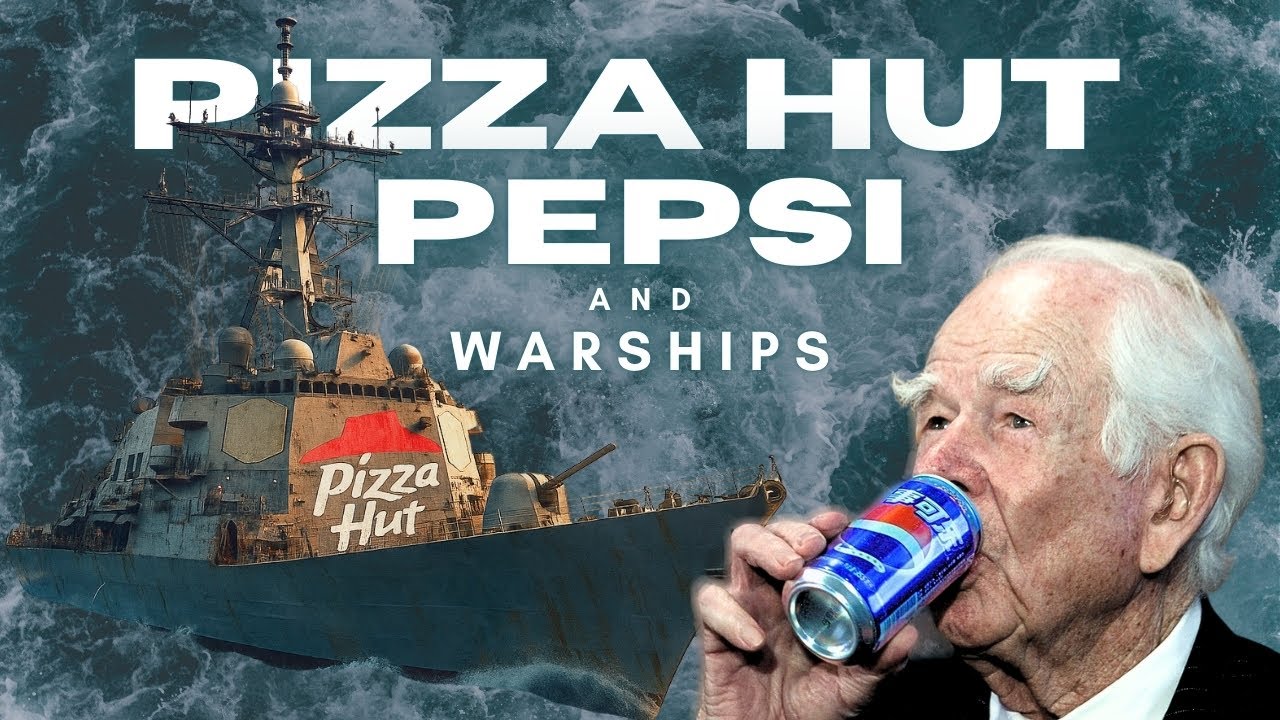
In 1959, Pepsi CEO Donald Kendall entered the Soviet market by trading syrup for vodka distribution, then later swapped nonconvertible rubles for Soviet warships and Pizza Hut rights. Bridger explains how Pepsi exploited asymmetrical risk and currency constraints to find alpha where others saw obstacles, and what that strategy teaches about fractured modern markets.
Chapters
This is the story of how PepsiCo didn't just flip a Navy. They flipped the entire playbook on international business, and the alpha they generated will change the way you think about problem solving in finance. But first, let me ask you this. What do you think has lower risk? Flipping a house in your hometown or opening a pizza shop in communist Russia? Now, most people would say the house flip, right? Well, here's the twist. It depends on how you define risk in business. Most people think investing works like this. Low risk, low reward. High risk, high reward, right? But what we're actually looking for is this gap right here. Relatively low risk to relatively high reward. This gap, this is called asymmetrical risk, also known as alpha. And finding asymmetrical risk can put you leagues ahead in markets that your competitors aren't even looking at. Now in 1959, the Soviet Union was the biggest asymmetrical risk opportunity on the And PepsiCo was primed to take advantage of that. So meet Donald Kendall, PepsiCo CEO. In 1959, he had PepsiCo displaying their products at the American National Exhibition in Moscow, which showed off all the attending companies' various trade goods to the Soviet Union. This was a massive event that Pepsi's longtime competitor Coca-Cola actually declined an invitation to attend. Now, Coca-Cola's worries were not unfounded, as at the time the Soviet ruble was not not convertible. The currency was untradeable on international markets. To do business with the outside world, the Soviet Union had to either barter goods or use foreign currency, which they typically saved just for essentials. And at the time, Pepsi soda was not essential. Well, at least not yet. But where Coca-Cola and many members of Pepsi's board saw an unworkable market, Kendall, the CEO, saw an untapped consumer base of over 300 million people. So at the American National Exhibition, Kendall made a crazy gamble. He poured out 2 separate Pepsi drinks. One was bottled in New York and the other was bottled in Moscow, serving them both to Soviet Premier Nikita Khrushchev and asks him which one he likes more. Premier Khrushchev proudly claimed that this Soviet-bottled drink was, quote, very refreshing. And this photo right here gave Pepsi their foot in the door for expansion into this untapped market. So what PepsiCo did was what I like to call the business partner effect. Now remember my house flipping example from earlier? Now my family always makes fun of me because I'm not that handy of a guy. I mean, heck, even right now I have no clue what I'm doing like on this thing. I just did this for the shot for the video because if I, Bridger, went and flipped a house, there's a high likelihood we lose money because I'm not that handy. I don't really know what I'm doing with flipping a house. But my buddy Mike, who's flipped over 300 houses, When he goes and flips a house, there's really not that much risk at all because he's done it so many times. The business partner effect is the expertise of the business partners involved, and depending on the expertise, your risk profile can change drastically. PepsiCo created a business partner with the Soviet Union and is about to become the most knowledgeable company in the world on Soviet markets. And through various political discussions and agreements, Pepsi was finally given the clear to begin bottling and manufacturing Pepsi in the Soviet Union. But the problem remained that the currency of the Soviet Union, the ruble, was not tradable in international markets, and Pepsi needed a way to figure out to get the ruble into US dollars. PepsiCo came up with a pretty ingenious but risky solution to this problem. In 1972, they would ship Pepsi's concentrated syrup to the Soviet Union. In exchange for exclusive US distribution rights to Stolichnaya's vodka and other alcoholic drinks. Now, I probably butchered that, but Russian is not my first language. Not only did this open the door for Pepsi to be sold in the Soviet Union, but it also blocked the sale of Coca-Cola in Soviet Russia for another 13 years. Now, how about that for cornering a market? This plan worked out amazingly. For spreading Pepsi throughout the Soviet Union, as by the late 1980s, the Soviet people were drinking over a billion servings of Pepsi per year. That's over 88 million gallons of Pepsi's drink. To say that Pepsi was doing well is kind of an understatement. But while Pepsi was selling like hotcakes in the Soviet Union, Stolichnaya's vodka had less of an impact. It did great at first and was estimated to have cornered around 70% of the US imported vodka market by 1985. But the 1979 Soviet invasion of Afghanistan triggered a consumer boycott of Russian products in the market, leading to sales dropping like a rock. But Pepsi, on the other hand, became an essential part of Soviet markets and was in high demand, making the trade-off of vodka for Pepsi increasingly lopsided. And this is where the story gets a lot more interesting. Under the command of Mikhail Gorbachev, the Soviet Union really wanted to attract Western investors but had few goods that could be exported. And with PepsiCo becoming an essential investor, Gorbachev was looking to sweeten the deal, something Kendall and PepsiCo were more than happy to explore. In 1989, Kendall entered a deal with Gorbachev in one of the craziest trade deals I have ever heard of. PepsiCo secured 17 submarines along with 3 other warships in exchange for doubling the amount of Pepsi bottling plants in the Soviet Union, as well as the opportunity to launch a Pizza Hut in Moscow. This deal gave PepsiCo the 7th largest navy in the world. So what did they do with it? What would you do with almost 20 Soviet warships? Well, turns out not that much. These warships were old by the time PepsiCo acquired them. These dated ships and submarines were barely floating. So PepsiCo would almost immediately turn around and sell these aging vessels to a Norwegian shipping firm for scrap, converting their warships into cash, but more importantly, cash that they could trade on international markets. Now, things were looking up for Pepsi. They were one of only a few companies in the world to successfully convert millions of Soviets to Western goods, trading vodka for soda and later warships for a Pizza Hut, all while keeping their rival Coca-Cola out of that side of the world, leaving Pepsi uncontested. So what happened next? Well, in 1991, just 15 months after Pizza Hut became the first Western restaurant to ever open its doors in Moscow, the Soviet Union collapsed. And with their collapse, so did all the deals with PepsiCo. This left Pepsi's supply chain fractured and scrambling, something Coca-Cola capitalized on as it entered Russia and overtook its rival, ending Pepsi's complete dominance it had over that corner of the world for almost 30 years. So what do we learn from all this? What is the takeaway? Donald Kendall looked at the Soviet currency problem and saw opportunity that no one else could. He looked at a political instability and saw partnership potential. He found creative solutions to problems that most other companies thought were impossible to solve. That's alpha generation. That's asymmetrical risk. Right now, there are fractured markets everywhere. Crypto regulations, ESG transitions, emerging market currencies. The real question is, what expertise do you have that would actually go and find asymmetrical risk in you and your business? Oh, it's actually pretty good.