Prioritizing Life Balance Over Everything Else || Jeff Flamm Interview
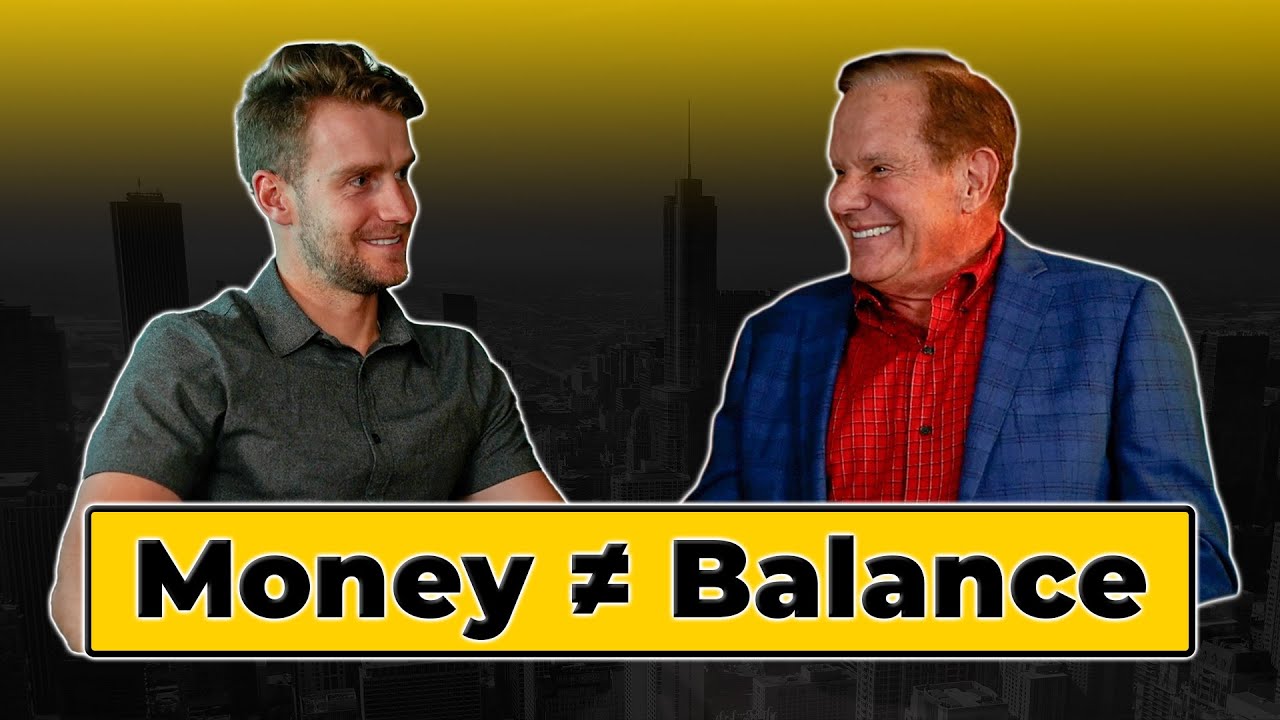
Jeff Flamm breaks down his life-balance framework: faith, family, finance, plus fun, fitness, and fulfillment. He covers dollar-cost averaging, dividend stocks, and income-producing real estate, plus his Zenith Mastermind events and Infinite Mind app for reading comprehension.
Chapters
All right, people, welcome back to the show. Today we got with us Mr. Jeffrey Flamm. Good to have you with us.
Thank you, Bridger.
So just so everyone's aware, Jeff, I'm so happy you're on today. I sent you a text about a month ago, I think, and I really was thinking about people in my life that I see as mentors or coaches or just people that I really respect in all areas of life. 'Cause there's people, all of us, we follow different people or have, at least young guys, I'm trying to find like, okay, who's really good at money? I'll follow them for money. Who's really good at taxes? They'll teach me about taxes. Who's really good at family stuff? They'll teach me about family or religion or whatever. And it's very rare to find, I like to find mentors and coaches, to find someone that I believe at least has like won in life in every different way. I think I sent you a message. I was like, Jeff, you're one of maybe 2 or 3 people I literally have met in my entire life that I look up to and respect in every single way in how you've done your businesses throughout the years. Just, just you guys are aware, like we just walked over. Jeff owns all the huge office buildings. There's like 4 of them, massive next door. He owns all of them. They're all owned by this guy.
With a partner.
With partners. Yeah. He always will play it down, but he's, he's got incredible kids. 5 kids.
6.
6 kids. I know a couple of them. They live in— they have incredible families, incredible businesses. You are healthy. You do a bunch of cool stuff. You run a great coaching group that I've been to some of your events as well that you've just done later in life. You're just like, I just want to help people. And I I respect you as a spiritual man as well. We've talked spiritual things before. I came up to your cabin up in Wyoming and we talked for a few days. It was amazing. And so just as an intro for Jeff, so everyone's listening, I really, I'm gonna say this to you, like, I really look up to you.
I'm honoured.
And I don't say that to a lot of people.
Nice person.
In every single category of life. So we're gonna talk about those kind of categories. That's actually your group, Zenith Mastermind. That's what you talk about. It was actually, you wanna walk us through the, you have all the Fs you guys talk about, right? What are they?
Well, I started this mastermind after a model I established in 1992 for my own family. What I wanted to do to raise a great family, and I wanted to have them balanced in all areas. So in '92, I read this book and I got inspired, and with the scriptures, and I sat and filled out a yellow pad with 5 areas that I wanted to teach my kids. And they were the importance of family, faith, finance or business, and then fun and fitness. I wanted everything in life to be fun because if it's not fun, I don't want to do it.
Yeah, yeah.
You know, if I don't enjoy going to work, I don't want to go to work. So I like to make everything I do fun at some point. It's not fun every minute, but it's got to be fun.
Yeah.
And then later I added one more area, which is Fulfillment. Once you really accomplish most things in your life, you feel fulfilled. It's important that you're giving back and helping others along their journey. And people that are fulfilled are ones that really are serving others all the time.
Yeah.
They're thinking about that a lot. And that starts when you're young, not when you've accomplished some great goal, but you need to learn those principles along the way.
Well, the concept of if you don't give when you're poor, you won't give when you're rich.
Exactly.
Right? Have you seen that's been true for people you know throughout your career?
My dad and mom taught me that. And my dad was the one that said that to me a lot. He said, you need to be generous when you have a little or you won't be generous when you have a lot. And I have a friend who made millions in the sale of his company and gave some to his kids. And, and I noticed over the years, I don't see the kids have ever been philanthropic. philanthropic at all, and they're mega-millionaires. So I said to my friend, what are you going to do with your money? Well, I'll give some to charity and some to my family. And I was like, well, if your family's not charitable, maybe you should give it all to charity because they haven't learned that principle with the millions they have. So again, it's, it's something you need to learn along the way, learn to do it.
I think you told me this example earlier, this family that they just— a lot of the kids went off the rails, right? They got a bunch of money. And this is— this wasn't millions. This is tens of millions, hundreds of millions, correct?
Well, it would be hundreds now if they'd been wise.
If they'd been wise, right? And it's funny how these kids were gifted money, right? But it just took them off the rails. Is that correct?
Well, yeah, I think only 2 of them ever worked a day after that. So, you know, what does that do to your kids? But more— a bigger concern is if you look at grandchildren, grandchildren that grow up only seeing their parents jet-set around the country and play. They think that's what life is. They don't know about work. So they're very insecure, very insecure. Most of them get into trying to find happiness. They get into drugs and the wrong lifestyle. Right. And we see that all the time. If you follow any programming or read books on multigenerational wealth, you'll see that kids that inherit a lot of money usually are not happy.
Let's talk about now. You've talked about the beginning. So 1992, you decided you were going to For your family. You're going to put together this whole criteria of how to raise kids. And we just talked about the negative effects of having— getting lots of money, having a huge exit, the winning the game. What people watch podcasts and work 80 hours a week to win the game, and then they lose their family and they lose their kids.
That's right.
So walk someone— if you were sitting down across from me right now and I said, hey, I'm going to sell my company next year for $100 million and I've got a family and kids, what would you advise me to do? To make sure that I raised a good family, good kids, had good—
I would say come to the mastermind I started for that very reason, is to help people balance their lives so they're not just chasing money saying, I'll be happy when, when I get all this money, I'm going to be happy. It doesn't work that way. I mean, look at Jeff Bezos and Bill Gates, all the money in the world, like, right? But they don't have their families together.
Both divorced recently.
Yeah, both divorced. So, You know, some if you don't keep balance along the way, everything can fall apart when the money comes. So what you want to do is keep balance. So with Zenith, I decided one day let's start this because I was mentoring small groups. You were one of them.
Yeah, I came mentoring. Yeah, came to that first group.
There was like nine guys or something and four mentors I brought in, right?
And fantastic weekend by the way.
Hey, was that? Well, look at the connections you've made.
Oh, it's been amazing.
And others through Zenith. And so. Then someone posted about this event we did at the ranch, and I had 100 requests in the next 2 weeks asking if they could come to one if I did it again. Well, and I didn't have enough lunches to mentor all these people. So, I decided, let's do this in a formal way. So, I tried to create a model of a mastermind that's not just on how to 10x your business. It's really how to balance your life.
Yeah.
And that's what we do.
No, that's amazing. So to unpack a little bit of that with, you know, so you talk about balancing your life before you've made it one day. So, you know, you're a busy entrepreneur, you're running around, you're selling Fortune 500 companies, all of that. Like, what, how did you manage? You got 6 kids, I'm sure of all different ages. You got a spouse at home, you're running a big business, that's a lot to balance. What's your definition or how would you approach that and what worked best for you with your family?
Well, In 1992, 4 years before we sold it, we were growing so fast. We were building a new office building every year just to house employees.
Wow.
And so we bought 60 acres at Decker Lake and built one building, then another, then another.
Yeah, cool.
And so I was on this— Dave Layton, who was our contractor that built the buildings, took his top clients on a fishing trip to the Wind Rivers, horseback trip for 5 days. So I brought this book on reorganizing the company for success. 'Cause we were growing so fast. I wanna know how to grow this company, what to do. And back in the '90s, it was a big deal to write mission statements and your values and all of that. And then your steps to get there. Well, we were doing all that in the company. And as I read this book, I thought, you know what? Why aren't I doing this in my own family? Do my kids know? 'Cause if the CEO doesn't have a clear mission and vision where they're going, no one else does.
Yep.
It all starts with the CEO.
Yep.
So I thought, I wonder if my kids know where we're going really. So I sat in on this yellow pad, I filled it, I wrote all these things. What my mission statement was for our family, what our goals were in each areas. Well, physically what I wanted to do, the kids, I taught them all to ski. We did it together as a family.
Cool.
You know, what can we do that keeps our family together? I bought a boat. My dad had said, don't buy a boat. People that buy boats quit going to church. Well, we boat on Saturday. Yeah. So I bought a boat and those are things that unite a family, right? You're all together.
You're on a boat. Yeah. You can't be on your phone really because it's bouncing around too much. You got to talk.
It's great. You're on the boat together.
Very structured, though. Very structured. I feel like a lot of parents aren't intentional.
Well, they're too busy.
Yeah, they're too busy.
Usually both parents are working. They get home. It's everything they can do to get meals on and laundry and even help kids with homework. So I think it's tough nowadays. And so it's easy to give your kids a cell phone or, you know, any kind of a game console and let them play games.
They're occupied and it's just done.
Yeah, it's a babysitter for them and it's sad. So you have to be intentional. Like you mentioned, you have to say, we're going to do a family activity once a week. We're going to have a family meeting once a week where I teach them something. So we did our family—
Hold on. So family meeting once a week.
We did Sunday nights when I was home.
Okay, cool.
We'd always teach something.
And just any topic or it's just something life skills?
All kinds of things. Sometimes religious, sometimes life skills.
What a cool thing.
Yeah. And then on Monday nights was family night and we'd always go do something together on Mondays when I was in town, which was every other week.
Yeah.
So we were structured.
I'm going to shift gears here for a second. So you've seen— you've been in business for a long time. You've done a lot of investing. You've seen market cycles like crazy. We're filming this early 2023 right now. We've seen, you know, interesting— a lot of rate hikes going on. Where do you— so I'm totally shifting gears now. Okay. You've done a ton of investments, I know you've been in a lot of deals and properties and all sorts of cool stuff. Where do you feel like we are at right now in a market cycle? And where do you feel like we're going the next 12 to 18 months as far as markets?
I see it being another tough year where interest rates are going to be high for another year or so. Then I think they'll start coming down as inflation starts to subside a bit. But the problem we're seeing right now is there's becoming a wider and wider gap between the haves and the have-nots. People that haven't saved and aren't putting money away are getting pinched. It's— they're getting squeezed, right?
Yep.
Because they go in the store and if eggs are $8 a dozen, and that's your staple thing you feed your kids, right? All of a sudden, well, I can't afford eggs. I guess we're going to buy the generic cereal, which is really good for us, right?
Yeah.
So I think it's really going to be tough for for some families, and it's forcing more people to work and forcing moms to have to work because— and then people that have money, there's never been a better time to make money right now because there's— if you have the smarts on how to—
Yeah, talk more about that right now.
You know how to make— you can learn how to make money. You can make a lot of money.
So you think right now, even better than, than ever, if you have money or if you have the right mindset, what kind of opportunities do you see the most happening right now?
Well, if you know what you're doing in the market, I tell people, find great stocks in the market. If you even just bought the S&P 500 without a broker, so you're not paying any fees, pick out some good stocks, some that pay dividends if you need income, or just some that have been long-term heavy players. They're going to be in the market a long time. Maybe some in tech stocks, Microsoft, some that are going to be here. Some in, you know, the food industry, car industry, whatever. You just decide some that you think are stable stocks that are going to be here a long time.
Yep.
And what you'll find is they average 8% growth a year over time. And it's tax-deferred. You're not taxed on it unless you sell it.
Unless you sell it, yeah.
Have a gain or loss.
It's compounding.
So, you know, if you do that over 20 or 30 years and put small amounts away every month, people go, I don't have any money. And I said, go back and take last month's Visa statement and highlight everything in green you spent that was absolutely necessary. Maybe it's utility bills, whatever, gasoline. And but if you look on food, for example, you could be spending hundreds of dollars on food in a week and you can live way cheaper than that if you eat the right things.
Yeah.
And so I tell people, you want to save money? Here's how I learned to save a ton of money. I don't go into big box stores anymore. I loved Costco, $5 chickens, right? So I always went to Costco once a week to get my roasted chicken. And I'd come out with a $175 or $250 cart full of stuff. Do my wife and I need that? No. I'd buy a sweatshirt that was cool or these shoes or a lot of stuff, right?
Yeah.
Some camping stool, blow-up pillow.
I don't know.
I'd buy knickknacks, right?
Yeah.
And I go home and I'm like, I don't have a place to put this in my closet. Yeah. Right? I haven't worn 80% of the clothes in my closet in the last year. It stays. It's crazy, but we buy more, right?
We keep buying. Yep.
So, if you don't go in the store to get the $5 chicken, you don't spend the $175. So, my wife and I have learned to go to the store once a week with a list of what she's going to fix and we buy the healthy foods. And Make our own.
Yeah.
Very little prepackaged food anymore.
Yeah.
We don't buy potato chips or ice cream unless special occasions or, you know, picnic in the summer or something.
Yeah.
So we don't have junk food around. And that's how both of us control our weight. We don't buy it. So it's not in the house. So it's not a temptation.
Me and my wife do the same thing. Do you do the same? So we keep in our house, no, there's no treats, there's no junk. And if it comes in, we'll keep it for a day and then we just, we'll chuck half the ice cream carton.
Yeah.
We'll eat it for the special occasion. We literally chuck it because If it's there, you're gonna eat it and you're gonna—
So the better thing is don't buy it, you know, but on special occasions you have it.
But then, but then we say, hey, if we want a treat, we can drive and go get a treat. We're not gonna be Nazis. But what happens is you only get a treat maybe once every week or two, and then it's special and it's whatever. But it's, it's really when you're sitting at home at, you know, 10 PM with an ice cream carton, that's when you're—
I learned this principle when I had, you know, a family with 6 kids and I was only making— even at the end when we sold our company, I was taking $75,000 a year salary and I had 6 kids.
Wow.
We lived on a really tight budget. We clipped coupons every Saturday night in the paper.
So you weren't taking big distributions. You guys owned 100%?
No, we just kept growing the company.
Just put right back in.
It needed the money as it grew. So we took very small salaries. So we lived really cheap. I never bought a new car in my life until 2 years ago, 3 years ago. Yeah, first new car I've ever bought.
Really? What was it?
Tesla.
The Tesla X, yeah.
Because of Dan Young. He made me ride in his and said, you need one of these. So I went and bought one.
They are pretty nice.
Yeah, we have one too. And I love it.
Yeah, it's awesome.
But anyway, you can learn to manage money. And what I found saved us a ton of money is getting Wendell Dairy milk delivered because we'd have to go to the store every 2 or 3 days for milk. When you have 6 kids, go in the store, spend a lot more. So when we had it delivered, it was maybe a dollar more a gallon. It cost me You know, a few dollars more a week, but it kept me from going to the store so much. And so if I don't walk into Costco or I don't walk into any store, I just don't spend a lot. So when I need a little anything to fix something in the house or whatever, shampoo, whatever, I'll just order it online and have it come to the house.
Yeah, I was about to say, that's the problem now, though, is you have the— you can just sit on your couch and order milk, eggs, cookies, whatever, and it's there. It's in your house in an hour.
Yeah.
So because it's a great principle, like avoid the temptation, don't go around it because you won't get what you need.
Because if you go in, you'll buy way more stuff than you need.
But that darn Amazon app, you know, it's just right. It's so easy to just— it's just to get your stuff.
It's great. Yeah, I like it.
But back to the principle we talked about of, you know, there's all these books that have been written about take a sliver of your money and just slowly drip into the market. And you'd be surprised in 20 or 30 years that you're a multimillionaire. Yeah. And it's $50 a month. It's $100 a month at a time, $150, $200 a month at a time. And you're a multimillionaire when you retire.
And the best, the very best hedge against inflation, and you've probably heard Jason Hartman talk about it. He's into real estate.
Yep.
Is income-producing real estate. If you can get a duplex or, and eventually upgrade to an apartment or whatever, those things pay for themselves over time and then create an annuity. So in retirement, you've got money coming in besides just Social Security. So you start a little at a time, and you can find that money if you just go through and see What you're spending that you don't absolutely need to spend.
Well, Jeff, it's been a pleasure having you on today. You're just a wealth of knowledge. It's fun to chat. I have one or two more questions for you if you're okay with that. First one, I guess first and then we'll have the last question. So first one, you mentioned Zenith Mastermind. Where can people go to find Zenith? I've been to your events and they're awesome. I would highly recommend going to Zenith. You guys have a few events coming up. So walk people through what Zenith is, how to get in touch with you and, and, or the group and how, where they'll We take about 60 people on an excursion.
We do 2 a year. And then every other month, we have a dinner speaker series here in Utah.
Yeah.
So, people in Utah can come to that and they just pay $50 to come and it covers their meal and the speaker. But we don't charge an annual fee like most masterminds. You just pay when you come. And so, we try to keep them affordable. Our one in March is on a cruise to the Caribbean, 5-day cruise. It's full. We've got 60 people going. Our next one they can find on www.zenithmastermind.com. Zenithmastermind.com. And it's one N, Z-E-N-I-T-H. And the next one's in Kauai at our resort. Yeah, you're going to go to the best pool in the country. Yeah. And we did that one 2 years ago and that 36 people went on that first one. And all of them have requested we go there again.
Yeah.
Because the day before the mastermind starts is the Ultimate Hawaiian Trail Run. And last time we went, 15 of us did it and had so much fun that now the whole group wants to go back.
Oh, cool.
Go early and do that right before the 4-day mastermind. So that is September 17th through 21st.
In Kauai.
And it's $1,597 a person. That covers the mastermind, all your meals, and the excursion. Your hotel's on your own, your airfare's on your own, and if you rent a car. So, try to keep it reasonable.
Which is an amazing price.
That's an amazing price because it covers all your meals.
Dude, I've been a part of masterminds and I'll say this, you won't probably say this, but I'll just say this. You've ran this for how many years now? 2 or 3 years?
2 and a half.
I would just guess you've lost money on this mastermind.
Oh yeah, we've never made money, but my goal is to help people.
Yeah, you're just—
Jeff just keeps sounding like— This is how I give back.
It's out of the goodness of your heart you do this and you just want to help people and help people be around incredible people and mentors. in all these cool people to come speak and be a part of it. My dad's been there, I've been to your events, and it's been just a treat to be— to hang out with you guys. So I would highly recommend ZenithMastermind.com. Go check them out. And if you guys can't find it, send me a DM and I'll send you the link or whatever.
They'll walk away with 60 new friends. I mean, it becomes a tribe. Yeah, you go there, you kind of know a lot of them, and it's fun.
Yeah, it's a fun group. Okay, so last question. This is the question of if you Let's say this was your last podcast you ever did. You were gonna die tomorrow, and you had 1 minute to 2 minutes to share with the world your last message, your dying message that you wanted to make sure everyone remembered around the world, that they could think back, man, Jeff Lamm gave that last message that was— and the question is, sorry to preface it, the things that are most important to you. What would you want your kids, grandkids, the world to hear from your last message if you were gonna die tomorrow? So with that, I didn't prep you on this question, so I'm putting you on the spot. But with that, I'll put you on the spot here.
It's really easy for me because it's what I built Zenith around, really. If they'll just go and look at the balance wheel and really evaluate themselves in each of those areas and find out where they're weak, they'll strengthen those areas and try to keep balance in their life. They'll find joy. That's keep their faith strong, keep their family strong, and build a successful business with integrity. And you're blessed. And then the other— those are the 3 main spokes of the wheel. So it's faith, family, and finance, right? The other 3 spokes of the wheel are fun, fulfillment, and fitness.
And fitness.
So those are important, but the other 3 are the most important in my opinion. So I would say to people, look at that. When I have them go to the wheel first and the hub is zero and the out part of the wheel Is 10, and there's little tick marks 1 through 10. So go in each of those 6 areas and mark where you think you are. Then we have them go through and answer these 10 questions in each area. So on fitness, you know, I exercise 5 times a day at least, or 5 times a week at least 20 minutes.
Yeah.
If you do that, you're 10, you know, and so on. So they go through each one of these, and when they get done, there's 100 possible points. And they'll be shocked because they maybe put themselves as an 8 and they find out when they're really getting down to what they're doing, they're not doing most things. So, they're really not scoring as high as they think. So, I would say to people, try to balance your life and make it meaningful. So, the joyful— it's a joyful journey. Meaningful.
Yeah, I love it.
What a great message. Enjoy each day. If you're not happy now, you're not going to be happy when you have money. I'm here to tell you that. If you're not happy when you have a little, you won't be happy when you have a lot. Feel happy.
Oh, that's amazing. Jeff Lam, everybody. Thank you so much for coming on today.
Thank you.
Go follow him again, xenithmastermind.com. Go follow Jeff. I don't know, did you say something else?
Oh, one other thing that's good for your audience.
Yeah.
I've had a company for 20 years called Infinite Mind, and we've done $300 million in sales on Infinite Mind and had 2 million users. We've done that much in sales. And I decided during COVID because kids are not doing reading, they were not doing well in school. Almost all kids are behind in reading. Did you know that? Nationwide. Worldwide, probably. But nationwide, they're all behind in reading because they weren't going to school and they're not reading. And our devices take them away from reading the way they're supposed to read, right?
Mm-hmm.
So I built the app free. It's free for everybody in the App Store. It's Infinite Mind Brain Exercises. 7 minutes a day. If you'll do it 5 times a week for 2 months, you'll triple your reading speed and increase your comprehension by 62%. I've got so much data that that is the number.
Wow. Oh my gosh.
Because we track everybody's scores. I know where they are.
Oh, that's so cool.
My kids all were required to do it. It was part of their chart Nancy made up.
Yep.
If they did it, they got extra allowance. So, all 5 of my boys scored very high on the GMAT. And they all went and got their master's degrees, but they scored high enough they could choose their schools. 2 of them went to Oxford and graduated from Oxford. Why does it make such a difference? If you're a fast reader, you get through a test like the ACT in half the time.
Yeah.
So now you have half the time without stress to think through the ones you're not sure of and come up with the right answer.
Yeah.
The best answer. But when you're stressed, you can't do that. You just mark bubbles because you're running out of time.
Yeah.
So every kid should be on that. And every adult that's getting older. Our number one users are people over 55 to, to help save their brains.
Just keep them sharp.
Well, it keeps your brain going.
Yep.
Yeah.
What's it called one more time?
Infinite Mind Brain Exercises. Free in the App Store.
Infinite Mind Brain Exercises. Really cool. I love it.
Okay.
I love it. Jack, thanks so much. You're awesome.
All right. See ya.
More from Bridger

The AI stack is trying to consolidate to a winner take all, do you think it'll stay fractionalized


Before you launch a fund, triple check your fund attorney actually filed everything.








Different view on housing affordability and the fed raising rates not lowering rates