Raising A Professional Fund Without Giving Up Too Much Equity
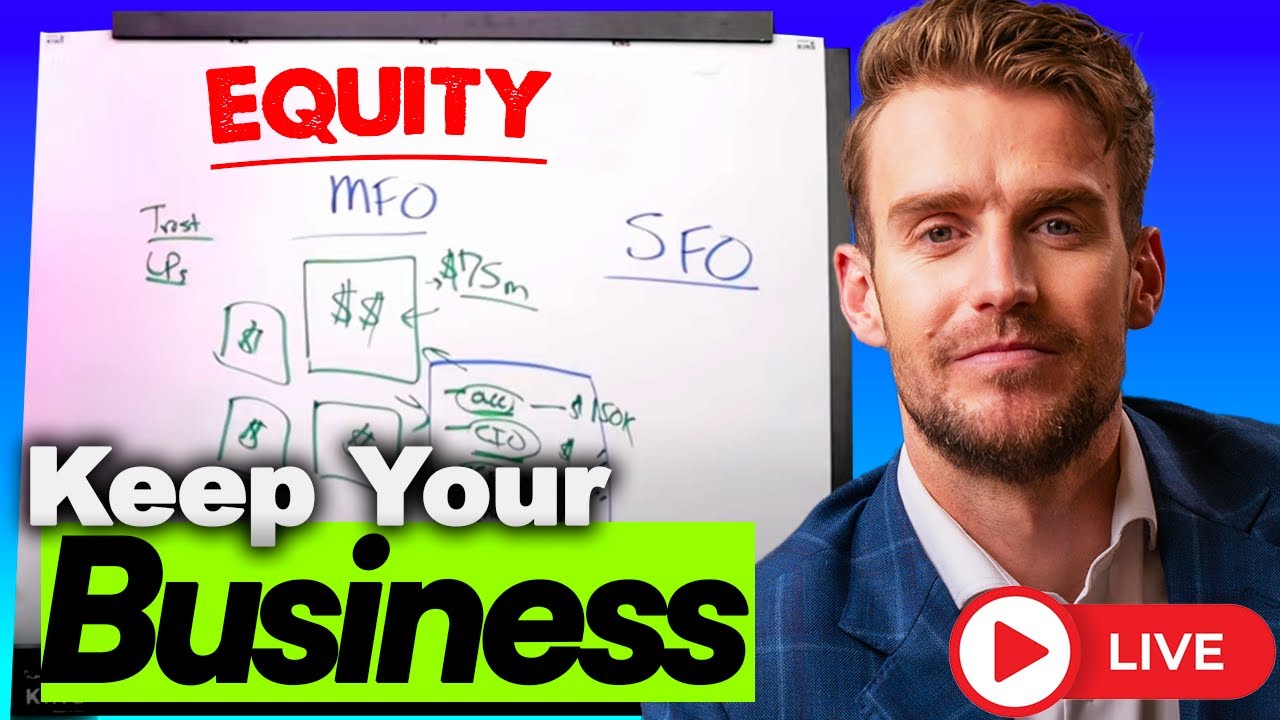
Bridger Pennington outlines a three-step formula for raising a fund while keeping equity: build a deal thesis investors want, structure it as a GP/LP with a 2% management fee and 80/20 profit split, then validate with mentors before filing paperwork. He recommends single-asset funds over SPVs for lower legal costs and clearer track records.
Chapters
And I've seen a common thread of what the successful ones have used to launch their funds. Would you guys like to see it? Yeah. This is what it is. This is what we built out. It's called the Fund Launch Formula. This is how entrepreneurs launch funds. Most people, when they want to launch a fund, they, you know, instinct, you know, the instincts tell them, hey, Bridger, I want to launch a fund. I want to go talk to the lawyers, which is right here. I want to do the legal and formation stage. And I always go, hold on, wait, before we go set up the fund, before we go call the lawyers, before we go build the whole thing, let's make sure we build a fund that your investors want. So you can see over here, this is for a single asset fund or a full-out fund. We're going to focus on 3 main categories. Number 1, what's your deal and strategy? If you can see that there, what is the deal and strategy? Do you have asymmetrical risk? Meaning relatively low risk for high return. Where do you have alpha in your deal? Do you even have alpha? We'll talk about that more in a minute. Then what's the frame and structure of your fund? How are investors getting paid? Are they doing a pref, catch-up, carried interest? What's the waterfall schedule? Are you doing a Reg D, 506, 506? These are things we're going to talk about later today. So if you don't know what those mean, we're going to talk about them in a few minutes. Now, once we have this put together, Conceptually, we're actually going to go and try to raise capital. Now we're going to get verbal commitments. What we're trying to do here is get valid— if you can see this line here, validation that our fund idea is a good idea. The goal of this part, I love— there's a quote that I love, and it's when you ask for money, you generally get advice. And when you ask for advice, you generally get money. Okay, I'll say it one more time. When you ask for money, you generally get advice. When you ask for advice, you generally get money. The goal of this is you build out, you know, a mock deal. You built out a mock framework structure and you go and actually ask for advice. Find mentors, people around you that maybe are wealthy. You say, hey, you've probably invested into a ton of funds and deals. Do you have 11 minutes where I could sit down and run my deal past you and you can poke holes in it? Tell me what you think. Give me advice if I'm barking up the right tree. If someone's in your network or space or is a mentor to you, they usually say, yeah, I got 11 minutes for you. So great. I hop on Zoom, I spend 11 minutes, and usually it goes longer, but I'm going to stick to my timeframe. 11 minutes. I'm going to give them my best pitch. And I say, okay, what do you think? And they'll often say, yeah, it's pretty good, little Jimmy. Good job. And you go, no, no, for real. Like, what do you think? No, no, you're doing pretty good. And then you ask. Okay, well, would you actually put in $100,000 into my deal? And they go, well, I don't know. And you go, okay, well, what's holding you back from wanting to put money in? And they go, well, let me actually tell you. And they actually give you some really good advice. Well, your deal isn't good, your team, your strategy, your frame, your structure. And then you go, great. And this is why this is a circle. You go back and you tweak your deal, your team, your strategy, you tweak your frame and structure, and then you come back to them. 3 weeks later. And you keep refining until you get validation on your fund. Is this making sense? Give me like a yes or a— yeah, give me a yes in the chat if this makes a little bit of sense. All right. So you get validation, then, then and only then we go to legal formation stage. And for me, that part's easy. We've done hundreds of these through Fund Launch and then we launch. Okay. You file your Form D, you're now launched. And then this brings you into the fund management side of the business here where you're now going back. You're actually doing your first close with capital markets. You're actually buying the assets. You're buying the building or whatever you're doing, and then you're building out your firm and you're doing this in a wheel as well forever. Okay, this is the game of fund management. So this is the Fund Launch Formula put out here in a simplistic format. Now we're going to come back to this more in a minute. I might have said some things there that didn't make sense to you. No worries. We're going to hit some of this stuff later in today's call, but I wanted to jump into this. This is the framework of how We have helped literally hundreds and hundreds of people. I think we're coming up on, we're over 300, coming up on 400 funds launched through Fund Launch through there. So I've launched my multiple funds I run, but I currently run 2 funds right now. We have raised, me and my team have raised $47 million of equity for those funds, not debt. That's not included. That is equity raised from people, $47 million in those 2 funds. We've used this exact same formula. This is how entrepreneurs go out and raise money. Sound good? So today we are going to talk a lot about funds. You guys cool if I go fast? Yeah. Alright, let's dive in. You guys cool with that? I love this term. This is watch what people do, not what they say they are going to do. Some of you guys know this. I've shared this before, but I'll do this again for the new people. By the way, how many people are brand new? Type a 1 in the chat if you are brand new. Type a 2 if you've been on here twice or 3 times or type, I don't know, 50 if you've been on every live call we've ever done. But I'm curious actually how many people have been on here. But I'll share this and I'll check in the chat for a second. Watch what people do, not what they say they're gonna do. What do these people all have in common? Grant Cardone, Cody Sanchez, Tai Lopez, Pace Morby. What do those 4 people have in common? Type it in the chat if you know. They're all hustlers. The answer is they're all starting investment funds. I'm not sure if you know that. Yes, these are online influencer people. They are people that, you know, they teach things online, but in the background, they are all launching funds. Here's some of the funds that they are currently running. Grant Cardone has Cardone Capital. You probably know that one. Cody— but before that, he was just a, you know, real estate guy, but really a sales trainer. That's how he got big was teaching sales. Cody Sanchez does the contrarian thinking, now is buying small businesses, buying these boring businesses. Pace Morby, all around seller finance, now raising a $100 million fund. We actually, I was with Pace just a few, let's see, a few months ago talking about his whole fund he built out. Tai Lopez, they built a fund, bought Pier 1 Imports, RadioShack. I'm not sure, there's been mixed reviews on how their fund has gone, but still they are running funds. What's so interesting? These people all teach other things online. But I've made a rule. I watch what people do, not what they say they're going to do. Take Alex and Leila Hormozi. You guys know them. This is me. And actually, we went to Bear Lake together, me and the Hormozis. It's a picture of me. I had to— there's me trying to flex on Alex, me, my dad. This is Mace, my business partner, and then Alex's friend here. We went boating for a full day. It's a couple of years ago. This is before they blew up and got famous. We were just at Bear Lake hanging out. They built acquisition.com. Actually, they joined Funnel Launch years ago to figure out this game. And they're— what are they doing right now? They're in the world of private equity. That's what they're doing. Take Russell Brunson. I was with Russell just a few weeks ago. I spoke at his event. This is us last year as well. We've become friends over the last little bit. Russell Brunson, you know, head of ClickFunnels, now buying businesses at scale. LadyBoss, Magnetic Marketing, a bunch of other acquisitions he's done. Essentially, that is private equity. Again, I watch what people do, not what they say they're doing. It's been a really good rule and lesson for life of what's actually going on. Okay? They are all starting investment funds and/or using fund vehicles to scale. They're either using their own money or somebody else's money to do private equity. Okay? So we're going to talk about this game today of how this game is played and how this works out. For people that are going and building funds. This is the biggest game on earth. And the numbers back it up. We'll hit those numbers in a minute. So my goal for today is I want to talk to you about why you should consider launching a fund. Now launching a fund is not for everybody. This is, this is the biggest game on earth. This is not a get-rich-quick scheme. This is not a shortcut. But it's a cut, I guess you could say. To get really, really rich in the long run if you do it the right way. Again, this is not for everybody, but this is for the select few that really want to scale. Sound good? This is for people that are business owners or investors that want to scale. If you have something in your life, whether it's a business or an investment opportunity, could be crypto, it could be buying businesses, it could be buying real estate, it could be some investment strategy you're doing. And the only thing stopping you from growth is is money, I would tell you to consider launching an investment fund. What a fund does is it bolts onto an existing model. Like, let's say you run a business right now. We had a guy call us up. He runs a gun store. And he goes, Bridger, I'm trying to scale. And I said, what if we bolted on a fund and that fund allowed you to go buy your 5 to 7 competitors in the area? And then now you own the 5 to 7 competitors in your area and you can put your marketing, branding on their shops and you now have a mini monopoly in this area. Would that help? He's like, yes. Is money the only thing stopping you? Yes. Okay, let's talk about doing a fund. We have investors that are really good at doing real estate transactions. They want to do bigger buildings, right? They've done duplexes and fourplexes for a long time. Now they want to do a 132-unit apartment complex or a 400-unit apartment complex. Bolting on a fund to that allows them to scale. That's what we're talking about today, okay? Sound good? Good plan for y'all? We are going to go fast. Have some fun. We will make some jokes. We will put some jokes in here. I don't know. We will have some fun. We will do some giveaways. We will have a good time. Alright. Now briefly, why do I have authority to talk on this subject? Why am I here? Who is this guy talking to? For people that are brand new in the chat, my name is Bridger Pennington. Here is a quick summary of my career. I'm not going to bore you with my whole backstory even though it is pretty fun. I have some fun with it. I started Blackbridge Holdings out of college. I started 2 funds there. You can see some of our returns here. I ran that for over 3 years. We actually sold and exited this entire fund. Did extremely well. We then launched Fund Launch. Brief backstory, my dad and brother, I'm from Utah. I live in Salt Lake City, Utah. My dad and brother both work in funds. My dad ran a deca-billion-dollar family of real estate funds. He didn't work on Wall Street, didn't go to Ivy League schools, was a guy from North Las Vegas, got Cs and Bs in college. figured out this game of funds. Some of you know my story. In college, we grew up in a regular kind of household. I had no idea he had a lot of money. In college, I pitched my dad for money. My dad says no, but I will help you think tank how this game would work. One of the greatest gifts my dad ever gave me was not investing, not giving me money, but teaching me this game. And that's how I feel this obligation to share this with other people. And so My brother is also an investment funds attorney. He was at the largest law firm in the world for investment funds and now is running his own fund in real estate. And so together we put together Fund Launch. We started to build small videos that got into bigger and bigger and it's really blown past, I can't even believe how big Fund Launch has become. We've had over 110,000 people take one of our programs. $4.7 billion reported client AUM. You can see some of our stuff here. $37 million bootstrap business that we've built. It's pretty phenomenal. We have about, I don't know, 50 to 60 people right now working. I think about 40 full-time and about 70 total if you count part-time people. We have quite a team here building and helping more people launch funds. What we do with Fund Launch, we teach pretty much everything for free, just so you're aware. Like YouTube, webinars like this, everything is for free. We help people implement. So if you wanted to implement your fund, if you wanted to build a fund, we have the resources, the teams, the lawyers, the pitch deck designers, the consultants to come in and think tank your fund to launch. That's what we do at Fund Launch, okay? We help implementation. Then I currently run 2 funds. This is Ugly Unicorn and then Fund Launch Partners. Combined, we've raised equity over $47, I think it's actually higher than that, the small number is $47 though, $47 million of equity in these 2 funds. Ugly Unicorn is in blockchain and crypto. Crypto just hit, Bitcoin just hit all-time highs today, pretty darn fun. And then our GP Stakes Fund. This is $27 million of equity, we've done 9 deals so far. We're actually investing into our favourite funds out of Fund Launch. So we teach everything for free. YouTube, we have AltStreet, all this other free content. People want help implementing and launching their funds, so we help them launch and run their funds. We have about 1,000 members in our Blackbird community right now. Of those, we look at our favorite funds that launch, and then we'll actually write them a check out of Fund Launch Partners. Our average commitment is about $1 million from Fund Launch Partners. We've done 9 deals so far. We look to do another 18 deals over the next about 18 to 24 months. So there's a chance some of you guys on this call, we might even talk to you about putting money into your fund and partnering with you from there. Okay? So this is the journey I'm on. I'm actively in the game. We just set up 5 investor meetings this morning. Crypto hits all-time highs. Everyone wants to talk to us for other unicorns. So we have— like, I am actively raising money. I'm actively running funds right now. I am in the game. I do this every single day, day in and day out. I walk the walk. Just like I teach the walk, I guess you could say, for here. Alright, sound good? There's my beautiful family, by the way. This is my wife. We grew up on the same street together. It's my son Jonah. We just had a brand new baby, by the way. 5 months old. It's Paris Pennington is her name, and it's awesome. We have 11 chickens. We live on a little acreage in Utah. We love it, man. It's awesome. We had a deer just had 3 babies like next door to us. Anyways, we live in the middle of like kind of the city, but we have— we found a turtle yesterday. Anyways, we got all sorts of wildlife going on in our house. Awesome. And this is me and my business partner Mason. You kind of— I'm going to go through this fast. So that gives you a sense of a little bit of authority why we can talk on the subject. Sound good? All right, let's get into it. Y'all ready? Let's do a giveaway though. Let's type in the chat, let's get into it. Type that in the chat. Let's get into it. I don't know if that's the right spelling or grammar, but let's type in the chat for $100 and then we're going to dive into funds, how they're built, how to play the game. So pull up the chat for me if you can. and we'll pick somebody live here. Actually, for transparency's sake, share my screen. And I'm gonna go, type in the chat, you got 5 seconds. 5, 4, 3, 2, 1. Alright, I landed on this one. I don't know who this guy is. Let's see, Flybos? Flybos? Flybos? Alright, you got $100 coming your way though. Message Christian on, put your email in, we'll send you $100 to Amazon. Sound good? Alright, let's dive in. So let's talk about the road that generally people go on. When people are building and wanting to scale, they usually have 3 different kind of stations they hit. If you can share my screen, self-funded is number 1, single asset funds is number 2, and a full-out fund is number 3. Pretty general. This is self-funded. It's pretty self-explanatory. Single asset fund is where you're building a fund to buy 1 asset at a time. You're buying 1 building. You're buying one business. A full-out fund is where you're going to go buy 10 buildings or you're going to buy 11 businesses. Okay, that would be a full blind pool fund. We help people on all parts of this journey. There's a lot of people out there that are, you know, in a seller finance, trading courses, building business, and the next step here— we used to not have a single asset fund step, but we just introduced this where you can actually build a single asset fund to kind of bridge the gap before you go do a full out fund. Now I'm using the word fund a lot here, so what is a fund? Okay, what do I even mean by this? So I'm gonna share my iPad for a second. What even is a hedge fund or a private equity fund or a real estate fund or a debt fund? Like, what do those terms mean? You guys cool if we spend a second on that for, for 2 minutes here? So you see these terms here, all right, what do those mean? What's the difference between Between each one of these, I keep using the term fund. What is a fund? So let's draw this out. The thing about finance is so interesting. They make these complex words for things that really aren't that complex. You ever had this happen? Like certain industries, they make— they use this vernacular. It bugs me about the world of finance. High finance is how the finance people would call it. They make these complex terms that regular people don't meet. And then you start to learn what these are and it's like, oh, it's not that hard. All right, in the most basic sense, what is a fund? A fund is, all it is is a pool of money. That's why I drew it in blue here. It's just a pool of money. So what's happening is investors over here are putting money into the pool. People like me and you, fund managers over here, we can draw from the pool and we go make investments. So we buy a building, we buy whatever. Whenever those investments make money, let's see if I can pull my thing up here. Oh shoot. Whenever those investments make money, the investments flow back, I'll use this yellow, they flow back to the pool and then they get split between the investors and the fund managers. That's it. It's not that crazy. Y'all following? This is like the oldest business model on earth. You know, go back a couple hundred years. Hey, let's pull some money together. Let's go build a blacksmith shop and we're going to make metal things and put some money in. And whenever we make money, we'll split the returns. That's it. That's what a fund is. It's not that complex. So what's the difference then of all these types of funds? Well, the difference is what they invest into. I'm gonna duplicate this here. Okay, so what they invest into. So what do you mean, Bridger? So down here. So we'll use an easy one. What's a real estate fund? It's kind of in the name. It's a pool of money, just like this, that they don't invest into businesses and other things. They buy, ta-da, real estate. Not that hard. That's what the pool of money does. Okay, so what's another one? What's a private equity fund? What does that mean? A private equity fund is a pool of money. Instead of buying real estate, they buy private equity or, and/or privately held businesses. So there's a group on Wall Street called Sycamore Partners. They're a big private equity shop. They manage, you might have not heard of them, they manage about $10 to $12 billion. They own Staples department store, Nine West Shoes, Aeropostale. Last year, they were trying to buy Kohl's department store. That's a private equity firm. If you go to Las Vegas, MGM Resorts owns like half of the hotels are owned by one company. That's a private equity fund. Okay? They buy businesses. That's it. It's a pool of money that buys businesses. So go back to my screen here. We got a hedge fund. So what's a hedge fund? A hedge fund is a pool of money. Instead of buying real estate or private equity, they invest into the public markets. So they invest into stocks, bonds, options, forex, crypto. That would be a hedge fund. Not too crazy, right? Y'all following? Not too bad, right? So what's a debt fund or what they would call a private credit fund? A private credit fund issues loans. It's a pool of money that issues loans. Venture capital is a pool of money that invests into early-stage startups. Y'all following? Making sense? Not too hard, right? So this is the world, so when I say the word fund, that's all I'm talking about. I use somewhat of a broad sense of a fund. It's just a pool of money that has fund managers and investors that are putting money in to invest into something. And these are kind of the terms that you would follow. Yeah? Sound good? Give me like a, give me a yeehaw in the chat if that's making a little bit of sense. Yeehaw. Now, they don't call it a pool of money. There's a little more technical term. So let me pull up my, let's go back to my thing here. They don't call it a pool of money. They have different words for that, alright? So the words are, this is how, by the way, 99% of private money in the world is raised through this little structure I'm about to explain to you, okay? So this is what it is, the GPLP structure, or the general partner limited partnership structure. This is how it works. So right here, this little square, you see my little pool there? I put that in myself, okay? That's mine, I did that, alright? So that's the pool of money. Instead of a fund or a pool, they call this a limited partnership. You following? That's your fund, that's your pool of money. And you have investors that put money into that pool. These investors are not called investors, they're called limited partners. So limited partners are putting money into a limited partnership. Following? And then that limited partnership is going and making investments. This limited partnership is governed by the fund managers. And the fund managers are under 2 entities here, the general partner and the management company. These are both usually LLCs. But they're called the general partner and a lot of times called the management company. These are just LLCs. But this is the fund manager. This is you over here. So you own The general partner management company, and you manage, you're the general partner of the limited partnership. These guys are limited partners in the limited partnership, and then you go make investments. And then again, just like I said before, those investments make money, they flow back to the fund, and they get split between the investors and the general partner, usually in what's called a waterfall distribution. We can talk about a waterfall in a minute. That's just how the split happens. Generally speaking though, the split is 80/20. So 80% of the returns go to the investors, 20% of the returns go to the general partner. And you can see here performance fees, that would be the performance of the fund, goes to the general partner and management fees, generally 2% per year, go to the management company, 0.5% per quarter. So again, if this investment made $1 million, it would be $800,000 would go to the limited partners and $200,000 would go to the general partner. Not too bad, right? And then the management company would take a 2% management fee on the entire fund or 0.5% per quarter every year. This is all governed by the LPA and PPM. This is what I lovingly call the Bible. These documents are thick. They are big. They are 100 pages plus on how the fund works. We call them the Bible because Us as fund managers, we get to write the Bible, which is kind of cool. So a lot of you, I'm sure, will ask the question, well, Bridger, can my fund invest into crypto and real estate? The answer is yes. And you just write that in your Bible. Now, once the Bible is written, you have to follow the Bible. That's why we call it the Bible. But you get to write and change the Bible. In some funds, they would say the minimum commitment is $100,000 to invest in this fund. And you write that down in your little Bible down here. Is that making sense? Once it's written though, you got to follow it. We're going to do an 80/20 split. Great. You write that in your Bible. You could do a 70/30 split. You can do a 90/10 split. It's up to you. You write that in your Bible. But once it's written, you got to follow it. These documents are very expensive. Generally about $30,000 is a rough number that lawyers would charge to put that together. That's why this is for a full-out blind pool fund. That's what you would pay to build this. Following along? Okay, we'll hit questions in a minute, but is that making sense? Alright, now you know, you probably know, I don't know, way more than the general public. You know what a hedge fund is, a private equity fund, a real estate fund. You know how the GP/LP structure works. This is useful, by the way, even if you never even launch a fund. If you're going to be a limited partner, understanding how this structure works is so important, how fees work and how to read and understand an LP and PPM is important. Like Bridger, I run 2 funds right now. I also invest in 2 funds actively. I read through LPA PPMs all the time. I want to because I understand the structure. I'm a much more informed investor. Sound good? Now, I know some of you are sitting here like I want to. You know, I do seller finance deals or equity or debt. You can do all of these inside of a fund. Some of you that do seller finance or debt or equity. That's okay. You can do all of this with inside of the fund structure. You can bring in debt, you can bring in equity, and you can even bring in seller finance. This is one of the best structures on earth to do this. Like I said before, this structure is how 99% of private capital in the world is raised. Because— and we're going to talk about structures in a minute on phase 2 of this call. Because some people raise through like an LLC or other things. I would not recommend doing that. This structure protects you and the investors in an investment management agreement. It's a beautiful thing. This is why the biggest firms on Wall Street all use this structure. The general partners manage the fund. Limited partners are limited on their liability in the fund. It makes it much harder for them to sue each other and/or pull things out. You are fiduciary to the limited partnership. It's just a beautiful model. There's a reason this model is how trillions of dollars are raised right here. Sound good? Following? Alright, 2 thumbs up. There I go. Alright, let's keep going though. So here's a good question. Why would you even choose this path though, Bridger? Okay, I got, you know, we got some good details here. We got the Fund Launch Formula now, different types of funds. Why even choose this path? Is it okay if I give you guys an analogy? Here's my analogy. I also built this slide myself, okay? So be impressed with the graphics on this slide you're about to see. Alright? So, alright, let's say we're in a 10-mile race. Okay? We're in a 10-mile race and we're up against these guys. Who's going to win? Probably these guys. Okay, I put Usain Bolt there. He's more of a 100-meter, but still, I'm sure he's doing pretty well. And this guy, there's a bunch of famous runners. That would crush in a 10-mile race. I mean, absolutely murder. Would we win? No. However, what if me and you had a bicycle? It's a 10-mile race. I didn't specify you had to run it. What if me and you had a bike and we were going up against this guy? Who would win? Even if you're— me or you are kind of a little bit out of shape, a little bit. We might win because of the vehicle that we're on. Or even further, what if we had a car? You could be 300 pounds out of shape and you could beat a runner in a 10-mile race because of the vehicle that you're in. Now, why would I share this analogy? This is so true for business. The vehicle that you choose to be in as a business owner and operator, Drastically affects how quickly you move in the race of life or the 10-mile race. Let me give you a— now let's convert this analogy over to the real world. Let's say I have a cousin who loves being a chef. She wants to be a chef. She goes to culinary school. She's like, I'm going to be the top chef in the world. I'm like, awesome. That's her thing. And now I'm saying in context of business here, I know there's passion and other things, but in the context of business, let's say— She goes out and crushes it. She actually opens one of the top restaurants in Las Vegas. That would be like the ultimate, right? You crush it, you're the owner and operator and top chef of a huge restaurant in Las Vegas, alright? So this is what it would look like. You're on your dream, you're on the Strip, it's amazing. I actually pulled some stats here on restaurants in Las Vegas, top chefs. These are the top in the world. This is how much money they make. This is from chat. And we can, you know, you can ebb or flow a little bit, but you're making about $20 to maybe $30 million, maybe let's call it even $50 million at the top end per year. Estimated net, you're netting $2 to $5 million per year, maybe $6 at the top here. Okay, $2 to $5 million net per year. And that's the best in the world chefs. Let's compare that to a different business vehicle. Because if you're going to spend your whole life in something, some vertical, for me, I'm like, I want to make sure I'm on the right path, on the right vehicle. Let's compare that to the top fund managers. Here are the 2024 earnings. This is not net worth. This is earnings from running their funds. Izzy Englander, $4 billion. Ken Griffin, You can see the numbers there. $3 billion, $2 billion. Chris Hohn. You know, this is not net worth. Net worth, like Elon Musk, his net worth goes up and down based on Tesla stock. This is not net worth. This is earnings from running their funds. To put that into perspective, take a guess. So here's a Bugatti. Let's say this is a $3 million car. If you're Chris Hohn, the lowest guy on this list, how long Would it take you to earn $3 million to buy this Bugatti if you're Chris last year? Any guesses? Do the math. If so, starting the year out January 1st, how many days or months or, you know, how long would it take to earn enough money to buy that Bugatti? Well, Chris Hohn could have bought that Bugatti by noon on January 1st. It's a much different vehicle. This is the top industry for billionaires. Finance and investments per Forbes is the number one category of billionaires. Number 2 is tech. Number 3 is manufacturing. Number 4 is fashion and retail. Being in the right vehicle makes a huge difference. Back to this example, Chris Hohn makes as much as they net profit by Monday morning, day 1 of the year, by noon, he has made more money than the top chef has made net profit their whole business in a year because of the vehicle that they are in. For me, when I was in college, I started 6 different businesses my first 2 years of college. I had a Chinese tutoring business. I was wholesaling real estate. I was building websites for people. All good vehicles, right? Maybe you call them a runner or a bike, but Then I figured out the secrets of the ultra wealthy. And I said, if I'm gonna spend my career in a vehicle, 'cause it's gonna take, you know, running a business, if you don't know this yet, it takes everything you got. That's just the cold hard truth. There is no hack, there's no side hustle, the shortcut, the long way is the shortcut because the shortcut will never get you there. It takes an extreme amount of work to do anything great in life. And that's the beautiful thing about work. Work is awesome. It's amazing to do something and be excellent at something. And I was like, I'm going to try to be excellent at whatever I try to do in life. So I might as well pick a vehicle that allows me to make a huge amount of money. And for me, I said, I'm going to pick the vehicle of the billionaires. You know, you've heard this quote. The number one category of millionaires is what? Real estate. Real estate. The number one category of billionaires. is private equity. And I said, if I'm going to dedicate my life to something, I'm going to go for that category. Y'all following along? Is that making sense? The vehicle you are in makes a huge difference. Now, for time's sake, I'm going to skip the story about John D. Rockefeller. He did the same thing, though, when he went out and built his oil empire. OK? They leveraged capital to go buy competitors and scale. I'll share another example here though of AWS. This is of Jeff Bezos. I want to just share how business is played at a much bigger level. Okay, AWS by itself. Do you guys know AWS? Amazon Web Services? By itself is 33% of global market share today. This company by itself does $106 billion in revenue. It's estimated at a $1.4 trillion market cap. Do you guys know this? It's crazy. They built AWS, I believe in 2005, they started it. By the way, there is not a business in Europe that is over a trillion-dollar market cap. Not even close. Not one company. AWS, a subset of Amazon, is worth over a trillion dollars. That's how big a trillion— a trillion dollars is massive. This is a crazy business. Absolutely crazy. And it's a subset in Amazon, okay? AWS though, when they launched, Jeff Bezos has this famous quote called, your margin is my opportunity. When they launched AWS, most of us would launch it and try to make a profit, right? Let's say compute power was $1, okay, and that was their break-even point was $1, so a lot of companies out there when they were launching this, this is the cloud-based system, were charging $1.03, $1.05, $1.07. What AWS did was charge— this is hypothetical here, but they charged $0.98 or $0.97. They ran at a loss for years. Years. Why? So all their competitors are charging $1.02, $1.05. They're losing money every quarter. Every— and Amazon, by the way, as a business, just lost money for like a decade. They had a stock that was going up and down, but they literally, as a business, lost money, lost money, lost money, lost money. And they're like, Why are you in a business that loses money? Because your margin is my opportunity. What happened was all the market share went to AWS because they were the cheapest option. And they totally dominated a category. They became a category king of their space. There's a great analogy here called Red Ocean, Blue Ocean. Have you heard of this before? This is a concept called Blue Ocean Strategy. There's a bunch of books written on this. I met one of the authors of Play Bigger. He talks about this thing like crazy. In categories, there is one business statistically that dominates 74% of market share goes to one business in a category. So take, for example, online search with Google. Google is the category king of online search. No question about it. They may— they have about 94% market share. It's a very big red ocean. Now, I know some of you, and myself included, I've said this before. I'm like, what if we build a little competitor to Amazon or Microsoft and we just get 1% market share? If we just get a sliver, 1% market share, we'll be a billion-dollar company. Anybody ever thought that before? That is a flawed strategy because of the category king dynamic. With a red ocean? Well, I'll give you a real example. Microsoft tried to do this with Bing. You guys remember when Bing came out? This is about 13 years ago, 2011. Microsoft spent over $1 billion building Bing, and they're Microsoft. I mean, one of the biggest companies on earth. And they said, we're gonna go after Google's market share and we're gonna try to break Google. We're gonna try to grab 30% for— and we have all the computers. We can put Bing automatically on all of our computers. It's the default browser. This is gonna be genius. Genius. They spend $1 billion, their whole team, Microsoft. They launch Bing 10, 11, 12, 13 years later. They've spent over, I think, over $10 billion on this thing. Guess the market share of Bing in this red ocean? Less than 3%. Yahoo has like, you know, 4%. Safari has a couple of percentage points. Google is still the category king, mass category king. So the question for y'all is, what is the second largest search engine on earth? Anybody in the chat type in what's the second largest search engine on earth? Right now it's YouTube. YouTube is the second largest search engine on earth. Huh, that's interesting. Pull up my slide again if you can. YouTube launched in a blue ocean. They did not try to compete with Google. They launched A new category, video search. And then it blew up and YouTube now became a red ocean. Online video search, they dominate over 90% of online video. And guess what? Google then bought YouTube and pulled them into Google. Pretty cool, right? That's how you approach business. That's the way you have to become a category king. Because it doesn't work to grab slivers. All margin gets competed away because your margin is my opportunity. Third question for in the chat. Who now? What's the biggest competitor to Google right now? It's ChatGPT. It's AI search. Again, a new category in a blue ocean. It's not something better. It's something different when we're talking. So like, why would I bring this up in context of funds? We need to play bigger. The idea is that we need to go and figure out how can we dominate small blue oceans, become the category king of a certain space. Let me make this real for you. Anybody run a business currently? Let's take like a home services business, like an HVAC, you know, air conditioning, heating, HVAC company. And you're just running, you're like, Bridger, that doesn't matter to me. I just run my business. Well, what if someone like a John Rockefeller or a national brand comes to your city. And you're running, you know, our customers love us, we're a small town, we're a 1-man, you know, 1, 2, 3-man shop, we're doing great. And they come and they have a big fund behind them and they drop their prices and run at a loss, 20% loss for the next 8 to 12 months. And everyone in the city goes, well, I love you guys, but man, they're like 20% cheaper than you guys. I'm gonna go with them. And they suck in all the market cap. Bleed you dry, and then go and buy your business or just open up new stores. This is mass consolidation. This is happening around the country right now, whether you like it or not. You can't just, oh, I'm going to play small and just do my little thing. We are in a competitive landscape that's always growing, always shifting, always changing. If you don't have a fund behind you, someone with a fund might come in and take out all of your market share for themselves. That's why it's almost even crucial to go out and do this. Whether you run a small business, you're doing investment category, you might have to do this because funds can get cheaper debt because they're big. They can get cheaper debt from banks. They have economies of scale. They can bleed at a loss for longer than you can. They can survive. It's a war of attrition. Because your margin is my opportunity. Back to Jeff Bezos. Is this making sense? I don't know if that's too, you know, grim, but that's the reality. That's the game we are playing. We are seeing mass consolidation happen around the world right now. We're seeing car washes, HVAC companies, media giants. We're seeing the Big 4 accounting firms. You heard of the Big 4 accounting firms? You know why there's Big 4 accounting firms? Because they bought up everybody else. We are seeing mass consolidation into a handful of companies. And I think more of us need to understand this game. I don't want one or two, like a BlackRock or a State Street or a Vanguard to just run everything and control everything. I want more people like us to understand this game and have a more competitive landscape. That's why I'm doing webinars. That's why I share this so much, because I believe people like us need to understand this game and use the tools that the rich and powerful have used for decades. And use them in our own game. Because I love capitalism. Capitalism is amazing. A competitive landscape drives price lower for everybody. But when we hit monopolies, when we hit 1 or 2 companies that control everything, that's not OK. So I want more of us to understand this game. Does that sound fair? Give me like a yeehaw in the chat. All right. Give me a yeehaw in the chat if that's making a little bit of sense. All right. So let's talk now. Let's get a little more tactical. Does that sound fair? Let's talk in context of how do I actually do this, Bridger? How do I put this together? And then we'll talk more. We can do Q&A at the end of this call. We could do whatever you want to do. Okay. There's 3 distinct categories here of how you would scale. Number 1, you self-fund it. Maybe you have money, you pull some money in, like just your own money. You go buy a business or you grow or you scale. Number 2 is single asset funds. You raise money for one asset. Number 3 is a full-out blind pool fund. So let's talk about Scaling your offering while keeping the equity inside of your business. Now we're going to talk in context of a single asset fund. Now, a lot of people, you probably heard of this before, like a syndication or an SPV, which stands for special purpose vehicle or a single asset fund. They're all kind of getting at the same thing. But there's some big nuances in here. You guys cool if I get tactical for a second? This is how a lot of syndications and SPVs launch. And I would tell you not to do this, but this is what they do. Okay? So I, again, don't do this, but this is how people do it all the time. You probably have been pitched one of these before. It's good for you to understand this. Let's say we're going to go buy a new business for $500,000. Sound good? We're going to buy our competitor out. We need to raise $500,000 to go scale. This is how a lot of groups do it. They build an LLC and inside the LLC they say, okay, we're going to reserve This is the fund managers, the people putting this together. We're going to reserve 20% equity for ourselves. Sweat equity. We're putting the deal together. 20% goes to us. And then we're going to go raise and we have an operating agreement and we're going to bring in business partners that will help us do this. Okay? So we're going to bring in someone that brings in half the money, $250,000. They're going to get half of the remaining equity at a pro rata basis. So for example, There's 80% equity left. They're going to get half of the remaining equity, which would be 40%. So again, they're putting in half the money, but they're getting half of the available shares, which would be 40%. Y'all following? And then we bring in a couple other partners and here they are. Their stakes are broken up. We are business partners in an operating agreement. We put the money together, we go buy the business, and great, now we own the business. And how this would work is when the business makes money, the money flows back to here and then we split the returns like business partners. So if we made $100 grand of net profit, $20 grand would go here, $40 grand would go here, $10 grand, $5 grand, $10 grand, $15 grand. Is that making sense? Following along? Not too crazy, right? So this is under an operating agreement with business partners. Y'all following? This is how a lot of syndications and small deals are put together. Now, I would tell you not to do this. You can do this. If everyone makes money and everyone's happy, fine. It can work. This has worked before. However, there are a few problems that can arise when doing a deal like this. Okay? Problem number 1, this can be a little hairy with compliance. On paper, these are not investors. They have to be business partners. Because you're in a business together. If they're investors, you're selling a security and you need to file with the SEC. So people do this to get around this. They call themselves partners, which you can do. A business partnership can come together and do this. However, if you're partners, people can nudge and/or force their hand in a deal. You don't have control over your deal because they're business partners. They need to be voting members of the partnership because they're partners. If they're non-voting, they're like investors and you, under compliance, you have to file with the SEC. Y'all following? Lawsuits are more prevalent and it's easier to walk away from. So what I mean is, let's say this guy in red right here, you know, the deal's going good, you got a great business going on, but this guy in red goes, hey Bridger, he calls you up and he goes, Bridger, hey sorry, I forgot I forgot, or I didn't pay my taxes last year. I need to pull my money out because I got this big tax bill. The IRS is all over me. Can you sell and get me out of this deal? And you go, hold on, wait. You know, the business is not ready to sell yet. We're doing good. We're still growing. You go, hey, sorry. Like, I need my money out and I own 40% of this. I'm the majority shareholder. I need my money out or else I'm going to sue all you guys and I'm going to put my elbows out. And you go, well, fine. In a deal like this, People can nudge and push you around in a deal like this, and it can get a little hairy with compliance. I've seen problems arise a lot from these types of structures, okay? For— and that's why I don't recommend people doing— that's what I would call a syndication or an SPV. I tell people to do a single asset fund. So what's the difference? What is a single asset fund? A single asset fund is when you're using the GP an LP structure like we talked about earlier. Y'all following along? Is this making a little bit of sense? So let's go through the pros and cons. You know, both of these, you're combining capital for a deal. You're not quite sure, should we do an LLC or GPLP structure? Potential problem with investors is that also this terminology is confusing. A mastermind or a meetup group, it means to combine something very unclear. These can be structured in 1,000 different ways. In a single asset fund, you're also combining capital for dear, clear structure with investors, you're doing the GPLP structure and it's very clear. You're using, that's from Star Wars, they call this a syndicate in Star Wars. You're using this, the GPLP structure. Now in a single asset fund, it's not $30,000 usually, it's a lot less. And actually these can be structured for a single asset fund about the same cost as an SPV. Take that same example. You could do a general partner management company and limited partnership. Let's use the same example of what I just shared. One of your investors here that put in $250,000, this one, wants to pull their money out. They say, hey, Bridger, I got a tax bill. Can you get my money out? And you go, hey, under our LPM/PPM, we have control over this money, the general partner. Furthermore, our fiduciary responsibility is to do what's best for the fund. We don't do what's best for individual investors because that would hurt if we pull the money out now. It would hurt these other investors. We have a fiduciary responsibility to do what's best for the fund. So I'm sorry, the assets are not ready to sell yet. We got to keep your money in. And they kick and scream, scream and moan. You go, okay, well, in our LP and PPM, you can pull your money out early for a 50% penalty. But that wasn't the plan. When we all signed up together, we all signed up to do this thing for 3 or 4 years, and you're trying to pull your money out within 6 months. And I have other investors that this would hurt them to pull the money out. I'm a fiduciary to the limited partnership. And they go, yeah, I guess you're right. That's what I signed up for. That, that little example is why the GPLP structure is so beautiful. Furthermore, on this next slide, this is how you would scale because you're probably going to do more funds in the future. As you scale, you keep the same management company and you can launch more general partners and limited partnerships out of this same management company. This allows you to build a track record. In an SPV or syndications, they're all random, they're all wonky. There's no congruence inside of this single asset fund. You can have your same management company. You build a new GP for each one, a new limited partnership, but this builds a track record. As an investment fund manager. Y'all following? This helps you if I have my little thing here. I don't know where it is. But you're— this helps you eventually get to the fund stage because you have a track record built under the same entities that you can get audits done. They can be— they can do a back, you know, backtest on that to make sure it grows. Is that making sense? I'm all about doing things buttoned up and compliantly. That's the way to do it. Sound good? Following? Yeah? Can I get an amen in the chat? Amen. We're going to do single asset funds, not these wonky SPVs. Sound good? Again, and with these, you can do a mix of seller finance, debt, or equity in these deals. You can do all 3, but I would structure it inside of that format. All right? Now, let's see. Oh yeah, let's talk about this. So I've talked to hundreds of fund managers about this and about the Fund Launch Formula. We talked about that earlier, how to actually go and build funds. And if you missed the beginning, what we can talk about in a minute, how to go build funds. And actually, would you guys like to talk about capital raising? So we'll do this. I got a few questions on this. Let's talk about capital. We'll do this next little section, then we'll have a Q&A on capital raising in just a second. We'll talk through how we've raised $47 million of equity in our funds, what we do, the pipeline, how we manage it, how we approach investors, how we get in the right rooms. And how we think about cap raising. Sound good? We'll do that in just a few minutes. So I've talked to a number of fund managers. Let's go. Let's talk about this for one second. We had Ben Hardy at our event just a few weeks ago. He talked about this concept. He has this Be Your Future Self Now and 10x Season 2. He sold millions of copies. Dr. Benjamin Hardy actually talked about and sorry, not talked about, studied in his doctorate program and in his thesis. Around goal setting and how this actually, why do large goals or outside thinkers perform better than others? And he writes this all in his book. And so I'll give you the Cliff Notes of what he talks about. He talks about this concept of a lot of us think in time as very linear. Okay, and we'll use kind of this graph. You can see the arrows here, but most people think the past determines the present, which determines the future. That's how a lot of people think. Now, as you can tell from his graphic here, he says these high performer thinkers, people with large goals, they do the opposite. They think forward to the future. When you set a goal, you're thinking to the future. And they step, if you've heard of, you know, it sounds wonky, but visualization or setting your future self. They let their future self pull their present self to the future. Does that make sense? So they step into their future self with a goal or a vision of where they wanna be, and their future self pulls their present self to that future. Their past then informs the present on what they want their future to look like, but the future pulls themself forward. And now this is getting a little wonky, but this is how very high performers go and succeed. Set large— this is why he calls 10x easier than 2x. The example he gives is, if I gave you, if I told you, you know, well actually let's do this live. We'll do this together. This is a great exercise. If I asked you the question, all of you I'm guessing have a way of making money, business or whatever you're doing. What are ways you could double your business in the next year? So give me a list. What are things that you could do to double your business? Maybe right now think about those. And we did this with our team. So he's like, okay, we could do more social media. We could hire a couple more people. We could bring in a new partner. We could bring in a lending thing. We built like a list of 50 things that we could potentially do to double our business in the next year. And I'm guessing you guys could think of a list. What are some options, some opportunities that we could do to double our business in the next year? And he goes, okay, now same exercise, but I want you to do something different. What are ways you could 10x your business in the next year? And we did this, our team, like the room kind of went quiet, right? And he's like, literally 10x. Take the number, like our business at the time was doing about $10 million a year. So he goes, we're not going to $20 million, we're going to $100 million next year. And what happens is there's probably only 1 or 2 things you could do to really 10x your business? And Ben Hardy, Dr. Ben Hardy, loves using this example when he works with high-performing groups. He goes, what we just did was narrow the focus. We had 50 things we could do to 2x our business down to 2 or 3 things that would actually 10x our business. You do the same thing for 100x, but 10x is a good way to think about it. And we did this with our team and we kind of, we sat down like, hey, How could we actually do $100 million next year? We'd have to really rethink the processes behind our business, the structure, the infrastructure, how we're— and we came up with a couple ideas and we said, let's narrow down to 1 or 2 things that we could do to really 10x. And Dr. Ben Hardy keeps talking. He talks about this a lot because us as business owners, we often get distracted. We have 50 things that are all good things that could 2x our business. And the problem is we spread out and we try to hit all those in the same year. When in reality, if we narrowed our focus toward the 1 or 2 things that could 10x or 100x our business, we'd actually do much better. And high performers and companies that took off, that's what they did. Isn't that kind of interesting? And then furthermore, back to my little graph here, is they let their future self pull their present. So then they reverse engineered from their future self. Okay, literally a 10x next year. How would we reverse engineer back to today to make that happen? And oftentimes there are fundamental shifts in things that we are doing. You have to, a lot of times, rewrite and rethink the entire business model if that was really the goal or the frame. And by changing the frame, you drastically change the approach to these goals. OK? Follow along? Kind of cool, right? And then furthermore, I love this analogy that he gives. We've used this before. So then you have that frame. It's kind of like building a house. Now, a lot of us entrepreneurs, we go, okay, well, I want to build this beautiful mansion house as an analogy for our business. Okay, so I need to go learn how to be the plumber. So I'm going to go to plumbing school and learn how to be a plumber. Oh, and also I got to— because we're building a house, I got to learn how to be an electrician. So I'm going to go learn how to be an electrician. Oh, and I'm also going to learn how to be a concrete guy. And I'm also going to learn how to, you know, do framing. And we spend 10 years. Like, if you really added those up, it would take you 25 years to learn all those trades. Right? And all of us know when you build a house, smart business people, you have the vision, you have the plan, but you go hire great people that are already really good at, you know, electrical work or plumbing work or foundation or framing or whatever the thing is to build the house. Right? You'd be pretty idiotic to try to go learn all those trades yourself to build a home. And that sounds obvious for real estate, but we do this all the time in business. Today, I'm talking about funds and investment fund management. And maybe in the back of your brain, you're like, OK, so now I need to go learn how to do this thing or this thing. What I would tell you to do is just like building a house, have the vision and build teams. Have the vision, build teams. That's what Elon Musk does. That's what— he doesn't go build every rocket or— he goes and builds great teams. Jeff Bezos goes and builds. That's what the titans of industry do. It's what we should do as well when launching a business. Okay? So, with that, alright, I want to share if we can, and then we're gonna go to capital raising here, 'cause I know a lot of you wanna ask about capital raising. Is it okay though if I share what we've been building for the last few months? Something that maybe would help you, if you wanna do this, help you implement your fund for what you're doing. And then furthermore, at the end, we'll go and do cap raising. Sound good? Actually, let's do this as well. If you want, if you're okay with me sharing that, I'm just gonna spend a few minutes on this and how this could implement and help with what you're doing to scale and allow you to help. Like I mentioned earlier, we teach everything for free, but help implement the process building fund. Type a yes in the chat if that's cool with you. And actually, let's do a giveaway. So type a yes in the chat. I'm gonna pick somebody for a $100 giveaway here. Let's see, let me pull up Zoom here. I'm gonna do a live audit here. You can see, type in yes if that's cool. Okay, 5. I'll pick somebody for $100. 5, 4, 3, 2. Wow, they are coming in. 1. Okay, right here. Badilla Campbell. Hopefully I said your name right. You got $100. There you go. Congrats. Send that to Christian here. He'll send you an Amazon gift card. Alright, you guys cool if we dive into it and then we'll get into capital raising as well and I can stay on and answer questions and we'll go from there. See, let's see where my slide's at. Alright, let's dive in. So you guys know this roadmap. So we have, we give away pretty much everything for free. We've had, we have 10+ courses for free on altstreet.com. We have tons of free content on YouTube. We give away all the stuff for free. Furthermore, some of you know, we have helped people build out their full blind pool funds with Black Card. Okay, Black Card, we've launched 300+, coming up on, I think we're closer to 400 funds now in Black Card. to go and launch their funds. These are blind pool funds doing full-out funds. But in the past, we haven't had a lot of things to help people build single asset funds, to implement, to actually launch, get the legal teams, all the partners, the consultants, everything around launching a single asset fund. So today we wanted to share something cool. Is it cool if I share this with you guys? Yeah. This is our new program called Single Asset Funds. This is an incubator to help you go through and launch a full-out single asset fund, kind of like When you want to build a house, you would go hire a really good builder to get it done in a few months. We've done a lot of these in the past and we've consolidated it down. We've gotten huge discounts and groups from law firms, consulting groups. We have softwares behind it to help you capitalize and move much faster. Okay, so let's break this down. So what you don't need is another crappy online course. This is not a course with more information and no action. What you actually want is is something to fund and close your deals in a compliant, honest way that you can build a track record with, with real investors. That's what you're actually looking for. The problem with another course is that the actual stuff you need is in your notes app, right? You write all the things out, but you want tangible outcomes. We've designed this to get tangible outcomes for your stuff. So to achieve this, we had to think from the ground up. A lot of the other things we had built in the past just didn't work. So we actually built our own custom platform. This is not a white label. This is not somebody else's thing. This is— we actually have 4 devs right in my office right now. I'm looking out my window. They're right here in office with us building this every single day. We built this whole platform just a few months ago and launched it, all designed around the Fund Launch Formula. This is designed around this formula I talked about at the beginning, how you go out and build your deal and strategy, frame and structure capital and get validation to then go launch and then manage and run your fund. Other things we were using just couldn't work. So With that, introducing the Fund Launch Platform. Alright, a little drum roll here. Here we go. Here are some of the screen grabs from it. Then actually I'll demo it in the backend if you want. So this is some screen grabs of the Fund Launch Platform. In here, you have your beautiful dashboard here. You can kind of see here we have a full fund builder that goes through and builds your fund with you. It prompts you with questions, comes back and helps you build out your entire fund. We have a full calendar of all of our office hours and coaches that you can help and meet with. That you can actually get direct help with for your fund as well and actually walks you through the process of all the nooks and crannies you should be thinking about when building a single asset fund. One of the biggest problems with any business, but especially funds, is anybody felt this before? Like you don't know what you don't know. Like I don't even know the questions to ask to even start asking the questions. Anybody ever felt that before? So the idea of this is we already have all the questions queued up to ask, to prompt you to think through when building your funnel. And if you ever get stuck, we have video content below, we have written content, and furthermore, we have an AI tool that actually helps you and figures out if you're stuck. So if you see this, if you're like, hey, if I'm using that, what does like LTV mean? Oh, great question. This would, you know, this is loan to value. You can go right here and actually have your AI assistant inside of the Funnel Builder with you. To go and accurately build the fund as you go. Again, the goal is to build funds that investors want. Making sense? So this is the single asset fund platform that we've been very excited about. Now, does this work in my asset class? We have different variations of this. It is tailored to you. So this works in private equity, hedge funds, real estate funds, venture capital, or private credit funds. Doesn't matter what you're doing. This works inside of what, what's going on. So this would be, again, private equity is buying small businesses, hedge funds, you're investing into Public securities, stocks, bonds, options, real estate, pretty common, but you're doing real estate. This could be small fix and flips all the way up to 100, multi-hundred plus unit apartment complexes. Venture capital, investing into early stage startups. Private credit is issuing loans. So you get the full fund incubator platform to optimize your deal, craft your deal structure, refine your investment terms, patch all your blind spots, and refine your pitch and generate your complete blueprint for your fund. So we're continuing to build this as well. So this is the roadmap of what we're doing in Fund Launch right now. So phase 1, we built— we've already done this. We built out the fund builder for the single asset fund and the private platform. We launched this 2 months ago. We've already had— I don't know the exact— I don't want to say the wrong number, but a lot of people have gone through this platform. We actually had a number of people go through the entire fund builder and launch their fund in 7 days or less. We actually had one guy join. This is not typical, but one guy did join and did the full full thing and then go to legal to launch in one day. Okay, you can move as fast as you want through the platform. It's a go-at-your-own-pace thing. Phase 2, we launched this to Black Card, and right now we're onboarding 20+ service writers and doing all communications are on platform. Right now as well, we are almost out with Phase 3. Okay, this is one of the first times I've been announcing this. We are building out Fund Launch AI. This is our AI fund builder. Designed all around your fund. So you saw that little AI chatbot, but the AI fund builder would come in and actually prompt and build the fund with you. As you input, it builds your marketing materials, helps with your CRM, goes out and actually builds and designs the fund around you. We are within weeks of launching this to our beta group. It's going to be pretty darn exciting. Phase 4 of that would— you'd have an AI agent working with you, AI design marketing materials, integrates for legal docs. So it would take all the information and then populate them in right into a legal doc. And then phase 5, this, this would be AI's outbound potential investors, sourcing deals on your behalf, helping you underwrite. We are actively working right on this right now. Phase 1 and phase 2 are already done. Phase 3 is very soon. Phase 4 is in the next few months. And then phase 5 is probably more next year. Isn't that kind of cool? Today, when you join Single Asset Funds, you actually get grandfathered into this and you will be on the cutting edge. You'll be on the beta test users of all the people that are using Fund Launch AI as we roll it out here in the next few weeks. This is the everything platform for funds. So again, when you join Single Asset Funds, you get the full Fund Launch program, 6-stage process to launch your fund, guided builder, dynamic dashboard to progress all your progress tracking, full analytics and actionable next steps. Now that's amazing, but we thought what else would be cool to add to the platform? What else would help you again implement? This is not a course. We wanted to implement and help you actually launch. Oftentimes, for me at least, I don't need tons of help. A lot of you are very smart. You don't need tons of help. But oftentimes we do get stuck on one or two things. And so what we thought was, what if we did group coaching calls where you could hop on with an expert person that currently runs a fund or a single asset fund and get help on those one or two things that you're stuck on? This could be legal, capital raising, general Q&A, taxes, pitch deck, etc. So what we did for Singlass Funds. We actually have 4. Here they are, pictures of them. They go live 4 days a week, and here's their times right here. They go live. So private equities on Monday. You can see Tuesday, Wednesday, Thursday there. They actually go live for usually about an hour, and they walk through. Anybody can hop on and ask questions, get questions answered, look at deals, look at decks, and get stuff done inside of your fund. Isn't that kind of cool? So if you ever need help, you can just hop on with one of our people. These people all— so right now, Peter currently runs a hedge fund. These people are all actively doing deals. Ben is doing a few hundred million dollars of real estate deals in Canada right now. And then these two as well have done a lot of deals in the past. You can see Dan Pearson, an active broker in private equity, and then also is doing his own deals inside of private equity. So all of our coaches are all doing stuff actively. They're actively running funds. They take an hour or two out of their week to hop on with real people to work on your deals and your funds with you. Wouldn't that be kind of cool? Who would love to have access to that? Wouldn't that be sick? somewhat useful when going out and building this and doing this for the first time. So again, you get the Funnel Launch platform all included there, and then inside of that platform you get consulting, 4 group coaching calls per week, and then you also, if you want to, you can add one-on-one calls for $500 a call if you wanna talk to one of these coaches directly on the platform. Furthermore, we said, what else could we give to these people to really help them move? One of the biggest value-add features of our products in the past has been the Wall Street Rebel community. Other people, you know, We're kind of crazy, right? Us group of crazy entrepreneurs to go and do big stuff. It's nice to have a community of people around you. So when you join Single Asset Funds, you actually get to join our private community of other people who are also doing the same thing. We've had people in the past partner. Even people started dating in our community before. We have a pretty vast community of people going out across the world doing funds right now. So when you join, You get private community access to all the other people also doing single asset funds, okay? Furthermore, it's hard to build out Excel models and pro formas. Sometimes it's hard, like, you know, you're like, how do I start, right? However, it's easy to plug and play your data into someone else's model. So what we did for y'all, we actually paid a group $10,000 to build out just one of the Excel models that we have in the program, just one of them. We have other models in there, but one of them was $10,000. That's how vast and expansive this model is. So when you join Singasa Funds, you actually get access to our full plug-and-play Excel model you can use and reuse. If you break it, you just download a new copy. You can plug in your details for whatever type of fund you're doing in here. And again, truly, I sent a $10,000 wire to pay for these Excel models. Not— that's not a joke, that's factual. Everything we share is super factual and compliant. That is a factual number that we actually sent to pay for these models. These are very good models that you can plug and play and use inside of your stained glass of fun. Furthermore, you'll probably want some help with marketing, funnels, websites, etc. So we thought, what if we could do something to help people when they're launching their funds? So we included Fund Launch 360. And actually, this is integrated into the new Fund Launch platform. This is the full front end. So you have your CRM, investor pipelines, website builder, calendar, and booking systems. I use this almost every day for Ugly Unicorn, and my partners use it for Fund Launch Partners. This is what I use. to manage my pipeline, send mass emails out to all of my people that are inside of my fund. I use this almost every single day to track all that stuff in here. You have a fundraising toolkit. Oh, and then you have the backend investor reporting, entity management, limited partnership portals. You can do KYC and AML, capital call distribution, all that kind of stuff. Mercury Bank integration, all through our Fund Launch 360 software. You get that included when you join today for Single Asset Funds. Pretty cool, right? So here you are. You have the Funnel Launch platform, consulting, professional Excel models, Funnel Launch 360, all in here. Now finally, how many of you would like some help putting your legal docs together? One of the biggest hurdles, like how do I put the legal docs together? How do I do this? How do I make sure it's done compliantly? So we thought that would be kind of cool to add in. You want to make sure that things are done compliantly. They're filed correctly. Builds confidence with investors. When you have good docs, this helps a lot. when giving confidence to investors, something that can scale. So when you guys join today— oh, sorry, I mentioned this already. You don't know what you don't know. The unknowns of the unknown, especially with legal. So we wanted to make sure this process is easy and very compliant to make sure you do things the right way. So when you join today, you get a full legal setup for your single asset fund. It's included in the package. We actually, when you join Single Asset Funds, we actually go and pay. We have a partnership law firm that works with us, all integrated in our platform. that sets up your entities, builds a legal process for you to launch a single asset fund. Isn't that kind of cool? So, it's all included. Like I said earlier, this is about going the implementation. So, the package today when you join with Single Asset Funds, you get access to all this great stuff. Furthermore, so this gives you fund filings, baseline fund documents, formation counsel, fund banking setup, fund closing support, all included on our platform right here. Now furthermore, If you would like to, there is a— this is kind of some screen grabs of what it looks like in the backend. You can do advisor agreements, banking setup, all on here inside of the platform. How this works is you come in here. It is a very slick process. You integrate what you want to do. This is, for example, if you wanted to put like an advisor on your fund. You can put the notes on here of what you would want, how it would be put together, start date. It goes to the backend legal team. They put together docs. Usually takes 24 to 48 hours. They come back and now you have agreements that you can use that are plug and play. If you're adding advisors, you're adding NDAs, other things like that. Now, at the end, we have a full lawyer that reviews everything and signs off before you go launch your single asset fund. We can get these. We can we do this included in our package because we can negotiate group discounts from our full single asset fund from this a couple different legal groups to allow you to get excellent legal work for the same cost you would just you. put together on the outside. Okay, available add-ons. Sorry, I said it the wrong way. This is discounted for you guys because you are inside of the package and it is all included when you join Single Asset Funds today. You have a full lawyer that signs off, the full backend platform you can integrate and put everything on there. Isn't that kind of cool? Isn't that awesome? There is Michael and Dwight right there. Pretty fun. Alright, available add-ons. If you would like, for more cost, you can do Blue Sky filing fees, accredited investor verification, parallel funds, ADV filings. You can do all that. These are the additional fees you would pay if you would like That to do your 2nd or 3rd or 4th fund going on. Okay, so again, you get the Fund Launch platform consulting, 4 calls a week, professional Excel models, Fund Launch 360, and full legal setup when you join Single Asset Funds today, which is pretty darn fun. Now again, it's just like building the house. You could probably go figure this out on your own. You could probably go figure out how to be an electrician or a plumber or a framer on your own, or you can hire someone who's already done this together to go faster, to implement, to move, to get this done for you. Now our full Black Card program, if you want to do lots of funds, is anywhere from $25,000 to $45,000. So again, that's on this. That's the top end. That's Black Card. And Black Card's amazing. We've had hundreds of funds go through this. We've had— we have about 1,000+ current members in Black Card. It's been a phenomenal product. We help implement people on the full fund setup. Today I'm talking in context of single asset funds. So because You're doing a single asset fund. Normally this product would be about $12,000 to $15,000. But because this— you guys are some of the first people coming through this. We launched this about 2 months ago. We want to build this with you. And we actually want to highlight some of the best success stories. We already have a number of groups right now launching. I'm very excited. I mentioned a couple people that went through the entire program in less than 7 days. One guy went through it all in 1 day. We want to highlight some of the best success stories. So what we want to do is something special for y'all today. So normally this would be $12,000 to $15,000, but we want to do something cool for y'all. Instead of paying that amount, which it might go to in the future, you guys can join Single Asset Funds today for $8,500. Okay. Again, that includes all the stuff in the platform. So the 6-stage process, guided fund builder, dynamic dashboard. You get the 4 group coaching calls per week. You get additional add-ons if you want to do one-on-one calls. You get all the professional Excel models, the full Fund Launch CRM. This is your website builder, CRM, email, SMS, and full legal setup. That included is the legal cost to actually set up and launch your SaaS. You would probably pay $8,500 just on legal alone to go do this on your own. Because of our partnerships and relationships, we include this in the package with SaaS. single asset funds. Isn't that kind of cool? Now furthermore, how many of y'all would like a payment plan? $8,500, you can pay upfront or we actually have a partnership with Klarna. So you actually can break this down into bite-sized chunks with Klarna as well. We have some people that come in and you can break it up into 12-month or 6-month or 3-month options as well through Klarna. Again, you get the Fund Launch platform, consulting, professional Excel models, Fund Launch 360, and full fund legal setup. So what we're doing, we don't want everybody in this. We are working with just a handful of people at a time to make sure this works. So we're looking for 10 people that want to join between now and Monday. What will happen between now and Monday, we're gonna bring in 10 new people. You'll be integrated into the process. You'll be on our private chat with us. We're gonna start working with you. You'll be on the coaching calls next week with all the coaches. Office hours 4 times next week and the week after that and the week after that. We want to work with a set number of people so that we can get really, really good success stories as we roll this thing out over the next few years. Does that sound fair? So we're only looking for 10 people. Okay, so we're going to drop the link here in a second. It is first come, first serve. How it works, I'm going to drop the link. You'll talk to one of my team members and— excuse me, there's a place where you can go check out and/or you can talk to one of my team members if you need more help. Okay. And then we're going to get to capital raising and other stuff here in a minute. But again, it's only for the first 10 people that want to join between now and Monday. Now, who is seeing this? Today we have X number of people live. We have a lot of people live on today. And again, we're only looking for 10 people. You can see the number right now. After this call, we're going to be sending this out. We've sent this out to 250,000 emails on our list will see this offer. Furthermore, we have about 350,000 social media followers. That we'll send this out to as well, and we're only looking for ten spots between now and Monday. Okay, we only want a set number of people to join so that we can really focus on the people that are joining. Sound fair? So again, it is first come first serve. Once they are gone, I mean, we are limiting to this on Monday night at midnight. We are closing this thing down. All right, you guys ready for the link? Okay, so how it's going to work: I will drop the link. It is first come first serve. You can go and join for $8,500 or go through. If you need more help, there is a little chat button there that you can chat with our team and make sure things get worked out. So you guys ready? Drum roll please. First come, first serve. If you want to grab your credit card or details, this is first come, first serve for the first 10 people that want to join right now. So you guys ready? Here we go. Here is the link. You can join at funlaunch.com/SAF. We'll drop it in the chat as well. So right now if you would like, you can open up Chrome, Safari. You can open up Bing. We talked about Bing earlier. Go to funlaunch.com/SAF. $8,500, and there's also payment plans through Klarna. You have to be approved, and they'll kind of vary per person. So again, you get the Fund Launch platform, consulting, professional Excel models, Fund Launch 360, and full fund legal setup. Now, if you're still on the fence, you're like, ah, Bridger, that sounds cool, I gotta talk to my business partner, I gotta figure this thing out. We're gonna put our money where our mouth is, okay? If you're still on the fence, we're gonna do something pretty cool for y'all. Because I'm so confident in this program, I think it's phenomenal. This thing we've done, this is not our first rodeo. We have had thousands of members come through our programs. We have about 50, what did I say, 35 full-time people at Funnel Launch with another 20 or so that are part-time, so over 50 to 60 people working at Funnel Launch. We have a full team behind you building this and helping you and working with you on your funnel. This is not our first rodeo. We've done this for now 5 going on 6 years with Funnel Launch. We're gonna give you a 30-day money-back guarantee. That's how confident I am in this. This is not our first rodeo. We've done this for years. I want this to be amazing for you. If this isn't the right path for you, if you join and for whatever reason it isn't what I said today, I will put my name and reputation is on this. I'm not going there. I run funds for a living. My reputation matters deeply to me. If you, for whatever reason, feel like this wasn't the right fit, we will refund your money. No question. Just send us an email. Say, hey, it just doesn't work for me. It just wasn't the right fit. We'll send your money back. Okay, so today is not a yes or no. Okay, oh, and by the way, this cannot be after, after using legal services. All right, so if you go through and launch your full fund, that's the one caveat. You can't get a refund. All right, if it goes through and it works and you launch and you're scaling within 30 days, which you might do, you can't get a refund after using legal services. Sound good? But if you join and you're like, this didn't work, okay, we'll give you your money back. But if it works and you launch your fund, then Then it worked obviously and we are not doing a money-back guarantee after that. Sound fair? Today is not a yes or no. Today is a maybe. We are looking for 10 people today that are a maybe. That are like, yo, I am curious if this would work for my business or my investment strategy. Come in. Put my reputation on the line. Put your money, my money where your mouth is. However the phrase goes. We will give you a full 30-day money-back guarantee. That is how confident I am in this program, what's going on, and if it's not the right fit for you, no big deal. We're a huge— we're a big company here. We give away like— we will give you your money back. It's not that big of a deal. I am much more concerned about my reputation and how much you love it. Now, that all being said, I'm pretty confident you're gonna love this thing. It is absolutely phenomenal. When you come in and you get all the— oh, by the way, there's a bonus and I forgot about this. When you come in though, I think you're gonna get your your socks blown off by how phenomenal this thing is. Now, as a bonus, I forgot about this. For people that join between now and Monday, the 10 people, some of you guys know I've talked about this book a lot. This is Oren Klaff. He wrote 2 books, Pitch Anything and Flip the Script. These are the 2 books, I'm not joking, I have read these books and gone through them multiple times. I've used a lot of the frameworks from Pitch Anything on how I put my pitch decks together. and how we've raised $47 million of equity in our 2 funds currently. So what I did, I actually got in contact with the author, Oren Klaff. Oren has raised huge amounts of money over his career. He still is actively raising money. He's still in the game. And actually, I did a private call with him just a few days ago. And we actually walked through his favorite pitch decks, how they're put together. We had Oren speak at our event just a little bit ago. Oren's kind of become a friend of ours because of how amazing this was working for my funds. I wanted to give you the same opportunity that I had. So what we're doing is something pretty cool. As a bonus for people that join between now and Monday, we are doing a private call. If you pull it back up, private call with Oren Klaff. You'll be able to hop on a private Zoom call with Oren. He's going to train on how he raises money, how he goes and finds investors, how he puts it together. And you'll be invited to a private Zoom call. I think they're going to do Q&A. You'll be able to turn your cameras on, talk to him face to face. It's going to be pretty darn cool. This is only for the 10 people that want to join between now and Monday. Kind of cool, right? Again, you get the full Funnel Launch platform, consulting, the 4 group coaching calls per week, professional Excel models, Funnel Launch 360, and full legal setup with the bonus of Oren Klaff doing a private call for $8,500. Go to funnellaunch.com/saath. You guys can start right there. It's the first 10 people are on there. Today, and actually I'm going to do something right here real quick. Let's pull this up. So you come here, www.funlaunch.com/saf. This is what the page looks like. So you can see the countdown till Monday at midnight. You can see me walking through this. Join the Single Asset Fund Incubator. You come down here if you need to book a— if you're— so you can click right here and you can book a call with one of my advisors. We want to talk to every single person before they join. So you come right here. There is calls available today. I would recommend taking a call today rather than the future because it is the first 10 people. It is first come, first serve. So if you have a time slot that works for you, you can come in here, hit next. You put in your name and details. That's it. And you are confirmed for that call. Make sure to show up for your phone call. Put a little reminder, a little notification on your phone to show up. But right there. So go to funlaunch.com/SAF. Here it is, and you can book a call with one of my advisors. Now down below, if you want to learn more, you can see what the incubator is, how you focus. Again, you can book a call. Here's a little details on more on why we're doing this. You can kind of see our letter here. You can walk through the stuff. So here's the Fund Builder, the SAAF Private Consulting. It goes through the whole offer. Here's the background on some of the coaches here. Ben Julius raised over $200 million for a single asset fund. He has done a lot. Dan Pearson done a lot of acquisitions through private equity. You have Peter Privian currently runs a hedge fund. He is very, very good at compliance. Dustin Gomez has launched 3 funds in the past. These are the people that you are working with inside. Here are the calls that they do every single week. Here are the financial models. You can come down here and see all-in-one communication and marketing tool. Full entity formation. The WhatsApp community that you guys get to join. Then you can go see frequently asked questions down here. So what is the fund building? You can kind of go through here. And then you can go and scroll back up and book a call with an advisor. And furthermore, on the call, these are 30-minute calls, you'll work with one of my team members. They talk and work with me. They're all trained by us here. A lot of them are in office. And you get to work with them. You can ask questions. They can walk through the whole process, make sure you're a right fit, make sure it's the right fit for you. But again, between now and Monday, that is the plan. Let me go back to this. So again, $8,500 or payment plans through Klarna. Join now for funlaunch.com/slack. Sound good? 30-day money-back guarantee and the bonus call with Oren Klaff. Let's take a few questions if you have them, and then let's open it up and we can talk about capital raising, how we go about and do capital raising. We'll go from there. Sound good? Yeah. Alright, I'll leave this live though. If you're on the place, go book a call and then come right back. Grab a call though, call spot, and we can go from there. We'll drop it in the chat as well for y'all. Okay, if you can pull up the chat for me and Q&A, let's answer some questions here. Let's talk to y'all. So, 22 calls booked so far. Book a call to reserve a spot. Awesome. So yeah, welcome in. 10 spots. Sweet, there you go. I'm trying to start a crypto hedge fund incubator. Can I do SAF? The answer is yes, yeah. So David, come on in. I think we have a full subcategory on crypto. We actually have another kind of subcategory in single asset funds just for incubators. Oh, cool. So on the phone call, bring that up and they can make sure when you sign in, you're specifically put right on for a hedge fund incubator in crypto. I run a crypto fund right now, so there's a lot of nuances in crypto to make sure things are done the right way, which we have tons of content on. So yep, I can totally help you. Scroll up for me, let's see if there's other ones here. Drop, if you have a question, drop it in the chat. Can I join Black Card? Yes, yeah, so Black Card's available as well. If you would like, maybe just use that same call link. If you're like, hey, I'm not doing a single asset fund, I'm doing a full-out fund, go to that same booking link. You can book a call and just on the call say, hey, you know, I'm interested about Black Card. Actually, can you walk me through Black Card? That works as well. When— sorry, my eyes are bugging out here. When is the session with Oren Klaff? Oh, nice. Yeah, Sean, so when's the session with Oren Klaff? We're working on this right now. We were just texting Oren yesterday. It will be, I think, next week or the week after that. So within 2 weeks. I believe it's gonna be within your 30-day trial. So we're trying to get him locked down. I think we have a date locked down. I don't wanna say the wrong date though. I think it's end of next week or the week after that. So you have a time, you can come in, work on your stuff, and then you can hop on a call with Oren. And also you have 4 calls every single week. I would highly recommend joining those office hours with those coaches. Furthermore, those office hours are cool because You might join and you're like, I don't know what to even ask. You can listen in to other people's questions. Oftentimes you learn a lot by what other people are asking inside of the group calls. We, on average, I think there's right now maybe 10 to 20 people that show up to those calls. It's a pretty small group and most of the people don't ask a lot of questions. You know, if you want to hop in and get questions answered, you can You can get questions answered pretty quickly. 4 times a week. Can I use a SAF for a 10-property real estate development? Uh-huh, yeah. So 10 properties in one? Yeah, totally. Yep, 100%. We have a lot of— actually a group right now in Single House Funds doing— they're doing, I want to say it was like 67, 65 units, something like that. But they're all together. They're raising equity for that one deal that's development. They're doing that right now in SAF. Uh-huh. And they're working a lot with Ben Julius 'cause he's really good at development. He's doing over $200 million of development right now, and so you guys can talk with him. How much in verbal commitments are you looking for before going to legal for SAF? Crypto specifically. Yeah, good question. Back to the Fund Launch Formula, wherever that is here, and you guys can book it, yeah, book a call with our team. Where is that on here? Right here. Back to the finance formula, I talk about value, I'll pull it up in a second here. It's enough to get, it's different for every fund. If you're raising a $100 million fund, you probably want 10%, maybe $10 million in verbal commitments to start. But if you're raising a million dollar fund, maybe it's only $100,000. So 10% is a good number, could be 5, could be 20%, could be more. You want to just, the overall message though is you want to have enough verbal commitment that you feel very confident going to market that people are going to put money in. And I'll tell you this, just from people I've worked with, of the verbal commitments you get, I would argue about 50% actually wire their money in. That's just the cold hard truth. If you have $4 million, people are like, yeah, I'm interested. I bet $1 to $2 million actually complete the wire and wire their money in. So you want to get a lot of verbal commitments to actually get the wires in. That's just been my experience working with our funds and funds inside of Black Card. Yep. Which is totally fine because people have things come up or they don't have liquidity or, hey, I was going to put in $1 million, but now I'm only going to put in $400,000. You know, people lower their commitments from there and they go there. Let's see. Sweet. Let me pull up on here. Phil, did you have a question, Phil? Someone's pinging me about Phil had a question. Maybe drop it in the comments again, Phil, if you have a question. Can we get the replay? I'm not sure if the replay is going out. My team can comment. Saff or Black Card for a full hedge fund? Yeah, good question, Phil. For a full-out hedge fund, I would say Black Card. Yeah, because it's a full-out fund. Single asset funds is gonna be better for like an incubator. If you're doing a hedge fund incubator, which is much smaller, you're raising through the GP. If you're doing a full-out hedge fund, Black Card is the place you should go. Yeah, your documents are much more expansive. We have a lot more people doing hedge funds in Black Card. We have multiple hedge fund coaches and just hedge funds, there's nuances of running hedge funds. Black Card, much better. Yeah, yeah, and I run a hedge fund and I would tell you do Black Card, yeah. Yep. Yeah, SAF better for an incubator. We can talk about what an incubator is if you guys would like. But yeah. Single asset means only one use or one asset class for potentially multiple uses? Yeah, single asset fund is, and maybe I'll go to my iPad here, let's see. Yeah, single asset. Well, I'll just, I'll just explain it here. We'll just, we'll wait one second. Single asset fund. You're doing one asset. It's in the name. Okay. So the difference between a blind pool fund and a single asset fund, a single asset fund, we are buying 123 Main Street right here in downtown. A blind pool fund is, hey, we're raising $20 million. We anticipate buying 8 to 10 properties over the next 24 months. We have— we've identified 1 or 2 of them, but we have another handful here that we haven't identified yet that we will identify over the course of the next year, year and a half. That's a blind pool fund. Following along? Single asset fund is, no, it's 123 Main Street. We're buying 123 Main Street. A blind pool fund is we're buying 15 properties over the next 24 months. That would be more Black Card. Single asset fund is like, no, we're doing a deal. We got a deal lined up. We're going after it. Is that making sense? Hope that answered that question. Let me show you guys as well the login here, app.fundlaunch.com. So this is what your dashboard looks like. This is Black Card and then we have single asset funds here. So let me go to single asset funds. That's what it will look like when you guys join. So you'll join, hop on a call, you join. Now mine, let's see. So you'll come in here, you'll see the calendar for the coaching calls here. So here's July, you can see the coaching calls, you can see Ben, Julius, you can join the Zoom room right here. Here's the incubator with the fund builder. So you'll start, I think mine's a little bit already in progress, but you'll kind of get an idea. Look at this cool bowl loading, by the way. So you come in here, here's your fund blueprint. I'm doing a real estate fund, doing a 1 to 5 minutes. It's going to start prompting me with questions. I'm going to resume my deliverable here. And it's going to walk me through questions and things for my fund. So, you know what, I'll zoom in here so you can see it. What market inefficiency, unmet need, or trend are you aiming to capitalize on in your deal strategy? So I would write that in there. And it's going to start populating my blueprint for my fund. Now, if I get stuck, I can talk to the AI here and get some answers. And furthermore, there's videos right below by yours truly. Look at that beautiful face there. Bam. Okay, you get a video from me here and/or some stuff you can read to help answer some of these questions. Now, as you go down, this is more on your strategy. You'll go fill out this. And what this does, we take this into a database. And it builds out your fund blueprint. It helps populate your documents later. And right now we're building out our AI tools. As you fill these out, this is not ready yet, but this is coming soon. As you fill these out, it'll actually go build your pitch deck, your marketing materials, all your fund with, you know, everything that you input. It'll build all the stuff for you so that your fund is like ready to go. Isn't that kind of cool? Down here you see communication. This is where you can, you know, you can join the WhatsApp group. There's Zoom calls. This is brand new, we're building this, but you can see as people join, you can put your locations on here. So this doesn't have it, most people on here, you know, they haven't put in their locations yet, but this is where you can actually, as people join, we just rolled this out like last week, we're gonna start making them put their location if they would like to. So you can come in and say, okay, I'm in Florida, who else is in Florida? And you can click on that little bubble and see who else is nearby you. This is relatively new, so we're kinda spread out, and we haven't got everyone's details yet. But we're going to start adding that in and it's going to be kind of cool. Performance, you have access to Funnel Launch 360 here. So you can go in here, redirects you, and this is your full backend. Oh, let me reconnect it here. Let me go back as it loads. And you have PaperOS here, you can see your credits and services as well. You know, you have your entity formation, your events. Sometimes we do a pop-up event last month. You know, we'll invite you to events or your calls that you have on here and then also different, partnerships we have that you can work with as well. And you can kinda see events down here as well, future events we're doing, stuff like that. We just finished our last event last month. We don't have one planned yet, but once the Oren Klaff event's in here, you'll see the date and details right here in the events part of the dashboard. Kinda cool, yeah? Alright, so again, book a call. Go back there, funnels.com/saaf. Again, 30-day money-back guarantee. What do you have to lose? Come in, test it out. You know, put my feet to the fire. If it's not worth $8,500, then refund your money. I believe you'll get way more value than what you paid for. And if you don't feel like you did, then give us a— we'll send you a refund. That's as simple as that. We'll put our money where our mouth is. Alright, pull up the chat. I wanna answer questions. We'll do the iPad here too. I promised I would talk about capital raising. So let's talk about a little bit of capital raising. Man, sorry. So I have a— if you can't tell, I have a teleprompter in front of me and I'm trying to read your questions. Okay, what are common return ranges that would entice investors to want to put capital in a new investment or investor? It all comes down to risk-adjusted rate of return. So it depends. What is the risk associated with the return? One of the most popular investment products of all time, if not the most popular, is called a bond. And guess what the returns are? 4.5%, 3%. And there's trillions of dollars in bonds because the risk is so low. So it's all about risk-adjusted rate of return. So your fund could produce a you know, a 12% return, it could produce a 17, a 25, a 32. It all comes down to the risk-adjusted rate of return. But if I was just being generally speaking, most funds are, you know, the low end would probably be a 12%, 11% return is probably low. High end is like a 27, 28, 29, 30. Also, you want to under-promise and over-deliver. You know, a lot of funds I see at, you know, 18, 22, 24, you know, 19, 20. That's kind of a range. And they now internally, they're targeting like a 30, 35% return, but they publish, hey, we're, you know, our base case is a 19% net rate of return. Yeah. How would that work with crypto? Yeah, crypto is very volatile for our fund. Our target return for our fund is a 22 to 24% APY. Now, we tell investors that's our target. We like to under-promise, over-deliver. Obviously crypto can do crazy numbers. We've beaten that number the last 2 years. So, you know, but again, we like to under-promise, over-deliver. That's what we're targeting. Yeah. Which period is the net rate of return? Is that what that's saying? Which period is net rate of return? Net rate of return is take-home to investors. So that's after fees, after everything, that's a net take-home. IRR is an annualized number. So it's that's per year. I used APY. That'd be annual percentage. That would be an annual number. So how that works? Let me maybe go to my iPad for a second. If you're going down to like risk adjusted rate of return, can they? You can see that, right? Okay, you can see that. So you see like you know we look at the risks and we we drive a worst base and best case scenario here. Building out your, you know, we build out your edge, but you know what we're getting at and how these numbers work. Oh, thanks. Camera just moved closer to me. IRR is an annualized number, just so you are aware. For example, if you are going to get a, I'm using round numbers here, but let's say you double, you know, 2x the money. You got a 100% return over, but it took you 5 years. What's your IRR? Now, this is a simple version of the IRR. Sometimes there's complex IRRs, but just simplistic, you know, a simplistic version of this, and I guess APY would be the better number, APY. You made 20%. You're like, Bridger, I doubled the money. I know, but it took you 5 years. So that's 20% per year. Now, how it works is, you know, the investor came in and they made, maybe it's like 0, 0, 0, 0, And then you sold it and doubled everyone's money at year 5. Well, then you would backdate and say, yeah, we got a 20%, you know, APY or, you know, simple version of an IRR over 5 years. Or a 2x multiple on invested capital. That's how that would work numbers-wise. Am I making sense? Sweet. Okay, other questions here? And you can still book a call. I think Christian still dropped. So Christian's on my team. You can trust that link. It's funlaunch.com/SAF. Click on that link and you guys can go from there. So this is from Matt. I want to use this to scale my pest control business. Would I basically be selling my business to the fund and then grow it from there? Oh, good question, Matt. Yeah, I'm happy you brought this up. I had a slide on this. Maybe I think I took it out. Alright, yeah, let's talk about this. So we're, let's go iPad here. Let's go up, let's go up right here. So let's say we got Matt and we got a pest control business. Matt, what are you trying to, like what do you need the money for? What's the scale part? And while you're typing that, there's a couple options. So if you have a pest control business, And let's say this is your LLC. This box represents your business, okay? You could bring in debt, so like get a loan from a bank. You could bring in equity from like, kind of like Shark Tank, you know, you sell, we're selling 20% of our business for $3 million of equity, you know what I'm saying? Like how they do that in Shark Tank, which these are good options. Another, and let's say another option Is you start a separate business over here called your fund, and it's got a GP and an LP. But for simplistic terms, you know management company, but we'll just call it the fund. You bring in equity partners here, and let's say they you know I don't know. Let's say you raise five million bucks. They come into the fund, and let's say you're gonna go oh what Matt say recruitment and general startup. Star up in different markets. Okay, so if you're doing recruiting and stuff like that, I'd probably do one of these options: debt or equity just into the business. But this this other example of the fund over here, if you're going to new markets, what you would do is this. So you you just leave your business as is. Okay, so you just leave this. There we are. Leave this business. You don't do the twenty percent. You just leave it. You got your current business. Just leave your current business. You're starting a new fund. And this fund is investing, they take $5 million and we're gonna go open 5 new markets for $1 million apiece. 1, 2, 3, 4, 5. Okay? Now when these new markets make money, the money, it's owned by the fund. The fund owns this. Okay? So the money, I'll do it in green, money flows back to the fund. And then you split the returns, fund manager, you know, and you're— that's, you know, you get paid here. You're the fund manager and the investors get paid here. However, this company right here is pretty good at running pest control businesses, right? So what would happen most likely is the fund is going to want some help running these pest control companies. So we're going to hire We're going to hire, you know, Matt's Pest Control to help us run these stores. And you can even put your branding on it. Branding, marketing, even team members here. And we'll pay you, I would say, at or below fair market rate. And let's say that's like a 3%, I don't know, override or something, whatever it ends up being, the math. So what happens effectively comes back to John D. Rockefeller. He says, control everything, own nothing. What's effectively happened here, you kept your business intact. You didn't give up any equity. Right? A new fund came in and purchased or built 5 new markets and hired Matt's company to to help manage them and put your branding on it and marketing all your stuff in here. So effectively, you now control your existing business plus 5 new markets because you run the fund and you run your current business here. Isn't that kind of cool, Matt? Boom, there you go. Pretty sweet, right? That's a different way to play the game. Pretty darn cool. There you are. Equity, debt. So those are your options: fund, equity, or debt. Sweet. Yeah, you're welcome, Matt. Someone in all caps is yelling: Zoom volume is quieter. I don't know if we want to raise. Is it quiet? My mic quiet? See if it's louder here. Hello, hello, hello. Check, check, check, check, check. Audio okay. What about the fiduciary duty? Yeah, on that question, great. So Matt's fiduciary responsibility is to do what's best for the fund. That's— and what's best for the fund is to hire a really good pest control company to help manage these 5 new markets. And we're going to do it at, at or below fair market value. So if you're in a court of law and I don't know, there's a big lawsuit or something, Matt would say, hold on, I run the fund. To help manage the stores, guess what? We hired a pest control company that I also own. So there is a conflict of interest, but we did it below fair market value. Other people would have charged 4% or 5%. We charged 3%. So we did what's best. It actually was a net benefit to the investors to hire my pest control company. Right? Kind of cool, right? The same thing happens with, you know, if you are doing real estate and you have a property management company, you can use them. Just do it at or below fair market value because you are— and that's a great point. Your fiduciary responsibility is to— Protect the investors. The fund managers. How's my iPad still looking there? There we go. Yeah, to the fund managers here. That's your fiduciary responsibility. Sound good? Okay, sweet. Sorry, you can put me back. All right, let's hit a few more questions here. Good questions, y'all. And again, link is still live. We can talk about this on a phone call if you guys want to join. Incubator hedge fund SAF versus non-incubator hedge fund. Yeah, good question. Let's dive into this. So Go iPad for me. All right, so you guys saw this before, right? Now we're getting a little nuanced here, but hey, why not? Let's get nuanced. Let's talk about what is a hedge fund incubator. I gotta make this smaller. Hedge fund incubator, okay? A hedge fund, so a hedge fund, just a normal hedge fund runs like this, okay? That's a normal hedge fund. You know, you're building, you're scaling, this is, you know, Legal docs, or let's just call it twenty to you know twenty to thirty thousand dollars. That's what you're doing here. Okay. A hedge fund incubator will go back. An incubator does not have limited partners. It does not have an LPM PPM. A hedge fund incubator brings money in through the general partner. So what would happen effectively is you're bringing in, and and most the time a A lawyer would tell you it's probably 5 or less people. They're coming in and grabbing stakes of your general partner. You're giving away 10%, 15%, 20% equity in the general partner. The general partner is, let me go back to my little thing here. The general partner is contributing capital to the limited partnership. And that's it. This is governed by an operating agreement. And then you're investing with probably 5 people or less. And your partners and the general partner. That's what a hedge fund incubator is. You do this because you want to build a track record. Okay, so you build a track record and you can get audits done on these investments. You have a limited partnership that's existing. You already have a management company and a GP. A lot of guys do this as a stepping stone into a hedge fund. Once you're like, okay, this is working, we want to raise money from more than 5 people, then you go hire a lawyer, you pay again the same amount of money, it's $30,000 to $50,000 or whatever it is to build your LP and PPM. Black Card is a lot cheaper, we give you all the Black Card discounts, and then you go raise from limited partners and go from there. Does that make sense? The reason you would do it is to get started, to build a track record, to get going with, you know, 5 people, this is like your very close friends and family. If you're like, hey, I'm doing a whole hedge fund anyways, then I would just tell you start with a hedge fund. If you do an incubator, this is like, hey, I'm not confident enough yet, I'm going to do an incubator for the next couple years, like a year or so, year or 2 to test with 5 people, then great, an incubator is awesome. But if you're like, nah, I'm pretty confident, we're gonna go raise from 50 people or 70 people, we're gonna go build, like I would just tell you, do Black Card and do a full hedge fund. If you're like, nah, I'm just getting started, I wanna just test the waters, build a track record with like 5, maybe 7 people, great, do a hedge fund incubator. Does that help answer that question? Alright, as promised, and by the way, fundlaunch.com/saaf, still live, go book a call. If you're if you want to do this, ten people between now and Monday. What I would tell you as well, we're going to talk about capital raising for a second. It's like anything in life. We do the thirty-day money-back guarantee for you. It's like you know you probably wouldn't buy a house if you hadn't walked through it before. You probably wouldn't buy a car if you didn't test drive it first. The idea of this is you can go test drive. Go test drive the car. Go hop on. Go through it for thirty days. Test drive. Hop on the call. See if it's. Worth it. I, again, I'll put my money where my mouth is. I believe it's way worth it. You can have your partners come in. You might have a partner or spouse, like, I don't know, you're like, hey, let's test this thing out for the next, I don't know, 30 days. Let's just see if it's worth it. Let's see if we want to go down this path. That's the purpose of this. We'll put our money where our mouth is. Sound good? So again, funlaunch.com/saath, book a call. I'd book a call for today if you can. We are only looking for 10 people though between now and Monday. Alright, so I promised I'd talk about capital raising. Well, I want to share a framework for capital raising that I like to use and then we'll kind of go in. Sound good? So here's my Funnel Launch Formula built out. All of our sub-frameworks in here. There are 3 distinct categories of people you will raise capital from. High net worth individuals, family offices, and institutions. And these are the check sizes that they will write. And/or you could say AUM as well. But institutions, you know, they're, they're $1 billion plus. They're writing checks, $50 million, $30 million, $100 million checks. However, they don't want to be more than 10, usually 10% of the fund. So for them to write a $30 million check, that means you have to raise $300 million to talk to them. Furthermore, a lot of these guys, they won't invest in you until you're at least on your third fund. This is probably not going to happen for most first-time fund managers. Next up, family offices. These are wealthy families, you know, net worth over $100 million. They have a team of people around them to help make investments for them. Small family offices would probably work with you. Large, still, they're like, too early, we don't invest. But some do, some don't. It's kind of a you know, black box here, you can get some of these. For most people on today's call, you're probably raising from this bucket, which is awesome. This is still where I raise most of my money from. I raise most of my money right here, Bridger. We have a few institutions we're kinda talking to and working with. They're like, hey, get us on your next fund. We say, great. You know, we have, I think, 7 to 10 institutions that are looking at us right now. They're gonna take years, you know, months at minimum, but years to come in, and we have a couple that we think are coming in on our fund 2, maybe our fund 3. But again, that's like, you know, 2028. But we're working those seeds right now. Most people are here. So let's talk about raising from here. I have a, you know, it's kind of a, oh my gosh, I keep messing this thing up. Here we go. Here's a framework that I like to use when raising from high net worth individuals. So 3 distinct categories here. How do I get in the room? How do I connect in the room? And how do I close the room? Maybe I'll ask you the question. When you've gone out and tried to raise capital, what's the hardest part for you? Hey, Bridger, I'm getting in lots of good rooms. I'm around people with money, but I get in the room or I know the people. I like, you know, I have a friend. He was, he was raised in a very wealthy household. He gets in some very good rooms. He's in the room. You know, he's at the box seat game or whatever the charity event. He's in the room. But no one sees him as someone that could like manage their investments, right? He's in the room, but nobody like would see, oh, little old Jimmy over here, he's not a guy that would run my investment portfolio, right, or I would invest into. That's connect. How do you get that person warmed up to the idea that you can actually sit down in a boardroom with a pitch deck and actually close them? That's the close section. Is that making sense how I kind of frame out this funnel? So I'm going through this very quickly and we'll have a few more questions. 2 main ways that you get into a room. You can work your way into a room or buy your way into a room. Now you can kind of see some examples here. LinkedIn networking groups, real estate meetups, social media events. Great way to work your way into a room. You got to do work. You got to work. And these can work really well. Our largest investor in our last fund, I think he wrote a $5 million check. Came from a cold LinkedIn message. Isn't that crazy? $5 million check is our largest check of our last raise. We raised $27 million for Founders Partners. $5 million came from one guy, LinkedIn cold outreach. Now, how many LinkedIn messages did we send? We sent a lot, but one, it worked. It was a lot of work. Okay. Other ones, you buy your way into rooms. Uh, you know, there's the The Ferrari Club of Dallas, Texas. Guess what you have to have to be in the Ferrari Club? A Ferrari. All right. You got to pay to pitch. We just had another group. They're like, pay $12,000. You can fly out to Zurich, Switzerland. This is next month. $12,000. You're going to pitch 30 family offices. Box seats, pay-to-play networking. These are buy your way into your room. I think both of these are crucial. You should be doing both. You should be buying your way into events and working the events when you get in there. When you're raising capital, both are very good. When you're in those spots, I'm trying to connect. I'm getting people, you know, in all these different avenues to be on my list. Okay? What's a list? All of you have a list right now. It's your cell phone. Your contacts in your phone. It could be more formal. It could be an email list. This is your Rolodex. You're trying to get people on a list that see you as a manager. Let me give you a quick example of how I do this. So I'll go to an event. What do people generally ask? Hey, what do you do for work? Right? And I don't like that question. You can do other stuff, but generally that kind of happens. So I like to get people to talk about themselves. Tell me about your kids, your family, your recreation. What's going on? What do you like to do in life? Great. We start talking. A lot of times, you know, they'll ask me and I talk. We're meeting this guy or whatever. Bridger, what do you do for work? Oh, I run a private equity shop right now. Really? Yeah, we're doing GP stakes. We have a very interesting strategy. We invest into a lot of startup funds. We have this very cool niche thing. We've just raised $27 million in our final close. We've done 9 deals in the last year. We run a private, yeah, you know, GP stakes private equity shop. Now, some people will double-click and ask me more, but that's pretty quick. I say that in like 20 seconds. But then I do this. I go, hey, maybe before breaking up, hey, and if they seem like a high vibe, you seem like, you know, from your business line of work, From what we do, we get a ton of deals just by the nature of what I do. I get tons of deals sent to me and I really do and all of you will. Once you start telling people you run a fund, you'll get deals sent to you. I go, hey, I get tons of deals across my desk, really great deals. Most the time because we're so narrow on our investment thesis, I can't do these deals and they're really good real estate deals or other deals. I don't know if I have a good deal come across my desk, would you like me to forward it to you or send it to your team? Would that be useful for you? 9 times out of 10, that person says, yeah, that'd be great. Well, hey, how about this? Let me get your email. And I literally get a lot of good deals. I'll just start— if there's a good one, I'll shoot it your way. I don't have a dog in the fight. I'll just start shooting you good deals. Does that sound fair? Yeah, let's do it. So what happens is I actually get their email. I put them on my list. And I really do get a lot of deals. So I start sending them deals. And I just say, hey, I'm not involved with this deal. It just got sent to me. I'll just forward it your way. I think it looks pretty interesting. Because of the narrowness of our fund, we can't do these deals. And so what happens is over the next couple of weeks or months, I start sending this person lots of deals. And what this builds is this rapport of, oh, Bridger's a deal guy. Bridger's someone who's in the investment fund deal space. And whether they do deals or not, it doesn't matter. But I keep sending them stuff or I send them updates on our fund. Oh, and by the way, hey, our fund just did another closing. Oh, we just did this or we just had this update. I send updates on what we're doing. And then eventually I say, you know, it's a lot of these messages. I'm warming this person up because now they see me as a deal guy, an investment fund guy. And then I go, hey, oh, by the way, we have a good fund. It's called my fund. And we're actually opening up a new round right now. And, you know, I know we met a few months back. I was curious if you wanted to grab lunch. We can talk more about it. Here's some parameters. Here's the sticker of what we're doing. Does that make sense? That is now. That's one way to do it. There's 20 other ways you can do it. That's one way that I've seen that's worked well. I'm getting in the rooms, but then I'm connecting with people and there's a good reason to follow up because I have good deals. And then the close, we'll save this for another time, but how we actually structure pitch decks with vehicle, internal, external. I use the 7 principles of persuasion, how we actually build our offer for our fund to get people to actually close. And we follow up and get wires confirmed, all that kind of stuff. Hopefully that's somewhat of a framework that you can use. Most people that I talk to, Aren't even getting in enough rooms. And if they are getting enough rooms, they're not connecting those rooms. This is usually where most problems with capital raising come. And we need to figure out how to get you in more rooms. Let's identify rooms, let's get in those rooms, let's work or buy our way into those rooms to get in there. Sweet. Alright, let's hit a few more questions here. Incubator hedge fund, we hit that one already. Yeah, drop questions in the chat if you have them. Bridger, can you elaborate on what he thinks is a really good deal? Well, has good risk-adjusted rate of return. There's a lot of ways to underwrite a deal. When I'm sending, when I'm forwarding deals, those are deals that are just interesting. I'm usually not doing a full due diligence on those deals. It's more of deals that I was like, from the headline, I was like, oh, this is interesting. Interesting. Oh, I didn't know, you know, they're building a new NFL stadium and they're trying to raise how much money for that. Oh, I didn't know that. Oh, maybe I'll forward that on to somebody. I've seen some of those come through my, you know. So that would be an interesting deal. I'm like, hey, I don't know much about it, but hey, they're building, like I got on the new SoFi Stadium. I remember getting decks on that. We're building the new SoFi Stadium in LA. We're raising money or the new Raiders Stadium. That was a couple years ago as well. I kept seeing decks on that. MrBeast is doing a new round. I just got a deck on that or OpenAI has an, oh great, you know, So I'm shooting, I become this deal guy that's kind of just forwarding. And I always make the preface, I'm not involved with this deal. I haven't done due diligence. It just looked interesting. I thought you guys might like to see it. Would you move to New York in order to raise more capital? You can. There's other places though with lots of money too. Yeah, there's lots of places with money. I think, and wherever you're at, you're going to travel. You're going to go to different locations. New York's a good spot. You know, there's hubs where there's lots of money and better, you know, better hubs of money. But, you know, for at least most of the money we've raised, we do Zoom. I mean, we do a lot of Zoom calls. I have 4 or 5 Zoom calls on Tuesday with capital. They're all over the country. And I just, you know, that's the world we're in. If they're a big investor or someone that's— I'll sometimes fly out to meet them. So, but they're all over the country. But New York, yeah, is definitely a hotspot. But so are— so is San Francisco. So is LA. So is— there's hotspots all around the country. So does the fund platform and legal support foreign investors, i.e., Dubai? Peter, so as of the offer of $8,500, no, this is for domestic U.S. funds. Can you add on for additional cost to do international funds? Yes. So if you're interested in that, you can book a call and we can kind of walk you through what that would look like for people out of Dubai or the UK or whatever the place you're going. The answer is yes. It's just it's a there's a lot more legal complexity when you start raising money overseas. Yeah, any other questions y'all have? Man, time flies. Been two hours we've been on here. Dang. Is the high net worth group maybe pull up the chat on here just like not look down as much. Is the high net worth group where the approximately sixty million of qualified investors are? Is the high net worth group where the approximately 60 million of qualified investors are? I'm not sure what you're asking there. The ones that I've raised from, or maybe give me some more detail, Matt. Daniel Bridger, how about commodities, i.e., Saudi and Dubai in my pocket as well? Got them in your pocket. Love that. Yeah, commodities. If you're trading commodities, You have to get a license a lot of times from the CFTC. You become a commodities pool operator. So Peter Privian, one of the coaches, he's very, very good at how to do all this and walk through how to trade commodity pools if that's what you're doing. You have to get a license from there to make sure your structure's right. But yeah, you can do that in a fund. If you're doing a full-out hedge fund or an incubator fund, and there's, if you're just, you know, there's a lot of different things around that. But yeah, Peter Privian, one of our coaches, can walk you through that. Yep. Can you use a fund for a development tech idea? I believe so, yeah. Now for, you know, if you're developing tech, oftentimes people are using SAFE agreements. They're using, you know, they'll use SPVs, but I personally, I like single asset funds for those. Yeah, so if you're using a single asset fund, you're, you know, hey, we're raising a, you know, this amount of money to develop this tech in this business. Single asset fund can be a very good route for that. There's other options as well. You could do a Reg A or there's other options, but I think a single asset fund is phenomenal for that. Yep. David, you don't need a license or anything to trade crypto and blockchain companies, do you? Good question. So licenses for hedge funds, if you're under $150 million— actually, maybe share my iPad here. Let's make it easy. So if you're under $150 million, that's kind of the rules here. We talk about this all in the program too, so. But here, if you're under $150 million, you fall under the state level. Each state regulates a little differently. If you're over $150 million, you have to have a Series 65 license, okay? Now I'm guessing most people on this call, you'll probably be under $150 million. Some states want you to have a Series 65, some don't. So it depends because you would be an investment advisor here, but a lot of funds, both of my funds qualify as ERAs, exempt reporting advisors. Because they're ERAs, we found the SEC and we don't need a Series 65. So the answer is, for my fund, I do not need, currently don't need licenses. Now, we are probably going to hit the $150 million mark within the next year, so I will probably have to get a Series 65. That'd be the one. With crypto though, every state has little nuances, so check on your state. But generally speaking, you know, at least for our stuff, we don't need licenses. Yeah, maybe just scroll up. We got a couple questions here. I'm told that there are approximately 60 million qualified investors in the United States. Is that correct? Oh, you mean accredited investors or qualified investors? So by the way, Matt, that's a good point. So Investor clarification. Types of investors. Here's the types of investors per the SEC. You have non-accredited investors. You have accredited investors. So that's a $1.1 million net worth or $200,000 or $300,000 with a spouse or a qualified client or a qualified purchaser. There's the net worth qualifications per the SEC. My fund, I just opened a new fund. We can only raise from qualified purchasers. My other fund can raise from accredited investors or up, but we do not raise from non-accredited investors. That's how my funds are put together. Other funds you can raise from non-accredited investors, but the way I did my funds, I cannot do that. Yeah, accredited. So, and it's a good point. Some people say, hey, we only raise from qualified investors. You think they mean accredited. That's not true. When they say qualified, that's what they mean. One of these 2. I don't know the exact number in the United States. You can probably look that up on chat. But most of the funds we're doing, yeah, you're raising from accredited investors or above. Yeah. From Canada. Do you need to have your own legal team and accounting team to have a fund or can you outsource? What outsource fees should you expect with a fund annually? Good question, Travis. So number one, the fund pays those fees. It's an expense of doing business. So if you go raise $20 million, The fund pays for the accounting to be done on the fund. The fund pays for legal matters directly for the fund. Audits are done and paid for by the fund. So it depends on the size of the fund. It varies drastically. A small fund, you know, you're paying $10,000 to $30,000 a year. A large fund, you're paying in the hundreds of thousands per year. But it just depends on the fund size, what you're doing. But again, it's paid for by the fund. Yeah, which is nice. Daniel, so I will be needing both US-based and international-based funds. Yeah, so just so you're aware, if you're going international, let me share my screen again. If you're going international, any— oh, I already got drawn up. Anytime you cross a border, you trigger the SEC and IRS variants of that country. So if you're in Dubai or Europe or whatever, you have to comply with the United States SEC and IRS and Dubai or England or Spain's version of the SEC and IRS. Because of that, your legal— now you have to hire 2 sets of lawyers and 2 sets of accounting firms to make sure that you're compliant with both sets of laws. Does that make sense? By the way, if you have more questions, I'm going to hop off here in a few minutes. Book a call with our team. We can talk more about this. We can answer all these, but I'll hit a couple more here. Yeah, anytime you cross a border, you're now triggering both countries' securities and tax laws. You can do it. A lot of funds do it. It's just more, just so you're aware, it's just an additional cost. What we talked about today was $8,500 for US domestic funds, but you can do, We have partners that do this all the time. It's just more cost. For example, my brother was an attorney. So get this, this was legal docs to set up one fund. So I mentioned today, we talked about $8,500. I talked about $30,000 or $50,000. Well, I'll share 2 examples. My dad, one of his funds, they spent about $250,000 on their legal docs. That's a, you know, GT3 RS, right? On legal docs, pieces of paper. My brother did a fund at his law firm. $5 million, one fund spent on legal docs. $5 million on pieces of paper. Isn't that crazy? With ink on them. Now, they were raising from pretty much every country on earth. They were doing all these side letters. Now the fund raised like $8 to $9 billion. So yeah, they— $5 million is no big deal for an $8 billion fund, and it's paid for by the fund. And they wanted really good legal docs to make sure they could raise from every country on earth. So there you go. Okay, if you guys have more questions, Book a call with my team. Thank y'all for coming today. Worth your time? Worth your time coming on today? If you can, one last thing I'll just share. If today was worth your time, whether you joined or book a call, if you book a call, great. Talk to our team. But if you can, give my. Give my team behind the camera a little bit of love. So give them like thank you. I got a big team back here helping put this together and make sure it's all done the right way and marketing and emails. Give them a thank you or some love if you can. Furthermore, if this was useful to you, if you can, we're gonna do, we'll do more of these in the future. So if you wanna pull out your phone, if you can just as a thank you, if you take a little video or a screenshot or maybe do a selfie and then tag me on Instagram, Bridger_Pennington, or tag me on social media, whatever Instagram, You know, place you like. Instagram's easy for me. You can tag me on a story and I'll retag it. I'll reshare it. Does that sound good? So if you guys want to do— actually, I'll do one live with you guys right now. Hey, check it out. We got everyone live right here. We're doing this call live. We just finished up talking about single asset funds, how they're built, how they're put together. What's up, y'all? Say hello in the chat over there. There they are. Check us out next time. Anyways, I don't know. Try that out if you want. But you can send us a, you know, tag me there and we'll go from there. Yeah, Black Card, someone was asking on the cost of Black Card. It's anywhere from about $25,000 to about $45,000 for Black Card depending on what you want. Can be as low as about $15,000 to $20,000 if you really went bare bones, but that would include all the legal, all the other stuff included inside of Black Card. But yeah, Single Asset Funds, what's up y'all? So if you're taking a picture, hello. Yeah, pretty fun call today. Thanks for coming on. So tag us on socials. Give my team a big thank you. Come in the future. Make sure you're on our email list and all that stuff. We're doing lots of updates. By the way, Fun Launch AI is coming out very soon. We've got some cool prototypes working on. We're gonna do beta testing with our internal group first, and then we'll probably make it public. I we're hoping here in the next month or two it's gonna be live for you all to build out your funds way faster. It's gonna take the time to launch way down to help you be way more successful what you're doing. Appreciate y'all. You guys are amazing. Go fight win. Go do good in the world. Go help people out. Purpose of this, you know, is to help more people. Help, uh, help people around you. Grab people, pull them in. Don't let people be mediocre. Don't let people around you be mediocre. Bring them in, help them grow, help them scale. Help us, help, uh, you know, all of you being on today. Congrats to you for showing up, being here, and, and learning this stuff. So y'all are amazing. We'll see you on the next call. Bye-bye. See you guys. Andrew out.
More from Bridger

The AI stack is trying to consolidate to a winner take all, do you think it'll stay fractionalized


Before you launch a fund, triple check your fund attorney actually filed everything.








Different view on housing affordability and the fed raising rates not lowering rates